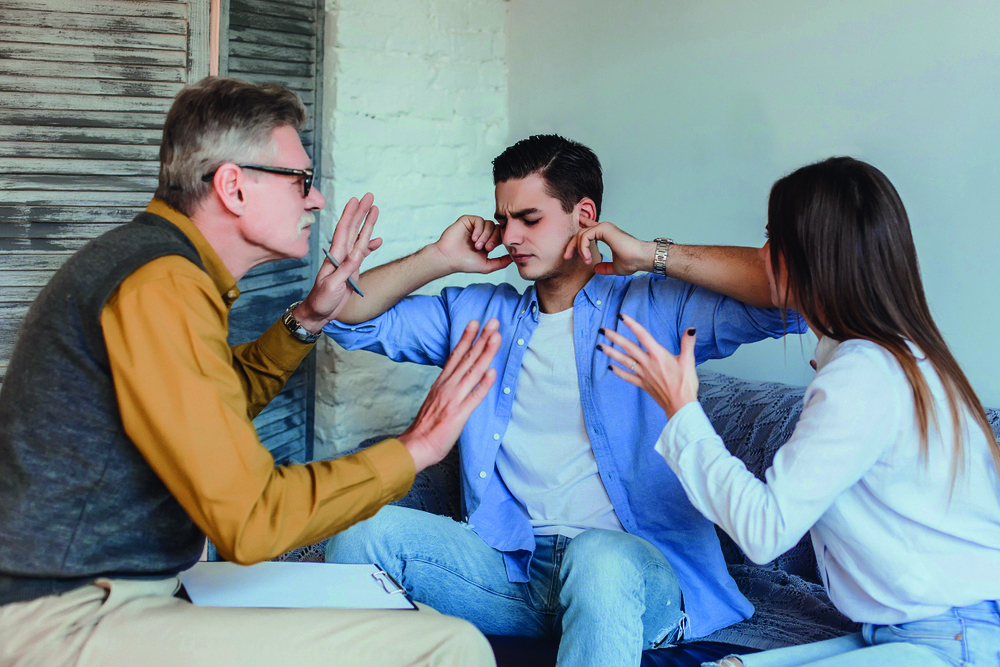
If you feel some tension in your relationships, you are not alone. So do your part at home to protect loved
ones’ feelings and emotions.
Keys to Successful Communication
• Rotate chores and praise each person for doing a slam dunk job.
• LOL — Listen out loud to each other and avoid making comments.
• Use connecting conversations to soothe feelings by cutting out criticism, pushy words and rolling your eyes.
• Remember, your kūpuna may be confused, so speak slowly, smile and give hand massages.
• Introduce fun games and interactions. Kūpuna can become feisty competitors during bean bag toss and balloon volleyball.
Pivot Negativity to Positivity
– I can’t pay my bills. (resignation) + I’ll apply for assistance. (hopeful) – I’m trapped at home! (anger) + So I have more time for fun! (fun) – I can’t go out and eat. (helpless) + Let’s order takeout! (a good solution) – Why now? Why me? (victim) + I’m grateful I’m in good health. (appreciation)
What seem like bitter trials are sometimes blessings in disguise. Practicing an attitude of gratitude can make all the difference.
Former TV news reporter Angela Keen helps track down residents and visitors statewide who are not in compliance with the state’s COVID-19 quarantine rules and mask mandate through the Hawai‘i Quarantine Kapu Breakers, a volunteer, community action group on Facebook.
Angela joined the leadership team in March 2020. “The group enables me to use my journalism and reporting skills to investigate the people suspected of breaking quarantine,” says Angela. The original founder left the group last May, leaving Angela in charge.
Angela also has personal reasons for getting involved in the group. “I am a COVID-19 survivor,” says Angela. “I had the virus when the group started. My situation was serious — it took me eight weeks to recover. I felt it was my kuleana to help prevent others from contracting it.”
About 6,000 active members share tips through the group’s private Facebook page. Angela likens it to a neighborhood watch, aiding law enforcement to help stop the spread of COVID-19.
“We are a unique group of professionals mixed with a few ku¯ puna,” says Angela. “Many kumu and ku¯ puna in the group are my advisors and mentors — to make sure we do things pono. Many feel our efforts help the ku¯ puna and others at high risk. But most of our members work in the tourism industry.” The group has lead teams in every county and members on all islands.
Through these tips and information, she builds a digital file and sends it to the Hawai‘i attorney general’s office, where it is reviewed by the AG’s lead special investigator and his team. The quarantine breaker is usually arrested within 48 to 72 hours.
As of this writing, HQKB has helped to identify more than 74 violators.
Angela and her group also lobbied for a better statewide mask mandate. The group assists in enforcing it by holding weekend monitoring events. When they see unmasked people, they approach with a mask and a flyer explaining the mandate.
The group also gets tips on large group gatherings. “For large parities, we ask people to call the non-emergency number of their local police department. Reports on mask or distancing issues at restaurants go to the state Department of Health.”
Of those identified as kapu breakers, about 70 percent are tourists and 30 percent are locals.
Angela has currently focused on lobbying, and working with state and county leaders.
Former TV news reporter Angela Keen helps track down residents and visitors statewide who are not in compliance with the state’s COVID-19 quarantine rules and mask mandate through the Hawai‘i Quarantine Kapu Breakers, a volunteer, community action group on Facebook.
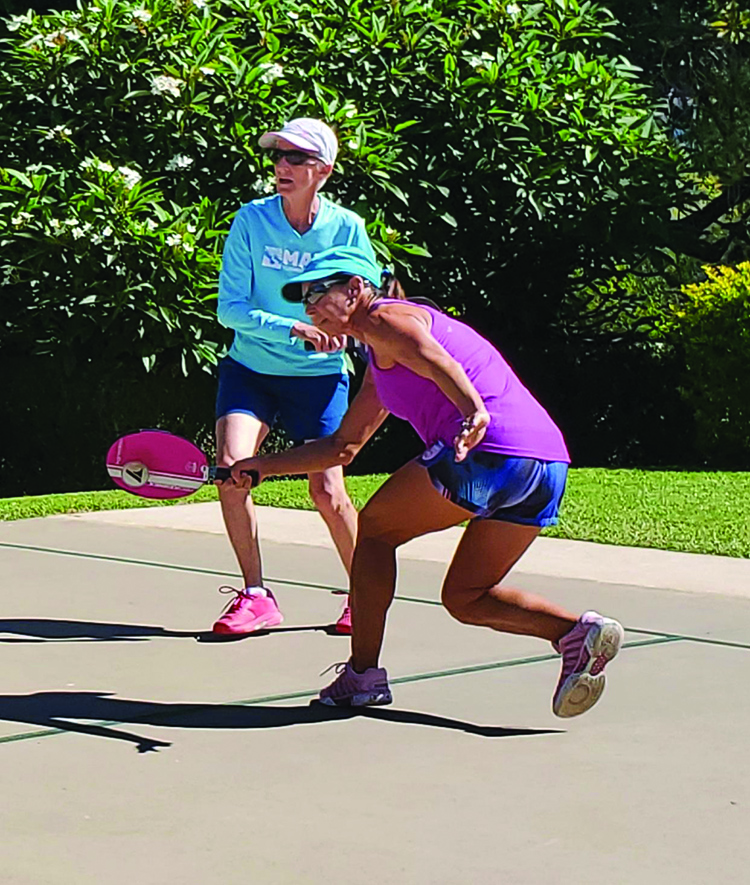
Megan Crouse and Judy Teltscher LeLevier. PC: Laurie Loney
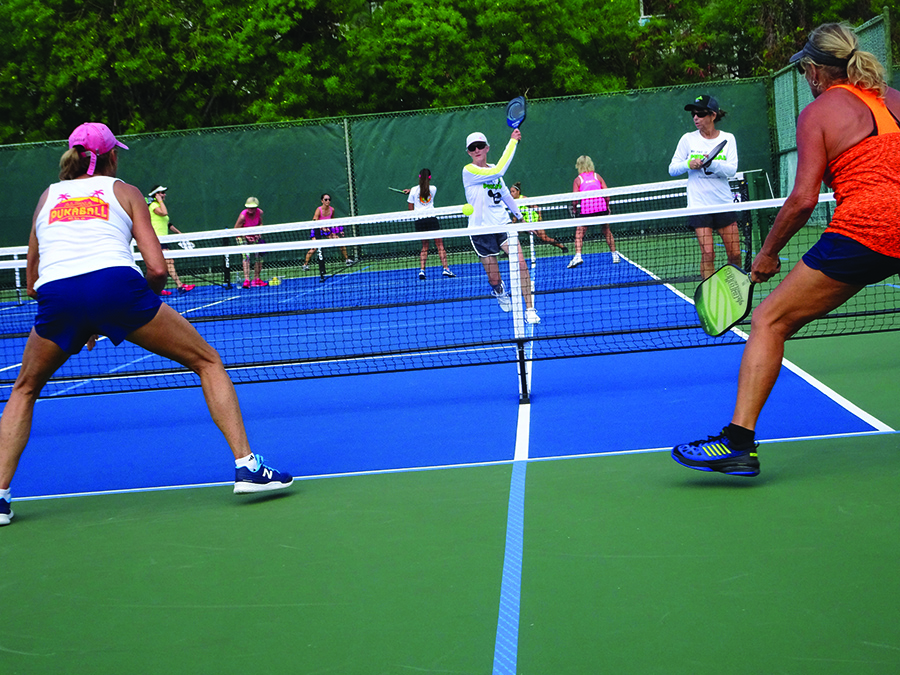
Beginning players love the game immediately, because it is easy to learn, once you master the somewhat unconventional scorekeeping method. It’s fun at any skill level, providing exercise and social interaction, even during the pandemic.
“I give lessons to local and visiting players; the majority are seniors,” says Laurie Loney, one of Maui’s four USA Pickleball ambassadors. “They have fun immediately! Most become hooked instantly and recruit their friends to join in.”
Ambassadors like Laurie are volunteer representatives and unofficial spokespersons for USA Pickleball who promote goodwill and help grow the sport in their area.
Laurie, a senior player, instructor and state gold medalist, estimates that about 80 percent of Maui’s 500-plus players are over 50, adding that the under-50 age group is also growing quickly.
“The latest numbers show that Hawai‘i’s over- 50 players comprise about 70 percent of total players in the state,” says Jack Hodges of Kaua‘i, the state’s USA Pickleball ambassador. “We also have a very large group of under-50 players and a large group of players over age 70 on Kaua‘i, as well.”
Megan teamed up with Laurie Loney for the 2019 Maui Pukaball Tournament. PC: Irene Bowering
Laurie, who has had her own court for 18 years, says there were several private courts in South Maui back in the ’70s and ’80s. Since popularity of the game has increased at such a fast rate, players have commandeered existing tennis and basketball courts, awaiting designated, county -built pickleball courts. Private tennis clubs, such as Kapalua, Royal Lahaina, Wailea and the Maui Country Club, are accommodating pickleball play. There are also dedicated county courts at Waipuilani and Lahaina Civic. “But the current public facilities are becoming overwhelmed,” says Laurie. “The need for more courts is great.”
Especially after COVID-19 restrictions were put in place, many pickleball fans are also playing in their driveways, neighborhood cul-de-sacs or condo parking lots. Some are even building their own 20-by-44-foot cement or asphalt courts on their private property.
Looking for a game? Visit www.places2play.org or download the USA Pickleball Places2Play app.
USA PICKLEBALL
Hawai‘i Ambassador Jack Hodges 808-634-4049 | jhodges26@mac.com Please adhere to your local COVID-19 safety regulations when playing or waiting to join a pickleball game.
Pickleball is growing fast among fun-loving athletes and non-athletes alike. The paddle-and-ball game has become especially attractive to baby boomers and former tennis players. There is less acreage to cover for aging legs and the ball moves slower than in a typical tennis match.
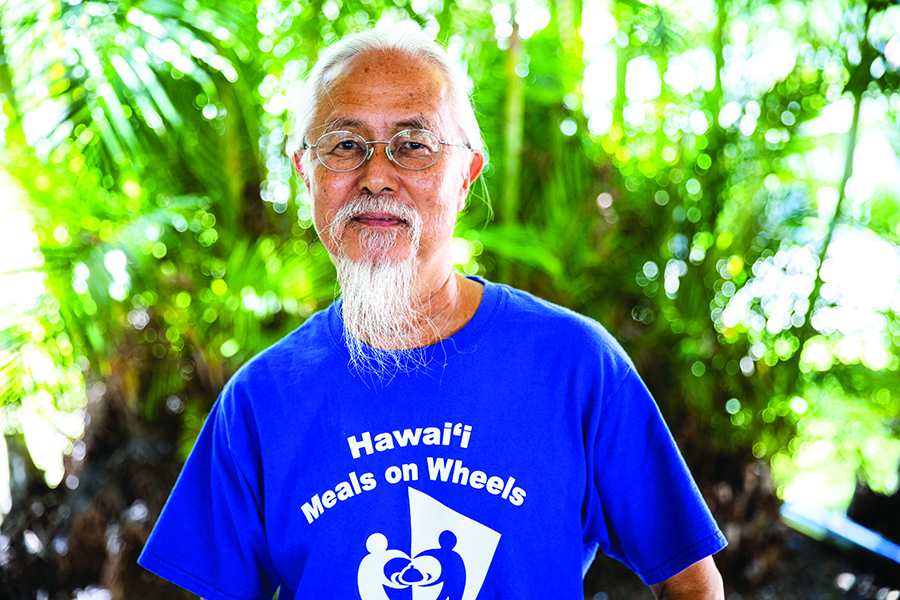
Doug Matsuoka started working at Hawaii Meals on Wheels (HMOW) seven years ago as a part-time delivery driver. But his previous computer experience opened the door to his current job as the IT (information technology) and digital media coordinator, and “YouTube guy.”
He was an early adopter of computer technology, building his own microcomputer from a kit in the early 1980s. Doug learned his trade through various jobs.
Doug worked as the director of technology for the Honolulu Board of Realtors for six years before coming to HMOW. As the years passed, Doug became aware of a growing chasm between his personal ideology and the goals of a real estate organization that grew more prosperous while homes became further out of reach for an increasing number of would-be owners. This crisis of conscience prompted Doug to quit his well-paying job.
He left at age 57. His father died at 60, so assuming he may face the same fate, he wanted to spend his remaining time immersed in political activism — a socially conscious decision not based on dollar signs. He soon expended his savings and found himself homeless.
“The problem, if I can call it a problem, was that I lived longer than my dad did,” Doug says.
But it was through this political activism that he got to know the now-former executive director of HMOW, who eventually offered him a job.
“I am not making the money that I once did, but I get to do what is beneficial to the community,” he said. “It is important how you make a living and I finally understand that completely now. It’s the best job I’ve ever had.”
Pre-pandemic, about 500 HMOW volunteers — most of them seniors — delivered hot meals every day. “That’s what seniors do when their work obligations are finished… they still want to serve their community,” says Doug. However, now more meals are delivered by staff members rather than senior volunteers, due to safety concerns.
Doug says that even though he and the seniors he knows have a lot to offer, when people talk about the Silver Tsunami, many think of older people only as consumers of social services. “It’s interesting getting older, because you age into a unique form of discrimination. Day by day, you start becoming aware of microaggressions — indirect, subtle, unintentional discrimination.”
“People worry about meeting the demands of our growing older population, when actually, a lot of the older people are economically productive and serving the community,” says Doug. “Seniors run nonprofits, businesses… including the man who holds the highest office in the country.”
Even so, seniors are often stereotyped. “Their biggest threat is their stereotype threat — the risk of conforming to the stereotype,” says Doug.
Doug will soon be 69. “Old guys like me are not conforming to the stereotype. We are doing what we can in the community,” says Doug. “I am not alone. There are many my age and older who are social service providers, not consumers. I wish that was the senior stereotype: productive people who are a resource for the community.”
Their professional experience and life perspectives continue to sculpt seniors into one of society’s most valuable resources.
HAWAII MEALS ON WHEELS (501(c) 3 nonprofit)
P.O. Box 61194, Honolulu HI 96839 808-988-6747 | www.hmow.org
Doug Matsuoka started working at Hawaii Meals on Wheels seven years ago as a part-time delivery driver. But his previous computer experience opened the door to his current job as the IT and digital media coordinator, and “YouTube guy.” He was an early adopter of computer technology, building his own microcomputer from a kit in…
Sadly, some families fight over real estate after their parents have passed away. Although a trust protects against probate, there are other issues that may arise. Problems can develop between siblings due to unanticipated decisions that must be made, causing differences of opinion.
Avoiding family disputes starts with a clear strategy regarding the desires of the owners and beneficiaries. What is the desired end result? Once there is clarity regarding the best strategy and goals, the next step is to outline a plan. The more detailed the plan, the better. The last and most critical part of this plan is to communicate it to the beneficiaries. Without this clarity, opinions abound and emotions can run high. Unfortunately, many skip this last step — parents probably assume “the kids will figure things out.”
Typically, a successor trustee is designated to fulfill the instructions in the trust. Challenges arise when the siblings don’t agree. This can become a huge burden for the successor trustee, as well as a significant liability.
To maintain family harmony, understand your options, plan ahead and plan early to create a clear strategy that all stakeholders can agree upon.
THE COMPLETE SOLUTION™ — Powered by The Ihara Team of Keller Williams Honolulu RB-21303
1347 Kapiolani Blvd., Ste. 300, Honolulu, HI 96814
Sadly, some families fight over real estate after their parents have passed away. Although a trust protects against probate, there are other issues that may arise. Problems can develop between siblings due to unanticipated decisions that must be made, causing differences of opinion.
Now that the holidays are over and we are settling in the new year, it’s is a good time to do a “Spring De-Cluttering.” Spring decluttering is similar to spring cleaning, but instead of dusting and cleaning the windows, you will instead do some quick removal of unnecessary items.
Quick decluttering is making fast decisions about getting rid of stuff. But it doesn’t have to be drudgery. You can make it fun! Call in the family for an hour of collaborative activity. Dial up your favorite tunes and rock on together!
Here are some helpful tips to follow:
◆ Throw out the trash: Pick up noticeable and obvious trash around the house, such as old papers, food wrappers, plastic bags, etc.
◆ Recycle: Collect all the recyclables, such as plastics, cans, bottles, newspaper and boxes, and take them to your recycling center. You’d be surprised how much you can get for the stuff that is taking up space in your house.
◆ Move items into the proper room: Only kitchen items go in the kitchen and only bedroom items go in the bedroom. Go room by room and take out items that don’t belong in that room. Then put it in the room it belongs in. And don’t forget to put your Christmas decorations away!
Now that the holidays are over and we are settling in the new year, it’s is a good time to do a “Spring De-Cluttering.” Spring decluttering is similar to spring cleaning, but instead of dusting and cleaning the windows, you will instead do some quick removal of unnecessary items.
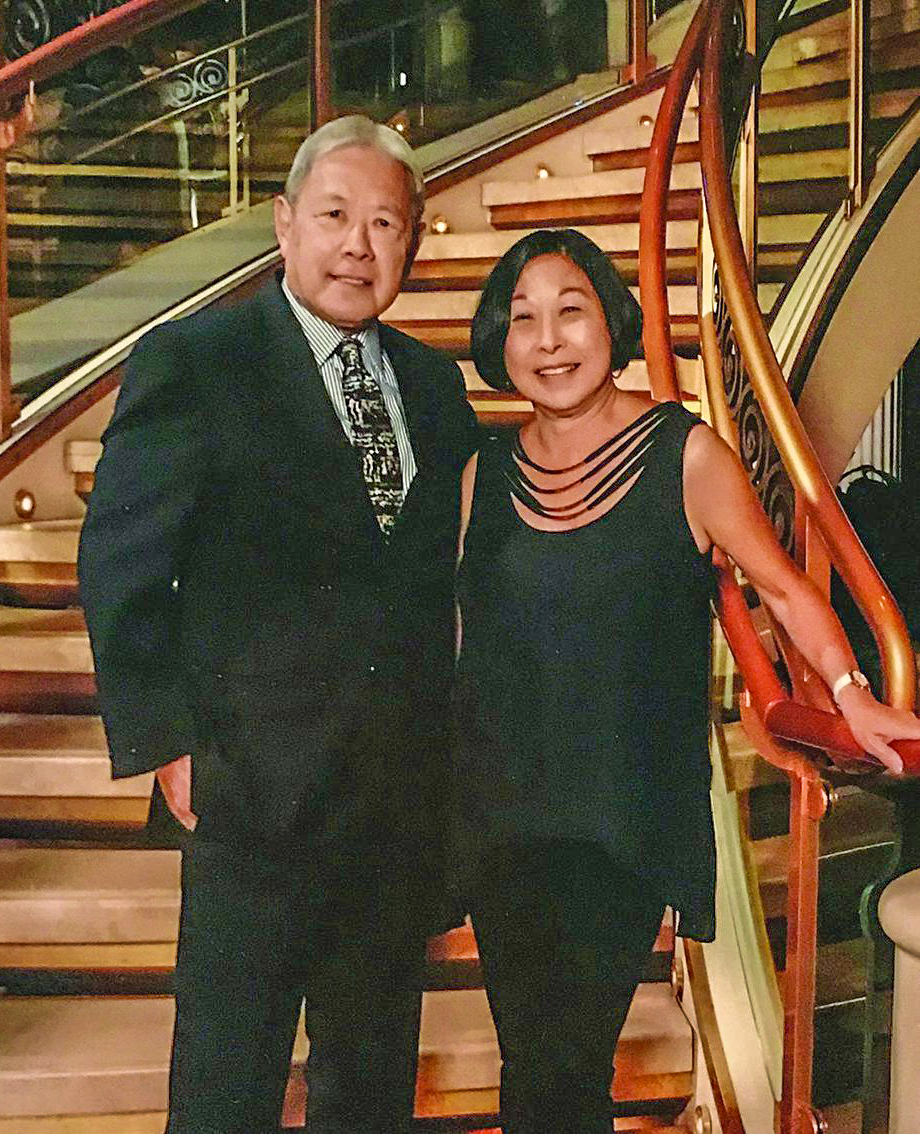
Sharon Young and Jim Nishimoto first met in 1989. They were in their 40s, working together at Group 70 International Inc., a local planning and architectural firm. Sharon was a single mom with three children. Jim was happily married to Gail and the father of two children.
Sharon was widowed at the young age of 33 after caring for her husband at home for over two years. Mike passed away in 1982, leaving her to raise her children alone while working fulltime — sometimes at multiple jobs.
Jim served as the president/chief operating officer of the architectural firm, and later as the vice chairman. But in 2010, he left to become the full-time caregiver for his wife, who began to exhibit signs of dementia. He felt that he wouldn’t be able to devote the necessary time and attention to his work with his wife at home under someone else’s care. Gail passed away in early 2016.
In late 2016, Jim’s thoughts turned to his former Group 70 workmate, Sharon. Wondering if she had married again, memories of their previous friendship propelled him forward.
Jim began asking former office colleagues and friends about Sharon, trying to track down her whereabouts. Finally, he followed a lead to a last known residence. He took a chance. He drove to the address and left a business card in the mailbox. On the card, he asked if she would call him.
“She took some time to respond,” says Jim. Apparently, Sharon had her own questions about him, consulting with friends and former coworkers. “She responded only after finding out that Gail had passed away.”
When Sharon finally responded, they met for dinner.
While they were caretakers, they missed out on many opportunities. Being widowed left a strong desire to enjoy life to the fullest. They decided they did not want life to pass them by without enjoying each other’s company for as long as possible.
Both nearing age 70, they were married the following year with the blessings of their friends, children and grandchildren.
“It is always better to enjoy life with someone — someone special,” they said.
Their bond is their shared love of family, music, the arts, travel, and more importantly, their shared love of the Lord. At their wedding, Pastor Francis Oda said their marriage “was made in heaven.” Jim says “their marriage happened because of heaven.” They both believe that it is the Lord who brought them together after all those years — for a second chance at love.
Sharon Young and Jim Nishimoto first met in 1989. They were in their 40s, working together at Group 70 International Inc., a local planning and architectural firm. Sharon was a single mom with three children. Jim was happily married to Gail and the father of two children. Sharon was widowed at the young age of…
Harold Tanouye started the beginnings of Green Point Nurseries in 1957, when Hilo’s economy had not yet recovered from the impacts of WWII. Residents were moving away due to lack of work.
Harold wanted to live in his hometown, but needed employment. He recognized a demand for anthuriums, which military personnel and civilians were sending home during the war.
Although growing anthuriums in Hilo may have been only a part-time, backyard-type industry back then, Harold soon realized this was going to be his life’s work.
As a teenager, Harold got the opportunity to go to Grinnell College in Iowa. He worked summer jobs on local farms in the Midwestern heat.
Harold taught son Eric, who now passes that knowledge to his sons, Christopher, Jonathan (pictured) and Mark.
“He was a small Asian guy, so the farmers would task him with cleaning the inside of the silos,” says Eric, Harold’s oldest son. “They give the new kids that job. It was easily over 100 degrees inside the silos. He joked about it a lot.”
Even so, Harold said his time in the Midwest was one of the best experiences of his life.
He returned to Hawai‘i and raised four children — two boys and two girls — with his wife. “But he never lost his Midwest values and customs,” says Eric. “He brought us up that way.”
“We all grew up on the farm,” says Eric. “Like most farm kids, when our friends were going to the bowling alley or going fishing, we had to work. We all grew up with responsibilities.”
Eric and Lolita Tanouye have three sons. Their two older boys, Christopher and Jonathan, have joined Eric in the family business, the third generation to do so. Their youngest son Mark is currently studying horticulture at the University of Hawai‘i at Mānoa as a graduate student at the College of Tropical Agriculture and Human Resources. He will join the family business soon.
A budding fourth generation may work in the family business down the road. Oldest son Chris and his wife Jeribie have two sons — Ethan, almost 3, and Oscar, 6 months old. Second son Jonathan and his wife Remi recently brought that generation’s first girl into the family fold. Makenna is about 10 months old. “As soon as they can walk, we put them to work,” Eric joked, referring to the family’s ingrained work ethic.
Although Harold learned old-school values while in the Midwest, he didn’t attribute that way of thinking and living to the location, but to a bygone era. “Those values are in line with the mother country’s values during that time,” Eric says. His father was a third-generation descendant of Japanese immigrants.
Eric iterated his father’s list of old-school ideals: “Go to sleep early, get up early, work hard, do the best you can at your job, don’t complain, save money for a rainy day, respect your elders and never talk back. Help the less fortunate. Share what you have with others. Be community-minded. Don’t say anything bad about others. Compliment others; never boast. Be courteous to women and elders. Make sure they are taken care of.”
“In high school, we didn’t cut the boys loose,” says Eric. “They probably didn’t like it, but every summer, they worked in the nursery. We exposed them to working with our employees and learning tasks from the ground up. They learned humility. They learned everything from the simple-skill jobs to running their own crews. They got exposed to different types of responsibilities and it gave them some self-confidence early on.”
While attending college, each son ran his own Saturday morning farmer’s market supplied with Green Point flowers, foliage and other nursery products. Chris attended the University of Hawai‘i on O‘ahu and ran a market at Kapi‘olani Community College. Jon had a booth at Kino‘ole Farmers Market while attending UH-Hilo.
“They had to learn a lot about the family business because people would ask them all kinds of questions,” says Eric. “Most farm kids are a little bashful and quiet. They had to come out of their shell. It taught them to speak clearly and with confidence.” They also realized they had to be on their best behavior, and had to carry themselves well as representatives of the family and the family business. “I’m glad they got that opportunity to learn what we do here every week,” says Eric.
“My first mentor was my father,” says Eric. “Now deceased, he left a lasting imprint. Now our focus is to train our next generation to carry on the legacy of their grandfather.”
Harold Tanouye started the beginnings of Green Point Nurseries in 1957, when Hilo’s economy had not yet recovered from the impacts of WWII. Residents were moving away due to lack of work. Harold wanted to live in his hometown, but needed employment. He recognized a demand for anthuriums, which military personnel and civilians were sending…
In life, we have sunshine and rainbows and clouds and storms,” says Liane K. Chong on her website. It is a apt introduction to her inspirational autobiography, Hope Inspires Strength: How One Woman Overcame Insurmountable Odds. She tells readers how she faced challenges with courage, the right mindset and by finding hope where none seemed to exist. It’s a moving, powerful story about strength, focus, perseverance and determination.
Liane and her husband and daughter were living an enviable life in Hawai‘i. Hardships began.
She suddenly lost her father at the young age of 54. Soon after, her mother developed a debilitating disease that left her paralyzed and in need of constant care. So at age, 31, Liane took over the daunting task of caring for her mother. Then, a few months later, they found out that their newborn baby boy had cortical blindness, cerebral palsy, autism, and might never walk or talk.
Liane chose not to give up. She chose to succeed. Not only did she survive, she thrived, becoming a successful entrepreneur.
The author’s story will surely refocus anyone feeling like life has become too overwhelming. Her legacy of hope is bound to help you find your strength.
In life, we have sunshine and rainbows and clouds and storms,” says Liane K. Chong on her website. It is a apt introduction to her inspirational autobiography, Hope Inspires Strength: How One Woman Overcame Insurmountable Odds. She tells readers how she faced challenges with courage, the right mindset and by finding hope where none seemed…
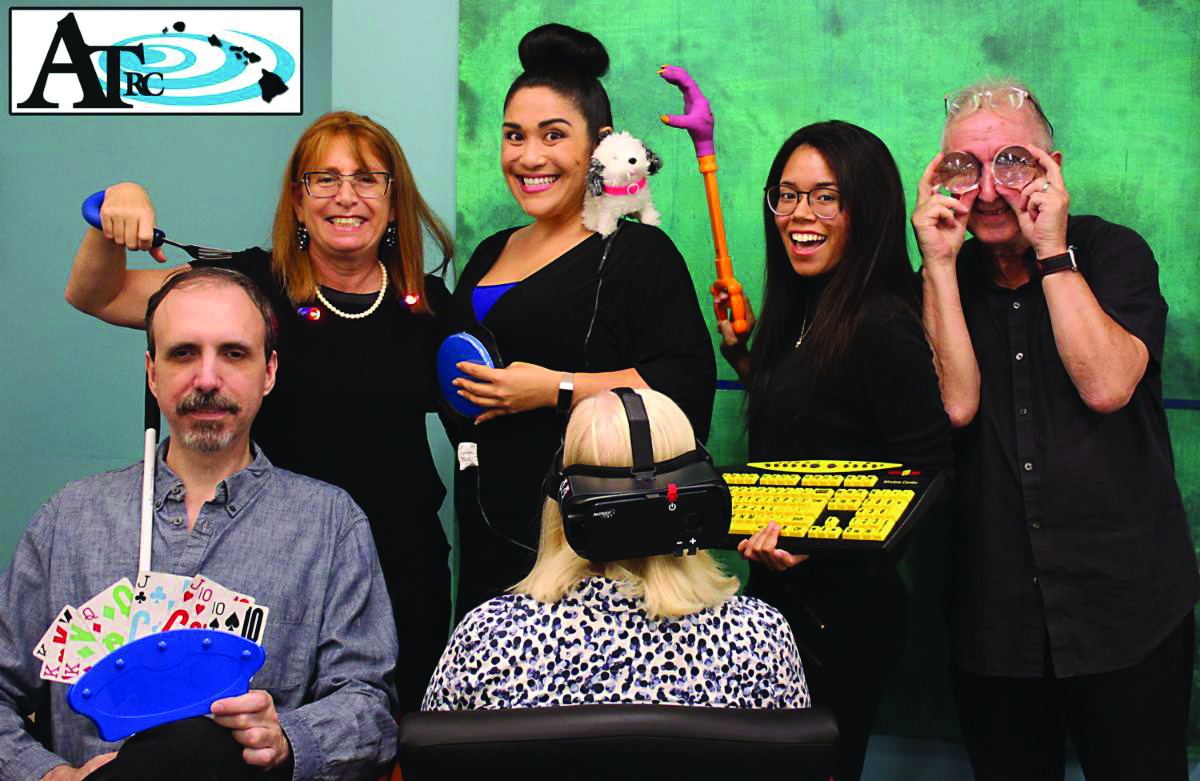
The gang’s all here to help you adapt to aging with some cool devices: (L–R, front) Monty Anderson-Nitahara, Barbara Fischlowitz-Leong, (back) Katie Friedman, Hannah Diaz, Janelle Feliciano and Harvey Gordon
As we mature, our bodies may no longer work the way they once did — our eyes and ears are not quite as sharp; our hands not quite as steady. We may find ourselves straining to see the TV; we may no longer be able to read our favorite publications; we may need to ask people to speak up or repeat themselves.
Fortunately, technology can help us regain
what was lost due to aging. These tools fall into two different categories: durable medical equipment (DME), which includes wheelchairs, walkers and walking sticks; and assistive technology (AT), which includes magnifiers, talking computers, audible books and document readers.
Ask a professional to help you find what works best for you. At ATRC, we specialize in helping you identify the exact device and model that fits you — at no cost. Call us for more information.
ASSISTIVE TECHNOLOGY RESOURCE CENTERS OF HAWAI‘I (501(c) 3 nonprofit)
200 N. Vineyard Blvd., Ste. 430, Honolulu, HI 96817 808-532-7111 | monty@atrc.org | www.atrc.org
As we mature, our bodies may no longer work the way they once did — our eyes and ears are not quite as sharp; our hands not quite as steady. We may find ourselves straining to see the TV; we may no longer be able to read our favorite publications; we may need to ask…
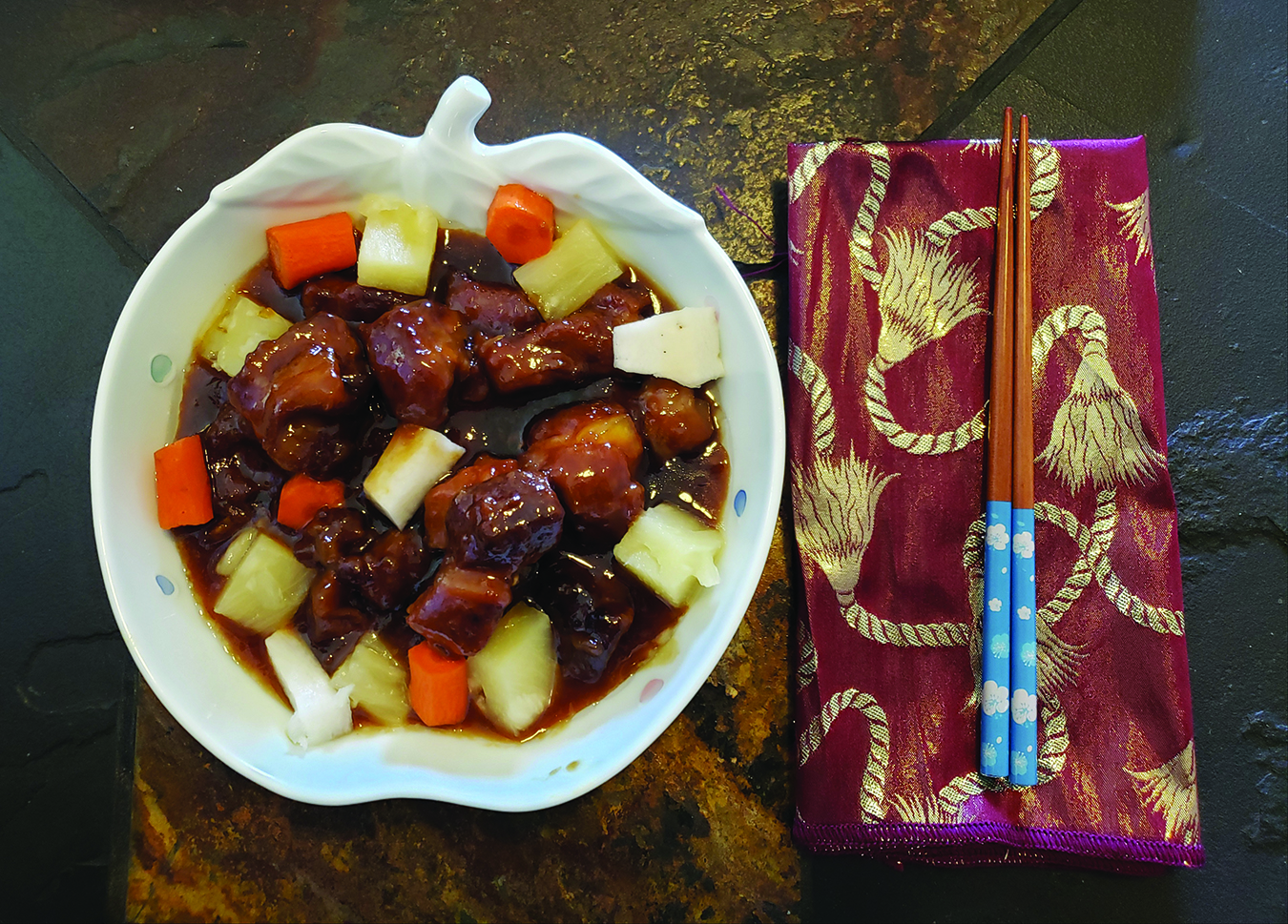
When I was a newlywed, I was given this very special recipe from Aunty Matsue (Inouye) Omori, Sen. Daniel Inouye’s aunt. Aunty is remembered for her special recipes and her dedication as a third grade teacher at Pu‘unēnē School.
Ingredients:
2 lbs. soft-bone pork spare ribs (precut in cubes or regular)
1 cup vinegar
2 cups brown sugar
2 cloves garlic (pounded)
1 small piece ginger (pounded)
2 tsp. Chinese thick soy sauce
2 tsp. shoyu
1 tsp. salt
1 can pineapple chunks
1 each turnip & carrot
1/2 cup stock (taken from boiling ribs)
Directions: Preparing the ribs: If not precut, cut the ribs in small, 1-inch, bite-sized cubes. Rinse the ribs in a medium pot by pouring boiling water over them, then drain. Add enough water to cover the ribs. Boil for 2 minutes, drain the water into a separate container and keep it to be added as stock.
Mixing ribs and sauce: Mix all of the ingredients, including the stock, with the ribs. Let the ribs soak and marinate in the sauce for 4 hours or even overnight in the refrigerator.
Cooking the ribs: Take the ribs out of the sauce and place them in a separate container. (Reserve the marinade.) Dredge the ribs with all-purpose flour. In a separate pot, brown the ribs in cooking oil (olive oil is okay), then drain the excess oil. Pour the sauce back in with the ribs (option: add 1 tsp. red wine or to taste).
Cook on medium heat for about 30 minutes until tender. Add 1 tsp. cornstarch to thicken sauce; add more to desired thickness.
Garnish with pineapple chunks or small cubes, or thin-cut white turnips and carrots.
Do you have a favorite recipe and story to share? For consideration in the next issue of Generations Magazine, mail your story and recipe to Generations Food & Story, PO Box 4213, Honolulu, HI 96812, or email them to wilson@generations808.com.
When I was a newlywed, I was given this very special recipe from Aunty Matsue (Inouye) Omori, Sen. Daniel Inouye’s aunt. Aunty is remembered for her special recipes and her dedication as a third grade teacher at Pu‘unēnē School.
How did I get to be 65 and retired? And what happens now? Those were two questions I was asking myself this past April as my birthday and retirement occurred without much fanfare due to the COVID-19 pandemic. But, I had been planning this for over five years. So, let’s go back a few years…
Like most people, my life journey has had its ups and downs, but in my 30s and 40s, I started to take notice of how stress was impacting my health, and began my quest to find the resources and tools that could support my wellness. There were several signposts along the way that signaled I needed to stop and take a wellness inventory. And, there were two major life events that changed the course for me. They both involved the health of my youngest child, who at the age of 5 was hit by a car and was in a body cast for three months. When he was 19, he was diagnosed with a brain tumor. Jacob Michael passed away three years later.
In both cases, while I took on an intense caregiver role, I was also made keenly aware of how I needed to find ways for self-care. I went on to work in a caregiving capacity through my role with the American Cancer Society.
But I continued to see signs and impacts of stress in my life and those around me, so I extended my search for resources and tools that I could use and share with others. I found simple tools that I could easily deploy on a daily basis.
A short, guided meditation. Breathing is an essential part of any meditation — slow and controlled at a natural pace.
“Begin by sitting in a comfortable position with nothing in your lap. It can be in a chair or on a cushion on the floor or against a wall for support. Just don’t lie down. Close your eyes. Begin to breathe slowly and rhythmically. Relax your head and shoulders. Feel the tension drain from your face. Breathe. Relax your chest and arms. Feel the tension melt away. Breathe. Relax your belly, hips and buttocks. Let go completely. Breathe. Relax your legs and feet, letting all the tension just drip away. Breathe.”
Use of essential oils. The sense of smell can be very powerful. It can invigorate you or slow you down. It has the potential to place you in an emotional state — preferably, calm and happy.
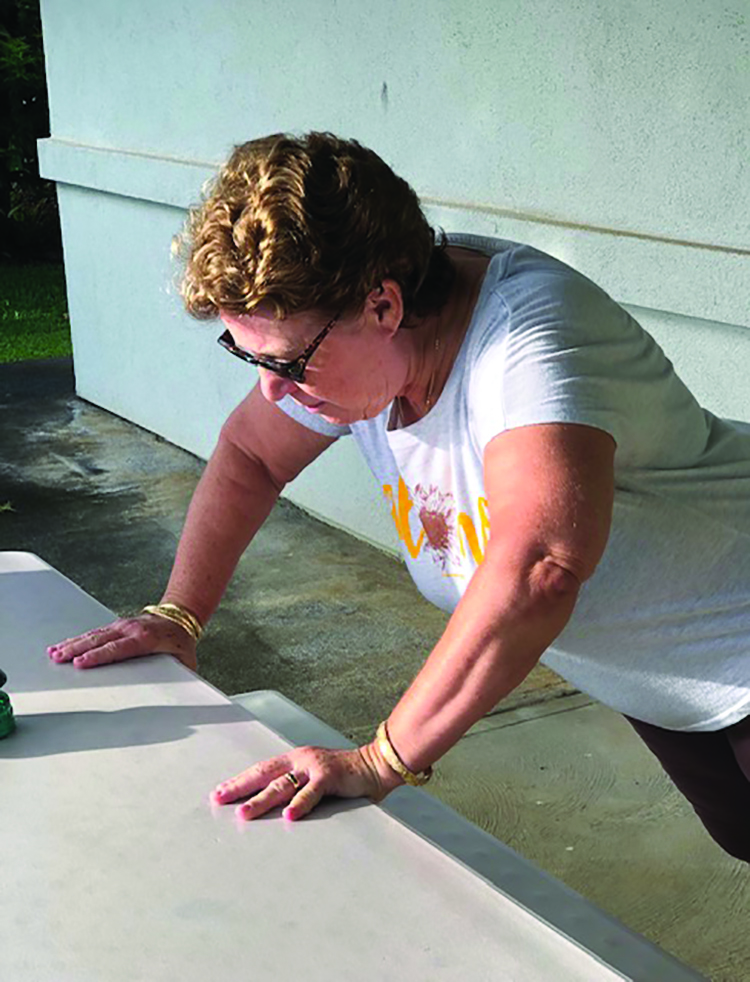
I like to do exercises that fit my abilities. I know I’m personally not aiming for any triathlon. Enjoyment aligned with abilities is key.
Eating healthier — not dieting, was something I sought to change entirely.
When I turned 60, I decided to focus my energy toward sharing these ideas with various caregivers and others who may need my help — work I started before my son got sick. I focused on wellness and helping others through life’s transitions by connecting them to resources for health, wellness and self-care.
How did I get to be 65 and retired? And what happens now? Those were two questions I was asking myself this past April as my birthday and retirement occurred without much fanfare due to the COVID-19 pandemic. But, I had been planning this for over five years. So, let’s go back a few years…