Category: Giving Care

  • Senior Exercises for the Mind & Body

    Through daily exercise, seniors can combat illnesses such as arthritis and osteoporosis, which can afflict them in their golden years. And as physical health declines, untreated depression can decrease the quality of life.

    So seniors must remain, mentally and physically active for optimum health. For example, strength training is useful to combat the loss of muscle mass associated with aging, and helps to maintain flexibility and range of motion.

    WALKING has been proven to have extraordinary benefits for memory and the prevention of dementia, for blood circulation and for mood. For physical and mental benefits, walk in a group as a social event. Take a nature hike or plan a trip to a local park, beach, zoo, aquarium, Foster Garden or Bishop Museum.

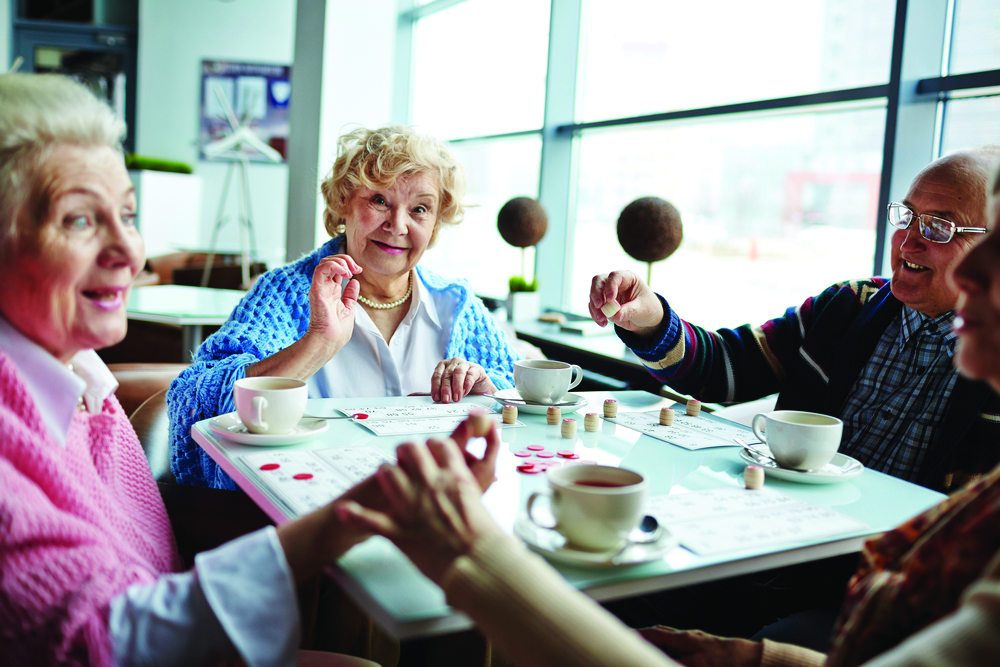
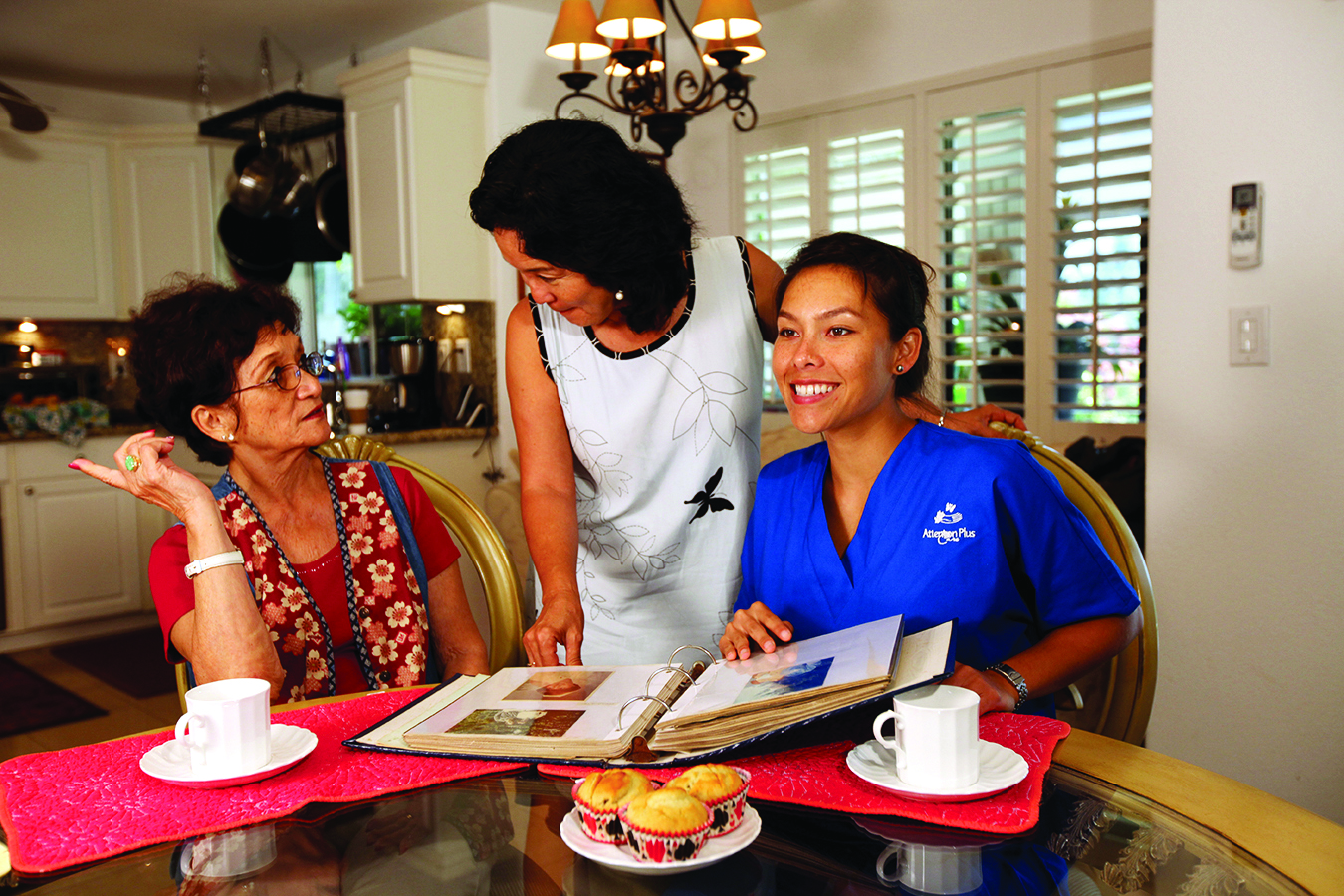
    MENTAL EXERCISES keep your brain active and alert while engaged in life’s pleasures. Play games such as cards, trivia or bingo, or do crossword puzzles or word searches. Read aloud or look through old photo albums. Exercising both the body and brain helps seniors live longer, stronger, healthier lives.


    AIEA HEIGHTS & WAIALAE SENIOR LIVING 1 & 2
    99-1657 Aiea Heights Drive | 2945 Kalei Drive
    808-488-5521 | 808-941-6960
    www.aieaheightsseniorliving.com

    Through daily exercise, seniors can combat illnesses such as arthritis and osteoporosis, which can afflict them in their golden years. And as physical health declines, untreated depression can decrease the quality of life. So seniors must remain, mentally and physically active for optimum health. For example, strength training is useful to combat the loss of…

  • Repetitive Questioning in Alzheimer’s

    In home care, a question I often get asked is how to care for someone with Alzheimer’s who asks the same questions over and over again. To better understand and manage what’s going on, it helps to first know a bit about Alzheimer’s disease and dementia.

    Alzheimer’s is a type of dementia that affects memory, thinking and behavior. It’s a progressive disease, where brain cells deteriorate and eventually a person can’t make sense of the world. When short-term memory is affected, it can lead to repetitive behaviors, like talking or asking about the same things over and over. In essence, your loved one can’t recall having already asked a question because of their memory loss. People with Alzheimer’s may be unsure of what’s around them, where they are or the passage of time, and may not recognize anyone. Altogether, it’s very unsettling and a source of discomfort for them. Understanding how they feel, or describing their own feelings and needs, can also be lost in a person with Alzheimer’s disease.

    Affected by these conditions, your loved one isn’t trying to be annoying or repeating questions because they need information. They’re really asking questions because they feel lost, stressed and anxious, and need reassurance. As a caregiver, answering these questions can be difficult and wear out your ability to care for a loved one. To help, caregivers should be prepared with some basic knowledge and awareness of how to respond:

    ♥ Keep it simple. Use short and simple responses. Reassure with a calm voice and gentle touch. Avoid complex explanations with multiple ideas when asked a question.

    ♥ Physical. See if there is discomfort, pain or something physical at the root of the cause. For example, infections or side effects from medications can also cause changes in behavior and awareness in older adults.

    ♥ Be aware of feelings. Know what triggers unpleasant feelings. For example, a lost sense of time can bring on anxious feelings. Try safe, repetitive and soothing activities like sorting or folding familiar items, or dusting and wiping to keep hands and minds calmly occupied. Walks, listening to music and looking at familiar photos or books can be pleasant diversions.

    ♥ Change the subject. Sometimes changing the subject can shift one’s attention enough to have a calming effect. Asking a simple question can also shift a person’s focus in the same way.

    ♥ Abilities. Check if you’re asking your loved one to do more than they’re able to. Accept your loved one as they are in the moment and that they are doing the best they can.

    Above all, take a deep breath, give your loved one a reassuring hug, and try to see behind the behavior and words repeated. It’s also vital to keep up your own health, and have a support system, including the local Alzheimer’s Association chapter, family, friends and faith groups. Addressing repetitive questioning in Alzheimer’s and dementia can be a trying experience. But with knowledge and awareness, these moments shared with your loved one can be the most precious of gifts.


    ATTENTION PLUS CARE HOME HEALTHCARE
    Accredited by The Joint Commission
    1580 Makaloa St., Ste. 1060, Honolulu, HI 96814
    808-739-2811 | www.attentionplus.com
    AGING IN HAWAII EDUCATIONAL OUTREACH PROGRAM by Attention Plus Care — a program providing resources for seniors and their families, covering different aging topics each month. For class information and upcoming topics, call 808-440-9356.

    In home care, a question I often get asked is how to care for someone with Alzheimer’s who asks the same questions over and over again. To better understand and manage what’s going on, it helps to first know a bit about Alzheimer’s disease and dementia. Alzheimer’s is a type of dementia that affects memory,…

  • Choosing the Right Home Care Provider

    With so many options available, its hard to know if you chose the right home care provider for your loved one. Here are four essential questions to ask when you’re evaluating your home care partner.

    1. Is the care plan being followed?

    A care plan is specific to your loved one and any deviations could mean they’re not getting the care they require. Changes should be discussed and approved ahead of time.

    2. How reliable are they?

    Are caregivers on time? Do they consistently provide a high level of care? Reliability and trust are the foundation for a strong partnership; instability can cause unwarranted stress.

    3. How well do they communicate?

    A good home care provider communicates with everyone involved in the process. Family members, care managers, caregivers and your loved one should all have an active voice.

    4. Do they check up on employees?

    It’s important for your care provider to be hands-on in managing their employees.

    By ensuring that you’ve partnered with the right care provider, you’ll give yourself and your loved one the peace of mind needed to make home care successful for your family.


    HOME CARE BY ALTRES MEDICAL
    808-591-4930 | homecare@altres.com
    www.altreshomecare.com

    With so many options available, its hard to know if you chose the right home care provider for your loved one. Here are four essential questions to ask when you’re evaluating your home care partner…

  • Positive Physical Approach to Dementia Care

    People living with dementia (PLWD) need guidance, human connection and a sense of independence. In my professional practice, we use the Positive Physical Approach (PPA). This innovative modality developed by Teepa Snow teaches family caregivers more effective ways to understand and communicate with their loved ones and all people with dementia.

    Approach from the front. All humans are visually oriented. Approaching a PLWD from the front at approximately six feet away will give them the time they need to adjust to your presence.

    Go slow. Starting at six feet or farther away, begin taking steps toward your PLWD one second apart. As we age, our reflexes and mental processing gradually slow down. Taking this into account, a PLWD needs a few more seconds to process what they see, hear, think and feel.

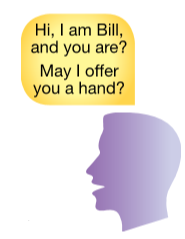
    Call out their name. Sometimes a PLWD can be lucid but other times he or she can forget who you are. The best way to make your entrance is to introduce yourself and ask them for their name. Try saying “Hi, I’m Jane and you are?” They may respond with their first name or simply “I’m your mother.” Either way, you are allowing them to tell you who they are in that moment of time.

    “Offer” your hand. Notice that I did not say “take their hand.” The goal is to look like a friend instead of a threat. Instead of approaching with a
    quick handshake, maintain the connection. We can accomplish this by switching into a hand under-hand position.

    Get to the side. It’s important to remember nonverbal cues and body positioning. Avoid a dominant, confrontational stance by repositioning yourself into a supportive stance. This will relieve agitation and provide a sense of comfort for the PLWD.

    Get low. Position yourself at or below the PLWD’s eye level. A more submissive position will allow the PLWD to open up and feel at ease in your presence.

    These positive approach techniques taught in caregiving workshops help maintain the dignity of the PLWD by enabling loved ones to perform activities with them rather than being perceived as doing things to them.


    HAWAII MEMORY FRIENDS LLC
    Caregiver Education & Consultation
    Mapuana Taamu, Certified PAC Trainer
    808-469-5330 | mfriends808@gmail.com
    Caregiver’s workshop: IT’S ALL IN YOUR APPROACH, scheduled at Pohai Nani (August, September, October), Kapiolani CC (September, October, November). Contact Hawaii Memory Friends for time and details.

    People living with dementia need guidance, human connection and a sense of independence. In my professional practice, we use the Positive Physical Approach. This innovative modality developed by Teepa Snow teaches family caregivers more effective ways to understand and communicate with their loved ones and all people with dementia.

  • Caregivers: Remember to Breathe

    Almost one-third of the adult U.S. population is currently caregivers for an ill or disabled relative. The majority are female and 60 percent are employed part- or full-time. A 2015 survey conducted by the National Alliance for Caregiving and AARP, Caregiving in the U.S., found approximately 34.2 million Americans provided unpaid care to ages 50 or older in the last 12 months, while 43.5 million provided unpaid care to an adult or child within a 12-month period.

    Caregivers need to take time to care of themselves so they stay well enough to care for others. Realize that your own health and well-being could suffer if you don’t take care to be well before tending to others needs.

    Types of Respite Care

    It may be hard to imagine leaving your loved one in someone else’s care, but taking a break can be one of the best things you do for yourself — as well as the person you’re caring for. Most communities have some type of respite care available, such as:

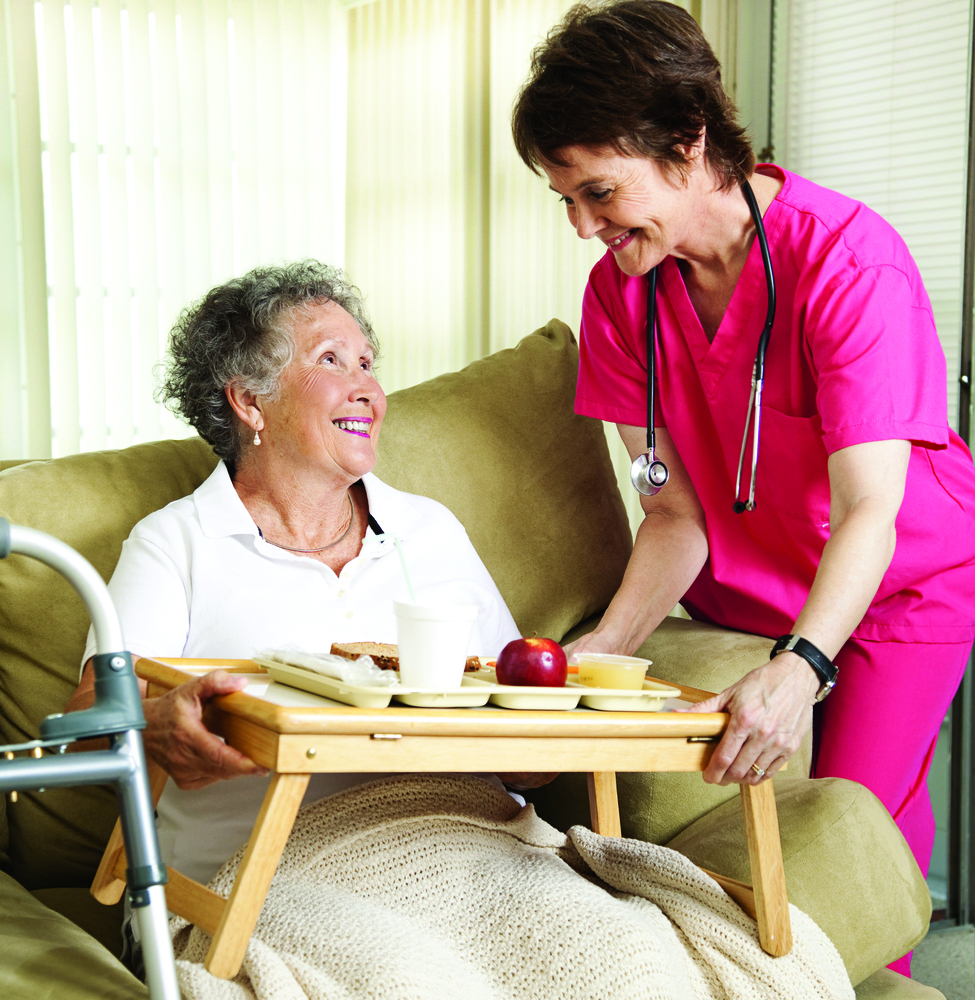
    In-home respite. Healthcare aides come to your home to provide companionship, nursing services or both.

    Adult care centers and programs. Some centers provide care for both older adults and young children, and the two groups may spend time together for the benefit of both age groups.

    Short-term nursing homes. Some assisted living homes, memory care homes and nursing homes accept people needing care during short stays while caregivers are away. Set reasonable goals and plan accordingly.

    Family Leave Act Nearly 60 percent of our nation’s caregivers work outside of the home. If you work outside the home and are a caregiver, you may begin to feel overwhelmed. If you do, you might want to consider taking a leave from your job — especially during times of heightened need or hospice.

    Employees covered under the federal Family and Medical Leave Act may be able to take up to 12 weeks of unpaid leave a year to care for relatives. Ask your human resources office about unpaid leave options.

    In Hawai‘i, there is financial assistance for family caregivers who work 30 hours a week through the Kupuna Caregivers Program. Contact the Hawaii Aging and Disability Resource Center.

    If you are like many caregivers, you might a hard time asking for help. Instead, take advantage of Hawai‘i’s resources for caregivers.


    RIGHT AT HOME
    In Home Care & Assistance
    808-797-2111 | rick@eldercareoahu.com
    www.eldercareoahu.com

    Almost one-third of the adult U.S. population is currently caregivers for an ill or disabled relative. The majority are female and 60 percent are employed part- or full-time. Caregivers need to take time to care of themselves so they stay well enough to care for others. Realize that your own health and well-being could suffer…

  • Begin a Journey of Compassion & Hope

    Do you know anyone who has cancer? Do you know what to say or do? We know — and we are bringing that skill set to the workplace.

    Typically, we all work hard, provide for our families, plan for the future of our children and look forward to retirement someday. However, with one phone call from your doctor, all of that is put on hold, an unplanned journey begins, priorities and perspectives change — and it can all be overwhelming.

    Compassion for Cancer Caregivers trains volunteers to step up and step in to provide hope through compassion for coworkers and their families who are battling cancer. Trained volunteers create a network of support among the friends, families, coworkers and church family of the patient and the caregiver. This support network periodically provides small acts of kindness. It could be as simple as delivering a meal, walking the dog, trimming the hedge, driving them to an appointment or just listening to what they are experiencing. This can make a world of difference to the caregiver and the patient.

    We know. We, too, have walked the road as both a cancer patient and a caregiver.

    Participants learn about the “wall of silence” and how to work through it, about the “elephant in the room” and the worst thing to do about it, about what is helpful to say and do, about the unspoken fears and concerns (both theirs and ours), about the impact of cancer on families with focus on the cancer caregiver and about setting boundaries. Participants will leave each class with something they can do immediately in support of the patient or caregiver.

    In addition to training, Compassion for Cancer Caregivers provides compassion kits through the American Cancer Society’s Hope Lodge and the cancer centers at Pali Momi, Kapi‘olani and Queen’s Medical Centers. The kit includes a green zippered tote, a plush fleece blanket, an adult coloring book, coloring pencils and a sharpener, earbuds, a few colorful notebook journals, a note of hope and gratitude, and a brochure. You may visit our website to learn more.

    Many forms of kindness and compassion make a tremendous difference in turning a difficult journey into a voyage of faith and hope.


    COMPASSION FOR CANCER CAREGIVERS (501(c) 3 nonprofit)
    808-754-8088 | cfcchawaii@gmail.com
    www.compassionforcancercaregivers.org

    Do you know anyone who has cancer? Do you know what to say or do? We know — and we are bringing that skill set to the workplace. Typically, we all work hard, provide for our families, plan for the future of our children and look forward to retirement someday. However, with one phone call…

  • A Medicare Miracle

    I have spent a decade conducting educational workshops and meeting with individuals transitioning to Medicare or already there. I encourage everyone to explore resources at www.socialsecurity.gov and www.medicare.gov to become knowledgeable before services are needed. I also stress the importance of keeping Medicare cards, medication lists, the names of your physicians and any ongoing health conditions on hand. Designating a family member or trusted friend with the information is essential.

    Rosa Elliot celebrating her 91st birthday
    Rosa Elliot celebrating her 91st birthday

    Recently, I dealt with my mother’s sudden and unexpected illness. When she was rushed to the hospital by ambulance, she was not in good shape; she would not have been able to provide insurance cards or any information. I was not far behind and was able to provide the triage nurse with current insurance cards, a list of her medications, when they were last taken and the name of her primary care physician. Within a few hours, a hospitalist told me
    my mom had only four minutes to four hours to live. The physician started a course of antibiotics and fluids and everyone prayed. The intervention changed the course of her condition.

    Within 48 hours, my mom was breathing on her own. I then completely devoted myself to the restoration of my mother’s health. I work side by side daily with therapists, social workers and physicians to assist with her care. I am grateful the Medicare program exists and for the opportunity to see how well it works in an emergency situation.


    MEDICARE MOMENT WITH MARTHA
    A radio program with Martha Khlopin
    KHNR-690AM: Sundays 9:30am–10am
    808-230-3379 | getmartha@aol.com

    I have spent a decade conducting educational workshops and meeting with individuals transitioning to Medicare or already there. I encourage everyone to explore resources at www.socialsecurity.gov and www.medicare.gov to become knowledgeable before services are needed. I also stress the importance of keeping Medicare cards, medication lists, the names of your physicians and any ongoing health…

  • Advocating for Someone With Cancer

    At some point in our lives, most of us will be given the opportunity to care for someone with cancer. Even though our experience with cancer may be limited, we may have learned enough to ask initial questions of the patient after the diagnosis is made, such as:

    • What kind of cancer and where is it?
    • What stage is it?
    • Do you need surgery?
    • Do you need chemotherapy or radiation?
    • How will this affect your future plans?
    • What kind of support groups are available in the community for this kind of cancer?

    Answers to these questions may not be available until more information is obtained from a specialist. Referrals to “other doctors” are usually the first step. Specialists could be surgeons, oncologists or treatment physicians focused on the type of cancer. Being an advocate and researching the disease, treatments, causes, support groups and physician can help answer these questions, but this takes time and can be challenging for the family. Resources are available online and there are always friends who have “been through this before.” Sometimes, the patient and family are in such a state of emotional anxiety they don’t know what to do next. That’s when reaching out to another person during this time may help the family cope with this responsibility. Someone who is detached from the shock of the diagnosis can often offer support and bring some serenity to the situation. This could be a family member or friend, or if you are fortunate, someone who is in the medical field. The main message here is to not go through the process on your own but to ask for assistance. An advocate or advocates can help by doing the following:

    ◆ Know the family history and information about the patient’s background health. This way, the patient will not have to try to remember all of the questions the doctor will ask her/him at the appointment.

    ◆ Understand what the patient’s objectives are. Life goals and dreams for the future are important for the doctor to consider. Patients may have a hard time explaining these things on their own.

    ◆ Take notes and organize the information in a folder so the details can be accessed afterward by the patient and family. This may include information about the chemotherapy names, side effects and time frames. Developing a “partnership” attitude allows physicians and patients to work alongside each other to choose the best course of treatment. As an advocate, you can focus on what is being discussed, ask questions on behalf of the patient and allow all involved to have a clear understanding of the plan. Discussions should consider the risks and benefits of all options. There will be critical decisions that need to be made quickly.

    The most important part of helping someone through cancer is to be there, hold their hand and give support, no matter the outcome.


    ATTENTION PLUS CARE HOME HEALTHCARE
    Accredited by The Joint Commission
    1580 Makaloa St., Ste. 1060, Honolulu HI 96814
    808-739-2811 | www.attentionplus.com
    AGING IN HAWAII EDUCATIONAL OUTREACH PROGRAM by Attention Plus Care — a program providing resources for seniors and their families, covering different aging topics each month. For class information and upcoming topics, call 808-440-9356.

    At some point in our lives, most of us will be given the opportunity to care for someone with cancer. Even though our experience with cancer may be limited, we may have learned enough to ask initial questions of the patient after the diagnosis is made.

  • Dementia: Helping Your GEMS® Shine

    GEMS® is a staging system for dementia. Teepa Snow, OTR and founder of the Positive Approach to Care® philosophy, recreated the Allen Cognitive system of staging dementia with a positive twist. We can now view our Person Living With Dementia (PLWD) as one of Teepa’s GEMS® rather than on a scale of 1 to 7 or on a scale of mild cognitive impairment to profoundly demented.

    Here are six stages of GEMS® that emphasize the abilities that are retained.


    SAPPHIRE: NORMAL AGING

    At this point in life, we are noticeably slower and may be forgetful — but this change is relatively normal. If you think about the sapphire gem, it is true blue in color and this is us on a good day. We have no dementia, our brains are flexible and we are able to see different points of views.


    DIAMOND: RIGID & CUTTING

    Early stage dementia is difficult to detect. You may notice some challenges with short-term memory but the PLWD is able to cover their mistakes. Diamonds are one of the most expensive gems and in this stage, the PLWD is focused on finances. Formed under pressure, this gem is rigid, cutting and sharp. They may have difficulty with change in their daily routines, often using their words to cut you.


    EMERALD: ON THE GO

    In a stoplight sequence, green means go and that is exactly what the Emerald stage is about. The PLWD is traveling in time and place. They may revert back to their younger years and think that they have to go home and cook dinner for the family at 3pm as they always did when they were a housewife in their 30s. A true Emerald is flawed but they don’t think anything is wrong with them. Another challenge is word-finding and using vague language. The PLWD wants to communicate but has trouble verbalizing their thoughts and comprehending your speech.


    AMBER: CAUTION, SLOW DOWN

    An amber is formed from tree sap. As the sap fossilizes over time, an amber is created. It has tinges of yellow, brown and orange. Similar to the amber gem, the PLWD is caught in a moment of time. In this stage, the PLWD is focused on sensations and what is happening right now in front of them. They have limited safety awareness but high levels of curiosity.


    RUBY: STOP!

    Following the stoplight sequence, red means stop. Fine motor movements of the mouth, eyes, fingers and feet are stopping. However, gross motor movements are preserved. Although skill is lost as fine motor diminishes, strength stays and they’re able to copy your big motions and gestures. Fine motor movements of the eyes presents trouble, with depth perception creating a higher risk for falls. At this stage, a Ruby has very limited peripheral vision — almost equivalent to having monocular vision. With fine motor in the mouth, a Ruby may mumble words but retains automatic social chit chat, rhythm and music.


    PEARL: TRAPPED IN A SHELL

    What does the outside of an oyster shell look like? It’s rough, different shades of gray, calcified and ultimately, not pleasant to look at. How does this relate to the last stage of dementia? Well, a person in the latest stage of dementia has similar attributes. At this stage, a person may be bed-bound, contractures have set in, eyes are mostly closed, words are unintelligible and personal care is increasingly difficult to provide. In other words, the outside shell of this person isn’t a great sight to see. However, with our positive approach to care methods, we are able to give this Pearl the right care and the right setting so their pearl inside can shine.


    HAWAII MEMORY FRIENDS LLC
    Caregiver Education & Consultation
    Mapuana Taamu, Certified PAC Trainer
    808-469-5330 | Mapuana@HiMemoryFriends.com

    GEMS® is a staging system for dementia. Teepa Snow, OTR and founder of the Positive Approach to Care® philosophy, recreated the Allen Cognitive system of staging dementia with a positive twist. We can now view our Person Living With Dementia as one of Teepa’s GEMS® rather than on a scale of 1 to 7 or…

  • What Does Aging Mean?

    After gaining years of experience working and caring for the elderly, I can imagine many ways to describe what “aging” means. There are multiple factors that determine if one is considered old. In other words, a high number of years someone has been on this Earth does not define them as being old. In today’s world of medical technology, health products and smarter lifestyles, it may be hard to identify our kūpuna.

    Is 65 really old? Is it still considered senior?

    As approximately 10,000 baby boomers (those born between 1944 and 1964) are turning 65 every day, we will experience an increased influx of aging people over the next couple of decades. However, considering the way our seniors are aging, it may be more of a staggered increase rather than all at once.

    Twenty years ago, a 65-year-old may have looked and acted differently than the 65-year-old of today. With advances in healthcare and the pursuit of healthy lifestyles, is it possible that today’s 65-year-old looks and feels younger … maybe more like a 45-year-old?

    Here are some interesting perspectives from the population in question regarding getting older based on a study that was done by Human Development Specialist Nina Chen: “Getting older means more years to add to your life, less activity, less hair, more medicine, more wrinkles, arthritis and more forgetful. When people get older, they lose their dignity and independence. Being old means not being able to do anything.”

    Positive outlooks documented were: “Being old means more experiences and having privileges, for instance, senior discounts, senior centers, affordable housing for seniors and senior support groups. Getting older means getting wiser. Older people are just like a walking library. They have true stories — not fiction.”

    Lifestyle choices and changes can alter the way we age in general. Below are some changes that may improve how we age:

    • Stop smoking to allow more oxygen into your cells
    • Stop drinking alcohol  to keep your tissues healthy
    • Exercise consistently to maintain mobility
    • Eat healthy foods to give your body the fuel it needs to regenerate cells
    • Drink more water so toxins absorbed from the environment will be flushed out \
    • Stay out of the sun to avoid skin damage  Retirement leads to less stress; The age of retirement for full benefits is now 70.
    • Make and keep friends to stay engaged and thriving in society

    Aging looks different depending on your perspective. Although the average lifespan continues to lengthen, it has increased more in the past century than in all of humanity’s existence combined.

    Individual self-worth and dignity are important factors as we age. For older individuals, this means living life to the fullest each day and doing what you want to do. Don’t regret what you haven’t experienced. Get out there and seize the day — “Carpe Diem!”


    ATTENTION PLUS CARE HOME HEALTHCARE
    Accredited by The Joint Commission
    1580 Makaloa St., Ste. 1060, Honolulu HI 96814
    808-739-2811 | www.attentionplus.com
    AGING IN HAWAII EDUCATIONAL OUTREACH PROGRAM by Attention Plus Care — a program providing resources for seniors and their families, covering different aging topics each month. For class information and upcoming topics, call 808-440-9356.

    After gaining years of experience working and caring for the elderly, I can imagine many ways to describe what “aging” means. There are multiple factors that determine if one is considered old. In other words, a high number of years someone has been on this Earth does not define them as being old. In today’s…

  • Caregiving From Afar

    As parents age, many adult children step into the role of caregiver. However, for those who live far from their parents, caregiving presents different challenges. Planning, communication and a team approach can significantly improve the process.

    ♦ Don’t Wait for a Crisis

    Taking care of someone else is always easier if you plan ahead and address concerns as soon as possible. If you wait for a crisis — a fall, serious illness or disease diagnosis — scrambling to make arrangements can be more chaotic, emotionally overwhelming and often limits available options. Preparation is the key. Familiarity with your parent’s healthcare team, community and financial resources, and your parent’s choices can make caregiving more manageable and less stressful. Even if you have family and friends at home, working as a team with a plan based on your parent’s preferences will help.

    ♦ Define and Discuss Your Concerns and Theirs

    The Queen’s Medical Center’s Community and Post-Acute Care Services Director Hermina Taylor, MSN, FNP-BC, APRN-RX, and licensed social worker for the Queen’s Clinically Integrated Physician Network Jamie Fukui-Chiang have worked with elderly patients for a combined total of more than 50 years. They say the first step is to define your concerns.

    For example, are your parents doing fine now, but you want to get a plan in place. Or, are you already worried your mom is isolated and not eating? Are you concerned your dad might fall from mounting clutter in the home? Or, is one of your parents a caregiver for the other and getting burnt out? These and other issues are common challenges as people age and each concern can lead to different types of help.

    Next would be to talk with your parents about your concerns and ask about their concerns. You may be worried about the growing clutter in their home and potential fall risks. However, your mom might be much more concerned about your dad’s growing confusion. Although it may be uncomfortable and/or they may resist, Fukui-Chiang says, “It matters what they see because that’s what they’ll work on.”

    ♦ Know Their Wishes

    For current concerns and long-term or end-of-life issues, you need to know your parents’ wishes and their realistic options. Parents may not want to have these discussions for fear of being a burden, but Taylor suggests you let them know. “This will relieve my burden, so please share with me. I don’t want to have to make those decisions for you. I need to know what you want.”

    Photo of Lori Protzman, RN, coordinator for the Queen’s Advance Care Planning Clinic, meets with adults and families to discuss healthcare planning, quality-of-life values and choices, and related documentation to ensure wishes are followed.
    Lori Protzman, RN, coordinator for the Queen’s Advance Care Planning Clinic, meets with adults and families to discuss healthcare planning, quality-of-life values and choices, and related documentation to ensure wishes are followed.

    If, for example, you think there’s a fall risk, is your parent willing to have a free fall assessment done or wear a medical alert button? Or, if confusion or memory is an issue, are they willing to let you talk with their doctor? If they want to live independently no matter what, are there financial resources available for professional caregivers in the home? And, who do they want to give signing authority to if they can no longer sign for themselves?

    The only way to know what they want is to talk with them. Dr. John Houk, a primary care physician for 38 years, says, “You can make them safe in a care home, but they may be miserable. You always want to balance keeping them safe with ensuring the quality of life they value.”

    Houk discourages families from using random online resources and says a case manager can be helpful, especially in complex or complicated situations. A case manager can see what is happening in the home, such as safety or nutrition issues. Your parent’s physician may be able to identify helpful resources for you or there are reliable city, state, and national resource information online (see “Resources” below).

    ♦ Discuss and Document End-of-Life Wishes

    End-of-life care discussions can be emotional and uncomfortable, but they are crucial for easing decision making when that time comes. Experts suggest all adults have some type of advance care planning written out, but especially after age 60.

    Without knowing what your parent would want, that decision will likely be on you and having to guess can be excruciating. What would your parents want if they could no longer feed themselves or breathe on their own? You can discuss this with them and their physician, attend a presentation by a group like Kōkua Mau or meet with a program like the Queen’s Advance Care Planning Clinic. These experts can help families understand their options, make informed decisions, and discuss issues like financial resources and roles family members will take.

    ♦ Work as a Team

    If you have a family working together, assign one person to be the physician contact. If you have siblings or other trusted relatives and friends, each person can take a certain role. Fukui-Chiang had clients with a daughter living abroad and a son on the mainland. They each took certain roles and responsibilities and had regular phone and email communication with the care team. Houk knows a family that divided tasks by shopping, organizing pills, managing finances and home repairs. The key is to find the way it can work for your family and the resources available.

    Although the medical team may not be able to share information without permission, you can still tell them your concerns. Call or send a note if you are worried about certain issues. The healthcare team can provide an objective view of the issues and better identify priorities if they have all the information.

    Caregivers should also understand the new trend toward team-based healthcare for many physician offices. Taylor explains, “Care is getting so complex. Navigating the system is more complex. We need multiple disciplines working collectively to provide a comprehensive plan of care. Patients and caregivers are part of the team.” So, rather than talking to the physician directly, you may talk to the medical assistant. Instead of seeing the physician for each visit, you might see the nurse practitioner. The team, including a possible care manager, works under the guidance of the primary care physician. The structure is proving more effective for providing high-quality care.

    ♦ Make Check-Ins Count

    To ensure they’re doing OK, ask more direct questions that require detailed answers. Fukui-Chiang says to ask, “What did you eat for dinner last night?” instead of “Did you eat?” Rather than “Did you take your meds?” ask “When did you refill your meds?” Ask “Do you have money to pay your bills?” instead of “Did you pay your bills?” Houk recommends making sure parents have adequate nutrition, regular exercise and socialization.

    Experts say the most important thing you can do is to be an educated caregiver.

    Taylor explains, “Every person and situation is unique and there’s no one right way to do things. Know your resources.” information.


    RESOURCES

    As parents age, many adult children step into the role of caregiver. However, for those who live far from their parents, caregiving presents different challenges. Planning, communication and a team approach can significantly improve the process.

  • Senior Day Care Offers Valuable Benefits

    As our parents or loved one get older, they may need help or supervision during the day while caregivers are at work, school or other activities. Sending seniors for care during the day may be a difficult decision due to the cost and concern that they may not have “fun” or may be neglected.

    A senior day care center is an ideal solution because it helps keep seniors healthy to live at home for as long as possible. Participants feel welcomed by senior day care staff, who provide individualized care. Each participant engages in enjoyable but therapeutic activities to foster greater functional independence.

    Games and other activities such as tai chi, field trips, crafts and entertainment sharpen their minds. Exercise keeps them flexible and strong to prevent falls. Participants find they have a better appetite, especially if they are enjoying good food in the company of new friends. These activities can also help slow the progress of Alzheimer’s and other related dementias and may result in better sleep.

    Family caregivers also sleep better. They have peace of mind, are less stressed, and have more time for respite or other responsibilities, knowing their parents or loved one are in good hands.


    PALOLO CHINESE HOME
    2459 10th Avenue, Honolulu HI 96816
    808-748-4904 | dnakayama@palolohome.org
    www.palolohome.org

    As our parents or loved one get older, they may need help or supervision during the day while caregivers are at work, school or other activities. Sending seniors for care during the day may be a difficult decision due to the cost and concern that they may not have “fun” or may be neglected.