Category: Giving Care

  • Dementia: Compassionate Communication

    As a dementia educator, I am often asked why people living with dementia (PLWD) ask the same question over and over again. My reply is, “Because their brain is failing.”

    Every day, PLWDs are going through chemical and physical brain changes. Due to brain failure causing multiple problems with short-term memory, a PLWD can get themselves caught in a loop of asking the same questions.

    Here are some suggestions for the next time you recognize the start of another loop of questions.

    Listen to the important details as they speak. As dementia progresses, language will become increasingly vague. Therefore, objects or activities will be difficult for a PLWD to accurately describe. Instead of asking for the artificial sweetener Splenda, the PLWD might describe it as “the yellow stuff to put inside.” Take note of their descriptions and work like a detective to decipher the message using context clues in the environment.

    Validate their emotions. Oftentimes, PLWDs create fictional stories that make complete sense to them. As a care partner, we choose to overlook their confabulated stories and attempt to reorient them back to the “truth” in our reality. The key here is to remain patient and just listen to their story. The PLWD is expressing his or her anxiety, which translates into made-up stories. You don’t have to agree with them, but offering validation, such as “wow, that must be hard,” can help the PLWD feel that they are respected and heard.

    Redirect their attention toward an engaging task. Identify a highly preferred item or activity that you can provide in that moment. After validating the PLWD’s emotions, you can redirect the conversation toward the previously identified preferred item or activity. The reason we want to redirect their attention is so that their focus and attention will shift onto something productive or engaging. If we only validate their emotions without redirecting, then the PLWD is more likely to start the same behaviors again.

    Check in on them as needed. Let’s admit it; we all have good and bad days. One day a task might be easy for the PLWD and the next day it could be the most frustrating thing ever created! Checking in on your person every five minutes or so is a good way to ensure that they are still engaged in the task. If the task is too difficult, then consider switching to an easier task before their agitation escalates to an unmanageable state.


    HAWAII MEMORY FRIENDS LLC
    Caregiver Education & Consultation
    Mapuana Taamu, Certified PAC Trainer
    808-469-5330 | mfriends808@gmail.com
    Learn more about dementia at our upcoming 2020 workshops.
    Contact Hawaii Memory Friends LLC for details.

    As a dementia educator, I am often asked why people living with dementia (PLWD) ask the same question over and over again. My reply is, “Because their brain is failing.” Every day, PLWDs are going through chemical and physical brain changes. Due to brain failure causing multiple problems with short-term memory, a PLWD can get…

  • Addressing Seniors’ Spiritual Care Needs

    With advances in medical technology, including diagnostic testing, prescription ordering and even making appointments, we may struggle with how care is coordinated and delivered. The focus on current clinical treatment and replacement of a real person with a recording has moved us farther from the traditional approach of face-to-face care and compassion-oriented interactions. The Latin root for the word “compassion” is “pati,” which means to “suffer;”
    the prefix “com” means “with.” Therefore, to have compassion literally means to “suffer with.”

    Compassionate care involves addressing the needs of the individual as a whole — their physical, emotional, social and spiritual needs. While providers dedicate themselves to managing the physical symptoms of aging and disease, seniors may experience other pain as well, on a mental and spiritual level. Why is this happening to me? What will happen when I die? Will my family survive my loss? How will I make it through this? The time has come for us to find other avenues to help our family members cope. Here are some thoughts that may help find meaningful answers to these questions:

    Helping patients practice some form of religious or spiritual belief has been found to promote a happier disposition in individuals with advanced cancer diagnoses, who also, consequently, report having less pain. Common spiritual practices are performed by those who bring a faith-based system into their lives. The idea they would be in the loving presence of a higher power and that death was not an end, but a transition to another life, provides comfort.

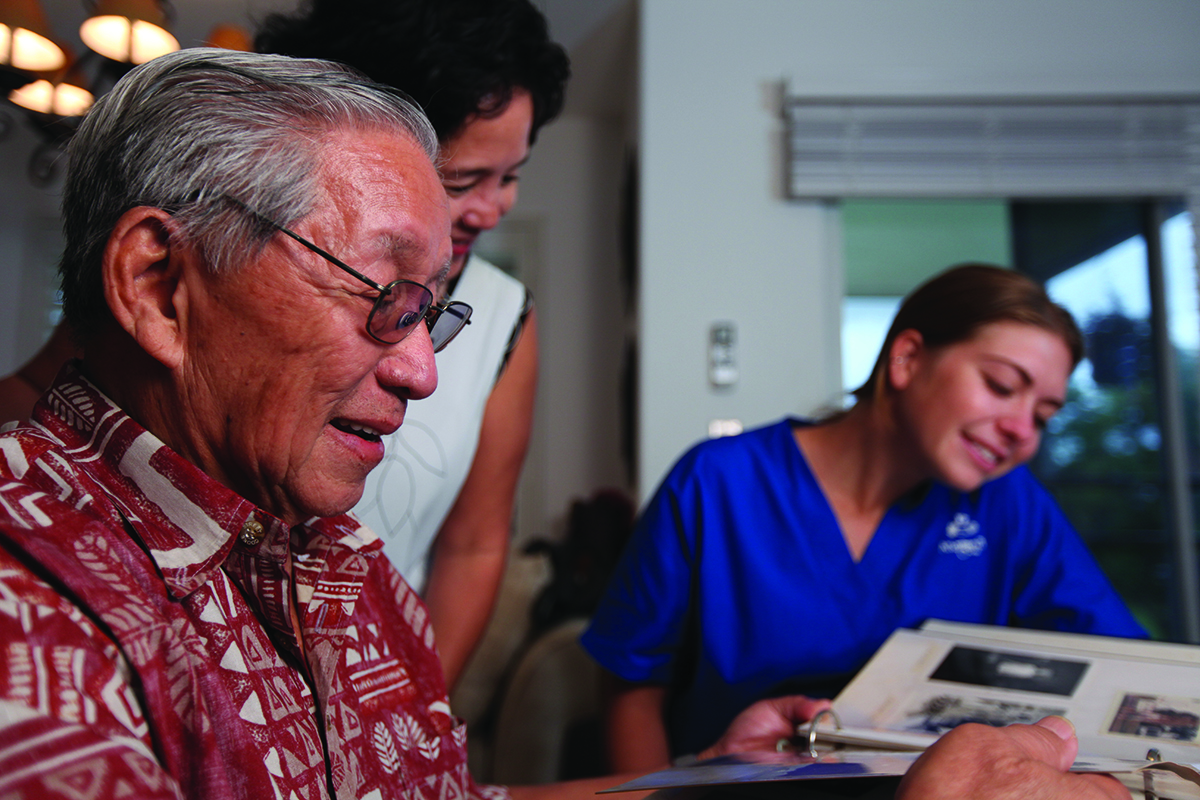
    Promote daily routines that boost emotional well-being, such as bringing back cherished memories with a review of the family photo album. This will help to reduce worry, which leads to better health outcomes by allowing an individual to “let go” of concerns about their medical condition and live more in the present moment with loved ones who are eager to share these moments.

    Understand that the interpretation of “faith” can encompass many activities not directly related to traditional, religious beliefs. Meditation, massage, singing and following certain rituals all may have a spiritual component that is recognized by the individual, and thus defines what faith means to that person. The positive impact of a faith-based system, therefore, is not necessarily defined on society’s terms, but rather on its importance to the individual, in their own mind. Simple daily routines that promote joy and happiness can have a significant impact over time.

    Chaplains and local faith groups may be able to provide support in this respect, which in turn will have a positive impact the patient’s quality of life.  Whatever the practice is — praying, meditating, performing a ritual — the practice supports a meaningful personal existence, the fulfillment of life goals and a feeling that life as been worthwhile for the individual.

    Even the World Health Organization has recognized the meaning of “health” as “a state of complete physical, mental and social well-being, not merely the absence of disease.” It’s up to us to provide compassion and spiritual experiences for our loved ones when and where we can. This interaction is best accomplished face to face.


    ATTENTION PLUS CARE HOME HEALTHCARE
    Accredited by The Joint Commission
    1580 Makaloa St., Ste. 1060, Honolulu, HI 96814
    808-739-2811 | www.attentionplus.com
    AGING IN HAWAII EDUCATIONAL OUTREACH PROGRAM
    by Attention Plus Care — a program providing resources
    for seniors and their families, covering different aging
    topics each month. For class information and upcoming
    topics, call 808-440-9356.

    Compassionate care involves addressing the needs of the individual as a whole — their physical, emotional, social and spiritual needs. While providers dedicate themselves to managing the physical symptoms of aging and disease, seniors may experience other pain as well, on a mental and spiritual level. Why is this happening to me? What will happen…

  • Hospice Support for Body, Heart & Soul

    Navian Hawaii is grounded in a comprehensive care philosophy, providing an interdisciplinary program of care to support patients and their loved ones’ physical, psycho-social, emotional and spiritual well-being. Complementary therapies are a vital part of this care philosophy:

    Pet Therapy has been proven to reduce depression and fatigue, and ease stress and pain.
    Art Therapy uses various forms of visual art to encourage self-expression, reduce stress and improve well-being. It can also be very effective in helping patients’ children understand and cope with death and bereavement.
    Aromatherapy provides a variety of benefits, including easing tension, increasing breathing and circulation and promoting a sense of peace.
    Healing Touch & Reiki are also offered. Healing touch is an energy-based technique that restores patients’ energy system. Reiki is a Japanese hands-on technique that promotes relaxation and healing.

    Additional therapies, such as Hand Casting, Therapeutic Music and Massage Therapy, are available to all patients. We encourage our patients to take advantage of this additional layer of support to help them embrace their end-of-life journeys with comfort and dignity.


    NAVIAN HAWAII (501(c) 3 nonprofit)
    860 Iwilei Road, Honolulu, HI 96817
    808-924-9161 | www.navianhawaii.org

    Navian Hawaii is grounded in a comprehensive care philosophy, providing an interdisciplinary program of care to support patients and their loved ones’ physical, psycho-social, emotional and spiritual well-being. Complementary therapies are a vital part of this care philosophy.

  • Finding the Right Type of Caregiver

    Evaluate the logistics and duration of the care you want and need. If seniors prefer to stay at home for comfort and convenience, the family should consider long-term, in-home caregivers who are part-time, full-time or can reside in-home. Those needing specialized care or end-of-life care often chose full-time caregivers, whose skills, credentials and fees vary.

    There are three primary types of caregiver roles: companions/homemakers; home care aides/assistants; and medical caregivers, such as certified nursing assistants and registered nurses.

    Although companion caregivers are limited when it comes to medical or hands-on assistance, they play a very valuable role, providing support and comfort to seniors when family members are in need of respite.

    Home care aids/assistants can perform the same duties as companion caregivers. In addition, certified home healthcare aides can render hands-on care and help seniors with activities of daily living — bathing, dressing, grooming and ambulation.

    Medical caregivers work in both home and facility settings. They include certified medical assistants (AMAs), certified/registered nursing assistants (CNAs/RNAs) and registered nurses (RNs). An AMA or CNA can fulfill most needs; RNs meet more specialized needs, aiding cancer, advanced dementia and stroke patients.


    OHANA HEARING CARE
    Kona Smith: 808-593-2137
    www.ohanahearingcare.com

    Evaluate the logistics and duration of the care you want and need. If seniors prefer to stay at home for comfort and convenience, the family should consider long-term, in-home caregivers who are part-time, full-time or can reside in-home. Those needing specialized care or end-of-life care often chose full-time caregivers, whose skills, credentials and fees vary.

  • The Right Senior Living Community for You

    {Play}First, you and your loved ones will deal with the emotions of a changing lifestyle. Family and friends may feel guilt and apprehension, even when moving is clearly for the benefit, safety and happiness of a loved one who needs special care.

    Spectrum of Support. Check the senior living community’s reputation by accessing social media postings—better yet, by getting referrals from current residents, family and friends. The best communities focus on both healthcare and hospitality services. Find out if there is a supportive transition plan to Memory Care units available for early-stage dementia patients.

    Body & Mind. The connection between physical and mental well-being is well documented. Make sure the community offers physical activities that can be tailored to keep your loved one vital.

    Nutritional Needs. Providing a variety of nutritious meals and fresh produce options support the brain’s health. Senior meals should be reviewed by a licensed dietitian for balance and nutrition, calories and enjoyment. Upscale communities have regular “menu chat” sessions, when residents meet with the dining services director and executive chef to evaluate menu items.

    Care with Compassion. In addition to quality training and good staff-to-resident ratios, the  management should be committed to delivering service with integrity, dignity and compassion. Great senior living care engages kūpuna, gives them space to be active and offers a complete program of physical and emotional support.


    ILIMA AT LEIHANO SENIOR LIVING
    739 Leihano St., Kapolei, HI 96707
    808-674-8022 | www.kiscoseniorliving.com/hawaii/

    Is it the right fit? Will the community support your wants, needs and desires? When you or a loved one consider senior living, questions and options can become overwhelming.

  • The Pearl State of Dementia

    {Play}These characteristics present many possible challenging situations when it comes to personal care. Here are some tips for having successful interactions with a Pearl.

    Appropriately greeting a Pearl. If your person living with dementia’s (PLWD) eyes are closed as you approach, you may consider touching a non-threatening area of the body. Gently placing your hand on their knee or on their hand and telling them your name will help introduce your presence, and reduce combative reflexes. Too many quick movements may cause your PLWD to become stressed and their primitive instinctual reflex to protect oneself may kick in.

    Go SLOW. Pearls are ruled by reflexes and can be startled easily. Stabilize unsteady equipment like rocking chairs or recliners. With little to no control over their body weight, a Pearl may experience increased anxiety if they’re rocking back and forth. Verbalize your movements and let  the Pearl know what you plan to do with them next. For example, if you are feeding a Pearl, you may narrate each thought you have: “Let’s scoop up some rice; here it comes to your mouth; open big; bite; yummm; let’s try some veggies now.”

    Use the Hand-under-Hand (HuH) technique. This simple hand technique can be used for doing tasks “with” your PLWD rather than “to” your PLWD. We can connect with an individual by using HuH to minimize combative behaviors and provide a sense of independence. Although a Pearl may have range of motion limitations, we can still involve them in their self-care activities.

    Non-verbal behaviors are clues! A PLWD in the Pearl state has a very limited word bank when it comes to communicating wants and needs.

    Instead of using words to describe the feeling of pain, a Pearl might scream, attempt to hit, bite or make agonizing facial expressions. Whether we are causing the pain or it stems from an open wound, behaviors are another way of communicating. As a care partner, we can use these behaviors as clues and choose to take a time out to reassess a new approach.


    HAWAII MEMORY FRIENDS LLC
    Caregiver Education & Consultation
    Mapuana Taamu, Certified PAC Trainer
    808-469-5330 | mfriends808@gmail.com
    Learn more about dementia at our upcoming 2020 workshops. Contact Hawaii Memory Friends LLC for details.

    In previous articles that I’ve written for Generations Magazine, I mention the GEMS® states of dementia. There are six GEMS®: Sapphire, Diamond, Emerald, Amber, Ruby and Pearl. The last state, Pearl, signifies that the end of life is nearing. In the Pearl state, bodily functions are shutting down, the person is likely to spend most…

  • Adult Children Become Caregivers

    {Play}As parents age and grown-up children take on more responsibilities in managing their care, unforeseen challenges often arise. The roles of parent and child reverse as adult offspring increasingly manage the often complex affairs of their parents.

    This change can create tension when family members share more time together, such as at get-togethers and holiday celebrations. Here are four tips on how to best handle these situations, mitigate stress and bring everyone closer.

    Keep lines of communication open: Parents may feel uncomfortable talking about the gradual loss of independence that comes with age and advancing medical conditions. Often, the subject is not addressed directly, or avoided altogether, with the parent dismissing offers of help with a curt “I’ll ask for help when I need it” reply. In this case, it’s important to get a close reading on specific areas where help is needed. A refusal of help is also not final and the topic should be revisited regularly as the situation changes.
    Be emphatic: Always try to see things from both sides. For parents, loss of mobility and memory issues are not easy to accept after a lifetime of independence. Adult children may attempt, with best interests in mind, to take control of aspects of the parents’ life that they don’t want to relinquish yet. Sometimes it is better to take incremental steps to assist in key areas (driving, shopping, housekeeping chores) and always keep parents apprised on what the plan is going forward. While sometimes a medical emergency may force a decision, it is always good to review options and discuss a plan of action before it occurs.
    Don’t be afraid to play the humor card: Forgetfulness and other symptoms of advancing age will give rise to many situations where the humor card can be played without disrespect for parents’ feelings — the lighter side of these moments should be recognized and used to ease the mood. Contrary to expectations, parents are often quite prepared to laugh along and see the funny side of their limitations!
    Bring in a third party to be an objective observer: Sometimes a person who is respected and observed as being honest and true, such as a doctor or nurse, can give their insight and provide direction when decisions need to be made. Suggestions of help from a third party could support the decisions needed to keep parents safe and maintain their quality of life, with just a little bit of help here and there. This will make it easier to increase this kind of help as the parents’ capabilities decrease.

    Perhaps the most important advice for taking care of aging parents is to encourage their full participation in the discussion and decision-making process. By giving everyone a chance to voice
    their opinion, the implementation of care can be fine-tuned so as to respect everyone’s wishes and best interests.


    ATTENTION PLUS CARE HOME HEALTHCARE
    Accredited by The Joint Commission
    1580 Makaloa St., Ste. 1060, Honolulu HI 96814
    808-739-2811 | www.attentionplus.com
    AGING IN HAWAII EDUCATIONAL OUTREACH PROGRAM
    by Attention Plus Care — a program providing resources for seniors and their families, covering different aging topics each month. For class information and upcoming topics, call 808-440-9356.

    As parents age and grown-up children take on more responsibilities in managing their care, unforeseen challenges often arise. The roles of parent and child reverse as adult offspring increasingly manage the often complex affairs of their parents. This change can create tension when family members share more time together, such as at get-togethers and holiday…

  • Affordable Adult Day Care

    Often, families don’t know where to turn when a loved one suddenly needs constant care. Insurance and Medicare plans may cover very few long-term care expenses — or none at all. In the past, nursing homes were the only option for care outside of the family home. However, now there are many home- and community-based services that help support aging in place.

    In Hawai‘i, adult day care services, home care and respite services are available. One of the most cost-effective options is adult day care. Programs provide eight to 10 hours of supervised care in a group setting facility licensed by the Hawai‘i Department of Health. Participants are engaged in exercises, music, arts and crafts, enabling them to socialize with their peers. This interaction reduces the clients’ loneliness and isolation, and also provides peace of mind and respite for families.

    Day care fees range from $65 to $100 per day and include snacks and a meal. Some centers accept long-term care insurance, Medicaid and/or may be contracted with the state Kūpuna Caregiver Assistance Program. To find an adult day care center near your home or work place, contact the Aging and Disability Resource Center (ADRC) at www.hawaiiadrc.org or 808-643-2372 toll-free.


    LIVE WELL AT IWILEI by Kahala Nui
    888 Iwilwi Road, Ste. 105, Honolulu, HI 96817
    808-218-7777 | www.livewellhi.com

    Often, families don’t know where to turn when a loved one suddenly needs constant care. Insurance and Medicare plans may cover very few long-term care expenses — or none at all. In the past, nursing homes were the only option for care outside of the family home. However, now there are many home- and community-based…

  • Dementia: Making Mealtime Easier

    Do you have trouble with your person living with dementia (PLWD) during mealtime?

    There are many types of dementia; Alzheimer’s disease is the most prevalent. Dementia is ultimately brain failure. As the brain changes, a person’s skills and abilities regress.

    The following are four changes you can expect as dementia progresses.

    ♠ Peripheral vision narrows with age. If you use your hands like a pair of binoculars, you can simulate the field of vision that a PLWD in the early stages may experience. PLWDs may not even be able to see the food on their plate due to this narrowed field of vision.

    Fine motor skills diminish over time. This is most prevalent in the middle stages of dementia. Fine motor skills in the hands, feet and mouth are gradually affected by this disease. That is why you may see PLWDs pick up food with their fingers instead of using a utensil. They may also have increased difficulty swallowing food or liquids. If your PLWD is coughing while eating or drinking, consider modifying the consistency of their food and beverages.

    ♠ Recognition of object linked to purpose diminishes. The PLWD may experience increased confusion and misuse common objects. For example, a PLWD might use a hairbrush to brush his or her teeth rather than their hair. As care partners, we can help our PLWD by using the hand-underhand technique to get them started on a task. Often, the PLWD is able to continue an action after having help starting it.

    ♠ Challenging behaviors will escalate. As a person goes through the various stages of dementia, he or she may become hypersensitive to touch. It is important to remember that with every interaction, the PLWD is reacting to the way that we approach them. Therefore, care partners need to always approach from the front and use more visual gestures to communicate. If PLWDs feel like you are threatening them, they may react with a fight, flight or fright reaction. If you notice one of these three behaviors, it will be beneficial to back off and rethink your approach.


    HAWAII MEMORY FRIENDS LLC
    Caregiver Education & Consultation
    Mapuana Taamu, Certified PAC Trainer
    808-469-5330 | mfriends808@gmail.com
    Learn more about dementia at our upcoming 2020 workshops. Contact Hawaii Memory Friends LLC for details.

    There are many types of dementia; Alzheimer’s disease is the most prevalent. Dementia is ultimately brain failure. As the brain changes, a person’s skills and abilities regress. The following are four changes you can expect as dementia progresses…

  • Dementia Activity Ideas

    Planning activities for a Person Living With Dementia (PLWD) isn’t easy. I’ve found it challenging to identify activities that peak and maintain the interest of a PLWD. The Positive Approach to Care philosophy states that PLWD need a balance of activities that include leisure, productivity, restoration and self-care.

    There are variations of engagement for everyone in any GEMS® state of dementia. GEMS® is a dementia characteristic and ability model. Providing activities that the person is able to do mentally and physically is the key. Personal interests, abilities, opportunities and where they are in the progression of the disease must be considered. Care partners must remember that engagement and interest in an activity is our purpose, not an end product. Here are some examples.

    DIAMOND — reluctant to change Diamonds stick to routines and are inflexible. You may need to give more verbal reminders leading up to an activity or event. Activities may include word or jigsaw puzzles; crafting, such as crocheting; sorting items by quantity or function; and household chores, such as washing dishes.

    EMERALD — needs to know what’s next Emeralds could benefit greatly from walking. They may also be skillful with household chores, such as folding clothes; sorting items with visible differences, such as color; simplified word puzzles; or other enjoyable crafts. Allow mistakes; your PLWD may not complete the task as you expected, but allow them the gratification of helping.

    AMBER — stuck in a moment Ambers are all about sensations and touch. Ambers and Emeralds are wanderers. Ambers are very curious and possess little safety awareness. Consider setting up a few safe places around the house where these wanderers can touch items. A lap mat, activity boards with latches and switches, and other sensory items can be found online.

    RUBY — fine motor is slowing down, gross motor strength Rubies are great with gross motor skills that can be best utilized with games such as batting a balloon back and forth, playing catch with a foam ball or cradling a doll. Rubies also enjoy old familiar tunes and may even like to sing along. Sensory items mentioned in the Amber state would also work well.

    PEARL — end-stage, difficult to reach but still there A person in the Pearl state is not always easy to be around. At this stage, they are typically bed-bound and non-verbal. However, they are still human beings and take pleasure in being treated as such. Pearls are great listeners, although they may not always respond. They may enjoy listening to music, hearing about your day or family, or a favorite story or poem, and having the grandkids play near them, allowing them to hear the laughter and receive kisses and hugs. For a more intimate experience (with proper training), you might choose to assist with feeding, grooming or incontinence care.


    HAWAII MEMORY FRIENDS LLC
    Caregiver Education & Consultation
    Mapuana Taamu, Certified PAC Trainer
    808-469-5330 | mfriends808@gmail.com
    Contact Hawaii Memory Friends to learn about GEMS® character models through the caregiver’s workshops: IT’S ALL IN YOUR APPROACH, scheduled at Pohai Nani (October), Kapiolani CC (September, October, November).

    Planning activities for a Person Living With Dementia (PLWD) isn’t easy. I’ve found it challenging to identify activities that peak and maintain the interest of a PLWD. The Positive Approach to Care philosophy states that PLWD need a balance of activities that include leisure, productivity, restoration and self-care. There are variations of engagement for everyone…

  • Senior Exercises for the Mind & Body

    Through daily exercise, seniors can combat illnesses such as arthritis and osteoporosis, which can afflict them in their golden years. And as physical health declines, untreated depression can decrease the quality of life.

    So seniors must remain, mentally and physically active for optimum health. For example, strength training is useful to combat the loss of muscle mass associated with aging, and helps to maintain flexibility and range of motion.

    WALKING has been proven to have extraordinary benefits for memory and the prevention of dementia, for blood circulation and for mood. For physical and mental benefits, walk in a group as a social event. Take a nature hike or plan a trip to a local park, beach, zoo, aquarium, Foster Garden or Bishop Museum.

    MENTAL EXERCISES keep your brain active and alert while engaged in life’s pleasures. Play games such as cards, trivia or bingo, or do crossword puzzles or word searches. Read aloud or look through old photo albums. Exercising both the body and brain helps seniors live longer, stronger, healthier lives.


    AIEA HEIGHTS & WAIALAE SENIOR LIVING 1 & 2
    99-1657 Aiea Heights Drive | 2945 Kalei Drive
    808-488-5521 | 808-941-6960
    www.aieaheightsseniorliving.com

    Through daily exercise, seniors can combat illnesses such as arthritis and osteoporosis, which can afflict them in their golden years. And as physical health declines, untreated depression can decrease the quality of life. So seniors must remain, mentally and physically active for optimum health. For example, strength training is useful to combat the loss of…

  • Repetitive Questioning in Alzheimer’s

    In home care, a question I often get asked is how to care for someone with Alzheimer’s who asks the same questions over and over again. To better understand and manage what’s going on, it helps to first know a bit about Alzheimer’s disease and dementia.

    Alzheimer’s is a type of dementia that affects memory, thinking and behavior. It’s a progressive disease, where brain cells deteriorate and eventually a person can’t make sense of the world. When short-term memory is affected, it can lead to repetitive behaviors, like talking or asking about the same things over and over. In essence, your loved one can’t recall having already asked a question because of their memory loss. People with Alzheimer’s may be unsure of what’s around them, where they are or the passage of time, and may not recognize anyone. Altogether, it’s very unsettling and a source of discomfort for them. Understanding how they feel, or describing their own feelings and needs, can also be lost in a person with Alzheimer’s disease.

    Affected by these conditions, your loved one isn’t trying to be annoying or repeating questions because they need information. They’re really asking questions because they feel lost, stressed and anxious, and need reassurance. As a caregiver, answering these questions can be difficult and wear out your ability to care for a loved one. To help, caregivers should be prepared with some basic knowledge and awareness of how to respond:

    ♥ Keep it simple. Use short and simple responses. Reassure with a calm voice and gentle touch. Avoid complex explanations with multiple ideas when asked a question.

    ♥ Physical. See if there is discomfort, pain or something physical at the root of the cause. For example, infections or side effects from medications can also cause changes in behavior and awareness in older adults.

    ♥ Be aware of feelings. Know what triggers unpleasant feelings. For example, a lost sense of time can bring on anxious feelings. Try safe, repetitive and soothing activities like sorting or folding familiar items, or dusting and wiping to keep hands and minds calmly occupied. Walks, listening to music and looking at familiar photos or books can be pleasant diversions.

    ♥ Change the subject. Sometimes changing the subject can shift one’s attention enough to have a calming effect. Asking a simple question can also shift a person’s focus in the same way.

    ♥ Abilities. Check if you’re asking your loved one to do more than they’re able to. Accept your loved one as they are in the moment and that they are doing the best they can.

    Above all, take a deep breath, give your loved one a reassuring hug, and try to see behind the behavior and words repeated. It’s also vital to keep up your own health, and have a support system, including the local Alzheimer’s Association chapter, family, friends and faith groups. Addressing repetitive questioning in Alzheimer’s and dementia can be a trying experience. But with knowledge and awareness, these moments shared with your loved one can be the most precious of gifts.


    ATTENTION PLUS CARE HOME HEALTHCARE
    Accredited by The Joint Commission
    1580 Makaloa St., Ste. 1060, Honolulu, HI 96814
    808-739-2811 | www.attentionplus.com
    AGING IN HAWAII EDUCATIONAL OUTREACH PROGRAM by Attention Plus Care — a program providing resources for seniors and their families, covering different aging topics each month. For class information and upcoming topics, call 808-440-9356.

    In home care, a question I often get asked is how to care for someone with Alzheimer’s who asks the same questions over and over again. To better understand and manage what’s going on, it helps to first know a bit about Alzheimer’s disease and dementia. Alzheimer’s is a type of dementia that affects memory,…