Category: Giving Care

  • Dementia Patients, Caregivers & COVID-19

    {Play}The disruption can cause them greater confusion and increased stress, which may prompt abnormal behaviors, such as acting out.

    The best thing family caregivers can do while keeping their loved one home during the pandemic is to establish new routines. Make a daily schedule that incorporates consistency in activities. This new routine will soon become the new norm.

    One normal routine seniors with dementia and their families have grown to depend upon is adult day care, which provides respite for families and activities, exercise and an opportunity for socializing for the senior. All of these have been proven to help slow the progression of dementia. But because many centers closed during the pandemic, families have reported noticeable cognitive decline in their loved ones.

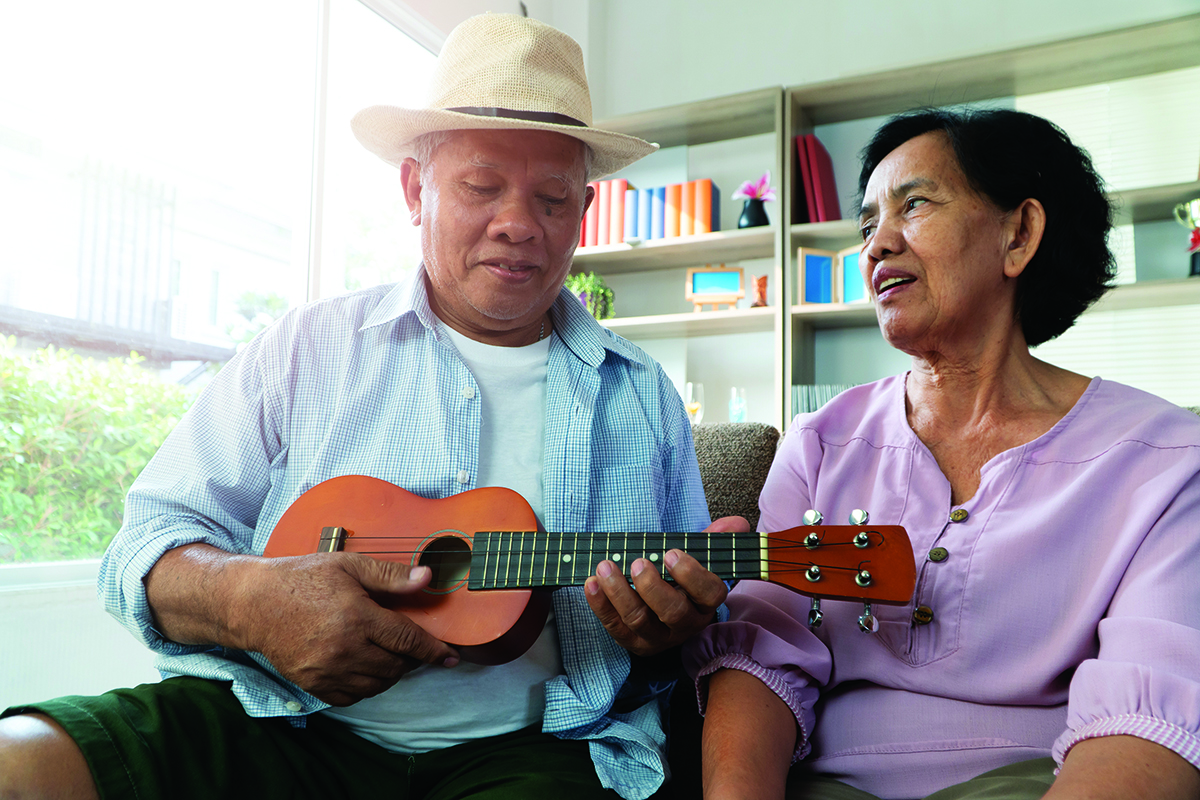
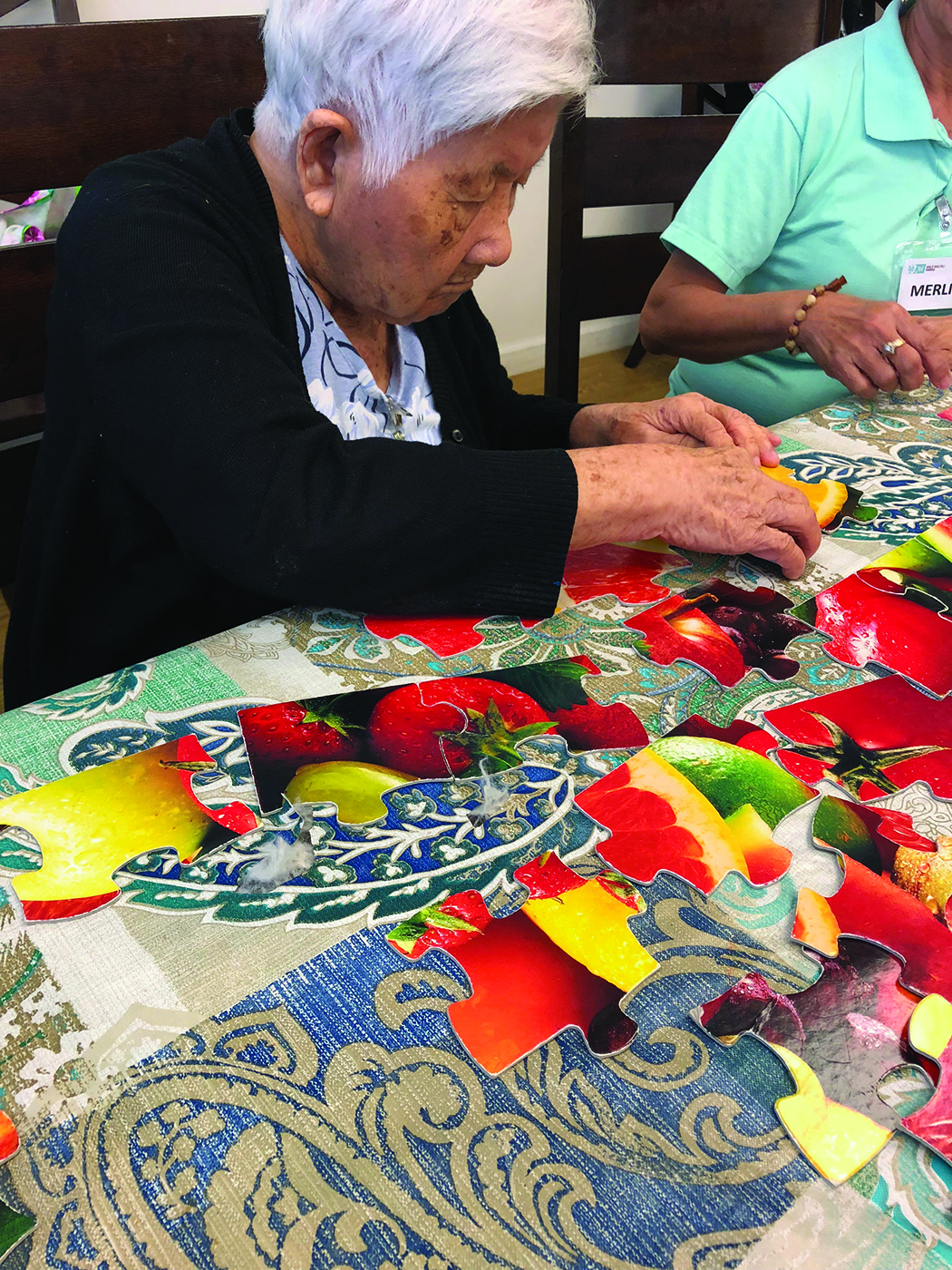
    Family caregivers can help by scheduling simple daily exercises and engaging them in activities, such as puzzles, singing, or arts and crafts. To help them socialize, set up FaceTime or Zoom meetings with friends and family.

    Other challenges and disruptions for seniors with dementia are the safety measures needed to prevent the spread of the virus. Seniors with dementia may not understand why they need to wear a mask and will refuse to do so willingly. They may not fathom the importance of thorough handwashing and must be assisted. They may not grasp the necessity of socially distancing from their loved ones.

    And the general public may not understand these aspects of dementia when they see a senior without a mask and not social distancing. Signage that explains why some seniors aren’t wearing masks might be helpful. To increase the public’s awareness, more emphasis on how dementia patients are affected by the pandemic could be discussed in statewide town hall meetings and televised press conferences.

    The state’s COVID-19 press conferences encourage everyone to wear masks to curtail the spread of the disease. Due to health problems, some people are not able to wear them — this includes some dementia patients.

    Health and safety come first, but tolerance and understanding are more important than ever.


    HALE HAU‘OLI HAWAI‘I
    98-1247 Kaahumanu St., Ste. 207, Aiea, HI 96701
    808-798-8706 | kwyatt01@aol.com
    www.halehauolihawaii.org

    The COVID-19 pandemic has affected everyone in some way. But our most vulnerable population, our senior citizens — especially those with dementia — are being particularly challenged. Our normal routines have been altered during the pandemic. This can be devastating for dementia patients, who thrive on the consistency of a regular routine.

  • The Medicalization of Family Caregiving

    Healthcare systems are changing, with radical implications for family caregiving. Cost-saving reductions in hospital stays ensure that patients are discharged “quicker and sicker.” Management of complex chronic care thus moves to the home, and responsibility for that care shifts from medical professionals to family caregivers. US family members have always provided the bulk of long-term care for older adults (around 80 percent). Now, in addition to assistance with activities of daily living (ADL) (e.g., bathing, grooming) and instrumental activities of daily living (IADL) (e.g., cooking, housekeeping), caregiving involves complex medical/nursing (M/N) tasks. Approximately 60 percent of family caregivers provide M/N care, which includes assistance with complex medication regimens, mobility devices, special diets, wound care, medical equipment (such as ventilators, oxygen tanks, suctioning tubes), catheters, IV fluids or meds, injections, blood glucose monitoring, tube feedings, home dialysis and ostomy care. Of those providing M/N care, approximately 35 percent perform three to four M/N tasks; 26 percent perform five or more.

    M/N caregivers are stressed. They worry they will make a mistake or hurt their care receiver. M/N tasks are emotionally difficult, especially pain management. Demands of providing special diets and incontinence care are constant and unending. Considerable skill is required to master complex procedures, recognize complications and side effects, and know when to seek additional help. Most claim they learned M/N tasks on their own. Peer support is rare. Although mandated in most states, caregiving instruction at hospital discharge is typically limited by time constraints to the most complicated tasks (tube feeding, suctioning, managing IVs), with less attention to more constant and anxiety-provoking demands, such as incontinence care or special diets.

    Decisions regarding severity of need and allocation of services should consider M/N tasks, in addition to ADL and IADL.

    A number of resources are available to reinforce initial M/N training:

    M/N Caregiving Instructional Videos and Resource Guides
    Home Alone Alliance™
    Videos on incontinence care, specialty diets, etc.
    www.aarp.org/nolongeralone
    Supporting Family Caregivers: No Longer Alone Videos on wound care, injections, etc.
    https://journals.lww.com/ajnonline/pages/collectiondetails.aspx?TopicalCollectionId=38

    Reports:

    Caregiving in the United States 2020 by AARP, National Alliance for Caregiving
    https://doi.org/10.26419/ppi.00103.001
    Home Alone Revisited: Family Caregivers Providing Complex Care by Reinhard, S.C. et al. (2019), AARP
    https://www.aarp.org/ppi/info-2018/homealone-family-caregivers-providing-complexchronic-care.html


    CENTER ON AGING — University of Hawai‘i at Mānoa
    2430 Campus Road, Gartley Hall, 201B, Honolulu, 96822
    808-956-5001 | map3@hawaii.edu
    www.hawaii.edu/aging

    Healthcare systems are changing, with radical implications for family caregiving. Cost-saving reductions in hospital stays ensure that patients are discharged “quicker and sicker.” Management of complex chronic care thus moves to the home, and responsibility for that care shifts from medical professionals to family caregivers.

  • Caregiving During COVID-19

    As overwhelming as it may be, we have the responsibility to guide our loved ones through this difficult time. Here are a few tips to help our care partners continue to provide care, compassion and find time for self-restoration.

    Ask your primary care physician for a telehealth appointment

    Telehealth is a visit with your doctor or specialist powered by digital technologies. It allows us to experience the physician visit without the travel and unnecessary exposure. In today’s society, it is difficult and somewhat scary to book appointments in person and get a PLWD to and from the doctor’s office. As a resident care manager caring for six ku¯ puna, I’ve found that telehealth appointments are easily accessible while allowing our ku¯ puna to stay in the comfort of their home. We spoke directly to the doctor within 15 minutes and were able to have all our questions answered.

    Learn how to use video call apps

    FaceTime, Skype, Zoom, GoToMeeting and any video call app will suffice for video calls. At this time, care homes are following strict CDC guidelines by decreasing visitations. Our residents and families are very understanding of these changes but also find it frustrating to be distant from each other. In lieu of regular in-person visits, we transitioned to scheduling Zoom meetings. All you’d need is a smartphone or laptop computer to allow you to have interaction with your loved one. Video calls, letters and phone calls are crucial to keeping our residents happy and fulfilled.

    Make time to care for yourself

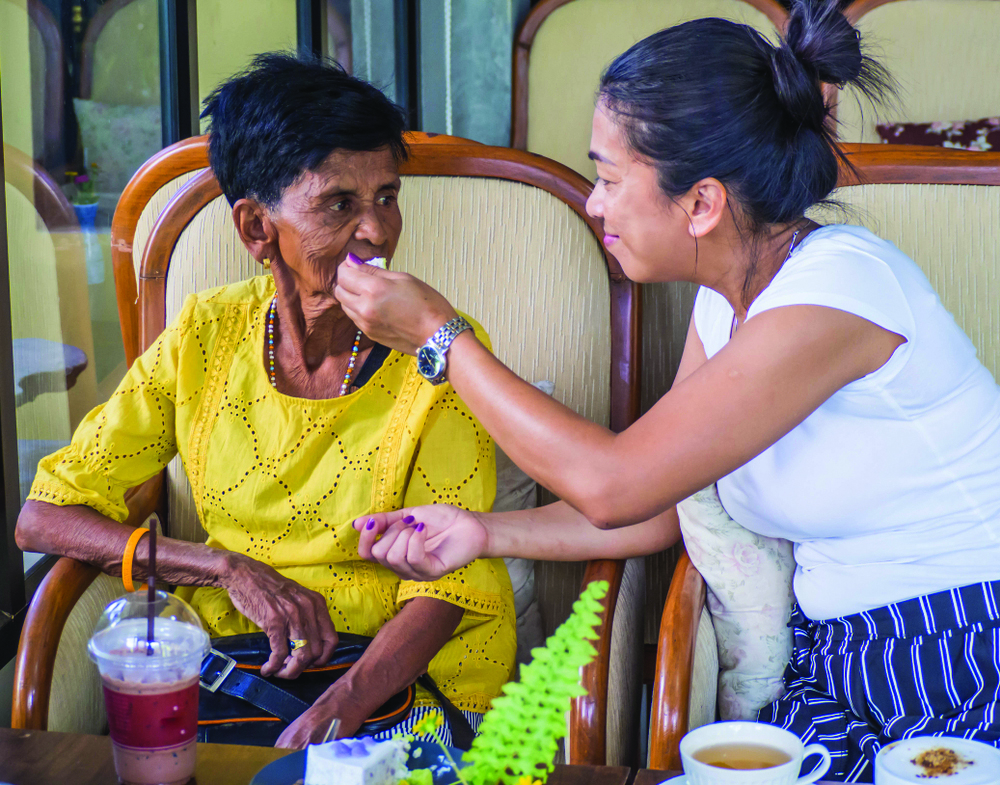
    Everyone knows that you need to put your mask on before a child’s in a distressed airplane. The same concept applies to caregiving. Burnout will happen if you don’t take precautions. Find a relief care partner for a few hours and take a break. Go somewhere that helps relieve your stress. Go for a drive, read a book, listen to music, enjoy a cardio workout or go for a walk. Taking breaks is vital in order to give sufficient quality care to our loved ones.


    KINA‘OLE ESTATE
    Adult Residential Care Homes
    808-233-4455 | beth@kinaoleohana.com
    www.kinaoleestate.com

    The COVID-19 pandemic has all of us dealing with additional stressors in life, and many of us may find that our abilities to deal with conflict and issues are short-fused. People living with dementia (PLWD) rely on their care partners to provide assistance with activities of daily living with kindness and compassion. PLWD also require…

  • Dementia & the Power of Music

    Music is often the background of many of our memories. We grow up hearing it on the radio, on TV and in concerts. We sang in school and at special events. We often associate certain songs with our relationships, happy memories, sad memories, growing up and different seasons of life. Because of its constant presence in our lives, music is deeply woven into our memories, and can offer hope and helpful tools to those whose memories are fading.

    When a person has dementia, different parts of the brain deteriorate along with his or her ability to engage in daily life. Memories become more difficult to access, but according to a 2009 study by Petr Janata at UC Davis, memories attached to music are housed in the areas of the brain that deteriorate at a later stage in dementia. This offers hope to be able to connect with those living with dementia for a longer time. At some point, we may not be able to ask the person, “Do you remember when?” But by playing a favorite song, we might be able to elicit a response.

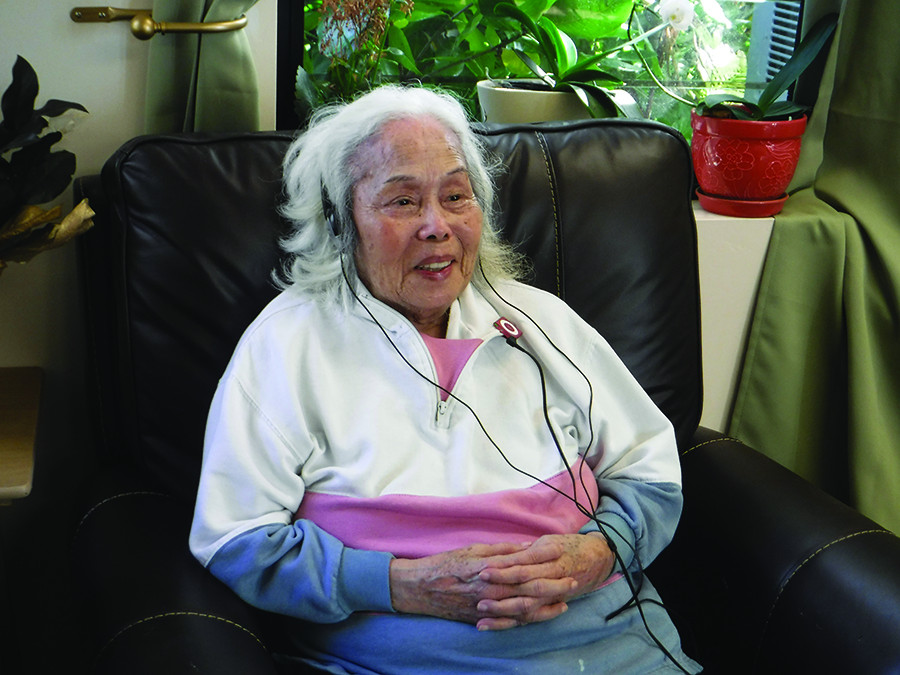
    Those in later stages of Alzheimer’s may sing along with parts of their favorite song. Others may open their eyes and look around after the music is turned on. One man was brought to tears after singing God Bless America, saying, “It reminds me of my Navy days.” In another case, a woman spends most of the day waving her hands to the beat of the music and is often in a better mood.

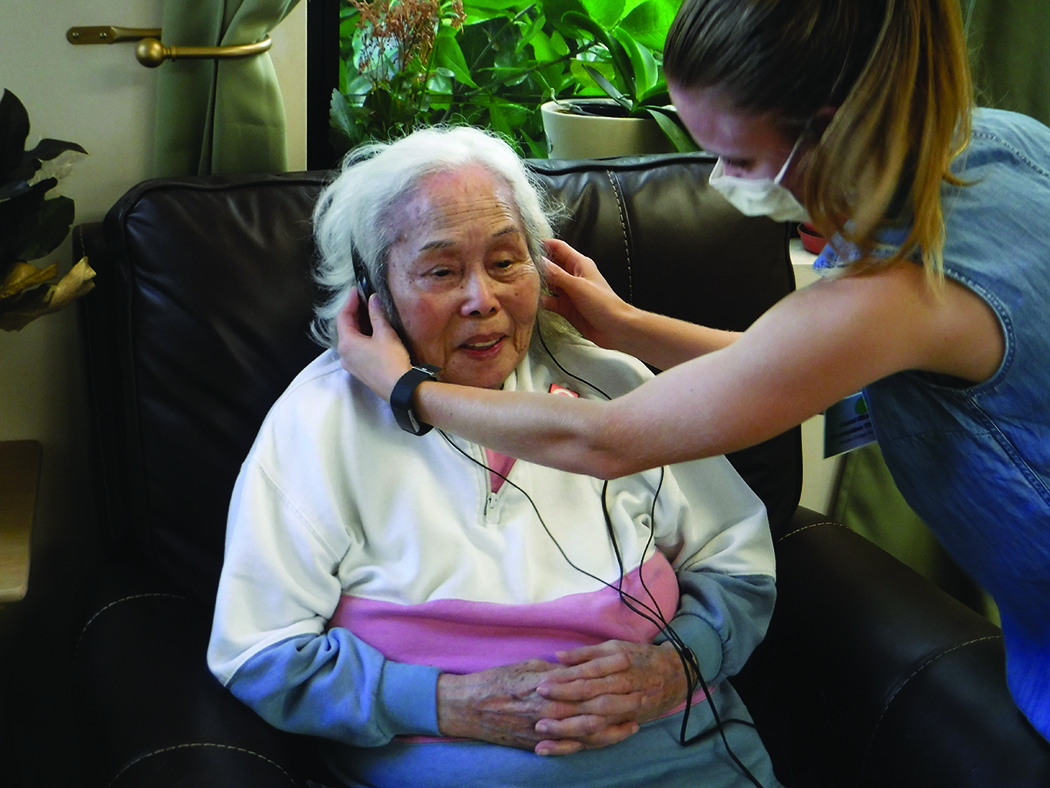
    Often, those with dementia can exhibit challenging behaviors. This is usually a response to something being “off” in their world. Listening to a familiar song that will evoke happy memories or emotions can reduce the fear that comes with confusion about where they are and what is happening. A 2017 study showed that facilities utilizing the Music and Memory program, which  provides personalized music on iPod shuffles to nursing home residents, showed a decrease in antipsychotic and anti-anxiety medication use when compared with facilities that did not utilize Music and Memory.

    So how do caregivers use music to enhance their loved one’s life? The first step is to determine what songs will be familiar and memorable. For the music to be effective, it must be something that person would enjoy listening to. Unknown tunes offer less benefit because they do not have  memories and emotions tied to them. Singing, playing music during bathing, dancing along to a beloved song and tapping along to the beat are all great ways to engage someone with dementia.

    Music can benefit both the caregiver and the individual with dementia by helping him or her to “remember” for longer, elevate mood, and provide familiarity and comfort in a world that is becoming more unfamiliar. Best of all, the caregiver can easily access all kinds of music.


    MANOA COTTAGE KAIMUKI
    748 Olokele Ave., Honolulu, HI 96816
    808-426-7850 | c.hickman@mckaimuki.com
    www.manoacottage.com

    Music is often the background of many of our memories. We grow up hearing it on the radio, on TV and in concerts. We sang in school and at special events. We often associate certain songs with our relationships, happy memories, sad memories, growing up and different seasons of life. Because of its constant presence…

  • When is it Time to Move Mom and/or Dad?

    Deciding when is the right time to find senior care for your kupuna can be an intimidating task. You want to provide the best care possible for them, but how do you know if it’s the right time; where do you start? First, understand and identify the level of care your senior needs to conduct day-to-day activities and care for themselves. Identifying your senior’s needs early in your search will help you understand the options available. Keep in mind that the level of care can change over time as conditions change.

    There are two main categories for long-term care solutions for seniors: senior communities and residential care homes. In senior communities, kūpuna live together in an apartment-like setting and interact with one another through daily, scheduled activities. They dine with other residents. In residential care homes, three to five seniors are cared for in a home-like setting. Residents get more individualized attention and all of their needs are taken care of.

    Finding great healthcare for your loved ones is hard to do on your own. Each year, we see hundreds of seniors in Hawai‘i finding themselves incapable of living independently at home.

    How do we get Mom and/or Dad out of the home when they don’t see the need, even though they have fallen multiple times?

    After a fall, your senior is feeling fearful and may be resistant to change. During gentle conversations over time, explain that finding care comes from a place of love and wanting them to live a safe and healthy life.

    What about dementia care?

    Questions to ask a care home or facility about a patient’s dementia care include:

    • Is the staff experienced in working with residents with dementia/Alzheimer’s?
    • What approaches are used to diffuse a situation with an agitated dementia/Alzheimer’s resident?
    • What kind of activities are available to help stimulate a resident’s mind and body?
    • Are they open to working with the resident’s geriatric team and family?


    CAREGIVER’S HEART
    91-1121 Keanui Drive, Ste. 108, PMB 193, Ewa Beach
    808-425-5101 | kuunani@caregivershearthawaii.com
    www.caregivershearthawaii.com

    Deciding when is the right time to find senior care for your kupuna can be an intimidating task. You want to provide the best care possible for them, but how do you know if it’s the right time; where do you start? First, understand and identify the level of care your senior needs to conduct…

  • Partnerships in Dementia Caregiving

    Hiring a home care aide represents a major transition in family caregiving, especially when the care recipient is a person with dementia (PWD), less able to express his or her needs. Initial encounters may stress both sides.

    Family members may feel uncomfortable letting a “stranger” into their home and feel guilty relinquishing caregiving tasks, and may feel uncertainty about the trajectory of dementia.

    The home care worker may feel anxious entering a work situation with many unknowns regarding expectations, demands and personalities. These suggestions can help families develop partnership relationships with home care aides:

    Clearly define expectations and duties:

    • Identify activities of daily living (dressing, toileting, eating) the PWD can’t do alone.
    • Agree upon a schedule of care and tasks.
    • Identify caregiving tasks a PWD (or family) prefers the care worker avoid, either because the PWD might feel uncomfortable or family members want to continue to provide it.
    • Provide important phone numbers and emergency procedures.
    • Develop backup plans for substitutes if the care worker cannot work.
    • Develop a system of communication, e.g., leave instructions in writing, develop checklists of completed tasks or problems, maintain a daily log of the day’s events.
    • Identify dietary requirements and restrictions, allergies, meds, exercise and endurance levels.
    • Agree on policies (smoking, eating, using the phone on the job, payment and benefits).

    The more the care worker knows about the PWD’s background, history and preferences, the better able he or she will be to converse, develop rapport and treat the PWD as a unique individual.

    Information family members might share with the home care worker:

    • Life history highlights
    • Persons who hold influence with the PWD (a physician, favorite child)
    • Pet peeves; ideas of appropriate behavior, habits and routines; food, entertainment and activity preferences; favorite conversation topics, e.g., pets, possessions, grandchildren
    • What upsets or triggers challenging behaviors
    • Special phrases or behaviors that may signal a need, signs of pain and other symptoms

    For more information about what you should know in order to develop a successful partnership relationship with a home care aide, go to this address.


    CENTER ON AGING — University of Hawai‘i at Mānoa
    2430 Campus Road, Gartley Hall, 201B, Honolulu, 96822
    808-956-5001 | map3@hawaii.edu
    www.hawaii.edu/aging

    Hiring a home care aide represents a major transition in family caregiving, especially when the care recipient is a person with dementia (PWD), less able to express his or her needs. Initial encounters may stress both sides.

  • When’s the Right Time for Memory Care?

    Memory care communities that first began appearing in the 1990s are an important care option today for the growing number of families caring for a person living with Alzheimer’s disease or other dementia. When considering memory care, look for a community with a rich and lively activity program, and staff who are well-trained in dementia care, and exemplify a caring and kind spirit.

    When should a family consider memory care? It’s a good option when a loved one:

    • Can no longer manage their own health (not taking their medications, poor nutrition or diet)
    • Is wandering away from home or physically unsafe (leaves the stove on, fall risk)
    • Demonstrates poor judgement and is at risk for elder or financial abuse (giving money to fraudulent charities, individuals)
    • Stops managing their personal hygiene and self-care (not changing clothes, not bathing)
    • Is lonely, isolated or in need of valuable, brain-healthy stimulation and socialization

    Families considering this move often feel guilt. But a person living with dementia can thrive in a memory care environment rich with friendship, meaningful activity and engagement, with well-trained staff providing quality personal care.


    THE PLAZA ASSISTED LIVING
    6 Locations: Kaneohe, Mililani, Moanalua, Pearl City, Punchbowl, Waikiki
    808-377-5292 | www.PlazaAssistedLiving.com

    Memory care communities that first began appearing in the 1990s are an important care option today for the growing number of families caring for a person living with Alzheimer’s disease or other dementia. When considering memory care, look for a community with a rich and lively activity program, and staff who are well-trained in dementia…

  • Alzheimer’s & Time

    Time can stop when memories are lost for a person with Alzheimer’s disease. At certain stages, the brain loses its recent (short-term) memories. The brain — and therefore, the present — is in the past for those with memory loss. Current thoughts are drawn to distant memories. Familiar people and places from long ago are at the forefront of the mind, even though those people may no longer be alive and those places have most likely changed. Because long-term memories can be intact for most Alzheimer’s patients, they often think they are much younger than they are chronologically. For example, it is not unusual for a medical professional to ask the patient what year it is during an exam. The patient’s answer may often reflect a time 20 to 30 years earlier. This question establishes his or her orientation to time. The absence of this orientation is a classic sign of memory issues and could indicate Alzheimer’s or another form of dementia.

    Memories from long ago can be triggered while driving through a neighborhood — searching for an old friend’s home can become an obsession. Houses and streets may look different; unrecognizable. This can be upsetting and puts pressure on family members to explain why visual expectations do not match the individual’s recollection. Avoiding the neighborhood is one idea; however, conversations can take a difficult turn when it comes to people who have passed or moved away. Here are some tips to create reassurance when these lapses in memories occur:

    • Find a quiet and calm environment, and sit with the individual.
    • Speak with compassion. The person may be afraid and appear overwhelmed.
    • Understand the timeframe this person is in. This is the reality he or she has chosen to remember.
    • Talking about this timeframe will help him or her feel safe.
    • Use photos to help them realize that time has passed. Suggest a correction, but do not scold with comments such as “Oh, we moved out of that house over 20 years ago!”
    • Offer distractions to encourage his or her brain to move to another topic.
    • Be patient and understanding; these memories will come up repeatedly.

    Loss of memory also takes away relationships that may have been important. Family and friends need to understand that being forgotten should not be taken personally. Relationships with loved ones who suffer from dementia should not be judged by how well that person can remember the past. Instead, the focus should be on maintaining a personal and heartfelt connection in the present. Try some of t these ideas to foster the memories that remain intact:

    • Play familiar music.
    • Watch old films with familiar actors/actresses.
    • Pull out old photos. You may even learn something new about the people in them!
    • Enjoy memories as if you were there with them while you listen to their stories again and again.

    We all spend time in the past, reliving cherished memories. The feelings of joy and accomplishment this creates should be valued for the difference they make in the present.


    ATTENTION PLUS CARE HOME HEALTHCARE
    Accredited by The Joint Commission
    1580 Makaloa St., Ste. 1060, Honolulu, HI 96814
    808-739-2811 | www.attentionplus.com
    AGING IN HAWAII EDUCATIONAL OUTREACH PROGRAM
    by Attention Plus Care — a program providing resources for seniors and their families, covering different aging topics each month. For class information and upcoming topics, call 808-440-9356.

    Time can stop when memories are lost for a person with Alzheimer’s disease. At certain stages, the brain loses its recent (short-term) memories. The brain — and therefore, the present — is in the past for those with memory loss. Current thoughts are drawn to distant memories.

  • Reflections on a Caregiving Journey

    Mom at the Bicol Club of Hawaii’s 40th anniversary.
    Mom at the Bicol Club of Hawaii’s 40th anniversary.

    My mother, Paz Pontillas Celebrado, graduated from college in the Philippines and dreamed of coming to America to start her nursing career. Her dream came true when she fell in love with my father, Felipe Celebrado, a U.S. Navy man. They immigrated to America in 1959 and she adjusted to a new life as a military wife and mother, and as a nurse for the next 40-plus years.

    She expanded her traditional nursing role, becoming a home- and community-based case manager. In addition, my mother was one of the first care/boarding home operators in the state.

    Mom and Dad in 1959 on their arrival to the states.
    Mom and Dad in 1959 on their arrival to the states.

    Having been exposed to what it takes to be a care manager at a very young age as I watched my mother tend to disabled clients in our home, I followed in my mother’s footsteps. I pursued a social work degree from the University of Hawai‘i at Mānoa and eventually worked at HMSA as a care coordinator, supervisor and manager.

    After nearly 20 years at HMSA, I realized that my husband and I had become members of the “sandwich generation,” caring for three children and aging parents. When my father became seriously ill in 2008, my mother embraced her role as his personal nurse until he passed away from lung cancer in 2009.

    But after he was gone, my mom began showing signs of mild dementia or cognitive impairment. I left HMSA and looked for a job that would allow me to work from home. I found an opportunity as a community outreach liaison with Urgent Care Hawaii, working alongside a longtime case management colleague Donna Schmidt, owner of the company. Finding employment that allowed remote work provided me the flexibility I needed to earn an income while raising our children and caring for my mother in our home.

    This is what I learned through my experiences as a caregiver.

    My niece, Juliana, graduated from college in 2017. Mom was always proud to attend any of her family’s celebrations.
    My niece, Juliana, graduated from college in 2017. Mom was always proud to attend any of her family’s celebrations.

    ■ Caregiving is a marathon, not a sprint. It’s a cross-country run with highs, lows and unexpected obstacles. Be prepared and plan for the long course. Read, attend caregiver workshops and join caregiver support groups. Learn what resources are available at every stage of the journey.
    ■ Plan around your loved one’s abilities. My mom always loved grocery shopping and going to Longs. So when she lost her ability to drive, I signed her up for services through Project Dana, which provided my mom with three volunteers who would take turns taking her shopping. She relished her outings!
    ■ Identify what brings them joy. Surround your loved one with those whom they are familiar with and those who will bring them comfort. Is there a church group, civic group or volunteer group that your loved one enjoys? For my mom, it was her Filipino club — The Bicol Club of Hawaii. The social connection, and common native language, food and culture provided the comfort my parents needed in their final years. My mother enjoyed attending celebrations and events that would make her feel socially connected and valued. During her final months, members of the Bicol Club would bring her favorite foods that would stimulate her declining appetite. It was great to have the support and respite provided by familiar faces and friends who could bring back memories of better times for my mother. If you have that kind of social connection available, utilize these invaluable relationships.
    ■ Practice self-care. As a caregiver, you need a break. You cannot be a caregiver 24/7 without experiencing burnout. Schedule time for yourself to recharge your batteries. Find a niche, hobby or interest that will provide that little slice of happiness to escape from day-to-day caregiving. Exercise regularly. I have heard too many stories about caregivers who begin to experience health issues due neglect of their own health after the loved one passes away.
    ■ Make memories as you provide caregiving. Embrace the time you have with your loved one by including them in celebrations, special occasions and travel plans. My mother was able to travel until a year before she passed away. I became a specialized travel agent, planning all details of the itinerary. Anticipatory planning included identifying urgent and emergent medical services available in transit and at our destination. Packing included durable medical equipment and devices, sufficient medication for the entire trip and packing that extra change of clothes. The memories spent with dear family and friends were priceless and helped my mother feel a sense of completion as she checked off items on her lengthy bucket list.
    ■ Leverage all the support you can. The last 10 years were not easy. I could not have done it without the support of my family. As the primary caregiver, I controlled the calendar and coordination of schedules. I was the quarterback. But we were a team. Fortunately, there were builtin advantages  in our multi-generational home, where we were able to provide 24/7 care for my mother among us all.
    ■ Cultivate good relationships with each member of your loved one’s healthcare team. My parent’s PCP took care of them for over 40 years. He was always available to help me navigate and  coordinate my parents care needs. The supportive services provided by Project Dana, St. Francis Hospice – Bereavement Support Group and Hospice, Kupuna Care Hawaii, Urgent Care Hawaii and  Hale Hau‘oli Adult Day Care were the foundational support that allowed me and my family keep my mom comfortable in her own home until the very end.
    ■ You are your loved one’s patient advocate. If they are no longer able to communicate their needs, then you must. You need to have the conversations early in the caregiving process to understand the care preferences and wishes in order to honor their wishes. There may be conflicts that arise within the family and it is important to remember that the focus should be on your loved one. It is important to consider a good mediator or elder care attorney if you and your family are not able to represent your loved one’s wishes.

    Mom passed away in 2019 according to her wishes; peaceful, at home, surrounded by family and dear friends. I can look at the last 10 years of caregiving with no regrets and feel blessed with great memories. I wouldn’t have done it any other way. I hope these reflections on my caregiving journey will help you in yours. You have an incredibly difficult job, but it can be do-able with the right plan, support team and resources.


    CAREOPS CONSULT LLC
    808-778-2752 | melissacareopsconsult@gmail.com
    Provides healthcare consultation services to organizations that need
    assistance with business development, project management, product or
    program development.

    Having been exposed to what it takes to be a care manager at a very young age as I watched my mother tend to disabled clients in our home, I followed in my mother’s footsteps. I pursued a social work degree from the University of Hawai‘i at Mānoa and eventually worked at HMSA as a…

  • Emmet White at the Arcadia… life care without walls

    Emmet White at the Arcadia… life care without walls

    Emmet White—local attorney turned retirement community CEO—offers us insight into the business of aging in Hawai‘i. At Arcadia Retirement Residence he sees firsthand the costs and benefits of senior care.

    You may know Emmet White from his previous life as a local attorney, board member of Central Union Church or Colonel in the Hawai‘i Army Reserves; however, most know him for his work as President and CEO of Arcadia Community Services, the holding company for Arcadia Retirement Residence, Craigside Retirement Residence, The Arcadia Foundation, Arcadia Edler Services and Arcadia Home Health Services.

    Emmet explains The Arcadia Family of Companies’ approach to senior care, including its future plans for “life care without walls”—or homebased care—a concept that combines services so that residents can age in place at home.

    In addition to what retirement communities such as Arcadia are doing to serve seniors, Emmet says that ‘seniorhood’ as a whole needs to be reshaped. Times are changing. The demand for senior care is exceeding supply, and the effects of Health Care Reform are yet to be known. He says that smart use of technology, medical care and education are critical for successful health care in Hawai‘i. However, he cautions, on a personal level, each of us needs a shift in attitude about saving for our senior years. It’s up to all of us to bear the cost of our own senior care, as best we are able, to ensure quality of life in our later years.

    GM: With your family on the East coast, why did you decide to move out to Hawai‘i? Having been here for 40 years, are you here to stay?

    EW: I had roomed for a year in college with a fellow from Hawai‘i, and gorgeous warm weather all year round was very appealing to me. In 1971, I talked with my wife of 1½ years, Betty, about going to Hawai‘i and seeking jobs. With some hesitation and misgivings she said, Okay. When we arrived in Hawai‘i in late 1971, my former college roommate’s family was very welcoming and supportive to Betty and me. As fate would have it, I passed the Hawai‘i bar exam and was hired by a small law firm. Betty was initially hired as a parttime history teacher at Sacred Hearts Academy (she is now the Head of School). We haven’t had anytime to look back since!

    GM: What do you love most about Hawai‘i?

    EW: I love the beauty of Hawai‘i’s weather and the people who live here, as well as the opportunity to raise a family and work all these years with Betty at my side.

    GM: What is something people don’t know about you?

    EW: For 10 years, in my youth, I was a drummer in a summer community band on the New Jersey shore, which gave weekly concerts on the boardwalk. I enjoyed this “gig” very much!

    GM: What is your favorite restaurant? EW: Betty and I have three favorites: Paesano’s in Ma¯noa when we have a yearn for Italian; Ruth’s Chris at Restaurant Row when I have a yearn for a good steak; and, Panya at Ala Moana Center when we’re alone, hungry and worried about eating too much!

    GM: You and your wife Betty White of Sacred Hearts Academy must have very busy lives. What do you guys do for fun?

    EW: Betty and I like to be quiet together when we’re not on the go—we both enjoy reading, or a special trip with just the two of us! I also enjoy an occasional round of golf. We enjoy entertaining—I do the food shopping and Betty does the cooking. Much of our free time is spent with three grandsons, all under the age of 3 years old.

    GM: What is a good day for just you?

    EW: Our Arcadia companies are devoted to providing quality care and services for our seniors. During the day I see a cheerful outlook and many little acts of love and kindness by, between and among our staff, residents and our families and friends. As I reflect on the day, usually during my drive home, I say a short prayer of thanks, and believe that life is good!

    GM: Any hobbies other than work?

    EW: For years I enjoyed playing softball in the lawyer’s league on Saturdays (I’m long retired), and, for now, keeping an eye on our young grandboys when their parents are busy is the hobby of choice!

    GM: What motivated you to go from the legal field to working with seniors, and how was the transition?

    EW: In 1995, Arcadia, on which I had served as a board member from 1983, was at a crossroads needing new leadership and direction. Based on discussions with the Directors, and after conversations with my family, I decided to give this leadership role a try. The small law firm of which I was a member, was disappointed, but was supportive of my move from the active practice of law to my working at Arcadia. The transition from law practice to a leadership role in senior living and health care services was quick and with no regrets or second-guessing. Over the last 15 years we have honed our senior care skills and developed six related companies to provide vital services for our kuˉpuna.

    GM: What have you learned from your residents that inspires you?

    EW: I have found that when you sit quietly, listen and ask good questions, you will find in each senior resident, participant or client a unique past with wonderful experiences, insights and a special brand of wisdom that produces volumes of valuable and enjoyable knowledge for you and your fellow workers. I am also inspired daily by the great devotion to each other I witness in the couples that reside at Arcadia.

    GM: Any favorite stories or residents that you can share?

    EW: Indeed, there are volumes of stories, but one that is emblazoned in my memory is that of a beautiful, very petite, 95-year-old resident, whom I had known for years. She had finally agreed to be with us in our Health Care Center. Cancer was taking its toll. When I came to visit with her a few days after her move, she informed me that she had only $50,000 left. Taken back by her direct comment, I remember asking, “What, Marge, do you want to take it with you?” We both had a hardy laugh, and I told her that we would not speak of money again. Then, with her piercing wide and deep blue eyes, looking up at me with a look that at once combined wonderment and joy, she asked, “Emmet, what do you think Heaven will be like?” A host of thoughts cascaded through my mind, as I knew Marge, a wonderful person and friend, would soon be embarking on her journey beyond. I remember saying to her, “All I know, Marge, is that if St. Peter gives you any trouble, I’m doomed to purgatory forever.” A couple of months later Marge passed. But, her query always flashes before me when death is addressed, and her expression, as the start of her journey neared, has always been an inspiration to me for what awaits us beyond our life on Earth.

    GM: What do your residents love most about Arcadia?

    EW: There are many reasons that seniors reside at Arcadia. I believe one of the initial reasons people chose to reside at Arcadia is the promise of lifetime care, including long-term assistance, should the need ever arise. But, I think that what most residents come to love about Arcadia is being a part of a caring community where dignity, companionship and the environment bring joy and good quality to life everyday

    GM: Are you planning to, or could you see yourself, living in Arcadia later on in life?

    EW: With the average age of entry for Arcadia at 80 years of age, in a nutshell, if I live that long and Betty sees the value at the time, Arcadia (and 15 Craigside)—if affordable for us—are very attractive options for Emmet’s and Betty’s “very” senior years!

    GM: Do you see more retirement communities like Arcadia coming in the future?

    EW: No doubt. On the Mainland, there will be more retirement communities similar to Arcadia in the future. And, while the metrics suggest that Hawai‘i needs more senior living facilities, the cost, as well as the government permit and development processes in Hawai‘i, may be too prohibitive for the design, planning, construction and operation of a new Continuing Care Retirement Community (CCRC), especially for that amorphous middle class of Hawai‘i seniors who are too poor to be rich, and too rich to be poor.

    GM: What is your opinion on the new Medicare reforms?

    EW: The 2010 Medicare reforms come with a substantial price tag:

    ■ higher/new taxes on the well-to-do

    ■ taxes on annual health insurance plan premiums that are more than $10,200 per individual (e.g. 40% of that cost)

    ■ new fees on the health care industry (supposedly because they’re getting new customers)

    ■ cuts in Medicare spending

    While these reforms promise better coverage, the “redistribution” of benefits may not produce overall satisfactory results.

    Of course, change and adjustments in senior health care and services are inevitable. I do think that people need to adjust ambivalent attitudes about devoting personal wealth and assets to one’s care in their senior years. We also need to embrace the smart use of technology, medications and clinical care. Adjusting attitudes will have a lot to do with the future success of our huge and expensive health care system.

    GM: What is your vision for health care in Hawai‘i?

    EW: The smart use of technology, medications, and medical and clinical care are critical to future successful health care in Hawai‘i, as is consistent and continued education on health care programs and services for seniors and their families. There needs to be a major change in consumer attitudes regarding the responsibility for personally bearing much greater costs for our own senior care and long-term care. Senior long-term care and services are not and cannot be a government entitlement program.

    GM: Obviously not everyone will be able to live in Arcadia even if they wanted to as there are not enough beds. In your opinion what is our future look like for long-term care?

    EW: Statistically, long-term care is a possible factor in every senior’s future. But, no one knows, and the data is unable to tell us specifically, who will need it and for how long it will be required. Private enterprise and government must work in close collaboration with each other to maintain a strong safety net for those less fortunate. Nursing facilities are, and will be, needed to deal with the more intense sub-acute care required for indigent nursing home residents, as well as private pay nursing home residents, which home- and community-based programs cannot reasonably and responsibly handle.

    GM: Home-based care is where most families have the challenge to care for their loved ones, is there any easy fix?

    EW: There is no “easy fix” for home-based senior care. The Arcadia Family of Companies’ approach to senior care and senior services in the greater community has been evolving. We are pursuing the concept of “life care without walls.” This business concept involves the need to develop the right combination of the following elements for residents who are aging in place in their homes and apartments:

    (1) a reasonable financial posture

    (2) a reasonable and comprehensive cost schedule

    (3) a care coordinator

    (4) home/apartment inspections with appropriate maintenance for a senior’s safety and convenience

    (5) at least, personal annual geriatric assessments and acceptable health planning and focus

    (6) an emergency response system

    (7) appropriate in-home assistance with one’s activities of daily living

    (8) transportation, as needed

    (9) meals, as needed

    (10) access to a location with social and wellness programs, including programs and therapies at Arcadia and 15 Craigside

    (11) companions, as needed and as planned

    (12) referral to sub-acute facilities, as may be required.

    Another part of the “fix” is the recognition that one has to assume personal responsibility for the cost of a better quality of life in one’s senior years. The government may provide some help, but, generally, the lion’s share for senior care and services should, and must be borne by the senior.

    GM: Do you plan or want to live to 100?

    EW: It isn’t my call on reaching 100! If I am given the privilege of a longer life (at 64, I think I’ve just embarked on “those senior years”), I hope my quality of life will be good, so I prepare for the future by trying to adhere to the sound and popular core values we share at the Arcadia companies, as well as saving some money for the “senior costs” Betty and I might face!

    GM: Thank you for this wonderful interview. How would you like to sign off to this?

    EW: Thank you, Percy, and Generations Magazine for the opportunity to talk about thinking, learning, and planning with our families and loved ones for our anticipated walk into an exciting and rewarding “senior” future.

    Emmet White—local attorney turned retirement community CEO—offers us insight into the business of aging in Hawai‘i. At Arcadia Retirement Residence he sees firsthand the costs and benefits of senior care.

  • The Caregiver Foundation: Your First Steps on the Care Giving Journey

    The first few steps on a care-giving journey can seem fairly simple but within just a few days the path turns rocky and is full of turns and twists that confuse even the most experienced caregiver or capable family member.

    The Caregiver Foundation is a Hawai‘i-based, not-for-profit organization that supports the practical and emotional needs of caregivers and those they love. Its Caregiver Support Groups are complemented by extensive on-line support at www.thecaregiverfoundation.com. The support groups meet once a month at various locations, where caregivers learn about issues from experienced professionals. More importantly, the groups provide caregivers an opportunity to share their experiences, frustrations and successes. The popular four-session Caregiver Boot Camp is held, free, wherever requested.

    The foundation also provides direct services, ranging from professional money management to comprehensive care coordination services. Some services are provided at no cost and others have fees at substantially lower rates than found commercially. Community speakers, family consultations, resource articles, and an on-going information and referral service are just some of the foundation’s services.

    Along the way of care giving, you might discover that love is not enough. What do you do when taking care of loved one at home doesn’t work?

    Telling Mom she was moving to a nursing home was the hardest thing I have ever done …

    Moving your loved one to a nursing home is difficult. He or she may feel abandoned, unloved, rejected. There may be angry accusations and emotional pleas. You may even feel guilty for making the decision.

    But GUILT is an emotion that results from having done something wrong and identifies actions that should be changed. It is often misused in care giving. If we took Mom to the side of the forest and left her there, then we would have done something wrong, and could feel appropriately guilty.

    Choosing a nursing home is not deciding to give up caring for your loved one. It is recognizing your own limitations and understanding that sometimes the best care is not always your care. And the best place of care may not be in your home.

    Choosing to move someone to a home has to be done after taking into account the broader situation. Remember—there are no right choices— every decision you make is wrong for somebody. So caregivers often deal with feelings of regret, anger, failure, disappointment and grieving. These emotions require that you have patience with yourself. Try to understand your loved one’s feelings, and have a clear understanding of how the facility operates.


    The Caregiver Foundation of America—Hawai‘i Chapter helps caregivers, and those they love, with practical and emotional assistance. Visit www.thecaregiverfoundation.com or call (808) 625-3782.

    The first few steps on a care-giving journey can seem fairly simple but within just a few days the path turns rocky and is full of turns and twists that confuse even the most experienced caregiver or capable family member.

  • Skilled Nursing Care After a Hospital Stay

    Seniors who experience a fall or stroke, or undergo surgery may be surprised they can be discharged from the hospital fairly quickly. That’s good and bad news. Seniors may be happy to leave the hospital but may then be disappointed to learn they cannot return home.

    They often must first receive ongoing, skilled nursing care and rehabilitation services, such as physical, occupational or speech therapy. Depending on their condition and other various factors, this could be a short-term stay or a longer stay.

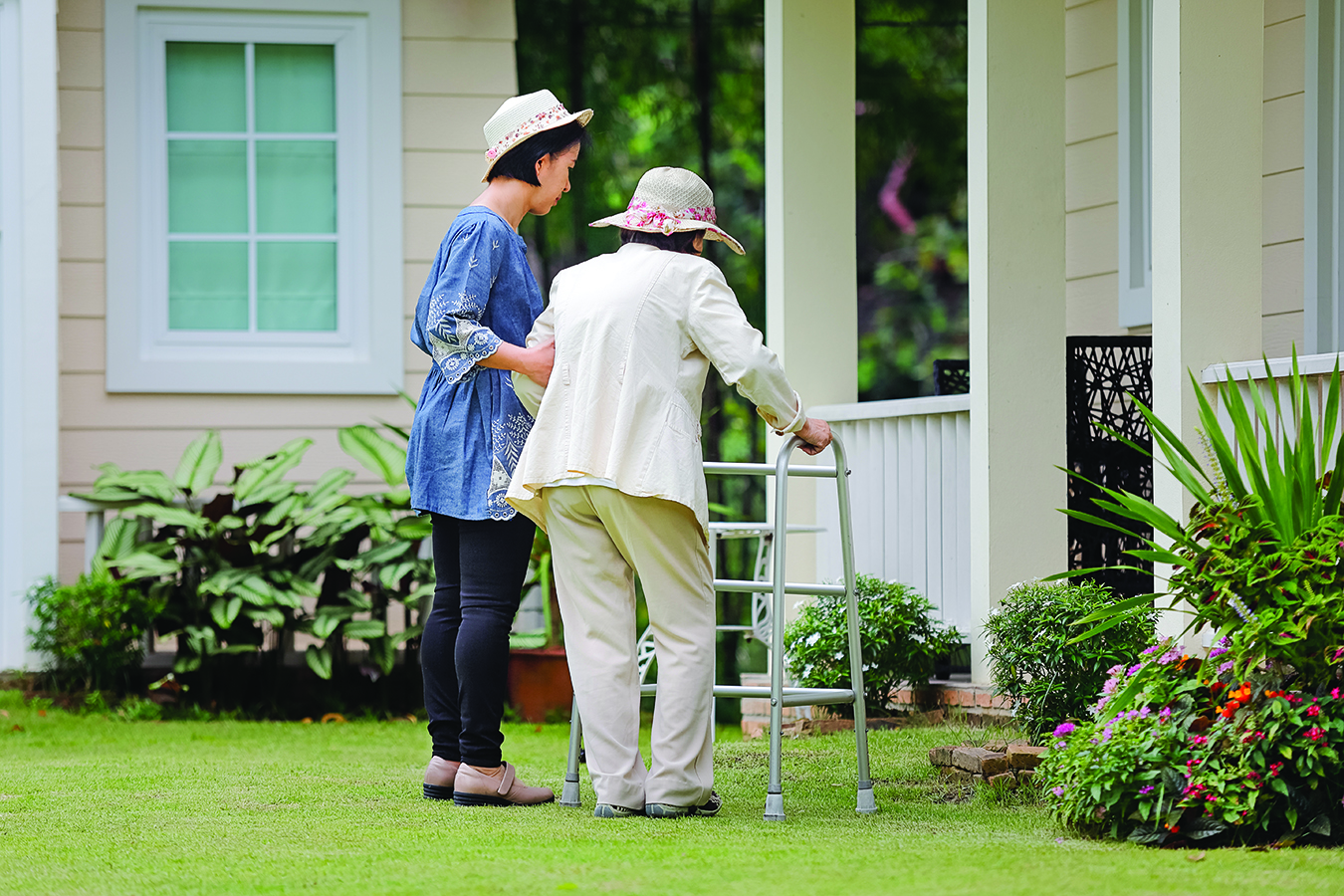
    Family caregivers may want their loved one at home, but may not have the capability to provide the specialized care their loved one needs.

    Seniors and their caregivers must make decisions quickly regarding finding a skilled nursing facility. Many may not know where to turn.

    Since each of us will likely need long-term care at some point in our lives, we should identify potential facilities we prefer well before our actual time of need.

    It is wise to do this homework in advance to help alleviate undue stress at an already stressful time.


    KALĀKAUA GARDENS
    1723 Kalakaua Ave., Honolulu, HI 96826
    808-518-2273 | Ruth.Kawano@kalakauagardens.com
    www.kalakauagardens.com

    Seniors who experience a fall or stroke, or undergo surgery may be surprised they can be discharged from the hospital fairly quickly. That’s good and bad news. Seniors may be happy to leave the hospital but may then be disappointed to learn they cannot return home.