Category: Giving Care

  • Does Mom Need More Help?

    How do family members prepare for the day their senior needs more help? The kind of help that requires loved ones to re-prioritize their lives. If only there were a date set aside for this change in everybody’s life. Planning on change at this level has never been easy because a plan may not be in place. A sudden fall, or illness could change everything and it could happen at any time.

    Our seniors can have active lives up until the day they don’t. Family members may have to change directions, suddenly. This may involve taking time off work and moving other commitments to the back burner. There are some signs that show us our senior may be needing a bit more help. Here are a few to look out for:

    • AGE — The older your senior is, the closer they will be to needing help, especially if they are slowing down physically.

    • MEMORY — Forgetfulness could be a sign of illness affecting the brain or other systems, but it generates worry for family members who leave their senior alone for long periods of time.

    • DRIVING — If your senior is not driving anymore, because it is not “safe” due to visual problems, mobility issues, or cognitive concerns, this may be a sign that other tasks may not be as easy for them as well.

    • WEIGHT LOSS OR DEHYDRATION — These are real concerns that indicate they are not eating or drinking enough. Frequent urinary tract infections may indicate not enough fluid intake or poor personal hygiene in the bathroom.

    • UNPAID BILLS/UNOPENED MAIL — Seniors like to have control over their finances until there comes a day when they stop opening their mail. This is a clue they are either forgetting or it’s not a priority for them anymore.

    FREQUENT PHONE CALLS AT WORK — If family members are receiving frequent calls during the day from their senior, it may mean things are about to change. This can indicate loneliness, forgetting that they just called, or anxiety about something they cannot control.

    • FALLS — This could be the “last straw,” especially if there is an injury. Family members may have to find outside help, to monitor their senior for safe mobility while they are away at work.

    Just like planning ahead for disasters, planning for the day your senior needs help should be a priority. Life can be busy and noticing some of the scenarios listed above should be on your radar. Of course, your senior will deny they need help, and may say something like, “I don’t want you to worry about me, I can take care of myself.” If you feel that twinge in your gut telling you that what you are seeing is not consistent with what they are saying, don’t ignore it! Now may be the time to move into a different role for your senior, or ask for help.


    ATTENTION PLUS CARE HOME HEALTHCARE
    Accredited by The Joint Commission
    1580 Makaloa St., Ste. 1060, Honolulu HI 96814
    808-739-2811 | www.attentionplus.com

    AGING IN HAWAII EDUCATIONAL OUTREACH PROGRAM
    by Attention Plus Care — a program providing resources for seniors and their families, covering different aging topics each month. For class information and upcoming topics, call 808-440-9356.

    How do family members prepare for the day their senior needs more help? The kind of help that requires loved ones to re-prioritize their lives. If only there were a date set aside for this change in everybody’s life. Planning on change at this level has never been easy because a plan may not be…

  • Having Help Close at Hand if You Fall

    Every 13 seconds, an older adult is seen in an emergency department for a fall-related injury. Lower-body weakness, difficulties with walking and balance, and vision problems can make a person more likely to fall. Other causes include home hazards and clutter.

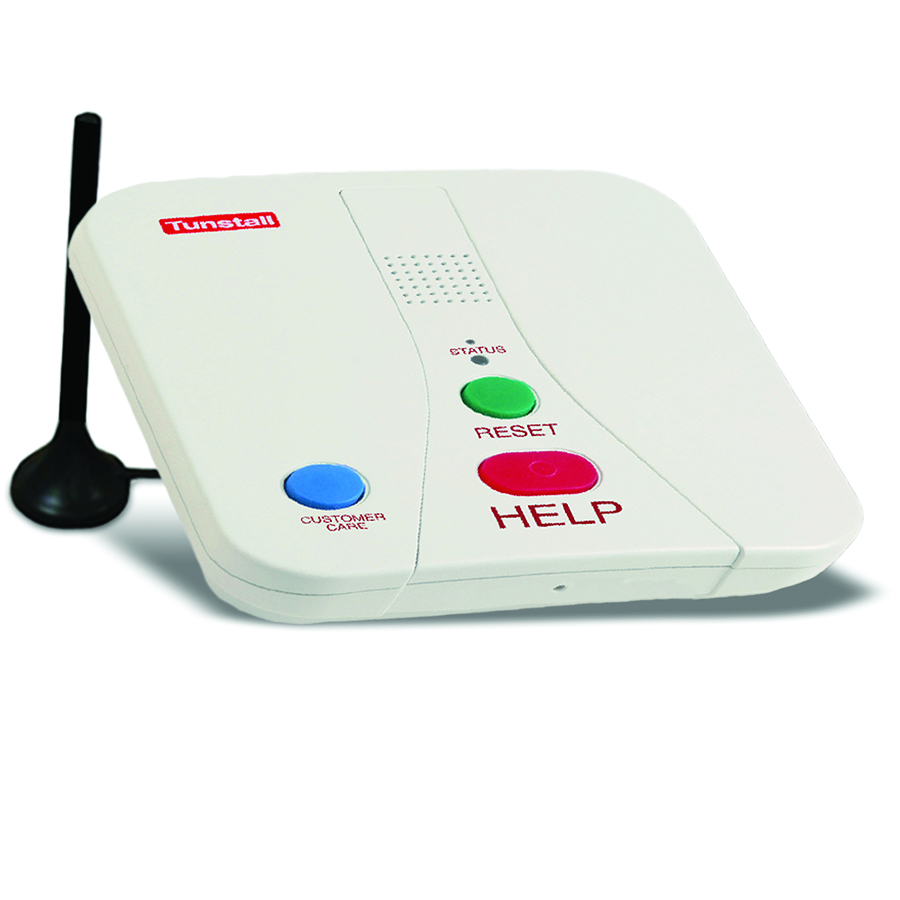
    Having a medical alert system can reduce a person’s risk of not being able to receive timely treatment, by obtaining immediate medical assistance in the event of a fall or emergency. Another benefit is that they can also enable kūpuna and anyone with long-term healthcare needs to live independently in their home and community for as long as possible. Not to mention giving peace of mind to other family members!

    What to look for in a medical alert system

    • A comprehensive range of sensors that monitor home environments unobtrusively for high-risk events, out-of-pattern activities and emergencies.
    • Connection to trained professional operators, available 24/7/365 via in-home or mobile tech-nology devices, to help people during emergencies and crisis situations.
    • A trusted company that partners with healthcare institutions and government agencies to identify and assist those in need of services.
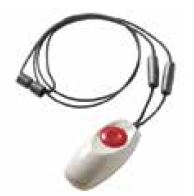
    CEL 500 device
    CEL 500
    Amie Lanyard
    Amie Lanyard
    Belle device
    Belle

    —————–

    TUNSTALL AMERICAS
    98-030 Hekaha St, Ste. 4, Aiea HI 96701
    808-721-1201  |  www.americas.tunstall.com


    Every 13 seconds, an older adult is seen in an emergency department for a fall-related injury. Lower-body weakness, difficulties with walking and balance, and vision problems can make a person more likely to fall. Other causes include home hazards and clutter. Having a medical alert system can reduce a person’s risk of not being able…

  • MemorC: A Free Memory Aid

    One of the challenges for caregivers of those with Alzheimer’s and other forms of dementia is finding ways to engage their loved one or patient in tasks that strengthen the ability to recall who people are and what their relationship with them is.

    Photo of Dr. Warren Wong
    Dr. Warren Wong

    Dr. Warren Wong, a local geriatrician with decades of experience working with such patients, took on that challenge and has developed a free iPad app to fill that need: MemorC.

    How does MemorC work?

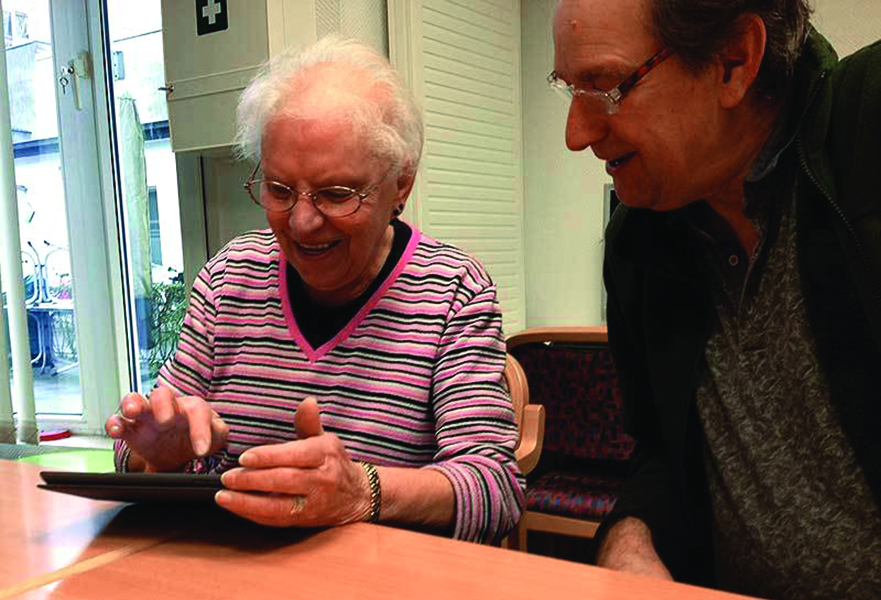
    A family member, friend or caregiver downloads the app. This person is called the “administrator.” The administrator uses the app to provide some basic information and a photo of the person with memory problems. The administrator also provides some information and photos of loved ones.

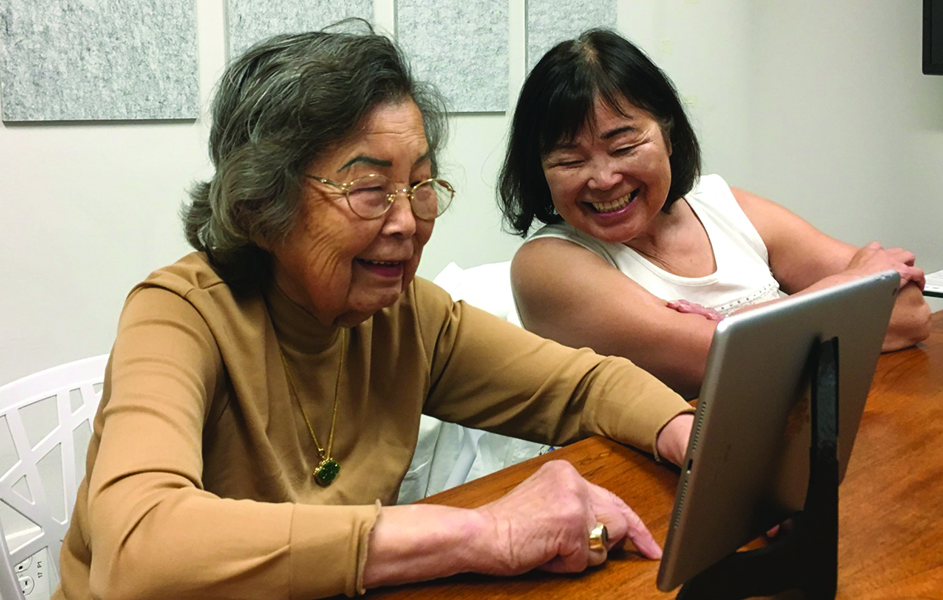
    The person with memory problems then plays with the app, picking out pictures of loved ones from an assortment of photos of people. They are also asked to name them and identify how they are related. Another part of the app, Suzanne Chat, asks them some questions which can be answered with any response, creating a conversation. The purpose of Suzanne Chat is to engage the user, asking ques-tions and reinforcing identity and emotions.

    Android and iPhone apps are still in the future, but if you have an iPad and an Apple account, you can search for MemorC in the Apple Store or download it directly from the webpage below, where you can also learn more (using any computer) about its purpose and how it works.

    ——————

    MEMORC
    warrenwongmd@gmail.com | www.memoriesconnect.com

    One of the challenges for caregivers of those with Alzheimer’s and other forms of dementia is finding ways to engage their loved one or patient in tasks that strengthen the ability to recall who people are and what their relationship with them is. Dr. Warren Wong, a local geriatrician with decades of experience working with…

  • A Decade of Service to Veterans

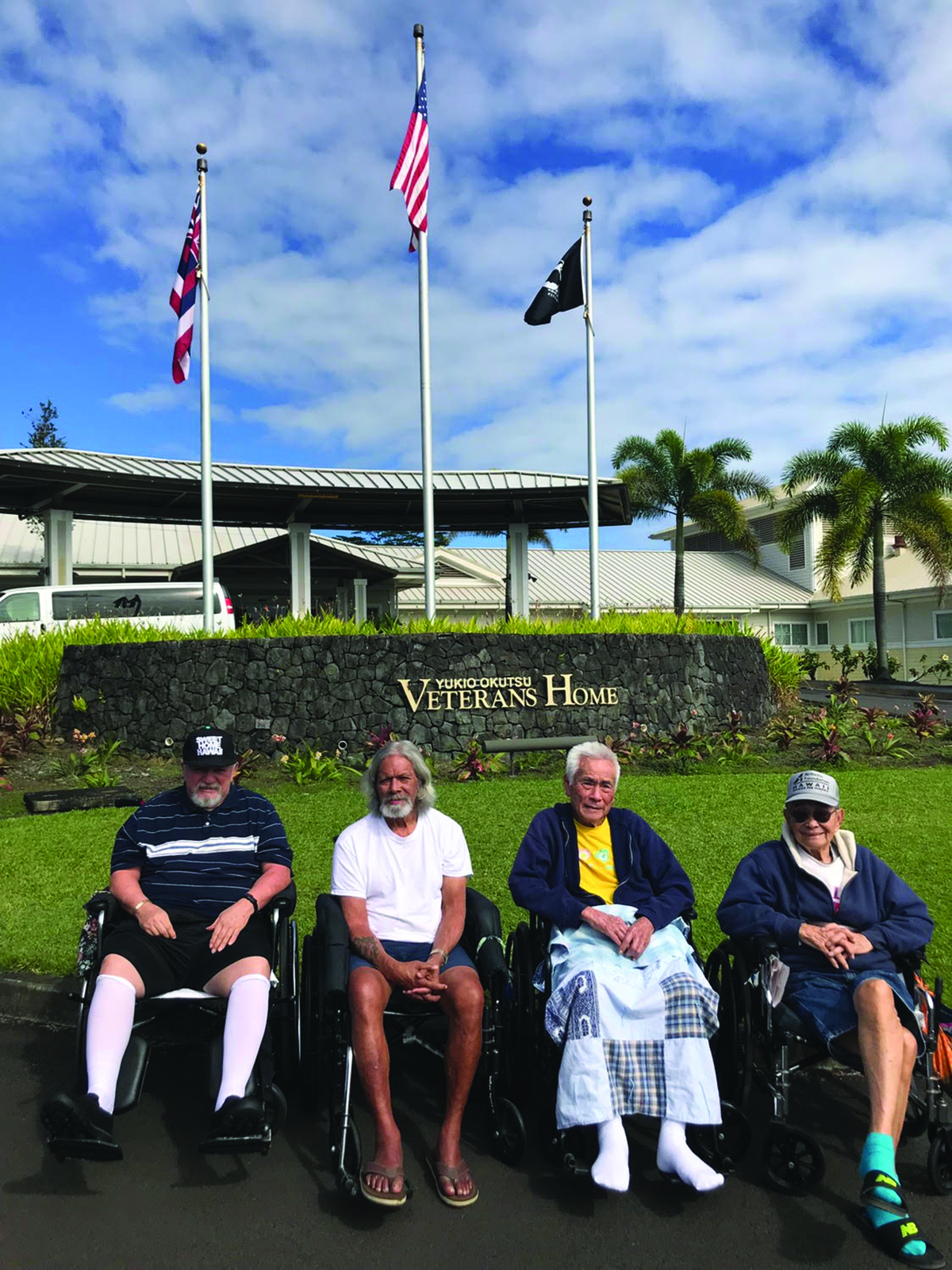
    The only state veterans home in Hawai‘i, Yukio Okutsu State Veterans Home, celebrated its 10th anniversary of serving veterans from across our nation in 2018.

    From celebrating our seniors’ accomplishments to bringing the community to our residents, we know the importance of ‘ohana. We hold several events throughout the year to help bring the community together, including our popular car shows, farmers markets and bake sales, as well as activities for holidays throughout the year.

    Located in Hilo, Yukio Okutsu serves all veterans, regardless of the location of your service or if your unit was not in Hawai‘i. We have a passion to serve our veterans to the best of our abilities every single day, and our comprehensive senior care services include 24-hour skilled nursing, adult day health care, a pharmacy, rehabilitation therapy, hospice services and more.

    L-R: Franklin Baptiste, Buddy Kamehaiku, Iwao Nagata, Masao Kuniyoshi
    L-R: Franklin Baptiste, Buddy Kamehaiku, Iwao Nagata, Masao Kuniyoshi

    ———————

    YUKIO OKUTSU STATE VETERANS HOME
    1180 Waianuenue Ave., Hilo HI 96720
    808-961-1500  |  www.avalonhealthcare.com/hilo
    Facebook: hawaiisveterans

    The only state veterans home in Hawai‘i, Yukio Okutsu State Veterans Home, celebrated its 10th anniversary of serving veterans from across our nation in 2018. From celebrating our seniors’ accomplishments to bringing the community to our residents, we know the importance of ‘ohana.

  • Dementia and Vision Changes

    Human beings use five ways to take in data: sight, touch, smell, taste and sound. From the time we are born, we prefer to take in data first by what we see, then hear and finally through touch. Vision, our primary source for processing new information, is controlled by an area in the back of our brain called the occipital lobe. Dementia attacks and damages the occipital lobe resulting in skewed vision, poor depth perception and diminished peripheral vision. Peripheral vision loss is a normal part of aging but with dementia, it worsens to where sight becomes “binocular” and, in the later stages, “monocular.”

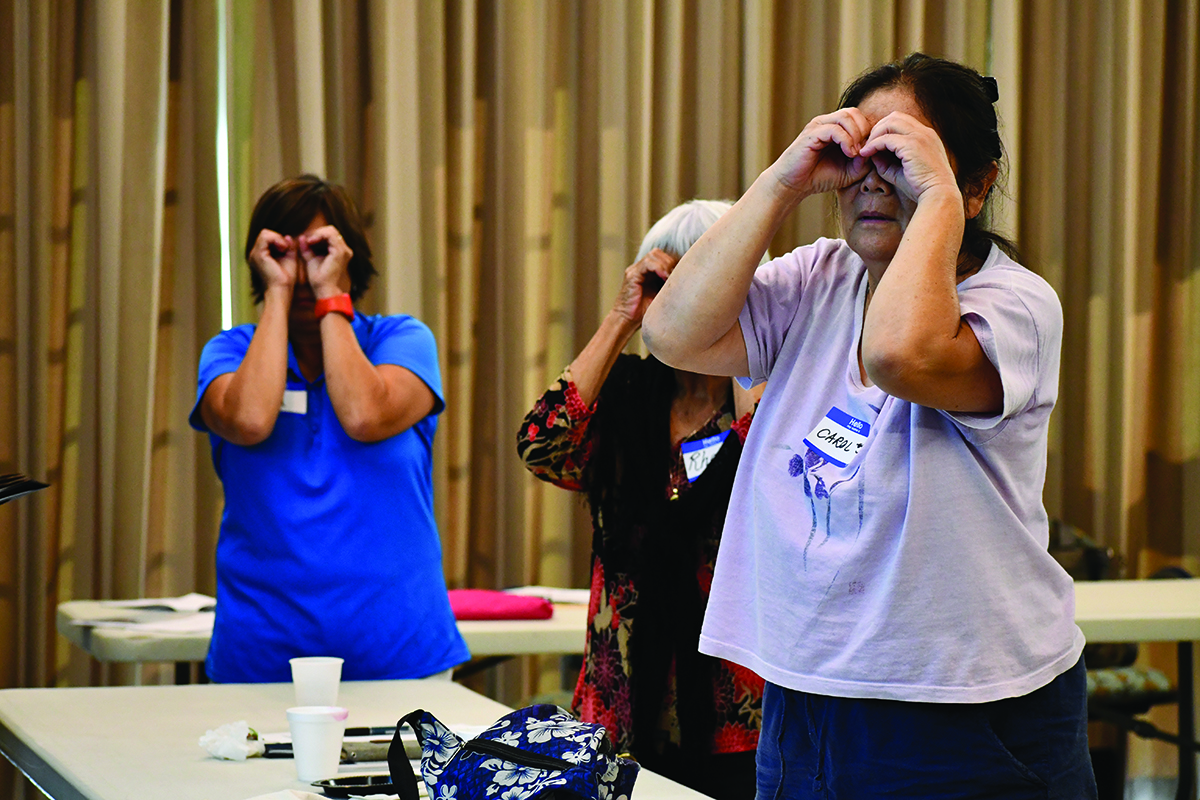
    People testing for monocular visionTeepa Snow, a dementia expert, occupational therapist and Positive Approach™ to Care founder, suggests we can experience how limited a view this is by forming makeshift binoculars. Move both your hands up to your eyes, then loosely circle your fingers around your eyes to make two binocular-like tunnels. Take a look around you — notice that you need to move your entire head in order to look to up, down and to your sides. How might this hinder a person’s abilities?

    Now hold your arms straight out in front of you about shoulder width apart and look only down that one “tunnel.” A person living with dementia (PLWD) in the later stages of vision loss has a field of vision of about 12 inches in diameter in all directions. This means they cannot see something unless it is directly in front of them at just about eye level — monocular vision.

    This shrinking field of peripheral vision presents many challenges besides making a person easily startled when approached from the rear, tripping over obstacles in their path or misjudging how far away an object is when they reach for it.   For example, road safety would be a major concern for the PLWD who has binocular vision.

    HELPFUL CARE PARTNER TIPS

    • Be mindful of your loved one’s safety and in-dependence — think five steps ahead to remove obstacles in walking paths.
    • Always approach the PLWD from the front so they can see you coming and to avoid negative reactions like anger, fear and/or surprise.
    • Pair visual cues with verbal cues when asking your PLWD to do something — show them how.
    • Find support groups in your area.

    ——————-

    PAC HUI HAWAII
    808-469-5330  |  PAChawaii4@gmail.com
    www.PacHuiHawaii.com

    PAC HUI HAWAII is a caregiver training organization utilizing the Positive Approach™ to Care philosophy developed by Teepa Snow. To know more of the organization and current workshops and other events, please visit us online.

    Human beings use five ways to take in data: sight, touch, smell, taste and sound. From the time we are born, we prefer to take in data first by what we see, then hear and finally through touch. Vision, our primary source for processing new information, is controlled by an area in the back of…

  • Don’t Take Breathing for Granted

    Breathing is something most of us take for granted. But for those folks with respiratory issues like asthma, breathing can be a struggle. Studies show that a healthy adult will take an average of 12–15 breaths per minute. For those with respiratory issues like asthma, it may be higher.

    Breathing issues can happen at any time but are usually triggered by things like temperature, humidity, pollen and pollution. Some of the things we can do to stay one step ahead of an asthma attack are:

    • Take medications as directed
    • Stay out of air-polluted areas
    • Be cautious of dust, pollen, dander, etc.

    Photo of woman struggling for breathColds and the flu are also major triggers of asthma. So, be sure to take extra precautions like washing your hands and limiting your exposure to others who are ill.

    Breathing exercises are an important way to help your lungs breathe better. Also, try to always breathe through your nose, as the tiny hairs in your nose act as a filter while warming the air as it enters the lungs.

    Now that you have a few tips on asthma preparedness, here’s something to make you giggle: “Why did the doctor suspect that Dracula had a breathing problem? Because of his coffin!”

    —————

    CARE CENTER OF HONOLULU
    1900 Bachelot Street, Honolulu HI 96817
    808-531-5302  |  www.ccoh.us

    Breathing is something most of us take for granted. But for those folks with respiratory issues like asthma, breathing can be a struggle. Studies show that a healthy adult will take an average of 12–15 breaths per minute. For those with respiratory issues like asthma, it may be higher. Breathing issues can happen at any…

  • Memory Loss & Aging

    At some point we’ve all had times of forgetfulness or misplacing things. Our keys get  lost or we draw a blank trying to remember where the car is parked or what we just ate for breakfast. We can usually sort it out and remember things with some time and patience. But when is forgetfulness or memory loss of concern?

    Serious memory problems can be disabling and make it hard to accomplish routine tasks without help. This is different from the occasional forgetfulness that comes with aging. Memory loss that disrupts routines and activities of daily living is concerning, and caregivers should know it may signal a change in a person’s condition.

    If you are worried about memory loss, that is reason enough to see your doctor. Seeing a primary care physician, or PCP, who already knows you is a good place to start. Signs that it may be time to see a doctor may include:

             Trouble speaking, or misusing common words

             Confusion about time, people and places

             Feeling lost in familiar areas or residence

             Not caring for oneself or others as usual

             Unexplained changes in behavior and mood

             Not realizing unsafe or dangerous situations

             Repeating the same questions over and over

             Returning common items to unusual places

             Trouble following plans or routine tasks

    Alzheimer’s disease is the most common cause of dementia and memory loss in older adults. If you are worried that changes in your memory may be related to dementia, you should talk with your doctor about it.

    There are medications that can temporarily ease some of the symptoms of dementia. Caregivers should also know that memory loss doesn’t automatically mean someone has Alzheimer’s or dementia. Other health problems can also affect memory, including stroke and Parkinson’s disease, and many conditions that can affect our ability to be alert and access memory. Caregivers should be observant of changes in memory or memory loss that can come from medication side effects and know how to intervene.

    Caregivers can also encourage individuals to do things that may help with memory such as:

             Doing mentally stimulating puzzles and games

             Socializing and connecting with others

             Exercising mind and body together

             Stopping or limiting alcohol intake

             Reducing over the counter medications

             Eating a healthy diet and keeping hydrated

             Staying organized with a “to-do list”

             Sleeping well for better alertness and recall

             Doing new fun things and pursuing interests

    ———————

    ATTENTION PLUS CARE HOME HEALTHCARE
    Accredited by The Joint Commission

    1580 Makaloa St., Ste. 1060, Honolulu HI 96814
    808-739-2811  |  www.attentionplus.com

    AGING IN HAWAII EDUCATIONAL OUTREACH PROGRAM by Attention Plus Care — a program to provide resources for seniors and their families, instructed by a registered nurse, who covers a different aging topic each month. For more information on Transitional Care and free community workshops on Aging in Hawai‘i hosted by Attention Plus Care, call 808-440-9356.


    At some point we’ve all had times of forgetfulness or misplacing things. Our keys get lost or we draw a blank trying to remember where the car is parked or what we just ate for breakfast. We can usually sort it out and remember things with some time and patience. But when is forgetfulness or…

  • Preparing for the Unexpected

    An unexpected life-changing situation can happen in an instant. One minute you’re at a friend’s home, getting ready to enjoy watching UH football, then you slip and fall, and feel excruciating pain. Hours later, on a trip to the emergency room, you learn that you fractured your hip or, even worse, your spine.

    The sudden changes in your life can include loss of income from missing work, high medical bills, and costs for prescription painkillers. You may also need a caregiver to help with simple things like meal prep, dressing, driving to medical appointments and picking up your medications, potentially impacting the lives of family and friends who want to help you.

    Be prepared!

    ✤ Talk to your family and closest support system before the unexpected happens.

    ✤ Research home care costs.

    ✤ Consider purchasing short-term disability insurance to offset income loss.

    ✤ If you have temporary disability insurance (TDI) through your employer, ask how much you would qualify for.

    ✤ Brainstorm options that can help offset your living expenses, even with TDI.

    Don’t delay! Unexpectedly making your support system “instant caregivers” without having a plan in place can be very stressful for everyone.  n


    CARE CENTER OF HONOLULU
    1900 Bachelot Street, Honolulu HI 96817

    808-531-5302  |  www.ccoh.us

    An unexpected life-changing situation can happen in an instant. One minute you’re at a friend’s home, getting ready to enjoy watching UH football, then you slip and fall, and feel excruciating pain. Hours later, on a trip to the emergency room, you learn that you fractured your hip or, even worse, your spine.

  • It is Okay to Ask : ‘How Are You Doing?’

    When was the last time someone asked how you, the caregiver, are doing? I’m rarely asked that question and I’m wondering if it’s just me.

    Almost everyone who knows my husband always asks, “How’s Gar doing?” I keep it short because the real answers aren’t what many really want to hear. I sometimes want to say, “he’s disappearing from me more and more each day.” That I miss our old life together. That his everyday skills are getting more difficult to do and I spend much of my time re-doing things he has tried to do. I don’t know why I want to tell the truth. Maybe it’s because each day can be a challenge and because I seem to be able to “handle” things myself, daily life LOOKS the same each day but in fact it is not. Maybe I want to say that I could use some help but I’m not sure what they could do to help. Maybe I just want to be on someone’s radar.

    Please don’t misunderstand me. I don’t want to sound ungrateful when they ask how he is doing. I’m pleased that he is in their thoughts and that they are concerned about him. I am also not seeking out unnecessary attention.

    “We are doing double duty by trying to care for them and ourselves, think for them and ourselves, prepare for them and ourselves.”
    “We are doing double duty by trying to care for them and ourselves, think for them and ourselves, prepare for them and ourselves.”

    I have a few wonderful friends who do ask how I’m doing. One in fact texts me if she hasn’t seen me or talked to me in a while and I love getting that text. I want to be visible as an individual and not solely as a caregiver. Don’t get me wrong — I don’t want to give up my job as caregiver but I also don’t want to morph into an abstraction of myself.

    As caregivers we reap the benefits of being of service, in a very personal way sometimes, to those that we love. But as the disease/disorders/illnesses rob our loved ones of the spontaneity, intimacy, and active partnership we once had, it also robs us as the caregivers. Our world changes differently than those that we are caring for. We are doing double duty by trying to care for them and ourselves, think for them and ourselves, prepare for them and ourselves. It may look seamless to others but for caregivers it can be grace under fire. It takes a lot out of you and can age you faster than the person who you are caring for.

    So here’s my plea: if you know a caregiver don’t assume that they would ask if they needed help. Send the Bite Squad over with a fresh meal, pool resources from friends to gift a massage, take the person receiving care to the movies or a park for the afternoon, flowers are also nice as well as cards and texts. We just want to be visible and on your radar.

    “We are doing double duty by trying to care for them and ourselves, think for them and ourselves, prepare for them and ourselves.”


    PAC HUI

    www.pachuihawaii.com

    As caregivers we reap the benefits of being of service, in a very personal way sometimes, to those that we love. But as the disease/disorders/illnesses rob our loved ones of the spontaneity, intimacy, and active partnership we once had, it also robs us as the caregivers. Our world changes differently than those that we are…

  • About Transitional Care

    Today, more seniors are receiving care in their homes for medical conditions. Many receive it following a hospitalization or discharge from a rehabilitation center and have complex needs. Seniors who require them may have difficulties adjusting to their care and can benefit from transitional care during this period.

    Falling through the cracks

    Transitional care calls for a range of actions to avoid “gaps,” especially for older adults who are more vulnerable, in care. Seniors cared for by multiple providers, located across different settings, can often have more serious care needs and health risks. Examples can include movement to or from a hospitalization, rehabilitation or skilled nursing facility, care home, assisted living facility, doctor’s office, or an individual’s home. During these moves, a loss of information, educational or language barriers, poor communication, or not having a reliable point of contact, are some of the ways individuals can fall through the cracks trying to maintain their care.

    “It’s more common now to see seniors discharged from one care setting to another, with more severe or chronic conditions that have a cumulative effect on their health. This makes the timeliness of care even more vital for them,” says Kari Wheeling, RN.

    “To avoid care gaps from happening, greater attention is needed on the details involved as seniors move through different care settings. The focus on coordination and continuity of health care between providers becomes even more critical, to avoid relapses or re admissions,” adds Wheeling.

    The important role of family caregivers

    As family caregivers are likely in the most important role for seniors after a serious illness, more interaction is needed with whomever is the decision-maker about treatment plans and the details that go with them. More family caregivers are getting directly involved in this way with hospitalization or rehabilitation logistics, out of necessity, and should ask providers questions to learn more about transitional care and the different roles involved on their case.

    Having the right knowledge helps

    Family care planners should also screen and ensure caregivers have the right knowledge, skills and resources needed to safely care for someone, and know what to do when their care setting changes. They should know what information about an individual’s care is transferred between care settings, how it’s exchanged, and what level of accountability is needed from everyone’s actions involved in this process.

    With the heightened awareness and attention going into transitional care for seniors, family caregivers may also be more stressed as a result, and have difficulty with the decisions and choices needing to be made. Discharge planners, nurses and social workers can work with family members and caregivers to help support their loved ones and be better ready for the next steps.

    Development Specialist Sebastian Adam adds, “Transitional care is like teaching others how to hand off a spoon of water between 10 people and not lose a single drop. Good hand-offs matter. Our senior is that water.”


    ATTENTION PLUS CARE HOME HEALTHCARE
    Accredited by The Joint Commission

    1580 Makaloa St., Ste. 1060, Honolulu HI 96814
    808-739-2811  |  www.attentionplus.com

    AGING IN HAWAII EDUCATIONAL OUTREACH PROGRAM by Attention Plus Care — a program to provide resources for seniors and their families, instructed by a registered nurse, who covers a different aging topic each month. For more information on Transitional Care and free
    community workshops on Aging in Hawai‘i hosted by
    Attention Plus Care, call 808-440-9356.

    Today, more seniors are receiving care in their homes for medical conditions. Many receive it following a hospitalization or discharge from a rehabilitation center and have complex needs. Seniors who require them may have difficulties adjusting to their care and can benefit from transitional care during this period.

  • Keeping Seniors Happy, Healthy & Strong

    When a senior member of your family is in need of 24/7 care, it is fortunate that Hawai‘i has many professional, caring and dedicated homes and facilities to welcome them. What every family wants to know is: “Will my mom or dad be happy living in someone else’s home, eat right, and stay mentally and physically strong?” It may be even more important to you that your 80-, 90- or even 100-year-old family member lives in a facility that can assist them to improve their daily life.

    Placing your loved one in a residential care home takes a lot of research. On your visit to the care facility, observe these few things:

    • Are the staff and residents happy and engaged with each other?
    • What is the routine of their daily life: eating, sleeping, exercising, etc.?
    • Is the facility clean, safe from trip hazards, open, and welcoming?
    • Does the facility encourage participation in activities, like handicrafts, created around the residents?
    • Do residents’ bedrooms have a TV so they don’t have to watch it with others?

    Many facilities may have “respite” care to see how they would like living there. Let them make the decision for their happy, healthy and strong life.


    AIEA HEIGHTS & WAIALAE SENIOR LIVING I & II
    99-1657 Aiea Heights Drive | 2945 Kalei Road
    808-488-5521 | 808-941-6940
    www.aieaheightsseniorliving.com

    When a senior member of your family is in need of 24/7 care, it is fortunate that Hawai‘i has many professional, caring and dedicated homes and facilities to welcome them. What every family wants to know is: “Will my mom or dad be happy living in someone else’s home, eat right, and stay mentally and…

  • From a Patient’s Point of View

    People living with dementia (PLWD) have challenges with verbal communication: language comprehension, speech production, and vocabulary. But they are not unconscious to what is going on around them. Even as the brain declines, emotional intelligence is preserved. PLWD take in data visually rather than auditorily and react to what they think is happening. As caregivers we must remember that PLWD are really doing the best they can with the abilities they have left.

    Try not to expect them to be the way they used to be. Accept them for who they are now and who they’re becoming. Promote independence by encouraging participation in meaningful activities. We all want to feel “of use” in this crazy world and PLWD are no different.

    The feelings they may find hard to express are captured in this poem, inspired by a dementia patient.


    MEMORY FRIENDS
    Respite, Education & Consultation
    Mapuana Taamu, Certified PAC Trainer
    808-469-5330
    mfriends808@gmail.com

    People living with dementia (PLWD) have challenges with verbal communication: language comprehension, speech production, and vocabulary. But they are not unconscious to what is going on around them. Even as the brain declines, emotional intelligence is preserved. PLWD take in data visually rather than auditorily and react to what they think is happening. As caregivers…