Category: Column

  • Your Body, Your BFF

    Your body is always talking to you, and you, maybe without realizing it, are often talking to your body. For the most part, you usually respond to your body when you are hungry, sleepy or itchy… Sometimes you might get angry at it for not looking how you wish it would, or complain about the pain it’s holding. But how often do you communicate good feelings to your body?

    From the time you were formed, your body has been supporting you and keeping you alive until this very moment. It is an intelligent system that functions separately from our awareness. It really is amazing how much work our bodies constantly do without thanks or any recognition from us. If you think about your body as your oldest friend, what kind of friend have you been?

    So how can you be a better friend? Start by accepting your body in whatever condition it is in and find a way to unconditionally love and appreciate it for all it does all day, every day, to keep you alive.

    Thank your organs, your muscles,  limbs, cells, etc., throughout the day — even the parts that hurt! Smile for no reason. Do these things as a daily  practice and you’ll be surprised how much better your body starts to feel when it is consciously supported by you, its best friend for life!


    KAIMUKI BODY & BRAIN
    3569 Harding Ave., #B, Honolulu, HI 96816
    808-738-5522 | www.bodynbrain.com/kaimuki

    Your body is always talking to you, and you, maybe without realizing it, are often talking to your body. For the most part, you usually respond to your body when you are hungry, sleepy or itchy… Sometimes you might get angry at it for not looking how you wish it would, or complain about the…

  • Help! I Can’t Find My Credit Card!

    Becoming a victim of credit card fraud is likely to happen to us all. We may lose our credit card (or debit card) and the finder may make unauthorized purchases. Or somehow, an online fraudster obtained our credit card information and has made unauthorized online purchases.

    So what do you do when that happens?

    Report it to law enforcement and provide the officer with the following information:

    • Credit card number.
    • Type of card (Mastercard, VISA, Discover, etc.).
    • Name on card.
    • Any credit card statements, emails and/or notifications of the fraudulent transaction(s).
    • And get police report number to provide to the credit card company.

    Contact the credit card company to report the fraudulent transaction(s) and request a stop-payment. Provide them with the same information listed above that you provided to law enforcement along with the police report number.

    Also, change the PIN number. If you access the credit card company’s website to monitor and/ or make payments for the stolen/lost credit card, change the password for that account.

    If the credit card company offers to cancel the stolen/lost card and issue a new one, you will need to get the new credit card number to those who receive automatic, scheduled or subscription payments (such as Netflix, PayPal, eBay).

    If fraud is related to online transactions, contact the online vendors that you patronize with that card (such as eBay, Amazon, etc.) and check to see if any fraudulent transactions have occurred. You may want to delete the link to the stolen/lost credit card for those online vendors.

    Finally, notify one or all of the three credit bureaus: Equifax, Experian and TransUnion. Ask for a credit report and place a security alert.

    Prevention Tips:

    • Carry only what you use often.
    • Monitor your statements regularly.
    • Sign up for suspicious credit card activity notices.
    • Keep receipts: printed or digitally saved.
    • Deal with reputable companies and/or ones with security measures that can be verified.
    • Ensure the URL starts with “https://.”
    • Only give out your credit card number or personal information to those you can verify as trusted and legitimate.


    Contact me with questions about online security. Christopher Duque | aikea808@gmail.com

    Becoming a victim of credit card fraud is likely to happen to us all. We may lose our credit card (or debit card) and the finder may make unauthorized purchases. Or somehow, an online fraudster obtained our credit card information and has made unauthorized online purchases. So what do you do when that happens?

  • Mental Health During COVID-19

    As a mental health professional for 45 years, I am increasingly concerned about the welfare of our most vulnerable populations since the onset of the COVID-19 pandemic. Since it began in February, approximately 54 percent of older adults surveyed reported increased loneliness, and associated depression and anxiety. Prolonged periods of isolation correlate with a loss of independence, contributing to an increase in mental and physical health issues.

    In Hawai’i, mental health is the most common cause of disability. Prior to the pandemic, 3.2 percent of Hawai‘i’s adult population lived with serious mental health conditions, such as major depression, generalized anxiety, bipolar disorder or schizophrenia, according to government statistics.

    The Substance Abuse and Mental Health Services Administration reports that 68.2 percent of Hawai’i adults living with mental illness do not receive
    any type of treatment. And untreated mental health issues such as depression have been linked to premature death from those stress-related conditions — even suicide. Prior to the pandemic, statistics from the National Council on Aging state that those 85 years and older have the highest suicide rate of any age group — over four times higher than the nation’s overall rate. Issues related to isolation during the pandemic may have increased that statistic.

    During this time of increased isolation, the absence of a regular routine and a lack of purpose can add to seniors’ frustrations, sometimes leading to depression and associated signs, such as lack of appetite, irritability, mood swings, isolating themselves, crying, increased sleep or restlessness and
    feelings of hopelessness.

    But There is Hope

    It’s more important now — more than ever — to try to help our seniors feel valued and needed.

    It is essential that families and caregivers understand that while there are identifiable factors that promoted a person’s depression, the condition itself is not simply a “condition of aging.” But the stigma of mental health continues to be a roadblock for those who avoid asking for help. Affordability and lack of access to care can present additional obstacles for many who could benefit from mental health support.

    It is also important to remember that depression is treatable in over 90 percent of those affected. Improving a person’s mental health condition will enhance their overall quality of life and well-being. Balanced mental health allows healthy family involvement and interpersonal relationships, and the ability to contribute to family, community or society — even during a pandemic — following safe, social distancing guidelines.

    Mental disorders are best diagnosed and managed by professionals such as psychiatrists, psychologists, mental health professionals and social workers. If you have a loved one who is exhibiting signs of diminishing mental health, seek out professional help. Specialized support groups for caregivers and seniors alike can also be helpful.


    MENTAL HEALTH RESOURCES
    If you have private health insurance, contact your primary care physician for a mental health support referral. (Most insurance coverages require a medical doctor referral.)

    Mental Health America of Hawai‘i:
    808-521-1846 | www.mentalhealthhawaii.org
    National Alliance on Mental Health, Hawai‘i:
    808-591-1297 | www.namihawaii.org
    Crisis Line of Hawaii / Hawai’i Cares: (24/7 helpline)
    808-832-3100 (O‘ahu) or toll-free at 1-800-753-6879
    National Suicide Prevention Lifeline: (24/7 helpline)
    800-273-8255 | www.suicidepreventionlifeline.org
    Alzheimer’s Association — Hawai‘i: (24/7 helpline)
    800-272-3900 | www.alz.org/hawaii
    Aloha United Way: (free 24/7 helpline for referral and information on health and human services)
    Dial 2-1-1 | www.auw.org/211-information-referral-service
    State of Hawai‘i Dept. of Health–Adult Mental Health Div.:
    808-586-4686 | bit.ly/HawaiiGovAdultMentalHealth

    As a mental health professional for 45 years, I am increasingly concerned about the welfare of our most vulnerable populations since the onset of the COVID-19 pandemic. Since it began in February, approximately 54 percent of older adults surveyed reported increased loneliness, and associated depression and anxiety.

  • ‘Last Will’ for Your Digital & Online Assets

    What happens when you pass away or there’s an emergency that leaves you incapacitated, and family members need to access your mobile devices, computers, emails and social media accounts? Have you documented this important information?

    Here are some tips:
    • List all the devices you own and include your username and password for each.
    • For all online accounts, including email, banking, shopping and social media, list the email address you used, and your username, password and the answers to your “secret” questions.
    • Write it all down in a hardcopy document or notebook. Or you can also create a text file and burn it to CD or DVD. I don’t recommend storing the document on a USB thumbdrive. Those devices are not designed for archival purposes.
    • Keep the document, notebook or device in a safe place, such as a safety deposit box, and inform your family members about the document.
    • Another option is having a trusted family member, friend or your attorney hold it for you.
    • Write up instructions as to what you want done with your digital assets. Do you want them to be deleted or cancelled? Do you want someone to take over your account? Whatever you decide, document it in writing.

    As accounts are added and deleted, and passwords change, keep updating your document.


    Contact me with questions about online security.
    Christopher Duque | aikea808@gmail.com

    What happens when you pass away or there’s an emergency that leaves you incapacitated, and family members need to access your mobile devices, computers, emails and social media accounts? Have you documented this important information? Here are some tips:

  • Aging Gracefully With Your Body

    As we get older, more than a few seniors have seen their body change into a shape they had hoped it never would. I was hoping mine would actually shrink, but of course that didn’t happen. After working a high stress job, gaining 25 pounds and losing lots of sleep, I decided to get off that roller coaster. I’m now semi-retired.

    Fortunately for me, I am rarely sick and do not take any medication. So, I’m healthy despite weighing more than I should. I play pickleball every day, ride my bike to the beach and walk to get my daily 10,000 steps whenever possible. Did any of that weight come off? Down a few one day, up a few the next — an everyday cycle of hopefulness and disappointment. I then realized that I needed to change not only what I was eating but also my perspective about my body!

    If you are experiencing similar frustrations as I had, my advice to you is first to continue enjoying your favorite foods and beverages, but start out by making small changes. According to the USDA Choose My Plate website (www.choosemyplate.gov/browse-by-audience/view-all-audiences/adults), the following are things you can do to help retain (or get back to) the healthy weight you want and the shape you once had.

    • Add flavor to foods with spices and herbs instead of salt and look for low-sodium packaged foods.
    • Add sliced fruits and vegetable (pre-sliced, if slicing/chopping is a challenge) to your meals and snacks.
    • Ask your doctor for other options if your medications affect your appetite.
    • Drink three cups of fat-free or low-fat milk throughout the day. Or try small amounts of yogurt, buttermilk, hard cheese or lactose-free foods. Drink water instead of sugary drinks.
    • Consume foods fortified with vitamin B12, such as fortified cereals.

    According to the website, the second best thing you can do for yourself is to be active in whatever way you physically can. Just starting with baby steps will help your bones, your flexibility — and your mind. But please consult your doctor before beginning any kind of physical activity you are not used to… except the baby steps. Simply taking a walk outside while enjoying good weather or just around the house is a start.

    And, lastly, the world we grew up in (and still, somewhat, the same today) was all about your body image. You were either too thin, too fat, too big-boned or too muscular, etc. It’s been my experience that if you’ve had a good life and have friends and family who love you, it really doesn’t matter what shape you have now. Embrace your body; it got you where you are today. Make those small adjustments (food and baby steps) to extend the joyfulness in your life, because that is what is most important, not your shape!


    Here are some other pages at ChooseMyPlate.gov:
    https://www.choosemyplate.gov/eathealthy/budget
    https://www.choosemyplate.gov/coronavirus

    As we get older, more than a few seniors have seen their body change into a shape they had hoped it never would. I was hoping mine would actually shrink, but of course that didn’t happen. After working a high stress job, gaining 25 pounds and losing lots of sleep, I decided to get off…

  • Turn Inward for Your Best Year Yet

    As you look back on 2020, take a moment and ask yourself some important questions:

    “How much of my focus was spent being affected by news, events, personal problems and situations around me? How did that make me feel?” And most importantly, “Do I want to spend the next year feeling the same way or do I want to feel better?”

    If you want to thrive in the New Year, start by making a choice. If you said yes to the last question, make a decision, be willing to look at your life objectively and accept change. If you say things like, “I’ll try,” “I want to,” or “I’ll do it someday,” your habits will slow you down or keep you stuck. Decide. Declare it. Write it down. Feel it. Your body and brain have to be in agreement. Otherwise overthinking and default behaviors take over.

    Start by noticing your emotions and observing your thoughts. Ask yourself if you want to feel that way. If the answer is no, the easiest way to shift your focus is to do something physical like clap your hands. This puts you in the driver’s seat of your emotions. Then, affirm goodness by turning your focus to gratitude. Immerse yourself in that feeling for as long as you can.

    Daily practice will help you make 2021 your best year yet.


    KAIMUKI BODY & BRAIN
    3569 Harding Ave., #B, Honolulu, HI 96816
    808-738-5522 | www.bodynbrain.com/kaimuki

    As you look back on 2020, take a moment and ask yourself some important questions: “How much of my focus was spent being affected by news, events, personal problems and situations around me? How did that make me feel?” And most importantly, “Do I want to spend the next year feeling the same way or…

  • Social Isolation in the ‘New Normal’

    Social isolation and loneliness are toxic to everyone’s health, but especially older adults. Given COVID-19 mandates to limit face-to-face contact for the foreseeable future, these feelings are certain to increase, accompanied by threats to health and well-being.

    Uncertainty surrounding the “new normal” may cast doubt on the efficacy of past solutions to isolation. Consider the notion of “third place,” neither home nor workplace, but a congenial public gathering spot, the guiding principle of Starbucks, the coffee giant. The COVID- 19-related constraints of social distancing and limited seating capacity now challenge the very concept of neighborhood coffee shops or hang outs.(1) Changing customer behavior has forced the iconic company to reconfigure its physical spaces and its entire style of product delivery. Four-hundred stores closed in North America alone; carryout and pickup only locations, such as Starbucks Now stores in China, are rapidly proliferating.

    The concept of “third place” has served as a guiding principle for older adult services, such as senior centers and Memory Cafes. Ibasho Cafés, initiated in Japan, represent an empowering type of “third place.” Ibasho’s older participants run the site, choosing activities that reflect their priorities and address community needs, such as community gardening. Engaged as community resources (rather than service recipients) by participating in meaningful roles within the site reduces likelihood of social isolation. Ibasho sites are successful in Asia and may represent a future solution to social isolation for older adults in the Hawaiian Islands.

    Just as major businesses are responding to pandemic-induced changes in customers’ behaviors and choices, older adult services may also need to adapt to the “new normal” of a pandemic-transformed world, supplementing face-to-face interactions with safer virtual online encounters.

    Online communities for older adults have provided peer-based sources of information and support for years.(2) Traditional daycare centers and senior centers will no doubt continue to offer much-needed post-lockdown supports. Online communities, especially Ibasho-type sites that empower older adults to contribute solutions to the issues of the day, may offer a welcome complement to traditional service provision.


    CENTER ON AGING — University of Hawai‘i at Mānoa
    2430 Campus Road, Gartley Hall, 201B, Honolulu, 96822
    808-956-5001 | map3@hawaii.edu
    www.hawaii.edu/aging
    1 Frommer, D. (2020). Rethinking the Starbucks “third place,” https://newconsumer.com/2020/06/starbucksreopening-pickup-third-place/.
    2 Perkinson, MA. (2002). Cyberspace ethnography: Group processes in an online community of  dementia caregivers, www.researchgate.net/publication/258937226_Cyberspace_ethnography_Group_processes_in_an_online_community_of_dementia_caregivers

    Social isolation and loneliness are toxic to everyone’s health, but especially older adults. Given COVID-19 mandates to limit face-to-face contact for the foreseeable future, these feelings are certain to increase, accompanied by threats to health and well-being.

  • Where Did All the Toilet Paper Go?

    Shoppers across the county and around the globe cleaned out shelves of toilet tissue, disinfectant sprays/wipes, rubbing alcohol and hand  sanitizers during the beginning of the outbreak of COVID-19 pandemic.

    Stores were overwhelmed due to fears of supply chain disruptions, although none occurred.

    Even though items that were scarce during the initial phase of the pandemic have been restocked in most stores, some of us must still fight the urge to hoard in preparation for what may come this fall and beyond. Keep in mind, the impact of over-acquiring affects the entire community.

    Pharmacies have even been dealing with people hoarding certain medications in hopes that they may be used as treatment in the future. Buying up existing medications puts people who truly need them at risk if they are forced to go without.

    There are some strategies to quell the natural impulse to acquire more than is needed. Start by taking stock of the items you already have at home and and assess how long they will last. Make a pragmatic list of what and how many supplies you will need to tide you over to your next shopping trip — not the next decade.

    When shopping, stick to the items on your list. Then, you’ll be less likely to succumb to anxiety-driven purchases triggered by the sight of empty shelves or thoughts of supermarkets closing.

    If shopping is “your thing,” expand your experience by helping people in your community who may need it. Add their list to yours and enjoy!

    Making sure you are doing all you can to manage stress is also helpful. Why not try 30 minutes of daily, moderate cardiovascular activity, muscle relaxation, mindfulness meditation exercises and other enjoyable activities.

    Shoppers across the county and around the globe cleaned out shelves of toilet tissue, disinfectant sprays/wipes, rubbing alcohol and hand  sanitizers during the beginning of the outbreak of COVID-19 pandemic. Stores were overwhelmed due to fears of supply chain disruptions, although none occurred.

  • Overcoming Depression Through Faith

    I’d like to introduce you to a friend of mine. His name is Depression. I didn’t like being around him, but he dropped in whenever he felt like it.

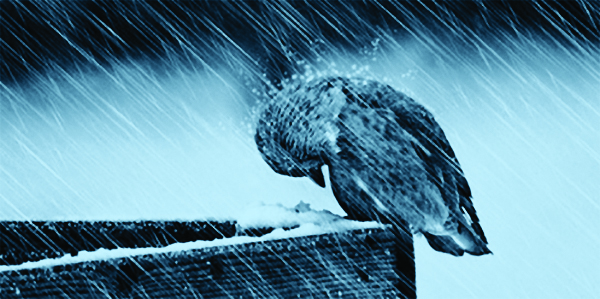
    Over time, I began feeling like the little bird in this picture. I was barely keeping my balance and felt very alone even when I wasn’t. Depression made it difficult for me to see clearly; my eyes were closed.

    But I didn’t give up. My belief in God gave me hope. I can see now that it is hope for the future that moved me onto the road to recovery. I also began following the advice of a friend who told me to just “take one day at a time.”

    I also learned this: “A major depression is the membership fee to an exclusive club. It enables one to move freely among the other members.”

    You might be amazed to learn how many people struggle with depression. It’s very likely that one day you’ll meet someone who is also going through a tough time. Because you‘ve “been there,” you’ll be able to encourage this person and give them hope for the future, too.

    You are probably wondering why I called Depression my friend. It’s because being able to help someone through something you have gone through is a true blessing. God has given you the opportunity to be a part of His response to someone’s prayer.

    Jesus said, “Love one another. As I have loved you, so you must love one another.” So please take care and be kind when an opportunity to be a blessing to someone presents itself. And don’t forget to make your family and friends a priority in your life. You will not regret it.

    I’d like to introduce you to a friend of mine. His name is Depression. I didn’t like being around him, but he dropped in whenever he felt like it.

  • Community Living Centers

    As a veteran who is “getting up there,” how to live out my last years comfortably without being a burden is more than a passing thought. Fortunately, there are 100 Veterans Affairs Community Living Centers (CLCs) across the country. Their mission is to restore the veteran to his or her highest level of physical and/or psychological well-being before being discharged to their own home.” CLCs also provide nursing home-level care.

    Tripler Army Medical Center is a 60-bed CLC facility that offers the comforts of home as much as possible. It provides convalescent care, rehabilitation, geriatric and geri-psychiatric assessment to eligible veterans in an inpatient setting.

    Veterans must be enrolled in the VA Health Care System to receive this care.

    CLCs provide activities for veterans of all ages in a family-friendly setting for visitors. Pets are also allowed to visit or live in the CLC. Organizations visit to host games, sing and hold barbecues, giving veterans an opportunity to talk story.

    Veterans may also receive nursing home-level care, which includes help with activities of daily living, as well as nursing and medical care.

    This level of care helps prevent declines in health and provides comfort at the end of life.


    VFW DEPARTMENT OF HAWAII
    438 Hobron Lane, Ste. 407, Honolulu, HI 96815
    808-946-7250 | adj@vfw-dept-hi.org
    www.vfw-dept-hi.org

    As a veteran who is “getting up there,” how to live out my last years comfortably without being a burden is more than a passing thought. Fortunately, there are 100 Veterans Affairs Community Living Centers (CLCs) across the country. Their mission is to restore the veteran to his or her highest level of physical and/or…

  • Work Longer — Brain Smarter

    There is plenty of evidence revealing that work boosts cognitive health. Delaying full-time retirement means mitigating the risk of several types of dementia, including Alzheimer’s.

    Evidence shows that:

    • Work gives us purpose and a social environment (online or in person) that creates community.
    • Work requires learning, unlearning and relearning — solid reasons to continue to learn new ways to work.

    Almost 30 percent of us are over 60. But the flexible workforce favors those prepared at any age. What better time to learn? Community colleges, adult learning schools and four-year universities are awash with learning opportunities that you can take advantage of from your home.

    Online learning also reduces social isolation without having to leave the comfort and safety of your home. Check out ThirdAge.com, Senior-Net.com and AARP.org. Many other sites are just an internet search away.

    If you need support to attain the help you need, reach out to me at carleenmackayhi@gmail.com and this 81-year-old worker will do her best to help get you started in your pursuit of a rejuvenated career.


    NEW WORKFORCE HAWAII
    Carleen MacKay
    916-316-0143 | carleenmackayhi@gmail.com
    www.newworkforcehawaii.com
    Contact Carleen via her website and receive New Ways to Work, a free PDF book co-written with Phyllis Horner.

    There is plenty of evidence revealing that work boosts cognitive health. Delaying full-time retirement means mitigating the risk of several types of dementia, including Alzheimer’s.

  • The Right to Vote is Yours!

    As we age, we may not be able to do some things as well as we used to. But there’s one important thing we can do today with greater power and effectiveness: We can vote!

    Throughout our history, people have fought and died for the right to vote. But this pivotal right has not always been as accessible as it is today. When our country was established, voting was limited to white men of property. Voting was determined by state law, not by the United States Constitution or federal law.

    As the country evolved, states began eliminating the property requirement for voting. Only some states allowed former slaves and women to vote. In 1870, the Fifteenth Amendment to the Constitution was adopted, giving African Americans (and other non-whites) the right to vote. Fifty years later, the Nineteenth Amendment was adopted, giving women the right to vote.

    But despite the Fifteenth Amendment, southern states continued to deny African Americans their right to vote by various means, including poll taxes (which were barred by the Twenty-Fourth Amendment), violence and death. Finally, in 1965, largely because of the civil rights movement led in part by Rev. Martin Luther King Jr., Congress passed the Voting Rights Act to enforce the Fifteenth Amendment in  southern states. Yet despite these gains, efforts to suppress the African American vote in the South continue to this day.

    The Twenty-Sixth Amendment was adopted in 1971, setting the minimum voting age at 18. Before that, just three states allowed those under 21 the right to vote. Hawai‘i was one of them.

    At the county level, we vote for mayors, council members, prosecutors and county charter amendments. At the state level, we vote for governors, lieutenant governors, legislators and state constitutional amendments. At the federal level, we vote for president, vice president, two senators and two representatives.

    We are very fortunate to live in one of the most convenient and safest states in which to vote. Any citizen who is 18 years or older and a resident of the state can register to vote and vote by mail. The latter is particularly important during the COVID-19 pandemic. There are no impediments. There are no efforts to disenfranchise voters or suppress the vote as seen in other states.

    However, less than half the people in our state who are eligible to register and vote actually do so. “No right is more precious in a free country than that of having a voice in the election of those who make the laws under which… we must live.” Encourage your family and friends to vote.


    The Honorable Daniel Foley served as an Associate Judge of the Hawai‘i Intermediate Court of Appeals. He is a well-known civil rights attorney who taught at William S. Richardson School of Law, University of Hawai‘i.

    As we age, we may not be able to do some things as well as we used to. But there’s one important thing we can do today with greater power and effectiveness: We can vote!