Category: Column

  • Hawai‘i Veteran Thomas Taro Higa

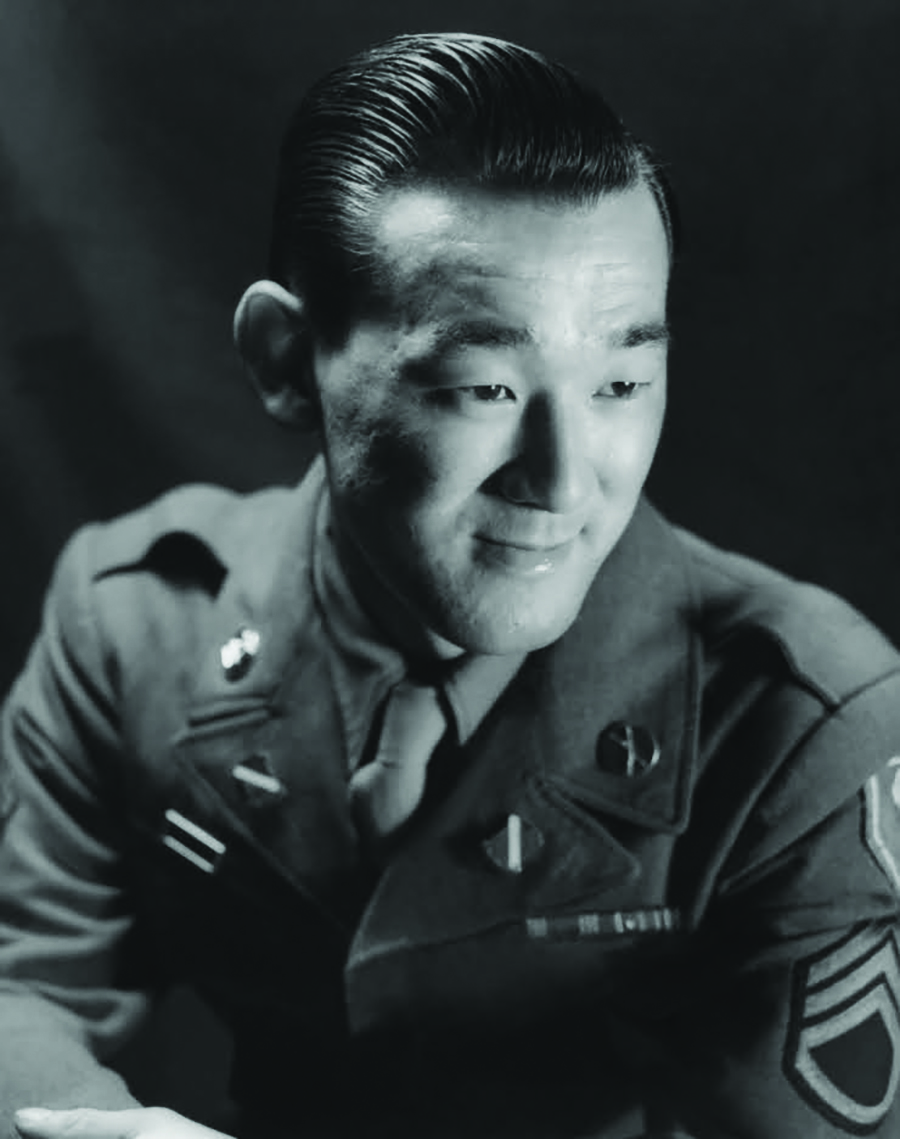
    It is an honor to celebrate the 125th anniversary of Okinawan immigration to Hawai‘i with the inspiring story of Thomas Taro Higa, a 100th Infantry Battalion WWII Veteran of Okinawan descent (generations808.com/125th-anniversary-of-okinawans-in-hawaii).
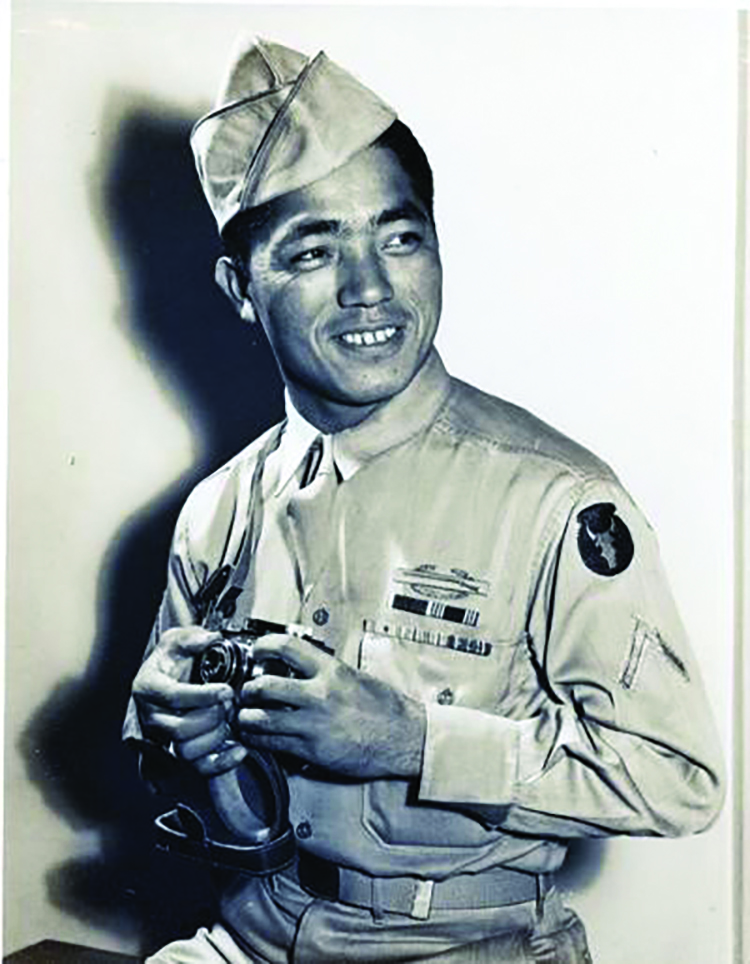
    Thomas was born in 1916 in Kahalu‘u, Hawai‘i, but was sent to Okinawa as a young child, where he gained a strong command of the Uchinaguchi, Japanese and English languages. While in Okinawa, his teacher inspired him to approach life like the gajumaru tree (Okinawa’s banyan tree) that endured the hardships of punishing typhoons and droughts, yet continued to grow bigger and stronger every year, happily giving shade and protection to the people.

    Thomas returned to Hawai‘i in his teens and was drafted into the US Army to protect shorelines from enemy invasion while in his mid-20s. About six months after the Japanese attacked Pearl Harbor on Dec. 7, 1941, due to the hysteria of “looking like” the enemy, the Americans of Japanese ancestry (AJA) were segregated into a new unit called the 100th Infantry Battalion. They trained and fought hard to fight tyranny and prove their loyalty to America. In Italy and France, their combat performance and achievement changed America’s opinion and war correspondents started calling them the “Purple Heart Battalion.”

    Thomas was wounded twice early in the battles in Italy. He returned to the US, where he used his language skills to share news from the European warfront with soldiers’ parents living in incarceration camps. Later, he saved countless lives by convincing Okinawans that Americans would treat them fairly so they felt it was safe to come out of the caves to surrender.

    Like the gajumaru tree, Thomas and the AJA men of the 100th endured discrimination and suffered physically and mentally, yet became stronger. The 100th with the 442nd Regimental Combat Team would become the most decorated in US military history for size and length of service. Upon returning to Hawai‘i, Thomas became a leader in the post-war relief efforts to send food, clothing and breeding pigs to rebuild Okinawa.

    Thank you, Thomas Taro Higa, a Hawai‘i-born veteran, who helped liberate Europe while spreading the seeds of aloha.
    It is an honor to celebrate the 125th anniversary of Okinawan immigration to Hawai‘i with the inspiring story of Thomas Taro Higa, a 100th Infantry Battalion WWII Veteran of Okinawan descent (generations808.com/125th-anniversary-of-okinawans-in-hawaii). Thomas was born in 1916 in Kahalu‘u, Hawai‘i, but was sent to Okinawa as a young child, where he gained a strong command…

  • Finding Peace at the End of Life

    In American society, we are often anxious and afraid to look directly at death and accept it as a mysterious, important and integral aspect of our living. So, we ignore death and do not explore, discuss and plan for our end-of-life care.

    We are too often unprepared when the time comes and we are told we have a serious progressive illness. We may not have prepared our loved ones for the time when we can no longer make decisions on our own, leaving them anxious without knowing what we want during our end-of-life journey. Because we are unprepared, we are overwhelmed with strong feelings, including fear and anxiety bringing negative thoughts, concerns and questions flooding into our life. What now?

    With assistance and honest discussions with loved ones before a health crisis occurs, plans can be created and shared, which can reduce fears and can become the catalyst for healing of long-held pain from wounds which we have been carrying within.

    This healing is the process of becoming whole and balanced, mentally, emotionally and spiritually, discovering life’s meaning, allowing the emergence of our genuine, authentic selves. In most situations with the right care, physical pain can be treated and made manageable.

    Why not plan for this ahead of time, before we are told we are dying? Part of this process of healing is clearing up relationships through honest dialogue. Granting forgiveness and asking for forgiveness can help to set things right, releasing long-held pain. Who might you need to do this with?

    Telling others “thank you” and expressing your gratitude for their role in your life provides meaningful affirmation for both you and them. Who do you need to thank?

    Exploring resources and developing your support community can help you to answer the question, “Who will take care of me and my affairs?”

    Sharing love is healing. Who do you love? Have you told them so lately? Is there someone you love, but haven’t told them?

    It’s about talking to your loved ones about what you or they want for end-of-life care. Honest conversations with loved ones about what you would like to have happen at the end of your life help you to self-reflect on what is important and will let loved ones know your wishes. These conversations can happen at any time — even if you are not seriously ill.

    Use the information below to learn about starting “the conversation,” advance care planning and resources to bring peace at the end of life.

    BEREAVEMENT NETWORK OF HAWAI‘I
    Facilitated by KŌKUA MAU (nonprofit)
    808-585-9977 | kokuamau.org
    kokuamau.org/wp-content/uploads/Your-Conversation-
    Starter-Guide.pdf

    In American society, we are often anxious and afraid to look directly at death and accept it as a mysterious, important and integral aspect of our living. So, we ignore death and do not explore, discuss and plan for our end-of-life care. We are too often unprepared when the time comes and we are told…

  • Who’s in Charge?

    “We’re not in charge anymore” is the phrase I find myself repeating over and over again to my husband, Bill. The first time I heard myself say that to him was when he complained about waiting for our son and his partner to choose a date in September to move some of our furniture from the three-bedroom townhouse in ‘Ahuimanu to the newly renovated one-bedroom unit downstairs in Kailua, where we will live out the rest of our lives. They chose the Labor Day holiday.

    PC: iStock / Jacob Wackerhausen

    I should explain that Bill suffered a stroke the summer of 2020 during the pandemic. I realize now that Bill’s stroke was a mild one. He only spent one week at Kaiser. I was not allowed to visit. I remember being allowed to see him on the hospital grounds before he was transported by ambulance to the rehab facility in Nu‘uanu. He spent four weeks there and during that whole time, I never got to see him because of COVID-19.

    The first time I saw him there was when I picked him up to bring him home to ‘Ahuimanu. At home a physical therapist worked with him enough so that he was only on a walker for one week, graduating to a cane after that. He’s been walking with the cane ever since then. So it’s been hard for Bill to realize that he is not able to do a lot of what he was able to do before his stroke, such as lifting heavy furniture and moving heavy items easily.

    After my sister died last year and her partner cleared out of the space downstairs in the house we’d built in Kailua, we had the space renovated with new kitchen cabinets, new appliances, a walk-in shower (replacing the whirlpool tub), new flooring and bright off-white paint on all the interior walls. After the house was finished in 2006, we lived upstairs until 2015, but arthritis in my right knee made it impossible for us to stay there. That’s when we moved into our daughter’s townhouse in ‘Ahuimanu and she moved upstairs in the Kailua house. We’ve been helping her with her mortgage ever since.

    Now it’s time for us to move back to Kailua so we can be taken care of in our declining years.

    As I said, we’re not in charge anymore. The kids are in charge now even, though the kids are in their 50s now. When the kids were little/younger, we were in charge. We placed them in our neighborhood schools, paid for their hula and piano lessons, drove them to and from practice sessions, and when it was time after their elementary years, helped get them into Kamehameha and paid their tuition. We did much the same with drama, hula and band practice sessions there. We paid tuition for college and helped with car insurance.

    Not it’s their turn to be in charge. If that means waiting until they have time in their busy schedules to move furniture or appliances, so be it. Complaining won’t help, patience will.

    The more my husband complains, the more often I have to remind him and myself. We’re not in charge anymore.

    It meant we had to wait weeks — or a whole month — until we finally moved into the downstairs space the first week in October — where we’re still not in charge.

    Bill power-washed the area on the lānai and wanted to move the fridge from ‘Ahuimanu to be plugged in there for his beer and my daughter’s wine weeks ago, but it had to wait until she and her husband had time last weekend.

    Because, we’re not in charge anymore.

    Anita ‘Ilima Stern is a retired elementary school teacher and writer who taught hula for 33 years. Her students liked learning hula and chant from her and appreciated the positive feedback they received. She lives in Kailua on O‘ahu.

    If you have thoughts or a story to share, email the editor: debra@generations808.com. It may be published in
    Generations Magazine, Facebook or our website.

    “We’re not in charge anymore” is the phrase I find myself repeating over and over again to my husband, Bill. The first time I heard myself say that to him was when he complained about waiting for our son and his partner to choose a date in September to move some of our furniture from…

  • Students Promote Fall Safety

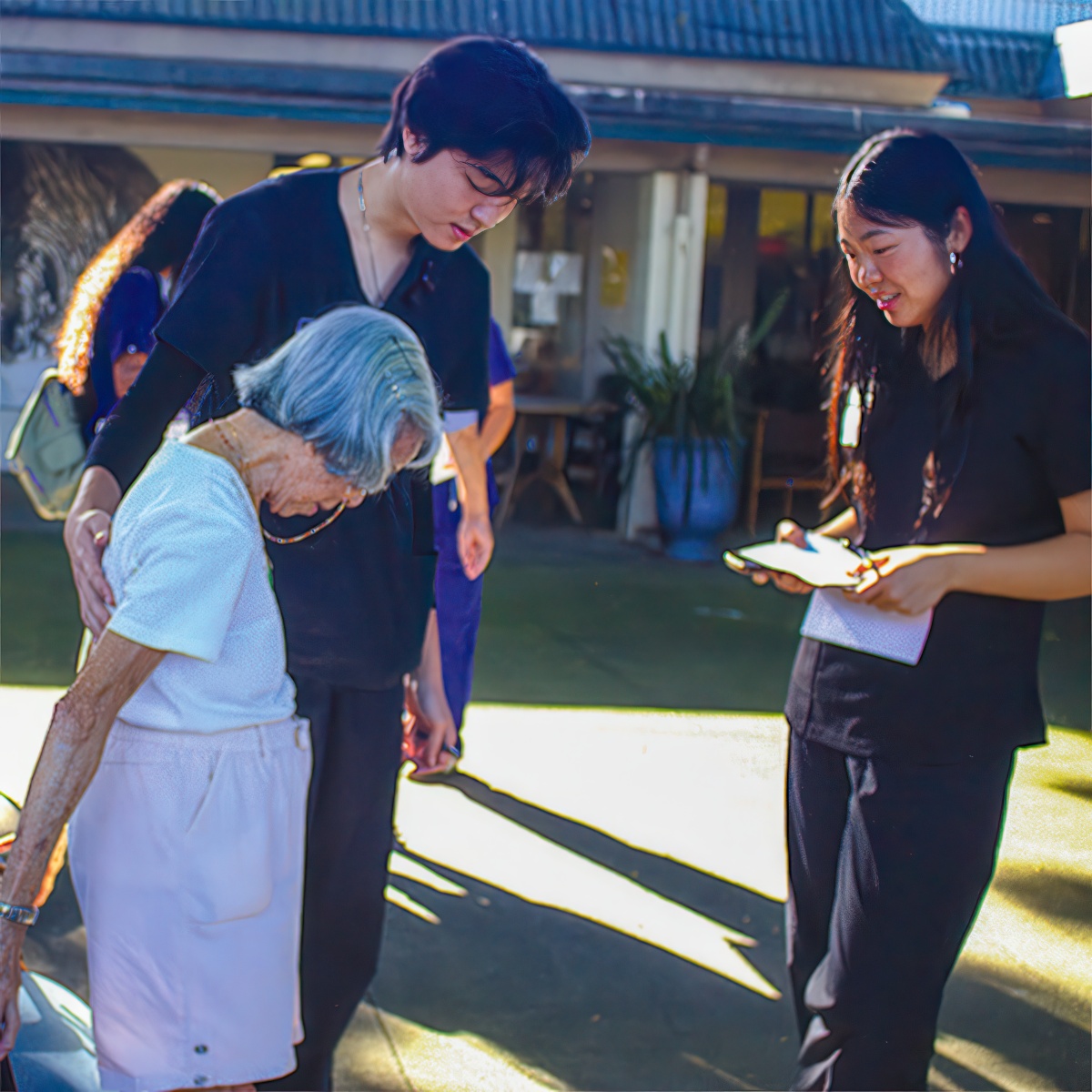
    Strength and balance are essential to staying independent as we age. But fall prevention isn’t just about exercise — it’s also about confidence. To that end, McKinley High School’s occupational therapy students recently partnered with kūpuna at the Lanakila Multi-Purpose Senior Center, guiding them through exercises designed to improve stability and mobility.

    McKinley High School occupational therapy
    students Jason Lin and Shirley Yang assist
    a kūpuna with a single-leg exercise
    to improve balance and stability.

    Coached by a professional occupational therapist, students (many aspiring healthcare professionals) put their knowledge into practice by assisting kūpuna with fall prevention techniques. They measured vital signs, led stability exercises and shared strategies to help maintain mobility, while determining whether kūpuna could safely continue daily activities or if further care was needed.

    EXERCISES FOR FALL PREVENTION

    • Single-Leg Stance Tests: Holding this position for at least five seconds helps build balance and ankle stability.
    • Seated Leg Lifts: Strengthening the quadriceps and hip flexors enhances walking ability and reduces instability.
    • Guided Walking Drills: Focusing on posture and step control helps kūpuna move with greater confidence and safety.

    Regular practice of these exercises can significantly reduce fall risk, making them essential for long-term health and mobility. However, if any kūpuna experienced difficulty with the exercises or showed signs of instability, further medical evaluation was recommended.

    Beyond the physical benefits, the event brought generations together through mutual experiences. Kūpuna a shared their commitment to staying active, while students gained valuable hands-on experience in patient care. “I felt very safe during the exercises and it gave me the confidence to keep moving,” says a kūpuna participant.

    “It was a wonderful experience. I learned so much from working with them,” says Shirley Yang.

    Kūpuna left with valuable techniques to maintain independence. Students gained a deeper understanding about how small, consistent efforts can positively impact someone’s well-being. Together, both generations took steps — both literally and figuratively — toward a stronger, safer future. The collaboration has inspired interest in future partnerships between McKinley High School and local senior centers.

    Strength and balance are essential to staying independent as we age. But fall prevention isn’t just about exercise — it’s also about confidence. To that end, McKinley High School’s occupational therapy students recently partnered with kūpuna at the Lanakila Multi-Purpose Senior Center, guiding them through exercises designed to improve stability and mobility. Coached by a…

  • Hawai‘i Veteran Dr. Takashi Manago

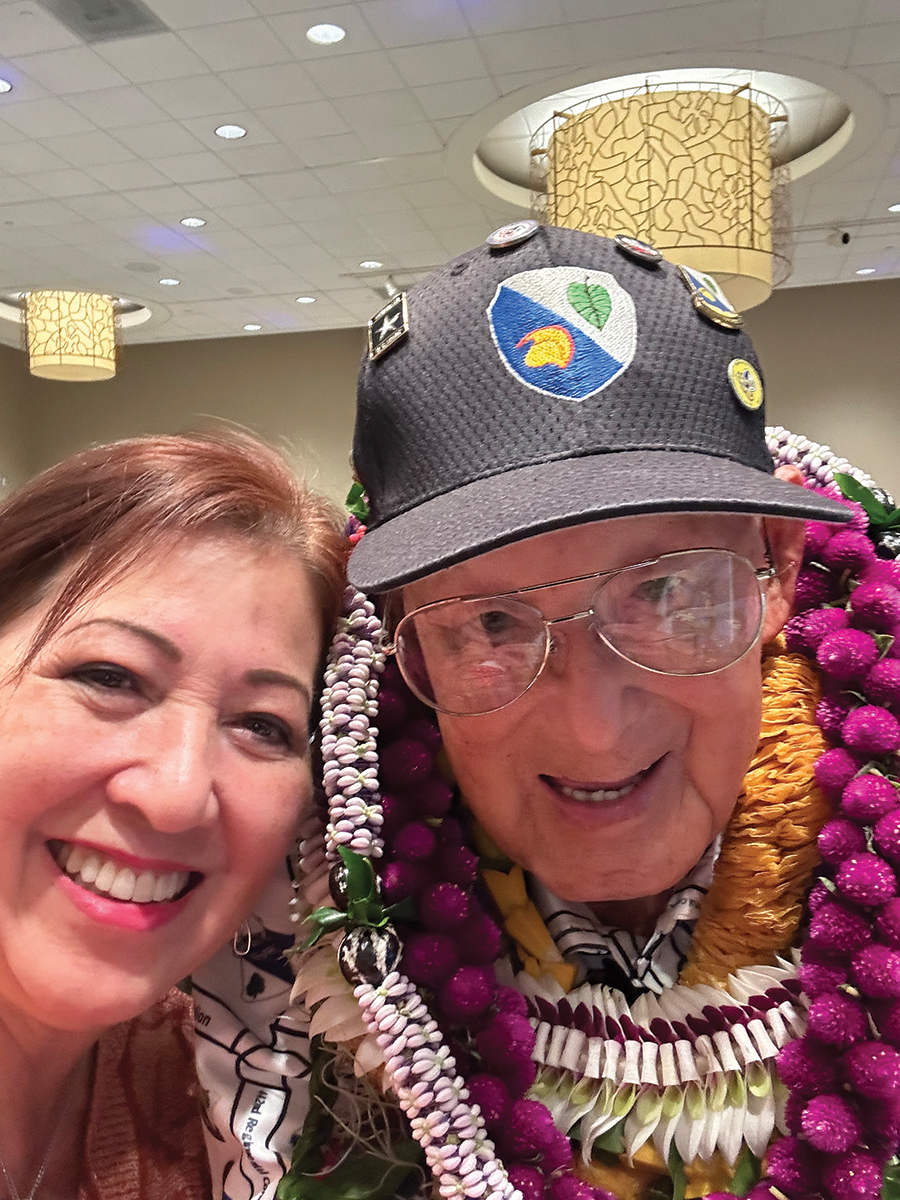
    Dr. Takashi Manago is one of six known living veterans of the mostly Hawai‘i-born, Japanese American unit — the 100th Infantry Battalion (the 100th). At age 101, Dr. Manago is an active member of the 100th Infantry Battalion Veterans organization, affectionally called “Club 100” and tirelessly makes public appearances to represent those killed in action during World War II and those who have since passed. With the 442nd Regimental Combat Team (RCT), the 100th became the most decorated in US military history for its size and length of service.

    Dr. Takashi “Taka” Manago was born on Jan. 20, 1924, in Captain Cook, Kona, Hawai‘i. He is the son of Kinzo and Osame Manago, the founders of the Manago Hotel in Captain Cook.

    Taka was a 17-year-old student at Konawaena High School when Pearl Harbor was attacked. In 1944, he was inducted into the Army with the 442nd RCT and later joined the 100th Infantry Battalion – Company A, as a replacement. The boat trip from Hawai‘i to the mainland was seven days of seasick torture.

    After basic training at Camp Hood, Texas, Taka was deployed to Italy in April 1945. He served as a litter bearer in Northern Italy. His assignment was bringing the injured soldiers from the front line under the cover of night. He remembers the “ack-ack” sounds and 88mm shells whizzing overhead.

    After a few weeks in combat, they got word that the Germans had surrendered, and on May 8, 1945, the war in Europe was over.

    Taka’s next assignment was receiving and processing the German prisoners of war. He decided to reenlist and continued to serve in Florence, Italy, where he took medical classes at the Army training school. He married Italian sweetheart Silvana Cozzi and later had a daughter, Rita.

    Taka was discharged in 1948 as a staff sergeant. After the war, Taka attended Creighton College and the Fairleigh Dickinson University School of Dental Medicine. He established a successful dental practice in Honolulu. Taka married Jane Toyoko Iida and had three children: Jennifer, Beverly and Jeffrey. He enjoys watching sports, eating out and helping to perpetuate the legacy of the 100th Infantry Battalion.

    In a previous article, I wrote about elders staying healthy by being social and purposeful. Dr. Manago is a great example of how young a 101-year-old mind can be. Thank you, Dr. Manago, a Hawai‘i-born veteran, who helped liberate Europe while spreading the seeds of aloha.
    100th INFANTRY BATTALION VETERANS
    520 Kamoku St. Honolulu, HI 96826
    For more information:
    info@100thbattalion.org | 808-946-0272

    Dr. Takashi Manago is one of six known living veterans of the mostly Hawai‘i-born, Japanese American unit — the 100th Infantry Battalion (the 100th). At age 101, Dr. Manago is an active member of the 100th Infantry Battalion Veterans organization, affectionally called “Club 100” and tirelessly makes public appearances to represent those killed in action…

  • Remember Our Veterans

    I’m honored to write a column about “veterans,” a word that brings tears to my eyes. My brother, Capt. Edwin Hayashi, was killed in a C-130 plane crash during the Vietnam era. He didn’t make it back to be a “veteran.” Veterans are survivors.

    Kathleen Hayashi and Dr. Takashi Manago, a
    WWII veteran, celebrated his 101st birthday.

    When I spoke to the Vietnam Veterans of America – Chapter 858 recently, they sobbed as I shared how villagers in Italy and France still remember, after more than 80 years, how the Japanese American units of the 100th Infantry Battalion/442nd Regimental Combat Team liberated them during WWII. These heroes were a segregated army unit comprised of second-generation Japanese Americans, mostly from Hawai‘i.

    Vietnam veterans say all they want is to be remembered with honor, as well. Veterans from every war ask to be remembered for the sacrifices they made — for themselves, and for those left behind.

    My father was a member of the 100th Infantry Battalion Veterans from Hawai‘i. It’s our organization’s mission to keep their legacy alive and honor the few still living — like 101-year-old Dr. Takashi Manago, one of only six known living veterans of the 100th Infantry Battalion. My next column will honor him.


    100th INFANTRY BATTALION VETERANS
    520 Kamoku St. Honolulu, HI 96826
    For more information:
    info@100thbattalion.org | 808-946-0272

    I’m honored to write a column about “veterans,” a word that brings tears to my eyes. My brother, Capt. Edwin Hayashi, was killed in a C-130 plane crash during the Vietnam era. He didn’t make it back to be a “veteran.” Veterans are survivors. When I spoke to the Vietnam Veterans of America – Chapter…

  • Remember Your College Days?

    When we talk with family and friends, we often think back when we were younger! It’s not too hard for our immediate family to keep in touch; but it is my hope that friendships with those you met in school are still alive and vibrant. In my November/December 2024 issue, I wrote about my Tennis Ohana, sharing a photo of the women.

    My college girlfriends of over 50 years have spent birthdays with a dinner and movie three times a year. When we were younger, we would play games at Dave & Buster’s, have fun at Glow Putt, go shopping in a mall, and we even shared a hotel room to celebrate one of our milestones. When there wasn’t a good movie playing, we just spent hours eating, talking and laughing. I’m sure many Generations’ readers can remember their “Happy Days” with classmates too.

    After a dinner and movie last September, we were walking back to our cars when one of my girlfriends forgot that we didn’t take a picture. She took out her phone and tried to take a selfie of the three of us. We just kept laughing while trying to get a good photo. A group of young women stopped to help us take a photo; and I said “stay together so when you’re 71, you’ll have as much fun as us!”


    If you have a story you’d like to share or a topic you’d like to read, contact Sherry Goya.
    808-722-8487 | sgoyallc@aol.com

    When we talk with family and friends, we often think back when we were younger! It’s not too hard for our immediate family to keep in touch; but it is my hope that friendships with those you met in school are still alive and vibrant. In my November/December 2024 issue, I wrote about my Tennis…

  • My Dream Came True

    A poem by Linda Warne

    As a teen, I had a dream.
    It might seem common to some,
    yet not to others.
    It seemed so vivid.
    I was a bride,
    standing in a long wedding gown
    and there he was,
    a tall young man standing next to me.
    All I could see were our backs.

    While at college at the age of 20,
    I met someone unexpectedly.
    A young man,
    tall, dark-haired and handsome,
    with beautiful blue eyes.
    I wondered to myself,
    “Is he the guy I’m going to marry?”

    We talked, dated for six months,
    and then he proposed to me
    on notebook paper
    as we sat inside his car
    in front of my home.
    We eloped and went to Vegas.
    We have been married for
    over four decades.
    My dream came true.

    Linda Warne was born and raised in California and attended Cerritos Community College before falling in love and marrying Joseph. At age 38, she returned to the same community college to study Early Childhood Education. She worked temporarily as a preschool teacher’s aide but found her niche as a private elementary school-age tutor. Joseph and Linda, now seniors, moved to O‘ahu in 2001. She currently leads paper crafts at two assisted living facilities: Ilima at Leihano in Kapolei and The Plaza in Pearl City. Writing poetry has been a meaningful way of self-expression since she was a teenager. She picks up her copy of Generations Magazine at Longs. If you have a poem, thoughts or a story to share, email the editor: debra@generations808.com. It may be published in Generations Magazine, Facebook or our website.

    A poem by Linda Warne As a teen, I had a dream.It might seem common to some,yet not to others.It seemed so vivid.I was a bride,standing in a long wedding gownand there he was,a tall young man standing next to me.All I could see were our backs. While at college at the age of 20,I…

  • Thank You

    I cannot believe that the holidays are already upon us, so let me step back and take a moment to reflect and thank each of my clients for allowing me to be part of their life. Please know that each of you have had and continue to have a tremendous impact on my life.

    As an estate planning attorney, I have the unique privilege of being invited into each of my clients’ lives. Some clients I have known for decades, while others I have only known for a short period of time. Wherever they are in their lives, I do my best to meet them there.

    The stories and experiences clients share are varied and colorful. Some clients have experienced immense and unspeakable tragedy, while others have reaped success and accomplishments. I learn so much about myself from each of you. I especially value the life lessons and wisdom you impart. Thank you for reminding me how resilient and compassionate people are, and how important it is to give people grace.

    To all my clients and future clients, thank you for trusting me and allowing me the privilege to walk alongside you. It is because of you that I go to sleep thankful and wake up grateful. I wish you all the happiest of holidays.

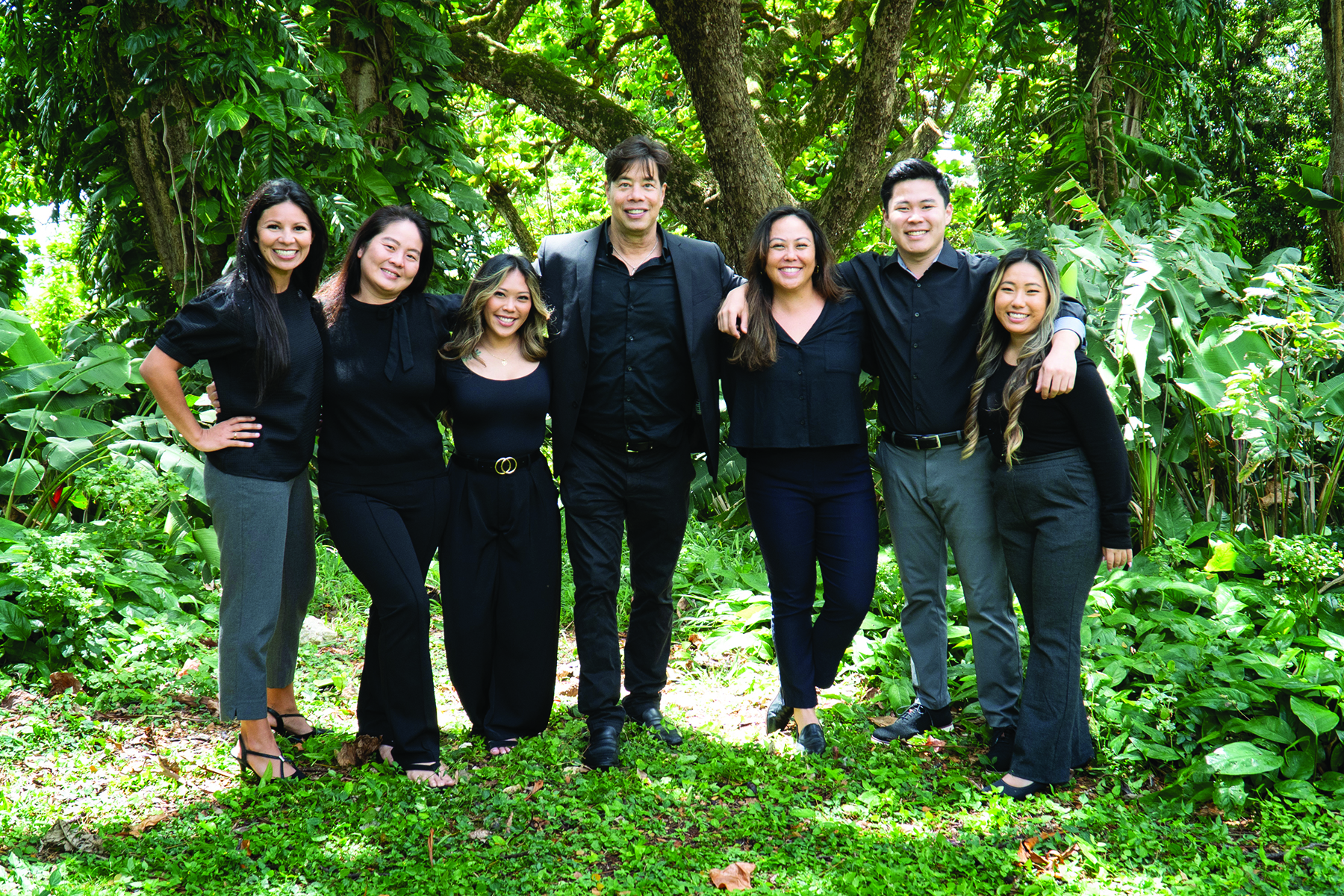
    Stephen Yim and Monica Yempuku are attorneys at law specializing in estate planning, drafting wills and trusts, providing supplemental needs-planning for the disabled, navigating estate and gift taxes, and administering estates.

    I cannot believe that the holidays are already upon us, so let me step back and take a moment to reflect and thank each of my clients for allowing me to be part of their life. Please know that each of you have had and continue to have a tremendous impact on my life. As…

  • Poem: Wobbly

    Poem: Wobbly

    My legs are a bit wobbly.
    My balance is off.
    My thinking was hazy,
    so I just took a nap.
    And now I must tell you,
    I’m still feeling lazy
    and that makes me cross.

    I still move with ease.
    When told to touch toes,
    I flatten my hands on the floor.
    While others may groan,
    I try for one more.
    But when told to stand on one foot
    with eyes firmly closed,
    I find I now look
    for something to hold.

    It’s also my eyes.
    Things look a bit fuzzy,
    but still not that bad.
    Doc says, “20/30, you’re really quite lucky.”

    So here’s what I do.

    A tool threads my needle.
    Drops clear my eyes.
    I use larger print and turn up the light.
    It’s not really a problem, so far I’m alright.

    Now all of a sudden I really must pee.
    I thought I could hold it,
    I thought I could wait.
    Oh, how can I manage
    this problem I so hate.

    Sorry, what did you say?
    Please tell me again.
    My hearing aids are new,
    yet sounds seem to blend.
    Repeat it now loudly.
    I didn’t quite hear.

    My hands have a tremor.
    My feet, how to say, either they feel crawly
    or else they’re asleep.

    In two years I’ll be 90.
    Oh my God, can it be?
    A number so ancient I never did count it.
    But now I can see that I dare not discount it.

    I’ve now lost my keys.
    I’ve forgotten your name.
    Oh well, who hasn’t?
    I’m hardly to blame.
    Now I pocket my keys,
    jot down your name.
    But my writing’s a scribble.
    At times I can’t read it — so I talk into my phone.
    Now there’s a solution.
    I really do need it.

    They say, “You’re so young for your years.”
    It’s always been so.
    I answer, “I have good fortune, good genes.”
    And although it is true,
    my legs are still flighty.
    I still lose my keys.
    My eyes still see fuzzy.
    I’m not sure what to do.

    Will exercise delay this endgame that looms?
    Experts do say so.
    I certainly hope so.

    But today is my problem. I feel a bit wobbly.
    And I’ve forgotten your name.

    “It was on the Big Island while watching the fiery Kīlauea Iki eruption that I first saw her,” Glenn says about his wife, Mary, who are both Kāhala Nui retirement community residents. “She was riding her Vespa, her blond ponytail flying.” They married and have had adventurous lives together living around the world. Mary has been a Girl Scout professional, a manuscript editor, an Austrian tour guide, a Victorian dressmaker, a potter and a literacy tutor. For years, she edited the text books Glenn wrote. “I’ve been after her to start writing for herself. This is a recent piece she wrote for Generations Magazine.”

    If you have a poem, thoughts or a story to share, email the editor: debra@generations808.com.

    My legs are a bit wobbly.My balance is off.My thinking was hazy,so I just took a nap.And now I must tell you,I’m still feeling lazyand that makes me cross. I still move with ease.When told to touch toes,I flatten my hands on the floor.While others may groan,I try for one more.But when told to stand…

  • Having the Time of My Life!

    Having the Time of My Life!

    When my position as the vice president of operations for a large real estate franchise was eliminated, I created my own business consulting company in August 1993. It was also in 1993 that I took over the ownership of a real estate referral company. I have enjoyed over 30 years of being self-employed. All of this has been with the enormous support of my husband of 47 years.

    All of my clients are like family to me, and I take great satisfaction knowing that some have been with me for as long as 20 years. I offer a variety of services to keep their clients, friends and family thinking of them, while saving money with bulk mail postage. I also do marketing for a shopping center and am the executive director for three nonprofit associations.

    Generations Magazine’s art director and I have worked together since its inception in 2010. Now I’m happy to be working for my daughter. The staff respects each other’s talents, enjoys working together and takes pride in what we do for Hawai‘i’s kūpuna. We look forward to many important issues that are enjoyed, appreciated, and shared with family and friends. Our readers live in Hawai‘i and on the Mainland.

    As you can see, I like keeping busy because it makes me happy. Hope you are also enjoying your life, no matter what you’re doing.

    Mahalo for being a valued reader of Generations Magazine, some of you since 2010 and some who are new readers. It is my pleasure to be a part of this informative magazine.

    When my position as the vice president of operations for a large real estate franchise was eliminated, I created my own business consulting company in August 1993. It was also in 1993 that I took over the ownership of a real estate referral company. I have enjoyed over 30 years of being self-employed. All of…

  • Disaster-Proofing Your Documents

    A fireproof safe may not be 100% effective, as evidenced during Maui’s wildfires last year. In parts of Lahaina, the heat was so intense that safes were found melted.

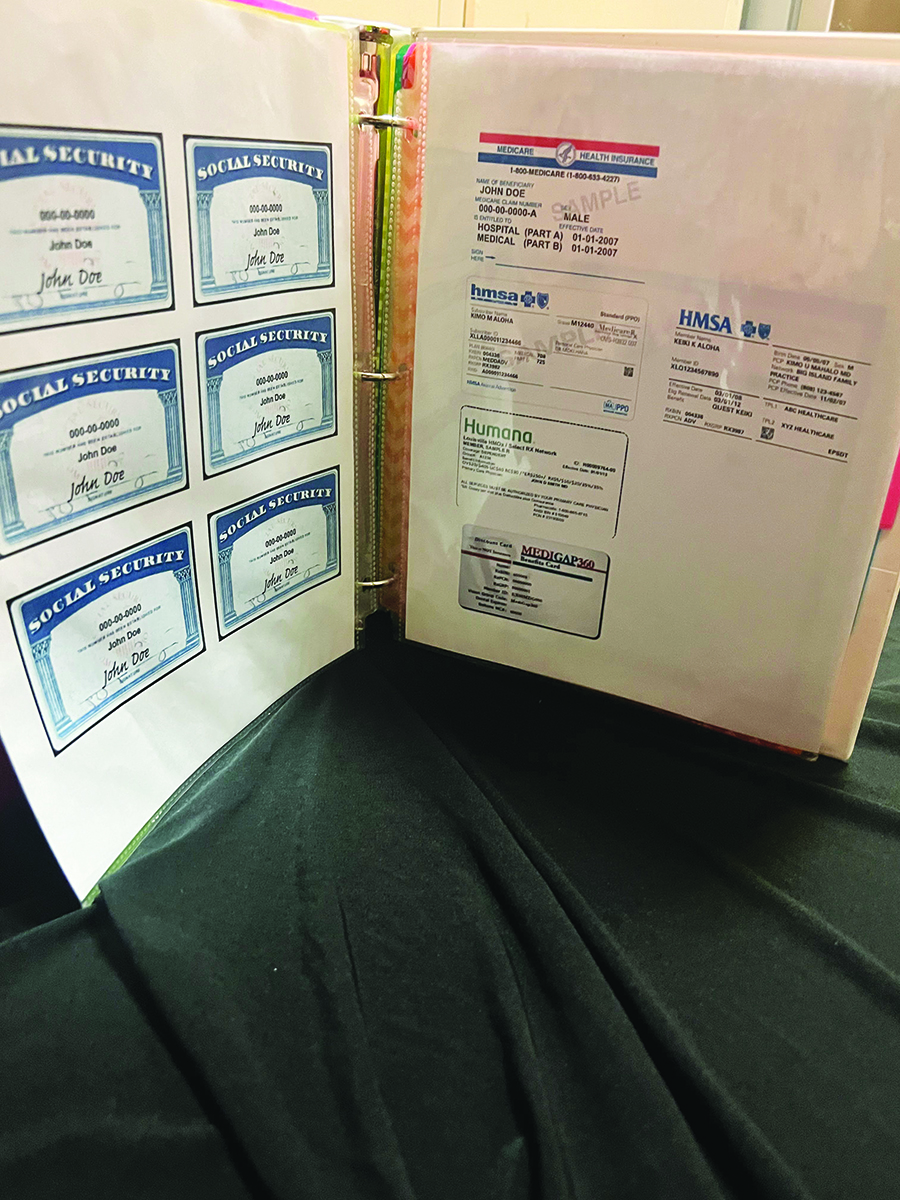
    The Moloka‘i Public Health Nursing staff worked with the Kupuna Care Program and the community to create the Book of Life or Nā Palapala Ko‘iko‘i, a portable organizational binder for important documents. The binders, sheet protectors and cardholders were distributed to 200 senior families during a senior baseball tournament on Maui just before the fire. But families who weren’t prepared lost everything, including vital documents.

    Families can better expedite services for their kūpuna who have all their important documents in one place. Therefore, the Moloka‘i Public Health Nursing staff  encourages the public to use the Nā Palapala Ko‘iko‘i binder, or an accordion folder or a bag to hold important documents that is kept in an easily accessible location.

    It is highly recommended that everyone start a similar portable binder in which to keep important documents. Documents can include but are not limited to legal, tax, medical and insurance records. This grab-and-go binder could be invaluable in lessening the stress during an emergency that forces you to flee from your home quickly.


    DEPARTMENT OF HEALTH
    Moloka‘i Public Health Nursing
    P.O. Box 2007, Kaunakakai, HI 96748
    808-553-7882 | F: 808-553-7888

    A fireproof safe may not be 100% effective, as evidenced during Maui’s wildfires last year. In parts of Lahaina, the heat was so intense that safes were found melted.