Category: Column

  • Having a Purpose in the Community

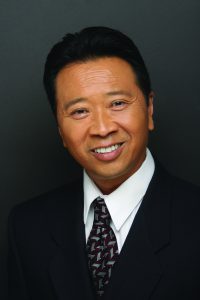
    Photo of Logos Bookstore When people hear that I manage a Christian bookstore at age 70, they think I’m crazy — or a religious fanatic. I assure you, I’m neither (but don’t ask my wife!). In light of large stores closing and the Barnes and Noble chain struggling to survive; and when Amazon has changed shoppers’ expectations, why do I think we can still run a brick-and-mortar bookstore — and a Christian one at that?

    The answer goes beyond dollars and convenience. The store began as a vision through people involved with InterVarsity Christian Fellowship (a university campus ministry). It’s about helping to create a community and a network of care for the people who come into our store. The ministry was to “be” God’s word in the marketplace as a business. The store’s name, Logos, actually means “word” in the Greek language.

    The model was to provide a full-service bookstore with an ecumenical selection of books and Bibles, from conservative to liberal. The unique approach to the bookstore was to also appeal to non-church or non-religious customers. Our merchandise, customer service and even our atmosphere were the building blocks for starting new relationships.

    Through our books and resources, we hope people will find answers regarding important topics, from “the meaning of life or faith” to more down-to-earth issues: marital problems; aging and Alzheimer’s; how to help someone going through cancer treatment; how to deal with anger, illness and death; what it means to be a Christian.

    Our mission is to help our customers grow in mind and spirit.

    Because of that purpose, I’m glad to be running this humble bookstore and serving the needs of my island community.


    LOGOS BOOKSTORE OF HAWAII, INC.
    760 Halekauwila St., Ste A, Honolulu, HI 96813-5344
    808-596-8890 | Neighbor Islands: 800-303-1533
    logos@logosbookstorehawaii.com
    www.logosbookstorehawaii.com
    Store Hours:
    Mon – Wed: 9:30 am – 6 pm
    Thurs – Sat: 9:30 am – 7 pm

    When people hear that I manage a Christian bookstore at age 70, they think I’m crazy — or a religious fanatic. I assure you, I’m neither. In light of large stores closing and the Barnes and Noble chain struggling to survive; and when Amazon has changed shoppers’ expectations, why do I think we can still…

  • Mature Workforce Predictions 2020–25

    Carleen MacKay
    Carleen MacKay

    Whether you wish to work in a full-time, part-time or in a just-in-time capacity — for a fee or for free — here are several predictions based on trends and research for you to consider when preparing to work in your 50s, 60s, 70s and beyond (yes, beyond).

    1) The contingent and remote work forces will continue to outpace other ways of working over the next five years. The U.S. contingent (as needed) workforce today is stronger than 40 percent of the overall workforce, with remote full-time or part-time workers at around 5 to 8 percent and growing faster than most can measure. One person predicts (yes, that would be me) the growth rate of remote workers will increase to 25 percent by 2025. These predictions favor mature workers who seek to continue to contribute in unique ways.

    2) The surging wave of automation will continue to affect occupations across the country. However, change that negatively affects many people also positively affects those who are ready. The question is: Are you ready? The future belongs to those who continue to learn. Hawai‘i offers  opportunities for learning from the community college level to adult learning schools, such as the Hawaii Community School for Adults in Honolulu. The school is introducing a bill that would establish a Workforce Readiness Diploma Program for all adults. Follow your legislators and you will continue to see rapid, affordable, lifelong learning opportunities.

    3) The “gray wave” is impacting the workforce. Its effect is expected to multiply — beyond imagination — over the next five years. The Bureau of Labor Statistics states that “Labor force participation is expected to increase fastest for the oldest segments of the population — most notably, people aged 65 and older.”

    4) Volunteering is a high-growth business, one in which the need for volunteers is predicted to expand exponentially through 2025. Where do studies predict that highest growth? The answer is healthcare and active involvement with our island’s youngest and oldest members.

    The future economic and societal health of Hawai‘i will be measured by how we treat our youngest and oldest members.

    If you seek a purpose-driven life and income is not your primary driver, explore the hundreds of volunteer options available throughout the
    islands. Keep in mind that longer, purposeful lifetimes are, in large part, achieved by a commitment to your own active aging goals.

    Volunteering, by the way, is work. If you stop thinking about work under the old definition of the word “job,” you will see that working for the good of others may end up being more rewarding than any career or endeavor you held during your younger years.


    NEW WORKFORCE HAWAII
    Carleen MacKay
    916-316-0143 | carleenmackayhi@gmail.com
    www.newworkforcehawaii.com
    Contact Carleen via her website and receive New Ways to Work, a free PDF book co-written with Phyllis Horner.

    Whether you wish to work in a full-time, part-time or in a just-in-time capacity — for a fee or for free — here are several predictions based on trends and research for you to consider when preparing to work in your 50s, 60s, 70s and beyond (yes, beyond).

  • How to Join the Flexible Workforce

    I have often written to you about imagining your future — daring to dream and following your own internal journey as you think about the many opportunities for work in the year ahead.

    FIRST THINGS FIRST — YOU! Your first step in exploring your future is to take an internal journey in order to make a decision to work for pay, for fun or for the good of others. Part-time and other ways of working flexibly are bountiful. Many offer unique advantages to mature workers over that old classic — the 9-to-5 job.

    Think of this new time, with its many new ways to work, as the time that change and innovation are opening financial and social opportunities for those of us who need or wish to continue working over our much longer lifetimes. Think you’re alone in this new quest? Think again, as older workers form more than 30 percent of the flexible workforce; the number is growing daily.

    Where do you find flexible work in Hawai‘i?

    • Google “temporary staffing agencies in Hawai‘i.”
    • Or, search for opportunities my way and Google product or service areas that interest you. I am a writer and find many options by Googling “opportunities for writers and editors in Hawai‘i and beyond.”
    • Join LinkedIn. For example, through my 1,100 people connections on LinkedIn, I have been able to link with people who are working remotely — here, there and everywhere. For me, the most appealing way to work is remotely from my lānai in Hawaii Kai.

    Of course, you need to have relevant market skills in order to secure new opportunities of interest to you, as well as to clients and customers.

    Adding basic skills to your experience is the easiest way to prepare. How easy is it? Well, I learned many necessary technical user skills from my 16-year-old granddaughter! In exchange, I helped her to develop the confidence and skills to drive a car!

    Unfortunately, unrealistic fears block many mature workers from new learning experiences. Here are two sources that have helped me overcome the reluctance to reinvent myself. AARP and OSHER (www.osher.socialsciences.hawaii.edu/) offer ideas, connections and referrals to suitable skill building programs throughout Hawai‘i. Step up. Find renewed purpose through some form of work. You’ll be glad you did!


    NEW WORKFORCE HAWAII
    Carleen MacKay
    916-316-0143 | carleenmackayhi@gmail.com
    www.newworkforcehawaii.com

    Contact Carleen via her website and receive New Ways to Work, a free PDF book co-written with Phyllis Horner.

    our first step in exploring your future is to take an internal journey in order to make a decision to work for pay, for fun or for the good of others. Part-time and other ways of working flexibly are bountiful. Many offer unique advantages to mature workers over that old classic — the 9-to-5 job.

  • Aging in Hawai‘i – The Wise-Soul Perspective of a Baby Boomer Turning 62

    An interview: author Michael W. K. Yee, Financial Advisor and Ameriprise Certified Financial Planner

    by Generations Magazine Staff

    Are Hawai‘i seniors living well and thriving?

    Hawai‘i is the best place to retire and thrive. The climate and culture of ‘ohana is second to none for living a good life with family and friends. Also on the plus side, seniors get to enjoy more quality of life here. It’s no surprise Hawai‘i has the highest longevity in the country.

    That said, in 36 years of financial advising, I have learned not to predict longevity for anyone. Longevity statistics are just average ages. Some people still die before they get old. Instead, I tell my clients, “I have no idea how and when a person is going to die. What I do know is that not many people die quickly; whether life is long or short, we will likely experience long-term care.

    So should we still wish for a long life?

    I used to say, “I hope you live a good life.” I define “good” as living a full life that quickly ends in a painless death. Sadly for many, this scenario is not the case. Advances in medicine and technology that extend quality of life are good, but when they increase what I call the “slow go,” (the time of disability and diminished capacity to enjoy life), it may not be so good. Extending slow go with long-term care can become a lengthy “no go” (living in complete dependency on caregivers). Preventing the “let go” (the end of life) may not be the kind of longevity we wished for.

    Dementia care is long-term care, too.

    Yes, social security states that seven in 10 persons will experience long-term care. The average time they spend in “slow go” through “no go” is three years. Half of Hawai‘i seniors over 85 experience some form of dementia. The average length of care for dementia is 10 years. Caregiving is not free. There is always a huge price — physical, emotional, relational and financial. We have to focus not only on the person receiving care, but also on the caregiver. Some families break apart when caregiving — others come together. If family members cannot be caregivers, they have to pay professional services. That can cost lots of money.

    In 2019, a private room in a Hawai‘i nursing home cost an average of $160,418 per year (Genworth study). Few of us have so much money that we can write a check of any size without dipping into savings or our retirement account. It’s easy to see why many families facing enormous costs of long-term care feel depressed and hopeless.

    What planning options do seniors have?

    Many seniors are proactive about improving their health and quality of life. That’s the first thing to take care of. Others are planning their dying experience with their doctors. But between living and dying is a guessing game. The good news is that I see many seniors taking a proactive approach to improve their financial readiness for whatever comes. They have an idea what they would like, so they discuss their wishes with their family and heirs. The conversation generates many financial questions for me — legal questions for their attorney. They want to maintain their independence and they see planning ahead as a way to do that. Into the bargain, they can enjoy a better retirement experience and better quality of life later on if they face sickness, decline and dying.

    Describe the kind of seniors who take the proactive approach to life?

    There are no accidents. I see that people who are proactive and intentional are more successful at living a life of choice rather than one of chance. People who plan look ahead to the future. Seniors come in different sizes and shapes financially, as well as family-wise. The right thing to do for one is different for another, but in general, people who succeed are comfortable with setting goals. They like to focus on the prize — and use it to measure their progress. To succeed, they must have both a good plan and good execution. Their plan must be holistic and comprehensive in that it includes every aspect of their lives. It must address retirement, long-term care, death and legacy.

    Another aspect of successful seniors is that they appreciate teamwork. They realize they aren’t going to be good at everything so they pick a dream team of their favorite health, financial and legal professionals to work together for their benefit . They want all their experts on the same page — not working independently. These kind of seniors wants to get their big decisions right. Lastly, these people communicate well and share their plan with their families.

    Boomers your age are seniors now. What kind of care can they expect in the future?

    Experts call baby boomers “the sandwich generation.” They experienced their parents facing the benefits and hardships of retirement and long-term care. Many helped care for grandparents and parents at the same time they were educating their kids. I don’t know all things, but I do observe that more boomers — especially women — own long-term care insurance based on their personal experience with caregiving.

    I am optimistic; boomers don’t see caring for a parent as just hardship or burden. Many view caregiving as lesson and a gift. I believe our world view is the sum of past learning and experiences. This is the essence of Hawaiian ho‘oponopono — keeping things righteous. Past knowledge and wisdom descends from our ancestors and parents; from us, it flows forward to coming generations. Our parents brought us into this life with love, so the greatest gift we can give them is to walk them home with love. Yes, I have faith in the boomers and their kids. And faith is not blind; it comes from an abundance of undeniable evidence.


    An interview with author Michael W. K. Yee, Financial Advisor and Ameriprise Certified Financial Planner

  • Enrich Retirement With Passion, Exploration

    I am a retired preschool teacher from Bemidji, Minnesota, and I live in Kā‘anapali, Maui, all winter. I am an active volunteer in both communities and my huge appetite for travel has taken me to many of the world’s countries. My method of solo travel affords me opportunities to explore each destination and its culture at my leisure. Often that means viewing and appreciating its art. Exposure to unique and diverse art forms has developed my love of art in all its various forms.

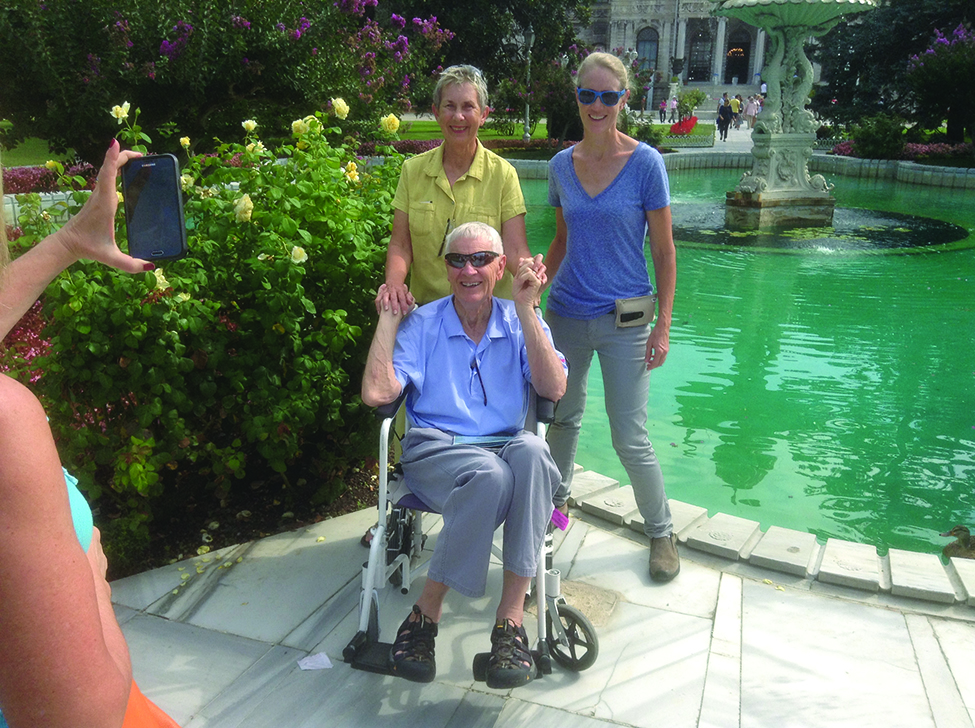
    When my husband was alive, we traveled all over the world. I would have to think of the few countries that we have not visited. Lee was a college professor with a passion for new places and a wonderful sense of humor. After a health problem robbed his ability to walk and talk, we figured out how to keep seeing the world. My daughter, Leeann, was able to share those adventures with us.

    For most of his life, Lee was a cross-trained athlete and served on the Olympic committee. Before the Bejing Olympics, we spent six fabulous weeks exploring China.

    Transitioning to solo travel was not as hard as I thought, because Lee and I were so good at planning itineraries and being flexible on the road.

    I share a passion for seeing the world. If you do too, I recommend travel as a rewarding pastime. I have found that people are much friendlier in real life than they are in the news, books or the movies.

    Every February, I stay home on Maui to assist with the Maui Plein Air Painting Invitational event. This unique event is a tremendous asset to our community by bringing world-class artists here. Our local residents and seasonal guests get a front row seat to watch them paint the beauty of Maui. I live to watch the artists select a subject, set up the easel, create the painting, and frame and hang the finished product. At the art shows I get to greet all the families, visitors and collectors. It’s such a joy to do.

    There is also a free art lecture one evening by a famous art museum curator about “famous art fakes” and a full day of outdoor painting for Maui school children. For all of us who love art and enjoy watching the creative process, being a volunteer is big fun. Feb. 16 through 24, you can find me watching plein air artists on West Maui — and greeting visitors. Here or abroad, art and culture enriches my life.

    I am a retired preschool teacher from Bemidji, Minnesota, and I live in Kā‘anapali, Maui, all winter. I am an active volunteer in both communities and my huge appetite for travel has taken me to many of the world’s countries. My method of solo travel affords me opportunities to explore each destination and its culture…

  • The First Step for a Working Future

    In my 2005 book Boom or Bust, I made the case that if you are prepared, it is never too late to do the work you are meant to do throughout the bonus years of your lengthening life. But if you’re not prepared, watch out for the storm clouds ahead.

    Notice that I used the word “work”— not the word “job.”

    Even so, you may be thinking…

    • I am retired.
    • Employers think I am too old to hire.
    • I can’t do the physical work I once did.
    • I don’t have a high school diploma or college degree.
    • I don’t know where to start looking for an opportunity.

    These are some of the fear words and phrases I hear every day.

    Swallow this. Fear will not lead you into a more financially secure, societally connected, healthy world. But I recognize how fear stops action for many people, educated or not; physically challenged or not; old or not. Should you think that I have not walked in your shoes, I will share that I am 80 years old and in some ways wearing down, while in other ways revving up for new adventures. You can, too, because the need to remain engaged is a lifetime truth for one and all.

    Rather than offer you a lengthy strategy, I suggest you take your first step — and only your first step — into the next phase that will include future work.

    On a daily basis for the next several weeks, jot down a few notes related to ideas for your working future. Include inspirations, dreams and ideas that may surface around you every day. Use your imagination and remember that work can be done for the good of community, for free, for income, part-time, full-time or some of the time. Ideally, find a regular time to add daily notes to your personal journal. Don’t worry about grammar and spelling — you are the only one who will read what you write. Step No. 1 is up to you and for you only. It is your internal journey.

    We will cover more steps next issue. Remember, please, without a first step, you will only be hoping — not planning — for a working future.

    In the meantime, allow me to offer a gift for the holidays. If you take the time to capture your ideas in a daily journal and know how to use email, please reach out to me. I’d be happy to give you feedback.


    NEW WORKFORCE HAWAII
    Carleen MacKay
    916-316-0143 | carleenmackayhi@gmail.com
    www.newworkforcehawaii.com
    Contact Carleen via her website and receive New Ways to Work, a free PDF book co-written with Phyllis Horner.

    In my 2005 book Boom or Bust, I made the case that if you are prepared, it is never too late to do the work you are meant to do throughout the bonus years of your lengthening life. But if you’re not prepared, watch out for the storm clouds ahead.

  • Beyond the World of Full-Time Jobs

    Over 30 percent of the people who work don’t have full-time jobs. In a few years, that will increase to almost 50 percent.

    Working even one day a week will provide psycho-social advantages to an engaged senior.

    There are plenty of options. Here are just a few:

    Pet sitting. Learn more at www.Rover.com. This is a fast-growing business as residents travel and vacation on the mainland and elsewhere.

    Caretaking and caregiving of the old, the young and the challenged. Learn more at www.wilsoncare.com and by doing further research.

    Tourism and hospitality. There are options that do not require standing for eight hours a day. Some of these options may even include working from home; for example, proposal writing to prospective buyers and/or website maintenance.

    Grant writers. Grant writing is an in-demand skill and talent and a viable option if you are already a capable writer. Look for free, easy classes at a community college.

    Board members and paid/unpaid mentors. Membership and mentoring are sometimes seen as voluntary missions. But often, there are gratuities offered. Go to www.mentoring.com.

    Health and life coaches. These skill- and knowledge-based options are in high demand for struggling youth and older populations. The rewards may often be financial, but always meaningful. For ideas, go to www.flexjobs.com.

    Adjuncts and subject matter experts. More than half of U.S. university/college faculty are adjuncts. They are compensated and doing something that matters. Subject matter experts are adjuncts in the private, nonprofit and public sectors who offer unique value.

    Interim professionals. Organizations now engage interim professionals as an integral part of their staffing management plans as a key to maintaining a flexible and nimble workforce.

    Stipend workers are paid a flat sum for work done on behalf of an organization in any sector. There are strict rules governing stipend pay but they are worth exploring. Explore your options.


    NEW WORKFORCE HAWAII
    Carleen MacKay 916-316-0143 | carleenmackayhi@gmail.com
    www.newworkforcehawaii.com
    Contact Carleen via her website and receive New Ways to Work, a free PDF book co-written with Phyllis Horner.

    Over 30 percent of the people who work don’t have full-time jobs. In a few years, that will increase to almost 50 percent. Working even one day a week will provide psycho-social advantages to an engaged senior. There are plenty of options.

  • The Journey Continues

    Yes, the journey of life continues even after we retire!

    How long our journey on Earth will be is one of the unknowns we must live with. In my earlier article, entitled, “I’ve Never Been Old Before,” I wrote about how lost I was when I retired from my career in the federal government. It took me quite a while to find purpose and meaning during the empty days that kept coming at me. Thankfully, I realized how rewarding it is to give back in whatever way you can.

    For the past 11 years, our church has offered a men’s class called “The Journey Continues.” We have witnessed how helpful it’s been for many working and retired men who attend this class.

    The men of The Journey Continues. Steven Kawamura (R, top row) says he has been blessed to be a part of this great, supportive group of men.
    The men of The Journey Continues. Steven Kawamura (R, top row) says he has been blessed to be a part of this great, supportive group of men.

    While studying the Bible is what brings us all together each Sunday morning, we value building relationships and seek to encourage one another in whatever ways we can. It is not easy in today’s world to find balance in one’s life and sometimes just getting through a week can seem almost impossible. That’s been the value of having a weekly class where you can come and be refreshed and completely renewed.

    My life experiences have shown me that many men are living very lonely lives. Unless they are able to address this early, they risk coming to the finish line without anyone cheering for them.

    If you see yourself in this article, it’s not too late to bounce back. Just look around you to see if there is anything you can try right away. You’ll be amazed at how many doors will begin to open to you if you do this. That’s been my experience.

    Another surprisingly easy thing to do is just ask people you interact with on a regular basis. You’ll be amazed at how helpful their responses will be. Then just go for it.

    Some Thoughts to Think On

    “If you aim for nothing, you will probably hit it.” So why not try aiming for something and see what happens.

    “My whole life has been preparation for now.” So make the most of what’s ahead by using what you’ve gained so far.

    A final thought: “Not all who wander are lost”

    If you feel like you are wandering aimlessly, remember that it is not too late — there is still time to avoid becoming “lost.”

    Yes, the journey of life continues even after we retire! How long our journey on Earth will be is one of the unknowns we must live with. In my earlier article, entitled, “I’ve Never Been Old Before,” I wrote about how lost I was when I retired from my career in the federal government. It…

  • Tips for Traveling With the Grandkids

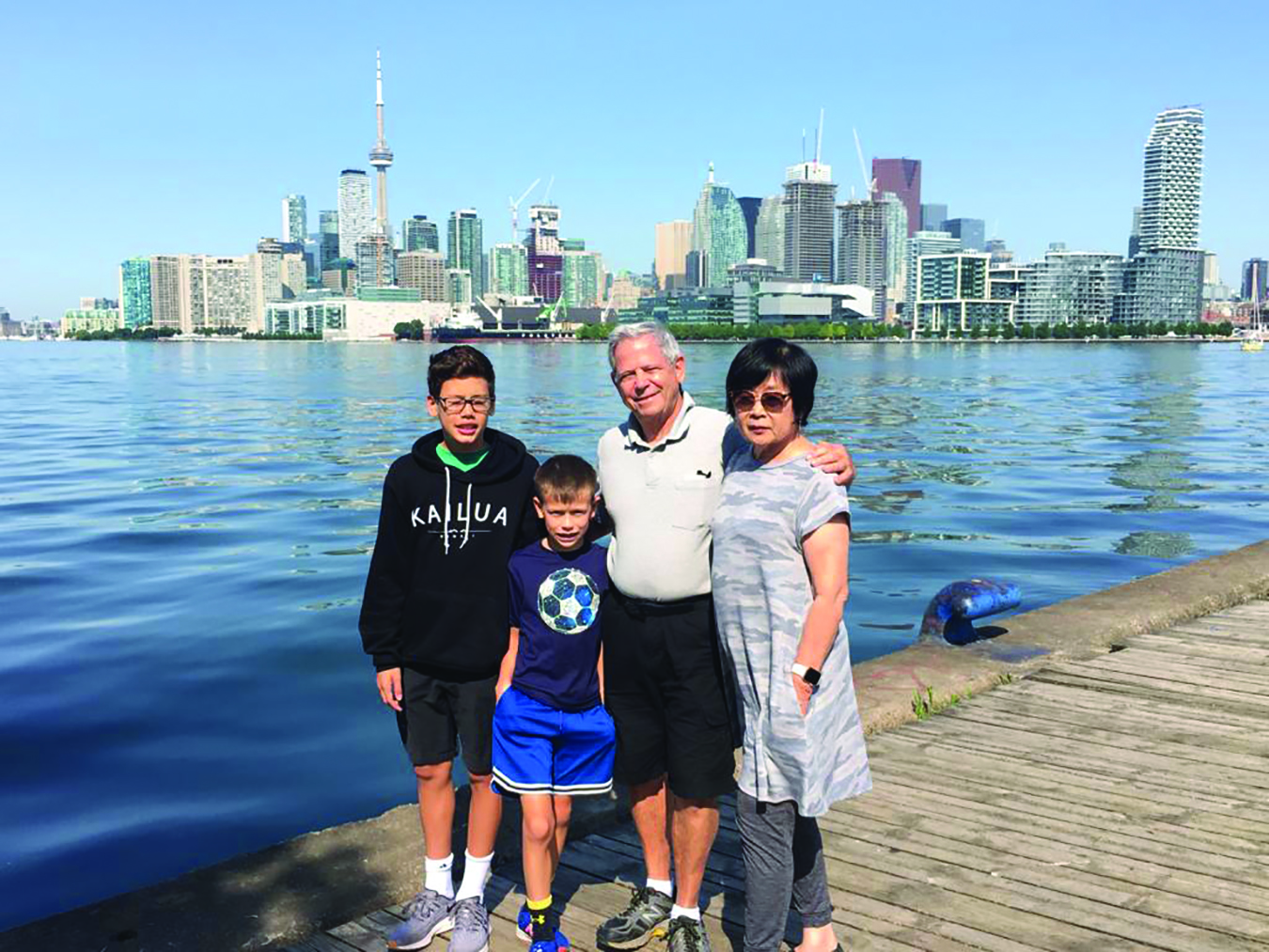
    Mae and Gil Mendelson invited their grandchildren to join them on vacation, continuing a family tradition started by Mae’s grandparents.
    Mae and Gil Mendelson invited their grandchildren to join them on vacation, continuing a family tradition started by Mae’s grandparents.

    The grandsons, ages 11 and 13, were in agreement: no museum visits on our week-long trip to Toronto and Niagara Falls. Sad words for a grandmother who spends her days as a docent. However, sharing the itinerary with the grandkids before we go is one of the lessons my husband and I learned. After expressing their concerns about being bored, they agreed to visit one natural history museum with us.

    We started taking our grandkids on trips without their parents to create shared memories and to get to know each other in a more personal way. It is somewhat of a tradition in our family. My mother took our children to Japan without us. These trips remain cherished memories. In a way, we are continuing her legacy.

    For the Toronto trip with our grandsons, we designed a shared agenda that included something for everyone — we saw a baseball game and went to an amusement park.

    Traveling also means eating out. Even though I am just as addicted to my devices as my grandsons are, we created one rule for all of us: When we go out for dinner, the electronics stay home.

    Taking our granddaughters to London taught us a different lesson: the value of being flexible. As planned, the girls visited the National Gallery, sketched in Trafalgar Square and went on a scavenger hunt. Our itinerary changed abruptly when the girls discovered that an online video festival was in town. So we skipped our planned trip to St. Paul’s Cathedral and joined a YouTube event in which thousands of young people were queuing for a meet-and-greet with their favorite YouTube celebrities. We had suddenly crossed a generational divide. It was awesome. Letting them lead the way was an extraordinary experience and taught us so much.

    If you are thinking about traveling with your grandkids, it helps to purchase tickets online for your daily activities. And you always want to be prepared. The benefits can include quick entry, access to special exhibits, and discounts to gift shops and cafes. Bringing their passports, medical cards and written parental permission gives you the right to make decisions on their behalf.

    Traveling with your grandkids can be a rewarding experience. Trust your judgement and theirs, and have fun making memories together

    We started taking our grandkids on trips without their parents to create shared memories and to get to know each other in a more personal way. It is somewhat of a tradition in our family. My mother took our children to Japan without us. These trips remain cherished memories. In a way, we are continuing…

  • FREEDOM: Working in New Ways

    For the past few months, I have been introducing you to the concept of working in new ways beyond the old, familiar routine of working a regular, full-time job in an office.

    Now, many ask how to optimize their independence from the old, familiar world of work. How are they doing good, making money, overcoming feelings of isolation and having a healthy lifestyle?

    Let’s begin a new journey by addressing freelancing — i.e., working for yourself.

    • The Freelancers Union predicts that over 50% of the U.S. population will be freelancing full-time in 10 years.
    • Today that number hovers over 30%
    • What started out as “gigs” has become the preferred way of working for many — and if ever there was a perfect landing spot for a prepared mature workforce, freelancing is it.

    What I have been repeatedly asked is: “Does freelancing confine you to working from home?” The answer is no.

    Option 1: Collaborative Workspaces

    Have you heard of it? This is the fastest emerging way of how, why and where to work. There are now a couple of dozen shared office spaces throughout the islands. While I have not visited all these shared spaces, I am very familiar with two in Honolulu. Box Jelly is a co-working space that offers monthly memberships as well as meeting and event space for members and non-members alike. The Impact Hub near the Whole Foods main downtown store is handy and the parking is easy. Both offer a Wi-Fi connection and a collaborative atmosphere where people share ideas and knowledge. Thus, the need for collaboration and social interaction are met.

    Option 2: On-Location

    While we like working from home some of the time, half of us spend some work time in our clients’ offices. We bond with full-time teams. We integrate into several of the daily experiences others share. But we get a break from the daily grind, and often, this break is just what we need — especially at traffic time on a highway anywhere in Hawai‘i.

    Option 3: Off-Location

    Quite frankly, working anywhere is possible. Have you been to your favorite coffee shop lately? Look around. Or worked at the corner library? Come on; you’re only limited by the past. This is now. Define your time and space.


    NEW WORKFORCE HAWAII
    Carleen MacKay
    916-316-0143 | carleenmackayhi@gmail.com | www.newworkforcehawaii.com
    Contact Carleen via her website and receive New Ways to Work, a free PDF book co-written with Phyllis Horner.

    For the past few months, I have been introducing you to the concept of working in new ways beyond the old, familiar routine of working a regular, full-time job in an office. Now, many ask how to optimize their independence from the old, familiar world of work. How are they doing good, making money, overcoming…

  • Harmonica Seniors Are Healthy & Happy

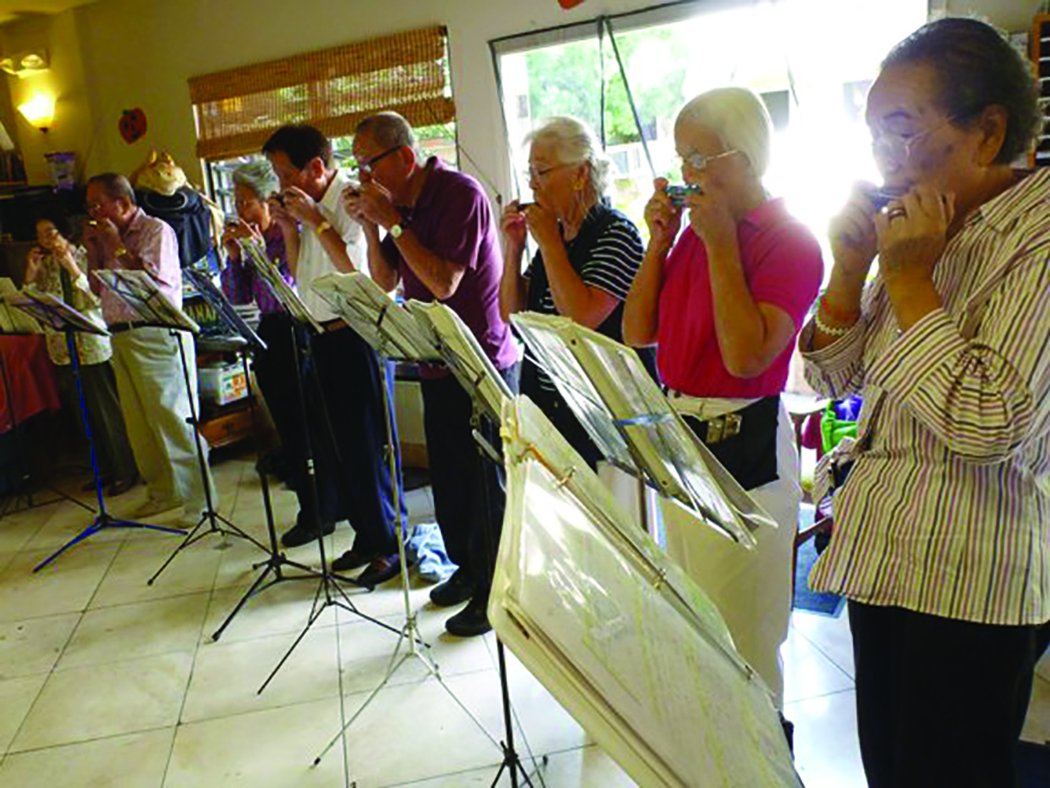
    Seniors of the Small World Harmonica Band
    Seniors of the Small World Harmonica Band

    Growing up in Hawai‘i, I played a ten-hole harmonica by ear, but lost interest because I could only play the same old songs and was not getting any better. As the years sped by and before I found anything interesting to enrich my life, I became a senior facing retirement. Doing nothing was not an option so I began to search for the elusive experience that would bring harmony into my life.

    One day, I went to a concert and saw a group of seniors playing with a tremolo 21-hole harmonica. Everyone wore attractive red and white uniforms that enhanced the lively group’s sense of harmony. I was amazed by the variety of songs they played — sometimes with two harmonicas simultaneously. At the end of this wonderful performance, I knew this is what I had been searching for.

    My retirement dream of doing something worthwhile became a reality when I joined the Small World Harmonica Band, an ethnically diverse group from all walks of life. I was immediately introduced to an exciting world that not only renewed my interest in playing the harmonica but also made me a member of a friendly social group.

    The beginner’s group met weekly in free classes; we learned to read numerical notes, breathing techniques, and how to hold and properly clean the harmonica. It also provides health benefits by exercising the lungs and stimulates the mind from reading numerical notes and transposing them into music. After learning the fundamentals, we began to play a variety of music including Japanese, Korean, Chinese, Filipino, Hawaiian, American and Latin songs.

    Photo of Stanley Fujii playing with his harmonica group at events and senior centers.
    Stanley plays with his harmonica group at events and senior centers.

    By diligently practicing, I finally felt comfortable performing at care homes, senior centers and adult living facilities. Entertaining this audience, many in wheelchairs who smile and applaud as we play music of their bygone days, is a heartwarming and memorable experience. But, the real beneficiaries of this entertainment, I truly believe,
    are the players themselves, since it lifts their spirits and gives them a good feeling.

    The Hawai‘i Harmonica Society will celebrate its 22nd annual recital and concert at the Mission Memorial Auditorium, City Hall Annex, on Saturday, July 13, from 10 am to noon. This program is free and open to the public, and free parking is available at the municipal parking lot at Beretania and Alapai Streets (Beretania Street entrance).

    Anyone interested in joining a group and learning to play the harmonica, contact any of the phone numbers listed below — I’m sure you’ll find it enjoyable.


    SMALL WORLD HARMONICA BAND
    Stanley Fujii, Publicity Director
    808-943-2011 | stan_fujii@hotmail.com
    Rev. Mamoru Yamasaki — Mililani | 808-623-7692
    Frances Tagami — Honolulu | 808-595-6884

    Growing up in Hawai‘i, I played a ten-hole harmonica by ear, but lost interest because I could only play the same old songs and was not getting any better. As the years sped by and before I found anything interesting to enrich my life, I became a senior facing retirement. Doing nothing was not an…

  • ‘I’ve Never Been Old Before’

    I’ve never been old before so this is a new experience for me. After retiring from a 37-year career, I found myself adrift. What should I do now? The days seemed very long as I pondered what I should fill them with. Life looks very different when you remove yourself from the “working world.” You feel as though you are invisible when you are with other people.

    “What do you do?

    “I’m retired.”

    “Oh. What did you use to do?”

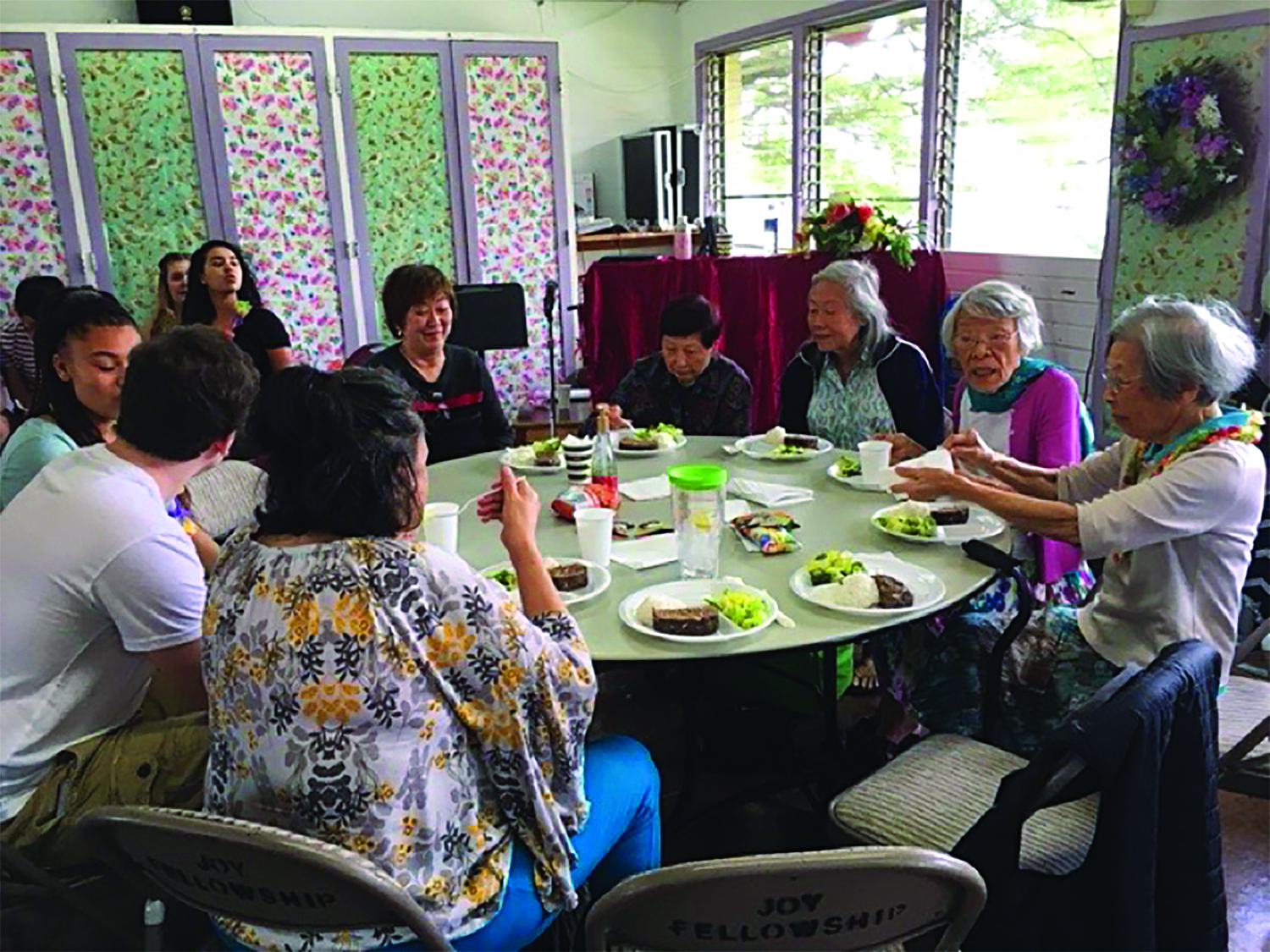
    Joy Fellowship members always cherish getting together at every meeting.
    Joy Fellowship members always cherish getting together at every meeting.

    Already you begin to feel as though life is now passing you by — at least in the eyes of others.

    The next phase in this process of aging out of the working world is to rethink whether you should have retired or not.

    “Maybe it was too soon. Maybe I should have kept working.”

    This definitely did not help me in adjusting to the life I am now living.

    Finally, I realized there was no turning back. I needed to face what was ahead and make the most of it.

    Now that you are not part of a work community, you can feel isolated. Well, I’ve always heard that if you want a friend then be a friend. Maybe it was time to try this out. As I began taking the initiative and making lunch appointments, I found that others were going through the same experiences as I was. This shared feeling made me feel better.

    Then I began to hear about different activities available during the week for retirees — but nothing sounded good to me. Then I heard about something at our church that was open to all. You didn’t need to attend our church or even go to church at all, so I decided to try it out. It turned out to be just what I needed.

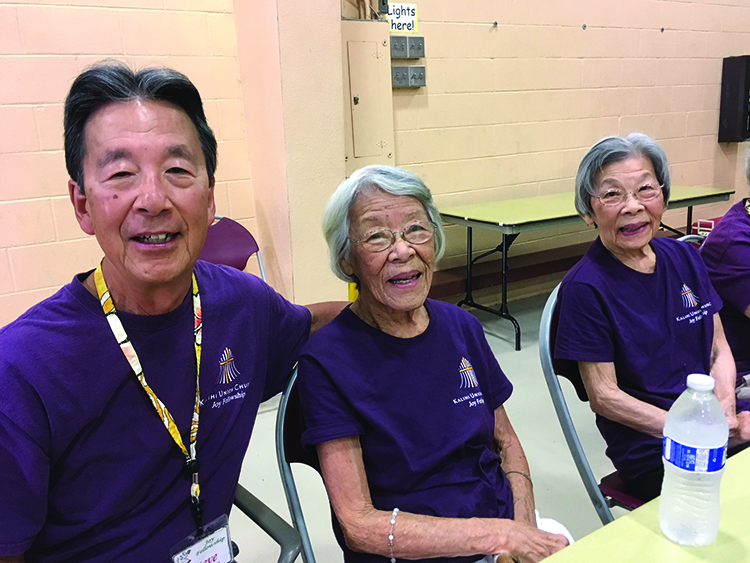
    Photo of Steven enjoying the company of his friends, Ginny and Ada.
    (L–R) Steven enjoys the company of his friends, Ginny and Ada.

    Joy Fellowship meets every Thursday from 9 am to noon and is open to non-church or other church seniors. It is a well-planned time that includes a variety of activities — crafts, singing, sharing, exercises, a short message of interest — to keep people involved and entertained. The morning ends with a healthy lunch.

    There are also special events during the year, such as monthly visits from the Kalihi Union Church Preschool (it’s great to see seniors and children together), a day trip to Ho‘omaluhia Botanical Gardens (includes a ride in a school bus, unless you drive) and a Senior Olympics usually held during the summer. Currently, there are about 80 seniors attending.

    It’s not easy in today’s world to find a place you can go to and feel cared for — especially if you are a senior. Joy Fellowship is open to all and perhaps if you are reading this, you will be motivated to check them out on Thursdays at Kalihi Union Church.

    I’ve never been old before so this is a new experience for me. After retiring from a 37-year career, I found myself adrift. What should I do now? The days seemed very long as I pondered what I should fill them with. Life looks very different when you remove yourself from the “working world.” You…