
The tango is a very deep human experience with a very long history. In the late 19th century, immigrants in Argentina listened to its haunting music and created a unique, intimate dance, eventually called the “tango.” Born from a unique blend of African, European and indigenous cultures in the working-class neighborhoods of Buenos Aires, modern tango is the result of an unbroken chain rooted in prehistoric times.
Tango is a social dance. The essence of the tango is finding connection with your partner, while communicating through movement. A good dance leader listens to his partner. If the leader is communicating effectively, he will adjust his movements for the pleasure of his partner.
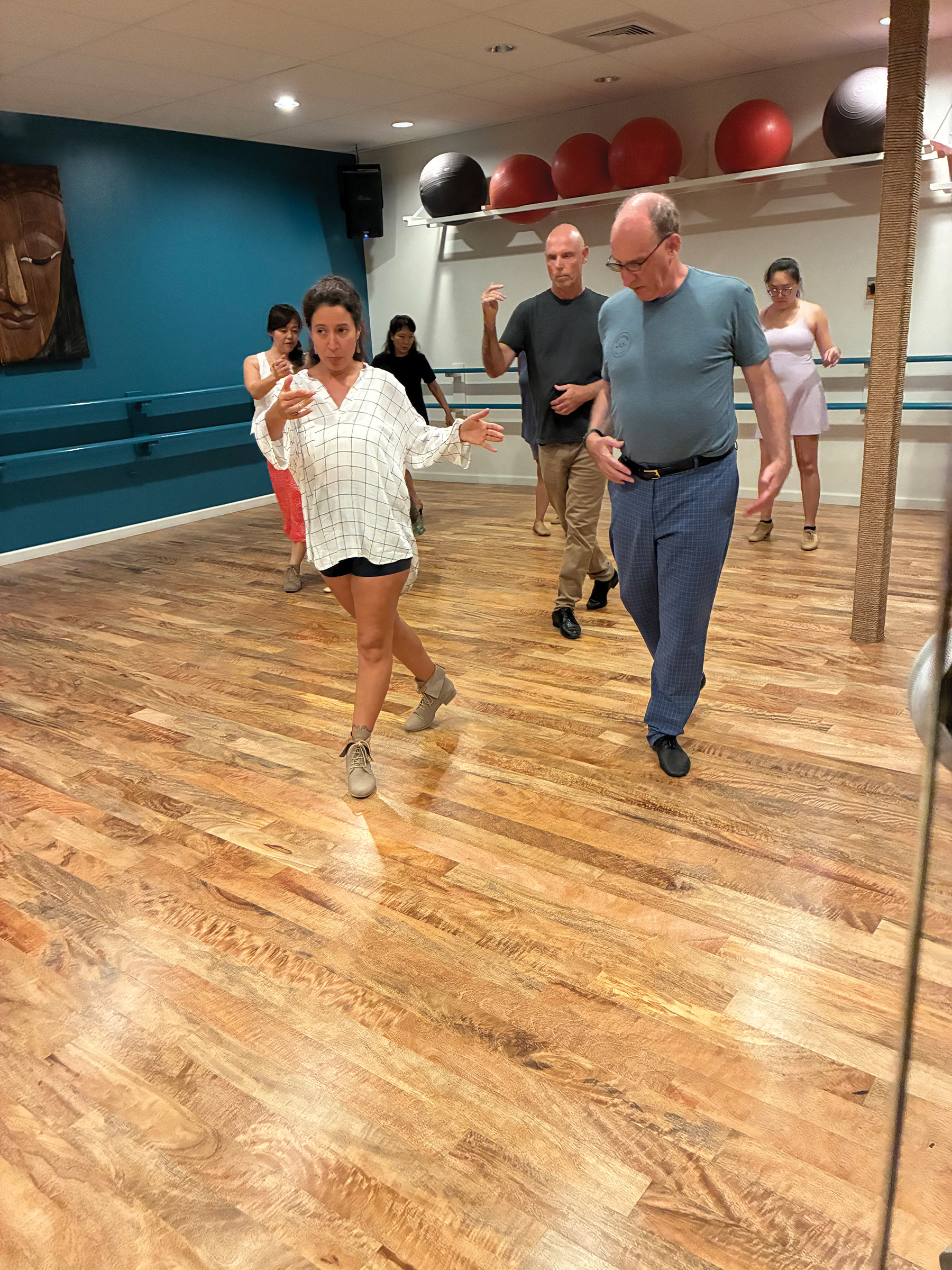
“Tango is more than dancing and spiritually deeper than the dance itself,” says Josefina Stellato, tango maestro at Still & Moving Center at 1024 Queen St. in Honolulu. From early childhood, Josefina had a desire to be a tango dancer. She was born in Tandil, Argentina, where she learned the dance as a child. She moved to Buenos Aires at age 17 to study tango with renowned teachers. She attended a variety of tango schools for about 22 years and danced in musical stage productions.
Josefina began teaching tango in Honolulu two years ago at the invitation of one of the top instructors in Honolulu. She has also taught in California, New York City, Boston and Washington, D.C. She says she would enjoy instructing students in Hawai‘i schools and in Japan.
“Tango is a beautiful dance,” she says. “It is a deep art. By embracing your partner, you communicate with even a first-time partner, not with words, but with your movements. Tango is a conversation conducted through movement — communication of mutual feelings and trust, and stylized movement to show you care for another person.”
“When you dance tango, you meet people and friendships blossom,” she says. “Tango is also beneficial for elders. It teaches you balance — one of the many benefits of dancing tango. In tango, your partner is embracing you. It is rare you would fall. If you can stand, you can dance the tango.”
Also, tango is broad in scope. It is ageless. Josefina’s thoughts about tango are deep and profound. She says, “In my private time, I think of the important things of tango. For example, if the communication from the leader to his partner is done well, the partner will relax, trust the leader’s movements and the commitment to the dance deepens. The heart, mind and soul are in the present. The joy of tango is to attain peace of mind, calmness of your emotions and serenity through the dance movements of tango.”
“While dancing, I am in another mental state,” she says. The art of mindful movement, a moving meditation, a grounded exercise in awareness, presence, connection and creative expression… Yes, tango can be surprisingly Zen-like. At its best, it demands the same qualities as meditation: presence, awareness, acceptance and letting go. Time disappears — the outside world falls away…
Leave a Reply