Tag: Elderhood Project

  • Don’t Be Limited By Your Fitness

    On the KHON2 Elderhood Project, we meet many seniors and the ones who impress me most are those who stay active. Recently, our cameras went to a softball tournament where we watched seniors as they laughed and joked with each other. But when the gloves were put on and the ball was pitched, they were no longer seniors. Rather, they became competitive, energetic athletes having fun on the field. They were turned young again … a feeling that they take with themselves off the field and into their everyday lives.

    If you go to the Ala Wai Clubhouse and watch the seniors ballroom dancing, you can see that gleam in the eye, the high heel lifting delicately, the smile on the face. Although dancing is great exercise, you can just tell that there’s more to it.

    Experts will tell you that exercise is important as we age. I agree. But to me, it’s about more than just the exercise. It’s that chemical reaction in the brain that surges and tells you, “I can do this!”

    The publisher of this magazine Percy Ihara and I play golf from time to time. We walk, we talk, we swing the club — not wisely, but with spirit. When we’re through, we laugh and talk about the round. That may be the most important part of our game. If you have the chance to join others in your activities — than do it. It is an important part in keeping us young.

    Why is it important to stay active? To explain why, here’s a funny for you…

    A woman comes home from shopping and says to her husband who’s watching television, “Let’s run upstairs and make love!”

    He replies, “You have to choose.”

    Stay active, and you won’t have to pick between activities.


    The Elderhood Project airs on KHON2 Friday Morning news at 5:45a.m. and Thursday at 5p.m.

    On the KHON2 Elderhood Project, we meet many seniors and the ones who impress me most are those who stay active. Recently, our cameras went to a softball tournament where we watched seniors as they laughed and joked with each other. But when the gloves were put on and the ball was pitched, they were…

  • Message from The Editor – December / January 2014

    The end of this year was highlighted with an island hop to Maui, where Generations Magazine discovered why some of the happiest seniors in Hawai‘i call the Valley Isle home. The cover story, Maui Mindset, explores how Maui County is committed to its seniors and their families … and how seniors are eager to give back.

    Part of the “Maui Mindset” is the county’s philosophy of taking care of each other, says Ruth Griffith, Kaunoa Senior Services administrator. In the story she noted, “Maui County is made up small communities and residents are very civic minded. We look out for one another. Even our seniors who receive support services want to give back to the community in any way they can. Maui seniors play a vital role in maintaining our thriving communities.”

    However, just as with many other areas, Maui is facing a growing senior population. By 2020, the county expects the number of people turning 60 to double. In response, Maui is working with its Baby Boomers to redefine what it will mean to be a healthy and engaged senior over the next two decades.

    Thank you to our Generations Magazine staff for venturing to Maui for a whirlwind tour of Maui — including a 3 a.m. wake up call to catch sunrise at Haleakala.

    Generations Magazine is now in its fourth year and we are so excited to move further into our communities and bring you more engaging stories, trusted resources and valuable programs and services.

    For 2014, we look forward to expanding our distribution points and posting more information on our website (www.Generations808.com). We’re also planning on more workshops, presentations and our 8th annual KHON2 Elderhood Project Aging in Place Workshop on Saturday August 23 at the Ala Moana Hotel. And going forward, we’re offering free digital copies of each magazine … just email a request at Percy@Generations808.com.

    Starting with this issue, we welcomed our new full-time associate editor Aimee Harris. She will be handling all of the magazine’s editorial content, so if you have stories or programs that would be of interest to our seniors, feel free to contact her at Aimee@Generations808.com.

    Live well,

    Generations - 2014-12-01 - Editors Note - Image 01

    Percy Ihara, Editor/Publisher

    Generations - 2014-12-01 - Editors Note - Image 02

    P.S. A special mahalo to Dana Acosta of Kaunoa Senior Services for coordinating a full day of interviews and events for Generations Magazine.

    Generations - 2014-12-01 - Editors Note - Image 03
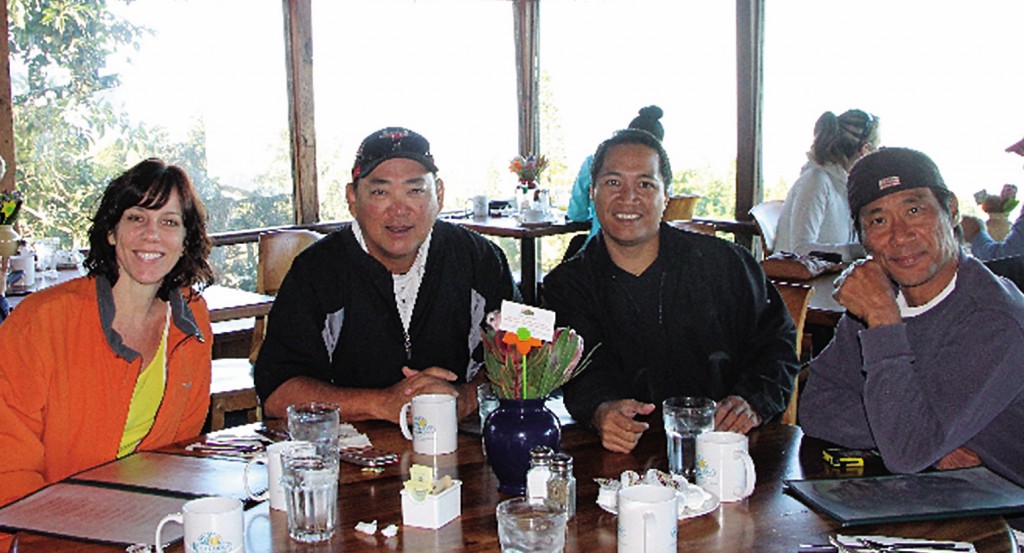
    Generations enjoys breakfast at Kula Lodge, Maui, aftera stunning Haleakala¯ sunrise (left to right): Aimee, Percy, Peterson and Wilson.
    Generations - 2014-12-01 - Editors Note - Image 04
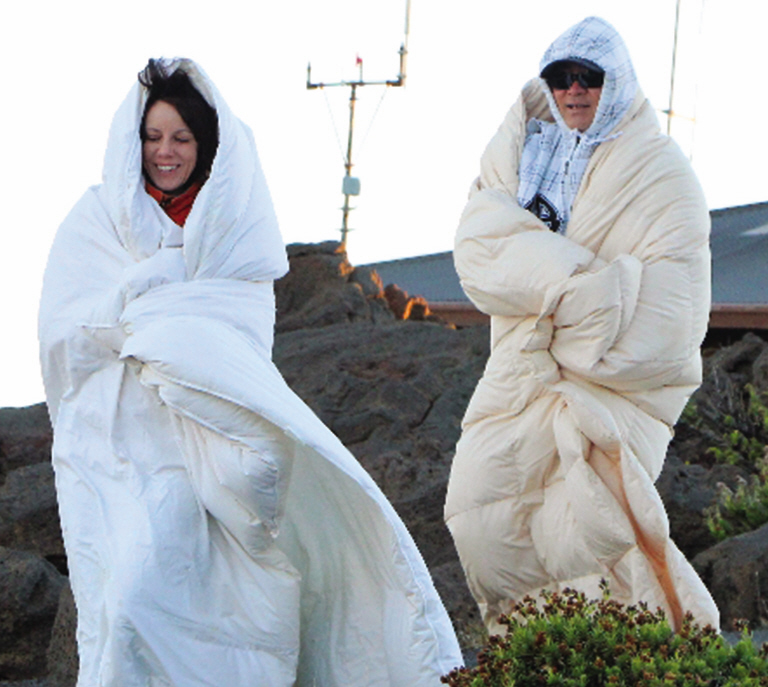
    Aimee and Percy, bundled up for Haleakala sunrise

    The end of this year was highlighted with an island hop to Maui, where Generations Magazine discovered why some of the happiest seniors in Hawai‘i call the Valley Isle home. The cover story, Maui Mindset, explores how Maui County is committed to its seniors and their families … and how seniors are eager to give…

  • “It’s Not Like It Was, But It Will Work”

    My dad had a saying when he was trying to fix things around the house. He was a wonderful man, let there be no question. But when it came to being a “handy-man” — not so much. When he would finish a project, no matter how big or how small, he would finish with this phrase — which was used over and over again by many of his friends [and now, his son] — “It’s not like it was, but it will work.”

    Duct tape has saved many a marriage. I know this for a fact. Elmer’s Glue has saved many a school project. Again, I speak from experience. There is a time and a place for using duct tape or glue. But when it comes to our personal well-being, best to see a professional.

    It’s one thing to try to replace the hinges on a cupboard door. It’s another to diagnose whether or not you have a cold or double pneumonia.

    Last month, we visited a senior center where the staff practiced something called “Namaste.” I don’t know all the details about the practice, but I will tell you this. It involves the senses of touch, sound and smell. Seniors, many of them with dementia, were obviously connected to the practitioners during the practice of Namaste.

    This brings us back to my original statement. “It’s not like it was, but it will work.” As we age, we may look for many ways to feel better. It may be traditional western medicine, it may be medicine involving our native culture, it may be something like Namaste. But the important thing is — talk to a professional. Find out what he/she has to say about what ails you. The answer may be simple — it may be complex. But don’t try to fix it yourself without help. There’s a reason those healers have worked to become who they are. The answer you don’t want to hear is, “It’s not like it was, but it will work.”


    The Elderhood Project airs on KHON2 Friday morning news at 5:45 a.m. and Thursday news at 5 p.m.

    My dad had a saying when he was trying to fix things around the house. He was a wonderful man, let there be no question. But when it came to being a “handy-man” — not so much. When he would finish a project, no matter how big or how small, he would finish with this phrase — which was…

  • Don’t Be That Lazy Guy

    The boomers grew up listening to the Beatles, the Rolling Stones and the Who. My Generation — remember that? When I’m 64 — I know you remember that song. We joked about getting older — and now, here we are. We are the age our parents warned us about. Linda and I just celebrated a milestone. We were born on the same day, in the same year. Yet, amazingly, she is ten years younger than I am. How does that happen? The other amazing thing and something I am so grateful for, my mother sent us a birthday card. My point here is that all of us are living longer and have to plan for all the eventualities.

    And there are many.

    There are financial considerations. Many experts contribute to this magazine who have wonderful information regarding plans for the future — what you will need for the years after retirement [and there may be many years]. Other experts can provide advice on caregiving, emotional and physical help to get through some of the tough times.

    Our main focus in Generations Magazine is to let you know you are not alone. Help abounds. You merely have to ask. Here’s my joke for this column:

    Two lazy guys are laying down against a tree, one on one side, the other on the other. Suddenly one of the guys says, “There’s a huge procession headed down the road. There’s limousines, beautiful girls, a giraffe, an elephant and a marching band. It’s incredible.” The other fellow says, “Gosh, I wish I was on your side of the tree.”

    Don’t be that lazy guy.

    The boomers grew up listening to the Beatles, the Rolling Stones and the Who. My Generation — remember that? When I’m 64 — I know you remember that song. We joked about getting older — and now, here we are. We are the age our parents warned us about. Linda and I just celebrated a milestone. We were born on the…

  • The Talk

    It is the holiday season — the time, maybe the only time of the year, when families get together. There will be lots of food, fun, songs, and presents. But, this may also be a good time for THE TALK. We have visited with many experts on the Elderhood Project who have told us over and over again, THE TALK is vital. Adult children are encouraged to sit down with their elderly parents and find out what they want for — for lack of a better phrase — end of life.

    This conversation should include things like how they want to be remembered, where they want to lie in rest, and what medical directives they have; and this is a hard one. As a child, you will likely want your senior parent to hang on to life as long as possible, no matter what. But again, experts tell us, there comes a time in everyone’s life when they want to let go. That’s why THE TALK is important. It doesn’t have to be treated with gloom and doom. You may find, as you talk to a senior, they have lots of wonderful memories. These are things that must be noted. When the time is appropriate, those memories can be shared with other family members and friends.

    It’s not like playing Jeopardy. The questions you ask the seniors, are the ones they know the answers to. It’s just the fact that nobody may have asked those questions before.

    I don’t bring these thoughts up lightly. My mother and I have had THE TALK…not just about her, but me as well. It’s probably a good idea to have that conversation with your “significant other.” The important thing is to start the conversation. It won’t be easy. But you will be glad you did.

    It is the holiday season — the time, maybe the only time of the year, when families get together. There will be lots of food, fun, songs, and presents. But, this may also be a good time for THE TALK. We have visited with many experts on the Elderhood Project who have told us over and over…

  • Ohana

    Linda and I just returned from a trip to Texas and Louisiana. We were hosting a group of folks from Hawai‘i. If I didn’t know what ‘ohana meant before, I do now. Howard and I were the only men in the group. We had a good time. Not as much fun as the ladies had, still, we had a good time. Marilyn was along with her aunt Grace. This gets me to where I’m going when I talk about ‘ohana. Both of them were very quiet, but they joined in all the activities that our group enjoyed. In fact, Grace was somewhat of a ninja. You would look around wondering where Grace was and then—Bang! She’s right in front of you.

    Another fellow traveler was Dorathea, who is a polio survivor. She used a cane to get around and sometimes needed a wheelchair when we had to cover a considerable distance. But she was a champ. One day in New Orleans, we had to walk a few blocks to get to our bus. It was pouring down rain and the sidewalks were slippery. I grabbed her left hand, she gripped the cane with her right and we made it to the bus. She thanked me over and over again, but I thought, This is who we are. This is what we do.

    Some day, there will be someone who will do the same thing for me. How do I know? I know because seniors all along the way have taught me the same thing — you get back what you give.

    What I remember most about our trip, how-ever, was the laughter. It came from all corners of the bus.

    At one point during our trip, coming from a tour of the Riverwalk in San Antonio, we were waiting for an elevator. Linda kept pushing a button and nothing happened. No elevator, no nothing. Finally, Howard leaned over her shoulder and said, “Linda, you’re pushing the lock button. The ‘up’ button is just above it.” The ladies laughed and Linda said, “Sorry, another blonde moment.”

    In New Orleans, our friend, Sam, who used to live in Hawai‘i, invited our entire group to his apartment in the French Quarter. He fixed up some gumbo and when I told him it was the best gumbo ever, he said, “I know it is.” We wouldn’t have had that opportunity — or any of that trip’s moments — if it weren’t for ‘ohana.

    I’m grateful for my new friends, part of my ‘ohana now. Be sure to take care of yours.

    Linda and I just returned from a trip to Texas and Louisiana. We were hosting a group of folks from Hawai‘i. If I didn’t know what ‘ohana meant before, I do now. Howard and I were the only men in the group. We had a good time. Not as much fun as the ladies had,…

  • Listening and Sharing

    “$51? Are you sure that’s right?”
    — Yes, the young lady told him.
    “Does that include the tax?”
    — Yes, she said again.
    “Okay,” the man said and pulled a $50 and $1 out of his pocket.
    “We had a nice time,” he told her.
    — “We hope you join us again,” she said.

    Through a stroke of good fortune, Mrs. Matthews and I had the opportunity to take a cruise to Alaska, a part of our great nation we had never visited before.

    The gentleman in line ahead of me had paid a flat cruise fare — meals included. The $51 was for “incidentals” — drinks, massage, excursions — whatever. An article recently pointed out that it is almost — almost — cheaper to retire on an ocean liner than it is in a nursing home. I’m not sure that’s entirely true — but I do know they take pretty good care of you on the ship. There is a doctor on board. That can be important.

    You can eat whatever you want, whenever you want. This includes ice cream. It may not be a big deal now, but believe me, at some point during your voyage, you will want ice cream. And it’s nice to know it’s always there.

    If you can eat whatever you want, there are plenty of activities to work off those extra calories. I watched people playing basketball in 48 degree weather. It’s a good excuse to get more ice cream.

    When you arrive at a new destination, you will feel the kind of excitement you felt as a child. It’s hard to put a price on that.

    You will find yourself elbow to elbow with people from all over the world. EVERYBODY has a story and if you are the least bit interested, that person is happy to share a story with you. And you will have the chance to share your story as well. Psychologists will tell you, this is a path to good mental health — listening AND sharing.

    Maybe this is the message of these notes this time around. Cruising can happen where ever you are. You don’t necessarily have to be on a ship in the middle of the North Pacific to practice cruising. You can walk around the block, head over to the library or your local senior center.

    The important thing is to LISTEN AND SHARE. You will be amazed by what your fellow “passengers” have to tell you.

    By the way, the fellow with the $51 charge at the end of his voyage — he got his money’s worth.

    “$51? Are you sure that’s right?” — Yes, the young lady told him. “Does that include the tax?” — Yes, she said again. “Okay,” the man said and pulled a $50 and $1 out of his pocket. “We had a nice time,” he told her. — “We hope you join us again,” she said. Through a stroke of…

  • Go Now, No Ifs, Ands or Buts

    If you’re reading this magazine, it means you want more information about the world around you. That’s a good thing. Sometimes, though the information we need is inside us … way inside us.

    I had my first colonoscopy a few weeks back. I put it off as long as I could until my primary care physician said, “Go now, no ifs, ands or buts.”

    I had to have a brief counseling session with the doctor who would perform the “procedure.” That’s what we’ll call it from now on. He told me there were two approaches to the 25-minute procedure. One, I could be conscious but somewhat sleepy the entire time or I could be put under with anesthesia. I opted for door number two.

    A couple of days leading up to the procedure, you have to begin a special diet and the day before, you have to drink volumes of water with some kind of medicine in it that “cleanses” your system. Don’t make plans to be far from home during this time. You’ll thank me later.

    I had asked the doctor during our counseling session about something called a virtual “procedure.” He acknowledged that there is such a thing, but if the doctor finds a problem, there is no way to take care of it without starting all over from the beginning.

    I don’t like to make broad generalizations, but, in general, men don’t go to the doctor unless there’s something wrong. As far as I knew, there was nothing wrong. So you can understand my reluctance. But, I followed my doctor’s orders to go and just before I got to make my first joke about my situation, the lights went out.

    I woke about a half hour later and the doctor came in to see me. There had been something of concern, and he had taken care of it. I don’t have to see him again for another three years. Next time, I won’t be as reluctant. Doctors tell us, after the age of 50, we should have the procedure. And in the end, it’s a good idea.

    If you’re reading this magazine, it means you want more information about the world around you. That’s a good thing. Sometimes, though the information we need is inside us … way inside us. I had my first colonoscopy a few weeks back. I put it off as long as I could until my primary care…

  • Coaching and Teaching

    On the cover of this magazine, you will see former UH baseball coach Les Murakami. Over the years, he’s made a tremendous difference in the lives of young men. He has a stadium named after him, afterall.

    My dad was also a coach. I still hear from people 50 years later who tell me what an impact he had on their lives. And very little of his influence had anything to do with athletic endeavors. He was a coach, but first and foremost, he was a teacher. He taught us [yes, he was my coach, too] about discipline, hard work, teamwork and pride. But most of all, he taught us how to be men. Coaches and teachers have a more profound impact on their young charges than they may realize. As a coach, you are tired when you get home. And you may wonder if any of your lessons reached the youngsters. Believe me, they do.

    Coach Murakami has the wonderful opportunity to recognize that fact. But to all of you who touch the lives of young people, as teachers, coaches and mentors, I ask you to think about it every day.

    There is no more important task in our lives than teaching the lessons we have learned. It can be as simple as looking both ways before crossing the street, or as complex as the relationship between men and women. As you know, that can be complex!

    To coach Murakami, my deepest congratulations and heartfelt, Hurrah! To my dad and all the other coaches, a loud, Hurrah!

    I got to be a coach once. It was a long time ago. One of my young basketball players now helps my mother through knee rehabilitation. You just never know. Keep on coaching.

    On the cover of this magazine, you will see former UH baseball coach Les Murakami. Over the years, he’s made a tremendous difference in the lives of young men. He has a stadium named after him, afterall. My dad was also a coach. I still hear from people 50 years later who tell me what…

  • Kupuna Education Center

    The Elderhood Project airs Thursday at 5:30am and at 5:00pm
    There is an old Beatles song that includes the lyrics…”Will you still need me, will you still feed me, when I’m 64.” The obvious answer is -“I want to, but how do I do that?” Not the need me part, the feed me part. By feed, I don’t just mean nutritionally. I mean emotionally, spiritually, mentally and physically.

    Fortunately, there is an organization that can help answer those questions.

    Several weeks ago, I spent some time with the folks at the Kupuna Education Center at Kapiolani Community College. Tony Hathaway helps run the program and counts in large part on Eme Kim. Kim specializes in senior counseling, and she has gathered a staff of specialists to conduct classes once every month or so. The class is designated for operators and workers at adult care homes and adult foster homes, but all are welcome. She often has a class of a hundred or more.

    The large group breaks into smaller groups, and they all address different issues that face adult day care operators. One group may talk about depression, another about guilt or denial or nutrition. For each topic, she chooses a specialist from her cadre to help direct the group discussions. At the end of the session, a representative from the group is selected to make a presentation to the entire class on the group’s findings. Kim says it’s amazing the concepts they come up with when many minds work toward the same goal.

    The Kupuna Education Center’s role in the community will become more important as our community ages. There are more than 1200 adult care homes on Oahu alone, and that number will grow - has to grow - in the coming years.

    One other thing I learned - the people involved in the Kupuna Education Center are dedicated, compassionate individuals with a single goal in mind - to provide the best care available using the best practices. And the research continues. That’s good news for all of us, because as another Beatles lyric goes from that classic tune…”You’ll be older, too.” Contact

    The Elderhood Project airs Thursday at 5:30am and at 5:00pm There is an old Beatles song that includes the lyrics…”Will you still need me, will you still feed me, when I’m 64.” The obvious answer is -“I want to, but how do I do that?” Not the need me part, the feed me part. By feed,…

  • Elderhood Project

    My mother just completed her annual visit here to the Islands. She doesn’t stay at our house … she likes her own space. I won’t tell you how old she is. That would just be plain rude. But she is in good health and going strong. She finally got a cell phone (thanks to my sister). That gives me a great deal of comfort.

    While mother was visiting, I tried to call her house phone a number of times. No answer. When I called the cell phone, she answered right away. And, other times when I left a message on her voicemail, she’d call back within minutes after she heard the message alert. Mother doesn’t have a computer. She doesn’t understand why anyone would sit all day in front of a keyboard. So the cell phone is the closest thing to modern technology she owns. But, as I said, it’s a comfort to me knowing that she can call my sister or me when she needs to.

    Boomers like me are in a rather unusual situation. Happily, many of us still have parents who are part of our lives. We also have grown children we are still concerned about. Due to this common situation, Boomers are also called the “Sandwich Generation.” Frankly, I can’t think of a better title. A sandwich is a good thing. It provides comfort, it can be shared with others and there’s an endless variety.

    I’m going to call my mother now. If she thought of me as a sandwich it would probably be “Ham on Wry.” Get it? Ham on … oh, well …

    My mother just completed her annual visit here to the Islands. She doesn’t stay at our house … she likes her own space. I won’t tell you how old she is. That would just be plain rude. But she is in good health and going strong. She finally got a cell phone (thanks to my…

  • Elderhood Project

    Kirk Matthews Elderhood Project - Generations Magazine - October - November 2011Mrs. Matthews [Linda Coble] and I went on a bus tour of Nova Scotia, Prince Edward Island and points east in Canada. We had never been to that part of the world before. We had 20-plus fellow travelers along for the ride … and it was fantastic!

    While the scenery and food were great, the best part of the trip was the people. Nearly all of them are retired.

    Half the group was from Hawai‘i and the other half were from different spots around across the Mainland. Jerry and Mary were from Wisconsin. They have been on 20 of these tours! He retired from the air-conditioning/heating business and she is a former teacher. Donna was a retired nurse from upstate New York and her friend, Betty, was also a retired teacher.

    I have a whole new admiration for people who are retired — but not tired. All the people on our tour were having the time of their lives. It made me realize, as the commercial says, retirement is not the finish line. For these folks and many others, retirement is the beginning of a new chapter.

    Jenny and Cora from Hawai‘i crocheted lei for every person on the bus and other friends they met on the way. Malia and Junius from Maui are retired professors. Their enthusiasm was a message for us all. Carolina is still working as the UH mail supervisor, but she took time off to refresh herself. At each new destination, we all filed off the bus and took in the new sights, smells and history of a place we had never been.

    My message here is simple. Enjoy the world around you as long as you can. You’ll be glad you did.

    Mrs. Matthews [Linda Coble] and I went on a bus tour of Nova Scotia, Prince Edward Island and points east in Canada. We had never been to that part of the world before. We had 20-plus fellow travelers along for the ride … and it was fantastic! While the scenery and food were great, the…