Every two years, many kūpuna will do something important and elected officials should pay attention to the issues we care about.
We vote.
And that means voters 50 and older have a power to make a difference. Older voters turn out in record numbers during elections. In the 2024 election, voters 50 and older made up 52% of the electorate nationally. In Hawai‘i, the percentage is even higher — nearly 60% of votes cast were from people 50 and older.
You can help us make sure that candidates know which issues you care about. Candidates will likely be knocking on your door or holding forums. Let them know what you think.
We’ve heard from kūpuna across the state about the importance of Social Security, Medicare support for caregivers, affordable housing for kūpuna and their children and grandchildren, high prescription drug prices and fighting fraud and we’re sharing your concerns with the candidates we talk to.
The reason we have power during elections is that we vote and you should make sure that you vote and that your vote is counted.
In Hawai‘i, we have an all-mail-in election. If you’ve moved since 2024, make sure your new address is updated with your county elections office so you’ll get the correct ballot mailed to you. If you’re registered to vote at your current address, you should get a colored postcard in the mail to confirm your registration. If you didn’t receive a postcard, call your county elections office.
When you turn in your ballot, you also want to make sure that you didn’t forget to sign it so that it will be counted.
Sign up for the state’s Ballottrax service to get text messages confirming receipt of your ballot at Hawaii.ballottrax.net.
For more information on voting, registering to vote and how you can vote in person, go to the state Office of Elections website at elections.hawaii.gov or call 808-453-8683.
Every two years, many kūpuna will do something important and elected officials should pay attention to the issues we care about. We vote. And that means voters 50 and older have a power to make a difference. Older voters turn out in record numbers during elections. In the 2024 election, voters 50 and older made…
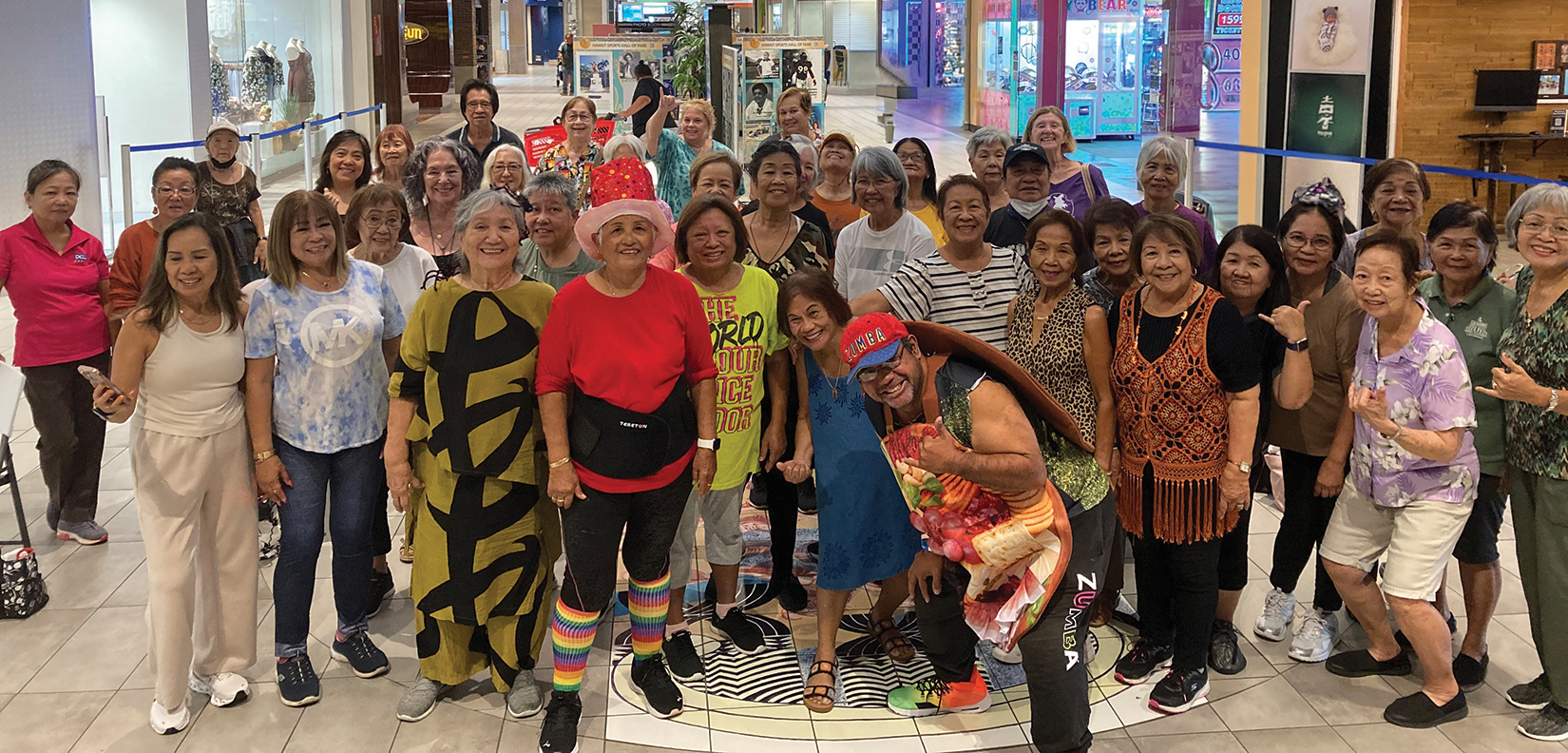
Every Thursday morning, Pearlridge Center in O‘ahu hums with the sounds of ABBA and Elvis. On the second‑floor stage near the former Sears and Jeans Warehouse, kūpuna and caregivers gather from 10:30 to 11:30 a.m., finding their rhythm — some standing, some seated, all moving together. At the center, Dale Delos Reyes leads his Zumba Gold class with a smile and a simple instruction: Just keep moving and have fun.
Unlike traditional Zumba, Zumba Gold is designed specifically for kūpuna and those who may need extra support, offering a safe, enjoyable way to stay active. The choreography is slower and modified, with a focus on balance, range of motion, coordination and joint safety. Dale, a licensed Zumba Gold instructor, keeps routines intentionally simple — no more than three moves at a time. He offers chair-based options for participants with mobility concerns, vertigo or recent surgeries. His classes are free and open to everyone — walkers, wheelchairs and first-timers alike — creating a space where everyone can move confidently and enjoy the music.
Join Dale and his Zumba Gold group every Thursday morning at 10:30.
For Dale, the dance floor began not as fitness, but as healing. A few years ago, he lost his wife, Yolanda, and found himself searching for a way forward. One day, just steps from his home, he noticed a class pulsing with music and energy. He joined, stood close to the speakers and let the rhythm carry him. “I just let everything go,” he recalls. What started as a personal refuge soon became a mission to share movement as joy, connection and wellness. His classes grew from a way to cope with grief into a lifelong commitment to community service through movement.
Regular movement is at the heart of Zumba Gold’s impact. For many kūpuna, the class helps ease morning stiffness, improves balance and keep joints moving without strain. The steady rhythms support coordination and gentle cardio, but the real changes show up in everyday moments — standing a little steadier, walking with more confidence and feeling less alone. Dale notices it each session as shoulders drop, breathing settles and cautious movements begin to ease. He says he can see it by the end of class, when most leave with brighter faces and increased energy.
What began as a way to heal has become a practice of showing up—creating a space where people can move at their own pace. “If you only know one move, do that one move,” he tells newcomers. “Just feel the music.” Today, Dale brings that same spirit of care to kūpuna across O‘ahu, offering free classes at Island Family Christian Church from 9:30 to 10:30am on the first three Fridays of each month. He also leads private sessions at senior housing sites, including The Plaza Waikīkī and its sister locations across the island, with schedules varying by facility.
Every Thursday morning, Pearlridge Center in O‘ahu hums with the sounds of ABBA and Elvis. On the second‑floor stage near the former Sears and Jeans Warehouse, kūpuna and caregivers gather from 10:30 to 11:30 a.m., finding their rhythm — some standing, some seated, all moving together. At the center, Dale Delos Reyes leads his Zumba…
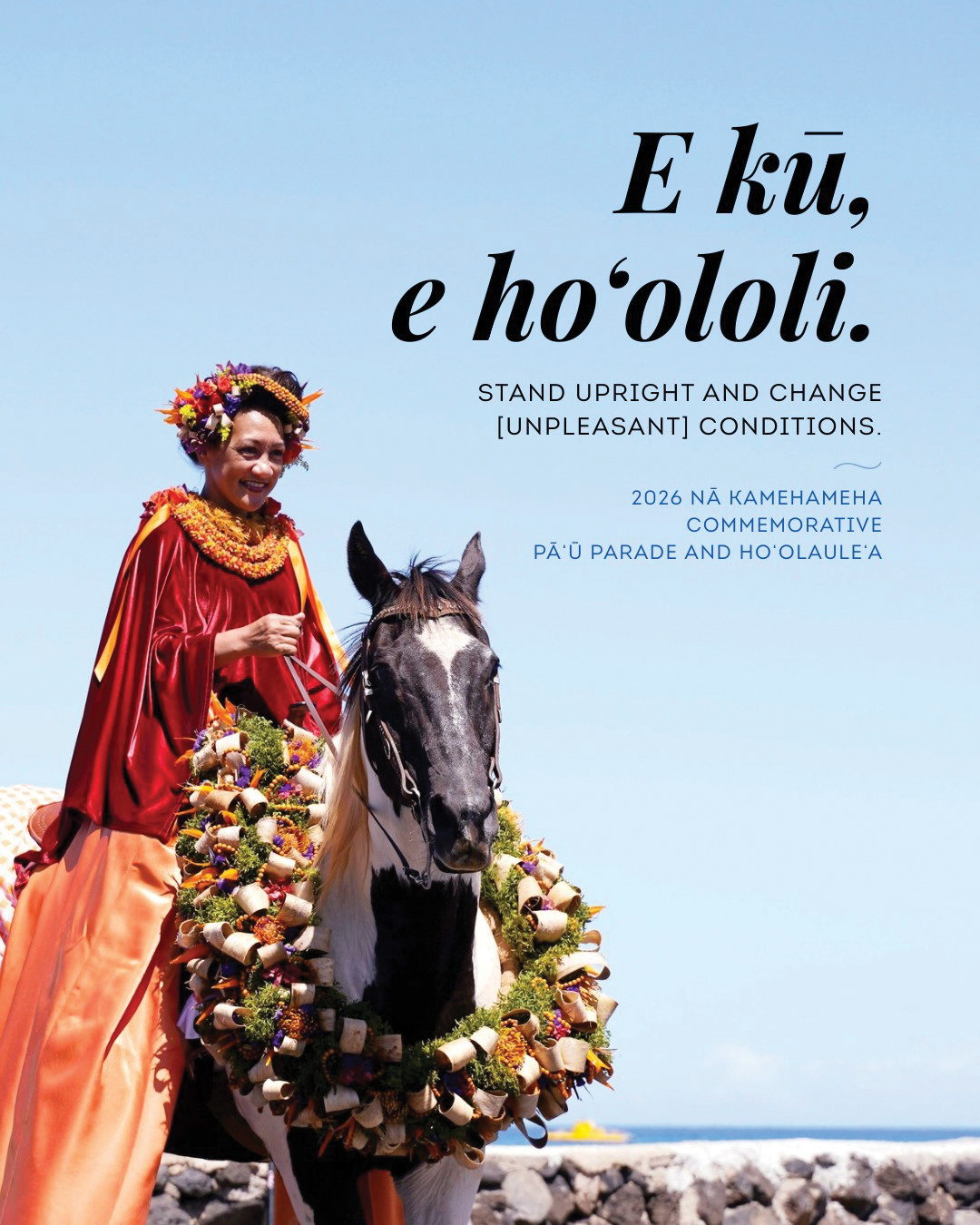
Our islands form the only US state to celebrate their monarchical history. To honor his grandfather, King Kamehameha V inaugurated King Kamehameha I Day on June 11, 1872. The legacy of the sovereign nicknamed “Kamehameha the Great” is that of a powerful warrior and beloved ruler who successfully united the Hawaiian archipelago in 1810, ending a decades-long pattern of inter-island conflict. This year’s festivities on June 11 will mark the 109th King Kamehameha Day. This year’s theme, E kū, e ho‘ololi, means stand upright and change unpleasant conditions.
Festivities usually include a procession by the Hawaiian Royal Societies, an organization commissioned by Kamehameha V, whose purpose is protecting, preserving and perpetuating the Hawaiian culture. Floral parades feature floats and pā‘ū riders on horseback. Pā‘ū riders wear long, flowing skirts (pā‘ū ) representing the different islands with specific colors and flowers. Ho‘olaule‘a, a festival that celebrates Hawai‘i’s culture, include local food, Hawaiian music and more.
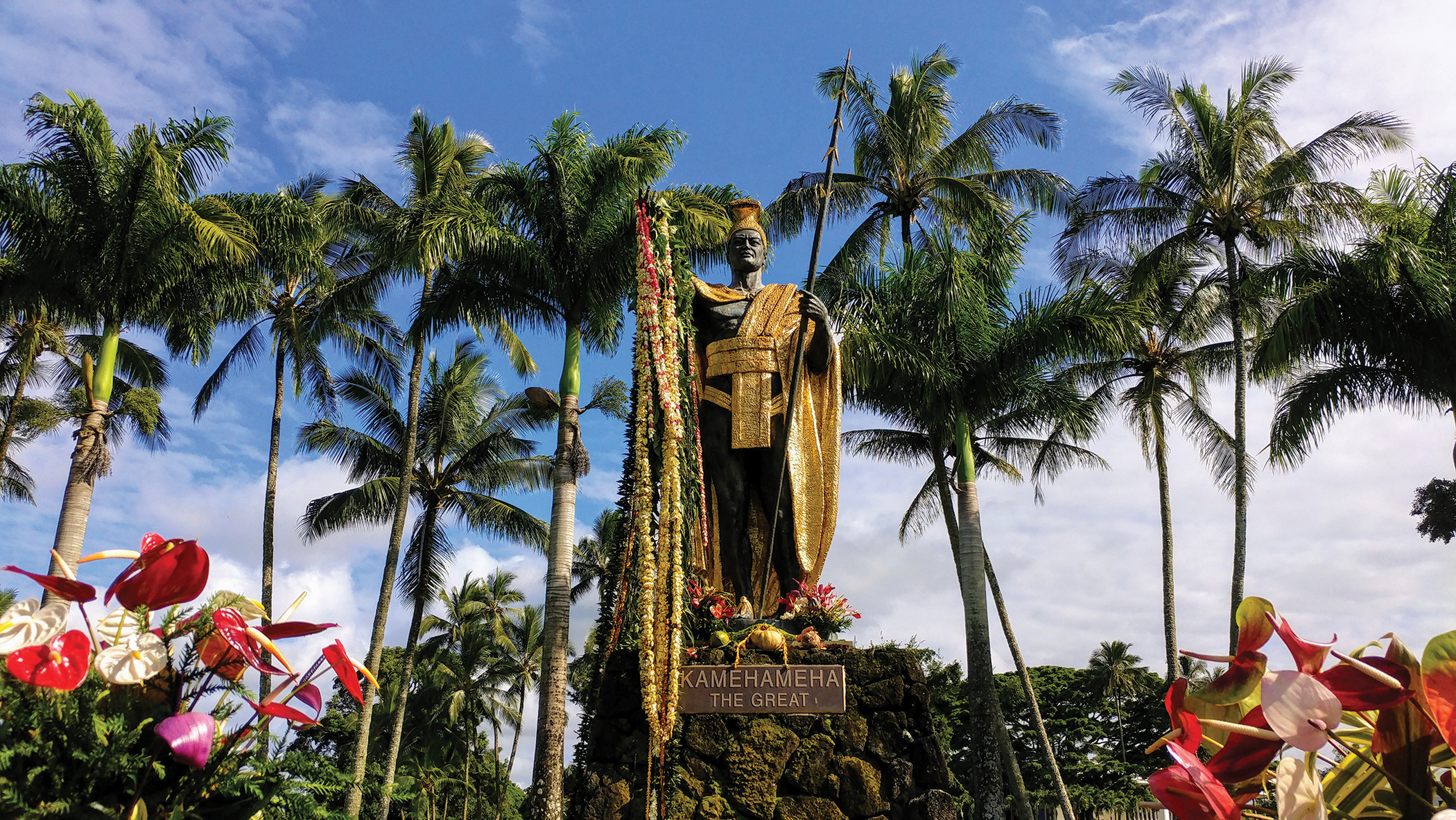
Traditionally, each year, a statue of Kamehameha I is adorned during the lei-draping ceremony that attracts large crowds of locals and tourist alike. Each island’s Hawai‘i Civic Society prepares nearly 100 20- to 30-foot plumeria lei for the ceremony.
Thomas Gould had been commissioned to sculpt the first statue of Kamehameha I. In 1883, upon completion of the 8.5-foot statue, it was sent via ship from Europe to the judiciary building in Honolulu. Although thought to be lost after the boat was shipwrecked near the Falkland Islands, it was recovered later that year. With a replacement statue already unveiled in Honolulu, this statue was relocated to the district of Kohala on the Big Island, where Kamehameha I was born.
The 18-foot King Kamehameha replacement statue stands in front of Ali‘iōlani Hale in Waikīkī, the main stage for the festivities on O‘ahu. As with all statues of His Majesty, the spear clutched in Kamehameha’s right hand symbolizes his ability to protect his people. His left hand is outstretched as a sign of welcome and peace.
In 1997, a 14-foot statue of Kamehameha I was erected in Hilo. Commissioned by the Princeville Corporation on Kaua‘i and built by Italian sculptor R. Sandrin in 1963, it was originally intended to be erected on island; however, residents pushed back on these plans as Kaua‘i and neighboring Ni‘ihau were the only islands not conquered by force by Kamehameha I during his campaign to unify the islands.
The County of Maui traditionally hosted Nā Kamehameha Commemorative Pā‘ū Parade on Front Street and a ho‘olaule‘a at Banyan Tree Park in Lahaina. The one-time capital of the Kingdom of Hawai‘i is still recovering from the devastating 2023 Lahaina wildfires and celebrations have since been relocated to Kahului in Central Maui. The June 20 parade will start at Baldwin High School and end at Queen Ka‘ahumanu Center and will be followed by a ho‘olaule‘a.
Our islands form the only US state to celebrate their monarchical history. To honor his grandfather, King Kamehameha V inaugurated King Kamehameha I Day on June 11, 1872. The legacy of the sovereign nicknamed “Kamehameha the Great” is that of a powerful warrior and beloved ruler who successfully united the Hawaiianarchipelago in 1810, ending a…
When my time comes, everything is here,” he said. Long before his death, my father-in-law sat us down and opened his safe, carefully walking us through the important documents inside. Legal papers were signed. The funeral was prepaid. He had done what responsible people do. He had prepared us.
He had done everything right so we would avoid probate. When he passed, I felt calm, believing the hardest part would be missing him.
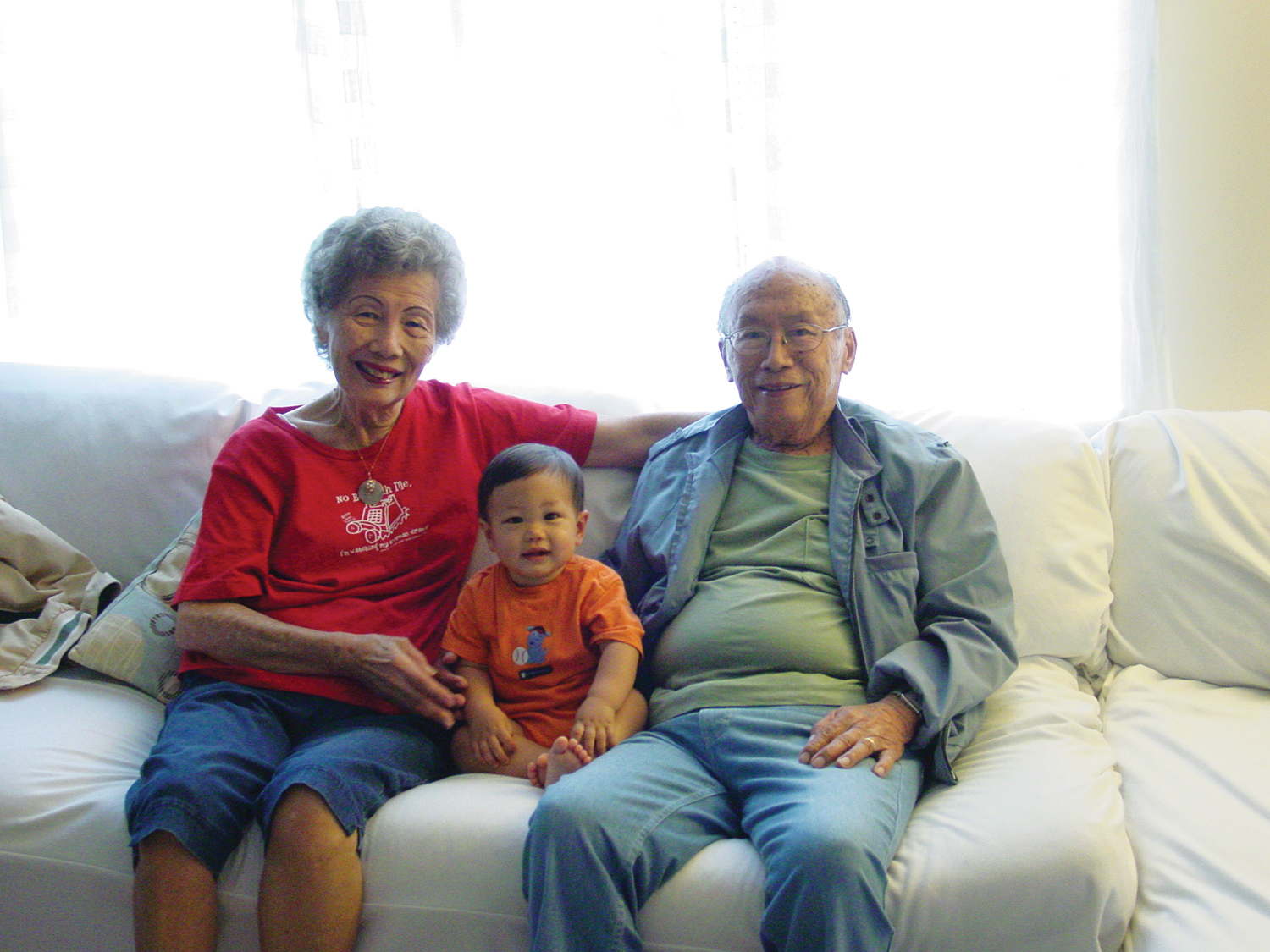
Annette Kam’s in-laws enjoy an engaged and loving time with their second great-grandchild, focusing on family, affection and fun.
I never realized how unprepared I was until I was living it — grieving, exhausted and navigating details I never imagined would fall to me, blindsided by mundane things no one thinks of. The first sign: a missing checkbook needed to pay bills, followed by a key ring heavy with unlabeled keys. We became landlords overnight without knowing tenants’ names or rent amounts. Then there were crucial phone numbers we didn’t have, passwords we didn’t know and even a request for their marriage certificate.
Six months later, finding care for my mother-in-law brought another surge of decisions layered over grief. Then came their home and 60 years of memories, paperwork and possessions to sort.
Grief did not arrive gently. It competed with deadlines, phone calls and responsibilities. I would solve one problem only to face another. For two years, I lived more than a hundred “I wish I had known” moments that weighed me down from sunup to sundown. Cancel a phone too soon and verification codes disappear. A landline in one name only can stall everything.
My in-laws were not careless. How could they prepare us for what they didn’t know? I gained knowledge only because I was forced to. When my mother-in-law passed two years later, I finally understood what needed to be done, which made it easier to handle.
How many families believe they are prepared — until they are standing where I stood?
Have the important, much-needed conversations now. Label the keys. Share the passwords. Clarify the small things down to the detail.
This important preparation is much more than paperwork. It is how we care for the people we love after we are gone.
For more information about WAIT—Don’t Die Yet!, email buckwun@aol.com, call 808-454-7871 or visit annettekam.com.
When my time comes, everything is here,” he said. Long before his death, my father-in-law sat us down and opened his safe, carefully walking us through the important documents inside. Legal papers were signed. The funeral was prepaid. He had done what responsible people do. He had prepared us. He had done everything right so…
Since the beginning of World War II, over 400,000 service members have lost their lives in combat. To honor those who paid the ultimate price to save and protect our nation and values, Memorial Day in Hawai‘i is marked by deeply moving, unique traditions blending cultural, spiritual, patriotic elements and military reverence. Hawai‘i’s Memorial Day is distinctive compared to the rest of the country, with lantern floating ceremonies that draw thousands to honor the departed. And in addition to traditional Memorial Day parades, Hawai‘i honors fallen service members by placing thousands of handmade flower lei on their graves.
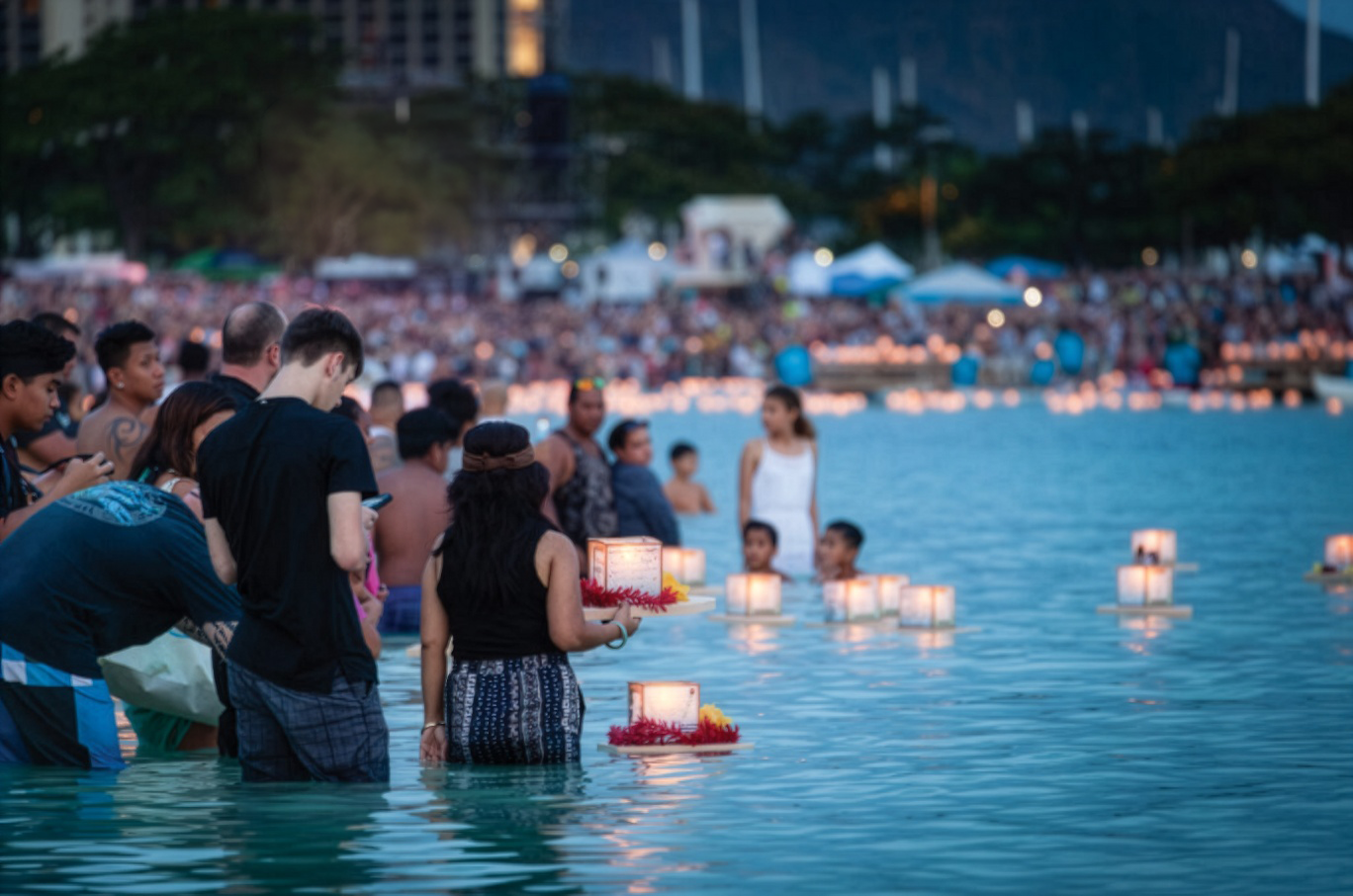
O‘AHU: The Shinnyo Floating Lantern Festival at Ala Moana Beach (lanternfloatinghawaii.com) reflects our state’s multicultural demographic by blending Buddhist practice and Native Hawaiian tradition. Participants can pay tribute to a loved one who has passed or spread a message of peace and hope by releasing their own lantern at sunset. The ceremony begins at 6:30pm on Memorial Day.
The National Memorial Cemetery of the Pacific at Punchbowl, also known as “Pūowaina,” was established at the end of World War II to honor veterans who have fought in the Pacific Wars. Mayor Rick Blangiardi will host a special ceremony at 8:30am on Memorial Day (honolulu.gov/dpr/mayors-memorial-day). The ceremony will include the 70-year tradition of adorning each gravestone with a freshly sewn lei. The City and County of Honolulu is asking for donations of tī leaves, plumeria/crown flowers and volunteers to make the 38,000 lei needed for the ceremony.
The Hawai‘i State Veterans Cemetery in Kāne‘ohe (lake.com/events/hawaii-governors-memorial-day-ceremony) also holds an annual Memorial Day ceremony to honor over 15,000 fallen service members. The event typically includes the decoration of graves with lei, which is supported by community donations and volunteers to ensure every grave is honored.
The American Gold-Star Families Memorial Day Parade recognizes the sacrifices of families whose loved ones have died. The parade will begin at Fort DeRussy in Waikīkī (memorialdayparade.com/the-parade).
The Pearl Harbor National Memorial (pearlharbor.org) will also honor our nation’s veterans. Tours are offered on the USS Utah (BB1) and USS Oklahoma (BB37) and a live dive will take place at the USS Arizona followed by a commemorative ceremony.
MAUI COUNTY: A traditional, community-led lei placement event is expected to take place at the Maui Veterans Cemetery in Makawao, typically starting in the morning around 9am on the Saturday prior, May 23, 2026. Kaunoa Senior Center volunteers make lei to be placed on graves. Check mauicounty.gov/254/Kaunoa-Senior-Services in May.
HAWAI‘I: The 22nd Annual Celebration of Life lantern floating event (tinyurl.com/BigIsland-May24LanternFloating) will be held at Reed’s Bay in Hilo, Hawai‘i. The free community event also features Bon dancing to honor loved ones with remembrance and reflection. These events foster a deep sense of community, reflection and gratitude throughout the islands.
Since the beginning of World War II, over 400,000 service members have lost their lives in combat. To honor those who paid the ultimate price to save and protect our nation and values, Memorial Day in Hawai‘i is marked by deeply moving, unique traditions blending cultural, spiritual, patriotic elements and military reverence. Hawai‘i’s Memorial Day…
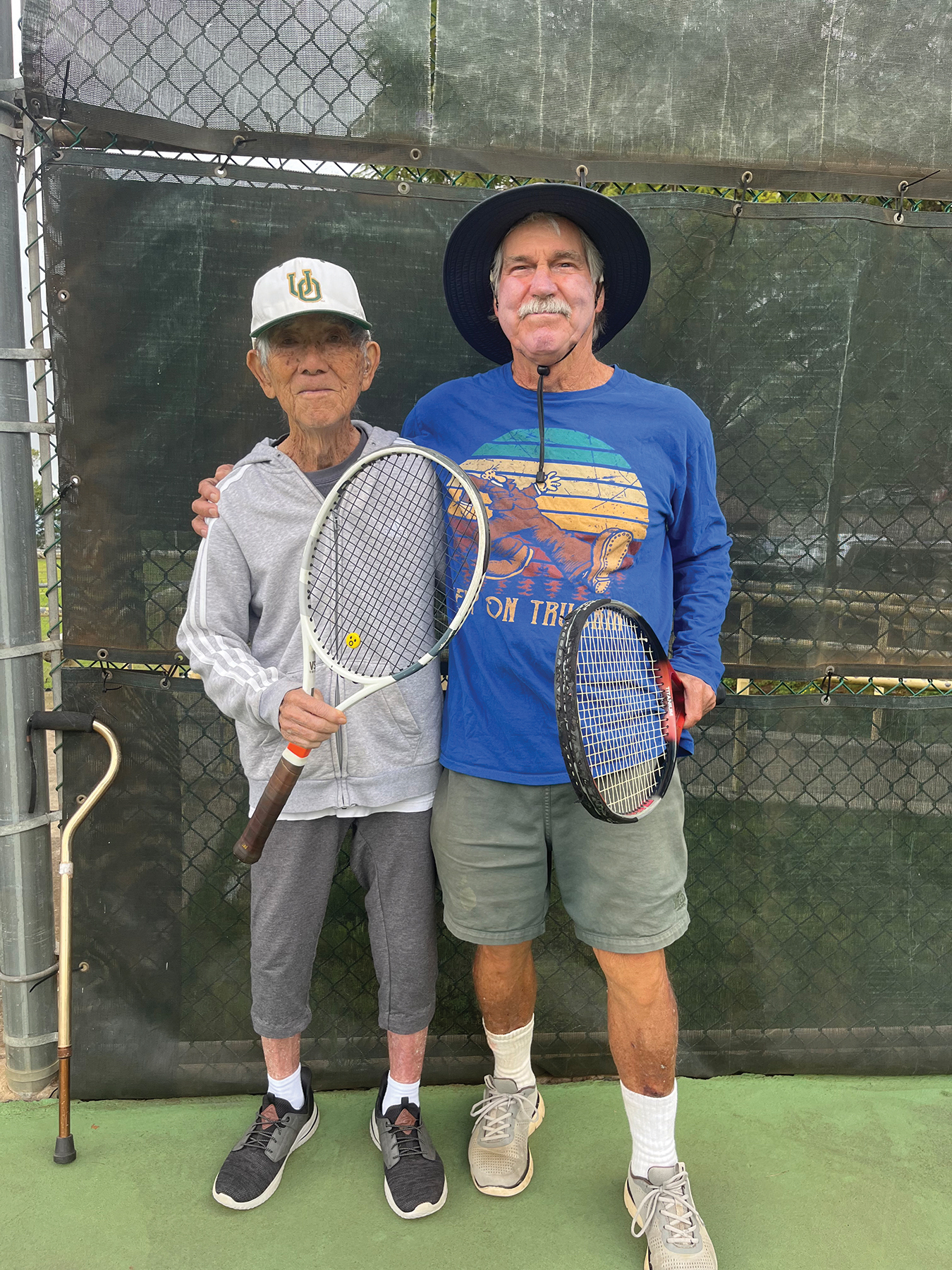
David Murata, a resident of Kula, Maui, has been a persistent presence on local tennis courts for over three-quarters of a century — well into his 90s. Recently, David has decided to hang up his racket at age 95, an incredible accomplishment and milestone.
To say that the sport increases longevity is an understatement. Tennis is known to extend life expectancy by nearly 10 years… what some call the “bonus years.”
“David has repeatedly said that tennis is what keeps him alive,” say fellow players Tom Liu and Pearl Rockett. But after 77 years of enjoying the sport, David stopped playing when he felt that his balance was declining. “It was a natural transition due to my age and capabilities,” David candidly says.
David Murata and long-time tennis partner Monty Tester are two of Maui’s class acts. David’s advice for those just starting tennis is “to practice as much as you can and play with different and better people — if they are willing to play with you.”
David started playing tennis around 1948 at Konawaena High School, when a family friend’s father introduced him to the game. Throughout his tennis career, David remained competitive and injury-free, playing on many USTA league teams on Maui. “But my strength decreased as I got older and I had to be careful not to fall on the court,” he says. “I also relied on my partners more since I could not move as well.” So he served as team captain when he was unable to compete at the higher levels.
David not only brought his skills and smiles to the court; the “garden guru” regularly blessed his fellow players with a bounty of beautiful fruits and vegetables that he painstakingly tended on his Kula farm. He has been described as a generous, kind and compassionate gentlemen — both on and off the court.
What kept him coming back decade after decade was that he “liked the game and the people that I played with.” He says he will miss being active and spending time with his tennis friends — Monty Tester, Tom Liu, Pearl Rockett, Don Booth — and many others he has played with over the years.
“He was the captain of several of the teams I played on,” says Monty. “He was a very good, fair captain, keeping us organized on our trips to Kona and O‘ahu for USTA sectionals.”
“David’s small frame masked his towering competitiveness, his prowess, his smartness, his total concentration, and his unsolicited cheering after he made a point,” says Pearl.
She says he lives life and played tennis utilizing the Asian culture belief of shōganai: “it is what it is — the situation cannot be altered, worrying about it is pointless and moving forward is the best option.” “He moved on when life showed its nasty ways, he held his head up high and believed in the power of God,” says Pearl. “He never dwelled on the little things.”
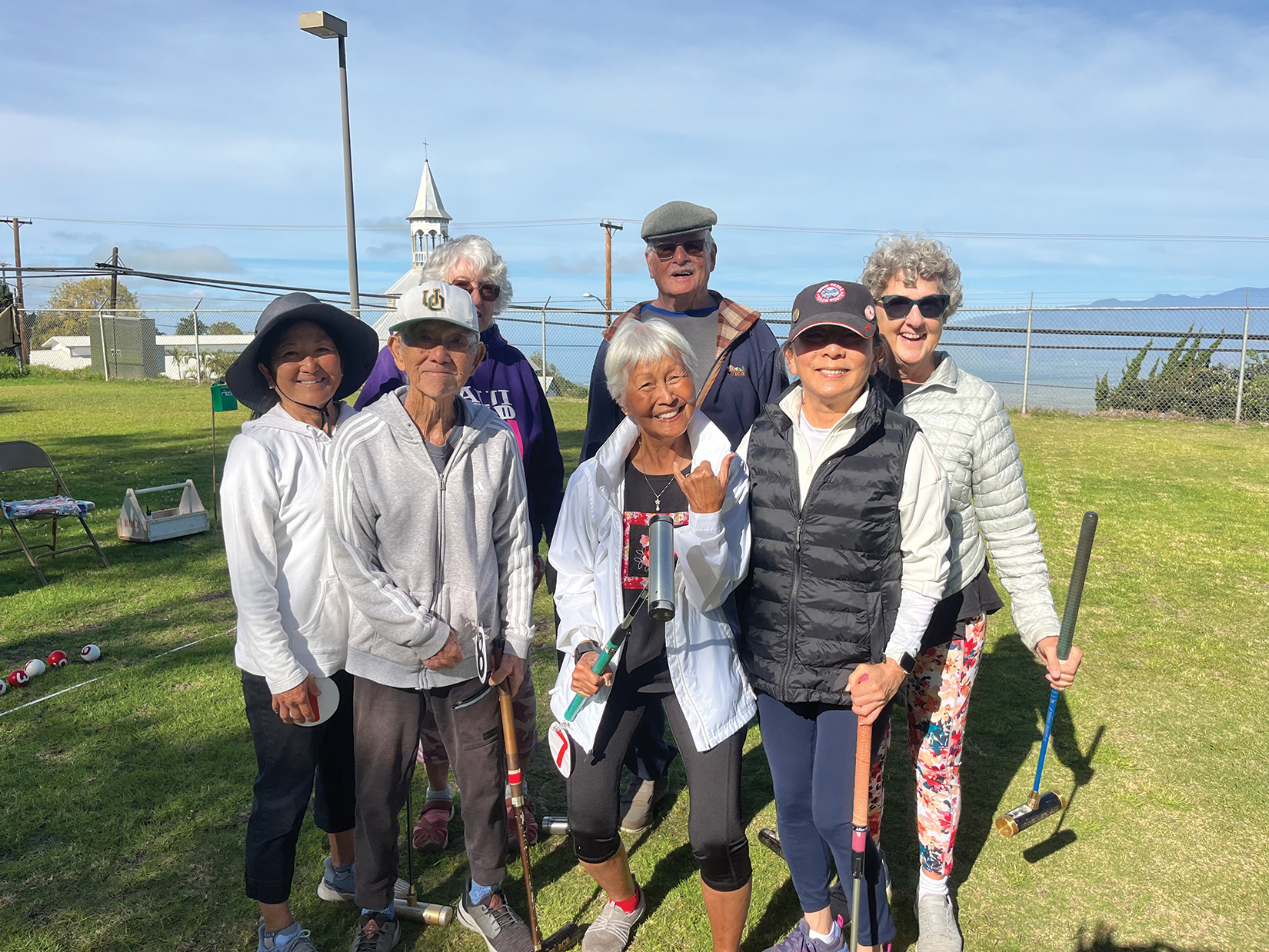
There’s a new kid in town: David Murata has joined a gateball group that plays on Tuesday and Friday mornings in Kula: (L–R, front row) his daughter, Jody Singsank; Doris Ventura; Marsha Williams; (back row) Norma Haicsi (in back of David); Faith and Jim DeBuhr. PC: Arthur Ventura
“Even in his 90s, David was always fun to play with,” says Don. “He remembered the score better than us 60- and 70-year-olds. He was competitive and loved to report the set scores to his family when his team won. But win or lose, David was always a model of good sportsmanship. He is a wonderful example of a generous and kind man whom we could all learn from.”
Besides the good times with his friends, his most cherished memories include “winning games that I didn’t think we could win.” He says he doesn’t remember much about his opponents… but one can bet they remember him. This polite player with a good-natured giggle wielded a wicked, left-handed slice serve so extreme that John McEnroe would have been jealous. And like McEnroe, this unassuming senior was indeed a fierce competitor.
“I remember seeing his joy as he whacked that tennis ball and got a winner off of me,” says Pearl. “His serious face broke out into a huge grin — more like a smirk — and then he would shamelessly shake his fist at me showing me that he ‘got me!’ It was a wonderful time of togetherness and sharing the tennis courts with David. He is my idol. I will miss playing with him.”
Only time could stop this dynamo. The keys to David’s longevity in sports is to stay healthy and active, but to also be realistic about his limitations as he got older and avoid wasting energy on uncontrollable events. “I am okay not playing anymore due to my limitations,” says David. “Although aging takes away some things you just can’t do anymore, keep active doing the things that you can do.”
He has now shifted his attention to another thinking person’s sport — gateball — several times a week (generations808.com/gateball-revived). Best of luck to his opponents… They will need it!
David Murata, a resident of Kula, Maui, has been a persistent presence on local tennis courts for over three-quarters of a century — well into his 90s. Recently, David has decided to hang up his racket at age 95, an incredible accomplishment and milestone. To say that the sport increases longevity is an understatement. Tennis…
Growing up, ceviche was always served at gatherings or parties during hot summer days. It’s also perfect for a potluck contribution. Everyone loves it! The first time I made this recipe on my own, I was in my second year of college, missing home and my mom’s ceviche. It was spring break, perfect weather, and I wanted something energizing before going to the beach. I bought the ingredients, called my mom for assistance and made it. It came out perfect! My roommates and I devoured it with chips. What I really like about ceviche? It’s really easy to make. It’s refreshing and it can be for pūpū or the main dish. This recipe is the basic ingredients that are distinctively “ceviche.” Every Hispanic culture has its own signature version. Make it your own!
Ingredients 1 3-lb. bag fresh shrimp/seafood 2 cucumbers (or more) 1 red onion or 2 large shallots (for a sweeter taste) 1 bunch cilantro (chopped) 8 limes (approx.) 4 tomatoes (regular or Roma) salt (to taste) Prep time: 1 hr. (approx.) Serves: 6–8 small bowls
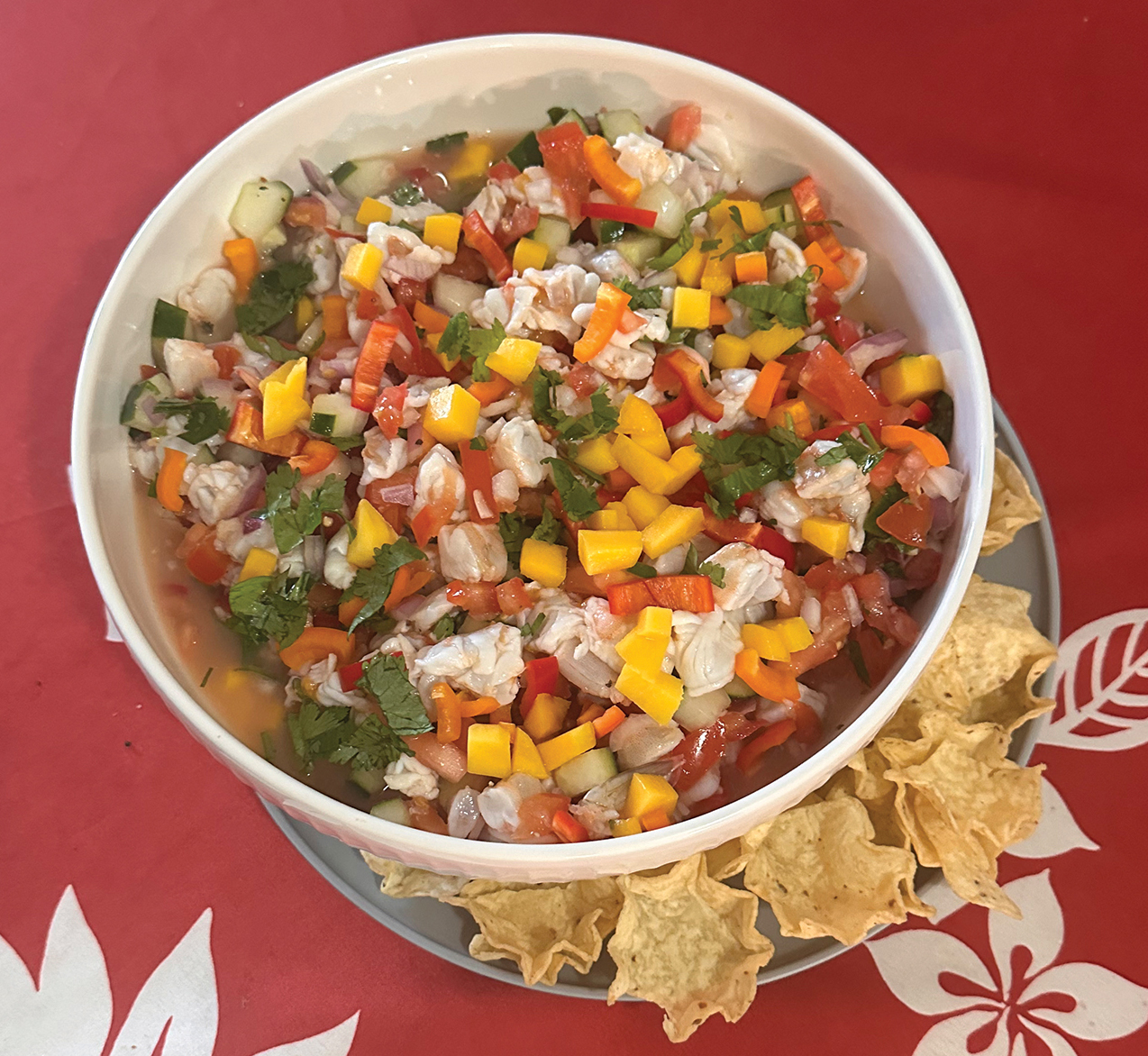
Directions Shrimp/seafood preparation: Tear the heads off and shell the shrimp. Devein the shrimp by slicing the back open and scrapping out the vein-like digestive track. Cut the shrimp/seafood into bite-sized pieces and place in a mixing bowl. Marinate: Squeeze all of the limes and pour the juice into the bowl of shrimp/seafood pieces — enough to just cover them. Let the mixture sit in the refrigerator for 30 to 45 minutes until the shrimp/seafood is opaque and firm. Vegetable preparation: While the shrimp/seafood/lime mixture is marinating, chop the vegetables. Bringing it all together: When the shrimp/seafood is ready, mix with the chopped vegetables. Add salt to taste. Add more ingredients to taste. And to personalize it further, add avocado, sweet peppers and mango (as shown above) to your taste.
Serve with corn tortas (corn cakes) or chips. ¡Provecho! (Enjoy your meal!)
Do you have a favorite recipe and story to share? For consideration, include a photo and mail them to Generations Recipe, PO Box 4213, Honolulu, HI 96812, or email them to Cynthia@generations808.com.
Growing up, ceviche was always served at gatherings or parties during hot summer days. It’s also perfect for a potluck contribution. Everyone loves it! The first time I made this recipe on my own, I was in my second year of college, missing home and my mom’s ceviche. It was spring break, perfect weather, and…
Since more than 1,500 years ago, Kānaka Maoli (Native Hawaiians) have welcomed immigrants from every corner of the globe, cultivating and perpetuating the tapestry of diverse cultures that make up our islands. In this ninth article of our ongoing series, we focus on Hispanic heritage, how a few of the different cultures arrived in the Hawaiian islands, their traditions and celebrations such as the Hawaii Hispanic Heritage Festival and Cinco de Mayo.
Hispanic Arrival in Hawai‘i
The first person of Hispanic heritage to arrive in Hawai‘i was Spanish adventurer Francisco de Paula Marín near the end of the 18th century. With a vast array of skills at his disposal (interpreting, negotiating and advising the king), he quickly adapted to life in Hawai‘i. He is also credited with introducing and planting many of the crops Hawai‘i is now known for: pineapple, coffee, mango and more. A few years later, cows were given to King Kamehameha III as a gift, but the king had to request backup from Mexican vaqueros (cowboys), who worked with local paniolo and taught them to handle the cattle. Thus began a steadily increasing flow of Hispanic people to the Hawaiian Islands. At the peak of the sugarcane industry, in the wake of two hurricanes in Puerto Rico in 1899, the first group of 54 Puerto Rican men came to work in the sugarcane fields. Only 14 years later, Hispanic immigrants numbered over 9,000. Today, people of Hispanic heritage make up about 10% of Hawai‘i’s population.
Culture and Holiday Traditions
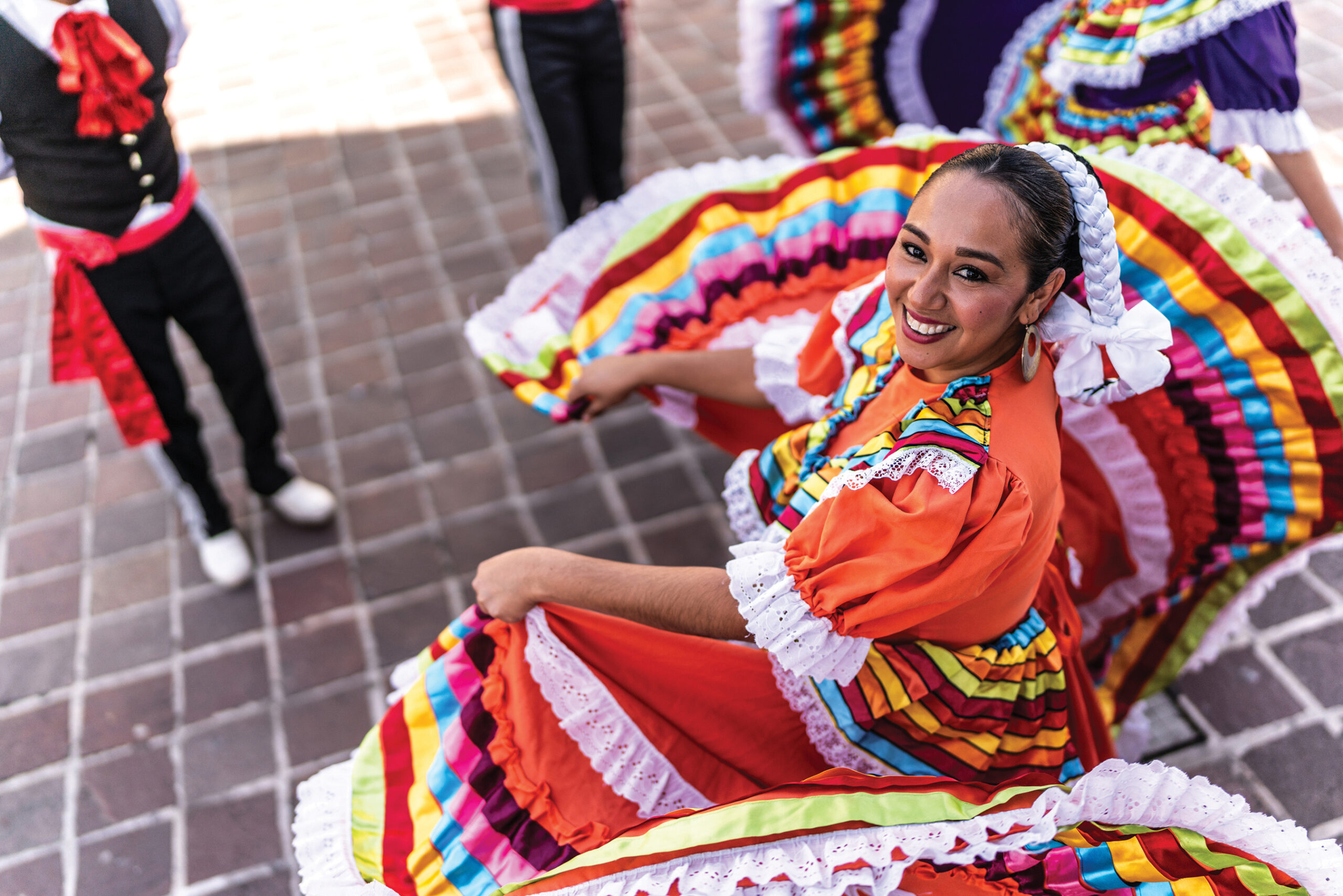
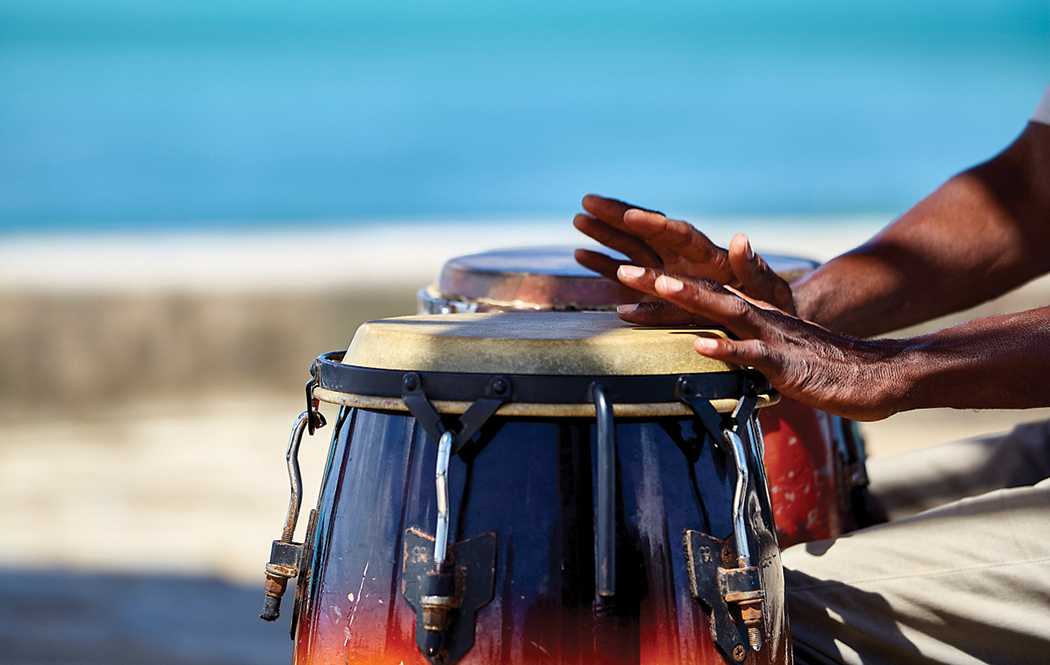
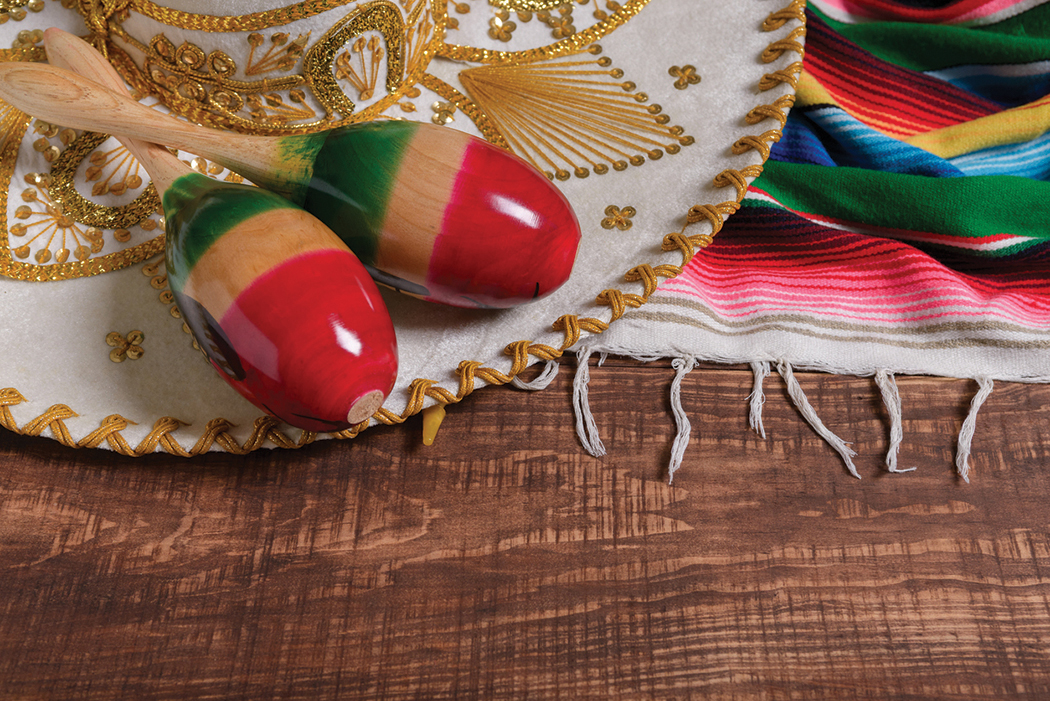
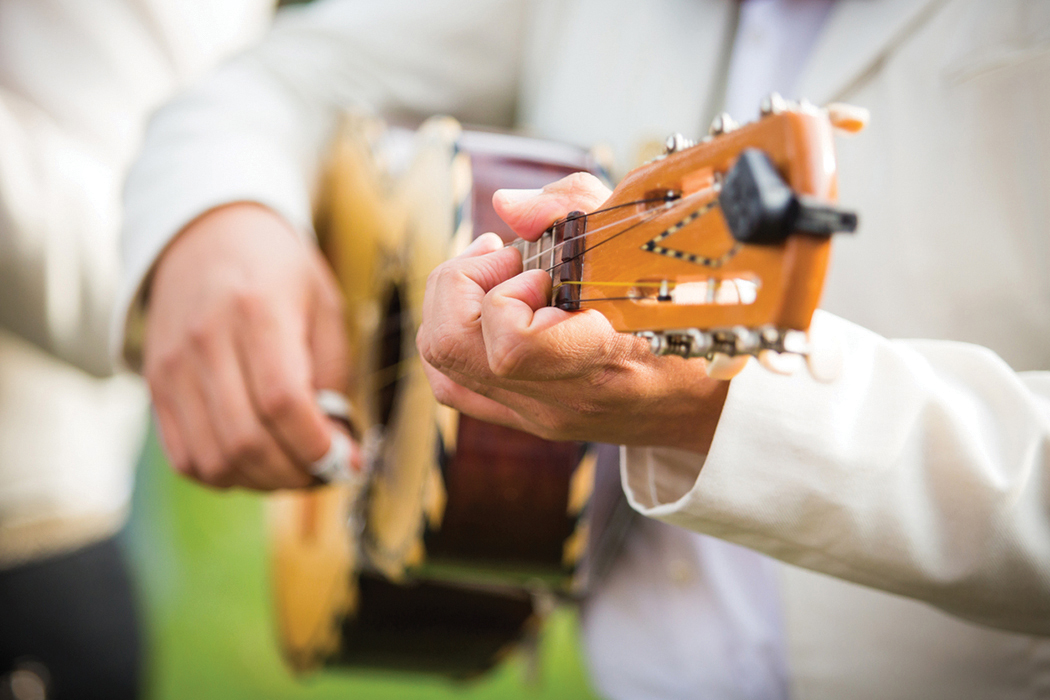
Hispanic cultures include Mexican, Puerto Rican, Cuban, Central/South American, Dominican and other Latin American/Spanish countries, but the first two are most prevalent in the islands. As a result of Spanish colonization, both cultures speak Spanish and predominantly practice Catholicism, so Christmas is a significant holiday. Noche de San Juan (St. John’s Night) is a major Puerto Rican celebration held annually on June 23 to honor Saint John the Baptist, the island’s patron saint. There are two well-known and widely practiced cultural celebrations for those of Mexican descent. Cinco de Mayo (May 5), commemorating the 1862 Battle of Puebla, is celebrated with vibrant parades, mariachi music, baile folklórico (folkloric dance) and authentic Mexican cuisine. Dia de los Muertos (Day of the Dead on Nov. 1 and 2), honors deceased loved ones. And, of course, every celebration includes food: pasteles/pastele stew, tacos, horchata, gandule rice and more.
The biggest cultural festival is the Hispanic Heritage Festival hosted by Hispanic Events Hawaii, held on Oct. 10 on O‘ahu. The Puerto Rican Heritage Society has also hosted the Puerto Rican Festival for the past two years in July on O‘ahu, featuring live music, dancing, pasteles, arroz con gandules and more.
For more information, see the Hispanic Chamber of Commerce Hawaii’s website (hcchawaii. org) and the Puerto Rican Heritage Society’s Facebook page (facebook.com/Boricuas.Hawaii/) as well as Generations Magazine’s Facebook page (facebook.com/genmag808) and website calendar (generations808.com/calendar) for community events and opportunities.
The next article in this series will feature the influences of Tahitian culture in Hawai‘i.
Since more than 1,500 years ago, Kānaka Maoli (Native Hawaiians) have welcomed immigrants from every corner of the globe, cultivating and perpetuating the tapestry of diverse cultures that make up our islands. In this ninth article of our ongoing series, we focus on Hispanic heritage, how a few of the different cultures arrived in the…
On Memorial Day 2026, on the 250th birthday of America, please reflect and honor all military men and women who died for our freedom and for our country. As we honor America’s history and hope for its future, we are reminded that a strong country needs to correct errors and continue to improve “to form a more perfect union” as envisioned in our Constitution.
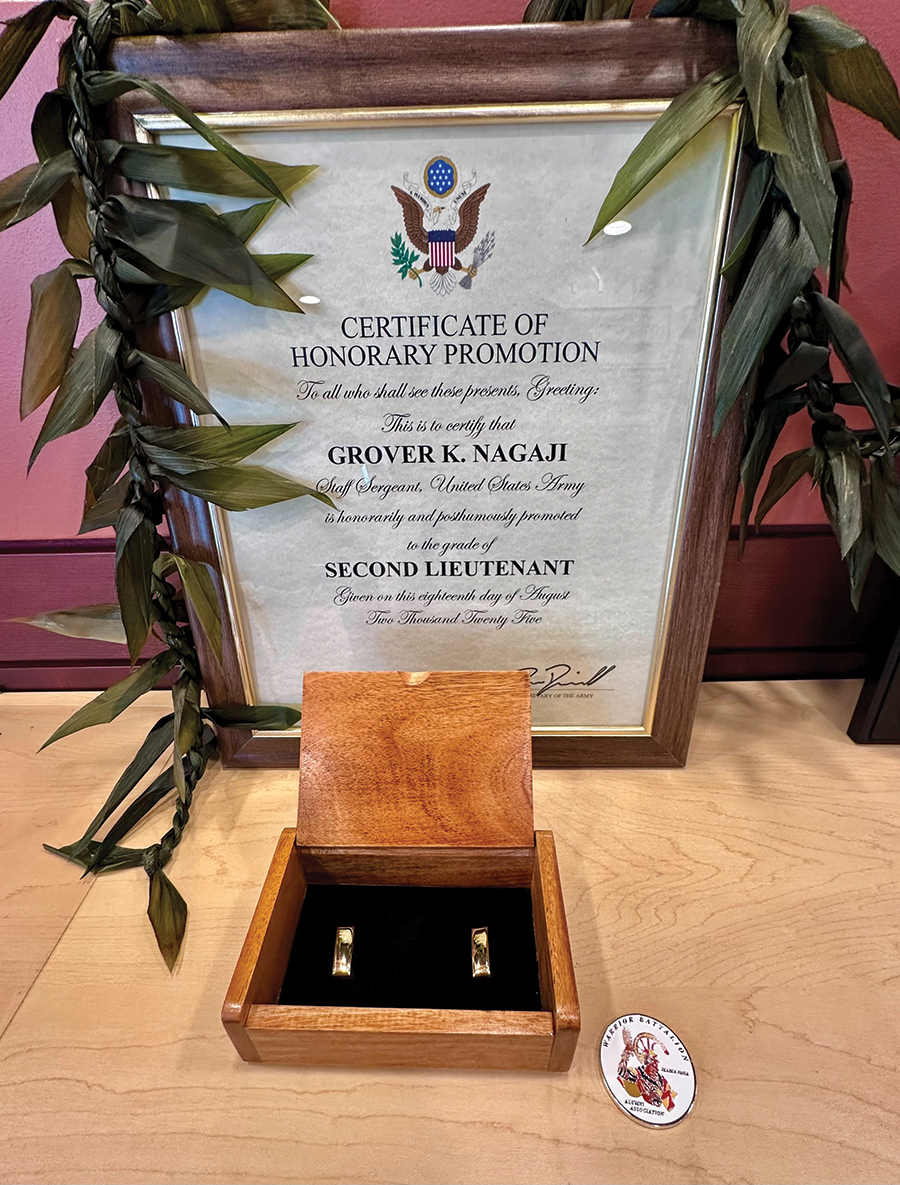
On Jan. 26, 2026, I was fortunate to see continuous improvement for the USA in action when the US Army Pacific (USARPAC), in partnership with the University of Hawai‘i at Mānoa (UH), honored seven World War II UH Army Reserve Officer Training Corps (ROTC) cadets during a posthumous commissioning ceremony at Ke‘ehi Lagoon Memorial State Park. This action by the US Army corrected an error of the past and is highly commendable “for a more perfect union.”
With the hysteria of war, Americans of Japanese ancestry (AJA) were unjustly discriminated against, accused of sabotage and endured mass incarcerations, which crushed their self-esteem. AJA ROTC cadets attending UH were forced out of the program and deemed “enemy aliens” solely because they looked like the Japanese enemy. Later, when they were allowed to join the US Army, many did. Seven were killed serving their country in the AJA 100th/442nd unit and never had a chance to re-enter the ROTC program to become officers. The former cadets: Staff Sgt. Grover Nagaji, Sgt. Howard Urabe, Sgt. Robert Murata, Sgt. Jenhatsu Chinen, Sgt. Daniel Betsui, Pfc. Hiroichi Tomita and Pvt. Akio Nishikawa. They were posthumously commissioned to second lieutenant officer status.
The 100th and 442nd were fierce soldiers and loyal Americans and would overcome America’s initial betrayal to become one of the most decorated in US military history. In 1948, President Truman issued Executive Order 9981 that desegregated the military—one of the first acts of civil rights in America—due to members of the segregated unit proving their loyalty.
We owe so much to these AJA trailblazers who, despite being betrayed by their country, still put their lives on the line for “a more perfect union.”
We are proud of America for acknowledging and correcting prior decisions. Happy 250th and God bless America!
On Memorial Day 2026, on the 250th birthday of America, please reflect and honor all military men and women who died for our freedom and for our country. As we honor America’s history and hope for its future, we are reminded that a strong country needs to correct errors and continue to improve “to form…
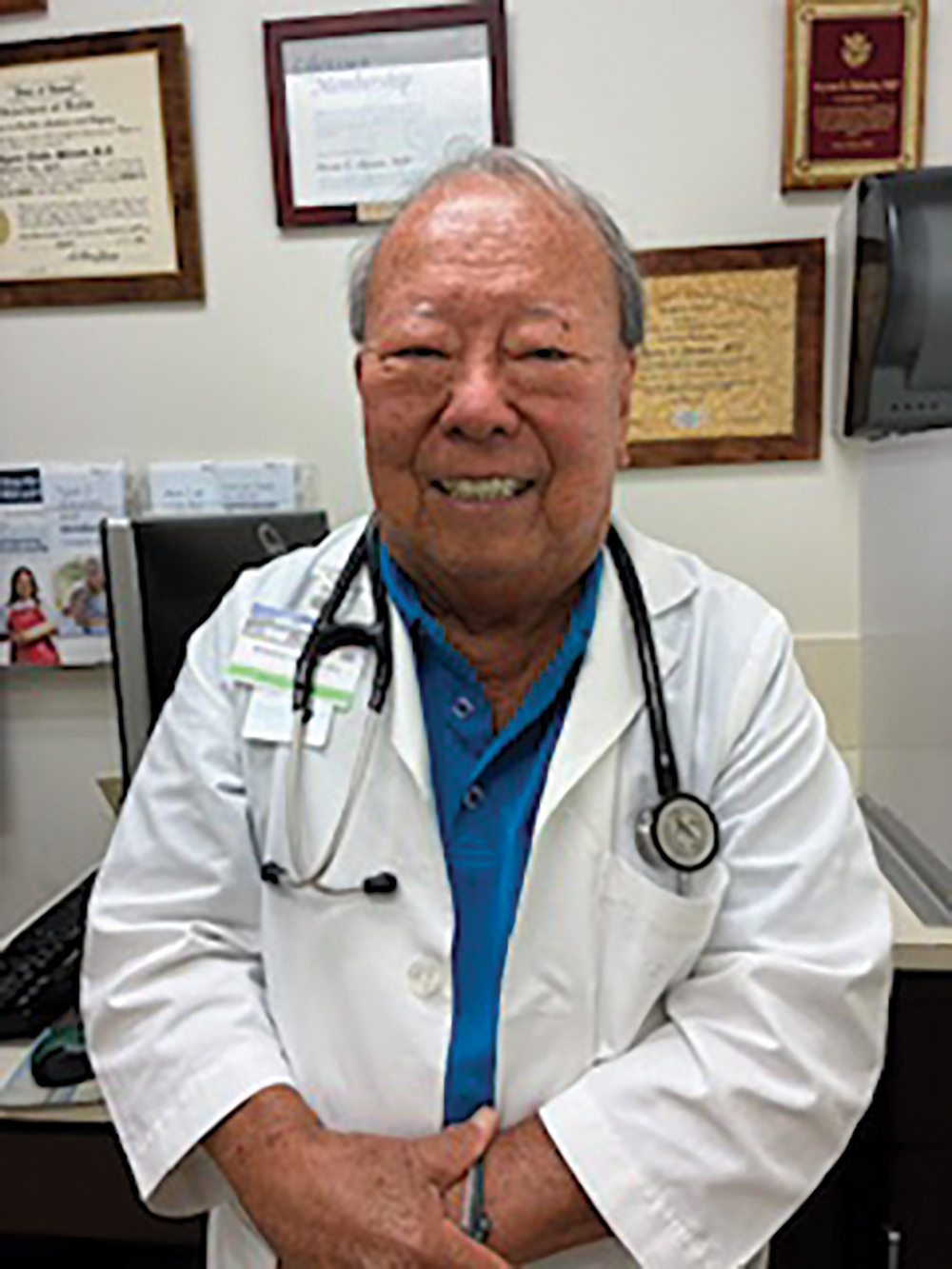
Experience may help develop intuition and that intuition just might prove to be more effective when diagnosing a patient’s illness than cold technology. Human insight in this AI-infested world may detect the essence and spirit of a patient that technology alone is incapable of understanding. Dr. Myron E. Shirasu, in his early 90s, has treated four generations of patients relying on more than 50 years of medical experience that has led to profound insights into each of his patients. The human touch of this old-school physician, characterized by active listening, kindness and respect, combines thorough, hands-on physical exams with empathetic, unhurried and personalized care, fostering deep trust. His art-of-medicine approach utilizes the power of touch to diagnose, comfort and connect, rather than relying solely on data and test results.
Dr. Shirasu is a country boy who “pulled himself up by his bootstraps” to become a successful Honolulu physician. He was born in Shimane, Japan, and came to Hawai‘i at the age of 3. His father was a Buddhist priest assigned to Hilo Hongwanji. But like many Buddhist priests during WWII, he was incarcerated in a concentration camp, ending up in Tule Lake, California. Dr. Shirasu’s mother and his siblings were also held there. When they returned to Hawai‘i, his father was assigned as the head priest of Olaa Hongwanji (now Puna Hongwanji) in Hawai‘i.
Myron attended Olaa Elementary and Intermediate Schools in Kea‘au, then Hilo High School. After graduation, he attended the University of Hawai‘i at Mānoa. Originally, he intended to become to become a dentist and enrolled at the University of Oregon. To make ends meet, he worked part-time as a hospital orderly in Eugene, where a physician urged him to go to med school. Consequently, Dr. Shirasu had to decide between dental school and medical school. He was accepted at both schools, but the medical school responded first, making his decision for him. He studied at the medical school in Portland for five years.
While there, he faced cruel racial discrimination. Looking back, he believes he made the correct decision.
He returned to Honolulu, and completed his internship and residency at Queen’s Hospital. He joined Central Medical Clinic in Honolulu in 1967, where he continues to practice at age 89.
Many of my older patients prefer my oldschool treatment. They like it when I take time to explain things in a way they can understand. They don’t want to be rushed in and out.”
Dr. Shirasu makes the hospital rounds—without charge. Currently, hospital rounds are done by specialists referred to as hospitalists. He says, “My patients look forward to and appreciate my visits. I believe they rest and sleep better after my visits. The old-time bedside manner ensures a quicker recovery. But most of the younger doctors don’t make hospital rounds nowadays.”
“In the past, medical school concentrated on science courses,” he says. “Now, pre-med education has broadened to produce well-rounded professionals, preparing doctors who will treat patients as a whole human being. The physician must be knowledgeable of the social aspects of the patient as well as the physical makeup.”
“I have been asked to join other clinics, but Central Medical Clinic has been very accommodating, very professional in their treatment of patients and most importantly, the doctors there have wonderful bedside manners,” he says. “I suppose you can teach new doctors bedside manners, but I think they are inborn—from the heart.” His inherent, heartfelt approach continues to help patients feel valued, reduces their anxiety and improves overall treatment outcomes.
Dr. Shirasu says, “At my age, I don’t have to treat patients anymore. Treating patients is not a job. I enjoy it. I have no regrets becoming a doctor. All my patients are like family to me. Being a doctor is the best profession there is because you are always helping people.”
Experience may help develop intuition and that intuition just might prove to be more effective when diagnosing a patient’s illness than cold technology. Human insight in this AI-infested world may detect the essence and spirit of a patient that technology alone is incapable of understanding. Dr. Myron E. Shirasu, in his early 90s, has treated…