Social Security and its Office of the Inspector General continue to receive reports about fraudulent phone calls from people claiming to be Social Security employees. These scammers try to trick people into providing personal information or money, and often threaten their victims with arrest. Don’t be fooled.
Our employees will never threaten you for information or promise a benefit in exchange for personal information or money. Real Social Security employees also WILL NOT:
• Tell you that your Social Security number has been suspended
• Contact you to demand an immediate payment
• Ask you for credit/debit card numbers
• Require a specific means of debt repayment, like a prepaid debit card, a retail gift card or cash
• Demand that you pay a Social Security debt without the ability to appeal the amount you owe
• Promise a Social Security benefit approval or increase in exchange for information or money
If you receive a suspicious call or are unsure of the identity of someone who claims to be from Social Security:
Hang up. Do not give money or personal information.
Report the scam to our Office of the Inspector General at oig.ssa.gov/report.
Call your local SSA office at 800-772-1213 (toll free) Mon–Fri, 8:30am–3:30pm. Use the SSA Office Locator to find your local office at www.socialsecurity.gov
Social Security and its Office of the Inspector General continue to receive reports about fraudulent phone calls from people claiming to be Social Security employees. These scammers try to trick people into providing personal information or money, and often threaten their victims with arrest. Don’t be fooled.
Although new rules and social distancing regulations have been put in place due to the COVID-19 pandemic, there are still resources available to you just a phone call away. Social Security services can be provided at no cost from the safety of your home.
If you are turning 65 or being furloughed from your employer’s group medical plan, you should consider transitioning into a Medicare plan as soon as you are notified. Three months prior to turning 65, you can apply for Medicare Part A , which covers inpatient hospital care with no monthly premium. Your Medicare Part B outpatient coverage will have a monthly premium based on your adjusted gross tax return two years prior to the year you are applying.
You can obtain the Part B enrollment form CMS 40B online.
If you’re being furloughed, provide your human resources manager with the Request for Employment form CMS L564 (find both forms at www.ssa.gov/benefits/medicare). This form will verify that you’ve had continuous company group medical coverage from your employer. Once Social Security receives both completed forms, they will process your Part B effective date.
Although new rules and social distancing regulations have been put in place due to the COVID-19 pandemic, there are still resources available to you just a phone call away. Social Security services can be provided at no cost from the safety of your home.
There are many Medicare options available to seniors that will ensure that your medical costs and healthcare needs will be covered in your retirement. But Medicare is complex and difficult to navigate on your own, so it is important that you select a local advisor who knows the Hawai‘i market and will find the right insurance plan for you.
When you are ready to retire, your advisor will meet with you to determine your needs. He or she will check with your physicians, review your prescriptions and find a plan that fits your budget.
Hawai‘i plans generally range from $0 to $200 monthly, depending on the coverage that is best suited to your needs. Once the ideal plan is selected, the agent will work with you to get you enrolled with the insurance company. After your enrollment, your local agent will be available for followup questions and to address any issues that may arise.
Using a local advisor is the best decision you will make. They know the uniqueness of our Hawai‘i healthcare system and will be by your side to ensure your well-being as you journey through the world of Medicare.
Having a trusted Medicare advisor will help give you the peace of mind that you need in order to pick the perfect plan that will optimize your financial health during your retirement years.
There are many Medicare options available to seniors that will ensure that your medical costs and healthcare needs will be covered in your retirement. But Medicare is complex and difficult to navigate on your own, so it is important that you select a local advisor who knows the Hawai‘i market and will find the right…
Preparing yourself with the proper tools helps to make any job a bit easier. If you are baking, you need the proper ingredients. When building something, you need hammers, nails and other related items. It’s the same when you are preparing for your Health Plan Open Enrollment session; or if you are a caregiver, for your person’s Medicare Annual Enrollment. The proper tools include questions you will need to ask yourself and those relating to available options.
Be sure you compare benefits before just looking at the premium amount.
■ Are you considering the best plan for you and your family? ■ What are the annual, maximum, out-of-pocket costs for the plan? ■ Is the plan mostly co-pays (set amounts) or co-insurances (percentage of the cost)? ■ Does the plan have a proactive prevention model that includes wellness classes, a fitness program, basic dental coverage and various ways to access the provider (your doctor or healthcare team), such as in-person and phone appointments, e-visits and video visits? ■ Are the provider locations convenient for you (doctor’s offices or medical facilities)? ■ Are there multiple services offered under one roof to help you spend less time in traffic and more time with family and friends? ■ Are you responsible for helping others find an option that fits their needs? ■ Do they have Medicare? The annual enrollment begins in October, so start looking at options.
Important question you’ll want to ask about health plans:
■ Do all of your providers accept Medicare and new patients throughout the year? ■ Does this plan have social workers or coordinators who can help you, the caregiver, meet the needs of the person you are caring for? ■ Is there a copay or coinsurance for this service? ■ Is there someone locally who you can meet with virtually or on the phone (for your convenience as a caregiver) regarding your questions? ■ Can they mail or email you the materials before you talk so that you have time to study the benefits and write down all your questions?
The complexities of Medicare and a group health plan can be daunting. Preparing the right questions can be one of your most effective tools.
KAISER FOUNDATION HEALTH PLAN INC.— HAWAII
Medicare Sales: 808-432-5915 | www.kp.org For more information on resources available to everyone, visit healthy.kaiserpermanente.org. This information was provided by the Hawaii Kaiser Permanente Medicare Team as an educational resource.
Preparing yourself with the proper tools helps to make any job a bit easier. If you are baking, you need the proper ingredients. When building something, you need hammers, nails and other related items. It’s the same when you are preparing for your Health Plan Open Enrollment session; or if you are a caregiver, for…
Deciding when is the right time to find senior care for your kupuna can be an intimidating task. You want to provide the best care possible for them, but how do you know if it’s the right time; where do you start? First, understand and identify the level of care your senior needs to conduct day-to-day activities and care for themselves. Identifying your senior’s needs early in your search will help you understand the options available. Keep in mind that the level of care can change over time as conditions change.
There are two main categories for long-term care solutions for seniors: senior communities and residential care homes. In senior communities, kūpuna live together in an apartment-like setting and interact with one another through daily, scheduled activities. They dine with other residents. In residential care homes, three to five seniors are cared for in a home-like setting. Residents get more individualized attention and all of their needs are taken care of.
Finding great healthcare for your loved ones is hard to do on your own. Each year, we see hundreds of seniors in Hawai‘i finding themselves incapable of living independently at home.
How do we get Mom and/or Dad out of the home when they don’t see the need, even though they have fallen multiple times?
After a fall, your senior is feeling fearful and may be resistant to change. During gentle conversations over time, explain that finding care comes from a place of love and wanting them to live a safe and healthy life.
What about dementia care?
Questions to ask a care home or facility about a patient’s dementia care include:
• Is the staff experienced in working with residents with dementia/Alzheimer’s?
• What approaches are used to diffuse a situation with an agitated dementia/Alzheimer’s resident?
• What kind of activities are available to help stimulate a resident’s mind and body?
• Are they open to working with the resident’s geriatric team and family?
Deciding when is the right time to find senior care for your kupuna can be an intimidating task. You want to provide the best care possible for them, but how do you know if it’s the right time; where do you start? First, understand and identify the level of care your senior needs to conduct…
Hiring a home care aide represents a major transition in family caregiving, especially when the care recipient is a person with dementia (PWD), less able to express his or her needs. Initial encounters may stress both sides.
Family members may feel uncomfortable letting a “stranger” into their home and feel guilty relinquishing caregiving tasks, and may feel uncertainty about the trajectory of dementia.
The home care worker may feel anxious entering a work situation with many unknowns regarding expectations, demands and personalities. These suggestions can help families develop partnership relationships with home care aides:
Clearly define expectations and duties:
• Identify activities of daily living (dressing, toileting, eating) the PWD can’t do alone.
• Agree upon a schedule of care and tasks.
• Identify caregiving tasks a PWD (or family) prefers the care worker avoid, either because the PWD might feel uncomfortable or family members want to continue to provide it.
• Provide important phone numbers and emergency procedures.
• Develop backup plans for substitutes if the care worker cannot work.
• Develop a system of communication, e.g., leave instructions in writing, develop checklists of completed tasks or problems, maintain a daily log of the day’s events.
• Identify dietary requirements and restrictions, allergies, meds, exercise and endurance levels.
• Agree on policies (smoking, eating, using the phone on the job, payment and benefits).
The more the care worker knows about the PWD’s background, history and preferences, the better able he or she will be to converse, develop rapport and treat the PWD as a unique individual.
Information family members might share with the home care worker:
• Life history highlights
• Persons who hold influence with the PWD (a physician, favorite child)
• Pet peeves; ideas of appropriate behavior, habits and routines; food, entertainment and activity preferences; favorite conversation topics, e.g., pets, possessions, grandchildren
• What upsets or triggers challenging behaviors
• Special phrases or behaviors that may signal a need, signs of pain and other symptoms
For more information about what you should know in order to develop a successful partnership relationship with a home care aide, go to this address.
Hiring a home care aide represents a major transition in family caregiving, especially when the care recipient is a person with dementia (PWD), less able to express his or her needs. Initial encounters may stress both sides.
Memory care communities that first began appearing in the 1990s are an important care option today for the growing number of families caring for a person living with Alzheimer’s disease or other dementia. When considering memory care, look for a community with a rich and lively activity program, and staff who are well-trained in dementia care, and exemplify a caring and kind spirit.
When should a family consider memory care? It’s a good option when a loved one:
• Can no longer manage their own health (not taking their medications, poor nutrition or diet) • Is wandering away from home or physically unsafe (leaves the stove on, fall risk) • Demonstrates poor judgement and is at risk for elder or financial abuse (giving money to fraudulent charities, individuals) • Stops managing their personal hygiene and self-care (not changing clothes, not bathing) • Is lonely, isolated or in need of valuable, brain-healthy stimulation and socialization
Families considering this move often feel guilt. But a person living with dementia can thrive in a memory care environment rich with friendship, meaningful activity and engagement, with well-trained staff providing quality personal care.
Memory care communities that first began appearing in the 1990s are an important care option today for the growing number of families caring for a person living with Alzheimer’s disease or other dementia. When considering memory care, look for a community with a rich and lively activity program, and staff who are well-trained in dementia…
Time can stop when memories are lost for a person with Alzheimer’s disease. At certain stages, the brain loses its recent (short-term) memories. The brain — and therefore, the present — is in the past for those with memory loss. Current thoughts are drawn to distant memories. Familiar people and places from long ago are at the forefront of the mind, even though those people may no longer be alive and those places have most likely changed. Because long-term memories can be intact for most Alzheimer’s patients, they often think they are much younger than they are chronologically. For example, it is not unusual for a medical professional to ask the patient what year it is during an exam. The patient’s answer may often reflect a time 20 to 30 years earlier. This question establishes his or her orientation to time. The absence of this orientation is a classic sign of memory issues and could indicate Alzheimer’s or another form of dementia.
Memories from long ago can be triggered while driving through a neighborhood — searching for an old friend’s home can become an obsession. Houses and streets may look different; unrecognizable. This can be upsetting and puts pressure on family members to explain why visual expectations do not match the individual’s recollection. Avoiding the neighborhood is one idea; however, conversations can take a difficult turn when it comes to people who have passed or moved away. Here are some tips to create reassurance when these lapses in memories occur:
• Find a quiet and calm environment, and sit with the individual.
• Speak with compassion. The person may be afraid and appear overwhelmed.
• Understand the timeframe this person is in. This is the reality he or she has chosen to remember.
• Talking about this timeframe will help him or her feel safe.
• Use photos to help them realize that time has passed. Suggest a correction, but do not scold with comments such as “Oh, we moved out of that house over 20 years ago!”
• Offer distractions to encourage his or her brain to move to another topic.
• Be patient and understanding; these memories will come up repeatedly.
Loss of memory also takes away relationships that may have been important. Family and friends need to understand that being forgotten should not be taken personally. Relationships with loved ones who suffer from dementia should not be judged by how well that person can remember the past. Instead, the focus should be on maintaining a personal and heartfelt connection in the present. Try some of t these ideas to foster the memories that remain intact:
• Play familiar music.
• Watch old films with familiar actors/actresses.
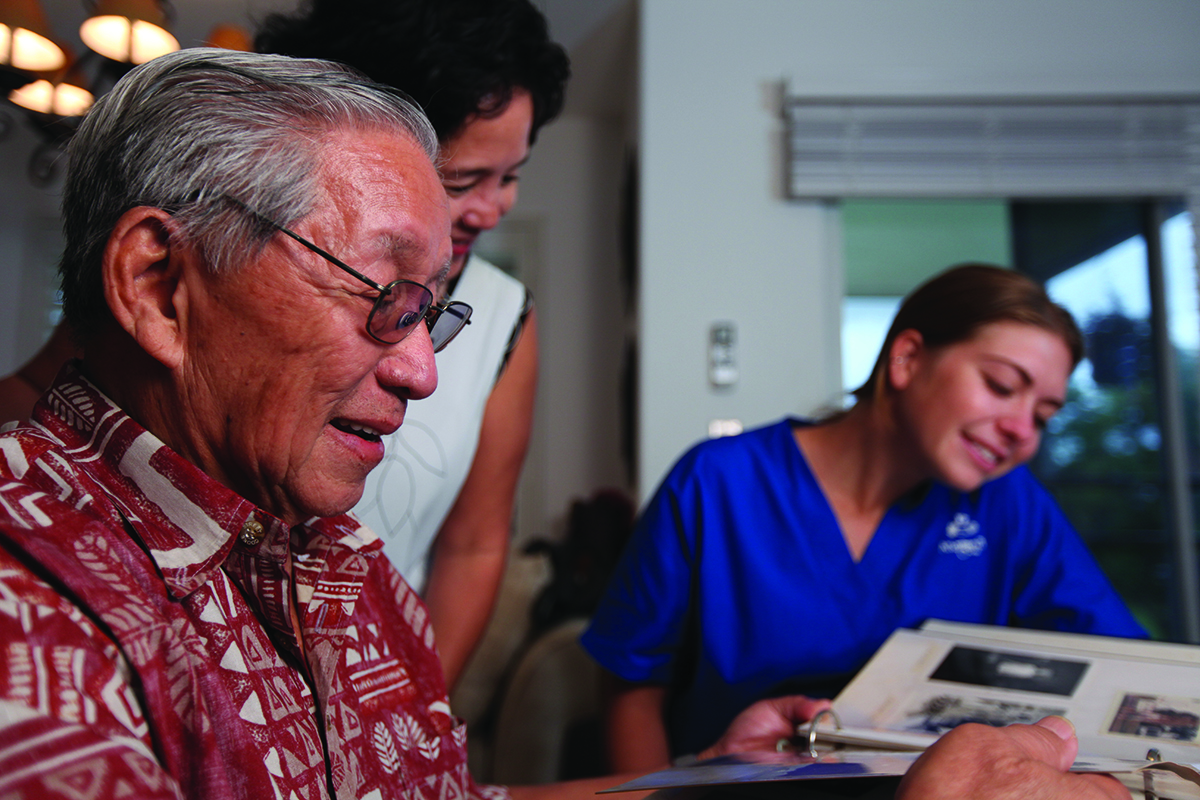
• Pull out old photos. You may even learn something new about the people in them!
• Enjoy memories as if you were there with them while you listen to their stories again and again.
We all spend time in the past, reliving cherished memories. The feelings of joy and accomplishment this creates should be valued for the difference they make in the present.
ATTENTION PLUS CARE HOME HEALTHCARE
Accredited by The Joint Commission
1580 Makaloa St., Ste. 1060, Honolulu, HI 96814 808-739-2811 | www.attentionplus.com AGING IN HAWAII EDUCATIONAL OUTREACH PROGRAM
by Attention Plus Care — a program providing resources for seniors and their families, covering different aging topics each month. For class information and upcoming topics, call 808-440-9356.
Time can stop when memories are lost for a person with Alzheimer’s disease. At certain stages, the brain loses its recent (short-term) memories. The brain — and therefore, the present — is in the past for those with memory loss. Current thoughts are drawn to distant memories.
Mom at the Bicol Club of Hawaii’s 40th anniversary.
My mother, Paz Pontillas Celebrado, graduated from college in the Philippines and dreamed of coming to America to start her nursing career. Her dream came true when she fell in love with my father, Felipe Celebrado, a U.S. Navy man. They immigrated to America in 1959 and she adjusted to a new life as a military wife and mother, and as a nurse for the next 40-plus years.
She expanded her traditional nursing role, becoming a home- and community-based case manager. In addition, my mother was one of the first care/boarding home operators in the state.
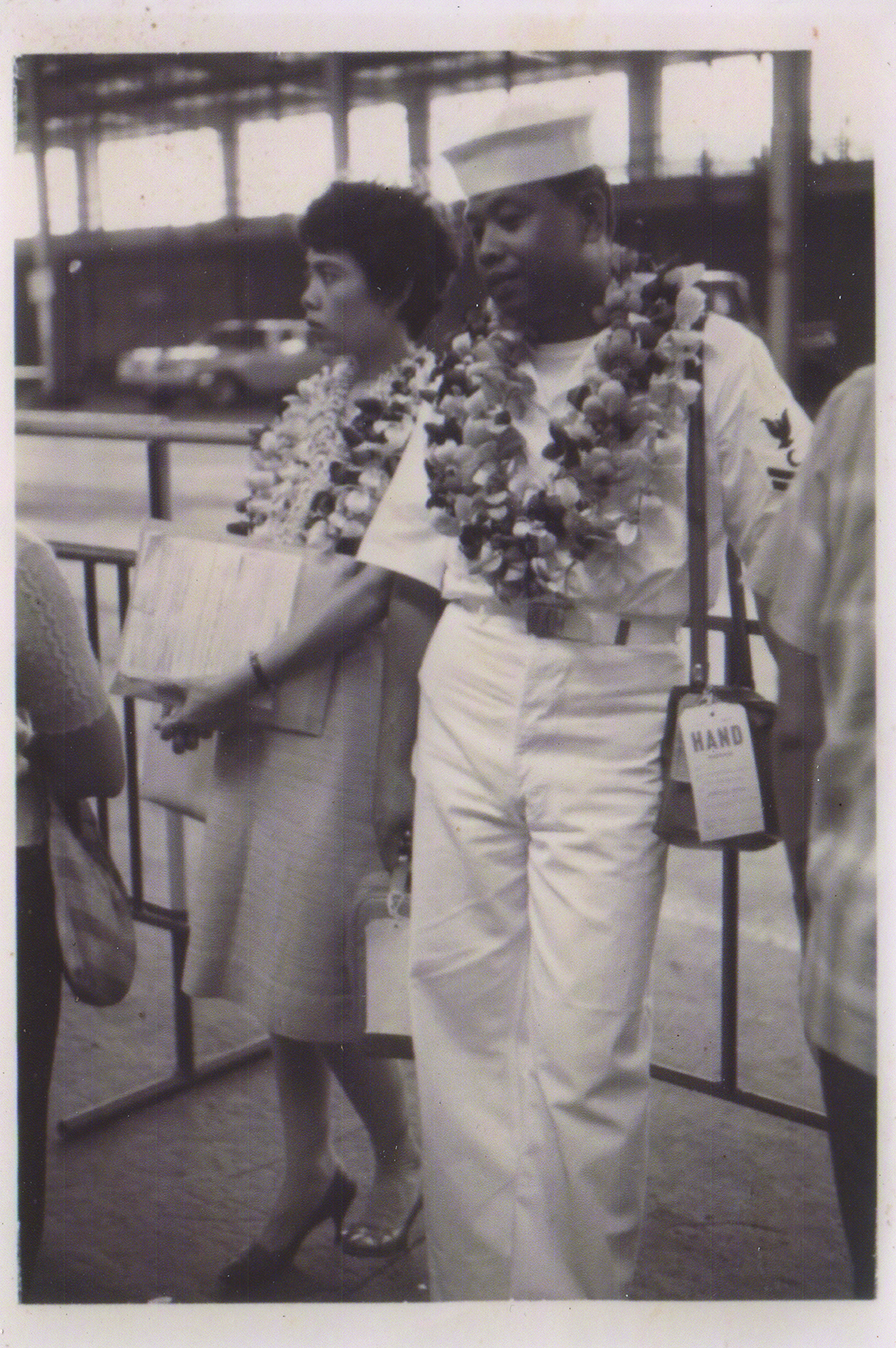
Mom and Dad in 1959 on their arrival to the states.
Having been exposed to what it takes to be a care manager at a very young age as I watched my mother tend to disabled clients in our home, I followed in my mother’s footsteps. I pursued a social work degree from the University of Hawai‘i at Mānoa and eventually worked at HMSA as a care coordinator, supervisor and manager.
After nearly 20 years at HMSA, I realized that my husband and I had become members of the “sandwich generation,” caring for three children and aging parents. When my father became seriously ill in 2008, my mother embraced her role as his personal nurse until he passed away from lung cancer in 2009.
But after he was gone, my mom began showing signs of mild dementia or cognitive impairment. I left HMSA and looked for a job that would allow me to work from home. I found an opportunity as a community outreach liaison with Urgent Care Hawaii, working alongside a longtime case management colleague Donna Schmidt, owner of the company. Finding employment that allowed remote work provided me the flexibility I needed to earn an income while raising our children and caring for my mother in our home.
This is what I learned through my experiences as a caregiver.
My niece, Juliana, graduated from college in 2017. Mom was always proud to attend any of her family’s celebrations.
■ Caregiving is a marathon, not a sprint. It’s a cross-country run with highs, lows and unexpected obstacles. Be prepared and plan for the long course. Read, attend caregiver workshops and join caregiver support groups. Learn what resources are available at every stage of the journey.
■ Plan around your loved one’s abilities. My mom always loved grocery shopping and going to Longs. So when she lost her ability to drive, I signed her up for services through Project Dana, which provided my mom with three volunteers who would take turns taking her shopping. She relished her outings!
■ Identify what brings them joy. Surround your loved one with those whom they are familiar with and those who will bring them comfort. Is there a church group, civic group or volunteer group that your loved one enjoys? For my mom, it was her Filipino club — The Bicol Club of Hawaii. The social connection, and common native language, food and culture provided the comfort my parents needed in their final years. My mother enjoyed attending celebrations and events that would make her feel socially connected and valued. During her final months, members of the Bicol Club would bring her favorite foods that would stimulate her declining appetite. It was great to have the support and respite provided by familiar faces and friends who could bring back memories of better times for my mother. If you have that kind of social connection available, utilize these invaluable relationships.
■ Practice self-care. As a caregiver, you need a break. You cannot be a caregiver 24/7 without experiencing burnout. Schedule time for yourself to recharge your batteries. Find a niche, hobby or interest that will provide that little slice of happiness to escape from day-to-day caregiving. Exercise regularly. I have heard too many stories about caregivers who begin to experience health issues due neglect of their own health after the loved one passes away.
■ Make memories as you provide caregiving. Embrace the time you have with your loved one by including them in celebrations, special occasions and travel plans. My mother was able to travel until a year before she passed away. I became a specialized travel agent, planning all details of the itinerary. Anticipatory planning included identifying urgent and emergent medical services available in transit and at our destination. Packing included durable medical equipment and devices, sufficient medication for the entire trip and packing that extra change of clothes. The memories spent with dear family and friends were priceless and helped my mother feel a sense of completion as she checked off items on her lengthy bucket list.
■ Leverage all the support you can. The last 10 years were not easy. I could not have done it without the support of my family. As the primary caregiver, I controlled the calendar and coordination of schedules. I was the quarterback. But we were a team. Fortunately, there were builtin advantages in our multi-generational home, where we were able to provide 24/7 care for my mother among us all.
■ Cultivate good relationships with each member of your loved one’s healthcare team. My parent’s PCP took care of them for over 40 years. He was always available to help me navigate and coordinate my parents care needs. The supportive services provided by Project Dana, St. Francis Hospice – Bereavement Support Group and Hospice, Kupuna Care Hawaii, Urgent Care Hawaii and Hale Hau‘oli Adult Day Care were the foundational support that allowed me and my family keep my mom comfortable in her own home until the very end.
■ You are your loved one’s patient advocate. If they are no longer able to communicate their needs, then you must. You need to have the conversations early in the caregiving process to understand the care preferences and wishes in order to honor their wishes. There may be conflicts that arise within the family and it is important to remember that the focus should be on your loved one. It is important to consider a good mediator or elder care attorney if you and your family are not able to represent your loved one’s wishes.
Mom passed away in 2019 according to her wishes; peaceful, at home, surrounded by family and dear friends. I can look at the last 10 years of caregiving with no regrets and feel blessed with great memories. I wouldn’t have done it any other way. I hope these reflections on my caregiving journey will help you in yours. You have an incredibly difficult job, but it can be do-able with the right plan, support team and resources.
CAREOPS CONSULT LLC 808-778-2752 | melissacareopsconsult@gmail.com Provides healthcare consultation services to organizations that need assistance with business development, project management, product or program development.
Having been exposed to what it takes to be a care manager at a very young age as I watched my mother tend to disabled clients in our home, I followed in my mother’s footsteps. I pursued a social work degree from the University of Hawai‘i at Mānoa and eventually worked at HMSA as a…
Each year, one in four seniors suffers a fall, leading to injuries and emergency room visits. Although they are preventable, falls can lead to a loss of independence.
Take Control of Your Home
Taking control of your environment is crucial in preventing and reducing your risk of falling.
• Keep all walkways clear of clutter or potential tripping hazards.
• Make sure your home is well-lit.
• Add grab bars inside and outside your tub or shower, and next to the toilet.
Take Control of Your Health
Taking control of your health is another important step. Keep yourself safe by being proactive regarding your health.
• Talk openly with your doctor about fall risks and prevention. Have your doctor or pharmacist review your medications.
• Consult with your doctor about an exercise program to improve your leg strength and balance.
• Get an annual eye exam. Replace eye glasses or contacts as needed.
MDX HAWAI‘I
500 Ala Moana Blvd., Ste. 2200, Honolulu, HI 96813-4993 808-522-7500 | www.MDXHawaii.com MDX Hawai‘i has over 35 years of experience serving the people of Hawai‘i. Our physician network represents over 630 top primary care physicians, and 2,200 leading specialists and hospitals. MDX Hawai‘i contracts with Humana HMO, Humana PPO and AARP/UnitedHealthcare PPO Medicare Advantage Plans.
Each year, one in four seniors suffers a fall, leading to injuries and emergency room visits. Although they are preventable, falls can lead to a loss of independence.
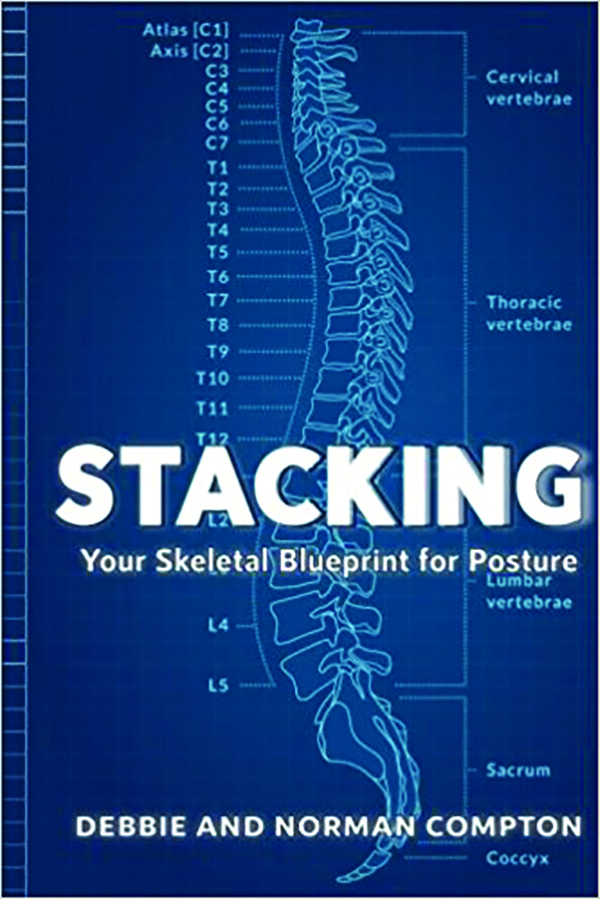
Forty years ago, medical exercise specialists Debbie and Norm Compton met in Hawai‘i and made fitness the key element in both their personal and professional lives. Personal training, stunt work, injuries and their continual quest for excellence compelled them to write Stacking: Your Skeletal Blueprint for Posture. In their book, the Comptons share techniques for regaining posture as you age.
Learning to develop a strong skeletal “stack” and the ability to keep your bones in their intended places allows us to know the feeling of neutral and true posture, they say. “When you’re strong in neutral, you’re strong everywhere.”
Using a construction theme, the Comptons take all 206 of your bones and teach you how to build your frame from the bottom up, beginning with your feet. Moving up the body, they describe which parts serve as the glue that keeps your body together.
They also explain what can go wrong if your bones aren’t aligned correctly, and have first-hand knowledge regarding misalignments and injuries. Deb has scoliosis; Norm was a Hollywood stuntman for 27 years.
Now in their mid-60s, the Comptons continue to practice the fitness principles they preach, illustrating living proof of the old axiom “if you don’t use it, you lose it!” They still have it!
Forty years ago, medical exercise specialists Debbie and Norm Compton met in Hawai‘i and made fitness the key element in both their personal and professional lives. Personal training, stunt work, injuries and their continual quest for excellence compelled them to write Stacking: Your Skeletal Blueprint for Posture. In their book, the Comptons share techniques for…
I love sugar! Sugar makes desserts, candies and drinks taste wonderful! The bacteria in our mouth love sugar, too. Eating foods that contains sugar instantly activates bacteria for 20 minutes. As bacteria devour the sugar, their waste is acid.
Acid is one of the few things that can destroy your enamel and may contribute to dementia.
While sipping on a soda, sweet tea, a cup of coffee with cream and/or sugar for an hour, you have exposed your teeth to over an hour of enamel-eroding acid. Be aware that sugar-free diet drinks, and starchy foods like rice, chips and bread also activate bacteria.
To lessen acid exposure, eat your dessert or sugary treat right after meals, rinse with water after consuming candies and sweet drinks, and brush and floss — especially before bedtime.
Do not constantly tuck cough drops or hard candies on the side of your cheek! Not only is it a dental disaster, studies have shown that sugar may have a role in the progression of Alzheimer’s disease. Researchers found that people with high blood-sugar levels are prone to dementia.
Enjoy your sweets but take steps to keep your teeth and mind intact.
I love sugar! Sugar makes desserts, candies and drinks taste wonderful! The bacteria in our mouth love sugar, too. Eating foods that contains sugar instantly activates bacteria for 20 minutes. As bacteria devour the sugar, their waste is acid. Acid is one of the few things that can destroy your enamel and may contribute to…

 Our employees will never threaten you for information or promise a benefit in exchange for personal information or money. Real Social Security employees also WILL NOT: