Category: Date

  • The Trouble With Family Secrets

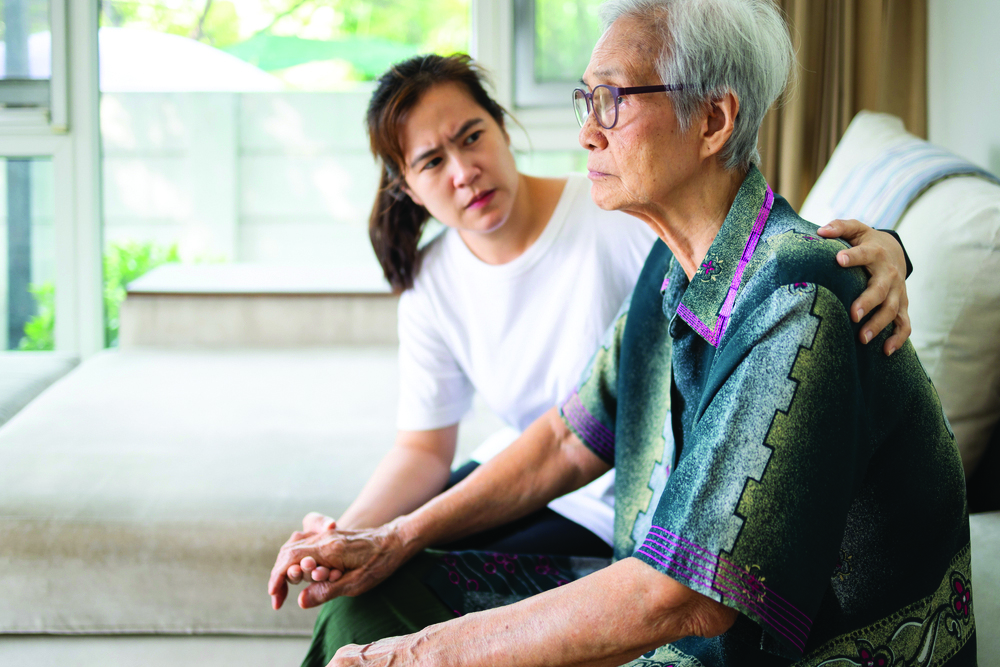
    When there are secrets within a family, it has been my experience that no good has ever come from them. Now, I am not talking about secrets that a family might keep from non-family members, such as,  grandma is a witch and Uncle Joe has 12 toes, but secrets family members keep from each other.

    I have gotten many calls over the years that typically start out saying a sibling did this or that with a parent and did not tell anyone about it. Usually the “this or that” involves a large sum of money, ownership of the house, or a change in the trust or estate plan. When the family member discovers this secret, their first reaction is to accuse the sibling of financial exploitation and call my office.

    Although secrecy is often a red flag when looking for elder abuse, it alone is not evidence of  wrongdoing. Although it can be a sign that a vulnerable loved one is being taken advantage of, it can also just be a signal that open communication is lacking in the family and it is felt that secrecy is needed to spare hurt feelings.

    More than once has brother or sister accused each other of misdeeds because the parent wanted to keep peace in the home, and wasn’t honest with each child as to what they were actually getting. When they both have been told the house is going to them and this information is brought to light, finger-pointing and accusations ensue. These claims of wrongdoing eventually seem to come into my inbox and I get to peel away the layers of the truth onion to see why the situation smells bad to certain family members.

    AARP has several aids that can help families have open and honest conversations with each other about sensitive matters, such as exploring caregiving options or the distribution of wealth upon the parent’s death. Another resource that is the Kupuna Pono Program with the Mediation Center of the Pacific. Trained mediators (like myself) have experience leading conversations among family members concerning aging issues. It’s been my experience that the only secrets that should be kept among family members are those that involve surprise parties and how your wife’s new hairstyle really looks.


    If you suspect elder abuse, call these numbers:
    – Police: 911
    – Adult Protective Services: 808-832-5115
    – Elder Abuse Unit: 808-768-7536
    If you have questions about elder abuse, call or email:
    808-768-7536 | ElderAbuse@honolulu.gov


    When there are secrets within a family, it has been my experience that no good has ever come from them. Now, I am not talking about secrets that a family might keep from non-family members, such as,  grandma is a witch and Uncle Joe has 12 toes, but secrets family members keep from each other.

  • What is a Trust?

    A trust is created when a person transfers “stuff” to a trustee who will manage the stuff for the benefit of one or more beneficiaries. “Stuff” includes real property — such as land and buildings — and personal property — such as bank accounts, stocks and bonds, and personal effects. The person who transfers the stuff to the trustee is called the trustmaker. Often, the trustmaker is also the trustee (or perhaps co-trustee) and the initial beneficiary of the trust. The trust agreement between the trustmaker and the trustee sets out the rules about how the trust will be run.

    Revocable & Irrevocable Trusts

    If the trust agreement says that the trustmaker can revoke it or change it, the trust is called a “revocable trust.” If the trust agreement does not allow the trustmaker to change or revoke it, it is called an “irrevocable trust.” Irrevocable trusts are used in many estate plans to enable trustmakers to make gifts but keep the recipients from having complete control over the gifted assets.

    Living & Testamentary Trusts

    A living trust is one that is created and funded (that is, stuff is transferred into it) during the trustmaker’s lifetime. It can be revocable or irrevocable, depending on how much control the trustmaker wants to maintain over the trust and its assets. A revocable trust gives the trustmaker complete control, whereas an irrevocable trust gives the trustmaker limited or no control. A testamentary trust is one that goes into effect and is funded following the trustmaker’s death because it is governed by the trustmaker’s last will and testament.

    Trusts are often the building blocks of effective estate plans. They provide simplicity, flexibility and predictability in dealing with your assets. Trusts also give you the peace of mind of knowing that you have arranged your affairs to ensure that your wishes will be carried out just the way you planned, and that future transitions (such as your incapacity or death) will be much easier on your loved ones.

    If a trust is not already part of your estate plan, talk with your trusted advisors about how a trust might benefit you and your ‘ohana.


    SCOTT MAKUAKANE, Counselor at Law
    Focusing exclusively on estate planning and trust law.
    www.est8planning.com
    808-587-8227 | maku@est8planning.com

    A trust is created when a person transfers “stuff” to a trustee who will manage the stuff for the benefit of one or more beneficiaries. “Stuff” includes real property — such as land and buildings — and personal property — such as bank accounts, stocks and bonds, and personal effects. The person who transfers the…

  • Is Now a Good Time to Refinance?

    Interest rates recently hit all-time lows as the Federal Reserve made cuts to mitigate the financial impacts of COVID-19. If you’re a homeowner with a monthly mortgage payment, you might be wondering if now is a good time to refinance. While a lower interest rate may yield a more affordable monthly payment, there are other factors to consider. Here are seven questions to ask yourself before making the decision to refinance:

    1) Will you qualify for a better rate?

    The best interest rates are reserved for borrowers with optimal credit. If you are one of the millions of Americans who has filed for unemployment benefits during the COVID-19 outbreak, your employment status is not included in your credit report. However, your credit score can be affected by many factors, such as if you suddenly carry more credit card debt, have missed or made late payments or have applied for new credit during this challenging time.

    2) What will your new loan cost?

    A lower interest rate and lower monthly payment do not always add up to savings in the long run. Your loan will have closing costs and fees. Factor in prepayment penalties, if applicable. Costs often vary by lender, so it may be a good idea to shop around for the best rate. Talk to your financial advisor or reference one of the many online refinance calculators to help you determine the break-even period, or how long it will take before you realize savings with a new loan.

    3) Do you plan to move in the next five years?

    The value of refinancing can be diminished when you exit a new loan before you’ve had the chance to recoup closing costs and fees.

    4) Will your new loan eliminate lender insurance?

    If your home’s market value has increased enough to grow your equity, refinancing with a conventional mortgage can potentially remove private mortgage insurance (PMI) sooner. Federal Housing Administration (FHA) loans require mortgage insurance regardless of equity.

    5) Are you trying to get out of an adjustable-rate mortgage (ARM)?

    Switching from an ARM to a fixed-rate mortgage can mean more predictable monthly payments.

    6) Are you seeking a new term length?

    A shorter-term loan may offer better rates, but it can mean a higher monthly payment. This may not be a good time to increase your monthly obligations if your income is threatened by the current situation. On the flip side, you may want lower monthly payments that come with a longer-term loan. It’s important to note you will have to make those payments for many more years, incurring greater expense and reducing your ability to save.

    7) Can you afford your current home?

    If you’re having trouble making your loan payments, refinancing is not the only way to find relief. As an alternative to refinancing, you might explore downsizing to a property with a mortgage your budget can handle.

    These uncertain times reinforce the importance of financial planning. Talk to your financial advisor for guidance on how to build equity in your financial future.


    MICHAEL W. K. YEE, CFP,® CFS,® CLTC, CRPC®
    1585 Kapiolani Blvd., Ste. 1100, Honolulu, HI 96814
    808-952-1222, ext. 1240 | michael.w.yee@ampf.com
    Michael W. K. Yee, CFP,® CFS,® CLTC, CRPC,® is a Private Wealth Advisor, Certified Financial Planner™ practitioner with Ameriprise Financial Services Inc. in Honolulu, Hawai‘i. He specializes in fee-based financial planning and asset management strategies, and has been in practice for 36 years. Investment products are not federally or FDIC-insured, are not deposits or obligations of, or  guaranteed by any financial institution, and involve investment risks including possible loss of principal and fluctuation in value. Investment advisory products and services are made available  through Ameriprise Financial Services, LLC., a registered investment adviser. Ameriprise Financial Services, LLC. Member FINRA and SIPC. © 2020 Ameriprise Financial, Inc. All rights reserved.

    Interest rates recently hit all-time lows as the Federal Reserve made cuts to mitigate the financial impacts of COVID-19. If you’re a homeowner with a monthly mortgage payment, you might be wondering if now is a good time to refinance. While a lower interest rate may yield a more affordable monthly payment, there are other…

  • New Benefit Verification Letters

    Social Security (SS) has released a new, standardized Benefit Verification letter.

    People receiving SS or Supplemental Security Income (SSI) benefits can obtain their letter by using their personal my Social Security account. You can use the letter as proof of income for loans and housing assistance verification purposes.

    Create your personal my Social Security account to access your new Benefit Verification letter online in a safe, quick and convenient way without needing to contact us. People not receiving benefits can use their account to get proof that they do not receive benefits, or proof that benefits are pending, in the same standardized letter. Individual representative payees can also use the new my Social Security Representative Payee Portal to access the letter online for themselves or their beneficiaries.

    Access Benefit Verification letters at www.ssa.gov/myaccount. If you don’t want to use your personal my Social Security account, call SS’s 800 number to speak with a representative, use the Interactive Voice Response system or contact your local office. Find the phone number for your local office by using our Field Office Locator and looking under Social Security Office Information. The toll-free office number is your local office.


    Call SSA at 800-772-1213 (TTY 800-325-0778)
    Mon–Fri, 8:30am–3:30pm. Use the SSA Office Locator to find your local office at www.socialsecurity.gov

    Social Security (SS) has released a new, standardized Benefit Verification letter. People receiving SS or Supplemental Security Income (SSI) benefits can obtain their letter by using their personal my Social Security account. You can use the letter as proof of income for loans and housing assistance verification purposes.

  • Program Provides Free Delivery to Kūpuna

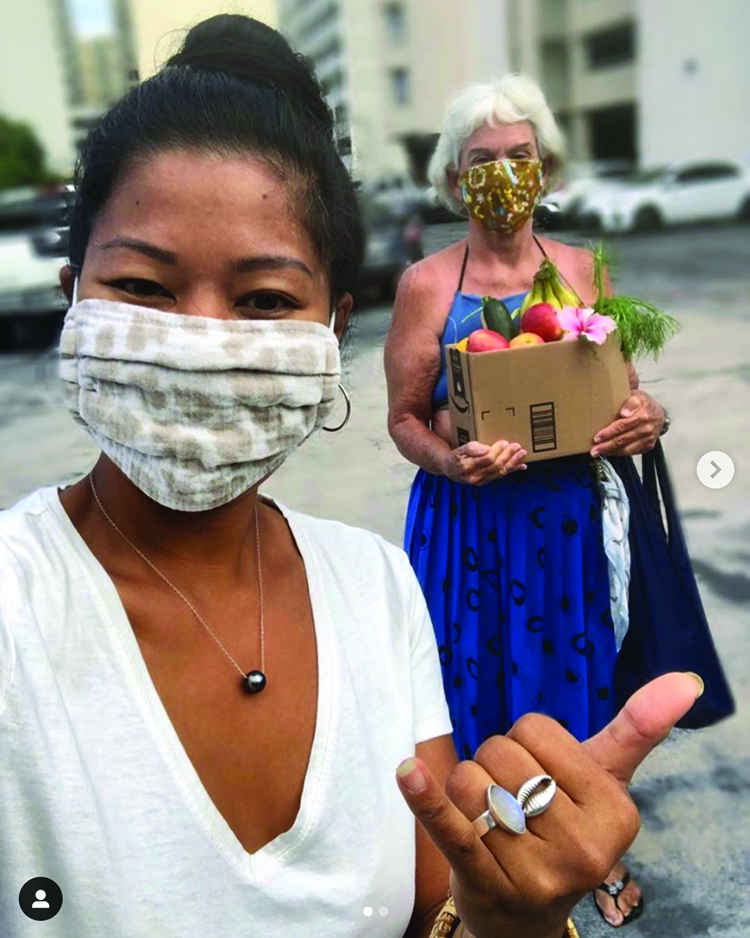
    Not all elderly in Hawai‘i have ‘ohana nearby to look out for them during the deadliest global pandemic  of the century. In response to COVID-19, Gabe Amey established Our Kūpuna in March to connect Hawai‘i’s seniors with community members who volunteer to provide free food, supply and medication pickup and deliver services on O‘ahu, Maui, Hawaii Island, Kaua‘i and Moloka‘i.

    How It Works: The sponsor checks in with the kūpuna once a week via phone and asks if they need any food, supplies or medication (no narcotics). The sponsor will then shop and deliver the items to the kūpuna The sponsor will provide a receipt to the kūpuna for the items purchased, and the kūpuna will reimburse the sponsor for the cost of the items via cash or check (no credit cards allowed).

    Screening Volunteers: The Our Kūpuna team screens volunteers to ensure they or any household member have had no COVID-19 symptoms within the last 30 days and have not traveled outside of Hawai‘i in the last 14 days. Anyone convicted of any crime will not be allowed to serve as a volunteer. Our Kūpuna also requires that applicants send a picture of their driver’s license and proof of auto insurance.

    Screening Kūpuna: Our Kūpuna calls kūpuna applicants via phone and verifies date of birth, address, essential items they typically need, any medical conditions volunteer sponsors need to be aware of, and the best time to contact them.

    Safety Procedures: Our Kūpuna takes the health of its clients and volunteer sponsors very seriously. The program strives to have little to no physical interaction between volunteer and kūpuna. Volunteers are required to follow a set of safety procedures recommended by Dr. Rupal Gohil in Kailua. If physical interaction is required, it is highly recommended that both parties maintain at least six feet of separation from each other. Safety procedures include but are not limited to: Pickup and delivery should be done solo. Sponsors are also not allowed to delegate this responsibility to another person. Volunteers must wash their hands or use alcohol-based hand sanitizer (at least 60 percent alcohol)  before and after making a delivery. Face masks and gloves (provided) are required. Volunteers will transfer items to bags and/or boxes outside of the kupuna’s door. A reimbursement plan must be arranged prior to delivery. Kūpuna should call their pharmacy to put their credit card in their system. Kūpuna must disinfect items upon receiving them.

    If you are over 65, go to www.OurKupuna.com to get connected with a sponsor who can help get these items for you.

    Volunteer as a Kūpuna Sponsor

    If you’re interested in helping in your area, visit www.ourkupuna.com/volunteer. Our Kūpuna supports our kūpuna through grants and donations. To donate: www.ourkupuna.com/donate. Donate via check: Hawaii VA Foundation, 111 Hekili Street, #102, Kailua, HI 96734.


    OUR KŪPUNA (501(c) 3 nonprofit under the Hawaii VA Foundation)
    808-400-4506 | aloha@ourkupuna.com
    www.ourkupuna.com

    Not all elderly in Hawai‘i have ‘ohana nearby to look out for them during the deadliest global pandemic  of the century. In response to COVID-19, Gabe Amey established Our Kūpuna in March to connect Hawai‘i’s seniors with community members who volunteer to provide free food, supply and medication pickup and deliver services on O‘ahu, Maui,…

  • I Ola Lāhui Helps Underserved Live & Thrive

    I Ola Lāhui (IOL) was developed over a decade ago in response to the urgent needs of Native Hawaiian and rural, underserved communities for behavioral health services. I ola lāhui means “So that the people will live and thrive.” The IOL mission is to provide culturally-minded,  evidence-based behavioral healthcare.

    The nonprofit provides effective psychology services for chronic diseases, such as diabetes, and more traditional mental health needs such as anxiety, depression and trauma.

    IOL has four branches of service

    1. Training: IOL prepares pre- and post-doctoral psychologists for future service in communities.
    2. Health Services: IOL offers behavioral health, chronic disease management, nutrition and weight management services.
    3. Research and Evaluation focuses on needs assessment, treatment effectiveness and outcome evaluation with our communities.
    4. Consulting and Advocacy: IOL seeks opportunities for partnership and collaboration that lead to policy and social change.

    IOL has built and maintained a training pipeline for psychologists to address the behavioral health shortage in rural and underserved communities in Hawai‘i. The effort has increased the number of trained psychologists working in areas such as Molokai, Hilo, Waimānalo, Leeward and North Shore districts on O‘ahu. Graduates currently serve on six islands, many in places that lacked stable behavioral health services before their arrival.

    IOL has partnered with organizations across the islands, closing the gap between the needs of communities and access to mental health services. Since IOL was founded in 2007, it has  demonstrated consistent success and growth by partnering with over 20 different community health clinics and eldercare service facilities, and by providing patient education, staff training, consultation and public outreach.

    IOL’s psychology trainees have served thousands of patients, meeting both the immediate need for services as well as the long-term need for more psychologists trained to work in rural and underserved areas.


    I OLA LĀHUI (501(c) 3 nonprofit)
    1441 Kapiolani Blvd., Ste. 1802, Honolulu, HI 96814
    Hrs: Monday to Friday, 7:30am–6pm
    808-525-6255 | info@iolalahui.org
    www.iolalahui.org

    I Ola Lāhui (IOL) was developed over a decade ago in response to the urgent needs of Native Hawaiian and rural, underserved communities for behavioral health services. I ola lāhui means “So that the people will live and thrive.” The IOL mission is to provide culturally-minded, evidence-based behavioral healthcare.

  • When Life Becomes Too Much to Handle

    COVID-19 has brought about many changes this year. These changes have affected everyone of all ages and has caused more stress than a person might normally be able to handle. Some older adults may feel extremely isolated since they cannot physically see family and friends.  Others may have lost their job or their hours were cut and the mortgage is due. Working from home may include the added pressures of home schooling grandchildren, pets running in and out, and a multitude of other issues that makes them feel as if they are losing control. Stress can have such a horrendous impact on all of us no matter what the cause or what age we are. If you or someone you know just can’t handle life anymore, the National Alliance on Mental Illness Hawaii (NAMI) asks you to consider the following when reaching out for help:

    ◆ If it’s an emergency in which you or someone you know is suicidal, immediately call the National Suicide Prevention Lifeline at 1-800-273-8255, call 911 or go to a hospital emergency room. DO NOT leave a suicidal person alone.
    ◆ If you can wait a few days, make an appointment with your primary healthcare provider or pediatrician if you think you or your loved one’s condition is mild to moderate.
    ◆ If the symptoms are more severe, make an appointment with a specialized doctor, such as a psychiatrist or therapist. You may need to contact your primary healthcare provider for a referral.
    ◆ Seek out support groups in your community and educate yourself about symptoms and diagnoses. Social support and knowledge can be valuable tools for coping. Contact NAMI Hawaii or go online for information.
    ◆ If you or your loved one is in school or college, contact the school and ask about its support services.
    ◆ Remember that you are a partner in your own or your loved one’s treatment. You can ask the healthcare provider questions and be a part of decisions about your treatment. If your family member or friend is an adult who doesn’t want treatment, it can be difficult to get them help. But you will still benefit from learning as much as you can and finding support groups for yourself. Your NAMI Hawaii and healthcare providers can advise you on how to offer encouragement and keep yourself and your loved one safe. NAMI Hawaii offers free support and educational services online.


    NAMI HAWAII (501(c) 3 nonprofit)
    5240, 770 Kapiolani Blvd. # 613, Honolulu, HI 96813
    808-591-1297 | info@namihawaii.org
    www.namihawaii.org
    NAMI Hawaii provides free support, education, information and resources for people who are struggling with or impacted by mental illness.

    Working from home may include the added pressures of home schooling grandchildren, pets running in and out, and a multitude of other issues that makes them feel as if they are losing control. Stress can have such a horrendous impact on all of us no matter what the cause or what age we are. If…

  • Ko‘olauloa Senior Mentors Needed

    Kahuku High School students deliver meals to kūpuna during the COVID-19 pandemic.
    Kahuku High School students deliver meals to kūpuna during the COVID-19 pandemic.

    To sustain a vibrant kūpuna community, younger generations must take action. Our state needs an adequately trained workforce to care for and support our older population. In response to the need to support kūpuna and family caregivers, and expand workforce opportunities for youth, an eldercare curriculum was developed and implemented at Kahuku High School’s Health Academy on O‘ahu. Eldercare lessons integrated within the larger class curriculum raise awareness about aging issues, foster empathy through immersive activities that mimic age-related conditions, and inspire students to create change through service projects and positive intergenerational experiences with kūpuna.

    Kūpuna mentors are needed in the Ko‘olauloa District to participate in intergenerational activities with high school students. If you are interested, please contact cnishita@hawaii.edu.


    KIND2KUPUNA
    Kind2Kupuna is Age-Friendly Honolulu’s umbrella initiative consisting of a Business Initiative, Youth Engagement Initiative and Dementia Friends.
    kind2kupuna@gmail.com
    www.agefriendlyhonolulu.com/kind2kupuna/

    To sustain a vibrant kūpuna community, younger generations must take action. Our state needs an adequately trained workforce to care for and support our older population. In response to the need to support kūpuna and family caregivers, and expand workforce opportunities for youth, an eldercare curriculum was developed and implemented at Kahuku High School’s Health…

  • Fresh Produce Delivery Service for Seniors

    The onset of COVID-19 in early March sparked a drastic need for meals across our islands. Seniors, in particular, continue to be the highest risk group and many are afraid to leave their homes, even for food items. Lanakila Pacific’s Meals on Wheels program was able to respond quickly due to its strong network of partnerships and community support. Since the beginning of the pandemic, Lanakila Meals on Wheels has provided more than 370,000 meals for O‘ahu seniors, including an additional 1,000 for kūpuna. The number continues to grow.

    Yet amidst feeding our kūpuna during this critical time, Lanakila Meals on Wheels strives to be innovative in its quest to not only be there for our community in times of need, but to also remain resilient by expanding its services.

    This summer, the nonprofit launched a new service that provides seniors with direct access to fresh produce from local farmers.

    Here is what you need to know:

    What is The Green Bag? The Green Bag is a monthly, paid subscription service. Each bag contains a selection of seasonal fresh fruits and vegetables, all locally sourced from farms in Hawai‘i.

    Why is Lanakila Meals on Wheels offering this service? The health and wellness of kūpuna is our priority. While we deliver healthy and nutritious complete meals, the purpose of The Green Bag is to offer our kūpuna a convenient way to add more variety to their diets and to supplement their meals. As a meal provider and a part of Hawai‘i’s food chain, we also want to support local farming and agricultural industries. Moreover, The Green Bag creates jobs for individuals with disabilities who pack the produce bags.

    Who is eligible to participate? The Green Bag program is available to the participants of Lanakila Meals on Wheels. As the program grows, it will be made available to more kūpuna.

    How much does it cost? Depending on the individual’s situation, The Green Bag may cost between $14 and $28 for four weeks. We can also help kūpuna apply for federal Supplemental Nutrition Assistance Program (SNAP) benefits that may help pay for the cost. So far, kūpuna and their caregivers value the service because it reduces the need to go to the store for fresh food.

    Are seniors able to choose the produce they receive each month? As we are only purchasing local produce, the variety will change with the seasons. Though we are unable to individually customize the assortment in each bag, feedback is welcome in order to let us know which fruits and vegetables are preferred.


    LANAKILA MEALS ON WHEELS (501(c) 3 nonprofit)
    1809 Bachelot St, Honolulu, HI 96817
    808-356-8519 | F 808-524-8657
    mow@lanakilapacific.org
    www.lanakilapacific.org

    The onset of COVID-19 in early March sparked a drastic need for meals across our islands. Seniors, in particular, continue to be the highest risk group and many are afraid to leave their homes, even for food items. Lanakila Pacific’s Meals on Wheels program was able to respond quickly due to its strong network of…

  • In-Home Physical Therapy Made Easy

    Nowadays, in-home physical therapy is more important than ever. Seniors must find creative ways in their own home area to continue exercising for mobility and strength.

    Walking is still a popular and convenient way to exercise. To add intensity, you can walk briskly for one minute followed by one minute at a  regular pace, then repeat for 10 minutes or more.

    Using a kitchen counter or back of a chair, you can do a number of standing leg exercises for 10 minutes each, repeated twice:

    • Squats. With your head forward, butt back and back straight, lower yourself until your thighs are horizontal to the floor; rise to a standing position.
    • Marching in place. Alternating legs, raise your knees to your waist, keeping your stomach tight.
    • Side kicks. Stomach tight and toes pointed, alternately lift one leg at a time to the side.
    • Heel-Toe Raises. With both feet together, raise them upward on your heel, then rock forward on the balls of your feet, raising your heels upward.

    For those who can’t walk or stand safely, chair exercises can be done by lifting your knees towards your chest; side kick with one leg extended horizontally and swung side to front; heel-toe raises by rocking your feet back and forth heel to toe.

    Don’t stop moving! Consult your physical therapist for specific exercises that fill your needs.

    Arm exercises will be the next topic.


    MAKAI MOBILE REHAB LLC
    808-783-9320 | jason@makaimobile.com
    www.makaimobile.com

    Nowadays, in-home physical therapy is more important than ever. Seniors must find creative ways in their own home area to continue exercising for mobility and strength. Walking is still a popular and convenient way to exercise. To add intensity, you can walk briskly for one minute followed by one minute at a  regular pace, then…

  • COVID-19 Testing & Virus Symptoms

    When should you get tested for COVID-19? Which of the three main types of tests for COVID-19 will you be given?

    Three main types of tests for the coronavirus

    1) Molecular Testing: This FDA-approved method tests for the virus’ DNA or genetic material. This type of testing is typically processed in a certified lab where it could take 24 to 48 hours or longer to get results. Although, none of the tests are 100 percent accurate, this one is preferred  or the best accuracy.
    2) Antigen Testing: This FDA-approved method is a rapid test that can produce results within 15 minutes. This test is very useful for screening due to its quick turnaround time. However, it is less accurate than molecular testing. A negative test result may need to be confirmed by a molecular test.
    3) Antibody Testing: This blood test result will reveal whether or not you have been infected by the coronavirus in the past. It may take weeks for antibodies to be detected in your blood after contracting the virus. This test is not used to diagnose coronavirus.

    When should you get a test?

    According to the Centers for Disease Control & Prevention (CDC), people with COVID-19 have exhibited a wide range of symptoms — ranging from mild to severe. Symptoms may appear two to 14 days after exposure to the virus. The following list includes some, but not all possible symptoms.

    • Fever or chills
    • Cough
    • Shortness of breath or difficulty breathing
    • Fatigue
    • Muscle or body aches
    • Headache
    • New loss of taste or smell
    • Sore throat
    • Congestion or runny nose
    • Nausea or vomiting
    • Diarrhea

    The CDC will continue to update this list of symptoms as it learns more about COVID-19.*

    Please be responsible; wear your mask and practice social distancing.


    OHANA PACIFIC MEDICAL
    Hawaii’s Premiere Telemedicine & Health Monitoring Program
    808-930-9858 | www.ohanapacificmedical.org
    Call to make an appointment or for more information about COVID-19 testing and receiving a test.
    * Source: Centers for Disease Control & Prevention (CDC)
    www.cdc.gov/coronavirus

    When should you get tested for COVID-19? Which of the three main types of tests for COVID-19 will you be given?

  • How to Avoid Age-Related Muscle Loss

    Sarcopenia is age-related loss in muscle mass. Although muscle mass declines 1 to 2 percent per year after age 50, exercise can reduce this loss. Resistance training using bodyweight, machines or weights is the most effective way of building muscle. {Play}

    Sarcopenia makes exercising more difficult, which unfortunately, makes you want to exercise less, contributing even less stimulation of your muscles, leading to more muscle loss. But you can slow down this vicious cycle.

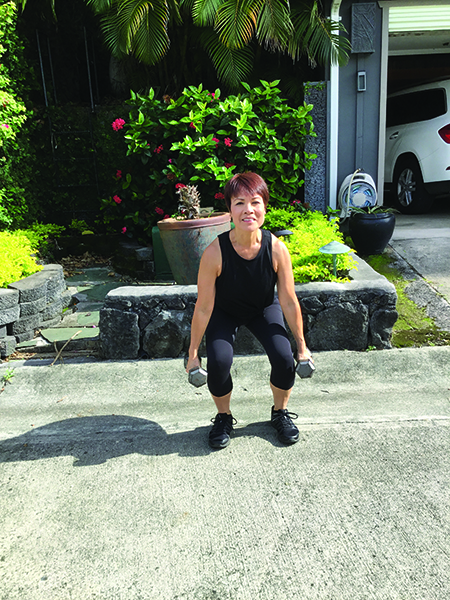
    So now we know that strength training is important. If you have access to some weights or bands, use them. If you don’t have weights, get creative! Water bottles, filled gallon jugs and even bottles of wine will do.

    Be careful not to overexert yourself. Steady breathing and good form are important.
    Be careful not to overexert yourself. Steady breathing and good form are important.

    How Many Reps are Best?

    More repetitions at lower weights? Or lower repetitions at higher weights? If you are an active person, you’ll want to aim to use a weight/resistance band that really challenges you at a maximum of 15 reps. The lower the reps to get to the point of muscle exhaustion, the better. So if you are just  beginning to exercise, start with the higher reps and a lower weight.

    Good: maximum of 15 reps, 2 to 4 sets
    Better: 8 to 12 reps, 2 to 4 sets
    Best: 6 to 10 reps, 2 to 4 sets

    Be conscious of your limits. Pain in your joints means stop.
    Be conscious of your limits. Pain in your joints means stop.

    Focus on doing exercises using multiple joints and the big muscles of your body.
    • Squats or chair squats
    • Lunges or deep walks
    • Dead lifts
    • Bent-over rows or pull-ins using bands
    • Lat pulls or pullups (use assistance if needed)

    As a bonus, resistance training also helps build bone density. Aim for two to three sessions a week for 30 to 60 minutes a day for best results. Just remember, some activity is better than none! And be sure to take it slow. Awareness and self-focus is key to exercising safely.


    FRAN PATOSKIE
    CPT, GFI, Certified Fascianation Method Practitioner
    808-349-5598 | franpatoskie@gmail.com

    Sarcopenia is age-related loss in muscle mass. Although muscle mass declines 1 to 2 percent per year after age 50, exercise can reduce this loss. Resistance training using bodyweight, machines or weights is the most effective way of building muscle. Sarcopenia makes exercising more difficult, which unfortunately, makes you want to exercise less, contributing even…