Category: Date

  • WARNING: ‘Aging in Place’ Homes

    Many seniors are aware of the Long-Term Care Ombudsman Program and its role as their advocate if they have a problem or concern regarding a nursing home, adult residential care home, assisted living facility or community care foster family home.

    What they may not know, however, is that if they choose to live in what is called an “aging in place” facility, residents are very much on their own. The Long-Term Care Ombudsman Program does not have access to these facilities, and their “renters” are not protected by federal or state regulations that govern licensed settings.

    There is some debate as to whether or not these homes are actually “unlicensed” care homes taking advantage of loopholes in the current law. But there is no debate that AIG Homes have:

    • No annual inspection by the Department of Health.
    • No public posting of the inspection by the
      Department of Health.
    • No TB clearance requirements for the caregivers or staff.
    • No building or fire code requirements or plans regarding emergency evacuations.
    • No access to the Ombudsman or consumer protection.

    Since these homes are not licensed, and don’t want to be licensed, another significant concern is this: Why would a social worker, case manager, doctor, nurse or other professional make such a recommendation? Do they bear some liability if the person is abused, mistreated or neglected?  Would healthcare providers, such as Kaiser or HMSA, place a patient in an unregulated, unmonitored home?The Long-Term Care Ombudsman Program has already received complaints about loved ones being denied access. A man called complaining that his relative was in an “aging in place” home, and every time he visited, she would have new, mysterious bruises. He complained to the caregiver, but to no avail. Then he noticed the caregiver started covering up the bruises in various ways to hide them. He took pictures and sent them to the person with the placement responsibility over his relative who, unfortunately, didn’t live in Hawaii. That person forwarded the pictures to the caregiver, and she immediately banned the man from visiting. He called our Office to request help, as he is the only relative on the island and hasn’t been allowed to visit since April.
    He wanted to know if I could do anything to lift the ban. Sadly no. Our Office can’t do anything because the home is unlicensed. Representatives from our Office could be arrested for trespassing on private property.

    Most of us believe if you are taking care of someone in your home for a fee — and that person is not related to you — then you need to be licensed by the state, so we can try to ensure your safety. Licensed facilities are regulated by laws, which allow the state to do what is necessary to ensure the safety and security of our residents through compliance with building and safety codes, health inspections, emergency plans, care plans, medication management, and training and experience for caregivers.

    The “aging in place” model is not licensed and doesn’t allow for these safeguards. Until they do, they should be shut down.


    DO YOU HAVE COMPLAINTS AND QUESTIONS?

    Please call John G. McDermott, the State Long-Term Care Ombudsman, at 808-586-7268 or refer to the Department of Health’s website at www.health.hawaii.gov/ohca/state-licensing-section/.
    Many seniors are aware of the Long-Term Care Ombudsman Program and its role as their advocate if they have a problem or concern regarding a nursing home, adult residential care home, assisted living facility or community care foster family home. What they may not know, however, is that if they choose to live in what…

  • The Many Facets of Dementia

    Alzheimer’s Disease and dementia — isn’t that the same thing? The simple answer is no.

    Dementia is an umbrella term for the different types of diseases that affect the brain. Alzheimer’s Disease is only one form of dementia.
    Also on the list we have Lewy body dementia, alcohol-related dementia, frontal-temporal dementia, Parkinson’s-related dementia, and so on.

    Dementia is ultimately brain failure. Like other organ failures, you can expect the brain to gradually regress over time, and some diseases progress faster than others. This gradual decline of cognitive function is the main culprit behind the many, and sometimes violent, behavioral changes that accompany this disease.

    Teepa Snow (www.teepasnow.com), one of my mentors, has transformed the way we think about dementia with her Positive Approach® to Care philosophy. As a registered occupational therapist with over 30 years of hands-on experience, Teepa has reinvented the varying stages of dementia by introducing her GEMS® model (Sapphire, Diamond, Emerald, Amber, Ruby and Pearl). Each GEMS state reflects a different stage of dementia with an emphasis on what the person is still able to do rather than what cognitive functions are lost. Nevertheless, as a person living with dementia goes through the GEMS cycle, behaviors remain problematic.

    Dementia attacks the left side of the brain more aggressively than the right. The left hemisphere is where we hold language capabilities — comprehension, vocabulary and speech production. When we have limited language skills, we unconsciously rely on behaviors to communicate.

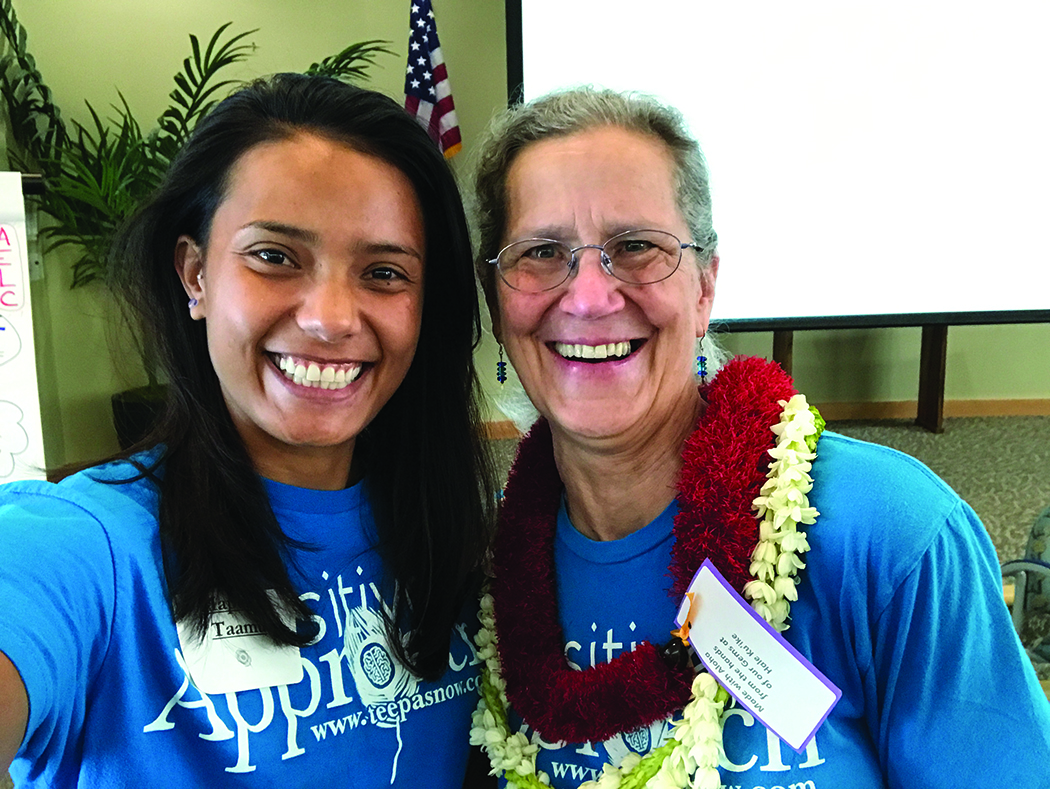
    Author Mapuana Taamu with her mentor Teepa Snow, founder of the Positive Approach® to Care philosophy.
    Author Mapuana Taamu with her mentor Teepa Snow, founder of the Positive Approach® to Care philosophy.

    Think about 3-year-olds. Do they tell you that they are tired and need a nap, or do they kick, scream and throw a tantrum? This is how people living with dementia communicate. With diminished language skills, they have difficulty verbalizing what they want or need, so they end up showing you through their behaviors.

    It takes a lot of detective work to understand these behaviors! Ultimately, it is the duty of their caregiver to adjust and adapt to the ever-changing brain. To give care successfully requires lots of patience paired with trials and numerous errors. But as time goes by, the “uh-oh’s” will eventually turn into “ah-ha’s!”


    Mapuana Taamu is a professional, family caregiver specializing in dementia. She owns and operates Memory Friends, a companionship, respite and consultation service for seniors. She also is a “Certified Positive Approach® to Care” Trainer. Reach her at:  808-469-5330  |  mfriends808@gmail.com

    Alzheimer’s Disease and dementia — isn’t that the same thing? The simple answer is no. Dementia is an umbrella term for the different types of diseases that affect the brain. Alzheimer’s Disease is only one form of dementia. Also on the list we have Lewy body dementia, alcohol-related dementia, frontal-temporal dementia, Parkinson’s-related dementia, and so on. Dementia is…

  • Coping with Holiday Sibling Strife

    Seek help when caring for aging parents, especially during the busy holiday season.
    Seek help when caring for aging parents, especially during the busy holiday season.

    The search for holiday perfection can set the bar high for caregivers. Starting as early as Thanksgiving, they’re flooded by images of families happily enjoying one another. And why not? As a home healthcare provider, we know family support goes a long way for parents aging in place. But when adult siblings are involved, they also can have their differences on parents’ needs. Left unchecked, these differences can bring out the best and worst in family relationships – especially during the holidays.

    The demands of caregiving can challenge sibling rivalries and shift the focus away from parent care. When this happens, family members sometimes find themselves arguing over past wounds. Siblings not on good speaking terms may dwell on negative pasts.

    “The holidays can bring back all of the pecking-order stuff that siblings thought they could forget,” says Wika Puuohau, RN, Client Service Supervisor at Attention Plus Care. “It can return adults back to small-kid time.”

    A sibling who is less active with caregiving also may seem distant and react with more anger or blame toward other siblings. Sometimes, this is an attempt to avoid facing the eventual passing and loss of a terminally ill parent. On the other hand, a more involved sibling may react differently and express more sadness or grief. When caregiving duties for a parent begin, one sibling also may take over as the primary caregiver and cause disagreements among siblings about who is in charge. The more involved, active caregiver is now at risk for burnout, while the other sibling takes a backseat to watch the show. “That’s when I put my coaching hat on,” Puuohau adds.

    These situations can add to the stress and resentment siblings already may have for one another, brought on by the holidays, interfering with the priorities of caring for parents. Siblings not talking with one another, or not wanting to keep others informed about their parents’ condition, also can hinder important information from getting to a healthcare provider. So how can family members and siblings work together to care for parents? Here are tips for siblings during the holidays:

    ♥ Make time for sibling communications.

    ♥ Share realistic expectations and goals.

    ♥ Keep lines of communication open.

    ♥ Seek to understand first instead of blame.

    ♥ Get input from those affected by decisions.

    ♥ Accept family as they are and not as you wish.

    ♥ Seek common ground during calmer times.

    ♥ Use an objective party to facilitate disputes.

    ♥ Be thankful and share gratitude with others.

    Adult siblings caring for parents can make the most of their time and efforts together. With preparation, the holidays can be a time for new traditions and positive experiences for siblings. It also can be a chance for rivals to be on better terms with one another for years to come. Now that’s a gift our parents really want!


    ATTENTION PLUS CARE HOME HEALTHCARE
    Accredited by The Joint Commission

    1580 Makaloa St., Ste. 1060, Honolulu HI 96814
    808-739-2811  |  www.attentionplus.com

    AGING IN HAWAII EDUCATIONAL OUTREACH PROGRAM by Attention Plus Care — a program providing resources for seniors and their families, covering different aging topics each month. For class information and upcoming topics, call 808-440-9356.

    The search for holiday perfection can set the bar high for caregivers. Starting as early as Thanksgiving, they’re flooded by images of families happily enjoying one another. And why not? As a home healthcare provider, we know family support goes a long way for parents aging in place. But when adult siblings are involved, they…

  • Prevent Rat Lungworm Disease

    In late September, an infant from Hawai’i Island was confirmed as the state’s 17th case of rat lungworm disease. Caused by a roundworm parasite, it can have debilitating effects on a person’s brain and spinal cord. The disease is endemic to the state and spreads when rodents pass larvae of the worm in their feces, which then is eaten by snails and slugs.

    Rat lungworm disease cannot be spread from person-to-person. Humans become infected by accidentally consuming snails or slugs, sometimes hidden on unwashed produce. People also can get the disease from eating under-cooked snails, freshwater prawns, crabs and frogs.

    The Puna toddler was infected likely after accidentally consuming a slug or snail. The Hawaii State Department of Health (DOH) is reminding parents, grandparents and caregivers to closely supervise young children, making sure they are not ingesting slugs, snails or other objects from the ground.

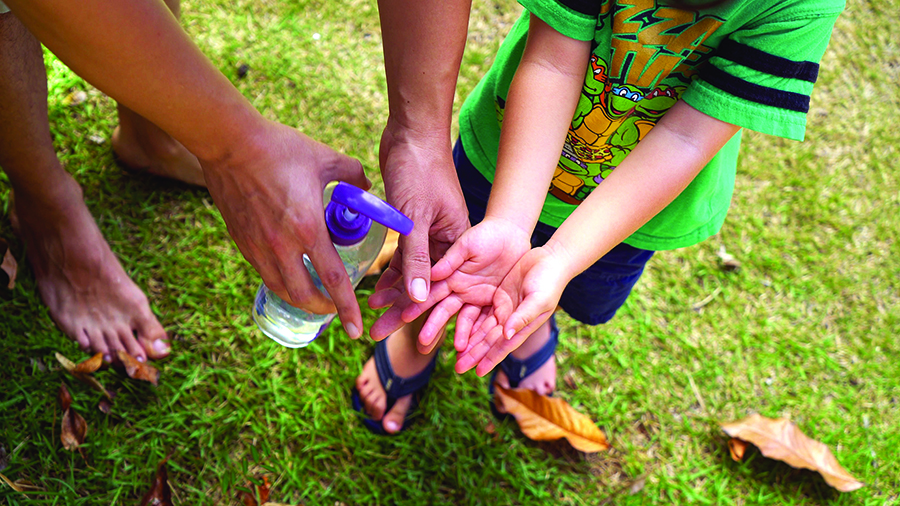
    “As caregivers, we have to watch what children might be sucking and chewing on, and help them properly wash their hands using soap and clean water after playing, whether indoors or outdoors,” says Health Director Dr. Virginia Pressler.

    Many kūpuna enjoy spending time in their backyards and gardens. To reduce the risk of rat lungworm disease, everyone is encouraged to eliminate slugs, snails and rats in their home gardens and around their properties.

    Important safety tips include:

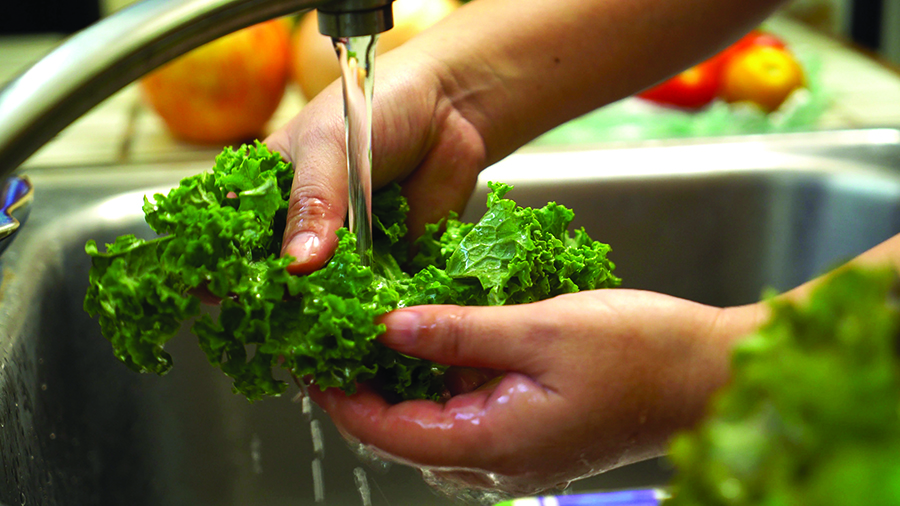
    • Carefully wash produce un-der potable running water, especially leafy greens, to remove any tiny slugs or snails.
    • Cook food thoroughly by boiling for 3 to 5 minutes or heating to 165 degrees Fahrenheit for 15 seconds.
    • Cover water catchment tanks and containers.
    • Place a nozzle on watering hoses and keep off the ground to prevent slugs and snails from entering.
    After playing, help grandchildren wash their hands with soap and clean water.
    After playing, help grandchildren wash their hands with soap and clean water.
    Always wash produce thoroughly under potable running water before consuming. Pay careful attention to leafy greens.
    Always wash produce thoroughly under potable running water before consuming. Pay careful attention to leafy greens.

    SYMPTOMS:

    See your doctor if you have severe headache, neck stiffness, fever, tingling or pain in the skin or extremities.


    HAWAI‘I STATE DEPARTMENT OF HEALTH
    Disease Investigation Branch

    808-586-8362  |  Info Line 808-586-4400
    www.health.hawaii.gov


    In late September, an infant from Hawai’i Island was confirmed as the state’s 17th case of rat lungworm disease. Caused by a roundworm parasite, it can have debilitating effects on a person’s brain and spinal cord. The disease is endemic to the state and spreads when rodents pass larvae of the worm in their feces,…

  • Seeing and Feeling is Believing

    In my previous articles in Generations Magazine, I’ve had the chance to share the wonder, power and fact that “the right kind of water” is key to maintaining an optimum health profile. Here is a review of the past articles, which can be found in articles published on this website.

    February 2016
    “Water Does Matter”

    Not all waters are created equal. Ionized water is best for the body, according to this article that addresses common misconceptions about water.

    April 2016
    “Why Drink More Water?”

    I discuss the importance of drinking enough water daily, how the body loses water, how much water is lost on a daily basis and the devastating and life-altering effects of dehydration.

    June 2016
    “Inflammation and Aging: Fluid Problems”

    This article identifies the relationship between aging chronic diseases and inflammation, which is the root cause of “old age” aches and pains, fatigue and aging skin. Dr. Hiromi Shinya, the father of modern colonoscopy and a world-renowned author and gastrointestinal specialist, recommends drinking a special, ionized alkaline water.

    August 2016
    “Doctors Say So”

    I quoted and took excerpts from articles featuring five medical professionals, including doctors, patent holders, researchers and authors. All stress the importance
    of drinking ionized alkaline water.

    October 2016
    “What I Learned From
    Dr. McCauley”

    This article features Dr. Bob McCauley, a naturopathic doctor, master herbalist and certified nutritional consultant, and his views on ionized alkaline water.

    December 2016
    “You Are What You Drink”

    The high level of interest I received from a past article “Doctors Say So” led me to write another piece highlighting four other medical professionals and their views on ionized alkaline water.

    The professed power and health benefits of ionized alkaline water can be difficult for many people to understand or believe.

    But seeing and feeling is believing.

    In terms of life span, ionized water is very sensitive. The most important property of ionized water is its “negative electrical charge,” also known as its antioxidant property. Once ionized water is produced, the negative electrical charge in the ionized water turns positive within 24 to 48 hours.

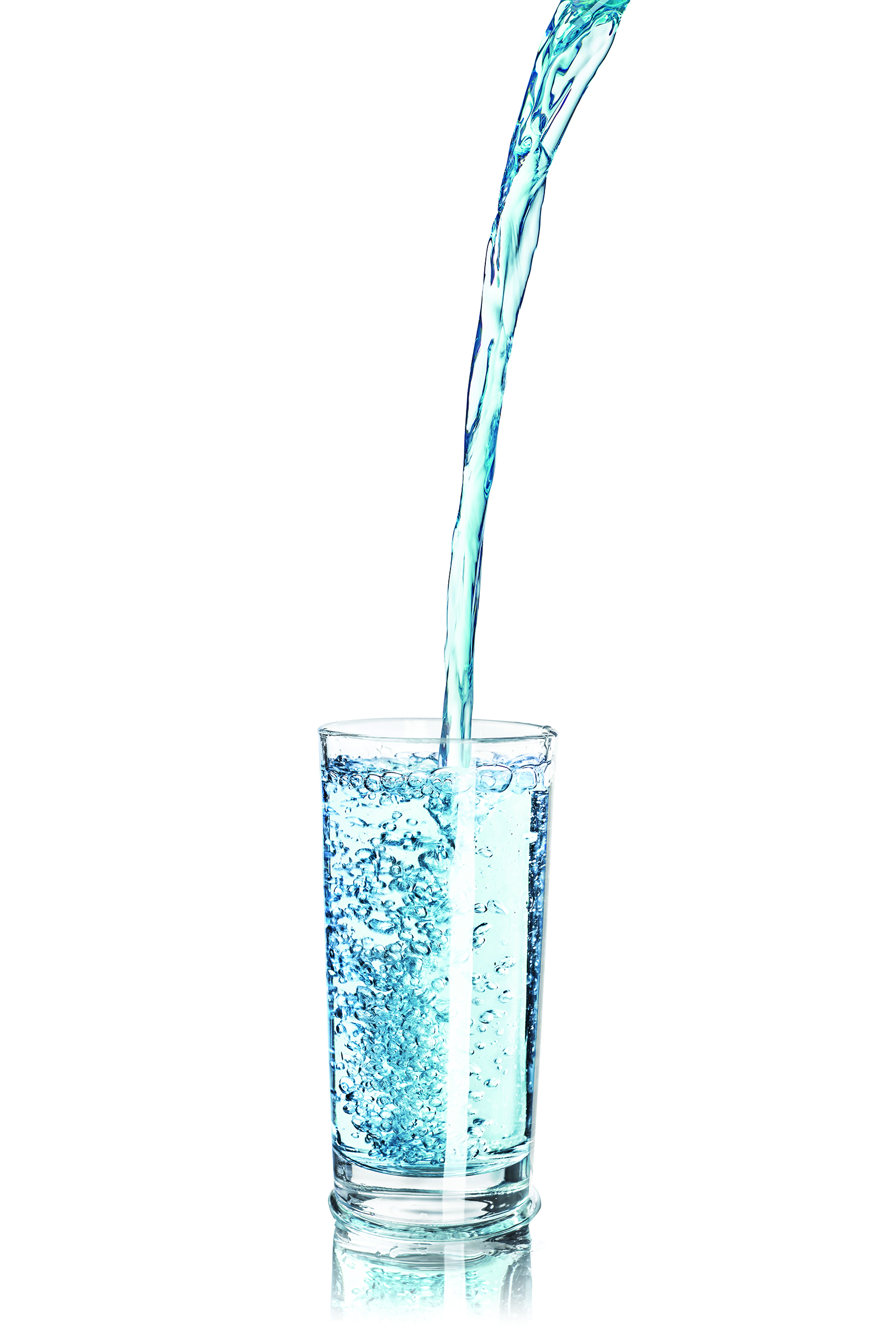
    For someone to truly experience the maximum benefits of the ionized water, one needs to drink the water as fresh as possible.


    Enagic USA INDEPENDENT DISTRIBUTOR

    Alan Matsushima
    808-384-7354  |  trader_808@yahoo.com

    Woody Kobayashi
    808-223-2613  |  woody18k@msn.com

    In my previous articles in Generations Magazine, I’ve had the chance to share the wonder, power and fact that “the right kind of water” is key to maintaining an optimum health profile. Here is a review of the past articles, which can be found in articles published on this website. February 2016 “Water Does Matter”…

  • Stretch Away Your Stress

    Adults of all generations, from millennials to baby boomers and “maturers,” struggle with managing stress. Life can often be chaotic. When we are stressed, the body releases hormones adrenaline and cortisol. This increases heart rate and blood pressure, and interferes with sleep, which is vital for body repair, restoration and emotional balance.

    When severely stressed, tension usually is held in the shoulders, head and neck. Tension restricts blood flow, which leads to tightness in muscles. If not treated, the muscles will shorten over time, causing headaches and pain.

    The good news is that there are simple techniques to help reduce stress. According to the Mayo Clinic, stretching increases blood flow to the muscles and aids in circulation, allowing muscles to relax. Stretching also promotes circulation of new blood to the brain, resulting in mood elevation. Deep breathing while stretching increases oxygen consumption, slows heart rate and lowers blood pressure, which incites relaxation of the body.

    So, take time out of your busy schedule to listen to your body. The more you stretch, the better you will feel overall.

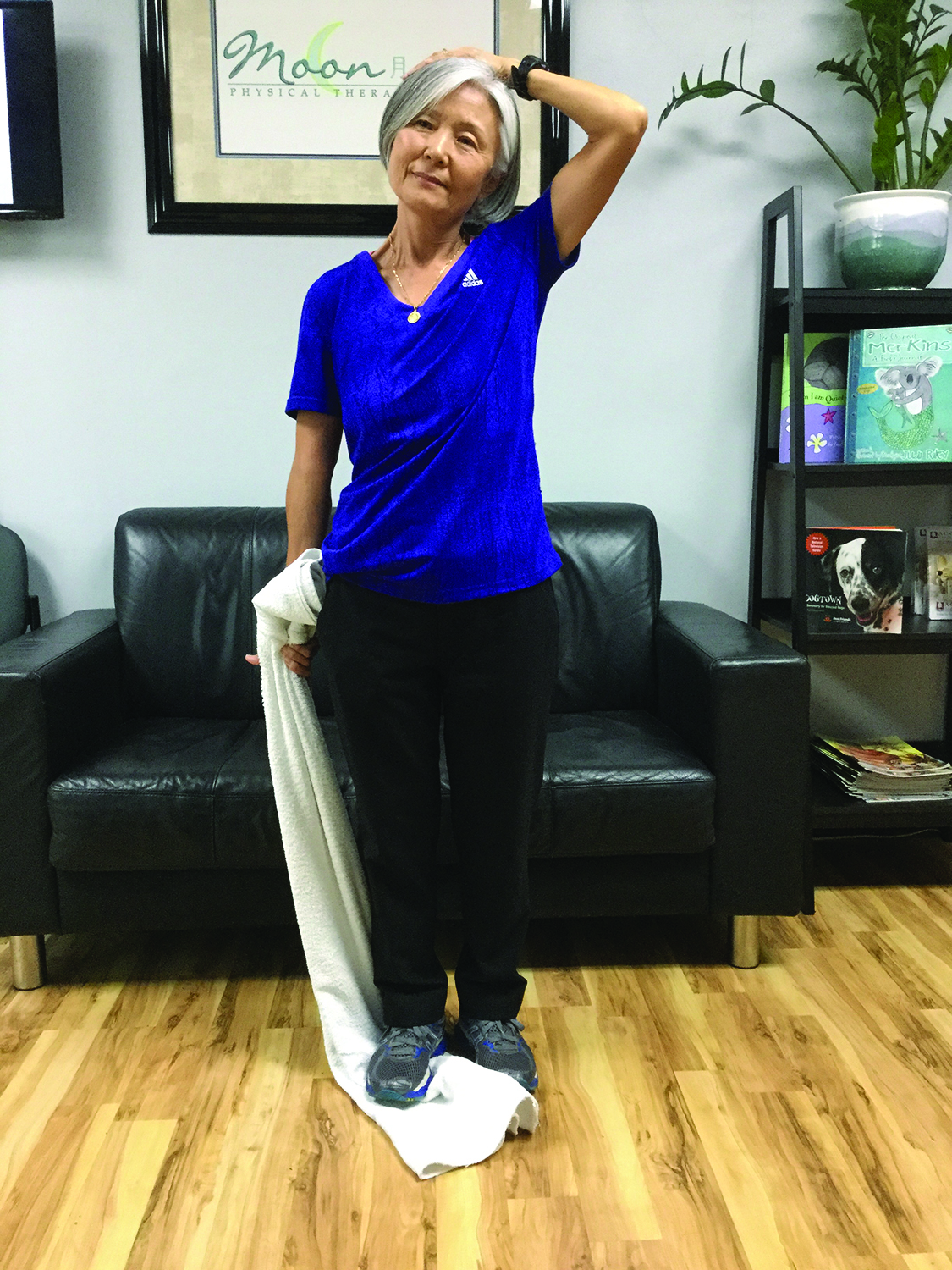
    • Stand on a towel and hold it taut with one hand.
    • Grasp your head and gently pull to one side.
    • Use the towel to hold the shoulder down and rotate the arm out, opening the chest area. This provides a deeper stretch in the neck, chest and shoulder.
    • Breathe deeply in through the nose and out through the mouth. Hold for 30 seconds and then switch.

    Moon Physical Therapy, LLC
    320 Ward Ave., Ste. 107, Honolulu HI 96814

    Aquatic, Land-based and Manual Therapy and Cardiopulmonary Rehab Programs

    808-597-1005 | www.moonpt.com
    Like me on Facebook: Moon Physical Therapy, LLC

    Adults of all generations, from millennials to baby boomers and “maturers,” struggle with managing stress. Life can often be chaotic. When we are stressed, the body releases hormones adrenaline and cortisol. This increases heart rate and blood pressure, and interferes with sleep, which is vital for body repair, restoration and emotional balance. When severely stressed,…

  • What Is Auricular Medicine?

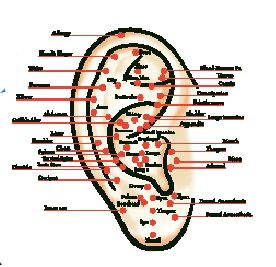
    Auricular medicine is a highly developed, independent system of medicine recently rediscovered and revived as a major modality in the Chinese healthcare system. Thousands of years ago, it was discovered that the ears themselves contain nerve and acupuncture points corresponding to many areas and regions of the body. By stimulating these points, positive changes in the corresponding area can be created.

    In China over the past 2,000 years, the ears have been used to treat and diagnose diseases. However, the art of auricular medicine goes far beyond improving one’s health. The ears — when examined closely by a trained practitioner — can yield tremendous insights into the nature of a person’s body and constitutional type.

    This, in turn, gives the practitioner insights into the potential conditions, patterns and dysfunctions in the client’s body before symptoms may manifest. Over 400 points in the ear correlate to almost every system and functional process in the body. Treatment with auricular medicine is simple and painless. It can be used to assist with almost any chronic condition as a helpful adjunct therapy to any other modality.

    As an expanding body of knowledge, auricular medicine uses modern medical technologies, such as micro current, magnetic fields and electrical detection. This builds upon the ancient foundational knowledge and advances the understanding of how body systems work in an integrated, holistic way to promote better health.


    LUNA ACUPUNCTURE & WELLNESS LLC

    503-853-2866 | James@LunaAcupunctureWellness.com
    www.LunaAcupunctureWellness.com

    Auricular medicine is a highly developed, independent system of medicine recently rediscovered and revived as a major modality in the Chinese healthcare system. Thousands of years ago, it was discovered that the ears themselves contain nerve and acupuncture points corresponding to many areas and regions of the body. By stimulating these points, positive changes in…

  • Why So Many Email Accounts?

    What would happen if cybercriminals took control of your email account? They would have access to all the services and people you communicate with.

    These criminals will be able to impersonate you, drain your financial nest egg and ruin your life!

    To protect yourself, I encourage you to have more than one email account.

    Before I go any further, take the time to look at your email’s inbox. Note who you are communicating with: Family members, financial institutions, physicians, Social Security Administration, social groups, Medicare, etc.

    Do you have secure, strong passwords for your email account? I talked about this in the last issue of Generations Magazine (October/November 2017).

    As important as it is to have strong passwords, you have to have more than one email account to avoid putting your eggs in one basket.

    Having separate email accounts for different purposes will prevent you from losing everything if your email account has been compromised.

    I strongly recommend at least one separate email account for the following tasks:


    To communicate with family and close friends.


    As a member of professional groups, civic and business organizations (Rotary clubs, etc.)


    Online banking, transferring funds, automatic deposits and payments.


    Online shopping and credit card purchases (PayPal, CitiCard, VISA, MasterCard and
    Amazon, etc.)


    Social media (Facebook and
    Instagram).


    A public email account that you don’t mind sharing with others. Use this when visiting  websites that require an email account.

    Don’t be tempted to use your online banking email account for online shopping, as shopping accounts tend to receive more spam (unsolicited email) and are targeted by online scammers. Your biggest challenge is to strictly adhere to one email account for its designated use.


    THE DEPARTMENT OF THE PROSECUTING ATTORNEY
    1060 Richards St., Honolulu HI 96813

    808-768-7400  |  Office hrs: Mon – Fri, 7:45 am – 4:30 pm
    www.honoluluprosecutor.org/contact-us/

    What would happen if cybercriminals took control of your email account? They would have access to all the services and people you communicate with. These criminals will be able to impersonate you, drain your financial nest egg and ruin your life! To protect yourself, I encourage you to have more than one email account. Before…

  • Athletes After 60: Charlene & Larry Gearing

    Larry Gearing was riding his bicycle up a hill toward his home in 2006 when he felt chest pains. A doctor’s test revealed that, six months prior, he most likely had a silent heart attack causing a blocked artery. After undergoing cardiac rehabilitation, Larry and his wife, Charlene, decided to get fit and healthy.

    Using the online fitness program, “Training Peaks,” the Gearings worked with virtual coaches to create weekly exercise and diet plans. Their dedication soon paid off. Larry ran his first 5K race and 100-mile bike ride. Charlene shed 30 pounds and completed a 5K race.

    Their next goal? Triathlons!

    At first, Larry joined Charlene at triathlons — but only from the sidelines. “He was my sherpa,” she jokes.

    Inspired by his wife’s grit, Larry began training with her. “I felt guilty driving around in a car that had event stickers on it, for [sporting] events I hadn’t participated in,” he recalls.

    Since then, the Ko Olina couple has trained for dozens of races and events. Charlene completed her first triathlon in 2009 at age 57, represented Team USA in the 2014 International Triathlon World Championship in Canada, and finished a Half Ironman in 2016, among her many outstanding accomplishments.

    Larry completed his first triathlon in 2012, at age 62. That, plus the 8-mile Great Aloha Run, 60-mile bike rides, two Hapalua Half-Marathons and the 10K XTERRA.

    They’ve hit roadblocks along the way. Charlene’s first 5K run ended in a pulled hamstring muscle, plantar fasciitis and physical therapy. The swim portion of Larry’s second triathlon in 2013 sent him to the emergency room with a flash pulmonary edema and bypass surgery. His heart is stronger now, thanks to an implanted defibrillator in his chest.

    “All of these things have not stopped Larry from being a good runner,” Charlene says with pride.

    Charlene and Larry’s Fit Tips:

    • Fill your daily diet with whole grains and colorful fruits and vegetables; avoid processed foods.
    • For nutrition tips, learn about the HMSA Blue Zones Project® (www.hawaii.bluezonesproject.com)
    • If personal training is not affordable, hire a
      virtual coach on “Training Peaks” to reach fitness
      and nutrition goals. Track your progress on a smartwatch, mobile device or computer.
    • Combine weekly exercises with weight training, flexibility and balance, and cardio-endurance, such as running, swimming, walking or biking.
    • Inspire others to be healthy and active; set fitness goals, and surround yourself with supportive, positive people.

    Larry Gearing was riding his bicycle up a hill toward his home in 2006 when he felt chest pains. A doctor’s test revealed that, six months prior, he most likely had a silent heart attack causing a blocked artery. After undergoing cardiac rehabilitation, Larry and his wife, Charlene, decided to get fit and healthy. Using…

  • The Search Is On for the 2018 Lei Queen!

    Do you know any kūpuna women who are skilled in hula and lei-making, love the Hawaiian culture and live the spirit of aloha? If so, encourage them to apply for 2018 Lei Queen.

    The City’s Department of Parks and Recreation, which organizes the program, selects court members from different age groups to celebrate phases of life.

    The 2018 court will feature Nā Kūpuna (the Elders) and reflect the theme, “Alohi Kea — the brilliant white lei, the platinum of kūpuna.”

    There is no age limit, but applicants must be at least 61 years young by Saturday, March 3, 2018.

    The 2017 Lei Queen and Court (from left): First Princess Pauline Leinā‘ala Robello, Queen Perle Puamōhala Kaholokula and Princess Ada Kalikokalehua Cooke. Photo by Dave Miyamoto
    The 2017 Lei Queen and Court (from left): First Princess Pauline Leinā‘ala Robello, Queen Perle Puamōhala Kaholokula and Princess Ada Kalikokalehua Cooke. Photo by Dave Miyamoto

    2018 LEI QUEEN

    Application deadline:
    Friday, Jan. 5, 2018

    Court selection event:
    Saturday, March 3, 2018; McCoy Pavilion, Ala Moana Regional Park; free event

    91st Annual Lei Day
    Celebration:
    Tuesday, May 1,
    Kapi‘olani Park

    Contact:
    Call 808-768-3041 or visit www.honoluluparks.com

    Do you know any kūpuna women who are skilled in hula and lei-making, love the Hawaiian culture and live the spirit of aloha? If so, encourage them to apply for 2018 Lei Queen. The City’s Department of Parks and Recreation, which organizes the program, selects court members from different age groups to celebrate phases of…

  • The Holiday Blues

    It’s hard to imagine how the holidays could be anything but joyous. Yet, for many, this time of year can trigger the holiday blues — temporary feelings of sadness or anxiety. Feeling blue is completely normal, though there are a few easy way you can boost your mood.

    Be selective. Increased outings can cause unnecessary stress. Be selective about the events you attend so that you can enjoy each holiday gathering to its fullest.

    Simple activities can prevent burnout during the holidays.
    Simple activities can prevent burnout during the holidays.

    Manage expectations. Alleviate the pressure of the holidays by finding ways to celebrate with-
    out burning yourself out. For example, prepare a special dish instead of undertaking the entire holiday meal.

    Create new memories. Balance old memories by creating new ones. Starting a new holiday tradition is a great way to positively build up anticipation for the season.

    Find good company. Pick up the phone and call a family member. Visit with an old friend. Invite your neighbor over for lunch. Sometimes, just
    being in good company is enough to improve your mood.

    Schedule downtime. For every activity you plan, pencil in some downtime. Looking after your health will keep you feeling refreshed and energetic all-season long.


    HOME CARE by ALTRES MEDICAL

    808-591-4930  |  www.altresmedical.com

    It’s hard to imagine how the holidays could be anything but joyous. Yet, for many, this time of year can trigger the holiday blues — temporary feelings of sadness or anxiety. Feeling blue is completely normal, though there are a few easy way you can boost your mood. Be selective. Increased outings can cause unnecessary stress. Be…

  • Three Tips for a Cleaner Home

    The average person, especially kūpuna, spends 90 percent of his or her time indoors. Therefore, a clean, safe indoor environment is paramount.

    Uncirculated air and tightly constructed buildings can trigger allergies, asthma and illnesses.

    Traditional housecleaning methods do not cut it anymore. Some cleaners contain harmful toxins like ammonia, phenol, ethanol, formaldehyde, butane and propane.

    Lately, there is a movement toward “chemical-free cleaning” in facilities serving the elderly population. Here are some good cleaning practices for your own home.

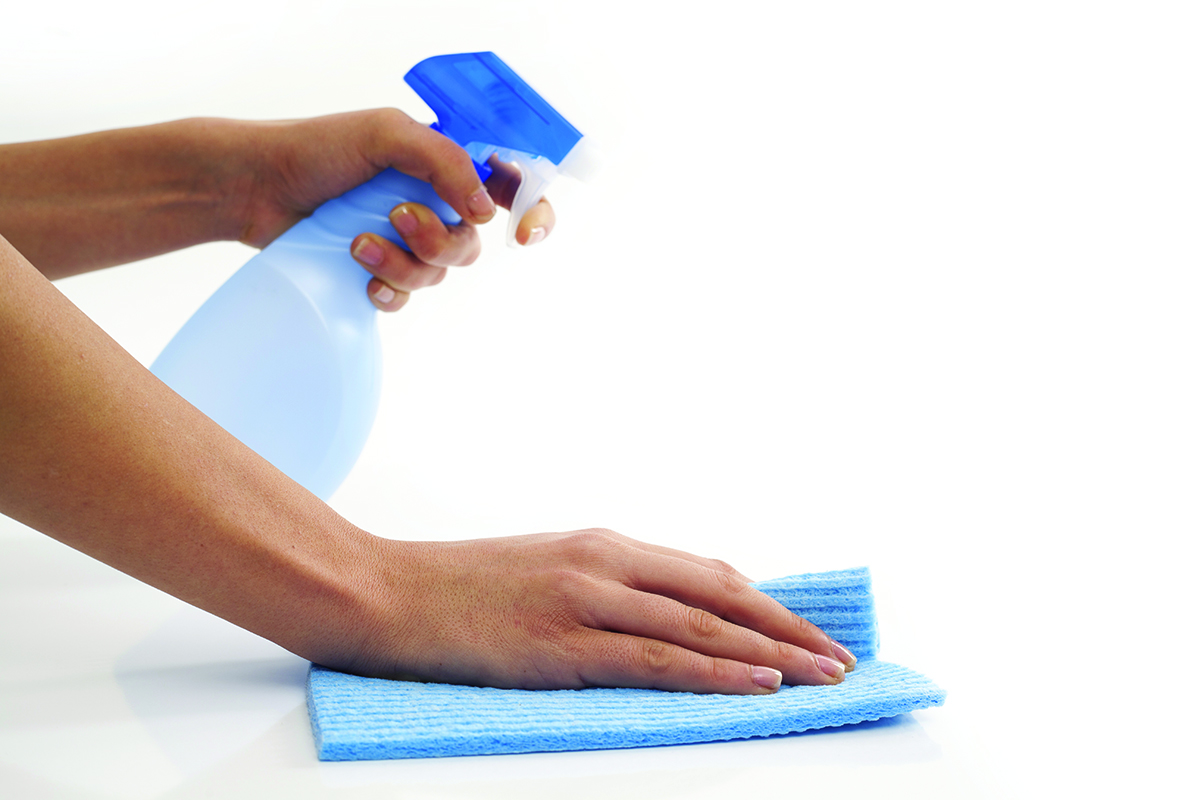
    • Use microfiber cloths and flat mops. The ultra-fine materials trap dirt, debris and moisture better than paper towels and rags. Traditional string mops drag dirt around floors and contaminate water-filled buckets.
    • Use a spray bottle with a twist nozzle and “streaming” feature similar to a water gun.
      Or, soak the cloth in a chemical-free cleanser before wiping.
    • Prior to wiping, fold the cloth eight times. Unfold as you wipe, using a different section for each surface to prevent cross-contamination.

    CLEAN PLUS SYSTEMS II
    Provides cleaning services and education for care homes, hospitals, hotels, schools and more.

    808-678-8021 | www.rosegalera.com

    The average person, especially kūpuna, spends 90 percent of his or her time indoors. Therefore, a clean, safe indoor environment is paramount. Uncirculated air and tightly constructed buildings can trigger allergies, asthma and illnesses. Traditional housecleaning methods do not cut it anymore. Some cleaners contain harmful toxins like ammonia, phenol, ethanol, formaldehyde, butane and propane.…