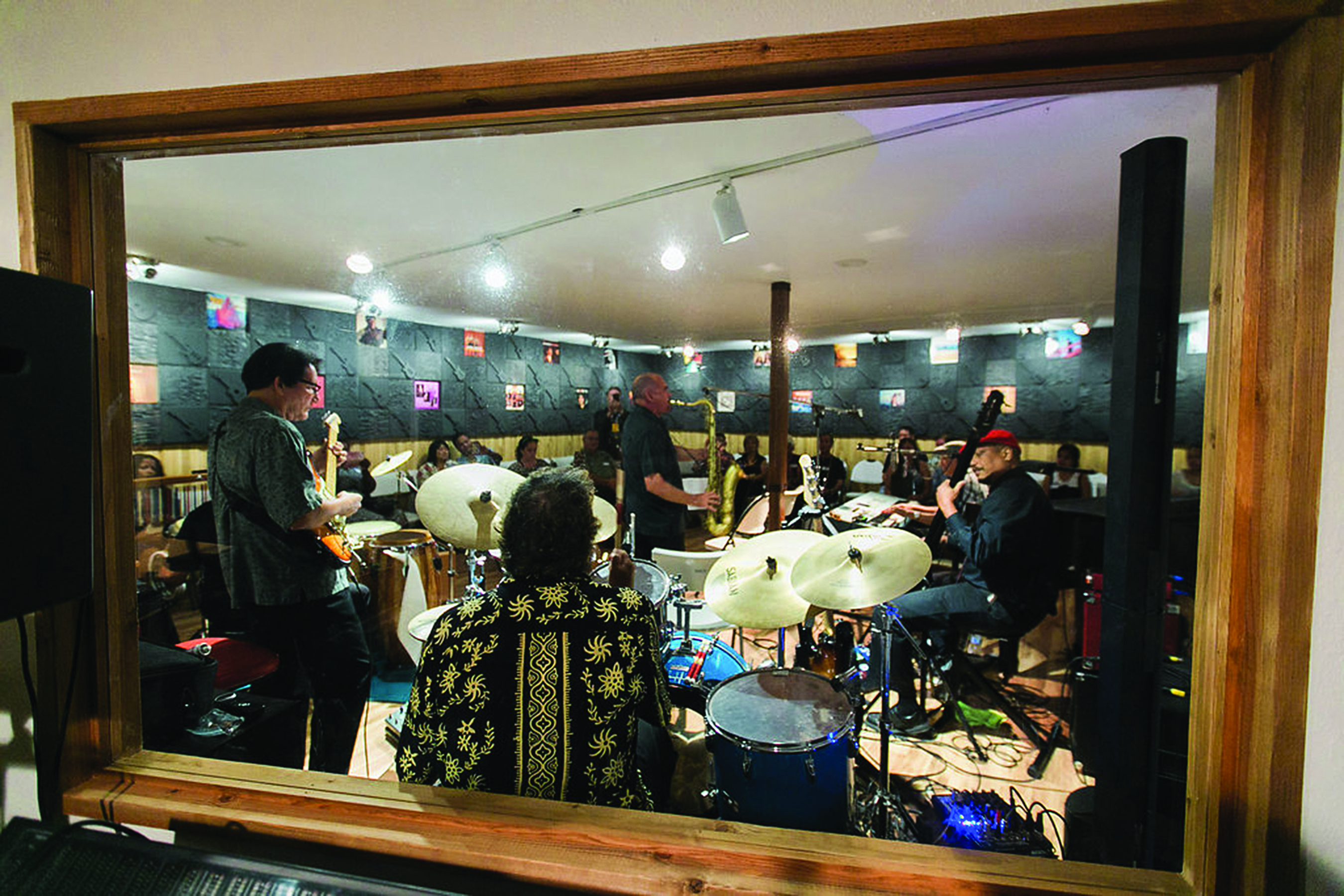
The Honolulu Museum of Contemporary Pop presents music from the past 50 years and offers educational tours to school groups and music aficionados. The museum also is used for private parties and events.
What do Don Ho, Bette Midler, Cecilio & Kapono, Glenn Medeiros and Bruno Mars all have in common?
They’re contemporary music stars with global recognition. And they all have Hawai‘i ties.
The Honolulu Museum of Contemporary Pop celebrates these local stars and dozens more of the same caliber with weekly, nighttime concerts that take place inside a recording studio located on Beretania Street.
The “Inside Session” concerts, performed eight times per weekend, feature the best of Hawai‘i’s contemporary pop tunes over the past 50 years.
Jazz, soul, R&B, folk, pop and funk music are part of the nightly mix. What often brings down the house, however, are hit tunes by Hawai‘i’s own Cecilio & Kapono.
The brainchild behind “Inside Session” is Kirk Thompson — an original member of the contemporary Hawaiian music band Kalapana and founder of the legendary group Lemuria.
“My mission is to document and preserve that movement for the next generation,” Thompson said. During the concerts, Thompson also pays tribute to his good mentors, the late singer Don Ho and concert and music promoter Tom Moffatt.
“Tom was such a cool-headed guy, bringing in big concerts like Michael Jackson,” Thompson said. “And I learned a lot from Don and Tom. As a record producer for Don ‘Mr. Aloha,’ he always helped those who wanted to record, and my job was to help him help others do a good job for him,” he said.
The pop museum falls under the nonprofit group, Hawaii National Music Foundation of the Pacific. As part of the nonprofit’s mission, Thompson and his team provide educational tours for students and music aficionados of all ages. Tour groups learn about the recording industry, receive tips from the pros and even take shots at recording their own music.
Lining the wall of the museum are more than two-dozen record albums, dubbed the “Pioneers of Pop” exhibit. Visitors are invited to take self-guided tours of the wall, using state-of-the-art, multilingual tablets.
Thompson is proud of the records. “To be signed to a major record deal and get off the island in the 1960s and 1970s was a tremendous thing.”
HONOLULU MUSEUM OF CONTEMPORARY POP
800 S. Beretania St., Ste. 140, Honolulu HI 96813
What do Don Ho, Bette Midler, Cecilio & Kapono, Glenn Medeiros and Bruno Mars all have in common? They’re contemporary music stars with global recognition. And they all have Hawai‘i ties. The Honolulu Museum of Contemporary Pop celebrates these local stars and dozens more of the same caliber with weekly, nighttime concerts that take place…
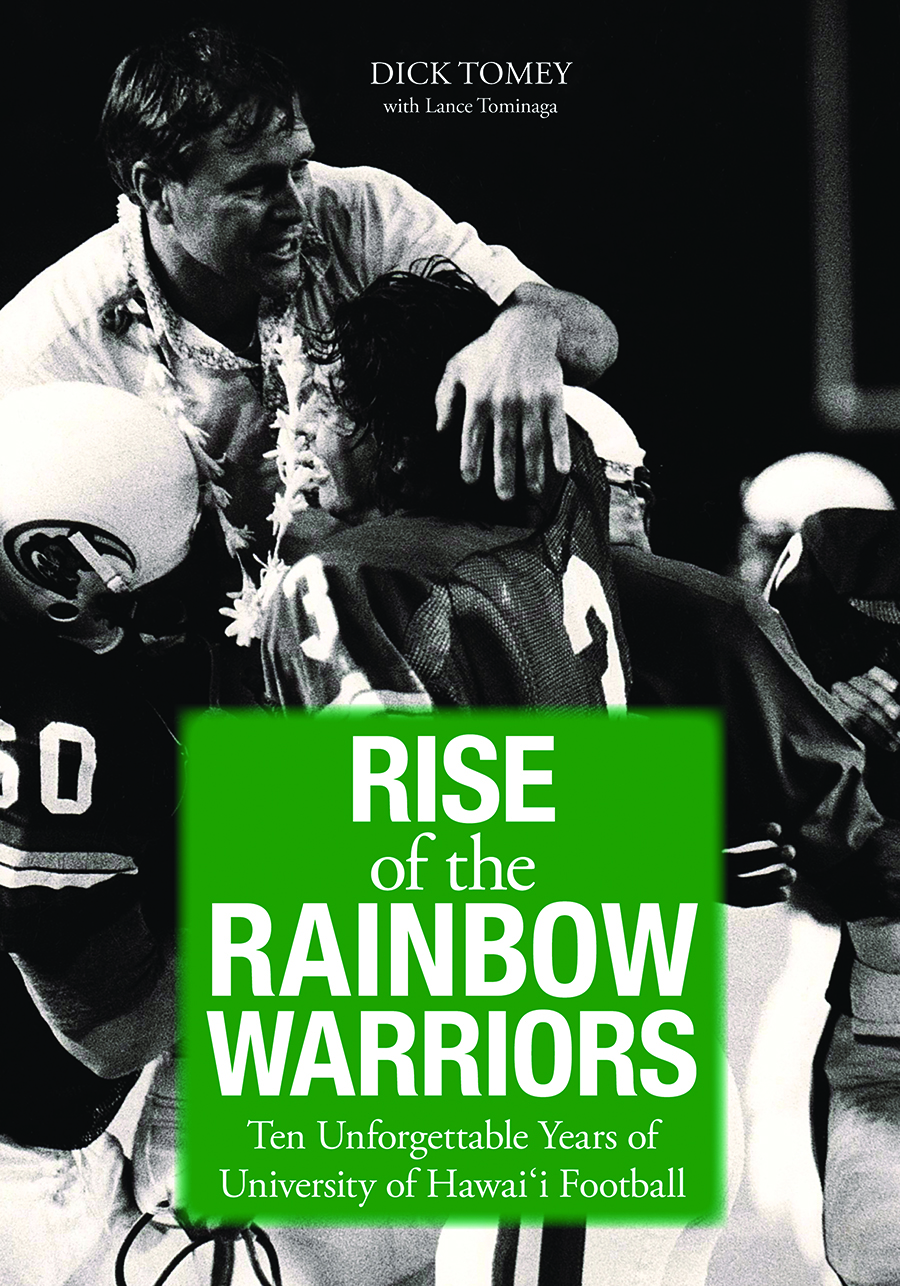
The fervent spirit of University of Hawai‘i football during the era of Coach Dick Tomey (1977–86) is captured in a new book, Rise of the Rainbow Warriors: Ten Unforgettable Years of Hawai‘i Football, scheduled for release in late October. It was a time when UH was new to the Western Athletic Conference and loyal fans regularly filled Aloha Stadium.
Co-written by Coach Tomey and Honolulu author Lance Tominaga, Honolulu ESPN1420 web editor, the book features 40 photos and interviews with hundreds of players, including Jesse Sapolu, Jeff Duva, Rich Miano, Dana McLemore, Blane Gaison, Gary Allen and Niko Noga.
“UH fans will enjoy the book because of the behind-the-scenes stories Coach Tomey and his players share,” Tominaga said.
Coach Tomey spoke with Generations Magazine from his home in Arizona:
GM: What was it like reconnecting with more than 150 former UH football players?
Tomey: It was amazing. That chapter is one of my favorites. To reconnect over a subject that is dear to their hearts was invigorating. It was so gratifying to hear about their impact on society. Readers will enjoy reading about what they are up to.
GM: What else in the book might longtime UH fans find interesting?
Tomey: The first season, described in detail, is important in how everything started. I was appointed coach and took the job in June 1977—not optimal for a season that started in September. The team didn’t have time to practice and was coming off a rough season. I didn’t have time to recruit many players and select a coaching staff. And I was a young, new coach with no reputation taking on a difficult job. Expectations were low.
GM: How are past football fans different from today’s generation?
Tomey: It’s more difficult for UH today because we can sit in our homes and watch 10 games on TV on Saturdays. In those days, it really didn’t matter who we played or whether we won or lost the previous week. The fans were there, they stayed late and their enthusiasm was boundless. We all could feel the energy and fed off of it.
GM: What else have you been up to lately?
Tomey: My wife, Nanci Kincaid, and I live in
Tucson. We have four adult children and eight grandchildren. We’re just Papa and Tutu. We’re blessed with good health. I’m going to be 80 years old next summer.
Tomey is planning to visit Honolulu in October for book signings and public appearances. Details are available at www.bookshawaii.net.
The fervent spirit of University of Hawai‘i football during the era of Coach Dick Tomey (1977–86) is captured in a new book, Rise of the Rainbow Warriors: Ten Unforgettable Years of Hawai‘i Football, scheduled for release in late October. It was a time when UH was new to the Western Athletic Conference and loyal fans…
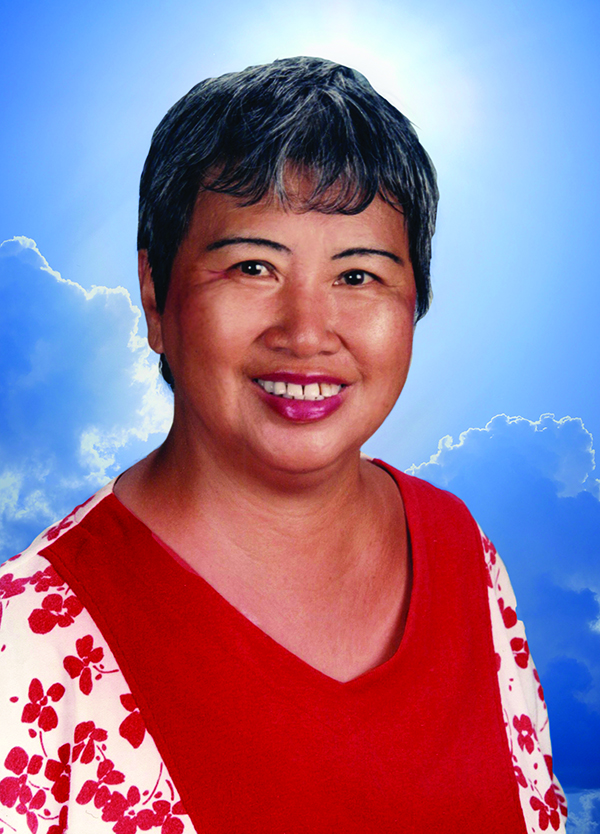
Alice Yee, Michael Yee’s mother, passed away on July 25, surrounded by caring family members.
On a Sunday morning this past July, Alice Hu Chew Yee, 81, asked her family to gather by her hospital bed, where she expressed her love to each member, listened to her favorite music played by her son and son-in-law, and helped to plan her own funeral, right down to flower arrangements.
The next day, doctors put her on a morphine drip to eliminate any discomfort. She passed away Tuesday, July 25, at peace that her family was ready for her departure.
It was “a good death,” says Alice’s son Michael Yee. “Mom had deep faith and embraced dying the same as living, no fear, only love. Because of this, we could embrace it together.”
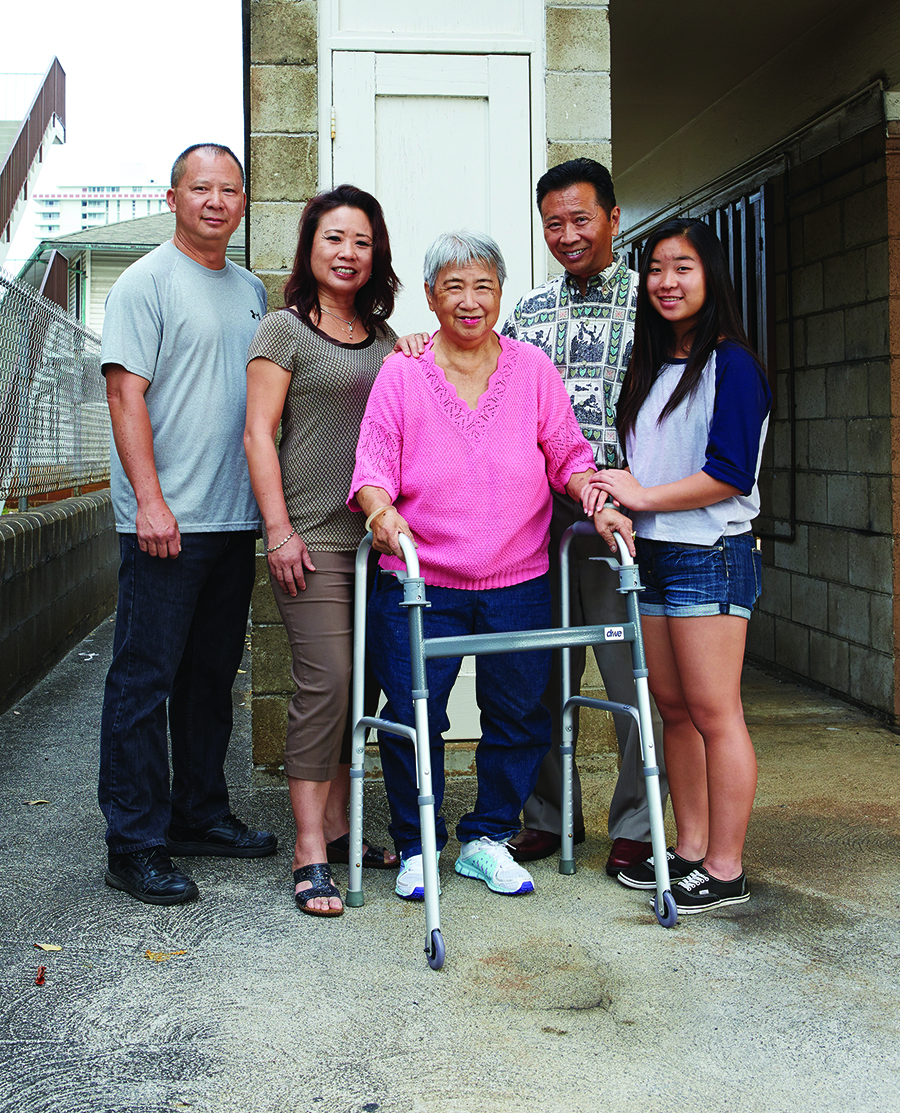
In addition to Michael, Alice left behind two sons Malcolm and Milton, daughter, Tammy, and their spouses and four grandchildren. Alice also had lived independently for decades before moving in last year with Tammy, who shared primary caregiving duties with Michael’s family. In the months leading up to her death, Alice developed fluid in her lungs and suffered complications from a weak heart.
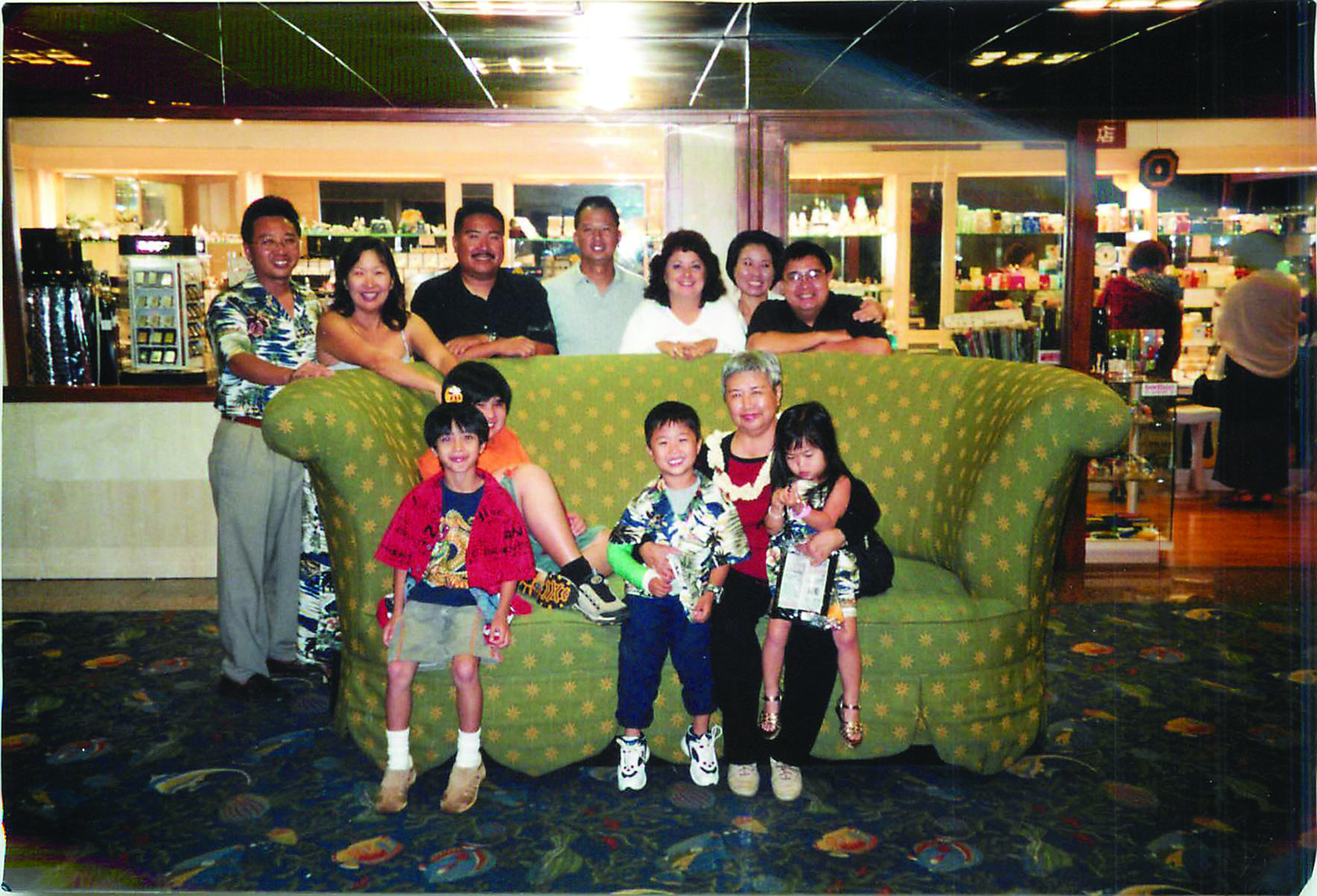
PHOTOGRAPHS OF LORRI MISAKI’S, MICHAEL YEE’S & PAMELA AH-NEE’S FAMILIES
Even in her final hours at the hospital, however, Alice taught valuable lessons.
“Mom gave people something to shoot for — I know now what a good death looks and feels like,” says Michael, an Ameriprise financial advisor who specializes in retirement and end-of-life planning.
Michael shares three lessons reinforced by his mother’s passing:
“Retirement isn’t just about travel and the grandkids.” There will come a time when most of us will need care by families and/or professionals.
Many families in Hawai‘i are not ready for health issues such as dementia or long-term care. When planning for retirement, consider long-term care planning and estate planning. Take a holistic approach.
Be proactive (not reactive) about retirement and end-of-life situations. Talk to family members about “not just the good times,” but the “hard times and crisis.” Put everyone on the same page.
Generations Magazine first featured Michael Yee’s family in the June-July 2015 issue where he shared his caregiving experience. To read the original story, visit online at www.generations808.com/june-july-2015/.
On a Sunday morning this past July, Alice Hu Chew Yee, 81, asked her family to gather by her hospital bed, where she expressed her love to each member, listened to her favorite music played by her son and son-in-law, and helped to plan her own funeral, right down to flower arrangements. The next day,…
Volunteering — an activity that is voluntary, unpaid, structured by an organization and directed toward a community concern — is as beneficial for the older adult who engages in it as it is for those on the receiving end.
While fewer older adults volunteer compared to those who are younger, persons age 65 and over who do volunteer spend more time on it. Approximately 35 percent of older adults in the U.S. volunteer an average of 71.5 hours per year. The value of their work is not trivial, estimated at $44.3 billion per year.
The Impact of Volunteering. Older adults who volunteer reap many benefits. They experience higher levels of well-being, including better self-reported health. They have less depression and an enhanced ability to engage in daily activities. While more research is needed, some suggest that volunteering is associated with improved brain health and decline in mortality.
As the number of volunteering hours increases, so do the positive effects of volunteering, but only up to a point. Research indicates the optimal amount of time to volunteer is around 100 hours per year, or two to three hours per week. Even modest levels of engagement in volunteer activities are beneficial.
Why does it work? Volunteering provides greater health benefits compared to other types of social activities. What makes this role especially valuable is a combination of qualities and motivations specific to the role. Young adults tend to volunteer to acquire skills and to advance their careers. Older adults are more likely to volunteer to help others, stay active and replace lost roles, such as being a spouse.
The factor of “mattering” also comes into play when others rely on the volunteer who contributes to society.1
Promoting successful volunteer programs. Despite the abundant benefits, approximately 30 percent of older adults drop out of a given volunteer role after one year. What’s a health and/or social service organization to do? Various volunteer management practices have proven to be effective:2 appropriate supervision and communication, liability coverage, careful screening and matching volunteers to particular jobs, annual measurement of volunteer impact, training and professional development for volunteers, training paid staff in working with volunteers, ensuring that volunteers gain a sense of accomplishment by engaging in meaningful tasks and recognizing volunteers for their contributions.
CENTER ON AGING — University of Hawai‘i at Mānoa
2430 Campus Road, Gartley Hall, 201B, Honolulu HI 96822
Volunteering — an activity that is voluntary, unpaid, structured by an organization and directed toward a community concern — is as beneficial for the older adult who engages in it as it is for those on the receiving end. While fewer older adults volunteer compared to those who are younger, persons age 65 and over who do volunteer spend…
I’ve been researching my ancestors for about 20 years. On my Hawaiian side, I’ve gone back five generations, and three generations on my Filipino side. I get so excited when I connect the dots in my family tree and discover a new family member, because I now have a name and story to share with my grandchildren.
I’ve been blessed with three granddaughters and two grandsons. Analea, 13, loves to draw and has her own blog. Olena, 11, loves to cook and listen to my stories. Hoku, 4, who loves to talk and show me how to use her iPad, is the sole survivor of triplets. My grandsons (her brothers) Nahoa and Koa, lived a few hours.
I tell my grandkids stories about their ancestors, including Uncle Travis, my son who passed away at age 23 and loved to draw. They want to one day own some of his drawings. When we visit Hilo, I make an effort to take them to the gravesites of their ancestors. Before my father passed away in HPP, Kea‘au, I took the girls to visit him and took pictures of each of their hands holding their great-grandfather.
The author’s grandchildren Olena, 11, Analea, 13, and Hoku, 4.
A few years ago, I started a private family blog that only my husband and children can access. There, I share ancestors’ pictures and stories, journal entries from my youth, family traditions, photos of treasured items from my parents, and letters from my late grandparents. When my grandchildren are older, I will open this blog to them so they can learn about our family.
In February, I attended a genealogical convention in Utah, where I purchased four DNA kits for my family and am hoping to learn more about my family. I want my children and their future families to know where they came from and lessons that can help them in their lives. I want them to know they are connected to a rich heritage.
GENEALOGY RESOURCES
familysearch.org holds the world’s largest database of genealogical records.
ancestry.com provides DNA testing and tools to create a family tree.
myheritage.com helps people connect with others looking for the same ancestors, or who share the same DNA.
Family History Centers of The Church of Jesus Christ of Latter-Day Saints (Mormon chapels) are staffed with volunteers specialized in genealogy. For the nearest center, visit familysearch.org/locations/
I’ve been researching my ancestors for about 20 years. On my Hawaiian side, I’ve gone back five generations, and three generations on my Filipino side. I get so excited when I connect the dots in my family tree and discover a new family member, because I now have a name and story to share with…
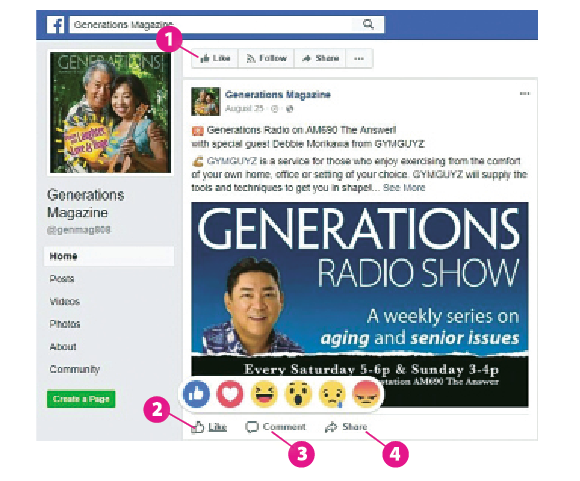
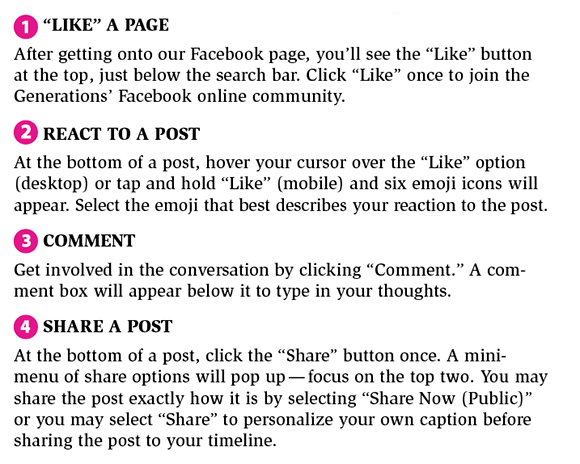
Facebook provides a convenient way for you to share and connect with your friends and family online! Get connected with Generations Magazine on Facebook for articles, events, senior tips and more. First log-in to: www.facebook.com/genmag808/
Here are quick tips to help you respond or share our postings:
Facebook provides a convenient way for you to share and connect with your friends and family online! Get connected with Generations Magazine on Facebook for articles, events, senior tips and more. First log-in to: www.facebook.com/genmag808/ Here are quick tips to help you respond or share our postings:
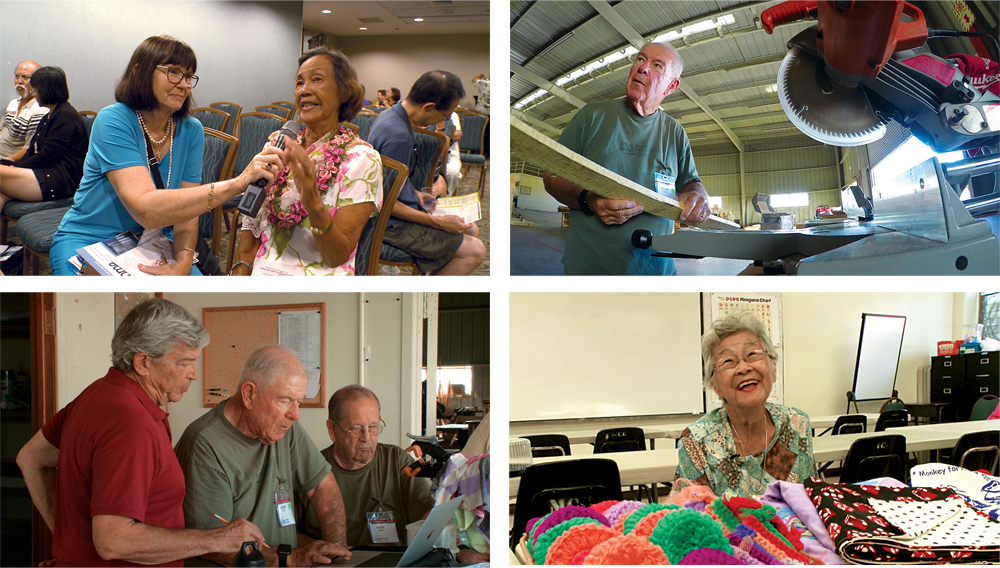
[box] “Generations Television” will cover topics that interest seniors and their families. Clockwise from left: Aging in Place Workshop, Hawaii Men’s Shed Association, and Mōʻīliʻīli Community Center[/box]
Percy Ihara, publisher and editor of Generations Magazine, is pleased to announce the debut of “Generations Television,” a bi-weekly TV show to air on Spectrum OC16 beginning Oct. 4, 2017.
Each 30-minute episode of “Generations TV,” or “GTV,” will address critical issues that matter most to seniors and their families: finances, legal topics, care giving, government programs and services for seniors, healthy living and more. Inspirational stories about Hawai‘i’s seniors will be a regular highlight of the show.
The first product of its kind in Hawai‘i, “GTV” promises to motivate, inspire, inform and draw laughs as well as a few tears from its viewers.
“Today, more than ever, Hawai‘i’s retirees and their families recognize the importance of finding resources to help them understand, plan and navigate through the process of aging,” said Ihara, a well-known advocate for seniors.
“GTV’ will be vital in assisting seniors with those challenges.
“GTV” is scheduled to air on Spectrum OC16, six days a week, subject to changes.
• Mondays, 5:30 pm
• Tuesdays, 9 am
• Wednesdays, 7:30 pm
• Thursdays, 1:30 am and 11:30 am
• Fridays, 9:30 am
• Saturdays, 2:30 pm
[box] “Generations Television” will cover topics that interest seniors and their families. Clockwise from left: Aging in Place Workshop, Hawaii Men’s Shed Association, and Mōʻīliʻīli Community Center[/box] Percy Ihara, publisher and editor of Generations Magazine, is pleased to announce the debut of “Generations Television,” a bi-weekly TV show to air on Spectrum OC16 beginning Oct.…
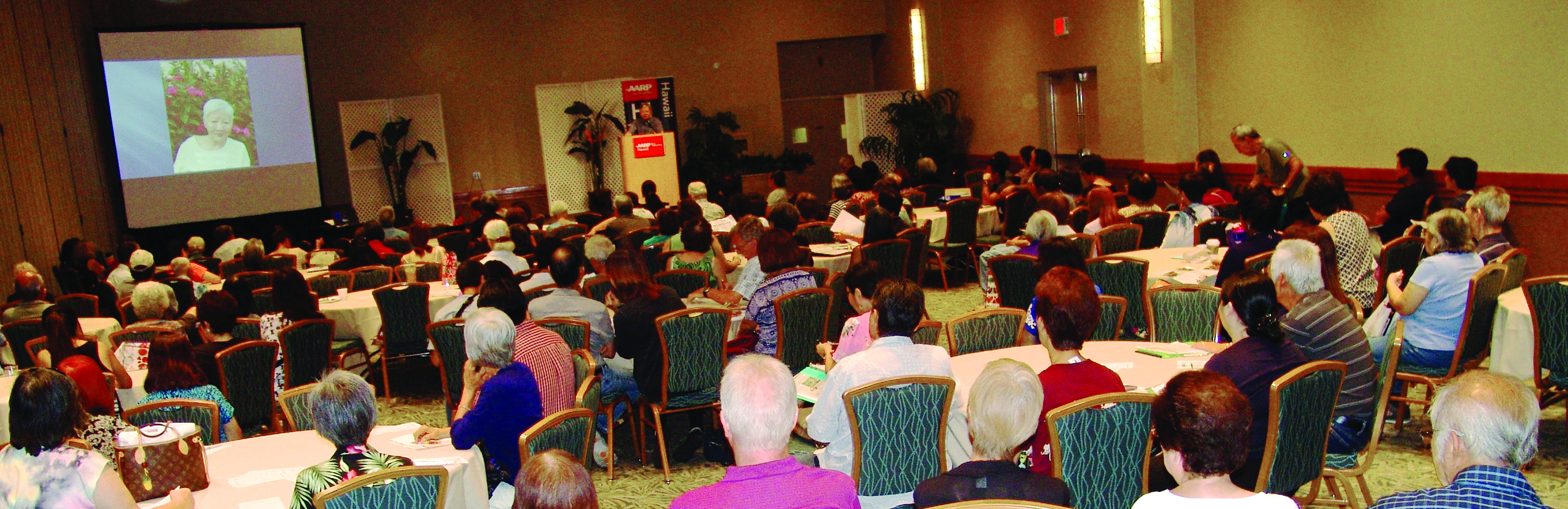
The 11th Annual Aging in Place Workshop, hosted by Generations Magazine, took place on Aug. 19, 2017, in the Ala Moana Hotel, with more than 3,000 in attendance. The free, all-day event featured speakers in estate planning, care giving, aging in place, long-term care, Medicaid and Medicare, Social Security, de-cluttering, holistic healthcare, stress-relief and much more.
Generations Magazine is grateful to its loyal partners, sponsors and readers for their support!
(Above) In between sessions, attendees filled the hallways of the Ala Moana Hotel. More than 3,000 people were at this year’s event. (Below) A well-attended session this year was, “Improving Life At Home For Caregivers & Elders” by Dr. Michael Cheang, an assistant professor at the University of Hawai‘i at Mānoa Center on Aging.
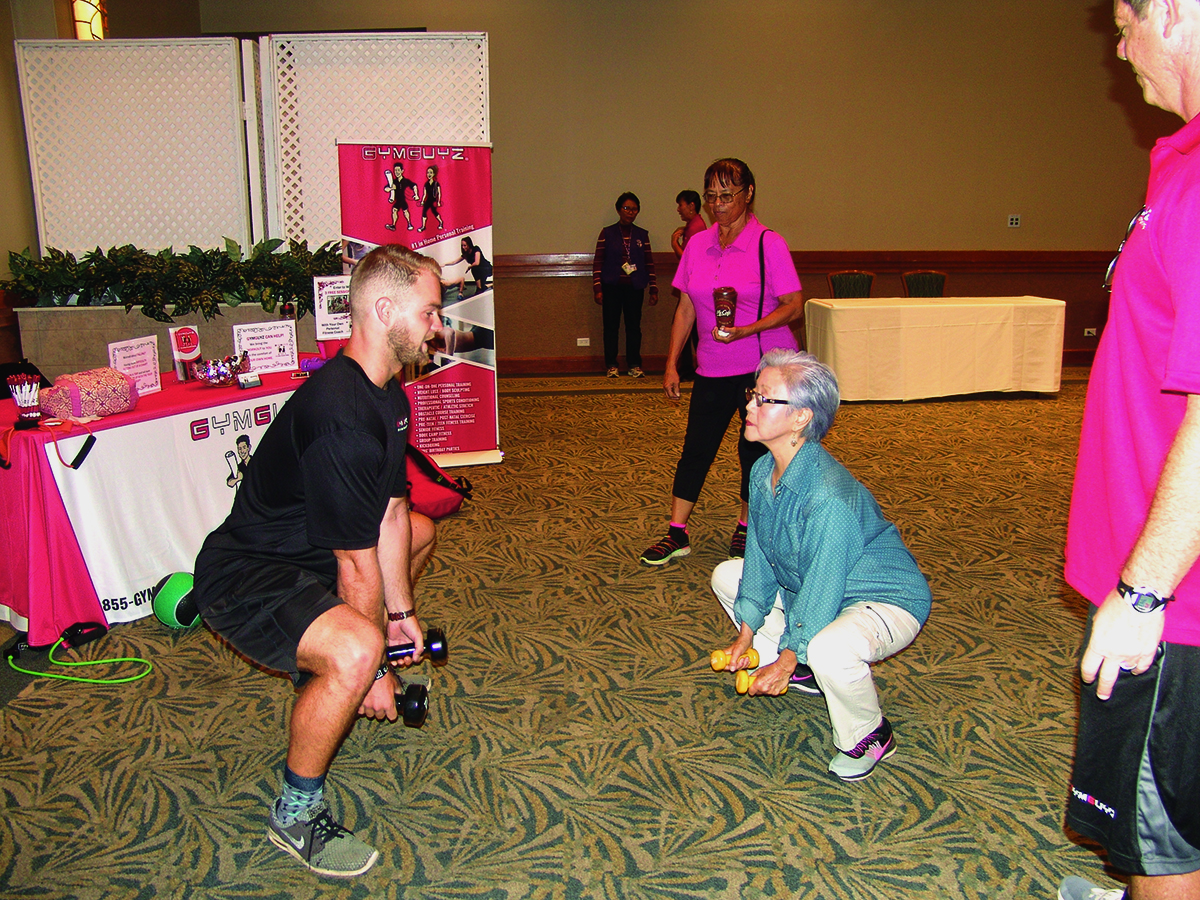
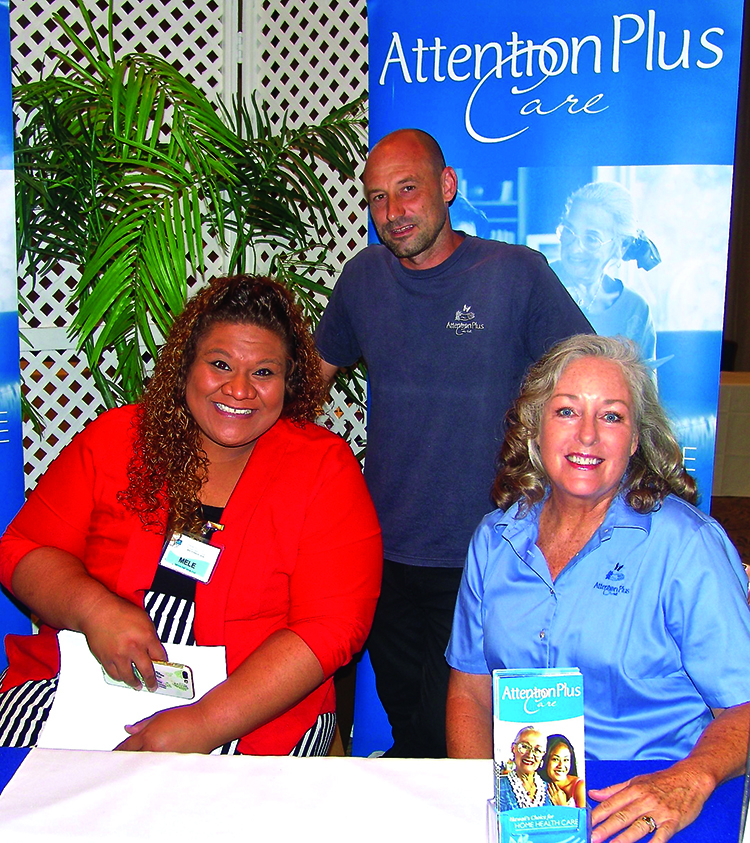
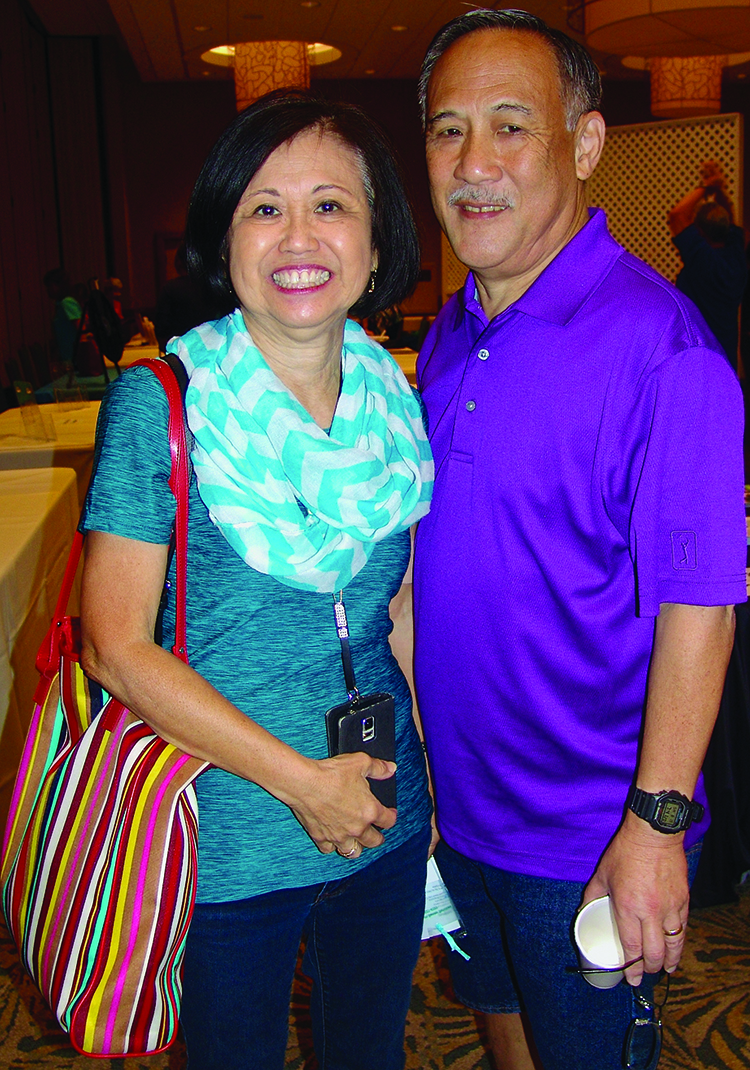
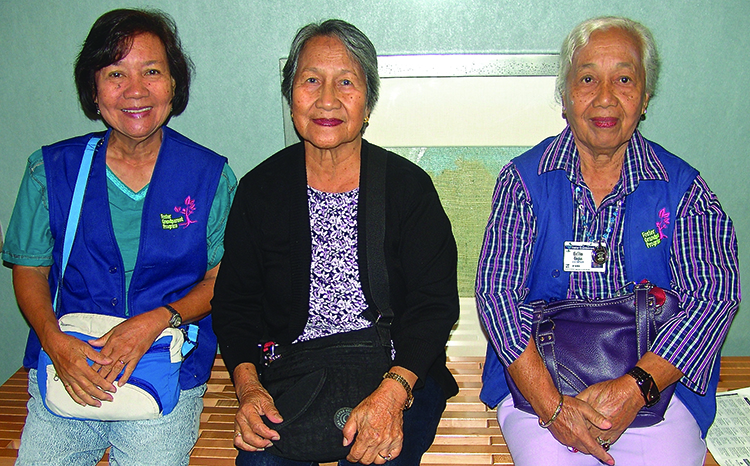
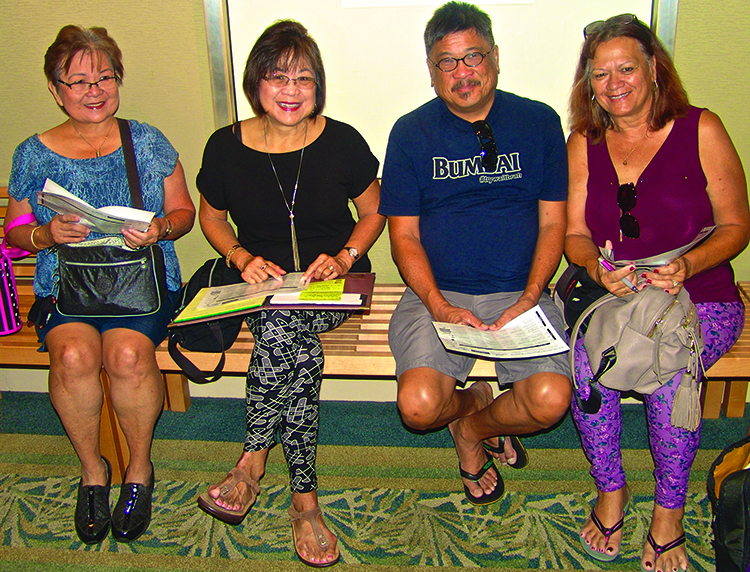
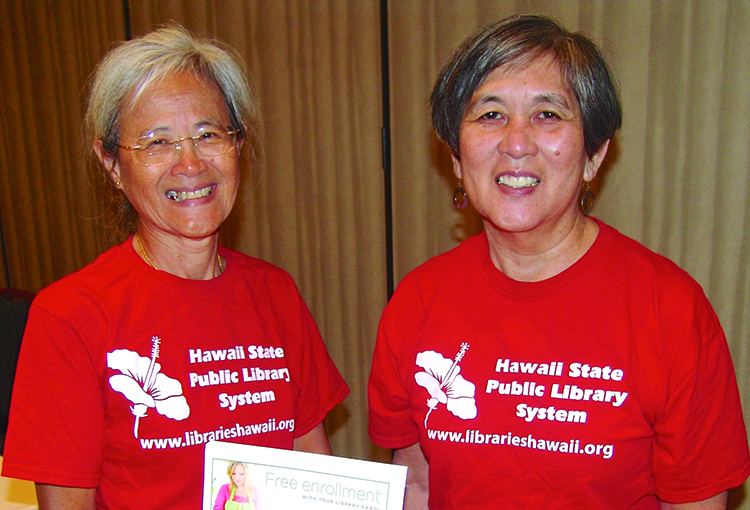
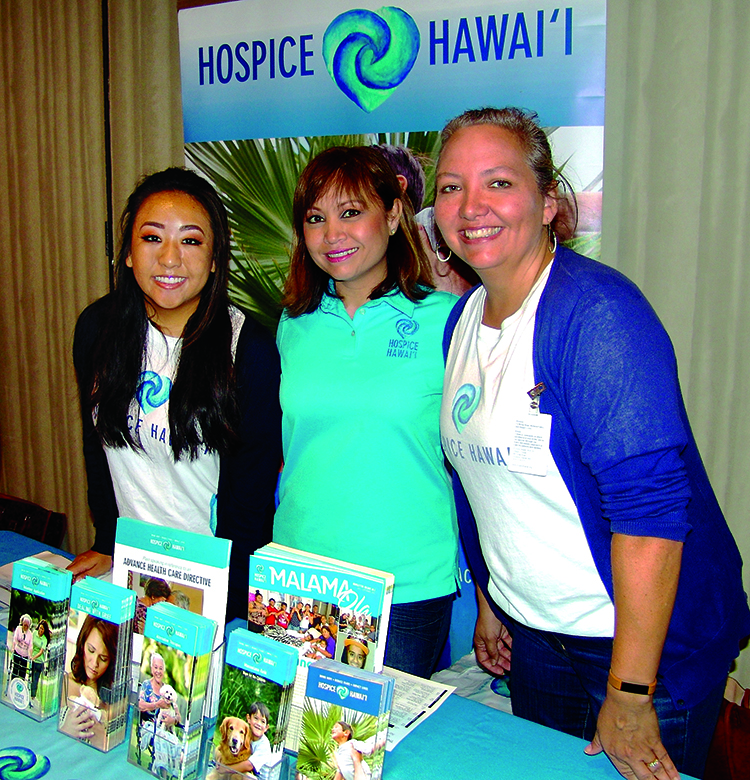
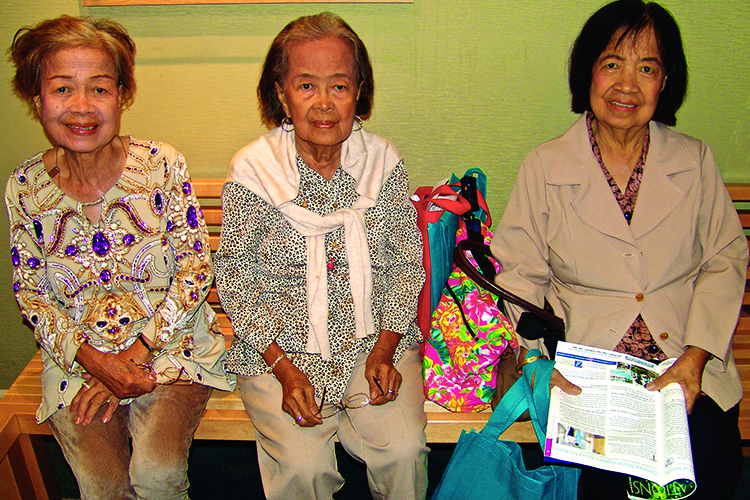
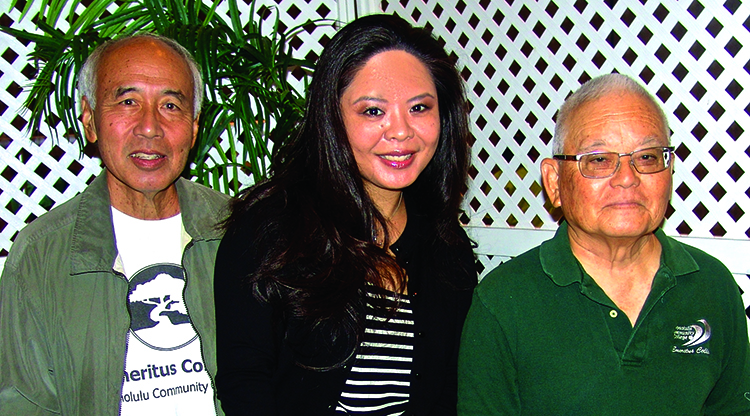
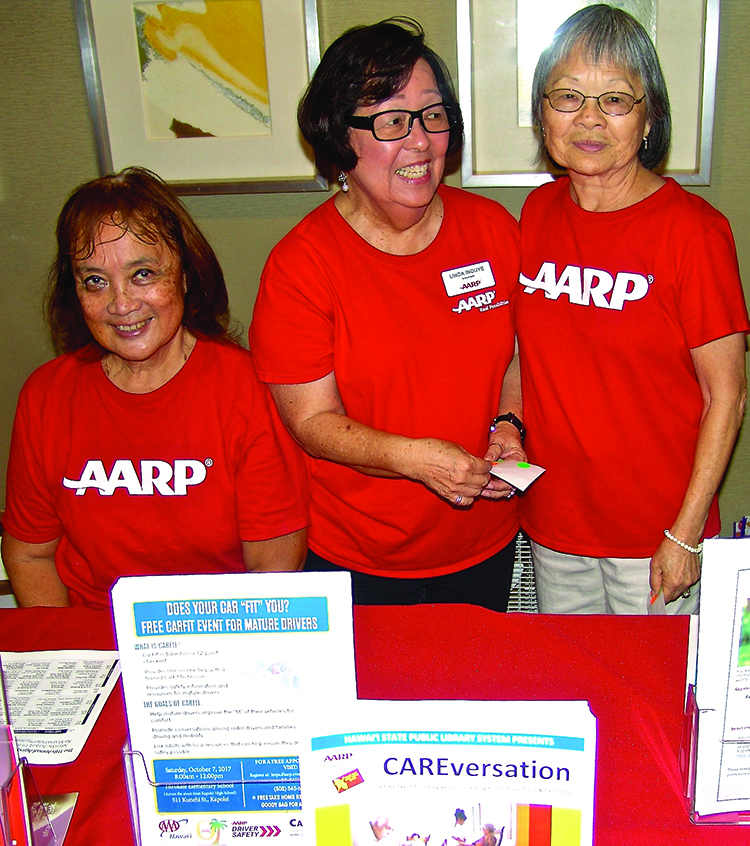
Kurtis Ackerman, a personal trainer with GYMGUYZ, did weighted squats with Joanne Pyun, while Charlotte Lyman watched. GYMGUYZ brings personal training to clients’ homes.Attention Plus Care employees provided information about home healthcare options: (L–R) Mele Toumona, Adam Funari and Eileen Phillips.In between sessions, Gail and Glenn Satsuma visited over 50 exhibitors at the Aging in Place Workshop.(L–R) Dalisay Quijano, Lolita Mendoza and Erlita Corpus volunteer 15 hours per week with the Foster Grandparents Program, assisting local children with special needs.This foursome was excited to attend all-day sessions at the Aging in Place Workshop: (L–R) Geraldine Nishihara, Donna Noguchi, Randy and Teri Chun.Employees of the Hawai‘i State Library promoted their new app and other programs for library cardholders: (L–R) Colette Young and Miriam Sato.(L–R) Cassandra Matsushige, Jean Miura and Jenny Wilkinson spread awareness about Hospice Hawai’i, a nonprofit group that assists with end-of-life care.This trio was among the first to arrive at the Aging in Place Workshop: (L–R) Felicitas Luna, Mantonia Luna and Pelagia Ramos.Honolulu Community College’s Emeritus College offers non-credit classes for seniors and folks nearing retirement: (L–R) Myron Yamashiro, Farah Doiguchi and Ed Yonemoto.The AARP table had more than a dozen volunteers throughout the day: (L–R) Pat Frank, Linda Inouye and Nancy Hironaka.
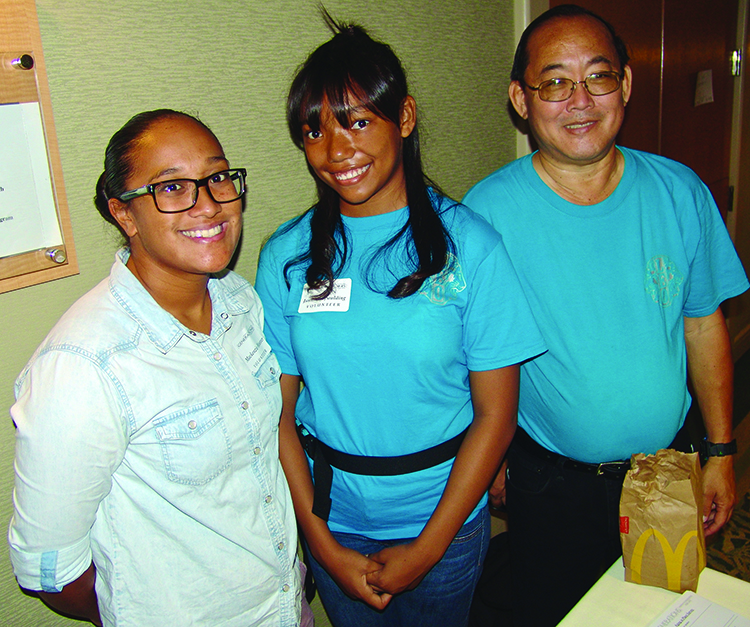
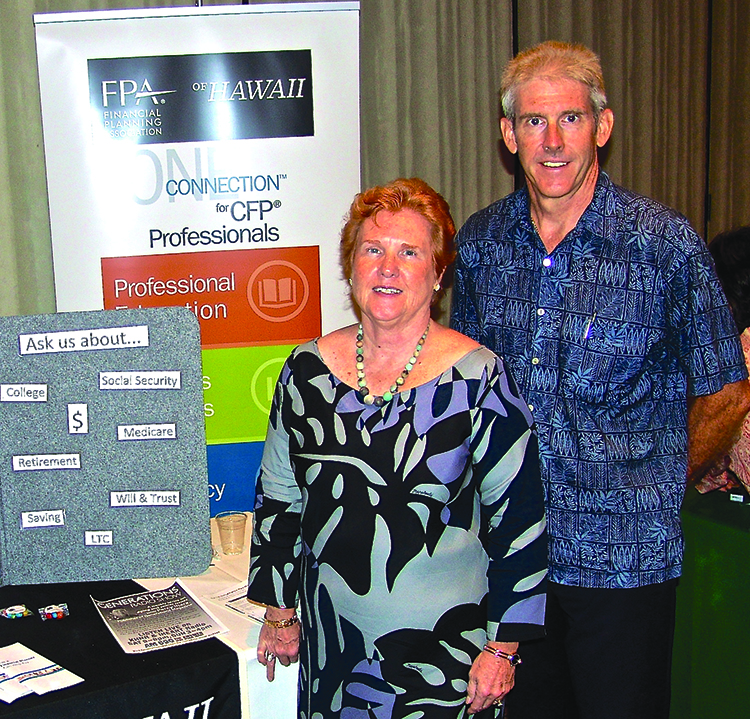
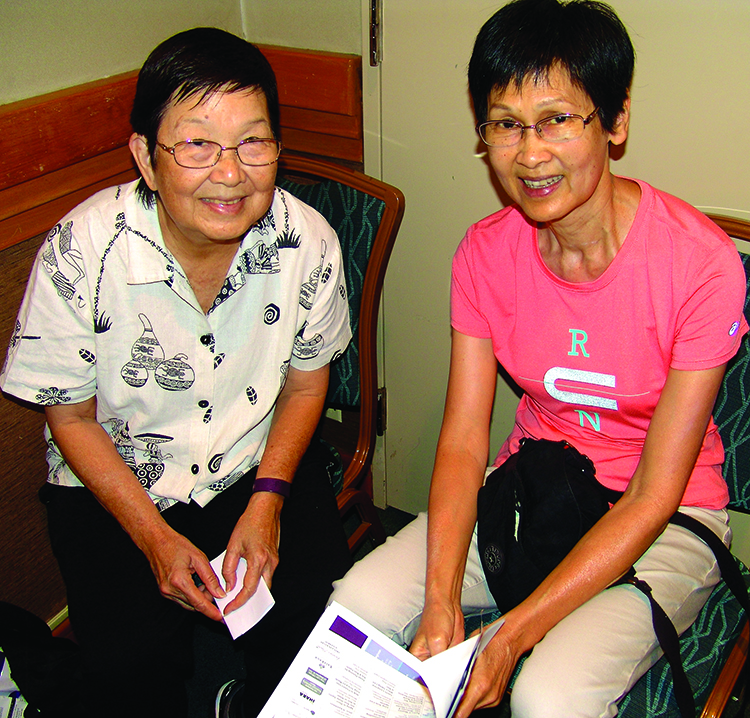
The Aging in Place Workshop relied on volunteers of all ages, like Leo Club members (L–R) Mackenzie Hoover, Jasmine Spaulding and Steven Yoshimura.Representing the nonprofit group Financial Planning Association (FPA Hawaii) were Teresa Tyler of First Command Financial Services and Douglas Brown of HomeStreet Bank.(L–R) Jan Offner and Gloria Chong took a short break in between the afternoon sessions.
The 11th Annual Aging in Place Workshop, hosted by Generations Magazine, took place on Aug. 19, 2017, in the Ala Moana Hotel, with more than 3,000 in attendance. The free, all-day event featured speakers in estate planning, care giving, aging in place, long-term care, Medicaid and Medicare, Social Security, de-cluttering, holistic healthcare, stress-relief and much…
Project Dana co-founder and Executive Director Rose Nakamura and her headquarters staff coordinate services to assist more than 1,200 elders. (L–R) Susan Kuwahara, Cyndi Osajima, Maria Morales, Lorraine Mow and Mike Hirano. (Bryson Ho not pictured)The little blue house of Project Dana
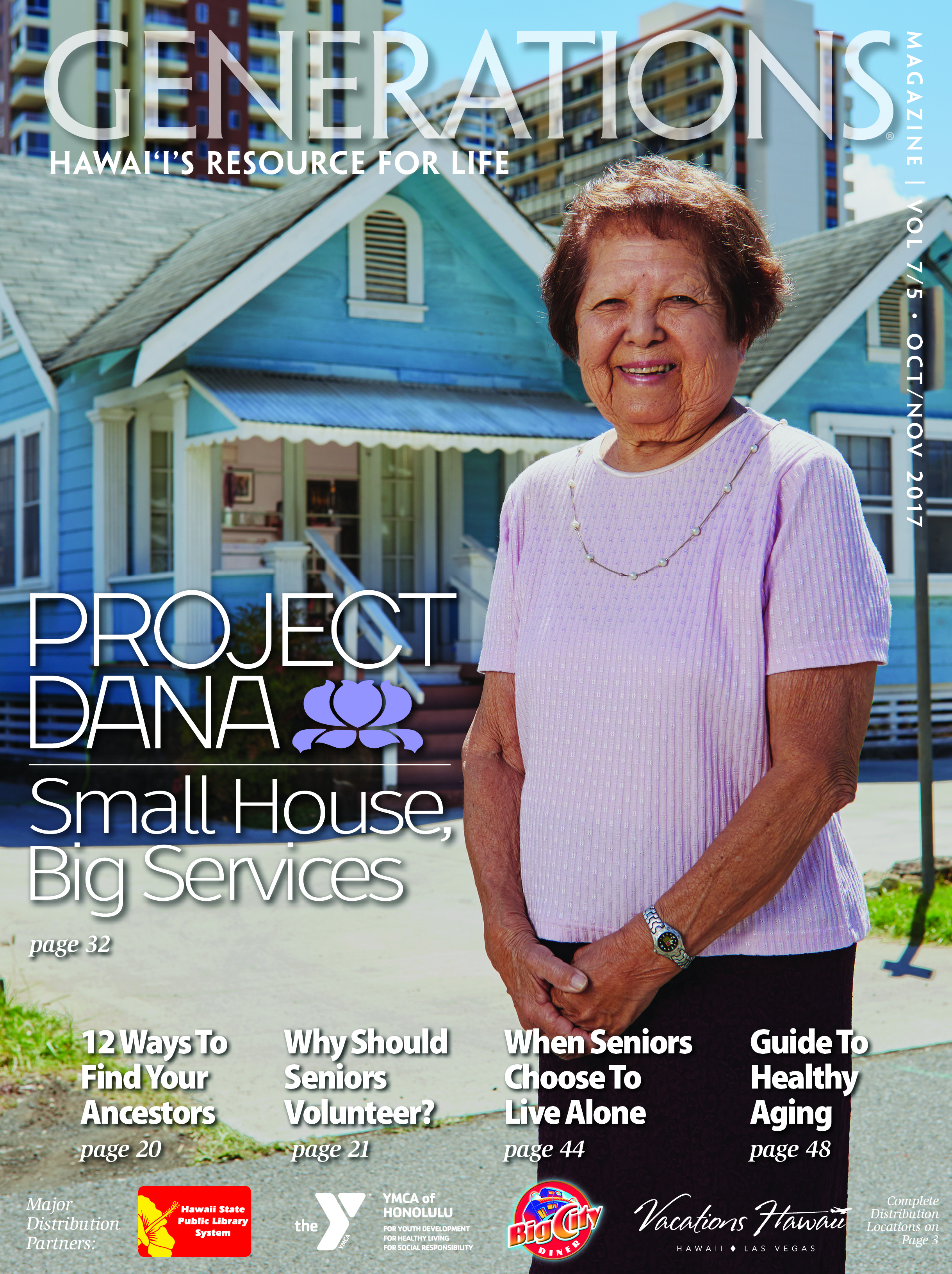
The little blue and white house in Mō‘ili‘ili, where Project Dana started an interfaith volunteer caregivers program has never closed! This headquarters was once the home of the late Kuniyo Nakamoto, who was helped by Mō‘ili‘ili Hongwanji Mission and Project Dana. She was so grateful for the compassion extended that she willed her home to Mō‘ili‘ili Hongwanji Mission. Volunteer painters, carpenters and electricians helped turn this home into offices, from which this Faith in Action project today serves over 1,200 older adults and seniors. If you have never volunteered, donated or received the services of Project Dana, it’s time you get acquainted.
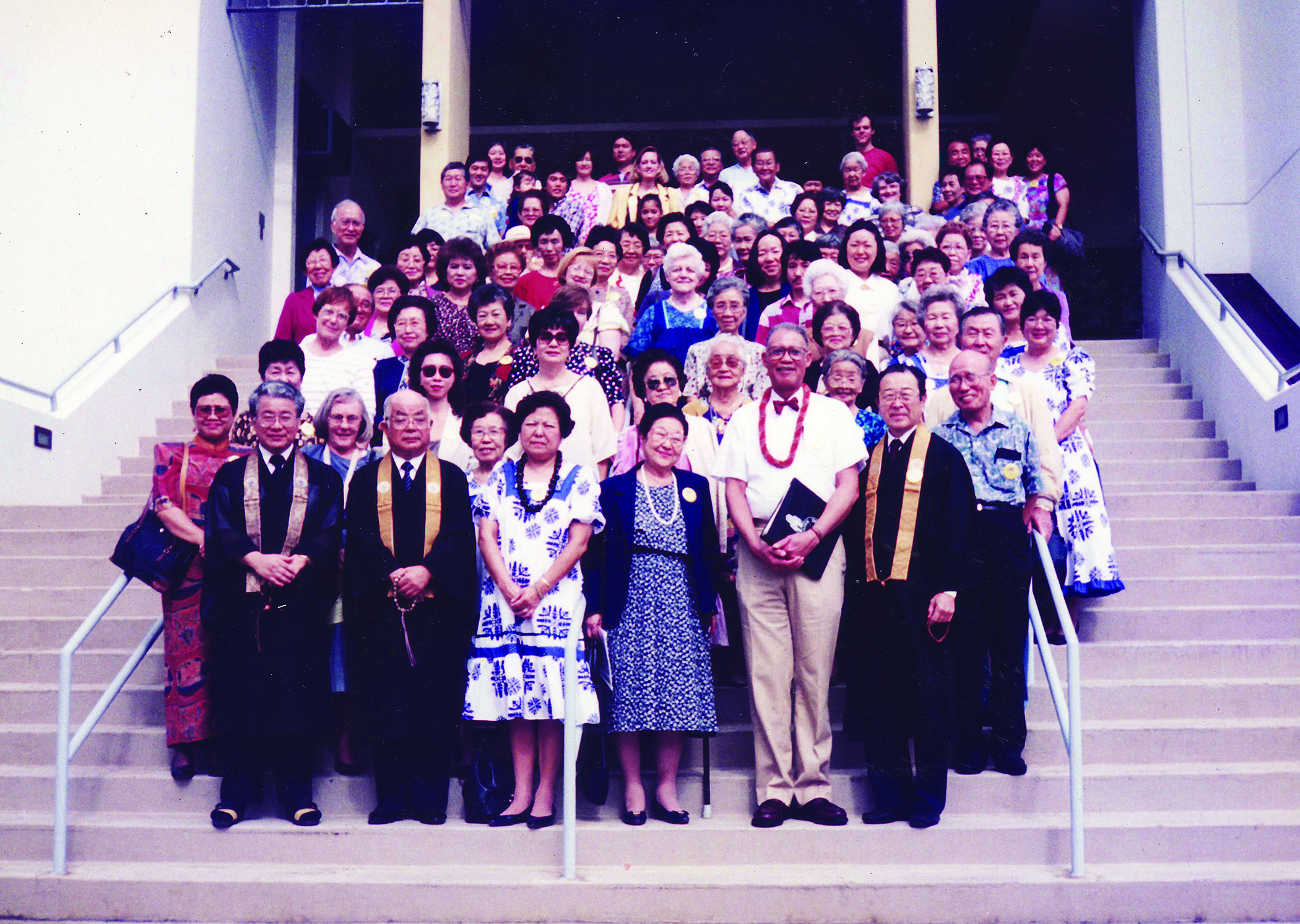
In 1989, members of Mō‘ili‘ili Hongwanji Mission began supporting Shimeji Kanazawa and Rose Nakamura in a small Faith in Action ministry to elderly people in their neighborhood. Now Project Dana partners with 32 missions and churches across Hawai‘i, selflessly giving their time to help the elderly.
Dana is not someone’s name, but a Sanskrit word that means, “selfless giving, an act of compassion.” Buddhists practice dana and teach this prized virtue to their children. Compassionate volunteers of all religions come to Project Dana with a desire to help seniors in need. Soon they discover that their small investment of time provides much more — the healing balm of social, emotional and spiritual support.
“Shim was an advocate and worked with large organizations — even on the mainland, like the National Federation of Interfaith Volunteer Caregivers,” Rose said. “I wanted to help the seniors, so I said ‘Yes.’ I was 61 at the time, but in good health and very active. My husband, Paul, was living then and helped me set up an organizational plan.”
Besides Mō‘ili‘ili Hongwanji Mission, other churches in the area joined in: Church of the Crossroads Caring Ministry and St. Mark’s Episcopal Church Aloha Ministry. A total of 32 churches and organizations partner with Project Dana and represent a wide variety of different faiths.
“We started with a handful of seniors and 15 volunteers,” Rose giggled at the memory. “The mission thought it was a big program. There are Project Dana sites on the Big Island, Maui, in California and Japan, and we coordinate with more than 150 public and private agencies. The “Persons in Need” Fund from the Hawaii Community Foundation provides assistance to homebound seniors for assistive devices, clutter clean-up, respite care and transportation needs. Personal Emergency Response System (PERS) is provided free through State of Hawai’i and Honolulu Police Community Foundation grants for one year to seniors living alone. We offer training to volunteers to assist families caring for elders with memory loss and dementia. In 2019, Project Dana will celebrate 30 years of service!”
Dana Begins with Volunteers
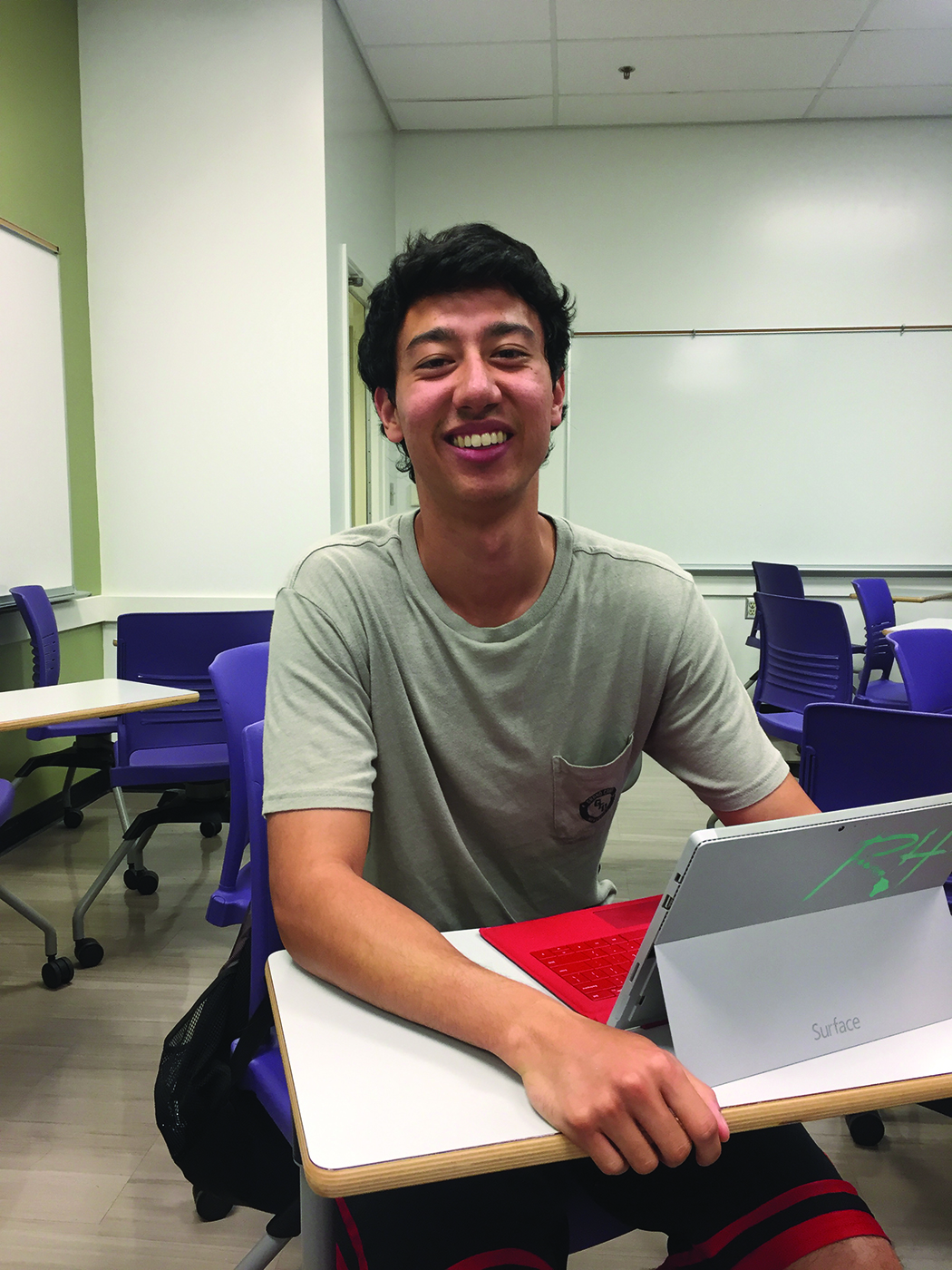
Kainoa Akiona studies Dietetics at UH Mānoa and takes his clients grocery shopping.
Kainoa Akiona is studying dietetics and nutrition at the University of Hawai‘i at Mānoa and one of the requirements of his scholarship is to volunteer in the community. Project Dana asks volunteers to give just one or two hours a week; it sounded easy. Kainoa had a vehicle, so Project Dana matched him with an 82-year-old senior who needed transportation to do her food shopping.
“We became friends, and it has become fun,” Kainoa said. “I just go by her house once a week, pick her up, and we go to whatever stores she needs to visit. Today, my kūpuna needed to go shopping! We went to Foodland, two banks and Safeway. I’ve been volunteering for a year, but I am continuing.”
“I also provide transportation for a young guy with a rare disability,” he added. “He’s very mindful on eating very healthy, so we shop at Down to Earth on King Street.”
Kainoa said he has grandparents, so he is used to talking with older people, and works in the food industry where he has to relate to all age groups. He said making conversation with seniors is fun and they like to tease him.
He is considering continuing his studies and becoming a clinical dietitian or a physician’s assistant. His Project Dana experience has given him a better understanding of his special gift for helping others.
Volunteer Training Opens the Door
Melanie Van der Tuin-Oka, a professor at HCC, enjoys spending time with her new friend, Virginia.
Melanie Van der Tuin-Oka teaches full-time at Leeward Community College and volunteers one hour a week.
“I have to volunteer early in the morning before my first class, but my client rises early,” she said. “I knew Rose Nakamura and Cyndi Osajima through the temple, but I never worked with the elderly, so Project Dana gave me a half-day of training and formally introduced me to my kūpuna and her daughter. The volunteer coordinator led the conversation so we could become more comfortable. I went back alone the next week, and all my concerns about getting started melted away. I could not have done it on my own, but Project Dana made it easy.”
Melanie said friendship is “organic”
because her new friend has a lot to share and she is very curious about Melanie’s life, too.
“I never really had a grandma, so now I am getting the stories, insights and wisdoms I missed — it is a very sweet relationship,” Melanie said. “As a volunteer, I can always bring cheerful, positive energy and I feel appreciated because when I am visiting, the daughter gets a break. If I discern a need, my Project Dana coordinator can help find resources to take care of it. I just have to pass on the need request. We are fortunate to have many resources for elders in Hawai‘i.
“I would recommend that readers call Project Dana and volunteer. It is an interfaith nonprofit but it’s not about religion—it’s about compassion. The volunteer work will bring them great joy.”
A Safe Home is A Happy Home
Project Dana provides social support to elderly, disabled persons and family caregivers that ensures their well-being and enables them to enjoy continued independence with dignity in the environment of their choice. Among them are home visits, telephone visits, respite care, light housekeeping, minor home repairs and transportation for medical appointments, shopping, care home visits and religious services. They also provide “Caring for the Caregiver” support group for family caregivers and home safety assessments.
Client Jane Kiuchi is 86 years old and lives independently. She is very grateful for the careful inspection, recommendations and improvements to her home — all initiated by Project Dana.
“I recommend that seniors have their homes inspected — before they fall!” Jane said. I did it after my fall, but now all the obstacles in my home are gone and I won’t fall again.
“First, Mr. Mike Hirano came and found places where I needed grab bars and pointed out a list of things I had missed like a clothes rack that was too close to my bedroom door,” Jane said. “If you have to squeeze through a door, the handle can snag your clothing and pull you over.”
“He told me to put grab bars in the bathroom so I would not hold onto the towel bars, which will not support your weight when you fall,” Jane said. “Then he helped me set up a licensed installer to put three grab bars in the bathroom and five outside my house, too. Now I can walk all the way from my door to TheHandi-Van without my walker. They also got me a PERS button that I can use to call my son and daughter-in-law or 911 if I fall and can’t get to a phone. I feel so much more secure and comfortable in my own home. Everyone who came to work on this project was so compassionate, patient and kind. Please call Project Dana for a free home safety assessment.”
Dana is for Caregivers, Too
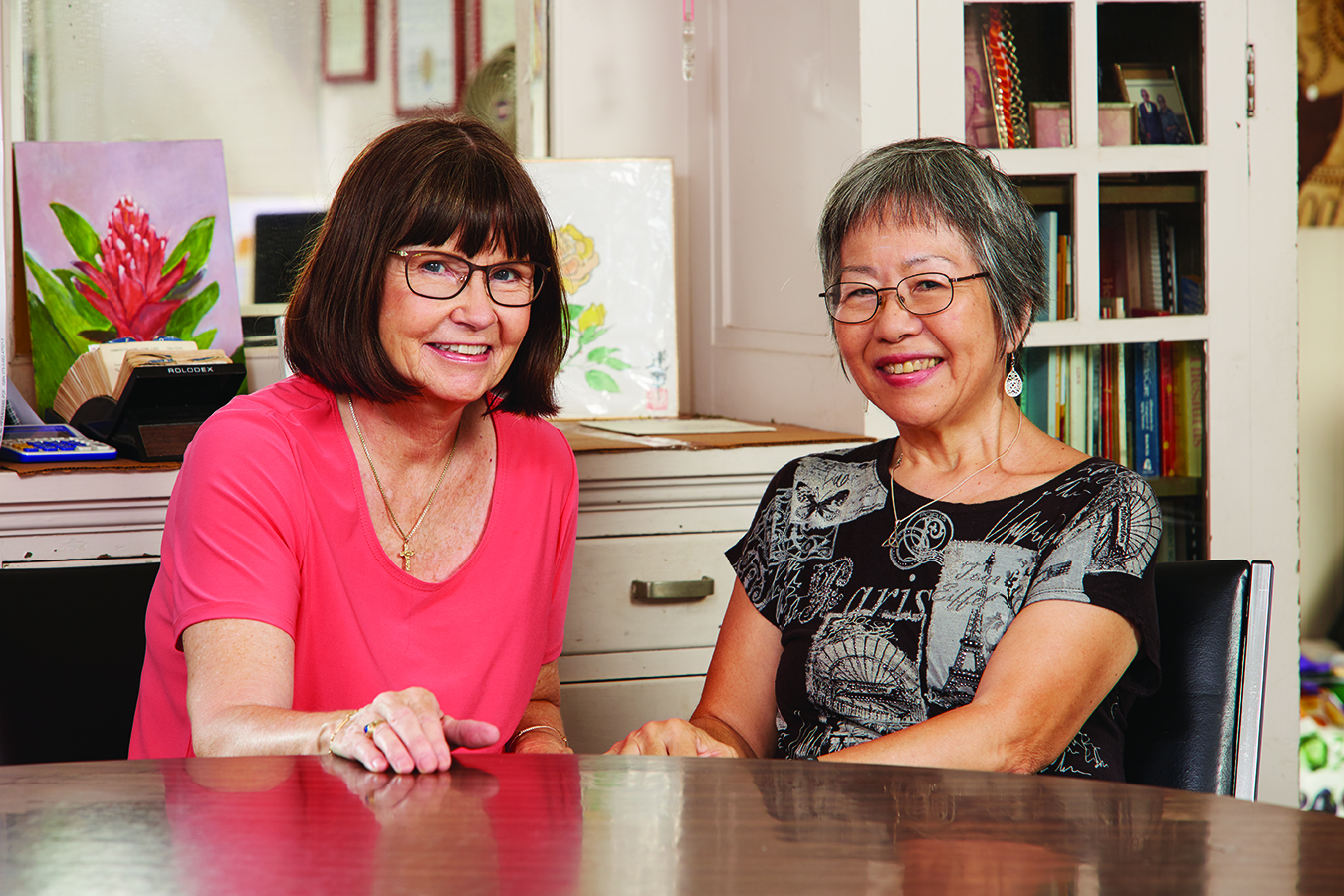
Jackie Toma tells GM writer Katherine (left) the details of her very positive caregiver support group experience with Project Dana.
Two years after her father passed, Jackie Toma’s mom began going downhill. Jackie had lived in Seattle for 37 years and had herself suffered a stroke but was still working part-time. She returned to Hawai‘i to help her brother care for their mother. Even though they had paid home care, Jackie called on Project Dana.
“When my father was still living but no longer driving, Project Dana volunteers took my parents to their doctors’ appointments,” she said. “I remember that the volunteer would take them into the office and wait until they were finished and drive them home! It was such a big help.”
“I was fortunate to have paid home care for Mom, but I was feeling isolated,” Jackie said. “One day, the Project Dana volunteer driver told me that I could join Project Dana’s support group that meets twice a month. To tell you how thoughtful Project Dana is, they offered to send a volunteer to sit with Mom but at that time, she could manage herself at home. How nice of them to think of everything.”
“The first meeting is educational and you learn a lot!” Jackie said. “Education is provided by experts in physical therapy, assistive devices, Medicare, family mediation, legal issues, Hospice care, to name a few. The second meeting of the month is a combination ‘Rap Session’ and potluck. We all share experiences and learn from one another. It’s tough to deal with frustration and to problem-solve every time your parent’s condition deteriorates. When I was fresh out of ideas, my group came up with answers.
“I was astounded that ‘graduate’ caregivers would keep coming to our meetings after their loved ones passed. But after my mom passed, I decided to continue attending my support group. I want to mentor others in the same compassionate way I was helped.”
After 28 years of organizing, coordinating and service, co-founder Rose Nakamura passes on the office of Executive Director to Cyndi Osajima at the end of October. The dana they practice inspires all their staff and volunteers.
Rose Nakamura: The Spirit of Dana
The success of an organization is its ability to continue when the founders pass the mantle to
a new generation of volunteers. Visionary Shimeji Kanazawa died in 2014 and Rose Nakamura continued as administrator, raising up successors and mentoring new leadership with the same spirit of compassion that led her first to organize Project
Dana. In August, Rose announced her retirement and Operations Manager Cyndi Osajima is stepping up to executive director starting October 1. The organization will be in friendly capable hands, ready to serve and share compassion.
This fall is a happy time for Rose, who sees the fruits of her labor in waves of compassion flowing out from the little blue house on Nako‘oko‘o Street and the tides of gratitude returning to encourage her volunteers.
Selfless Giving Begets Selfless Giving
Generations Magazine Photographer Brian Suda and his wife, Pamela Cunningham, were caregivers for two decades. When Brian’s dad, Sakae, became frail in the ’90s, Project Dana provided support. Two years ago, when his mom, 97-year-old Tokiko, developed dementia, Project Dana again helped. The gratitude that the Sudas have for Project Dana is the best testimony to this marvelous, gracious community outreach:
After spending the last 20 years as family caregivers, we sometimes look at each other and say, “How did we survive?” It wasn’t always easy; there were plenty of good times and lots of laughter to ease the complexities of taking care of Dad and Mom. Through both of our caregiving journeys, Project Dana provided us with “scholarships” for much needed respite. A little time off meant that someone else realized how difficult caregiving could be, not just physically but emotionally as well. We used our scholarships to help provide additional days for both Dad and Mom at the day health programs that they attended. We knew that they would be safe and we didn’t need to worry about them. It’s hard to put into words the gratitude that we feel for Project Dana, Rose Nakamura and Cyndi Osajima. They and the program will always be close to our hearts and we can never repay them for helping us through the hardest and most rewarding jobs of our lives, but we will try. For now, all we can say is “Thank You, Project Dana.”
If you want to say “thank you” to Project Dana,
mail them a note and include a donation to:
It is never too early to plan for your own needs or to reach out to others in need. Project Dana volunteers are working throughout Hawai‘i, on the mainland and in Japan to help the frail elderly, persons with disability and family caregivers. Familiarize yourself with their services and share this resource with family, neighbors and friends.
Caregiver Support Group
Project Dana’s Caregiver Support Group (CGSG) program is unique in its concept because it is the only support group that provides three consecutive meetings every month during the course of one year. Attendees receive help in the form of education, rap sessions and a fun outing to help alleviate the stress that may come with continuous caregiving responsibilities for someone who is 60 or more years of age.
Meetings are held on the second, third and fourth Wednesdays of each month from 9 am–1pm unless otherwise specified at the Honpa Hongwanji Betsuin (1727 Pali Highway) in the Social Hall located downstairs of the main temple structure. Parking is available in the front and back of the main temple. All participants are requested to arrive on time.
Educating the caregiver is of prime importance. During the education session, speakers from different agencies and organizations within and outside the community present topics on health, safety, and understanding of the various issues related to the aging process. The focus is on how these factors can impact both your care recipient and also you, the caregiver. A continental breakfast and a light lunch are served
The second support component is called the Rap Session. Here, participants are given the opportunity to “talk story.” Joy and frustrations, as well as issues and concerns are often expressed in reference to the daily experiences of caring for a loved one. With this sharing, caregivers explore potential solutions among themselves and from their experience. Participants are asked to bring a dish to share in a potluck luncheon.
Finally, planned outings are offered to provide the caregivers “free time” to engage in total relaxation — breathing and nurturing the mind, spirit and body with healthy socialization. Discovering new places, and reacquainting oneself with sources outside the realms of everyday caregiving feed the soul. Some outings may require a small fee for participants. If there are any shared costs, participants will be notified in advance with the notice of date, time and theme.
Project Dana relies on a grant through the Older Americans Act of 1965, Title III E Funds, administered by the Hawaii State Executive Office on Aging through the Elderly Affairs Division, City and County of Honolulu. Monetary donations and other contributions are greatly appreciated to supplement the Caregiver Support Group and maintain the quality of the program.
In 2008, CGSG program received the Outstanding Support Group award by the Hawaii Family Caregivers Coalition and the once-aired KHON2 Elderhood Project.
Home Safety Program
Don’t become one of these statistics!
In Hawai‘i:
51 percent of deaths among elders are caused by falls occurring in the home.
61 percent of the elders who fall are women.
Most falls occur between 9 am and 1 pm
People who are 85 years or older are 10 times more likely to fall than those who are between the ages of 65–69.
Falls inside the home commonly occur in the bathroom, bedroom and kitchen areas.
Nationwide:
One out of three people 65 years and older will fall each year; most are women living alone.
90 percent of all hip fractures that occur each year are due to falls.
Only 25 percent of hip fracture patients will fully recover; 40 percent will require nursing home care; 50 percent will need a cane or walker; and 24 percent over age 50 will not survive more than 12 months after they fall.
60 percent of all falls occur at home.
The goals of the Home Safety Program are :
To increase awareness of home safety.
To create a safe home environment.
To allow participants to continue living independently at home.
To help ensure quality of life for our seniors.
To improve the well-being and enrich the lives
of our older adults and their families.
To identify all potential injury risk factors in
the home.
The Home Safety Program provides:
An initial home assessment visit
Educational information on home safety
Recommendations for possible home modifications and/or repairs
A follow-up home assessment
Possible suggestions for home modifications might include: nightlights, grab bars, non-slip mats, non-skid strips, shower seat, portable tub rail, commode, raised toilet seat, replace light bulbs, phone or power cord arrangement, etc.
Persons in Need (PIN) Funds Available
Project Dana continues to announce a special fund for seniors 65 years and older. Grants are available through the Gwenfread Elaine Allen Fund and administered by the Hawaii Community Foundation. This PIN Grant supports Hawai‘i’s frail elderly to “age in place” at home, in their community and with their family caregivers.
The PIN grant at Project Dana is in its fifth year. Assistance is provided through services already offered in three specific areas: transportation, respite and decluttering. Applications will be accepted through October.
A brief explanation of services follows:
✦ Transportation
Transportation assistance is available to frail elders for medical appointments, shopping requests and legal services such as banking, federal, state, city and county offices. Your safety and well-being are of concern regarding transportation needs. Funds for taxi fares may be offered for special medical appointments.
✦ Respite
Assistance is available to family caregivers whose elders attend adult day care/day health centers or who pay for respite care from a home health agency that goes beyond the two hours provided by a Project Dana volunteer. A one-time-only stipend, up to $600 per family caregiver, may be considered. A new component is assistance for family caregivers for overnight respite. Family members may apply for a one-time-only stipend, up to $150 per family.
✦ Decluttering
Project Dana’s volunteers provide free assessments for home safety and fall prevention. They also help seniors declutter and schedule appointments with professional organizers.
Volunteers
Project Dana would not be possible without support from a corps of trained volunteers guided by the principle of dana, a Sanskrit word that means selfless giving and compassion without desire for recognition or reward.
Project Dana recruits and trains volunteers across the state to assist the frail and elderly with their various needs. Volunteers are sensitive to diverse cultures and traditions and will receive initial and continuing training and education from the project coordinators and specialists. All Project Dana partner organizations and congregations are managed by trained volunteer coordinators.
For details on any of the program services, a free Home Safety Assessment (ask for Mike Hirano), or if you are interested in volunteering and being a part of Project Dana’s mission of service to the elderly, frail and people with disability, call 808-945-3736 or email projdana@hawaiiantel.net.
Project Dana Affiliated Locations:
O‘ahu: Aiea, Honolulu, Mililani, Kāneʻohe, Waianae, Pearl City, Kailua Hawaii Island: Keaʻau, Kailua-Kona, Hilo, Honoka‘a, Pepe‘ekeo, Captain Cook, Papa‘ikou Maui: Lāhaina, Pukalani, Kahului, Wailuku, Makawao Kauai: Līhuʻe
The little blue and white house in Mō‘ili‘ili, where Project Dana started an interfaith volunteer caregivers program has never closed! This headquarters was once the home of the late Kuniyo Nakamoto, who was helped by Mō‘ili‘ili Hongwanji Mission and Project Dana. She was so grateful for the compassion extended that she willed her home to…