Category: May – June 2022

  • Protect Pets After You’re Gone

    Senior man and big dog, closeupGrowing up, my family always had a pet. From dogs to cats to frogs and even a chicken for a day, pets have always been a part of my life. Today, our pet family consists of three dogs, a guinea pig, a bunny and frogs.

    Our pets are not just animals but members of our family. And like our family members, we want to ensure that they are taken care of after we are gone. If you’re an animal lover like me, you worry about what will happen to your pet if something were to happen to you, then a pet trust may be your answer.

    Many of our clients have pets that they love and want to ensure that they are cared for and provided for after they pass. A pet trust allows pet owners to set up a support system for their pets after they’re gone. The trust appoints a trustee who will manage the money put aside for the pet. It appoints a caretaker beneficiary who will take care of and love the pet for the rest of their life. We also work closely with our clients to prepare a memorandum of intent. This memorandum allows our clients to leave specific instructions on how to care for their pets — this can include specific food sensitivities, grooming, medical care and even burial or cremation.

    If this is something you are interested in, we recommend contacting your attorney.


    STEPHEN B. YIM, ATTORNEY AT LAW
    2054 S. Beretania St., Honolulu, HI 96826
    808-524-0251 | www.stephenyimestateplanning.com

    Growing up, my family always had a pet. From dogs to cats to frogs and even a chicken for a day, pets have always been a part of my life. Today, our pet family consists of three dogs, a guinea pig, a bunny and frogs. Our pets are not just animals but members of our…

  • Making the Rules Beyond Your Lifetime

    How do you stay in control of your stuff while you are able and assure that your wishes will be carried out when incapacity or the grim reaper catch up with you? Sorry to rub it in, but at least one of these possibilities is going to happen to you and odds are that both of them will. You  have an opinion about the kind of healthcare you want to receive throughout your lifetime and you have an opinion about who should enjoy your stuff when you are done with it. Turning your wishes into reality will require you to act on your opinions and put them down on paper. You need to develop the rulebook — your estate plan — that will give you the final say over your assets and your healthcare.

    And remember that your rulebook will need to change over time. In the future, your health, family situation and assets will change. Your comfort with your list of hand-picked decisionmakers who will someday step in and make choices will change. The laws that affect your estate plan will change. With these changes, you will need to adjust your rulebook in order to be confident that your wishes will be followed at every phase of your life — and perhaps beyond your lifetime.

    Talk with your trusted advisors about the best way to put your rulebook in place and then how to keep it current as circumstances change.


    SCOTT MAKUAKANE, Counselor at Law
    Focusing exclusively on estate planning and trust law.
    www.est8planning.com
    808-587-8227 | maku@est8planning.com

    How do you stay in control of your stuff while you are able and assure that your wishes will be carried out when incapacity or the grim reaper catch up with you? Sorry to rub it in, but at least one of these possibilities is going to happen to you and odds are that both…

  • Making Your Money Last in Retirement

    Having spent decades saving for retirement, it can feel like a major shift for retirees to spend down their hard-earned assets. Research by the Employee Benefit Research Institute found people with $500,000 or more in savings at retirement spent down less than 12 percent of their assets over 20 years.(1)  Many of these retirees  are reluctant to dip into their principal for fear of running out of money due to the anticipation of increased healthcare expenses and other factors. If you share these concerns about the longevity of your savings, here are steps you can take to help you feel more confident:

     Understand the arc of retirement spending. Annual expenses generally are highest within the first few years of retirement. This is because retirees are often taking advantage of their newfound leisure time to pursue hobbies, travel, dine out and shop. Spending tends to slow down with advancing age. You may find it reassuring to realize there’s a good chance your lifestyle expenses in retirement could level out or decrease over time.

     Plan for healthcare costs. Healthcare is consuming an increasing proportion of many retirees’ income. You can start preparing for these expenses today by researching your insurance and savings options and developing a strategy to cover your needs. Your options could include a combination of the following: Medicare, Medigap supplemental insurance, health savings accounts (HSAs), long–term care policies, continuing health insurance through your current or former employer, and other dedicated healthcare savings. Having funds and protection in place can help you feel more prepared to handle a medical emergency or more routine care.

     Understand the level of risk in your portfolio. As you turn your savings into income, it’s important to review your portfolio and assess your level of risk. This means ensuring that you have a diversified portfolio that suits your anticipated spending and balances your needs for liquidity and  growth. For example, consider having a year to several years of easily accessible investments to provide income in case of a market downturn or an unexcepted financial event in your life. At the same time, it’s important to also have investments that are positioned for growth, or at the minimum, keep up with inflation. Many retirees spend decades in retirement, so plan your investment strategy with longevity in mind.

     Devise a sustainable withdrawal strategy. A well-crafted retirement income plan can help you avoid running out of money and feel more confident about spending your hard-earned assets. Tally up your various sources of retirement income, which may include Social Security, annuities,  retirement assets and other investment earnings. Then, decide which assets you will tap into first, and when you will claim Social Security benefits. Remember that at 72 years of age you are required to take required minimum distributions from your traditional IRA and employer-sponsored retirement plans, so work this income into your plan.

     Consider the tax consequences. Reducing taxes on retirement income is a priority for a great number of retirees, yet many feel understanding the tax impacts of drawing down assets is complex. Starting the planning process early and seeking guidance from a tax and financial advisor can help you feel more secure in your strategy.


    MICHAEL W. K. YEE, CFP,® CFS,® CLTC, CRPC®
    1585 Kapiolani Blvd., Ste. 1100, Honolulu, HI 96814
    808-952-1222, ext. 1240 | michael.w.yee@ampf.com
    www.ameripriseadvisors.com/michael.w.yee
    Michael W. K. Yee, CFP®, CFS®, CLTC, CRPC®, is a Private Wealth Advisor, Certified Financial Planner™ practitioner with Ameriprise Financial Services, LLC in Honolulu, HI. He specializes in fee-based financial planning and asset management strategies and has been in practice for 37 years.

    Investment advisory products and services are made available through Ameriprise Financial Services, LLC, a registered investment adviser. Investment products are not insured by the FDIC, NCUA or any federal agency, are not deposits or obligations of, or guaranteed by any financial institution, and involve investment risks including possible loss of principal and fluctuation in value.

    1 “The Employee Benefit Research Institute’s Spending in Retirement Survey”. EBRI, 2021. Ameriprise Financial Services, LLC. Member FINRA and SIPC. ©2021 Ameriprise Financial, Inc. All rights reserved.


    Having spent decades saving for retirement, it can feel like a major shift for retirees to spend down their hard-earned assets. Research by the Employee Benefit Research Institute found people with $500,000 or more in savings at retirement spent down less than 12 percent of their assets over 20 years.

  • Credit Unions: People Helping People

    Those same members collectively own and control their credit unions. Every member gets an equal vote on the election of board of directors at their credit union,  Regardless of their deposits. Like banks, credit unions operate for the benefit of their shareholders. But unlike banks, a credit union’s shareholders are the members and vice versa — they’re both members and owners.

    Credit unions aren’t a new idea. The first one popped up in Germany in the late 1800s. The first American credit union opened in 1909. In 1934, the Federal Credit Union Act was signed into law, authorizing credit unions in every state. To this day, Oct. 20 is celebrated as International Credit Union Day. But despite the worldwide appeal, credit unions are decidedly local institutions.

    Most credit unions operate in a specific geographic area and that’s the same source for their members. For example, Gather Federal Credit Union operates branches across Kaua‘i. It offers membership to anyone who lives, works, worships, attends school or operates a business on Kaua‘i or Ni‘ihau. Members’ immediate families are all eligible as well. In that sense, credit unions work to strengthen communities by helping to build financial security for all members.

    Credit unions are nonprofit organizations and members benefit from similar protections as banks. Credit unions generally offer products and services similar to what banks offer, as well, including checking and savings accounts, loans, ATMs, debit and credit cards, IRA shares and certificates, money transfers and online banking. Some credit unions may also offer financial planning and counseling services. Members’ credit union accounts are federally insured by the National Credit Union Administration up to $250,000. Members also typically benefit from lower fees, competitive loan rates, higher dividend rates on deposit accounts and a more personal approach to member service.

    There’s lots more to learn about credit unions. A great place to start is at www.MyCreditUnion.gov.

    But, more than anything, the most important thing to remember about credit unions is their shared philosophy: “People Helping People.”


    GATHER FEDERAL CREDIT UNION
    Kukui Grove, Līhu‘e, Kapa‘a, Kōloa, ‘Ele‘ele, Waimea
    808-245-6791 | info@gatherfcu.org
    www.gatherfcu.org

    There’s an old saying about money that sums up why credit unions have flourished: “We make a living by what we get, but we make a life by what we give.” Credit unions are unique in the world of finance, and for lots of people, that’s exactly why they choose to become members.

  • SSA Survivors Benefits

    We are here for surviving family members when a worker dies. In the event of your death, certain members of your family may be eligible for  survivors’ benefits. These include widows and widowers, divorced widows and widowers,  children and dependent parents.

    The amount of benefits your survivors receive depends on your lifetime earnings. The higher your earnings, the higher their benefits. That’s why it’s important to make sure you {Play}r earnings history is correct in our records. That starts with creating a my Social Security account at www.ssa.gov/myaccount. A my Social Security account is secure and gives you immediate access to your earnings records, Social Security benefit estimates and a printable Social Security Statement. The statement will let you see an estimate of the survivors benefits we could pay your family.

    Visit our “Benefits Planner for Survivors” at www.ssa.gov/planners/ survivors to help you better understand Social Security protections for you and your family as you plan for your financial future.

    Please visit www.ssa.gov or read “Survivors Benefits” at www.ssa.gov/pubs/EN-05-10084.pdf for more information. You can also help us spread the word by sharing this information with your family and friends.


    800-772-1213 (TTY 800-325-0778) M–F, 8 am–5 pm
    SSA Office Locator: www.socialsecurity.gov
    Advance Designation FAQ: www.ssa.gov/faq (Other Topics)
    Representative Payees Information: blog.ssa.gov

    We are here for surviving family members when a worker dies. In the event of your death, certain members of your family may be eligible for  survivors’ benefits. These include widows and widowers, divorced widows and widowers,  children and dependent parents. 

  • Gimme A Break! Care for Caregivers

    The woman in line in front of me was tending to her father who apparently suffered from dementia. Suddenly, she completely lost it and was yelling at him. I thought she was going to hit him! He looked frightened, dazed and confused. When I tried to console the woman, she yelled back at me, ‘YOU DON’T KNOW WHAT I’M GOING THROUGH!’”

    It may be easy to find fault with this woman, who “came unglued” and mistreated her father. But there is a reason for this behavior. First, think about this moment in her caregiver’s journey: “You don’t know what I’m going through.”

    What is caregiver burnout?

    Caregiver burnout is a state of physical, emotional and mental exhaustion. Burnout can occur when caregivers don’t get the help or respite they need, or if they try to do more than they are able. Caregivers often are so busy caring for others that they tend to neglect their own emotional, physical and spiritual health, leading to fatigue, stress, anger, anxiety, depression and burnout.

    What can I do to prevent burnout?

    One way to prevent caregiver burnout is to take advantage of respite care services. Gimme A Break (GAB) does know what you are going through. GAB provides the support needed when a caregiver has had enough! The nonprofit cares for caregivers by giving them an emotional and physical break, as well as resources for continued well-being — all at no cost.

    GAB provide respite in various ways:

    ■ Support Sessions. Support sessions connect you with a community of caregivers to better assess and serve your needs. The weekly sessions offer education, shared knowledge and professional guest speakers.
    ■ Resources — Trusted Partners. GAB continues to provide “breaks” in the form of resources from its trusted partners that give you worry-free assistance with all things caregiving.
    ■ Physical “Break.” GAB provides respite — a physical “break” from your caregiving duties.As part of GAB’s community of caregivers, you will never feel alone or isolated again.

    NOTE: Taking care of yourself is not a luxury. It’s an absolute necessity for caregivers.


    GIMME A BREAK (501(c) 3 nonprofit)
    46-056 Kamehameha Hwy., Ste. F-09, Kaneohe, HI 96744
    808-754-3787 | www.gab808.com
    Every caregiver deserves our support. Your contribution will give them the break that they need. To give time: https://gab808.com/be-a-giver-of-time
    To give funds: https://gab808.com/be-a-giver-of-money To join their Gimme a Dollar $1,000,000 Campaign: https://gab808.com/dollar

    The woman in line in front of me was tending to her father who apparently suffered from dementia. Suddenly, she completely lost it and was yelling at him. I thought she was going to hit him! He looked frightened, dazed and confused. When I tried to console the woman, she yelled back at me, ‘YOU…

  • Is Task-Based Home Care Right for Me?

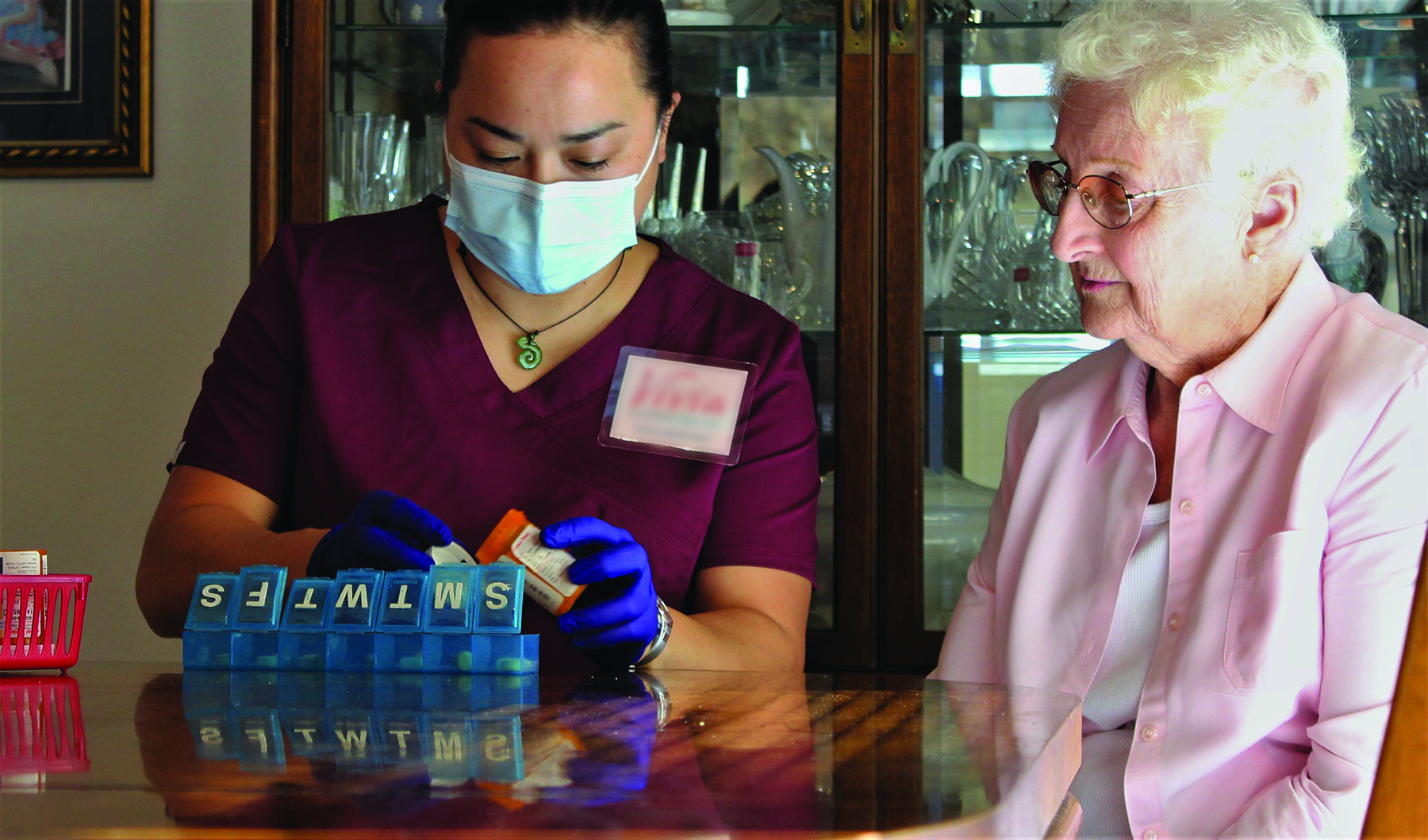
    You may think that in-home assistance is only for people who are very old, very ill or recovering from a severe injury or surgery. But nowadays, capable and self-reliant seniors are employing a new kind of assistant to provide task-based in-home care. A task-based assistant can help you with those burdensome chores that are becoming challenging or that you just don’t like to do anymore.

    Most seniors say they don’t need the constant oversight of long visits and hands-on help that is hourly home care. However, some folks might appreciate assistance with duties such as carrying a heavy load of laundry or getting a friendly check-in visit for help with daily medications.

    These seniors can now call on task-based in-home assistance for occasional help with:

    • Light Housekeeping and Laundry
    • Meal Preparation
    • Medication Reminders
    • Transportation Set-Up
    • A Shower or Other Personal Care Assistance

    Long hours of in-home care are right for some, but for more independent and self-reliant seniors, task-based, personalized and affordable in-home assistance is a new option for an effective way to continue living at home independently.


    VIVIA BY HO‘OKELE HOME CARE
    820 Mililani St., Ste. 711, Honolulu, HI 96813
    808-784-3049 | info@viviacares.com
    www.viviacares.com

    You may think that in-home assistance is only for people who are very old, very ill or recovering from a severe injury or surgery. But nowadays, capable and self-reliant seniors are employing a new kind of assistant to provide task-based in-home care. A task-based assistant can help you with those burdensome chores that are becoming…

  • Dementia & Driving: The Warning Signs

    Elderly couple in the car confused with flashing police lights. Speeding ticket. Man and woman having argument in the car.Most people feel a sense of control when they’re behind the wheel. So what happens when it’s time to retire the car keys? The decision to stop driving can be one of the most challenging topics families and people living with Alzheimer’s disease face.

    Aging may impact our ability to drive safely; however, a person living with Alzheimer’s disease will not be able to drive at some point, because cognitive changes in the brain will affect reaction times and focus.

    • SIGNS OF UNSAFE DRIVING: Sometimes, the first warning signs of Alzheimer’s disease show up in driving abilities — taking longer than usual to run quick errands, forgetting where they’re driving to or how to get there, making mistakes at intersections and frequently not remembering where the car was parked. Since no one has a perfect memory, it’s important to track these kinds. Log any new dents and scratches on the vehicle, tickets or episodes of unsafe driving. If you notice changes, it’s time to take action.
    • PLAN AHEAD: It’s important to make sure you have a options in place ahead of time, because taking away the keys can present problems for caregivers and loved ones alike. Start a routine so the person is still able to maintain an active lifestyle. Involve friends and family who are willing and able help out as unofficial taxi drivers.
    • APPEAL TO THEIR SENSE OF RESPONSIBILITY: Be prepared for resistance. Anger is a common reaction. Focus on showing your empathy to the person and plant the seeds for options you have in mind for the future. Remind them of the importance of safety on the road — both their own and other people’s. Try phrases like, “I know you don’t want to hurt anyone driving.” If needed, you can ask your doctor to speak with them or  design a “driving contract” that the person agrees to.
    • REMOVING DRIVING REMINDERS: Depending on the situation, removing the vehicle along with the temptation to drive it can be the most effective action. Letting a family or friend borrow the car for a few weeks can start the transition to no driving and at the same time, give the person the sense of helping another.

    There are plenty of ways to get creative in your approach. And your motivation is the safety of everyone on (and off) the road. If you are  experiencing driving challenges yourself, talk to someone. The road ahead is less difficult when you allow others to help you navigate.


    For additional resources, visit https://bit.ly/AADriving

    Most people feel a sense of control when they’re behind the wheel. So what happens when it’s time to retire the car keys? The decision to stop driving can be one of the most challenging topics families and people living with Alzheimer’s disease face.

  • The Long Goodbye

    Usually, events that necessitate a goodbye are seen as sad… or at least poignant. In our younger years, we expected these goodbyes to be temporary — we knew we were going to see them again! As we get older, we start to understand that a goodbye may mean moving so far away that visiting will be unlikely and the relationship we loved may be permanently changed. And then come the goodbyes we know are final — the farewells at the end of a life that leave us with only memories of a loved one.

    Waking each caregiving day and finding your loved one still breathing is another opportunity for you to cherish that life — an opportunity to set aside words spoken in frustration yesterday. Today is another opportunity to smooth the worried brow of a person unable to finish their days on Earth on their own terms. Today gives us another chance to learn better ways to say goodbye.

    Although caregivers can get easily get caught up in a myriad of daily details that need constant attention, they also need to remember that caregiving is often a long, slow goodbye. Help ensure this final goodbye is a sweet one by telling your loved one what they want to hear from you — reassurance that you love them, what they mean to you and positive memories of the wonderful times you’ve shared.


    THE CAREGIVER FOUNDATION (501(c) 3 nonprofit)
    926 3rd St., Pearl City, HI 96782
    808-625-3782 | info@thecaregiverfoundation.org
    www.thecaregiverfoundation.org

    Usually, events that necessitate a goodbye are seen as sad… or at least poignant. In our younger years, we expected these goodbyes to be temporary — we knew we were going to see them again! As we get older, we start to understand that a goodbye may mean moving so far away that visiting will…

  • Signs That Mom Needs More Help

    Family members must prepare now for the day their senior needs more help — the kind of help that may require them to reprioritize their lives. If only there were a date set aside for this change in everybody’s life. But we must keep in mind that a sudden fall or illness could change everything — and it could happen at any time.

    Our seniors can have active lives up until the day they don’t. Then, family members may have to change directions suddenly. This may involve taking time off work and moving other commitments to the back burner.

    However, we can look for signs that indicate our senior may soon be needing a bit more help. Here are a few to look out for:

    AGE: The older your senior is, the closer they will be to needing help, especially if they are slowing down physically.

    MEMORY: Forgetfulness could be a sign of illness affecting the brain or other systems. This symptom generates worry for family members who must leave their senior alone for long periods of time.

    DRIVING: If your senior is not driving anymore because it is not “safe” due to visual problems, mobility issues or cognitive concerns, this may be a sign that other tasks are not easy for them as well.

    WEIGHT LOSS OR DEHYDRATION: These are real concerns that indicate they are not eating or drinking enough. Frequent urinary tract infections may indicate not enough fluid intake or poor personal hygiene in the bathroom.

    UNPAID BILLS/UNOPENED MAIL: Our seniors like to have control over their finances until there comes a day when they stop opening their mail. This is a clue they are either forgetting to do it or its not a priority for them anymore.

    FREQUENT PHONE CALLS WHILE FAMILY IS AT WORK: If family members are receiving frequent calls from their senior during working hours, it may mean things are about to change. These frequent calls can indicate loneliness, forgetting that they just called or anxiety about something they have no control over.

    FALLS: This could be the “last straw,” especially if the fall results in an injury. Family members may have to find outside help to monitor their senior for safe mobility while they are away at work.

    Just like planning ahead for disasters, planning for the day your senior needs help should be a priority, so being aware of some of the scenarios above should be on your radar.

    Of course, your senior will deny they need help and may say something like, “I don’t want you to worry about me. I can take care of myself.” But if you feel that twinge in your gut telling you that what you are seeing is not consistent with what they are saying, don’t ignore it! Now may be the time to move into a different role for your senior or the time to seek outside help.


    ATTENTION PLUS CARE HOME HEALTHCARE
    Accredited by The Joint Commission
    1580 Makaloa St., Ste. 1060, Honolulu, HI 96814
    808-739-2811 | www.attentionplus.com
    AGING IN HAWAII EDUCATIONAL OUTREACH PROGRAM
    by Attention Plus Care — a program providing resources for seniors and their families, covering different aging topics each month. For class information and upcoming topics, call 808-440-9356.

    Family members must prepare now for the day their senior needs more help — the kind of help that may require them to reprioritize their lives. If only there were a date set aside for this change in everybody’s life. But we must keep in mind that a sudden fall or illness could change everything…

  • Diabetes and Hearing Loss

    Diabetes disproportionately affects older adults. Approximately 25 percent of Americans over the age of 60 years have diabetes. The aging of the US population is widely acknowledged as one of the drivers of the diabetes epidemic.

    Although the burden of diabetes is often described in terms of its impact on working-aged adults, the disease also affects longevity, functional status and risk of institutionalization for older patients.

    While diabetes can be managed effectively, living with the disease as you get older presents some unique challenges. Every day offers a new hurdle. And as you age, jumping over those hurdles can become a bit more challenging — but it’s not impossible. Although increased risk for specific complications increases with age, with diligence and care, you can properly mitigate those risks.

    More than 37 million people in the US have diabetes and an estimated 34.5 million have some type of hearing loss. Many are experiencing both concurrently.

    A recent study found that hearing loss is twice as common in people with diabetes as it is in those who don’t. Also, of the 133 million adults in the US who have prediabetes, the rate of hearing loss is 30 percent higher than in those with normal blood glucose (blood sugar).

    It is not understood exactly how diabetes is related to hearing loss. It’s possible that the high blood glucose levels associated with diabetes cause damage to the small blood vessels and nerves in the inner ear in the same way diabetes can damage the eyes and the kidneys. But more research needs to be done to discover why people with diabetes have a higher rate of hearing loss.

    Since it can happen very slowly, the symptoms of hearing loss can often be hard to notice. In fact, family members and friends sometimes notice the hearing loss before the person experiencing it does.

    Signs of hearing loss:

    • Frequently asking others to repeat themselves
    • Trouble following conversations that involve more than two people
    • Thinking that others are mumbling
    • Problems hearing in noisy places, such as busy restaurants
    • Trouble hearing the voices of women and small children
    • Turning up the TV or radio volume so that it becomes too loud for other people who are nearby
    • Being unable to understand conversations over the telephone

    Talk to your primary care doctor if you suspect hearing loss. You may then want to seek help from hearing specialist, such as an audiologist, a licensed hearing aid dispenser or a doctor who specializes in hearing problems. From a full hearing exam, you’ll learn more about your hearing loss and what can be done to treat it.

    The American Diabetes Association in Hawai‘i is here to help. Learn how to thrive with type 2 diabetes through the ADA’s year-long program. Sign up for free at www.diabetes.org/living.


    AMERICAN DIABETES ASSOCIATION — HAWAI‘I (501(c) 3 nonprofit)
    808-947-5979, ext. 7035 | Lleslie@diabetes.org
    ADAHawaii@diabetes.org
    www.diabetes.org/get-involved/community/local-offices/hawaii

    Diabetes disproportionately affects older adults. Approximately 25 percent of Americans over the age of 60 years have diabetes. The aging of the US population is widely acknowledged as one of the drivers of the diabetes epidemic. Although the burden of diabetes is often described in terms of its impact on working-aged adults, the disease also…

  • Nursing Homes Should Prioritize Oral Health

    Poor oral health can affect overall physical health at any age. Without treatment, poor oral health can lead to pain, infection, malnutrition and even serious illnesses. Therefore, it’s important to incorporate good oral health habits into all stages of life. So if you’re weighing options for a long-term care facility for yourself or a loved one, ask them how oral health practices are incorporated into their care program.

    More long-term care homes have expanded their nurse training to incorporate dental care. For example, the HDS Foundation created the Kupuna Smiles — Oral Health Training Program for nurses and other professionals who provide healthcare for seniors. Through this program, dental hygienists have conducted hands-on training for more  than 80 registered nurses, certified nurse assistants and the managerial nursing staff of The Clarence TC Ching Villas at St. Francis in Liliha. Hygienists instructed each staff member on how to properly brush and floss patients’ teeth and care for dentures, reach difficult spots in the mouth, work carefully around mouth sores and identify signs of decay.

    Long-term care facilities should prioritize oral health, especially if patients are unable to brush and floss on their own. The formula for good oral health is to brush, floss and see a dentist so you can live well and smile more!


    HAWAII DENTAL SERVICE (501(c) 4 nonprofit)
    Kahala Howser, Wellness & Events Manager
    808-521-1431 | khowser@hawaiidentalservice.com
    www.HawaiiDentalService.com

    Poor oral health can affect overall physical health at any age. Without treatment, poor oral health can lead to pain, infection, malnutrition and even serious illnesses. Therefore, it’s important to incorporate good oral health habits into all stages of life.