It’s a gift to give… a smile, an encouraging word, a moment of your time. And the reward? The satisfaction of knowing you helped a kūpuna in need.
Since 1979, Hawaii Meals on Wheels has been serving hot meals to the kūpuna in need in our communities. The program started as a small committee formed by former State of Hawai‘i librarian Irmgard Hörmann and the Social Ministries Committee of the Lutheran Church of Honolulu. Over time, the organization grew as it sought to provide basic nutritional and human support to seniors who are unable to fully care for themselves. What started as two routes manned by six volunteers is now a collaborative effort involving 450 volunteers and over 50 routes that served more than 97,000 meals in 2016.
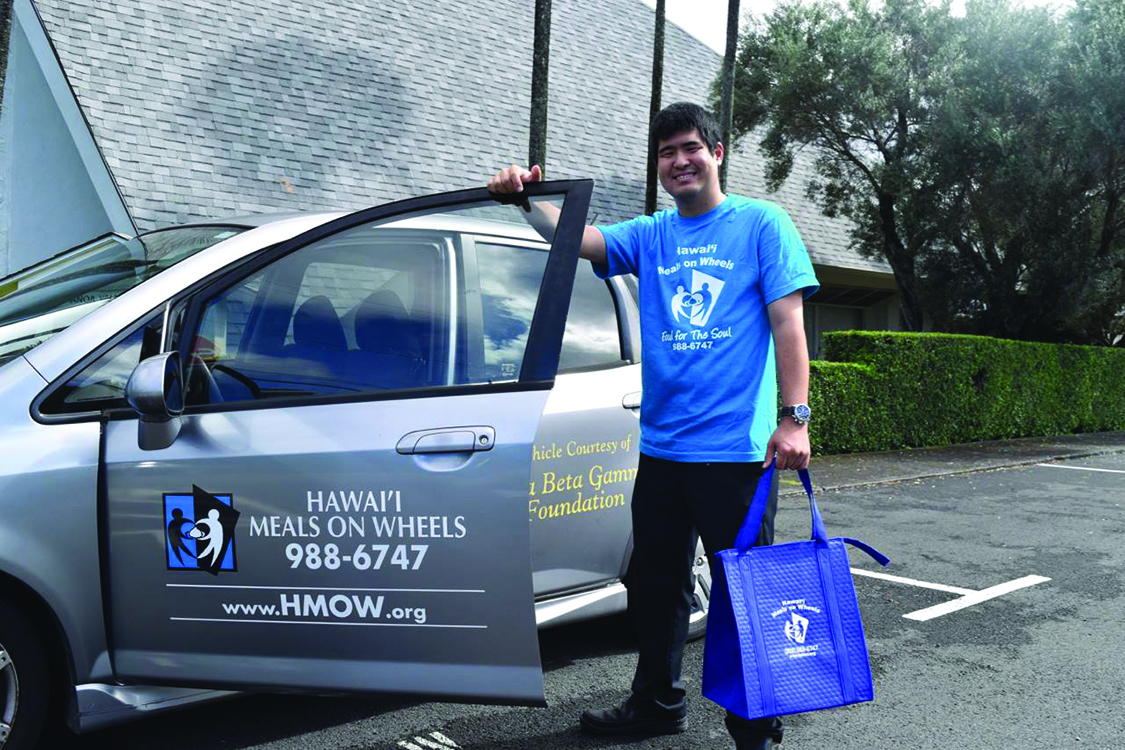
Hawaii Meals on Wheels provides hot, nutritious meals for seniors, delivering them to the homes of those who are unable to shop or cook for themselves and do not have someone currently caring for them.
By the year 2020, it is estimated that 25 percent of Hawai‘i’s population will be 60 years of age or older. Compared to the nation as a whole, the Aloha State has a disproportionately large population of seniors, many of whom may be unable to sufficiently care for themselves. Organizations like Hawaii Meals on Wheels strive to help seniors maintain a comfortable standard of living. For some who depend on these services, this may be the only meal they eat per day and the only personal interaction they experience.
Nonprofit programs such as this rely heavily on volunteer support. Not only do they help deliver meals, but they also monitor the welfare of these seniors, while providing them with interaction and companionship that many home-bound kūpuna would not otherwise receive. As the senior population in Hawai‘i continues to grow, so does the need for these services. Unfortunately, because the Meals on Wheels program relies on volunteer help, donations and government funding, not everyone who applies for the program can be accommodated. Not all seniors are fortunate enough to have family members who can care for them every day, nor are they able to afford senior care homes or in-home caregivers. Part of the issue is that those who lack the mobility, energy or capability to care for themselves are also unable to leave their homes — their struggle may go unnoticed. As a result, many people are unaware of the scope of their problems and do not reach out to help the kūpuna in their communities. However, almost anyone that wishes to lend a hand can do so in some way.
Meals on Wheels is always in need of volunteer drivers. In addition, those who wish to assist in other ways can help with the September fundraiser gala or administrative projects, or serve on the advisory panel. Meals on Wheels not only helps feed and care for our seniors in need, but also provides those who are healthy and active an opportunity to give back to a generation who once fed and cared for them.
HAWAII MEALS ON WHEELS
P.O. Box 61194, Honolulu HI 96839
Since 1979, Hawaii Meals on Wheels has been serving hot meals to the ku¯puna in need in our communities. The program started as a small committee formed by former State of Hawai‘i librarian Irmgard Hörmann and the Social Ministries Committee of the Lutheran Church of Honolulu. Over time, the organization grew as it sought to…
Many of these supporters dutifully provide care without complaint. Yet, demands may start to take a toll and their own health may be compromised.t’s estimated there are more than 150,000 unpaid family caregivers in Hawai‘i. These valuable helpers are typically women in their early 60s who are caring for their husbands or elderly parents while still working. And that doesn’t take into account those who may occasionally care for their grandchildren, as well.
Professionals can provide solutions to a variety of situations. Local programs are available in Hawai‘i ensure everyone feels comfortable and confident about their caregiver role. One option is the AUW Active Aging Initiative, which strives to keep active seniors healthy and maintain strong family caregivers.
There are also practical, hands-on caregiver training classes that covers bathing an elder, proper nutrition, wheelchair-bed transfers and more.
Home care services also offer respite for caregivers who need a break or a helping hand, including light housekeeping, meal preparation, transportation…
Find a local program that fits your needs.
ST. FRANCIS HEALTHCARE SYSTEM PO Box 29700, Honolulu HI 96820
Many of these supporters dutifully provide care without complaint. Yet, demands may start to take a toll and their own health may be compromised.t’s estimated there are more than 150,000 unpaid family caregivers in Hawai‘i. These valuable helpers are typically women in their early 60s who are caring for their husbands or elderly parents while…
by Fusao Nishibun, Tax Relief Supervisor, City and County of Honolulu Property Tax Office
The City and County of Honolulu offers a real property tax credit to property owners who meet certain eligibility requirements. If you qualify, you are entitled to a tax credit equal to the amount of taxes owed for the current tax year that exceed 3 percent of the titleholders’ combined gross income.
What are the eligibility requirements?
Homeowner must have a home exemption in
effect at the time of application and for the subsequent tax year.
Any of the titleholders do not own any other property anywhere.
The combined income of all titleholders does not exceed $60,000.
How do I apply for the tax credit program?
Applications are available at the following locations beginning July 1, 2017, up to the deadline date of Oct. 2, 2017. And, importantly, you must file annually for this credit.
All Satellite City Hall locations
Treasury Division at 530 S. King St., Honolulu
Tax Relief Section at 715 S. Kings St., Honolulu
Online at www.honolulupropertytax.com
When will the tax credit be applied to my real property taxes?
If approved, the tax credit will be applied to the July 1, 2018, to June 30, 2019, tax year.
*Information subject to change without notice.For more information or assistance, contact the Real Property Tax Relief Office.
The City and County of Honolulu offers a real property tax credit to property owners who meet certain eligibility requirements. If you qualify, you are entitled to a tax credit equal to the amount of taxes owed for the current tax year that exceed 3 percent of the titleholders’ combined gross income.
Henry Ford once said, “Anyone who stops learning is old, whether at 20 or 80; anyone who keeps learning stays young.”
Na Kupuna is a program that provides seniors an opportunity to do just that. As a part of the University of Hawaii’s Student Equity Excellence Diversity (SEED) initiative, Na Kupuna opens up college courses to seniors age 60 and older, which they can attend for free. About 650 senior citizens take advantage of this program every semester!
Although no credit is awarded and no records are kept, seniors can learn more about subjects of their choice, discuss topics with their professors and ask them questions. Up to two courses can be chosen per semester.
Both “regular” students as well as other seniors attend these classes, providing a way to meet, connect and network with students of all ages who share your interests.
Because this program is free of charge, the only requirement is an email address, which the university will use to keep in contact with you throughout the semester.
Check online for the class availability for the upcoming Fall 2017 semester (August through December), as well as the description of courses:
Henry Ford once said, “Anyone who stops learning is old, whether at 20 or 80; anyone who keeps learning stays young.” Na Kupuna is a program that provides seniors an opportunity to do just that. As a part of the University of Hawaii’s Student Equity Excellence Diversity (SEED) initiative, Na Kupuna opens up college courses…
As we age, we lose flexibility, strength and balance, which affects our general health and mobility. The good news is therapeutic exercise can help improve mobility and function.
Balance, flexibility and strength are essential to improve mobility and maintain independence.
Poor balance increases the risk of falls and when combined with osteoporosis can lead to fractures, which affect mobility. Good balance comes from strengthening the muscles of your core, back and lower extremities.
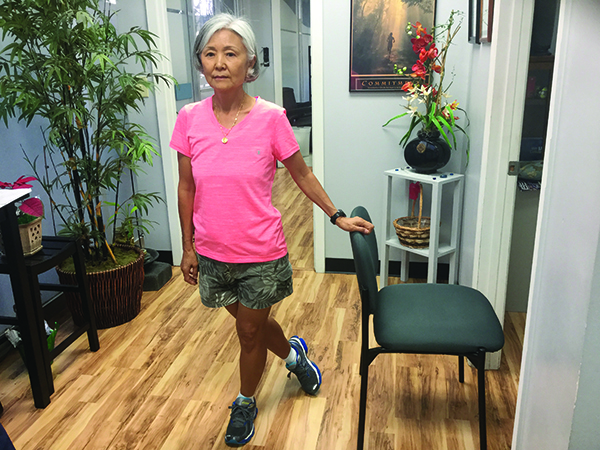
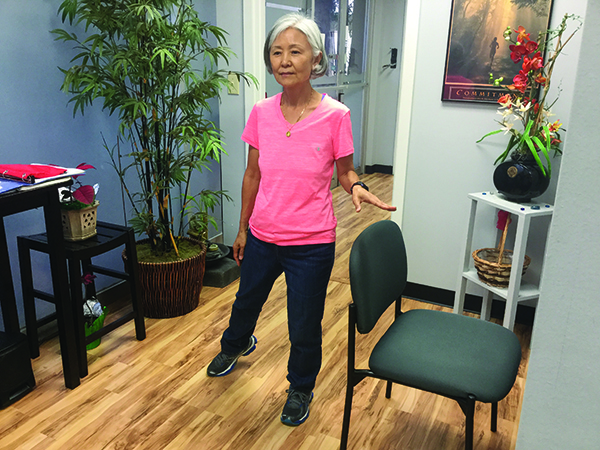
Single Leg Balance With Clock Reach
This easy exercise incorporates strengthening, stabilization and flexibility training.
Imagine you are standing in the middle of a clock. Bend legs slightly, reach forward with one foot at 12 o’clock, then move it back to the starting position. Reach toward 3 o’clock, then back and continue toward 6 and 9 o’clock. Repeat 10 times. Keep your core tight and hips level when stepping. Hold onto a chair for balance as needed.
It’s never too late to start increasing muscle strength and you don’t need fancy equipment to improve posture, mobility and function. Physical therapy can help increase mobility, return your independence and provide you with a renewed sense of confidence.
by Julie Moon, Physical Therapist HEALTH As we age, we lose flexibility, strength and balance, which affects our general health and mobility. The good news is therapeutic exercise can help improve mobility and function. Balance, flexibility and strength are essential to improve mobility and maintain independence. Poor balance increases the risk of falls and when…
More than one in four Americans suffer from a chronic pain condition. Pain is not only physically debilitating, but also affects our emotional and mental health. The primary causes of chronic pain are injuries, inflammation, poor circulation and age-related degeneration.
The most common chronic pain afflictions occur in major joints and muscle groups. Left untreated, chronic pain can worsen over time, leading to immobility and loss of independence.ore than one in four Americans suffer from a chronic pain condition. Pain is not only physically debilitating, but also affects our emotional and mental health. The primary causes of chronic pain are injuries, inflammation, poor circulation and age-related degeneration.
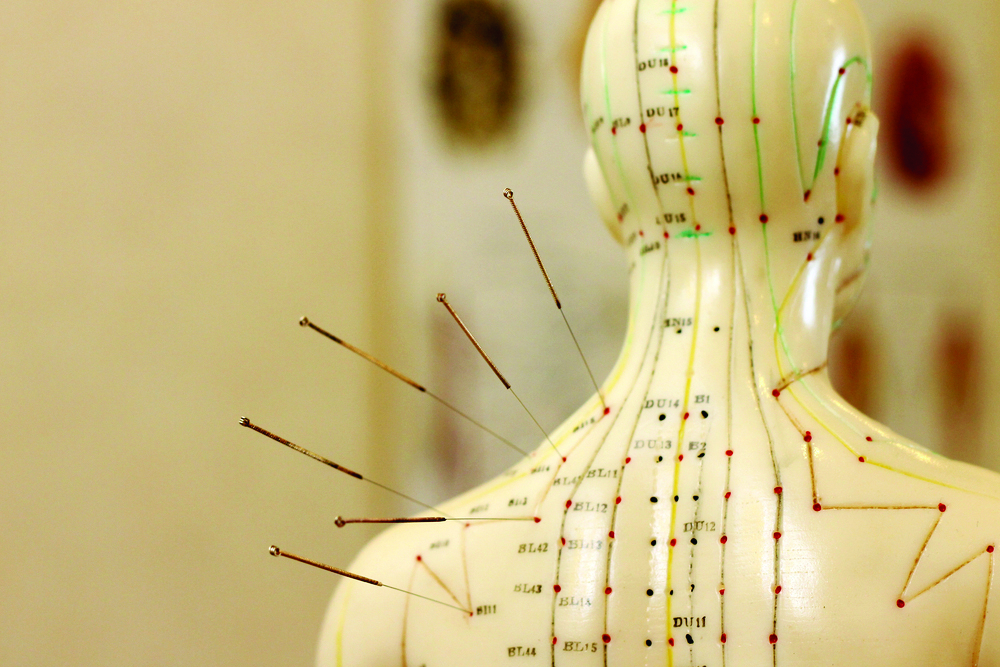
Fortunately, there are natural ways to alleviate these types of conditions that do not carry the side effects or risks associated with medications and surgery. Skillfully performed acupuncture and Chinese medicine treatments can alleviate chronic pain and treat a wide variety of pain conditions.
From a Chinese medicine perspective, chronic pain is seen as the body’s inability to provide proper circulation of blood, oxygen and nutrients to these painful, affected areas. One of acupuncture’s most unique features is its ability to gently stimulate the body’s tiniest nerves and create a natural healing response in areas that are painful or not functioning well. Through a series of treatments, even some of the most chronic and painful conditions can be dramatically improved.
by James Carter, L.Ac. More than one in four Americans suffer from a chronic pain condition. Pain is not only physically debilitating, but also affects our emotional and mental health. The primary causes of chronic pain are injuries, inflammation, poor circulation and age-related degeneration. The most common chronic pain afflictions occur in major joints and…
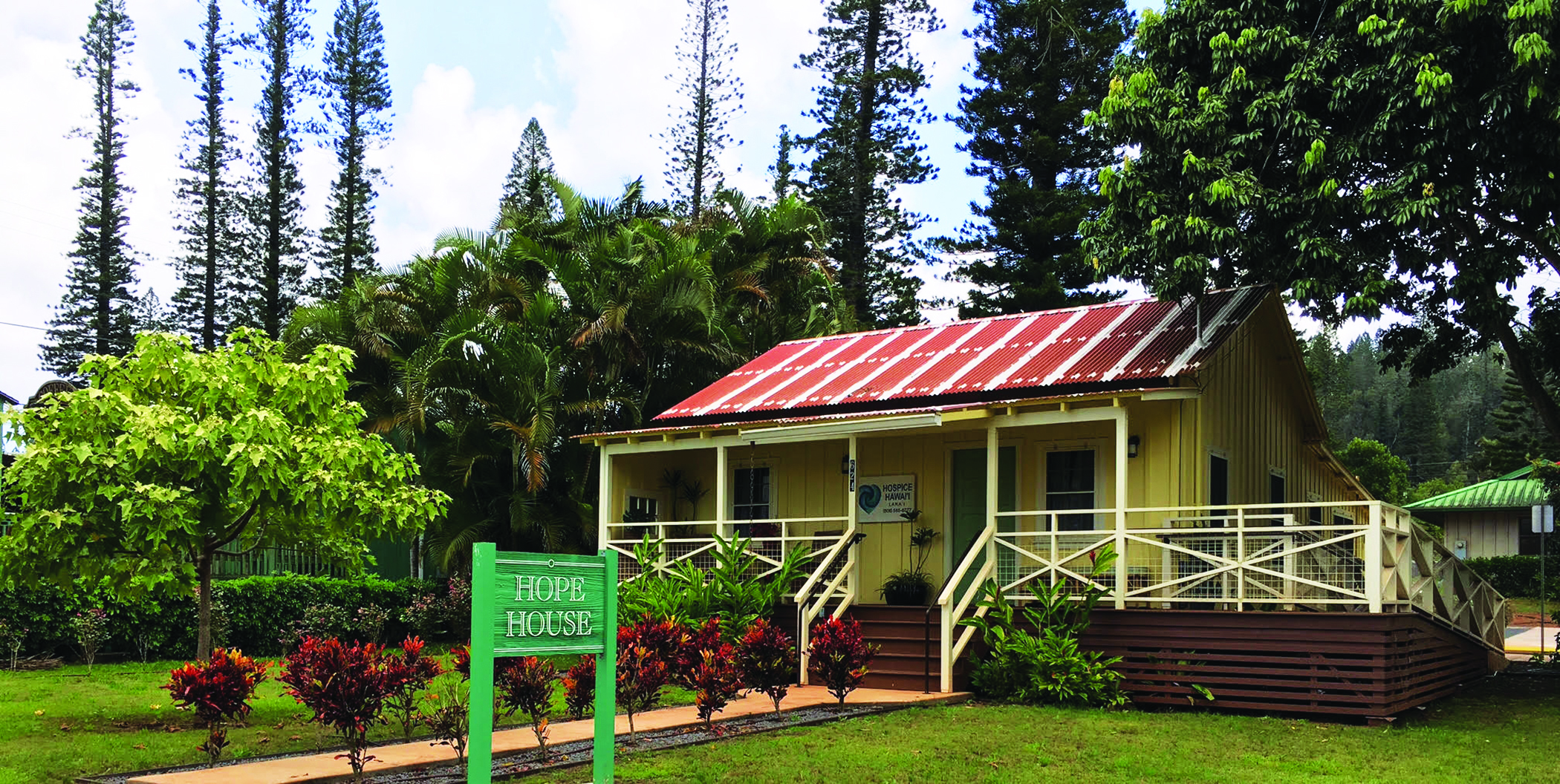
Hospice Hawaii Lāna’i is celebrating the one-year anniversary of Hope House, a home-away-from-home for many patients and their families.
“We’re so excited to celebrate this milestone with our friends at Hospice Hawaii Lānai,” said Kenneth L. Zeri, president and CPO of Hospice Hawaii. “Since opening its doors in April 2016, Hope House has served as a care center for patients and their families, and we look forward to supporting our patients on Lāna’i for many years to come.”
The Hope House offers a peaceful and supportive environment for Hospice Hawaii patients and their loved ones. The renovated two-bedroom home features a charming design while maintaining its plantation-style look for a home-like feel. The space also boasts a handicap-accessible floor plan as well as administrative offices for the Hospice Hawaii Lāna’i staff.
Patients who experience symptoms that are difficult to manage at home are encouraged to visit the Hope House and receive one-on-one care by certified professionals. The Hope House also serves as a respite for caregivers, ensuring that both families as well as patients are supported.
Hospice Hawaii first fulfilled the critical need for hospice care on Lāna’i, serving its first patient in 2014. Since then, Hospice Hawaii has cared for 20 patients on the island.
Hospice Hawaii was established in 1979 to help patients live as fully as possible, to provide com-fort and relief from pain, and to aid in symptom management. An interdisciplinary team of professionals and trained volunteers strive to meet the physical, emotional, psycho social, and spiritual needs of patients and families in the comfort of their own homes, its Kailua Home, nursing homes and other facilities.
by Generations Magazine Staff Hospice Hawaii Lāna’i is celebrating the one-year anniversary of Hope House, a home-away-from-home for many patients and their families. “We’re so excited to celebrate this milestone with our friends at Hospice Hawaii Lānai,” said Kenneth L. Zeri, president and CPO of Hospice Hawaii. “Since opening its doors in April 2016, Hope House has…
The 11th Annual Aging in Place Workshop takes place on Saturday, August 19
8:30 am – 2:30 pm
Ala Moana Hotel *No Reservations Required
Click image to enlarge
The 11th Annual Aging in Place Workshop takes place on Saturday, August 19 8:30 am – 2:30 pm Ala Moana Hotel *No Reservations Required Click image to enlarge
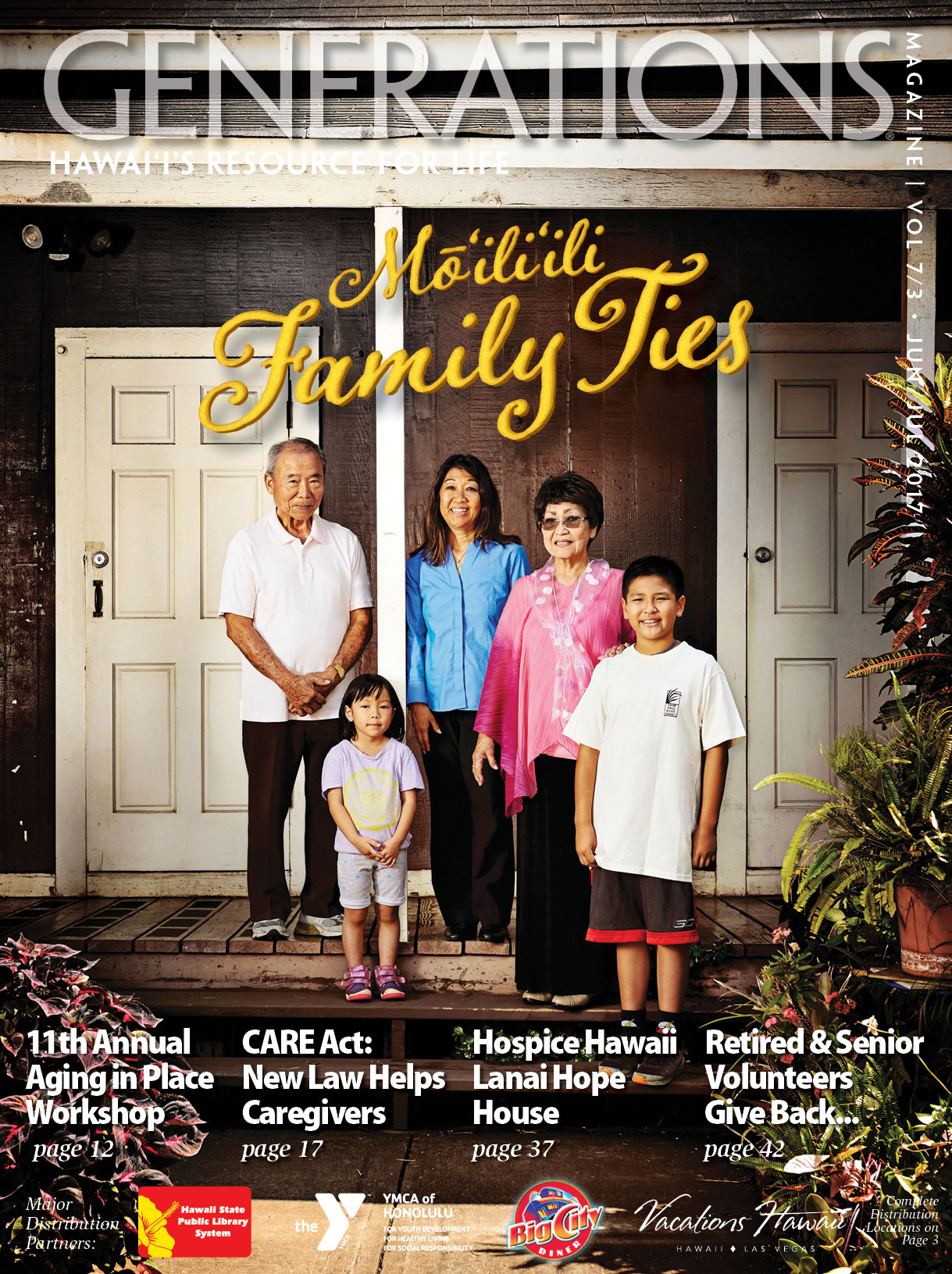
by Katherine Kama‘ema‘e Smith cover & feature photography by Brian Suda
The traditions and language of the original Japanese immigrants to Hawai‘i in the late 1800s survived because they taught their children to venerate and value the culture of the homeland. In over six subsequent generations of American Japanese, no single organization has nurtured language and culture more than Mo‘ili‘ili Community Center on O‘ahu. In addition to supporting a thriving Japanese Language School for children, the center opens its doors five days a week to 300 to 500 senior members who come to participate in a wide array of arts, activities, educational programs and adult day care. This private nonprofit organization is the traditional bedrock of Mo‘ili‘ili families.
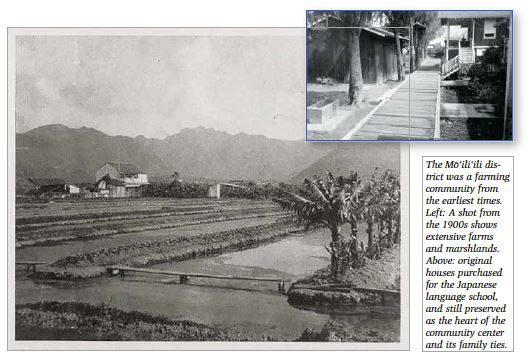
Executive Director Nadine Nishioka told Generations Magazine about the 115-year history of the center. In the 1890s, children of plantation worker families in Mo‘ili‘ili attended Japanese language school in the private home of Kihachi Kashi-wabara. Mo‘ili‘ili was a large marshland area at the bottom of Manoa Valley, behind Ala Wai (then a river) and Waikiki Beach flats. Lands adjacent to the many ponds and Kapaakea Springs were cultivated with rice, lotus and various vegetables. Along the dirt trails of this farming community were small shops and businesses, and wood-framed houses. Beside the homesteads, small plumes of smoke rose from wood stoves used for ofuros and cookhouses. Customs, foods, religious beliefs and common interests knit the residents of Mo‘ili‘ili into a harmonious community.
The Center’s Heritage
In the late 1800’s, when the sugar barons of Hawai‘i wanted to expand their plantations, they recruited farm workers and engineers from Japan. The men came first and soon brought in their wives. Freedom and work opportunities in Hawai‘i offered hope to young Japanese from a homeland ravaged by decades of war with China. Chinese invaders outlawed the practice of Japanese cultural traditions and Japanese language, so schools and temples were important features of a new life in Hawai‘i. For Japanese immigrants, plantation camps promised a second chance for success. In Mo‘ili‘ili, the community drew together and in 1928, purchased the language house and land that became the community center.
During WWII, the Mo‘ili‘ili community founded a formal council association. At that time, mainland Issei and Nisei were being interned in war camps, but in Hawai‘i, the Nisei first joined the civilian volunteer brigade and later entered the U.S. Army. The council was a hub for the community to gather and support one another. After the war, in 1945, they were awarded an official charter, and 20 years later, in 1965, this private nonprofit organization was formally named “Mo‘ili‘ili Community Center.”
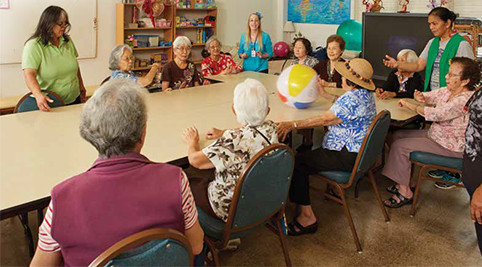
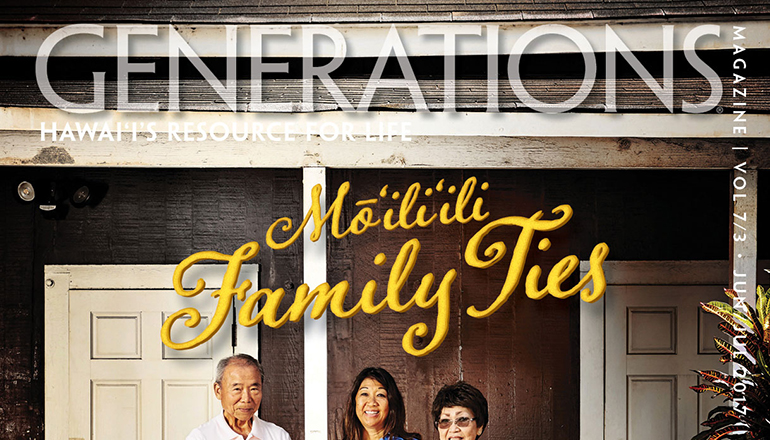
ADULT DAY CARE AND SENIOR ACTIVITY CLASSES AT MO’ILI’ILI COMMUNITY CENTER; COVER PHOTO OF BOARD MEMBERS, SENIOR AND CHILDREN ATTENDEES OF MO’ILI’ILI COMMUNITY CENTER; PHOTOS FOR GENERATION MAGAZINE
The Center Today
The business model for today’s center is simple and very successful. “Our members pay an annual membership fee that covers our overhead, salaries and operating expense,” said Nadine. “Next year, the fee will go up to $40 from $35 per person,” said Nadine. “Some seniors add a cash gift with their membership because they can afford it and they appreciate the benefits they are receiving here. For some seniors, the fee seems high but it all works out. We never turn away any seniors who may have difficulty paying the fee.” Professional planners say that successful community programs are designed and resourced at the grassroots level. Nadine agrees. She places the success of the center squarely on its members. “Our seniors know the programs they want and we just listen to them,” said Nadine. “They want mahjong, and they want it early in the day when they are alert and have a better chance of winning. They organize the games and find the prizes. Senior center staff members make sure the room is ready and oversee their plans. Mahjong starts at 7:30 am, and is so popular that our seniors are lined up and waiting in front of the door at 7 am.”
“Whenever MCC members have an idea for an activity or event, they make a plan and find the resources to put on the program,” said Nadine.
“We provide the space and scheduling and our members ensure the program or event’s success.”
One of the most popular weekly sessions is Rhythm & Life held every morning. This award-winning Japanese exercise and stretching program is designed for elders and choreographed to Japanese music. Rhythm & Life invites both actively mobile seniors (standing) and less mobile seniors (seated) to better fitness and improved blood circulation. The packed room is filled with intently engaged and happy faces as the participants work out to the beats of various rhythms and tunes. Other active options include outcome-based exercise, Zumba, classic tai chi and a special tai chi class for seniors with im-paired balance who want to rehabilitate themselves. This one is important for preventing falls. “I think one beauty of our center is that seniors who have lost a spouse or no longer live in their old neighborhoods may come here and socialize while they participate in healthy activities for body, mind and soul,” said Nadine. “We offer physical exercise, mental stimulation and ways to learn and participate, but socializing combats isolation and loneliness. Members have the opportunity to spend happy times with people who share memories of earlier times and traditional values.”
This benefit was certainly obvious to Generations staffers, who saw members chatting before and after yoga class and senior Zumba.
A display of the impressive artwork and handicrafts produced by MCC members proudly hangs in the center. It demonstrates the wonderful skills seniors can learn here. Traditional kumihimo is the art of braiding cords and ribbons. In ancient times, the samurai braided decorative laces for their armor; today, ties on haori jackets or obi kimono sashes are often crafted with kumihimo. When combined with beading, kumihimo art produces intricate and elegant bracelets. and festive dancing to enka music. Each year, Japanese teachers bring different traditional arts and crafts.
Art classes abound, with origami, shodo calligraphy and festive dancing to enka music. Each year, Japanese teachers bring different traditional arts and crafts.
Japanese Language at the Center
Language is the foundation of culture, and today, children are still learning Japanese at Mo‘ili‘ili. The intensely interactive program includes plays and performances that delight the whole family. The original mission of passing on the Japanese language to the next generation was a budding flower of the old Mo‘ili‘ili community. Today, the branches of that flowering plant produce a bouquet of family-based activities, arts and expressions. A few of the directors on the center’s board actually attended Japanese language classes at MCC when they were in grade school!
Today, K-5 children attend Japanese after-school classes every weekday and practice speaking Japanese with their parents, who learned it in the same facility. The whole family is able to speak Japanese with the grandparents. While many MCC programs are geared to elders, the center itself is oriented to fulfill the needs of the entire family, interacting across age groups as they do at home.
The Teens in Action program gives young volunteers in seventh grade or higher an opportunity to work as aids in the many children’s programs at MCC: After-school A+, Early Morning Care, and programs for school intercession, holidays and summer break.
Senior Programs at the Center
Cultural and community outreach events of MCC are all organized, planned and resourced by staff and member volunteers. Everyone pulls together to make the center a vibrant place where members can be proud of all they accomplish. Their volunteer work results in fun, satisfaction and benefits the community.
“Our members love singing karaoke, and performing both ‘auana hula and Japanese dance; when they learn a dance well, they like to perform it at homes for the elderly,” said Nadine.
“They recently organized performances at various senior daycare centers and nursing homes. We provide the transportation, they make their own costumes, and delight in bringing beauty and enjoyment to the other elders.” Another community service for which MCC recently became a partner is a version of Meals on Wheels. Instead of delivering meals to seniors’ homes, MCC drivers go out and bring elderly to the MCC dining hall for a hot meal. Coming to the center gives them the opportunity for socialization and conversation in a safe, happy environment. The new program is working very well. Nadine regrets that MCC does not have more space and staff for their very popular Kupuna Support Program. This adult daycare program is for frail as well as not-so-frail seniors who can use the restroom with very little assistance. They participate in a number of fun, healthy activities geared to stimulate their minds, bodies and souls. Palolo Chinese Home Catering provides a healthy lunch, which is included in the Kupuna Support Program fee — $55 a day.
“We always have a waiting list,” said Nadine. “The need for good adult care is so great that families are willing to be ‘on call’ for an opening of just one or two days when one of our regular clients is sick or traveling.”
By the end of Generation Magazine’s tour of MCC, it was clear that we could fill two issues with program details and still not cover every offering at this wonderful community center—transportation and escort services, excursions, counseling, special events and more.
Become a Center Member
If you are over 60 and live in Honolulu between Ward Avenue and Hawai‘i Kai, you are within the city area serviced by Mo‘ili‘ili Community Center. However, MCC also welcomes participants from all areas of O‘ahu. To learn more about the organization and its many programs, please visit www.moiliilicc.org.
This year, Mo‘ili‘ili Community Center is celebrating 115 years as a place of learning, health and enrichment. For many generations, the center has served families and created family ties throughout a broad community. MCC’s important work continues due to the generosity of many donors, grants and the Aloha United Way. If you wish to help them with a cash donation, remember that all donations to MCC support the programs, not the administration. Donations are tax deductible and every dollar helps the beneficiaries of the center.
MO‘ILI‘ILI COMMUNITY CENTER 2535 S King St., Honolulu HI 96826 Hours: M–F 8 am to 5 pm
808-955-1555 | Fax: 808-945-7033 | office@moiliilicc.org | www.moiliilicc.org
The traditions and language of the original Japanese immigrants to Hawai‘i in the late 1800s survived because they taught their children to venerate and value the culture of the homeland. In over six subsequent generations of American Japanese, no single organization has nurtured language and culture more than Mo‘ili‘ili Community Center on O‘ahu.
On a frosty winter’s morning, my fellow seminarian, Cal Chinen, picked me up in his old beige Volvo. We drove across the Columbia River from Portland, Oregon, to Washougal, a small town at the foothills of the Cascade Mountains in Washington State. We were responding to a senior citizen’s request to do some yard-work. We drove deep into the snow-covered forest and finally arrived at her cabin.
Busily, we chopped branches and started a bon- fire to burn the brush. As we worked, we saw bunny rabbits hopping across the snow and a deer checking us out to see what we were doing. For a local boy who had never seen snow, it was surreal — a winter wonderland.
After three hours of labor, the woman of the house called us in for lunch. The warmth from the fireplace felt amazing after being in the freezing cold. As I enjoyed the soup and sandwich, I admired the cabin’s beautiful woodwork.
The woman told us about her husband, who, in his younger years, built this cabin for her. Now in their sunset years, they were enjoying life in the cozy cabin built with his own hands. On the beam above the kitchen counter, her husband had lovingly carved the words “Grow old with me. The best is yet to be!” Although it has been 39 years since I sat in that cabin, I still remember the woman’s glowing face as she spoke of her hus-band and spending their golden years together.
Yes, our later years can be a time of great blessing, but as we know all too well, it can be a time of loss. The loss of productivity, health, well-being, independence, and sadly, the loss of cherished loved ones. But all is not lost. Many have found comfort and peace of mind through spiritual nourishment. Developing supportive relationships in a spiritual fellowship can do wonders for the soul. A woman in her later years began attend-ing our church just a few months after losing her husband. Every Sunday, she tells me how blessed she feels being part of a loving church family. So, in your sunset years, consider developing the spiritual dimensions of your life. You will be glad you did. “The best is yet to be!”
STREAMS OF LIFE FELLOWSHIP
Manoa District Park
2721 Ka‘aipu Ave, Honolulu HI 96822
808-554-4513 | www.streamsoflife.org
Services: Sundays, 10 am
Alternative site: Manoa Elementary School Cafeteria 3155 Manoa Rd., Honolulu, HI 96822
On a frosty winter’s morning, my fellow seminarian, Cal Chinen, picked me up in his old beige Volvo. We drove across the Columbia River from Portland, Oregon, to Washougal, a small town at the foothills of the Cascade Mountains in Washington State. We were responding to a senior citizen’s request to do some yardwork.


 Not all seniors are fortunate enough to have family members who can care for them every day, nor are they able to afford senior care homes or in-home caregivers. Part of the issue is that those who lack the mobility, energy or capability to care for themselves are also unable to leave their homes — their struggle may go unnoticed. As a result, many people are unaware of the scope of their problems and do not reach out to help the kūpuna in their communities. However, almost anyone that wishes to lend a hand can do so in some way.