Category: June – July 2015

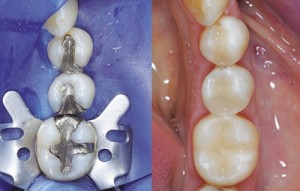
  • Metal-Free Biocompatible Restorations

    Conservative Restoration

    Dental toxicity can occur when materials placed in a patient’s mouth cause that person’s immune system to react and “reject” the restoration. Serum compatibility testing provides dentists with one way to help determine which materials will react in a test tube with a patient’s serum proteins. Today’s dental patients have the opportunity to select:

    • Highly aesthetic, tooth-colored fillings — created and placed during a single dental appointment, with no temporary crown.
    • Metal-free, bio-compatible materials for restorations that will not cause an allergic reaction with the body.
    CEREC Restoration
    CEREC Restoration

    The CEREC procedure was developed at Zurich University 25 years ago. The CEREC system uses restorative material and the conservative removal of dental enamel to restore the diseased tooth.

    In the past crowns were made for teeth requiring removal of a lot of tooth structure. With the new materials, the dentist can preserve precious tooth enamel and effectively restore the tooth. Enamel is the only tissue in the body that once removed, will not regenerate.


    Hawaii Center for Cosmetic & Laser Dentistry
    808-526-0670 | www.smilepower.net

    Dental toxicity can occur when materials placed in a patient’s mouth cause that person’s immune system to react and “reject” the restoration. Serum compatibility testing provides dentists with one way to help determine which materials will react in a test tube with a patient’s serum proteins. Today’s dental patients have the opportunity to select: Highly…

  • Sandwich Generation Conversation

    Kirk: We hear a lot about the Sandwich Generation these days.

    Linda: You know me … I love a sandwich.

    Kirk: No, we’re talking about the generation that has to take care of their parents and their children; they’re in the middle.

    Linda: Baloney!

    Kirk: Not! Not that kind of sandwich. More than ever, there are three generations in one household. Sandwiches are stacking up.

    Linda: But a sandwich needs condiments — mayonnaise, lettuce, mustard.

    Kirk: Exactly. That’s where resources come in — resources that can help the sandwich generation cope. Generations Magazine includes a lot of assistance that way.

    Linda: So instead of a club sandwich, it’s a… sandwich club!

    Kirk: And the club is growing. One in eight Americans are in the sandwich generation and the number is likely higher here in Hawai‘i. The important thing to remember is you are not alone.

    Linda: What happens if there’s a “next” generation added? Do you want small fries with that?

    Kirk: Good question. It helps to think of that ahead of time. By the way, if you were a sandwich, what kind would you be?

    Linda: I would be a sweet honey on nut bread.

    Kirk: I’d go along with that. What kind would I be?

    Linda: You would be a ham on wry!


    Retired broadcast personalities and Journalists Kirk Matthews and Linda Coble speak from the heart on issues concerning boomers and seniors. Post comments for them on Generations808.com.

    Kirk: We hear a lot about the Sandwich Generation these days. Linda: You know me … I love a sandwich. Kirk: No, we’re talking about the generation that has to take care of their parents and their children; they’re in the middle. Linda: Baloney! Kirk: Not! Not that kind of sandwich. More than ever, there…

  • Calling the Police: It’s Called ‘Tough Love’

    Wanda (not her real name) took out a home equity loan on her Waianae house. She intended to renovate her home so that her adult daughter could move in, care for Wanda and help repay the loan. Once the $290,000 was in their joint checking account, however, her daughter withdrew it and took her family on a first-class trip to Disney World. Wanda has not seen her daughter for two years and is now going through the foreclosure process.

    Steve (not his real name) was the caregiver of his disabled sister and had established a sizable savings account for her care. When Steve’s daughter offered to help care for her aunt, Steve gladly accepted and gave her access to the bank account. After six months of being a caregiver, she withdrew all the money from the bank account (about $120,000) and moved in with her new boyfriend.

    These are just two calls I got recently from victims who wanted to report what happened to them, but did not want the police to get involved. Their voices were full of despair and frustration. Each could not believe what had happened, and despite the fact that they were informed a crime had occurred, did not want the police or the court system to get involved — even if that was the only way to get their money back.

    As a deputy prosecuting attorney in charge of the Elder Abuse Unit, I advocate that all cases of financial abuse be reported to the police, even if the person taking the money is an adult child or another relative of the victim. It is not blind faith in the criminal justice system that leads me to this school of thought. Twenty years of experience has proven to me repeatedly that showing “tough love” and calling the police on a loved one who has stolen money is actually helping that person stop a behavior, like drug usage, which will prove harmful to them in the long run.

    More than once have I had parents call me up years after their child had been arrested to thank me for the work our office and the court system did to help their child get their life back on track. Drugs, alcohol, gambling or mental health issues have ruined the lives of many people and have caused family to victimize family. Oftentimes, those suffering from these afflictions will promise their kupuna they will get help, only to later on steal from them to feed their habit. Police intervention gives these people opportunities to either go to counseling or go to jail. Often they choose to get help and rehabilitation, with good results.

    If you are in a situation where you have been the victim of a crime committed by someone you know, please call the police. There is no shame in reporting a loved one’s destructive actions to someone who can force them into a rehabilitation program or other help they may need. It’s hard to do, but that is why it’s called “tough love.”


    To report suspected elder abuse, contact the Elder Abuse
    Unit at:808-768-7536 | ElderAbuse@honolulu.gov
    www.ElderJusticeHonolulu.com

    Wanda (not her real name) took out a home equity loan on her Waianae house. She intended to renovate her home so that her adult daughter could move in, care for Wanda and help repay the loan. Once the $290,000 was in their joint checking account, however, her daughter withdrew it and took her family…

  • What’s the Right Life Insurance?

    For most people, it isn’t a question of whether to own life insurance, but what kind of coverage is most appropriate for their circumstances. There is no “one-size-fits-all” policy. You need to determine what works best for you.

    Choosing life insurance involves finding the right balance between the cost of insurance and the most appropriate coverage for y our family.

    Two Basic Life Insurance Options

    Policies that provide a death benefit for survivors after you die, but no other features, for a specified period of time. These are typically referred to as term life insurance.
    Policies that combine a death benefit for survivors with a cash value that can be accessed while you are still living, often referred to as whole-life or permanent life insurance.

    Term insurance — cost effective coverage

    If keeping premiums as low as possible and replacing your income stream for your family are your priorities, term insurance can be a good option. The younger and healthier you are when first purchasing a policy, the less it will cost. Newly married couples may buy this type of policy to provide a financial cushion in the event one spouse dies. Your employer may offer term insurance as part of your employee benefits plan.

    The amount of coverage that seems sufficient early in life may not be enough to protect your family later on when you have dependent children, aging parents to support or when your income rises. Term insurance typically expires after a stated period of time or once you reach a specific age. After the term policy expires, you must reassess your insurance needs.

    Permanent life insurance — coverage beyond death benefits

    You may choose from a variety of permanent life insurance policies, such as traditional whole life, variable life, universal life or variable universal life. Like term policies, they pay designated beneficiaries at your death. Unlike term policies, they do not have a termination date. As long as adequate premiums are paid and the policy remains in force, your beneficiaries will receive the death benefit. Premiums or additional costs are generally higher than term insurance.

    Another important feature of permanent life insurance is that a portion of your premiums accrue within the policy on a tax-free basis; over time, the policy builds a cash value. Some forms of this type of insurance give you the ability to make investment choices within the policy. The cash value is not guaranteed, but it can act as an asset while you are living. This is an important benefit that can give the policy owner much more financial flexibility.

    Like anything else in your financial life, the need to protect your loved ones requires that you carefully assess which available options work best for your circumstances and needs. When insuring your life, be sure to discuss your options with a financial advisor or insurance specialist first, before making any decisions.


    Michael W. K. Yee, CFP
    1585 Kapiolani Blvd., Suite 1100, Honolulu
    808-952-1222 ext. 1240 | michael.w.yee@ampf.com

    Michael W K Yee, CFP®, CFS®, CRPC®, is a Financial Advisor and CERTIFIED FINANCIAL PLANNER practitioner™ with Ameriprise Financial Services, Inc. in Honolulu, HI. He specializes in fee-based financial planning and asset management strategies and has been in practice for 30 years.

    Ameriprise Financial and its representatives do not provide tax or legal advice. Consult your tax advisor or attorney regarding specific tax issues.

    Life insurance benefits are subject to the claims paying ability of the issuing insurance company. Ameriprise Financial Services, Inc. Member FINRA and SIPC.

    © 2015 Ameriprise Financial, Inc. All rights reserved. File #1156277

    For most people, it isn’t a question of whether to own life insurance, but what kind of coverage is most appropriate for their circumstances. There is no “one-size-fits-all” policy. You need to determine what works best for you. Choosing life insurance involves finding the right balance between the cost of insurance and the most appropriate…

  • Total Knee Rehab and Recovery

    1The knee is the most often replaced joint in the body. Usually, total knee replacement (TKR) surgery is performed when people have knee damage and pain caused by osteoarthritis, rheumatoid arthritis or alignment problems in the leg that make walking or performing daily activities difficult. Successful recovery requires a considerable investment of time and energy in rehabilitation following surgery. A strict timetable of exercise, rest and medication is crucial to heal muscles and tendons. Your physical therapist can speed up your return to normal activity and help make your new knee better than the old one! A rehab program tailored to your specific needs may include land or aquatic range of-motion and muscle-strengthening exercises, activity-specific training, and body awareness with balance training. You may also receive manual therapy and pain modalities to minimize swelling, as well as a custom home exercise program. Prepare for surgery by losing weight. Staying active, even beyond your home exercise program, will help hasten your recovery — but activities should never be done to the point where they cause more pain. Follow your physical therapist’s instructions and take care to protect your new knee and your general health. These are ways you can contribute to the success of your total knee replacement.


    Moon Physical Therapy,
    320 Ward Avenue, Suite 107, Honolulu, HI 9681
    Aquatic, Land-based and Manual Therapy and
    Cardiopulmonary Rehab Programs
    808-597-1005 | Moon Physical Therapy, www.moonpt.com

    The knee is the most often replaced joint in the body. Usually, total knee replacement (TKR) surgery is performed when people have knee damage and pain caused by osteoarthritis, rheumatoid arthritis or alignment problems in the leg that make walking or performing daily activities difficult. Successful recovery requires a considerable investment of time and energy…

  • June – July 2015

    WANT THIS ISSUE?

    Download your own personal copy of this issue in PDF format. Click the button below:

    DOWNLOAD IT NOW

    Sandwiched: Baby Boomers Face the Challenge