Over the past two decades, successful therapeutic cardiovascular disease strategies have focused primarily on lowering bad cholesterol (LDL) with statins, and reducing the risk of the blood clots that cause heart attacks or strokes with “blood thinners” such as aspirin. Blood pressure medications are also widely used. Despite these interventions, a significant number of patients experience recurrent events or disease progression.
New research using large clinical trials points strongly to the role of chronic inflammation as a culprit. The studies also show the need for treatments that provide multiple cardiovascular health benefits — optimization of total cholesterol, LDL, blood pressure, triglycerides and inflammation.
New dietary supplements that support this broader cardiovascular inflammatory health approach are available. Dietary supplements that successfully target inflammatory health may also provide support for joint health, liver health, kidney health, metabolic health and cognitive health.
Drugs being developed that address multiple cardiovascular health issues may offer further reduction of the risk of heart attacks, strokes and other major cardiovascular events. New drug treatments that result in the systemic reductions of inflammation may also have a positive impact on other chronic diseases caused by inflammation — including diabetes, arthritis, cancer and Alzheimer’s.
Over the past two decades, successful therapeutic cardiovascular disease strategies have focused primarily on lowering bad cholesterol (LDL) with statins, and reducing the risk of the blood clots that cause heart attacks or strokes with “blood thinners” such as aspirin. Blood pressure medications are also widely used. Despite these interventions, a significant number of patients…
Grandparents play an important role in raising children, especially in Hawai‘i, with changing family patterns and dual-worker households. And while it’s acceptable for grandparents to treat their grandchildren to sweets, they are also expected to show them the importance of good oral health and a healthy diet.
February is National Children’s Dental Health Month, when children are reminded to brush, floss and see their dentist at least twice a year. Grandparents and parents are also reminded to practice good oral hygiene with children to avoid tooth decay, gum disease and other oral health issues that could arise at any stage of life.
Oral health directly impacts overall health. Be sure to establish a consistent routine of brushing for at least two minutes twice a day and flossing daily. This simple routine can prevent plaque and bacteria from infecting the teeth and gums. A healthy diet and limiting sugar will also help the family stay healthier longer. Drinking water regularly and after eating sugary foods helps flush out excess sugar that tends to linger inside the mouth and cause cavities.
Instill good oral health habits and show the next generation that it’s possible to live well and smile more at any age.
Grandparents play an important role in raising children, especially in Hawai‘i, with changing family patterns and dual-worker households. And while it’s acceptable for grandparents to treat their grandchildren to sweets, they are also expected to show them the importance of good oral health and a healthy diet.
Two-time stroke survivor June struggled with her balance. She felt unsteady, even when holding onto something. She was very worried about falling… until she discovered specialized walking poles. These poles provide greater stability for those who use them while they walk, and also improve balance and posture, increase upper-body and core strength, reduce the risk of falls, and allow faster walking speeds. June’s posture and mobility have improved since using them and she feels more confident in her physical abilities.
Pole walking engages up to 90 percent of the body’s muscles and enables a greater range of joint mobility. Using specialized poles for walking or exercising can burn up to 20 to 46 percent more calories than regular walking, while providing more support. They’re ideal for people with Parkinson’s disease, hip or knee issues, or arthritis, or those who’ve had a stroke.
Besides, walking is one of the best and easiest ways to get your recommended 150 minutes a week of moderate-intensity aerobic exercise. Imagine boosting this benefit by adding a tool that enhances strength and balance, reduces the risk of falls, and burns more calories.
Two-time stroke survivor June struggled with her balance. She felt unsteady, even when holding onto something. She was very worried about falling… until she discovered specialized walking poles.
Kūpuna who are staying at home or limiting interaction with loved ones may start to experience loneliness. Integrating a variety of activities while caring for kūpuna — both personally and professionally — can provide enjoyment for everyone.
• Get virtually connected.
Teaching kūpuna how to use FaceTime, Zoom or Google Meet to connect with relatives, friends and their community will help them to socialize without leaving the safety of home. Some community centers offer online classes, enabling kūpuna to participate in virtual hula or ‘ukulele lessons.
• Try a cooking project or a DIY craft.
Plan a project with kūpuna. For instance, my grandmother loves barbecued short ribs. I grocery shop, then we prepare the dish together. Engaging kūpuna in activities gives them needed structure and something to look forward to doing.
• Go through family photos.
Help digitize or organize photo albums and spend time discussing the captured memories. It’s a great cognitive exercise and can bring joy to your kupuna’s day.
Although there is no playbook for caring for kūpuna during a pandemic, it is essential that we support their social and emotional needs.
During these challenging times, they need us more than ever.
Kūpuna who are staying at home or limiting interaction with loved ones may start to experience loneliness. Integrating a variety of activities while caring for kūpuna — both personally and professionally — can provide enjoyment for everyone.
Transitioning from living at home to a community that offers independent living, assisted living or skilled nursing care can be challenging for both seniors and their families.
Kūpuna may need special care, but may be hesitant to make the big move because they prefer the familiarity of their own home. Many Hawai‘i families also struggle with the change. They may believe it their obligation to take care of their parents at home — even though they may not have the necessary skills or temperament to provide appropriate, quality care.
A care community plays a key role in making seniors feel welcome. This is especially important in order to help reduce confusion for seniors who have some form of dementia. Helping seniors assimilate into a new setting and adjust to new friends may take time. It may also be difficult for family members, but they soon find they are no longer stressed from 24/7 caregiver duties and can enjoy being with their elder parents again.
When deciding on a community for your loved one, ask other families about their experiences. With the current pandemic, it’s also important to ask about the community’s visitation policies so you can be assured you can stay in touch with your loved one.
Transitioning from living at home to a community that offers independent living, assisted living or skilled nursing care can be challenging for both seniors and their families. Kūpuna may need special care, but may be hesitant to make the big move because they prefer the familiarity of their own home. Many Hawai‘i families also struggle…
The senior living industry also has frontline workers who have come face to face with the pandemic. Working to protect our kūpuna has been challenging, to say the very least. All staff at community living facilities are frontline workers and they must work together to mitigate the effects of COVID-19. They cannot give up and must find strength to do what is right; protecting our residents and each other.
I witnessed our team’s hardships and gained an understanding of my staffs’ perspective by being there for them the best way I could. As a team, we worked alongside each other since our first confirmed COVID case. Our common goal was to see this to the end and for that I am eternally grateful to them. We each experienced a wide range of emotions: fear, anxiety, frustration, hope and compassion. When we face difficult times, we must remember that challenges are not sent to destroy us. They are sent to strengthen us. We must keep up the good fight, and together, we will survive; we will persevere.
We had faith and that faith grew stronger because we knew that we would overcome. Acknowledging and appreciating the perspective of my staff brought another level of compassion and empathy that I now have for them. “Everything in our lives is to serve our highest and best purpose, always.”
The senior living industry also has frontline workers who have come face to face with the pandemic. Working to protect our kūpuna has been challenging, to say the very least. All staff at community living facilities are frontline workers and they must work together to mitigate the effects of COVID-19.
More seniors and families looking into long-term care solutions have found that the cost can be quite shocking. In the early stages of planning for long-term care, there are two questions that must be considered. First, what long-term care options are available? Second, how will I pay?
The first step is assessing long-term care options. Long-term care options include nursing homes, private duty home care, assisted living communities, adult day care and residential care home placement.
The misunderstanding comes when individuals assume that Medicare will cover the cost of long-term care. While it is true that Medicare covers skilled nursing or rehabilitative services for a short period, seniors need to prepare to cover all long-term care costs out-of-pocket. Medicaid can assist in paying for a portion of care. However, financial and level-of-care requirements need to be met in order to be eligible.
Doing the groundwork financially for long-term care is just as crucial as planning for other aspects of senior life. Successful planning leads to more options and less stress if long-term care becomes necessary in the future.
More seniors and families looking into long-term care solutions have found that the cost can be quite shocking. In the early stages of planning for long-term care, there are two questions that must be considered. First, what long-term care options are available? Second, how will I pay?
They were overwhelmed and unprepared. Many were the designated caregiver by default — no other family member was willing to help.
As a nonprofit organization, St. Francis Healthcare System fills this community need by offering information resources and educational sessions for caregivers at no cost or for a nominal fee. Even during the pandemic, we provided caregivers access to virtual caregiving training sessions.
We offer practical information: how to safely give your aging loved one a bath without injuring yourself or your loved one, how to plan for long-term care, how to manage caregiver stress and many other topics. Most importantly, we make sure these sessions are not sales presentations that may make participants feel uncomfortable.
Caregiving can be challenging, even for the most patient person. Equipping family caregivers gives them more control over their lives and allows them to provide quality care that retains the dignity of their elderly loved ones.
When speaking with family caregivers, I often hear a common phrase: “I wish I had known…” They confide there is so much they didn’t know when they started their caregiving journey and had to muddle through on their own. These caregivers didn’t know where to begin, where to turn or even what to ask.
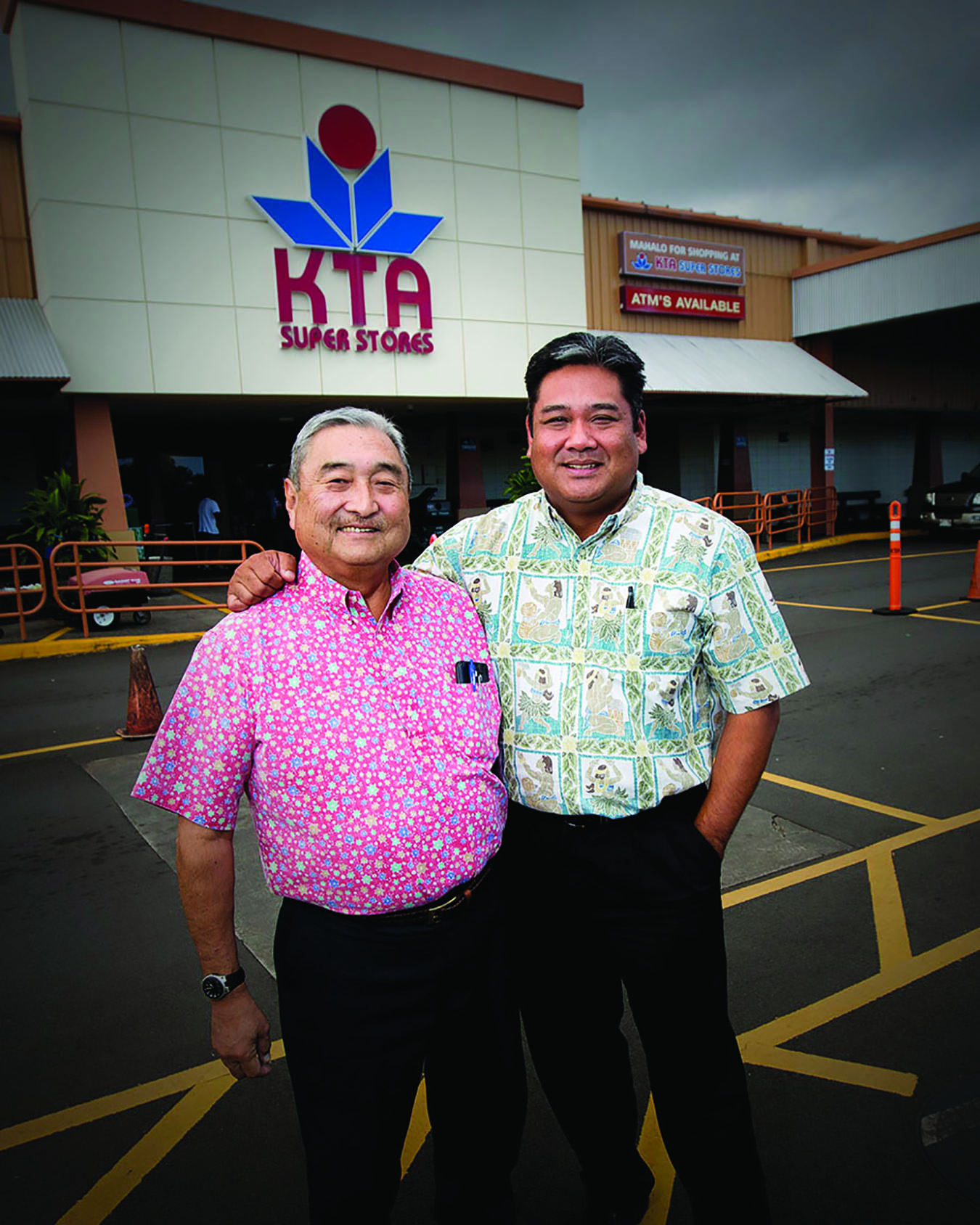
The traditional Japanese concept of kaizen — “continuous improvement” or “changing for the better”— has carried KTA Super Stores beyond its centennial anniversary as a family-owned business. The founders’ focus was not solely on the bottom line. For over 100 years, KTA Super Stores has been committed to its founders’ philosophy: to humbly serve and do what is right for the community.
KTA Super Stores began and continues to operate by honoring the partnerships built by previous generations. These principles and values continue today from the founders as the basis of the development and growth of KTA’s business model and its relationships with its partners, customers, staff and each other.
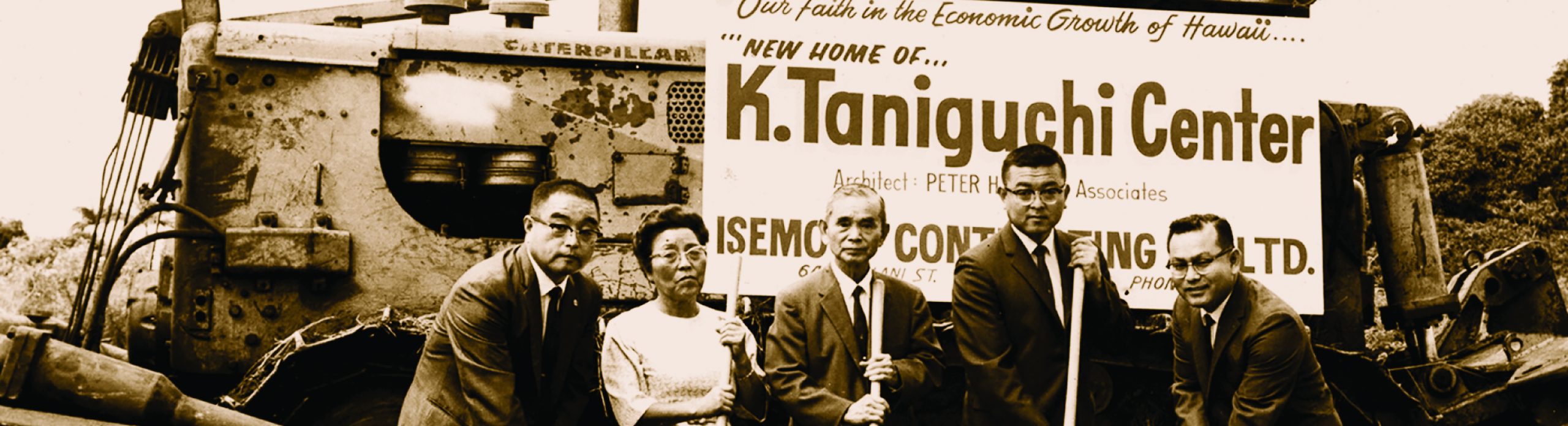
KTA President and COO Toby Taniguchi’s great-grandparents, Koichi and Taniyo Taniguchi, moved to Hawai‘i inadvertently. During his emigration from Japan, Koichi had stopped in Hawai‘i on his way to California, where he had planned to settle. Early 20th century immigration controls stranded him in Honolulu, where he was visting a cousin. Eventually, he made his way to Hilo, where he enrolled in the Hilo Boarding School and learned bookkeeping. On his own and with no family on the island, he found work with a wholesaler and eventually sent for Taniyo. Former KTA President Barry Taniguchi’s father, Yukiwo, was born in 1916. The story goes that his grandfather told his grandmother that with another mouth to feed, they’d need more income. The store was created to provide income to support Yukiwo. Koichi figured Taniyo could watch the store and care for baby Yukiwo — and their eight children that followed.
They founded the company later that year. Their first operation was a modest, 500-squarefoot grocery and dry good store in Waiakea (Hilo) that served sugar plantation workers. Their simple mission was to help family and friends obtain necessary grocery and household items as the sugar-based economy began to decline.
Early on, Koichi delivered the much-needed merchandise by bicycle. In time, the couple built their pickup-and-delivery business to the point where they were able to afford a “real” store.
Executive Vice President Derek Kurisu says that when the sugar plantations were going under, Koichi and Taniyo’s son, Tony, who eventually succeeded founder Koichi, said he felt it was his obligation to help the agricultural community.
Also growing up in the Big Island plantation culture, Derek thought, “I also have got to do something to help. In crisis is opportunity.”
Derek has worked with four generations of KTA Super Stores presidents: Toby is the fourth.
By 1940, a branch store was established in Downtown Hilo. This proved to be fortuitous when the original structure was destroyed by the 1946 tsunami. This Downtown branch, converted into a supermarket in 1953, was followed by the opening of the Kailua-Kona store in 1959 (relocated to its present location in 1975). Seven years later in 1966, the flagship Puainako store was opened, followed by Keauhou in 1984 and the Waimea store (located in Kamuela) in 1989.
In 1984, then CEO Tony, his nephew Barry (Toby’s father) and Derek developed Mountain Apple Brand partnerships to create more employment and support a “buy local, take care of local” dynamic. The private-label promotes products grown or manufactured in Hawai‘i.
In 1990, a sixth location, was opened to serve the growing community of Waikoloa Village, and in 2018, KTA Express Kealakekua opened.
The KTA Principals, Past & Present Koichi and Taniyo Taniguchi Original owners, Toby’s great-grandparents Yukiwo Taniguchi, called “Mr. Y” Barry’s father, Toby’s grandfather Tony Taniguchi Former CEO, Barry’s uncle, Toby’s great-uncle Barry Taniguchi KTA chairman and CEO, Toby’s father Toby Taniguchi Fourth-generation president and COO Executive Vice President Derek Kurisu
Employee Number 11
KTA’s No. 1 man is actually employee No. 11 in the roster of the thousands of people who have worked at the company over the last 104 years.
At age 16, while still in high school, Derek worked part-time for the Taniguchis at the first KTA in Hilo. He said he had to carry a 100-pound bag of rice for a distance to get hired as a bag boy.
Koichi and Taniyo’s son Tony eventually succeeded founder Koichi. Another son, Yukiwo, aka “Mr. Y, ” also worked at the store. He was the father of former KTA President Barry Taniguchi, Toby’s father.
Derek worked with them all — four generations of Taniguchi leaders at KTA.
Every day, Koichi, would sweep the sidewalks in front of the store, Derek says. “People who would see him thought he was the custodian.”
“I can still totally recall the first lecture I ever received from Mr. Taniguchi,” he said. “One day, I went to open a 50-pound rice bag with my case cutter. Mr. Taniguchi told me, no, open it with the string. Rice was a sacred thing 50 or 60 years ago. That is when I realized what KTA was about.”
“The values we use in our store to this day, — taking care of the products, the people, the employees, the customers — keep passing down from generation to generation,” says Derek.
“We continue to grab the old and blend it with the new and move forward,” says Derek. “I am blessed to be able to share the old-fashioned values I learned working at KTA.”
Change for the Better
Toby did not always envision a future with KTA. He went to college at the University of Portland and wasn’t sure he was going to come back to Hawai‘i at all. He had a girlfriend there and wanted to “hang around,” he says. But as fate would have it, they eventually broke up.
“Everything happens for a reason, I guess,” says Toby. He contemplated his next move.
When Barry went to Oregon to attend his daughter’s graduation from another university, he asked Toby about his plans for the future.
“I’m not sure,” Toby replied. “I had a job working for a wholesale printer and they were going to pay for me to continue my education. Then the breakup came. So I wrote dad a letter and asked him if there might be a place for me — because I wanted to come home.”
“Barry must have been super-relieved that Toby decided to come back and work,” says Derek. “But Toby didn’t just come back to work to stay upstairs in the office,” says Derek. “He’s downstairs bagging groceries and doing all the jobs.”
“The Japanese saying, okage sama de, means ‘I am what I am because of you.’” says Toby. “For me, the ‘you’ is Derek, and my uncles, aunts, and business associates who have a lot more experience than I do. You can’t get these things from a book. And I am still learning. I strive to hold onto the values of the past while looking toward the future. That’s what the business philosophy kaizen is — changing for the better.”
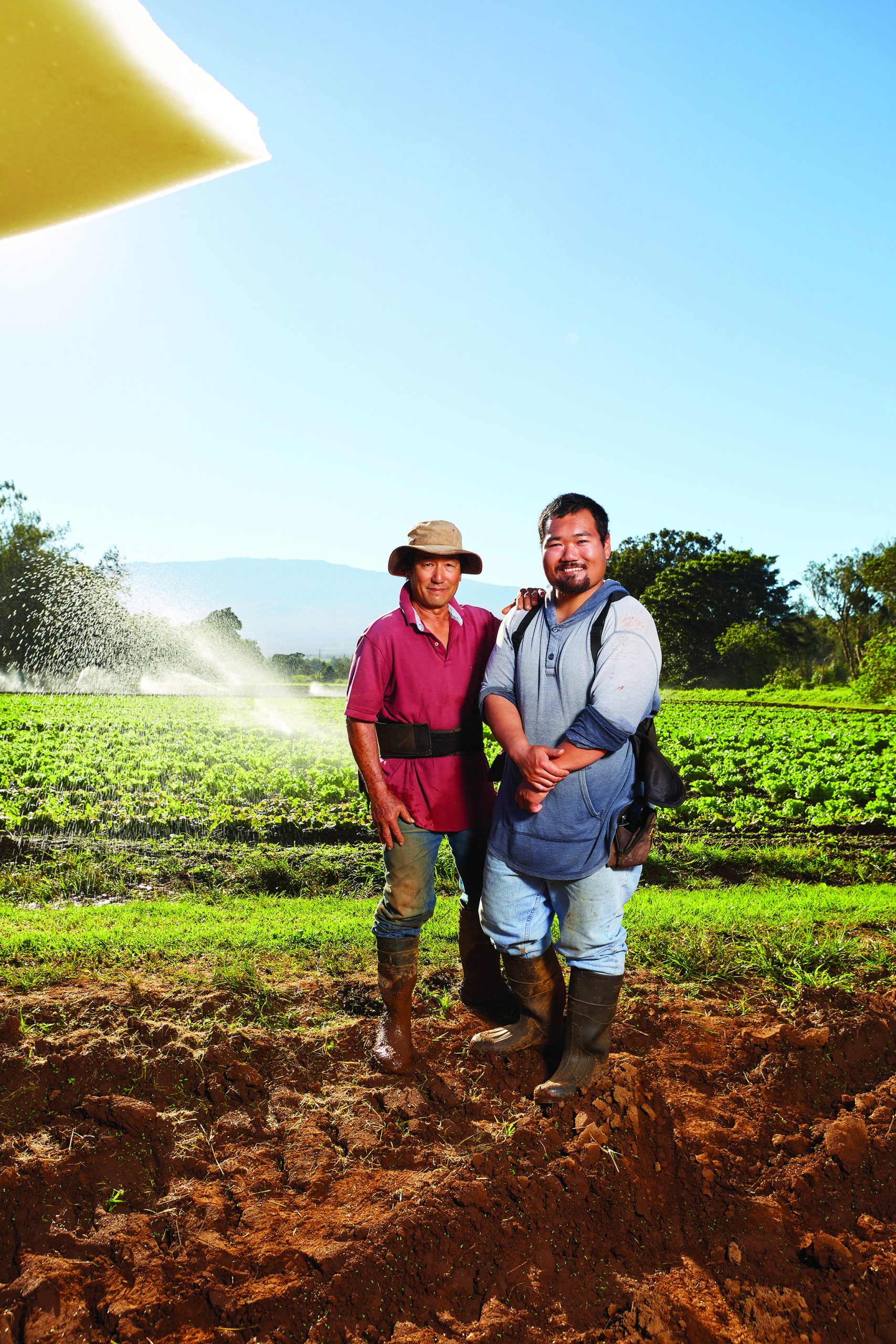
Hirako Farms VP Jeffrey and his son Justin.Justin’s grandfather, Kiyotsugu, and his Uncle Roger.
KTA Partner: Hirako Farms Justin Hirako, age 28, aims to carry on his family legacy as a member of the fourth generation to run Hirako Farms.
Justin’s great-grandfather, Seijiro Hirako, left Japan and came to Hawai‘i as a plantation worker. In 1928, he started Hirako Farms. Due to illness, Seijiro was unable to continue running the farm, so the task fell on his son Kiyotsugu’s shoulders at age 17. He was a teenager, still in high school.
Kiyotsugu later married Shizuko and they had four children. Three worked in the family business — Roger, Norman and Justin’s dad Jeffrey.
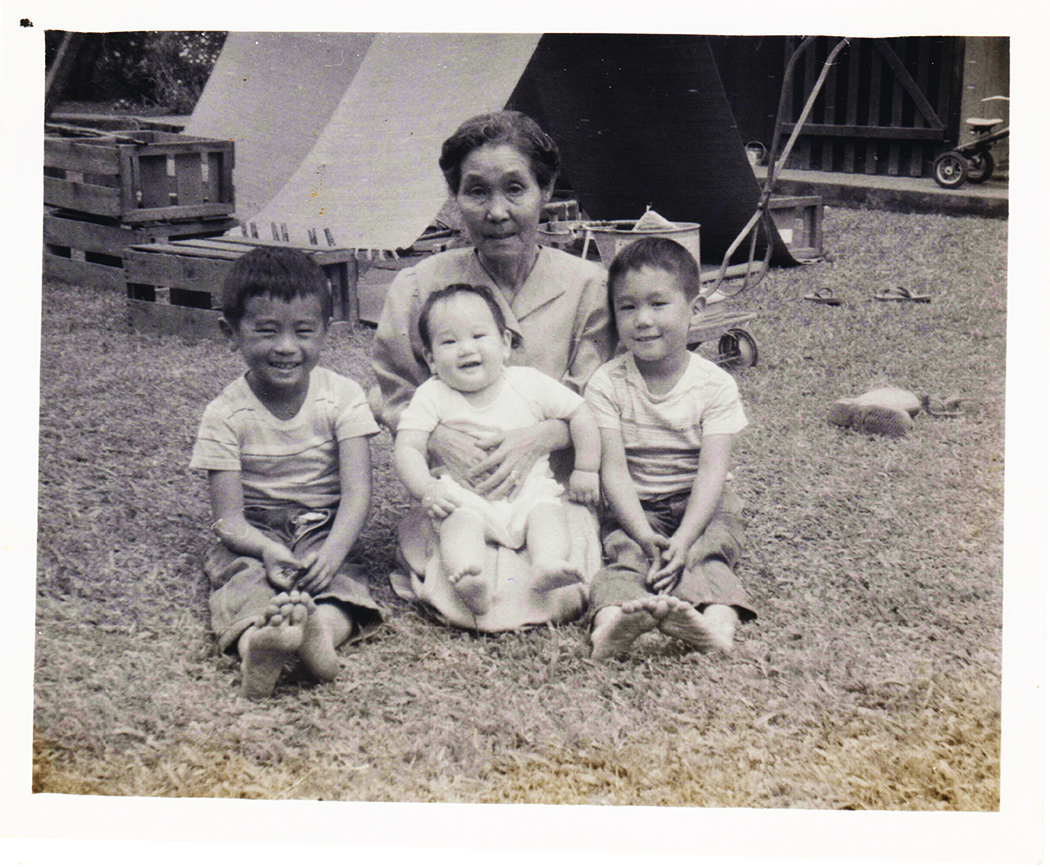
Justin’s great-grandmother, Kuma Hirako, with (L–R) Roger, Norman and Jeffrey
The farm has expanded from 20 to 100 acres across Waimea and employs six family members. Justin’s Uncle Roger serves as president of the company; Uncle Norman is the secretary; Justin’s father is the vice president. Justin’s mother Elaine and Uncle Roger’s wife Deborah manage the greenhouse. Justin is the only member of the family’s fourth generation to continue on at the farm.
Justin’s plan to take over the family business was the catalyst for his academic pursuits. He is well-qualified to take on the responsibility, earning an accounting degree at the University of Hawai‘i at Hilo and an MBA from Hawaii Pacific University on O‘ahu.
“It was a pragmatic choice,” says Justin. “I always wanted to keep the option open for helping with the family business but I also wanted to have a background in something else just in case. I grew up on the farm and I grew to love Waimea so much. I’ve been very fortunate to have gone around the world, but there is really no where else like Waimea. That’s what drew me back here.”
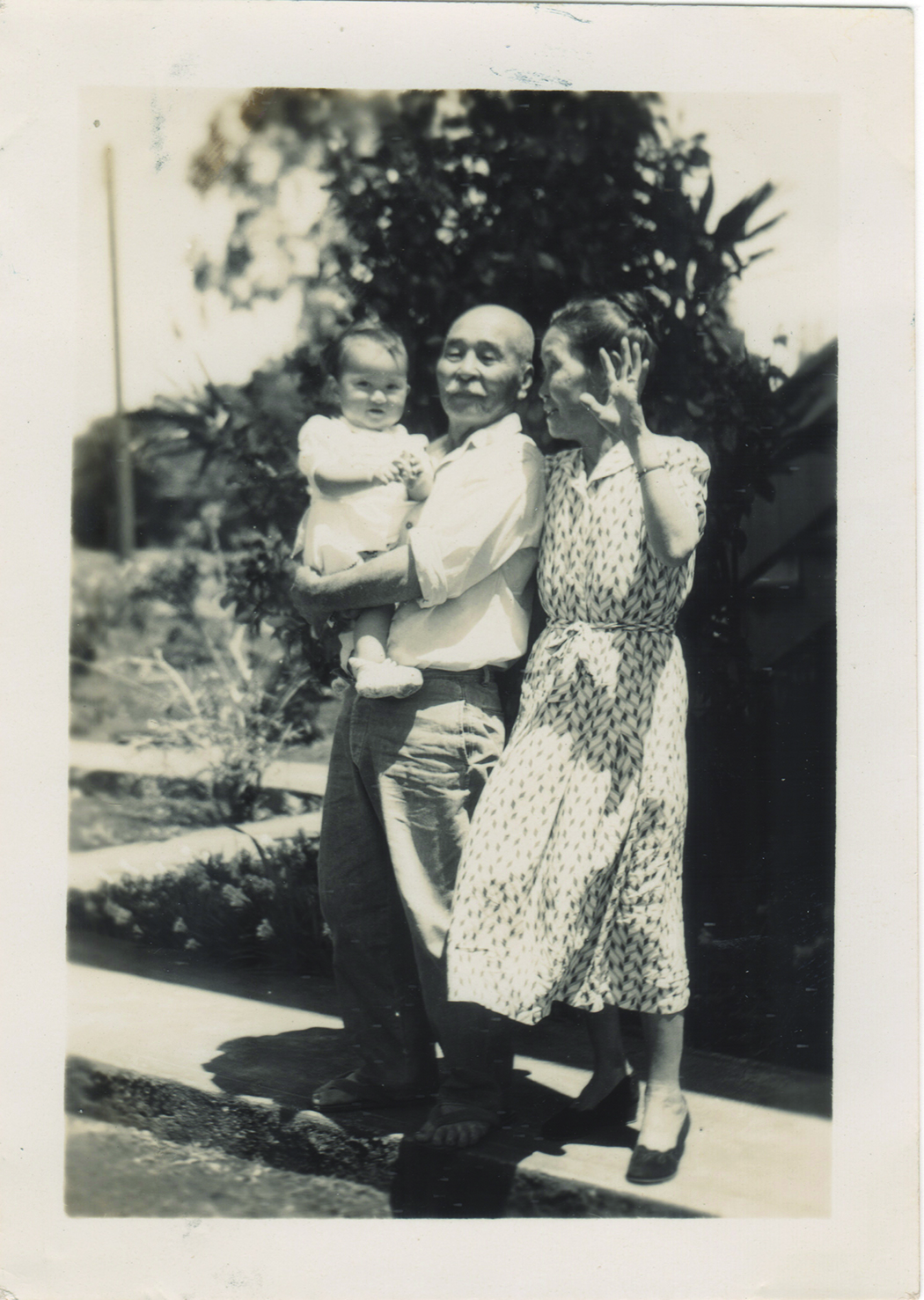
Justin’s great-grandfather, Seijiro, and wife Kuma. Seijiro is holding Justin’s Aunty Sharon.
“The farm is a very dynamic operation, so my degrees tie in well with marketing, accounting, finance and all the moving parts that need to be tied together,” Justin says. “You must have a really good understanding of everything that makes the overall machine work.”
“We have been working with KTA for over 50 years now — dating back to my grandfather’s time,” says Justin.
Their relationship actually predates KTA’s Mountain Apple Brand, according to KTA Executive VP Derek Kurisu. “We have been very fortunate to be partnered with KTA. They have been willing to support local businesses like us. Without them, we wouldn’t have been able to be where we are today.”
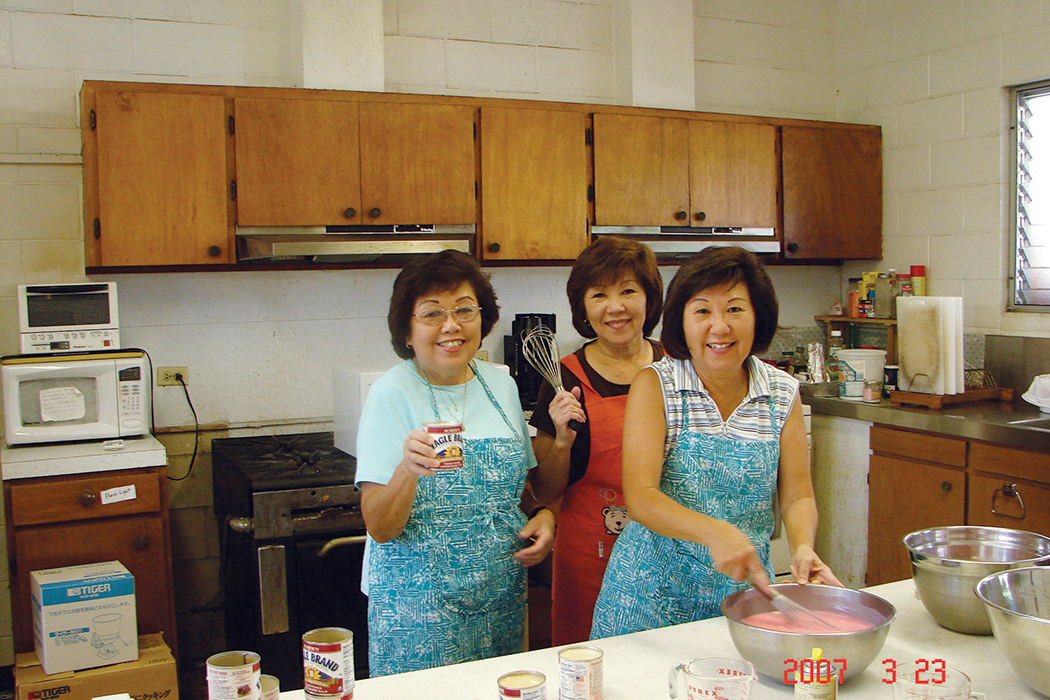
Gladys and her sisters, Bea Iwata and Betsy Uyematsu, in their home kitchen in 2007.
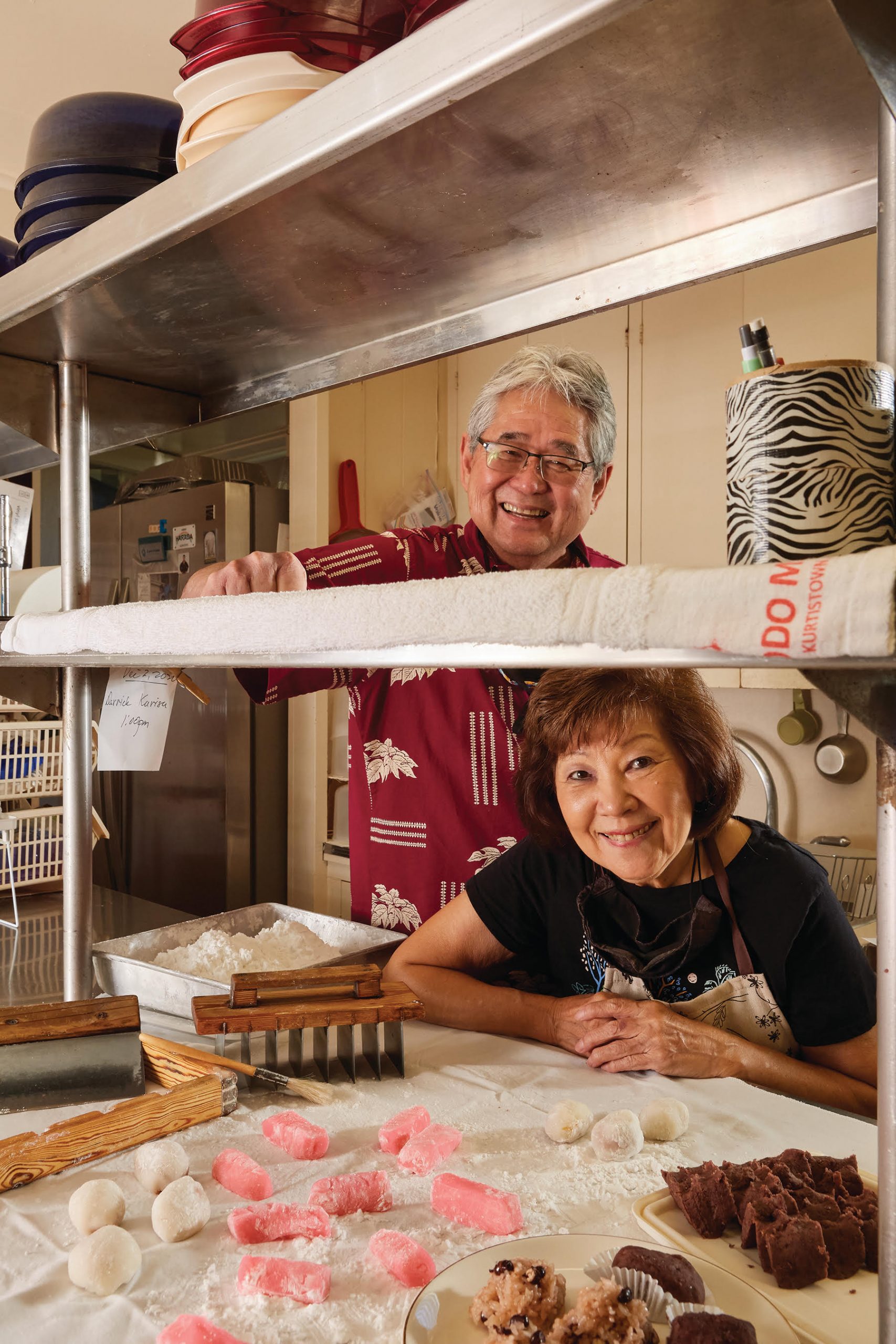
KTA Partner: The Happy Mochi Maker
At one time, Gladys Sakoda Harada was a very successful hairdresser. She had a salon in Hilo. When her mother needed care as she aged, she moved the salon to the basement of the family home. Eventually, care became more demanding and Gladys gave up her appointment driven hairdressing work.
“My mom always used to make mochi to give away to friends,” says Gladys. “I decided I needed to learn the art before the teacher was gone. I wanted her to see her products in the markets before she left.”
In their home kitchen in 2007
Gladys contacted KTA VP Derek Kurisu and asked him if he could sell her mochi. So in 1998, her basement kitchen became her certified mochi factory. Her mom, a second-generation emigrant from Japan, was her teacher. Gladys’ mother had gained her knowledge, not from her mother, but from working in a mochi factory in Hilo.
“The mochi just happened,” she says. “Everything fell right into place for me.”
Gladys learned how to make ohagi, sekihan and zenzai, among others. Her big sellers are chi chi mochi and peanut butter mochi — originally a
special request from Derek.
Mochi holds a special place in Japanese celebrations as well as those of other Asian countries.
“My son-in-law brought ohagi to work one day and gave some to his boss,” says Gladys. “It really touched my heart when his boss took his first taste and a tear welled up in his eye because it reminded him of his grandma. She used to always make ohagi for his birthday. My mother would always make that for my birthday, too.”
Derek says her mochi is special. “It is the old fashioned Japanese kind that you wouldn’t find anywhere else. She has a special touch. As soon as she brings it, it is gone from the shelf!”
Gladys has been delivering her mochi to the Puainako KTA Super Stores location every day for the last 22 years. But the art might end with Gladys, she says, as her children are educators — “not the kitchen type. I am kind of thinking it will die when I die, but I hope not.”
Her teacher-mother passed away 12 years ago. Gladys will be 79 in April.
“I am thankful and happy to be a part of KTA’s Mountain Apple Brand,” says Gladys.
“Question is, how long am I going to keep doing this?” Gladys asks. “I feel it would be selfish of me to stop making mochi if I’m still healthy and my hands can still move. If health can keep up with me, I’ll keep making my customers happy. Don’t you think that’s the best way to live life — making people happy?”
“We’re trying to improve ourselves, whether it’s the use technology or the leveraging of technology, or innovate ways to improve safety, customer satisfaction and employee moral. It has been super-impactful to KTA,” says Toby.
Toby’s beloved mentor, his father Barry, passed away in September 2019.
“When I was cleaning up his office over the next several months after he died, I found my letter in one of his desk drawers… it’s my drawer now, but…” Toby took a moment as he recalled memories of his dynamic dad.
The letter that asked if Barry had a place for his son at KTA signified a pivotal point in the Taniguchi family’s business and Big Island history.
It’s All About Relationships
“There are part-timers, full-timers and life timers at KTA,” says Toby. “The company is very fortunate that we have dedicated and loyal family-like members like Derek. He is talented, dedicated and loyal. I think Derek is a perfect example of an individual who invests in building relationships.”
“Whether it is through our purveyors, farmers, ranchers, fisherman — I think he has demonstrated though his actions that relationships, at the end of the day, are super-important,” says Toby. They help build trust. They help build win-win situations and scenarios, whether it is a farmer growing tomatoes or anyone else we work with.”
“I think it is important to just be humble and realize that you are never better than anyone. By the same token, no one is ever better than you. Be humble; be respectful; treat people the way you want to be treated. I think that maybe helps.”
“I think people don’t care how much you know until they know how much you care,” says Toby.
“Derek shows that in his relationships with everyone, including our partners. I try to show that to my team members — the associates — as well. Just be honest and authentic.”
“We try to keep our associates in the game because they are frontline essential workers, like a nurse or doctor at the hospital,” says Toby. “They are essentially feeding our community. So the question we now ask is what can we do to ensure that they are safe and feeling appreciated. We want them to know that we appreciate them. We know that they have choices in where they work and we’re grateful they choose to work at KTA.”
Toby and Derek both expressed their appreciation for multi-generations of customers.
“The senior customers bring their children and now they are bringing their children’s children, so we see generations of people in the store,” says Derek. “It makes you feel really good to have multi-generations shopping in our stores. We are so fortunate and so humbled and so happy that, you know, really, I think we have the best customers in the world.”
KTA Partner: Kulana Foods
Kulana Foods Ltd., which began in 1937 in Hilo, is the island’s only full-service slaughterhouse. The family-owned company has supplied wholesale meat to KTA for three generations. “We buy all our local pork and beef from the Yagi family, who owns Kulana,” says KTA Executive VP Derek Kurisu. “They do a lot of value-added processing, like Portuguese sausage, pipikaula and other things. We have had a very close relationship for three generations.”
Mountain Apple Blossoms
As one of the few surviving large family-owned businesses on Hawai‘i Island, KTA leaders are passionate about championing other local businesses. Derek led the development of the company’s Mountain Apple Brand beginning in 1984. The private label consists of products grown, processed or manufactured in Hawai‘i. Long-time suppliers have become like family to the KTA organization.
It started at the beginning of the decline of the sugar industry during Tony and Mr. Y’s time.
“We were able to get about 40 different partnerships, everybody working together, to actually create more employment and make sure people had jobs,” says Derek. “That was a very important time. The whole philosophy was to support local, buy local, take care of the locals. We went all out to take care of the local community. Tony, Barry and Toby really embraced that.”
“There are many suppliers on our island that we have worked with for at least three generations, including Hirako Farms, Kulana Foods and others” says Derek.
“I actually worked with the founders of these companies,” Derek says. “We have a long history of working together. We grew together. They grew, we grew. We grew, they grew. Together, we are all still here. Over 100 years and we are all still here doing business. We are keeping the economy going on our island. I feel so proud to work for this company. We stuck with other companies like family. Now their grandchildren are taking over the business.” Derek says they sometimes express concerns about who will carry on multi-generations business. “Hopefully, they will for many more generations.”
To date under this brand, over 50 local vendors supply more than 200 products, including milk, meat, juice, eggs, coffee and desserts.
That’s Show Biz
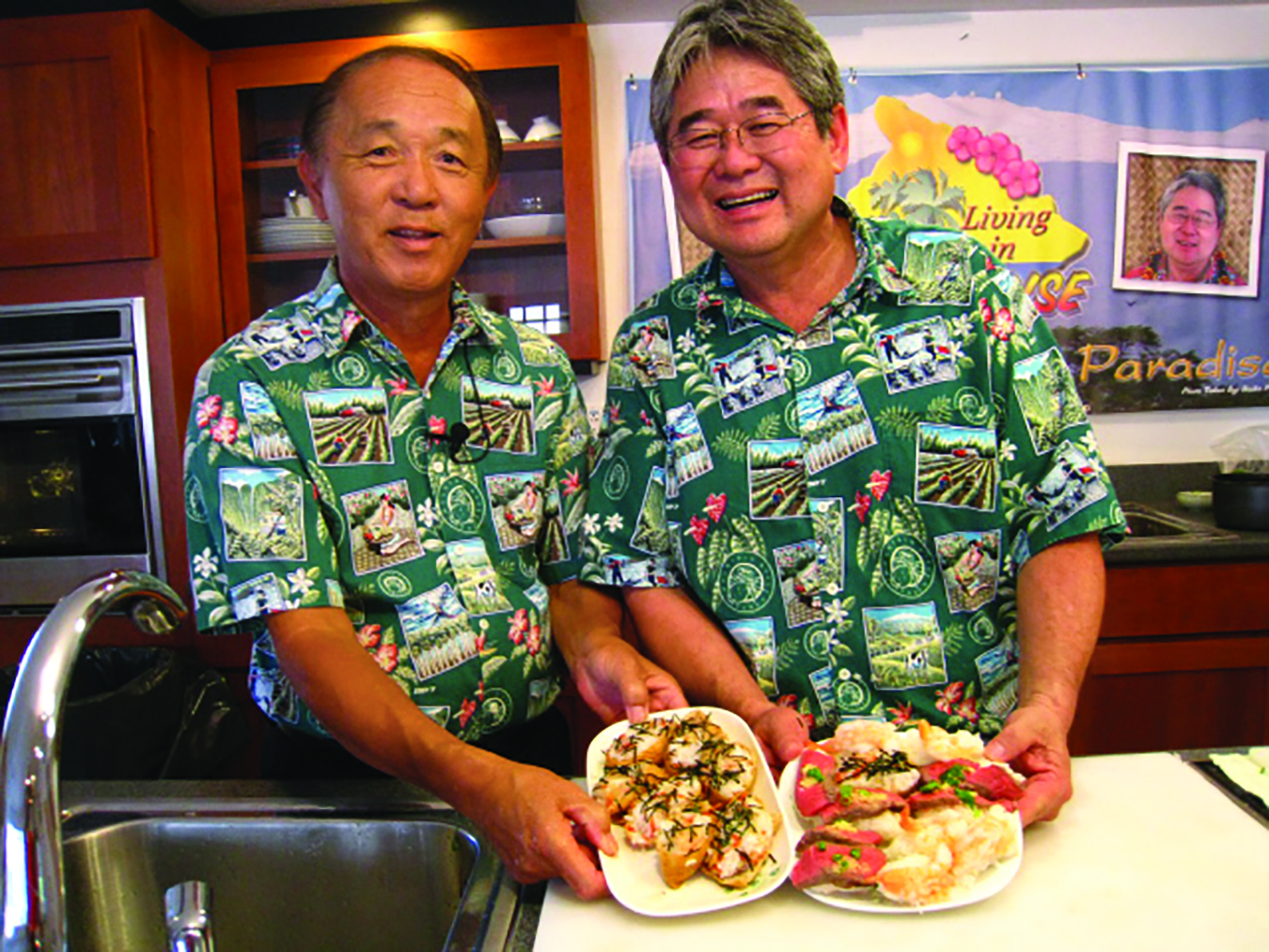
Not many retail and grocery businesses also have their own TV show. But in keeping with the “KTA way,” it makes perfect sense. KTA President Barry gave Derek the green light on “People Living in Paradise” in 1995.
“Twenty-five years ago, a lot of negative news was being circulated about the island via the media,” says Derek. “Teachers were on strike at that time. I was already going to the schools then because Barry wanted me to go out and help the community and be part of it. I also spent a lot of time in the schools because I knew they would be our next generation of customers and the next generation of people we would hire.”
So an idea emerged to create a cable show that would feature only the shiny side of the tarnished Big Island coin.
“The show was based on the same concept and philosophy as the Mountain Apple Brand concept; people working together to promote the positive things about this island,” says Derek. “What we did for products and people through Mountain Apple, we did for people of all ages, from all walks of life, in our TV shows.”
“We started off with ‘People Living in Paradise,’ then broke off with ‘Seniors Living in Paradise’ to highlight the importance of the senior population. At one time, there was a big disconnect,” says Derek. “My goal was to have both a seniors’ show and a family show so that both generations could understand each other. I wanted the younger people to understand the values of the seniors and the seniors to understand the younger kids.
“That’s still what it is about today; a lot of lessons about understanding each other; all positive; all good; all local; promoting the positive about being local and making our island a better place.”
Along with cohost George Yoshida, Derek fostered relationships with seniors across the island. After George passed away in April 2019, Derek took over the show.
“This was so disconnected from what we do as a supermarket,” says Derek. “But it’s part of the Taniguchi family to go beyond the walls of our company and make our island a better place.”
The show started on Oceanic Cable, which has now been switched to Spectrum.
The two one-hour shows, which change content once a month, are on every day on Spectrum Cable Channel 129. “People Living in Paradise” is on daily from 7:30 to 8:30 pm and midnight to 1am. “Seniors Living in Paradise” shows daily from 6:30 to 7:30 pm, as well as Monday through Friday from 6 to 7am.
Moving Forward
“Derek’s innovations and creativity in bringing products consumers will appreciate and helping organizations and institutions has set us apart from the competition,” Toby says. “Our close relationships with our customers keeps us apprised of relevancy and their needs. I think that’s what helps us stay relevant in this world of large conglomerates. We try new and different products and services; if they don’t work, we stop. We constantly try to improve and innovate.”
“We have a lot of the big boys in Hilo… the Walmarts, the Targets, the Safeways,” says Toby. “The programs Derek brings to market reflect KTA values. These are not programs that the national chains create. I give all the credit to Derek.”
Derek, who has worked at KTA for over 50 years now, says he tries to give 110 percent. “My words and actions represent over 800 employees and all of our buyers,” he says. “It’s very tough but it keeps you straight and keeps you motivated to try your best and move the company forward.”
Although they are continually working to appeal to a new generation, it is equally important to them to maintain the core values and service that his great-grandparents established.
“As my dad said, the company has never been solely based on the bottom line,” says Toby. “It’s based on what’s right for the community, our partners and our associates.”
“We’re at a crossroads now,” says Toby. “My siblings, cousins and I have children, but none have expressed interest in the business yet. Some of them are still young. We are fortunate with our associates and individuals like Derek who have been with our organization for a lifetime. But we are at a point where we need to start really having some serious conversations with regard to a fifth generation who will continue the KTA way.”
KTA Super Stores began and continues to operate by honoring the partnerships built by previous generations. These principles and values continue today from the founders as the basis of the development and growth of KTA’s business model and its relationships with its partners, customers, staff and each other.
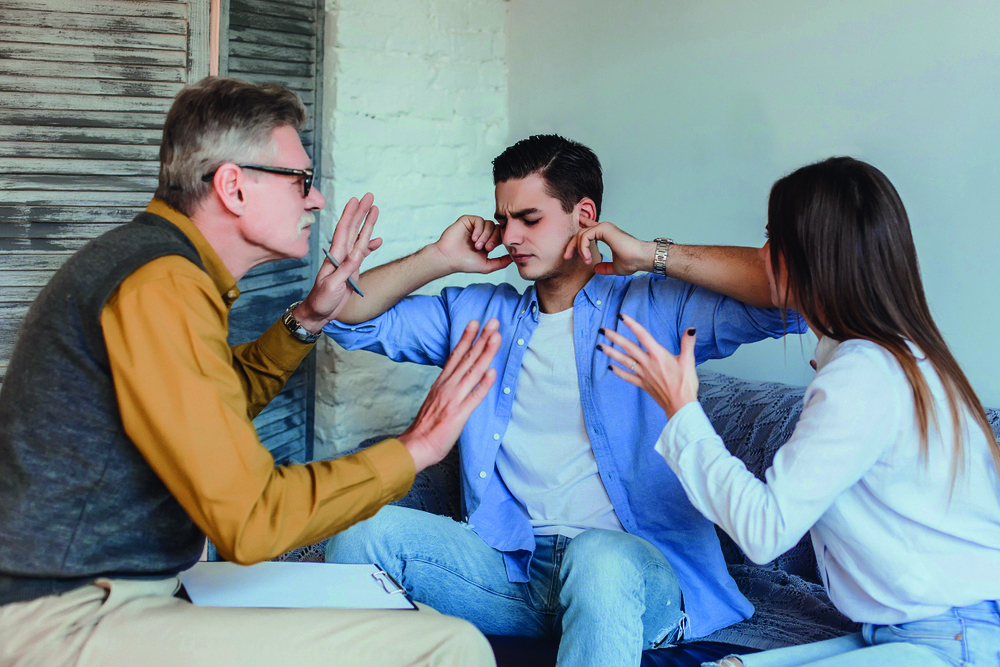
Sadly, some families fight over real estate after their parents have passed away. Although a trust protects against probate, there are other issues that may arise. Problems can develop between siblings due to unanticipated decisions that must be made, causing differences of opinion.
Avoiding family disputes starts with a clear strategy regarding the desires of the owners and beneficiaries. What is the desired end result? Once there is clarity regarding the best strategy and goals, the next step is to outline a plan. The more detailed the plan, the better. The last and most critical part of this plan is to communicate it to the beneficiaries. Without this clarity, opinions abound and emotions can run high. Unfortunately, many skip this last step — parents probably assume “the kids will figure things out.”
Typically, a successor trustee is designated to fulfill the instructions in the trust. Challenges arise when the siblings don’t agree. This can become a huge burden for the successor trustee, as well as a significant liability.
To maintain family harmony, understand your options, plan ahead and plan early to create a clear strategy that all stakeholders can agree upon.
THE COMPLETE SOLUTION™ — Powered by The Ihara Team of Keller Williams Honolulu RB-21303
1347 Kapiolani Blvd., Ste. 300, Honolulu, HI 96814
Sadly, some families fight over real estate after their parents have passed away. Although a trust protects against probate, there are other issues that may arise. Problems can develop between siblings due to unanticipated decisions that must be made, causing differences of opinion.
Now that the holidays are over and we are settling in the new year, it’s is a good time to do a “Spring De-Cluttering.” Spring decluttering is similar to spring cleaning, but instead of dusting and cleaning the windows, you will instead do some quick removal of unnecessary items.
Quick decluttering is making fast decisions about getting rid of stuff. But it doesn’t have to be drudgery. You can make it fun! Call in the family for an hour of collaborative activity. Dial up your favorite tunes and rock on together!
Here are some helpful tips to follow:
◆ Throw out the trash: Pick up noticeable and obvious trash around the house, such as old papers, food wrappers, plastic bags, etc.
◆ Recycle: Collect all the recyclables, such as plastics, cans, bottles, newspaper and boxes, and take them to your recycling center. You’d be surprised how much you can get for the stuff that is taking up space in your house.
◆ Move items into the proper room: Only kitchen items go in the kitchen and only bedroom items go in the bedroom. Go room by room and take out items that don’t belong in that room. Then put it in the room it belongs in. And don’t forget to put your Christmas decorations away!
Now that the holidays are over and we are settling in the new year, it’s is a good time to do a “Spring De-Cluttering.” Spring decluttering is similar to spring cleaning, but instead of dusting and cleaning the windows, you will instead do some quick removal of unnecessary items.
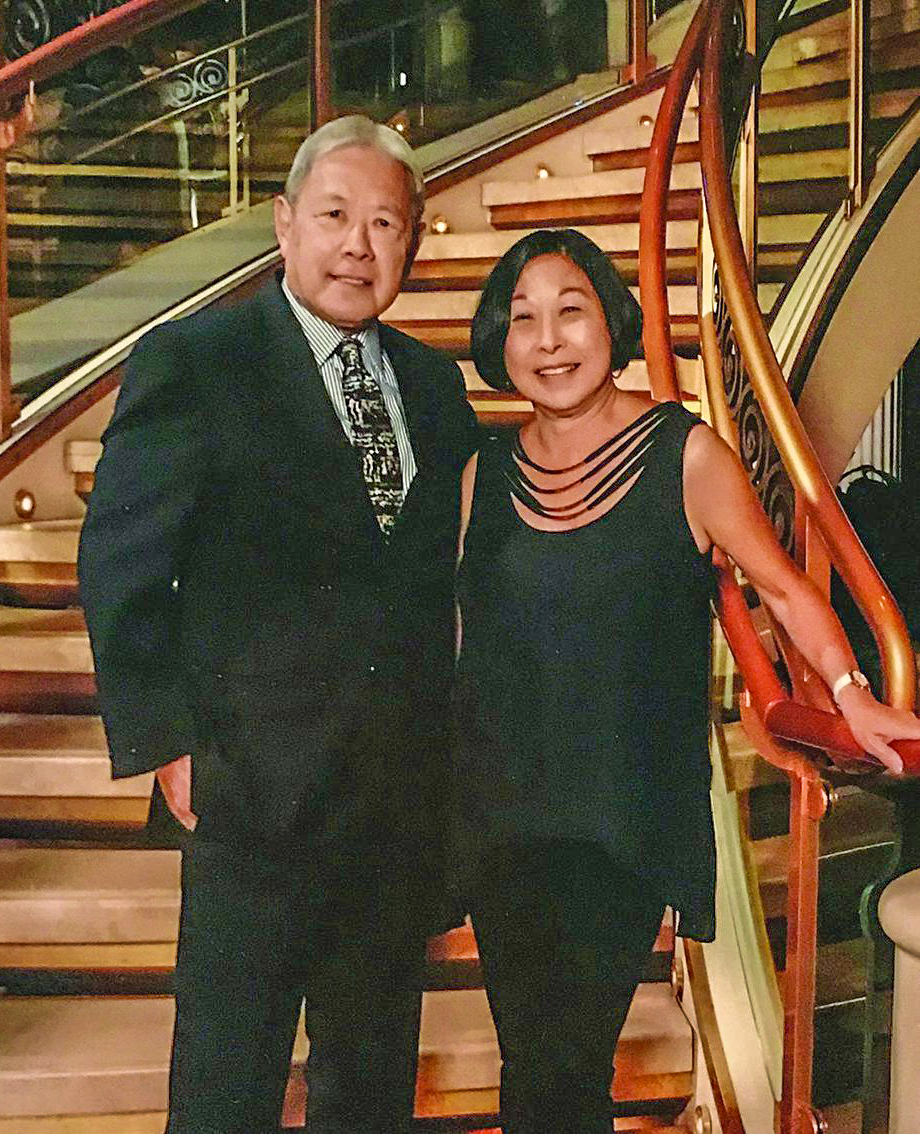
Sharon Young and Jim Nishimoto first met in 1989. They were in their 40s, working together at Group 70 International Inc., a local planning and architectural firm. Sharon was a single mom with three children. Jim was happily married to Gail and the father of two children.
Sharon was widowed at the young age of 33 after caring for her husband at home for over two years. Mike passed away in 1982, leaving her to raise her children alone while working fulltime — sometimes at multiple jobs.
Jim served as the president/chief operating officer of the architectural firm, and later as the vice chairman. But in 2010, he left to become the full-time caregiver for his wife, who began to exhibit signs of dementia. He felt that he wouldn’t be able to devote the necessary time and attention to his work with his wife at home under someone else’s care. Gail passed away in early 2016.
In late 2016, Jim’s thoughts turned to his former Group 70 workmate, Sharon. Wondering if she had married again, memories of their previous friendship propelled him forward.
Jim began asking former office colleagues and friends about Sharon, trying to track down her whereabouts. Finally, he followed a lead to a last known residence. He took a chance. He drove to the address and left a business card in the mailbox. On the card, he asked if she would call him.
“She took some time to respond,” says Jim. Apparently, Sharon had her own questions about him, consulting with friends and former coworkers. “She responded only after finding out that Gail had passed away.”
When Sharon finally responded, they met for dinner.
While they were caretakers, they missed out on many opportunities. Being widowed left a strong desire to enjoy life to the fullest. They decided they did not want life to pass them by without enjoying each other’s company for as long as possible.
Both nearing age 70, they were married the following year with the blessings of their friends, children and grandchildren.
“It is always better to enjoy life with someone — someone special,” they said.
Their bond is their shared love of family, music, the arts, travel, and more importantly, their shared love of the Lord. At their wedding, Pastor Francis Oda said their marriage “was made in heaven.” Jim says “their marriage happened because of heaven.” They both believe that it is the Lord who brought them together after all those years — for a second chance at love.
Sharon Young and Jim Nishimoto first met in 1989. They were in their 40s, working together at Group 70 International Inc., a local planning and architectural firm. Sharon was a single mom with three children. Jim was happily married to Gail and the father of two children. Sharon was widowed at the young age of…

 New research using large clinical trials points strongly to the role of chronic inflammation as a culprit. The studies also show the need for treatments that provide multiple cardiovascular health benefits — optimization of total cholesterol, LDL, blood pressure, triglycerides and inflammation.