Category: February – March 2019

  • Resolve to Have a Healthy Computer

    At the start of a new year, many of us make a New Year’s resolution to get healthy. Did you make a resolution to start the year with a “healthy” computer, too? Here are some computer health tips:

    ❖         Back up your data: Back up all your important data such as photos, documents, calendar, contact list, e-mails, etc. The best options are to back up your data to an external hard drive, burn your data to CD/DVD, or use iCloud or Google Drive.

    ❖         Clean up your storage: AFTER backing up your data, start deleting apps, programs and files that you rarely use or that are outdated. This alone can speed up your computer.

    ❖         Maintenance: If you are tech savvy, you can use a utility program to do low-level diagnostics on your computer’s hardware and operating system, but my advice is to use a professional service to do the examination and fix any problems found. The store where you bought it may offer this service or can recommend a reputable local service agent.

    ❖         Change passwords: Start with the password to your computer (and phone) and then move on to any online accounts. Write passwords down in a notebook along with the date and secure the notebook in a safe place. WARNING! Your wallet or purse is NOT a safe place!

    —————

    THE DEPARTMENT OF THE PROSECUTING ATTORNEY
    1060 Richards St., Honolulu HI 96813

    808-768-7400  |  Office hrs: Mon – Fri, 7:45 am – 4:30 pm
    www.honoluluprosecutor.org/contact-us/

    At the start of a new year, many of us make a New Year’s resolution to get healthy. Did you make a resolution to start the year with a “healthy” computer, too? Here are some computer health tips…

  • Visit Often to Forestall Elder Abuse

    Recently, I had the opportunity to spend a couple of weeks with my parents on the mainland, attending family functions, overeating and watching more “Murder She Wrote” than at any other time in my life. As I tried to learn to appreciate afternoon naps, their phone would constantly ring. Various solicitors, scam artists and charities seemingly thought my parents had all this money and that they wanted to invest, spend, or give it away to strangers over the phone.

    I tried to explain to my folks that by answering the phone each time it rings, the robocallers knew there was a live person connected to their phone number. If my parents simply let the answering machine screen the calls first, the amount of unwanted calls would slowly die down (and nap time could last longer). They insisted, however, on picking up the phone in case it was someone they wanted to talk with or if there was an emergency that they had to respond to immediately.

    In addition to all the phone calls they were getting throughout the day, the doorbell rang constantly with a salesman, pollster, huckster, or charity/church solicitor on the other side of the door when I answered. I simply told these uninvited/unwelcome strangers that I wasn’t interested and shut the door on them before their pitch began.

    This whole experience reminded me of the importance of visiting my family often and seeing what is going on in their lives. Over the years, I have received many calls to the Elder Abuse Unit from adult children in distress because they just discovered something that happened to their parents.  Usually, it is along the lines of finding out their mom or dad has been giving large sums of money to others (like neighbors, caregivers, other relatives) despite the fact they really can’t afford to do so. Occasionally,  the family member will discover that a con man has scammed their parents out of a large sum of money (so far the largest amount reported was $400,000 to some “contractors” for work never done). And in two separate instances, adult daughters reported that widowed fathers married bar girls 30 years their junior.

    It is only by knowing what is going on in our parents’ and grandparents’ lives that we can prevent certain abuses from occurring. Get involved and find out your loved one’s routine. Talk to them. Any deviation from their norm may be a warning sign to you that they are being targeted for a possible scam.

    ——————-

    If you have questions about elder abuse, call or email: 808-768-7536  |  ElderAbuse@honolulu.gov

    It is only by knowing what is going on in our parents’ and grandparents’ lives that we can prevent certain abuses from occurring. Get involved and find out your loved one’s routine. Talk to them. Any deviation from their norm may be a warning sign to you that they are being targeted for a possible…

  • Honoring the Mighty Pen

    In the movie “The Descendants” the main character, Matt King, must explain to family and friends that his wife Elizabeth made an end-of-life decision by way of an Advance Health Care Directive and, because she was determined not to be kept alive in a persistent vegetative state, the doctors will withdraw life-sustaining treatment.

    Matt shares the advance directive with his father-in-law, whose response was “this is like reading Korean.” Matt’s 10-year-old daughter Scottie didn’t read the advance directive, but she remembered her mom stating: “Racing or competing. I’ve heard her say, ‘I’m going out with a bang.’” And that is exactly what happened: a speedboat accident.

    The end-of-life decision document written by legislators as a “one size fits all check the box”  is anything but clear with regard to intention and could very well be written in a foreign language.

    Every family has its own unique culture and identity which is reflected in the language they speak to one another.

    Making an estate plan that clearly documents intention helps surviving family members avoid fighting; especially in court. Yet lawyers will write the estate plan for exactly that purpose — writing as if it were going to be fought over in court. I call this legalese legal dis-ease.

    Write your intentions down in your own hand-writing for inclusion in your estate plan so that you don’t risk miscommunication or misunderstanding among surviving family members.

    ———————-

    STEPHEN B. YIM, ATTORNEY AT LAW
    2054 S. Beretania St., Honolulu HI 96826

    808-524-0251  |  www.stephenyimestateplanning.com

    Making an estate plan that clearly documents intention helps surviving family members avoid fighting; especially in court. Yet lawyers will write the estate plan for exactly that purpose — writing as if it were going to be fought over in court. I call this legalese legal dis-ease. Write your intentions down in your own hand-writing…

  • Everybody Should Have One

    The one estate planning document that everyone 18 and older should have is an advance health care directive.

    Karen Ann Quinlan and Nancy Cruzan were young women whose legacies are legal battles over medical care for individuals who cannot speak for themselves.

    Karen’s case determined that “medical treatment” includes life-sustaining measures, and that those measures can be declined by a patient or someone acting on the patient’s behalf.

    Nancy’s case was a battle between Nancy’s family, who believed that Nancy would not want to be sustained on a tube, and the State of Missouri, which asserted that only the patient can make that decision. Nancy’s family convinced the court that Nancy did not want to be kept alive artificially, and food and water were withdrawn.

    The bottom line?

    We have a right to say “enough is enough” when it comes to medical care, including the use of respirators and tube feeding. We also have the right to name who will speak for us when we cannot speak for ourselves. Having a clear and comprehensive advance health care directive is only way to be sure that your wishes will be known and carried out.

    ——————-

    SCOTT MAKUAKANE, Counselor at Law
    Focusing exclusively on estate planning and trust law.

    www.est8planning.com
    808-587-8227  |  maku@est8planning.com


    We have a right to say “enough is enough” when it comes to medical care, including the use of respirators and tube feeding. We also have the right to name who will speak for us when we cannot speak for ourselves. Having a clear and comprehensive advance health care directive is only way to be…

  • 5 Retirement Planning Mistakes to Avoid

    The most important goal for many of my clients is to retire on their terms – which often means planning a long, secure retirement that enables them to check off items on their ultimate bucket list. Retirement requires careful planning in addition to avoiding financial missteps along the way. Here are five common mistakes, and strategies to avoid them.

    Preparing for retirement can be overwhelming, so it’s easy to think, “I’ll tackle it next year.” Simply put, the earlier you start focusing on retirement, the earlier you can prepare a plan that accounts for your goals and concerns. And, focusing on saving today gives your investments the opportunity to snowball in value through the power of compound interest.

    Medical costs are rising, with no clear end in sight. Your best defense is to figure out what protection and sources of income you could ap-ply toward potential medical expenses. Common vehicles include Medicare and supplemental insurance premiums, long-term care policies, continuing health insurance through an employer and health savings accounts. Know which policies cover various expenses, and stay familiar with the amount of your deductibles, co-pays and out-of-pocket maximums.

    Predicting your tax bill in retirement can be complicated, but it’s worth the effort. Retirement income for many retirees comes from a variety of taxable and non-taxable sources. Your tax rate will be based only on your taxable income, so it’s important to know and manage the tax treatment of your retirement paycheck. When you turn age 70-½, you are required to take a minimum distribution from your traditional IRA. This money is generally taxable. If you don’t need the money and want to avoid the resulting tax bill, consider transferring your distribution (up to $100,000) directly from your IRA to a qualified charitable organization. A tax professional can help you determine the strategy that’s right for your situation.

    Before you tap your retirement savings early, think through the consequences. IRS rules allow investors to withdraw 401(k) savings for qualified expenses (non-qualified items trigger a 10 percent penalty). But just because you can, doesn’t mean you should. Removing money from an income-bearing account reduces the long-term growth potential you can earn through continued saving and compound interest.

    A well-rounded retirement plan includes documenting your wishes for how you want your affairs handled if you become incapacitated or when you pass away. Creating (or updating) your estate plan enables you to help minimize any estate or inheritance tax for your beneficiaries and add in other specifications that help your assets transfer smoothly to the next generation.

    Time is on your side when you start preparing early. Tackling one step at a time is a great way to make progress on your retirement plan and avoid potentially costly missteps. If you want a second opinion, engage a financial advisor who can review your situation in detail.

    ————–

    MICHAEL W. K. YEE, CFP
    1585 Kapiolani Blvd., Suite 1100 Honolulu, HI  96814
    808-952-1222, ext. 1240 | michael.w.yee@ampf.com

    Michael W. K. Yee, CFP®, CFS®, CLTC, CRPC ®, is a Private Wealth Advisor, Certified Financial Planner ™ practitioner with Ameriprise Financial Services, Inc. in Honolulu, HI. He specializes in fee-based financial planning and asset management strategies and has been in practice for 31 years.

    Investment advisory products and services are made available through Ameriprise Financial Services, Inc., a registered investment adviser.

    Ameriprise Financial Services, Inc. Member FINRA and SIPC.

    ©2018 Ameriprise Financial, Inc. All rights reserved. File #2248827

    The most important goal for many of my clients is to retire on their terms – which often means planning a long, secure retirement that enables them to check off items on their ultimate bucket list. Retirement requires careful planning in addition to avoiding financial missteps along the way. Here are five common mistakes, and…

  • Honoring and Protecting Patients’ Rights

    Long-Term Care Ombudsmen are advocates for residents living in nursing homes, assisted living facilities, adult residential care homes, expanded adult residential care homes and community care foster family homes.

    We are NOT the state inspectors and do not write deficiencies or issue fines or citations. Our focus has always been on quality of life and quality of care issues — advocating for all our residents so their rights can be honored and protected.

    Our program is part of the Executive Office on Aging, which is attached to the Department of Health. Our mandate is in the federal Older Americans Act and state HRS 349. Hawai‘i currently has 1,700 facilities with 12,661 beds. Visiting all these residents spread over six islands is an impossible task by myself.

    I’m happy to report that the Hawai‘i State Legislature provided two-year funding for part-time paid ombudsmen for Kaua‘i, Hawai‘i and Maui Counties. It is our hope that permanent funding for additional full-time positions will eventually be approved.

    Meet Maui County’s new LTC Ombudsman

    Photo of Brent Freemont
    Brent Freemont

    Brent Freemont has lived on Maui for 16 years and is active in the Maui community. He is an experienced caregiver himself, caring for his father and stepmother with dementia for 10 years, enjoys advocating for seniors and is looking forward to serving as the Ombudsman for Maui County. In addition to his previous volunteer service for the Long-Term Care Ombudsman Program, he received a Volunteer Services Recognition from Kaunoa Senior Services and was recognized by Kula Hospital as their Volunteer of the Year for his part in the volunteer team delivering Meals on Wheels to upcountry residents. Brent is a member of the Kula Hospital Auxiliary and a sitting member of the Kula Hospital Human Rights Committee. He is credentialed as a Certified Case Manager and has a BA in Social Sciences.

    Our two new volunteers for Maui, Valerie Muroki and Edeltraud Muroki, are also assigned to facilities as advocates for our LTC residents.

    To contact Brent, call 808-344-4212.

    We are recruiting for more new volunteers for all the islands. If you know anyone who enjoys working with seniors and is willing to advocate on their behalf, please contact our volunteer coordinator, Lynn Niitani, at 808-586-7291.

    ————–

    STATE LONG-TERM CARE OMBUDSMAN

    808-586-7268  |  john.mcdermott@doh.hawaii.gov
    www.health.hawaii.gov/eoa/home/long-term-care-ombudsman-program/

    Long-Term Care Ombudsmen are advocates for residents living in nursing homes, assisted living facilities, adult residential care homes, expanded adult residential care homes and community care foster family homes. We are NOT the state inspectors and do not write deficiencies or issue fines or citations. Our focus has always been on quality of life and…

  • Celebrating 30 Years of Service to Kūpuna

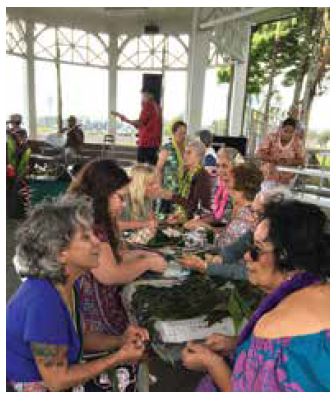
    Since 1989, ALU LIKE’s Elderly Services Department, Ke Ola Pono No Nā Kūpuna (KOPP), has provided nutrition and supportive services (recreation, education, promotion of well-being) to independent Native Hawaiians 60 years of age or older on the islands of Hawai‘i, Kaua‘i, Maui, Moloka‘i and O‘ahu. Today, there are 18 site locations statewide.

    Visitors learn lei-making in Hilo
    Visitors learn lei-making in Hilo

    Our services include but are not limited to: nutritious congregate meals; outreach; information and assistance services to link our elders to other service agencies and organizations; health monitoring, health promotion and education; nutritional screening; exercise; limited transportation services; and culturally

    ——————

    ALU LIKE, Inc.

    Hawai‘i: 808-895-2158  |  Kaua‘i: 808-245-8545 Maui: 808-242-9774  |  Moloka‘i: 808-560-5393 O‘ahu: 808-535-6700  |  info@alulike.org

    www.alulike.org

    Since 1989, ALU LIKE’s Elderly Services Department, Ke Ola Pono No Nā Kūpuna (KOPP), has provided nutrition and supportive services (recreation, education, promotion of well-being) to independent Native Hawaiians 60 years of age or older on the islands of Hawai‘i, Kaua‘i, Maui, Moloka‘i and O‘ahu. Today, there are 18 site locations statewide.

  • Helping Hawai’i Seniors Fight Hunger

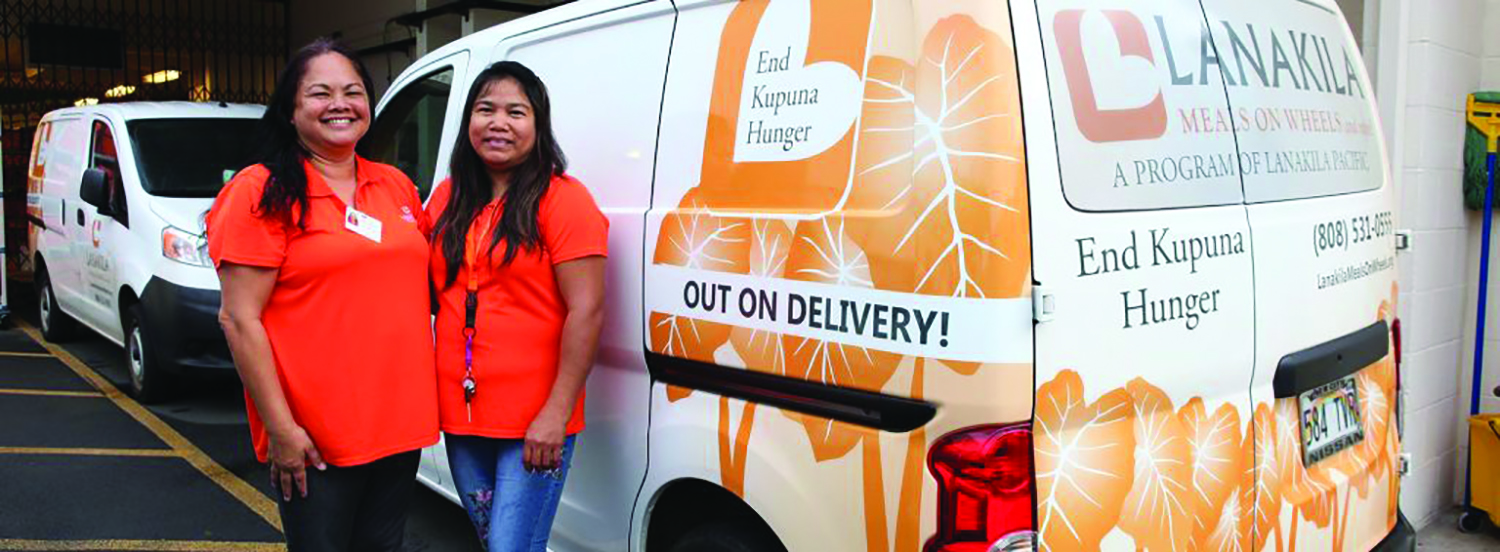
    Photo of staff of Lanakila Meals on WheelsLanakila Meals on Wheels, a program of Lanakila Pacific, works with registered dietitians and chefs to ensure their healthy and delicious meals meet or exceed USDA nutrition guidelines while addressing the age-related dietary needs of seniors. Whether you are utilizing supplemental funding with SNAP benefits, a subsidy from one of the state’s federally funded programs or private funds, we can assist in applying for our island-wide O‘ahu meal service.

    In addition to nutritious home-delivered meals, Lanakila Meals on Wheels offers other services that help kūpuna live independently and with dignity.

    SOCIAL AND WELLNESS PROGRAMS — Our Kupuna Wellness Centers help active seniors, ages 60+, maintain a healthy mind, body and spirit. Creative projects like crafts and cooking, fitness exercises and community outings help these

    kūpuna live an active and social lifestyle. Best of all, a hot meal is served and services are free.

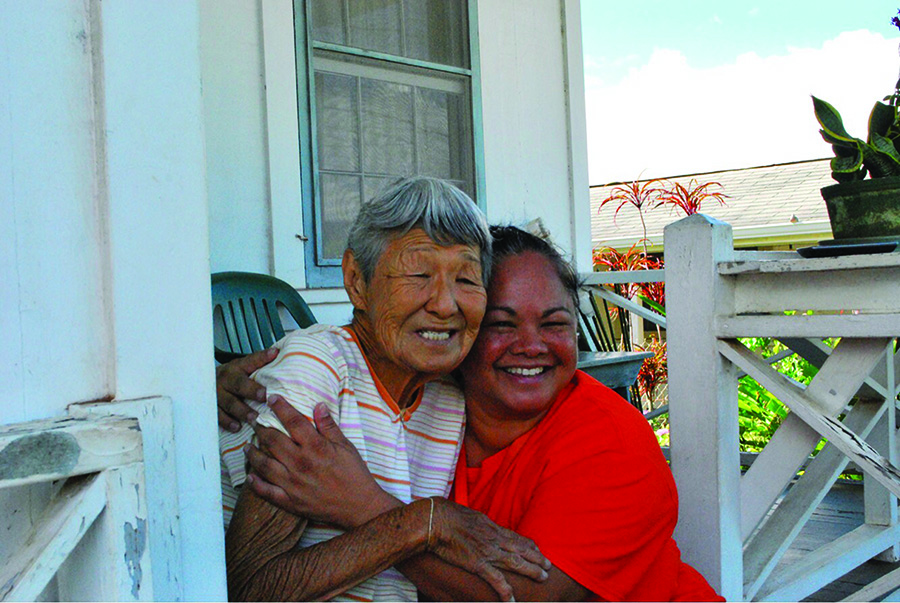
    WELLNESS CHECKS — Along with a meal, a dedicated team of delivery volunteers provide a friendly visit and wellness check for seniors. They are trained to identify changes in behavior and areas that may need attention so we can help.

    EMERGENCY PREPAREDNESS — Our islands are susceptible to hurricanes, tsunamis and other natural disasters. To ensure kūpuna have access to food until meals can be safely delivered, Lanakila Meals on Wheels provides an emergency food care package for its seniors twice a year.

    SENIOR ADVOCACY — One in six seniors face hunger each day. To raise awareness about their plight and galvanize support for Hawai‘i’s kūpuna, Lanakila Meals on Wheels rallies with hundreds of kūpuna and community supporters at the Hawai‘i State Capitol in March in support of March for Meals, an annual nationwide event.

    If you are interested in our home-delivery meal service, Kupuna Wellness Centers, volunteering or March for Meals, please call, email or visit us on the web.

    —————–

    LANAKILA MEALS ON WHEELS

    808-356-8519  |  mow@lanakilapacific.org
    www.lanakilapacific.org/senior-services/meals-on-wheels/

    Lanakila Meals on Wheels, a program of Lanakila Pacific, works with registered dietitians and chefs to ensure their healthy and delicious meals meet or exceed USDA nutrition guidelines while addressing the age-related dietary needs of seniors.

  • The Doctor Is In!

    Graphic of stethoscopeDid you know Medicare coverage includes preventive services? Contact your doctor for more information and to schedule recommended preventive screenings, care, and to participate in educational classes. (Cost sharing and other limitations may apply.)

    Medicare preventive services—start here!

    • One-time “Welcome to Medicare” visit (within 12 months of enrollment in Part B)
    • Annual “Wellness” visit

    Shots

    Flu • Hepatitis B • Pneumococcal

    Screenings and tests

    Abdominal aortic aneurysm • Alcohol misuse (+counseling) • Bone mass • Cardiovascular (cho-lesterol, lipids, triglycerides) • Colorectal cancer • Depression • Diabetes • Glaucoma • Hep B Virus Hep C • HIV • Lung cancer • Mammogram • Obesity (+counseling) • Pelvic and breast exam, pap test • Prostate cancer • STIs (+counseling)

    Other counseling and training

    Cardiovascular disease (behavioral therapy) • Diabetes prevention program • Diabetes self-management training • Medical nutrition therapy services • Smoking and tobacco-use cessation

    You can find more detailed information by going to the Medicare resources listed below.

    ——————

    MEDICARE MOMENT WITH MARTHA
    A radio program with Martha Khlopin

    KHNR-690AM: Sundays 9:30am–10am
    808-230-3379 | getmartha@aol.com

    Detailed information about frequency and qualifying conditions is available at: https://www.medicare.gov/coverage/preventive-screening-services

    Downloadable PDF:
    https://www.medicare.gov/Pubs/pdf/10110-Medicare-Preventive-Services.pdf?

    Did you know Medicare coverage includes preventive services? Contact your doctor for more information and to schedule recommended preventive screenings, care, and to participate in educational classes. (Cost sharing and other limitations may apply.)

  • Having Help Close at Hand if You Fall

    Every 13 seconds, an older adult is seen in an emergency department for a fall-related injury. Lower-body weakness, difficulties with walking and balance, and vision problems can make a person more likely to fall. Other causes include home hazards and clutter.

    Having a medical alert system can reduce a person’s risk of not being able to receive timely treatment, by obtaining immediate medical assistance in the event of a fall or emergency. Another benefit is that they can also enable kūpuna and anyone with long-term healthcare needs to live independently in their home and community for as long as possible. Not to mention giving peace of mind to other family members!

    What to look for in a medical alert system

    • A comprehensive range of sensors that monitor home environments unobtrusively for high-risk events, out-of-pattern activities and emergencies.
    • Connection to trained professional operators, available 24/7/365 via in-home or mobile tech-nology devices, to help people during emergencies and crisis situations.
    • A trusted company that partners with healthcare institutions and government agencies to identify and assist those in need of services.
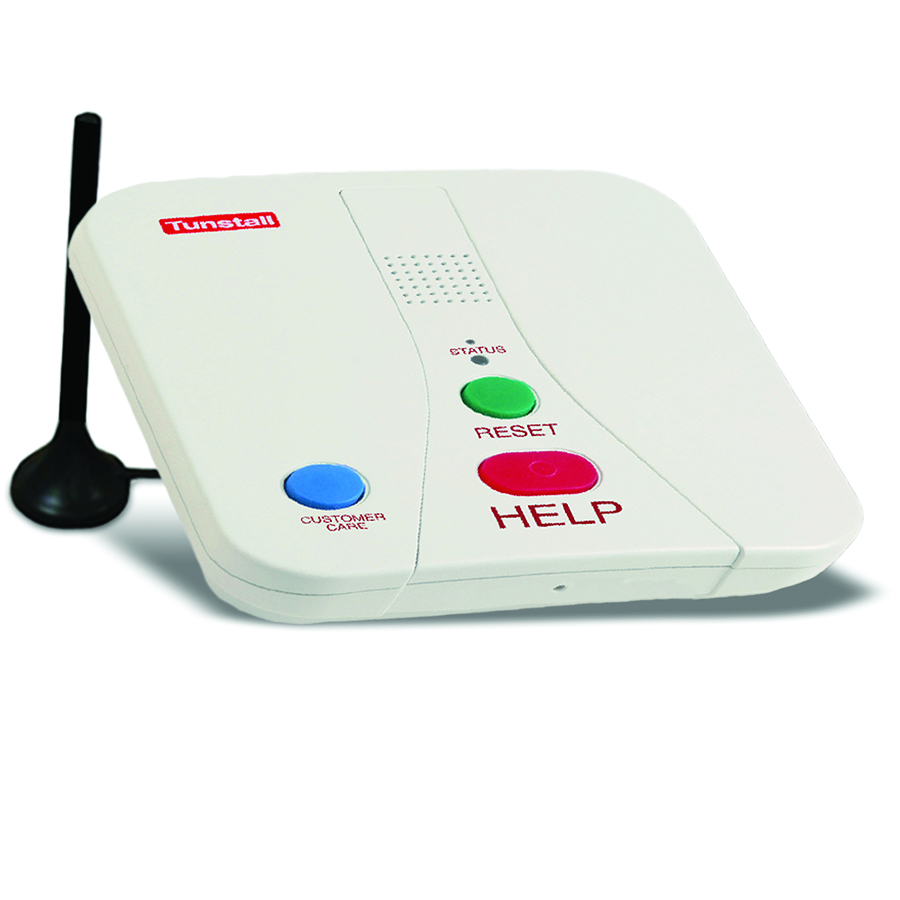
    CEL 500 device
    CEL 500
    Amie Lanyard
    Amie Lanyard
    Belle device
    Belle

    —————–

    TUNSTALL AMERICAS
    98-030 Hekaha St, Ste. 4, Aiea HI 96701
    808-721-1201  |  www.americas.tunstall.com


    Every 13 seconds, an older adult is seen in an emergency department for a fall-related injury. Lower-body weakness, difficulties with walking and balance, and vision problems can make a person more likely to fall. Other causes include home hazards and clutter. Having a medical alert system can reduce a person’s risk of not being able…

  • MemorC: A Free Memory Aid

    One of the challenges for caregivers of those with Alzheimer’s and other forms of dementia is finding ways to engage their loved one or patient in tasks that strengthen the ability to recall who people are and what their relationship with them is.

    Photo of Dr. Warren Wong
    Dr. Warren Wong

    Dr. Warren Wong, a local geriatrician with decades of experience working with such patients, took on that challenge and has developed a free iPad app to fill that need: MemorC.

    How does MemorC work?

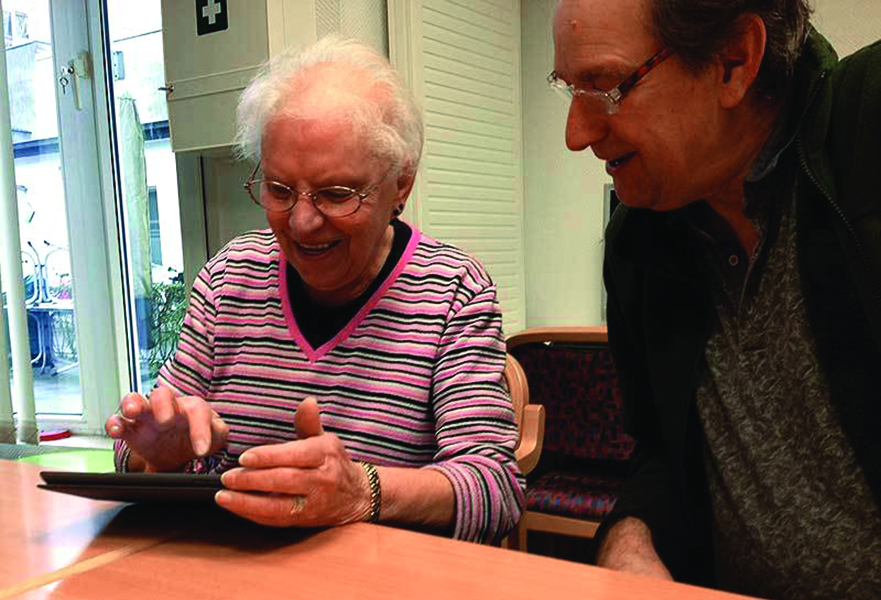
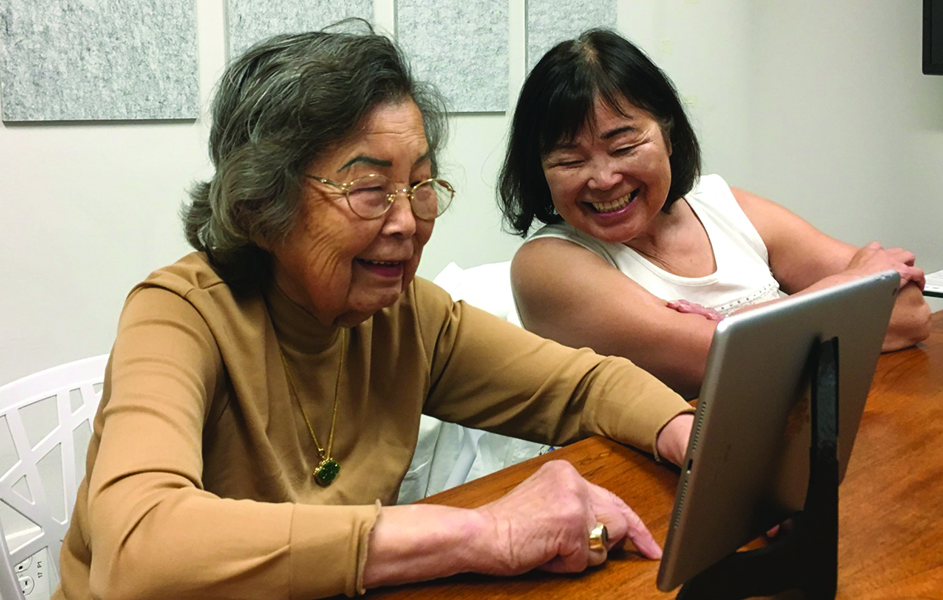
    A family member, friend or caregiver downloads the app. This person is called the “administrator.” The administrator uses the app to provide some basic information and a photo of the person with memory problems. The administrator also provides some information and photos of loved ones.

    The person with memory problems then plays with the app, picking out pictures of loved ones from an assortment of photos of people. They are also asked to name them and identify how they are related. Another part of the app, Suzanne Chat, asks them some questions which can be answered with any response, creating a conversation. The purpose of Suzanne Chat is to engage the user, asking ques-tions and reinforcing identity and emotions.

    Android and iPhone apps are still in the future, but if you have an iPad and an Apple account, you can search for MemorC in the Apple Store or download it directly from the webpage below, where you can also learn more (using any computer) about its purpose and how it works.

    ——————

    MEMORC
    warrenwongmd@gmail.com | www.memoriesconnect.com

    One of the challenges for caregivers of those with Alzheimer’s and other forms of dementia is finding ways to engage their loved one or patient in tasks that strengthen the ability to recall who people are and what their relationship with them is. Dr. Warren Wong, a local geriatrician with decades of experience working with…