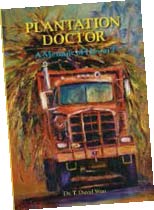
T. David Woo’s highly textured memoir of his life as a Hawai‘i Island plantation doctor provides a fascinating look at the days when sugar cane was king.
Plantation Doctor: A Memoir of Hawai‘i is filled with anecdotes, rare photos and detailed maps of ethnic camps during Hawai‘i’s booming plantation era.
Woo was born on the Big Island just after the turn of the century. He left home at age 14 to attend school in China. After earning his medical degree in 1935, he returned to his island home to become a self-professed “cowboy doctor” at Parker Ranch; physician for the Hakalau, Pepe‘ekeo, Honomū and Onomea plantations; and co-founder of the Hilo Medical Group, providing medical care for thousands of ranch hands, plantation workers and other Big Island residents.
His interests also extended to horticulture, a field in which he hybridized award-winning orchids. He was also a horse-breeder, playing a key role in continuing kanaka mustang (Hawaiian horse) bloodlines.
The posthumously published memoir was compiled by Woo’s three children, who shared, “As we age, we have come to more full… appreciate his optimism and positivity in serving his fellow man, community and family.”
T. David Woo’s highly textured memoir of his life as a Hawai‘i Island plantation doctor provides a fascinating look at the days when sugar cane was king. Plantation Doctor: A Memoir of Hawai‘i is filled with anecdotes, rare photos and detailed maps of ethnic camps during Hawai‘i’s booming plantation era. Woo was born on the…
Did you or a loved one work for the plantations on Maui during the 20th century? Do you enjoy reminiscing with children and grandchildren about simpler times, when family came first and neighbors looked out for each other? Lahaina Restoration Foundation’s (LRF) Plantation Camp Map project helps tell your story.
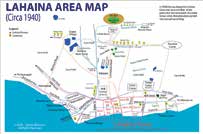
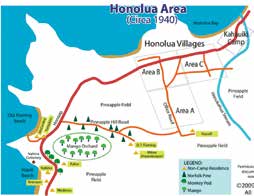
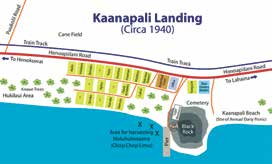
Over seven years, the Plantation Days annual event in Lahaina allowed members of West Maui sugar and pineapple plantation communities to view and fine-tune details on large paper maps originally drawn up by Taketo Okamitsu. By locating their family homes on the maps, they preserved details for future generations.
For the past two years, LRF has commissioned digitization of these maps and a collection of personal details. LRF’s 32 colorful new maps show family names and home locations, company stores and services in each West Maui plantation camp from south of Lahaina to Pu‘ukoli‘i and Honolua. They celebrate the old families in our community and assist seniors in saving their memoirs.
LRF is currently the only organization committed to collecting information about West Maui’s camps, an integral part of a larger outreach to gather all primary source historical information about Lahaina. By the end of 2016, residents and visitors will be able to view camp maps in a permanent display at the Plantation Museum, located on the top floor of The Wharf Cinema Center in Lahaina. Historic photos and antiques, including appliances, tools, furniture and heirlooms will illustrate poignant, real-life stories on display panels. Learn how migrant workers traveled to Hawai‘i; view the workings of a sugar mill and pineapple cannery; see homemade toys, games and community sports; explore the bango system and mid-century labor strikes. Visit the museum with your family and share your memories of plantation life.
LAHAINA RESTORATION FOUNDATION
501(c)3 Hawai‘i nonprofit with volunteer board of directors and members 808-661-3262 | www.LahainaRestoration.org
PLANTATION MUSEUM
The Wharf Cinema Center, third floor
658 Front St., Lahaina HI 96761
Open daily from 9 am – 6 pm, free admission
Did you or a loved one work for the plantations on Maui during the 20th century? Do you enjoy reminiscing with children and grandchildren about simpler times, when family came first and neighbors looked out for each other? Lahaina Restoration Foundation’s (LRF) Plantation Camp Map project helps tell your story. Over seven years, the Plantation…
Gloria, 65, a participant in the Adopt A Family program in 2015, and EAH Housing Resource Coordinator Amber Itokazu. “Don’t assume that others know what you need or what you’re going through,” said Gloria. HHH photo.
The holidays are a special time for Hawai‘i families. But for some seniors, the season can be one of the most challenging and difficult times of the year.
Many kūpuna live on fixed incomes and struggle to make ends meet. Some do not have the support of family and friends, and especially during the holidays, this isolation can make them feel alone and unloved.
Those with ‘ohana can feel the financial strain of the gift-giving season. Elderly parents caring for mentally or physically disabled adult children may find themselves unable to afford additional holiday indulgences.
During these times of need, Helping Hands Hawai‘i (HHH) helps to support seniors experiencing financial hardships. Every year, HHH’s Adopt A Family program connects seniors, and other low income or homeless individuals and families, with community donors who help uplift and inspire them while providing them with much-needed basic necessities.
This year, donors will adopt more than 600 households in need. Donors come from all over the island and from all walks of life. Their actions show hundreds of families that they are not alone.
“I think the community is not fully aware of how many seniors are in need,” said Amber Itokazu, a resource coordinator at EAH Housing (an affordable housing nonprofit), who works closely with many kūpuna.
One of these seniors is Gloria, who participated in the Adopt A Family program in 2015.
Gloria’s advice to other seniors struggling to make ends meet during the holidays is to ask for help. “Don’t assume that others know what you need or what you’re going through,” she said.
Gloria said the second step is to seek out support and “don’t give up until you find the program that best fits your unique situation.”
“Some seniors have the mentality that they are the forgotten generation, but they are not,” said Gloria. “Everyone needs to feel needed, wanted, cared about and that their lives do matter.”
“A lot of people don’t think of how much of an impact they can make,” Amber said. “To them, the gesture is so small, but to the person receiving, it is big.”
Together with generous supporters and donors, HHH continues to change people’s lives each year. Through partnerships with service providers and organizations, an increasing number of individuals learn about the community resources that are available to them.
During the holidays and throughout the entire year, remember that there are lonely seniors in the community who face constant financial strain.
Consider how you and your family can make a difference in a kūpuna’s life. Connect with a nonprofit in the community that supports seniors and help them in their efforts.
The holidays are a special time for Hawai‘i families. But for some seniors, the season can be one of the most challenging and difficult times of the year. Many kūpuna live on fixed incomes and struggle to make ends meet. Some do not have the support of family and friends, and especially during the holidays,…
Everyone has a story to tell. And what better way to leave a legacy, and pass down family values and traditions than through your own words, in your very own book that can be passed down through the generations, inspiring legacies to come.
But getting started can be a daunting task. Staring at that blank page or computer screen can be an unnerving experience. Where to begin?
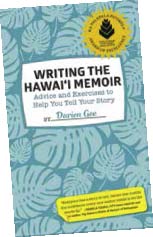
Writing the Hawai‘i Memoir: Advice and Exercises to Help You Tell Your Story by international bestselling author and writing instructor Darien Gee can help guide you from start to finish.
The book describes how to begin, what to do and how to do it with the aid of 29 writing exercises along with writing tips and inspiration from more than 20 of Hawai‘i’s best-known writers, teachers and storytellers.
Through this awardwinning how-to book, budding writers can learn tips to recall and organize life events into a story, discover life themes, overcome writer’s block, assess the “warts and all” aspects of storytelling, keep motivated and how to choose the best way to publish or share the finished memoir.
If your story is still waiting to be told, this book just may hold the key to unlocking your writer’s block, so you can share yourself — your story — with future generations.
Everyone has a story to tell. And what better way to leave a legacy, and pass down family values and traditions than through your own words, in your very own book that can be passed down through the generations, inspiring legacies to come. But getting started can be a daunting task. Staring at that blank…
There are many organizations that serve Hawai‘i’s seniors and their families, but maybe none like the Hawaii Pacific Gerontological Society (HPGS). This nonprofit organization was founded in 1979 to improve the quality of life of Hawai‘i’s older adults by promoting the understanding of the aging process, supportive services, and legislation that helps people age with dignity and grace. Its goal is to enhance the general well-being of older individuals by fostering public understanding and continuing education in the field of gerontology.
HPGS also brings together people concerned and interested in the challenges, issues and problems of older adults as realized in a changing society. The organization advocates on behalf of older people, while stimulating interest in gerontological research and services, thereby encouraging professional preparation for gerontological research and services.
All that said, HPGS held an excellent conference in September for its members and those in the gerontological field. The biennial conference included speakers from Hawai‘i, the mainland and Japan, who discussed diverse topics — from improving the well-being of individuals to promoting private-public partnerships.
Stories for and about seniors, events and other topics are always worth sharing, including 100th birthday announcements. Contact Sherry at: 808-722-8487 | SGoyaLLC@aol.com
There are many organizations that serve Hawai‘i’s seniors and their families, but maybe none like the Hawaii Pacific Gerontological Society (HPGS). This nonprofit organization was founded in 1979 to improve the quality of life of Hawai‘i’s older adults by promoting the understanding of the aging process, supportive services, and legislation that helps people age with…
Rev. Jayne Ryan Kuroiwa’s son, Jesse Kuroiwa, and her father, Jack Ryan, know that children love good stories. Put your tales of family tradition and faith in easy-to-understand language to bring them alive. Photo: Cheryl Ryan.
The lyrics of the Crosby, Stills and Nash song Teach Your Children advise parents and children to share their differing dreams and forgive one another because we are unable to grasp what the other goes through. Each verse ends, “just look at them and sigh and know they love you.”
Those who study religion in America have coined the term “The Nones” for the rising percentage of younger adults, who, when surveyed about their religious preference, marked the box labelled “None.”
They don’t identify with the Christian or Buddhist, Native Spirituality or Jewish choices of their heritage. They simply check “None.”
That’s not a surprise, is it? Many communities of faith are increasingly looking like gathering places for faithful, grey-haired elders. And so we sigh when we traditional people of faith look to the future viability of our houses of worship.
Sometimes the chasm between generations looks too broad to cross, especially in this new millennium, where technology and shifting social norms exacerbate our differences. But we can all do more than just sigh about the youngsters in our families and our communities.
It’s up to you to share your values and spiritual practices with younger generations. Speak up about your ethical choices, the beliefs you hold dear and the meaning behind the practices of your faith.
Think of this not as a way to “push” your opinions on others, but as a way of sharing your personal life story.
Trust that your children and grandchildren want to know what experiences shaped you and how you make sense of this life.
Invite them to join you. They might not want to attend a formal worship service, but you might just make a simple suggestion. “A group from my temple is preparing food for the homeless. Would you like to go with me and see what that’s like?” “I pray before meals. Will you sit quietly while I offer thanks for our food?”
The invitation and a brief sentence or two about how the practice deepens your faith will help them see the full dimensions of your life.
Sometimes children or grandchildren have no religious experience until they attend a wedding or funeral. If that’s the case in your family, tip them off about what to expect. What rituals might be hard for them to understand? Give them some insider information.
“This is how we cross ourselves. This is why. I’ll show you how and when to do it.” “Each family will have a chance to come forward and offer prayers and incense. This is why we do it.”
Children love good stories, so share the tales of your traditions. Put them in easy-to-understand language and bring alive the heroes of your faith.
Best of all, listen to children as they tell you about their lives. Connecting with their struggles and choices will open the door for you to share any wisdom you have gained.
Let your faith journey shore up theirs with words of hope and perseverance… “and know they love you.”
WINDWARD UNITED CHURCH OF CHRIST
38 Kaneohe Bay Drive, Kailua HI 96734
The lyrics of the Crosby, Stills and Nash song Teach Your Children advise parents and children to share their differing dreams and forgive one another because we are unable to grasp what the other goes through. Each verse ends, “just look at them and sigh and know they love you.” Those who study religion in…
Named one of 13 Rising Star Chefs over 20 years ago, Hawai‘i Chef Alan Wong soon became a supernova, helping to birth Hawai‘i Regional Cuisine (HRC) with other chefs determined to work with local farmers, fishermen and ranchers. HRC put Hawai‘i on the foodie map, establishing the state as a soughtafter destination where diners can experience a unique blend of ethnic-inspired cuisines made with fresh, local products, which he offers at his multiple-awardwinning restaurants.
In addition to contributing to his profession, Chef Wong believes in giving back to the community. Generations Magazine® asked him about his growing legacy of giving.
GM: When did your involvement at the Mōili‘ili Senior Center begin? Chef Wong: Almost 20 years ago, I read an article about how our aging seniors on fixed incomes are facing rising expenses. Some didn’t know how they were going to cope…
One of the people being interviewed for the article was a woman from our area who attended the Mōili‘ili Senior Center. We inquired and found out that some live alone and don’t go out to eat much, let alone with others. I thought that since this is in our neighborhood, we should support the center in taking care of our elders.
It started with me cooking a pot of stew and pan of rice. A few others would make a salad and our pastry chef made dessert. We would pack it all in our cars and drive down the road once a month, and then out of their small kitchen, dish out food for the 30 or so seniors.
A couple of years later, I thought we should have them come eat in our restaurant and make it more special. More of our staff got involved and with a full range of kitchen equipment behind us, we started to cook a wider variety of dishes for them.
GM: What prompted you to provide this great meal to the seniors at Mōili‘ili? Chef Wong: I believe in taking care of our elders. One sure thing is that we all will get there one day, too. I also believe that it is healthy for the seniors to be with kids and younger people and vice versa. Our next generation also needs to see how we take care of our elders and parents, hoping that one day, they, too, will care for them equally as good — if not better. We allow our staff to bring their kids and families, and sit down with them, enjoy eating with them and sharing the moment.
GM: What do you get out of this event? Chef Wong: We believe in giving back to our community. Why not take care of our very own right in our backyard with the things we do every day? Our staff feels really good about the event. At the end of the meal, they usually share something they did with the seniors at the center — music, dancing, exercising — all very entertaining and so cute to see.
Hospitality is about making people feel special. At my restaurants, the aloha spirit is about giving a gift to someone, making someone’s day and expecting nothing in return — except a wonderful feeling of satisfaction.
Named one of 13 Rising Star Chefs over 20 years ago, Hawai‘i Chef Alan Wong soon became a supernova, helping to birth Hawai‘i Regional Cuisine (HRC) with other chefs determined to work with local farmers, fishermen and ranchers. HRC put Hawai‘i on the foodie map, establishing the state as a soughtafter destination where diners can…

 T. David Woo’s highly textured memoir of his life as a Hawai‘i Island plantation doctor provides a fascinating look at the days when sugar cane was king.
 Did you or a loved one work for the plantations on Maui during the 20th century? Do you enjoy reminiscing with children and grandchildren about simpler times, when family came first and neighbors looked out for each other? Lahaina Restoration Foundation’s (LRF) Plantation Camp Map project helps tell your story.
 Over seven years, the Plantation Days annual event in Lahaina allowed members of West Maui sugar and pineapple plantation communities to view and fine-tune details on large paper maps originally drawn up by Taketo Okamitsu. By locating their family homes on the maps, they preserved details for future generations.
 By the end of 2016, residents and visitors will be able to view camp maps in a permanent display at the Plantation Museum, located on the top floor of The Wharf Cinema Center in Lahaina. Historic photos and antiques, including appliances, tools, furniture and heirlooms will illustrate poignant, real-life stories on display panels. Learn how migrant workers traveled to Hawai‘i; view the workings of a sugar mill and pineapple cannery; see homemade toys, games and community sports; explore the bango system and mid-century labor strikes. Visit the museum with your family and share your memories of plantation life.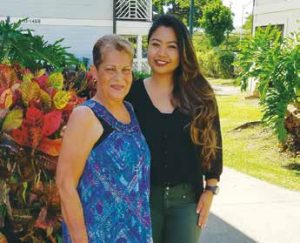
 Everyone has a story to tell. And what better way to leave a legacy, and pass down family values and traditions than through your own words, in your very own book that can be passed down through the generations, inspiring legacies to come.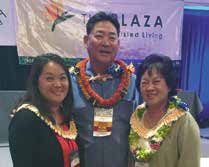
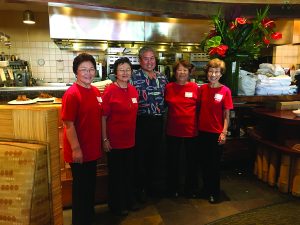 Named one of 13 Rising Star Chefs over 20 years ago, Hawai‘i Chef Alan Wong soon became a supernova, helping to birth Hawai‘i Regional Cuisine (HRC) with other chefs determined to work with local farmers, fishermen and ranchers. HRC put Hawai‘i on the foodie map, establishing the state as a soughtafter destination where diners can experience a unique blend of ethnic-inspired cuisines made with fresh, local products, which he offers at his multiple-awardwinning restaurants.
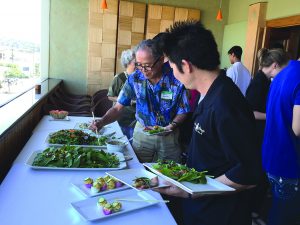 In addition to contributing to his profession, Chef Wong believes in giving back to the community. Generations Magazine® asked him about his growing legacy of giving.