Category: Senior News

  • Kathy Jaycox’s Mission to Give Back

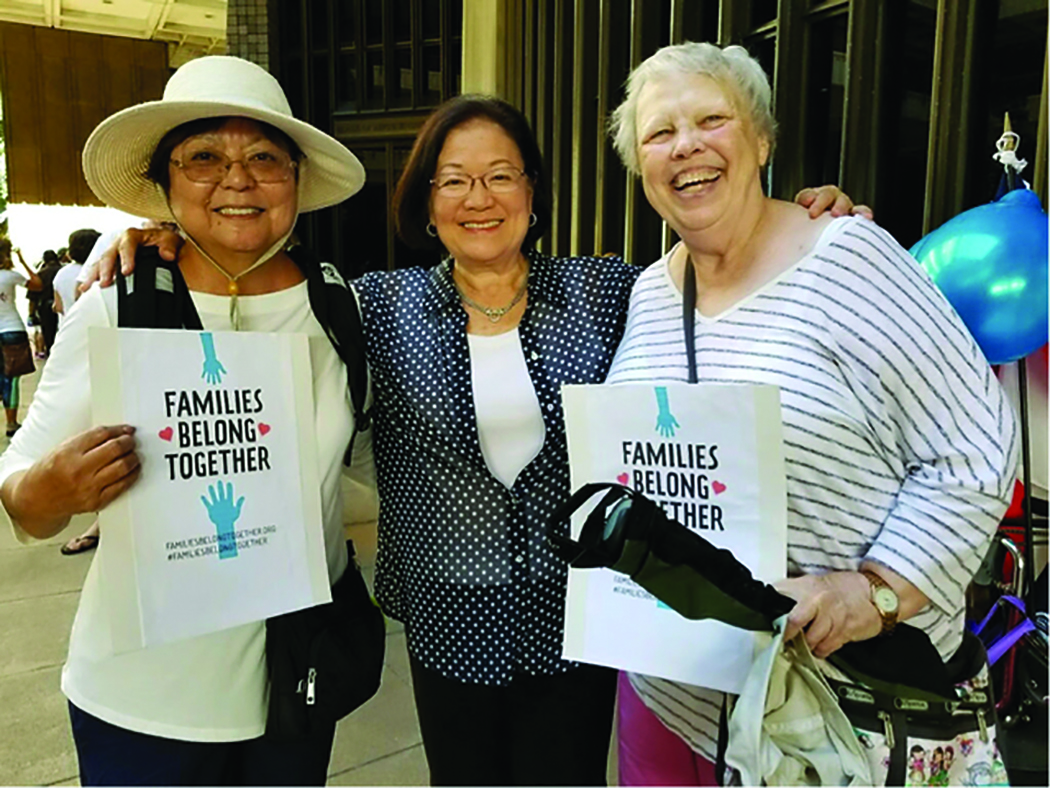
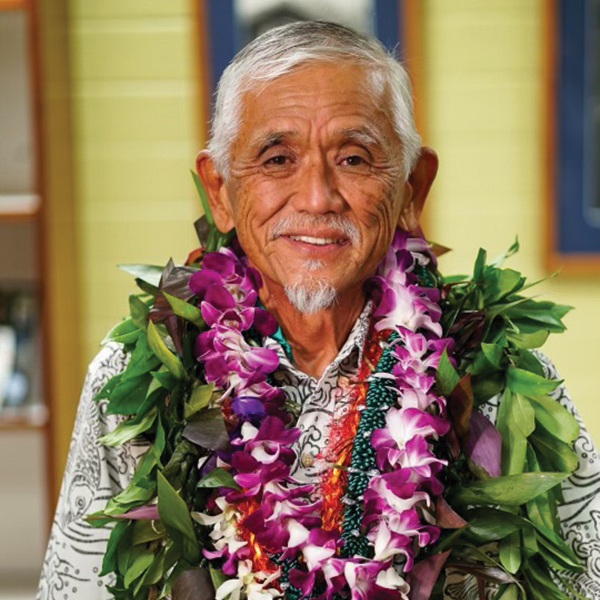
    After more than 40 years teaching at secondary and post-secondary schools in Illinois and Hawai‘i, Kathy Jaycox is now dedicated to volunteering for nonprofits. The work touches her heart and soul, she says.

    Kathy believes that “To whom much is given, much will be required (Luke 12:48).” This line of Biblical wisdom reminds us that we are held responsible for what we have. If we have been blessed with talents, wealth, knowledge and time, it is expected that we use them to benefit others.

    Past affiliations include service as a board member and president of Faith Action for Community Equity, and the Windward O‘ahu branch of the American Association of University Women, where she continues as a member.

    Kathy says she feels rewarded when she sees volunteer actions lead to positive change. The most outstanding, she said, was the passage of Act 102 in 2017, which provided financial support to family caregivers so that they could hire respite workers and not need to give up their own employment.

    Currently, Kathy serves on the executive council of AARP Hawai‘i doing outreach. She teaches, speaks to groups and helps in whatever capacity is needed. Her role on the board of directors for the Hawaii Pacific Gerontological Society includes serving on the workforce development, publicity, newsletter, and website committees. Kathy is also a member of the Kupuna Caucus, a volunteer at St. John Vianney Church and on the board of St. John Vianney School.

    After more than 40 years teaching at secondary and post-secondary schools in Illinois and Hawai‘i, Kathy Jaycox is now dedicated to volunteering for nonprofits. The work touches her heart and soul, she says.

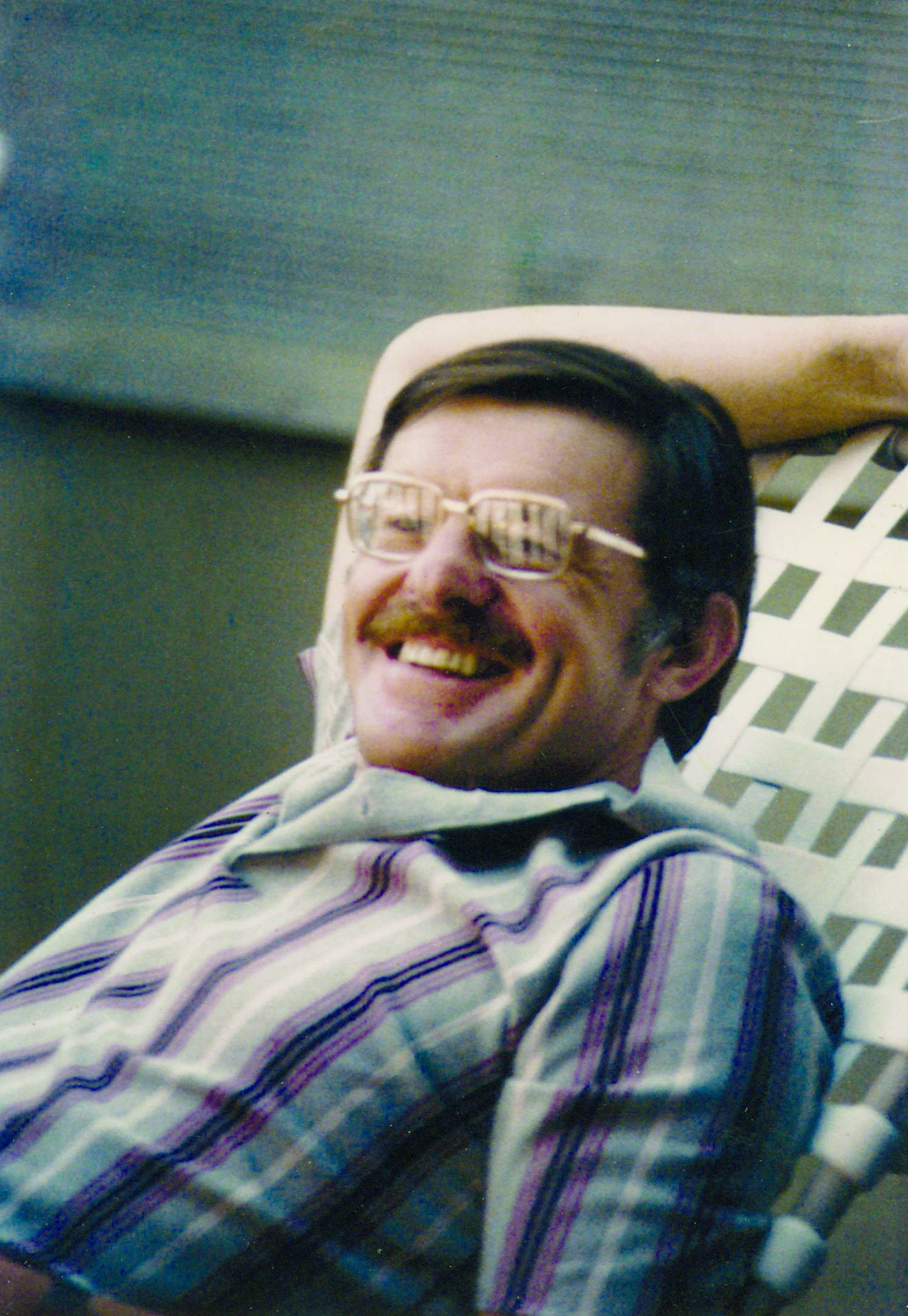
  • Carl “Kini Popo” Hebenstreit, 1929-2022

    Carl “Kini Popo” Hebenstreit was well past retirement age when he made the decision to launch Generations Hawai‘i, which he described as “one of the happiest and most satisfying activities” of his life.

    “There is a need for it. That’s been a Trade [Media Hui] DNA tag since [1954],” when the original parent company of Generations was founded, he explained in an email to a colleague in 2006.

    Even then, at the age of 77 himself, Carl could tell the Great Silver Wave was nowhere near its crest.

    “We’re aiming the publication at… those who have to look after their parents in their 80s and 90s, as well as the children of their own children,” he said.

    Nearly two decades after sending that email, demand is only stronger for a magazine Carl originally envisioned as “a lively resource that recognizes the achievements of Hawai‘i’s 50-plus citizens while offering information and insight into ways to enrich life in the mature years.”

    During his three years as Publisher of Generations, he came to the realization that most kūpuna didn’t see getting old as a liability — many, if not all, discovered  aging gracefully meant also gaining the opportunity to redefine and recreate their lives.

    “In fact, we discovered an amazing sense of energy in this group,” Carl said. “Sixty is indeed the new forty. Eighty is the new sixty.”

    Generations readers in 2023 still understand the importance of maintaining (and building) the strength of their health, wealth and relationships well into their golden years. This magazine remains a trusted companion and guide to helping readers Live the Good Life After 50.

    And for that, we have Carl Hebenstreit to thank.

    Mahalo, Kini.

    Carl “Kini Popo” Hebenstreit was well past retirement age when he made the decision to launch Generations Hawai‘i, which he described as “one of the happiest and most satisfying activities” of his life. “There is a need for it. That’s been a Trade [Media Hui] DNA tag since [1954],” when the original parent company of…

  • Kupuna Collective Meets with Sen. Hirono

    (L–R) Christy Nishita, Ph.D., UH Center on Aging; JennyLee, UH Center on Aging; Sen. Mazie Hirono; Derrick Ariyoshi, Elderly Affairs Division; Kathy Wyatt, Hale Hauoli Adult Day Care; Michelle Cordero-Lee, Hawaii Meals on Wheels; En Young, Pacific Gateway Center.
    (L–R) Christy Nishita, Ph.D., UH Center on Aging; Jenny Lee, UH Center on Aging; Sen. Mazie Hirono; Derrick Ariyoshi, Elderly Affairs Division; Kathy Wyatt, Hale Hauoli Adult Day Care; Michelle Cordero-Lee, Hawaii Meals on Wheels; En Young, Pacific Gateway Center.

    Sen. Mazie K. Hirono met with the Kūpuna Collective, a network of support organizations that focus on maximizing the health, independence and engagement of Hawai‘i’s older adults, for a roundtable conversation about supporting seniors in Hawai‘i in early October 2022.

    During the roundtable, Sen. Hirono discussed issues including food security, senior care workforce shortages and the recently-passed Inflation Reduction Act (IRA), which will lower healthcare costs for the nearly 280,000 seniors in Hawai‘i who get their healthcare through Medicare.

    “The Kūpuna Collective came together at the start of the pandemic to meet the needs of our kūpuna in Hawai‘i who weren’t able to take advantage of mass food distributions and vaccine initiatives,” said Sen. Hirono. “The collective was able to identify gaps in services and respond quickly by leveraging resources and justifying their needs to donors through careful data collection and analysis. When seniors across our state were struggling to afford food, this group came together to help make sure they had enough to eat, and it has continued working to support our seniors with access to vaccines, daily meals to meet their medical needs, digital resources, and more. Our community owes the Kūpuna Collective a debt of gratitude. With the recently-passed Inflation Reduction Act, we’re also meeting the needs of our seniors by lowering the cost of healthcare and prescription drugs, and making sure seniors on Medicare can get the vaccines they need free of cost, thanks to a provision I authored.”

    The discussion included En Young, executive director at Pacific Gateway Center; Derrick Ariyoshi, executive for the Elderly Affairs Division with the City and County of Honolulu; Lindsey Ilagan, Hawaii Public Health Institute Kūpuna Program manager and co-convener of the Kūpuna Collective; Christy Nishita, interim director of the UH at Mānoa Center on Aging and co-coordinator of the Kūpuna Collective; Michelle Cordero-Lee, Lanakila Pacific Meals on Wheels Program CEO; and Kathy Wyatt, Hale Hauoli Adult Day Care owner and director.


    UH CENTER ON AGING
    cnishita@hawaii.edu
    www.hawaii.edu/aging | www.hiphi.org/kupuna

    Sen. Mazie K. Hirono met with the Kupuna Collective, a network of support organizations that focus on maximizing the health, independence and engagement of Hawai‘i’s older adults, for a roundtable conversation about supporting seniors in Hawai‘i in early October 2022.

  • Social Security Benefits Increase in 2023

    Senior couple are enjoying a dance in the living room of their home.The 8.7 percent cost-of-living adjustment (COLA) will begin with benefits payable to more than 65 million Social Security (SS) beneficiaries in January 2023. Increased payments to more than 7 million Supplemental Social Security (SSI) beneficiaries will begin on Dec. 30, 2022.

    The purpose of COLA is to ensure that the purchasing power of SS and SSI benefits is not eroded by inflation. The increase is aimed at helping to cover the rising cost of food, housing, healthcare and other essentials, otherwise known as inflation. Rising prices on a variety of goods and services have lifted inflation to its highest level in 40 years. The consumer price index for September shows prices rose 8.2 percent over the last year, despite the Federal Reserve’s efforts to stabilize costs by hiking interest rates. Every month in 2022, inflation far exceeded the 5.9 percent cost-of-living (COLA) increase that was set at the end of 2021, meaning that 2021’s COLA did not meet current economic strains.

    Will this newest cost-of-living adjustment (COLA) be enough to make a significant difference for SS and SSI recipients? What problems might they still face?

    Dollars & Cents

    • The average retired person will see an increase of about $140 per month. The average monthly payment to a retired beneficiary will be $1,827.
    • The maximum amount of earnings subject to the Social Security tax (taxable maximum) will increase to $160,200.
    • The earnings limit for workers who are younger than “full” retirement age will increase to $21,240. (SSA deducts $1 from benefits for each $2 earned over $21,240.)
    • The earnings limit for people reaching their “full” retirement age in 2023 will increase to $56,520. (SSA deduct $1 from benefits for each $3 earned over $56,520 until the month the worker turns “full” retirement age.)
    • There is no limit on earnings for workers who are “full” retirement age or older for the entire year.
    • Although the vast majority of recipients are retired, around 3 million children also receive SS payments, as well as people with disabilities and those who have lost spouses.

    Another important change affecting seniors in 2023 is the decrease in Medicare Part B premiums. For SS beneficiaries receiving Medicare, their new higher 2023 benefit amount was available in December through the mailed COLA notice and in their my Social Security’s Message Center. The combination of a SS benefit increase and a Medicare payment decrease is a first. If people were expecting their Medicare premiums to gobble up a substantial portion of their COLA, the good news is, that won’t be the case in 2023.

    The Bottom Line

    Because older people are more likely to spend money than save it, they may actually help mitigate a recession. But seniors need to pay for things that are in higher inflation categories, healthcare being the No. 1 example, so they tend to be more heavily impacted by inflation. Although these changes were enacted so that inflation
    no longer drains value from SS benefits, even with the COLA increase and Medicare payment decrease, low-income seniors and others may still struggle with today’s high prices.


    SSA COLA:
    www.ssa.gov/news/press/factsheets/colafacts2023.pdf
    SSA Full Retirement Age Chart:
    www.ssa.gov/benefits/retirement/planner/agereduction.html
    2023 Medicare Changes:
    www.medicare.gov

    The 8.7 percent cost-of-living adjustment (COLA) will begin with benefits payable to more than 65 million Social Security (SS) beneficiaries in January 2023. Increased payments to more than 7 million Supplemental Social Security (SSI) beneficiaries will begin on Dec. 30, 2022.

  • Walk to End Alzheimer’s

    You probably know someone with Alzheimer’s, the most common type of dementia that’s currently affecting some 5.8 million Americans and growing so rapidly that as many as 14 million may be affected by 2060.

    Dementia is not a disease but the general term for the loss of memory and cognitive abilities, especially in people over 65. Alzheimer’s is a progressive disease that worsens over time and in its late stages, individuals lose the ability to carry on a conversation and generally succumb to the disease four to eight years after diagnosis.

    Current research, however, is showing progress in the removal of one of the main causes or hallmarks of Alzheimer’s disease in the brain, called “amyloid,” also known as plaques, with the potential to slow down the progression of the disease for those who are in the early stages of Alzheimer’s. While this is certainly nowhere near a cure, the science is leading us in the right direction toward better treatments and ultimately, a cure for this terrible disease that impacts so many families across our state.

    But research costs money — lots and lots of money. To help, the Alzheimer’s Association of Hawai‘i is joining other chapters across the country in holding the annual Walk to End Alzheimer’s — the largest event to raise awareness and funds for Alzheimer’s care, support and research. After a two-year pandemic gap, the Hawai‘i walks are once again taking place throughout the islands: in Hilo on Sept. 17, in Kapa‘a on Oct. 1, on Maui on Oct. 22 and in Honolulu on Nov. 5.

    Participants can register as teams or individuals, and businesses can put together groups. Children can also participate (bikes, skateboards or wheelie footwear are discouraged). Strollers are fine and it’s OK to take your well-behaved dog if it’s on a leash. It’s a fun day offering fresh air and exercise, while helping to raise the much-needed funds for research and awareness. On O‘ahu, this year’s goal is $335,000.

    There’s no registration fee, but participants are encouraged to make a personal donation and commit to raise funds in the fight against Alzheimer’s If you raise $100 or more before the event, you’ll receive a free T-shirt to wear during the walk. All donations are tax deductible.

    You can get complete details about this year’s Walk to End Alzheimer’s on its website as well as important information about the disease: what it is, how is it diagnosed, what are the symptoms, what are the stages of the disease and what treatments are available.


    WALK TO END ALZHEIMER’S (501(c) 3 nonprofit)
    808-518-6654 | Jmgeorge@alz.org
    alz.org/hawaii

    You probably know someone with Alzheimer’s, the most common type of dementia that’s currently affecting some 5.8 million Americans and growing so rapidly that as many as 14 million may be affected by 2060.

  • 7 Reminders for the General Election

    Ahead of the 2022 General Election on Nov. 8, the Hawai‘i Office of Elections has a few key reminders for Hawai‘i’s kūpuna voters.

    Hawai‘i is a vote-by-mail state. As a registered voter, your General Election ballot will conveniently arrive in your mailbox. Gone are the days of carving out time to vote at your assigned polling place. Hawai‘i voters are automatically mailed a ballot for every election.

    Check that your voter registration is current. Visit elections.hawaii.gov or call 808-453-VOTE (8683) to verify that your voter registration is accurate. By law, ballots cannot be forwarded through the mail, so if you have moved or changed your mailing address, you must update your voter registration. This can be done online or by submitting a paper Voter  Registration Application.

    Vote your ballot. You can expect to receive your ballot by Oct. 21 for the General Election. Read the instructions, mark your ballot with a blue or black pen, seal it in your return envelope and sign the envelope.

    Sign your ballot return envelope. The return envelope must be signed for the ballot to be counted. The signature on your return envelope is compared to the signature on your voter registration record. If the signature matches, your ballot is accepted and recorded to ensure only one ballot is counted for you.

    Your ballot must be received by 7pm, Nov. 8. Voted ballots can be returned by mail or dropped off at a voter service center or ballot drop box within your county. Visit elections.hawaii.gov for location details. Ballots received after the deadline cannot be counted.

    Sign up for ballot alerts. Avoid missing the ballot return deadline by signing up for free ballot alerts. Visit  hawaii.ballottrax.net or call 808-453-VOTE (8683) for assistance with enrolling. Choose to receive text, email and voice alerts for when your ballot is on its way, and reminders to return your ballot as the deadline approaches.

    Assistance is available. If you’re in need of assistance with casting your ballot, consider the following accessible options:

    1) Visit a voter service center to cast your vote using accessible voting equipment.
    2) Request an electronic ballot and mark your ballot using your personal compatible device. Visit elections.hawaii.gov to learn more about accessible voting.


    CITY & COUNTY OF HONOLULU ELECTIONS DIVISION
    530 S. King St., Rm. 100, Honolulu, HI 96813
    For voter details, registration information and questions:
    elections.hawaii.gov | 808-453-VOTE (8683)
    Election officials are committed to making sure your vote counts and
    safeguarding Hawai‘i’s elections.

    Ahead of the 2022 General Election on Nov. 8, the Hawai‘i Office of Elections has a few key reminders for Hawai‘i’s kūpuna voters.

  • Honoring Emmet White

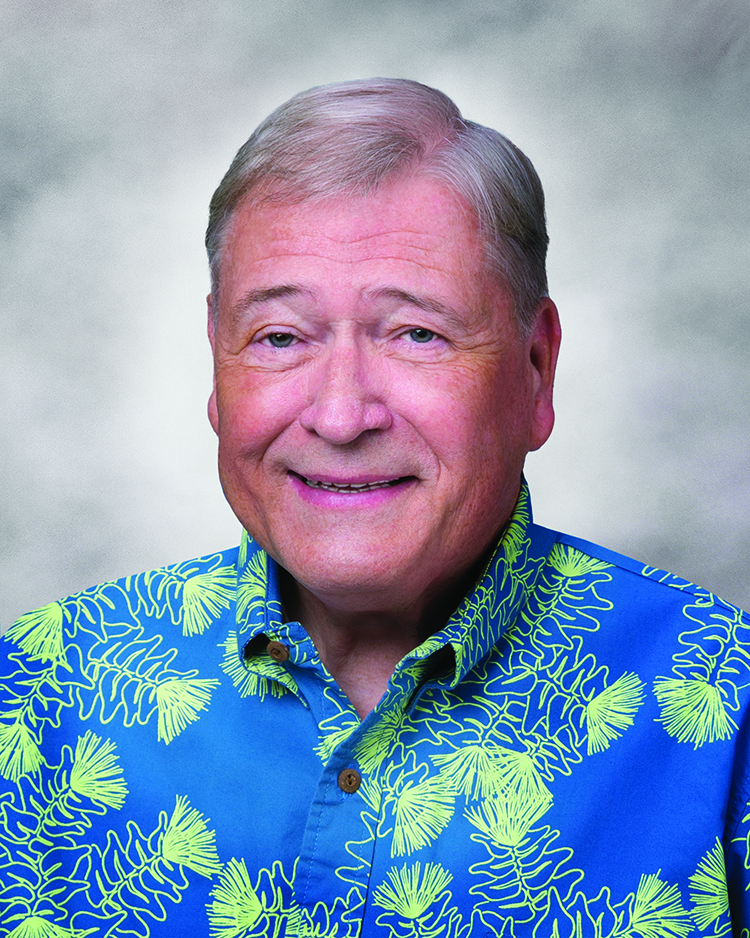
    The Hawaii Pacific Gerontological Society will honor Emmet White at its virtual fundraiser on Nov. 4. His service and dedication to so many families, and his professional career serving kūpuna through the Arcadia Family of Companies, Hawaii Long Term Care Association, Hawaii Healthcare Association and the Central Union Church are legendary.

    After 23 years of service, Emmet retired as president and CEO from Arcadia. He chaired the Hawaii Long Term Care Association, now reunited with the Healthcare Association of Hawaii, and also served on the State Health Coordinating Council for the State Health, Planning & Development Agency. Emmet was also a member of the Oahu Workforce Development Board.

    A retired Army Reserve colonel, Emmet served as an ombudsman for the Department of Defense Employer Support of the Guard and Reserve Program. Prior to joining Arcadia, Emmet practiced law in Honolulu for 23 years and was appointed to the Court Annexed Arbitration Program in its early years. During that time he also served Central Union Church as moderator, trustee and deacon, as a member of the church’s Arcadia Committee, and then as a member and chair of Arcadia’s governing board.


    HAWAII PACIFIC GERONTOLOGICAL SOCIETY (501(c) 3 nonprofit)
    P.O. Box 3714, Honolulu, HI 96812
    Sherry Goya, HPGS Executive Director
    808-722-8487 | sgoyallc@aol.com
    www.hpgs.org

    The Hawaii Pacific Gerontological Society will honor Emmet White at its virtual fundraiser on Nov. 4. His service and dedication to so many families, and his professional career serving kūpuna through the Arcadia Family of Companies, Hawaii Long Term Care Association, Hawaii Healthcare Association and the Central Union Church are legendary.

  • Veterans to Gather for Memorial Celebration

    For the past 20-plus years at midnight on the 23rd of December, a gathering of veterans has taken place near the Capitol, by the memorial for our Korean and Vietnam brethren. The group includes men and women who have served in various campaigns. It is a big crowd.

    There is usually some coffee, water and a snack or two. Mostly, it is a gathering to check in and renew “welcome home” greetings. It is also a time to notice who is not in attendance.

    Our voices are softer and our hearing isn’t quite 100 percent, so the words of those leading prayers or the roll call of our missing companions becomes more personal as we lean in and turn up hearing aids.

    Our midnight gathering leads into the 24th of December in Hawai‘i and Christmas Day in Vietnam.

    Many recall our Christmas in Vietnam — where we were, who we were with, whether the cease fire remained intact that day and what was for dinner (hot chow, and if Santa was generous, one or two bottles of beer).

    COVID-19 had us cancel the 2020 event. Sadly, four of us will not be at the 2021 celebration. Please join us in remembrance on Dec. 23 at midnight at the Hawai‘i State Capitol Korea-Vietnam Veterans Memorial.


    VFW DEPARTMENT OF HAWAII
    438 Hobron Lane, Ste. 407, Honolulu, HI 96815
    808-946-7250 | adj@vfw-dept-hi.org
    www.vfw-dept-hi.org/

    For the past 20-plus years at midnight on the 23rd of December, a gathering of veterans has taken place near the Capitol, by the memorial for our Korean and Vietnam brethren. The group includes men and women who have served in various campaigns. It is a big crowd.

  • Gerontological Society Virtual Conference

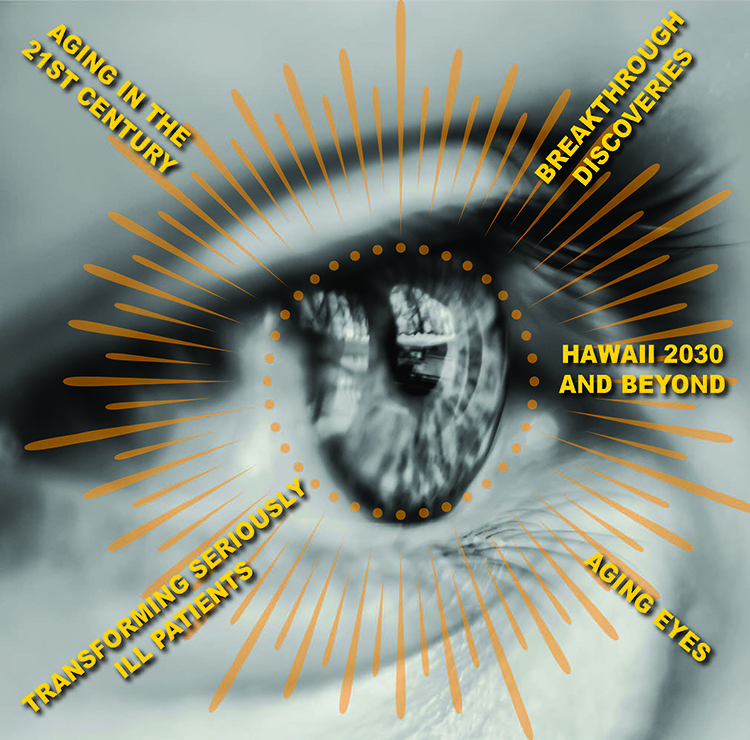
    The Hawaii Pacific Gerontological Society (HPGS) will present its biennial conference, Foresight 2021 and Beyond, on Sept. 15 and 16, 2021.

    HPGS is a nonprofit  organization created in 1979 and dedicated to improving the quality of life of Hawai‘i’s older adults. HPGS’  virtual conference is intended for elder care practitioners in the health and human service fields; business, government agencies, nonprofits and faith-based organization serving older adults; researchers, students of gerontology, advocates for seniors and seniors interested in continuing their education. A few of the 14 topics that will be featured this year include: breakthrough discoveries on aging, changes in the field of gerontology, aging in the 21st century, the promise and potential of the boomer generation, transforming care for seriously ill patients, care of aging eyes and new innovations and the economic implications of population aging.

    In addition, seven Na Lima Kokua awardees along with two recipients of the Tony Lenzer scholarship will be recognized. The registration fee is nominal. Generations Magazine readers will receive the regular rate through Aug. 31. Register at www.hpgs.org.


    HAWAII PACIFIC GERONTOLOGICAL SOCIETY
    (501(c) 3 nonprofit)
    P.O. Box 3714, Honolulu, HI 96812
    Sherry Goya, HPGS Executive Director
    808-722-8487 | sgoyallc@aol.com
    www.hpgs.org

    The Hawaii Pacific  Gerontological Society (HPGS) will present its biennial conference, Foresight 2021 and Beyond, on Sept. 15 and 16.

  • 10-Digit Dialing Starts in October

    Starting this October, you’ll have to dial “808” with all phone numbers you call in Hawai‘i. It seems easy, right? But the change could lead to complications.

    Starting Oct. 24, 2021, all calls — including those on the same island — must be dialed using 10 digits or the call will not go through.

    The Federal Communications Commission (FCC) is making the change so that emergency calls made to the National Suicide Prevention Center and the Mental Health Crisis Lifeline can be made by simply calling “988.” That particular prefix is common in Hawai‘i, therefore, if local calls do not start with “808,” the caller could get one of those crisis lines by mistake. (Any 211, 311, 411, 511, 611 or 811 services available in your community can still be reached by dialing its three-digit code.)

    Complications may arise because many automated dialing systems, burglar alarm monitors, speed dialers, mobile phone contacts, fax machines, security gates and other equipment may not currently be set up for 10-digit dialing.

    Phone numbers listed on printed materials, websites, business cards and stationery should also include “808.”

    Hawaiian Telcom urges business and residential customers to check their equipment and make changes as necessary. Visit http://bit.ly/Dial808 to get complete details and information.

    Starting this October, you’ll have to dial “808” with all phone numbers you call in Hawai‘i. It seems easy, right? But the change could lead to complications. Starting Oct. 24, 2021, all calls — including those on the same island — must be dialed using 10 digits or the call will not go through.

  • MDX Lends a Hand to OurKupuna.com

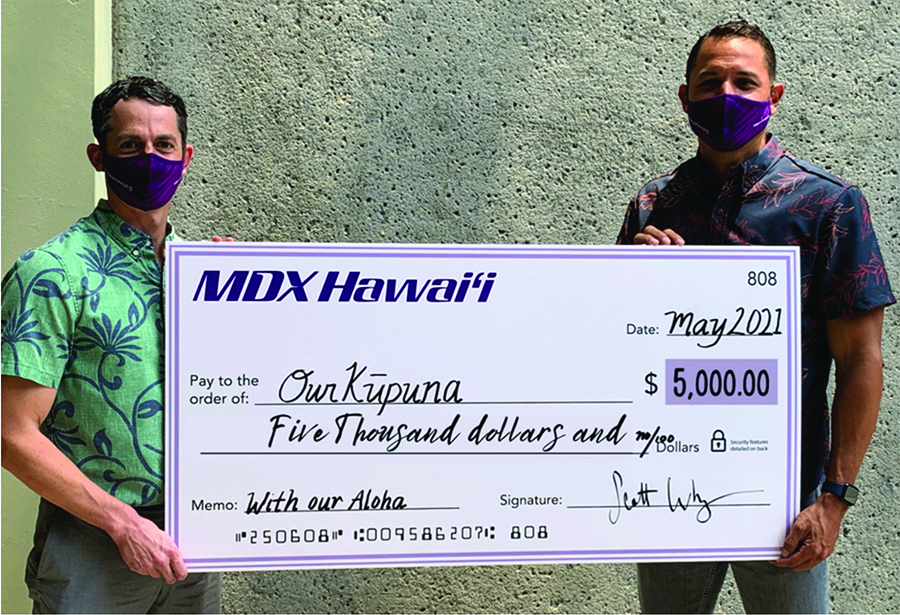
    In April, MDX Hawai‘i lent a hand to a nonprofit known for lending many hands to kūpuna in need.

    OurKupuna.com connects volunteer sponsors who are free of COVID-19 with members of the community who are in need.  Sponsors pick up and deliver groceries, medication and necessary supplies, and also run various errands.

    To date,  OurKupuna.com has helped nearly 450 individuals. The $5,000 donation from MDX Hawai‘i staff and matching funds from the company helped support 125 individuals in need.

    “The support we have received through the philanthropic efforts of MDX Hawai‘i and their employees is just heart-warming,” says Executive Director Gabe Amey. “This generous gift enables us to further our mission to provide Hawai‘i’s elders with food security and access to essentials.”

    “Supporting programs like OurKupuna.com allows MDX Hawai‘i to help kūpuna from a different perspective,” said MDX Hawai’i Market President Scott Whiting. “We’re proud to present this gift to OurKupuna.com and to be a part of this amazing effort.” Visit www.MDXHawaii.com.

    OurKupuna.com is a Hawai‘i-based nonprofit that started in March 2020 in response to the global pandemic and its impact on the state’s seniors. In the face of this adversity, the group envisioned a Hawai‘i where all kūpuna have food security and access to essentials. Through grants and donations, the organization has made great strides in…

  • Hawai‘i Honors Its Senior Volunteers

    Every May during National Older Americans Month, Hawai‘i’s four county Area Agencies on Aging recognize seniors from each county for their volunteer accomplishments. This year’s national theme was Communities of Strength. Each county received nominations from the public for Outstanding Older Americans. A man and a woman were chosen from each county.
     Rep. Gregg Takayama introduced the honorees from each county.

    Kaua‘i County:
    Dimples Kano has great passion for raising up leaders, and for helping the houseless and food insecure, as evidenced by her 50-year involvement with the Zonta Club of Kauai, 45 years with the Kauai United Way and as a lifetime member of the Kauai Salvation Army.


    Russell Maeda has served as treasurer of the Kauai Veterans Council and as chairman of the Kauai Veterans Day Parade. He has also held several positions the Kaua‘i Association of the United Church of Christ and the Lihue Christian Church.


    City & County of Honolulu:

    Rose Leong has been a volunteer with Ohana100, The Daniel Kahikina Akaka Family Foundation. She enjoys reading to the youngsters, who call her “Aunty Rose.” Retired from a career with the Hawai‘i Department of Education, she sees how reading stories makes learning fun.



    Nash Keel helps the vulnerable population and does all he can to prevent their exploitation, mistreatment and/or abuse through the Office on Aging. He volunteers with the Hawaii Long-Term Care Ombudsman Program, making weekly visits to a nearby nursing home where he serves as a resident advocate.


    Maui County:
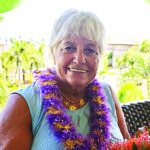
    Mary Trotto has been an integral leader at Hale Kau Kau at St. Theresa Church for over 20 years. Every month she puts in at least 180 hours volunteering to help feed over 150 individuals per night, 365 days a year. She also helps prepare and deliver meals. She is a South Maui Volunteers member, tracking homeless issues and advising Maui County. She also helps monitor safety as a member of the Kalama Park Action Team.
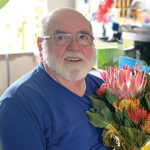
     

    Bob Carroll was nominated for the time, talent and wisdom he has contributed to his community, Maui County and through the state. In his hometown of Hāna, he helps represent the needs of residents and preserve the town’s history. Bob has also served as a volunteer community consultant. As a person with disability, Bob advocates for others, as well. He continues to tirelessly work with Hana residents as voice of the community.


    Hawai‘i County:

    Annie Ka‘aukai has been a key volunteer at the Pāhoa Nutrition Congregate program, helping to serve meals, work in the kitchen and distribu {Play}te food. She has served as president for the past three years. She is also an RSVP volunteer, assisting with fundraising, and library and mediation work. She has logged over 4,578 hours of volunteer service, with not a sign of stopping.
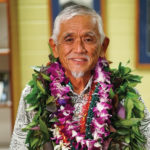
     

    Wayne Kawachi’s superpower is the ability to see a community need and find a way to meet it. He is a founding board member and has served as president of Ka‘ū Kakou for 10 years so far. As a retired commercial fisherman, he has donated thousands of pounds of fresh fish that he caught himself to local seniors. His positive attitude and can-do spirit make him a great community leader.


    A recorded video of the ceremony can be found at http://bit.ly/OlderAmericansHawaii.

    Every May during National Older Americans Month, Hawai‘i’s four county Area Agencies on Aging recognize seniors from each county for their volunteer accomplishments. This year’s national theme was Communities of Strength. Each county received nominations from the public for Outstanding Older Americans. A man and a woman were chosen from each county.