We hear the word “fiduciary” used more and more. But what does it mean? The origin of the word comes from the Latin word “fidere,” which means “to trust.”
Today, we use “fiduciary” as a noun, meaning a trustee, a word most of us are familiar with. Fiduciary is also an adjective, referring to a relationship of trust and good faith between the fiduciary and the person for whom the fiduciary acts.
A fiduciary assumes responsibility for the affairs of another person (usually called the principal, ward or beneficiary).
There are three important duties that are required of a fiduciary:
• The Duty of Care is the responsibility to make decisions in good faith and in a reasonably prudent manner.
• The Duty of Good Faith requires the fiduciary not to act in a fraudulent or deceitful way or to the detriment of the person.
• The Duty of Loyalty means acting only for the benefit and of the person without any self-interest or economic conflict.
In summary, a fiduciary has legal and ethical obligations to act in the best interest of the person in all situations and to put those interests before his or her own.
What we don’t often realize is that this word applies to various types of professional relationships in our lives, such as:
• trustee and beneficiaries
• estate executor and heirs
• guardianship or conservatorship and ward
• attorney and client
• doctor and patient
• directors of corporations and shareholders
• real estate agents and buyers or sellers
• financial advisors and clients
Fiduciaries may perform many roles for you during your life and after your passing.
While choosing a fiduciary for your medical, financial and estate planning needs may not be easy, finding the right fiduciary should provide peace of mind that your interests are looked after in a responsible manner.
We hear the word “fiduciary” used more and more. But what does it mean? The origin of the word comes from the Latin word “fidere,” which means “to trust.” Today, we use “fiduciary” as a noun, meaning a trustee, a word most of us are familiar with. Fiduciary is also an adjective, referring to a…
Turning 65? Congratulations! You are now eligible for Medicare! But what do you do next? Firstly, it’s important to know that your Initial Enrollment Period or IEP begins three months before you turn 65 and ends three months after your 65th birthday. Secondly, you aren’t required to sign up for Medicare. However, if you enroll after your IEP, a Late Enrollment Penalty will be added to your monthly premiums for life. Lastly, you must sign up for Medicare with the Social Security Administration (SSA), a Hawaii SHIP (State Health Insurance Assistance Program) partner. SSA.gov provides instructions on how to enroll online for Original Medicare Part A (hospital insurance) and Part B (medical insurance). {Play}
Once you’ve enrolled, contact the Department of Health, Hawaii SHIP to schedule a one-on-one counseling session to find the best plan option that meets your healthcare needs. Our Medicare-certified counselors will walk you through your IEP. They will explain Parts A through D, the differences between Original Medicare and Medicare Advantage and how to avoid late enrollment penalties. You may also learn that you qualify for financial assistance to pay prescription drug costs, premiums, co-payments and coinsurances. Best of all, the service is free, unbiased and confidential.
HAWAII SHIP
Free, local, one-on-one Medicare counseling provided by the Hawai‘i State Health Insurance Assistance Program.
250 South Hotel St., Ste. 406, Honolulu, HI 96813
Oahu: 808-586-7299 | Toll free: 888-875-9229 www.hawaiiship.org
Turning 65? Congratulations! You are now eligible for Medicare! But what do you do next? Firstly, it’s important to know that your Initial Enrollment Period or IEP begins three months before you turn 65 and ends three months after your 65th birthday. Secondly, you aren’t required to sign up for Medicare.
The Social Security Administration’s Advance Designation program allows you to pre-select a trusted individual if a time comes when you need a representative payee to help manage your money. Advance Designation enables you to identify up to three people, in priority order, who you would like to serve as your potential representative payee.
SSA recently celebrated the one-year anniversary of its Advanced Designation program. Since its launch in March 2020, more than one million eligible individuals have opted to participate.
You may choose an Advance Designation if you are capable of making your own decisions and are:
• An adult or emancipated minor applying for benefits and do not have a representative payee.
• An adult or emancipated minor beneficiary/recipient and do not have a representative payee.
You can submit your Advance Designation information when you:
• File a claim for benefits online at www.ssa.gov/benefits.
• Use the application available in your personal my SSA account at www.ssa.gov/myaccount.
• Call SSA directly.
In the event that you can no longer make your own decisions, you and your family will have peace of mind knowing you already chose someone you trust to manage your benefits.
The Social Security Administration’s Advance Designation program allows you to pre-select a trusted individual if a time comes when you need a representative payee to help manage your money. Advance Designation enables you to identify up to three people, in priority order, who you would like to serve as your potential representative payee.
The Benefits Enrollment Center program helps low-income kūpuna 65-plus and disabled Medicare beneficiaries to access food benefits.
At the onset of the COVID-19 pandemic, kūpuna were encouraged to stay home and self-isolate. Dining in restaurants or grocery shopping became difficult for all of us, but particularly for seniors who were most vulnerable. The Kupuna Food Security Coalition was formed to address the nutritional needs of seniors. Community organizations stepped up to provide emergency meals and grocery buying assistance.
Over a year later, some of the temporary emergency meal programs have ended and the focus has turned to long-term food security solutions. The Supplemental Nutrition Assistance Program (SNAP) can help seniors stretch their dollars and give them access to nutritious food.
The Benefits Enrollment Center (BEC) assists Medicare recipients in applying for SNAP and other benefits. The BEC team can help with eligibility guidelines, applications, information gathering and follow-up services to ensure that they have access to the benefits they are eligible for.
CATHOLIC CHARITIES HAWAI‘I (501(c) 3 nonprofit)
1822 Keeaumoku St., Honolulu, HI 96822 808-527-4777 | peter.reyes@catholiccharitieshawaii.org www.CatholicCharitiesHawaii.org
The Benefits Enrollment Center program of Catholic Charities Hawai‘i is made possible through grants from the National Council on Aging (NCOA) and the Walmart Foundation. Medicare recipients can contact the Benefit Enrollment Center at 808-527-4777 to learn more.
The Benefits Enrollment Center program helps low-income kūpuna 65-plus and disabled Medicare beneficiaries to access food benefits. At the onset of the COVID-19 pandemic, kūpuna were encouraged to stay home and self-isolate. Dining in restaurants or grocery shopping became difficult for all of us, but particularly for seniors who were most vulnerable.
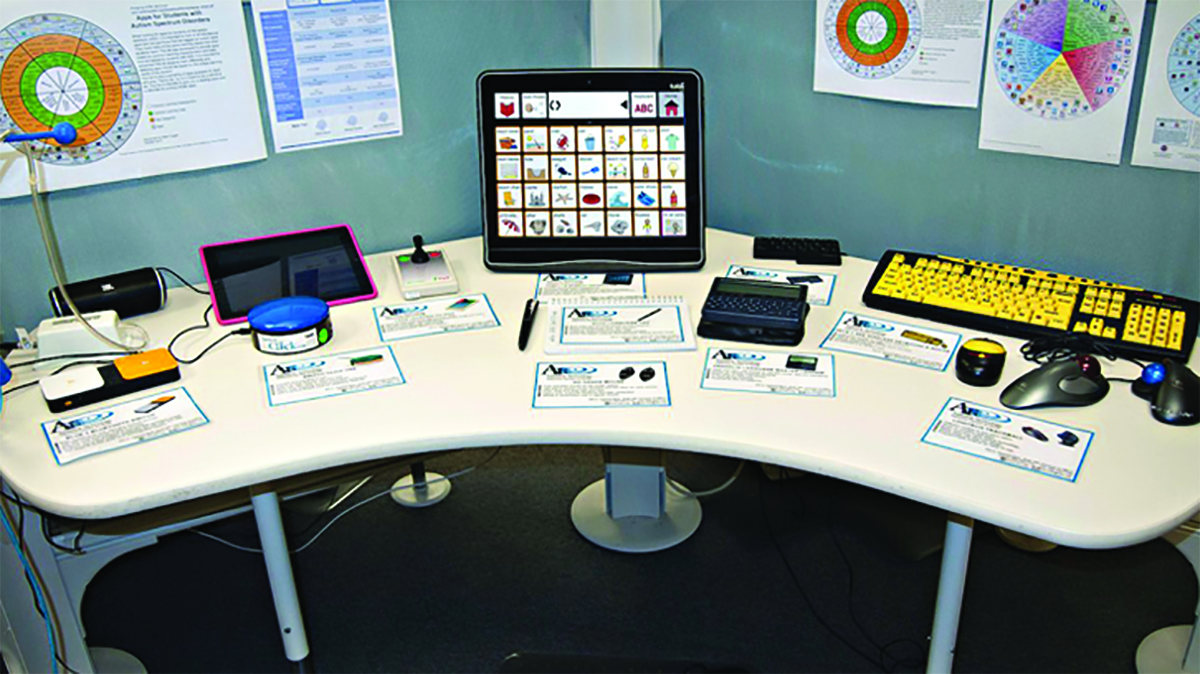
Assistive Technology Resource Centers of Hawai‘i (ATRC) is a nonprofit resource center that provides information about assistive technology (AT) to persons with disabilities, as well as their family members, employers and educators. Its mission is to link people with AT and empower individuals through its use.
As Hawai‘i’s designated Assistive Technology Act agency since 1991, ATRC provides technical assistance throughout the state to ensure persons with disabilities can get what they need. ATRC services include assessment, training, program information, public awareness programs, technical assistance, rehabilitation technology services, financial loans and more. ATRC reps also speak to organizations and demonstrate technology.
ATRC is providing limited access during the pandemic. Remote assessment, training, learning groups (peer), professional learning opportunities, information and referrals are still available.
ASSISTIVE TECHNOLOGY RESOURCE CENTERS OF HAWAII (501(c) 3 nonprofit) 808-532-7110 | barbara@atrc.org www.atrc.org
ATRC does not sell products, but recommends vendors. Device demonstration and lending programs give individuals and groups the opportunity to make an informed choice about an AT device prior to acquiring one.
Assistive Technology Resource Centers of Hawai‘i (ATRC) is a nonprofit resource center that provides information about assistive technology (AT) to persons with disabilities, as well as their family members, employers and educators. Its mission is to link people with AT and empower individuals through its use.
If you’re a small business owner or you work for one, we can help make your life easier with our suite of services. Our business services allow you to file W-2/W-2Cs online and verify your employees’ names and Social Security numbers against our records.
If you run a business, make us your first stop at www.ssa.gov/employer. It will save you valuable time when you need information on W-2s, electronic filing and verifying Social Security numbers. Small business owners can also take advantage of our Business Services Online at www.ssa.gov/bso/bsowelcome.htm. You must register to use this free service, which also offers fast and secure online W-2 filing options to Certified Public Accountants, enrolled agents and individuals who process W-2s and W-2Cs.
According to the US Small Business Administration, about 30 million small businesses in the United States employ tens of millions of people. Running a small business can be a 24-7 endeavor managing employees, inventory, scheduling, services and marketing at a small business can be very challenging.
Communication access is critical to stay connected for our health and overall quality of life. As we age, hearing loss may affect our lives, making it more difficult to understand what is happening during in-person meetings, community services, safety workshops and many other events. Struggling to hear and understand what is being said in our daily activities may cause us to feel a loss of independence and dignity, and may even cause us to withdraw socially.
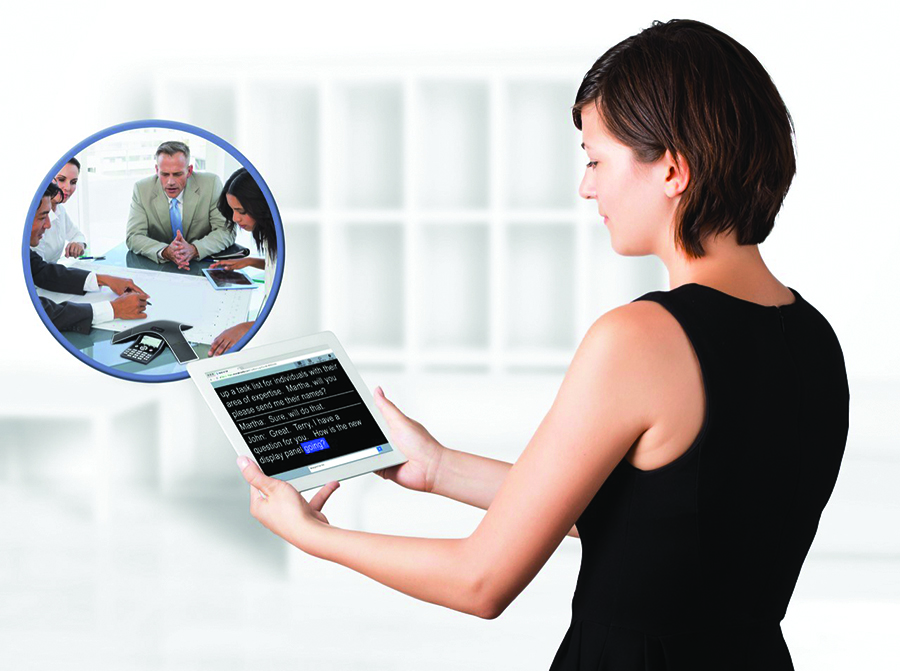
There’s a service available that can help you feel empowered and stay engaged with individuals or co-workers. Relay Conference Captioning (RCC) is a service available at no cost* to Hawai‘i residents who are deaf or hard of hearing that enables them to actively participate in multiparty teleconference calls or web conferences. The service enables you to participate in teleconference calls or webinars by reading live captions through a web browser on your computer or mobile device. Saving a copy of the RCC transcript is one of the available options.
If you or someone you know is challenged by group online discussions or meetings, encourage them to check out this innovative solution and help regain their confidence and independence.
As we age, hearing loss may affect our lives, making it more difficult to understand what is happening during in-person meetings, community services, safety workshops and many other events. Struggling to hear and understand what is being said in our daily activities may cause us to feel a loss of independence and dignity, and may…
While choosing the most valuable plan for you, make sure your prescriptions and providers are covered and in the network. Consider the specific benefits that are most advantageous to you and what is personally important to you.
There are two times per year that most members can change plans; however, very often, there are additional windows that allow Medicare beneficiaries to make changes mid-year. These windows may be available to you.
While the employees of each carrier are trained about the specific plans they represent, they can be examples of “If the only tool you have is a hammer, everything looks like a nail.”
To get the most unbiased advice, I suggest you find a local, independent insurance agent who specializes in Medicare and represents multiple plans.
Medicare can be confusing, but with a bit of help from experts, it doesn’t have to be intimidating or overwhelming.
There’s been a lot of buzz about the extra benefits that come with Medicare Advantage plans. I’m asked everyday, “What’s the best plan?” There really isn’t a one-size-fits-all best plan — but chances are, there could be a better plan out there for you than what you have.
Despite the ongoing pandemic, Hawai‘i continues to attract scores of visitors lured by the promise of pristine beaches, picture-perfect scenery and a balmy, tropical climate. Yet, the fact remains that while our state continues to be one of the safest destinations in the world, it is not unlike anywhere else. The islands still can be a place where unfortunate circumstances may befall just about anyone.
Of course, no person goes on vacation expecting the worst. Many are even prone to letting their guard down — which is when Visitor Aloha Society of Hawai‘i (VASH) steps in.
Established in 1997 by the Rotary Club of Honolulu, with the cooperation of the Honolulu Police Department, VASH serves as a temporary lifeline from which US mainland and international travelers may receive free moral support, translation services, and help with funeral arrangements and other emergency assistance.
Although there are VASH branches throughout the state, all operate independently of each other. Those found on Maui and Kaua‘i, for example, work in conjunction with Maui Visitors Bureau and Kaua‘i Visitors Bureau, respectively, while VASH on the Big Island and here on O‘ahu operate as nonprofit organizations.
How Can VASH Help?
The way it works is simple: When a visitor files a police report, encounters a social worker in the hospital or requires emergency medical services, VASH may be called upon to assist.
Be it car break-ins at popular lookout points; incidents of theft, domestic violence or injury — or even the unexpected passing of a loved one — our team of carefully trained volunteers intervenes with empathy and guidance to help vacationers in need find solace and move forward.
In some instances, guests on cruise ships that dock in Honolulu, particularly the elderly, slip and fall, sustaining an injury, while others simply become ill. Whatever the case, they may find themselves in a local hospital, separated from loved ones in unfamiliar territory. That’s when a VASH volunteer steps in to let them know they are not alone.
In another case not long ago, The Queen’s Medical Center–West O‘ahu reached out after treating a domestic abuse victim on vacation with her family. Every step of the way — from keeping her and her three children safe at their hotel to seeing them through TSA at the airport — VASH was right there, even following up with her after she returned home.
Robert Gentry, 83, a former mayor of Laguna Beach, Calif., has been with VASH for almost 13 years.
Unsurprisingly, our focus within the past year has expanded to include protecting Hawai‘i from the possible spread of COVID-19. Last year, for example, in partnership with the Hawai‘i Tourism Authority, we introduced the COVID-19 Flight Assistance Program, helping to monitor visitors who violate the state’s mandatory quarantine. In some of these instances, VASH has helped violators find discounted plane fares. In others, particularly when an offender has been arrested and is found to be without any money, we have donated return flights. VASH is funded by the Hawai‘i Tourism Authority. VASH is very grateful for this support.
But none of these efforts would be possible without the contributions of our dedicated volunteers, many of whom are Hawai‘i seniors. With only one other full-time staffer and five part-timers, volunteers are what keep VASH running full speed ahead.
With the islands reopening to visitors from all over the world, who continue to arrive en masse, VASH welcomes anyone interested in lending their time to our organization.
The Role of VASH Volunteers
The most common role our volunteers take on is that of friend and confidante, connecting with distressed visitors over the phone from the comfort of their own home. It is through these conversations that, with a friendly, understanding attitude, VASH volunteers offer hope and compassion. More often than not — particularly for those visitors who find themselves alone, far from family and friends in other parts of the country or world — all they are looking for is a sympathetic ear.
Volunteer opportunities abound: Some prefer to spend their time helping out in our office. One woman designs floral arrangements for visitors who find themselves in the hospital. Whatever their interest, there is something for everyone.
There are no extraordinary qualifications required of potential volunteers. However, those hoping to serve as liaisons for agitated visitors should possess excellent listening skills to best determine their needs.
Everyone must undergo a mandatory four-hour training session before being put to work. All we ask for is a mere three hours of their time each month — and it isn’t uncommon for an initial commitment to turn into a lifelong passion.
While going on vacation certainly is a time to have fun, it doesn’t mean throwing caution to the wind. It’s all about finding a balance between leaving with both a memorable experience and everything intact. Seniors in particular should heed these simple safety tips:
• Upon arriving at your destination, take your luggage to your hotel. Even if your room isn’t ready, hotels will typically store luggage, ensuring it doesn’t have to sit in your car.
• Instead of traveling with all of your cash, credit cards and other valuables, use the safe in your hotel room to store personal items. Hopping out of the car just for a minute to snap a photo or grab a bite to eat? Take everything with you. On that note, don’t arrive at a destination and then store something in your trunk before embarking on an activity. You can never be sure of who’s watching. Never leave items unattended, as well.
• Pack a photocopy of your passport or driver’s license just in case the original is ever lost or stolen. Be sure to store them separately.
• Keep your hotel door locked at all times and use the peephole if anyone knocks.
• Look and listen. Be aware of your surroundings and trust your instincts. If something doesn’t feel right, leave or get help.
Despite the ongoing pandemic, Hawai‘i continues to attract scores of visitors lured by the promise of pristine beaches, picture-perfect scenery and a balmy, tropical climate. Yet, the fact remains that while our state continues to be one of the safest destinations in the world, it is not unlike anywhere else. The islands still can be…
If you have limited income and resources, you may qualify for help paying some healthcare and prescription drug costs. Fifty-two percent of seniors in Hawai‘i qualify for the Medicare Extra Help program.
You may qualify for extra help if your yearly income and resources were below certain limits (the following are figures for 2021):
• A single person must earn less than $22,470 and have less than $14,790 in resources.
• Married persons must earn less than $30,300 and have less than $29,520 in resources.
Resources include money in a checking or savings account, stocks, bonds, mutual funds and IRAs. Resources don’t include your home, car or household items, your burial plot, up to $1,500 for burial expenses per person or life insurance policies.
If you qualify for Extra Help and join a Medicare drug plan, you will get help paying your plan’s costs and incur no late enrollment penalties.
Drug costs in 2021 for people who qualify will be no more than $3.70 for each generic drug and $9.20 for each brand-name drug.
If you have limited income and resources, you may qualify for help paying some healthcare and prescription drug costs. Fifty-two percent of seniors in Hawai‘i qualify for the Medicare Extra Help program.
Purpose Pals is a free, virtual intergenerational program led by Christy Nishita and Colby Takeda, in collaboration with Age-Friendly Honolulu, Blue Zones Project Hawaii, and the Hawaii Afterschool Alliance. Purpose Pals matches adults 50 and over with high school through college-age students, fostering regular communication using Big & Mini’s web-based video conferencing platform. The program provides themed conversation starters to ensure pals have enriching talk story sessions as often as they like.
Most seniors have some form of mobile device. But early in the pandemic, the developers of Big & Mini realized that there was a need to connect older individuals with wonderful stories and experiences to younger generations. Soon, Big & Mini was born, shrinking the generational gap and helping to build meaningful intergenerational relationships.
Purpose Pals creates new friendships, and even enables seniors with a lifetime of experience to become career mentors for their younger pals. Older pals say their younger pals lift their spirits.
To become a pal or to bring Purpose Pals to your group, see the contact information below.
Purpose Pals is a free, virtual intergenerational program led by Christy Nishita and Colby Takeda, in collaboration with Age-Friendly Honolulu, Blue Zones Project Hawaii, and the Hawaii Afterschool Alliance. Purpose Pals matches adults 50 and over with high school through college-age students, fostering regular communication using Big & Mini’s web-based video conferencing platform. The program…
During a Medicare Annual Wellness Visit (AWV), you and your doctor will focus on overall wellness, prevention and early disease detection.
The AWV is designed to support you in taking an active role in managing your health and improving your well-being and quality of life. Doctors recommend the visit and encourage all Medicare patients to schedule one every year.
One of the most valuable parts of the AWV is the creation of a long-term preventive care plan based on Health Risk Assessment; a current list of medical providers and medications; screening for cognition, hearing, functional status and fall risk; family history, health risk factors and age-specific preventive screenings.
While both an annual physical and an AWV are important, they are not the same. During an annual physical, your doctor looks for signs of major problems and symptoms and conducts important routine tests.
Medicare covers 100 percent of the AWV visit. You are not responsible for deductibles, co-payments or co-insurance amounts.
Be your own advocate! Call your primary care doctor today and schedule your AWV.
MDX HAWAI‘I
500 Ala Moana Blvd., Ste. 2200, Honolulu, HI 96813-4993 808-522-7500 | www.MDXHawaii.com MDX Hawai‘i has over 35 years of experience serving the people of Hawai‘i. Our physician network represents over 630 top primary care physicians, and more than 2,200 leading specialists and hospitals. MDX Hawai‘i contracts with Humana MO, Humana PPO and AARP/UnitedHealthcare PPO Medicare Advantage Plans.
During a Medicare Annual Wellness Visit (AWV), you and your doctor will focus on overall wellness, prevention and early disease detection. The AWV is designed to support you in taking an active role in managing your health and improving your well-being and quality of life. Doctors recommend the visit and encourage all Medicare patients to…

 We hear the word “fiduciary” used more and more. But what does it mean? The origin of the word comes from the Latin word “fidere,” which means “to trust.”