It’s been three years since Social Security’s Retirement Estimator went online. Within months of coming out, the online application was praised as one of the highest-rated online services, and it has consistently remained so every year.
Results from the American Customer Satisfaction Index show Social Security’s online Retirement Estimator in one of the top two spots, with a score of 90. (Social Security’s online benefit application took the top spot.) The Retirement Estimator ranks higher than the Web sites of any other public and private sector agencies and companies, including the likes of Netflix and Amazon.
Millions of people have used the Retirement Estimator. You may try it yourself at www.socialsecurity.gov/estimator.
Now that Social Security’s most popular online application is available in Spanish at www.segurosocial.gov/calculador, even more people can use the Retirement Estimator.
The Retirement Estimator is a convenient, secure and quick financial planning tool that lets workers calculate how much they might expect to receive in Social Security benefits when they retire. The attractive feature of this calculator is that it uses your earnings information on file at Social Security, without displaying your personal information. So you get an instant, personalized estimate of your future retirement benefits.
The Estimator even gives you the opportunity to run different scenarios and “what if” situations. For example, you can change the date you expect to retire or change expected future earnings to create and compare different retirement options. This can help you as you plan ahead.
To use the Retirement Estimator, you must have enough Social Security credits to qualify for benefits and you cannot be receiving benefits currently.
Experience the best online service now by visiting Social Security’s Retirement Estimator at www.socialsecurity.gov/estimator. Then, once you’ve sketched out your retirement plans, you’ll know where to go when the time comes to apply for benefits: online at www.socialsecurity.gov.
RETIREMENT
Q: What is a Social Security “credit?”
A: During your working years, earnings covered by Social Security are posted to your record. You earn Social Security credits based on those earnings. The amount of earnings needed for one credit rises as average earnings levels rise. In 2011, you receive one credit for each $1,120 of earnings. You can earn up to a maximum of four credits a year. Most people will need a minimum of 40 credits (or 10 years of work) to be eligible for retirement benefits. Learn more by reading the online publication How You Earn Credits at www.socialsecurity.gov/pubs/10072.html.
Q: What’s so easy about applying online for benefits?
A: There’s no need to go to a local Social Security office or wait for an appointment. You can apply in less than 15 minutes. Once you submit your electronic application, you’re done. In most cases, there are no forms to sign or documents to mail. Try it at www.socialsecurity.gov.
Q: What is the earliest age that I can begin receiving retirement benefits?
A: You can get a reduced benefit as early as age 62. Keep in mind that your monthly benefit amount will be about 33 percent higher if you wait until age 66 and nearly 80 percent higher if you defer payments until age 70. Find out how much you can expect to receive by visiting our Retirement Estimator at www.socialsecurity.gov/estimator.
MEDICARE
Q: Who is eligible for ‘Extra Help’ with Medicare prescription drug costs?
A: Medicare beneficiaries with limited income and resources may qualify for ‘Extra Help.’ The extra help can save you money. It pays part of the monthly premiums, annual deductibles and prescription co-payments under the new Medicare prescription drug program. The extra help is estimated to be worth an average of $4,000 per year. See if you qualify and apply online at www.socialsecurity.gov/prescriptionhelp.



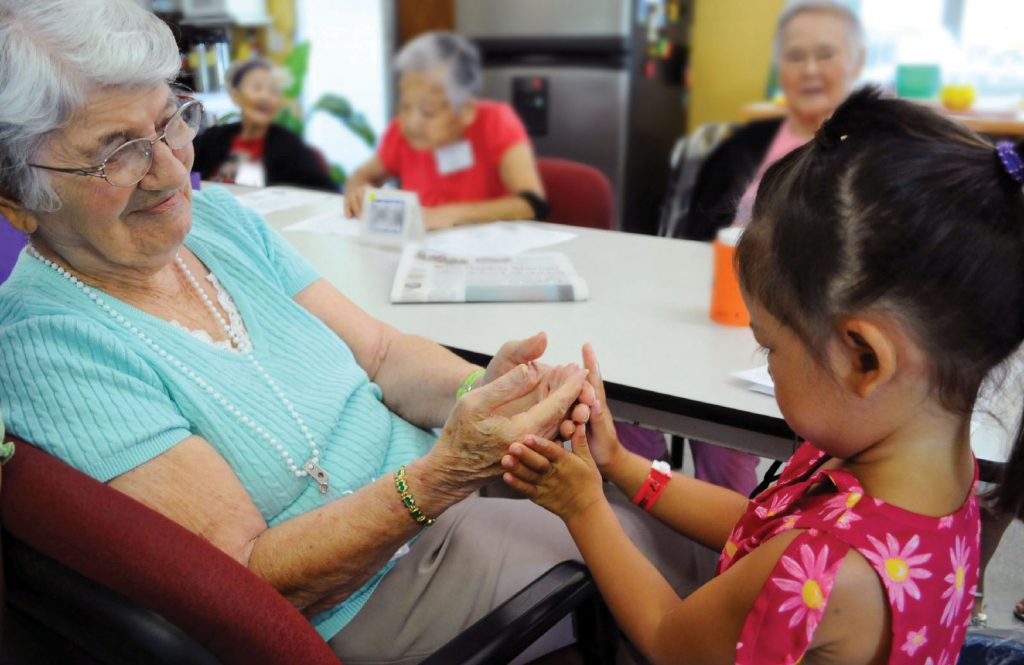 Finding just the right place to provide care and attention for older adult family members can be challenging for caregivers who work full time during the day. It’s a serious dilemma: physically, the older adults may be fine, but may have dementia or be experiencing memory loss, and therefore cannot be safely left at home alone during the day.
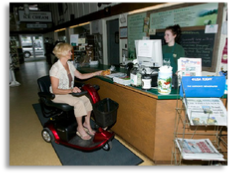 Thanks in part to convincing commercials on TV, many people are sold on the benefits of scooters and powerchairs before they even enter a showroom.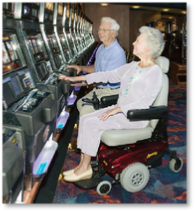
 Hawai‘i Life Flight is an air ambulance provider serving the Hawaiian Islands, transporting patients from pediatrics to geriatrics. It’s scope of care ranges from cardiac and trauma to neurological and burn patients.
 In 2006, Hunt got to work right away hiring an entirely new management team. He replaced the older Cessna fleet with newer, faster aircraft, opting for Raytheon King Air C90B models. More than $2 million of custom reconfiguration work was done to prepare the fleet for the demands of Hawai‘i’s medical community. The company also raised the bar when selecting pilots, aircraft maintenance and medical personnel to above current FAA and industry standards. In addition, new positions were created to monitor and ensure quality management and safety, compliance, efficient communications and risk assessment.
 Long before the phrase “evidence based” became a buzzword, Child & Family Service (CFS) was providing award-winning evidence-based services. Founded in 1980, the Honolulu Gerontology Program, as it was then known, was incorporated into Child & Family Service in 1985. The following year the program received both the Department of Human Service’s Secretary’s Award for Excellence in Health Promotion and the Administration on Aging’s Project Health Award. In 1999, it received the Best Practice Award from the Health Promotion Institute of the National Council on Aging, and in 2002, CFS developed the No Fear of Falling program.
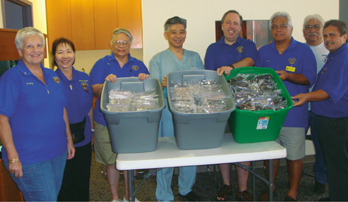 Most of them are quickly diagnosed and easy to treat with corrective lenses. Still, millions of people in developing nations are pushed deeper into poverty, simply because they don’t have glasses. For children, clear vision means a better education, healthier development and a better quality of life. For adults, it means greater employment opportunity and economic strength. For seniors, it means less dependence on others. Sunglasses that offer protection against harmful UVA/UVB rays are also important to preserve eye health.
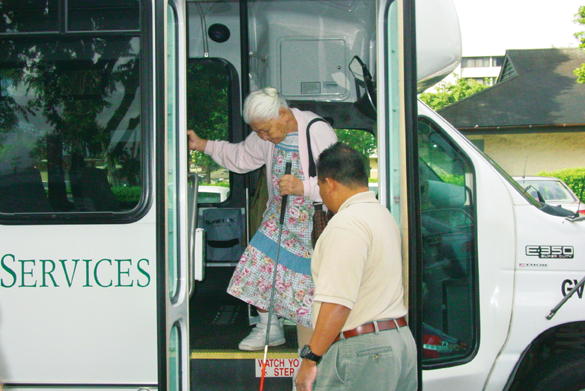 Rita Lontayao grew up on Kaua‘i. She married her husband in 1935 and lived with him in plantation housing, where they worked and raised their family. After many years on the plantation, her husband passed away. Then a few months later, the plantation closed, forcing her to move to alternate housing. She recalls the uncertainty of that time when she did not know how she would make ends meet without her husband, or his source of income.