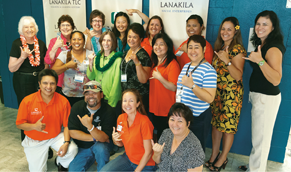
 Recently, Meals On Wheels Association of America President and CEO, Enid Borden, visited Lanakila Meals on Wheels in Liliha.
Borden spoke on national and local senior hunger issues, volunteerism trends and toured the Lanakila Meals on Wheels’ facilities. “Out of the 5,000-plus Meals on Wheels programs across the country, Lanakila is one of the best,” Borden said. “However, even with so many great programs, about 1 in 9 seniors in our nation are at risk of hunger due to poverty and our aging population—with someone turning 60 every 7 seconds.”
“We live in the richest nation in the world and nobody needs to go hungry,” continued Borden. “That’s what I like about Lanakila, which means ‘victory’ in Hawaiian. It’s victory over hunger, and I encourage individuals, corporations and the public sector to support this great organization.”
A program of Lanakila Pacific, a private Hawai‘i-based nonprofit, Lanakila Meals on Wheels aims to run a sustainable service. It receives less than 60% of its funding from government grants; the remaining 40% is donated by individuals, businesses and volunteers. All proceeds from Lanakila Pacific’s social enterprises, including Lanakila Kitchen’s catering and school meal services, go back into Lanakila Meals on Wheels.
As Hawai‘i’s largest meal provider for seniors, Lanakila Meals on Wheels delivers about 250,000 meals each year at O‘ahu homes and at 17 Kupuna Wellness Centers.
Interim Director Lenny Fabro said the program is driven by about 200 volunteers who help package and deliver meals.
“We try to make it easy for folks to get involved,” Fabro said. “People can volunteer once a week, or groups or companies can Adopt-A-Route and take turns delivering meals.”
According to Meals On Wheels Association of America, nationally, more than 6 million seniors face some form of food insecurity. In Hawai‘i, 5.24%, (more than 60,000 seniors) are at risk of going hungry.
Lanakila Meals on Wheels services on O‘ahu: 531-0555
Donations: www.lanakilapacific.org/donate
Volunteering: www.lanakilapacific.org/volunteer, or call Tiffany at 356-8541
Catering at Lanakila Kitchen: www.lanakilakitchen.org, 533-3054
General inquiries, 531-0555

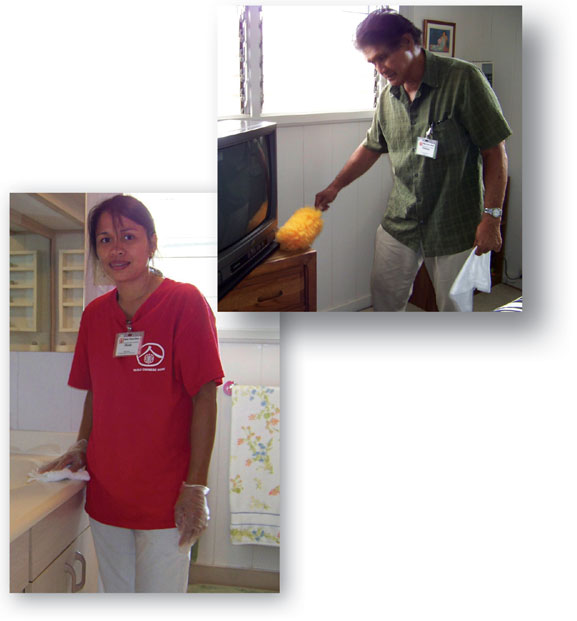 Pālolo Chinese Home provides home cleaning for seniors living at home. For as little as $30, residents aged 65 years or older (and whose annual income is less than $24,000) can have their home cleaned, with satisfaction assured by Pālolo Chinese Home. “Our professional staff will visit your home, evaluate your cleaning needs, and perform the work under our supervision and with our full security,” says Nakayama. “It is thanks to a PIN grant provided by the Hawai‘i Community Foundation that these services can be provided,” she adds. The PIN grant is limited and may end later this year.