Category: Programs & Services

  • Team Huddle and Huckleberry Pie

    As family caregivers lovingly cater to their ill or dying elders, they could make three mistakes that might harm themselves and their family. Alone and exhausted, they cannot sleep. Stress leads to illness and 60 percent of caregivers end up in the hospital before their parents — some even predecease their parents.

    One of the quickest ways to lighten the load is to share the work. Form compassionate support teams by inviting others to join a common goal to carry out tasks, laugh, cry and groan together.

    Annette Pang’s “Magical Moments Workshops” have reached over 1,000 caregivers and found family teams with can-do attitudes quietly sacrificing for their elders. Do you consistently invite and enroll teammates to join you and roar in unison like a football team (chanting “strawberry shortcake, huckleberry pie,”) or are you all by your lonesome, working endless shifts?

    The Jackson, Carol and Dr. Cass Nakasone family —“Team Shirley”— deserves a trophy for courageously caring for their sister/aunt. How did they do it? They asked for help.

    Please join “Team Annette” to support the three-mile Alzheimer’s Association Walk on Sept. 3 at Magic Island. I am a wimp, but I will keep up with you so we can all cross the finish line together.

    Visit www.annettpang.com for more information and sign up today. Bring your elders — wheelchairs, rolling walkers, canes and all!

    And… it’s my 70th birthday — another great reason to cheer!


    LIFE COACH VILLAGE, LLC
    Annette is a Relationship Coach and founder of 
Life Coach Village, LLC.
    808-372-3478  |  www.annettepang.com

    Team Huddle and Huckleberry Pie by Annette Pang, Relationship Life Coach from the August-September 2016 issue of Generations Magazine, Hawai‘i’s Resource for Life

  • From Woodstock to Medicare

    Generations Magazine - August-September 2016 - From-Woodstock_image1Did you know 22 was the average age of those who attended New York’s historic Woodstock Festival in August 1969? More than a half-million hippies or wannabes rocked to the music. If you do the math — you guessed it — the Woodstock generation is aging into Medicare or already there. Back in January 1970, Tom Moffat’s Hawai‘i version of Woodstock, aka, the Sunshine Festival or Diamond Head Crater Festival, featured Carlos Santana, along with Journey, Styx and others. So where are the hipsters today? They are still dancing to the beat of the music. I witnessed it recently at the “Battle of the Bands” reunion concert featuring Hawai‘i high school rock bands formed in the ’60s that still crank out tunes today to sold-out venues. I danced for hours as the bands — Loving Sounds 34, Audissey and Wasabi performed. Next, I was dancing at a sock hop featuring music and fashions of the ’60s. DJ Doug Oshiro was fabulous. To push the event over the top, he introduced Linda Green of Tempos. She sang her hit tune, My Little Japanese Boy, to cheering fans. Outspoken and rebellious, the youth of the ’60s redefined the nation, Hawai‘i and the world by disrupting the status quo. If the World War II generation is known as “the greatest,” then the Woodstock generation, even as they reach Medicare age, will be remembered as “the coolest,” as they rock and roll through their retirement years.


    MEDICARE MOMENT WITH MARTHA
A radio program with Martha Khlopin
    KHNR 690AM: Saturdays Noon and Sundays 9:30am
    99.5FM The Word: Saturdays 1pm

    808-230-3379  |  getmartha@aol.com

    From Woodstock to Medicare by Martha Khlopin, Host of “Medicare Moment with Martha” from the August-September 2016 issue of Generations Magazine, Hawai‘i’s Resource for Life

  • Social Security Benefits Outside the U.S.

    Over a half-million people who live outside the United States receive Social Security benefits, including retirees and people with disability, spouses, widows, widowers and children. “Outside the United States” means you’ve been outside one the 50 states, the District of Columbia, Puerto Rico, the U.S. Virgin Islands, Guam, the Northern Mariana Islands or American Samoa for at least 30 days in a row.

    If you plan to travel outside the U.S. for an extended amount of time, it’s important to notify Social Security about the dates you plan to leave and return, no matter how long you expect your travel to last. Then we can determine if your Supplemental Security Income (SSI) will be affected.

    Visit www.socialsecurity.gov/international/payments_outsideUS.html for an online tool to find out if you may continue to receive your Social Security benefits the entire time you are outside the U.S. Country-specific restrictions may apply. You may also find more information in our online publication, “Your Payments While You Are Outside the United States,” at www.socialsecurity.gov/pubs.

    While you are outside the U.S., the Social Security Administration will periodically send you a questionnaire. Your answers will help us figure out if you still are eligible for benefits. Return the questionnaire promptly to keep payments flowing. In addition to responding, notify us about changes that could affect your payments. Social Security is with you through life’s journey, even when it takes you outside the country.


    For questions, online applications or to make an appointment to visit a SSA office, call from 7am–7pm, Mon–Fri:
    1-800-772-1213 (toll free)  |  1-800-325-0778 (TTY)
  |  www.socialsecurity.gov

    Social Security Benefits Outside the U.S. by Jane Yamamoto-Burigsay, Social Security Public Affairs Specialist in Hawai‘i from the August-September 2016 issue of Generations Magazine, Hawai‘i’s Resource for Life

  • Missions of Help and Hope

    Some of the most helpful nonprofits for seniors are small operations that cannot afford to advertise. We will be helping them by getting their message to you. Read below to learn how the volunteers and coordinators in these noteworthy organizations may help you and your family.


    SPECIAL EDUCATION CENTER OF HAWAI‘I

    Special Education Center of Hawai‘i (SECOH) is a nonprofit organization in the State of Hawai‘i. SECOH’s mission is to provide personalized services to people with disabilities.

    SECOH offers adult day care for seniors with disabilities due to aging, with a specialty in supporting those with Alzheimer’s and dementia. This service is available Monday through Friday and some weekends only at its Diamond Head location. Seniors can participate in a number of recreational and therapeutic activities, such as arts and crafts, swimming, cooking and off-site activities, as well. They also offer family counseling, referrals and resources.

    Crystal Hoapili, the adult day care coordinator, said that this year marks the 50th-anniversary celebration for SECOH, which was founded in 1965 by Sister Agnes Jerome Murphy. The organization’s vision is to see that “people are valued and treated with dignity and respect.”

    The Hawai‘i Community Foundation provided a Persons-in-Need Grant for Senior Day Care to SECOH from the May Templeton Hopper fund. This grant is for tuition assistance to attend its adult day care program. To qualify, individuals must be 65 or over, demonstrate financial need and show that they will benefit from SECOH’s care. Crystal urges people to call to see if funding is available to assist them.

    If you would like a tour or to learn about services, please call ahead at the Diamond Head location and talk to Crystal.

    DIAMOND HEAD FOUNDER’S CENTER
708 Palekaua St., Honolulu, HI 96816
    Crystal Hoapili, Adult Day Care Coordinator 
808-734-0234  |  choapili@secoh.org
    www.secoh.org


    LEGAL AID SOCIETY OF HAWAI‘I: FREE LEGAL HELP FOR SENIORS

    Legal Aid Society of Hawai‘i (LASH) is a nonprofit law firm dedicated to providing justice and fairness to the people of Hawai‘i through representation, advocacy, community partnerships, education and outreach. Established in 1950, LASH has 10 offices statewide with over 100 staff members. They provide services to over 20,000 individuals each year.

    Seniors who are 60 and older receive free legal services, regardless of their income and assets. LASH primarily focuses on family, consumer, housing and public benefits law. Clients may have consumer issues, such as bankruptcy or debt collections; housing issues, such as Section 8 or repairs; or public benefits issues with agencies like the Social Security Administration (SSA) or Aid to Aged, Blind, Disabled (AABD).

    LASH offers counseling and advice, one-on-one consultations, assistance in understanding the legal process, and limited or full representation of clients in court and administrative hearings.

    To find out if LASH can assist you, call its dedicated senior hotline or visit the LawHelp Hawai‘i website, a cooperative project of LASH and Legal Service Corp.

    A special event will be held on Kaua‘i:

    Elder Law Fair on Kaua‘i

    Friday, Sept. 30, 9:30 am – 3 pm

    Kaua‘i War Memorial Convention Hall

    4191 Hardy St., Lihue
    RSVP by Sept. 27: call 808-245-4728, ext. 2210

    LEGAL AID SOCIETY OF HAWAI‘I
    Senior hotline: 
808-536-0011 (Oahu) | 888-536-0011 (neighbor islands)
    www.Lawhelp.org/hi

    Missions of Help and Hope by Stephanie Kim, Generations Magazine Intern from the August-September 2016 issue of Generations Magazine, Hawai‘i’s Resource for Life

  • Expanding End-of-Life Options

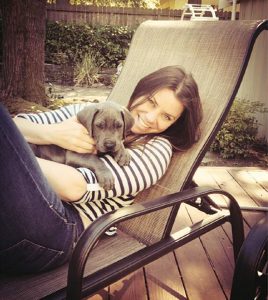
    You may remember Brittany Maynard, the young woman diagnosed with a terminal brain tumor, who moved her family to Oregon to take advantage of the state’s Death with Dignity law. Her story galvanized a movement and was greatly responsible for getting California’s new End-of-Life Option law passed. One young woman telling her story — plainly relaying her sadness and brave resolve — inspired others to take a stand.

    Generations Magazine - ExpandingEnd_image1
    Brittany Maynard died at 30 yrs. old.

    Medical aid in dying (also known as Death with Dignity) is an end-of-life care option that most people in Hawai‘i support. In a 2011 QMark study, more than 75 percent of Hawai‘i voters surveyed believe that a terminally ill adult should have the choice to request and receive medication from their doctor to bring about a peaceful death. Throughout our state Compassion & Choices is working to make more end-of-life care options available, including hospice care, pain management, palliative care, the ability to refuse unwanted medical treatment, and 
medical aid in dying.

    Thanks to Brittany, more people feel free to speak their minds. Perhaps you have a story to share. Do you support death with dignity? What would it mean to you to have access to all end-of-life options? Compassion and Choices wants to hear from you.


    COMPASSION & CHOICES HAWAII

    4348 Waialae Ave., Unit 927, Honolulu, HI 96816
    1-800-247-7421  |  hawaii@compassionandchoices.org
    www.compassionandchoices.org/Hawaii

    Expanding End-of-Life Options by Mary Steiner, Campaign Manager, Compassion & Choices Hawai‘i

  • Preventing & Resolving Family Conflicts

    Caregiving is an act of love. Balancing the needs and safety of a kūpuna with his or her desire to be as independent as possible requires a sensitive conversation with the senior and the entire family. When talking is avoided or discussions break down, conflicts may erupt and the role of the caregiver can become overwhelmingly painful.

    Generations Magazine - Preventing Resolving_image1
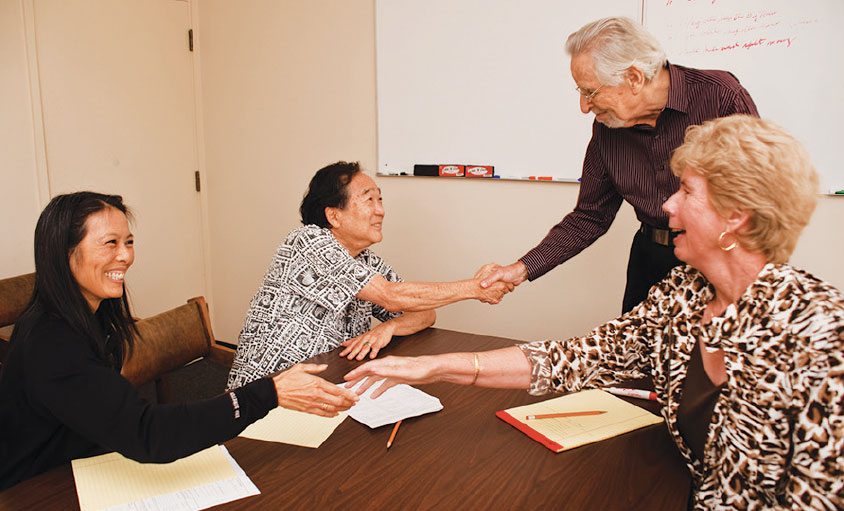
    To help families engage in difficult exchanges regarding the needs, desires, care and support of an elderly family member, the Mediation Center of the Pacific created the Kūpuna Pono Program (KPP). Through KPP, mediation and conferencing help families talk through issues to reach an agreement that supports the elder family member.

    Family conferences are facilitated discussions that bring together the kūpuna and the entire family in order to talk about his or her needs and develop a plan to meet them. The conference begins with an assessment of the family’s strengths, and the desires and values of the kūpuna. Then, the current and future needs of the elder person are discussed, including what resources are available to support his or her needs and who will assist in their coordination.

    With two impartial facilitators guiding the discussion, family members talk about medication management, safety, living arrangements, meal preparation, personal assistance, finances, end-of-life plans and more. Then, the action steps and plans that are agreed upon during the conference are incorporated into a plan that is provided to every family member. The plan serves as a guide to help the family support their elder member and share in caregiving responsibilities.

    If conflicts have already erupted between family members, the mediation process helps them talk about the specific issues at the heart of the dispute. Working in private and joint sessions with the family members who are in conflict, two impartial mediators help them understand each other’s perspectives and negotiate solutions.

    Caregiving can be stressful, leading to conflicts that may tear a family apart at a time when their unification is most needed. The Kūpuna Pono Program helps restore harmony among them. Visit the mediation center online for more information.


    THE MEDIATION CENTER OF THE PACIFIC, Inc.
245 N. Kukui Street, Suite 206, Honolulu, HI 96817
    Monday – Friday, 8:30 – 4pm
  |  808-521-6767  |  Fax: 808-538-1454
  |  www.mediatehawaii.org

    Preventing & Resolving Family Conflicts by Tracey S. Wiltgen, Executive Director, The Mediation Center of the Pacific from the June-May 2016 issue of Generations Magazine, Hawai‘i’s Resource for Life

  • Sentimental Journals

    In 1945, Doris Day sang, “Gonna take a sentimental journey. Gonna set my heart at ease. Gonna make a sentimental journey, to renew old memories.” This popular song became an unofficial homecoming greeting for returning veterans at end of WWII. Couples probably slow-danced and swayed to it, cheek-to-cheek. Elders sing it today, recalling exactly where they were at the end of the war.

    Generations Magazine - SentimentalJournals_image1
    Do you know the songs your parents sang; their first kiss; snacks they loved to eat? Did their dreams come true or pass by? Have you heard their “pearls of wisdom” or “pet peeves?” Is it too late to ask?

    Legendary Wisdoms journals are the perfect way to drill deep into your elders’ memories and discover their bucket list, how they tick and their “forgitaboutits.” Visit www.annettepang.com and download a complimentary copy of Legendary Wisdoms, and help fill the pages with your elders’ memories for you and your family to savor for generations to come.

    Journaling is an excellent way to spark lively conversations and harvest stories your kūpuna have locked inside. The pages progress from trivia to introspection of precious memories. As a loved one, you can help by listening or by writing down their thoughts and memories; you will share amazing revelations, giggles, laughter, tears and enjoy closer connections. Don’t miss a richly rewarding and priceless “word and time” gift. Take a sentimental journey to renew memories with your loved one before it’s too late.


    LIFE COACH VILLAGE, LLC
    Annette Pang is a relationship coach for family caregivers and their elders.
    808-372-3478  |  www.annettepang.com

    Sentimental Journals by Annette Pang, Relationship Life Coach from the June-May 2016 issue of Generations Magazine, Hawai‘i’s Resource for Life

  • Medicare: Don’t Leave Home Without It!

    Lately, I have received dozens of Medicare questions from individuals throughout the country who graduated from high school in 1965. What do they all have in common? All are over 65. While most still work and have health coverage through an employer or as a dependent spouse, some enroll in traditional Medicare Part A & Part B. Medicare may be primary or act as the secondary payer for covered services after a group health plan pays its portion. Recently, a news story reported that a person was hospitalized while traveling outside his home state. After recovering, the individual returned home to over $23,000 in medical bills. A call to the individual’s health plan was futile. Soon, “past due” notices arrived, and bill collectors were threatening seizure of assets and court action. It seems that in the hospital, the sick person could not provide a health plan card. A well-meaning friend gave the hospital a health membership card from the ill person’s wallet. Unfortunately, it was an expired card from a former employer. The hospital’s claim based on that incorrect information was rejected. Once the correct health plan card was provided along with information that showed Medicare was the secondary payer, benefits were coordinated and the final bill was correctly reduced from $23,000 to less than $70. Lesson learned: Whether you are traveling or just being at home, make sure your loved ones, close friends and care partners know how to reach the person you have designated to provide all of your current insurance claim membership cards.


    808-230-3379  |  getmartha@aol.com
  |  www.Get2insurance.com
    MORNING DRIVE WITH MARTHA
 — A radio program with Martha Khlopin
    KNDI-1270AM: Weekdays, 4:30 am – 6 am

    Medicare: Don’t Leave Home Without It! by Martha Khlopin, Radio Host of “Morning Drive With Martha” from the June-May 2016 issue of Generations Magazine, Hawai‘i’s Resource for Life

  • Exercise Your Reading Muscles This Summer

    Generations Magazine - ExcerciseYourReading_image1Boost your brain by joining the Hawai‘i State Public Library System’s 2016 Adult Summer Reading Program from June 5 to July 16. Build your brainpower and commit to deep reading 20 minutes daily. Studies have shown that reading reduces stress, makes you a better speaker and keeps your thinking sharp.
    How to Participate

    • Visit any of the 50 public librariesto sign up and receive a program guide.
    • Read at least 20 minutes daily — books, magazines, e-books, e-magazines — to exercise your brain and earn free incentives.
    • Complete four out of six weeks and receive a free puzzle or adult coloring book.
    • Enter lucky prize drawings.

    Disconnect to Reconnect

    Generations Magazine - ExcerciseYourReading_image2
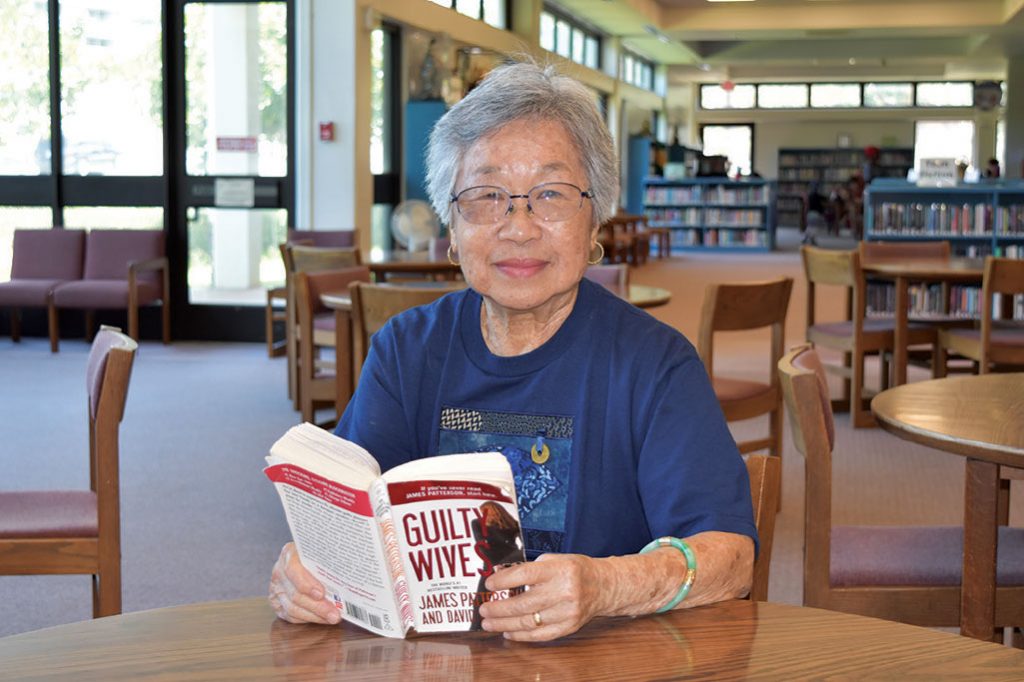
    Beverly C. Wong, a retired secretary with 40 years of combined public service on O‘ahu, loves the Salt Lake-Moanalua Public Library and reading, which both help to keep her brain fit. Photo by Paul Mark

    Take up the challenge and turn off the television, video games and other electronic devices. Make reading a family affair and bring your grandchildren to the library each week. Everyone from keiki to ku¯puna can join the Summer Reading Program. Entertaining and educational programs will be held throughout the summer.

    Visit online for updates and information about the HSPLS Summer Reading Program.

    Public libraries statewide provide free multicultural, year-round programs that encourage reading and lifelong learning for all ages. Contact the hosting library for more information.

    Mahalo to the Friends of the Library of Hawai‘i and the 2016 Summer Reading Sponsors!


    HAWAI‘I STATE PUBLIC LIBRARIES SYSTEM BRANCHES
    Locations, Contact Information and Hours of Operation:
 www.librarieshawaii.org

    Exercise Your Reading Muscles This Summer by HSPLS Library Development Services Staff from the June-May 2016 issue of Generations Magazine, Hawai‘i’s Resource for Life

  • American Cancer Society Builds Hope

    Imagine you’ve just heard the words “you have cancer.” Then you were told your best option for treatment is far from home. This is the reality for many in Hawai‘i. Each year, hundreds of cancer patients travel from the Neighbor Islands and Guam to receive treatment at Honolulu hospitals and clinics. Patients can spend days, weeks and even months away from home. The emotional and financial toll of lost income, medical bills, hotel rooms, rental cars and dining out can be staggering. But hope is on the horizon.

    Generations Magazine - AmericanCancer_image1
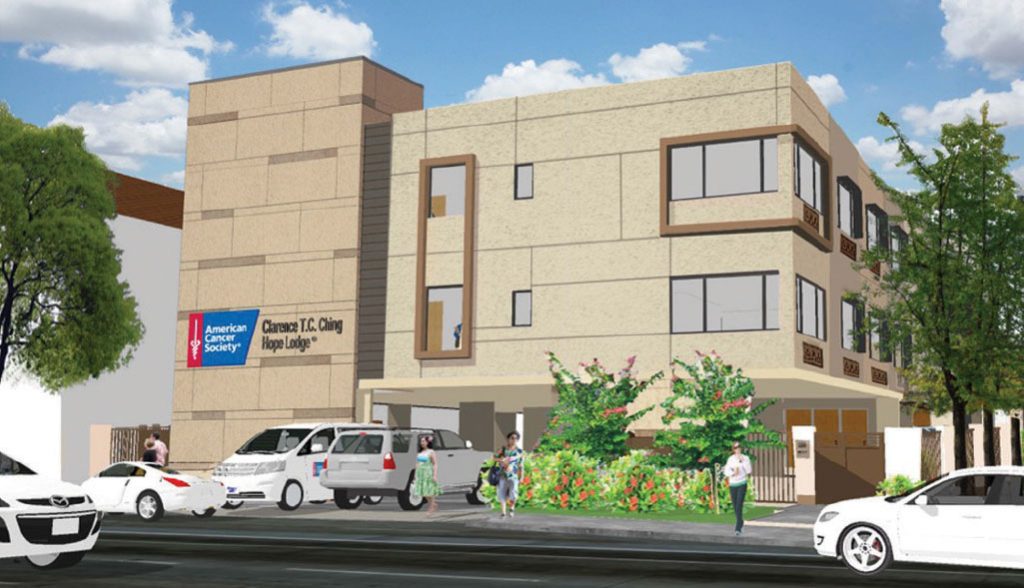
    An architectural drawing of The Clarence T.C. Ching Hope Lodge for cancer patients and their caregivers.

    Construction is underway on the American Cancer Society home away from home for cancer patients — the Clarence T.C. Ching Hope Lodge. This three-story building located at 251 Vineyard St. in the Capitol District of Honolulu will provide cancer patients with peace of mind for decades.

    Hope Lodge will offer free, temporary lodging for adult patients and their caregivers. The facility will include 20 private guest suites, a library, shared living room, kitchen and dining areas, a laundry room and an activity room. Hope Lodge not only will have the comforts of home, but also will serve as a unique gathering space where patients and caregivers may support each other emotionally, and learn from one another. A free shuttle will take patients to and from the city’s top healthcare facilities.

    Once Hope Lodge opens around Thanksgiving, it will offer about 7,300 nights of free lodging to an estimated 487 patients annually, saving families approximately $1.3 million in hotel expenses.

    Local organizations, foundations and companies have provided legacy gifts to “build hope a home” and sustain lodge operations. Five years ago, the American Cancer Society (ACS) announced a capital campaign to raise $11.9 million. The lead contributor, The Clarence T.C. Ching Foundation, provided a $3.5 million grant; The Queen’s Medical Center generously donated the land so the facility could be located near leading cancer treatment centers. To date, the Hope Lodge campaign has raised $11.1 million. ACS invites the community to help finish this vital project.


    AMERICAN CANCER SOCIETY, INC.
2370 Nu‘uanu Ave., Honolulu, HI 96817
    800-227-2345  |  www.tinyurl.com/ACS-Hawaii
    For gifts, donations and Hope Lodge information, contact:

    Cathy Alsup, CFRE, Director, Major Gift Campaigns
    808-432-9136  |  808-595-7500  |  www.hopelodgehawaii.org

    American Cancer Society Builds Hope by Cathy Alsup, CFRE, American Cancer Society Hawai‘i Pacific from the June-May 2016 issue of Generations Magazine, Hawai‘i’s Resource for Life

  • Hawai‘i Alzheimer’s Disease Initiative

    Families may be unaware of many services available for loved ones with Alzheimer’s disease or a related dementia. And in Hawai‘i, a large proportion (70 percent) of dementia care is provided at home.

    Generations Magazine - HawaiiAlzheimers_image1
    Nova Erickson assists her grandmother, Jane Nagareda, at home.

    In September 2015, the University of Hawai‘i Center on Aging was awarded a three-year federal grant from the Administration for Community Living for the Hawai‘i Alzheimer’s Disease Initiative (HADI). HADI aims to build “dementia capability” within the state by creating and improving services for patients and their caregivers and by providing training for physicians and health professionals.

    HADI complements the work of other notable organizations, including the Alzheimer’s Association Aloha Chapter. As principal investigator for the HADI team, I work with Co-Principal Investigator Ritabelle Fernandes, MD, MPH, and Project Consultant Jody Mishan.

    There are several exciting initiatives in process:

    • HADI is developing a new website (www.hawaii.edu/aging/hadi) that will become a one-stop site for resources and tools for brain health, memory loss, and dementia, and dementia care.

    • Recently, HADI trained over 100 professionals and volunteers as Hawai‘i’s first Memory Care Navigators, who will help persons with memory loss or dementia and their caregivers understand their needs and connect them with appropriate services. Visit: www.hawaii.edu/aging/hadi.

    • Soon, Savvy Caregiver, a new program, will give family caregivers knowledge and skills to handle the challenges of caring for a family member. The training program is conducted over six group sessions by HADI, in partnership with several other organizations.

    HADI also intends to train professionals in dementia care, modeled after the national Dementia-Friendly America collaborative. Recently, Dr. Terry and Michelle Barclay’s held workshops that trained case managers on best practices in care coordination for persons with memory loss and dementia. Clinicians and primary care providers were updated about how to conduct a comprehensive dementia workup. Additional training programs will be offered in the future.

    HADI is also championing Dementia Friendly Communities (www.dfamerica.org). View a special presentation via ‘Ōlelo Community Media’s On Demand; enter the keywords “Dementia Friendly Communities.”

    For more information and to see a full list of our community partners, call the UH Center on Aging or visit the UHCOA website.


    UNIVERSITY OF HAWAI‘I CENTER ON AGING
    
1960 East West Road, Bio Medical Sciences T-705B, 
Honolulu, Hawai‘i 96822
    808-956-5001  |  uhcoa@hawaii.edu

    Hawai‘i Alzheimer’s Disease Initiative by Christy Nishita, Ph.D., Interim Director and Researcher, UH Center on Aging from the June-May 2016 issue of Generations Magazine, Hawai‘i’s Resource for Life

  • SSA News for Same-Sex Couples

    Last year, the Supreme Court issued a decision in Obergefell v. Hodges, holding that same-sex couples have a constitutional right to marry in all states. As a result, the Social Security Administration (SSA) recognizes more same-sex couples as married for purposes of determining entitlement to Social Security benefits or eligibility for Supplemental Security Income (SSI) payments. We recently updated employee instructions for processing claims and appeals when a determination of marital status is necessary.

    As part of the new instructions, we have:

    • Removed from our policy any mention or consideration of the dates when states first recognized same-sex marriages from other states. These dates are no longer relevant.

    • Added the dates when some foreign jurisdictions allowed same-sex marriage, eliminating the need for a case-specific legal review in many international same-sex marriage claims.

    • Updated and simplified our procedures for processing claims involving a transgendered or intersex person, allowing these individuals to self-identify as members of a same- or opposite-sex marriage.

    • Streamlined and clarified policy instructions, addressing advocate and employee questions. We encourage those who believe they may be eligible for benefits to apply now. Learn more at www.socialsecurity.gov/same-sexcouples.


    For questions, online applications or to make an appointment to visit a SSA office, call from 7am–7pm, Mon–Fri:
    1-800-772-1213 (toll free)  |  1-800-325-0778 (TTY)
  |  www.socialsecurity.gov

    SSA News for Same-Sex Couples by Jane Yamamoto-Burigsay, Social Security Public Affairs Specialist in Hawai‘i from the June-May 2016 issue of Generations Magazine, Hawai‘i’s Resource for Life