In January 1, 2019, Hawai‘i became just the seventh state in the US to permit medical aid in dying. The Our Care, Our Choice (OCOCA) law allows terminally ill adult patients with capacity to make medical decisions to be prescribed an aid-in-dying medication if all the requirements are met.
Patients who qualify must have received a terminal diagnosis of six months or less; request the OCOCA prescription directly; and be 18 years of age or older, mentally capable of making the decision, and able speak for themselves. The patient must also be physically and mentally able to take the drug themselves.
Gov. David Ige signs the Act into law at a ceremony with supporters.
Hawai‘i’s version of the law also requires patients and their physicians to go through numerous steps before an OCOCA prescription can be written. Physicians are required to talk with patients who request the prescription about alternatives or additional treatment opportunities, such as hospice care, pain management and palliative care.
Executive Director for Kōkua Mau, Jeannette Koijane, says, “Like the Hawaii Department of Health, we recommend that anyone who has a diagnosis of six months or less to live enroll in hospice and work with the trained hospice team that will address physical, emotional and spiritual suffering.” Kōkua Mau is a network of organizations and individuals that work to improve care especially for those with serious illness and at the end of life.
Under Hawai‘i law, patients cannot be denied health insurance, life insurance, or annuities because they are participating in OCOCA. Taking the drug will not be viewed as suicide, assisted suicide, homicide, mercy killing, or other criminal conduct under the law. Insurance plans are not required to cover the OCOCA prescription. Contact your health plan for details. Medicare will not cover the drugs.
Patients who go through the steps to obtain the OCOCA prescription can ultimately decide not to take the drug. Koijane adds, “We encourage people to talk with their doctor about the law as it is a personal matter between a doctor and patient.”
In January 1, 2019, Hawai‘i became just the seventh state in the US to permit medical aid in dying. The Our Care, Our Choice (OCOCA) law allows terminally ill adult patients with capacity to make medical decisions to be prescribed an aid-in-dying medication if all the requirements are met.
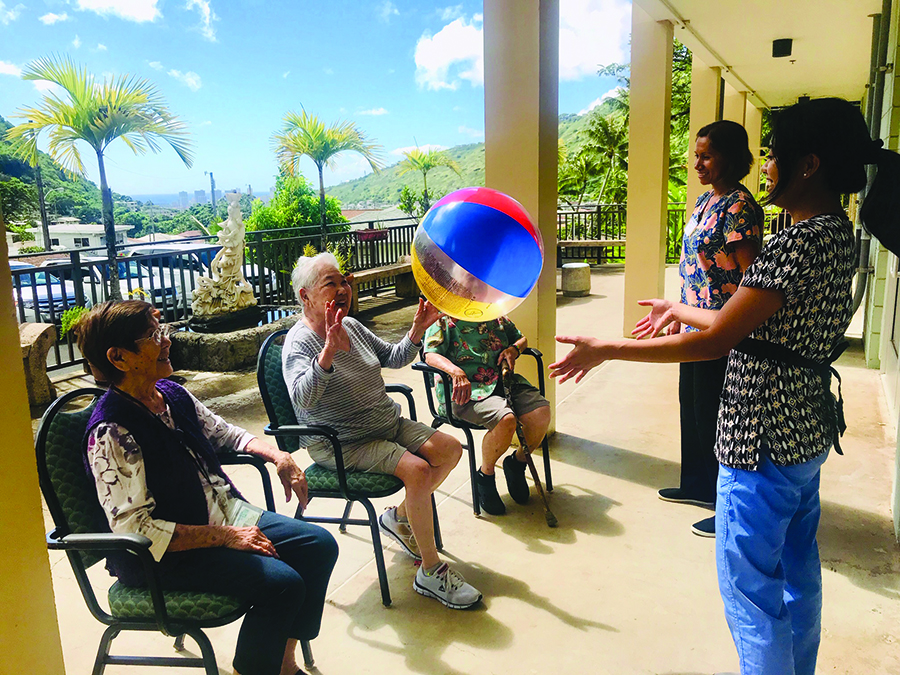
The annual Senior Classic Games is sponsored by Generations Magazine.
The motto of the City and County of Honolulu, Department of Parks and Recreation is “We Add Quality to Life” and the public programs it provides, along with the events it hosts and participates in, are a reflection of that aim. Concerts, fairs, cultural exhibitions and the longest-running non-competitive hula event in the state are all on the agenda for the coming year.
As well as the many opportunities it makes available for individual exercise — swimming, gym workouts, walking at a beach or park — the department schedules exercise classes for kūpuna.
Senior Golf Program
March 8, Friday; Ewa Villages Golf Course
May 10, Friday; West Loch Golf Course
July 12, Friday; Ala Wai Golf Course
March 8, Friday; Ewa Villages Golf Course
May 10, Friday; West Loch Golf Course
July 12, Friday; Ala Wai Golf Course
Call for details & time: 808-768-3030 Senior Classic Games
March 21, Thursday, 8 am – 12 pm Halawa District Park
Senior Fun Walk
April 5, Friday, Check-in 8:30 am; 9 am start Patsy T. Mink Central Oahu Regional Park
92nd Annual Lei Day Celebration
May 1, Wednesday, 9 am – 5:30 pm Kapi‘olani Park
Nā Hula Festival
August 4, Sunday, 9 am – 2 pm Kapi‘olani Park Bandstand
Talk Story Festival
October 11, Friday, 5:30 pm – 8:30 pm Mission Memorial Auditorium
45th Annual Mayor’s Craft & Country Fair
November 23, Saturday, 9 am – 1 pm Neal Blaisdell Exhibition Hall
The motto of the City and County of Honolulu, Department of Parks and Recreation is “We Add Quality to Life” and the public programs it provides, along with the events it hosts and participates in, are a reflection of that aim. Concerts, fairs, cultural exhibitions and the longest-running non-competitive hula event in the state are…
January of 2018, I made a lifestyle change: I went vegan. In March, I added fish to my diet, so I am now pescatarian. I don’t eat meat, chicken, dairy, eggs and cheese. It’s been over a year now and I lost a few pounds. I’m still feeling great and I am also exercising.
Seniors not only have to exercise and stay physically and mentally fit; they also need to make their money last longer. Social Security, regular investments (stocks, mutual funds) and retirement plans (401k, IRA) now have to account for an extended life span. We don’t want to spend our golden years in poverty and ill health.
In the past, retirement money didn’t have to last very long. In 1965, men had a life expectancy of 68 years and women lived an average of 71 years. Men lived only three years past retirement age and women lived six years in retirement. Now that people are leading healthier lifestyles and taking advantage of advancements in science and medicine, retirees are living well into their 90s. Our money has to last for 20 to 30 years after we stop working.
This month I made 70. Very fortunate my father is still alive; he’s 94 years old. My mother passed away two years ago at age 92. I have three children, nine grandchildren and twelve greats. I would like to spend many more years with them.
Am I ready? Are you ready?
Edward Motosue, his son Travis, and their team have provided the senior community with financial guidance and insurance expertise for 10 years.
Seniors not only have to exercise and stay physically and mentally fit; they also need to make their money last longer. Social Security, regular investments (stocks, mutual funds) and retirement plans (401k, IRA) now have to account for an extended life span.
Since 2017, licensed Hawai‘i cannabis growers have been formulating and dispensing medical products to qualified state-registered patients. A majority of their clients who are benefiting from cannabis treatments are seniors.
Different strains of the plants grown for use as medical cannabis are used for particular health outcomes. Above: two strains of flower buds; cannabis seeds used in extracts.
Maui Grown Therapies dispensary in Kahului has been open over a year. Leading their Science & Medical Advisory Board is Dr. Andrew Weil, director of the University of Arizona Center for Integrated Medicine, an advocate for alternative medicine and an early pioneer in the research of medical cannabis. Joining the other five physician advisors are Greg Yim, MD, a pediatric neurologist with Hawaii Pacific Health in Honolulu, and Gregory Park, MD, a specialist in internal medicine and medical oncology in private practice on Maui.
“Dispensary” sounds like a military tent where a supply officer hands out pills too big to swallow and nasty-tasting tonics. Maui Grown Therapies’ waiting area is as comfortable and welcoming as any teaching hospital or fancy clinic on the mainland, just smaller. Pleasant patient education specialists greet clients, listening carefully to their needs, and teaching them about professionally packaged botanical therapeutics formulated from cannabis grown at the Maui Grown Therapies production center upcountry.
Whatever visions I retained from KITV 4 news reports on cannabis shops in Colorado with young people lined up waiting to buy weed were shattered in a moment. An interview with Teri Freitas Gorman, Director of Community Relations and Patient Affairs for Maui Grown Therapies convinced me that I was behind the times. Teri and I have worked together on community projects for many years; her recent work with medical cannabis is good news for seniors. Medical Cannabis companies across our state are producing and selling a well-researched, state-regulated healing resource for persons with cancer, rheumatoid arthritis and ALS — hopeful options for those suffering with debilitating pain, wasting and nausea. In this article, we will explore the most up-to-date facts about modern medical cannabis products, specifically formulated to relieve symptoms associated with chronic maladies we encounter with aging.
What is medical cannabis?
Cannabis is the botanical name of a genus of plant grown for 5,000 years in Asia, India, the Middle East, Africa, Europe and South America. Flowers and leaves were used to make tinctures and poultices or smoked like tobacco, and it was prized for its relaxing and mildly intoxicating effects. Cannabis found its way to mainland America in the 1920s. In the 1930s, Harry Anslinger, Commissioner of the Federal Bureau of Narcotics and newspaper publisher William Randolph Hearst Sr. began a campaign to outlaw cannabis that ultimately led to the Marijuana Tax Act of 1937. The cannabis of the time was much lower in tetrahydrocannabinol (THC) than modern cultivars, and many people continued to grow and smoke it “underground” for relaxation and a mild “high” that seemed to stimulate the senses.
Lotion
Butter
Chocolates and baked goods
In the 1950s and ’60s, veterans and hippies began growing illegal cannabis in Hawai‘i. Cannabis was added to the list of Schedule 1 Controlled Substances in President Nixon’s Comprehensive Drug Abuse and Control Act of 1970. Also included was hemp, a form of cannabis that does not have intoxicating effects but is a source of strong fibers used to make rope, fabric, paper, industrial products and building materials.
Over the past 80 years, illegally grown cannabis has been selectively cultivated for its ability to induce a euphoric mental state (and in a few individuals, anxiety and paranoia).
THC (Tetrahydrocannabinol)
Dr. Andrew Weil, researchers at NIH and Dr. Raphael Maechoulam in Jerusalem began isolating the molecular components of Cannabis and designing scientific experiments to reveal how these botanicals work on the human nervous system. Research has grown worldwide. The cannabis plant produces more than 100 different complex molecules called cannabinoids. Tetrahydrocannabinol is the best known because of its euphoric effects.
Cannabis cannabinoids are very similar in structure to naturally occurring human “endocannabinoids” like the neurotransmitters anandamide and 2-AG. These are just two of many lipids present in our nervous system that normally interact with receptors in our bodies that modulate signals associated with eating, sleeping and pain response. THC docking on receptors may prevent natural endocannabinoids from approaching the receptors and thereby interfere with pain, nausea or impulse signals to the brain.
Different strains of the plants grown for use as medical cannabis are used for particular health outcomes. Above: two strains of flower buds; cannabis seeds used in extracts.
CBD (Cannabidiol)
Another significant component of cannabis is Cannabidiol (CBD), which is not psychoactive like THC, and is a powerful anti-anxiety and anti-inflammatory agent that causes general relaxation of the body. Its mechanism of action is not yet fully understood, but researchers identified a separate receptor, mainly on immune system cells, but also in selected cells of the central nervous system, to which CBD attaches. They theorize that CBD modulates a protective effect on the nervous tissue, as well as an analgesic effect.
Patients with chronic pain understand the “echo” of repeated pain impulses which make it impossible to relax. Induced relaxation reduces the intensity of chronic pain. Medical cannabis dispensaries have formulated products that are CBD-rich, or have equivalent amounts of THC and CBD, and CBD-dominant preparations that are nearly entirely CBD with no intoxicating effects it all. Cannabis products offer relaxation, better sleep and pain reduction for those struggling with chronic pain.
Because cannabidiol-based products do not produce intoxicating effects, creams and oils containing CBD may be available over the counter at health food and vitamin stores or online. It’s important to know these products may not be regulated or tested for purity or for CBD content. Hemp, the source for over-the-counter CBD oils, is known as a powerful bio-remediator because the plant draws up heavy metals and toxins from soil. It’s great for environmental cleanup, but untested plant products pose a possible health risk to consumers.
Even though some hemp-derived CBD extracts are produced in the United States, most are still imported from overseas and consumers should be wary about the origin, purity, and content of over-the-counter CBD products. All Hawaii-licensed dispensaries grow their cannabis and manufacture cannabis products under strict guidelines and are required to pass some of the nation’s most stringent lab tests before any product may be dispensed.
Terpenes
Other aromatic hydrocarbons found in cannabis are called terpenes, which account for the scents of various cultivars of the plant. The effects on inflammation, mood, alertness and relaxation by essential plant oils containing terpenes are well documented. The presence of terpenes in cannabis formulations and how they interact with THC and CBD is under investigation.
By regulation, each dispensary must produce its own products through a vertical system that starts with farming and results in uniquely formulated products.
How many dispensaries are licensed in Hawai‘i?
Although medical cannabis has been legal in Hawai‘i since 2000, Hawaii Statutes protecting patients and a licensing system that regulates cannabis farming and therapeutic manufacturing was not in place until 2015. Of eight approved licensees, six have opened dispensaries and sell their own products: three on O‘ahu, two on Maui and one on Kaua‘i. The two licensees on the Big Island will open dispensaries in early 2019. Licensees may only dispense products manufactured from cannabis they grow themselves, so therapeutic products vary from one dispensary to another. Finding the product that works best is a trial-and-error journey for each patient. Because Federal Law prohibits transporting cannabis through federally controlled waters or airspace, cannabis products may not be carried legally interisland or to-and-from the mainland.
What kinds of products are sold in dispensaries?
First off, medical insurance does not cover the cost of medical cannabis therapies, which fall into the same category as “over-the-counter” medications. Dispensaries provide traditional dry plant buds for inhalation through smoking or vaporization, and a variety of preparations for non-smokers. Cannabis concentrates, resins and distillates may also be inhaled. Serums, lotions and creams may be rubbed into the skin for localized pain relief. Cannabis tinctures, capsules or lozenges may be ingested. Hawai‘i’s DOH is currently considering approving edible cannabis products for medical use.
Top: A dispensary waiting room. Above: A dispensary showroom. Styling is unique to each dispensary, and very welcoming. But entry to areas where products are displayed is restricted to patients with Hawaii 329 cards.
I think most patients are surprised at the wide array of cannabis medications available. While your doctor may register you as a qualified patient, he or she may not recommend the exact product for your condition. That selection is up to you. Most dispensaries provide educational support to help patients to make an informed choice. Educational staff are trained to answer questions, explain the product properties, how the products perform with other clients and how to determine (titrate) your correct dosing. Because everyone is different and various ratios of THC to CBD offer distinct therapeutic effects, it may take a little trial and error to select a formulation that is optimal for your treatment needs.
As Teri at Maui Grown Therapies explained, “Our patient education specialists spend a lot of time learning about the client’s needs. Our knowledge and detailed feedback from patients allow us to suggest products and a dosing with a high probability of success. Our practice to ‘Start low and go slow,’ allows patients to find their optimal dose. We also track our patients’ progress to ensure they are getting meaningful relief.
“Another important point is that an effective treatment plan will continue to work safely for a very long time. As a plant medicine, cannabis is unlike some pharmaceutical drugs that can require larger doses over time and risking overdose,” she said. “More importantly, there is no recorded instance of anyone dying from a fatal dose of cannabis. Dr. Weil says that cannabis is a striking example of a safe and effective botanical remedy that is underutilized and still misunderstood by many conventional practitioners.”
Two MD views on medical cannabis
A Psychiatrist’s Point of View
Thomas L Cook, M.D., is a board-certified psychiatrist. His Mending Minds Clinic in Honolulu treats Post Traumatic Syndrome Disorder (PTSD) patients, many of whom are combat veterans.
“I believe that medical cannabis is the most neglected first-line therapeutic agent in medicine today,” says Dr. Cook. “I certify patients with qualifying conditions so they can apply for Hawaii 329 Cards. I also prescribe the type and concentration of cannabis to treat their symptoms, and I follow their progress.”
“Many combat veterans have been treated with stimulants like Adderall®, which can make PTSD worse. They are jumpy and hypervigilant all the time. Medical cannabis calms much more effectively than antidepressant pharmaceuticals, with very few side effects. It seems to ‘re-program’ the amygdala, a part of the brain that triggers the fight-or-flee response. “Releasing patients from the passive, hypnotic state of PTSD involves psychotherapy and healing techniques like somatic experiencing.
“PTSD patients also suffer sleep deprivation. On cannabis, they experience restorative sleep like they had as a child. Relief from these debilitating symptoms allows combat veterans to engage in therapeutic integrative strategies where they can master peacetime activities like sports, volunteer work and leadership on the job. “Cannabis has many other applications in medicine — it’s a profound antioxidant, it stimulates stem cells and lowers blood pressure. It’s very good for inflammatory disorders like Crone’s disease, rheumatoid arthritis, lupus and multiple sclerosis.
“To be clear, “says Dr. Cook, “Cannabis does not cure depression, but it can quell some symptoms that prevent patients from healing. I treat patients with depression at Alleviant Health Center. Classical depression can take a long time to heal. Along with psychotherapy, I offer patients quick-acting Ketamine infusion treatments so they can avoid emergency room crises and psychiatric hospitalizations on their journey to wellness.”
Products with a low, legal level (below .3%) of THC are sold over the counter, but only dispensaries can sell those with a higher level of THC. Edible medical cannabis products may soon be approved by the Department of Health.
An Oncologist’s Point of View
Oncologist Dr. Gregory Park of Wailuku has been treating cancer patients for many years and serves as a director for Maui Grown Therapies.
“Cancer patients’ acceptance and willingness to try medical cannabis is striking. My patients are looking for anything that can make their journey more comfortable. When they realize cannabis comes in creams, tinctures, capsules and oils that they can rub in or take by mouth — they want to try it.
“Most important to my patients is that cannabis therapies can relieve nausea and pain without altering their mental state. If they know they’re not going to get ‘high,’ they are open to cannabis.
“I find that informed seniors are pretty matter-of- fact. They read a lot and once they make up their minds, they cut right to the chase. One patient came in and said, ‘Well, I need my card. I tried it from my friend.’ That was it. After she was registered, she was just as definitive about her good results on cannabis; with a big smile she just said, ‘It works!’
“In Hawai‘i, it seems that physicians working in large medical groups have more skepticism about medical cannabis than those in private practice. Acceptance is highest among doctors who treat chronic pain, because cannabis is a good alternative pain treatment that is not physically addictive. Some opioid-dependent patients can reduce the amount of opioids or even discontinue them altogether when they find a cannabis regimen that manages their pain.”
Who qualifies to register as a patient?
Persons qualified to purchase medical cannabis in Hawai‘i are regulated by the Hawaii Statutes Act 329. No client may enter a dispensary showroom without a “329 Card” issued by the Hawaii State Department of Health (DOH). Patients with any one or more “qualifying” disorders or symptoms may be certified by a physician or Advanced Practice Registered Nurse (APRN) with whom they have a bona fide (good faith) patient-doctor relationship. This means that a licensed medical professional must examine you to certify that you have a qualifying disorder or symptom as defined on www.bit.ly/DOH329Qualify. Then you may file an online application with DOH requesting your 329 card. The application costs $38.50 and an extra $3.50 handling fee, payable when you apply online. If you seek online entry assistance at a clinic, the fee may be $10 – $15 higher. If you are approved, the DOH will send you a “329” patient ID card that allows you to legally buy medical cannabis products in any licensed dispensary in the state. This month’s Resource Guide (p. 36) lists dispensaries and intake clinics in Hawai‘i.
Further in this article, we have detailed all the steps interested seniors must take to complete online registration with the DOH.
Experiences of real clients
Susan Ramos, Maui, Age 60
Susan suffers constant back pain from severe degenerative disc disease, arthritis, bone spurs, five herniated discs and scoliosis. Eventually she will have corrective surgery, but until then, her job in the hospitality industry requires her to stand and sit most of the day. Six months ago, her son, who treats his chronic back pain with products from Maui Grown Therapies suggested that Susan might get some relief from medical cannabis.
“My son gave me hope,” says Susan. “I knew how much he suffered after falling off a truck, years back. The idea that something could even take the edge off my pain was almost too good to be true.”
Susan knew nothing about medical cannabis or the dispensary — she feared that if someone saw her there, they might think that she’s a drug addict. Nothing could be further from reality.
“My son was so good. He took me inside and held my hand. The waiting room was a surprise — like walking into a spa! The people in the attractive waiting room were just like me, in their 60s or older. I expected to see young people with dreadlocks and tie-dye shirts.
“The educational specialist was so kind and knowledgeable, but it was like she was talking in French because there were so many options and information. My doctor never gave me a prescription, so I had to decide what product to buy. I told her that my back pain keeps me awake all night, but I cannot be too relaxed or fuzzy when I’m on the job. I ended up with two products: five drops of CBD and THC oil under the tongue at night before I go to bed, and THC oil to rub on my back during the day. They worked, and I began sleeping at night. During the day, the oil gives me relief from the constant pain.”
Susan says relieving her pain is a huge benefit. Cannabis fits well with her lifestyle and exercise/treatment plan, which includes Pilates, water aerobics and regular chiropractic adjustments. She says the best outcome is being able to work while she is awaiting surgery.
Susan Liliha Warner, O‘ahu, Age 75
Susan is a client of Aloha Green Apothecary on King Street in Honolulu. She was a special education teacher on the mainland and returned to Wai‘anae when she retired. Here, Susan volunteered a patient advocate and as an elementary school aid, writing curriculum for special education students. She has smoked her whole life and has chronic obstructive pulmonary disease (COPD). Bone spurs on her spine cause her to experience severe chronic pain.
“I was reading about medical cannabis and the new dispensaries on O‘ahu. I know that THC can give temporary relief from asthma, so I wanted to get some THC, but a diagnosis of COPD did not qualify me to buy THC in Hawai‘i.
“I don’t like the term ‘debilitating’ but my awful, chronic back pain is a qualifying symptom that would get me a 329 card. I was taking six ibuprofen tablets every morning for my back pain, and my Kaiser doctor was worried about the effect ibuprofen was having on my kidneys. I asked him to register me for medical cannabis, but he said no. Apparently Kaiser has federal contracts, so they will not have anything to do with cannabis until it is federally approved and legal. I eventually found a nurse practitioner in Ewa licensed to examine my medical records and certify me as a qualified patient who can benefit from cannabis.
“I like the floating feeling of THC, so that is what I bought on my first visit to the dispensary.
They had a cartridge that I could put right in my vaporizer to inhale it. It opened my airways and felt great.
Dispensary items come in various forms: smokable flower buds and resin concentrates, or concentrated oral tinctures. Inquire about various options at your dispensary.
“Then they put me on to CBD oil for the pain in my back. I was amazed at the powerful, warm relaxation that went through my whole body. More amazing is that rubbing on CBD, which I call ‘oiling my joints,’ allowed me to get off ibuprofen! I admit that I had to take a few after I tiled my kitchen floor, but on regular days, CBD takes away all the pain.” The medical cannabis clinic and the dispensary Susan uses “both keep track of me and how I am doing, which gives me added comfort.”
“When I was relying on ibuprofen, I had to wait until it was time for the next dose, no matter how much pain I had. People with chronic pain know how long it takes to get pain back under control once the meds stop working. Well, those days are over for me. Because there are no adverse side effects to CBD oil, I can reapply it whenever I get that first twinge, and never have to wait for the next dose.” Susan would recommend learning more about medical cannabis treatment options to anyone in constant pain.
Getting your own 329 card
To become eligible to purchase medical cannabis you must first and foremost talk to your primary care physician, who knows your medical history. You must make an appointment and have a face-to-face meeting with a physician or APRN nurse who can certify that you have a qualifying condition that can benefit from medical cannabis. If your doctor does not certify patients, you can make an appointment to see a doctor or APRN who does. They will review your medical records and examine you to determine if you have a qualifying condition. Once certified, you may apply online for registration. If they don’t offer that service themselves, doctors refer their patients to an intake clinic that helps qualified patients and their caregivers file their online applications for DOH 329 cards.
A qualified patient who needs assistance may even designate one caregiver to accompany them to the dispensary or to purchase cannabis products for them.
On O’ahu, Aloha Green Apothecary provides regular free public “Cannabis 101”, educational program workshops at local Hawaii Public Libraries. To find a program near you, visit www.agapoth.eventbrite.com.
And Maui Grown Therapies presents a monthly cannabis education series called “Lunch & Learn” at UH Maui College, featuring Michael Backes, researcher and author of the book, Cannabis Pharmacy. Andrew Weil and Backes will also be featured in a free Medical Cannabis Symposium at the Maui Arts & Cultural Center on Thursday, April 18. For details see www.mauigrown.com
Medical cannabis legal considerations
Hawaii Statutes on cannabis are designed to protect and regulate both the patients and the dispensaries.
4 ounces of cannabis or the equivalent may be purchased in any 15 day period (8 oz/month).
Patients must follow Hawai‘i’s smoke–free law. Qualified patients must consume medical cannabis within a private residence, out of public view.
Driving under the influence of cannabis carries the same penalty as a DUI for alcohol. Never drive while medicated with cannabis.
Using cannabis is prohibited in a moving vehicle, at work, in school, at public parks and beaches, in recreation centers and other places open to the public.(If you have a valid 329 card, you may have up to 4 oz. of cannabis in your possession at any time.)
Interisland or overseas transport of cannabis is prohibited by Federal law.
Registered patients or their caregivers may grow an “adequate” supply of medical cannabis; not to exceed ten plants at one grow site location identified on their 329 card. Growing locations are allowed at the patient’s or a caregiver’s residence. Alternatively, cannabis may be grown on one site owned by a patient or by the caregiver. Federal lands, military bases and national Parks prohibit the consumption or cultivation of cannabis under federal laws that carry steep fines.
In early 2019, out-of-state patients may apply for a 329-V(visitor) card from the DOH provided they have a valid certification to use medical cannabis for a Hawai‘i qualifying condition in their home state. Visitor cards are valid for 60 days and may be renewed once per year.
Teri Gorman suggests visiting the Hawaii State DOH Medical Cannabis Program’s website at www.health.hawaii.gov/medicalcannabis/ to learn about program regulations and legal protections provided to Hawaii’s registered patients.
Drug interactions with cannabis
Very little research has been done on how cannabinoids may react with prescription drugs; its status as a Schedule 1 drug has prevented researchers, even at NIH, from pursuing studies. However, physicians have observed that patients who use cannabis report very few drug interactions and most are insignificant.
Still, medical cannabis has the potential, like other plant botanicals, to interact with some prescription medications or lessen their effectiveness.
Therefore, it is important for seniors to disclose all medications they are taking (including supplements, over-the-counter products and cannabis) to their healthcare providers and to their pharmacists.
A March 8, 2018 article in “US News and World Report” by staff writer Michael O. Schroeder says that, in particular, the effects of medications that relax or sedate the body and lower blood pressure may be enhanced by administration of CBD.
He also points out that the intoxicating effects of THC and alcohol can be psychologically addictive for some people. Lowering blood pressure too much and any medications that cause dizziness may lead to accidents and falls, important health concerns for independent seniors. To protect yourself from falling, make sure your healthcare provider knows everything you are taking.
Live well
We thank all the medical professionals and seniors who participated in this issue’s resource article on medical cannabis. There will be much more research and information available to Hawai‘i seniors in coming years. You may learn more at public educational events sponsored by your local dispensaries and intake clinics on your island. Medical cannabis is one option for seniors aging in place and living well in Hawai‘i. See our Resource Guide for contact and reach information.
Since 2017, licensed Hawai‘i cannabis growers have been formulating and dispensing medical products to qualified state-registered patients. A majority of their clients who are benefiting from cannabis treatments are seniors. Maui Grown Therapies dispensary in Kahului has been open over a year. Leading their Science & Medical Advisory Board is Dr. Andrew Weil, director of…
[et_pb_section][et_pb_row][et_pb_column type=”4_4″][et_pb_text]With all the natural disasters happening throughout the world, unscrupulous scammers are looking to take advantage of our empathy and generosity as we seek ways to help the victims of those disasters. These scammers will be soliciting donations using telephone messages, emails, and even social networking services like Facebook. They will be claiming to represent charity organizations which are completely fictitious or even claim to represent or be connected to legitimate charity organizations such as the Red Cross.
If you decide to donate to any charity organization, you need to do your homework.
Verify if in fact the organization you are donating to is accepting donations for the specified charity.
If so, make sure the mailing address to send the donation is accurate.
Try not use a credit card or a debit card. Preferably send a cashier’s check from your bank and not from your personal checking account.
If donating via an online service like GoFundMe.com, again make sure the charity is legitimate and be cautious about giving personal financial information, like credit/debit card numbers, PIN numbers, etc.
Be very wary if they ask for donations ONLY using Western Union.
And finally, legitimate charity organizations do not solicit donations in the form of gift cards.
THE DEPARTMENT OF THE PROSECUTING ATTORNEY 1060 Richards St., Honolulu HI 96813
808-768-7400 | Office hrs: Mon – Fri, 7:45 am – 4:30 pm
www.honoluluprosecutor.org/contact-us/[/et_pb_text][/et_pb_column][/et_pb_row][/et_pb_section]
With all the natural disasters happening throughout the world, unscrupulous scammers are looking to take advantage of our empathy and generosity as we seek ways to help the victims of those disasters. These scammers will be soliciting donations using telephone messages, emails, and even social networking services like Facebook.
When my father-in-law “Gramps” had a stroke, he spent time at the hospital, rehab, and then a nursing home, before finally being able to return to his house. During those months of recovery away from home, my family made every effort to visit him daily. Between my wife, brother-in-law, mother-in-law and myself, we were pretty successful in making sure he would have the company of a loved one every day.
We did this initially because we didn’t want Gramps to feel alone. Eventually, however, we discovered that he was getting better care and more attention from the staff because of our visits. When we walked into the facility, it would coincidentally seem to be at the exact time for the staff to check on Gramps. Once they saw one of us walking down the hall towards his room, they would leave their duty station and follow us inside, telling us all the details of his care as they fluffed his pillows and made sure he was comfortable.
We could not help but notice, however, that his roommate and other patients did not get the same treatment. They were either lying in bed all day in
silence or sitting in a wheelchair parked outside in the hall watching us come and go with lonely stares.
Over the years, I have gotten many calls from people suspecting abuse or neglect of loved ones at care facilities. During these conversations, I would always ask them when was the last time they saw their loved one before the alleged abuse. I did this to get an idea how quickly the neglect occurred or see if there were signs of abuse witnessed.
Despite my intentions, however, the callers would get defensive, relating various reasons why they were not more attentive nor visiting that often. Their reasoning was that if the place did their job correctly, they wouldn’t have to check on things themselves and visit that often. And while this is true in theory, the reality is that there are some care facilities that are understaffed or have employees under trained and a regular visit could detect such problems if they exist.
While I am sure that the majority of residential facilities provide quality, attentive care, more and more instances of the opposite happening are coming to my attention. Recently, the Honolulu Medical Examiner’s Office called me, concerned with the number of bodies they were receiving from such places whose cause of death could only be attributed to “extreme neglect”. Additionally, the Long-Term Care Ombudsman has some concerns about oversight and care of seniors in facilities and has invited our office to join them in examining the problem.
In the meantime, I urge family to always make the time to visit loved ones. No amount of money spent for care is a substitute for actually being there yourself. Your visits will not only be appreciated, but also noticed.
When my father-in-law “Gramps” had a stroke, he spent time at the hospital, rehab, and then a nursing home, before finally being able to return to his house. During those months of recovery away from home, my family made every effort to visit him daily. Between my wife, brother-in-law, mother-in-law and myself, we were pretty…
There is no “good grief” or “bad grief”— there is only grief. Drs. Kenneth Doka and Terry Martin* suggest that there are two types of grievers: “instrumental” and “intuitive.” Neither type is deficient; only different. Understanding the difference can allow family members to empathize with, rather than attribute bad motives to, another family member.
It is critical, at this moment when the loved one is gone and the estate administration starts, that we seek to understand each family member’s grieving style, as how we act at this highly sensitive moment can lead to family harmony or fracture for years to come.
So, before you get mad at your sibling for wanting to “get it over with” or “not wanting to have anything to do with it,” try to understand your sibling’s grieving style, as it is this empathy for your sibling that can foster loving relationships in this difficult time.
Stephen B. Yim, Attorney at Law 2054 S. Beretania St., Honolulu HI 96826
*Drs. Kenneth Doka and Terry Martin, “Grieving styles: Gender and grief” Grief Matters Winter 2011, pp 42-45
There is no “good grief” or “bad grief”— there is only grief. Drs. Kenneth Doka and Terry Martin* suggest that there are two types of grievers: “instrumental” and “intuitive.” Neither type is deficient; only different. Understanding the difference can allow family members to empathize with, rather than attribute bad motives to, another family member.
Setting New Year’s resolutions is a tradition for millions of Americans who see January 1 as a fresh start. However, we all know how easy it is to have resolutions fall to the wayside as the year progresses.
Fortunately, if the goal you have in mind is a financial one, there are ways you can break it down into steps that will keep you motivated and on track to achieve it. Here are some tips to help you set attainable goals:
Setting aspirational goals, such as living the life you want in retirement or taking a coast-to-coast road trip, is exciting and can be a great place to start. Yet, broad goals can quickly become overwhelming, so tangible ones can help you keep the commitment. The best way to make your dreams a reality is to break each goal into small, specific tasks that are realistic to accomplish this year.
You’re not alone if you have a myriad of financial goals. However, it can be hard to achieve them all without focus or unlimited resources. Pick one or two goals, tailoring your savings, time and resources accordingly. If you have competing priorities such as saving for your child’s education and retirement, create a plan that will help you make measurable progress toward both. Remember, incremental changes (or savings) made over time can make a big difference in the long run.
Strengthen your resolve by anticipating events and triggers that might derail you from your goals such as overspending on dining out or purchasing that is outside of your budget. Be as specific as possible, and brainstorm strategies to overcome these potential obstacles. This mental exercise will help you
be more aware and better equipped to resist
temptations.
Without target dates in mind, goals tend to drift. As you set deadlines for each task, consider adding a reminder on your calendar so you keep the goal a priority throughout the year. If you fall short of what you want to accomplish, don’t give up. Adjust your dates and get back on track.
If you’re married or in a committed relationship, involve your spouse or partner in financial goal setting. If your goal is a family affair, consider including your children in the process. Your children can benefit from watching you make smart financial choices. With everyone on the same page, you can support one another and overcome obstacles together.
Share your goals with your financial advisor, tax professional or estate planner, as appropriate. These specialists may be able to suggest additional strategies to help you reach your goals, while being mindful of your other financial priorities.
Michael W. K. Yee, CFP®, CFS®, CLTC, CRPC ®, is a Private Wealth Advisor, Certified Financial Planner ™ practitioner with Ameriprise Financial Services, Inc. in Honolulu, HI. He specializes in fee-based financial planning and asset management strategies and has been in practice for 31 years.
Investment advisory products and services are made available through Ameriprise Financial Services, Inc., a registered investment adviser.
Ameriprise Financial Services, Inc. Member FINRA and SIPC.
Setting New Year’s resolutions is a tradition for millions of Americans who see January 1 as a fresh start. However, we all know how easy it is to have resolutions fall to the wayside as the year progresses. Fortunately, if the goal you have in mind is a financial one, there are ways you can…
Is estate planning really all about “who gets my stuff”? Your assets may be important, but when you sift through the reasons for doing estate planning, you may find that identifying who gets your stuff takes a distant back seat to far more important considerations.
For one thing, no matter how important your stuff is to you, your health and well-being are far more important. There could come a time when you cannot make or communicate decisions about your person and your care. Having your hand-picked decision-maker designated in your advance health care directive could make all the difference between family harmony and a peaceful exit, on the one hand, or a complete nightmare at the end of your days.
Fortify your interest
When it comes to your stuff, part of staying in control involves protecting it from creditors, predators, and plain old bad luck. Think of your estate plan as a castle. Imagine a large stone enclosure surrounded by a moat. In the old days, the moat would be stocked with alligators to discourage anyone from approaching the walls. With your present-day estate plan, you can stock the moat with a different kind of gators: litigators — attorneys paid for with insurance — to protect you from people who would like your stuff to be their stuff. Having adequate liability insurance is a critical element of your estate plan.
The walls of your castle represent various legal structures you can put in place to protect you, your home, your business, your rental properties, and your other assets. The legal structures for protecting your stuff might include trusts, limited liability companies, corporations, limited partnerships, or a combination of entities. You can also consider using a special kind of ownership with your spouse called tenancy by the entirety to protect your stuff from claims against one spouse, and to make it so that both spouses must agree to any mortgage, sale, or other transfer of the tenancy by the entirety property.
Ultimately, you will want your estate plan to assure that your stuff goes to whom you want, when you want, the way you want, with the lowest overall cost, delay, and loss of privacy. You may want to put special restrictions on a gift to one beneficiary without imposing the same restrictions on your other beneficiaries. You might have special assets or special situations (including a special needs loved one) that require careful planning. The only way to navigate the alternatives is with the help of experienced counsel who can educate you as to the available options and help you pick the ones that are right for you and your loved ones. Good counsel can help you build the castle that is just right for your situation.
Thinking of your estate plan as your castle helps you to zero in on your true values and objectives when it comes to making arrangements with your assets that will put you and your loved ones in the best possible position when something bad happens in the future.
SCOTT MAKUAKANE, Counselor at Law
Focusing exclusively on estate planning and trust law.
Is estate planning really all about “who gets my stuff”? Your assets may be important, but when you sift through the reasons for doing estate planning, you may find that identifying who gets your stuff takes a distant back seat to far more important considerations.
I didn’t enroll in Medicare Part B back when my Part A started a few years ago. Can I enroll now?
A
It depends. The general enrollment period for Medicare Part B, medical insurance, begins January 1 and runs through March 31. Keep in mind that, although there is no monthly premium for Medicare Part A, there will be a premium for your Medicare Part B. And in most cases, that premium goes up each 12-month period you were eligible for it and elected not to enroll. If you are covered by a group healthcare plan based on your employment or the employment of a spouse, you may qualify for a special enrollment. For more information, please read our “Medicare” booklet, or talk to your personnel office before you decide.
Q
What can I do if my Medicare prescription drug plan says it won’t pay for a drug that my doctor prescribed for me?
A
If your Medicare prescription drug plan decides that it won’t pay for a prescription drug, it must tell you in writing why the drug isn’t covered in a letter called a “Notice of Denial of Medicare Prescription Drug Coverage.” Read the notice carefully because it will explain how to ask for an appeal. Your prescribing doctor can ask your Medicare drug plan for an expedited redetermination (first level appeal) for you, if the doctor tells the plan that waiting for a standard appeal decision may seriously harm your health.
The general enrollment period for Medicare Part B, medical insurance, begins January 1 and runs through March 31. Keep in mind that, although there is no monthly premium for Medicare Part A, there will be a premium for your Medicare Part B. And in most cases, that premium goes up each 12-month period you were…
In 2019, a new Medicare Advantage Open Enrollment Period, from January 1 to March 31, will begin and is expected to run annually. If you’re enrolled in a Medicare Advantage Plan, you’ll have the opportunity to switch to another Medicare Advantage Plan or to Original Medicare Parts A and B. You can also sign up for a standalone Medicare Part D Prescription Drug Plan (if you are covered by Original Medicare), or drop your Medicare Part D Prescription Drug Plan altogether. If you are happy with the plan you have, and your plan renews, you do not have to take any action and your existing plan will continue.
OPEN ENROLLMENT January 1- March 31, 2019
For those qualifying at age 65 or due to a disability, you may have a different enrollment period. Best to call Medicare to get information about your specific situation. There is no “one size fits all” with Medicare.
Get more information:
Visit www.medicare.gov
Call Medicare at 1-800-Medicare, 24/7 daily
Contact your local State Health Insurance
Program (SHIP) for unbiased advice.
MEDICARE MOMENT WITH MARTHA
A radio program with Martha Khlopin
KHNR-690AM: Sundays 9:30am–10am
In 2019, a new Medicare Advantage Open Enrollment Period, from January 1 to March 31, will begin and is expected to run annually. If you’re enrolled in a Medicare Advantage Plan, you’ll have the opportunity to switch to another Medicare Advantage Plan or to Original Medicare Parts A and B.
Although improved fitness plays a significant role in improving overall health and reducing your risk for disease, Medicare usually does not cover exercise classes or the services of a personal trainer. However, when medically necessary, Medicare Part B may cover occupational and physical therapy, which could include some exercise and fitness training. This coverage only applies if your physician specifically prescribes the therapy.
Medicare Part B helps pay for physical and occupational therapy deemed medically necessary by your doctor. He or she must prescribe and regularly review the therapy, which must be provided by a Medicare-certified therapist on an outpatient basis. There may be limits or a cap on the total amount of therapy services you can receive without additional approval from Medicare.
Medicare Advantage (MA) plans (also known as Medicare Part C) must offer at least the same coverage as Original Medicare. They may also offer extra benefits, including exercise program coverage. MA plans are not required to offer that benefit, so first research plans at https://www.medicare.gov/find-a-plan or call the Hawaii SHIP Program on 1-888-875-9229.
Most important is to work with your partner physician to improve your physical lifestyle and get ready for that big race!
Kaiser Permanente Hawaii is an HMO plan with a Medicare contract but does not represent Medicare in any way.
Although improved fitness plays a significant role in improving overall health and reducing your risk for disease, Medicare usually does not cover exercise classes or the services of a personal trainer. However, when medically necessary, Medicare Part B may cover occupational and physical therapy, which could include some exercise and fitness training.