Weekend warriors often develop shoulder discomfort when performing overhead movements while playing tennis, baseball or tackling DIY projects around the house. The longer you suffer, the more damage can occur. Here are simple tips to relieve some symptoms:
1. STOP PAINFUL ACTIVITIES!
Trying to “work through the pain” is a mistake. It is your body warning you of a problem. Avoid that activity and allow inflammation to resolve.
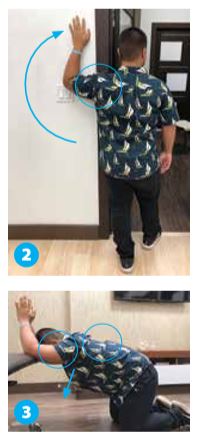
2. REVERSE ROUNDED SHOULDERS
Stretching the pectoralis minor will increase flexibility of the anterior shoulder and chest. Stand with one foot forward against the corner of a wall using it to hold the shoulder back, pinch shoulder blades together, slowly raise the arm up until you feel a deep stretch. Hold for 30 seconds; repeat three to five times.
3. IMPROVE THORACIC (MIDDLE BACK) SPINE MOBILITY:
To be able to reach overhead fully, you need thoracic flexibility. From a kneeling position, lean forward and place your elbows on a chair and drive your chest downwards, stretching the spine and under the arms. Hold for 30 seconds; repeat three to five times.
Weekend warriors often develop shoulder discomfort when performing overhead movements while playing tennis, baseball or tackling DIY projects around the house. The longer you suffer, the more damage can occur. Here are simple tips to relieve some symptoms:
Many of us sit for hours at a desk at work and on the couch at home. Our jobs and activities have been trending toward a more sedentary lifestyle. And regular exercise might not be enough to reverse the damage.
Studies now indicate the longer you sit, the greater your risk of developing cardiovascular disease or diabetes. Prolonged sitting lowers your metabolism, increases blood fat and sugar levels, drops your good cholesterol and increases mortality rates. It’s being referred to as a new risk factor, like smoking or high blood pressure.
We know the benefits of exercise, yet getting the recommended 75 minutes of vigorous or 150 minutes of moderate exercise per week is hard.
If you sit for longer than 30 minutes, get up and walk around. In addition, build your core strength and burn calories by being mindful of your posture.
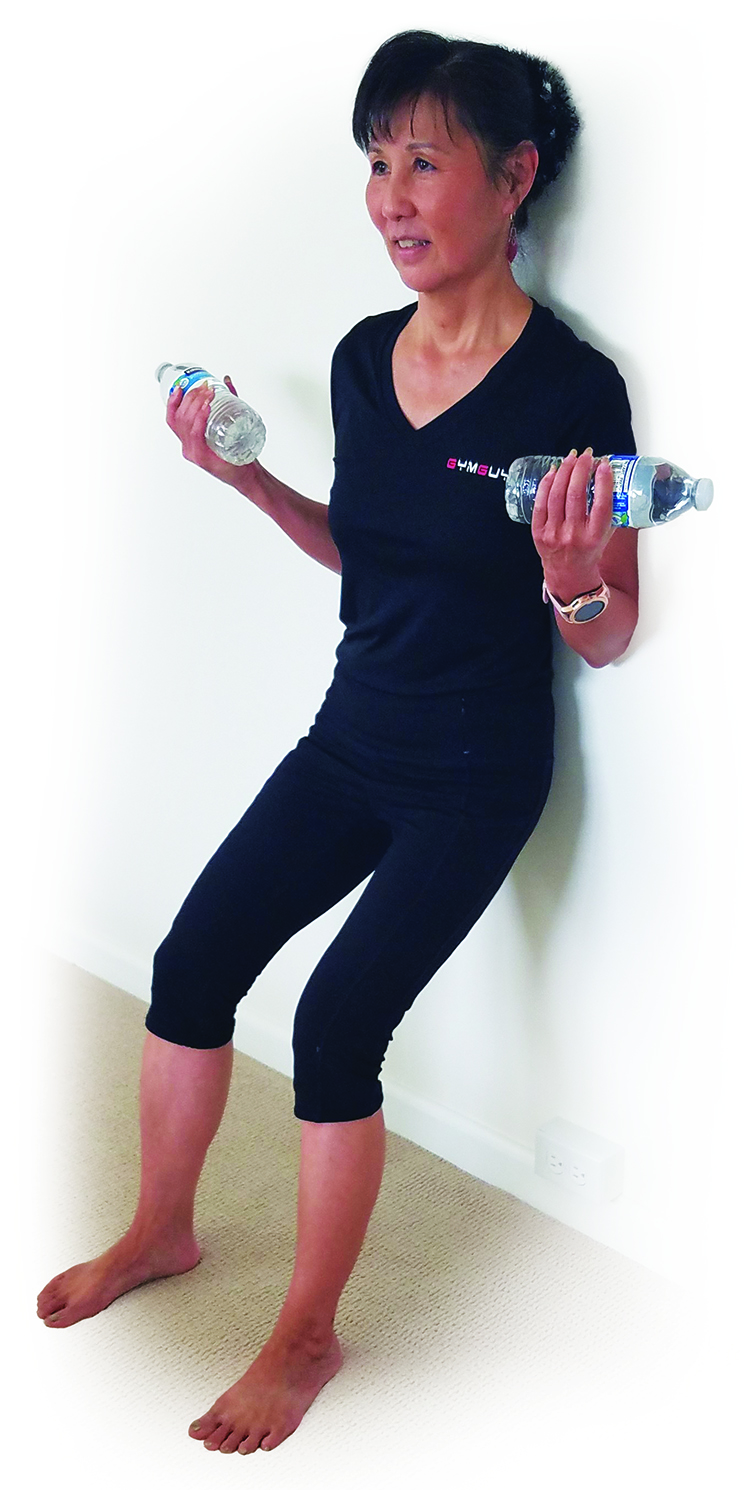
In addition, do some wall sits with some bicep curls. With your back against a wall, walk your feet forward until you’re in a partial sitting position. Then push your head and shoulders against the wall while curling bottles water or cans of food.
To remind you, set a timer for 30 minutes and MOVE! Substitu- ting even the simplest physical activities for some of your sit- ting time is an easy way to improve health and increase happiness.
Many of us sit for hours at a desk at work and on the couch at home. Our jobs and activities have been trending toward a more sedentary lifestyle. And regular exercise might not be enough to reverse the damage. Studies now indicate the longer you sit, the greater your risk of developing cardiovascular disease…
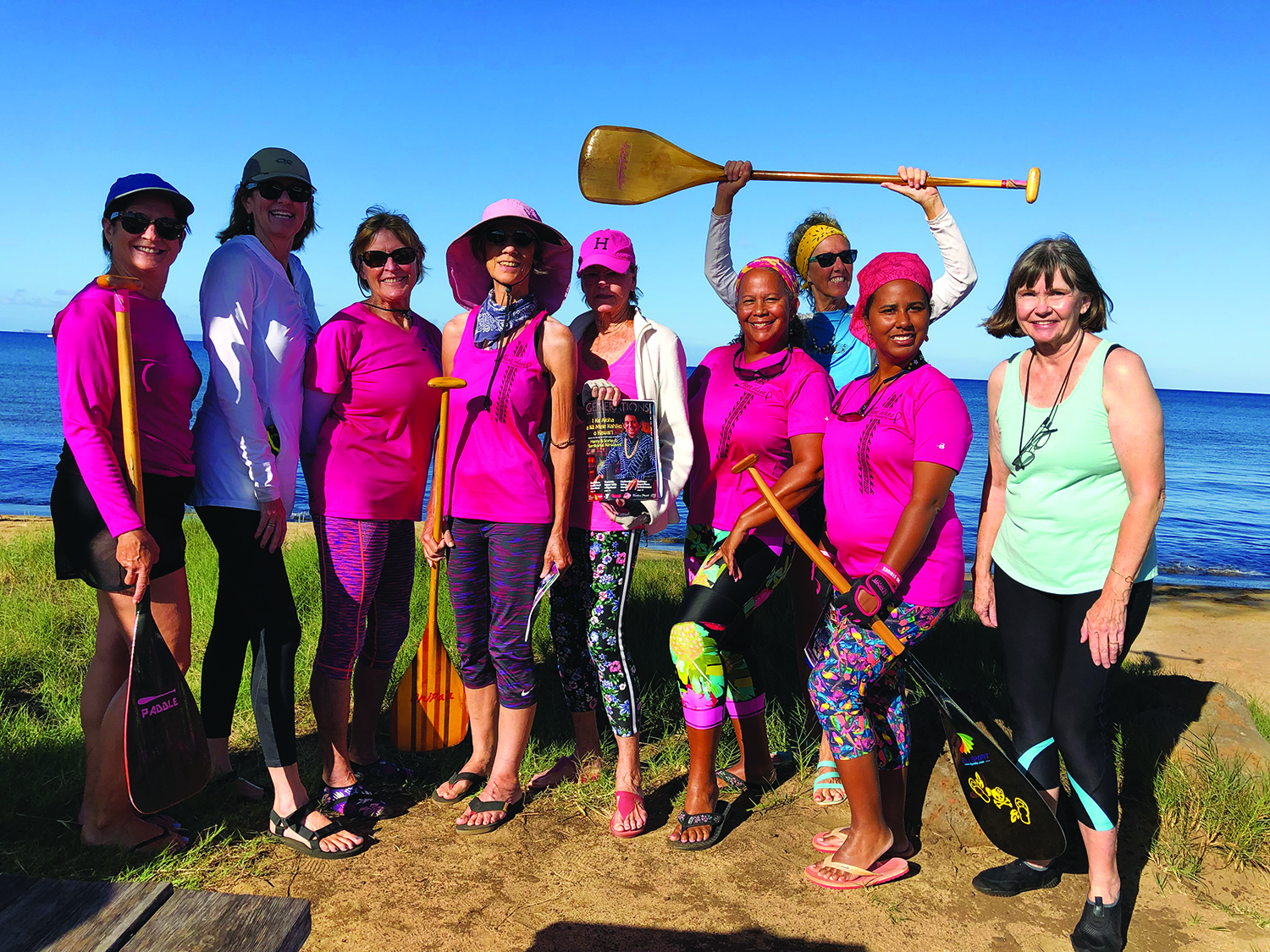
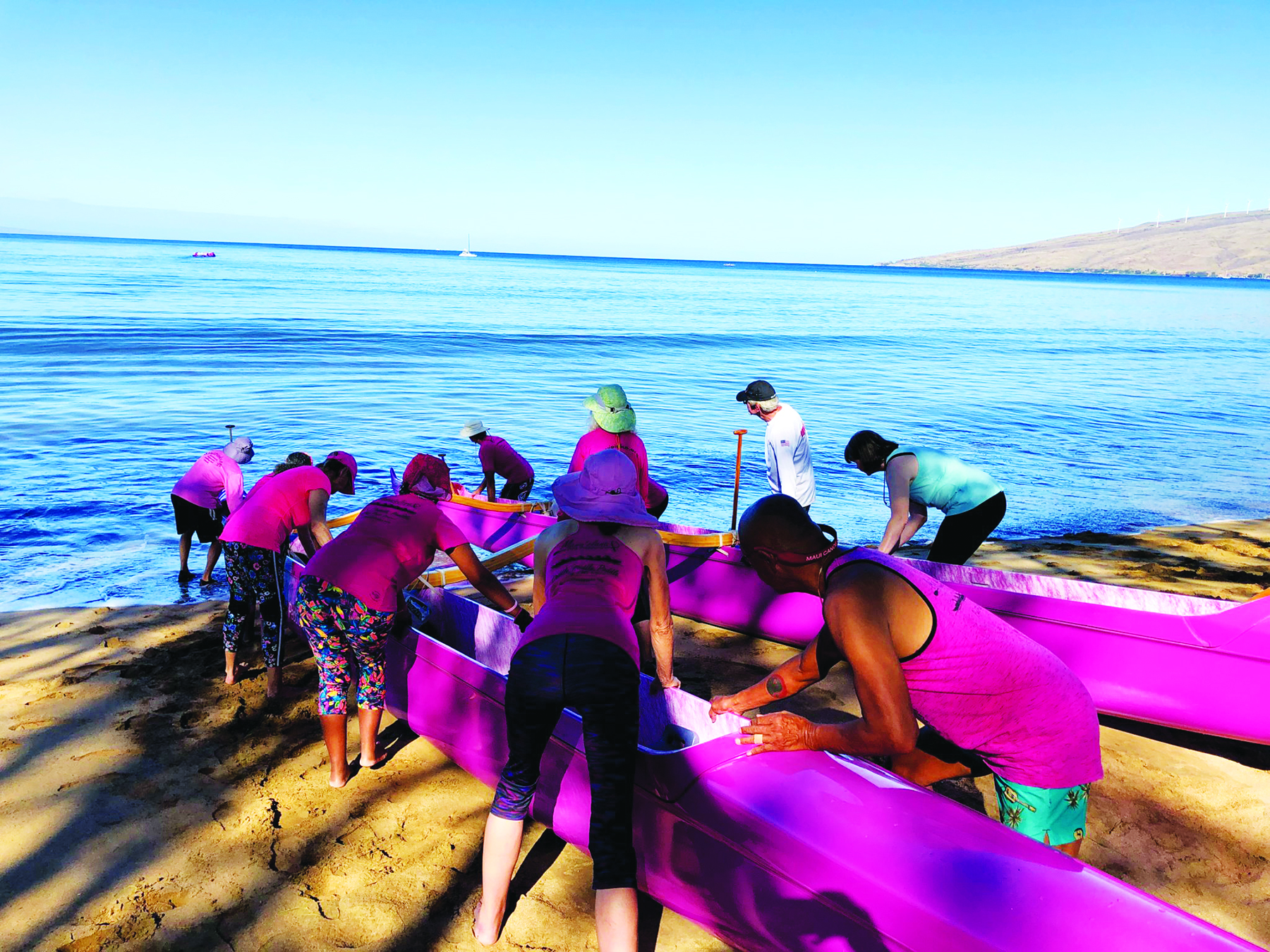
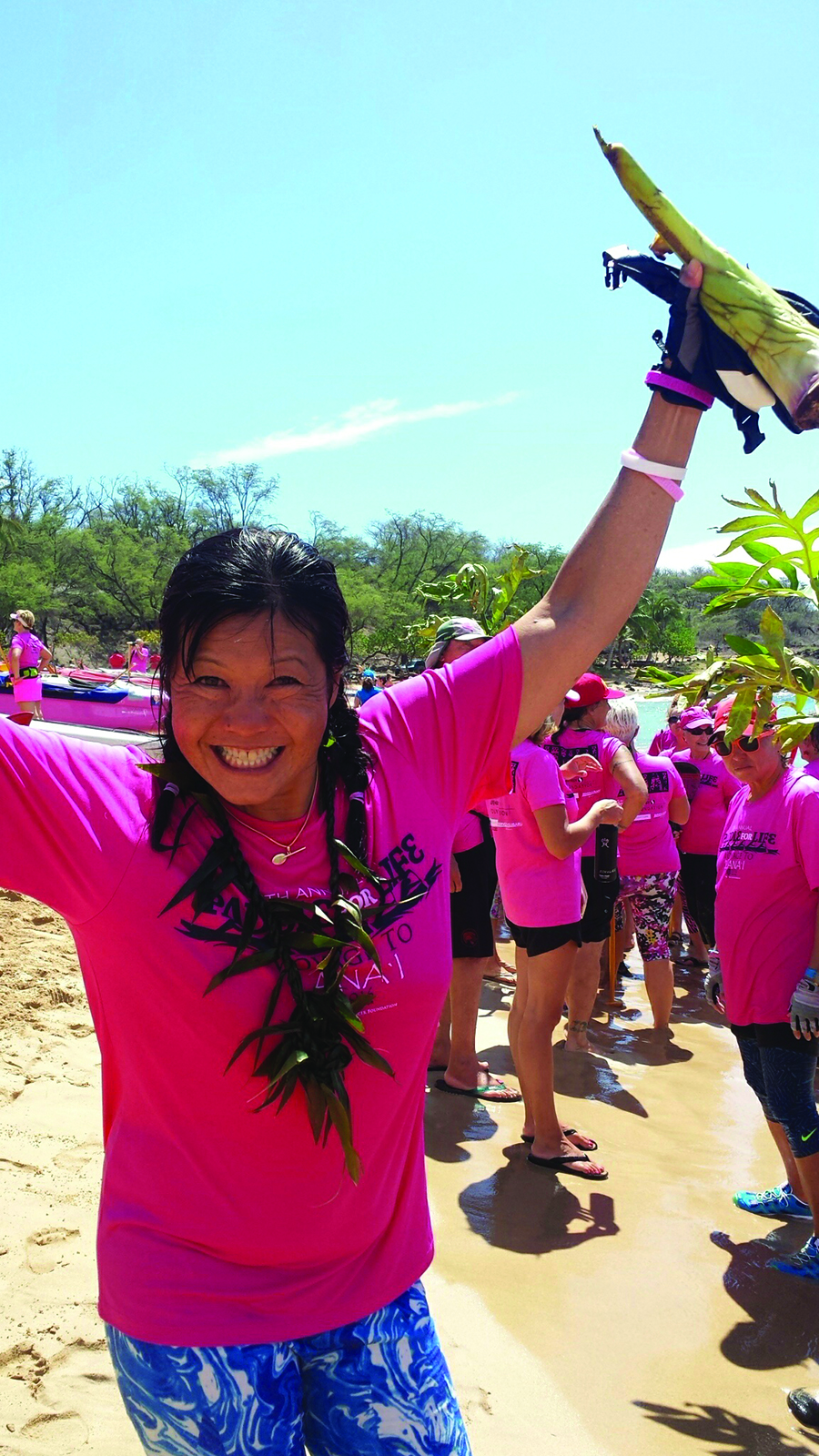
Hope and togetherness for persons affected by cancer is Mana‘olana Pink Paddlers’ (MPP) specialty. Tuesday and Thursday mornings, cancer patients, survivors and supporters pull together, paddling their pink double-hull canoes across the ocean off Kīhei on Maui. Oct. 12 and 13 will be their 10th voyage and overnight on Lāna‘i with The Pacific Cancer Foundation’s Paddle for Life — not a race, but a fun outing (www.paddleforlifemaui.org).
“Mākaukau!” (Ready!) “Imua!” (Forward!) When all 12 paddlers are in sync, the canoe flies. In the last seat, the steersman selects the course; the first seat sets the pace. We paddle with her. After 15 strokes, seat three shouts “Hut!” (Prepare
to paddle on the other side!) and “Hoe!” (Switch!). This works both sides of the body.
This is the first exercise that I tried since my hysterectomy. Mary Dungans, president of MPP, invited me to experience what the nonprofit does for cancer patients and survivors — Wow! — training, an ocean paddle, then a healthy snack and talk story. Half the paddlers are cancer supporters like Mary. Since retiring in 2012, she devotes her skills to MPP.
Says Mary, “We all love life. Alone, we feel weak, but in our big, stable double-hull canoes, 12 easily bear the load. Kīhei morning seas are calm so we can take off safely most days. Paddling is a fun, physical activity that builds both strength and hope. Cancer isolates, but paddling connects.”
She’s right. The peace and freedom of the open ocean heal the spirit. MPP gets you there with aloha and ruthless encouragement — like pink gold. Drive on down to Sugar Beach in Kīhei any Tuesday or Thursday at 7:30 am. Look for the pink paddle. The Mana‘olana Pink Paddlers’ fleet of bright pink double-hulls take off from the north end of the beach and everyone is welcome.
To the Pink Paddlers, life is about moving forward and staying grounded. So, as they say in the canoe, “Imua!”
Enthusiasm and camaraderie! Love these Pink Paddlers who taught me how to paddle and opened up my world. We cut across a flat Ma‘alaea Harbor to see the wreckage of a WWII Hellcat fighter plane. Wow!
Hope and togetherness for persons affected by cancer is Mana‘olana Pink Paddlers’ specialty. On Tuesday and Thursday mornings, cancer patients, survivors and supporters pull together, paddling their pink double-hull canoes across the ocean off Kīhei on Maui. Oct. 12 and 13 will be their 10th voyage and overnight on Lāna‘i with The Pacific Cancer Foundation’s…
Tammy Osurman of West Maui has competed in 10 Nā Wāhine o Ke Kai canoe races — a grueling 42-mile paddle across the treacherous Kaiwi Channel from Moloka‘i to Waikīkī. This “Paddle Bunny” is in the canoe three days a week with the North Shore Renegades. Tammy has paddled in all 10 of the Pacific Cancer Foundation’s Paddle for Life: Voyage to Lāna‘i Events.
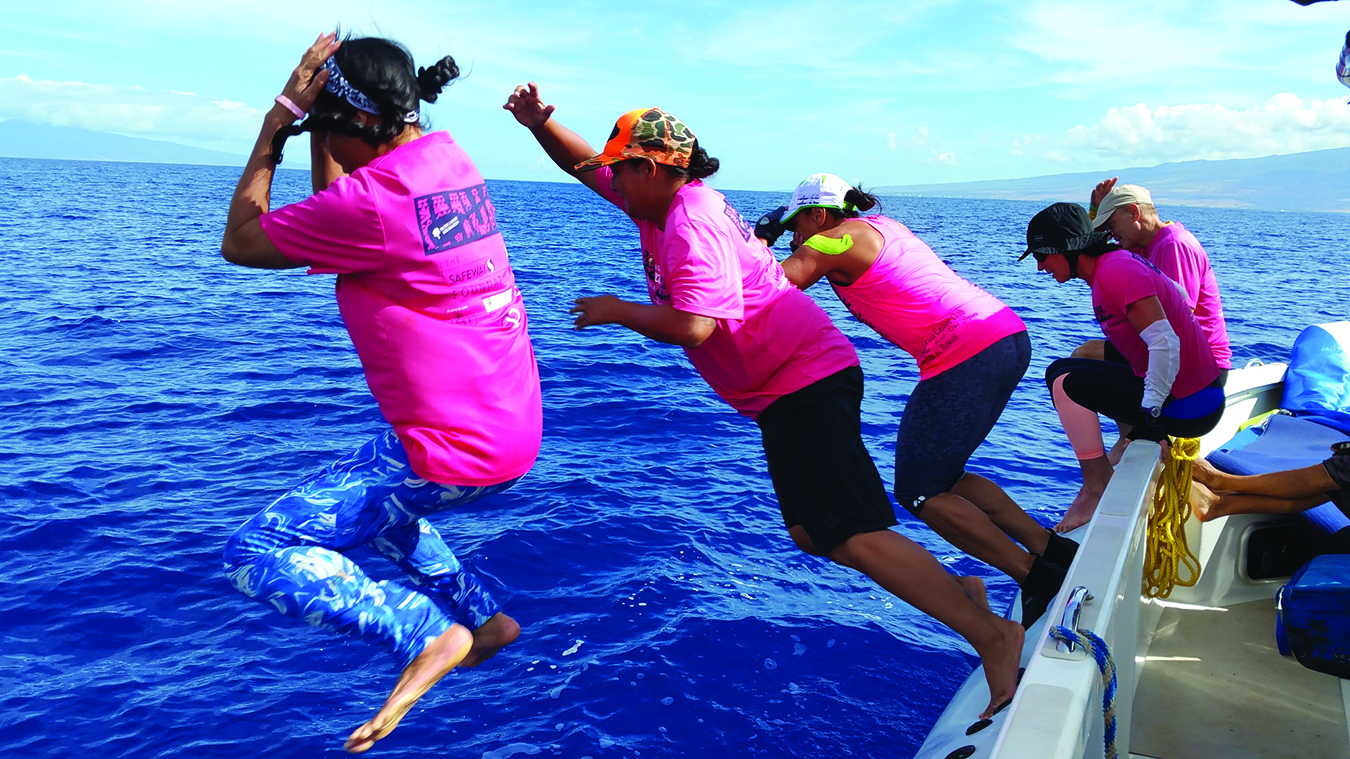
In 2009, Tammy wanted to support Mana‘olana Pink Paddlers when they needed an experienced paddler to help train them for the 68-mile paddle around Lāna‘i. Voyaging canoes rotate three crews — 30 minutes on, 60 minutes off. During a change, a fresh crew from an escort boat is dropped in front of the canoe; in unison, the paddlers jump out on the right and the fresh crew climbs into their seats. Could the Pink Paddlers manage these maneuvers?
“Operations, radiation and chemotherapy treatments weaken body and soul,” says Tammy. “Two Mana‘olana ladies had just completed therapy but were determined to go. But when you cannot lift your arm above your shoulder, how are you going to climb into a canoe or save yourself in a capsize? We needed to encourage them beyond their fears so they could succeed. When they hesitated at their first deep water change, I jumped into the ocean and told them I would catch them. When they could not get up in the canoe, I hung on the side and let them use my body as a step. Chemotherapy is harder than getting in a canoe! They paddled 48 miles on the first day (farther than my longest race) and became my heroes.
“Two months later, I was diagnosed with breast cancer and Pink Paddlers became my supporters. I knew they survived; I knew if they could paddle, so could I!
“The doctor on the voyage told me to wait until I knew what type of cancer I had before researching and telling my family and friends. Every tumor has specific treatment options and outcomes. That was good advice.
“My friends took me on a zip line; my primal screams released anger and pain, and I found the strength to navigate my treatments. PT and Monday night survivor talk-story sessions at PCF prepared me to paddle and race again.
“In 2013, more cancer appeared — more operations, more therapy. I survived again! I cannot make a fist, but I can still paddle! This year, I plan to race 26 miles in the Pailolo Challenge.”
Tammy has advice for us: “Follow your passions; don’t let cancer rob your joy. Take on challenges and be bold! Cry or scream as loud as you can if you want to — it’ll clear your head!”
Tammy, standing center, celebrating on a ride with the Renegades of Maui.
Tammy Osurman of West Maui has competed in 10 Nā Wāhine o Ke Kai canoe races — a grueling 42-mile paddle across the treacherous Kaiwi Channel from Moloka‘i to Waikīkī. This “Paddle Bunny” is in the canoe three days a week with the North Shore Renegades. Tammy has paddled in all 10 of the Pacific…
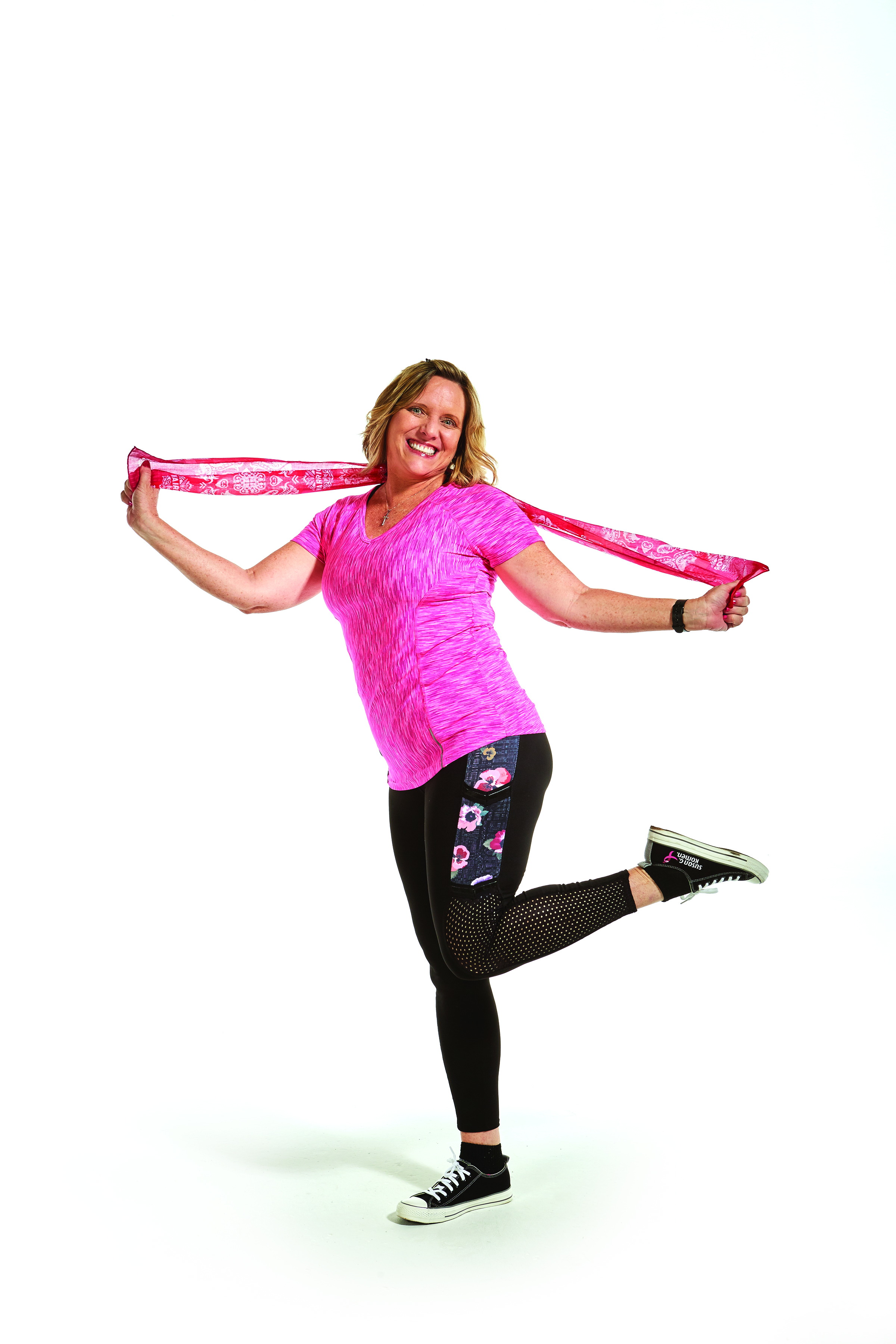
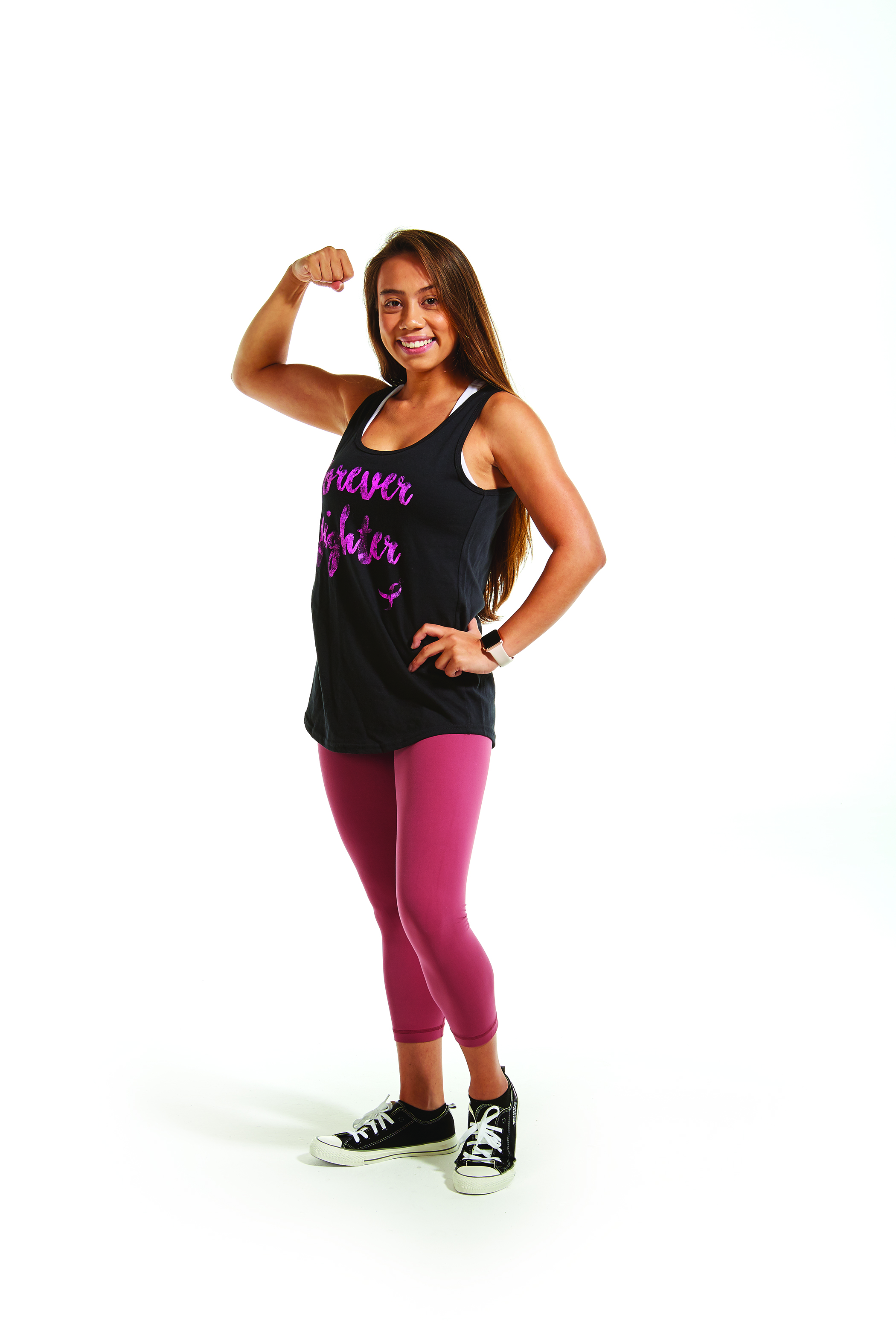
Generations Magazine recognizes Breast Cancer Awareness Month with a resource article about women affected by this disease. Their stories, the education and research that Susan G. Komen Breast Cancer Foundation® provides, and new treatment trends available in Hawai‘i will encourage you to become part of the More Than Pink movement. By 2026, Komen Hawaii® wants to reduce the annual number of breast cancer deaths by 50 percent and we can help. The two most significant risk factors for breast cancer are being female and aging. So, learning about breast cancer detection, treatment, and support options and passing on the information to families and neighbors helps senior women seek diagnosis and rapid treatment.
Susan G. Komen Breast Cancer Foundation in Hawai‘i
Susan G. Komen Breast Cancer Foundation was started in 1987 by Nancy G. Brinker, who promised her sister, Suzy, that she would end breast cancer disease. It grew into a multinational charity that funds more breast cancer research than any other private charity. Our local branch, Komen Hawaii, raises over $200,000 annually, with 75 percent going to local nonprofits and agencies for breast cancer education, diagnostic screening and treatment support services — the rest to national breast cancer research.
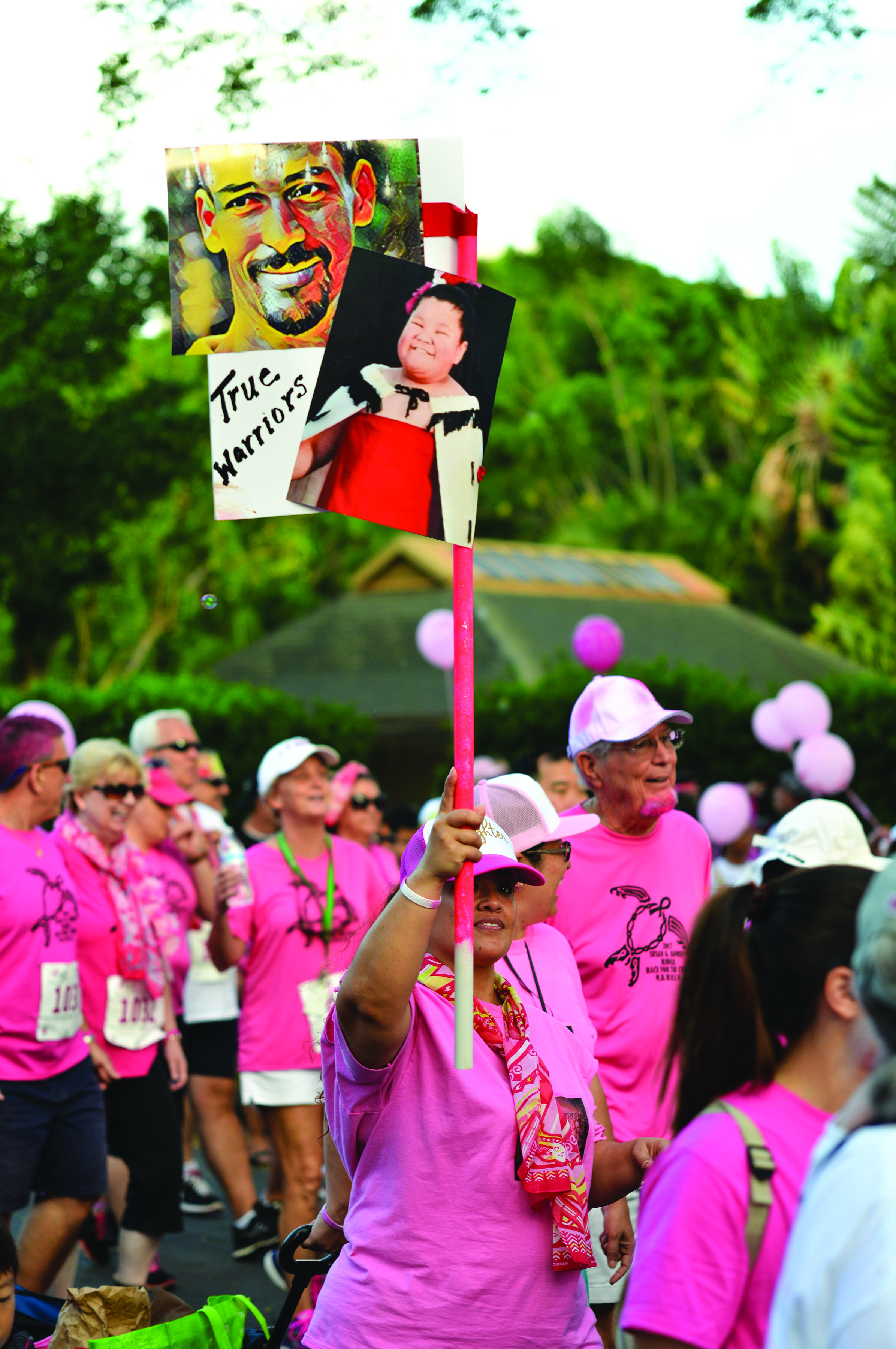
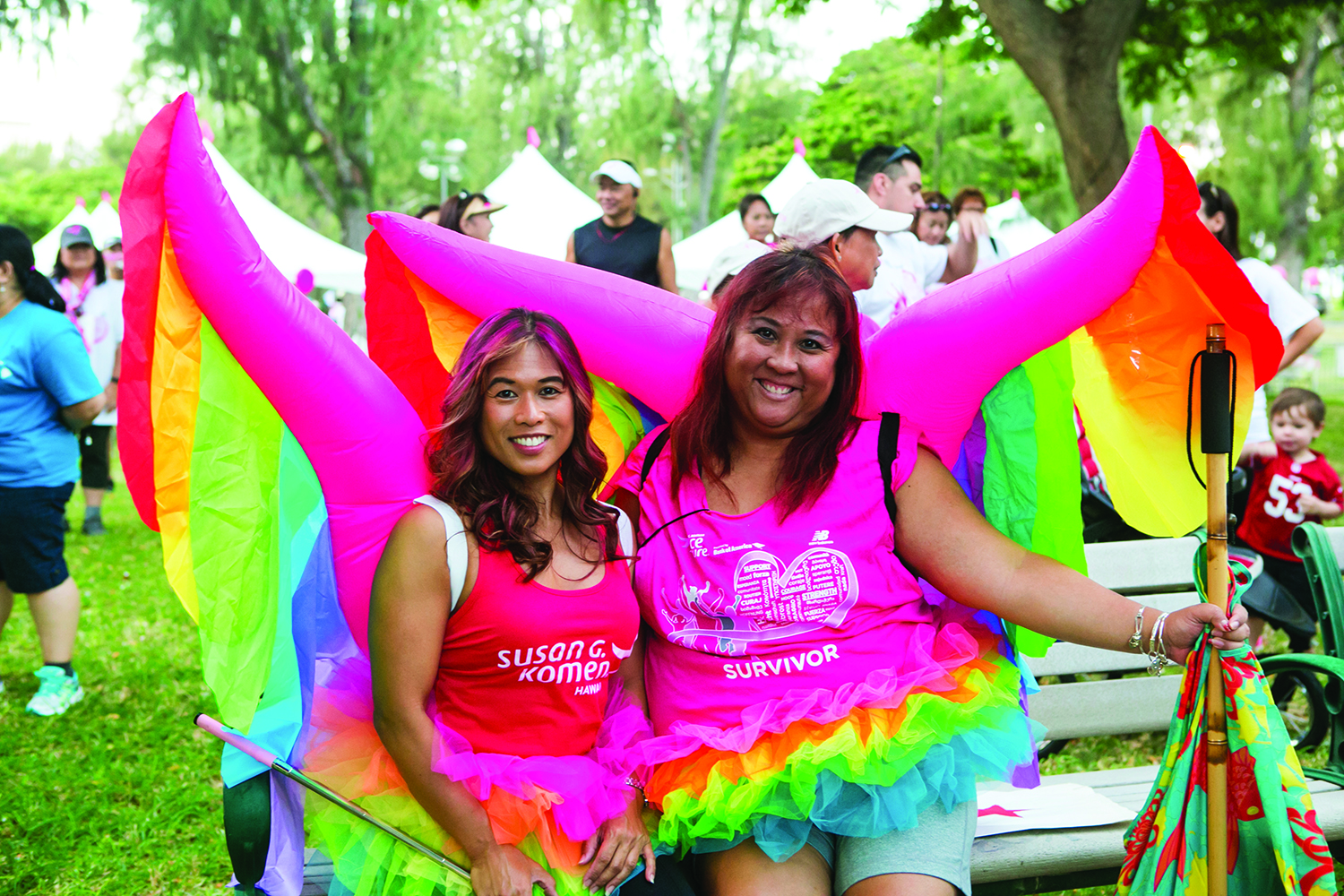
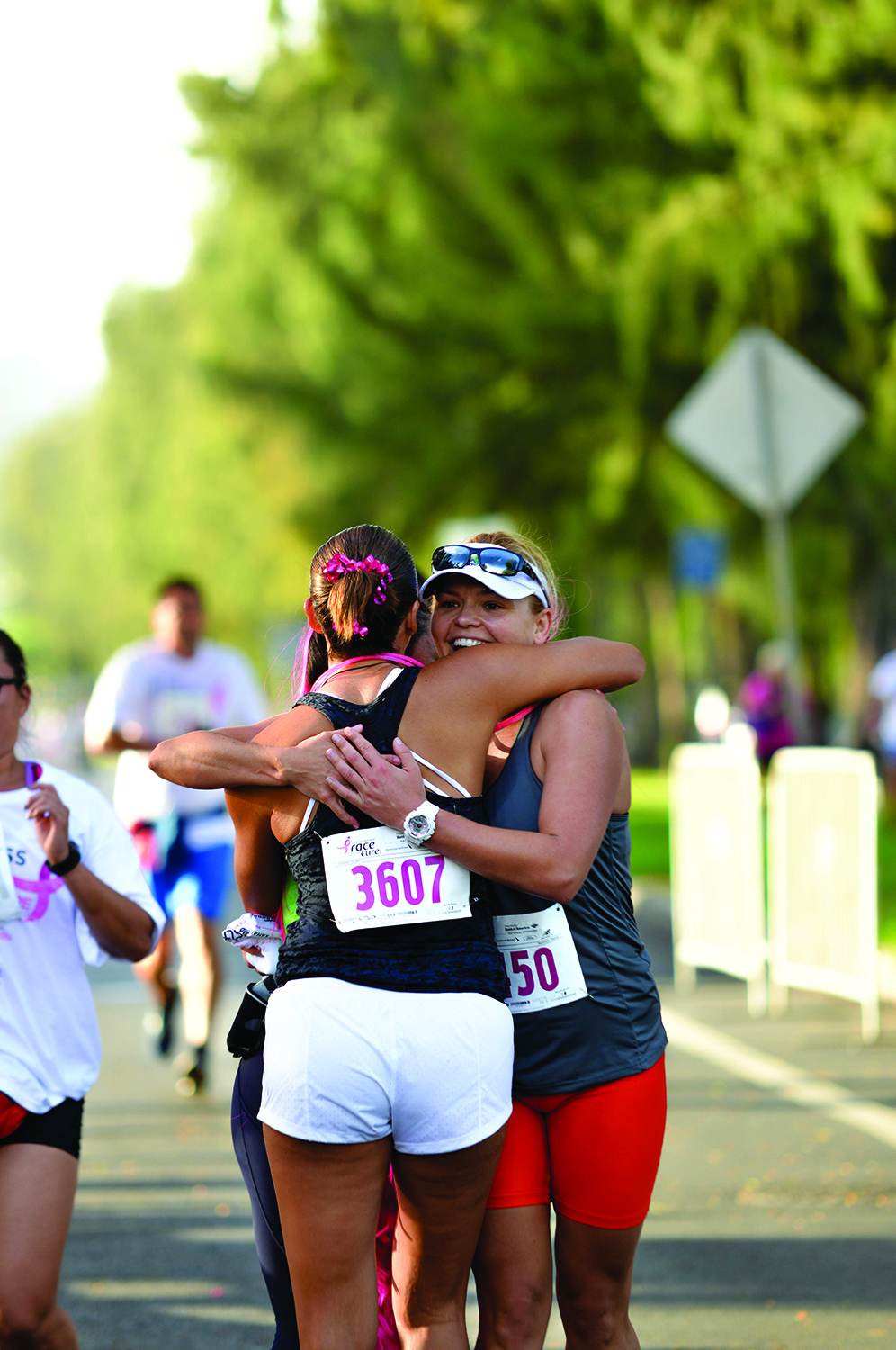
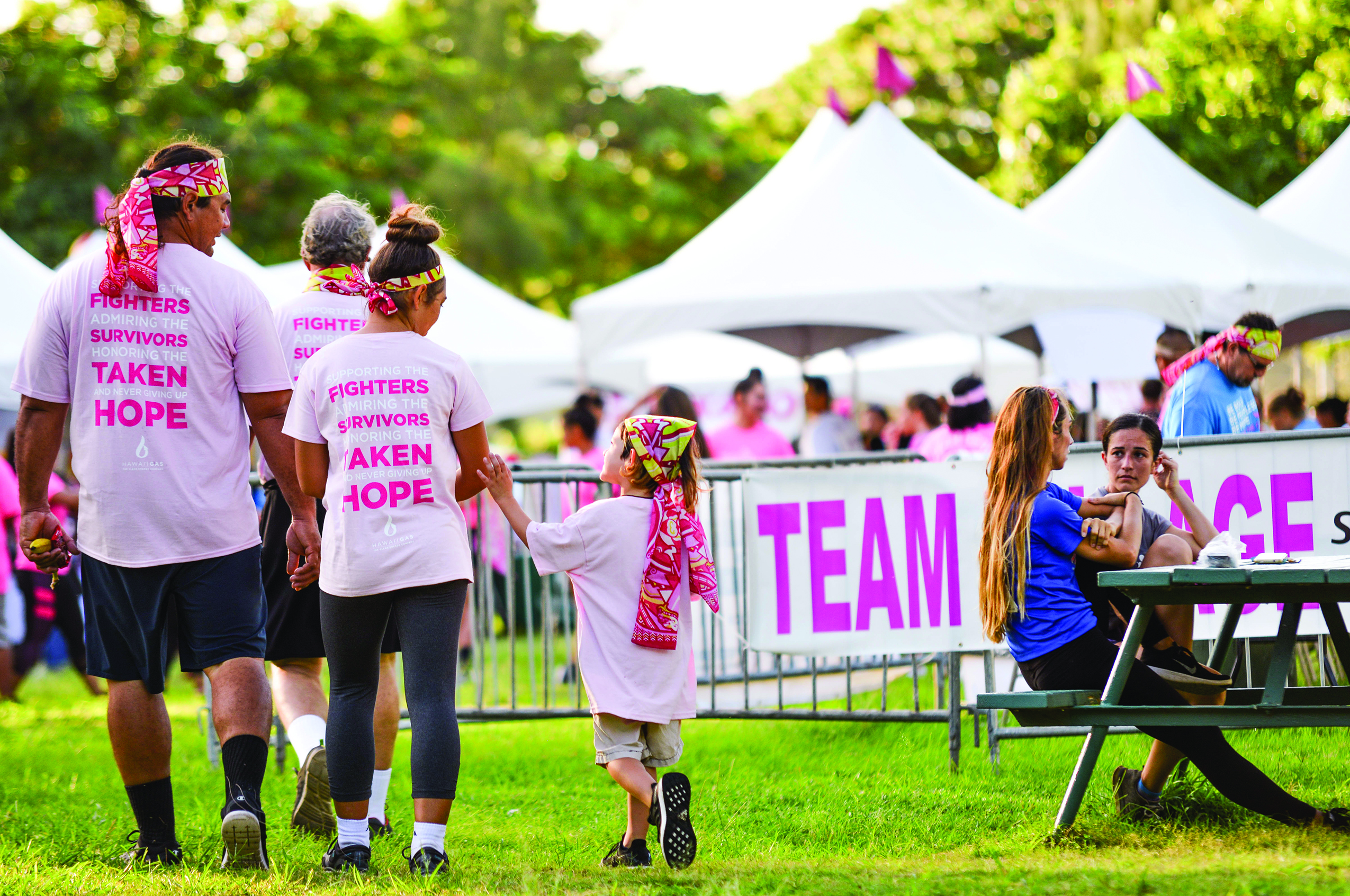
The Komen Hawaii annual fundraising event, Race for the Cure,® is a 5K run and 1-mile walk in Kapi‘olani Park on Sunday, Oct. 13, 2019. Everyone who wants to end this disease can participate, volunteer or make a donation. Coworkers from YMCA classes, Zippy’s morning coffee friends, Thursday mahjong players and church choir members can band together to support a brave cancer patient, survivor or caregiver running or walking. Many teams just raise money. The run is all about sticking together. The slogan “More Than Pink” includes all persons fighting breast cancer —
survivors, meta-thrivers, previvors, men with breast cancer, caregivers and families.
Surviving Breast Cancer is Not for Sissies
The Hawaii Race for the Cure began in 1995, only months after Vivian Murray and her husband noticed a lump in her breast. Two weeks later, she underwent a double mastectomy. Now Vivian is a 25-year cancer-free breast cancer survivor. She was an avid runner and two weeks after her surgery, she wrapped her chest for extra support so she could run a 5K at Kamehameha Schools Kapalama Campus — a race organized to support breast cancer patients.
“Undergoing treatment or helping a loved one affected by breast cancer is a team sport, and Race for the Cure is a great place to connect with others who understand the breast cancer journey.” – Vivian Murray
“There were only a few of us for the first race; we ran through downtown and Chinatown,” says Vivian. “We talked story as we gathered for the survivor group photo. Technically, I didn’t know if I was going to survive, but I was glad I participated because I met another woman who was a 20-year survivor and she gave me hope. Somehow, I encouraged others, as well. The next year, we ran at Kapi‘olani Park. Each year, it brings us together in a happy, healthy environment where we can hang out with others who understand. Really, only other cancer patients can appreciate what you have gone through.”
“My neighbor reached out, too, suggesting which clothes were easy to get on and off while chest muscles were healing, and how to a golf club for support when getting out of bed so as not to put pressure on the surgical area,” says Vivian.
“She even opened her shirt to show me her chest and the kind of healing I could expect. For years, my husband had trouble looking at my scars, but he assured me that he married the ‘whole package.’ Not all women are so fortunate; some suffer divorce after their operation.”
Vivian saw that Komen Hawaii needed more help, so she and a coworker from Kamehameha Schools volunteered to work the event. Komen Hawaii’s strict cost control practices impressed her to expand her commitment for the next eight years — first as race director and later as chair.
“They pinch pennies to get as much money as possible to those helping breast cancer patients,” says Vivian. “Even since I stepped down, I still run the 5K. Not all participants run or walk; some just come to cheer on others. We even have a
Hiamoe Division that allows you to sleep in. So long as you pay the fee, we send you your T-shirt!
“Undergoing treatment or helping a loved one affected by breast cancer is a team sport,” says Vivian. “And Race for the Cure is a great place to connect with others who understand the breast cancer journey — men, women and caregivers all. It can be a happy break from your treatment schedule. Together we make a difference.”
A difference, indeed! In 2017-18, Komen Hawaii issued over $200,000 in local grants to Castle Medical Center, Kalihi-Pa¯lama Health Center, Kokua Kalihi Valley Comprehensive Services, La¯na‘i Community Health Center, Maui Memorial Medical Center Foundation and Waimanalo Health Center to fund public breast cancer education, screening and treatment assistance. This year, the University of Hawai‘i Cancer Center received a grant to develop a community awareness campaign to dispel myths about clinical trials for new cancer drugs. The Susan G. Komen Breast Cancer Foundation funds more breast cancer research than any other private institution in the U.S.
8 Warning Signs of Breast Cancer
The Susan G. Komen Breast Cancer Foundation promotes early detection and treatment of breast cancer. It is important to know your normal. If you have any of these signs, see your healthcare provider or visit a hospital clinic.
Lump, hard knot inside the breast or underarm areas
Swelling, warmth, redness or darkening
Change in size or shape
Dimpling or puckering of the skin
Itchy, scaly sore or rash on the nipple
Pulling or stretching in nipple or breast
Nipple discharge that starts suddenly
New pain in one spot that doesn’t go away
“Undergoing treatment or helping a loved one affected by breast cancer is a team sport, and Race for the Cure is a great place to connect with others who understand the breast cancer journey.” – Vivian Murray
“More Than Pink has re-energized me because it focuses the fight against breast cancer on new treatment regimens and new drug research that offers hope.” – Julia Hughes
More Than Pink Supports Meta-Thrivers
In 2019, over 268,000 new cases of invasive breast cancer are expected to be diagnosed in the U.S.
An estimated 42,000 breast cancer patients will die, but some will thrive in a “new normal.”
Julia Hughes was diagnosed with aggressive stage IV metastatic breast cancer. Metastatic tumors shed cells that travel through the lymph system to invade at “distant sites.” Julia lives her new normal by receiving monthly rounds of Kadcyla® ado-trastuzumab emtansine — chemo bound to an antibody that seeks out tumor cells — and the support of her husband, sons and church family.
“In July 2014, after a routine checkup, my OB/ GYN told me to come back in six months,” says Julia. “By then, they identified several areas of stage II breast cancer and started chemo. After six rounds, the tumor evolved to metastatic stage IV. I panicked. My doctor told me to get my affairs in order and look into hospice.
“Six months to live! I was teaching third and fourth grades in ‘Aiea, and my two boys were still in school! I did not want to give up. “This June was my 51st round of Kadcyla — I am alive,” says Julia. “I aim to see my sons graduate from Harvard and UH West O‘ahu. I still have inoperable metastases in my spine, but chemo and God’s grace are keeping them at bay. I don’t call myself a ‘meta-thriver’ because cancer is not who I am — it’s just a part of my new life.”
One week each month, Julia undergoes chemo treatment, followed by a hard week of recovery. The other two weeks, she volunteers at ‘Ohana Christian Church for Adopt-A-Class outreach, which supports six Ewa Beach public schools. She recently served as PTSA president for Campbell School.
Julia works hard to maintain her new normal. You cannot help but be impressed by Julia’s joyful attitude and energy. She recommends Christine Miserandino’s Spoon Theory website (www.ButYouDontLookSick.com). Christine lives with lupus and encourages patients with cancer and chronic disease to ride the waves of energy. On some days, personal hygiene will eat up all your strength. On other days, you will feel strong enough to go to the store. Both days are considered to be successful.
“Cancer rerouted me and robbed me of my plans for my life,” says Julia. “Everyone’s journey is unique and everyone’s ‘cancer story’ is different. If you want to know how I am or how someone with cancer is doing, just ask.”
“I don’t want people to say ‘Why aren’t you done with chemo yet?’ or ‘You’ll be cured soon’ or ‘Try this or try that’ or ‘My aunt died from cancer but you are doing good,’ etc.,” Julia says. “I do want people to offer me grace when I have a hard time continuing a task or try to give more energy than I have. Treat everyone with kindness, not just cancer patients. And yes, I do appreciate when my friends and family just accept me for me. If you have friends living with cancer, I advise you to treat them normally, but understand the deliberate effort they are making to balance their energies just to spend a little time with you.”
Julia says, “Just because I exercise my sense of humor does not change the fact that 24/7, I am vigilant for any change in my disease. Tomorrow is not guaranteed. My dad survived Vietnam and never grumbled. He worked hard and always had a joke for us kids. Like him, I am a happy person and a thinker.”
“A couple of years ago, I did the Race for the Cure walk,” Julia says. “It was fun, but I am not a survivor. I want to be a survivor, but… This year, More Than Pink brings together all breast cancer patients. Our battles are unique and early diagnosis didn’t work for some of us.
“More Than Pink has focuses the fight against breast cancer on new treatment regimens that offer hope,” Julia says. “If you ever question if God is listening, look at how he answered my prayers over four years ago! When I die, I hope He will say, ‘Well done, my faithful servant.’”
New Clinical Trials May Be Your Best Option
“Today’s chemotherapy drugs were used in clinical trials 20 years ago,” says Dr. Jessica Rhea, medical director of the Komen Hawaii Education Committee and director of Clinical Trials at University of Hawai’i Cancer Center. “The standard of care for cancer today is to get into to a clinical trial if one is appropriate for your type of cancer and your medical profile.”
ʻShe and her staff encourage cancer patients and their families to visit www. uhcancercenter.org for the latest information. If you have doubts, click the red video button at the top, right corner of the homepage and watch YouTube videos about five myths that keep us from joining clinical trials. New trials may treat early or late disease stages, rarely use placebos, and are designed for your safety.
New Advancements in Cancer Treatments
Biopsies now include tumor cell marker testing that identifies cancer cell antigens and receptors, targets for immune therapies and tests to monitor treatments. The trend is to customize treatment to increase effectiveness. Chemo combinations or “cocktails” may work better in any stage of breast cancer when combined with new drugs, antibodies and immune modulators like these:
♦ New tyrosine kinase inhibitors weaken cancer cells
♦ PARP inhibitors improve the effectiveness of chemotherapeutics
♦ CDK 4/6 inhibitors interrupt the multiplication of cancer cells
♦ PI3 kinase inhibitors make it harder for tumors to grow
♦ Antibody-targeted chemotherapy delivers chemo drugs directly to tumor cells
♦ New anti-angiogenesis drugs block blood vessel growth in tumors
♦ “Biosimilar” generic-type cancer drugs reduce the cost of therapy
♦ Immune therapeutic agents • New tumor monitoring agents
“Komen Hawaii® creates a space that nurtures all persons affected by breast cancer, no matter how they may identify themselves. We are breast cancer warriors — everyone.” – Anaeliz “Mina” Colon
Previvors Take Action Against Genetic Odds
Anaeliz “Mina” Colon was in high school when her mother, in her early 30s, was diagnosed with breast cancer.
“Genetic testing was very new,” says Mina. “But because my grandma also had breast cancer, the doctors decided to test mom. She was positive for BRCA2, a gene mutation associated with increased risk of developing breast cancer. I wanted to be tested right away, but my parents counseled me to wait.
“The summer after I graduated from college, I met with a genetic counselor and underwent testing. My risk of getting breast cancer was 87 percent, too. I’m a very straight-line thinker, but the emotional reality of carrying my mother’s cancer genes shook me. An intense emotional inner dialogue finally led back to logical thought. I didn’t take action for several weeks, but eventually took the ultimate curative step and had a prophylactic double mastectomy.
“After the breast tissue was removed, the doctor inserted expanders in my chest to receive reconstructive implants,” Mina says. “When the doctor adds fluid to the bag, it swells gradually to stretch the skin and accept the implant. That takes a while, and post-op recovery spans three to four weeks. The experience was emotional, but I could not feel luckier now that I had this option.
“Support systems are of utmost importance with anyone having a mastectomy. My family was an integral part of my experience — mom, dad, grandparents, uncles and aunties. My uncle in Hawai‘i helped me so much by encouraging me to move here.
“With my family’s and my boyfriend’s support, I didn’t care what the rest of the world thought; but the one emotional hurdle was my disappointment that I would not be able to breastfeed my children,” says Mina. “Mom and Dad raised me always to put logic first, but I still needed support from others who actually had gone through the same procedure. I wanted to talk with women my age who had preventative cancer surgery — about body image, having sex with my boyfriend, freezing my eggs, etc.
“My need to interact led me to start my own website — www.ThisIsMySelfie.com. It worked. Followers meet in person once a month. We meet people with similar experiences and want to find others who understand — we are siloed together.
“My journey is not over; I had a scare this year. And some days, I hold a ‘Why me?’ pity party. The biggest difficulty with knowing you carry breast cancer genes is the hard decision to go ‘all in.’ Faith was not a part of my journey; my family gave me confidence and support and helped me come to peace within.
“Being a previvor can be lonely. I don’t bring it up much with other breast cancer patients — maybe it’s the ‘guilt’ of knowing others are dying. I can’t feel sorry for myself when others are going through massive treatments. I think the best rule in the breast cancer community is never to compare stories.
“The uniqueness of every person affected by breast cancer is why Komen Hawaii is so vital,” says Mina. “They create a space that nurtures all persons affected by breast cancer, no matter how they may identify themselves. We are breast cancer warriors — everyone.”
Celebrate Breast Cancer month by updating your knowledge about breast cancer signs and treatments. Volunteer or make a donation to support the More Than Pink fight against breast cancer and encourage your friends and family members who are fighting this disease to participate in the Race for the Cure. Come out with your grandchildren to support the cause. We can make a difference.
Komen Hawaii funds education, treatment assistance and connections for all who are affected by breast cancer — supporters, caregivers, survivors, metathrivers, women of all ages and men with breast cancer.
Komen also offers financial assistance to under-insured and low-income breast cancer patients to help with the cost of treatments and prescription medications. They advocate for breast cancer patients on a national level and seek to reduce deaths by 50 percent by 2026.
Besides tumor markers and new drugs, mutated genes have been discovered that predispose women to develop breast cancer. These genes are passed down, accounting for cancer clusters within families. Now, genetic counseling is available to young women with parents and grandparents who fought breast cancer. Genes associated with breast cancer are BRAC1, BRAC2, CHEK2, ATM, PALB2, BARD1, RAD51D and MSH6.
Race For the Cure Hawai‘i – Sunday, Oct. 13, 2019
Visit www.komenhawaii.org to donate, register as an individual, join a team, start or re-form your own team.
Race Day Schedule
4:30am – Shuttle run from Parking Area
10:30am & back from Kapi‘olani Park
—————————
5–6am Race Registration & Packet Pick-up
6am Welcome / Group Warm-up
7am RACE START (5K run/walk)
7:15am RACE START (one mile fun walk)
7:45am Stage Program Begins; Entertainment, Expo, Awards Ceremony, Giveaways, later in the morning, Survivor Photo
Generations Magazine recognizes Breast Cancer Awareness Month with a resource article about women affected by this disease. Their stories, the education and research that Susan G. Komen Breast Cancer Foundation® provides, and new treatment trends available in Hawai‘i will encourage you to become part of the More Than Pink movement.
You see the term “active aging” quite frequently, but what does it mean? Active aging is a term describing people and populations who live life as fully as possible. Particularly, they live within the seven dimensions of wellness — emotional, vocational, physical, spiritual, intellectual, social and environmental. These dimensions of wellness overlap. Active aging encourages everyone in a community to engage in active living, regardless of their age, health or socioeconomic status. The concept of active aging can be summed up in the phrase “staying engaged in life”— essentially, tapping into our human potential throughout our lifespan. Wellness is the foundation of active aging. It involves shifting the mindset that aging involves managing disease to one of disease prevention and proactive strategies.
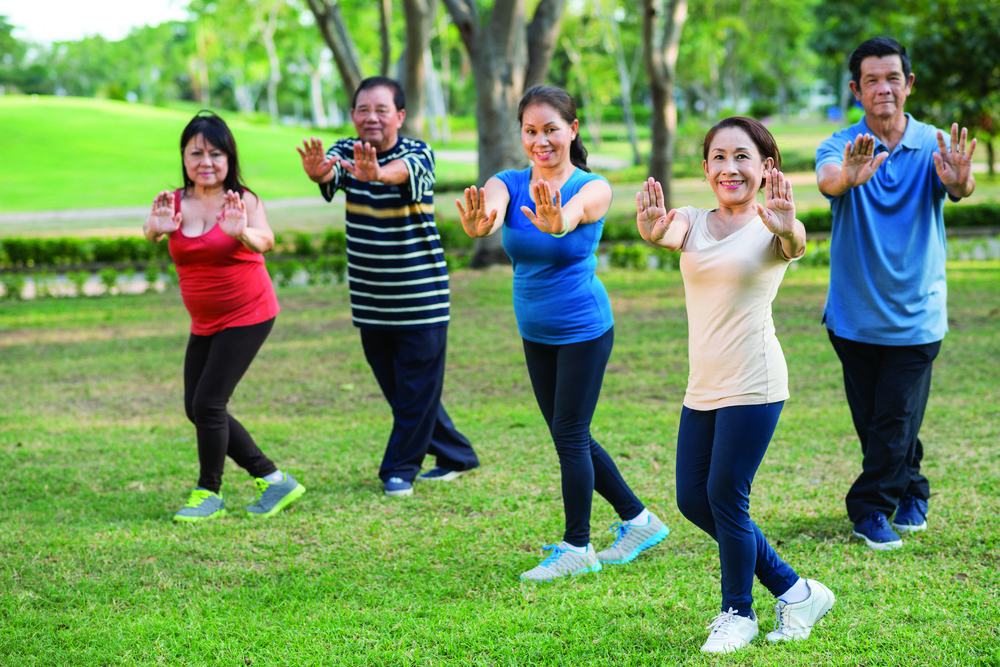
Wellness becomes a valuable framework to serve the needs of a person engaged in life and provides rich environments for living. You’ll find many active aging programs in Hawai‘i. Activities such as tai chi are a good example of overlapping wellness dimensions, including physical, social, spiritual and intellectual aspects. A ‘ukulele class is another good example. Seek out activities that keep you engaged and to continue living your rich, full life!
You see the term “active aging” quite frequently, but what does it mean? Active aging is a term describing people and populations who live life as fully as possible. Particularly, they live within the seven dimensions of wellness — emotional, vocational, physical, spiritual, intellectual, social and environmental.
Like cilantro, beets are one of those foods that spark strong feelings. Whether you think they taste like dirt or you love their earthy sweetness, most people know that beets are healthy — and now there is science to back that up.
Recent studies show beets are high in nitric oxide, which helps to naturally dilate our blood vessels, increasing blood flow and circulation. Other things high in nitric oxides are dark, leafy greens, garlic and walnuts. Nitric oxide isn’t the only benefit of beets, the brightly colored bulbs are also high in antioxidants, potassium, fiber and vitamin C.
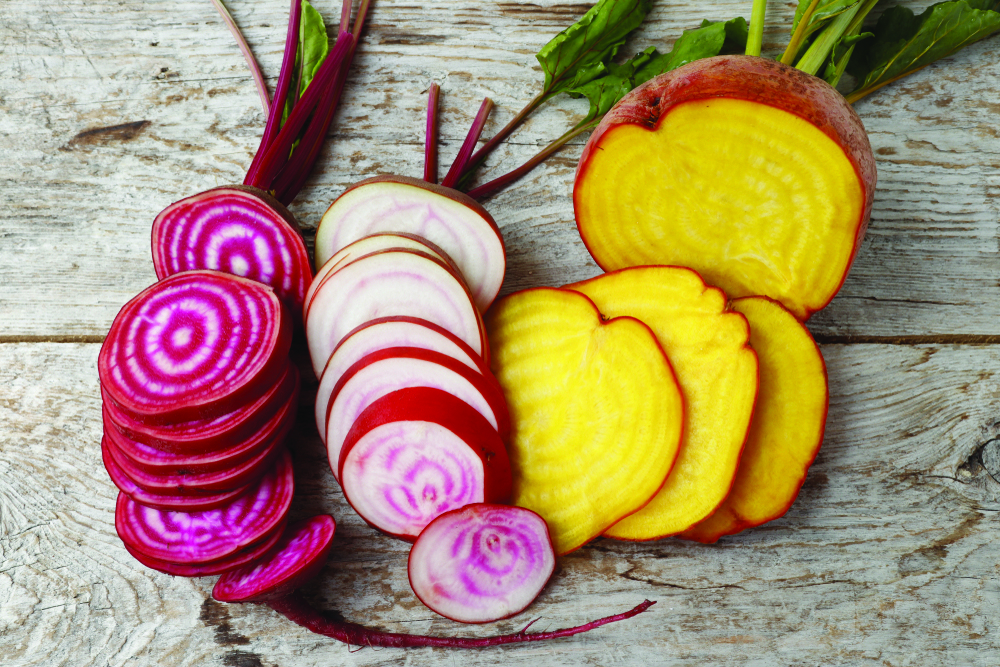
Beets come in a delightful variety of colors (red, white and yellow) and are remarkably versatile. Not only can they be eaten raw, juiced, pickled or roasted, they are also an excellent addition in sandwiches, salads, pasta, hummus — and even as a secret sweet ingredient in vegan cupcakes!
The possibilities are endless! Here’s an easy and delicious recipe to try at home:
GINGER BALSAMIC BEETS
Ingredients:
6–8 small/medium whole beets
1 tsp. olive or coconut oil
1–2 Tbsp. grated ginger
2 Tbsp balsamic vinegar
(to taste) salt/pepper
Directions:
Preheat oven to 400 degrees. Scrub each beet and wrap them in foil or parchment paper. There’s no need to peel them.
Roast for about 30 to 45 minutes, depending on how big they are. The beets are done when a knife goes through them easily.
When they have cooled down, push down on the foil or parchment paper and the skin will come right off. It will stain your skin and your clothes, so be careful.
Heat oil over medium-low temperature. Add ginger and cook one or two minutes. Keep the heat low so it doesn’t burn. Add the beets and cook two or three minutes. Add balsamic vinegar and cook another minute or so until it turns into a light glaze. Salt and pepper to taste — and enjoy!
Three varieties of beetsBeet HummusJuiced beets
Like cilantro, beets are one of those foods that spark strong feelings. Whether you think they taste like dirt or you love their earthy sweetness, most people know that beets are healthy — and now there is science to back that up.
When a dear friend got dizzy and fell, she agreed to go to the ER. We tried to help her, but we couldn’t find her insurance card, primary doctor’s name or her spare house keys.
If something happens and you are in need of help, will your family and friends be fumbling at a time when every minute counts?
Do they know where you keep your keys, computer passwords, bank account numbers, meds, medical directives, will and estate plan?
It is critical for baby boomers to gather their documents into one file and let trusted family and friends know the location of this important information. Caregivers can be more effective when they know what you want and have the power to carry out your wishes.
Too many times, I have witnessed frustration, sadness, loneliness and depression when clueless but well-intentioned families misinterpret their loved ones’ wishes and needs because they were not made clear in advance.
Ensure they know your plans by organizing your important documents and let someone know about them for the benefit of all concerned.
LIVING AND CARING MĀNOA
Adult Residential Care Homes (ARCH) since 2001
Call for a complimentary tour:
Todd Pang, Sr. VP | 808-779-8871
If something happens and you are in need of help, will your family and friends be fumbling at a time when every minute counts? Do they know where you keep your keys, computer passwords, bank account numbers, meds, medical directives, will and estate plan?
When someone says the word “preschool,” you might think of drop-off centers, where dozens of children are offloaded to bustling classrooms with strictly scheduled snack times, naps and play. Such an image couldn’t be farther from reality with Partners in Development Foundation’s Tūtū and Me Traveling Preschool.
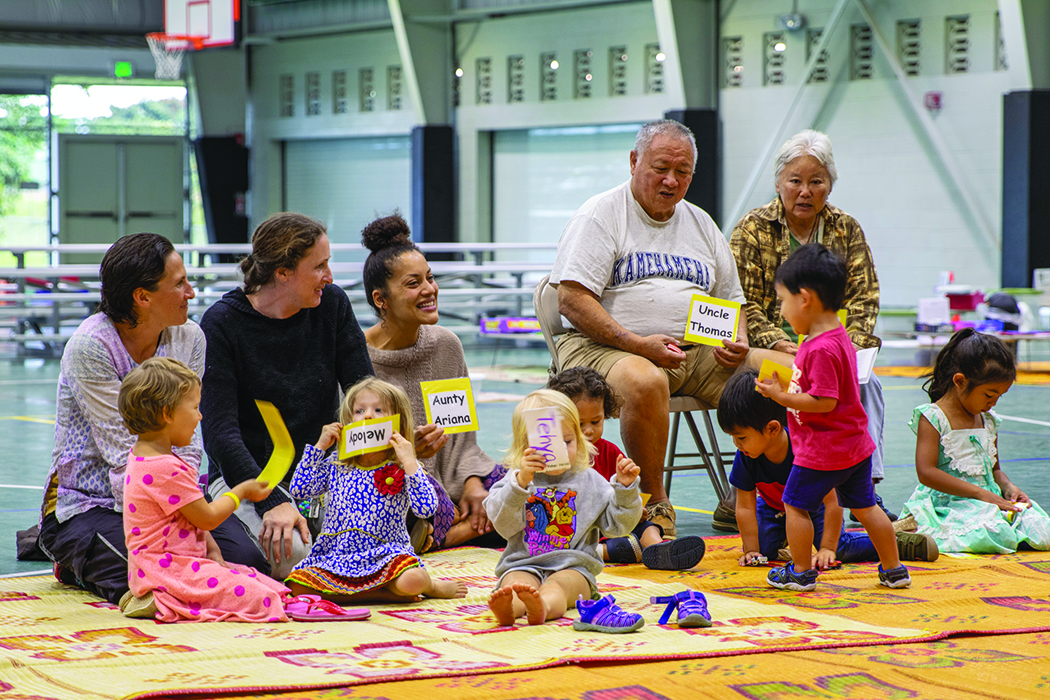
Since 2002, the Tūtū and Me Traveling Preschool program has helped families across the Hawaiian Islands prepare their keiki for school success. It’s a program for children up to 5 years old, and requires parents and caregivers to attend with their keiki. Tūtū and Me equips caregivers with knowledge and resources, and provides opportunities to actively participate in a multi-generational set of activities with their keiki.
“The Tūtū and Me Traveling Preschool was created specifically to meet the early education needs of Hawaiian extended and multi-generational families,” says Jan E. Hanohano Dill, the president and founder of Partners in Development Foundation (PIDF). He illustrates how in families such as these, the kūpuna, or elders, are usually tasked with the care of younger children.
This presence and influence of elders on young children is vitally important, but often, kūpuna may not be prepared to fulfill the needs of young keiki. Through its two-generational approach, Tūtū and Me imparts the skill sets necessary to guide early childhood development. Each Tūtū learns techniques that help develop their grandchild’s cognitive, motor and executive skills.
“I’m grateful for Tūtū and Me because it’s a good curriculum,” says Yvonne Martinez, a Tūtū at the Pāhoa site in East Hawai‘i Island. “It’s a balance of art and science, we celebrate birthdays and they have a lot of singing, and it teaches the children to all get along together. It’s good diversity. It’s an extraordinarily wonderful program.”
Over the years, Tūtū and Me has worked with thousands of families, equipping kūpuna to be a child’s first and best teacher. This model has also been applied at over 100 YMCAs on the mainland and even overseas in the East African country of Tanzania, serving as the basis for the First Teacher Group initiative of global development organization Project Concern International (PCI).
Jessica Samura and her ‘ohana were part of Tūtū and Me for the last four years. She says that the traveling preschool program has helped both her kids with their confidence, social skills and preschool skills. Jessica also describes the opportunities she had to meet with other parents and grandparents as highlights of the program. She says the adults are able to discuss, share with and advise one another on early childhood parenting life.
When someone says the word “preschool,” you might think of drop-off centers, where dozens of children are offloaded to bustling classrooms with strictly scheduled snack times, naps and play. Such an image couldn’t be farther from reality with Partners in Development Foundation’s Tūtū and Me Traveling Preschool.
For the past few months, I have been introducing you to the concept of working in new ways beyond the old, familiar routine of working a regular, full-time job in an office.
Now, many ask how to optimize their independence from the old, familiar world of work. How are they doing good, making money, overcoming feelings of isolation and having a healthy lifestyle?
Let’s begin a new journey by addressing freelancing — i.e., working for yourself.
The Freelancers Union predicts that over 50% of the U.S. population will be freelancing full-time in 10 years.
Today that number hovers over 30%
What started out as “gigs” has become the preferred way of working for many — and if ever there was a perfect landing spot for a prepared mature workforce, freelancing is it.
What I have been repeatedly asked is: “Does freelancing confine you to working from home?” The answer is no.
Option 1: Collaborative Workspaces
Have you heard of it? This is the fastest emerging way of how, why and where to work. There are now a couple of dozen shared office spaces throughout the islands. While I have not visited all these shared spaces, I am very familiar with two in Honolulu. Box Jelly is a co-working space that offers monthly memberships as well as meeting and event space for members and non-members alike. The Impact Hub near the Whole Foods main downtown store is handy and the parking is easy. Both offer a Wi-Fi connection and a collaborative atmosphere where people share ideas and knowledge. Thus, the need for collaboration and social interaction are met.
Option 2: On-Location
While we like working from home some of the time, half of us spend some work time in our clients’ offices. We bond with full-time teams. We integrate into several of the daily experiences others share. But we get a break from the daily grind, and often, this break is just what we need — especially at traffic time on a highway anywhere in Hawai‘i.
Option 3: Off-Location
Quite frankly, working anywhere is possible. Have you been to your favorite coffee shop lately? Look around. Or worked at the corner library? Come on; you’re only limited by the past. This is now. Define your time and space.
For the past few months, I have been introducing you to the concept of working in new ways beyond the old, familiar routine of working a regular, full-time job in an office. Now, many ask how to optimize their independence from the old, familiar world of work. How are they doing good, making money, overcoming…
Punchbowl was once used as a lookout for Hawaiian warriors. Now, it’s one of only two national memorial cemeteries in the USA — the other is Arlington, Virginia. It is the final resting place for those that have courageously served in the U.S. Armed Forces.
For the 14th year, the 100th Infantry Battalion Club 100 members invite the public to help decorate 1,000 heroes’ graves with flowers Saturday, Sept. 28, from 8 to 11am.
Then on Sunday, Sept. 29, from 9:30 to 10:30 am, the public is also invited for a joint memorial service in honor of our Nisei soldiers of World War II, including the 100th Battalion (Purple Heart Battalion), the 442nd (Go For Broke Battalion), Regimental Combat Team, the Military Intelligence Service (MIS) and the 1399 Engineer and Construction Battalion.
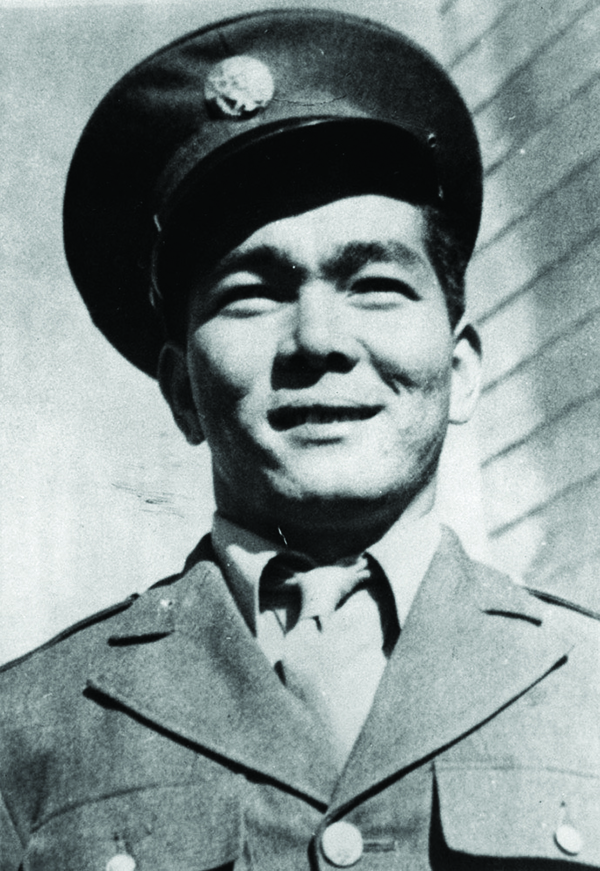
Sgt. Shigeo “Joe” Takata
Why Sept. 28? It was on this date Sgt. Shigeo “Joe” Takata was hit by shrapnel and fought death long enough to point out the location of the enemy. He was the first combat casualty for the 100th Battalion and will be honored.
Parking is free and open to the public, except for the reserved spaces on Mall Drive. This memorial event is sponsored by the Nisei Veterans Legacy; its mission is to preserve, perpetuate and share the legacy of these Nisei soldiers
Punchbowl was once used as a lookout for Hawaiian warriors. Now, it’s one of only two national memorial cemeteries in the USA — the other is Arlington, Virginia. It is the final resting place for those that have courageously served in the U.S. Armed Forces. For the 14th year, the 100th Infantry Battalion Club 100…
Gov. David Ige proclaimed May as Older American’s Month this year. Every May, the Administration for Community Living leads our nation in observance of Older Americans Month. The 2019 theme, “Connect, Create, Contribute,” encourages older adults and their communities to:
Connect with friends, family and services that support participation.
Create by engaging in activities that promote learning, health, and personal enrichment.
Contribute time, talent and life experience to benefit others.
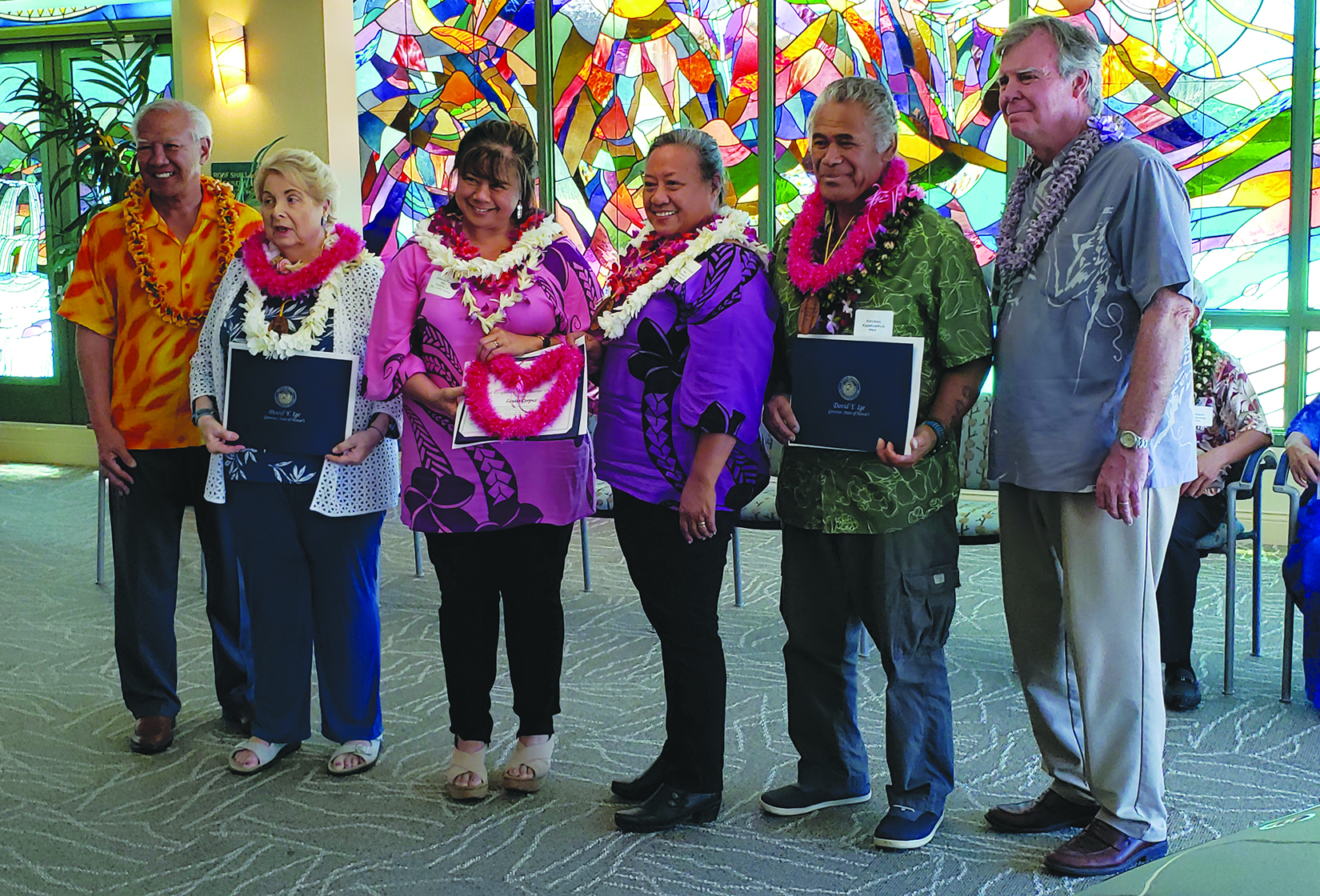
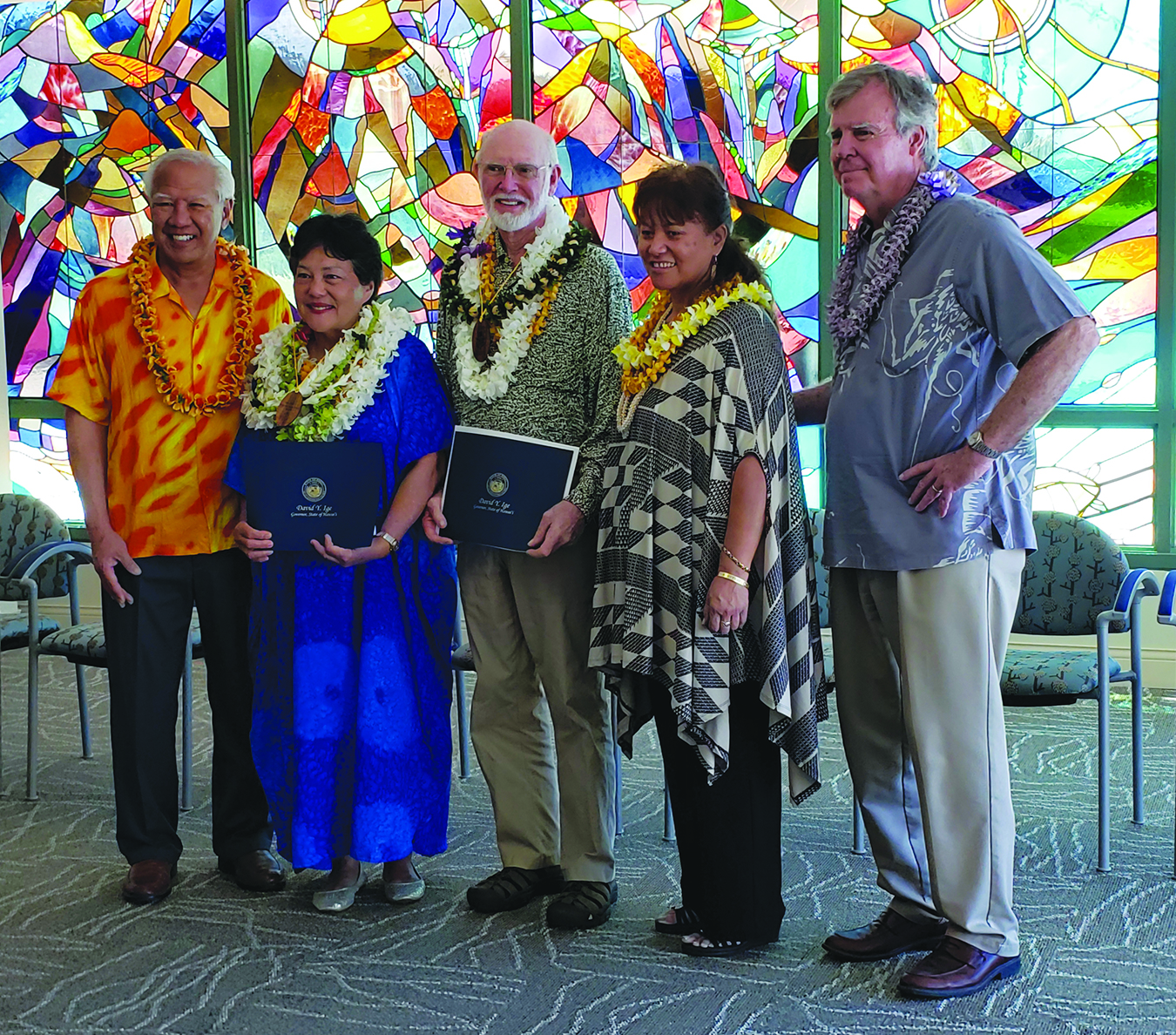
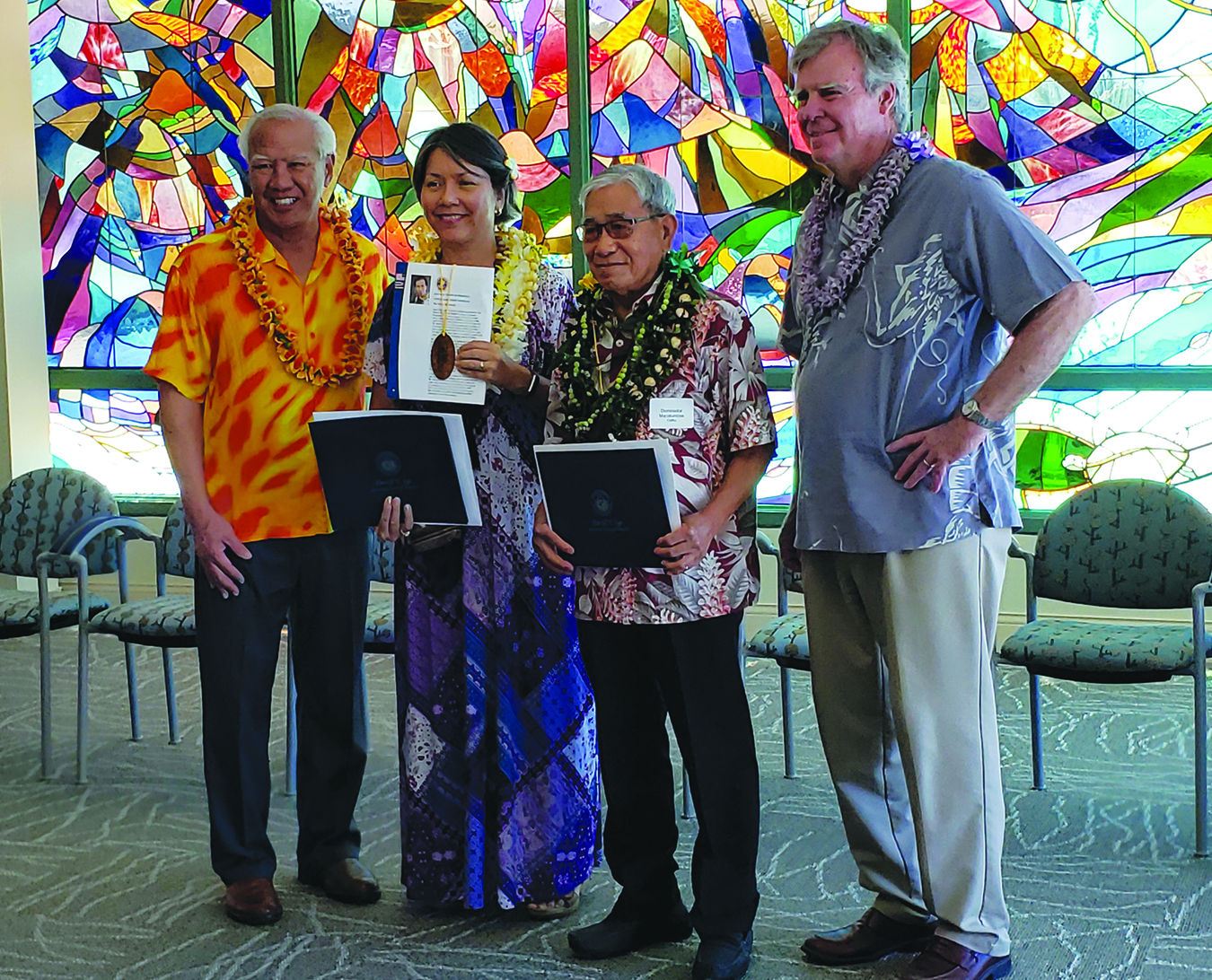
The Hawai‘i Outstanding Older Americans Awards Ceremony was held on June 7. Family and friends from across the state gathered for the awards ceremony and luncheon generously served by the staff at 15 Craigside Retirement Home, part of the Arcadia Family of Companies.
As each honoree was introduced, they were presented with a special lei, an engraved medallion and a certificate from the governor. As their biographies were read, attendees were reminded of how much older Americans really do contribute to our society. These honorees were well deserving of these awards and Generations Magazine congratulates them for their accomplishments.
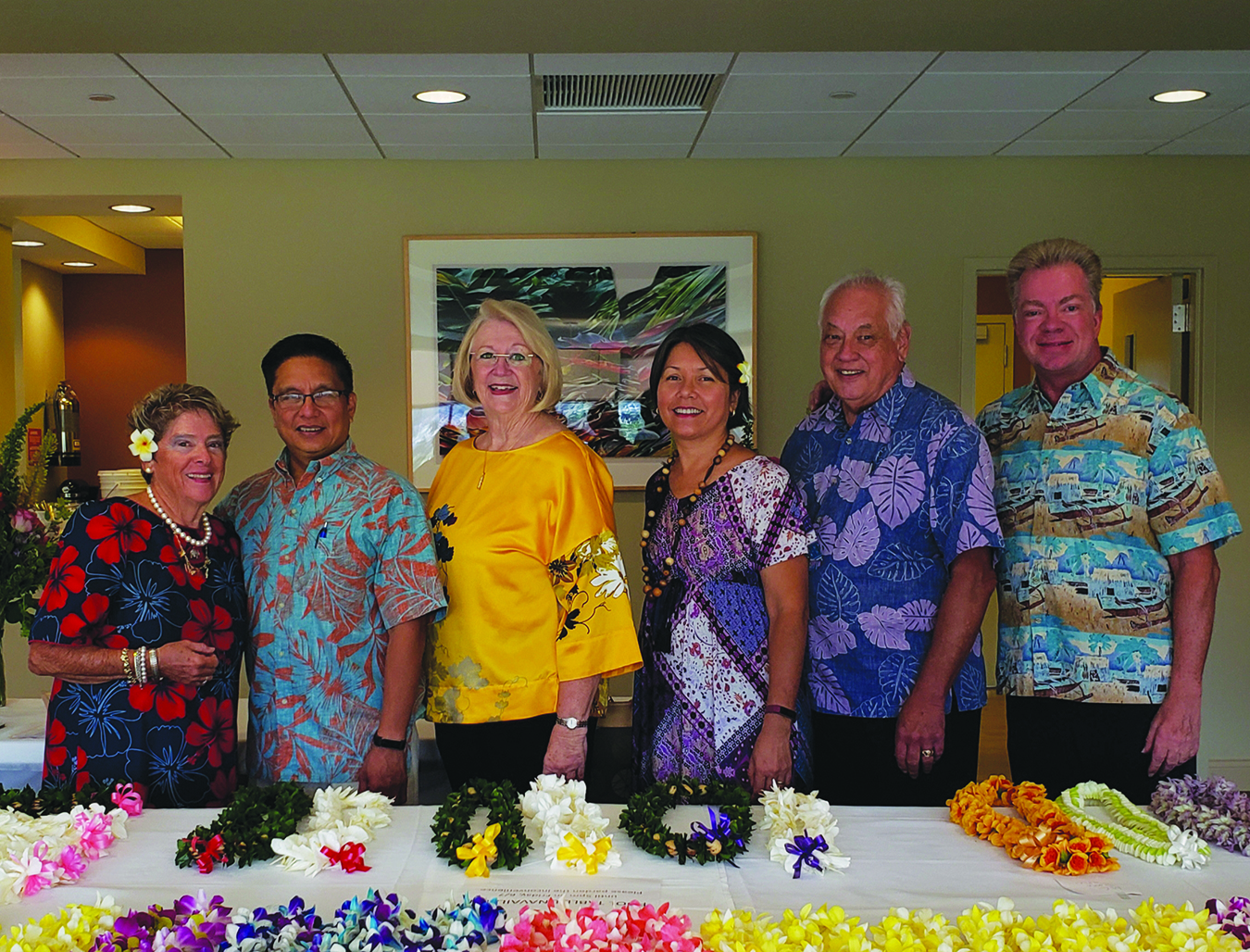
(L–R) Rep. Gregg Takayama; Maui County awardees Dorothy Tolliver; Juliana Patao and Christina Eckhart, the daughters of Mrs. Louise Corpuz (deceased); and Kimokeo Kapahulehua.(L–R) Rep. Gregg Takayama; Kaua‘i County awardees Jean M. Dobashi; Neil F. Brosnahan; Kealoha Takahashi, Kaua‘i EOA; and Dr. Bruce Anderson, DOH.(L–R) Adele Rugg, Lenny Fabro, Kathy Wyatt, Wanda Anae-Onishi, Jim Cisler and John McDermott.Hawai‘i County awardees Lora Akase-Nagle and James Waddington.O‘ahu County awardees Mary Miyawaki, received by Wanda Anae-Onishi, O‘ahu EOA; Dominador Macatumbas.
Gov. David Ige proclaimed May as Older American’s Month this year. Every May, the Administration for Community Living leads our nation in observance of Older Americans Month. The 2019 theme, “Connect, Create, Contribute.”

 Weekend warriors often develop shoulder discomfort when performing overhead movements while playing tennis, baseball or tackling DIY projects around the house. The longer you suffer, the more damage can occur. Here are simple tips to relieve some symptoms: