Category: Articles

  • Smart Charitable Giving

    The people of Hawai‘i are generous with public charities. On the other hand, most of us do not have money to burn. The following are some good ideas about choosing where and how to give.

    ♦ DO YOUR HOMEWORK – The good works that charities do often overlap, and some charities are more effective than others. Websites like charitynavigator.org and charitywatch.org can help you compare established charities to find out, for example, how much of your gift will go to charitable work versus administrative and fundraising overhead. While it costs money to run a charity and it also costs money to raise money, if expenses exceed 25-percent of a charity’s revenue, ask why. If the charity cannot give you a good answer, you should consider giving elsewhere.

    ♦ DON’T SELL AN APPRECIATED ASSET TO MAKE A CASH – GIFT If you own Apple stock that you bought in 2000 for $2 per share, don’t sell it now at $200 per share to raise the cash to make a charitable gift. Although you will get a deduction for your cash gift, you will also be liable for capital gains tax on the difference between the $200 sale price of the stock and the $2 purchase price. You will have less after-tax cash to give the charity and your deduction will be limited to the amount of your gift. Instead, make a bigger gift and get a bigger deduction by giving the stock to the charity. The charity can then sell the stock without having to pay capital gains tax and you will get a deduction for the full fair market value of the stock at the time of the gift.

    MAKE GIFTS FROM YOUR IRAs – If you make your loved ones the beneficiaries of your traditional IRAs after you die, they may have to pay income tax on most of what they receive. However, if you make charities your beneficiaries, there will be no income tax. So to the extent you can, name charities as beneficiaries of your retirement plans and use your non-taxable assets for making gifts to loved ones.
    If you have begun taking required minimum distributions (RMDs) from your traditional IRA, you can give up to $100,000 of your annual RMD to charity. Although these gifts are not deductible, you will end up paying less tax because the gifted portion of your RMD is not taxable.

    As always, talk with your trusted advisors to find out how to make charitable giving a win-win for you and the charities you support.


    SCOTT MAKUAKANE, Counselor at Law
    Focusing exclusively on estate planning and trust law.
    www.est8planning.com
    808-587-8227 | maku@est8planning.com

    The people of Hawai‘i are generous with public charities. On the other hand, most of us do not have money to burn. The following are some good ideas about choosing where and how to give.

  • Managing Aging Parents’ Finances

    Making financial decisions takes time, attention and energy at any age. In the case of elderly adults, it can become increasingly difficult to manage daily finances, particularly if their health is declining or they’re experiencing cognitive issues. If you’re providing support to aging parents — or plan to in the future — here is some advice on how to handle the situation and prepare for what’s to come.

    Don’t wait to start talking about finances. While it may be uncomfortable to ask your parents about their finances, it’s essential you are familiar with their plans for care. Initially, emphasize that you are only looking for an overview. This first conversation can help set the groundwork for future discussions.

    Create a contact list. If your parents have a sudden change in health that affects their ability to manage their own affairs, it’s important to have a plan. If you anticipate stepping in to handle bills, insurance claims or other financial tasks, start by asking your parents for a list of the professionals they work with and where their accounts are held. You may need to be an authorized user or power of attorney to be allowed access to certain accounts. Consult a lawyer to discuss what permissions may be necessary to enable you step in if the need arises.

    Build a support network. Talk with siblings or other trusted family members about what a care plan could look like. While this conversation can be tough to initiate, it’s often easier to bring everyone together while your parents are still healthy and mentally competent. Discuss who can realistically provide support — in what way and at what cost. Proactively deciding who can drive your parents to doctor appointments, manage financial affairs, care for their home and handle other tasks can help reduce or avoid a strain on your time and energy down the road.

    Know what choices exist. Even if they aren’t yet needed, explore the options and costs of various assisted living and memory care services. Check insurance policies to see if and how services might be covered. Determine whether their home or yours could be modified to provide amenities such as wheelchair access.

    Know your rights at work. The Federal Family and Medical Leave Act of 1993 (FMLA) allows covered employees up to 12 weeks of unpaid leave to provide care for a family member with a serious health condition.1 Consult your human resources department to learn about policies for employees who are caring for a parent and how to initiate a claim. Many employers have access to resources and support groups to help you manage your responsibilities at home and at work.

    Maintain momentum on your own financial goals. It’s prudent to look at your finances to see how much support you could provide (if it’s needed) without jeopardizing your own retirement and future healthcare needs.

    For additional support, contact your financial advisor and lawyer.


    MICHAEL W. K. YEE, CFP
    1585 Kapiolani Blvd., Ste. 1100, Honolulu, HI 96814
    808-952-1222, ext. 1240 | michael.w.yee@ampf.com

    Michael W. K. Yee, CFP®, CFS®, CLTC, CRPC ®, is a Private Wealth Advisor, Certified Financial Planner ™ practitioner with Ameriprise Financial Services, Inc. in Honolulu, HI. He specializes in fee-based financial planning and asset management strategies and has been in practice for 32 years.
    Investment advisory products and services are made available through Ameriprise Financial Services, Inc., a registered investment adviser.
    Ameriprise Financial Services, Inc. Member FINRA and SIPC. ©2019 Ameriprise Financial, Inc. All rights reserved. 1 United States Department of Labor, Wage and Hour Division, Family and Medical Leave Act http://www.dol.gov/whd/fmla

    Making financial decisions takes time, attention and energy at any age. In the case of elderly adults, it can become increasingly difficult to manage daily finances, particularly if their health is declining or they’re experiencing cognitive issues. If you’re providing support to aging parents — or plan to in the future — here is some…

  • Education on Social Security

    Q
    I’m trying to figure out how much to save for my retirement. Does the government offer any help with financial education?

    A
    Yes. For starters, you may want to find out what you can expect from Social Security with a visit to Social Security’s Retirement Estimator at www.socialsecurity.gov/estimator. The Financial Literacy and Education Commission has a website that can help you with the basics of financial education: www.mymoney.gov. Finally, you’ll want to check out the Consumer Financial Protection Bureau, which offers educational information on a number of financial matters, including mortgages, credit cards, retirement and other big decisions. Visit the Consumer Financial Protection Bureau at www.consumerfinance.gov.

    Q
    Will my son be eligible to receive benefits on his retired father’s record while going to college?

    A
    No. At one time, Social Security did pay benefits to eligible college students. But the law changed in 1981. We now pay benefits only to students taking courses in grade 12 or below. Normally, benefits stop when children reach age 18, unless they are disabled. However, if children are still full-time students at a secondary (or elementary) school at age 18, benefits generally can continue until they graduate or until two months after they reach age 19, whichever comes first.


    For questions, online applications or to make an appointment to visit a SSA office, call from 7am–5pm, Mon–Fri: 1-800-772-1213 (toll free) | www.socialsecurity.gov

    I’m trying to figure out how much to save for my retirement. Does the government offer any help with financial education? Will my son be eligible to receive benefits on his retired father’s record while going to college?

  • Center Helps Seniors Get Back to Work

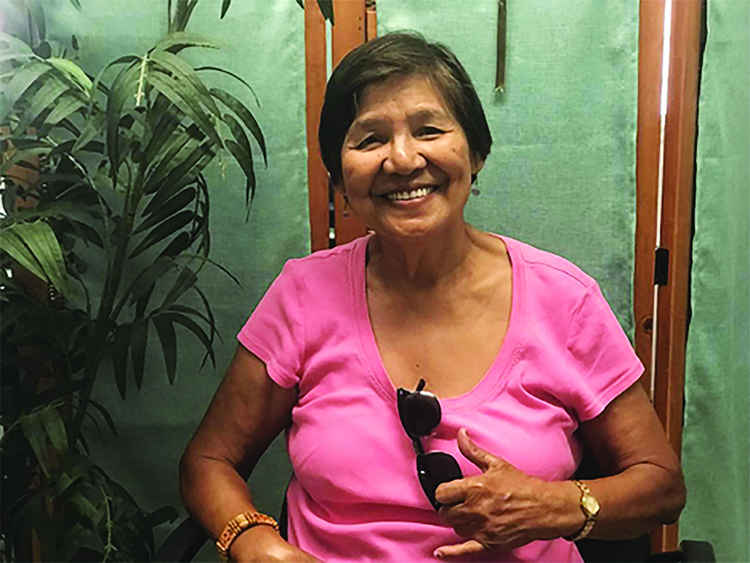
    From being a home caretaker, Nene went back to work for extra income. Her job as an Aloha Ambassador enabled her to spread aloha, meet people and make new friends.
    From being a home caretaker, Nene went back to work for extra income. Her job as an Aloha Ambassador enabled her to spread aloha, meet people and make new friends.

    Meaningful employment is one of the best ways to keep fit in every way as we age — socially, mentally and even physically. But some of Waikīkī Community Center’s clients had difficulty finding employment. Retirees also found that the way people look for work has changed significantly. Others felt employers didn’t want to hire them due to their age. Many wanted to change career paths entirely. Therefore, WCC started Back-to-Work Force, a free service employment program focused on adults 50 and over.

    After retiring, John decided to take on a job—in addition to his honey-do list at home. He is now an Elite parking host and loving it.
    After retiring, John decided to take on a job—in addition to his honey-do list at home. He is now an Elite parking host and loving it.

    The program helps match older workers with employment by updating their skills and by working with employers. The program provides a range of services for older workers — creating and updating resumes, online job search and application assistance, interview preparation and training referral. The program then matches clients with one or more of its 25-plus employer partners.


    WAIKĪKĪ COMMUNITY CENTER (501(c) 3 nonprofits)
    310 Paoakalani Ave., Honolulu, HI 96815
    Jill Okimura, Projects Manager: 808-923-1802
    jokimura@waikikicommunitycenter.org
    www.waikikicommunitycenter.org
    FaceBook & Instagram: @waikikicommunitycenter

    Meaningful employment is one of the best ways to keep fit in every way as we age — socially, mentally and even physically. But some of Waikīkī Community Center’s clients had difficulty finding employment. Retirees also found that the way people look for work has changed significantly. Others felt employers didn’t want to hire them…

  • Get ’Extra Help’ With Medicare Drug Costs

    Assistance is available for some people with limited income and assets who may be eligible for a program called “Extra Help.” It’s a Medicare health plan that assists in paying costs related to a Medicare prescription drug plan. This can include monthly premiums, annual deductibles and prescription co-payments. Extra Help is estimated to be worth about $4,900 per year. Many people qualify and don’t even know it.

    You may qualify for this Low-Income Subsidy program available under Medicare Part D if:

    • Your annual income and assets are below the eligibility thresholds, which may fluctuate from year to year. For the most up-to-date levels, visit www.Medicare.gov.

    • Your annual income is higher than the limit, but you support family members who live in your home, or, if you live in Hawai‘i or Alaska.

    Applying is easy:

    • Call Social Security at 1-800-771-1213 (TTY 1-800-325-0778) and request an application via mail or apply over the phone. Or apply online at www.socialsecurity.gov/extrahelp.

    • Social Security will mail you a notification if you are eligible. If you qualify for Extra Help but are not yet enrolled in Medicare Part D, you can enroll in a plan at that time. Call your licensed insurance agent to select the plan that best suits your needs.


    COPELAND INSURANCE
    1360 S. Beretania St., Ste. 209, Honolulu, HI 96814
    808-591-4877 | www.copelandgroupusa.com

    Assistance is available for some people with limited income and assets who may be eligible for a program called “Extra Help.” It’s a Medicare health plan that assists in paying costs related to a Medicare prescription drug plan. This can include monthly premiums, annual deductibles and prescription co-payments. Extra Help is estimated to be worth…

  • Service Employment Program in Action

    Many seniors approaching retirement age have not built up adequate savings in their Social Security accounts. By finding employment before taking SS withdrawals, seniors can build up accounts and ensure a healthier retirement payments when the time comes.

    The Honolulu Community Action Program Inc. (HCAP) administers the Senior Community Service Employment Program (SCSEP) for low-income seniors who meet the program’s eligibility requirements: 55 or older, unemployed, resident of O‘ahu, with an income at 125% of the federal poverty guideline. It’s a federally-funded program under Title V of the Older Americans Act.

    The primary focus and goal of SCSEP is to provide the participant the opportunity to gain employment skills through part-time, subsidized, hands-on training and transition them into regular unsubsidized, full-time employment.

    Program participants are also eligible for a subsidized medical examination (up to $50 per year) and can earn Social Security credits during their placement in a job in thier community.

    Contact HCAP for more details.


    HONOLULU COMMUNITY ACTION PROGRAM (501(c) 3 nonprofits)
    Senior Communty Service Employment Program
    1132 Bishop St., Ste. 100, Honolulu, HI 96813
    808-521-4531 | franky@hcapweb.org
    www.hcapweb.org | www.hcapweb.org/senior-employment-program/

    Many seniors approaching retirement age have not built up adequate savings in their Social Security accounts. By finding employment before taking SS withdrawals, seniors can build up accounts and ensure a healthier retirement payments when the time comes. The Honolulu Community Action Program Inc. administers the Senior Community Service Employment Program for low-income seniors who…

  • A Support Group for the Caring Giver

    Are you caring for someone over 60 who is living at home? Then, Project Dana has a special program just for you, called the “Caring Giver Support Group” or CGSG.

    Using education and group training sessions, CGSG helps caregivers to better understand their loved ones while learning to care for themselves, as well. Group sessions are also a safe place to connect and talk story about the joys and frustrations of being a caregiver.

    Two consecutive monthly sessions:


    ❶ Honpa Hongwanji Hawaii Betsuin Social Hall 1727 Pali Highway, Honolulu 2nd & 3rd Wednesday each month 9:30am – 12:30pm *Parking is available (Photo by Alan Kubota of Lenscapes Photography)

    ❷ Waipahu Hongwanji Buddhist Temple 94-821 Kuhaulua St.,Waipahu 2nd Saturday each month 10am – noon *Parking is available

    For caregivers who are looking for additional assistance, one-on-one counseling may be arranged to provide a sympathetic ear and guidance, and to also address individual stresses and special needs.

    Contact Project Dana to learn more or to support its caregiver programs.


    PROJECT DANA (501(c) 3 nonprofit)
    2720 Nako‘oko‘o St., Honolulu, HI 96826
    Maria Morales, Project Dana’s CGSG Coordinator
    808-945-3736 | cgsg@projectdana.org
    www.projectdana.org

    Are you caring for someone over 60 who is living at home? Then, Project Dana has a special program just for you, called the “Caring Giver Support Group” or CGSG. Using education and group training sessions, CGSG helps caregivers to better understand their loved ones while learning to care for themselves, as well. Group sessions…

  • Medicare Health Plans & Caregiving

    With National Caregivers Month quickly approaching, let’s remember former First Lady Rosalynn Carter, who said it best in 2012—“There are only four kinds of people in the world: those who have been caregivers, those who are currently caregivers, those who will be caregivers and those who will need caregivers.”

    As a caregiver, what questions should I ask to help me assess the best Medicare Advantage (health plan) possible?

    n Is the plan comprehensive? Does it include prescription drug coverage? Does it have those extra benefits that are important for the person I am caring for? Hearing aid coverage? Prescription glasses? A gym membership?

    Are there social workers to help me navigate the system to ensure that the person I am caring for receives the care and services they need? Is there a cost for those services to understand and navigate the systems?

    Is the plan an integrated health program? Can my physician see the notes from other physicians? Are they able to see when I last filled a prescription for my loved one? If I need a new prescription, can the pharmacy notify the physician directly and in a timely manner so there isn’t a delay in medication coverage? Can the physician email an order for an X-ray, so that it’s waiting for me when I arrive for services?

    What is the Medicare Star Rating? The Centers for Medicare & Medicaid Services (CMS) uses a Five-Star Quality Rating System to track every health and drug plan very closely each year. Measures include various health plan screenings, care for older adults, member satisfaction and complaints, medication adherence and more. In mid-October each year, CMS reports the Star Ratings to the Medicare Health and Drug plans for the next calendar year.

    › If a plan receives one or two stars, it means, on average, the plan’s scores declined (got worse).

    › If a plan receives three stars, it means, on average, the plan’s scores stayed about the same.

    › If a plan receives four or five stars, it means, on average, the plan’s scores improved.

    These are just some of the questions to consider asking your current health plan provider or if you are researching other options in preparation for the Medicare Advantage Annual Enrollment Period this fall, which spans Oct. 15 to Dec. 7 in 2019.


    KAISER FOUNDATION HEALTH PLAN — HAWAII
    Medicare Sales Info: 808-432-5915 | www.kp.org
    Information provided by the Hawaii Kaiser Permanente Medicare Team as an educational resource.

    With National Caregivers Month quickly approaching, let’s remember former First Lady Rosalynn Carter, who said it best in 2012—“There are only four kinds of people in the world: those who have been caregivers, those who are currently caregivers, those who will be caregivers and those who will need caregivers.” As a caregiver, what questions should…

  • Prostate Cancer Support Group

    Most men seem to have little knowledge about prostate cancer, even though it is one of the most common cancers found in men in the U.S. Until diagnosed, most of us tend to ignore the issue entirely. I was no different some six years ago — before I was diagnosed with aggressive prostate cancer. I was in denial, even though I was symptomatic. I convinced myself that I knew better and self-diagnosed what I thought was simply an enlarged prostate. Little did I know I was about to embark upon an adventure and steepen my learning curve on the topic.

    For the past five years or so, I have been engaged as an advocate, working with men across the nation — particularly in Maui County — helping them navigate through the ever-changing complexities of treatment modality, imaging options and interventions available in the world of prostate cancer. Fortunately, most men will be diagnosed with fairly low-grade disease that in many cases needs only active surveillance. But a significant number of men will fall into the category of those needing treatment for their disease.

    The Support Group

    I work through the peer-driven Answer Cancer Foundation (AnCan.org) as well as the Pacific Cancer Foundation on Maui to provide support, navigation and advocacy for men who are dealing with any cancer diagnosis, not just prostate cancer. I moderate free, live, online/telephone, bimonthly support groups for men. I have men calling in from O‘ahu and Neighbor Islands. We put our heads and hearts together to provide support and information for each other.

    When I was first diagnosed, I was desperate for answers. I found my way to a support group predominantly comprised of women breast cancer survivors. I was the token male and welcomed, but I got no answers. I quickly realized that as men, we are not looking for emotional support and tissues as much as reliable information from peers who are going through a similar experience.

    The world of cancer diagnostics and treatment is a rapidly developing dynamic. I have had scans, genetic tests and treatments that were not yet FDA approved or even conceived of when I was first diagnosed. Staying up to date with the latest technology is imperative. Awareness of treatment options can be life-changing.

    I urge all men to connect with a support network. Remember, I am here to help you, too — including helping women who are trying to support their man through a tough time in this life.


    ANCAN: MEN’S TALK STORY SUPPORT GROUP
    Sponsored by Pacific Cancer Foundation (501(c) 3 nonprofit)
    PCF Office: 808-242-7661 | Peter Kafka: 808-298-1655
    www.pacificcancerfoundation.org/mens-talk-story
    www.ancan.org/maui-mens-group/

    Most men seem to have little knowledge about prostate cancer, even though it is one of the most common cancers found in men in the U.S. Until diagnosed, most of us tend to ignore the issue entirely. I was no different some six years ago — before I was diagnosed with aggressive prostate cancer. I…

  • Understand Your Medicare Options

    Medicare serves more than 60 million people nationwide. Hawai‘i has 268,000 Medicare beneficiaries in 2019 — nearly 19 percent of the state’s total population. About 45 percent of Hawai‘i’s beneficiaries select Medicare Advantage plans. The remaining 55 percent are covered under Original Medicare.

    Every year during Medicare’s Annual Election Period (AEP) — Oct. 15 to Dec. 7 — Medicare beneficiaries can add, drop or switch plans. Medicare health plans and prescription drug plans can change in cost, coverage and services every year, so look at your plan’s coverage for 2020 and compare it with other plans.

    Hawai‘i residents can chose from between six and 19 Medicare Advantage plans in 2019, depend- ing on their county. Fourteen insurers offer Medigap plans in Hawai‘i.

    When looking at other plans, check the provider’s network and formulary. Unless you are willing to find a new doctor, make sure your doctor is in that network. Every plan has a different formulary — a list of prescription drugs covered by a prescription drug plan. Make sure the drugs you are taking are in that plan’s formulary or else you will need an exception or another drug. Check the cost; prices vary between plans.

    Other Medicare options are Medicare Supplement Insurance policies, also known as Medigap policies. Original Medicare pays for much, but not all of the cost of covered healthcare services and supplies. Medicare Supplement Insurance policies sold by private companies can help pay some of the remaining costs.

    The 2020 “Medicare & You” book that comes in the mail in early October lists all the Medicare health plans and their costs. It also compares service areas, monthly premiums, out-of-pocket limits, primary care visits, specialist visits and so forth.

    Medicare beneficiaries can also compare plans using the Medicare plan finder at www.medicare.gov. Compare up to three plans at a time by sorting by lowest estimated annual costs.

    Medicare rates all health and prescription drug plans each year based on quality and performance. Use these ratings to compare plans.

    If you have limited income and resources, you may qualify for help to pay for some healthcare and Medicare prescription drug costs. If you qualify for Extra Help and join a Medicare drug plan, you will get help paying your Medicare drug plan’s costs, have no coverage gap and have no late enrollment penalty.

    Start researching now to see if you have all the benefits and services you deserve.


    FINANCIAL BENEFITS INSURANCE INC.
    1311 Kapiolani Blvd., Ste. 504, Honolulu, HI 96814
    808-792-5194 | emotosue@fbihi.com
    www.fbihi.com
    Facebook: Financial Benefits Insurance

    Hawai‘i has 268,000 Medicare beneficiaries in 2019 — nearly 19 percent of the state’s total population. About 45 percent of Hawai‘i’s beneficiaries select Medicare Advantage plans. The remaining 55 percent are covered under Original Medicare. Every year during Medicare’s Annual Election Period, Medicare beneficiaries can add, drop or switch plans. Medicare health plans and prescription…

  • Dementia Activity Ideas

    Planning activities for a Person Living With Dementia (PLWD) isn’t easy. I’ve found it challenging to identify activities that peak and maintain the interest of a PLWD. The Positive Approach to Care philosophy states that PLWD need a balance of activities that include leisure, productivity, restoration and self-care.

    There are variations of engagement for everyone in any GEMS® state of dementia. GEMS® is a dementia characteristic and ability model. Providing activities that the person is able to do mentally and physically is the key. Personal interests, abilities, opportunities and where they are in the progression of the disease must be considered. Care partners must remember that engagement and interest in an activity is our purpose, not an end product. Here are some examples.

    DIAMOND — reluctant to change Diamonds stick to routines and are inflexible. You may need to give more verbal reminders leading up to an activity or event. Activities may include word or jigsaw puzzles; crafting, such as crocheting; sorting items by quantity or function; and household chores, such as washing dishes.

    EMERALD — needs to know what’s next Emeralds could benefit greatly from walking. They may also be skillful with household chores, such as folding clothes; sorting items with visible differences, such as color; simplified word puzzles; or other enjoyable crafts. Allow mistakes; your PLWD may not complete the task as you expected, but allow them the gratification of helping.

    AMBER — stuck in a moment Ambers are all about sensations and touch. Ambers and Emeralds are wanderers. Ambers are very curious and possess little safety awareness. Consider setting up a few safe places around the house where these wanderers can touch items. A lap mat, activity boards with latches and switches, and other sensory items can be found online.

    RUBY — fine motor is slowing down, gross motor strength Rubies are great with gross motor skills that can be best utilized with games such as batting a balloon back and forth, playing catch with a foam ball or cradling a doll. Rubies also enjoy old familiar tunes and may even like to sing along. Sensory items mentioned in the Amber state would also work well.

    PEARL — end-stage, difficult to reach but still there A person in the Pearl state is not always easy to be around. At this stage, they are typically bed-bound and non-verbal. However, they are still human beings and take pleasure in being treated as such. Pearls are great listeners, although they may not always respond. They may enjoy listening to music, hearing about your day or family, or a favorite story or poem, and having the grandkids play near them, allowing them to hear the laughter and receive kisses and hugs. For a more intimate experience (with proper training), you might choose to assist with feeding, grooming or incontinence care.


    HAWAII MEMORY FRIENDS LLC
    Caregiver Education & Consultation
    Mapuana Taamu, Certified PAC Trainer
    808-469-5330 | mfriends808@gmail.com
    Contact Hawaii Memory Friends to learn about GEMS® character models through the caregiver’s workshops: IT’S ALL IN YOUR APPROACH, scheduled at Pohai Nani (October), Kapiolani CC (September, October, November).

    Planning activities for a Person Living With Dementia (PLWD) isn’t easy. I’ve found it challenging to identify activities that peak and maintain the interest of a PLWD. The Positive Approach to Care philosophy states that PLWD need a balance of activities that include leisure, productivity, restoration and self-care. There are variations of engagement for everyone…

  • Senior Exercises for the Mind & Body

    Through daily exercise, seniors can combat illnesses such as arthritis and osteoporosis, which can afflict them in their golden years. And as physical health declines, untreated depression can decrease the quality of life.

    So seniors must remain, mentally and physically active for optimum health. For example, strength training is useful to combat the loss of muscle mass associated with aging, and helps to maintain flexibility and range of motion.

    WALKING has been proven to have extraordinary benefits for memory and the prevention of dementia, for blood circulation and for mood. For physical and mental benefits, walk in a group as a social event. Take a nature hike or plan a trip to a local park, beach, zoo, aquarium, Foster Garden or Bishop Museum.

    MENTAL EXERCISES keep your brain active and alert while engaged in life’s pleasures. Play games such as cards, trivia or bingo, or do crossword puzzles or word searches. Read aloud or look through old photo albums. Exercising both the body and brain helps seniors live longer, stronger, healthier lives.


    AIEA HEIGHTS & WAIALAE SENIOR LIVING 1 & 2
    99-1657 Aiea Heights Drive | 2945 Kalei Drive
    808-488-5521 | 808-941-6960
    www.aieaheightsseniorliving.com

    Through daily exercise, seniors can combat illnesses such as arthritis and osteoporosis, which can afflict them in their golden years. And as physical health declines, untreated depression can decrease the quality of life. So seniors must remain, mentally and physically active for optimum health. For example, strength training is useful to combat the loss of…