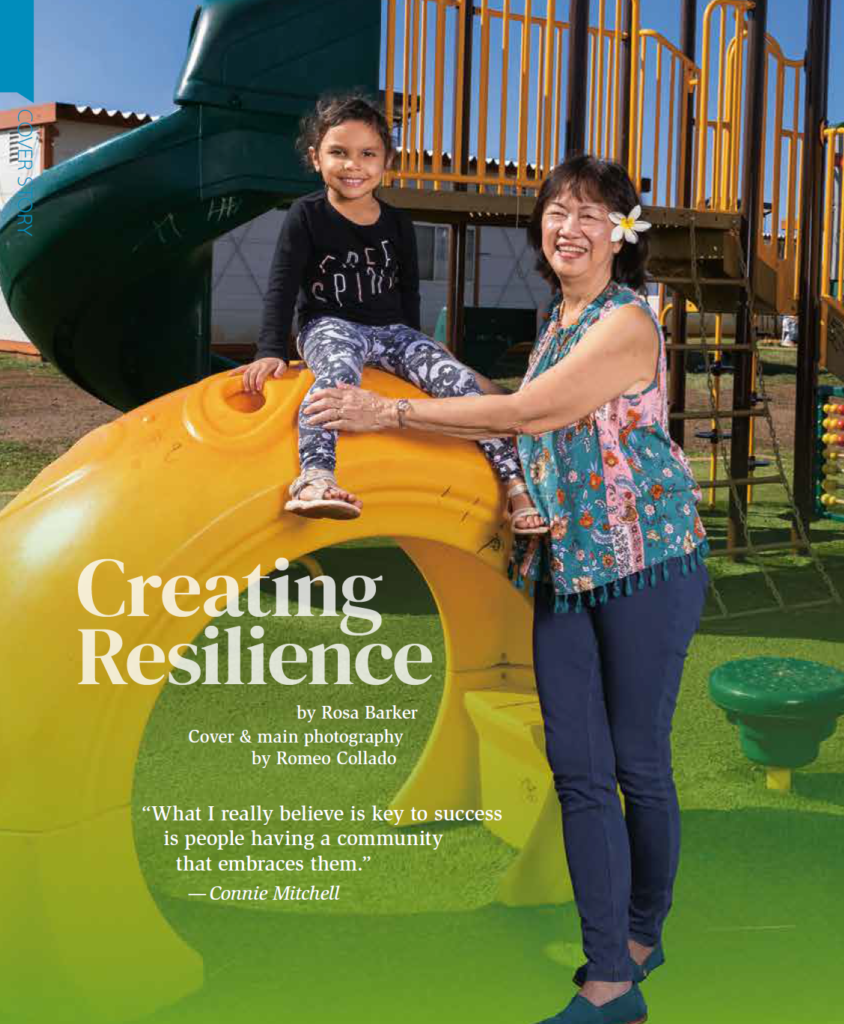
 The Institute for Human Services (IHS) has come a long way from its humble beginnings as a ministry distributing peanut butter sandwiches to those sleeping on the streets of Chinatown in the late 1970s. The team Connie Mitchell put together after joining IHS in 2006 can be justly proud of how the nonprofit tackles the many challenges faced by the unhoused.
“We need to remember that there’s a story behind each person,” Connie reminds us. “At the very least, each person is someone’s son or daughter. At IHS, so many of our staff have lived that experience and are here to give back. Together, we’re a living testament to the power of community to heal and inspire.”
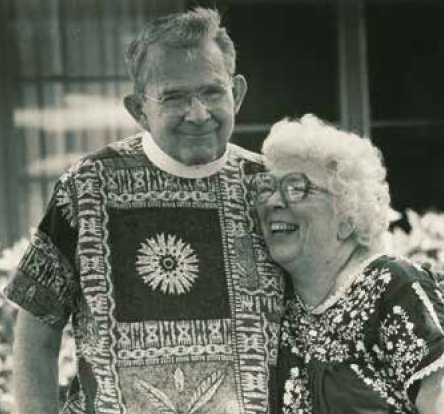
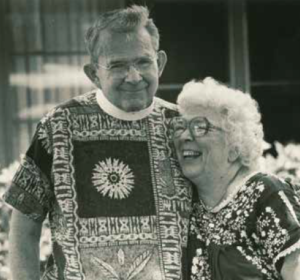 When Father Claude DuTeil and his wife Roberta (lovingly known as “Tutu Bert”) began handing out peanut butter sandwiches to people sleeping on the streets of Chinatown back in 1978, residents of Honolulu had mixed reactions. Shopkeepers and local residents thought that free food and the newly established Smith Street drop-in center would draw yet more unwanted “street people” to the area. Others praised the Peanut Butter Ministry and their belief in second chances. After all, the core value of what would become the Institute for Human Services in 1982 was that it should be a charity that helped anyone in crisis to stabilize and receive assistance.
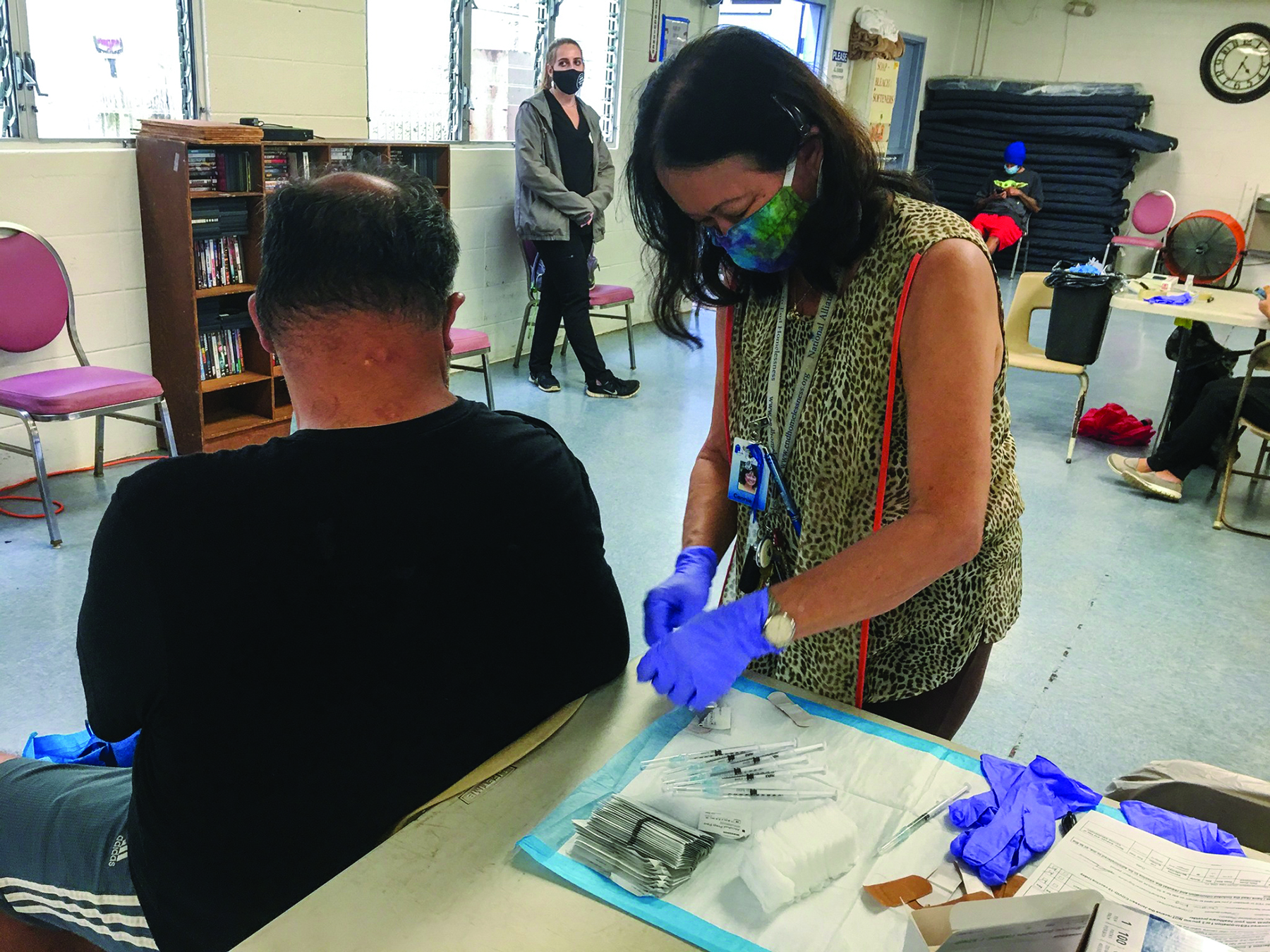
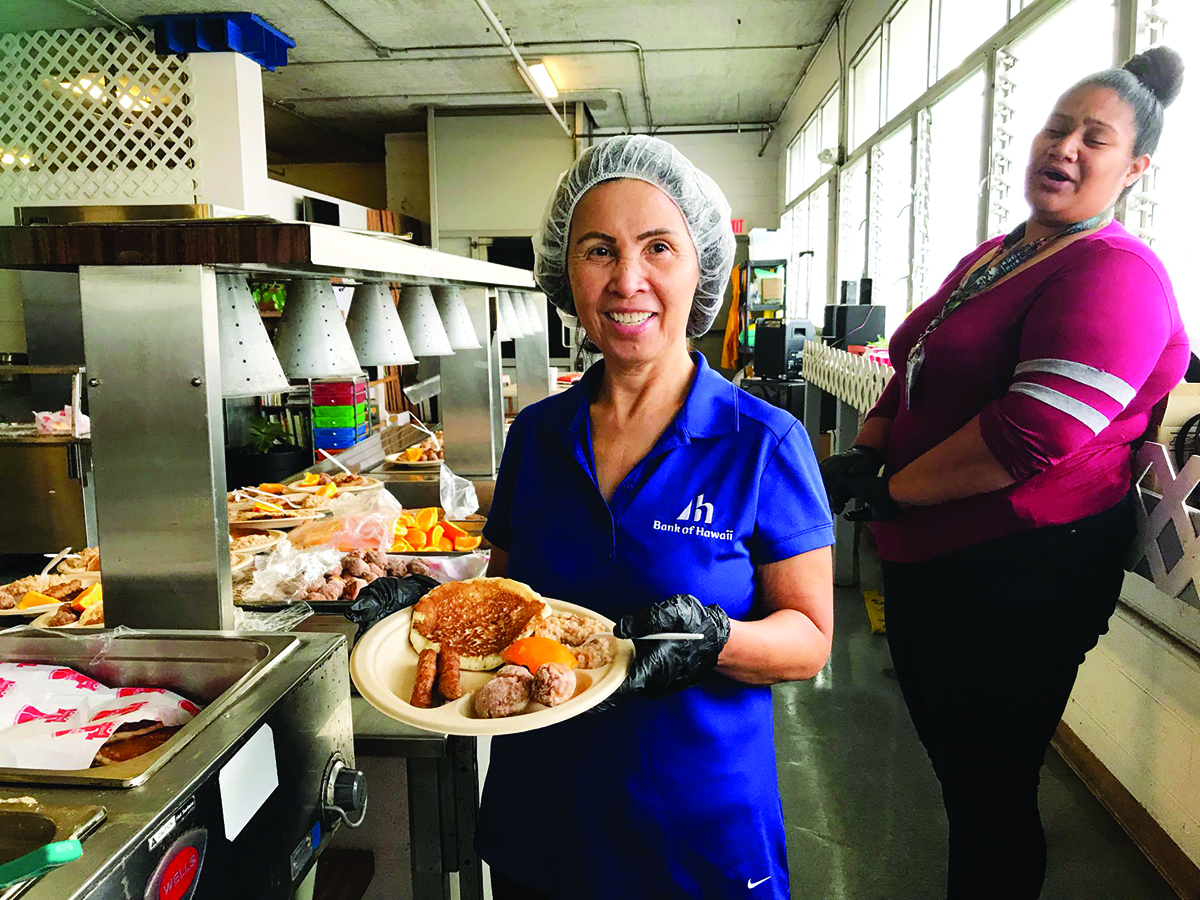
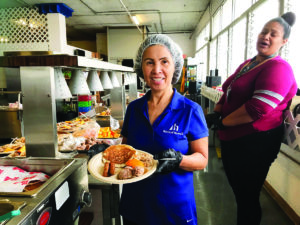
Today’s IHS still adheres to that core value. Its stated mission is “to create and offer tailored solutions for those in crisis…,” and its vision is to participate in creating “a community where homeless people are empowered with hope, dignity and confidence to quickly access and sustain a safe, decent and affordable home.” Its long track record of achieving positive outcomes and its status as a four-star charity is in no small part due to the leadership of Connie Mitchell and the management team she put together after joining IHS as director nearly 17 years ago. From just one drop-in center, IHS has grown, and now includes three emergency shelters, several specialty shelters, street outreach, case management, health teams, family support, permanent housing support and employment services. With the help of community volunteers, IHS also serves delicious meals.
 A Love of Pastoral Care
Connie Mitchell, now 66, the second-born of four children of immigrant Chinese parents, grew up close to Chinatown not far from where her IHS office is now. She graduated from McKinley High School, but also attended Mun Lun Chinese language school because her parents wanted her to maintain her culture. Her father initially worked in Chinatown, then partnered with friends to open a small Chinese restaurant in Kapālama, which became a family business that put all the kids through school. Connie did her part by waiting on tables. Because she is the last of her siblings living in Hawai‘i, Connie now looks after her widowed mother who is in her early 90s. “She’s my inspiration,” says Connie, “because she’s just a super-giving person. She still takes care of her yard and cooks for herself. She’s a very strong, independent woman and I’ve learned a lot from her over the years.”
The career path of Connie’s life is a tapestry. She’s a proud alumnus of the University of Hawai‘i at Mānoa, where she earned both her bachelor’s and master’s degrees in nursing. The Spiritual Direction classes she took at San Francisco Theological Seminary inspired her work as a pastoral associate, as she aspired to blend her work as a nurse therapist with church ministry.
“Long before I came to IHS, I began my career as a hospital nurse and then managed a doctor’s office for about five years,” Connie explains. “What I saw in my healthcare experiences was that a lot of people’s overall health was impacted by what they were experiencing emotionally, psychologically and relationally. That insight about the mind-body connection led me into psychiatric nursing.”
After completing her graduate degree in mental health nursing, Connie found herself very active in the church and felt called to blend the two into “a healing ministry for body, mind and spirit.” For almost eight years, she worked as a pastoral associate for Kailua Christian Church.
“It was a great blend!” Connie says. “At the same time, I also worked at the Hawai‘i State Hospital [HSH] as a clinical nurse specialist and eventually became the director of nursing. I would see a lot of people who were referred there on court orders. A lot of what we did was restore people’s fitness to stand trial, because a lot of them suffered from serious mental illness.” It was there that more life threads came together. “I was so impressed by the healing that could come from good psychiatric treatment. From the beginning of my time at HSH, the hospital was being overseen by the US Department of Justice for not providing adequate treatment. Over the years, we began creating programs that prepared people to be integrated back out into the community. We released a lot of people; but it was with a system of care that was built up over time, in the community.” By the time she left, HSH was finally released from oversight.
 Rising to the Challenge
After leaving the HSH, Connie was looking for a new challenge and thought IHS’s mission sounded like something she could contribute to. At the interview with the IHS board, she was asked how long she would stay and replied, “I don’t know. All I know is that when I make a commitment, I really want to do the best that I can.” Connie laughs, “Here I am, 16-and-a-half years later!” And challenged she was. Two years after Connie joined IHS came the Great Recession of 2008. The extreme economic downturn decimated the community mental health system and “we really have taken a long time to recover. Sadly, I see people that I’ve known from the hospital out in the community and not getting the care that they need. They’re now living homeless on the street.”
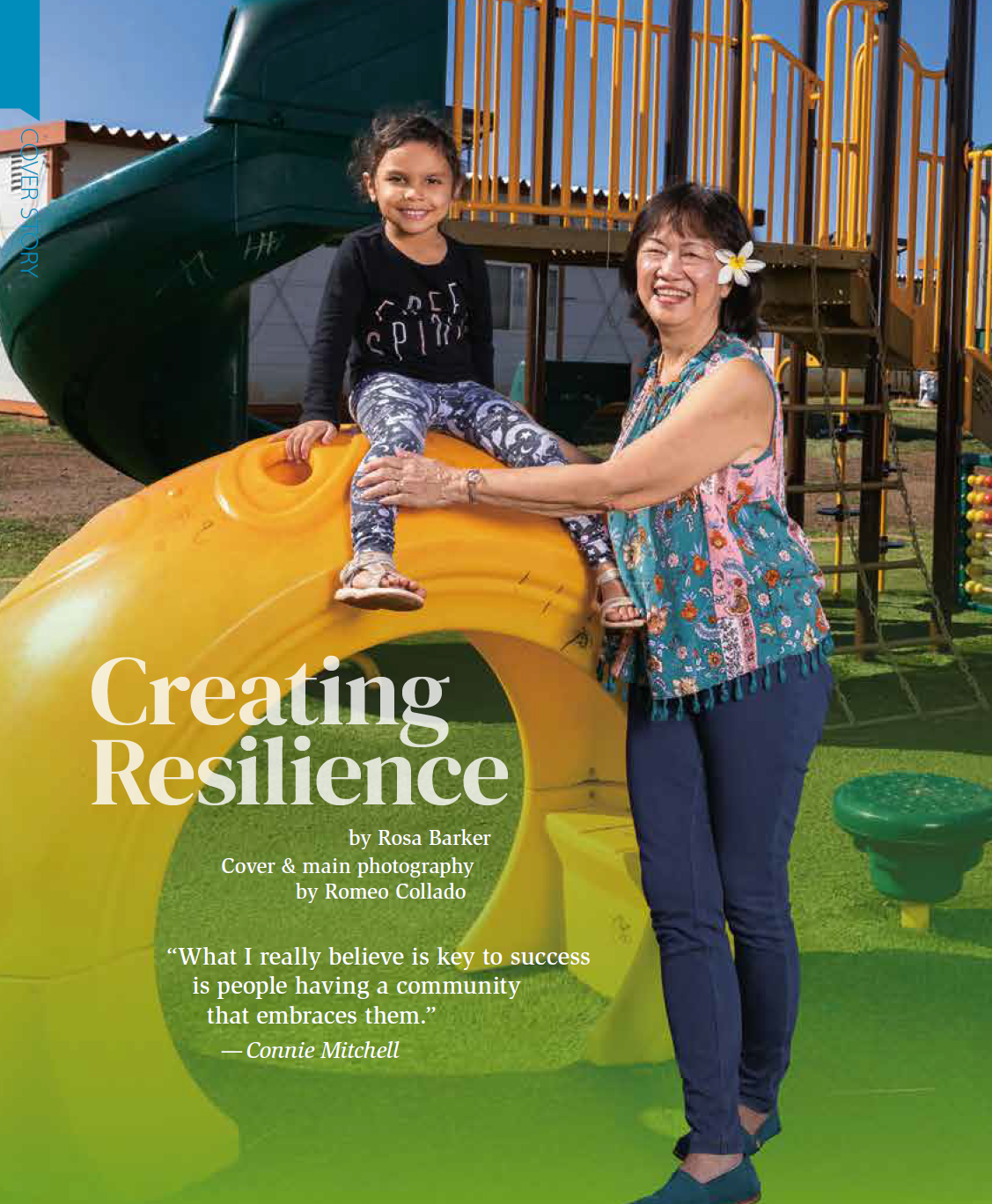
“When I first started [at IHS], I don’t think I had any idea how complex this work was going to be,” Connie adds. “People would say, ‘All you gotta do is have housing for people.’ I’m thinking, ‘It’s not that simple!’ There are so many different subpopulations that have different reasons for being homeless — veterans, families with children, people touched by substance abuse or mental illness, and people who get hospitalized and lose their housing. And when you have people who have multiple problems layered onto each other, it makes it even more difficult. What I really believe is key to success — if there is one answer — is people having a community that embraces them.” If we don’t have a sense of connectedness with other people, Connie believes we just don’t thrive. “We end up losing a lot of the social support — social capital that really helps us maintain our lives.”
 When the Peanut Butter Ministry first started, only 20% of the people it assisted were locals — most had come from the mainland in search of paradise, but soon found that to be a myth and ended up living on the streets. During the ’80s and ’90s, the proportion of local people seeking IHS assistance quickly grew to over 70% as a cycle of federal welfare cuts, economic disasters like Black Monday in 1987 and a focus on tourism-related rather than residential building took hold. On March 9, 2022, volunteers and member agencies of Partners in Care, O‘ahu’s Continuum of Care, conducted the federally mandated Point-in-Time (PIT) count of the numbers of homeless people either sleeping on the street or in a shelter. The total one-day count for Honolulu was 3,951. Of these, 60% were unsheltered and 40% sheltered, and an aggregate 61% self-reported either loss of a job, inability to pay rent or loss of money as the primary reason for their change in circumstances.
The survey questionnaire does not ask about place of origin, but the report does show that 276 (8%) of the adults counted were 60 years of age or older. The comprehensive report is available at bit.ly/2022PITCountReport.
Kūpuna Adrift
“What I’m seeing now,” Connie says, “are a lot of people who are in the later part of their lives who are becoming homeless for the first time in their lives — which is tragic — having worked all your life and then being slowly priced out of your apartment if you never bought a place. It’s really difficult for me to watch that. It’s a very harsh reality for them to be mixed in with people who might have been on the street for a long time.”
Over the years, Connie has overseen the creation of different kinds of shelters so that the experience is not as traumatic. “When people become homeless, they’ve lost a lot. It’s usually pretty gradual. Usually, you have friends who will take you in and you have a nest egg you can draw from so that you don’t become homeless at the beginning. But when that erodes, if you’re older and can’t make income, that makes it even more difficult. Social Security doesn’t go very far these days. So, it’s really about piecing together an affordable plan for the people we assist when they come to us.”
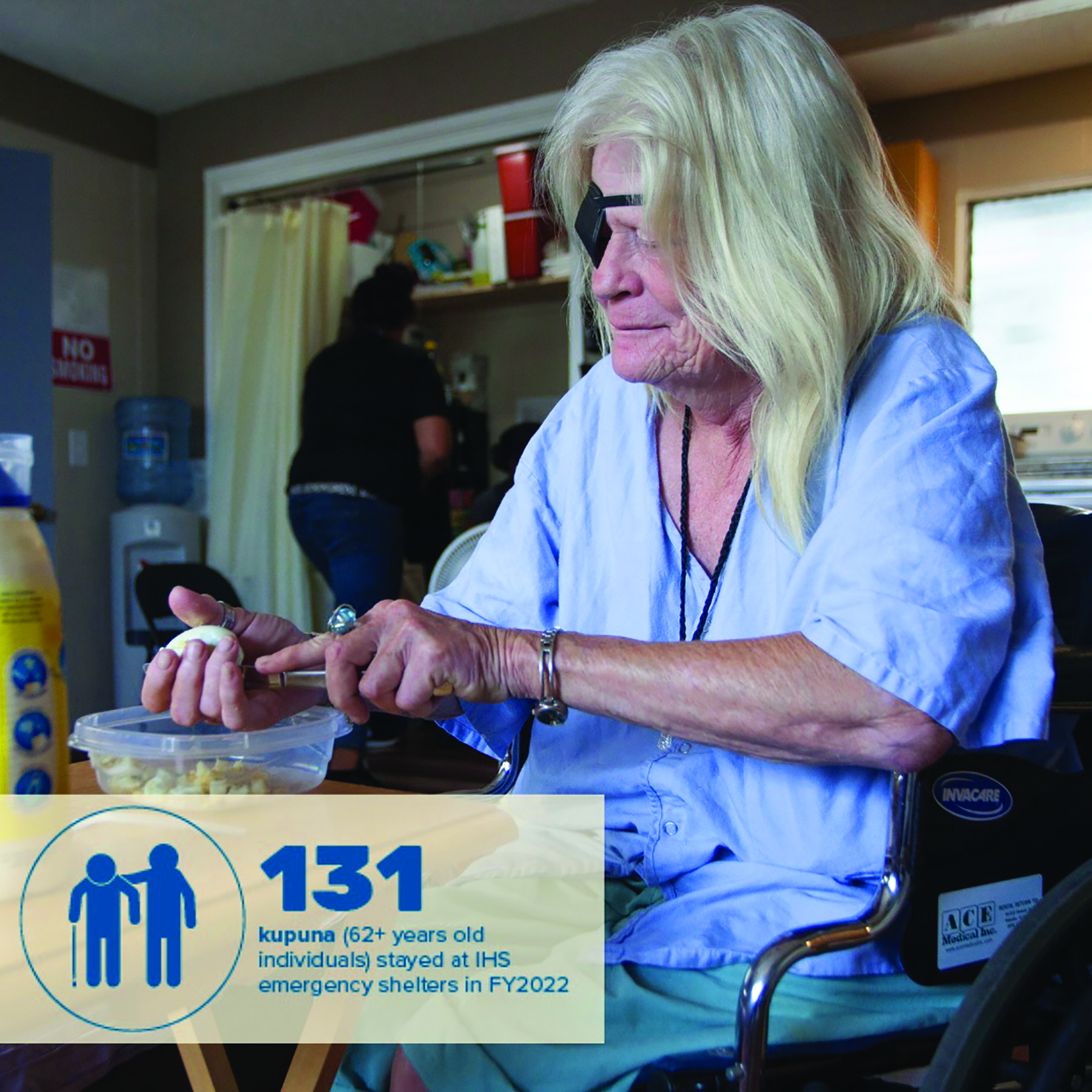
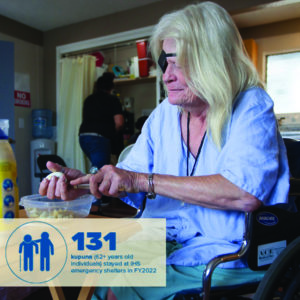
The number of kūpuna coming through IHS’s doors has doubled over the past 10 years.
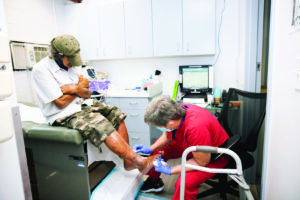
“Even if you own your own home, it’s hard to manage the home after others in the household leave,” says Connie, pointing out that “if your children have moved to the continent, that makes it really difficult.” “Nearly 20% of our shelter guests last year were kūpuna. We likely get more than our share of seniors because we get a lot of referrals from hospitals. They have medical complexities and chronic health conditions.” Vision problems can make taking medication difficult, and just one fall can result in mobility issues, making it difficult to get around or to do daily tasks of living, like cooking meals, affecting nutrition.
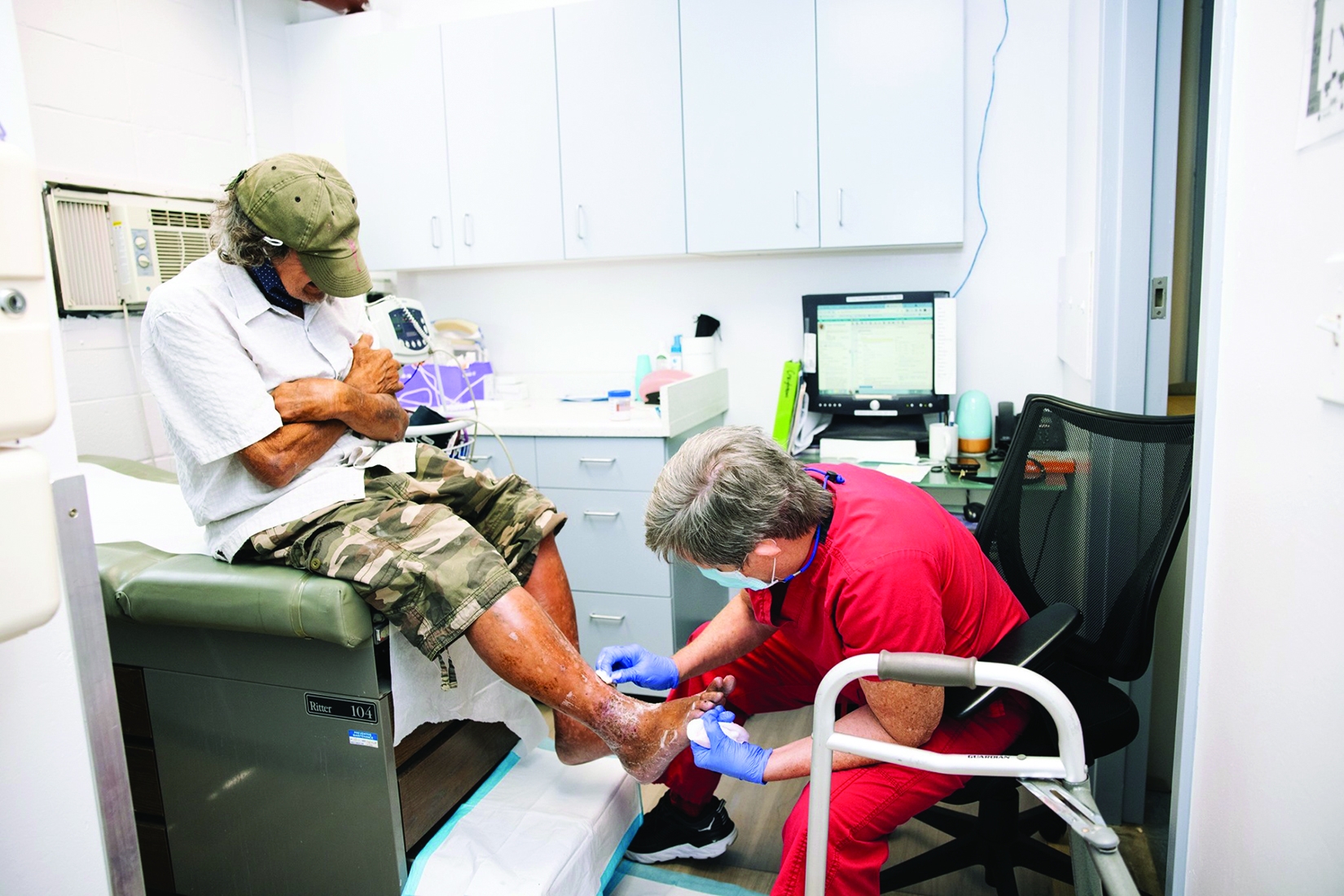
Tutu Bert’s Medical Respite Homes are one solution IHS has developed for those discharged from hospitals with no home to go to, but it is only a temporary solution and IHS works with the guest to find suitable permanent accommodations.
Another group of homeless whose numbers are growing is people suffering from cognitive impairment, such as dementia or traumatic brain injury. “So, we’ve had to equip our staff to recognize these things better,” Connie says. “When people are victims of trauma, we really need to be able to recognize the effects of the trauma and work on building the person’s resilience to reduce the impact of past trauma.”
 One of IHS’ key strengths is the initial triage that happens at intake — learning more about the person’s background and the key reasons the person has ended up in crisis in order to guide them toward the most appropriate system or program they need to get connected up with.
As Connie explains, “If we can make a match, we’re probably going to help that person make progress a lot faster. We really want to focus on their strengths and potential as they make those moves toward permanent housing again.”
Being able to place people in an IHS shelter that caters to their particular demographic allows a more focused approach. For example, the Veterans Engaged in Transition (V.E.T.) House in Kalihi Valley provides a safe home environment with nutritious meals and case management in partnership with the US Department of Veterans Affairs.
The stable environment and individualized guidance it offers helps rekindle the guests’ independence and boost their confidence to pursue the life goals that matter most to them.
 Collaboration is Key
“We cast a wide net to make sure that we engage all the resources needed to help an individual get back to where they need to be,” says Connie. “We tap any housing program that might be available through the state and city, as well as other programs run by other organizations. Over the years, IHS has had really good relationships with both the city and the state,” Connie explains. Different administrations have had different levels of interest in partnering to develop new programs, “but IHS has a track record of being willing to innovate solutions to end homelessness. That’s something I’m pretty proud of: IHS’s ability to scan the environment, see who’s coming in the door to our shelters, identify gaps in our service systems and deliver new programs in response.”
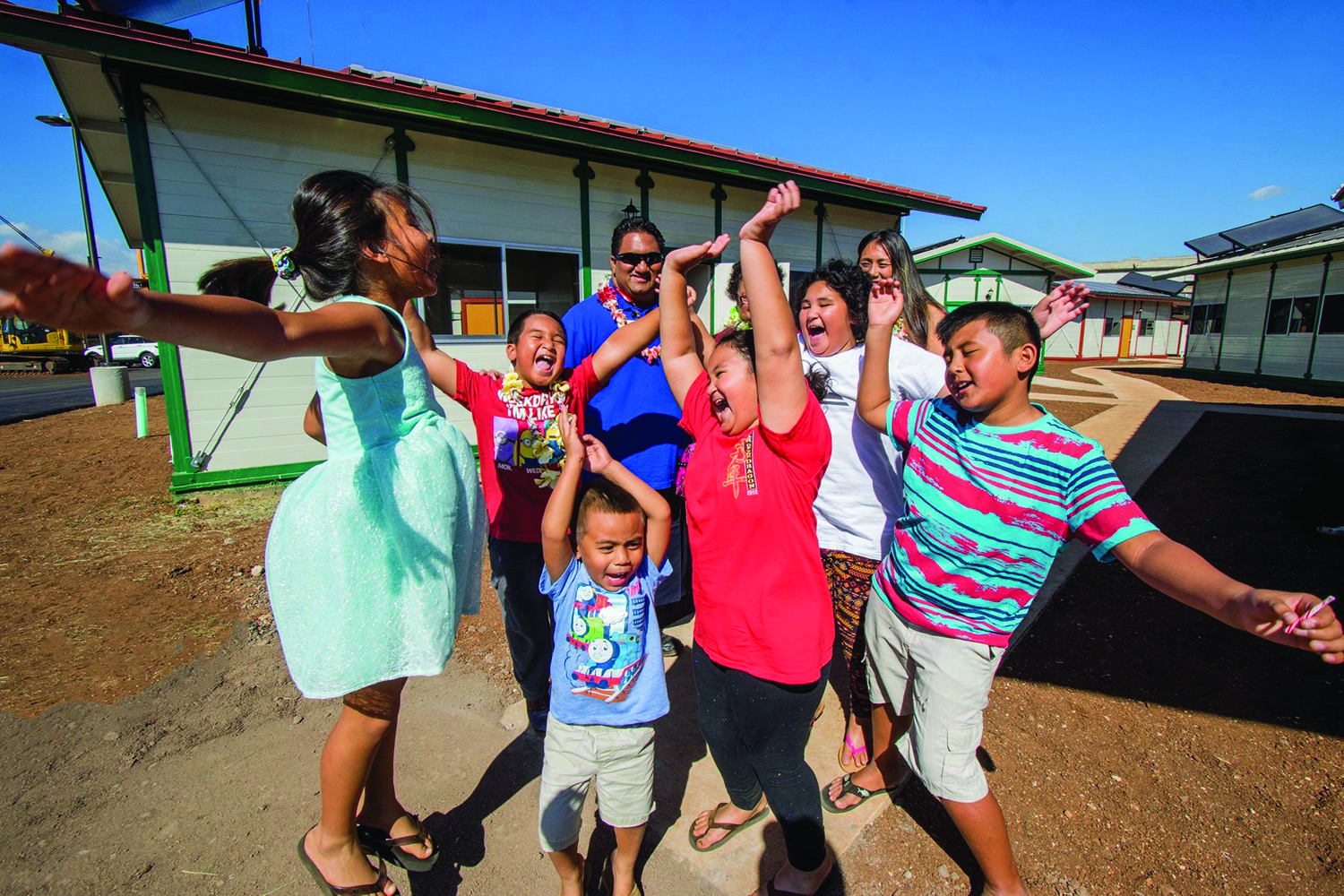
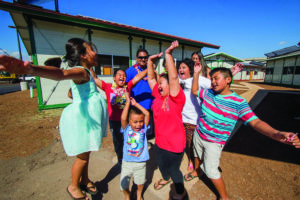
IHS is proud of its participation in developing Kahauiki Village (KV). Built with the support of Gov. David Ige’s 2016 emergency proclamation regarding homelessness in Hawai‘i, this plantation-style village of tiny homes on state land near Sand Island offers permanent rental housing to families who have faced homelessness. KV developed from the vision of businessman Duane Kurisu, who turned to IHS for help in planning social services there. The first families moved in five years ago in January 2018. In April 2022, IHS took over the management of KV. “We have been working with families, trying to establish an experience of community there and helping them with financial management so they’re able to raise a generation of children that will break the cycle of homelessness,” Connie explains. “One of our key indicators is whether the keiki grow up, graduate from high school and get into the workforce in different ways or go to college. They would be portraits of success.”
When IHS launched their first medical respite house, it turned to another nonprofit for assistance. HomeAid Hawaii helped IHS create the first medical respite house by renovating one of the houses IHS had leased. As Connie says, “So many people take it for granted that they will get home care when they get out of the hospital, but if you don’t have a home, there’s nowhere to receive home care.”
Today, there are four Tutu Bert Medical Respite Homes where staff are available around the clock. Medical home care during the day, meals and supplies to aid recovery are provided. One of the houses has a second level that IHS operates as bridge housing.
 Kūpuna Volunteers
Connie is really energized and encouraging when she speaks about the difference kūpuna can make as volunteers. “We have retired schoolteachers that have been helping our keiki with the reading program over at Kahauiki Village. Retired teachers can also help tutor in our program here at the Women’s and Family Shelter.” Retired tradespeople with skills in carpentry and plumbing who can help with simple projects are also welcomed. “If you’re in the healthcare field and retired — like a nurse or a doctor — and you’re interested in helping, we could use your help as volunteers. A lot of people think about going overseas to volunteer, but we have needs right here in our community.”
Connie adds that people who are active in their faith communities can “rally around to help the folks we are placing into permanent housing that need ongoing support. Sometimes, for people who’ve been homeless for a long time, settling into an apartment can be lonely and daunting. Some of them might need to relearn how to do things like meal planning, grocery shopping and cooking. Being a volunteer coach or visitor can bolster the person’s chances of making a successful transition.”
Some may also be depressed and having difficulty getting going in the morning. “If they know somebody’s coming over, somebody’s going to help them or just simply keep them company, that makes getting up much easier. When people have other people in their lives, life’s just more stimulating and interesting. Socialization helps keep us sharper, it helps us feel good about ourselves, knowing that somebody in our life cares,” Connie explains. “It doesn’t have to be a lot. Maybe you go visit or call someone once a week. Ultimately, it’s supportive connections that keep us from falling into that pit of depression. It’s about people being there for us when we need someone in a crisis or when we just need some help finding resources. Brief encounters can be very significant.” (Volunteer opportunities below.)
Our Shared Humanity
Making a sustainable difference in another person’s life by encouraging resilience is the true value of the work IHS does. But numbers are impressive, too. In the middle of the COVID pandemic in 2021, 1,628 clients were housed, 1,258 people were sheltered and 301,684 meals were served. The individuals who were served through the Outreach Program (894), Case Management Program (1345), Employment Services (796) and the 700 keiki served through the Family Program is testament to how IHS fulfills its mission to empower people with hope, dignity and confidence. The IHS website features several success stories that broaden our understanding of homelessness.
INSTITUTE FOR HUMAN SERVICES (501(c) 3 nonprofit)
546 Kaaahi St., Honolulu, HI 96817
info@ihshawaii.org | volunteer@ihshawaii.org
ihshawaii.org | facebook.com/ihshawaii
Statewide Homeless Help line:
808-586-0193 | email: gov.homelessness@hawaii.gov
How You Can Help Support the IHS Mission
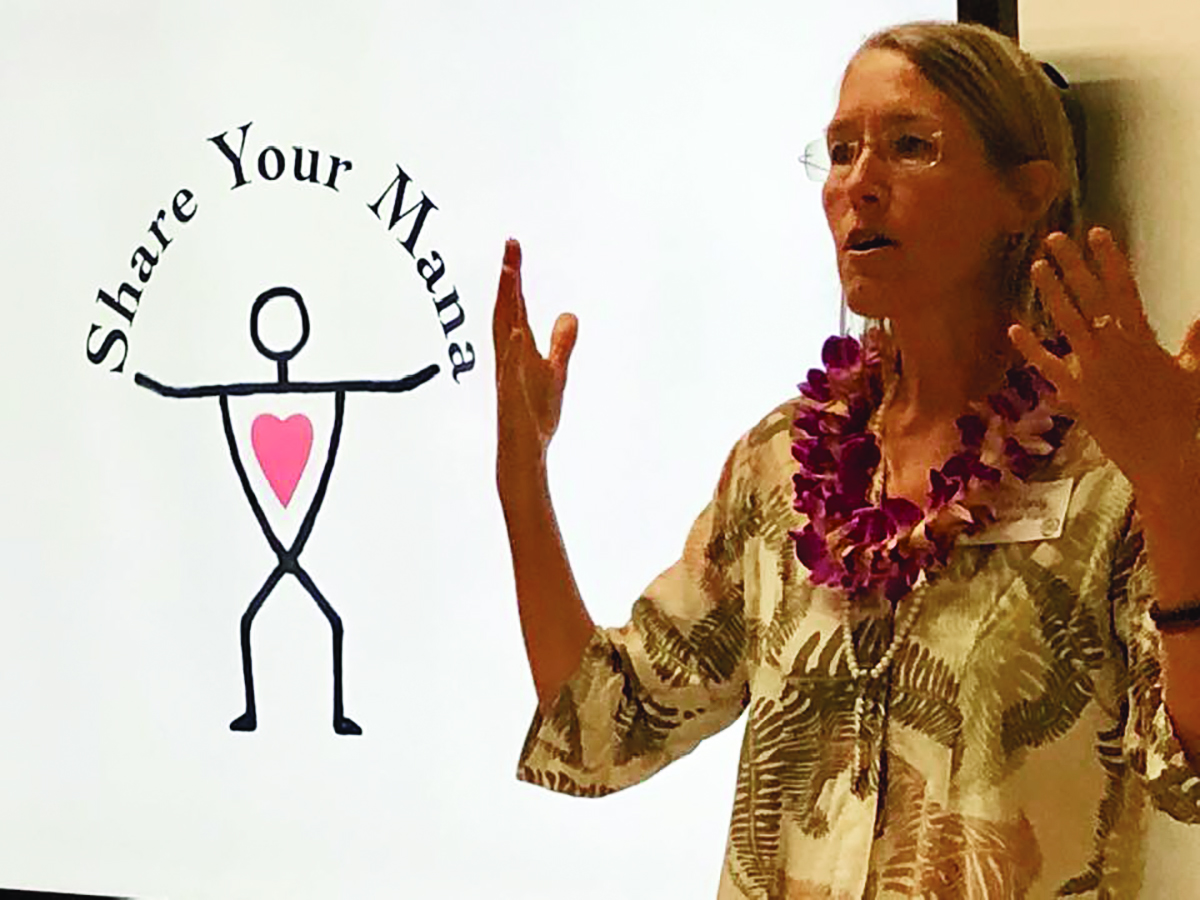
When you show up as a volunteer, you’re bringing not just your skills and your time, but also your energy and your ability to bring hope to people who are in a tough situation. It really shows our guests that there are more people in the community who are rooting for them and who care about their success. It gives them hope to know they haven’t been forgotten.” — Jill Wright, Director of Philanthropy & Community Relations at the Institute for Human Services.
Volunteering
You don’t need to have any particular skills to volunteer your time to support IHS’ mission. Help with simple office and administrative tasks, like filing at the business office, is often needed. Clothing donations need sorting and volunteers to staff the front desk and answer the phone are welcome at the shelters, too. Providing fellowship to guests who are in shelters, or who are recently housed, can make a world of difference to their day.
● To sign up for general task volunteering:
ihshawaii.org/volunteer
volunteer@ihshawaii.org
If you are part of a faith community, a service club, professional association or have a small business and would like to engage your employees in community support, there is a place for you to serve, as well. You are welcome to sign your group up to serve meals at any of the shelters! You could also host a goods drive to gather and donate essential supplies to IHS.
● Goods drive: ihshawaii.org/host-a-drive/
Donating
IHS is always in need of hygiene supplies, linens, men’s shoes, socks and clothing. It’s helpful to contact IHS beforehand to see what’s needed at that particular time, but even a glance at its wish list will reveal a wide variety of needs. Monetary donations go into a general fund for areas with the most need, but you can also specify that your donation goes to a particular program or service.
● Wishlist donation: ihshawaii.org/wishlist/
● Monetary donation: ihshawaii.org/donate/
Enhancing Job Skills
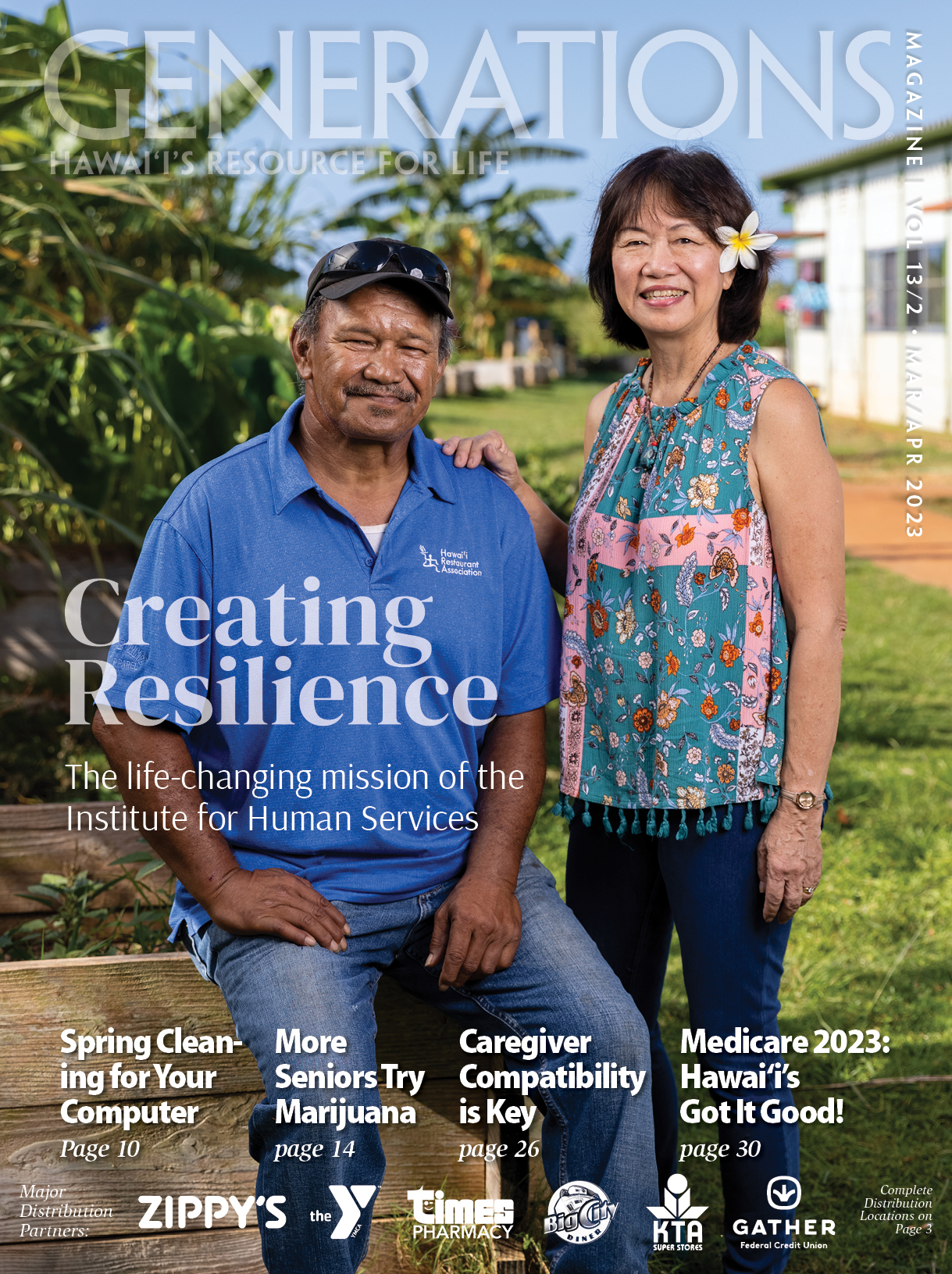
If you’re looking for an opportunity to help advance an IHS client’s skillset and job-readiness, New Leaf is a program that provides landscaping and other yard services, janitorial and handyman services. They also offer monthly cleaning and Kūpuna Specials. The fee you pay for these services allows IHS to pay the participants a stipend while they are learning valuable skills to help them get back to work and back into the community — like Uncle John, pictured with Connie Mitchell on the cover, who graduated from that program and is now employed as lead landscaper at Kahauiki Village.
● New Leaf program:
808-219-3952 | NewLeaf@ihshawaii.org
ihshawaii.org/newleaf/

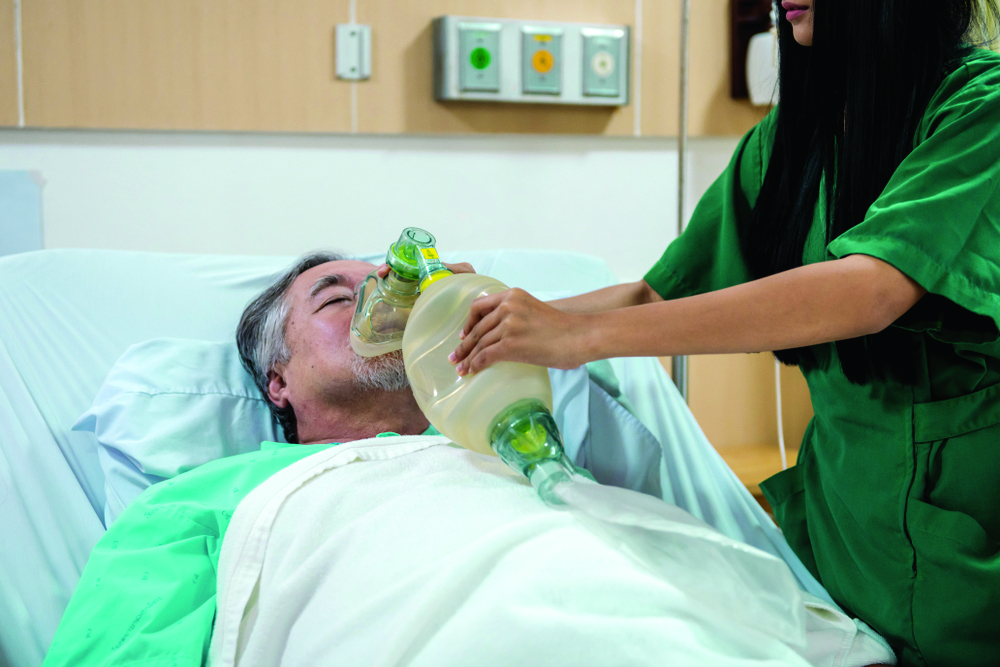 Many of us go through life believing everything will go according to plan. However, as the saying goes, even the best-laid plans go astray. So, to avoid unnecessary interruptions later in life that can be both financially and emotionally costly, it is wise to plan now for the possibility of incapacity.