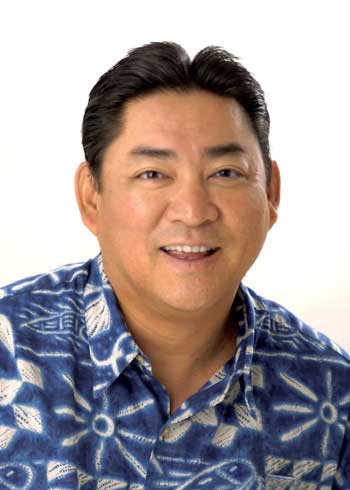
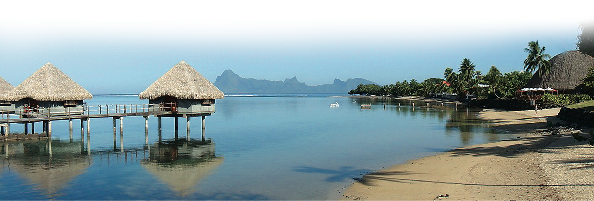
 Hawai‘i is paradise but so are her Pacific sisters – the Islands of French Polynesia. Earlier this year, I drift snorkeled over coral reefs in the beautiful lagoon of Bora Bora, swam in shallow water with sting rays and black-tipped sharks, visited a black pearl farm and spotted spinner dolphins up close off the island of Moorea.
I am a group leader for the Road Scholar Program (formerly known as Elderhostel), a not-for-program that offers adventures for lifelong learning. As a retired University of Hawai‘i marine biologist, traveling to Tahiti and sailing through French Polynesia was one of the highlight events of my life.
Road Scholar Programs are designed for adults of retirement age. The program offers more than 7,000 educational tours in all 50 states and 150 countries. Alongside local and renowned experts, you can experience in-depth and behind-the-scenes learning opportunities, from cultural tours and study cruises to walking, biking and more.
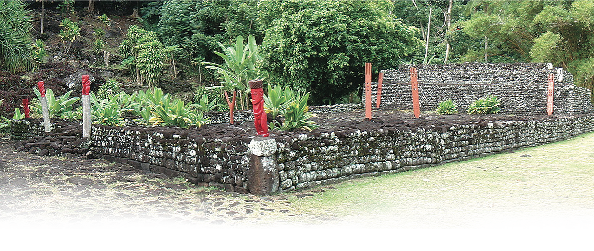
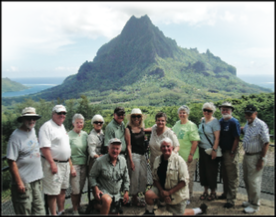 For our program — Heart of French Polynesia — the first two days of the trip were spent getting acquainted with Tahiti. We made ourselves comfortable at our great hotel with a beautiful, sandy beach and a coral reef just offshore that was teeming with colorful tropical reef fish. A daylong bus tour took us for a drive through the city of Papeete, to a cascading waterfall, a visit to the Paul Gauguin Museum and a stop at a carefully restored historic temple called a marae. As part of the Road Scholar program, we had a private local guide, who shared Tahiti’s history, people and culture with us. We visited the local open market with many booths displaying the abundant tropical fruit, fresh reef fish, and various crafts and fabrics.
 Then it was time to explore the Pacific! We boarded the luxurious cruise ship Paul Gauguin, which is specially designed to enter the shallow lagoons of the Islands. The crew was attentive and gracious, and the dining service was outstanding. Complimentary wine and other beverages added to the enjoyment of a relaxed and comfortable atmosphere where fellow travelers shared the events of the day’s adventures. After dinner everyone retired to comfortable cabins with a view.
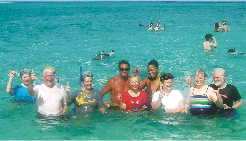 Our snorkeling excursions at each island stop began with a shuttle from the ship to the pier, where we transferred to a local dive boat that was either a catamaran or large outrigger canoe. The boats accommodated us well with large outboard motors to speed us along to our next dive site. Gratefully, they also featured canvas covers to protect us from the tropical sun while underway. The boat operators were good singers with ‘ukulele and lots of fun entertainment. The dive locations offered something for everyone. On drift snorkels we entered the lagoon in about 10 feet of aqua-clear water over a coral reef and then floated effortlessly down a slow current while we “soared” past schools of fish and colorful coral mounds. If you wished to linger in one area, swimming against the current allowed you to hover over the bottom. The boat remained close by if you wished to be picked up early. Snorkeling with stingrays and black-tipped sharks may sound dangerous, but the years of boat tours have conditioned the fish to calmly swim up and wait for a handout of fish food. They were waiting for our arrival! Snorkelers were invited to either wade in chest-deep water over a soft sandy bottom, swim out to observe the feeding or remain aboard to watch.
 Road Scholar is for adults who love to learn for learning’s sake. Road Scholar provides a memorable learning experience in an informal and friendly environment. If you enjoy exploring new ideas and places, and meeting interesting people who share your interests and love of learning, then Road Scholar will be perfect for you. My fellow travelers ranged in age from 45 to 85 (average age for tours is typically mid-60s to mid-70s), and the excursions, although active, are not strenuous. If you enjoy the tropics and snorkeling, a trip to the Pacific may well be the highlight of your life, too. Hope to see you in Tahiti!
This trip was arranged by Pacific Islands Institute, an educational travel company on O‘ahu, specializing in learning adventures in Hawai‘i and the Islands of Polynesia, Melanesia and Micronesia. Pacific Islands Institute operates Hawai‘i and South Pacific programs on behalf of Road Scholar. For more program information, visit www.ExplorethePacific.com or call 808-732-1999. To learn more about Road Scholar and travel geared toward seniors, visit www.RoadScholar.org and search for Paul Gauguin or call 1-800-454-5768.

 Falling down is nothing new. We have been doing it all our lives. We fell as infants, as kids, as teenagers and even, awkwardly, as adults. The price for an active, healthy life has been an occasional fall and normally it is no big deal. When young and strong, you fell and “bounced” right back up. It’s a different story, though, for older adults. Any fall can be very serious.
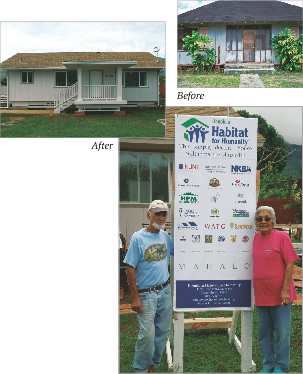 When Lehua Fuller first showed her Waimanalo home to Honolulu Habitat for Humanity staff, they were amazed. She had managed to raise 12 children in her four-bedroom plantation-style home, which was in grave disrepair. There were holes in the floor and roof, severe termite damage and problems with the electrical and plumbing. In Honolulu, Wallace Bailey, a disabled retired veteran, and his wife Frances, decided to contact Habitat for Humanity for help after living in their dilapidated home in Papakolea since 1962. And, JT and Thelma Vasconcellos, a retired couple living in their 60-year-old home in Waialua, knew that their home needed more work than they could afford. Thanks to their partnership with Honolulu Habitat for Humanity, construction started on the Fuller and Bailey homes in July, and JT and Thelma Vasconcellos moved into their new Habitat home in April 2011.
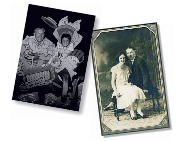 My interest in this field piqued while attending UH, Manoa in 1993 in pursuit of a degree in Gerontology. In a Sociology of Aging course, the professor lectured about the importance of storytelling throughout history. He talked about elders transferring valuable cultural and personal information from one generation to the next.
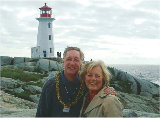 Mrs. Matthews [Linda Coble] and I went on a bus tour of Nova Scotia, Prince Edward Island and points east in Canada. We had never been to that part of the world before. We had 20-plus fellow travelers along for the ride … and it was fantastic!