Category: Articles

  • “Lite” and Creamy Pasta with Asparagus and Shrimp

    Lite and Creamy Pasta - Generations Magazine - June-July 2013A colorful summer delight. You’ll want to use a nice rigatoni (tube) or farfalle (bowtie) pasta for this recipe. The shape of the pasta is perfect with the creamy sauce and serves as the perfect backdrop for the beautiful greens and pinks of the asparagus and shrimp.

    1 lb uncooked pasta
    4 oz lite or fat free cream cheese
    1 cup chicken stock
    Juice of 3 lemons (reserve lemon zest)
    1 lb U16-20 shrimp (shelled and deveined)
    1 bunch asparagus (woody part discarded)
    Salt and fresh ground black pepper to taste
    Parmesan cheese

    Put a large pot of water over high heat and bring to a boil. Add peeled/cleaned shrimp and asparagus and poach for 2-3 minutes or less, until shrimp has just turned pink. Remove from heat and set aside. Prepare pasta according to package directions, drain, reserving 2/3 cup of the cooking liquid. Heat a small sauce pan over medium heat and slowly add the cream cheese to the stock, using a whisk to break up and blend the two ingredients. If the sauce is too thick, add some of the cooking liquid. Once the cream cheese has been incorporated, whisk in the lemon juice.

    Slice the asparagus on the diagonal and add to the cream sauce, along with the shrimp. Toss the sauce with the pasta, top with Parmesan and the lemon zest and serve.

    Time: 40 minutes | Serves: 4–6


    Chef Michi founded ‘Cooking Fresh For You’. Her recipes center on healthy and flavor-packed dishes. Visit www.cookingfreshforyou.com or contact via cookingfreshforyou@gmail.com, 808-286-6484. Also, visit her Cooking FRESH locations: 909 Kapahulu Ave. | Queens POB I – 1329 Lusitana St. |
    Queens POB II – 550 S. Beretania St. | Lunch Truck – UH Manoa on East West Rd. by Kennedy Theatre.

    A colorful summer delight. You’ll want to use a nice rigatoni (tube) or farfalle (bowtie) pasta for this recipe. The shape of the pasta is perfect with the creamy sauce and serves as the perfect backdrop for the beautiful greens and pinks of the asparagus and shrimp. 1 lb uncooked pasta 4 oz lite or…

  • “It’s Not Like It Was, But It Will Work”

    My dad had a saying when he was trying to fix things around the house. He was a wonderful man, let there be no question. But when it came to being a “handy-man” — not so much. When he would finish a project, no matter how big or how small, he would finish with this phrase — which was used over and over again by many of his friends [and now, his son] — “It’s not like it was, but it will work.”

    Duct tape has saved many a marriage. I know this for a fact. Elmer’s Glue has saved many a school project. Again, I speak from experience. There is a time and a place for using duct tape or glue. But when it comes to our personal well-being, best to see a professional.

    It’s one thing to try to replace the hinges on a cupboard door. It’s another to diagnose whether or not you have a cold or double pneumonia.

    Last month, we visited a senior center where the staff practiced something called “Namaste.” I don’t know all the details about the practice, but I will tell you this. It involves the senses of touch, sound and smell. Seniors, many of them with dementia, were obviously connected to the practitioners during the practice of Namaste.

    This brings us back to my original statement. “It’s not like it was, but it will work.” As we age, we may look for many ways to feel better. It may be traditional western medicine, it may be medicine involving our native culture, it may be something like Namaste. But the important thing is — talk to a professional. Find out what he/she has to say about what ails you. The answer may be simple — it may be complex. But don’t try to fix it yourself without help. There’s a reason those healers have worked to become who they are. The answer you don’t want to hear is, “It’s not like it was, but it will work.”


    The Elderhood Project airs on KHON2 Friday morning news at 5:45 a.m. and Thursday news at 5 p.m.

    My dad had a saying when he was trying to fix things around the house. He was a wonderful man, let there be no question. But when it came to being a “handy-man” — not so much. When he would finish a project, no matter how big or how small, he would finish with this phrase — which was…

  • 2013 Legislature Sends Mixed Signals

    As the 2013 legislative session came to a close, volunteer advocates welcomed the passage of legislation tied to AARP Hawai‘i’s long-term care priorities — but cautioned that more must be done to address a growing elder-care challenge that threatens to overwhelm individuals and families.

    “AARP welcomes funding commitments for Kūpuna Care and Aging and Disability Resource Centers,” said AARP Hawai‘i State President Gerry Silva. “At the same time we believe state government should be more proactive in preparing older residents and their families to cope with the rising cost of care eldercare, which threatens their retirement security.”

    Funds were provided for one of the Commission’s recommendations — an actuarial and feasibility study of a mandatory public insurance program for Hawai‘i’s working population. But another critical component — the need for public education to help residents understand the risks associated with long-term care — went unfunded.

    “Education is time-sensitive. Planning takes time and time is running out for many who will soon need care,” Silva said. “Unless we provide Hawai‘i residents with basic information about long-term care, including the different types of care services available, how much they cost, and the risk of needing some form of care in the future, many older residents and their families are in for a rude awakening as they realize how limited their options are.”

    The Long-Term Care Commission was established by the Legislature in 2008 (Act 224) to conduct a comprehensive assessment of Hawai‘i’s long-term care system and recommend changes. Its report identified a convergence of forces that spell trouble for Hawai‘i’s future if not acted upon, including 1) a rapidly aging population, 2) a lack of public funding to support the medical needs of its seniors, and 3) a population that isn’t planning and is largely unprepared to pay for its own care.

    Many studies support the Commission’s assessment that eldercare is beyond the reach of most Hawai‘i residents. In a 2012 AARP survey of Hawai‘i residents age 50+ nearly two-thirds (64 percent) said they are not confident they can afford to pay for even one year in a nursing home. A separate national survey last year pegged the annual cost of one year in a private nursing home in Hawai‘i at $125,000.

    “We’re asking the state to sound the alarm — just as it does in the face of natural disasters such as hurricanes and tsunamis,” Silva said. “Sound the alarm for the ‘silver tsunami’ so that people can prepare for what may be a devastating blow for our elders and their families.”

    For an overview of AARP’s priority outcomes for the 2013 session, go online to http://states.aarp.org/legislature-funds-long-term-care-priorities-selectively/.


    Contact AARP Hawai‘i for more information:
    State Office: 808-545-6024 | Toll-Free: 866-295-7282
    hiaarp@aarp.org | www.aarp.org/states/hi

    As the 2013 legislative session came to a close, volunteer advocates welcomed the passage of legislation tied to AARP Hawai‘i’s long-term care priorities — but cautioned that more must be done to address a growing elder-care challenge that threatens to overwhelm individuals and families. “AARP welcomes funding commitments for Kūpuna Care and Aging and Disability Resource Centers,”…

  • How Much Money Do I Need?

    The “million dollar” question many of those preparing for retirement ask themselves is simply stated but not necessarily easy to answer — “how much money do I need to save to secure a comfortable retirement?” In some circles, this is referred to as “the number” — that magical figure that tells pre-retirees how prepared they may be.

    A recent survey from Ameriprise Financial found that working Americans ages 50–70 with at least $100,000 in investable assets estimated that what’s needed to comfortably retire, on average, was $930,000.

    But what does that number really mean? How important is it? What assumptions must you make to arrive at a number — and how many rapidly changing factors impact your number? Preparing for retirement is about much more than arriving at a number, but some calculation is necessary.

    Calculate Your Retirement Expenses

    When determining how much you’ll need to save, it’s helpful to think in terms of how much income you’ll need to withdraw to cover expenses. But projecting future spending is an inexact science. Some expenses might go away (mortgage, FICA taxes, retirement plan contributions), but you may also have more time and energy to spend money on things you need and want to do. However, medical expenses could greatly increase too.

    Essential Expenses

    These are the required costs associated with daily living — food, shelter, utilities, transportation, insurance (health, life, long-term care) and taxes — that most likely will persist in retirement.

    Lifestyle Expenses

    This is the “fun” part of retirement — interests that you want to pursue such as golfing, travel, owning a vacation property or starting a business. To make these lifestyle choices a reality, enough money needs to be in place to finance them. Though separating out lifestyle expenses from required expenses can help you prioritize, using funds from your nest egg too quickly can jeopardize your long-term financial security. Spending on lifestyle needs can be adjusted as needed throughout retirement, as these are considered discretionary expenses.

    Your remaining available assets can be used to fund lifestyle expenses. You may choose to invest this money more actively with a strategy of drawing down assets over time using a sustainable withdrawal rate.

    A true number may be elusive, but using this process, you may have a better sense of what your ultimate savings goal is. It may be useful to set multiple goals — or “numbers” — to reach enough to cover essential expenses and then lifestyle expenses. Beyond these goals, you might also consider the amount you’ll need to cover unexpected expenses in retirement and to leave a legacy.

    Planning financially for retirement can be complex as you near retirement: taking appropriate steps to calculate income needs in an evolving economic and political environment can become more complicated. Consider working with a financial professional who can help you work toward your short- and long-term goals.


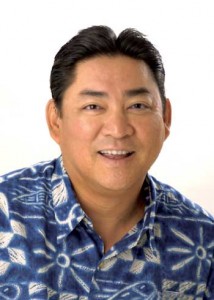
    Michael W. K. Yee at (808) 952-1222 ext. 1240

    Michael W K Yee, CFP®, CFS®, CRPC®, is a Financial Advisor and CERTIFIED FINANCIAL PLANNER practitioner™ with Ameriprise Financial Services, Inc. in Honolulu, HI. He specializes in fee-based financial planning and asset management strategies and has been in practice for 25 years. To contact him, michael.w.yee@ampf.com, 808.952.1222 ext 1240, 1585 Kapiolani Blvd., Suite 1100 Honolulu, Hawai‘i 96814.
    Advisor is licensed/registered to do business with U.S. residents only in the states of Honolulu, Hawai‘i.
    1 The Money Across Generations IISM study was commissioned by Ameriprise Financial, Inc. and conducted by telephone by GfK in December 2011 among 1,006 affluent baby boomers (those with $100,000 or more in investable assets); 300 parents of baby boomers; and 300 children of baby boomers at least 18 years old. The margin of error is +/- three percentage points for the affluent boomers segment and +/- six percentage points for the parents and children of boomers segments.
    2 United States Department of Labor, Wage and Hour Division, Family and Medical Leave Act http://www.dol.gov/whd/fmla/
    Ameriprise Financial and its representatives do not provide tax or legal advice. Consult with your tax advisor or attorney regarding specific tax issues.
    Brokerage, investment and financial advisory services are made available through Ameriprise Financial Services, Inc. Member FINRA and SIPC.
    ©2012 Ameriprise Financial, Inc. All rights reserved.

    The “million dollar” question many of those preparing for retirement ask themselves is simply stated but not necessarily easy to answer — “how much money do I need to save to secure a comfortable retirement?” In some circles, this is referred to as “the number” — that magical figure that tells pre-retirees how prepared they may be. A recent…

  • Feeling Right at Home . . . in Vegas

    Generations Magazine - 2013-06-07 - Las Vegas - Image 01If you thought it was just the low prices that enticed thousands of Hawaii’s seniors to book their Vegas trips through Vacations Hawai‘i, take a closer look. Vacations Hawai‘i offers 4 flight patterns per week on non-stop flights between Honolulu & Vegas, on comfortable wide body 767 aircraft. It’s the most comfortable aircraft to fly across the Pacific. With a 2-3-2 seat configuration and twin aisles, you’re never more than a seat away from an aisle. A Vacations Hawaii escort travels with each flight to ease the normal challenges that come with traveling. It’s not uncommon for us to transport a fair number of customers who require wheelchairs and with the assistance of porters, we provide a seamless transition for them from the aircraft, through the airport and on to our buses. Should you need assistance during your stay at our 3 popular downtown properties, the California, Fremont and Main Street Station Hotels, Vacations Hawaii’s staff is just a phone call away. And of course the biggest reason customersGenerations Magazine - 2013-06-07 - Las Vegas - Image 02 keep coming back, is the great time they have in Vegas with old and new friends!

    The California Hotel and Casino, better known as “The Cal,” will make you feel right at home from the moment you step inside the door. With its inviting tropical island decor, you’ll feel like you’re in paradise. Genuine Aloha Spirit is what you’d expect to find at the Cal, and that is why it is affectingly known as the 9th island.

    When you arrive at the Cal we invite you to get your game on. There are plenty of ways to play — live-action gaming, more than 1,000 video poker and reel machines, and even a satellite-fed Sports Book, at the Cal, you’re bound to hit it big! Whether you’re a serious Generations Magazine - 2013-06-07 - Las Vegas - Image 03gambler or playing your first slot machine or table game, our friendly staff will make you feel at ease.

    The California Hotel and Casino also offers a variety of shopping choices for you. We have several specialty shops which are located on-site. The Bridge Avenue retail area offers a bit of the islands, some special treats and convenient gift shops.

    From the Cal Club to the Redwood Bar & Grill, the Cal offers some very unique choices for every appetite with our distinct dining venues!

    Within minutes of the Fremont Street Experience, you can enjoy live nightly entertainment, an exciting light show, and if you’re feeling really adventuresome you can enjoy a thrill of an amazing zipline.


    VACATIONS HAWAI‘I
    Oahu: 808-591-4777 | Neighbor Isles: 800-548-8951
    www.boydvacationshawaii.com

    Vanessa May, Vacations Hawai‘i Marketing Manager
    California, Fremont, & Main Street Station
    Direct: 702-386-4419 | Cell: 702-249-7494
    Fax: 702-386-4463

    If you thought it was just the low prices that enticed thousands of Hawaii’s seniors to book their Vegas trips through Vacations Hawai‘i, take a closer look. Vacations Hawai‘i offers 4 flight patterns per week on non-stop flights between Honolulu & Vegas, on comfortable wide body 767 aircraft. It’s the most comfortable aircraft to fly…

  • Who Are You Calling a Senior?

    Movie night and what to see? Standing in line, I looked up to see what was playing. Getting up to the booth to pay for my ticket, the young man asked me, “What movie Sir?” I replied, “Life of Pi” please, I’ve enjoyed pie for years and I’m so happy they finally made a movie about it”. The cashier looked at me strangely and said “Ok Sir that will be $7.50 please”. I said, “Wow, $7.50! Must be some kind of a special today?” The kid looked up and said, “Well Sir, seniors are $7.50. Regular Adults are $10.00. You’re considered a Senior Adult so you get to save $2.50 on your ticket”.

    “What! I’m not ready to be called a senior! I’ll pay for 1 Adult ticket please!”

    And this happened to me when I was only 49! Damn! Maybe I saved $2.50 but I lost years of dignity in that one quick transaction.

    So what happened, where did the time go for God sakes? Just an hour and a half ago it was 1965 and graduation day at Kaimuki! Now I stand and look back and say what the hell happened! Close to 50 years have passed and now it’s the beginning of the 4th quarter. They call it the Wonder Years, yeah, ok. You wonder what the hell happened to the time.

    We are called the Baby-boomers, born between 1946 and 1964, and we were conceived from the Greatest Generation! Our Moms and Dads lived through WWII and when they came home they made babies, a lot of them. Baby Boomers — we are the generation that tested the Government, witnessed the assassinations of our leaders, and we invented Love, Sex and Rock-n-Roll. We fought in nasty wars, came home to work and became doctors, lawyers, teachers, bankers and Radio Personalities! We dedicated ourselves to our jobs and families and then had mid-life crisis and went in search for the meaning of life. We were and still are a fiercely independent bunch of World War ll babies and we continue to make a difference. We are probably the last generation who had a thriving middle class and probably will be the last generation to collect Social Security and Medicare as we know it.

    So the question is, have you been playing your fiddle or storing your nuts or playing your fiddle AND storing your nuts. If the latter, good going! Preparing for the fourth quarter is tricky. I’m not a financial adviser but it’s good to have a few bucks around to help your co-pay as you go along. But the most important part of the fourth quarter is your sense of humor and balance. It truly comes down to Mind, Body, Soul and laughter. This is way more important than any bank roll you might have, because if you don’t have balance and laughter then you have nothing.

    And now it’s Generation X and Generation Y who have to start to pay their own way and they need to drop the word Entitlement! They need to get off their okole’s and get to work. Baby Boomers are not afraid of confrontation and will not hesitate to challenge the establishment. The funny thing is, WE are the Establishment now!


    Join in a conversation with Frank B. Shaner on facebook and experience his art online at www.frankbshaner.com.

    Movie night and what to see? Standing in line, I looked up to see what was playing. Getting up to the booth to pay for my ticket, the young man asked me, “What movie Sir?” I replied, “Life of Pi” please, I’ve enjoyed pie for years and I’m so happy they finally made a movie…

  • Book Review: 65 Things to Do When You Retire

    Generations Magazine - 2013-06-07 - Book Review - Image 01When you think of retirement, you may dream of spending carefree days traveling with friends or loved ones. If you’re at that stage of life, 65 Things to Do When You Retire: Travel can help you steer toward a fulfilling and enjoyable retirement, whether you are looking for physical adventure, a spiritual journey, or to go sightseeing in far-flung places.

    In this book, more than 65 writers and travel experts reveal their own personal adventures and offer practical advice about how retirees can have the time of their lives, whether traveling with a group, with a spouse or partner, or on their own. Their fun and informative essays describe glorious getaways, the best places for retirees to visit — and relocate — and how to plan for a “great escape” without breaking the bank.

    The contributors cover such fascinating trends as:

    Taking a “golden gap year”— a new twist on the common practice of high school grads taking a year off to travel before college, only this time it’s the boomers who are taking a year to explore the world before settling into their retirement.

    Going “glamping”— This fusion of glamour and camping is for those travelers who love the outdoors but want to travel in comfort.

    Living nomadically — Lynne Martin caused a stir when The Wall Street Journal published her article about how she and her husband sold their home, put their valued possessions in storage, and set off to see the world as “senior gypsies.” Her account was immensely popular with WSJ’s readers, obviously touching a chord with many who dreamed of doing the very same thing.

    65 Things To Do When You Retire: Travel is a 5.5” x 8.5”, 400-page, soft cover book, and retails for $16.95. It’s available in bookstores and at www.sellerspublishing.com. Or, call Sellers Publishing at 1-800-625-3386.

    When you think of retirement, you may dream of spending carefree days traveling with friends or loved ones. If you’re at that stage of life, 65 Things to Do When You Retire: Travel can help you steer toward a fulfilling and enjoyable retirement, whether you are looking for physical adventure, a spiritual journey, or to…

  • Preference, Dignity, and Choice

    Are you or someone you know living in a nursing home or other long-term care facility? Are you interested in moving back home to the community? The Hawai‘i Going Home Plus (GHP)project can help to explore community choices and services available, create a care plan to meet your individual needs, and find the housing and services to help you.

    The GHP project helps older adults living in hospitals or nursing facilities for three months or longer. They will assist older adults in finding housing (subsidized or adult foster home) if the older adult does not have a home to return to. Assistance with cooking and bathing are also available.

    GHP is a federally grant funded program from the Centers on Medicare and Medicaid Services that began in 2007, operated by the Hawai‘i Department of Human Services, Med-Quest Division.

    Who is eligible for help?

    • Older adults and younger disabled persons living in hospital or nursing facilities for 3+ months
    • Medicaid eligible
    • Meets nursing home level of care requirements (your doctor can help to determine this)
    • Residents from all islands can participate

    Older adults are eligible at no cost to participate in the program. If you would like to participate, or know someone living in a nursing facility, hospital or ICF-MRc, who does, please contact GHP:

    Oahu:
    (808) 524-3370 or 692-8166
    (808) 692-7182 (V/TT)

    Neighbor Islands:
    1-800-316-8005
    1-800-603-1201 (V/TT)

    Also, please visit online for more information at: www.cds.hawaii.edu/goinghome.

    Are you or someone you know living in a nursing home or other long-term care facility? Are you interested in moving back home to the community? The Hawai‘i Going Home Plus (GHP)project can help to explore community choices and services available, create a care plan to meet your individual needs, and find the housing and…

  • Playing for the Fun of It!

    John Macadangdang - Generations Magazine - April-May 2013Twenty-four years ago, Herbert Yasuhara, then Halawa Park Director, wanted to find an activity that his senior club members could participate in to keep active and exercise. He said, “You see, most of the seniors back then would come to the park and sit down and play games like Mah Jong and Hanafuda.”

    It’s all smiles as teams compete in “Tunnel Vision” in the gym and John Macadangdang of Ko‘olau Senior Hui plays “Peg Ball.”

    Senior Classic Games  - Generations Magazine - April-May 2013
    Keora Blakeley, Karen French, Sumiye Hirata, Grace Kimura and Betsy Miyahira

    The Department of Parks and Recreation Annual Senior Classic Games (organized games created for seniors) was held on March 21, 2013 at Halawa District Park with a total of 87 teams entered in four different games. There were 261 participants, not including spectators, enjoying a beautiful spring day. Divisions for the games were: Senior Division (55-69 yrs.) and Master Division (70+ yrs.). The games consisted of Tunnel Vision, Peg Ball, Pin Ball and Nine Gates. The creator of the games, Herbert Yasuhara, retired 20 years ago from the Department of Parks and Recreation. Thanks to Yasuhara’s son, Randy, a Recreation Specialist the games continue on.

    Sponsored by Generations Magazine, individual achievement certificates and medals for winners were presented to each division for outstanding performance. For more information and to join in the fun and laughter, contact Recreation Specialist, Garrett Iwai at 768-3030 or by email, giwai1@honolulu.gov.

    Twenty-four years ago, Herbert Yasuhara, then Halawa Park Director, wanted to find an activity that his senior club members could participate in to keep active and exercise. He said, “You see, most of the seniors back then would come to the park and sit down and play games like Mah Jong and Hanafuda.” It’s all…

  • 101 Years . . . And Still Cookin’!

    Ida 100 Years - Generations Magazine - April-May 2013Turning 101 is no small feat. Yet, Aunty Ida still rises before dawn to pray the rosary, attend daily mass at Carmelite Convent Chapel and decorate with flowers. For more than a century, the warm-hearted Ida has touched people’s daily lives in countless ways — including President Obama.

    On one of Obama’s vacation trips back to Hawai‘i, the president was looking for some locally made jellies he remembered from his small-kid days in Hawai‘i. Ida’s niece, Charlene, who happened to be working at the vacation home said, “My Aunty Ida makes the best jams and jellies in Hawai‘i.” Ida gave Obama jars of liliko‘i, strawberry-guava jelly, papaya-pineapple and guava jam, guava chutney, liliko‘i butter and mango chutney. Once he and his family indulged themselves, he ordered more for the White House.

    Born Adelaide “Ida” Barboza Freitas on April 8, 1912 in Spreckelsville, Maui, Ida grew up in Nahiku near Ha¯na and then on Ka‘eleku Sugar Plantation on Maui. The family did much for themselves by planting gardens and raising chickens and pigs. Much of their resources came from the mountains around them — wild bamboo shoots and coffee, the grasses that stuffed the mattresses, the pulu (soft wool on tree-fern leaf stalks) that stuffed their pillows and the coconut husks that were used as brushes to scrub floors. Growing up in the country meant washing clothes in the stream, walking three miles to school and working in the cane fields during the summer.

    As a teen, Ida was sent to Honolulu to work. She became the housekeeper for Dr. Gaspar. At 17, Ida met and married Alfred Freitas and they raised three boys. After putting the boys thru St. Louis University and Alfred retiring after 40 years as a machinist, they became caretakers at the Catholic Youth Organization camp in Hau‘ula. Later, Ida moved to her current residence at the St. Stephen Diocesan Center.

    Today, Ida still is active with her church and socializes once a week at the Ko‘olau Senior Hui in Kane‘ohe. She still cooks meals for family gatherings. And she continues the tradition of making malasadas before lent and baking sweet bread for the holidays, calling family members to come and pick up their shares. She attributes her long life to prayer and hard work.

    Generations Magazine wishes Happy Birthday to Aunty Ida!

    Turning 101 is no small feat. Yet, Aunty Ida still rises before dawn to pray the rosary, attend daily mass at Carmelite Convent Chapel and decorate with flowers. For more than a century, the warm-hearted Ida has touched people’s daily lives in countless ways — including President Obama. On one of Obama’s vacation trips back to Hawai‘i,…

  • Your Favorite Charity in Your Estate Plan

    Charitable giving can be complicated, especially when it moves beyond cash or writing a check. A recent Forbes article provides some advice you may not have considered. The article is titled “Five Ways To Be Charitable Even If You Aren’t Bill Gates.” Take heart in knowing that even if you’re not Bill Gates, the “five ways” do not require the complexities of his estate plan.

    Here are the Forbes tips (with some commentary by yours truly) for your consideration:

    • Give the gift of education and medical care. Have you thought about giving your children or grandchildren in the form of a 529 college savings plan or a direct gift to the college? Gifts by way of 529 plans use up your annual gift tax exclusion (which is $14,000 per recipient per year as of 2013), but they are a wonderful way to benefit your loved ones. You can also pay tuition directly to a private school or college and not have to treat that payment as a gift for gift tax purposes. A similar exclusion applies to payments made directly to doctors, dentists, orthodontists or other medical care providers. These latter kinds of gifts are called “qualified transfers” and are worth discussing with your financial and estate planning advisors.
    • Give your IRS distribution to charity. Since you have to take your required minimum distribution anyhow, send it directly to a charity instead. This is a no-brainer if you are taking RMDs from your traditional IRA and are also charitably inclined. You won’t get a deduction, but you won’t have to take the charitable gift into income either. The net result is a win for you and your favorite charity. This strategy may have a limited shelf life, as it is set to expire at the end of 2013. Hopefully, Congress will make it permanent at some point.
    • Name your charity as your beneficiary on your retirement account. This option is appropriate if you’ve decided that left over retirement funds should pass to charity instead of loved ones. Be sure to designate your charitable beneficiaries accordingly! Note: The full amount of your retirement account given to charity is income tax free. If left to a non-charity, then the full amount is taxable as ordinary income, AND your retirement account is includible in your estate for estate tax purposes. If you are charitably inclined and have substantial retirement plan assets, this is an opportunity to avoid some double taxation (income tax+estate tax).
    • Donor-advised funds. By giving to a donor advised fund, you can give today, take the charitable deduction in this year’s taxes, but decide which charities to benefit next year or beyond. They are easy to establish too. In Hawai‘i, you can work with the Hawai‘i Christian Foundation or the Hawai‘i Community Foundation.
    • Charitable gift annuity. Are you keen on the idea of receiving a guaranteed lifetime monthly income, especially as an assurance in old age? If you also want to benefit charity, then consider hitting two birds with one stone by opting for a charitable gift annuity. Not every charity will do this for you, but it’s worth asking if your favorite ones will. One Hawai‘i charity that will offer charitable gift annuities is the YMCA of Honolulu.

    This is just an overview of the “five ways” featured by Forbes, so be sure to consult with your financial, tax and legal advisors regarding the appropriateness of each for your circumstances.

    Another important point to remember is that paying estate tax (the tax on owning stuff when you die) is 100% optional. You can give your loved ones a decent inheritance, benefit one or more charities for a term of years, and then have whatever is left of your estate go to your descendants. This is a very powerful technique, called a Charitable Lead Trust. Again, talk with your trusted advisors about whether this might make sense for you and your ohana.


    Scott Makuakane, Attorney at Law

    Specializing in estate planning and trust law.

    www.est8planning.com
    O‘ahu: 808-587-8227, Maui: 808-891-8881
    Email: maku@est8planning.com

    Charitable giving can be complicated, especially when it moves beyond cash or writing a check. A recent Forbes article provides some advice you may not have considered. The article is titled “Five Ways To Be Charitable Even If You Aren’t Bill Gates.” Take heart in knowing that even if you’re not Bill Gates, the “five…

  • Sports Enthusiasts Club for All Ages

    The Honolulu Quarterback Club, one of the nation’s oldest sports clubs, began in 1947 and is still going strong. At lunch time every Monday, you can hear little known and personal stories from past and present sports greats. “You won’t find these sports stories on the front page of the newspapers,” says one long-time regular attendee.

    From the early days, the “Chop Suey” of speakers came to share their remarkable stories and accolades from their respective sport. Some from the good ole days were KGU Radio’s Chuck Leahey, reporter Bill Kwon, swimmer Keo Nakama, surfer George Downey, golfers Ted Makalena and Jackie Pung, baseball pioneer and UH famed coach Les Murakami and football greats squirmin Herman Wedemeyer and Rockne Freitas.

    Quarterback Club - Generations Magazine - April-May 2013
    Ben Jay, UH Athletic Director and Linda Louie, Quarterback Club Secretary

    Some of the recent guest speakers have included UH Athletic Director Ben Jay, UH coaches: Bob Coolen, Dave Shoji, Bob Trapasso, Charlie Wade and other sports guests like Kale Ane (Punahou AD and football coach), Merv Lopes from Chaminade, sports writer Dave Reardon, still active World Weightlifting champion Tommy Kono and Mary-knoll High School basketball coach Kelly Grant.

    If you are an avid sports enthusiast, sports nut or just love UH sports, come on down to the Honolulu Quarterback Club for lunch that meets each Monday at Maple Garden on Isenberg St. (11:30 a.m. –1 p.m.). Enjoy a wonderful Chinese luncheon buffet at a reasonable $15. For more information on upcoming speakers, contact Club President Herman Stern at 220-6454 or email HermanHStern@msn.com.

    The Honolulu Quarterback Club, one of the nation’s oldest sports clubs, began in 1947 and is still going strong. At lunch time every Monday, you can hear little known and personal stories from past and present sports greats. “You won’t find these sports stories on the front page of the newspapers,” says one long-time regular…