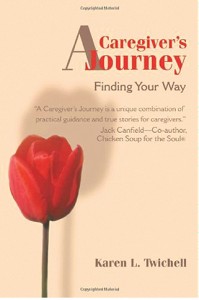
“Karen Twichell presents a unique combination of practical guidance and true stories for caregivers.” — Jack Canfield, Co-Author, Chicken Soup for the Soul®
Caregiving is as much a crisis as the disease or catastrophe that calls us to service. With little warning and less training, we assume responsibility for our loved one. Karen Twichell, R.N. has written a book for us. Twichell knew bed care, but when caring for her own mother, she found that medical training did not address overcoming fear, exhaustion and balancing two jobs.
Twichell put together A Caregiver’s Journey, a powerful, truthful and most of all, helpful guide that should be in every adult’s home library, and shared with every friend called to care for a loved one.
Millions of caregivers are providing long-term support for patients with Cancer, AIDS, Alzheimer’s, strokes, heart disease and other chronic diseases. With most of the attention focused on the disease crisis, caregiving family or friends with no medical or social work experience become overwhelmed, but often feel shy to even ask for help. This book’s main concern is the health, stability and perseverance of the loving caregiver.
A Caregiver’s Journey addresses both the practical and emotional issues facing those new to patient care with instruction, references and personal anecdotes. Twichell shares real-life experiences that touch the heart and demonstrate strategies to manage difficult times. Informative chapters packed with information and dozens of resources provide hope. A companion workbook offers charts and journals to keep track of medications and schedule the nitty-gritty details of 24/7 care.
A Caregiver’s Journey — Finding Your Way By Karen L. Twichell Available at www.amazon.com | ISBN 0595168353
Caregiving is as much a crisis as the disease or catastrophe that calls us to service. With little warning and less training, we assume responsibility for our loved one. Karen Twichell, R.N. has written a book for us. Twichell knew bed care, but when caring for her own mother, she found that medical training did…
Medicare’s Open Enrollment Period (also called the “Annual Enrollment Period”) is each year from Oct. 15th — Dec. 7th. Each year this is your opportunity to do a Medicare Checkup:
Will my plan still be available in 2016?
Is my plan still affordable (looking at premiums AND copays)?
Are there any new health or drug plans available in my area that my favorite doctors will work with?
Here are some questions that we often hear from consumers:
Do I have to change plans?
No. If your plan works for you and provides coverage, is affordable and still available in your area then you can stay with that plan automatically. You may want to do that Medicare Check-up to look at all options.
If a plan premium is higher than others does it mean it is a “better” plan?
No. You should not base your decision solely on a plan premium. You should compare benefits and copays and make sure your doctor works with the plan. You might also want to check out the plan’s Medicare 5-Star Rating, which is available at www.medicare.gov after October 15th. Medicare looks at data received by the health plan and you, the customer, to rate the plans with a 1-Star (lowest) to a 5-Star (highest). Hawai‘i has been very lucky to have a 5-Star plan since Medicare started the ratings. We hope to have more than one 5-Star plan in 2016.
What is a Medicare Supplement (Medigap) policy?
A Medigap policy pays after Medicare and you may have little out of pocket costs. Private insurance companies sell it and the federal government in most states standardizes the benefits. What may differ is the premium and any specific state laws that apply.
I have tried to navigate the Medicare system and I need help. Who can I call in Hawai‘i?
You can call or email the Hawaii SHIP — State Health Insurance Assistance Program. We are a network of trained and certified volunteers who can help you walk through the system and screen to see if you qualify for any help paying for Medicare’s costs.
Hawai‘i SHIP (State Health Insurance Assistance Program) 1-888-875-9229 | 808-586-7299 help@hawaiiship.org | www.hawaiiship.org facebook.com: Hawaii SHIP
This SHIP project was supported, in part, by grant number 90SA0004-02-00 from the U.S. Administration for Community Living, Department of Health and Human Services, Washington, D.C., 20201. Grantees undertaking projects under government sponsorship are encouraged to express freely their findings and conclusions. Points of view or opinions do not, therefore, necessarily represent official Administration for Community Living policy.
Medicare’s Open Enrollment Period (also called the “Annual Enrollment Period”) is each year from Oct. 15th — Dec. 7th. Each year this is your opportunity to do a Medicare Checkup: Will my plan still be available in 2016? Is my plan still affordable (looking at premiums AND copays)? Are there any new health or drug…
In 1992, when Hurricane Iniki hit the islands, my mother-in-law refused to leave the house. Both Linda and I were working and we called her over and over, trying to get her to go to a shelter. She wouldn’t leave her beloved dog behind and at that time, not many shelters accepted pets. Fortunately, she rode out the storm, in the dark, hugging the pup.
This brings us to Puna on the Big Island. Neighborhoods there took a serious hit from tropical storm Iselle. I know this much about Puna side of Hawai‘i Island: there are families kupuna who have lived there for years and would react just like my mother-in-law. They would NOT leave their homes. It’s not just a house — it’s a HOME. It may be because of a pet. It may be because of a koa rocker in the living room. It may be because of photo albums that keep their memories alive.
Experts tell us that aging in place — even during a storm — is a vital concept when it comes to our seniors. The longer they can stay in comfortable familiar surroundings, HOME, the better off they will be — physically, emotionally, spiritually, financially.
It is important to remember, we need to think about the needs of our seniors, not just on a day to day basis, but especially during times of emergency. They may experience confusion, stress — but if that senior relative or neighbor has your arm to lean on, you can make all the difference in the world. And if they have a pet, scoop that baby up and take it with you.
The Elderhood Project airs on KHON2 News Friday mornings at 5:45 a.m. And Thursday afternoons at 5 p.m.
In 1992, when Hurricane Iniki hit the islands, my mother-in-law refused to leave the house. Both Linda and I were working and we called her over and over, trying to get her to go to a shelter. She wouldn’t leave her beloved dog behind and at that time, not many shelters accepted pets. Fortunately, she…
When we go to the eye doctor to get a new prescription, the doctor will have us look through many different lenses, constantly asking us which lens provides us with the clearest vision. Much like the eye doctor, I believe that the role of the estate planning attorney is to provide you with estate plan options that most clearly reflect your vision for your plan. You see, both estate planning lawyers and eye doctors strive to provide clarity.
Estate planners must focus on three points for their clients: speaking clearly must accurately communicate your wishes and intentions to your fiduciaries and beneficiaries so what you intend is honored and respected; and making sure your written plan precisely mirrors your wishes.
When you seek counsel to pass on your estate, I believe you are asking for more than written legal documents like a Will and Trust. When you go for new glasses, you need more than frames. Proper lenses bring everything into focus.
Peace of mind comes from a sense that your written estate plan documents safely pass on your legacy, minimize tax, avoid probate, and prevent family fights. Perhaps you are concerned about also protecting the assets from creditors, predator or ex-spouses. Your plan has to be specific enough to speak clearly for you when you no longer can.
Your attorney must first look and listen attentively to understand your hopes and goals; then offer you options that create an estate plan that your heirs can read and understand without questions or doubt. When the prescription is perfect, and the glasses fit, it’s easy to see your way.
When we go to the eye doctor to get a new prescription, the doctor will have us look through many different lenses, constantly asking us which lens provides us with the clearest vision. Much like the eye doctor, I believe that the role of the estate planning attorney is to provide you with estate plan…
Patients getting used to supplemental oxygen for lung and heart problems sometimes worry whether they are getting enough. The only way to check oxygen “saturation” of the blood is with a blood test or by a new noninvasive technology called pulse oximetry.
Pulse oximeters are now readily available in pharmacies and are advertised for as little as $20 on internet sites. They quickly and easily measure pulse and use different wavelengths of light to estimate the amount of oxygen in the blood (from 70 –100 percent saturation). Oximeters clip easily onto a finger and shine a red light through the fingertip. Sports enthusiasts, pilots, and patients with chronic lung disease such as COPD or pulmonary fibrosis use pulse oximeters. Patients using oxygen at home or during air travel also can use them to ensure that they are receiving enough oxygen.
A saturation value above 90% is generally considered adequate. Studies show that about one-fourth of pulse oximeters in use are not accurate within 4 percent, so bring your pulse oximeter to your medical provider for a comparison before making any medical decisions regarding the accuracy of your readings, and talk with your provider about the use and limitations of these devices.
For more information, videos of oximetry and reviews on pulse oximeters, check online:
Patients getting used to supplemental oxygen for lung and heart problems sometimes worry whether they are getting enough. The only way to check oxygen “saturation” of the blood is with a blood test or by a new noninvasive technology called pulse oximetry. Pulse oximeters are now readily available in pharmacies and are advertised for as…
Have you reviewed your Medicare Plan this fall? If not, this article is for you. While It is common for a Medicare Advantage organization to add or change benefits each year, sometimes they may need to discontinue a plan altogether. If so, notification must be sent to the plan’s Medicare members by October 2, 2014. Because the plan will no longer be offered, the Medicare members are allowed to join a new Medicare plan anytime between October 15, 2014 and February 28, 2015. However, if you don’t take action before December 31, 2014, you will lose your prescription drug coverage and only have Original Medicare starting January 1, 2015. If you recently received a notice in the mail that your Medicare plan won’t be offered in 2015, be sure to take action now to avoid coverage interruptions or late enrollment penalties.
It is very important to carefully read your mail from your Medicare health plan each fall even if your plan will be offered in 2015. Medicare has an Annual Enrollment Period (AEP) every fall, when all enrollees may evaluate their current plan. It’s an opportunity for Medicare beneficiaries to decide if they want to remain in their existing Medicare plan or select a new one. If you are pleased with your current plan you do not need to do anything. If you review a plan and would like to join, you will be able to enroll in the plan from October 15, through December 7th. Your new plan will become effective the 1st day of the following year or January 1st.
CHOICES ABOUND
The array of choices from all the competing plans can be a bit overwhelming. So once a Medicare beneficiary has decided, the Medicare organization and the Centers for Medicare & Medicaid Services (CMS) provide many tools designed to ease the enrollment process. When the sign-up period begins October 15 and a Medicare bene-ficiary chooses to select a new plan, they have several options:
they may walk-in to the Medicare plan office to enroll in-person
schedule an appointment with a licensed Medicare agent
contact the plan’s customer service department to enroll by phone or visit the plan’s website and complete an online enrollment application
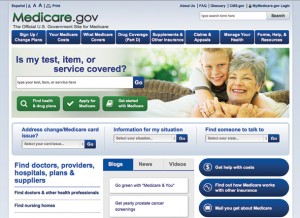
CMS also accepts enrollments, by telephone at 1-800-MEDICARE (1-800-633-4273) or by visiting www.medicare.gov online. Health plans offering Medicare products have toll-free numbers and websites where Medicare-eligible persons may gather additional information before enrolling.
In addition, the State of Hawai‘i has its own agency designed to assist seniors in reviewing the many Medicare plan options available: the State Health Insurance Program (SHIP) office, formerly known as Sage PLUS, offers volunteer counselors to help navigate through the various options. To make an appointment or for more information, call toll free, 1-888-875-9229 or 808-586-7299, or contact them by email at help@hawaiiship.org.
We strongly encourage all Medicare beneficiaries to pay close attention to the steps required to select a new plan. Be sure to act in time to continue coverage that meets your specific health care needs.
COMMON QUESTIONS
Here a few recent questions received regarding Medicare Plans that are ending:
When should a Medicare beneficiary impacted by the terminating plan receive notice?
Companies offering supplemental plans are required by CMS to notify members by October 2, 2014, if the plan will not be renewed for 2015. If you become aware that your Medicare plan is impacted and you have not received a notice by October 2, 2014, you should call your plan to confirm if your plan is ending and alert them that you have not received any notification. It may also be a good time to make sure the company has your correct current address, phone number and emergency contact.
Why is my plan ending?
There can be many reasons and it is best to check with your plan. A company’s decision to cancel one plan is usually a matter of managing the company’s resources to keep their plans financially healthy. Premiums or cost sharing may or may not change. One plan may be discontinued and other plans may be maintained or new plans may be introduced.
Can my existing plan provider auto-enroll me into their new plan options?
Plan providers are prohibited from auto-enrolling clients or switching clients to a new plan without the express permission of CMS If your current plan is no longer offered in 2015, the notice from your provider will have instructions for finding alternative coverage options available in Hawai‘i. You may also contact 1-800-MEDICARE to get help enrolling or visit www.Medicare.gov. Keep in mind, you cannot enroll in a 2015 plan until October 15, 2014 but you can start shopping for information about 2015 plans on October 1, 2014.
Will my premiums and cost sharing with a new plan be higher than my existing plan?
Your out of pocket costs may be more or less depending on the plan you select and the package of benefits and cost sharing it offers. This is precisely the reason you should take time to review all your options and choose a plan that is affordable for you.
Is there a deadline for choosing a new plan so my coverage is not interrupted?
Yes, if your plan is ending December 31, 2014, you may consider your available options and choose a new plan during the seven-and-a-half week Medicare Annual Election Period, which begins October 15, and ends December 7, 2014. If your plan has notified you that it will not be offered, you automatically qualify for a Special Enrollment Period (SEP), which allows you to choose a new plan through February 28, 2015. However, for coverage by your new plan to become effective January I, 2015, you must choose a plan before December 31, 2014.
Delaying your choice of a new plan pushes back the effective date of your coverage. If you exercise your SEP and choose a plan before January 31, 2015, your plan will not become effective until February 1, 2015. If you don’t choose a plan until February 28, 2015, your coverage will become effective March 1, 2015. The SEP available to you at plan termination expires February 28, 2015, unless other SEPs apply.
What happens if I do not select a plan before December 31, 2014?
If you do not enroll in a new plan and no SEP applies, you will be enrolled in Original Medicare (Parts A & B). Any prescription drug coverage under your former plan will end unless you pick up a stand-alone drug plan before December 31, 2014. If you get “Extra Help” to assist with prescription drug co-payments, or have full Medicaid benefits and the State picks up your Medicare prescription drug premium and co-payments, you will be enrolled in Original Medicare and a Medicare Part D stand-alone drug plan.
I am still confused and not convinced that I can handle this process without more help.
Lucky you live Hawai‘i! Your Medicare health plan will likely include plan options available in your area as part of the notification process. Health plans that are discontinuing want to help you with this transition. They have prepared documentation according to CMS guidance and regulations; they will also provide other contacts and websites where you can get additional help.
For more information, call us at 808-543-2073 or email us at getmedicare@aol.com; attend one of our seminars on this topic or invite us for a presentation at your church or senior group.
TAKE ACTION
If your medicare plan is ending this year; be sure to review all your options and enroll in a new plan.
Carefully read your notice-of-plan-ending
Note the date you received the letter
Seek the help of a translator if needed
Highlight deadlines and keep required copies
Schedule an appointment with an Agent
Review plan summary of benefits, formulary, provider directory and supplemental benefits
If you may be qualified, ask about Medicaid
Ask about “Extra Help” aka Low Income Subsidy (LIS), it may cover Part D drug premiums and reduce copays
Learn about guaranteed issue Medigap plans
Contact your doctor to confirm he accepts plan
Confirm your medication’s part of the formulary
Confirm affordability of premiums/cost-sharing
Complete all steps needed to enroll in new plan
Note the name of each person you speak with
Keep list of organization names and contacts
Accept a “verification of enrollment” call, if requested
Look for your new Medicare Identification Card
Provide new Medicare Insurance Card to doctors
Make your premium payments on time, if any
DOCUMENTS YOU MAY NEED TO COMPARE
Prepare yourself with this handy checklist that can help you provide information to a licensed sales agent, Medicare plan staff or a Medicare representative who can assist you in finding a new plan, or compare the options of an existing plan, that will meet your health care needs.
Find your Red, White & Blue Original Medicare Card that indicates when your Part A and Part B coverage started, call Medicare to request a new one, if needed
Locate any other active medical or prescription drug member identification cards, including Medicaid, if any
Provide a list of the name(s) of your primary care doctor and any specialists you have seen in the last 12 months
Get a list of all current prescription medications with dosage from your doctor’s office
Share a list of your favorite or most commonly used Medicare plan benefits
Prepare a list of any concerns
HOW MEDICARE ADVANTAGE SAVED A LIFETIME OF SAVINGS AND A LIFE
There is nothing that prepares you for a phone call saying that a loved one has been rushed to the hospital after suffering a massive stroke and heart attack. When it is your Mom and you live thousands of miles away, it is even more unsettling.
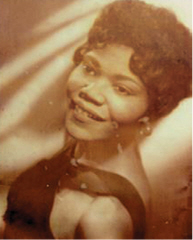
Martha Wilson in her 20s
Jimmie Wilson was totally unprepared when he received that call on January 1, 2013. He rushed to New Jersey to see his Mom, Martha Wilson. His worst expectations loomed in the Intensive Care Unit where amidst a hustle-bustle of nurses and doctors, his mom lay still and unresponsive with tubes everywhere, except around her forehead, which he gently kissed.
In shock and disbelief, he remembered their last conversation. Just two days earlier, he had wished her a “Happy New Year,” just a moment before the stroke of midnight.
Jimmie was fighting back his tears when an ICU nurse tapped his shoulder and said that the finance department wanted him to come by and complete some admissions paperwork. The woman in the finance department smiled warmly when Jimmie came in. She seemed a little too happy to tell him that she had verified that Jimmie’s mom had a new health plan, a Horizon Blue Cross Medicare Advantage plan that became effective at 12:01 am on New Year’s Day. She explained that his mom’s previous Original Medicare plan required a deductible, payable when you get admitted to the hospital. His mom would have been charged over $1,200 for this admission or Jimmy would have been asked to sign an agreement for a payment plan. Jimmie was so focused on his mom’s recovery that it hardly sank in. He thanked the lady and returned to ICU.
Jimmie never returned to work and stayed by his mother’s side daily as she recovered from the stroke that left her paralyzed on her left side, and her speech impaired. At week six in New Jersey, Jimmie was visiting his mom when the doctor stopped by and explained that this patient’s recovery was remarkable. She had been in the hospital for 45 days and now the treatment team was ready to start the evaluation process to release her to skilled nursing. The doctor told Jimmie that his mother’s six weeks of hospitalization might have cost half a million dollars. Out-of-pocket Original Medicare costs would have amounted to tens of thousands of dollars — enough to wipe out a lifetime of savings or all the equity in his mother’s home. Everyone in the hospital was talking about the lucky woman whose Medicare Advantage plan took effect on New Year’s Day. Jimmy watched in amazement, as the doctor and his mom reached up and gave each other a “high five.”
Jimmie’s mom spent a total of 90 days in the hospital and 30 more in skilled nursing. She recovered enough to move in with her son and return to a good quality of life.
Have you reviewed your Medicare Plan this fall? If not, this article is for you. While It is common for a Medicare Advantage organization to add or change benefits each year, sometimes they may need to discontinue a plan altogether. If so, notification must be sent to the plan’s Medicare members by October 2, 2014.…
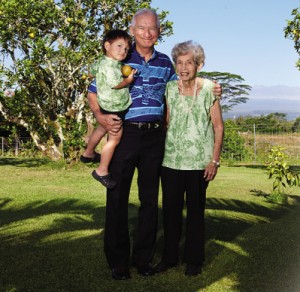
Alan Parker with his hanai mother, Rita Branco, and grandson, Kyan Ray Keaka Parker
HCOA has a simple process for delivering services to the elderly: when seniors voice a problem, Alan and his staff listen. That’s it. Hawai‘i Island citizens start their own grassroots initiatives and mobilize resources to solve it. “Actually, we don’t create programs,” says Parker. “Seniors and the community come up with their own ideas. My six community planners listen and support them with good business planning.” The results of this simple strategy are astounding. Statewide Caregiver Resource Centers (CRC), Community Planning Councils on Aging, Community Voices Programs and Aging and Disability Resource Centers (ADRC) all started on the Big Island.
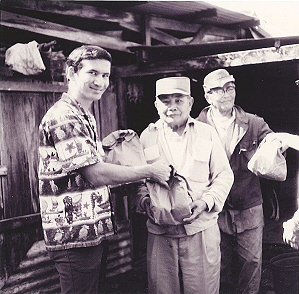
Younger Alan on his first outreach assignment in the rural plantation towns.
Sound too easy? This humble man at the helm of HCOA practices what he calls “plantation values,” and recites lessons his own mentors taught him a generation ago: watch, listen, be quiet and work hard. Parker, highly respected by his peers and employees and adored by elderly clients, has quietly and diligently translated his parents’ values into a system that works. His staff and a large network of county social service programs are passing on this same elder wisdom to a new generation. HCOA is a living network of public and private organizations, profit and non-profit entities that respect one another’s strengths and limitations. They work together to aid and protect their elders.
Strength In Collaboration
Problem 1: Elderly living alone in rural areas of Puna were at high risk but Hawai‘i County first responders didn’t know how to find them.
While Hurricane Iselle winds were battering Puna, a rural district south of Hilo with a large elderly population, Hawai‘i County Mayor Billy Kenoi called a meeting of all public agencies, including Civil Defense, Office of aging, and United Way with all their agencies. Alan Parker brought his two senior planners, Shelly Ogata and Nic Los Banos.
Command Center Between the “War Room” and the Command Center, both entities assist and monitor the crisis.
HCOA to the rescue — their computer database of some 3,000 seniors became a resource. IT specialist Horace Farr culled out Puna addresses of elders and synched GPS for 320 target homes. The result was a map showing where elderly and disabled residents might be trapped. Hawai‘i County Department of Parks and Recreation, along with many agencies collected emergency supplies, put them in bags and delivered them In the midst of the storm, first response teams with medical and social workers found and delivered aid, food and needed emergency information to 80 isolated seniors. It’s a perfect example of how community-based grassroots efforts work.
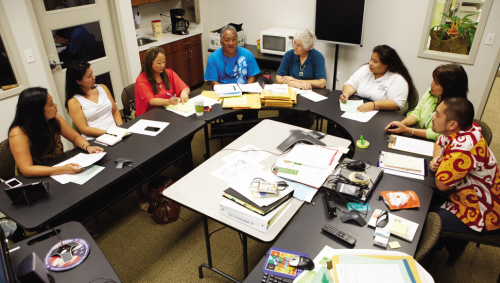
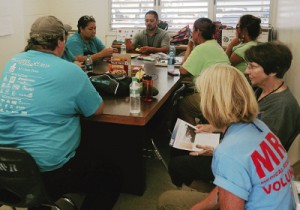
Senior planners, Shelley Ogata (3rd from the left) and Nic Los Banos (far right) meet the team from various departments of HCOA and ADRC to gather in a specifically designed conference room nicknamed the “War Room”.Horace Farr, IT specialist, stands by for instructions.
What was born in a storm is now a Hawai’I Island First Response Coalition. All the agencies mobilized in Iselle formalized outreach procedures so they would be prepared to activate in future disasters. This month the teams are working again, with evacuation plans for Pahoa residents in the path of Kilauea’s latest lava flow. This is the Parker’s “grassroots wisdom” in action.
Alan believes and teaches that Hawai‘i culture has something special, which spans the generations and allows people to work together well. He says, “I got a lot of wisdom from the Plantation Generation: hard work, reliance on family and neighbors, respect for the older generation, and making responsible decisions for future generations. The kupuna in my hanai family taught me these same values.
“I had a wonderful family. As you know, it is a cultural practice to share your kids with other families. When I was a young teen I bought a car with no transmission — a Chevy Impala — and I had no clue how to put in a new transmission. That’s what kids do. My family didn’t have a garage. Our neighbors, The Branco family gave me their garage to work on my car for months until I got enough money and knowledge to fix my car. Can you imagine what a sacrifice they made for a neighborhood kid?
That was 1965. After that the Brancos invited me to every family gathering, as a hanai son. Nurturing other through the family is an old Hawaiian and plantation tradition. That’s just how we work at HCOA.”
Two of Alan’s mentors are George Yoshida, and Derek Kurisu, Hosts of KTA Superstores’ “Seniors Living in Paradise Show” on Oceanic Cable TV. George was the Director of the Elderly Activities Division of Hawai‘i Department of County Parks and Recreation who started Big Island Senior Centers. Derek is Vice President of KTA Superstores and a visionary who has partnered with George and Alan to create public resources like the hosting the TV show, soliciting donors and prizes for the annual Old Americans Luncheon, and editing the HCOA Silver Bulletin. This public/private collaboration is not a campaign promise, but a 30-year reality.
George and Derek promote the values they were all raised with — they call them “plantation values”because a lot of different people groups were forced to work together and get along in plantation camps, housing for workers on large sugar plantations. Kurisu is in demand as an inspirational speaker, promoting these values, and Yoshido creates programs and venues that build on them — he began Kupuna Hula and Senior Softball, which are now statewide and international programs.
Parents, Virgil Ray and Tsukie Hirai-Parker
Alan Parker holds his mom’s generation in great esteem. “Mom was Japanese. Dad came from Ohio during World War II and joked that he came to fight the Japanese, but ended up being captured by one of them! The leaders of that era were strong and very wise: Mary Matayoshi at Hawai‘i Community College, American Cancer Director Lily Inouye, Patrick Pavao at Veterans Affairs, and office volunteer, Alice Ondigon. I learned so much from all of them.
“I made some mistakes, too,” admits Parker. One time the Department of Parks and Recreation asked him to develop a plan to restore Puna parks destroyed by Kilauea in the 80s. Parker grins. “The Puna folks really hated my plan — shot it down good. Gee, you know I felt bad … but afterwards I called a meeting and asked the people to put together their own plan; I invited the ones who had complained the most. Three months later they laid out a plan they really liked and it was almost exactly what I had proposed! But you know the big difference was that it was their plan. I never forgot that grassroots is number one.”
When Parker joined HCOA in 1974 as Director of Retired and Volunteer Senior Program (RSVP,) his boss was Gladys Bowell, a social worker from New York, who had worked with big national agencies and the National Girl Scouts. “She had impressive experience, but she didn’t come in and tell us what to do; she just fit in to the community, gained trust and listened to everybody. Then she gathered folks from every echelon of the community: unions, plantations, and heads of state agencies, housewives and the mayor, to work on aging problems. And then Gladys kept listening. When they came up with something worth doing, she helped with planning, found donors and grants to support it. That first program was Kona Homemakers Program, which is still successful 40 years later. Gladys was great at getting people to tell her what they need.”
“I got a lot of wisdom from the Plantation Generation: hard work, reliance on family and neighbors, respect for the older generation, and making responsible decisions for future generations.” – Alan Parker
Alan reminisced about mobilizing his first group of RSVP volunteers. “Isami Kobayashi, head of the Papaikou Senior Club, did so much for seniors. We needed RSVP volunteers like retired schoolteachers to help in the schools. His club was big — over 400 retirees — so I asked him to put the word out. He came back and said he was sorry; he wanted all his club members to volunteer, but only 150 signed up! Yikes — I had to scramble to find assignments for all 150 of them! Dorothy Kataoka and Shigeko Chang would take two busloads of volunteers up to Hilo Hospital each week. They were housewives, truck drivers, and plantation field crew, but they found ways to help: landscaping, working in the hospital laundry and in the physical care department doing needlework. It’s different now — government programs dictate what kind of volunteers they want, with this skill or that. At HCOA a desire to help is still top priority. If people want to help, we can find work for them. That’s why our RSVP program is still going strong.”
In 1978 HCOA Director William Takaba brought formal case management and database tracking to HCOA, and it made a big difference in the effectiveness of all the programs. That year Pauline Fukunaga joined the department. Later in 2001, after a two-year assignment at the Parks Department, Alan took over as HCOA Director, and made Pauline his Lead Planner. She will retire early in December 2014.
Seeds Of Values Take Root In The Future
Parker is proud of his current staff and says the young people working at HCOA are remarkable. “I hear people complain about the next generation, but I don’t get it. I see young people with a lot of skills who are serious about helping our seniors. Our Hawai‘i families have passed down their plantation values to the next generation. I am passing them down to my grandchildren.”
Early RSVP volunteer Lily Alicuban, and Derek Kurisu passed on their her community values. Liliy’s grandson Evan and Derek’s son Blake were buddies in Key Club at Waiakea High School and secured grants to install Personal Emergency Response Systems (PERS) in the homes of elderly living alone– light switches that would turn ordinary porch lights into blinking emergency lights. The emergency lights saved lives. Now Evan is Resident Physician at USC School of Medicine. Blake, a New York Marketing Manager, earned his MBA from Harvard.
Within HCOA, Planner Nic Los Banos is an example of a new breed of county employees with business degrees, that Parker mentors. They bring to the job computer skills, and business skills like controlling and marketing, as well as financial accounting and planning.
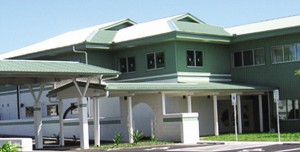
Hawai‘i County Office on Aging contracts with and has working relations with over 50 agencies and other partners to deliver services to a mix of aging Hawai‘i residents: active and healthy, frail and elderly, disabled and chronically ill. This broad network of services are funneled through an Aging and Disability Resource Center (ADRC) named Kahi Malama (Place of Care) located in Hilo, a one-stop shop where seniors can access all the county programs and resources for aging: caregiver support, case management, counseling, employment information, legal, nutrition, personal care, outreach, respite, transportation, volunteers, elder abuse and neglect, healthy aging, awareness and prevention.
Alan’s small staff of five planners covers a lot of ground by coordinating with their partner organizations. In addition, a host of volunteers allow Hawai‘i County to meet its commitment to the aging through modern communications, shared resources, and a commitment to helping others. Without volunteers, the network could not meet its full mission.
“At HCOA a desire to help is still top priority. If people want to help, we can find work for them. That’s why our RSVP program is still going strong.” – Alan Parker
What’s in store at Hawai‘i County Office of Aging after Alan Parker closes out 40 years and retires at the end of the year?
“I leave a clean slate for the next director,” says Parker. “2015 is the start of a new strategic planning cycle. Since the recession in 2008, federal and state funding has been reduced, and the small HCOA staff has been pulled thin by an increasing number of clients as baby boomers retire. Disaster relief adds to the workload. Nevertheless, HCOA is meeting its mission. We have a marvelous staff, and they get a lot of work done — done well. I think as the economy continues to strengthen, our budgets will get more robust.”
Also retiring after 36 years is Lead Planner, Pauline Fukunaga. “Hawai‘i has the greatest longevity in the nation,” says Pauline. “We also have the fastest growing group of 85+ year-olds in the country. For many years HCOA exclusively served old and frail elderly residents, but now we also have a growing number of active seniors with different needs. We are listening to what they want, and our programs will have to change,” said Fukunaga.
Parker reflected, “Pauline and I have learned that top-down, cookie cutter programs don’t work very well here; they don’t seem to last. But grassroots, community-based programs will continue to be born in Hawai’i County after we step down. My wonderful staff and the generation of workers behind them are skilled listeners, skilled business planners and committed to help Hawai‘i seniors plan and grow solutions to their problems.”
We left the HCOA staff with a good feeling — and a new gratitude for the values that set Hawai‘i apart from all other communities: respect for elders, grassroots wisdom and aloha for all.
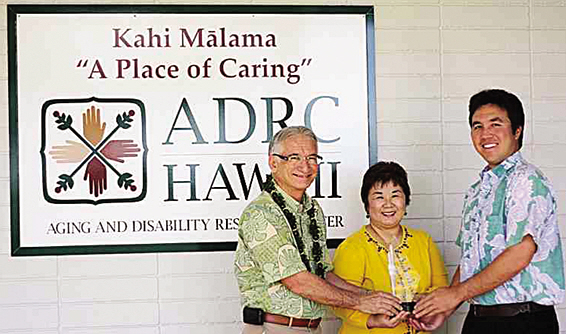
Photo courtesy of County of Hawaii Mayor’s Office In 2010, Alan Parker (left) receives the Excellence in Action Award from the U.S. Administration on Aging, the Centers for Medicare and Medicaid and the Veterans Administration, presented by Audrey Suga-Nakagawa, State ADRC Coordinator and Mark Miranda, the Governor’s Liaison.
HCOA has a simple process for delivering services to the elderly: when seniors voice a problem, Alan and his staff listen. That’s it. Hawai‘i Island citizens start their own grassroots initiatives and mobilize resources to solve it.
In 1992, when Hurricane Iniki hit the islands, my mother-in-law refused to leave the house. Both Linda and I were working and we called her over and over, trying to get her to go to a shelter. She wouldn’t leave her beloved dog behind and at that time, not many shelters accepted pets. Fortunately, she rode out the storm, in the dark, hugging the pup.
This brings us to Puna on the Big Island. Neighborhoods there took a serious hit from tropical storm Iselle. I know this much about Puna side of Hawai‘i Island: there are families kupuna who have lived there for years and would react just like my mother-in-law. They would NOT leave their homes. It’s not just a house — it’s a HOME. It may be because of a pet. It may be because of a koa rocker in the living room. It may be because of photo albums that keep their memories alive.
Experts tell us that aging in place — even during a storm — is a vital concept when it comes to our seniors. The longer they can stay in comfortable familiar surroundings, HOME, the better off they will be — physically, emotionally, spiritually, financially.
It is important to remember, we need to think about the needs of our seniors, not just on a day to day basis, but especially during times of emergency. They may experience confusion, stress — but if that senior relative or neighbor has your arm to lean on, you can make all the difference in the world. And if they have a pet, scoop that baby up and take it with you.
The Elderhood Project airs on KHON2 News Friday mornings at 5:45 a.m. And Thursday afternoons at 5 p.m.
In 1992, when Hurricane Iniki hit the islands, my mother-in-law refused to leave the house. Both Linda and I were working and we called her over and over, trying to get her to go to a shelter. She wouldn’t leave her beloved dog behind and at that time, not many shelters accepted pets. Fortunately, she…
Did you know there is a way to support your favorite charitable cause and receive cash back? It’s called a charitable gift annuity and many, but not all, charities offer this form of giving. In Hawai‘i, there are some legal requirements that must be met by a charity before it can offer this form of charitable giving.
When you make a gift of cash or an appreciated asset in exchange for a charitable gift annuity, the charity makes a promise to pay you for the rest of your life. Your payment rate is fixed based on your age and never changes.
Choosing to participate in a charitable annuity program allows you to make a meaningful charitable gift, and receive regular, fixed payments no matter how long you live. The payments may provide for dependable payments for your spouse or another person if you wish. Optionally, you may receive higher payments for a deferred payment gift annuity. There may also be tax benefits such as an income tax deduction in the year of your gift, and payments that are partially free of federal income tax for a period of time.
People who are considering a substantial charitable gift but also feel uncertain about the future like the idea of a charitable annuity with continuous payments.
If you plan to give a portion of your assets to charity, and want more information on ways charitable gift annuities might work for you and your family, visit National Kidney Foundation of Hawaii online and just click on “Donor Stories.”
Did you know there is a way to support your favorite charitable cause and receive cash back? It’s called a charitable gift annuity and many, but not all, charities offer this form of giving. In Hawai‘i, there are some legal requirements that must be met by a charity before it can offer this form of…
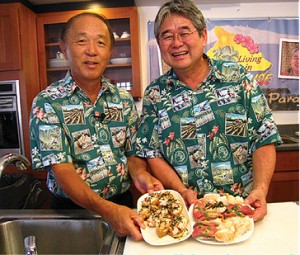
George Yoshida and Dereck Kurisu — two guys seniors invite into their homes every day.
“Seniors Living in Paradise” one-hour show on Oceanic Cable TV is a phenom — re-running twice a day in prime time all month, and cut into short Youtubes for the online world. Some seniors watch it nightly to bring sound, laughter, and company into their homes. “I can’t believe how many people in Hawai‘i and on the mainland watch this show!” says Hawai‘i County Mayor Billy Kenoi. “Tune in and you’ll be hooked.”
It’s a series of upbeat, homespun vignettes featuring seniors, kids and families doing what communities do. For 60 minutes we follow show host George Yoshida, a jovial tutu man who “knows everybody’s auntie,” from one happy activity to another. The program bumps along like a Sunday drive, with something for everyone: banter of personal interviews, community activities, family parties, information for seniors, cooking demonstrations, and kids of all ages and ethnic groups — interacting with seniors. Local style music and Yoshida’s “everything is beautiful” attitude keep viewers engaged and coming back for more.
“I think we deliver a lot of information — we recognize many talents, achievments and values that our kupuna pass on to the keiki. We want folks who are not able to get out to see good things happening in our communities on the Big Island. They get enough upsetting news — we bring them fun, hope, and plenty to smile about.”
Volunteer host Yoshida started out as a high school teacher and coach before joining the Hawai‘i County Department of Parks and Recreation, their Elder Activities Division. He created Kupuna Hula and Seniors Softball. George is happiest devoting his time, cheerfully showing the world what happy seniors and their families are up to. He didn’t count on becoming a senior superstar, but things happen.
Kurisu is in demand too, as an inspirational public speaker on “plantation values:” norms, values, attitudes and work ethic that plantation workers practiced to get along with one another and share in the benefits of plantation camps communities like Hakalau, where he grew up. Now he teaches younger generations these same values, so they can be successful too. He creates respect and brings the generations closer together.
As Vice President of KTA Superstores, Derek is a business superman, disquised as a kua‘aina farmer who leads a never-ending battle in helping seniors enjoy a better life, and create public/private collaborations that grow KTA Superstores brand in the process. Seniors win big with: The annual Old American Luncheon, monthly cooking demonstration at senior centers and Mountain Apple Brand, KTA’s private label plant that employs many seniors.
These “Seniors Living in Paradise” guys are going to hook you too!
Living in Paradise: Oceanic Time Warner Cable channel 27 Seniors Living in Paradise Mon. – Fri.: 6:00 am – 7:00 am | Daily: 6:30 pm – 7:30 pm Primetime Living in Paradise Daily: 7:30 pm – 8:30 pm, 12:00 am–1:00 pm Watch recent Youtube episodes online: www.ktasuperstores.com/living-in-paradise-show
“Seniors Living in Paradise” one-hour show on Oceanic Cable TV is a phenom — re-running twice a day in prime time all month, and cut into short Youtubes for the online world. Some seniors watch it nightly to bring sound, laughter, and company into their homes. “I can’t believe how many people in Hawai‘i and…
The protection of family and property is very important to us. Potentially dangerous storms headed Hawaii’s way serve as a notice to homeowners: now is the ideal time to shore up one’s roof with the goal of mitigating catastrophic damage.
In advance of future storms, homeowners should check past service records for their roof. If it has been more than 10 years since installation or repairs have taken place, a roofing inspection will pinpoint necessary improvements. Most reputable roofing companies will offer free inspections, and get up on the roof to access any current or potential problems. Just having them look over your roof gives needed peace of mind.
Remember, the hurricane season runs through November; anticipate potentially dangerous storms, and address key roof issues:
Check for loose edge flashings and worn or cracked shingles.
Clean gutters and downspouts of debris, and trim encroaching tree branches; heavy rains can overwhelm gutters and impede the proper flow of water around areas which may lead to unnecessary damage.
Inspect all skylights and additional roof flashings for cracks and other defects.
By taking these simple steps, residents give themselves and family members the best chance of riding out the busy hurricane season.
The protection of family and property is very important to us. Potentially dangerous storms headed Hawaii’s way serve as a notice to homeowners: now is the ideal time to shore up one’s roof with the goal of mitigating catastrophic damage. In advance of future storms, homeowners should check past service records for their roof. If…
“Matching the kindness of a neighborhood church with the needs of a kid in a public school,” is the motto of Common Grace, created in 2002. This homegrown organization partners members of neighborhood churches and service clubs with elementary school students at breakfast, lunch or after-school time to offer kindness to kids. Many seniors volunteer with Common Grace.
It all started with the Principal of Queen Lydia Lili‘uokalani Elementary telling Jay Jarman and Pastor Ron Arnold of Kaimuki Christian Church that they have lonely children on their campus. She asked, “Would any of your church family members like to come once in a while to sit and talk and make friends with our kids?”
Today, Common Grace partners with twenty-one elementary schools, interacting with approximately 150 students. They are supported by the State of Hawai‘i Department of Education Superintendent, and received the 2007 Partnership in Education Award. Jay Jarman, Executive Director, received the 2009 Outstanding Advocate for Children and Youth Award from the Hawaii State Legislature.
If you want to be a friend to a lonely little kid, you may contact Common Grace: 808-282-6194. Mentors complete a two-hour training session and pass a background check and work in teams to offer mutual support and built-in back-up in case you are not able to be with your child at your regular meeting time. For more information visit: www.commongrace.org.
“Matching the kindness of a neighborhood church with the needs of a kid in a public school,” is the motto of Common Grace, created in 2002. This homegrown organization partners members of neighborhood churches and service clubs with elementary school students at breakfast, lunch or after-school time to offer kindness to kids. Many seniors volunteer…

 Have you reviewed your Medicare Plan this fall? If not, this article is for you. While It is common for a Medicare Advantage organization to add or change benefits each year, sometimes they may need to discontinue a plan altogether. If so, notification must be sent to the plan’s Medicare members by October 2, 2014. Because the plan will no longer be offered, the Medicare members are allowed to join a new Medicare plan anytime between October 15, 2014 and February 28, 2015. However, if you don’t take action before December 31, 2014, you will lose your prescription drug coverage and only have Original Medicare starting January 1, 2015. If you recently received a notice in the mail that your Medicare plan won’t be offered in 2015, be sure to take action now to avoid coverage interruptions or late enrollment penalties.
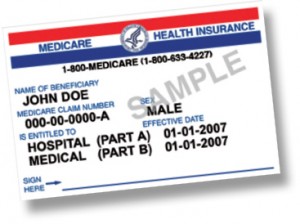 Prepare yourself with this handy checklist that can help you provide information to a licensed sales agent, Medicare plan staff or a Medicare representative who can assist you in finding a new plan, or compare the options of an existing plan, that will meet your health care needs.