
You love your family and you are good at your job. This does not mean, however, you will make a good caregiver for a loved one. Being an accomplished professional, expert or an akamai homemaker does not prepare you for the sudden responsibility of a full time caregiver.
For instance, I love my father-in-law and I am a very good lawyer, but when he had a stroke, I and my family were overwhelmed and ill-prepared for the task suddenly upon us: being a caregiver for a disabled person. When my wife was pregnant, on the other hand, we had nine months to prepare for handling another human being who was going to be dependent on us for everything. My father-in-law’s stroke happened in a moment.
My father-in-law was lucky, however, in that his care could be shared among our entire ohana. This was not the case for Dwayne Smith (not his real name). After suffering a massive heart attack, Dwayne’s adult son Peter assumed the role of caregiver. For three years, Peter took good care of his father. One day, however, Dwayne soiled his bedding; Peter began yelling at his dad and punching him. When the assault stopped, Dwayne was covered with bruises and blinded in his right eye. He was taken to the hospital and died a month later.
An estimated 65 million people nationwide serve as “informal caregivers”— usually relatives who become caregivers because of financial necessity. Unfortunately, because of caregiver stress, some of these well-meaning volunteers will make decisions or take actions they not only will regret, but also will result in harming a loved one.
If you suddenly find yourself in the position of a caregiver, you can take steps to reduce the stress of caring for a dependant loved one:
- Don’t try and do it alone: a team approach will prevent the feeling of being overwhelmed with all the tasks that need to be done. Will you pick up the pills from Longs? How about dropping off a lunch or dinner on Tuesday? Can we please add our Costco list to yours? A simple question shares responsibilities, no matter how small, and makes the job much more manageable.
- Organize Information: knowing where the identification card, insurance card and list of medication are located will greatly help at the next doctor’s visit.
- Take Care of Yourself:
- Eat regular and nutritious meals
- Take a Break and do something for yourself
- Sleep
- Express yourself: call your buddy or join a caregiver’s support group — talk about the conflicting emotions of being a caregiver for a family member. You are not alone.Work with the person you are caring for: doing everything for your “patient” may be quicker, but in the long run, the dependency you are creating will wear you down.
To report suspected elder abuse, contact the Elder Abuse Unit at: 808-768-7536 | ElderAbuse@honolulu.gov www.ElderJusticeHonolulu.com
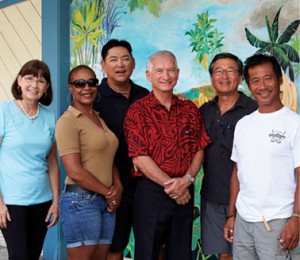 As we enter the fall season we are so happy to bring you the wonderful story of a true gentleman and caring Director of the Hawai‘I County Office on Aging, Alan Parker. Alan “talksstory” about the people who mentored him and the plantation values that allowed him to be successful. We are grateful to Alan Parker and his whole office for their support and the many dedicated volunteers who assist all our seniors on Hawai‘I Island. A special mahalo to Jolean Yamada, Nic Los Banos and Pauline Fukunaga who were efficient point persons for our magazine staff.
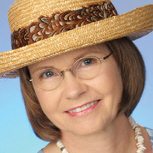 With this issue, I am also honored to introduce you to our new Associate Editor Katherine Kama’ema’e Smith from Maui. She brings so much energy, heartfelt feelings for our culture, stories of the islands and love for life and for our seniors. Katherine is a baby boomer on Medicare, who managed her mom’s last years and knows both the challenges and joys of caregiving.

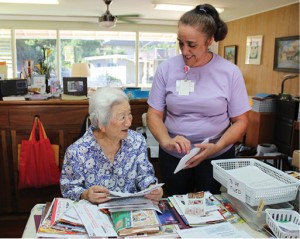 Caring for our aging loved ones doesn’t have to be a strain on our daily lives. Not when Catholic Charities Hawai‘i Premium Senior Services Program (PSS) offers seniors and their families a way to maintain independence and get relief for busy caregivers.

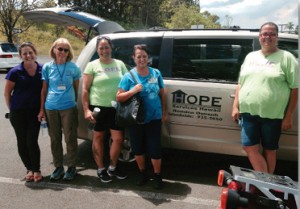
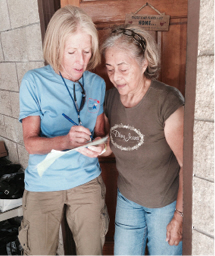 The van driver used an address list generated from the Hawaii County of Aging database and charted on a map using GPS coordinates. One by one, seniors were slowly checked off. We went to single-family houses, apartment buildings, and rooms above shops. Some seniors had already moved out. Those who remained were in various stages of planning or moving. The personal canvassing process is time consuming, but seniors were welcoming, and glad that the county was checking on them.
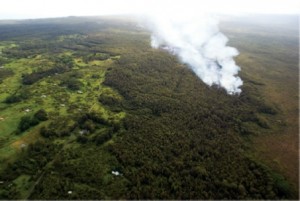
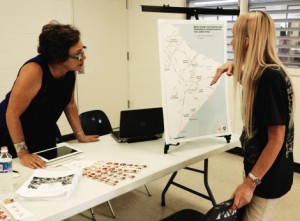 It’s hard for people who don’t live in Hawai‘I County to imagine taking lava flows in stride, but Pahoa ancestors always lived with Pele in their backyards. Sometimes lava stops before it reaches a house; sometimes it continues to the sea and flows for weeks or years. The flows are fickle and unpredictable, sometimes destroying an entire forest, but flowing around, sparing a single tree.