Category: Articles

  • Stop Being an Easy Victim

    I don’t like to work. I have said this for years in presentations around the island. People laugh, thinking I am joking. I am not.

    I am on-call 24 hours a day, seven days a week. When a crime occurs and the victim is 60 years of age or older, the police page me and I drive down to the station to review the evidence. It is not fun there. They don’t have doughnuts and the detectives aren’t as funny as those on “Barney Miller.”

    I have spent more than one holiday sitting at a gray metal desk reading police reports and eating old Halloween candy. But perhaps the biggest reason I don’t like being at the police station is that often, the crimes I am reviewing could have been easily avoided.

    For example, a great percentage of the stolen car cases our office prosecutes are a result of seniors leaving the keys in the vehicle, or leaving the car running as they pop back into the house for something they forgot, or running into a store for a quick errand, only to find their car gone when they return.

    Speaking of cars, please stop leaving credit cards and checkbooks in them. A drug addict’s favorite place to go shopping is in a parking lot. A left-behind wallet, purse or checkbook is a big payday for someone feeding a habit.

    Also, lock the doors to your home. You don’t live in Mayberry with Aunt Bee. Many burglaries have been committed by persons who just open an unlocked door. Frequently, the criminal will not care whether or not someone is home or what time of the day or night it is. Simply securing your house deters unwanted strangers.

    Speaking of strangers, don’t let them in! Many identity thefts, burglaries and assaults start with a homeowner letting in a person they don’t know. The man who says he is from the utility company and needs to check something — do you really know where he is from? Direct anyone needing to use your restroom to the nearest public facility.

    My cautions may sound harsh; I have heard that because we live on a small island, aloha is a way of life. If that were true for everyone, tell me why crimes affecting the elderly have increased over 300 percent since I started the Elder Abuse Unit? If you don’t want to take simple steps to prevent yourself from being a victim of a crime, do it for me. I am tired of eating stale candy.


    To report suspected elder abuse, contact the Elder Abuse Unit:
    808-768-7536  |  ElderAbuse@honolulu.gov  |  
www.honoluluprosecutor.org

    Stop Being an Easy Victim by Scott Spallina, Senior Deputy Prosecuting Attorney from the June-May 2016 issue of Generations Magazine, Hawai‘i’s Resource for Life

  • Hawai‘i Alzheimer’s Disease Initiative

    Families may be unaware of many services available for loved ones with Alzheimer’s disease or a related dementia. And in Hawai‘i, a large proportion (70 percent) of dementia care is provided at home.

    Generations Magazine - HawaiiAlzheimers_image1
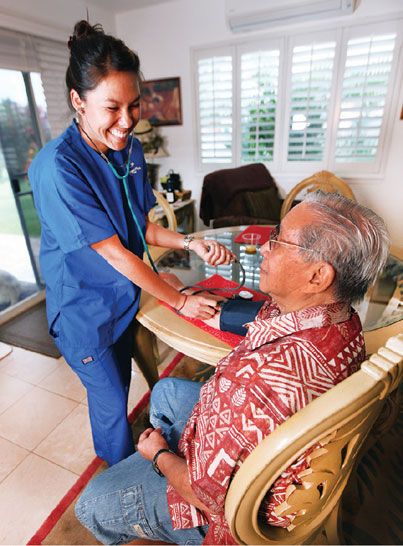
    Nova Erickson assists her grandmother, Jane Nagareda, at home.

    In September 2015, the University of Hawai‘i Center on Aging was awarded a three-year federal grant from the Administration for Community Living for the Hawai‘i Alzheimer’s Disease Initiative (HADI). HADI aims to build “dementia capability” within the state by creating and improving services for patients and their caregivers and by providing training for physicians and health professionals.

    HADI complements the work of other notable organizations, including the Alzheimer’s Association Aloha Chapter. As principal investigator for the HADI team, I work with Co-Principal Investigator Ritabelle Fernandes, MD, MPH, and Project Consultant Jody Mishan.

    There are several exciting initiatives in process:

    • HADI is developing a new website (www.hawaii.edu/aging/hadi) that will become a one-stop site for resources and tools for brain health, memory loss, and dementia, and dementia care.

    • Recently, HADI trained over 100 professionals and volunteers as Hawai‘i’s first Memory Care Navigators, who will help persons with memory loss or dementia and their caregivers understand their needs and connect them with appropriate services. Visit: www.hawaii.edu/aging/hadi.

    • Soon, Savvy Caregiver, a new program, will give family caregivers knowledge and skills to handle the challenges of caring for a family member. The training program is conducted over six group sessions by HADI, in partnership with several other organizations.

    HADI also intends to train professionals in dementia care, modeled after the national Dementia-Friendly America collaborative. Recently, Dr. Terry and Michelle Barclay’s held workshops that trained case managers on best practices in care coordination for persons with memory loss and dementia. Clinicians and primary care providers were updated about how to conduct a comprehensive dementia workup. Additional training programs will be offered in the future.

    HADI is also championing Dementia Friendly Communities (www.dfamerica.org). View a special presentation via ‘Ōlelo Community Media’s On Demand; enter the keywords “Dementia Friendly Communities.”

    For more information and to see a full list of our community partners, call the UH Center on Aging or visit the UHCOA website.


    UNIVERSITY OF HAWAI‘I CENTER ON AGING
    
1960 East West Road, Bio Medical Sciences T-705B, 
Honolulu, Hawai‘i 96822
    808-956-5001  |  uhcoa@hawaii.edu

    Hawai‘i Alzheimer’s Disease Initiative by Christy Nishita, Ph.D., Interim Director and Researcher, UH Center on Aging from the June-May 2016 issue of Generations Magazine, Hawai‘i’s Resource for Life

  • Lumbar Stenosis Misdiagnosis

    Generations Magazine - Lumbar Stenosis_image1Degenerative lumbar spinal stenosis (DLSS) is a leading cause of pain, disability and loss of independence in older adults. This chronic, age-related degenerative narrowing of the spinal canal commonly leads to compression of the nerves in the lower back. DLSS is often diagnosed incorrectly because even though it originates in the spine, symptoms may not include back pain. Patients can experience numbness or tingling, cramps and weakness in the lower limbs with or without pain. Symptoms worsen while upright, inhibiting the ability to walk and stand; sitting and bending forward alleviate symptoms.

    Sometimes, DLSS symptoms can be effectively managed with nonoperative options:
    • Pain relief medications
    • Epidural injections
    • Activity modification Sit in a recliner instead of a straight chair; use a recumbent bicycle rather than walk; lean forward on a grocery cart while shopping.
    • Physical therapy Aquatic or land-based exercises to stabilize the spine, lumbar traction and manual therapy.

    Although DLSS is a natural result of aging and we don’t know how to prevent it, its impact on your life can be reduced and its progression slowed by maintaining proper posture and a healthy weight, using supportive chairs and mattresses and, exercising regularly.


    Moon Physical Therapy, LLC, 
320 Ward Avenue, Suite 107, Honolulu, HI 96814
    Aquatic, Land-based and Manual Therapy and 
Cardiopulmonary Rehab Programs
    808-597-1005  |  www.moonpt.com

    Lumbar Stenosis Misdiagnosis by Julie Moon, Physical Therapist from the June-May 2016 issue of Generations Magazine, Hawai‘i’s Resource for Life

  • Animal Assisted Therapy

    Generations Magazine - Animal Assisted Therapy_image1
    One of our most beloved caregivers sports a fur coat to work each day.


    Her coat is stylish and doesn’t affect her walking on all fours. In fact, she couldn’t be happier visiting her patients in the hospital or their homes. And like most professionals, she delights when rewarded with a scratch behind her ears. Well, as you might have guessed, she is a therapy dog; her name is Ruby.

    Ruby, a highly trained labradoodle, is recognized by the American Kennel Club (AKC) as a certified therapy dog. She volunteers most of her time visiting children and adults in the hospital or their homes.

    “Ruby truly enjoys being with her clients,” said her handler, Carol Samples, RN and CEO of Attention Plus Care. “She can connect and help people in a way where other treatments cannot.

    Ruby is the product of her breed and the special training she has received. Her talent for boosting morale can be life-changing for some clients.

    Pet therapy, also called animal-assisted therapy (AAT), has been observed as having a positive effect on seniors. A one-year study of approximately 1,300 adults aged 65 or older (published in the Journal of the American Geriatrics Society) found that companion animals had a positive effect on their activities of daily living (ADLs). Older adults without pets experienced a decline in ADLs compared to similar groups with pets, the study revealed.

    A study in the Journal of Gerontology also found that a therapy dog had a positive effect on residents at long-term care facilities. Residents engaged with a therapy dog experienced less loneliness after the end of the six-week study. The study also found that one 30-minute session a week with a therapy dog significantly reduced participant loneliness.

    “We notice a decrease in blood pressures and increase in smiles when Ruby visits our medically fragile patients,” said Samples. “The effects are profound and bring a sense of joy to those who can’t have a pet in their life.”

    AAT for seniors has also been shown to help Sundowner’s Syndrome, evening periods of agitation and confusion in those with Alzheimer’s disease and dementia. Touching and being touched by a therapy dog provides tactile and cognitive stimulation for patients and improves their sense of well-being.

    Dr. Michael McCulloch, a Portland psychiatrist, studies why pets are therapeutic. His research reveals that the therapeutic effect is linked to one basic human need.

    “Touch is one of our primary needs when we’re born and one of our last needs to go.”

    — Dr. McCulloch

    Ruby just thinks it’s good, furry fun.


    ATTENTION PLUS CARE Accredited by The Joint Commission
    1580 Makaloa St., Ste. #1060, Honolulu, HI 96814
808-739-2811  |  www.attentionplus.com
    Available monthly:
    Aging in Hawaii Educational Outreach Program
by Attention Plus Care – a program to provide resources for seniors and their families, instructed by a registered nurse, who covers a different aging topic each month.
    For more information on Animal Assisted Therapy and 
free community workshops on Aging in Hawai‘i hosted by Attention Plus Care, call 808-440-9372.

    Animal Assisted Therapy by Eileen Phillips, RN, Attention Plus Care from the June-May 2016 issue of Generations Magazine, Hawai‘i’s Resource for Life

  • SSA News for Same-Sex Couples

    Last year, the Supreme Court issued a decision in Obergefell v. Hodges, holding that same-sex couples have a constitutional right to marry in all states. As a result, the Social Security Administration (SSA) recognizes more same-sex couples as married for purposes of determining entitlement to Social Security benefits or eligibility for Supplemental Security Income (SSI) payments. We recently updated employee instructions for processing claims and appeals when a determination of marital status is necessary.

    As part of the new instructions, we have:

    • Removed from our policy any mention or consideration of the dates when states first recognized same-sex marriages from other states. These dates are no longer relevant.

    • Added the dates when some foreign jurisdictions allowed same-sex marriage, eliminating the need for a case-specific legal review in many international same-sex marriage claims.

    • Updated and simplified our procedures for processing claims involving a transgendered or intersex person, allowing these individuals to self-identify as members of a same- or opposite-sex marriage.

    • Streamlined and clarified policy instructions, addressing advocate and employee questions. We encourage those who believe they may be eligible for benefits to apply now. Learn more at www.socialsecurity.gov/same-sexcouples.


    For questions, online applications or to make an appointment to visit a SSA office, call from 7am–7pm, Mon–Fri:
    1-800-772-1213 (toll free)  |  1-800-325-0778 (TTY)
  |  www.socialsecurity.gov

    SSA News for Same-Sex Couples by Jane Yamamoto-Burigsay, Social Security Public Affairs Specialist in Hawai‘i from the June-May 2016 issue of Generations Magazine, Hawai‘i’s Resource for Life

  • Message From The Editor – April / May 2016

    May is Older Americans Month and the theme for 2016 is “Blaze a Trail.” In so many ways, seniors in Hawai‘i are already doing just that — leading our nation in health, longevity and productivity. Four decades ago, Lanakila Multi Purpose Senior Center was an “experimental” club for seniors. Today, it’s one of the hundreds of senior clubs throughout our state where seniors may socialize, undertake meaningful activities and serve the community. In addition to clubs, seniors volunteer in nonprofits, contribute to the care of their grandchildren and support community projects and charities. Be sure to reflect on your personal achievements this year. Sustaining a healthy, active and meaningful life — regardless of age — requires focus and discipline. Supporting what is important to you and your family, and making your community just a little better takes a commitment of time and energy. We celebrate all you do to live well.

    Generations Magazine - April-May 2016 - Editors Note - image 01May is also Memorial Day, and the Boy Scouts of America Aloha Council prepares and will be collecting lei to decorate the graves of veterans, as a part of the Good Turn For America Service Program. Watch for publicity on your island to donate or get involved making ti leaf lei. This is a wonderful way to help youth honor our veterans.

    This issue’s Giving Care section authors come at this topic from several perspectives. It drives home the idea that we are all different, with many ways of looking ahead (or avoiding) end-of-life. One common thread is that if you have expectations about your care, where you want to pass your last days, or who will receive your treasures, it’s best to make your intentions clear — while you are of sound mind and body. Our contributors share a lot of wisdom on planning, too.

    As always, we thank you for supporting Generations Magazine® and our partners, who are committed to bringing excellent resource information to seniors and their families.

    Generations Magazine - Editors Note - Katherine Portrait
    Every Day is Brand New!
    Katherine Kama‘ema‘e Smith, Associate Editor


    Generations Magazine - April-May 2016 - Editors Note - image 02A Special Note: In January, Hawai‘i lost Sam Cooke, a captain of business who de-scended from missionaries and worked tirelessly to support conservation, Hawaiian history and fine arts. Manoa Heritage Center is a living legacy of his deep love for Hawai‘i. Sam and Mary Cooke told us their story and graced our cover in Dec/Jan 2015. To their family and friends we extend our deepest condolences.

    May is Older Americans Month and the theme for 2016 is “Blaze a Trail.” In so many ways, seniors in Hawai‘i are already doing just that — leading our nation in health, longevity and productivity. Four decades ago, Lanakila Multi Purpose Senior Center was an “experimental” club for seniors. Today, it’s one of the hundreds of senior…

  • A Hand Up for Humanity

    Honolulu Habitat for Humanity is great, but what do they do? Here’s what Executive Director Jim Murphy told us.

    “In over 70 countries, Habitat For Humanity’s mission is to ensure that everyone has a decent place to live­ — by building new homes or fixing existing ones. Land is so costly in Hawai‘i that our work here is largely repairs.

    Generations Magazine - April-May 2016 - A Hand Up for Humanity - image 01

    “People often think that Habitat for Humanity gives houses away to families in need,” says Murphy. “In fact, we partner with the homeowner, who assists with the repair project and assumes a zero interest mortgage to cover the costs of materials and labor.” Murphy calls it a “pay-forward sustainable model,” a kind of “hand up.” When homeowners pay back the mortgage, Habitat loans the money to other families.

    Candidates for Habitat Honolulu’s Home Preservation Program may be covering their monthly expenses, but cannot afford to make repairs. Perhaps the home is unsafe, or the roof is leaking. Families may not be able to qualify for a bank loan. Others may be one illness or one job loss away from being homeless. Habitat steps in as an equity partner to help the homeowner get a new roof, ramps for wheelchair access, or repair termite damage. Small home preservation projects like installing new carpeting or bathroom grab bars to prevent falls can make a big difference in the safety, value and appearance of a home.

    Habitat for Humanity also pulls in community volunteers to do the construction at a very low cost. They provide professional financial counseling and usually homeowner partners are able pay back their loan within seven years.

    If you live on O‘ahu and need assistance or want to donate your skills, contact T.J. Joseph at 808-538-7575. You may also donate new and lightly used appliances, building materials and furniture to the Honolulu Habitat for Humanity ReStore on Austin Lane. It’s a great place to find bargains for your home improvement projects! All sales fund Honolulu Habitat’s mission. Neighbor islands may google search “Habitat for Humanity” for the location of your local Habitat for Humanity and nearest ReStore.


    HONOLULU HABITAT FOR HUMANITY
    922 Austin Lane, #C-1, Honolulu, HI 96817

    808-538-7575  |  tj@honluluhabitat.org

    Honolulu Habitat for Humanity is great, but what do they do? Here’s what Executive Director Jim Murphy told us. “In over 70 countries, Habitat For Humanity’s mission is to ensure that everyone has a decent place to live­ — by building new homes or fixing existing ones. Land is so costly in Hawai‘i that our work here…

  • Do You Know A Medicare Hero?

    Hero: “a person of distinguished courage or ability, who has performed a heroic act, and is regarded as a model or ideal.”

    I think every longtime Medicare beneficiary fits this definition. Some deal with their own chronic illness, pain and health threats while they care for a sickly loved one. One couple had been on Medicare for more than a decade. A recent stroke paralyzed the husband’s left shoulder, arm and hand, making it difficult to care for his bedridden wife. This setback did not dim his healthy glow and sparkling eyes. Despite these health challenges, the couple invited me into their lovely home to review their Medicare plan options. They had done their homework and understood all the plans they might choose. They asked all the right questions to determine which plan would work best, and they chose wisely. The walls of their home were filled with family pictures and amateur sports trophies awarded in the 60s — evidence of a rewarding life that pales when compared to their heroic efforts to make the best of their lives in 2016. Their home is bright and cheery, even with dozens of medical supplies filling the tables and countertops. Still, I was offered a refreshing iced tea and a tasty frozen ice cream cone as we talked story for more than an hour.

    The lesson for Baby Boomers is to stay healthy and mobile as long as you can, but wisely choose your Medicare health plan — be the champion of your health and plan to be a hero for those that you love.


    808-230-3379  |  getmartha@aol.com
    Medicare Moment With Martha
    A radio program with Martha Khlopin on KHNR-690AM:
    Saturdays, 2 pm–2:30 pm, Sundays, 9:30 am–10 am

    Hero: “a person of distinguished courage or ability, who has performed a heroic act, and is regarded as a model or ideal.” I think every longtime Medicare beneficiary fits this definition. Some deal with their own chronic illness, pain and health threats while they care for a sickly loved one. One couple had been on…

  • Prepare to Care for a Loved One

    Do you use your lunch hour or leave work early to run errands for your parents? Spend more time tending to mom’s prescriptions than your own?

    As our parents age, it’s more a matter of when, not if, they will need our help. In a recent AARP survey of Hawai‘i registered voters age 45 or older, more than one in five residents said they are currently providing care for a loved one. Four in 10 residents believe it’s likely they will do so in the future.

    As Hawai‘i ages, we know that many families don’t have a plan in place to support their parents when the time comes. That’s a problem because one day you may get a call that mom or dad has slipped in the shower and has been admitted to the hospital. At that point, emotions take over. By taking some immediate steps today you can be better prepared for the future:

    Start the Conversation

    Many people wait until a crisis occurs before they ask their parents about their preferences, wishes for health care or the details of their finances. If you wait until a fall, accident or serious diagnosis, big decisions may be driven by inaccurate assumptions of what your parents want.

    Form your Team

    No one should approach the emotions and responsibilities of caregiving alone. While other family members are likely sources of support, don’t overlook friends, colleagues, clubs and faith-based organizations as resources too.

    Make a Plan

    Putting together a caregiving plan now will help you respond more quickly and effectively. It can also provide peace of mind. A plan helps everyone get on the same page and focus on what’s best for your parents.

    Find Caregiving Resources

    Look around your community for resources to help with medical needs, counseling, legal support, adult and senior services, caregiving support groups, in-home care services, veterans’ benefits, and health insurance information on Medicare, Medicaid and long-term care insurance.

    It’s also important to be an advocate for yourself and the person you care for. At the Hawai‘i state legislature this year, AARP Hawaii is part of a coalition of advocates working on a measure that will allow patients to designate a family caregiver when a loved one is admitted to the hospital. The proposed CARE Act would require hospitals to give all inpatients the opportunity to have the designated caregiver instructed, before discharge, in the tasks needed to keep them safe when they go home. The bill is meant to help caregivers with training and education on medical and nursing tasks at home, and prevent costly unscheduled hospital or doctor visits.


    AARP CAREGIVING RESOURCE CENTER
    1-877-333-5885  |  www.aarp.org/caregiving

    Do you use your lunch hour or leave work early to run errands for your parents? Spend more time tending to mom’s prescriptions than your own? As our parents age, it’s more a matter of when, not if, they will need our help. In a recent AARP survey of Hawai‘i registered voters age 45 or…

  • May is Older Americans Month

    Generations Magazine - May is Older Americans Month - Image 01
    2015 Outstanding Older American Honorees: (left to right) Maui: Donald Jensen & Katsuko Enoki, Kaua‘i: Roger Caires & Pat Simpson, Honolulu: Alan Kumalae & Yolanda Morreira, Hawai‘i: Janet Murakami

    We can’t overlook what our elder community (289,000 over 60 years) have contributed to the quality of life we share in Hawai‘i. In May, celebrations throughout the state recognize years of continued hard work and positive contributions that senior citizens make to their communities throughout Hawai‘i.

    In 1963, John F. Kennedy established May as Senior Citizens Month. Kennedy recognized community contributions made by his parents’ generation, who fought and won two world wars. From the Great Depression, they worked hard to create a quality of life envied the world over.

    In 1965, Lyndon Baines Johnson signed the Older Americans Act, addressing elder needs, and May became Older Americans Month.

    On May 6, Kaua‘i and Hawai‘i counties will celebrate older Americans, followed by Honolulu and Maui County later in the month. Each County Area Agency on Aging (AAA) receives dozens of nominations from which they select two awardees—just eight for the state. They come from various volunteer groups, community associations, churches and senior centers.

    Patricia Simpson, was completely surprised at her nomination by Kaua‘i’s Hospice group, Share the Care. “I‘ve always looked at volunteering as a way to give back. Getting this kind of recognition was a totally unexpected gift,” she said.

    The state recognizes these awardees and Older Americans Month on June 3, at a luncheon co- operatively hosted by state offices and agencies, and led by the Executive Office on Aging (EOA). The event is organized by the Policy Advisory Board for Elder Affairs (PABEA), a volunteer board appointed by the governor to identify and address issues on aging in Hawai‘i. They advocate for legislative action and elder services program development; they also evaluate current efforts to improve the quality of life for citizens 60 years of age and older. The theme for 2016 Older Americans Month is “Blaze a Trail,” urging seniors to take action and advocate for themselves.


    The 2016 State Recognition Luncheon event will be hosted by Kahala Nui Living Center. Seating is limited and by invitation only. To contribute to the support of this event or for further information, contact the Executive Office on Aging at 808-586-0100.

    We can’t overlook what our elder community (289,000 over 60 years) have contributed to the quality of life we share in Hawai‘i. In May, celebrations throughout the state recognize years of continued hard work and positive contributions that senior citizens make to their communities throughout Hawai‘i. In 1963, John F. Kennedy established May as Senior…

  • I Never Knew That About Hospice

    Kokua Mau is Hawai‘i’s resource for accurate information on hospice and palliative care services. Visit them online. Then call your health insurance company or local hospice to have all your questions answered. What people say about hospice is sometimes inaccurate:

    I don’t need Hospice. Mom’s not in a coma yet.

    Hospice care starts when your doctor says your loved one will probably not survive more than six months. Support from Hospice nurses, doctors, social workers, chaplains and aides can begin at any level of care. There is no need to wait.

    Dad doesn’t want to go to Hospice. He wants to die at home.

    Hospice does some work in facilities, but the Hospice team supports most patients and caregivers at home, in the comfort of familiar surroundings.

    We want to keep the home caregiver we have.

    Hospice joins the care team already in place, providing another level of support for the family and the patient. Hospice is dedicated to making patients comfortable.

    If Dad lives longer than six months, Hospice will kick me out.

    Not so. As long as a doctor recertifies that your loved one has a six-month or less prognosis, hospice service continues. If your loved one gets better, Hospice comes back whenever he/she is eligible again. You don’t “use up” Hospice.


    KOKUA MAU
    P.O. Box 62155, Honolulu, HI 96839

    808-585-9977  |  Info@kokuamau.org  |  www.kokuamau.org

    Kokua Mau is Hawai‘i’s resource for accurate information on hospice and palliative care services. Visit them online. Then call your health insurance company or local hospice to have all your questions answered. What people say about hospice is sometimes inaccurate: I don’t need Hospice. Mom’s not in a coma yet. Hospice care starts when your…