
Category: Living Life

  • Caregiver Legislation On The Table

    Family members, partners and close friends are an important source of support for older people who need help taking care of themselves at home. In Hawai‘i, these caregivers provide most of the care for loved ones who need help with activities such as bathing, dressing and transportation. Many caregivers also perform complex tasks such as providing wound care, managing medications and operating medical equipment.

    But despite the importance of caregivers in the day-to-day care of our ku¯puna, they are often left out of discussions involving a patient’s care while in the hospital. And when loved ones are discharged from the hospital, caregivers often receive little or no instruction on how to help prevent readmission.

    To address this issue, AARP Hawaii is urging passage of a bill in the 2014 state Legislature that would allow patients to designate a caregiver as part of their medical record — or that hospitals voluntarily adopt this practice. The bill requires hospitals to notify and meet with the designated caregiver to discuss the patient’s plan of care prior to discharge or transfer to another facility. It also requires hospitals to instruct caregivers in how to care for loved ones after they are discharged.

    “This bill will have the two-pronged effect of supporting family caregivers and keeping health care costs in check,” says Steve Tam, AARP Hawaii director of advocacy. “It enables caregiv- ers to support their loved ones at home and in the community, and discourages costly and unnecessary hospital readmissions.”

    The federal Centers for Medicare & Medicaid Services (CMS) estimates that $17 billion in Medicare funding is spent each year on unnecessary hospital readmissions. The bill is intended to reduce readmissions by engaging caregivers more intentionally in the care of their loved ones. It also comes as hospitals across the country are seeking to avoid admission penalties under the federal Affordable Care Act.

    In Hawai‘i, family caregivers already play a critical role in the care of our elderly and disabled populations. On any given day an estimated 247,000 residents provide unpaid care valued at a staggering $1.9 billion annually, according to 2009 data. Caregivers are often members of the individual’s immediate family, but friends and other community members also serve as caregivers.

    AARP is dedicated to helping Hawai‘i’s caregivers by providing the tools, information and support they need to care for their loved ones and themselves. For information on the status of this legislation, or to get involved as an advocacy volunteer, contact Steve Tam at 808-545-6005.

    For information on resources for caregivers available online, visit the AARP Caregiving Resource Center at www.aarp.org/caregiving.


    AARP Hawai‘i state office: 808-545-6024 | Toll-Free: 866-295-7282 | aarp.org/hi | facebook.com/AARPHawaii twitter.com/AARPHawaii
    Family members, partners and close friends are an important source of support for older people who need help taking care of themselves at home. In Hawai‘i, these caregivers provide most of the care for loved ones who need help with activities such as bathing, dressing and transportation. Many caregivers also perform complex tasks such as…

  • All-in-One Services Help Seniors Stay Home

    It is no secret that the number of individuals over the age of 60 is increasing exponentially. Without massive changes to operations, there will be no way to effectively meet the needs of seniors in the future. This we know. What may not be so evident are the strides forward that the Hawai‘i State Executive Office on Aging and the Area Agencies on Aging (AAA) in Hawai‘i are making in “getting ahead” of the population boom.

    About 18 months ago, the Maui County Office on Aging (MCOA) implemented a new assessment protocol that each AAA in Hawai‘i will eventually use. (Kaua‘i began the use of the new tool a year ago). And let me warn you, it is a long assessment. So, why implement an assessment that could be construed as cumbersome and downright bothersome for frail seniors?

    The answer lies in what seniors and family caregivers end up receiving from the assessment. Imagine a senior who needs assistance in order to remain safely at home. Maybe the senior and family identify a few services that would allow him/her continued independence. Rather than having to call numerous agencies and participate in separate assessments, the AAA can conduct one assessment that provides a comprehensive view of how to help keep that senior at home.

    I like to think of the assessment as a traffic light. MCOA used to only determine the red and the green lights. We could easily identify when seniors were in the “red” and required immediate in-home assistance. We could also determine functions for which the senior required no assistance — the “green” areas. The new assessment process allows us now to identify the “yellow” at-risk areas as well. These are the areas that do not yet require intervention but that could eventually undermine the senior’s desire to remain independent at home.

    By identifying the at-risk areas, MCOA can assist families in taking a proactive approach. We no longer simply authorize necessary services, but we help the individual and family plan to avert the need for services in the future.

    So, yes, we spend a few hours getting to know the senior and family caregiver. But the time is well spent. We identify not only needs, but also areas of strength and potential areas of risk. Seniors receive a comprehensive support plan designed to meet current needs, improve function when possible, and prevent further decline.

    This proactive approach, combined with evidence-based health promotion activities, is critical to the future success of the aging network. We know the amount of funding we receive will not keep pace with the aging population. Therefore, we must engage in coordinated planning efforts that maximize health and independence in a preemptive manner and be able to meet the needs of at-risk seniors for years to come.


    Maui County Office On Aging
    J. Walter Cameron Center
    95 Mahalani Street, Rm. 20, Wailuku
    808-270-7774 | F: 808-270-7935
    Toll Free in Hawai‘i 808-643-2372 | www.co.maui.hi.us

    It is no secret that the number of individuals over the age of 60 is increasing exponentially. Without massive changes to operations, there will be no way to effectively meet the needs of seniors in the future. This we know. What may not be so evident are the strides forward that the Hawai‘i State Executive…

  • Frank, as Always: Big-Band Musical Baggage

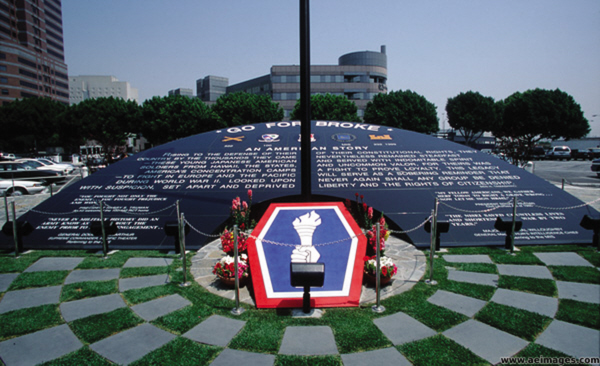
    Generations Magazine - Go For Broke Monument, Los Angeles - Image 01When Generations invited me to write an article about my high school days, one of the first memories that came to mind was of riding in the backseat of my dad’s 1959 Chevy Impala every morning, heading to school and listening to his favorite radio program.


    In the 50s, there was this DJ named Hal Lewis (aka J. Akuhead Pupule) but I really wasn’t “tuned in” to his show, however, he amused my dad and constantly made him laugh out loud. Aku broadcasted from the “Tree House” at the International Market Place in the early 1960s and played big-band music and stand up singers like Frank Sinatra, Vic Damone, Dean Martin, The Lennon Sisters, The McGuire Sisters, etc. I’ve come to realize now that what I listened to back then affected me for the rest of my life. (Keep that in mind … your kid is being shaped while sitting in the back seat of your car. I have people come up to me and say they listen to my radio show now because their mom and dad used to listen to me in the morning, too.)

    When not with dad, I would listen to this other guy named Elvis Presley on KPOI. So the music that came from dad’s radio each morning was something I had to endure. And to see my dad moving his shoulders to the music, it was kinda goofy! But oddly enough, sitting back there all those years, I started to appreciate the big-band sound and recognize the songs and the people who sang them — Tony Bennett and Nat King Cole. But I had no idea as to the weight of this music and what it meant to my father’s generation — The Greatest Generation.

    It wasn’t until much later that I realized I was a product of the generation who grew up in the U.S. during the deprivation of the Great Depression, and then went on to fight in World War II. I’m a WWII baby. A baby boomer!

    The Greatest Generation dealt with segregation, detention, internment, prejudice and so much more. Yet, many national figures and heroes came out of those trying times. Martin Luther King, for example, came from the Greatest Generation and he spoke eloquently from the depths of disparity, rising up and changing our country and the world forever. And the 442nd Regimental Combat Team and 100th Infantry Battalion local boys who gave more than most … these men were not going to let anything get in their way in achieving their best.

    The Greatest Generation went for it!

    And when I think back on riding in my dad’s car, I feel like I was on the end of a very long shooting star, streaking across the midnight sky. I really had no idea what my parents had gone through but I knew that everything was changing.

    All I’m saying is we must always holomua, keep moving and look forward, but never forget what was laid down before us.


    Join the conversation with Frank B. Shaner on Facebook and experience his art online at www.frankbshaner.com.

    Generations Magazine - Go For Broke Monument, Los Angeles - Image 02
    “The Greatest Generation” … Go for Broke!
    Oil on canvas, 24” x 18”

    When Generations invited me to write an article about my high school days, one of the first memories that came to mind was of riding in the backseat of my dad’s 1959 Chevy Impala every morning, heading to school and listening to his favorite radio program. In the 50s, there was this DJ named Hal…

  • Important Notice: Your Medicare Plan Not Offered in 2014?

    Every year, a few weeks before Halloween, I get dozens of calls from Medicare beneficiaries with questions about Medicare’s Annual Enrollment Period, which begins October 15 and ends December 7. It is the time when Medicare beneficiaries can decide to keep their existing health plan or select a new plan that becomes effective January 1 of the following year. I provide tips to help callers review their options. This year, in addition to those calls, my voicemail overflowed with seniors who received an unexpected letter from about their Medicare health coverage. The notice explained that their Medicare plan would not be offered in 2014 and was ending December 31, 2013. As a result, they would need to take action and select a new plan by December 31, 2013, or their coverage would revert to Original Medicare only.

    SO HERE ARE MY TOP FIVE TIPS:

    Tip 1: You qualify for a special enrollment period from October 15 to February 28, 2013. So now is the time to consider your options. If you don’t take action by December 31, you’ll have Original Medicare coverage only, and will lose prescription drug coverage unless you join a separate Medicare prescription drug plan.

    Tip 2: Decide to join another Medicare Advantage health plan because your plan has notified you that your existing plan will no longer be offered. If you wait until after February 28 to join a new plan with prescription drug coverage, you may have to pay a late-enrollment penalty.

    Tip 3: Call Medicare 24 hours, 7 days a week at 1-800-MEDICARE for help.

    Tip 4: Refer to the 2014 Medicare & You Handbook for detailed information.

    Tip 5: For help comparing plans: Call Hawai‘i’s State Health Insurance Assistance Program, Sage PLUS at 1-888-875-9229. All counseling is free.


    Martha Khlopin hosts the popular weekly radio program “Medicare Moment with Martha — The World of Medicare” sponsored by AlohaCare. It airs on KHNR-690AM on Saturdays from 11–11:30 a.m. and on KGU-99.5FM on Sundays from 10–10:30 a.m. For info, call (808) 973-0754, mkhlopin@alohacare.org.

    Every year, a few weeks before Halloween, I get dozens of calls from Medicare beneficiaries with questions about Medicare’s Annual Enrollment Period, which begins October 15 and ends December 7. It is the time when Medicare beneficiaries can decide to keep their existing health plan or select a new plan that becomes effective January 1…

  • Solar Savvy: Tips from the Industry Pros

    Generations Magazine - Solar Savvy: Tips from the Industry Pros - Image 01Look around. Gleaming new solar panels are going up on roofs all over Hawai‘i. It’s no wonder — with our exorbitant electricity rates, year-round sun and substantial tax credits, installing a PV system in Hawai‘i makes so much sense, especially if you’re on a fixed income. Homeowners who educate themselves before investing will enjoy reliable energy savings for generations to come.

    Here are four tips from the pros:

    • Be aware of sales gimmicks like cash rebates or free trips. Because of the tax credits involved, the government frowns upon these kinds of incentives. Avoid being vulnerable to an audit.
    • Insist on a reputable solar panel manufacturer. There are literally dozens of new brands jumping on the PV bandwagon. You are making an investment that should last decades. Will the company be around to honor its warranty?
    • Ask if the provider employs its installers. Many providers use sub-contractors to handle the all-important installation aspects. If something goes wrong two years down the road, you don’t want your provider passing the buck.
    • Be sure to hire a full-service, licensed solar company. Look for the state’s C-60 Solar Power Systems Contractor license. This ensures your provider has passed rigorous testing and has the necessary experience with solar, roof work, hookups and permitting to do a top-notch job.

    Alternate Energy
    803 Ahua St., Honolulu, HI 96819
    808-842-5853 | www.AlternateEnergyHawaii.com

    Look around. Gleaming new solar panels are going up on roofs all over Hawai‘i. It’s no wonder — with our exorbitant electricity rates, year-round sun and substantial tax credits, installing a PV system in Hawai‘i makes so much sense, especially if you’re on a fixed income. Homeowners who educate themselves before investing will enjoy reliable…

  • UH Press Presents: IF IT SWINGS, IT’S MUSIC: THE AUTOBIOGRAPHY OF HAWAI’I’S GABE BALTAZAR, JR.

    Generations Magazine - UH Press Presents: IF IT SWINGS, IT’S MUSIC: THE AUTOBIOGRAPHY OF HAWAI’I’S GABE BALTAZAR, JR. - Image 01Hawai‘i’s legendary jazz musician Gabe Baltazar, Jr. has thrilled audiences since the late 1940s with his powerful and passionate playing. In his memoir, If It Swings, It’s Music, Gabe takes readers along the long road to becoming one of the very few Asian Americans who has achieved worldwide acclaim as a jazz artist.
    Born in Hilo and raised in Kalihi-Palama, Gabe (Gabriel Ruiz Hiroshi Baltazar Jr.) was encouraged by his father, an accomplished musician, to take up the clarinet and saxophone. As a teenager during World War II, Gabe performed with the Royal Hawaiian Band but spent his weekends playing in swing bands. After establishing himself in the West Coast jazz scene, in 1960 he rose to prominence as lead alto saxophonist of the famed Stan Kenton Orchestra. The group recorded more than a dozen albums and won two Grammy Awards.

    From 1964 to 1969, Gabe recorded with Dizzy Gillespie, James Moody, Oliver Nelson. He was also a regular in the Los Angeles recording studios, and he filmed with Pat Boone, Phyllis Diller and Glen Campbell. In 1969, Gabe returned to Hawai‘i to work as assistant director for the City and County of Honolulu’s Royal Hawaiian Band, a post he held until 1985. He brought jazz to the public schools and went on to become Hawai‘i’s premier jazz artists. Now 84, he mainly performs informal gigs with friends and family.

    Gabe’s memorable encounters with the greatest names in jazz is fond record of days past. (University of Hawai‘i Press, paperback, $24.99)

    Hawai‘i’s legendary jazz musician Gabe Baltazar, Jr. has thrilled audiences since the late 1940s with his powerful and passionate playing. In his memoir, If It Swings, It’s Music, Gabe takes readers along the long road to becoming one of the very few Asian Americans who has achieved worldwide acclaim as a jazz artist. Born in…

  • Downsize & Declutter the Easy Way

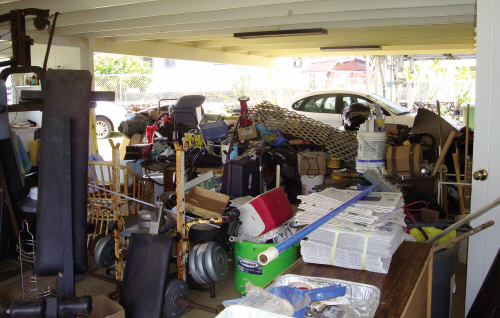
    Generations Magazine - Downsize & Declutter the Easy Way - Image 01Most of us who have lived in the same home for decades have collected a good amount of personal treasures. And before you know it, you’re shocked by all the things you own. Some people may call these things clutter or trash, but to the owner these things could be a lifetime of memories. The difficulty comes when we have to think about downsizing or decluttering because it’s a safety concern (trip hazard), or we need more open space for a walker or wheelchair or move to a smaller home. Many say that they have “so much stuff” that it’s “just overwhelming.” Sometimes people even become trapped by their own personal belongings and can’t seem to break the “cycle.”
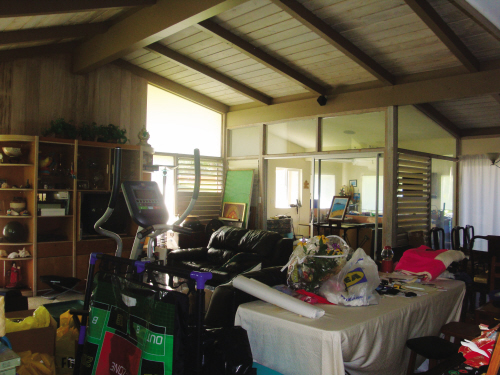
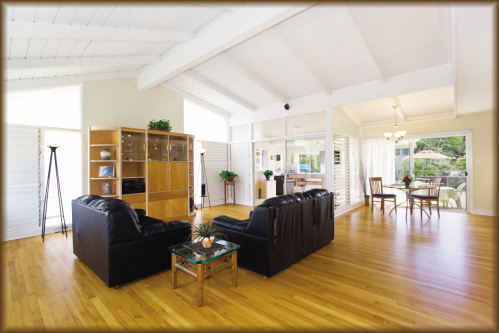
    Over the past three years, Senior Move Managers has helped more than 300 clients downsize and declutter their homes.

    The most frequently asked questions include:

    • Where do I start?
    • How do I get rid of all my things?
    • I really hate to throw everything away, where should all my things go?
    • Are there places that I can donate or sell my valuable items?
    • I may need it later, so should I store it or do something else with it?

    If you’re like most people, starting the process can be the most challenging step. However, once the ball starts rolling, people can see the progress and experience what success actually feels like. Sorting through belongings (and emotions) becomes easier, and the feeling of accomplishment changes attitudes toward the clutter. This is a sign that the homeowner is on his/her way to some significant changes in life.

    Here are some decluttering tips:

    • Schedule a time to start and set mini goals so that you can see progress over time.
    • S.O.R.T. your things into four categories: Sell, Offer, Retain and Toss. Everything in your home can fit into one of these four “piles.”
    • Begin with high-traffic areas to increase safety, since safety is the first concern.
    • Limit the number of new items coming into your residence. Even if an item is on sale, hold off on buying it and bringing it into your home. It will come on sale again when you really need it.

    When you SORT through your items, ask yourself the following questions:

    • Do I really need it?
    • When was the last time I used it?
    • When will I use it again?
    • How often do I use it?

    These questions will help you think about each item and figure out which SORT pile it belongs in. They will also help you detach from your belongings.

    There are many small steps that lead to success. The most important step is to ask for help. Going through belongs is a big job — emotionally and physically. Items can be large, heavy and dangerous. When you decide to downsize or declutter, make sure you have some helping hands.


    For information, call Dan Ihara, Senior Move Managers
    808-256-7873 | www.smmhawaii.com

    Generations Magazine - Downsize & Declutter the Easy Way - Image 02
    Before
    Generations Magazine - Downsize & Declutter the Easy Way - Image 03
    After

    Most of us who have lived in the same home for decades have collected a good amount of personal treasures. And before you know it, you’re shocked by all the things you own. Some people may call these things clutter or trash, but to the owner these things could be a lifetime of memories. The…

  • Creating Ageless Kitchens

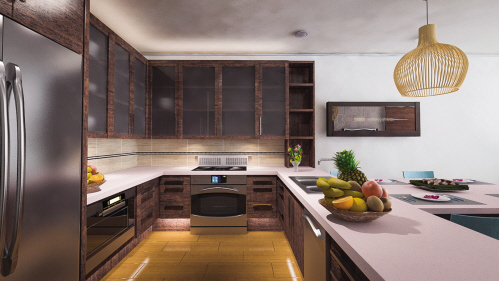
    Generations Magazine -Creating Ageless Kitchens - Image 01As we grow older, the need to renovate our home to meet evolving needs grows 
 but so can the headache from all of the labor involved.
    Your home should represent who you are and your lifestyle. It should be a space that has great energy and is a source of pride. And, sometimes simple, strategic changes can make your house a home for life. Enhancing your home, especially the most frequently used room — the kitchen — doesn’t have to involve major work to make a major difference.

    As we age, everything around us seems to get taller, heavier and out of reach. Some seniors seem to “shrink” and probably have the most problems in the kitchen where they aren’t able to reach high shelves. Sore joints can prevent them from stooping down and pulling things out from low drawers. A quick and effective fix to these types of physical limitations could include installing cabinet systems that allow kupuna to pull down and push up cabinets. Even small changes such as installing single-level flooring and layered lighting can make a world of difference. And with convenience and safety in mind, the placement of appliances should always be reviewed. For example, simply lowering a microwave oven to a reachable surface can prevent spills and burns.

    Besides being the place to prepare meals, the kitchen is often the place where friends and family congregate. As such, it can benefit the most from a design update from which people of all ages can benefit and appreciate.


    Ventus Design
    www.ventusdesignhonolulu.com
    808-396-5477 | rlewis@ventusdesignhnl.com

    As we grow older, the need to renovate our home to meet evolving needs grows 
 but so can the headache from all of the labor involved. Your home should represent who you are and your lifestyle. It should be a space that has great energy and is a source of pride. And, sometimes simple,…

  • For Once in My Life!

    If you are a Tony Bennett fan, there are few things better in middle age than listening to a medley of his hits, which has to include “I Left My Heart in San Francisco!”

    He recently performed at the Neal Blaisdell concert hall and his performance was spectacular. At the young age of 87, he belted out the first song he recorded in 1932, and next Charlie Chaplin’s, “Smile.” He followed with a medley of his favorite hits that caused the crowd to clap and cheer and ended with a 10-minute standing ovation.

    Bennett performed for about 90 minutes. A duet with his daughter was a real crowd pleaser. He danced and twirled, didn’t miss a note, word or beat. He talked a bit about an upcoming new album with Lady Gaga and told the crowd to please go out and buy it because he needs the money. He laughed and blew kisses to crowd and told his adoring fans how much he loved them.

    As he sang a favorite, “For Once In My Life,” I changed the lyrics to match my Medicare-centric mindset.

    This is the tune I was hearing;

    For once in my life, I have Medicare Advantage,

    Something I’ve needed so long,

    For once unafraid, I can go where life leads me

    And I know my Medicare plan will keep me strong.

    For once I can say this is my Medicare, you can’t take it.

    As long as I keep up my Part B payments, I can make it.

    For once in my life,

    I have everything in the world that I need.

    ___________________________

    Martha Khlopin hosts the popular weekly radio program “Medicare Moment with Martha — The World of Medicare” sponsored by AlohaCare. It airs on KHNR-690AM on Saturdays from 11–11:30 a.m. and on KGU-99.5FM on Sundays from 10–10:30 a.m. For info, call (808) 973-0754, mkhlopin@alohacare.org.

    If you are a Tony Bennett fan, there are few things better in middle age than listening to a medley of his hits, which has to include “I Left My Heart in San Francisco!” He recently performed at the Neal Blaisdell concert hall and his performance was spectacular. At the young age of 87, he…

  • You’re the Caregiver, but Who Will Take Care of You?

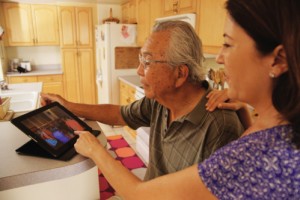
    Generations Magazine - You’re the Caregiver, but Who Will Take Care of You? - Image 02The pool of family and friends to care for Hawai‘i baby boomers as they age into their 80s will be less than half as deep as it is today, according to a new report from AARP. The report predicts the ratio of potential family caregivers to elders needing care will plummet from today’s six caregivers for each person over the age of 80 to fewer than three caregivers per elderly person in 2030.
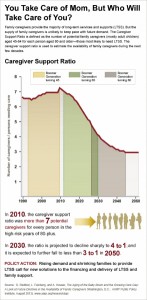
    The Aging of the Baby Boom and the Growing Care Gap from the AARP Public Policy Institute also anticipates that the dearth of family caregivers projected for 2030 to 2050 will intensify the emotional, physical and financial costs borne by future caregiving family members and friends.

    “About half of older Hawai‘i residents believe they will be able to rely on their families to meet their needs when they need long-term care,” says AARP Hawaii State President Gerry Silva. “But this confidence is likely to erode when it collides with the dramatically shrinking availability of family caregivers in the future.”

    As the number of Hawai‘I residents over the age of 80 increases in the next 20 years, the number of people in the primary caregiving years will remain flat, the report states. Meanwhile, in 2050, there will be nearly three times as many people age 80 and older in Hawai‘i as there are today. As a result, by 2050, the caregiver support ratio which was 6.1 in 2010 when boomers were in their peak caregiving years, is projected to drop to 2.1 percent when the boomers will have reached their 80s. According to the report, in just 13 years, as the baby boomers age into their 80s, the decline in caregiver support will shift from a slow decline to a free fall.

    Generations Magazine - You’re the Caregiver, but Who Will Take Care of You? - Image 03The new caregiver report calculates the availability of caregivers by dividing the number of people in the most common caregiving age range (those ages 45-64) by the number of older people most at risk of needing long-term services and\ supports (those ages 80+). The former group reflects the demographics of today’s average caregivers, the latter is the population likely to have some kind of disability and need help with daily activities.


    The complete report, The Aging of the Baby Boom and the Growing Care Gap: A Look at Future Declines in the Availability of Family Caregivers, can be found at www.tinyurl.com/aarp-caregiving.

    AARP is a membership organization for people age 50 and older with 148,000 members in Hawai‘i. We champion access to affordable, quality health care for all generations, provide the tools needed to save for retirement, and serve as a reliable information source on issues critical to older Americans.


    Generations Magazine - You’re the Caregiver, but Who Will Take Care of You? - Image 01


    Contact AARP Hawai’i for more information.
    State Office: 808-545-6024
    Toll-Free: 866-295-7282
    aarp.org/hi
    facebook.com/AARPHawaii
    twitter.com/AARPHawaii

    The pool of family and friends to care for Hawai‘i baby boomers as they age into their 80s will be less than half as deep as it is today, according to a new report from AARP. The report predicts the ratio of potential family caregivers to elders needing care will plummet from today’s six caregivers…

  • My Take on Things: Find Your Local Senior Club

    Generations Magazine - My Take on Things: Find Your Local Senior Club - Image 01
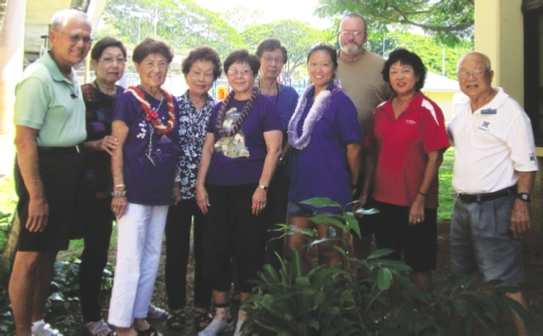
    Moanalua Senior Citizens’ Club, board members and advisor. Lt.– Rt.: Roy Takara, Jane Uehara, Betsy Miyahira, Alice Toyota, June Minakami, Jeannette Nishikawa, Jenna Mow (Advisor), Daniel Levay, Sherry Goya (Generations Magazine), and Herbert Chang.

    Like many of the City & County’s Parks and Recreation senior programs, the Moanalua Senior Citizens’ Club did not meet in June, July and August while the City’s Summer Fun programs took over their locations. When I delivered Generations Magazine’s August/September issue on Monday, September 9th, I heard one of the seniors say that it was just like the “first day back to school.”

    The Moanalua Senior Citizens’ Club was organized on February 2, 1981 with 16 members. Today, the club is 154 strong, has an active board, meets every Monday at the Moanalua Recreation Center, from 9 a.m. to Noon, and has two bowling leagues. Its board members and committee chairs are quite organized and impressive, with reports, speakers, entertainment or excursions scheduled each Monday. The club also has fundraisers throughout the year.

    The City & County of Honolulu has more than 35 senior clubs, representing about 3,500 participants in East, West, Leeward and Windward 55 years and older. For more information, call (808) 763-3003 or visit www.honolulu.gov/parks/programs/senior.

    Like many of the City & County’s Parks and Recreation senior programs, the Moanalua Senior Citizens’ Club did not meet in June, July and August while the City’s Summer Fun programs took over their locations. When I delivered Generations Magazine’s August/September issue on Monday, September 9th, I heard one of the seniors say that it…

  • Following Your Passion is Worth the Risk

    As an entertainer, I have always had a great love for the arts and my professional life reflects that as well. But painting was the farthest thought in my head. I did, however, secretly admire painters from afar. I would study their paintings and read their back stories. I would feel a strong sense of connection when I read about how they lived their lives and their philosophies and dreams.

    So that familiar feeling, that tug at my gut came around again and hit me real hard on Tuesday Sept. 11, 2001 (9/11). I had felt it before but never really confronted it or allowed it to well up in my soul, as it did that day.

    We often think to ourselves, Oh yeah, I’ll investigate that emotion and see what comes of it, but for now I’m just too busy to do anything about it. So, I put it off yet another time. Those burning embers deep in my na‘au, trying to surface once again, were pushed down and lay dormant.

    Generations Magazine - Following Your Passion is Worth the Risk - Image 01We are funny us human beings. We are always looking for a sign it seems … something that will tell us what to do with our lives. Pursuing our own dreams means we have to alter our present course, walk the path less traveled and risk failure and embarrassment.

    I believe that signs are being showed to us all the time! Some are laid out in front of us and yet we still don’t see them. These extraordinary higher vibrations that we all have felt in our lifetimes wait for us to acknowledge their splitsecond appearance in our lives.

    I’m talking about passion!

    And so, in your life, if that passion came knocking at your door today, what would you do? Well, I can tell you what I did. I finally answered the door.

    I can tell you that all the fears that accompanied the passion were realized. It was hard making that abrupt turn. Oh, but the gifts it brings, the feeling of soaring high above the Ko‘olau. A freedom and separation from a physical reality that turns into spirituality! Now it is a higher reality, now it is the divine. Faith, hope, love and passion!

    Finally, I said to myself, I’m going to paint today. I’m going to listen to that nudge, that rumbling in my gut and see how far I can take it.

    From that moment forward, my life would change in a very profound way.

    Since September 11, 2001, I have painted every day.

    This is what I would like to impart to you 
 a little bit of my mana‘o: You, too, can seize the moment! Make the move to pursue that secret you’ve been pushing down and hiding for so long. The time is now … grip your shauts! I guess what I am saying here is, It’s never too late to find that passion!


    Join in a conversation with Frank B. Shaner on Facebook and experience his art onlin at .

    As an entertainer, I have always had a great love for the arts and my professional life reflects that as well. But painting was the farthest thought in my head. I did, however, secretly admire painters from afar. I would study their paintings and read their back stories. I would feel a strong sense of…