Category: Living Life

  • The Importance of Documentation

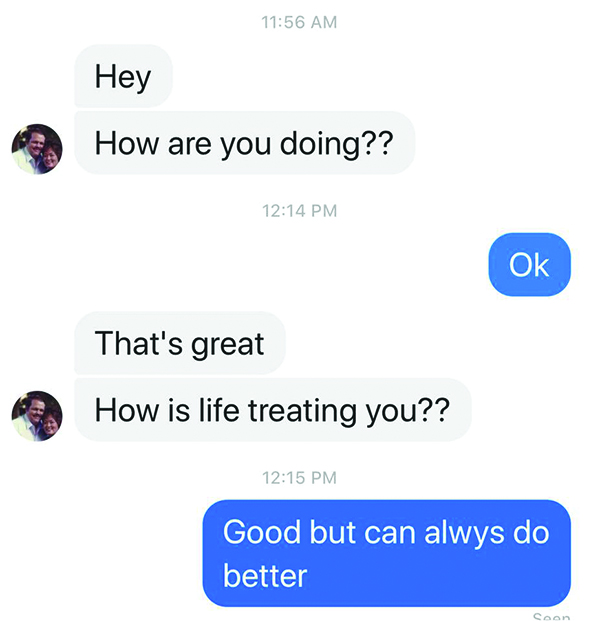
    One of the most common problems I encounter investigating a cybercrime is that the victim fails to provide any records and/or documentation to support their claim that they have been victimized. This is often also true of others reporting the crime, either with the victim or on their behalf.

    Lack of documentation is most prevalent in cases involving online fraud. Here are a few good steps to take every time your purchase or acceptance of a contract involves the internet:

    • Print the webpage — a simple and quick method. Print the displayed offer, sale, or service you are interested in. At the bottom of the printout will usually be the URL (webpage address) and the date and time the printout was done. After purchasing, print out any on-screen confirmation
    of sale, receipt of funds, delivery notices, etc.
    • Bookmark the webpage(s). This is also a good way of record keeping and being able to return to that particular webpage.
    • Print your email. Solicitations offering the sale of items and/or services and purchase confirmations and receipts, delivery notices, etc. received in your email should be printed out as good practice. In addition, all emails involving the transaction should NOT be deleted, but saved in a separate folder.
    • Obtain bank or credit card statements reflecting transactions to further assist investigations.
    Again, prevention is the key: “If it’s too good to be true…”


    THE DEPARTMENT OF THE PROSECUTING ATTORNEY
    1060 Richards St., Honolulu HI 96813
    808-768-7400 | Office hrs: Mon – Fri, 7:45 am – 4:30 pm
    www.honoluluprosecutor.org/contact-us/

    One of the most common problems I encounter investigating a cybercrime is that the victim fails to provide any records and/or documentation to support their claim that they have been victimized. This is often also true of others reporting the crime, either with the victim or on their behalf. Lack of documentation is most prevalent…

  • Blossoms for the Brave Lei-Making Event

    As Mayor Alan M. Arakawa has said, “As we sew lei together, we express our gratitude for their service, and for the many ways these men and women helped shape the community we live in today, ‘Blossoms for the Brave’ is a wonderful opportunity to meet up with old friends and neighbors as we remember our fallen heroes who gave their lives to serve our country.”

    For the past five years, the Maui community has come together on the Friday before Memorial Day to participate in a lei-making event in order to make more than 2,846 lei for all the veterans’ graves at Maui Veterans Cemetery in Makawao.

    This year the event will take place on Friday, May 25, from 9am – noon on the front lawn of the Kalana O Maui (County) Building in Wailuku.

    Korean War Veteran Warren Nishida (left) salutes 2017 Blossoms event accomplishments by volunteers (right).
    Korean War Veteran Warren Nishida (right) salutes 2017 Blossoms event accomplishments by volunteers (right).


    The free event is co-hosted by Kaunoa Senior Services, a division of the Maui County Department of Housing and Human Concerns, and the Office of Mayor Alan Arakawa. It will feature live entertainment, ti leaf lei-making instruction, and the opportunity to contribute to a noble cause. Kaunoa spearheads the event to remind the community and educate youth that Memorial Day is a time to honor and reflect upon the sacrifices made by Americans in combat, a solemn occasion marked by ceremony and prayer.

    Numerous community partners help assure a successful event, including the Maui Korean War Veterans, AARP Hawaii, Kihei Youth Center, and Hale Makua residents, staff and volunteers. Also vital to the realization of the greater goal are Kaunoa’s own program participants at the Congregate Nutrition Centers and Leisure/Wellness programs throughout Maui County, including West Maui Senior Center, Hana, Lāna‘i, and Moloka‘i. Homebound seniors in Kaunoa’s Meals on Wheels and Assisted Transportation programs are encouraged to participate by contributing flowers from their yards and gardens, giving them a sense of pride and keeping them connected to community.

    Volunteers with the Retired & Senior Volunteer Program (RSVP) help in every aspect of this major undertaking, from planning logistics and teaching lei-making classes in advance of the event, to the flower donation awareness campaign and publicity, to collection and preparation of flowers, greenery, and ti leaves on event day.

    Parking and a free shuttle to the County Building will be available from the Ichiro “Iron” Maehara Baseball Stadium parking lot.


    KAUNOA SENIOR SERVICES, COUNTY OF MAUI
    401 Alakapa Place, Paia HI 96779
    Spreckelsville: 808-270-7308 | West Maui: 808-270-4310
    www.mauicounty.gov/458/Senior-Programs

    As Mayor Alan M. Arakawa has said, “As we sew lei together, we express our gratitude for their service, and for the many ways these men and women helped shape the community we live in today, ‘Blossoms for the Brave’ is a wonderful opportunity to meet up with old friends and neighbors as we remember…

  • Youth Inspiring Seniors

    From Left: Colby Takeda; ‘Iolani One Mile Project students Marley Dyer and Bryson Choy; and Christy Nishita, PhD.
    From Left: Colby Takeda; ‘Iolani One Mile Project students Marley Dyer and Bryson Choy; and Christy Nishita, PhD.

    The One Mile Project at ‘Iolani stands out from traditional academic classes. It is a high school class that centers on building empathy and understanding for kūpuna in our local community; it seeks to address the challenges that many kūpuna face in their daily lives. Students learn about aging, then develop and implement their own projects.

    As Christy Nishita says, “The One Mile Project class at ‘Iolani School makes these goals happen for our kūpuna. Our youth need to learn about aging and have opportunities to interact with older adults. The benefits are clear. Our youth will build awareness and empathy, and, on a community level, generations will find opportunities to build bridges and find common ground.”

    The class is an opportunity to step into the shoes of kūpuna and develop awareness and empathy towards the older population. The class pushed me to go beyond the classroom and pursue various projects to address challenges that kūpuna face. My project was inspired by my grandparents, who faced difficulties in communicating and understanding health information during doctor’s visits. With the support of my teachers and Christy Nishita, PhD, project advisor, I conducted focus groups and interviews with caregivers, older adults and geriatricians to better understand these challenges. I created a presentation with findings and tips and presented them to University of Hawai’i geriatric fellows, a pre-medicine student club, the Farrington High School Health Academy, and a Project Dana caregiver support group.

    My enthusiasm for helping the kūpuna population stimulated my decision to pursue other projects. I worked with Colby Takeda from The Plaza Assisted Living Waikīkī to co-coordinate an inter-generational photo voice project called ‘Honolulu Walks.’ I also talked story with different kūpuna and created a website that shares kūpuna life experiences called Stories of Kūpuna medium.com/stories-of-kupuna. I believe that older adults are the storytellers of our society. They have so many valuable life lessons, experiences and stories. I hope that my experience encourages others to step into their shoes and see the world from their perspective.


    CENTER ON AGING — University of Hawai‘i at Mānoa
    2430 Campus Rd., Gartley Hall, 201B, Honolulu HI 96822

    808-956-5001  | uhcoa@hawaii.edu | hawaii.edu/aging/

    The One Mile Project at ‘Iolani stands out from traditional academic classes. It is a high school class that centers on building empathy and understanding for kūpuna in our local community; it seeks to address the challenges that many kūpuna face in their daily lives. Students learn about aging, then develop and implement their own…

  • What Is The Blue Zones Project?

    Adult Day Care at the Blue Zones ProjectChildren who attend Seagull Schools in Kapolei have a special bond with seniors at Seagulls Adult Day Center, located next door. Not only do the kūpuna and keiki regularly meet to play bingo, exercise on the lawn and do arts and crafts, but they also dine together on lunches that include whole grains, lean proteins and plenty of fruits and vegetables.

    “The Kapolei school and adult center were purposely designed for mutually beneficial interaction between kūpuna and keiki,” says Chuck    Larson, executive director for Seagull Schools, which has five locations on O‘ahu and one on Hawai‘i Island. “It has drawn attention from countries around the world seeking to develop strategies for their aging populations.” Spending time with energetic children does wonders for seniors’ mental health and cognitive skills, he adds.

    Promoting good health is a top priority for Seagull Schools, which has been approved by the Blue Zones Project — a nationwide wellness program to enhance communities through proper nutrition, natural exercise, social interaction, spirituality and other healthy habits.

    HMSA brought the initiative to Hawai’i to lower healthcare costs and improve quality of life. As of this writing in December, Blue Zones had eight demonstration communities: North Hawai‘i, East Hawai‘i, West Hawai‘i/Hawai‘i County, Central Maui, Ko‘olaupoko, Wahiawa¯, Kapolei-Ewa and Mānoa-Makiki-McCully-Mō‘ili‘ili.

    Seagull campuses serve all-vegetarian meals on Wednesdays, and sugary, processed foods are banned. To circulate fresh air, there are ceiling fans, open windows and no air-conditioning.

    “Blue Zones is a lifestyle practice for adults to set the stage for children,” Larson says.

    Blue Zones Diet: What to eat

    • Up to 95 percent of your food should be greens, grains, fruits, vegetables and beans. Use olive oil and spices to flavor vegetables.
    • If you eat meat, limit portions to a deck of cards. Avoid hot dogs, bacon and sausages. Avoid seafood with high levels of mercury and other toxins.
    • Avoid cow’s milk. Eat cheeses (sparingly) made of sheep or goat’s milk. Limit eggs to three times weekly.
    • Eat one cup of beans, plus tofu, spread across the day. Avoid canned beans with added salt, sugar and chemicals.
    • Eat less than 28 grams, or 7 teaspoons, of added sugar daily.
    • Snack on nuts daily (non-sugar, non-salted).
    • Avoid white breads. Eat 100 percent whole-grain breads or pure sourdough bread made with live cultures. Limit to two slices daily.
    • Avoid processed foods; eat whole foods and dishes with fewer than five ingredients.
    • Drink at least six glasses of water daily.

    BLUE ZONES PROJECT

    hawaii.bluezonesproject.com

    SEAGULLS SCHOOLS ADULT DAY CENTER

    808-674-1160 seagullschools.com

    Children who attend Seagull Schools in Kapolei have a special bond with seniors at Seagulls Adult Day Center. Not only do the kūpuna and keiki regularly meet to play bingo, exercise on the lawn and do arts and crafts, but they also dine together.

  • Why So Many Email Accounts?

    What would happen if cybercriminals took control of your email account? They would have access to all the services and people you communicate with.

    These criminals will be able to impersonate you, drain your financial nest egg and ruin your life!

    To protect yourself, I encourage you to have more than one email account.

    Before I go any further, take the time to look at your email’s inbox. Note who you are communicating with: Family members, financial institutions, physicians, Social Security Administration, social groups, Medicare, etc.

    Do you have secure, strong passwords for your email account? I talked about this in the last issue of Generations Magazine (October/November 2017).

    As important as it is to have strong passwords, you have to have more than one email account to avoid putting your eggs in one basket.

    Having separate email accounts for different purposes will prevent you from losing everything if your email account has been compromised.

    I strongly recommend at least one separate email account for the following tasks:


    To communicate with family and close friends.


    As a member of professional groups, civic and business organizations (Rotary clubs, etc.)


    Online banking, transferring funds, automatic deposits and payments.


    Online shopping and credit card purchases (PayPal, CitiCard, VISA, MasterCard and
    Amazon, etc.)


    Social media (Facebook and
    Instagram).


    A public email account that you don’t mind sharing with others. Use this when visiting  websites that require an email account.

    Don’t be tempted to use your online banking email account for online shopping, as shopping accounts tend to receive more spam (unsolicited email) and are targeted by online scammers. Your biggest challenge is to strictly adhere to one email account for its designated use.


    THE DEPARTMENT OF THE PROSECUTING ATTORNEY
    1060 Richards St., Honolulu HI 96813

    808-768-7400  |  Office hrs: Mon – Fri, 7:45 am – 4:30 pm
    www.honoluluprosecutor.org/contact-us/

    What would happen if cybercriminals took control of your email account? They would have access to all the services and people you communicate with. These criminals will be able to impersonate you, drain your financial nest egg and ruin your life! To protect yourself, I encourage you to have more than one email account. Before…

  • Athletes After 60: Charlene & Larry Gearing

    Larry Gearing was riding his bicycle up a hill toward his home in 2006 when he felt chest pains. A doctor’s test revealed that, six months prior, he most likely had a silent heart attack causing a blocked artery. After undergoing cardiac rehabilitation, Larry and his wife, Charlene, decided to get fit and healthy.

    Using the online fitness program, “Training Peaks,” the Gearings worked with virtual coaches to create weekly exercise and diet plans. Their dedication soon paid off. Larry ran his first 5K race and 100-mile bike ride. Charlene shed 30 pounds and completed a 5K race.

    Their next goal? Triathlons!

    At first, Larry joined Charlene at triathlons — but only from the sidelines. “He was my sherpa,” she jokes.

    Inspired by his wife’s grit, Larry began training with her. “I felt guilty driving around in a car that had event stickers on it, for [sporting] events I hadn’t participated in,” he recalls.

    Since then, the Ko Olina couple has trained for dozens of races and events. Charlene completed her first triathlon in 2009 at age 57, represented Team USA in the 2014 International Triathlon World Championship in Canada, and finished a Half Ironman in 2016, among her many outstanding accomplishments.

    Larry completed his first triathlon in 2012, at age 62. That, plus the 8-mile Great Aloha Run, 60-mile bike rides, two Hapalua Half-Marathons and the 10K XTERRA.

    They’ve hit roadblocks along the way. Charlene’s first 5K run ended in a pulled hamstring muscle, plantar fasciitis and physical therapy. The swim portion of Larry’s second triathlon in 2013 sent him to the emergency room with a flash pulmonary edema and bypass surgery. His heart is stronger now, thanks to an implanted defibrillator in his chest.

    “All of these things have not stopped Larry from being a good runner,” Charlene says with pride.

    Charlene and Larry’s Fit Tips:

    • Fill your daily diet with whole grains and colorful fruits and vegetables; avoid processed foods.
    • For nutrition tips, learn about the HMSA Blue Zones Project® (www.hawaii.bluezonesproject.com)
    • If personal training is not affordable, hire a
      virtual coach on “Training Peaks” to reach fitness
      and nutrition goals. Track your progress on a smartwatch, mobile device or computer.
    • Combine weekly exercises with weight training, flexibility and balance, and cardio-endurance, such as running, swimming, walking or biking.
    • Inspire others to be healthy and active; set fitness goals, and surround yourself with supportive, positive people.

    Larry Gearing was riding his bicycle up a hill toward his home in 2006 when he felt chest pains. A doctor’s test revealed that, six months prior, he most likely had a silent heart attack causing a blocked artery. After undergoing cardiac rehabilitation, Larry and his wife, Charlene, decided to get fit and healthy. Using…

  • The Search Is On for the 2018 Lei Queen!

    Do you know any kūpuna women who are skilled in hula and lei-making, love the Hawaiian culture and live the spirit of aloha? If so, encourage them to apply for 2018 Lei Queen.

    The City’s Department of Parks and Recreation, which organizes the program, selects court members from different age groups to celebrate phases of life.

    The 2018 court will feature Nā Kūpuna (the Elders) and reflect the theme, “Alohi Kea — the brilliant white lei, the platinum of kūpuna.”

    There is no age limit, but applicants must be at least 61 years young by Saturday, March 3, 2018.

    The 2017 Lei Queen and Court (from left): First Princess Pauline Leinā‘ala Robello, Queen Perle Puamōhala Kaholokula and Princess Ada Kalikokalehua Cooke. Photo by Dave Miyamoto
    The 2017 Lei Queen and Court (from left): First Princess Pauline Leinā‘ala Robello, Queen Perle Puamōhala Kaholokula and Princess Ada Kalikokalehua Cooke. Photo by Dave Miyamoto

    2018 LEI QUEEN

    Application deadline:
    Friday, Jan. 5, 2018

    Court selection event:
    Saturday, March 3, 2018; McCoy Pavilion, Ala Moana Regional Park; free event

    91st Annual Lei Day
    Celebration:
    Tuesday, May 1,
    Kapi‘olani Park

    Contact:
    Call 808-768-3041 or visit www.honoluluparks.com

    Do you know any kūpuna women who are skilled in hula and lei-making, love the Hawaiian culture and live the spirit of aloha? If so, encourage them to apply for 2018 Lei Queen. The City’s Department of Parks and Recreation, which organizes the program, selects court members from different age groups to celebrate phases of…

  • The Holiday Blues

    It’s hard to imagine how the holidays could be anything but joyous. Yet, for many, this time of year can trigger the holiday blues — temporary feelings of sadness or anxiety. Feeling blue is completely normal, though there are a few easy way you can boost your mood.

    Be selective. Increased outings can cause unnecessary stress. Be selective about the events you attend so that you can enjoy each holiday gathering to its fullest.

    Simple activities can prevent burnout during the holidays.
    Simple activities can prevent burnout during the holidays.

    Manage expectations. Alleviate the pressure of the holidays by finding ways to celebrate with-
    out burning yourself out. For example, prepare a special dish instead of undertaking the entire holiday meal.

    Create new memories. Balance old memories by creating new ones. Starting a new holiday tradition is a great way to positively build up anticipation for the season.

    Find good company. Pick up the phone and call a family member. Visit with an old friend. Invite your neighbor over for lunch. Sometimes, just
    being in good company is enough to improve your mood.

    Schedule downtime. For every activity you plan, pencil in some downtime. Looking after your health will keep you feeling refreshed and energetic all-season long.


    HOME CARE by ALTRES MEDICAL

    808-591-4930  |  www.altresmedical.com

    It’s hard to imagine how the holidays could be anything but joyous. Yet, for many, this time of year can trigger the holiday blues — temporary feelings of sadness or anxiety. Feeling blue is completely normal, though there are a few easy way you can boost your mood. Be selective. Increased outings can cause unnecessary stress. Be…

  • Three Tips for a Cleaner Home

    The average person, especially kūpuna, spends 90 percent of his or her time indoors. Therefore, a clean, safe indoor environment is paramount.

    Uncirculated air and tightly constructed buildings can trigger allergies, asthma and illnesses.

    Traditional housecleaning methods do not cut it anymore. Some cleaners contain harmful toxins like ammonia, phenol, ethanol, formaldehyde, butane and propane.

    Lately, there is a movement toward “chemical-free cleaning” in facilities serving the elderly population. Here are some good cleaning practices for your own home.

    • Use microfiber cloths and flat mops. The ultra-fine materials trap dirt, debris and moisture better than paper towels and rags. Traditional string mops drag dirt around floors and contaminate water-filled buckets.
    • Use a spray bottle with a twist nozzle and “streaming” feature similar to a water gun.
      Or, soak the cloth in a chemical-free cleanser before wiping.
    • Prior to wiping, fold the cloth eight times. Unfold as you wipe, using a different section for each surface to prevent cross-contamination.

    CLEAN PLUS SYSTEMS II
    Provides cleaning services and education for care homes, hospitals, hotels, schools and more.

    808-678-8021 | www.rosegalera.com

    The average person, especially kūpuna, spends 90 percent of his or her time indoors. Therefore, a clean, safe indoor environment is paramount. Uncirculated air and tightly constructed buildings can trigger allergies, asthma and illnesses. Traditional housecleaning methods do not cut it anymore. Some cleaners contain harmful toxins like ammonia, phenol, ethanol, formaldehyde, butane and propane.…

  • How to Create Strong Passwords

    A simple way to protect your online identity is to use strong passwords. Use any or combine all five of these steps to create strong passwords.

    • Step 1 Select a non-English word at least eight characters long — for example, the Hawaiian word kapakahi, meaning “crooked.”
    • Step 2 Convert one letter to a number. In “kapakahi,” the letter “a” becomes “8.” The result: k8p8k8hi.
    • Step 3 Convert one letter to uppercase. The result: k8p8K8hi.
    • Step 4 Convert one character to a symbol, such as @ or #. The result: k8p8#K8hi.
    • Step 5 Add capital letters that are associated with the password’s account. For example, for a Bank of Hawaii account, use BOHk8p8#K8hi.

    Other tips to keep in mind:

    ✦ Use different passwords for different accounts.

    ✦ Write down your password in a secure place.

    ✦ Do not keep passwords in your wallet or bag.

    ✦ Do not post passwords to your computer screen.

    ✦ Do not store passwords on any technical device.

    ✦ Change passwords once every three months.

    Immediately change your passwords when alerted of a security breach. Cybercrime is a very real threat in our Internet-connected society — so take precautions.


    THE DEPARTMENT OF THE PROSECUTING ATTORNEY
    1060 Richards St., Honolulu HI 96813

    808-768-7400  |  Office hrs: Mon – Fri, 7:45 am – 4:30 pm
    www.honoluluprosecutor.org/contact-us/

    A simple way to protect your online identity is to use strong passwords. Use any or combine all five of these steps to create strong passwords. Step 1 Select a non-English word at least eight characters long — for example, the Hawaiian word kapakahi, meaning “crooked.” Step 2 Convert one letter to a number. In “kapakahi,” the…

  • Over 50 Years of Pop Music

    The Honolulu Museum of Contemporary Pop presents music from the past 50 years and offers educational tours to school groups and music aficionados. The museum also is used for private parties and events.
    The Honolulu Museum of Contemporary Pop presents music from the past 50 years and offers educational tours to school groups and music aficionados. The museum also is used for private parties and events.

    What do Don Ho, Bette Midler, Cecilio & Kapono, Glenn Medeiros and Bruno Mars all have in common?

    They’re contemporary music stars with global recognition. And they all have Hawai‘i ties.

    The Honolulu Museum of Contemporary Pop celebrates these local stars and dozens more of the same caliber with weekly, nighttime concerts that take place inside a recording studio located on Beretania Street.

    The “Inside Session” concerts, performed eight times per weekend, feature the best of Hawai‘i’s contemporary pop tunes over the past 50 years.

    Jazz, soul, R&B, folk, pop and funk music are part of the nightly mix. What often brings down the house, however, are hit tunes by Hawai‘i’s own Cecilio & Kapono.

    The brainchild behind “Inside Session” is Kirk Thompson — an original member of the contemporary Hawaiian music band Kalapana and founder of the legendary group Lemuria.

    “My mission is to document and preserve that movement for the next generation,” Thompson said. During the concerts, Thompson also pays tribute to his good mentors, the late singer Don Ho and concert and music promoter Tom Moffatt.

    “Tom was such a cool-headed guy, bringing in big concerts like Michael Jackson,” Thompson said. “And I learned a lot from Don and Tom. As a record producer for Don ‘Mr. Aloha,’ he always helped those who wanted to record, and my job was to help him help others do a good job for him,” he said.

    The pop museum falls under the nonprofit group, Hawaii National Music Foundation of the Pacific. As part of the nonprofit’s mission, Thompson and his team provide educational tours for students and music aficionados of all ages. Tour groups learn about the recording industry, receive tips from the pros and even take shots at recording their own music.

    Lining the wall of the museum are more than two-dozen record albums, dubbed the “Pioneers of Pop” exhibit. Visitors are invited to take self-guided tours of the wall, using state-of-the-art, multilingual tablets.

    Thompson is proud of the records. “To be signed to a major record deal and get off the island in the 1960s and 1970s was a tremendous thing.”


    HONOLULU MUSEUM OF CONTEMPORARY POP
    800 S. Beretania St., Ste. 140, Honolulu HI 96813

    Inside Session Evening Show:
    Thursday – Sunday, 6:30 – 8 pm and 8:30 –10 pm

    808-520-7148  |  808-367-0100
    www.honolulumuseumofcontemporarypop.com

    What do Don Ho, Bette Midler, Cecilio & Kapono, Glenn Medeiros and Bruno Mars all have in common? They’re contemporary music stars with global recognition. And they all have Hawai‘i ties. The Honolulu Museum of Contemporary Pop celebrates these local stars and dozens more of the same caliber with weekly, nighttime concerts that take place…

  • UH Coach Dick Tomey Pens Tell-All Book

    The fervent spirit of University of Hawai‘i football during the era of Coach Dick Tomey (1977–86) is captured in a new book, Rise of the Rainbow Warriors: Ten Unforgettable Years of Hawai‘i Football, scheduled for release in late October. It was a time when UH was new to the Western Athletic Conference and loyal fans regularly filled Aloha Stadium.

    Co-written by Coach Tomey and Honolulu author Lance Tominaga, Honolulu ESPN1420 web editor, the book features 40 photos and interviews with hundreds of players, including Jesse Sapolu, Jeff Duva, Rich Miano, Dana McLemore, Blane Gaison, Gary Allen and Niko Noga.

    “UH fans will enjoy the book because of the behind-the-scenes stories Coach Tomey and his players share,” Tominaga said.

    Coach Tomey spoke with Generations Magazine from his home in Arizona:

    GM: What was it like reconnecting with more than 150 former UH football players?    

    Tomey: It was amazing. That chapter is one of my favorites. To reconnect over a subject that is dear to their hearts was invigorating. It was so gratifying to hear about their impact on society. Readers will enjoy reading about what they are up to.

    GM: What else in the book might longtime UH fans find interesting?

    Tomey: The first season, described in detail, is important in how everything started. I was appointed coach and took the job in June 1977—not optimal for a season that started in September. The team didn’t have time to practice and was coming off a rough season. I didn’t have time to recruit many players and select a coaching staff. And I was a young, new coach with no reputation taking on a difficult job. Expectations were low.

    GM: How are past football fans different from today’s generation?

    Tomey: It’s more difficult for UH today because we can sit in our homes and watch 10 games on TV on Saturdays. In those days, it really didn’t matter who we played or whether we won or lost the previous week. The fans were there, they stayed late and their enthusiasm was boundless. We all could feel the energy and fed off of it.

    GM: What else have you been up to lately?  

    Tomey: My wife, Nanci Kincaid, and I live in
    Tucson. We have four adult children and eight grandchildren. We’re just Papa and Tutu. We’re blessed with good health. I’m going to be 80 years old next summer.

    Tomey is planning to visit Honolulu in October for book signings and public appearances. Details are available at www.bookshawaii.net.

    The fervent spirit of University of Hawai‘i football during the era of Coach Dick Tomey (1977–86) is captured in a new book, Rise of the Rainbow Warriors: Ten Unforgettable Years of Hawai‘i Football, scheduled for release in late October. It was a time when UH was new to the Western Athletic Conference and loyal fans…