The average person, especially kūpuna, spends 90 percent of his or her time indoors. Therefore, a clean, safe indoor environment is paramount.
Uncirculated air and tightly constructed buildings can trigger allergies, asthma and illnesses.
Traditional housecleaning methods do not cut it anymore. Some cleaners contain harmful toxins like ammonia, phenol, ethanol, formaldehyde, butane and propane.
Lately, there is a movement toward “chemical-free cleaning” in facilities serving the elderly population. Here are some good cleaning practices for your own home.
Use microfiber cloths and flat mops. The ultra-fine materials trap dirt, debris and moisture better than paper towels and rags. Traditional string mops drag dirt around floors and contaminate water-filled buckets.
Use a spray bottle with a twist nozzle and “streaming” feature similar to a water gun.
Or, soak the cloth in a chemical-free cleanser before wiping.
Prior to wiping, fold the cloth eight times. Unfold as you wipe, using a different section for each surface to prevent cross-contamination.
CLEAN PLUS SYSTEMS II
Provides cleaning services and education for care homes, hospitals, hotels, schools and more.
The average person, especially kūpuna, spends 90 percent of his or her time indoors. Therefore, a clean, safe indoor environment is paramount. Uncirculated air and tightly constructed buildings can trigger allergies, asthma and illnesses. Traditional housecleaning methods do not cut it anymore. Some cleaners contain harmful toxins like ammonia, phenol, ethanol, formaldehyde, butane and propane.…
A simple way to protect your online identity is to use strong passwords. Use any or combine all five of these steps to create strong passwords.
Step 1 Select a non-English word at least eight characters long — for example, the Hawaiian word kapakahi, meaning “crooked.”
Step 2 Convert one letter to a number. In “kapakahi,” the letter “a” becomes “8.” The result: k8p8k8hi.
Step 3 Convert one letter to uppercase. The result: k8p8K8hi.
Step 4 Convert one character to a symbol, such as @ or #. The result: k8p8#K8hi.
Step 5 Add capital letters that are associated with the password’s account. For example, for a Bank of Hawaii account, use BOHk8p8#K8hi.
Other tips to keep in mind:
✦ Use different passwords for different accounts.
✦ Write down your password in a secure place.
✦ Do not keep passwords in your wallet or bag.
✦ Do not post passwords to your computer screen.
✦ Do not store passwords on any technical device.
✦ Change passwords once every three months.
Immediately change your passwords when alerted of a security breach. Cybercrime is a very real threat in our Internet-connected society — so take precautions.
THE DEPARTMENT OF THE PROSECUTING ATTORNEY
1060 Richards St., Honolulu HI 96813
A simple way to protect your online identity is to use strong passwords. Use any or combine all five of these steps to create strong passwords. Step 1 Select a non-English word at least eight characters long — for example, the Hawaiian word kapakahi, meaning “crooked.” Step 2 Convert one letter to a number. In “kapakahi,” the…
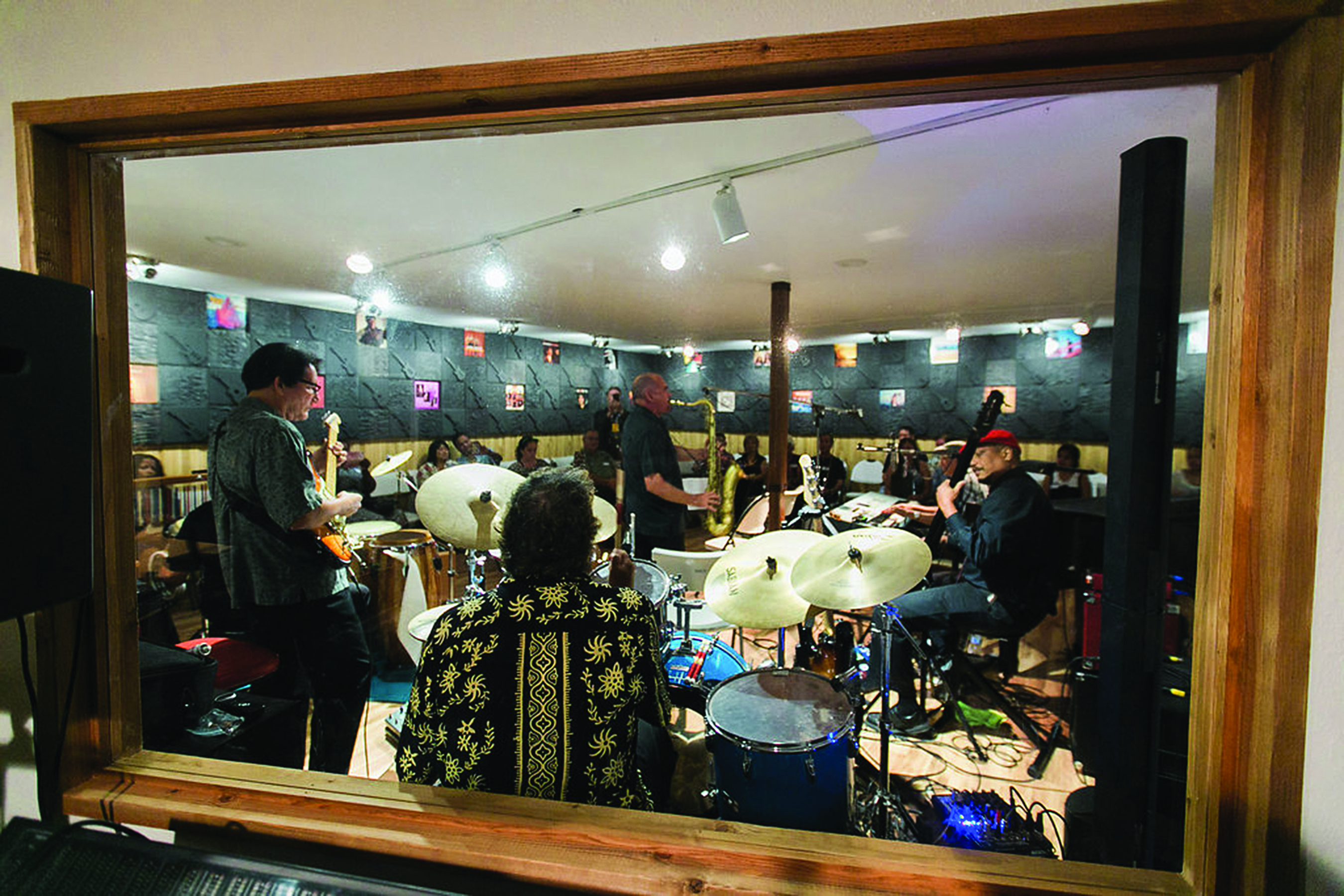
The Honolulu Museum of Contemporary Pop presents music from the past 50 years and offers educational tours to school groups and music aficionados. The museum also is used for private parties and events.
What do Don Ho, Bette Midler, Cecilio & Kapono, Glenn Medeiros and Bruno Mars all have in common?
They’re contemporary music stars with global recognition. And they all have Hawai‘i ties.
The Honolulu Museum of Contemporary Pop celebrates these local stars and dozens more of the same caliber with weekly, nighttime concerts that take place inside a recording studio located on Beretania Street.
The “Inside Session” concerts, performed eight times per weekend, feature the best of Hawai‘i’s contemporary pop tunes over the past 50 years.
Jazz, soul, R&B, folk, pop and funk music are part of the nightly mix. What often brings down the house, however, are hit tunes by Hawai‘i’s own Cecilio & Kapono.
The brainchild behind “Inside Session” is Kirk Thompson — an original member of the contemporary Hawaiian music band Kalapana and founder of the legendary group Lemuria.
“My mission is to document and preserve that movement for the next generation,” Thompson said. During the concerts, Thompson also pays tribute to his good mentors, the late singer Don Ho and concert and music promoter Tom Moffatt.
“Tom was such a cool-headed guy, bringing in big concerts like Michael Jackson,” Thompson said. “And I learned a lot from Don and Tom. As a record producer for Don ‘Mr. Aloha,’ he always helped those who wanted to record, and my job was to help him help others do a good job for him,” he said.
The pop museum falls under the nonprofit group, Hawaii National Music Foundation of the Pacific. As part of the nonprofit’s mission, Thompson and his team provide educational tours for students and music aficionados of all ages. Tour groups learn about the recording industry, receive tips from the pros and even take shots at recording their own music.
Lining the wall of the museum are more than two-dozen record albums, dubbed the “Pioneers of Pop” exhibit. Visitors are invited to take self-guided tours of the wall, using state-of-the-art, multilingual tablets.
Thompson is proud of the records. “To be signed to a major record deal and get off the island in the 1960s and 1970s was a tremendous thing.”
HONOLULU MUSEUM OF CONTEMPORARY POP
800 S. Beretania St., Ste. 140, Honolulu HI 96813
What do Don Ho, Bette Midler, Cecilio & Kapono, Glenn Medeiros and Bruno Mars all have in common? They’re contemporary music stars with global recognition. And they all have Hawai‘i ties. The Honolulu Museum of Contemporary Pop celebrates these local stars and dozens more of the same caliber with weekly, nighttime concerts that take place…
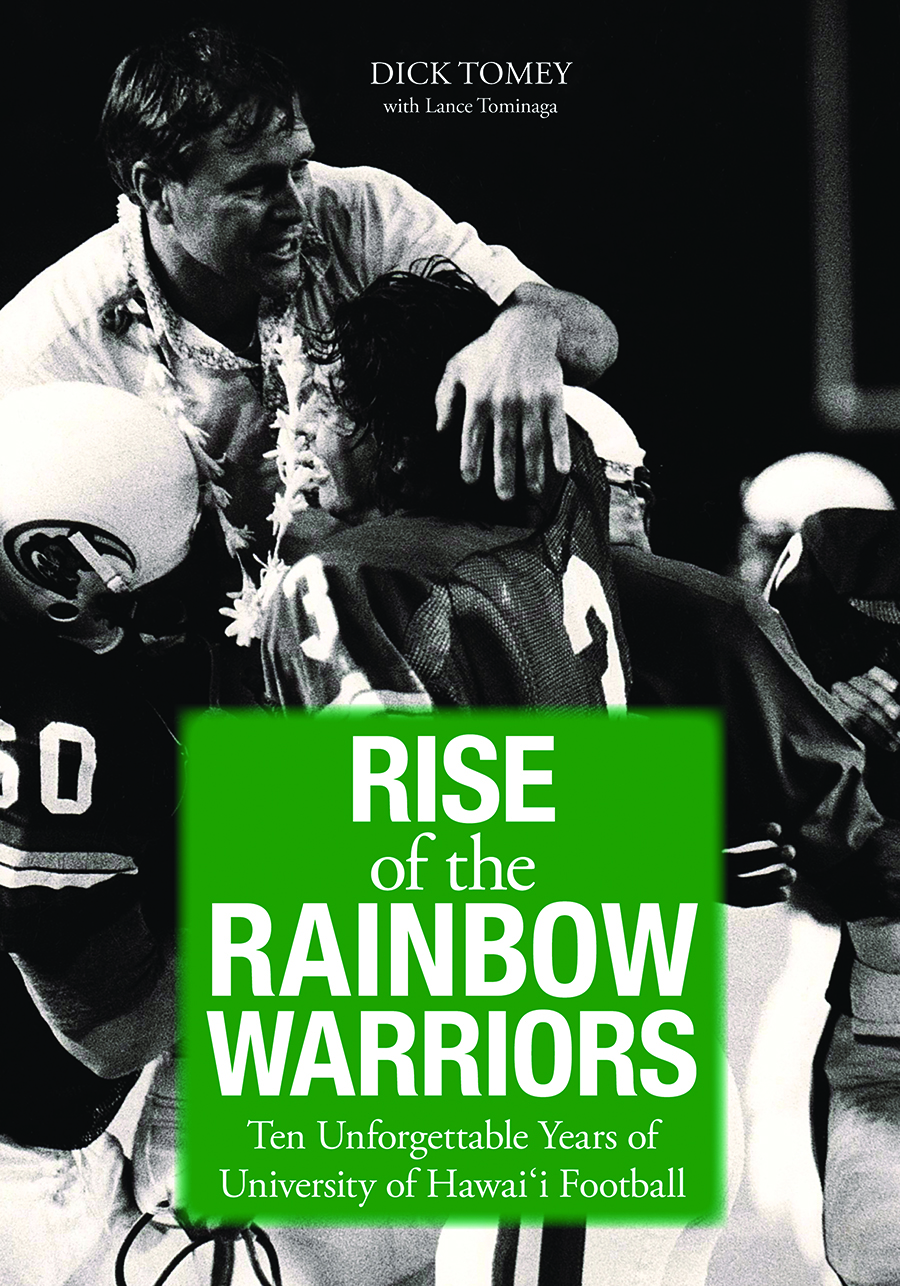
The fervent spirit of University of Hawai‘i football during the era of Coach Dick Tomey (1977–86) is captured in a new book, Rise of the Rainbow Warriors: Ten Unforgettable Years of Hawai‘i Football, scheduled for release in late October. It was a time when UH was new to the Western Athletic Conference and loyal fans regularly filled Aloha Stadium.
Co-written by Coach Tomey and Honolulu author Lance Tominaga, Honolulu ESPN1420 web editor, the book features 40 photos and interviews with hundreds of players, including Jesse Sapolu, Jeff Duva, Rich Miano, Dana McLemore, Blane Gaison, Gary Allen and Niko Noga.
“UH fans will enjoy the book because of the behind-the-scenes stories Coach Tomey and his players share,” Tominaga said.
Coach Tomey spoke with Generations Magazine from his home in Arizona:
GM: What was it like reconnecting with more than 150 former UH football players?
Tomey: It was amazing. That chapter is one of my favorites. To reconnect over a subject that is dear to their hearts was invigorating. It was so gratifying to hear about their impact on society. Readers will enjoy reading about what they are up to.
GM: What else in the book might longtime UH fans find interesting?
Tomey: The first season, described in detail, is important in how everything started. I was appointed coach and took the job in June 1977—not optimal for a season that started in September. The team didn’t have time to practice and was coming off a rough season. I didn’t have time to recruit many players and select a coaching staff. And I was a young, new coach with no reputation taking on a difficult job. Expectations were low.
GM: How are past football fans different from today’s generation?
Tomey: It’s more difficult for UH today because we can sit in our homes and watch 10 games on TV on Saturdays. In those days, it really didn’t matter who we played or whether we won or lost the previous week. The fans were there, they stayed late and their enthusiasm was boundless. We all could feel the energy and fed off of it.
GM: What else have you been up to lately?
Tomey: My wife, Nanci Kincaid, and I live in
Tucson. We have four adult children and eight grandchildren. We’re just Papa and Tutu. We’re blessed with good health. I’m going to be 80 years old next summer.
Tomey is planning to visit Honolulu in October for book signings and public appearances. Details are available at www.bookshawaii.net.
The fervent spirit of University of Hawai‘i football during the era of Coach Dick Tomey (1977–86) is captured in a new book, Rise of the Rainbow Warriors: Ten Unforgettable Years of Hawai‘i Football, scheduled for release in late October. It was a time when UH was new to the Western Athletic Conference and loyal fans…
by Katherine Kama‘ema‘e Smith Cover & feature photography by Brian Suda
It is said, “love conquers all.” And the riveting story of Roy Sakuma’s life and his outreach to at-risk youth proves that the lasting power of love can heal hearts and change minds.
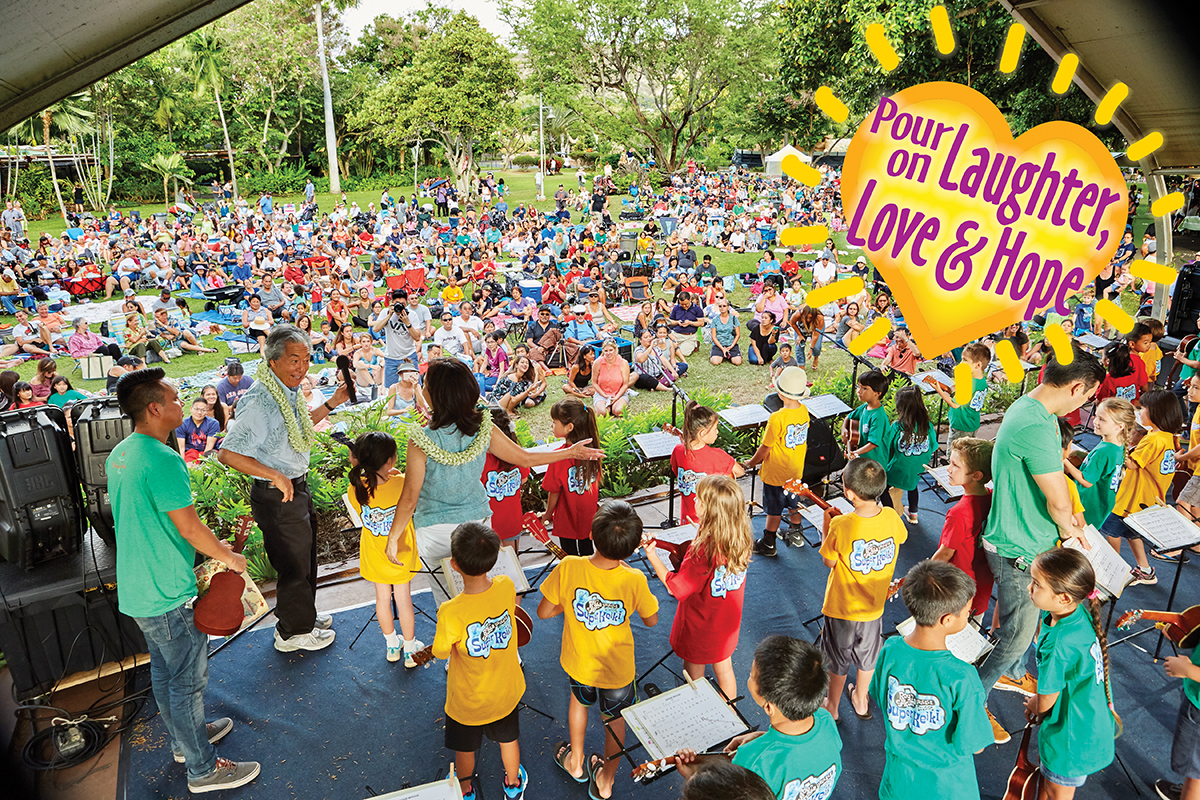
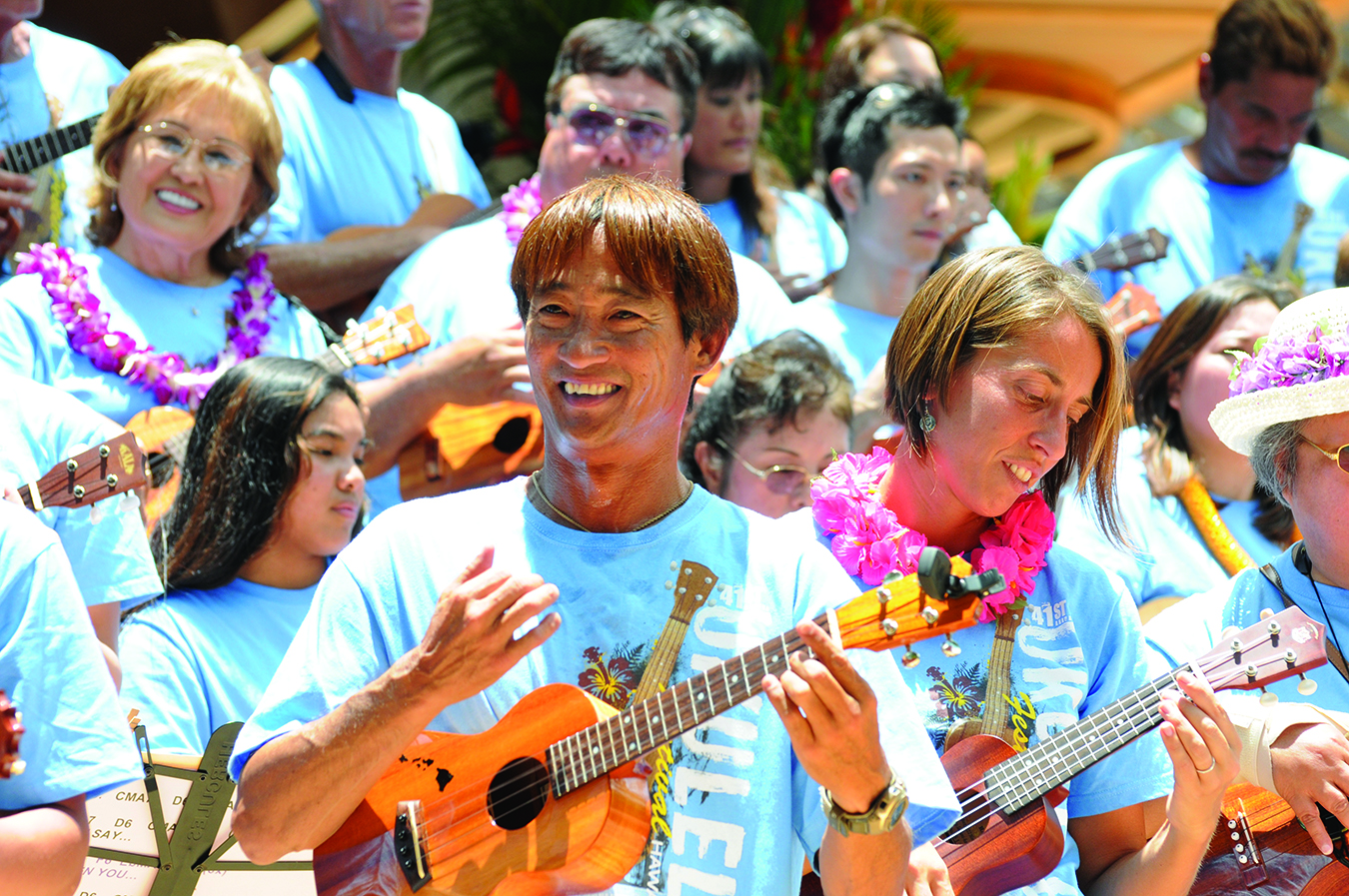
We all recognize Roy as the ‘ukulele master artist and teacher who founded the annual ‘Ukulele Festival Hawaii that recently celebrated 47 years at Kapiolani Park. Roy also hosts the popular concert series every summer surrounded by the animals at the Honolulu Zoo stage. He and his wife, Kathy, run four music studios where kids and adults learn the joy of playing ‘ukulele. Today, you will learn how Roy came to be Hawai‘i’s foremost ‘ukulele teacher and proponent of the instrument, and the powerful role love has played in his success.
I Want to Play That Song
In the 1960s, before Jake Shimabukuro or Israel Kamakawiwo‘ole, the ‘ukulele was regarded by most people as a novelty, according to Roy. Aside from virtuosos Herb “Ohta-San” Ohta and Eddie Kamae, the little Portuguese instrument was popular at the beach and backyard parties but seldom featured by Hawai‘i’s serious musicians, who preferred guitar, steel guitar, piano and even vibes. Mainland rock and roll was king, with electric guitar, bass, saxophone and lots of drums.
Roy Sakuma and Ohta-San performing together at the 39th Annual ‘Ukulele Festival in 2009. Photography by Wendal Au.
“One weekend, I was riding in an older kid’s car and heard Ohta-San playing Sushi on the radio,” said Roy. “I fell in love with the song. A couple of days later, I saw a classified ad for ‘ukulele lessons with Ohta-San and went right over.
“Playing the ‘ukulele grabbed me,” Roy said. “After 18 months, Ohta-San encouraged me to go on my own. He said that he had taught me what it took him five years to learn and the rest was up to me. ‘Go out and develop your own style,’ he said. So, I kept playing and the better I got, the more I realized how great my teacher was.”
“Ohta-San encouraged me to go on my own. ‘Go out and develop your own style,’” he said.
Roy soon began helping out at Ohta-San’s studio every weekend. When Ohta-San booked a two-week concert tour in Japan, he asked Roy to teach in his absence.
“I cannot teach,” answered Roy.
“Just do what I do,” said Ohta-San.
Roy was just 18 and he practiced all week to stand up in front of 25 adult students.
“I was very nervous until I began; then, the words just spilled out,” said Roy. “After Ohta-San returned, he asked me, ‘How did you like teaching my students?’ When I said I loved it, he told me to keep teaching them. Ohta-San continued his stellar performing career here and in Japan. And me — wow — after that, all I wanted to do was teach!”
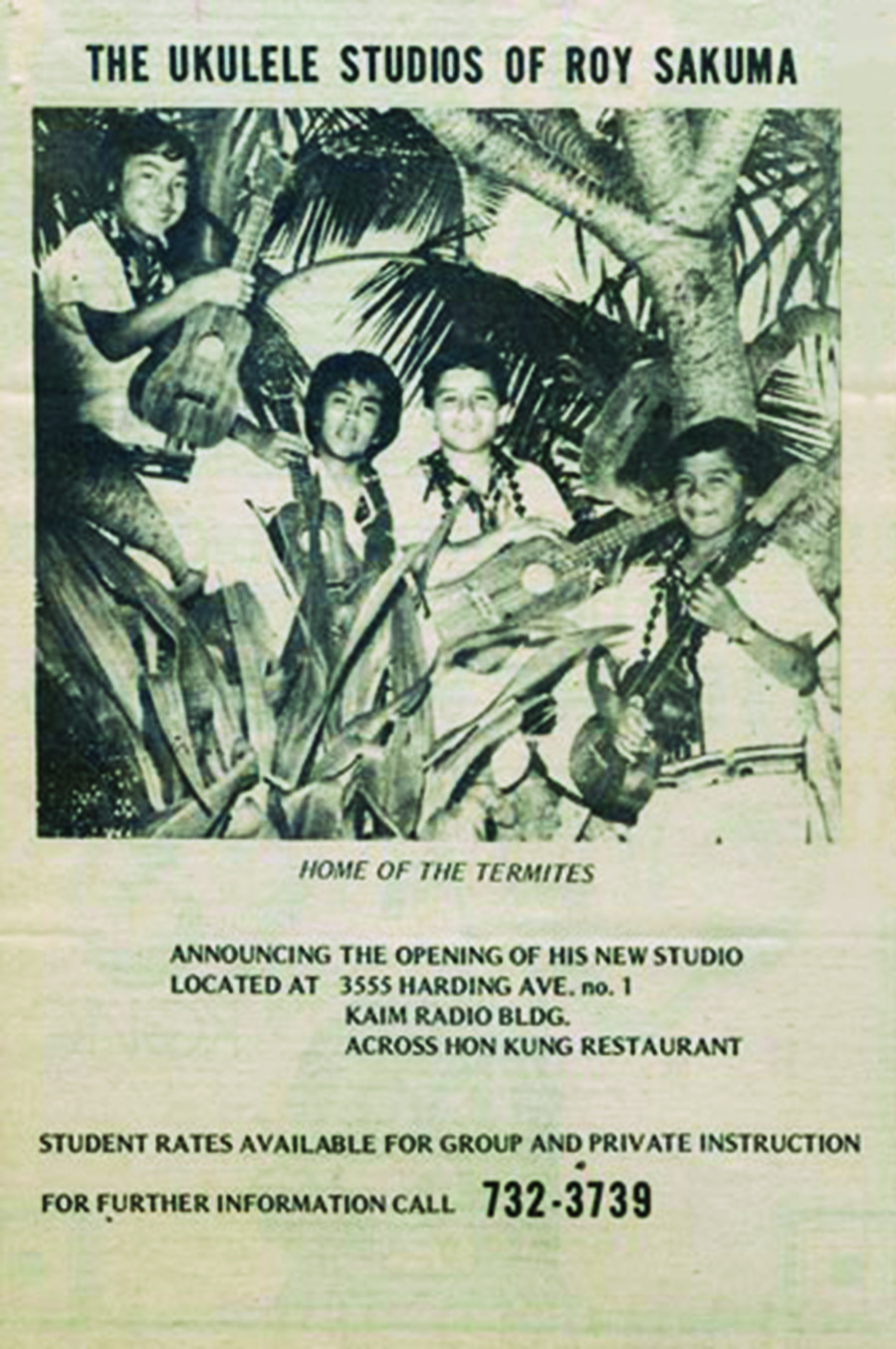
Roy opened Roy Sakuma Ukulele Studios in 1974 and ran his own classified ad. Over 40 students signed up; four were youngsters — Jason Mitsunaga, Dean Guzman, Milton Chun and Michael Ganab.
“I wanted these kids to have fun so we started a group called ‘The Termites,’” Roy said. “They were terrific young musicians, and their success and Orange Exchange TV commercial inspired children to learn the ‘ukulele. That grew into four studios and now we are teaching the kids or grandkids of our early students. At our studios, we not only teach music but we also teach love and respect. We care about our staff, and mentor them to treat the students with the same love and respect they receive from us. My philosophy is to put love on top of everything.”
Sad Hanabata Days
This joyful man with a deep abiding faith in the power of love, who mentored generations of ‘ukulele players, said he never understood love until he was in his 20s. When Roy was a child, his family struggled with mental illness and isolation. His mother suffered from schizophrenia. His father cared for her at home. A burdened but faithful provider, he overcome his sadness every evening at a local bar. Roy’s older brother also developed schizophrenia and once attacked Roy with a kitchen knife. “I remember sitting at the table watching my mother and brother talking to themselves. My daydreams gave me hope. There was little to eat, except sandwiches my father brought home from the tavern. The one bright light was my older sister, Faye, who was always there to watch over and protect me.”
Roy was born in 1947. One of his ears was half normal size. Adults would snicker at him and school children would ask, “What’s wrong with your ear?” When he asked his mom, she told him “Blame Buddha for making you like this. Look at all the people; they don’t like us.”
He became paranoid about his ear and avoided school. “When you are not in school, you find trouble. At age 6, I began smoking. At nine, I was drinking beer. Bad habits lead to mischief.”
Like most children, Roy was very honest. He told his dad that he was drinking. His father disapproved and punished him, but Roy continued smoking and drinking.
By age 10, Roy said he was holding “little balls of hurt” inside him. He learned how to tease other kids — to crush them with words and insults before they could make fun of him. “My best friend asked me, ‘Why do you always tease me? Roy, your words hurt!’ That comment hit me hard. I knew how much words hurt me, and apparently my own words also carried anger and hurt. I was amazed to find that after I had stopped teasing my friend, he stopped teasing me. Words turned out to be more horrible than I had imagined. This new knowledge also held a threat. If it is true that ‘What goes around, comes around,’ then a lot was going to come back to me.”
Still, his sister, Faye, was there for him. Roy recalls one of his fondest memories of their childhood: “When Faye was in the ninth grade, she went to her first social dance at a girlfriend’s house and gave me the number in case I needed her. Being alone at home, I started crying and called her. She came home to be with me. It’s a treasured moment that I have never forgotten.”
“From ages 10 to 15, I was convinced that it was impossible for me to fit in,” said Roy. “Full of hurt, I thought maybe I should have been born on Mars so that I could live all alone — by myself. My behavior became reckless. I didn’t like my life. Flirting with suicide touched my stone-cold emotions and offered brief relief for my pain. One day, I took a dare to swing on an old withered vine hanging off a big old monkeypod tree. The tree grew on the edge of a 200-foot cliff. I grabbed the vine and jumped off the cliff. Suddenly, I could not feel the vine in my hands anymore and I got scared. When the kids pulled me in, I was hyperventilating. I will never know what made that stunt different from all the others, but it made me stop doing things to put my life in danger… but I was still hurting inside.”
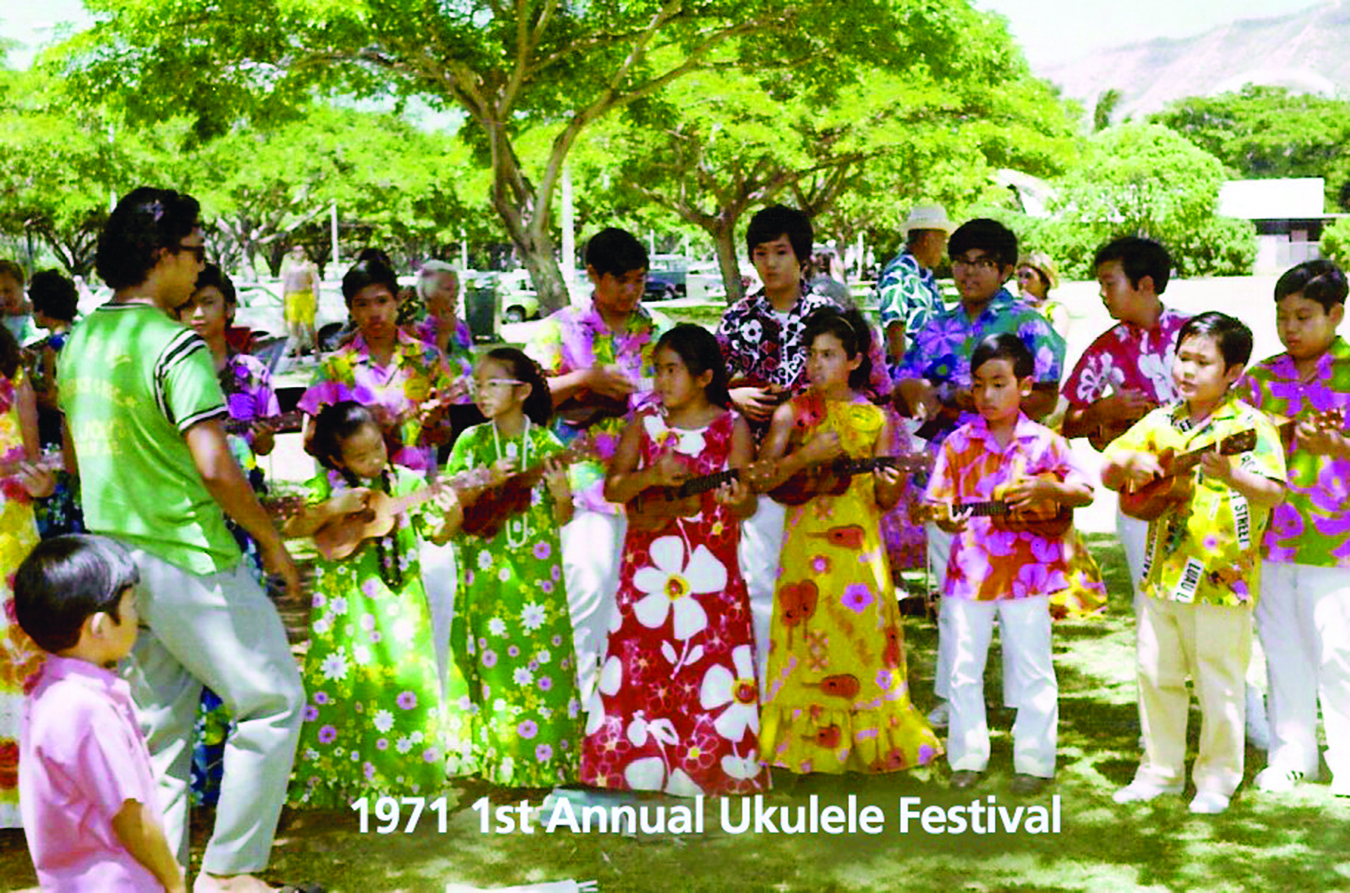
Roy and Kathy’s first annual ‘ukulele festival opened in Kapiolani Park in 1971. Since then, the ‘ukulele has been brought back into the mainstream of entertainment and the festival has reached popularity worldwide.
“I didn’t finish high school, but at age 20, I was lucky to get a job as a groundskeeper at Kapiolani Park,” said Roy. “I was so grateful for that job and did all they told me — and more. Working hard was never a problem. I liked working alone; hand-raking the whole park was my favorite job. Of course, I had learned social behavior — smiling, joking and nice teasing, but inside I was insecure and hurting. I never talked down to others because I didn’t want them to speak badly about me; instead, I bit my lip to protect myself. I never spoke of feelings or love. I did not know what the word ‘love’ meant. Even as I was still struggling with a crushed spirit. I picked up my ‘ukulele and a tune spilled out:
I am what I am; I’ll be what I be Look, can’t you see that it’s me, All of me
Copyright: Roy Sakuma Productions, 1970
“This song would become a theme for my life,” said Roy. “Once we doubt who we are and forget that we are special, bad things can happen.
Love is Patient and Kind
“In my early 20s, I met Kathy, the first girl I ever wanted to date,” said Roy. “I got up my nerve to ask her out to see the Harlem Globetrotters, who were coming to town. Thank goodness for the Globetrotters!
“From then on, Kathy and I dated once every couple of weeks, and I wanted to hold her hand, but I was afraid for her to touch me,” Roy admitted. “Hugging and other expressions of love were foreign to me and scared me. One time, we attended the Punahou Carnival, and to avoid getting separated in the crowd, I had to grab her hand. Holding hands wasn’t so scary after all.
“At our studios, we not only teach music, but we also teach love and respect.”
“A year later, I told her that I loved her and asked her to marry me,” Roy said. “She said, ‘yes!’ I went home so happy. But the next morning, I woke up crying — I knew that I must let her go. I didn’t deserve her and she would be better off without me. This love thing was beyond me.
“The next day, I asked her to meet me,” said Roy. “I asked her to please listen. I told her the truth about my fears — that my ear makes me hate looking in the mirror when I comb my hair, that I am paranoid and hate to see my body , that I am so ugly I don’t belong here; I am so ashamed that I could never make her happy.
“My philosophy is to
put love on top of everything.”
“Kathy listened. I did not want her to pity me; I wanted her to walk away and find a better man. Finally, she said, ‘I don’t see these things as your weaknesses. I see them as your strengths.’
“I was stunned. I just told her all my imperfections and failings — and she still loves me! Her love released me from the prison of my pain. It was like a gust of wind that cools the face. I had shared everything with her, and I could never go back there by myself. She loved me! Her love allowed me to reveal everything and to heal.”
Soon they married and became a team.
Love Rejoices in Truth
Since 2007, Roy Sakuma has been sharing his story with elementary and high school students — not as a music teacher — but as an inspirational speaker. His deep, intimate message touches youths who might be hurting like he was — troubled, isolated from their families, or struggling with thoughts of suicide. Roy doesn’t offer them advice; he doesn’t criticize their ideas or behavior. His story strikes a familiar chord.
“When I share my story, I ask kids who are hurting to raise their hands,” said Roy. “Hands go up and it is their way of reaching out.”
They recognize that he endured deep hurt and can understand their pain. They listen because he does not pity them. Instead he offers them the same key that unlocked his chains — love. And he points them to the richest source of love, their parents and teachers.
Listen With Love
Roy’s message of love over hurt is not only for youth but also for adults.
“Once kids fill up with hurts and shut down, responsible adults that they respect can help,” said Roy. “Adults can listen to them with love — with an open heart and mind.
“Kids really want to talk to their parents, but they are so afraid,” Roy continued. “They think that their parents are not interested, won’t listen or don’t understand them. Kids believe their parents: ‘won’t understand me, don’t love me, ignore me, don’t care, always get mad at me…’
“Parents often compliment and criticize their kids in the same breath. ‘Kimo, you did a great job, but…’ A hurting kid who can’t process their feelings will reject your encouragement as soon as they hear ‘but.’ They are bursting with so much hurt that they have difficulty seeing beyond it. Try giving compliments and then just listening.”
Love Endures All Things
“If you found a good way to deal with your feelings, share that with your kids,” said Roy. “Help them process their feelings with family and other trusted adults. Most of all, recognize that your child’s feelings are real and honest.
“Love your teens with the same unconditional love and forgiveness you gave them when they were 1-year-old toddlers. Parental love is forever. Put love on everything before you say it.
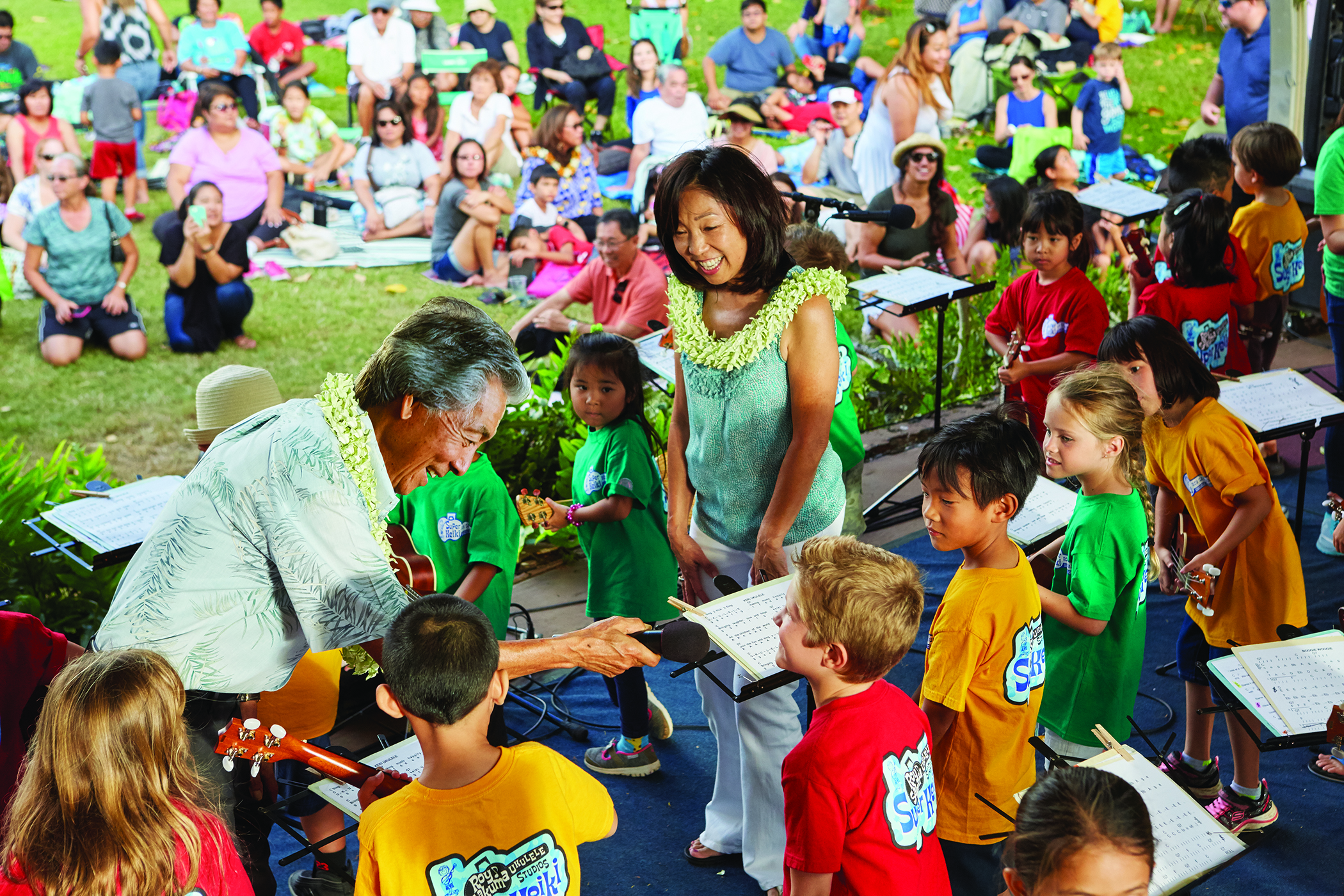
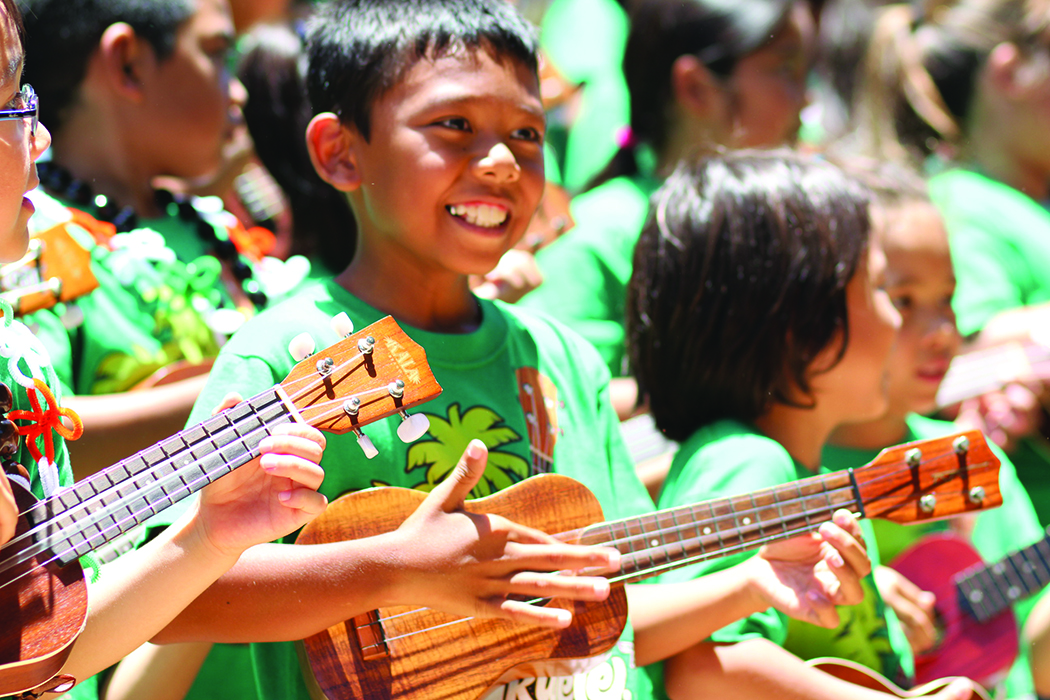
“In our music studios, we teach with love,” said Roy. “‘Ukulele music takes away stress and music crosses all emotional barriers. For some, the lesson is the highlight of their week. For us, it is an opportunity to share love, laughter and hope.”
ROY SAKUMA ‘UKULELE STUDIO
3555 Harding Ave., Honolulu HI 96816
808-732-3739 | www.roysakuma.net
It is said, “love conquers all.” And the riveting story of Roy Sakuma’s life and his outreach to at-risk youth proves that the lasting power of love can heal hearts and change minds.
by Christopher Duque, Cybercrime Investigator. DPA
Computer users can get “victimized” online simply because they don’t spend enough time keeping their devices up to speed. Hackers are able to compromise our devices daily if we don’t update the software on our computers, tablets and cellphones.
So, do the following on a daily basis:
◆ Update your operating system (OS). Schedule automatic updates and update manually, as well.
◆ Update your security programs and apps —
especially those used for malware and virus detection. Malicious malware and viruses are created and released on the internet daily.
◆ Users should also scan their devices regularly to see if they have been infected. Do not just quarantine, but delete them completely.
◆ Also, read the instructions of the security programs and applications you use. Do not simply rely on their default settings, which may be not be enough for your devices and uses.
◆ Lastly, back up your data! Users can mistakenly delete photos, documents, messages and emails, which can’t be recovered without a backup. Save data to a USB drive, CD, DVD, The Cloud or another remote location.
Backing up your data on a regular basis is your only insurance policy when “bad things happen.” Backing up your data makes recovery much faster, easier and more successful.
THE DEPARTMENT OF THE PROSECUTING ATTORNEY
1060 Richards St., Honolulu HI 96813
by Christopher Duque, Cybercrime Investigator. DPA Computer users can get “victimized” online simply because they don’t spend enough time keeping their devices up to speed. Hackers are able to compromise our devices daily if we don’t update the software on our computers, tablets and cellphones. So, do the following on a daily basis: ◆ Update…
Does someone know where you keep your important documents? Do your loved ones know what your last wishes are should something happen to you? Do you know what to do when a loved one is faced with an emergency?
There are many sad stories about people passing unexpectedly with no one knowing what that person’s wishes were or anything about their paperwork. Was there a will? Where might it be? What about a life insurance policy?
You can have peace of mind knowing you have protected your family and loved ones by taking the time to do a few important things.
What is appropriate for you? A will, a living trust or nothing? A will, at minimum, can name someone you trust to carry out your wishes. You can name a guardian for your underage children. A living trust does the same things as a will, but provides options for tax planning and avoids probate. In either case, consulting an attorney who specializes in estate planning will help you.
Everyone should have an Advance Health Care Directive, which informs your doctors and family about the medical treatments and life-prolonging procedures you want. This will help your family during a very difficult time and relieve them of the burden of guessing…
A Guide to Getting Affairs in Order organizes paperwork and makes wishes known.
Does someone know where you keep your important documents? Do your loved ones know what your last wishes are should something happen to you? Do you know what to do when a loved one is faced with an emergency?
Tucked in a quiet corner in Manoa Valley, Manoa Gallery is a neighborhood gem where fine arts and crafts by senior Hawai‘i artists Gregory Pai, Russell Lowrey, Cora Yee, Richard A Cooke III, Dennis Morton and Barbara Thompson reveal that inspiration and creativity never get old.
“Sunset over Kualoa,” oil on canvas, by Gregory Pai
Winner of national art awards, Gregory (born in 1945) was trained as an architect before becoming the chief economist for First Hawaiian Bank and the special assistant for Economic and Policy Affairs under two governors. Inspired by the spiritual beauty of the islands, jazz musician Gregory turned his serious attention to drawing and painting around 2000, when studying at the Honolulu Academy of Arts and the Grand Central Academy of Art in New York.
Now on view at Manoa Gallery, Gregory’s paintings capture the sublime quality of the Hawaiian skies at dusk and dawn, the embrace of mist across volcanic highlands and serene reflections in sacred Hawaiian ponds.
MANOA GALLERY
2964 East Manoa Rd., Ste. 1, Honolulu HI 96822
Tucked in a quiet corner in Manoa Valley, Manoa Gallery is a neighborhood gem where fine arts and crafts by senior Hawai‘i artists Gregory Pai, Russell Lowrey, Cora Yee, Richard A Cooke III, Dennis Morton and Barbara Thompson reveal that inspiration and creativity never get old.
by Jerome S Taniyama, Secretary, Hawai‘i Men’s Shed Association
Back in late 2015 at a Rotary club meeting, I learned about the “men’s shed” program. To me, that term conjured up an image of an old workshop or storage building next to a residence. I was corrected by a fellow Rotarian who described the Men’s Shed as a club made up of senior men drawn by fellowship, and the desire to work on personal and group projects. In fact, over 10 years ago, the concept began in Australia through Rotary clubs that helped charter Men’s Shed to provide an opportunity for senior age men. There are now over 1,200 Men’s Sheds in Australia. The Australian government documented positive results in the mental and physical health of Men’s Shed members, and now provides funding subsidies to ensure their sustainability.
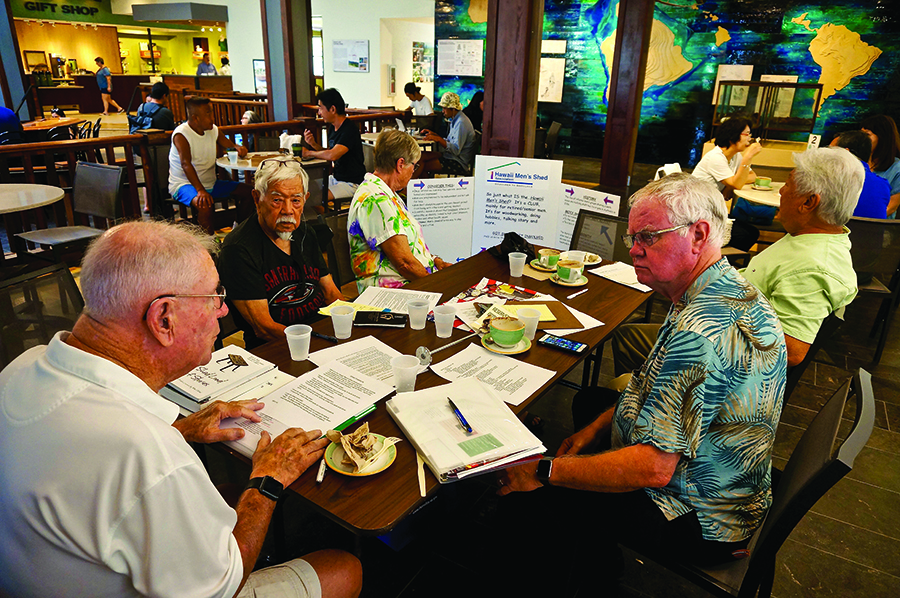
Men’s Shed members met to discuss the new location and a bike refurbishing project.
The Hawai‘i Men’s Shed Association officially chartered its shed on March 1, 2016, and filed legal paperwork with the state DCCA, tax office and IRS as a nonprofit. We saw no similar program or organization that would serve the social needs of senior men. Our Hawai‘i Men’s Shed is modeled after the Australian Men’s Sheds in regards to safety, daily operations and self governance. We run on a minimal budget with funds supplied by member donations and have no paid staff.
In January 2017, the Rotary Club of Honolulu Sunset adopted the Hawai‘i Men’s Shed as one of its community service projects. Our shed has also received recognition from and the support of Sen. Brickwood Galuteria, an advocate for ku¯puna services. We have also engaged in talks with Marlene Sai (at Na Ku¯puna Makamae Senior Center), the Waikiki Community Center and Kupu Hawaii regarding additional sites and programs.
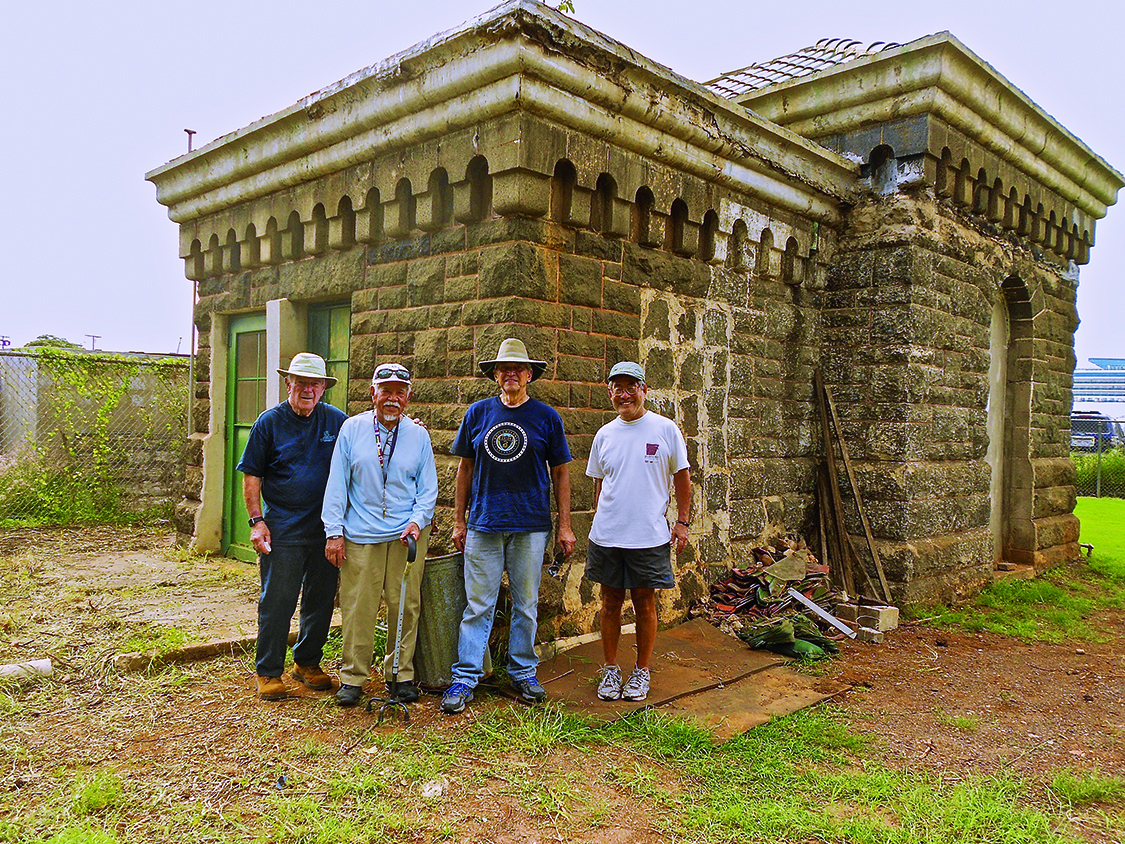
A workday project at the Na Kupuna Makamae Senior Center.
Our first shed location was at the Makua Alii Senior Center. Due to unforeseen circumstances, we vacated that site. But on Feb. 28, 2017, we rolled out a new shed site located in a DOT-Harbors warehouse at 5 Sand Island Access Road, where we plan to restore 35 used bicycles for disadvantaged youth. We are also looking toward building benches and bookshelves for our neighboring schools.
Our advisory board is made up of very qualified individuals from banking, healthcare, engineering, education, insurance, retail and wholesale businesses, as well as radio media. They have laid out a doable growth plan that includes additional shed locations, doubling our membership, community support and capital improvement fundraising for a permanent location.
We are affiliated with the Men’s Sheds in Australia, Ireland, New Zealand and the mainland, and network with them about how we can improve safety, and make our sheds more fun and viable in our community. n
Back in late 2015 at a Rotary club meeting, I learned about the “men’s shed” program. To me, that term conjured up an image of an old workshop or storage building next to a residence. I was corrected by a fellow Rotarian who described the Men’s Shed as a club made up of senior men…
by Scott Spallina, Senior Deputy Prosecuting Attorney
In the last issue, I covered the lessons my mother-in-law, “Mary,” taught me through her encounters with various scam artists she has met over the years. Unfortunately, those incidents were only the tip of the iceberg.
Shortly after Mary’s run-in with the Y2K hucksters, she met a charismatic man who advertised seminars that would “make money for attendees.” His scheme was simple — don’t pay your taxes. He claimed paying taxes was optional; nowhere in the tax code did it say you had to pay. Despite my advice, she supported this man, went to his criminal trial in federal court when he was indicted and was there when he was eventually sentenced to prison. Naturally, he claimed his conviction was the government’s attempt to stop him from “exposing the truth.” The only truth he did expose, however, was that people will believe anything — if its packaged well.
After this man’s incarceration, my wife and I discovered that we were expecting a baby. Mary wanted to insure financial stability for my growing family. She did this by investing in a local company that was going to create a website bigger than Ebay or Amazon — according to the owner. She was encouraged to bring in more people wanting to invest thousands of dollars to get in on the ground floor of this no-lose, get-rich opportunity. The contract they had her sign obligated her to pay monthly fees for their “trainings.” Although nothing else was promised in writing, verbal promises made by the owner during his speeches were plentiful. Articulate, passionate and good looking, he had hotel ballrooms filled with people applauding his high-energy speeches. Then, the government came and closed him down for illegal business practices. I suspect this was all some sort of pyramid scheme disguised as an investment opportunity. It was probably around this time I first heard the phrase, “A pretty package can hide toxic contents.”
Another time, my in-laws were fixing up a rental property and hired a cash-only repairman. They knew a friend of a friend who was unlicensed but known to do side jobs. They gave him money; he did not do the work (no contract was written up). When they hunted him down (literally) for the return of the money, he made excuses as to why he didn’t do the job but couldn’t return the cash. Because of his relationship with the family, tangential as it was, the breach of trust was more painful than that from the slick-talking con artists previously encountered.
It was this experience that led me to join a working group with the state Department of Commerce and Consumer Affairs (DCCA) to write legislation making it a felony crime for an unlicensed contractor to accept money for work.
In the next issue, I will conclude this series by sharing Mary’s encounter with a domestic terrorist group and how she invited a con artist into her home — literally.
_______________
To report suspected elder abuse, contact the Elder Abuse Unit at 808-768-7536 | ElderAbuse@honolulu.gov
In the last issue, I covered the lessons my mother-in-law, “Mary,” taught me through her encounters with various scam artists she has met over the years. Unfortunately, those incidents were only the tip of the iceberg.
It’s a gift to give… a smile, an encouraging word, a moment of your time. And the reward? The satisfaction of knowing you helped a kūpuna in need.
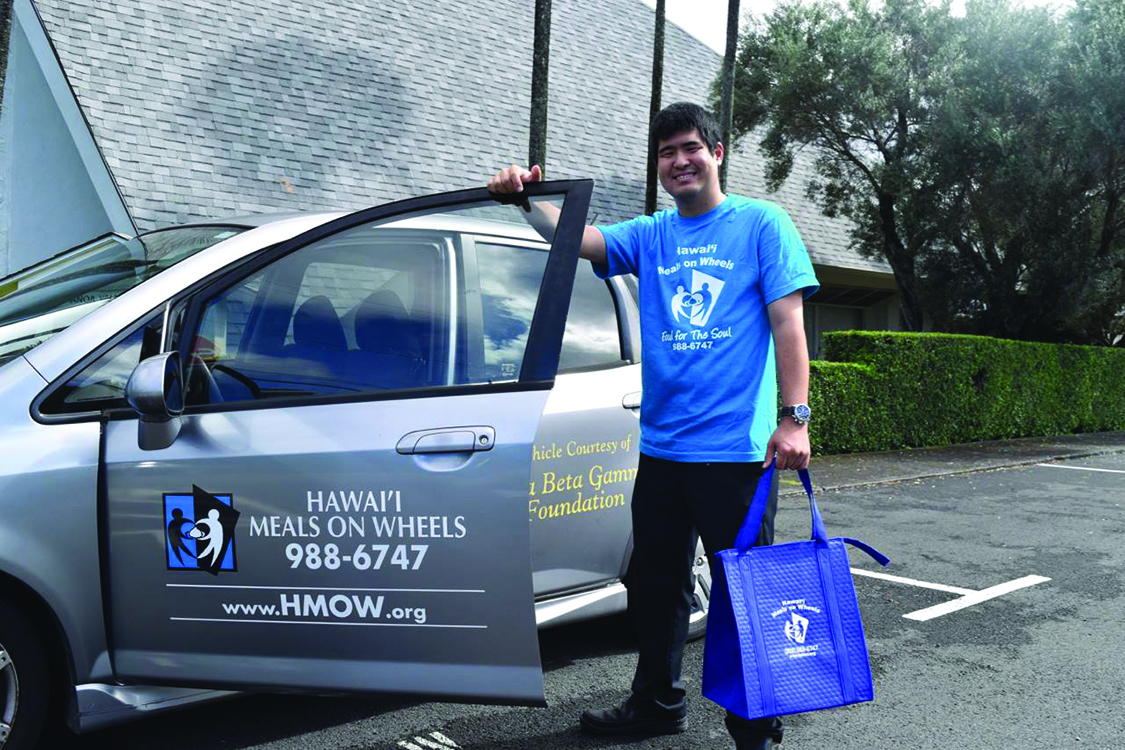
Since 1979, Hawaii Meals on Wheels has been serving hot meals to the kūpuna in need in our communities. The program started as a small committee formed by former State of Hawai‘i librarian Irmgard Hörmann and the Social Ministries Committee of the Lutheran Church of Honolulu. Over time, the organization grew as it sought to provide basic nutritional and human support to seniors who are unable to fully care for themselves. What started as two routes manned by six volunteers is now a collaborative effort involving 450 volunteers and over 50 routes that served more than 97,000 meals in 2016.
Hawaii Meals on Wheels provides hot, nutritious meals for seniors, delivering them to the homes of those who are unable to shop or cook for themselves and do not have someone currently caring for them.
By the year 2020, it is estimated that 25 percent of Hawai‘i’s population will be 60 years of age or older. Compared to the nation as a whole, the Aloha State has a disproportionately large population of seniors, many of whom may be unable to sufficiently care for themselves. Organizations like Hawaii Meals on Wheels strive to help seniors maintain a comfortable standard of living. For some who depend on these services, this may be the only meal they eat per day and the only personal interaction they experience.
Nonprofit programs such as this rely heavily on volunteer support. Not only do they help deliver meals, but they also monitor the welfare of these seniors, while providing them with interaction and companionship that many home-bound kūpuna would not otherwise receive. As the senior population in Hawai‘i continues to grow, so does the need for these services. Unfortunately, because the Meals on Wheels program relies on volunteer help, donations and government funding, not everyone who applies for the program can be accommodated. Not all seniors are fortunate enough to have family members who can care for them every day, nor are they able to afford senior care homes or in-home caregivers. Part of the issue is that those who lack the mobility, energy or capability to care for themselves are also unable to leave their homes — their struggle may go unnoticed. As a result, many people are unaware of the scope of their problems and do not reach out to help the kūpuna in their communities. However, almost anyone that wishes to lend a hand can do so in some way.
Meals on Wheels is always in need of volunteer drivers. In addition, those who wish to assist in other ways can help with the September fundraiser gala or administrative projects, or serve on the advisory panel. Meals on Wheels not only helps feed and care for our seniors in need, but also provides those who are healthy and active an opportunity to give back to a generation who once fed and cared for them.
HAWAII MEALS ON WHEELS
P.O. Box 61194, Honolulu HI 96839
Since 1979, Hawaii Meals on Wheels has been serving hot meals to the ku¯puna in need in our communities. The program started as a small committee formed by former State of Hawai‘i librarian Irmgard Hörmann and the Social Ministries Committee of the Lutheran Church of Honolulu. Over time, the organization grew as it sought to…
by Katherine Kama‘ema‘e Smith cover & feature photography by Brian Suda
The traditions and language of the original Japanese immigrants to Hawai‘i in the late 1800s survived because they taught their children to venerate and value the culture of the homeland. In over six subsequent generations of American Japanese, no single organization has nurtured language and culture more than Mo‘ili‘ili Community Center on O‘ahu. In addition to supporting a thriving Japanese Language School for children, the center opens its doors five days a week to 300 to 500 senior members who come to participate in a wide array of arts, activities, educational programs and adult day care. This private nonprofit organization is the traditional bedrock of Mo‘ili‘ili families.
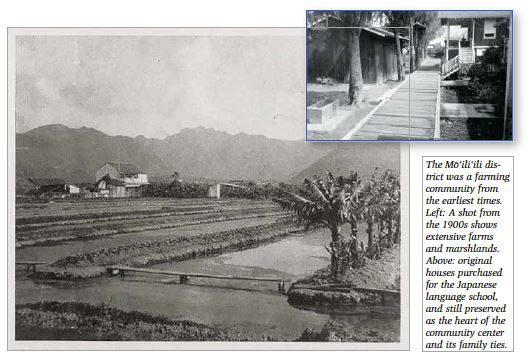
Executive Director Nadine Nishioka told Generations Magazine about the 115-year history of the center. In the 1890s, children of plantation worker families in Mo‘ili‘ili attended Japanese language school in the private home of Kihachi Kashi-wabara. Mo‘ili‘ili was a large marshland area at the bottom of Manoa Valley, behind Ala Wai (then a river) and Waikiki Beach flats. Lands adjacent to the many ponds and Kapaakea Springs were cultivated with rice, lotus and various vegetables. Along the dirt trails of this farming community were small shops and businesses, and wood-framed houses. Beside the homesteads, small plumes of smoke rose from wood stoves used for ofuros and cookhouses. Customs, foods, religious beliefs and common interests knit the residents of Mo‘ili‘ili into a harmonious community.
The Center’s Heritage
In the late 1800’s, when the sugar barons of Hawai‘i wanted to expand their plantations, they recruited farm workers and engineers from Japan. The men came first and soon brought in their wives. Freedom and work opportunities in Hawai‘i offered hope to young Japanese from a homeland ravaged by decades of war with China. Chinese invaders outlawed the practice of Japanese cultural traditions and Japanese language, so schools and temples were important features of a new life in Hawai‘i. For Japanese immigrants, plantation camps promised a second chance for success. In Mo‘ili‘ili, the community drew together and in 1928, purchased the language house and land that became the community center.
During WWII, the Mo‘ili‘ili community founded a formal council association. At that time, mainland Issei and Nisei were being interned in war camps, but in Hawai‘i, the Nisei first joined the civilian volunteer brigade and later entered the U.S. Army. The council was a hub for the community to gather and support one another. After the war, in 1945, they were awarded an official charter, and 20 years later, in 1965, this private nonprofit organization was formally named “Mo‘ili‘ili Community Center.”
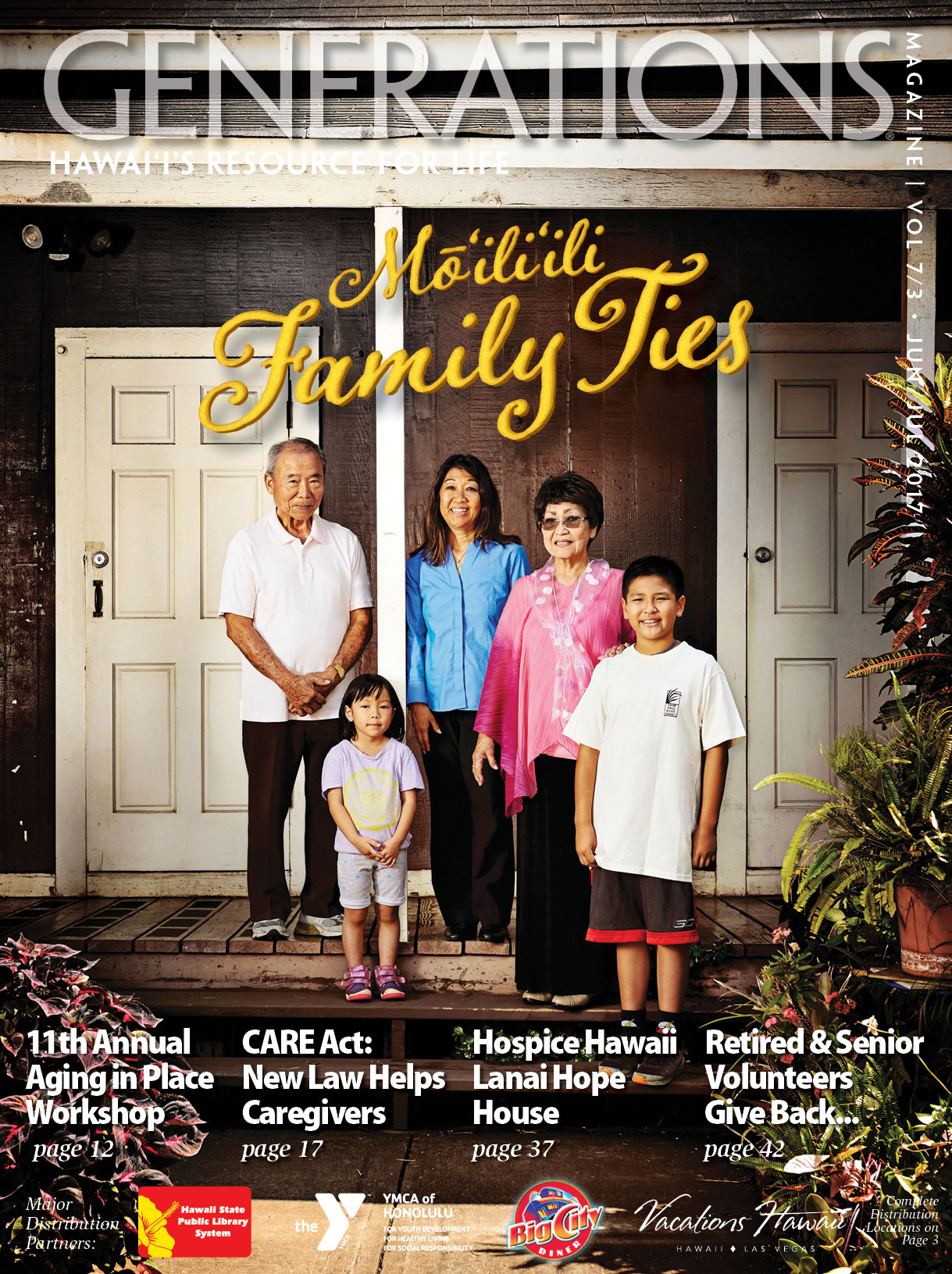
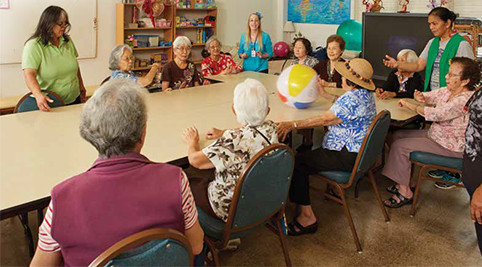
ADULT DAY CARE AND SENIOR ACTIVITY CLASSES AT MO’ILI’ILI COMMUNITY CENTER; COVER PHOTO OF BOARD MEMBERS, SENIOR AND CHILDREN ATTENDEES OF MO’ILI’ILI COMMUNITY CENTER; PHOTOS FOR GENERATION MAGAZINE
The Center Today
The business model for today’s center is simple and very successful. “Our members pay an annual membership fee that covers our overhead, salaries and operating expense,” said Nadine. “Next year, the fee will go up to $40 from $35 per person,” said Nadine. “Some seniors add a cash gift with their membership because they can afford it and they appreciate the benefits they are receiving here. For some seniors, the fee seems high but it all works out. We never turn away any seniors who may have difficulty paying the fee.” Professional planners say that successful community programs are designed and resourced at the grassroots level. Nadine agrees. She places the success of the center squarely on its members. “Our seniors know the programs they want and we just listen to them,” said Nadine. “They want mahjong, and they want it early in the day when they are alert and have a better chance of winning. They organize the games and find the prizes. Senior center staff members make sure the room is ready and oversee their plans. Mahjong starts at 7:30 am, and is so popular that our seniors are lined up and waiting in front of the door at 7 am.”
“Whenever MCC members have an idea for an activity or event, they make a plan and find the resources to put on the program,” said Nadine.
“We provide the space and scheduling and our members ensure the program or event’s success.”
One of the most popular weekly sessions is Rhythm & Life held every morning. This award-winning Japanese exercise and stretching program is designed for elders and choreographed to Japanese music. Rhythm & Life invites both actively mobile seniors (standing) and less mobile seniors (seated) to better fitness and improved blood circulation. The packed room is filled with intently engaged and happy faces as the participants work out to the beats of various rhythms and tunes. Other active options include outcome-based exercise, Zumba, classic tai chi and a special tai chi class for seniors with im-paired balance who want to rehabilitate themselves. This one is important for preventing falls. “I think one beauty of our center is that seniors who have lost a spouse or no longer live in their old neighborhoods may come here and socialize while they participate in healthy activities for body, mind and soul,” said Nadine. “We offer physical exercise, mental stimulation and ways to learn and participate, but socializing combats isolation and loneliness. Members have the opportunity to spend happy times with people who share memories of earlier times and traditional values.”
This benefit was certainly obvious to Generations staffers, who saw members chatting before and after yoga class and senior Zumba.
A display of the impressive artwork and handicrafts produced by MCC members proudly hangs in the center. It demonstrates the wonderful skills seniors can learn here. Traditional kumihimo is the art of braiding cords and ribbons. In ancient times, the samurai braided decorative laces for their armor; today, ties on haori jackets or obi kimono sashes are often crafted with kumihimo. When combined with beading, kumihimo art produces intricate and elegant bracelets. and festive dancing to enka music. Each year, Japanese teachers bring different traditional arts and crafts.
Art classes abound, with origami, shodo calligraphy and festive dancing to enka music. Each year, Japanese teachers bring different traditional arts and crafts.
Japanese Language at the Center
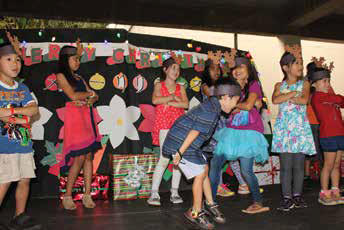
Language is the foundation of culture, and today, children are still learning Japanese at Mo‘ili‘ili. The intensely interactive program includes plays and performances that delight the whole family. The original mission of passing on the Japanese language to the next generation was a budding flower of the old Mo‘ili‘ili community. Today, the branches of that flowering plant produce a bouquet of family-based activities, arts and expressions. A few of the directors on the center’s board actually attended Japanese language classes at MCC when they were in grade school!
Today, K-5 children attend Japanese after-school classes every weekday and practice speaking Japanese with their parents, who learned it in the same facility. The whole family is able to speak Japanese with the grandparents. While many MCC programs are geared to elders, the center itself is oriented to fulfill the needs of the entire family, interacting across age groups as they do at home.
The Teens in Action program gives young volunteers in seventh grade or higher an opportunity to work as aids in the many children’s programs at MCC: After-school A+, Early Morning Care, and programs for school intercession, holidays and summer break.
Senior Programs at the Center
Cultural and community outreach events of MCC are all organized, planned and resourced by staff and member volunteers. Everyone pulls together to make the center a vibrant place where members can be proud of all they accomplish. Their volunteer work results in fun, satisfaction and benefits the community.
“Our members love singing karaoke, and performing both ‘auana hula and Japanese dance; when they learn a dance well, they like to perform it at homes for the elderly,” said Nadine.
“They recently organized performances at various senior daycare centers and nursing homes. We provide the transportation, they make their own costumes, and delight in bringing beauty and enjoyment to the other elders.” Another community service for which MCC recently became a partner is a version of Meals on Wheels. Instead of delivering meals to seniors’ homes, MCC drivers go out and bring elderly to the MCC dining hall for a hot meal. Coming to the center gives them the opportunity for socialization and conversation in a safe, happy environment. The new program is working very well. Nadine regrets that MCC does not have more space and staff for their very popular Kupuna Support Program. This adult daycare program is for frail as well as not-so-frail seniors who can use the restroom with very little assistance. They participate in a number of fun, healthy activities geared to stimulate their minds, bodies and souls. Palolo Chinese Home Catering provides a healthy lunch, which is included in the Kupuna Support Program fee — $55 a day.
“We always have a waiting list,” said Nadine. “The need for good adult care is so great that families are willing to be ‘on call’ for an opening of just one or two days when one of our regular clients is sick or traveling.”
By the end of Generation Magazine’s tour of MCC, it was clear that we could fill two issues with program details and still not cover every offering at this wonderful community center—transportation and escort services, excursions, counseling, special events and more.
Become a Center Member
If you are over 60 and live in Honolulu between Ward Avenue and Hawai‘i Kai, you are within the city area serviced by Mo‘ili‘ili Community Center. However, MCC also welcomes participants from all areas of O‘ahu. To learn more about the organization and its many programs, please visit www.moiliilicc.org.
This year, Mo‘ili‘ili Community Center is celebrating 115 years as a place of learning, health and enrichment. For many generations, the center has served families and created family ties throughout a broad community. MCC’s important work continues due to the generosity of many donors, grants and the Aloha United Way. If you wish to help them with a cash donation, remember that all donations to MCC support the programs, not the administration. Donations are tax deductible and every dollar helps the beneficiaries of the center.
MO‘ILI‘ILI COMMUNITY CENTER 2535 S King St., Honolulu HI 96826 Hours: M–F 8 am to 5 pm
808-955-1555 | Fax: 808-945-7033 | office@moiliilicc.org | www.moiliilicc.org
The traditions and language of the original Japanese immigrants to Hawai‘i in the late 1800s survived because they taught their children to venerate and value the culture of the homeland. In over six subsequent generations of American Japanese, no single organization has nurtured language and culture more than Mo‘ili‘ili Community Center on O‘ahu.

 The average person, especially kūpuna, spends 90 percent of his or her time indoors. Therefore, a clean, safe indoor environment is paramount.