Giving back. That’s the theme and the name of a special — and talented — seniors group who entertain other seniors as a way of giving enjoyment back to their community.
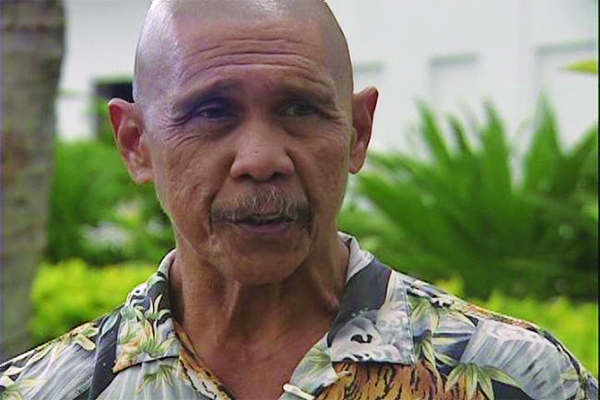
Project Giving Back is a group of 36 singers, ranging in age from 60 to 87, who are now in their 8th year of performing. Wayne Uejo is the founder and administrator of the group, overseeing the singers and coordinating the concert schedule at venues across O‘ahu.
Performances include hit songs from the ’50s through the ’80s, with some Hawaiian and Japanese tunes included in the mix. Uejo says the audiences love everything, but especially those old tunes that really bring back happy memories from a time when life was fun and simple. “Sukiyaki” by Kyu Sakamoto, and the Village People’s “Y.M.C.A.” are audience favorites.
Project Giving Back is currently not accepting new singers, but Uejo strongly encourages other like-minded individuals from O‘ahu or the Neighbor Islands to start their own group. He says there is always a need to give back to the senior community.
If you are interested in having Project Giving Back perform at your location for any occasion, contact Wayne Uejo.
PROJECT GIVING BACK
2018 HONOLULU PERFORMANCES
Saturdays at 9am
THE PLAZA
1280 Moanalualani Place
June 9
July 14
August 11
September 8
October 6
November 3
December 1
KUAKINI AUDITORIUM
347 N Kuakini St.
June 23
July 28
August 18
September 22
October 20
November 17
December 8
LEAHI HOSPITAL
3675 Kilauea Ave.
August 25
November 24
Seniors giving back to seniors. It’s a fun and rewarding way to spend that free time.
Giving back. That’s the theme and the name of a special — and talented — seniors group who entertain other seniors as a way of giving enjoyment back to their community. Project Giving Back is a group of 36 singers, ranging in age from 60 to 87, who are now in their 8th year of…
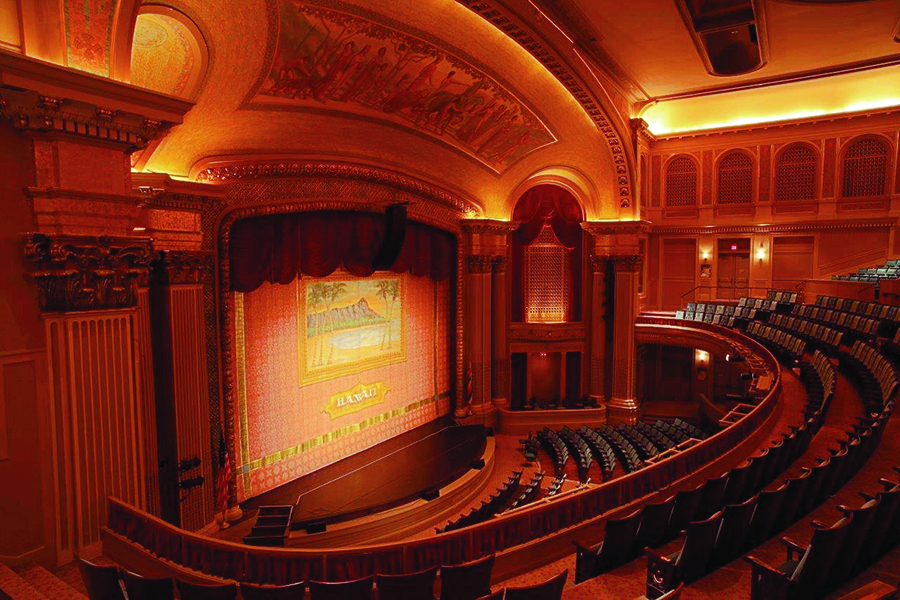
It’s hard to believe 22 years have passed since the renovated Hawaii Theatre Center reopened its doors to the public following a decade-long effort by community volunteers to raise $32 million and save the historic structure from the developer’s wrecking ball. Today, volunteerism is still the lifeblood of the Hawaii Theatre Center. The complex encompasses not only the historic Hawaii Theatre building, but also the McLean Block building, the historically significant Pantheon Saloon building and the Austin Block building. HTC also stewards Dr. Sun Yat-sen Memorial Park adjacent to the theatre.
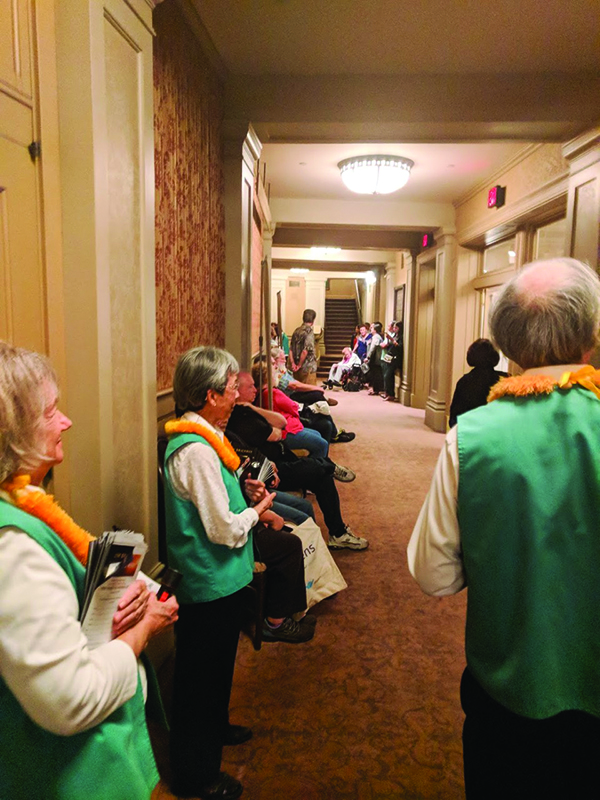
Having nearly an entire block of Chinatown to maintain and manage is a challenge not for the faint of heart. First and foremost, our volunteers are critical in ensuring the theatre is staffed with helpful and smiling ushers who not only assist in welcoming patrons to the theatre, but also are trained to assist in any emergencies or evacuations we may be faced with.
Volunteers who are part of our Hawaii Theatre Docent program provide historical tours of the facility, during which guests are treated to a mini-concert on the 1922 Robert Morton pipe organ in the Weinberg Auditorium. Though we currently only have enough docents for monthly, or bi-monthly tours, we hope to recruit additional volunteers for expanded reach into the community.
Another very active volunteer group is our HTC Stars group. This group of community-minded philanthropists help in supporting our fundraising events, HTC membership recruitment at our shows and other work needed by our Membership Services staff.
One of the areas of focus for the coming year will be facilities repair and maintenance. Our hope is to form a group of tradespeople with a little time on their hands to help with minor carpentry, painting, landscaping, and generally completing odd jobs around the facility. Our list of deferred maintenance items is too long to list here, but for an active group of seniors who take pride in their handiwork and would like to remain active by helping to maintain and improve the condition of the entire Hawaii Theatre Center campus, this is a golden opportunity!
For more information on any of our volunteer opportunities, please call to schedule a visit. Amy Bennett, our Director of Donor Services, would appreciate hearing from you at 808-791-1301, or you can email amybennett@hawaiitheatre.com to set up a time for you to visit! E Komo Mai! Join us in preserving our community’s last remaining historic theatre—“The Pride of the Pacific”.
It’s hard to believe 22 years have passed since the renovated Hawaii Theatre Center reopened its doors to the public following a decade-long effort by community volunteers to raise $32 million and save the historic structure from the developer’s wrecking ball. Today, volunteerism is still the lifeblood of the Hawaii Theatre Center.
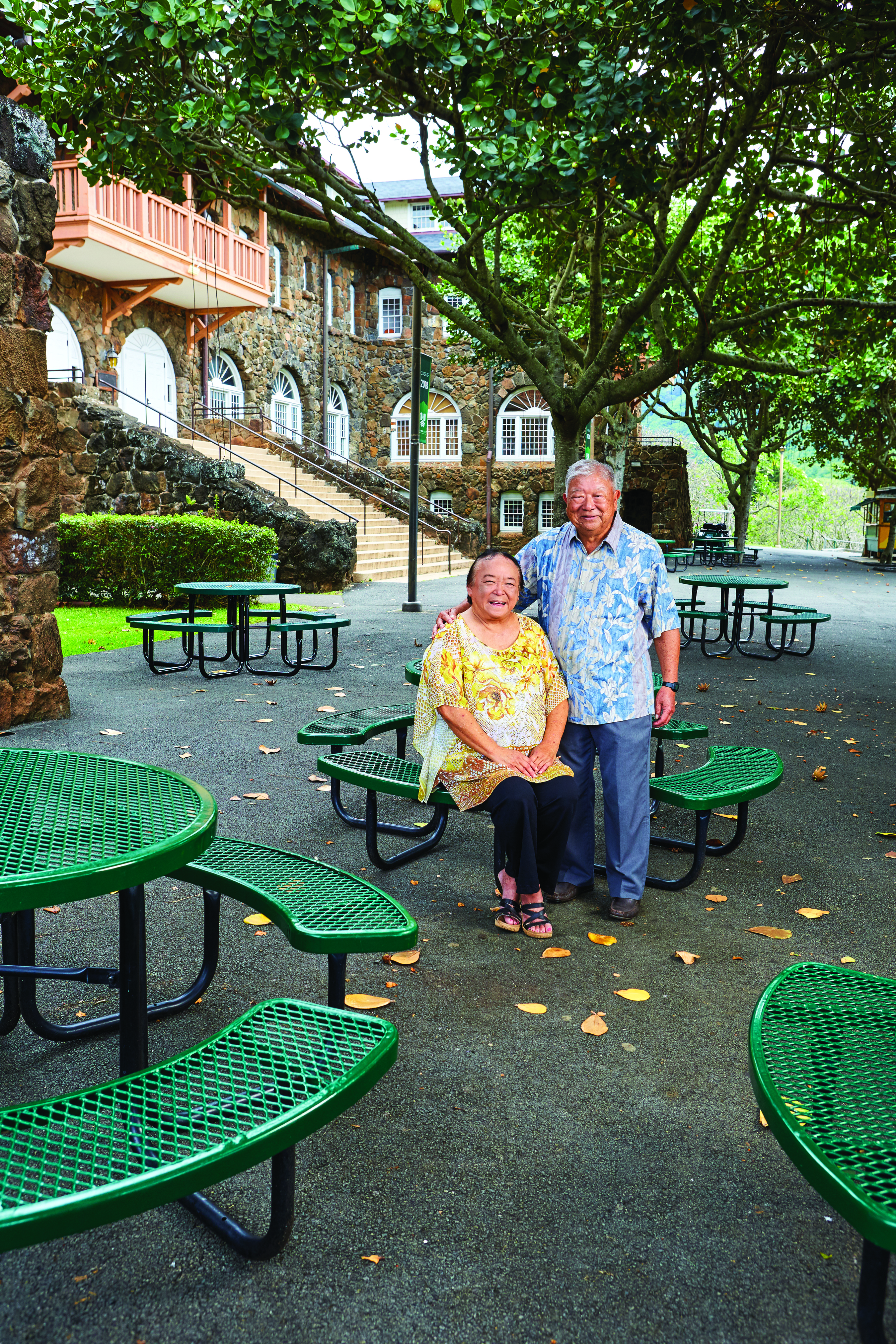
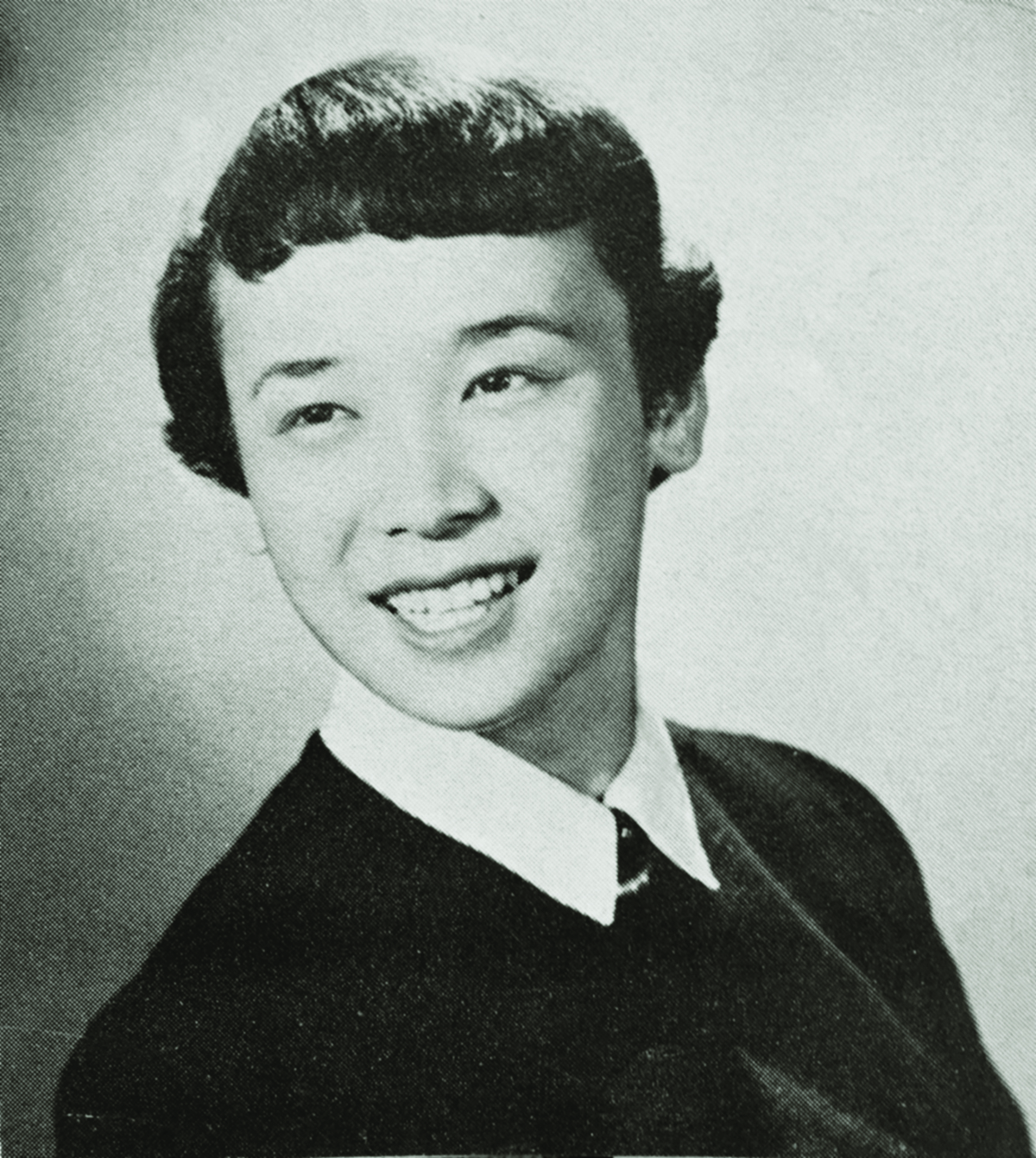
Dottie Crowell and Galen Narimatsu in the courtyard of historic Kawaiha‘o Hall. The Hall was built in 1908 when the Kawaiha‘o Seminary for girls and the Mills Institute for boys moved to their new joint campus in Mānoa, known as the Mid-Pacific Institute.
Giving back to your high school or college allows you not only to rekindle warm memories of school days but also to help the school prepare today’s students for a successful future.
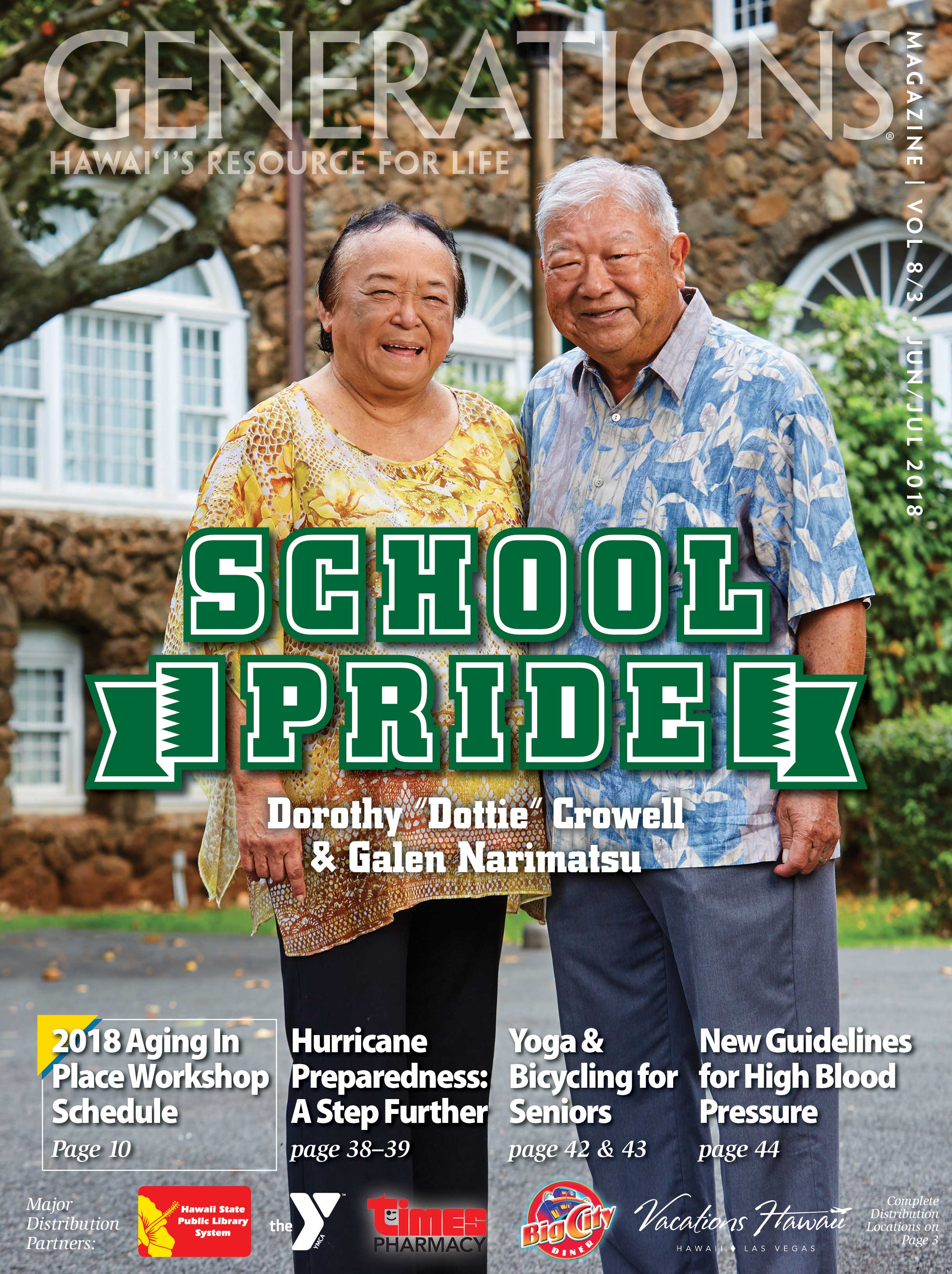
Generations Magazine celebrates “school pride” with the stories of two retirees who volunteer their time to support their school and its alumni family. If you grew up in Hawai‘i, you probably graduated with some of the same students that you first knew in elementary school. Neighborhoods were small, and families didn’t move around much. Classmates depended on one another like a baseball team: all practice the fundamentals, but in the game, each one has a position to cover. If one does not perform, the whole team suffers unless the others step up and pull out a win. Camaradarie and good performance builds trust in the clutches, and deep friendships that last a lifetime. So students all add to the ultimate success of their class.
As you might guess, expressing school pride is more than wearing school colors at the game, or sharing stories of back in the day. These are great fun, but the foundations, disciplines and fresh horizons shared with us by teachers, administrators and classmates — tools and habits that later served us well as adults — these are the gifts that make us proud to be called alumni.
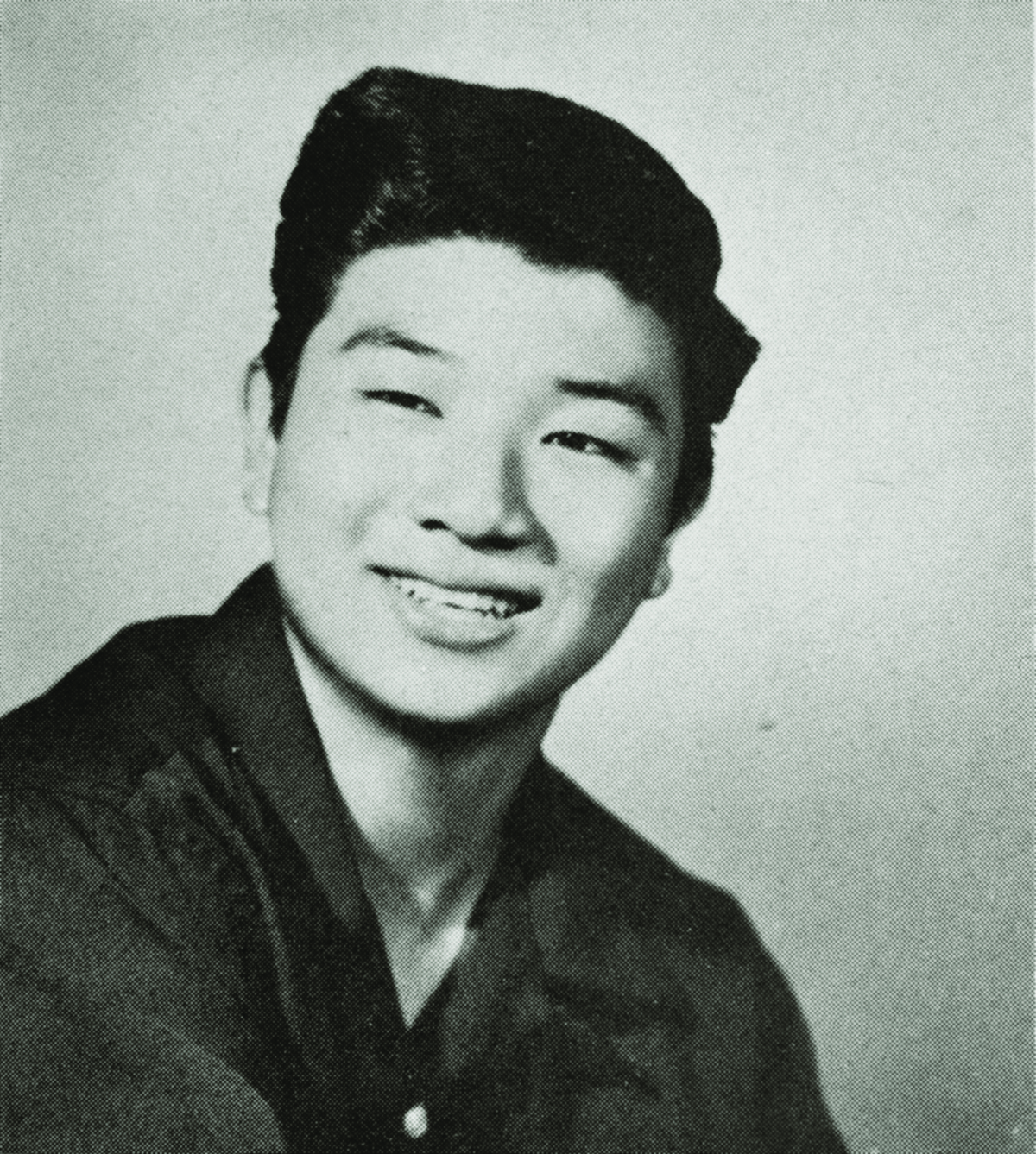
Cousins Dottie Crowell and Galen Narimatsu graduated from Mid-Pacific Institute in 1955 and are still actively involved with supporting their alma mater. They are still friends with their roommates, classmates and team members. You will see them at home games, cheering on the Owls; on campus, helping on alumni projects; and working with alumni of all ages on student events and projects.
What is the source of this love and admiration for their school? As they tell their stories, you will hear the facts and history of Mid-Pacific Institute in the ’50s, but between the lines you will sense the gratitude Dottie and Galen have. They are not only thankful for what they learned, but for the process. The academic bar was set very high. They were eighth graders away from home for the first time — eager to please their parents, unsure of what the future would hold, and not quite sure if they had “the right stuff” for college.
But they were not alone or without suppport. And what they achieved in high school prepared them for meaningful, successful lives. This is a story retold many times in post-WWII America. May the stories of Dottie and Galen inspire you to remember your school days, look up classmates and express your gratitude and your school pride. We have much for which to be grateful.
Dorothy “Dottie” Crowell, Former Director of Admissions, Mid-Pacific Institute, Class of ’55
Dorothy “Dottie” Crowell
Dottie Crowell graduated from MPI in 1955 and began working there in school administration. No one knows more Mid-Pacific alumni than Dottie because, for nearly 30 years, she and a committee of faculty and deans made decisions about which students would be accepted. She delights in connecting graduates to one another and the school. Graduates are always looking her up. Her devotion and pride for her school can be summed up as a big mahalo to her parents, teachers and principals who encouraged her to pursue higher education.
“I was a naïve, back-country eighth grader in Ha‘ikū, Maui, who had no idea how high school would be. My parents told me I was going to a high school in Honolulu, and I just accepted it. My class of 35 boys and girls grew to 65 by graduation. We were not sophisticated like the students of today, but we were all away from home, so we followed the rules and did well. On weekends, we saw the big city of Honolulu. I still keep up with my roommates, Lenora and Junette. A whole world opened up to us with class members from Japan, Korea and the Marshall Islands. Two years of foreign language were required: French or Latin. Today, MPI also offers Spanish, German, Japanese, Hawaiian and Mandarin Chinese,” says Dottie. But her favorite subjects were Mathematics and English because she liked the teachers.
Today, Dottie Crowell volunteers her time to work on the Alumni Archives Research Project. Growing public interest in family history and her own school pride spurred alumna Tomiko “Koco” Conner to reorganize the MPI school yearbooks and academic records for easy access. Archival records going back as far as 1904 had never found a permanent home while Mid-Pacific campus was growing. Now they are housed in a climate-controlled area, and two days a week, Dottie and alumna volunteer Bobbi Sakamoto manage the collection and fulfill requests for information from the families of graduates. Historical requests come from family members looking for pictures of their parents or ancestors — what activities they enjoyed in high school or who their friends were. “Sometimes it is alumni I knew. Mid-Pacific grads are close.
“While helping others, I discovered that my grandfather’s sister, Reba Hanamaika‘i, from Maui, attended school here in 1904 and 1905 when this campus was Kawaiha‘o Seminary for girls,” says Dottie. Mid-Pacific Institute was founded officially in 1908 when Mills Institute for boys, located in downtown Honolulu, moved to Mānoa. From that time, this small college preparatory boarding school slowly grew from less than 100 students to a current student body of more than 1,500. The boarding program was discontinued in 2003.
As we flipped through the yearbooks, Dottie showed us the roots of her school pride. One was the MPI headmaster who recruited Dottie in 1951, Joseph Bakken. He taught Dottie’s parents English at Maui High School, so her parents trusted his decision that Dottie was college material, and they sent her by boat to high school in Honolulu.
Mid-Pacific Institute was structured to protect and support every student and assure his or her success. An upperclassman “brother” or “sister” helped them get accustomed to dormitory life and the scholastic rigor of a college preparatory curriculum. Dorothy remembers that the dormitory had a live-in nurse, two “dorm mothers” to supervise activities and two senior class “Senators,” who acted as counselors, tutors and representatives of the student government. Teachers lived in cottages next to the dormitories and were available 24/7 in emergencies. The entire school staff encouraged students to become one close family and assist one another.
“One time I was walking to the dining hall, and Mr. Bakken caught up alongside me and asked how I was doing. I told him that I was homesick. He didn’t say anything more to me, but that evening, my aunty from Honolulu showed up at my door because Mr. Bakken had called and asked her to come and see me. The school was that caring for my classmates, and me,” says Dottie.
The MPI mandatory 2.5-hour study hall every evening helped students make the grade; even after study hall, when the lights went out, they continued their studies with flashlights under their blankets. Hard work was a given; everyone was college-bound. Students were only allowed off campus on Saturday and Sunday and were responsible for keeping their dorm rooms clean at all times. If they failed room inspection, they were assigned “penalty work” chores. The discipline of dorm life paid off in later life too.
Today, Dottie is proud to be helping alumni and supporting students. She attends as many “Owls” games as she can, and delights at greeting returning graduates. “We are all one ‘ohana,” says Dottie — with always a fond memory.
Galen Narimatsu, MPI Alumni Association Board Member and Past President, Class of ’55
Galen Narimatsu
Galen Narimatsu also remembers being interviewed by Mr. Bakken. He is Dottie’s cousin, and grew up in Hale‘iwa and Honolulu. The sugar and pineapple plantations were still the main employers in Hawai‘i. After graduating from the ROTC program at Mid-Pacific in 1955, he studied Public Administration at University of Hawai‘i at Mānoa and worked at Mid-Pacific as a dormitory supervisor. His pay was room and board. He also worked at the university bookstore. After graduating from UH, he began his career as an officer in the United States Army and did two tours in Vietnam. After Galen retired from the military, he started volunteering with the Mid-Pacific Institute Alumni Association, became a board member, and has served five terms as its president. Galen served on the MPI Board of Counselors and, in 2015, won the prestigious Volunteer in Philanthropy Award from the Association of Fundraising Professionals, Aloha Chapter.
Galen remembers being interviewed by Joe Bakken in 1951. “He used to travel around to all the public schools in Hawai‘i interviewing and recruiting good students. I didn’t know who this man was and he was asking touchy-feely questions like ‘What kind of a person are you?’ I must have done OK because he asked my parents to enroll me. My dad was a schoolteacher and had a side business selling silverware to Japanese families in the camps. He especially wanted me to further my education so that I would have opportunities beyond the plantations,” says Galen.
“When I got to Mid-Pacific, I was happy to find that some of my Waialua classmates had been selected too,” says Galen. He was able to room with two of them — another way the school helped freshmen transition to boarding school life. It was a big change from home, where kids were free to swim, fish and play after chores were done. At Mid-Pacific, everything was regimented. Galen says the discipline and restrictions provided structure and a level playing field that helped him succeed.
All Mid-Pacific alums agree that scholastics were at a higher level than the public schools they left. They also regard mandatory study hall as necessary for their academic achievements. Academic discipline is a cornerstone of their attachment to Mid-Pacific and a reason they want to help today’s students be successful. They know how Mid-Pacific prepared them for the real world challenges they faced after graduation. “We learned
academics, teamwork, citizenship and leadership — which helped us succeed in all our endeavors,” says Galen. “And the friendships we made here have lasted the tests of fickle fortune.”
Galen is a great fan of MPI Baseball, and you will often see him in the stands. He was on the baseball team, under Coach Harry Kitamura, but didn’t get to play center field much, “because we had such great players in my time — still do.” Galen also ran the quarter mile for MPI Track Team. School athletics were a source of fun and teamwork. But Galen’s favorite subject was History.
“In my senior year,” says Galen, “I was a Senator. We were strict and it was for the good of the students. We looked out for the younger students and maintained discipline, but we also hooked them up with a tutor when they needed academic help. I saw the military as a good career option. Because of the draft system in the 1950s, every family had someone who served in the military. Dorm life at MPI prepared me for military training too. Serving my country was my way of giving back. It worries me today that the younger generations don’t think about what they are going to give back and young men don’t even consider serving their country.”
The MPI Alumni Association offers graduates many ways to support the school, express their gratitude and demonstrate school pride. “We support community events throughout the year. Tuition only pays for about 80 percent of what it costs the school to educate a student for one year. We try to bridge that gap by raising funds with the annual Chicken Sale and a golf tournament. Graduates love getting together, and all the events are times to share and catch up.
“Every July we hold our annual reunion, called ‘The Pā‘ina,’ and help out at the Ho‘olaule‘a Festival and Graduation. We award grants for student projects, and organize our MPI class reunion, which alternates between California and Las Vegas every other year. Every event, from ball games to fancy affairs makes us proud to be helping the students, the same way we were helped years ago. I guess the best thing about school pride is that it brings all the alumni together. Regardless of how old or young we are, we all share the Mid-Pacific experience and take pride in the successes we achieved with the gifts our teachers, alumni and classmates gave us.”
Generations encourages our readers to reach out to your schools and volunteer or find a program to donate to. Put your school pride to work and help prepare today’s students for success.
Generations Magazine celebrates “school pride” with the stories of two retirees who volunteer their time to support their school and its alumni family. If you grew up in Hawai‘i, you probably graduated with some of the same students that you first knew in elementary school.
Twenty-nine years ago, Honolulu resident Joan Davis decided to reclaim her health. “I was having some health problems,” she says. “It was time to make a change.”
So, the then-49-year-old bought a pair of athletic shoes and joined the “Saturday Amblers,” a walking group that met at Kapiolani Park every Saturday morning. A few weeks later, a member of Faerber’s Flyers, a women’s running group, nudged her into signing up for a 5K “fun run” at the park. With no running experience to speak of, Davis was initially hesitant, but decided to give it a try. To her astonishment, 3.1 miles later, she had won a medal in her age division. “My love of running blossomed from there,” she recalls.
Not long after her triumphant 5K debut, she laced up her running shoes once again and finished a 15K race at Hickam Air Force Base. “I told myself: ‘If I can do a 15K… well, I guess I could do a marathon, too,’” she laughs. She started a training regimen, and in December of 1990, ran the Honolulu Marathon at the age of 50. That’s when Davis says she realized how far she’d come — literally — in her health and fitness journey.
And looking back on it now, it was really just the beginning.
Joan Davis feeling good at the National Senior Games in California.
Davis went on to cross the Honolulu Marathon finish line eight more times, and if that weren’t impressive enough, she also completed dozens of 5Ks, 10Ks, and a handful of half-marathons — in Hawai‘i, on the mainland, and as far away as Australia, Indonesia, and China.
In 1995, her life took yet another unexpected turn when a friend asked her to join the Hawaii Masters Track Club. As the track and field club’s first female member, she added the javelin throw, discus, shot put, and hammer throw to her expanding athletic repertoire. “If you told me 30 years ago that I’d be a hammer thrower, I wouldn’t have believed you,” she laughs.
In 2001, Davis learned she’d qualified for the National Senior Games, a multi-sport, biennial competition for men and women ages 50 and over. Since then, she’s competed in seven National Senior Games and has racked up her fair share of medals, ribbons, and trophies; she’s also earned All-American status. In 2015, she placed 14th in the javelin throw, 16th in the discus, and 17th in the shot put in the women’s 75 – 79 age division. And Davis isn’t stopping there: She has her sights set on competing internationally, too.
For Davis, athletics is far more than a recreational pastime — it’s a passion. So much, in fact, that she readily accepted a friend’s invitation to attend a luncheon at the Honolulu Quarterback Club (HQC) 15 years ago, and five years later, joined HQC’s board of directors as its secretary. Since then, she’s added a few other titles to her expanding résumé: Hawaii Masters Track Club secretary, president of Faerber’s Flyers, state representative for the Road Runners Club of America, and first vice president in charge of race operations for the Mid-Pacific Road Runners Club.
Apart from the physiological benefits of exercising regularly, Davis, now 77, says there’s a social component that makes it twice as fulfilling.
And she will be the first to tell you that embracing an active lifestyle can be a true game-changer. “I encourage everyone to try it,” she says. “It’s never too late to start.”
HONOLULU QUARTERBACK CLUB
Maple Garden, 909 Isenberg St., Honolulu HI 808-220-6454 | HermanHStern@msn.com
Meeting: Every Monday, 11:30 am – 1 pm
It all started with a new pair of shoes. Twenty-nine years ago, Honolulu resident Joan Davis decided to reclaim her health. “I was having some health problems,” she says. “It was time to make a change.” So, the then-49-year-old bought a pair of athletic shoes and joined the “Saturday Amblers,” a walking group that met…
One of the most common problems I encounter investigating a cybercrime is that the victim fails to provide any records and/or documentation to support their claim that they have been victimized. This is often also true of others reporting the crime, either with the victim or on their behalf.
Lack of documentation is most prevalent in cases involving online fraud. Here are a few good steps to take every time your purchase or acceptance of a contract involves the internet:
• Print the webpage — a simple and quick method. Print the displayed offer, sale, or service you are interested in. At the bottom of the printout will usually be the URL (webpage address) and the date and time the printout was done. After purchasing, print out any on-screen confirmation
of sale, receipt of funds, delivery notices, etc.
• Bookmark the webpage(s). This is also a good way of record keeping and being able to return to that particular webpage.
• Print your email. Solicitations offering the sale of items and/or services and purchase confirmations and receipts, delivery notices, etc. received in your email should be printed out as good practice. In addition, all emails involving the transaction should NOT be deleted, but saved in a separate folder.
• Obtain bank or credit card statements reflecting transactions to further assist investigations.
Again, prevention is the key: “If it’s too good to be true…”
One of the most common problems I encounter investigating a cybercrime is that the victim fails to provide any records and/or documentation to support their claim that they have been victimized. This is often also true of others reporting the crime, either with the victim or on their behalf. Lack of documentation is most prevalent…
As Mayor Alan M. Arakawa has said, “As we sew lei together, we express our gratitude for their service, and for the many ways these men and women helped shape the community we live in today, ‘Blossoms for the Brave’ is a wonderful opportunity to meet up with old friends and neighbors as we remember our fallen heroes who gave their lives to serve our country.”
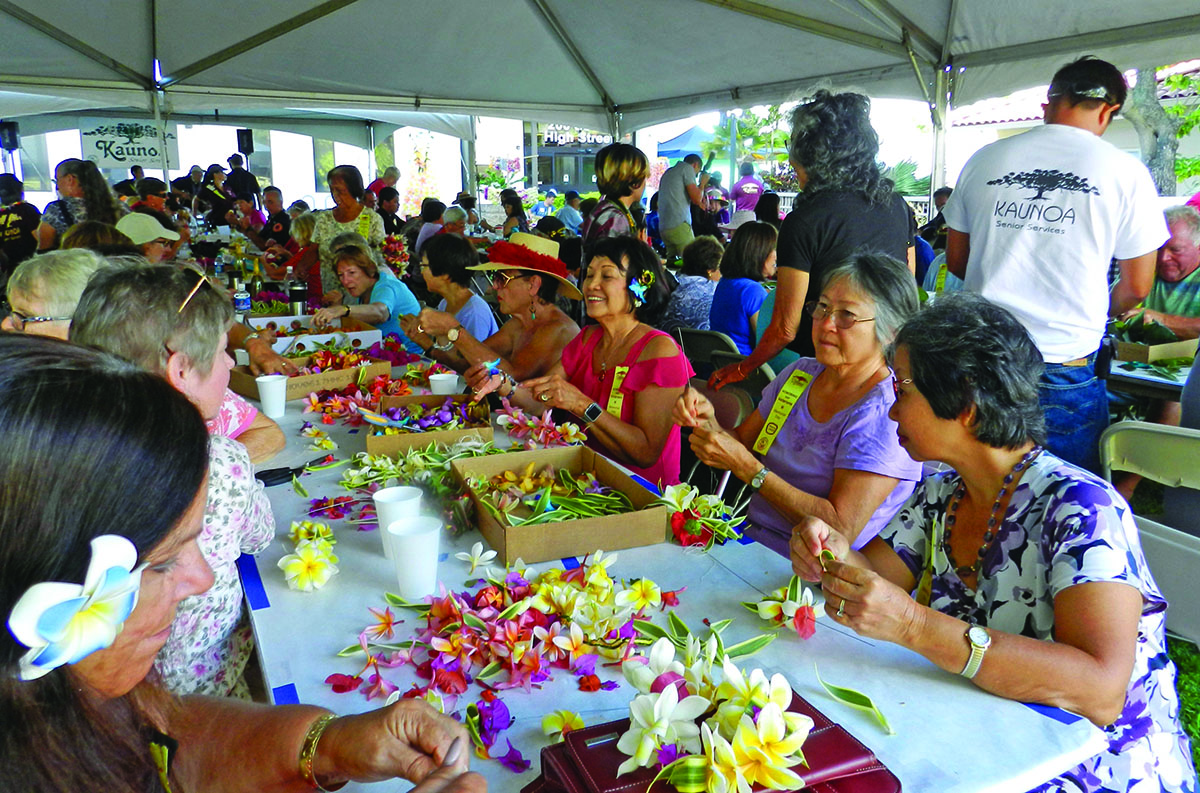
For the past five years, the Maui community has come together on the Friday before Memorial Day to participate in a lei-making event in order to make more than 2,846 lei for all the veterans’ graves at Maui Veterans Cemetery in Makawao.
This year the event will take place on Friday, May 25, from 9am – noon on the front lawn of the Kalana O Maui (County) Building in Wailuku.
Korean War Veteran Warren Nishida (right) salutes 2017 Blossoms event accomplishments by volunteers (right).
The free event is co-hosted by Kaunoa Senior Services, a division of the Maui County Department of Housing and Human Concerns, and the Office of Mayor Alan Arakawa. It will feature live entertainment, ti leaf lei-making instruction, and the opportunity to contribute to a noble cause. Kaunoa spearheads the event to remind the community and educate youth that Memorial Day is a time to honor and reflect upon the sacrifices made by Americans in combat, a solemn occasion marked by ceremony and prayer.
Numerous community partners help assure a successful event, including the Maui Korean War Veterans, AARP Hawaii, Kihei Youth Center, and Hale Makua residents, staff and volunteers. Also vital to the realization of the greater goal are Kaunoa’s own program participants at the Congregate Nutrition Centers and Leisure/Wellness programs throughout Maui County, including West Maui Senior Center, Hana, Lāna‘i, and Moloka‘i. Homebound seniors in Kaunoa’s Meals on Wheels and Assisted Transportation programs are encouraged to participate by contributing flowers from their yards and gardens, giving them a sense of pride and keeping them connected to community.
Volunteers with the Retired & Senior Volunteer Program (RSVP) help in every aspect of this major undertaking, from planning logistics and teaching lei-making classes in advance of the event, to the flower donation awareness campaign and publicity, to collection and preparation of flowers, greenery, and ti leaves on event day.
Parking and a free shuttle to the County Building will be available from the Ichiro “Iron” Maehara Baseball Stadium parking lot.
As Mayor Alan M. Arakawa has said, “As we sew lei together, we express our gratitude for their service, and for the many ways these men and women helped shape the community we live in today, ‘Blossoms for the Brave’ is a wonderful opportunity to meet up with old friends and neighbors as we remember…
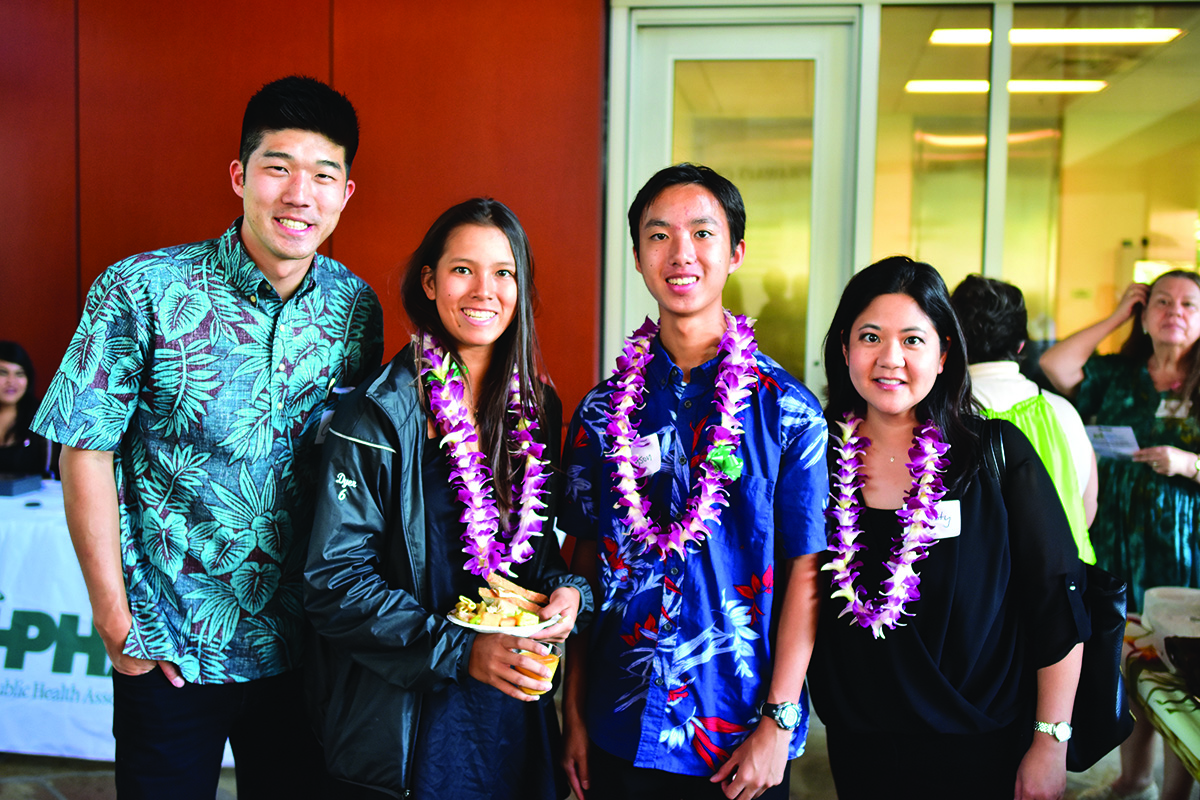
From Left: Colby Takeda; ‘Iolani One Mile Project students Marley Dyer and Bryson Choy; and Christy Nishita, PhD.
The One Mile Project at ‘Iolani stands out from traditional academic classes. It is a high school class that centers on building empathy and understanding for kūpuna in our local community; it seeks to address the challenges that many kūpuna face in their daily lives. Students learn about aging, then develop and implement their own projects.
As Christy Nishita says, “The One Mile Project class at ‘Iolani School makes these goals happen for our kūpuna. Our youth need to learn about aging and have opportunities to interact with older adults. The benefits are clear. Our youth will build awareness and empathy, and, on a community level, generations will find opportunities to build bridges and find common ground.”
The class is an opportunity to step into the shoes of kūpuna and develop awareness and empathy towards the older population. The class pushed me to go beyond the classroom and pursue various projects to address challenges that kūpuna face. My project was inspired by my grandparents, who faced difficulties in communicating and understanding health information during doctor’s visits. With the support of my teachers and Christy Nishita, PhD, project advisor, I conducted focus groups and interviews with caregivers, older adults and geriatricians to better understand these challenges. I created a presentation with findings and tips and presented them to University of Hawai’i geriatric fellows, a pre-medicine student club, the Farrington High School Health Academy, and a Project Dana caregiver support group.
My enthusiasm for helping the kūpuna population stimulated my decision to pursue other projects. I worked with Colby Takeda from The Plaza Assisted Living Waikīkī to co-coordinate an inter-generational photo voice project called ‘Honolulu Walks.’ I also talked story with different kūpuna and created a website that shares kūpuna life experiences called Stories of Kūpuna medium.com/stories-of-kupuna. I believe that older adults are the storytellers of our society. They have so many valuable life lessons, experiences and stories. I hope that my experience encourages others to step into their shoes and see the world from their perspective.
CENTER ON AGING — University of Hawai‘i at Mānoa
2430 Campus Rd., Gartley Hall, 201B, Honolulu HI 96822
The One Mile Project at ‘Iolani stands out from traditional academic classes. It is a high school class that centers on building empathy and understanding for kūpuna in our local community; it seeks to address the challenges that many kūpuna face in their daily lives. Students learn about aging, then develop and implement their own…
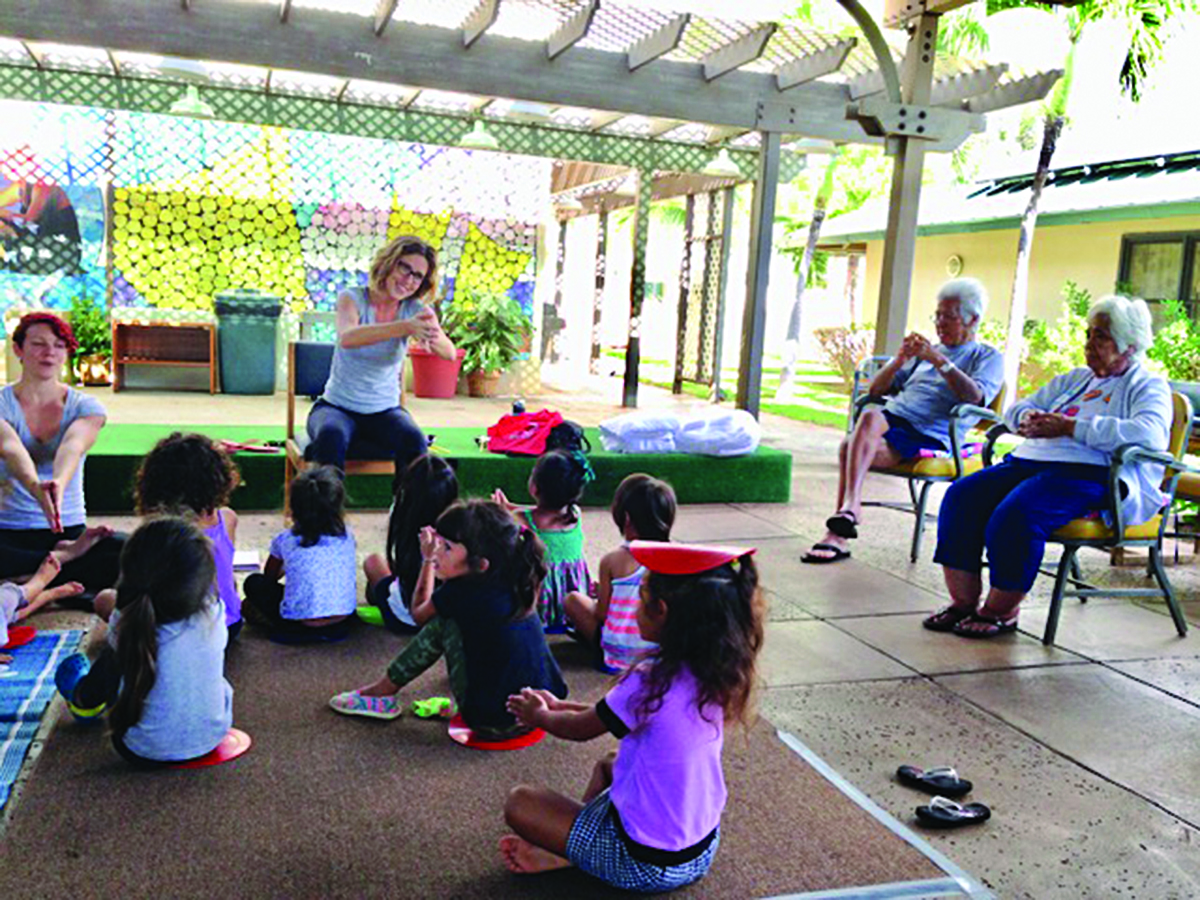
Children who attend Seagull Schools in Kapolei have a special bond with seniors at Seagulls Adult Day Center, located next door. Not only do the kūpuna and keiki regularly meet to play bingo, exercise on the lawn and do arts and crafts, but they also dine together on lunches that include whole grains, lean proteins and plenty of fruits and vegetables.
“The Kapolei school and adult center were purposely designed for mutually beneficial interaction between kūpuna and keiki,” says Chuck Larson, executive director for Seagull Schools, which has five locations on O‘ahu and one on Hawai‘i Island. “It has drawn attention from countries around the world seeking to develop strategies for their aging populations.” Spending time with energetic children does wonders for seniors’ mental health and cognitive skills, he adds.
Promoting good health is a top priority for Seagull Schools, which has been approved by the Blue Zones Project — a nationwide wellness program to enhance communities through proper nutrition, natural exercise, social interaction, spirituality and other healthy habits.
HMSA brought the initiative to Hawai’i to lower healthcare costs and improve quality of life. As of this writing in December, Blue Zones had eight demonstration communities: North Hawai‘i, East Hawai‘i, West Hawai‘i/Hawai‘i County, Central Maui, Ko‘olaupoko, Wahiawa¯, Kapolei-Ewa and Mānoa-Makiki-McCully-Mō‘ili‘ili.
Seagull campuses serve all-vegetarian meals on Wednesdays, and sugary, processed foods are banned. To circulate fresh air, there are ceiling fans, open windows and no air-conditioning.
“Blue Zones is a lifestyle practice for adults to set the stage for children,” Larson says.
Blue Zones Diet: What to eat
Up to 95 percent of your food should be greens, grains, fruits, vegetables and beans. Use olive oil and spices to flavor vegetables.
If you eat meat, limit portions to a deck of cards. Avoid hot dogs, bacon and sausages. Avoid seafood with high levels of mercury and other toxins.
Avoid cow’s milk. Eat cheeses (sparingly) made of sheep or goat’s milk. Limit eggs to three times weekly.
Eat one cup of beans, plus tofu, spread across the day. Avoid canned beans with added salt, sugar and chemicals.
Eat less than 28 grams, or 7 teaspoons, of added sugar daily.
Snack on nuts daily (non-sugar, non-salted).
Avoid white breads. Eat 100 percent whole-grain breads or pure sourdough bread made with live cultures. Limit to two slices daily.
Avoid processed foods; eat whole foods and dishes with fewer than five ingredients.
Children who attend Seagull Schools in Kapolei have a special bond with seniors at Seagulls Adult Day Center. Not only do the kūpuna and keiki regularly meet to play bingo, exercise on the lawn and do arts and crafts, but they also dine together.
What would happen if cybercriminals took control of your email account? They would have access to all the services and people you communicate with.
These criminals will be able to impersonate you, drain your financial nest egg and ruin your life!
To protect yourself, I encourage you to have more than one email account.
Before I go any further, take the time to look at your email’s inbox. Note who you are communicating with: Family members, financial institutions, physicians, Social Security Administration, social groups, Medicare, etc.
Do you have secure, strong passwords for your email account? I talked about this in the last issue of Generations Magazine (October/November 2017).
As important as it is to have strong passwords, you have to have more than one email account to avoid putting your eggs in one basket.
Having separate email accounts for different purposes will prevent you from losing everything if your email account has been compromised.
I strongly recommend at least one separate email account for the following tasks:
◆
To communicate with family and close friends.
◆
As a member of professional groups, civic and business organizations (Rotary clubs, etc.)
◆
Online banking, transferring funds, automatic deposits and payments.
◆
Online shopping and credit card purchases (PayPal, CitiCard, VISA, MasterCard and
Amazon, etc.)
◆
Social media (Facebook and
Instagram).
◆
A public email account that you don’t mind sharing with others. Use this when visiting websites that require an email account.
Don’t be tempted to use your online banking email account for online shopping, as shopping accounts tend to receive more spam (unsolicited email) and are targeted by online scammers. Your biggest challenge is to strictly adhere to one email account for its designated use.
THE DEPARTMENT OF THE PROSECUTING ATTORNEY
1060 Richards St., Honolulu HI 96813
What would happen if cybercriminals took control of your email account? They would have access to all the services and people you communicate with. These criminals will be able to impersonate you, drain your financial nest egg and ruin your life! To protect yourself, I encourage you to have more than one email account. Before…
Larry Gearing was riding his bicycle up a hill toward his home in 2006 when he felt chest pains. A doctor’s test revealed that, six months prior, he most likely had a silent heart attack causing a blocked artery. After undergoing cardiac rehabilitation, Larry and his wife, Charlene, decided to get fit and healthy.
Using the online fitness program, “Training Peaks,” the Gearings worked with virtual coaches to create weekly exercise and diet plans. Their dedication soon paid off. Larry ran his first 5K race and 100-mile bike ride. Charlene shed 30 pounds and completed a 5K race.
Their next goal? Triathlons!
At first, Larry joined Charlene at triathlons — but only from the sidelines. “He was my sherpa,” she jokes.
Inspired by his wife’s grit, Larry began training with her. “I felt guilty driving around in a car that had event stickers on it, for [sporting] events I hadn’t participated in,” he recalls.
Since then, the Ko Olina couple has trained for dozens of races and events. Charlene completed her first triathlon in 2009 at age 57, represented Team USA in the 2014 International Triathlon World Championship in Canada, and finished a Half Ironman in 2016, among her many outstanding accomplishments.
Larry completed his first triathlon in 2012, at age 62. That, plus the 8-mile Great Aloha Run, 60-mile bike rides, two Hapalua Half-Marathons and the 10K XTERRA.
They’ve hit roadblocks along the way. Charlene’s first 5K run ended in a pulled hamstring muscle, plantar fasciitis and physical therapy. The swim portion of Larry’s second triathlon in 2013 sent him to the emergency room with a flash pulmonary edema and bypass surgery. His heart is stronger now, thanks to an implanted defibrillator in his chest.
“All of these things have not stopped Larry from being a good runner,” Charlene says with pride.
Charlene and Larry’s Fit Tips:
Fill your daily diet with whole grains and colorful fruits and vegetables; avoid processed foods.
For nutrition tips, learn about the HMSA Blue Zones Project® (www.hawaii.bluezonesproject.com)
If personal training is not affordable, hire a
virtual coach on “Training Peaks” to reach fitness
and nutrition goals. Track your progress on a smartwatch, mobile device or computer.
Combine weekly exercises with weight training, flexibility and balance, and cardio-endurance, such as running, swimming, walking or biking.
Inspire others to be healthy and active; set fitness goals, and surround yourself with supportive, positive people.
Larry Gearing was riding his bicycle up a hill toward his home in 2006 when he felt chest pains. A doctor’s test revealed that, six months prior, he most likely had a silent heart attack causing a blocked artery. After undergoing cardiac rehabilitation, Larry and his wife, Charlene, decided to get fit and healthy. Using…
Do you know any kūpuna women who are skilled in hula and lei-making, love the Hawaiian culture and live the spirit of aloha? If so, encourage them to apply for 2018 Lei Queen.
The City’s Department of Parks and Recreation, which organizes the program, selects court members from different age groups to celebrate phases of life.
The 2018 court will feature Nā Kūpuna (the Elders) and reflect the theme, “Alohi Kea — the brilliant white lei, the platinum of kūpuna.”
There is no age limit, but applicants must be at least 61 years young by Saturday, March 3, 2018.
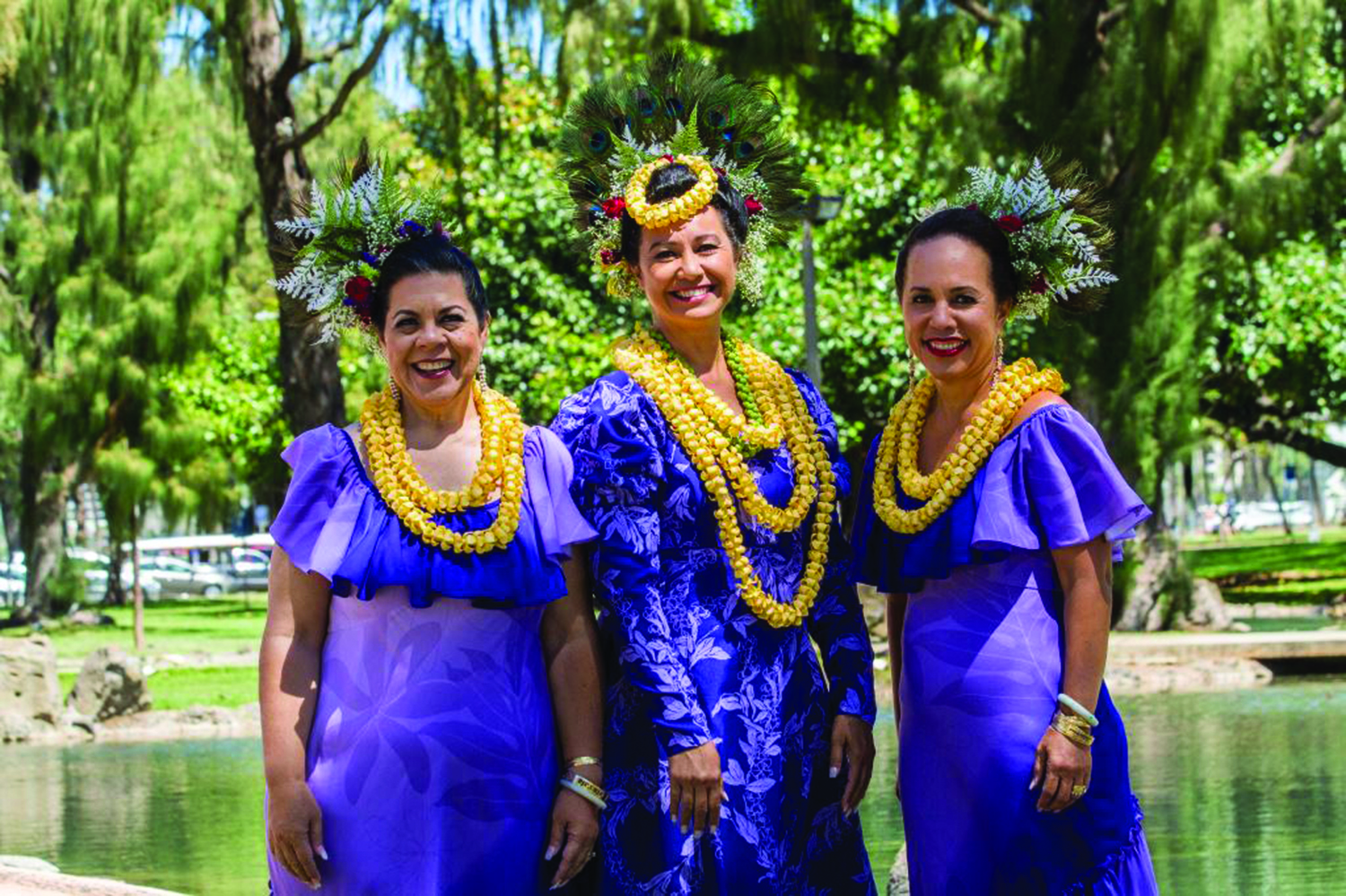
The 2017 Lei Queen and Court (from left): First Princess Pauline Leinā‘ala Robello, Queen Perle Puamōhala Kaholokula and Princess Ada Kalikokalehua Cooke. Photo by Dave Miyamoto
2018 LEI QUEEN
Application deadline:
Friday, Jan. 5, 2018
Court selection event:
Saturday, March 3, 2018; McCoy Pavilion, Ala Moana Regional Park; free event
91st Annual Lei Day
Celebration:
Tuesday, May 1,
Kapi‘olani Park
Do you know any kūpuna women who are skilled in hula and lei-making, love the Hawaiian culture and live the spirit of aloha? If so, encourage them to apply for 2018 Lei Queen. The City’s Department of Parks and Recreation, which organizes the program, selects court members from different age groups to celebrate phases of…
It’s hard to imagine how the holidays could be anything but joyous. Yet, for many, this time of year can trigger the holiday blues — temporary feelings of sadness or anxiety. Feeling blue is completely normal, though there are a few easy way you can boost your mood.
Be selective. Increased outings can cause unnecessary stress. Be selective about the events you attend so that you can enjoy each holiday gathering to its fullest.
Simple activities can prevent burnout during the holidays.
Manage expectations. Alleviate the pressure of the holidays by finding ways to celebrate with-
out burning yourself out. For example, prepare a special dish instead of undertaking the entire holiday meal.
Create new memories. Balance old memories by creating new ones. Starting a new holiday tradition is a great way to positively build up anticipation for the season.
Find good company. Pick up the phone and call a family member. Visit with an old friend. Invite your neighbor over for lunch. Sometimes, just
being in good company is enough to improve your mood.
Schedule downtime. For every activity you plan, pencil in some downtime. Looking after your health will keep you feeling refreshed and energetic all-season long.
It’s hard to imagine how the holidays could be anything but joyous. Yet, for many, this time of year can trigger the holiday blues — temporary feelings of sadness or anxiety. Feeling blue is completely normal, though there are a few easy way you can boost your mood. Be selective. Increased outings can cause unnecessary stress. Be…

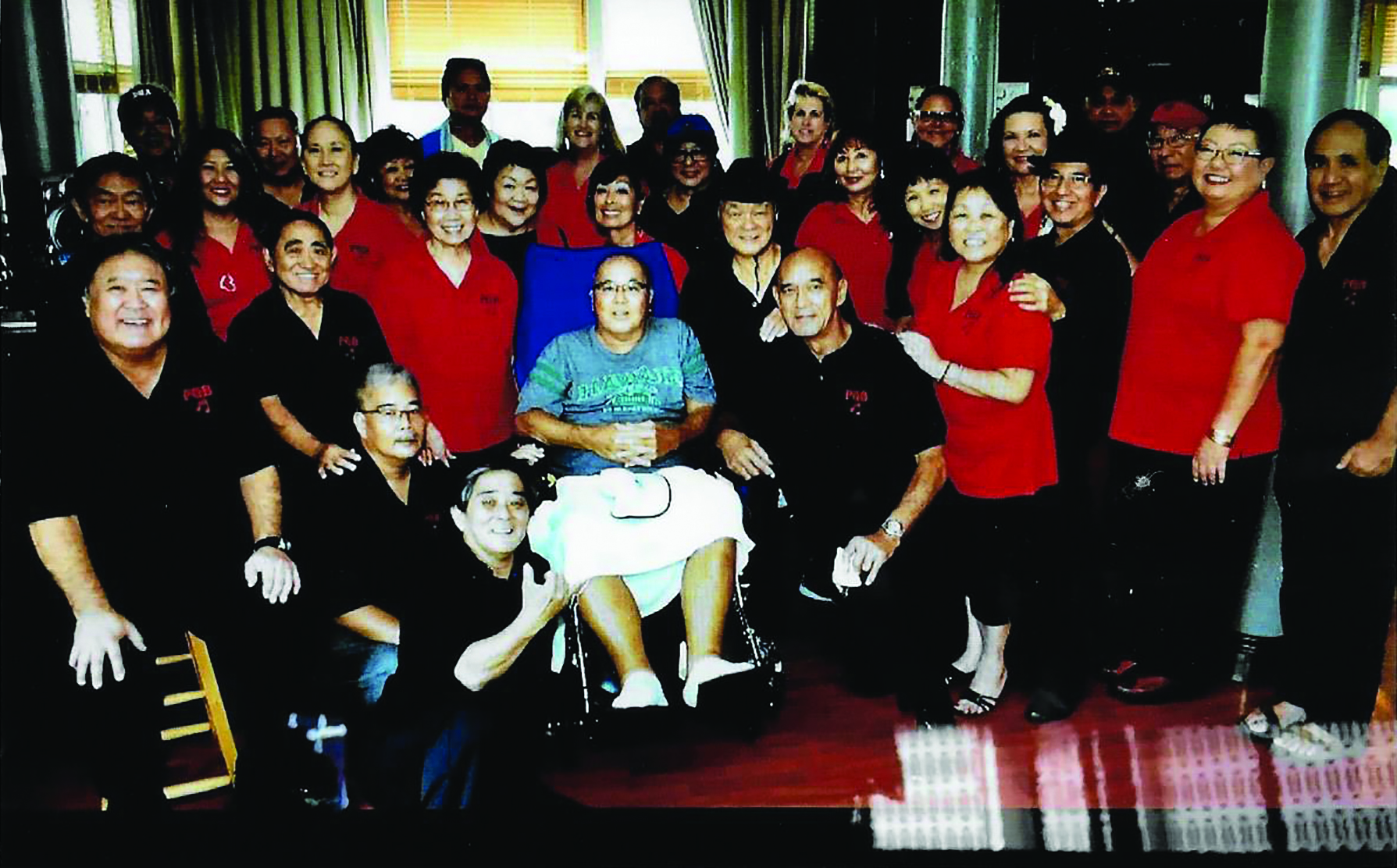 Performances include hit songs from the ’50s through the ’80s, with some Hawaiian and Japanese tunes included in the mix. Uejo says the audiences love everything, but especially those old tunes that really bring back happy memories from a time when life was fun and simple. “Sukiyaki” by Kyu Sakamoto, and the Village People’s “Y.M.C.A.” are audience favorites.