For someone with dementia, both too much and too little sensory stimulation may lead to agitated behaviors. To keep your loved one at a regulated state of sensory stimulation, it is important to consider what is providing sensory stimulation in each space.
To create a comforting space, try to provide natural light during the day to help regulate the circadian rhythm of your loved one. As it gets closer to bedtime, lights should be dimmed to enable easier sleep. Pleasant scents from aromatics or essential oils can be useful to keeping your loved one calm; however, make sure th {Play}e scent isn’t overpowering, which can be irritating. Noise levels that are too loud or too quiet may cause anxiety. Ensure that all sounds are at a comfortable level and aren’t in competition. Even the purr of an air conditioner can seem deafening to someone with dementia.
Helpful sensory stimulation could include colors, smells and textures that will allow your loved one to explore and relax in their environment.
For someone with dementia, both too much and too little sensory stimulation may lead to agitated behaviors. To keep your loved one at a regulated state of sensory stimulation, it is important to consider what is providing sensory stimulation in each space.
Dad should stop driving! His sight is not good and reflexes are slow.”
Although there are many seniors still on the road, some may have lost critical cognitive and physical functions. These limitations may result in dangerous, life-threatening situations.
A formal driving assessment or refresher course may help mitigate problems. Resources include:
Although there are many seniors still on the road, some may have lost critical cognitive and physical functions. These limitations may result in dangerous, life-threatening situations. A formal driving assessment or refresher course may help mitigate problems.
Providing care for an aging loved one can be challenging, especially if he or she has Alzheimer’s disease or another form of dementia. These challenges have been exacerbated by the ongoing pandemic.
Hawai‘i has an estimated 29,000 citizens suffering from Alzheimer’s. By 2035, that number could rise to 35,000.
Care for those suffering with dementia is generally provided by family members. Many family caregivers begin this journey with no experience or training, so they can be understandably overwhelmed by their new responsibilities. Having no experience causes stress, uncertainty, fear, frustration and a myriad of other emotions.
One of the most effective ways to help ensure the highest quality of care for those with dementia is through caregiver education. Learning practical caregiving approaches and using local caregiving resources are important strategies.
Caregivers can be more successful if they know there is help in the community to assist them in their endeavors and when they are armed with the resources they need in order to provide safe, effective care for their loved ones.
In addition, caregiver education leads to improved health outcomes, not only for the kūpuna, but also for the caregivers.
Providing care for an aging loved one can be challenging, especially if he or she has Alzheimer’s disease or another form of dementia. These challenges have been exacerbated by the ongoing pandemic. Hawai‘i has an estimated 29,000 citizens suffering from Alzheimer’s. By 2035, that number could rise to 35,000.
There is nothing more frightening than the image of a 93-year-old helping a 96-year-old step into the shower or stumble down a stairway. While this scenario is becoming more common in Hawai‘i, the reality is this generation wants to take care of themselves.
Our loved ones’ important expectations include privacy, dignity, independence and more. These are the folks who have always made it through tough times. Allowing others, even family, to help them may cause anxiety and hurt feelings.
Situations are bound to come up — a fall, a missed medication, lack of nutrition or a fender bender — and help will be required. These can be considered opportunities that finally allow the decision to be made to get help.
But therein lies the dilemma… allowing the decision. Families need to recognize timing and know when to say a change is needed.
Sometimes professional medical advice can be invaluable. Most families feel a great sense of relief knowing there are others involved in managing a crisis. This does not mean the crisis will end, but it does give families access to another resource they did not have before.
A home health agency can offer families a way to start a discussion about care for their loved one. There are many options in the community; in-home help is a good place to start.
Here are some things to remember when the times comes to start looking for care:
• A little goes a long way. Think about starting in-home care one day a week. This beginning point will provide a smoother, more gradual transition, so there is less chance that your loved one will feel overwhelmed. • Establish a relationship with the home health agency.Remember, you are working with people who know what you are dealing with. They have heard it all. Don’t be afraid to tell them the whole story. • Clarify expectationson scheduling, caregiver turnover, training and orienting to daily care. • Understand what you are getting.If your loved one needs advanced medical care and has multiple chronic conditions, you may want to involve a home health agency rather than a home care company. That way, there will be a medical professional such as a nurse involved with the care plan. Caregivers from home care companies are limited as to what tasks they can perform in the home.
If families can coordinate, communicate and have patience with the home health agency, they will have access to a healthcare professional who can be objective and encourage changes in frequency of care as the needs of the loved one decrease or increase.
Building trust beforehand will make this transition easier. Start the conversation and do some research before the kupuna in your life ends up caring for another kupuna in their life.
ATTENTION PLUS CARE HOME HEALTHCARE
Accredited by The Joint Commission
1580 Makaloa St., Ste. 1060, Honolulu, HI 96814 808-739-2811 | www.attentionplus.com
AGING IN HAWAII EDUCATIONAL OUTREACH PROGRAM
by Attention Plus Care — a program providing resources for seniors and their families, covering different aging topics each month. For class information and upcoming topics, call 808-440-9356.
There is nothing more frightening than the image of a 93-year-old helping a 96-year-old step into the shower or stumble down a stairway. While this scenario is becoming more common in Hawai‘i, the reality is this generation wants to take care of themselves.
When the time comes for Mom and Dad to move or downsize for safety reasons, they may find it difficult to decide what to do with what they consider to be their precious heirlooms. Designating items to friends, family or charities in a will or trust will ensure their destination, while passing on these items before the inevitable occurs can give both the giver and the receiver tangible pleasure in the here and now. Whether it is decided to gift now or designate items to friends, family or charities later, the task can be a daunting one. Where to begin?
But the first steps to giving the control of what happens to these items can be facilitated by someone close to the loved one, like a son or a daughter who is also a caregiver. That is where their role as caregiver can expand in order to help parents decide what they want to do with their prized possessions (or clutter). The intimate relationship and conversations between a caregiving relative and a loved one can help retrieve memories that can help determine what may be most valued by who.
A caregiver can also invite family members to talk to Mom and Dad about items they would love to have someday. These conversations can move the senior to a comfortable mindset for getting rid of years of both trash and treasures, helping to spark the process of downsizing and decluttering.
When the time comes for Mom and Dad to move or downsize for safety reasons, they may find it difficult to decide what to do with what they consider to be their precious heirlooms. Designating items to friends, family or charities in a will or trust will ensure their destination, while passing on these items…
Every year, an increasing number of seniors are needing 24/7 care, whether it is due to a fall, heart condition or old age. Some have prepared for this, determining in advance who will be their power of attorney and who will care for them at home. Others may have already decided to go to a care home or nursing home when they can no longer care for themselves.
Often, seniors automatically think that their son or daughter will take care of them when they are old. Some children do want to become caregiver’s for their parents. Adult children may feel the need to give back to their parents as repayment for a good upbringing. And there is also that group who knows for certain that they’d rather hire a professional to care for their loved one.
The idea of becoming a caregiver can be daunting. Consider answering these questions before going all in on caregiving.
Do I have the necessary skills?
Remember, at this stage in life your loved one may need help with tasks such as toileting, showering, dressing, feeding, transferring and medication management. Using the right techniques ensures the comfort and safety of both the loved one and the caregiver.
Will this hurt me financially?
Caregivers may be required to stay home fulltime, sacrifice their careers and receive little to no income every month.
Where do I go from here?
After weighing out the pros and cons of caregiving, research what long-term care options are available in the community. There are residential care homes, assisted living communities, nursing homes and private duty home care companies whose staff is trained to care for seniors. Find out what options are affordable for your kupuna. If the final decision entails you staying home and caring for your parent or parents, get as much caregiver training as you can. People can have the best intentions when it comes to caregiving, but it is always best to prepare yourself.
Every year, an increasing number of seniors are needing 24/7 care, whether it is due to a fall, heart condition or old age. Some have prepared for this, determining in advance who will be their power of attorney and who will care for them at home. Others may have already decided to go to a…
Our kūpuna need our attention now more than ever. The pandemic hinders not only casual gatherings but also activities that contribute to the happiness of our elderly. This is especially hard for them, since they eagerly look forward to family time, when they get to truly enjoy our undivided attention and company.
Physical Distancing Not Isolation
Dr. Alicia Arbaje, an associate professor of Medicine at the Johns Hopkins University School of Medicine, says physical distancing should not be confused with social isolation. More than a year of social distancing could easily be misconstrued as a no-contact situation. Visits with our elderly, especially those in facilities, may have been affected because of this, but there are several ways to make them feel loved and cherished. Innovations such as video calling and virtual conferences are great, temporary alternatives to visitations. Families can set up video calls through their parents’ caregivers or facility management. Or we can teach our elderly to use gadgets for video conferencing. For example, I taught my 85-year-old grandfather to use Skype!
We should not forget, however, that being with them in person, face to face, is very important to their overall well-being.
Our kūpuna need our attention now more than ever. The pandemic hinders not only casual gatherings but also activities that contribute to the happiness of our elderly. This is especially hard for them, since they eagerly look forward to family time, when they get to truly enjoy our undivided attention and company.
Take inventory of your situation before you begin looking into senior retirement communities. You can start by determining your timeline and reviewing the information in this article. You will then be ready to call the senior community sales department and ask the right questions.
Below is a list of some of the services and amenities offered at senior living communities. Some are included in the standard monthly rent or fee and others incur an additional cost. Decide which are necessities and which are “nice to have.”
❏ cable TV, movies, documentaries, sports
❏ wi-fi & computer room
❏ bus service to drug stores, medical offices or shopping malls
❏ hair & nail salon
❏ physician available for on-site appointments
❏ meals & guest meals
❏ room service
❏ walking path
❏ exercise equipment & classes
❏ heated swimming pool &/or spa
❏ social activities
❏ art & music classes
❏ contemporary library
❏ utilities
❏ housekeeping
❏ parking
❏ laundry rooms
Will you need additional services, for example, assisted living services, for an additional cost?
These assisted living services could include:
❏ assistance to in-house meals and activities
❏ shower/bathing assistance
❏ assurance checks
❏ medication management
❏ personal laundry services
Ask the sales department:
❏ Do you sign a contract?
❏ Is it a month-to-month agreement with no long-term lease?
Familiarize yourself with apartment layouts, sizes and availability.
❏ Do the apartments have lanai?
❏ Are the apartments furnished or unfurnished?
❏ What is the view from the apartment?
❏ Where is the community located?
❏ Is there a waitlist?
Once you have narrowed down your search, call for a tour. Have your calendar available and know when you would be available.
Many seniors have been waiting for a reduction of the pandemic numbers before making a move. The vacant apartment inventory is limited as more seniors are arranging for tours and confirming move in dates. Begin your search today.
Take inventory of your situation before you begin looking into senior retirement communities. You can start by determining your timeline and reviewing the information in this article. You will then be ready to call the senior community sales department and ask the right questions.
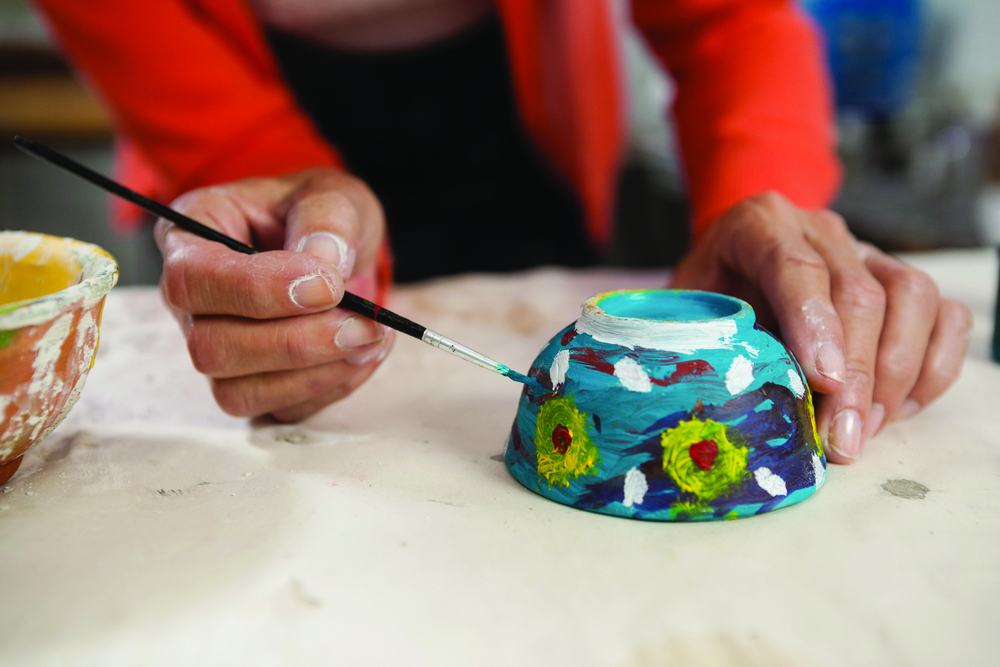
Many experts believe that art therapy can help individuals with dementia express themselves — beyond words and language. “In nurturing, calm, supportive settings, they sometimes have moments of clarity and express things that shock us all,” says Ruth Drew, director of family and information services for the Alzheimer’s Association.
Creating art engages a part of the brain that is different from language. Creativity can actually emerge even after the effects of dementia have progressed. “We think that in patients with language loss, the visual side of their brain stops being inhibited by the verbal side and that allows their visual creativity to be released,” says Dr. Bruce Miller of the Memory and Aging Center at UCSF.
Project tips from The Alzheimer’s Association:
• Keep the project on an adult level. Avoid anything that might be demeaning or seem childlike.
• Build conversation. Discuss what the person is creating or reminiscing about.
• Help the person begin the activity. If painting, you may need to start the brush movement.
• Use safe materials, tools and substances.
• Relax and enjoy the process. The artist doesn’t have to finish the project in one sitting.
THE PLAZA ASSISTED LIVING
6 Locations on Oahu: Punchbowl, Mililani, Moanalua,
Pearl City, Waikiki, Kaneohe 808-900-8544 | PlazaAssistedLiving.com
Many experts believe that art therapy can help individuals with dementia express themselves — beyond words and language. “In nurturing, calm, supportive settings, they sometimes have moments of clarity and express things that shock us all,” says Ruth Drew, director of family and information services for the Alzheimer’s Association.
The unexpected can occur at any time, no matter how prepared we think we are. A crisis will bring families together in an instant. If you are distanced from the area, there are ways to manage the situation. Working as ‘ohana with strong communication will help coordinate what is needed.
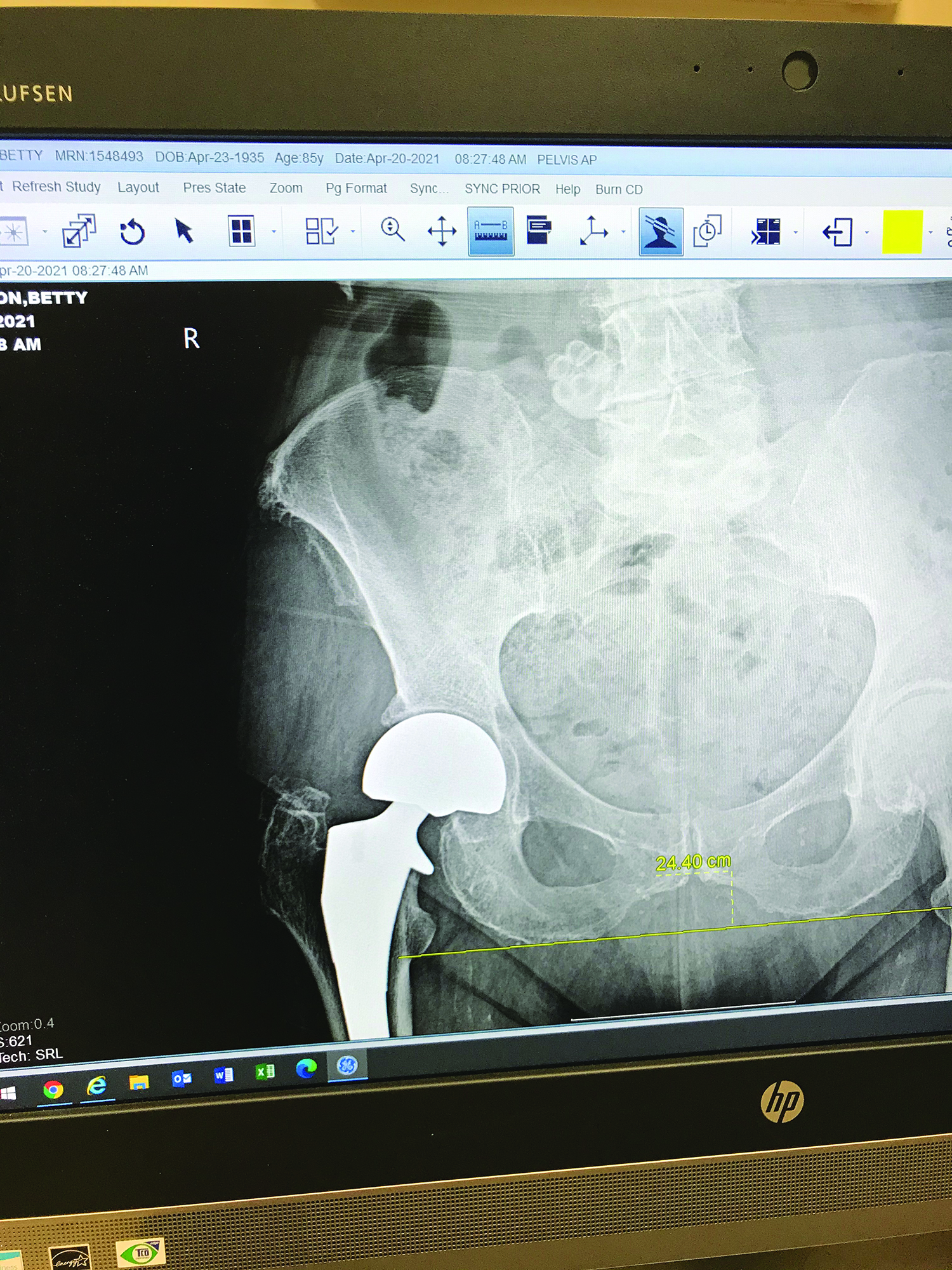
Recently, I experienced a crisis when my mother fell and broke the head of her femur — otherwise known as a hip fracture. This is a common occurrence in our elderly, mostly in women. I got the call from 5,000 miles away. “Mom is having surgery on her hip tomorrow.” Emotions welled up in my chest, fears in my head and so many questions arose. How did this happen? What was she doing? Did she hit her head? Is she in pain? Is someone with her? Can I call her? Can she talk?
Relieved by the sound of her voice, I found she was coherent but loopy from the pain medication. Fortunately, she had a friend with her who had called 911 when found on the floor of her bedroom. As it turns out rubber slippers and carpet create chaos. In a moment, she was down on her side and could not get up. She was able to drag herself to the phone and call my sister, who lives 1,000 miles away. As a family, we spread the word to her children and grandchildren. Group texts went on for a week or two after that, as she made her way through surgery, into a hospital room and magically was able to stand on her new hip the very next day!
The hospital stay controlled her pain, monitored her incision, and physical therapy got her up and moving.
I called her daily and gave reports to the ‘ohana regarding what might happen next. After five days, she was moved to a rehabilitation facility, where she was given intensive therapy three times a day. I am convinced this is what enabled her to recover with confidence.
Meanwhile, the family planned a collective schedule for the next 30 days. My mother lives alone where she had been independent and providing for herself for years. She did all her own shopping, cooking, cleaning, yard work and home maintenance, and played golf four days a week. At 86 years old, she did not show any fragility. This was the first time she needed help.
My niece took the first shift by flying in and getting her home. Afterward, I flew in and spent a week taking her to follow-up appointments and driving her around. My daughter came next and at the end of her trip, it had been 25 days.
We did it by working together. Even though we all lived in different states, with our own lives, cooperation among family members, and sharing our time and our resources worked very well as we rallied for this crisis.
If not for our family’s flexibility and ability to work toward a common goal, home healthcare would also have been a viable option. We may need to call upon those services the next time.
I am happy to report that Mom has recovered and is independent once again. She has even made her way back to the golf course!
ATTENTION PLUS CARE HOME HEALTHCARE
Accredited by The Joint Commission
1580 Makaloa St., Ste. 1060, Honolulu, HI 96814 808-739-2811 | www.attentionplus.com
AGING IN HAWAII EDUCATIONAL OUTREACH PROGRAM
by Attention Plus Care — a program providing resources for seniors and their families, covering different aging topics each month. For class information and upcoming topics, call 808-440-9356.
The unexpected can occur at any time, no matter how prepared we think we are. A crisis will bring families together in an instant. If you are distanced from the area, there are ways to manage the situation. Working as ‘ohana with strong communication will help coordinate what is needed. Recently, I experienced a crisis…
“You have 10 days to live,” the doctor told John. What do you do with only 10 days? John picked up his phone and called his little brother, Stan. His kidneys were failing. The next morning Stan was on a plane to Hawai‘i to be with his brother. Back in their younger days, John and Stan would spend time at the beach. Stan thought it would be wonderful to relive those brotherly memories. Navian Hawaii helped to make this possible.
Navian Hawaii’s comprehensive, interdisciplinary program of care is designed to provide patient-centered care for every life journey, offering relief from suffering, support for the entire family, and hope, compassion and love.
Navian focuses on patients’ and their families’ physical, psychosocial, emotional and spiritual well-being. United as Navian Hawaii, we are on a journey to improve the lives of Hawai‘i’s people, to celebrate every one of life’s moments and to navigate always in the direction of hope.
Originally founded as Hospice Hawaii in 1979, Navian has built a strong reputation for providing quality hospice care on O‘ahu, Molokai and Lāna‘i. In 2019, Navian expanded its services to include Integrated Care.
With this expanded model of care came the new name. “Navian,” formed from the words “navigator” and “guardian,” is a modern take on the critical roles each staff member performs. As navigators, the Navian ‘ohana provides clarity and guidance through times of uncertainty. As guardians, they provide care for people and protect their wishes.
John was provided with a special chair to keep him comfortable during outings. It was a perfect day as Stan eased John into Waikiki’s inviting waters. John felt the warm sunshine on his face, he felt the cool ocean water caress his skin and he also felt something he hadn’t felt in a while — hope — hope that his last days didn’t have to be filled with pain, but could be infused with love and wonderful memories. John surpassed his initial diagnosis and lived three additional months.
Navian continues to bring hope, reduce fear and impact lives as a trusted, local nonprofit organization, fulfilling needs in Hawai‘i by providing education, cultivating acceptance, and guiding patients and families through their journey.
Hospice Means Hope
Hospice is really about hope. Navian’s caregivers are dedicated to helping patients and their families face this transition without fear, but with hope and unconditional love.
The care Navian provides allows individuals to remain at home or in their chosen setting and to live life to the fullest with their loved ones. Navian cares for the whole family by providing relief from physical, emotional and mental suffering.
Many patients who go through our hospice care program continue to live very productive and rewarding lives — without pain and anxiety.
Many people think that hospice is only for cancer patients or the elderly, but more than half of our hospice patients are diagnosed with conditions such as heart failure, dementia or chronic lung disease. Navian also has the state’s first pediatric hospice care program that offers comprehensive care for children and their families.
Bob was diagnosed with prostate cancer and stage three kidney disease. It was difficult news for a farmer who was used to working the land and nurturing the trees. A dedicated team from Hospice Hawaii ensured that Bob was comfortable.
Navian Hawaii’s Hospice Care program provides support to enhance comfort and promote the quality of life for individuals with life-limiting conditions. Typically, hospice services are available to patients who have six months or less to live, should the disease run its course. A patient can self-refer or be referred by a physician, family member or other loved one at any time.
Hospice care is fully covered by most health insurance programs, including Medicare, Medicaid and most private insurance providers. No one who is medically eligible will be turned away if they are unable to pay for the services.
Integrated Care Offers Specialized Support
People living with serious illness who aren’t ready for hospice care, but require support services to improve their quality of life can receive Integrated Care, which provides specialized medical and emotional support for patients living with serious, but treatable illness.
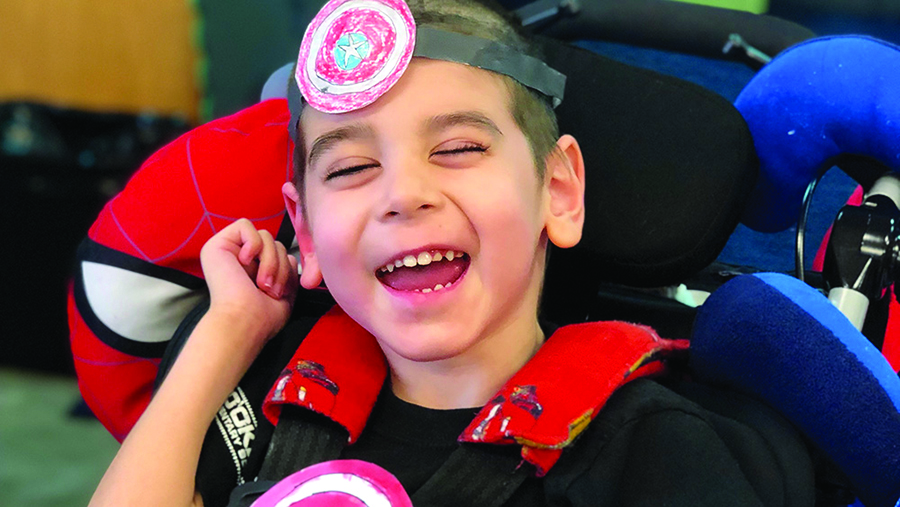
Meet Aaron. “He’s such a goofball,” says Tamra, when asked to describe her 5-yearold son. He has metachromatic leukodystrophy, a rare disease that attacks the nervous system. Through Navian Hawaii’s Little Things, Big Differences program, Aaron was provided assistance and care to help him breathe easier.
Seriously ill patients who live alone, and have limited resources and caregiver support may find it difficult to navigate the healthcare system. The Integrated Care program alleviates those challenges and helps end the vicious cycle of unmet care needs that often leads to hospitalization.
Anyone can refer a patient to Integrated Care and there are no time limitations on this service. Care settings may include a patient’s home, skilled nursing facility or residential care home.
How to Get Involved
• Make a Donation:Contributions directly help patients and their families. Navian raises funds throughout the year to ensure that eligible patients are never turned away.
• Volunteer:There are no words that can express the impact a regular volunteer can have on the well-being of a terminally-ill patient. New volunteers are accepted on an ongoing basis. Navian strives to align volunteers with their interests. There is a role for everyone.
• Attend Navian’s Community Connect Educational Series:This monthly series of one-hour webinars connects caregivers with community partners and resources.
• Join an Adult Grief Support Group:Navian offers ongoing support groups to help those who have lost a loved one move through the healing process. Virtual group sessions are held monthly.
• Participate in one of Navian’s Annual Events:Each year, Navian hosts A Night To Remember memorial service and a gala.
If you or a loved one are in need of hospice care or Integrated Care, contact Navian using the information below.
Navian Hawaii’s comprehensive, interdisciplinary program of care is designed to provide patient-centered care for every life journey, offering relief from suffering, support for the entire family, and hope, compassion and love.
Adult day care services offer professional care for seniors and adults living with dementia and other disabilities. They receive therapeutic, social and health services during the day. Adult day care is also a great solution if the senior needs supervision for safety reasons, is expressing depression or isolation, needs socialization and engaging activities, or if the caregiver simply needs respite. Adult day care gives caregivers the opportunity to work while their loved one is safe.
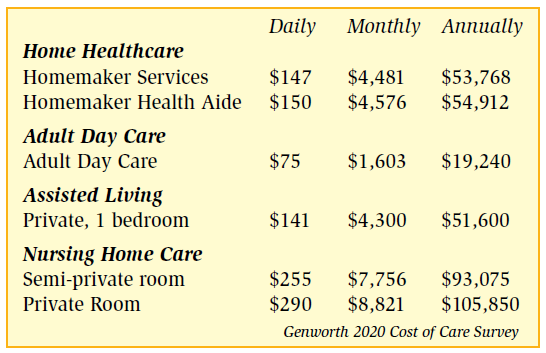
If Mom and Dad want to age in place at home, adult day care offers an affordable solution for working caregivers (see table). The figures are based on national averages — Hawai‘i’s figures are generally higher.

 For someone with dementia, both too much and too little sensory stimulation may lead to agitated behaviors. To keep your loved one at a regulated state of sensory stimulation, it is important to consider what is providing sensory stimulation in each space.