Category: Giving Care

  • Perspectives on Aging

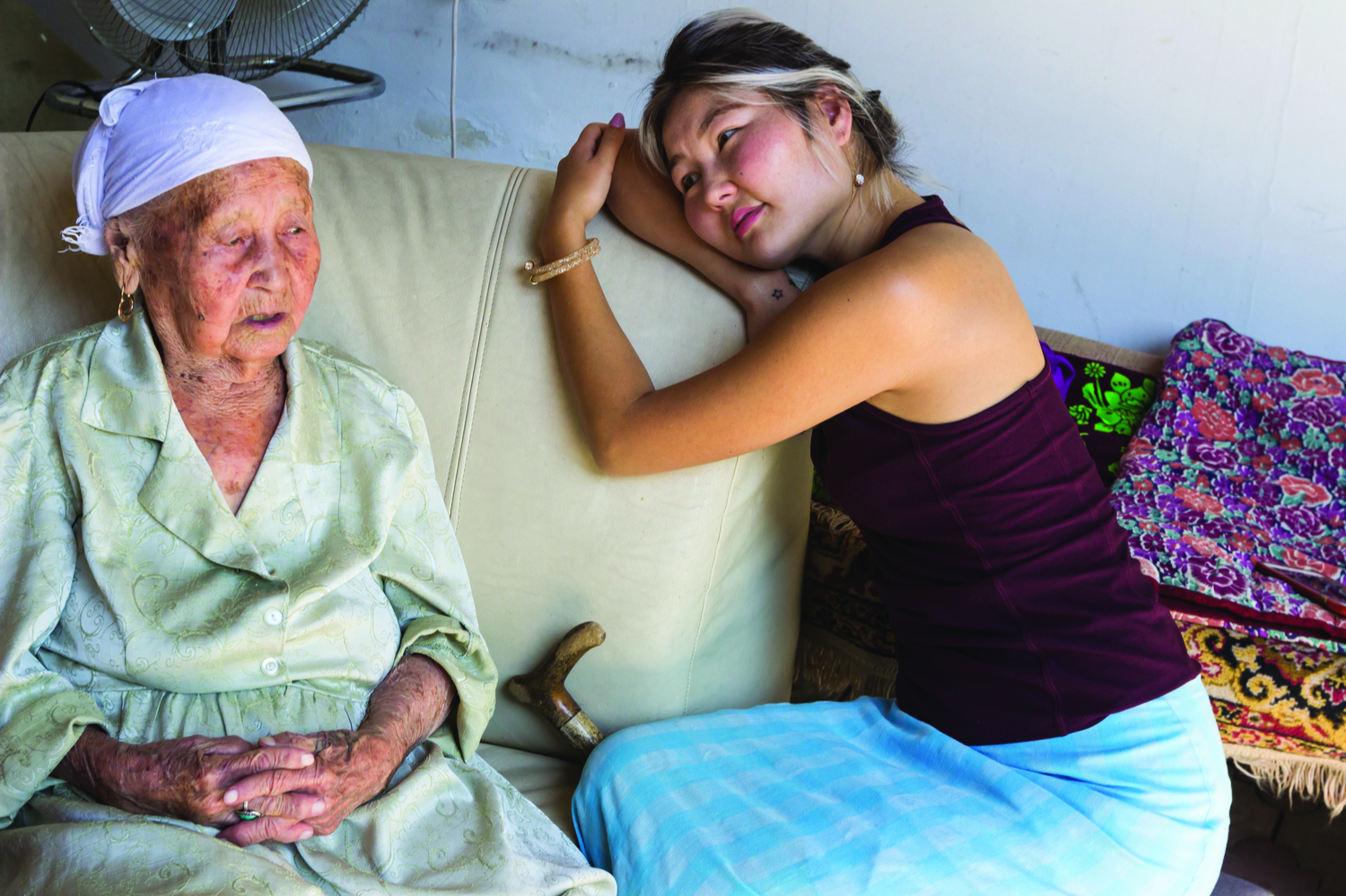
    The average life span has increased more in the past century than in all the years humans previously existed. As approximately 10,000 baby boomers (those born  between 1944 and 1964) are turning 65 every day, it would appear that we will have a large influx of aging people over the next couple decades who may need services appropriate for “old people.” But is 65 really old?

    There are multiple factors that determine if one is considered old. In other words, the high number of years someone has been on this Earth does not necessarily define them as being old. Twenty years ago, a 65-year-old may have looked and acted different than the 65-year-old of today. In today’s world of medical technology, health products and smarter lifestyles, it may be hard to identify and categorize our ku¯ puna. With advances in healthcare and the pursuit of healthy lifestyles, it is possible that today’s 65-year-old looks and feels younger — more like a 45-year-old.

    After gaining years of experience working and caring for the elderly, I can imagine many ways to describe what “aging” means. Aging looks different depending on your perspective.

    Here is a rather dour perspective from the population in question regarding getting older based on a study conducted by Human Development Specialist Nina Chen: “Getting older means more years to add to your life, less active, less hair, more medicine, more wrinkles, arthritis and more forgetful. When people get older, they lose their dignity and independence. Being old means not being able to do anything.”

    Positive outlooks documented in the study included: “Being old means more experiences and having privileges, for instance, senior discounts, senior centers, affordable housing for seniors and senior support groups. Getting older means getting wiser. Older people are just like a walking library. They have true stories — not fiction.”

    Individual self-worth and dignity are important factors as we age. For older individuals, this means living life to the fullest each day and doing what you want to do. Lifestyle choices and changes can enhance the way we age. Below are some changes that may improve how we age:

    • Stop smoking to allow more oxygen into your body’s cells.
    • Stop drinking alcohol to keep your tissues in a healthy state.
    • Exercise consistently to maintain mobility.
    • Eat healthy foods to give your body the fuel it needs to regenerate cells.
    • Drink more water so toxins absorbed from the environment will be flushed out.
    • Stay out of the sun to avoid skin damage.
    • Make and keep friends to stay engaged and thriving in society.
    • And keep in mind that retirement leads to less stress. The age of retirement for full Social Security benefits is now 70.

    Don’t have regrets about what you haven’t experienced. Get out there and seize the day!


    ATTENTION PLUS CARE HOME HEALTHCARE
    Accredited by The Joint Commission
    1580 Makaloa St., Ste. 1060, Honolulu HI 96814
    808-739-2811 | attentionplus.com
    AGING IN HAWAII EDUCATIONAL OUTREACH PROGRAM
    by Attention Plus Care — a program providing resources for seniors and their families, covering different aging topics each month. For class information and upcoming topics, call 808-440-9356.

    The average life span has increased more in the past century than in all the years humans previously existed. As approximately 10,000 baby boomers (those born  between 1944 and 1964) are turning 65 every day, it would appear that we will have a large influx of aging people over the next couple decades who may…

  • How To Choose an Assisted Living Facility or Nursing Home

    Finding the right place for Mom or Dad is both an art and a science. You have to do your research and trust your gut.

    Assisted living facilities are widely available to help take care of older adults who need help with bathing, dressing or other daily activities. When that is no longer enough, a nursing home can provide 24/7 healthcare. Either way, it is important to research facilities to determine which one seems to give the best care.

    COST

    Before deciding on a live-in facility, make sure that is the option you want to pursue. Include the older adult when considering other care options. A major factor can be cost. In 2020, the Genworth Cost of Care Survey documented median annual costs for five options. (These numbers are not reflective of higher costs in more expensive areas.)

    • Nursing home (private room) $105,852
    • Nursing home (semi-private room) $93,072
    • Assisted living $51,600
    • Home health aide (full time) $54,912
    • Adult day care $19,236

    Check if your parent has long-term care insurance. Generally, it will cover assisted living, but most health insurance plans, including Medicare, do not. It may not cover the full cost of care, either. Read the policy carefully. Medicaid may be an option for those with limited assets or your state may offer some other assistance. Contact Hawai‘i’s Medicaid agency through medicaid.gov to find out more.

    Veterans may be able to get help through the Aid and Attendance benefit (va.gov/pension/aid-attendance-housebound). Check with Hawai‘i’s VA pension management center at benefits.va.gov/stpaul. Learn about VA pension benefits at va.gov/pension.

    SIZE

    Facilities may have just a few patients, or house more than a hundred residents. Each has benefits and drawbacks. A small group home can have a great staff-to-patient ratio where caregivers know every person’s preferences well. They are often located in neighborhoods.

    WHERE TO GET A LIST OF FACILITIES

    Trying to determine what your options are can be daunting. Here are options you can check out to locate facilities in your area:

    • Area Agency on Aging: usaging.org
    • Yellow Pages website: yellowpages.com
    • Aging Services Directory: leadingage.org/find-member
    • Find Senior Housing: directory.alfa.org
    • Ask neighbors, friends, doctors and other professionals for recommendations.

    SERVICES

    Larger facilities can offer more amenities such as libraries, music rooms, gyms, and swimming pools. They are sometimes set up to care for residents who start off in independent living and then transition to assisted living and/or memory care units that specialize in people with advanced dementia. They may also provide transport to stores or to obtain health care. Some may have doctors who make house calls and an in-house hair and nail salon.

    Basic services usually include housekeeping, laundry, medication management support, wellness programs and meals. Some facilities may even offer specialized care for those with health conditions.

    Consider your mother or father and what activities she or he may be interested in doing. Does the facility offer gardening, art programs, musical outlets, church services or reading material? What about activities for those with impaired sight or hearing? Is assistance available for those who need help eating? Is hospice care available?

    Also, check to make sure that the facility will provide additional help to your parent as their needs increase over time.

    THE FACILITY

    AARP has developed a comprehensive, printable checklist of what to look for in a care facility:(assets.aarp.org/external_sites/caregiving/checklists/checklist_assistedLiving.html). Here is a modified list of the basics to ask about and verify when you visit:

    • Cleanliness
    • An emergency generator or alternative power source in case of an outage
    • Enough common areas, such as living rooms
    • A floor plan that is logical and easy to follow
    • Rooms adequate for your loved one’s needs
    • Rooms/bathrooms with handrails, call buttons
    • Safety locks on doors and windows
    • Security and fire safety systems
    • Services such as banking, a beauty salon, a café
    • Well-lit stairs, hallways with well-marked exits

    You will want to visit prospective facilities several times before making a final decision. Visit on the weekend when it is likely to be busier. Join Mom/Dad for meals to see if they like the food. Do residents in the dining room appear happy?

    TIPS FROM A CAREGIVER

    A former caregiver recommends finding out the average salary of the certified nursing assistants (CNAs) and comparing it to other places you are considering. The higher the salary, the happier the help and the better care the residents receive. Ask how many residents are they usually caring for on a shift and if they like working for the facility. You may have to talk to CNAs without any supervisors around to get honest answers.

    THE CONTRACT

    Don’t sign anything without taking it home and giving the contract a close review. You can hire an elder law attorney (naela.org) to review it. Have other family members go over the document, as well. Check for an arbitration clause
    (consumerreports.org/elder-care/putting-the-assisted-living-facility-contract-under-a-microscope), which requires you to give up your right to sue.

    Do your research, visit, ask questions and make your decision based on the answers and your gut feeling. Do residents and staff seem happy? Does it smell good? What does your parent think? Can you afford it? The answers will help you find the best facility for your loved one.


    CSA (Society of Certified Senior Advisors)
    We support specialist in aging dedicated to improving lives of older adults.
    1-800-653-1875 | csa.us
    Blog posting provided by Society of Certified Senior Advisors, July 17, 2022

    Finding the right place for Mom or Dad is both an art and a science. You have to do your research and trust your gut. Assisted living facilities are widely available to help take care of older adults who need help with bathing, dressing or other daily activities. When that is no longer enough, a…

  • Does Dad Need More Help?

    How do family members prepare for the day their senior needs more help — the kind of help that requires loved ones to re-prioritize their lives? If only there were a date set aside for this change in everyone’s life. Planning on change at this level has never been easy because a plan may not be in place. A sudden fall or illness could change everything and it could happen anytime.

    Our seniors can have active lives up until the day they don’t. So family members may have to change directions suddenly. This may involve taking time off work and moving other commitments to the back burner. But there are some signs that show us our senior may be needing a bit more help. Here are a few to look out for:

    AGE: The older your senior is, the closer they will be to needing help, especially if they are slowing down physically.
    MEMORY: Forgetfulness could be a sign of illness affecting the brain or other systems and it generates worry for family members who leave their senior alone for long periods of time.
    DRIVING: If your senior is not driving anymore because it is not “safe” due to visual problems, mobility issues or cognitive concerns, this may be a sign that other tasks may not be as easy for them, as well.
    WEIGHT LOSS OR DEHYDRATION: These are real concerns that indicate they are not eating or drinking enough. Frequent urinary tract infections may indicate not enough fluid intake or poor personal hygiene in the bathroom.
    UNPAID BILLS/UNOPENED MAIL: Our seniors like to have control over their finances until there comes a day when they stop opening their mail. This is a clue they are either forgetting or its not a priority for them anymore.
     FREQUENT PHONE CALLS WHILE FAMILY IS AT WORK: If family members are receiving frequent calls during the day from their senior, it may mean things are about to change. This can indicate loneliness, forgetting that they just called or anxiety about something they cannot control.
    FALLS: This could be the “last straw,” especially if there is an injury. Family members may have to find outside help to monitor their senior for safe mobility while they are away at work.

    Just like planning ahead for disasters, planning for the day your senior needs help should be a priority. Life can be busy and noticing some of the scenarios listed above should be on your radar. Of course, your senior will deny they need help and may say something like, “I don’t want you to worry about me. I can take care of myself.” If you feel that twinge in your gut telling you that what you are seeing is not consistent with what they are saying, don’t ignore it! Now may be the time to move into a different role for your senior or ask for help.


    ATTENTION PLUS CARE HOME HEALTHCARE
    Accredited by The Joint Commission
    1580 Makaloa St., Ste. 1060, Honolulu HI 96814
    808-739-2811 | attentionplus.com
    AGING IN HAWAII EDUCATIONAL OUTREACH PROGRAM
    by Attention Plus Care — a program providing resources for seniors and their families, covering different aging topics each month. For class information and upcoming topics, call 808-440-9356.

    How do family members prepare for the day their senior needs more help — the kind of help that requires loved ones to re-prioritize their lives? If only there were a date set aside for this change in everyone’s life. Planning on change at this level has never been easy because a plan may not…

  • Talk Story: A Favorite Senior Pastime

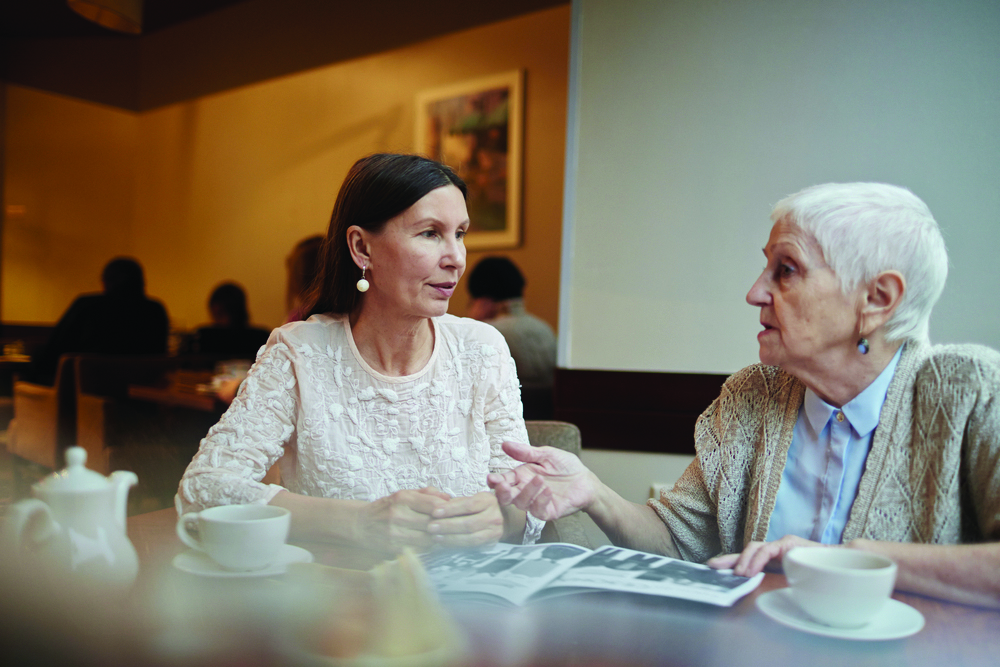
    Elderly females talking and looking through magazine in cafeTalk story is a special and cherished activity among seniors at Roselani Place. Our activities  director conducts a talk story twice a month and I also offer them from time to time. Talking story with our residents allows us to not only engage with them, but also encourages them to reminisce about the good old days, and learn more about one another.

    Talk story — sharing history, ideas, opinions and the events of the day with others — is one of the great oral traditions in Hawai‘i. Ancient Hawaiians were known to be great storytellers. Formal storytelling would usually take place in the chief’s court, where renowned orators would perform. Talk story continues to culturally sustain us and keeps us connected with others.

    Talking story in today’s world entails getting together with old friends or new acquaintances to socialize. Small talk and pleasantries naturally develop into in-depth conversations in which treasures of the past are recalled and revealed. Through talk story, we can discover and share where we grew up, where we are from, what school we attended, who we know and who we are related to. The reservoir of topics is endless.

    And when I talk story with our residents, I realize just how memorable talk story can be.


    ROSELANI PLACE (501(c) 3 nonprofit)
    88 South Papa Ave., Kahului, Maui, HI 96732
    808-871-7720 | Toll Free: 800-554-9853
    info@roselaniplace.com | www.roselaniplace.com

    Talk story is a special and cherished activity among seniors at Roselani Place. Our activities  director conducts a talk story twice a month and I also offer them from time to time. Talking story with our residents allows us to not only engage with them, but also encourages them to reminisce about the good old…

  • Caregivers Must Ask Others for Help

    When it’s a family caregiver’s sole responsibility to manage the care of a loved one, there will come a time when stress will get to a level where the caregiver becomes unable to perform self-care or continue to provide for their loved one. Getting others involved to help the caregiver will bring much-needed relief. Family caregivers can feel emotionally and physically drained with the constant tasks that come up, sometimes unexpectedly. Here are some examples of unexpected events:

    FALLS: A loved one may be fragile enough to experience a fall that may result in some devastating outcomes, including head trauma, a broken hip or another broken bone. This would involve a trip to the emergency room and a call to the doctor to report the fall.

    SKIN TEARS: Open skin is a magnet for infections, which will only serve to complicate care. Skin tears need proper attention.

    URINARY TRACT INFECTIONS: UTIs are hard to recognize when caregivers are busy. A sudden change in behavior, more confusion than usual or hallucinations are among the first signs. Often, our kūpuna do not have strong immune systems that signal the presence of a UTI with a fever or other typical sign of infection.

    These challenges are common when caring for an elderly loved one and family caregivers need to be prepared to manage them and also allow others to step in to help as needed. Communicating the plan to others will make these problems seem less traumatic. Consider these recommendations for involving others when providing primary care for a loved one in need.

    • Allow family members/friends to manage others that may be dependent as well, such as children, grandchildren or siblings.

    • Seek out healthcare agencies that can provide respite and take over the family caregiver’s tasks a few times a week for a number of hours, or even a full day.

    • Ask friends to run errands, such as picking up prescriptions, food and supplies, etc.

    • Keep family members informed of all situations so they know when the tasks will increase as the loved one needs more advanced care. Plans can be altered to include other family members and friends.

    • Just because family lives far away does not mean they cannot contribute. Ask for funds to pay for services and supplies.

    • Consider support groups, including those online, to prevent feeling isolated. You may learn some new ways to feel more at peace.

    • Find something to be grateful for every day. Meditate on these before starting your caretaking day, so you have a centered heart.

    As the family caregiver takes on more tasks for their loved one, a wider circle of support should be available to routinely step in to provide ongoing respite. Don’t be afraid to ask for help! It will give both the caregiver and the loved one a better quality of life.


    ATTENTION PLUS CARE HOME HEALTHCARE
    Accredited by The Joint Commission
    1580 Makaloa St., Ste. 1060, Honolulu, HI 96814
    808-739-2811 | www.attentionplus.com
    AGING IN HAWAII EDUCATIONAL OUTREACH PROGRAM
    by Attention Plus Care — a program providing resources for seniors and their families, covering different aging topics each month. For class information and  upcoming topics, call 808-440-9356.

    When it’s a family caregiver’s sole responsibility to manage the care of a loved one, there will come a time when stress will get to a level where the caregiver becomes unable to perform self-care or continue to provide for their loved one. Getting others involved to help the caregiver will bring much-needed relief.

  • Gimme A Break! Care for Caregivers

    The woman in line in front of me was tending to her father who apparently suffered from dementia. Suddenly, she completely lost it and was yelling at him. I thought she was going to hit him! He looked frightened, dazed and confused. When I tried to console the woman, she yelled back at me, ‘YOU DON’T KNOW WHAT I’M GOING THROUGH!’”

    It may be easy to find fault with this woman, who “came unglued” and mistreated her father. But there is a reason for this behavior. First, think about this moment in her caregiver’s journey: “You don’t know what I’m going through.”

    What is caregiver burnout?

    Caregiver burnout is a state of physical, emotional and mental exhaustion. Burnout can occur when caregivers don’t get the help or respite they need, or if they try to do more than they are able. Caregivers often are so busy caring for others that they tend to neglect their own emotional, physical and spiritual health, leading to fatigue, stress, anger, anxiety, depression and burnout.

    What can I do to prevent burnout?

    One way to prevent caregiver burnout is to take advantage of respite care services. Gimme A Break (GAB) does know what you are going through. GAB provides the support needed when a caregiver has had enough! The nonprofit cares for caregivers by giving them an emotional and physical break, as well as resources for continued well-being — all at no cost.

    GAB provide respite in various ways:

    ■ Support Sessions. Support sessions connect you with a community of caregivers to better assess and serve your needs. The weekly sessions offer education, shared knowledge and professional guest speakers.
    ■ Resources — Trusted Partners. GAB continues to provide “breaks” in the form of resources from its trusted partners that give you worry-free assistance with all things caregiving.
    ■ Physical “Break.” GAB provides respite — a physical “break” from your caregiving duties.As part of GAB’s community of caregivers, you will never feel alone or isolated again.

    NOTE: Taking care of yourself is not a luxury. It’s an absolute necessity for caregivers.


    GIMME A BREAK (501(c) 3 nonprofit)
    46-056 Kamehameha Hwy., Ste. F-09, Kaneohe, HI 96744
    808-754-3787 | www.gab808.com
    Every caregiver deserves our support. Your contribution will give them the break that they need. To give time: https://gab808.com/be-a-giver-of-time
    To give funds: https://gab808.com/be-a-giver-of-money To join their Gimme a Dollar $1,000,000 Campaign: https://gab808.com/dollar

    The woman in line in front of me was tending to her father who apparently suffered from dementia. Suddenly, she completely lost it and was yelling at him. I thought she was going to hit him! He looked frightened, dazed and confused. When I tried to console the woman, she yelled back at me, ‘YOU…

  • Is Task-Based Home Care Right for Me?

    You may think that in-home assistance is only for people who are very old, very ill or recovering from a severe injury or surgery. But nowadays, capable and self-reliant seniors are employing a new kind of assistant to provide task-based in-home care. A task-based assistant can help you with those burdensome chores that are becoming challenging or that you just don’t like to do anymore.

    Most seniors say they don’t need the constant oversight of long visits and hands-on help that is hourly home care. However, some folks might appreciate assistance with duties such as carrying a heavy load of laundry or getting a friendly check-in visit for help with daily medications.

    These seniors can now call on task-based in-home assistance for occasional help with:

    • Light Housekeeping and Laundry
    • Meal Preparation
    • Medication Reminders
    • Transportation Set-Up
    • A Shower or Other Personal Care Assistance

    Long hours of in-home care are right for some, but for more independent and self-reliant seniors, task-based, personalized and affordable in-home assistance is a new option for an effective way to continue living at home independently.


    VIVIA BY HO‘OKELE HOME CARE
    820 Mililani St., Ste. 711, Honolulu, HI 96813
    808-784-3049 | info@viviacares.com
    www.viviacares.com

    You may think that in-home assistance is only for people who are very old, very ill or recovering from a severe injury or surgery. But nowadays, capable and self-reliant seniors are employing a new kind of assistant to provide task-based in-home care. A task-based assistant can help you with those burdensome chores that are becoming…

  • Dementia & Driving: The Warning Signs

    Elderly couple in the car confused with flashing police lights. Speeding ticket. Man and woman having argument in the car.Most people feel a sense of control when they’re behind the wheel. So what happens when it’s time to retire the car keys? The decision to stop driving can be one of the most challenging topics families and people living with Alzheimer’s disease face.

    Aging may impact our ability to drive safely; however, a person living with Alzheimer’s disease will not be able to drive at some point, because cognitive changes in the brain will affect reaction times and focus.

    • SIGNS OF UNSAFE DRIVING: Sometimes, the first warning signs of Alzheimer’s disease show up in driving abilities — taking longer than usual to run quick errands, forgetting where they’re driving to or how to get there, making mistakes at intersections and frequently not remembering where the car was parked. Since no one has a perfect memory, it’s important to track these kinds. Log any new dents and scratches on the vehicle, tickets or episodes of unsafe driving. If you notice changes, it’s time to take action.
    • PLAN AHEAD: It’s important to make sure you have a options in place ahead of time, because taking away the keys can present problems for caregivers and loved ones alike. Start a routine so the person is still able to maintain an active lifestyle. Involve friends and family who are willing and able help out as unofficial taxi drivers.
    • APPEAL TO THEIR SENSE OF RESPONSIBILITY: Be prepared for resistance. Anger is a common reaction. Focus on showing your empathy to the person and plant the seeds for options you have in mind for the future. Remind them of the importance of safety on the road — both their own and other people’s. Try phrases like, “I know you don’t want to hurt anyone driving.” If needed, you can ask your doctor to speak with them or  design a “driving contract” that the person agrees to.
    • REMOVING DRIVING REMINDERS: Depending on the situation, removing the vehicle along with the temptation to drive it can be the most effective action. Letting a family or friend borrow the car for a few weeks can start the transition to no driving and at the same time, give the person the sense of helping another.

    There are plenty of ways to get creative in your approach. And your motivation is the safety of everyone on (and off) the road. If you are  experiencing driving challenges yourself, talk to someone. The road ahead is less difficult when you allow others to help you navigate.


    For additional resources, visit https://bit.ly/AADriving

    Most people feel a sense of control when they’re behind the wheel. So what happens when it’s time to retire the car keys? The decision to stop driving can be one of the most challenging topics families and people living with Alzheimer’s disease face.

  • The Long Goodbye

    Usually, events that necessitate a goodbye are seen as sad… or at least poignant. In our younger years, we expected these goodbyes to be temporary — we knew we were going to see them again! As we get older, we start to understand that a goodbye may mean moving so far away that visiting will be unlikely and the relationship we loved may be permanently changed. And then come the goodbyes we know are final — the farewells at the end of a life that leave us with only memories of a loved one.

    Waking each caregiving day and finding your loved one still breathing is another opportunity for you to cherish that life — an opportunity to set aside words spoken in frustration yesterday. Today is another opportunity to smooth the worried brow of a person unable to finish their days on Earth on their own terms. Today gives us another chance to learn better ways to say goodbye.

    Although caregivers can get easily get caught up in a myriad of daily details that need constant attention, they also need to remember that caregiving is often a long, slow goodbye. Help ensure this final goodbye is a sweet one by telling your loved one what they want to hear from you — reassurance that you love them, what they mean to you and positive memories of the wonderful times you’ve shared.


    THE CAREGIVER FOUNDATION (501(c) 3 nonprofit)
    926 3rd St., Pearl City, HI 96782
    808-625-3782 | info@thecaregiverfoundation.org
    www.thecaregiverfoundation.org

    Usually, events that necessitate a goodbye are seen as sad… or at least poignant. In our younger years, we expected these goodbyes to be temporary — we knew we were going to see them again! As we get older, we start to understand that a goodbye may mean moving so far away that visiting will…

  • Signs That Mom Needs More Help

    Family members must prepare now for the day their senior needs more help — the kind of help that may require them to reprioritize their lives. If only there were a date set aside for this change in everybody’s life. But we must keep in mind that a sudden fall or illness could change everything — and it could happen at any time.

    Our seniors can have active lives up until the day they don’t. Then, family members may have to change directions suddenly. This may involve taking time off work and moving other commitments to the back burner.

    However, we can look for signs that indicate our senior may soon be needing a bit more help. Here are a few to look out for:

    AGE: The older your senior is, the closer they will be to needing help, especially if they are slowing down physically.

    MEMORY: Forgetfulness could be a sign of illness affecting the brain or other systems. This symptom generates worry for family members who must leave their senior alone for long periods of time.

    DRIVING: If your senior is not driving anymore because it is not “safe” due to visual problems, mobility issues or cognitive concerns, this may be a sign that other tasks are not easy for them as well.

    WEIGHT LOSS OR DEHYDRATION: These are real concerns that indicate they are not eating or drinking enough. Frequent urinary tract infections may indicate not enough fluid intake or poor personal hygiene in the bathroom.

    UNPAID BILLS/UNOPENED MAIL: Our seniors like to have control over their finances until there comes a day when they stop opening their mail. This is a clue they are either forgetting to do it or its not a priority for them anymore.

    FREQUENT PHONE CALLS WHILE FAMILY IS AT WORK: If family members are receiving frequent calls from their senior during working hours, it may mean things are about to change. These frequent calls can indicate loneliness, forgetting that they just called or anxiety about something they have no control over.

    FALLS: This could be the “last straw,” especially if the fall results in an injury. Family members may have to find outside help to monitor their senior for safe mobility while they are away at work.

    Just like planning ahead for disasters, planning for the day your senior needs help should be a priority, so being aware of some of the scenarios above should be on your radar.

    Of course, your senior will deny they need help and may say something like, “I don’t want you to worry about me. I can take care of myself.” But if you feel that twinge in your gut telling you that what you are seeing is not consistent with what they are saying, don’t ignore it! Now may be the time to move into a different role for your senior or the time to seek outside help.


    ATTENTION PLUS CARE HOME HEALTHCARE
    Accredited by The Joint Commission
    1580 Makaloa St., Ste. 1060, Honolulu, HI 96814
    808-739-2811 | www.attentionplus.com
    AGING IN HAWAII EDUCATIONAL OUTREACH PROGRAM
    by Attention Plus Care — a program providing resources for seniors and their families, covering different aging topics each month. For class information and upcoming topics, call 808-440-9356.

    Family members must prepare now for the day their senior needs more help — the kind of help that may require them to reprioritize their lives. If only there were a date set aside for this change in everybody’s life. But we must keep in mind that a sudden fall or illness could change everything…

  • Montessori Method of Dementia Care

    Meaningful, familiar and ability-matching activities for those with dementia is the goal of the Montessori method of dementia care. Long-term memories can be unlocked through engaging in familiar tasks.

    Matching up socks can engage the senses and provide a sense of accomplishment for those with dementia
    Matching up socks can engage the senses and provide a sense of accomplishment for those with dementia

    Using this as a form of activity in a care setting involves providing easy tasks broken down into simple steps that can spark interest and have successful outcomes. Matching and folding a basket of brightly colored socks is a good example. Their textures and colors engage the senses, while finishing the task unassisted provides a sense of accomplishment. Memories of caring for a home and a sense of independence can resurface.

    Facility design is key to the success of this method: Setting up simple activities in inviting ways draws the individual in without forcing him or her to participate can evoke feelings of empowerment. This is different than a regularly scheduled activity program as tasks are done at the individual’s leisure. Garden stations, writing cards and basic cooking projects all have the potential to unlock memories and positive emotions. This method has been shown to reduce anxiety and provide comfort to kūpuna, bringing joy and meaning to a day.


    MANOA COTTAGE KAIMUKI
    748 Olokele Ave., Honolulu, HI 96816
    808-800-4089 | info@manoacottage.com
    www.manoacottage.com

    Meaningful, familiar and ability-matching activities for those with dementia is the goal of the Montessori method of dementia care. Long-term memories can be unlocked through engaging in familiar tasks.

  • Guardianship vs. Conservatorship

    While there have been terrible examples of guardianship abuse cases in the news, there are also thousands of individuals who are benefiting from ethical, well-disciplined guardians.

    In Hawai‘i, the word “guardian” refers to guardian of the person. The word “conservator” is used when referring to the conservator of the property.

    The guardian focuses on helping to make medical, educational and person-related decisions for someone who either is not able to understand or make decisions for themselves. The conservator manages income and financial considerations. Both are appointed by a court of law.

    While specific training is not required in Hawai‘i, it is important to consider the character and qualifications of the guardian nominee.

    View other resources of guardians and qualifications:

    – National Guardianship Association (www.guardianship.org)
    – Center for Guardianship Certification (www.guardianshipcert.org)

    The Caregiver Foundation provides administrative services to guardians who are seeking to execute thei {Play}r duties properly. The executive director of The Caregiver Foundation will, in some cases, act as a court-appointed guardian.


    THE CAREGIVER FOUNDATION (501(c) 3 nonprofit)
    926 3rd St., Pearl City, HI 96782
    808-625-3782 | info@thecaregiverfoundation.org
    www.thecaregiverfoundation.org

    While there have been terrible examples of guardianship abuse cases in the news, there are also thousands of individuals who are benefiting from ethical, well-disciplined guardians.