Human beings use five ways to take in data: sight, touch, smell, taste and sound. From the time we are born, we prefer to take in data first by what we see, then hear and finally through touch. Vision, our primary source for processing new information, is controlled by an area in the back of our brain called the occipital lobe. Dementia attacks and damages the occipital lobe resulting in skewed vision, poor depth perception and diminished peripheral vision. Peripheral vision loss is a normal part of aging but with dementia, it worsens to where sight becomes “binocular” and, in the later stages, “monocular.”
Teepa Snow, a dementia expert, occupational therapist and Positive Approach™ to Care founder, suggests we can experience how limited a view this is by forming makeshift binoculars. Move both your hands up to your eyes, then loosely circle your fingers around your eyes to make two binocular-like tunnels. Take a look around you — notice that you need to move your entire head in order to look to up, down and to your sides. How might this hinder a person’s abilities?
Now hold your arms straight out in front of you about shoulder width apart and look only down that one “tunnel.” A person living with dementia (PLWD) in the later stages of vision loss has a field of vision of about 12 inches in diameter in all directions. This means they cannot see something unless it is directly in front of them at just about eye level — monocular vision.
This shrinking field of peripheral vision presents many challenges besides making a person easily startled when approached from the rear, tripping over obstacles in their path or misjudging how far away an object is when they reach for it. For example, road safety would be a major concern for the PLWD who has binocular vision.
HELPFUL CARE PARTNER TIPS
Be mindful of your loved one’s safety and in-dependence — think five steps ahead to remove obstacles in walking paths.
Always approach the PLWD from the front so they can see you coming and to avoid negative reactions like anger, fear and/or surprise.
Pair visual cues with verbal cues when asking your PLWD to do something — show them how.
PAC HUI HAWAII is a caregiver training organization utilizing the Positive Approach™ to Care philosophy developed by Teepa Snow. To know more of the organization and current workshops and other events, please visit us online.
Human beings use five ways to take in data: sight, touch, smell, taste and sound. From the time we are born, we prefer to take in data first by what we see, then hear and finally through touch. Vision, our primary source for processing new information, is controlled by an area in the back of…
Breathing is something most of us take for granted. But for those folks with respiratory issues like asthma, breathing can be a struggle. Studies show that a healthy adult will take an average of 12–15 breaths per minute. For those with respiratory issues like asthma, it may be higher.
Breathing issues can happen at any time but are usually triggered by things like temperature, humidity, pollen and pollution. Some of the things we can do to stay one step ahead of an asthma attack are:
Take medications as directed
Stay out of air-polluted areas
Be cautious of dust, pollen, dander, etc.
Colds and the flu are also major triggers of asthma. So, be sure to take extra precautions like washing your hands and limiting your exposure to others who are ill.
Breathing exercises are an important way to help your lungs breathe better. Also, try to always breathe through your nose, as the tiny hairs in your nose act as a filter while warming the air as it enters the lungs.
Now that you have a few tips on asthma preparedness, here’s something to make you giggle: “Why did the doctor suspect that Dracula had a breathing problem? Because of his coffin!”
Breathing is something most of us take for granted. But for those folks with respiratory issues like asthma, breathing can be a struggle. Studies show that a healthy adult will take an average of 12–15 breaths per minute. For those with respiratory issues like asthma, it may be higher. Breathing issues can happen at any…
At some point we’ve all had times of forgetfulness or misplacing things. Our keys get lost or we draw a blank trying to remember where the car is parked or what we just ate for breakfast. We can usually sort it out and remember things with some time and patience. But when is forgetfulness or memory loss of concern?
Serious memory problems can be disabling and make it hard to accomplish routine tasks without help. This is different from the occasional forgetfulness that comes with aging. Memory loss that disrupts routines and activities of daily living is concerning, and caregivers should know it may signal a change in a person’s condition.
If you are worried about memory loss, that is reason enough to see your doctor. Seeing a primary care physician, or PCP, who already knows you is a good place to start. Signs that it may be time to see a doctor may include:
Trouble speaking, or misusing common words
Confusion about time, people and places
Feeling lost in familiar areas or residence
Not caring for oneself or others as usual
Unexplained changes in behavior and mood
Not realizing unsafe or dangerous situations
Repeating the same questions over and over
Returning common items to unusual places
Trouble following plans or routine tasks
Alzheimer’s disease is the most common cause of dementia and memory loss in older adults. If you are worried that changes in your memory may be related to dementia, you should talk with your doctor about it.
There are medications that can temporarily ease some of the symptoms of dementia. Caregivers should also know that memory loss doesn’t automatically mean someone has Alzheimer’s or dementia. Other health problems can also affect memory, including stroke and Parkinson’s disease, and many conditions that can affect our ability to be alert and access memory. Caregivers should be observant of changes in memory or memory loss that can come from medication side effects and know how to intervene.
Caregivers can also encourage individuals to do things that may help with memory such as:
Doing mentally stimulating puzzles and games
Socializing and connecting with others
Exercising mind and body together
Stopping or limiting alcohol intake
Reducing over the counter medications
Eating a healthy diet and keeping hydrated
Staying organized with a “to-do list”
Sleeping well for better alertness and recall
Doing new fun things and pursuing interests
———————
ATTENTION PLUS CARE HOME HEALTHCARE
Accredited by The Joint Commission
AGING IN HAWAII EDUCATIONAL OUTREACH PROGRAM by Attention Plus Care — a program to provide resources for seniors and their families, instructed by a registered nurse, who covers a different aging topic each month. For more information on Transitional Care and free community workshops on Aging in Hawai‘i hosted by Attention Plus Care, call 808-440-9356.
At some point we’ve all had times of forgetfulness or misplacing things. Our keys get lost or we draw a blank trying to remember where the car is parked or what we just ate for breakfast. We can usually sort it out and remember things with some time and patience. But when is forgetfulness or…
An unexpected life-changing situation can happen in an instant. One minute you’re at a friend’s home, getting ready to enjoy watching UH football, then you slip and fall, and feel excruciating pain. Hours later, on a trip to the emergency room, you learn that you fractured your hip or, even worse, your spine.
The sudden changes in your life can include loss of income from missing work, high medical bills, and costs for prescription painkillers. You may also need a caregiver to help with simple things like meal prep, dressing, driving to medical appointments and picking up your medications, potentially impacting the lives of family and friends who want to help you.
Be prepared!
✤ Talk to your family and closest support system before the unexpected happens.
✤ Research home care costs.
✤ Consider purchasing short-term disability insurance to offset income loss.
✤ If you have temporary disability insurance (TDI) through your employer, ask how much you would qualify for.
✤ Brainstorm options that can help offset your living expenses, even with TDI.
Don’t delay! Unexpectedly making your support system “instant caregivers” without having a plan in place can be very stressful for everyone. n
CARE CENTER OF HONOLULU
1900 Bachelot Street, Honolulu HI 96817
An unexpected life-changing situation can happen in an instant. One minute you’re at a friend’s home, getting ready to enjoy watching UH football, then you slip and fall, and feel excruciating pain. Hours later, on a trip to the emergency room, you learn that you fractured your hip or, even worse, your spine.
When was the last time someone asked how you, the caregiver, are doing? I’m rarely asked that question and I’m wondering if it’s just me.
Almost everyone who knows my husband always asks, “How’s Gar doing?” I keep it short because the real answers aren’t what many really want to hear. I sometimes want to say, “he’s disappearing from me more and more each day.” That I miss our old life together. That his everyday skills are getting more difficult to do and I spend much of my time re-doing things he has tried to do. I don’t know why I want to tell the truth. Maybe it’s because each day can be a challenge and because I seem to be able to “handle” things myself, daily life LOOKS the same each day but in fact it is not. Maybe I want to say that I could use some help but I’m not sure what they could do to help. Maybe I just want to be on someone’s radar.
Please don’t misunderstand me. I don’t want to sound ungrateful when they ask how he is doing. I’m pleased that he is in their thoughts and that they are concerned about him. I am also not seeking out unnecessary attention.
“We are doing double duty by trying to care for them and ourselves, think for them and ourselves, prepare for them and ourselves.”
I have a few wonderful friends who do ask how I’m doing. One in fact texts me if she hasn’t seen me or talked to me in a while and I love getting that text. I want to be visible as an individual and not solely as a caregiver. Don’t get me wrong — I don’t want to give up my job as caregiver but I also don’t want to morph into an abstraction of myself.
As caregivers we reap the benefits of being of service, in a very personal way sometimes, to those that we love. But as the disease/disorders/illnesses rob our loved ones of the spontaneity, intimacy, and active partnership we once had, it also robs us as the caregivers. Our world changes differently than those that we are caring for. We are doing double duty by trying to care for them and ourselves, think for them and ourselves, prepare for them and ourselves. It may look seamless to others but for caregivers it can be grace under fire. It takes a lot out of you and can age you faster than the person who you are caring for.
So here’s my plea: if you know a caregiver don’t assume that they would ask if they needed help. Send the Bite Squad over with a fresh meal, pool resources from friends to gift a massage, take the person receiving care to the movies or a park for the afternoon, flowers are also nice as well as cards and texts. We just want to be visible and on your radar.
“We are doing double duty by trying to care for them and ourselves, think for them and ourselves, prepare for them and ourselves.”
As caregivers we reap the benefits of being of service, in a very personal way sometimes, to those that we love. But as the disease/disorders/illnesses rob our loved ones of the spontaneity, intimacy, and active partnership we once had, it also robs us as the caregivers. Our world changes differently than those that we are…
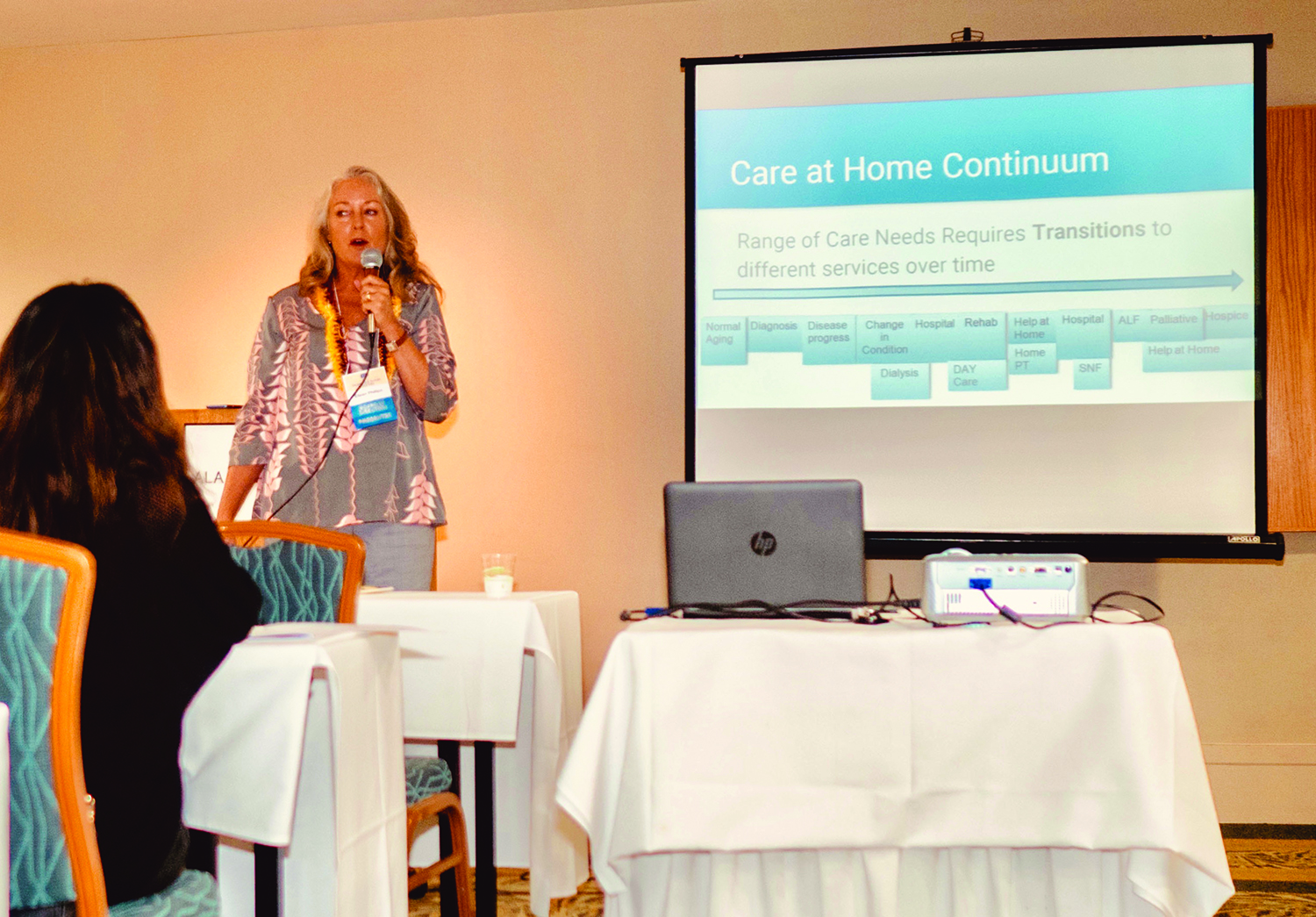
Today, more seniors are receiving care in their homes for medical conditions. Many receive it following a hospitalization or discharge from a rehabilitation center and have complex needs. Seniors who require them may have difficulties adjusting to their care and can benefit from transitional care during this period.
Falling through the cracks
Transitional care calls for a range of actions to avoid “gaps,” especially for older adults who are more vulnerable, in care. Seniors cared for by multiple providers, located across different settings, can often have more serious care needs and health risks. Examples can include movement to or from a hospitalization, rehabilitation or skilled nursing facility, care home, assisted living facility, doctor’s office, or an individual’s home. During these moves, a loss of information, educational or language barriers, poor communication, or not having a reliable point of contact, are some of the ways individuals can fall through the cracks trying to maintain their care.
“It’s more common now to see seniors discharged from one care setting to another, with more severe or chronic conditions that have a cumulative effect on their health. This makes the timeliness of care even more vital for them,” says Kari Wheeling, RN.
“To avoid care gaps from happening, greater attention is needed on the details involved as seniors move through different care settings. The focus on coordination and continuity of health care between providers becomes even more critical, to avoid relapses or re admissions,” adds Wheeling.
The important role of family caregivers
As family caregivers are likely in the most important role for seniors after a serious illness, more interaction is needed with whomever is the decision-maker about treatment plans and the details that go with them. More family caregivers are getting directly involved in this way with hospitalization or rehabilitation logistics, out of necessity, and should ask providers questions to learn more about transitional care and the different roles involved on their case.
Having the right knowledge helps
Family care planners should also screen and ensure caregivers have the right knowledge, skills and resources needed to safely care for someone, and know what to do when their care setting changes. They should know what information about an individual’s care is transferred between care settings, how it’s exchanged, and what level of accountability is needed from everyone’s actions involved in this process.
With the heightened awareness and attention going into transitional care for seniors, family caregivers may also be more stressed as a result, and have difficulty with the decisions and choices needing to be made. Discharge planners, nurses and social workers can work with family members and caregivers to help support their loved ones and be better ready for the next steps.
Development Specialist Sebastian Adam adds, “Transitional care is like teaching others how to hand off a spoon of water between 10 people and not lose a single drop. Good hand-offs matter. Our senior is that water.”
ATTENTION PLUS CARE HOME HEALTHCARE
Accredited by The Joint Commission
AGING IN HAWAII EDUCATIONAL OUTREACH PROGRAM by Attention Plus Care — a program to provide resources for seniors and their families, instructed by a registered nurse, who covers a different aging topic each month. For more information on Transitional Care and free
community workshops on Aging in Hawai‘i hosted by
Attention Plus Care, call 808-440-9356.
Today, more seniors are receiving care in their homes for medical conditions. Many receive it following a hospitalization or discharge from a rehabilitation center and have complex needs. Seniors who require them may have difficulties adjusting to their care and can benefit from transitional care during this period.
When a senior member of your family is in need of 24/7 care, it is fortunate that Hawai‘i has many professional, caring and dedicated homes and facilities to welcome them. What every family wants to know is: “Will my mom or dad be happy living in someone else’s home, eat right, and stay mentally and physically strong?” It may be even more important to you that your 80-, 90- or even 100-year-old family member lives in a facility that can assist them to improve their daily life.
Placing your loved one in a residential care home takes a lot of research. On your visit to the care facility, observe these few things:
Are the staff and residents happy and engaged with each other?
What is the routine of their daily life: eating, sleeping, exercising, etc.?
Is the facility clean, safe from trip hazards, open, and welcoming?
Does the facility encourage participation in activities, like handicrafts, created around the residents?
Do residents’ bedrooms have a TV so they don’t have to watch it with others?
Many facilities may have “respite” care to see how they would like living there. Let them make the decision for their happy, healthy and strong life.
When a senior member of your family is in need of 24/7 care, it is fortunate that Hawai‘i has many professional, caring and dedicated homes and facilities to welcome them. What every family wants to know is: “Will my mom or dad be happy living in someone else’s home, eat right, and stay mentally and…
People living with dementia (PLWD) have challenges with verbal communication: language comprehension, speech production, and vocabulary. But they are not unconscious to what is going on around them. Even as the brain declines, emotional intelligence is preserved. PLWD take in data visually rather than auditorily and react to what they think is happening. As caregivers we must remember that PLWD are really doing the best they can with the abilities they have left.
Try not to expect them to be the way they used to be. Accept them for who they are now and who they’re becoming. Promote independence by encouraging participation in meaningful activities. We all want to feel “of use” in this crazy world and PLWD are no different.
The feelings they may find hard to express are captured in this poem, inspired by a dementia patient.
People living with dementia (PLWD) have challenges with verbal communication: language comprehension, speech production, and vocabulary. But they are not unconscious to what is going on around them. Even as the brain declines, emotional intelligence is preserved. PLWD take in data visually rather than auditorily and react to what they think is happening. As caregivers…
Home healthcare providers are often asked what makes a better caregiver. The answer is that, while many factors come to mind, an interest in learning is high on the list, and essential to a caregiver’s progress.
For example, an important role caregivers have is recognizing when an individual’s health condition is changing. Those who can reflect and learn from these changes often develop into better caregivers.
Caregiving for a family member can be challenging enough. But whether this occurs suddenly or as a gradual decline in health, caregivers can learn more and better themselves starting with some basic tips:
Be healthy. Simply put, the healthier you are both mentally and physically, the better able you’ll be to pursue and provide care. This means eating healthy, staying active, and getting enough rest. When done consistently, caregivers have the energy to care for others and learn to avoid burn out.
Get help. Sometimes, caregivers come across situations that are confusing or new to them. Perhaps their loved one is responding differently with their care routine. That observation could mean a condition needs more help from a medical provider. While asking for help can feel awkward for some, it’s a great way for caregivers to learn and make connections with what they see.
Take courses. Look for free or low-cost courses in your area. There are many online courses that teach everything from caregiving techniques to self-care strategies that can be a part of your caregiving library. Many hospitals, home care agencies, hospice providers, caregiver support groups, and assisted living facilities also offer help in the way of seminars and workshops.
Observe others. Sharing time with a more experienced caregiver is a great way to learn hands-on skills or another way of doing something. Since each person is different with their own set of circumstances, it helps to learn from others in a similar situation and share experiences.
Support groups. Support groups can be a life force for caregivers. They provide mental, emotional, spiritual, social, and educational support needed for caregivers to continue doing what they’re doing and avoid burnout. Some support groups also provide respite and other resources to relieve a caregiver, allowing them to better reflect and process what is happening to them.
Get rest. The busier you are the more important and vital rest becomes in a caregiver’s life. There is no other substitute for it and no one else can do it for you. Good caregivers make a plan for down time, to recharge themselves, and learn to protect that time from being encroached upon by others.
In healthcare, caregivers are always learning, adjusting their knowledge and skills, and adapting to new information. This occurs even when a caregiver becomes the one being cared for, and experiences things from a new perspective. By continuing an interest in learning new things and being flexible, a caregiver can better themselves and the quality of life for others.
ATTENTION PLUS CARE HOME HEALTHCARE Accredited by The Joint Commission
1580 Makaloa St., Ste. 1060, Honolulu HI 96814 808-739-2811 | www.attentionplus.com
AGING IN HAWAII EDUCATIONAL OUTREACH PROGRAM by Attention Plus Care — a program providing resources for seniors and their families, covering different aging topics each month. For caregiver training and upcoming topics, call 808-440-9356.
Home healthcare providers are often asked what makes a better caregiver. The answer is that, while many factors come to mind, an interest in learning is high on the list, and essential to a caregiver’s progress. For example, an important role caregivers have is recognizing when an individual’s health condition is changing. Those who can…
“One of my colleagues once said, ‘There are only four kinds of people in the world: those who have been caregivers, those who currently are caregivers, those who will be caregivers, and those who will need caregivers.’”— Rosalynn Carter, 1997
Former first lady Rosalynn was a caregiver herself and she believed that family caregiving is a cycle of life that touches everyone. Here, four people, each at a different point on the cycle, share their care stories from the heart, offering words of wisdom and points of caution. As you read, consider your journey on the Cycle of Caregiving. Where are you? Are you prepared?
LORI & GERALD LEE – Beginning Caregivers
Lori, Pearl and Gerald Lee
I worked as an elementary school teacher for 33 years and recently retired from the Hawai‘i State Department of Education. My husband, Gerald, is still working at Pearl Harbor Environmental Division and plans to retire in a year or two. We have been happily married for 35 years, are empty nesters and have three successful children, Chase, Shelby and Dayne. We love to travel and enjoy new experiences. I planned to have an active retirement volunteering, traveling and, especially, enjoying my favorite hobbies — Zumba and yoga.
A year ago, right after I retired, Dr. Edith Pang called us to report that Pearl “Popo” Lee, Gerald’s mom, was in feeble health. She notified Gerald to say, “Your mom needs someone to care for her, and your mom picked you.” It took us by surprise! Popo was a stay-at-home mother who became a widow seven years ago, and was suffering from diabetes, gout and other physical problems. She has four children: one in San Francisco, one in Japan and two on O‘ahu, Gerald and his sister. We were shocked and unprepared but felt a sense of obligation to help because I was retired, and the other siblings were not able to take her in.
How did you manage the transition?
Popo sold her home in Hawai‘i Kai and moved in with us a year ago. Being responsible for an elder’s health and well-being can be overwhelming. Providing meals on a diabetic and gout diet plan, monitoring her exercise, physical therapy, medications and scheduling her doctor’s appointments and social activities are one aspect; preparing our home — installing grab bars, door handles, nightlights and converting a bath to a shower — is another. Adjusting our lives and schedule so that she retains her dignity, feels contented and stays healthy is a challenge. I am happy to say that Popo’s health has improved since she came to live with us. She did not eat a healthy diet and wasn’t getting enough exercise on her own. Now she has lost weight, increased mobility and her stamina for exercise. Her balance has improved and her sugar levels are good. I think the structure of a daily routine makes her more confident.
Popo enjoys activities with her new friends at Hale Hau’oli in Aiea.
Is Popo still able to socialize now that she lives in your home?
Certainly. She is enrolled in senior day care at Hale Hau‘oli in ‘Aiea. Kathy Wyatt and her staff provide an inclusive “club” that Popo loves, and she has made many new friends. Our family comes to our house to visit her and are learning that Popo and we need to know when they are arriving. They didn’t realize that Popo is not capable of scheduling or attending family functions on her own. When they take Popo out for lunch, they need to arrange it with us, so we may schedule accordingly. These little adjustments are expected when an elder has lived decades in her own home, but it takes energy to set new rules without offending people who assume she is in the same condition as years past.
Where did you find information to train yourself for caregiving?
Actually, my mom trained me by example when she was taking care of her aging parents. I am very fortunate to have had that experience, and I am not afraid of this vital responsibility. To find local resources for Popo, we look online and get advice from neighbors and friends who are caring for their parents. The resources and advertisers in Generations Magazine offer useful information. Every situation is unique, so we are always thinking and trying out new strategies. Caregiving is a work in progress at all times. That is what takes so much energy.
What do you see in the future?
We have barely discussed the future, but if her needs become more than we can handle, we will need to seek professional help such as specialized nursing care.
Any lessons learned that you want to share?
Tell your readers that they cannot anticipate everything. We discovered that TV Parental Controls are essential when Popo accidentally ordered “Baywatch Season 5” and “The Bachelorette Season 2” on my Amazon
account. She knows not to give out her credit card number, but somehow she got on Amazon, where purchases are automatically charged to my card! She doesn’t even know what “Baywatch” is! You just have to laugh.
Being mindful of each other is very important, too. It’s a marathon, not a sprint, and every bit of help counts. Establishing new habits requires conscious patience, such as reminding her to wear fresh clothes every day. Once the routine is working, focus on creating meaningful memories throughout each month. Anticipation of fun events and seeing family and friends brighten every day leading up to the activity too. Your retirement plans might not include some form of caregiving now, but that might be in your future. Don’t get blindsided.
Caregiving is a work in progress at all times. That is what takes so much energy.”
Pat Bemis – Current Caregiver
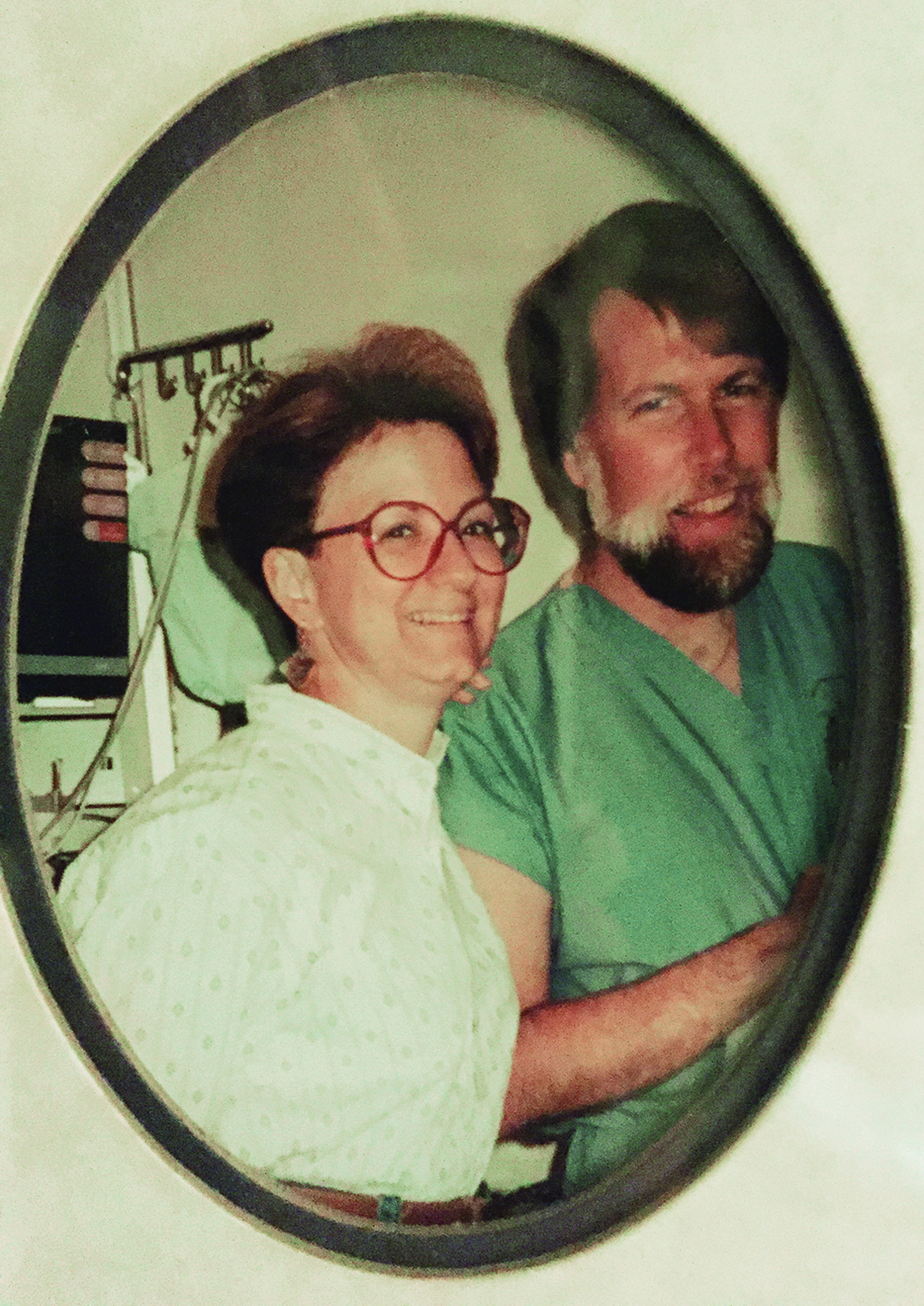
Pat and Gardner Bemis
I have a master’s degree in Nursing Education and I love teaching, and for 45 years I have enjoyed being a nurse. Strange, but caregiving is a bit different from nursing. It’s 24-hour duty that never ends and most of the time you are making decisions alone. Having nursing skills and medical background is a significant advantage, but managing and providing long-term care is harder.
About eight years ago I experienced unusual fatigue. My thinking at the time was that I was “helping” my husband with chores, finances, driving, and medication management but he was doing his own personal care, so it wasn’t caregiving.
One of my closest friends had to inform me that I was really a caregiver! I had eased into it without even knowing.
How is your caregiving journey going?
I care for my husband at home, and still enjoy being with my tall, handsome physician. The biggest challenge is doing all the thinking for another adult. He looks the same except for a bit slouched in posture and shuffling steps. But he has difficulty making choices and decisions and problem-solving, and it breaks my heart. His short-term memory loss is at times hard to deal with and causes me to ask God for more patience — almost on an hourly basis. However, he can still make correct diagnoses when watching medical shows on TV. The brain is a wonder that continues to baffle me.
My husband and I worked together, so I was one of the first to know when he was diagnosed with Parkinson’s disease before age 40. He was young, handsome, brilliant, with lots of energy — a fun person to do fun things with. I was very optimistic about his prognosis, and saddened at the same time. He was an amazing doctor. We married, and he continued to work for 13 more years. We adopted a baby together to add to our blended family to make four daughters.
Did you have any earlier caregiving experience?
I also assist with the care of my mother on the East Coast. After my dad died in 2002, my mom fell into a funk. Previously assertive, energetic and self-assured, she became lost and didn’t know what to do with herself. My family relied on me to help with medical decisions and had I known the symptoms of dementia 15 years ago, I would have done many things differently for my mom. Her father had Alzheimer’s disease too.
When her behavior started to change, I misread it as her being “a Pill.” Not knowing her brain was failing, I was impatient and argued with her. When what she was saying was not matching what she was doing, I began to mistrust her. It was a tough period for us both. I now realize she knew something wasn’t right but she didn’t know what it was. She was afraid to tell anyone and didn’t know what to do. It took much detective work to figure out that what she was telling her doctor and the truth were not the same. Her physician finally diagnosed her with Alzheimer’s three years ago. Had I known better, I would have gotten her care faster and been more compassionate. When I apologize to her, she says, “I have no idea what you are talking about — so there is no need to apologize.”
Is it difficult being on a care team for a loved one who lives on the mainland?
Yes. I am blessed to have two very supportive younger brothers who are helping. My family is on the East Coast and what I have experienced is that
“everyone who cares can do something.”
A sister-in-law and nieces picked up Mom’s wash weekly and drove her to outside appointments before she went into skilled care. Now, the great-grand kids visit Mom and share her activities, like coloring. My brothers have moved Mom’s belongings several times as she graduated to more intense levels of care. They set up her room the way she likes it. When they visit her, they “face time” with me so I can actually see how Mom looks. I have been the financial contributor as well as her health care proxy. My retirement savings ran out in 2016 and, last year, all her funds were gone and I had to apply for Medicaid for Mom. I am grateful that we have options, but it is very sobering to see your loved one outlive their financial resources.
Pat, what would you have done differently?
My biggest takeaway of caregiving is that I was not prepared. Yes, I had end-of-life discussions with my parents and my husband. But what about the time before the end of life? Both my parents and husband wish to be body donors. That is wonderful, but what about the years of “dependent living” required between now and your ending? I have learned that the journey can be long.
I wish I had stayed employed longer. I miss having an income. For intellectual stimulation, I volunteer, go to yoga twice a week, belong to a sewing group and an art group. I would have gone bonkers long ago if it weren’t for my core group of girlfriends, “The YaYa’s.” They are the best support in the world, not only for me but also for my husband. My joy in life is our granddaughters, who bring unconditional love into our lives and home.
While caring for her husband at home, Pat is also part of her mother’s care team along with her brothers. She regrets misinterpreting her mother’s early signs of dementia.
Any words of wisdom for caregivers?
My biggest concern is who will pay attention to me should I inherit Alzheimer’s. Who will know the difference between my rational and “not normal” behavior? Therefore, my No. 1 job is to take care of myself. If I do that well, then I can carry out my caregiving responsibilities well too. At the end of the day, I believe that I am doing the best I can for those I love and they truly do appreciate it.
I suggest that all caregivers plan for their own future care. Get information from professionals and seek out resources. Last year, I visited almost all the assisted living facilities in Honolulu to see what they offered and if I would be comfortable there. I am proud that I tackled this eye-opening experience. I want to know what will be available for me and not wait for a crisis to figure out where I will live who will care for me. All I am learning will help me make good decisions.
I also suggest getting involved with AARP. They opened my mind to a whole host of ideas, options and information. I am grateful to be a member.
At the end of the day, I believe that I am doing the best I can for those I love and they truly do appreciate it.”
Jody Mishan – Former Caregiver
Jody Mishan
I am the daughter of John and Maria Mishan. Without my parents, I wouldn’t be here, so I wish to honor that. Every caregiving journey is unique. Mine deepened the love my father and I shared, shaped my character.
Tell us when that journey began and about your experience of caring for your father.
I cared for my father after he was diagnosed with Alzheimer’s disease from 1999 until his death in late 2006. My father was not defined by dementia, but by a lifetime commitment to family and career. Dad served as a Navy aviator in World War II in the Mediterranean Circle, flying reconnaissance missions on the coast of Africa. He received the Distinguished Flying Cross for his service. Caring for my father was the best and most important thing I will ever do in my life. I witnessed the true hero that he was, remaining a gentleman and expressing love and grace until the end. Caregiving was a gift and a blessing that changed my life.
Discovering the lack of resources available, I started to advocate for improvements in caregiver support. During this time I served as public awareness coordinator for Kōkua Mau: Hawai‘i Hospice & Palliative Care Organization. They truly understood my caregiving journey.
Assisting a vulnerable loved one strengthens your compassion, courage, strength, commitment, loyalty and patience. Caregivers of family members with dementia ride a roller coaster of anger, depression, stress and exhaustion; I learned that compassion is stronger than negative emotions, and patience is a muscle that can be strengthened. Like characters in “The Wizard of Oz,” we don’t know our courage until tested. Our brains and hearts will rise to the occasion.
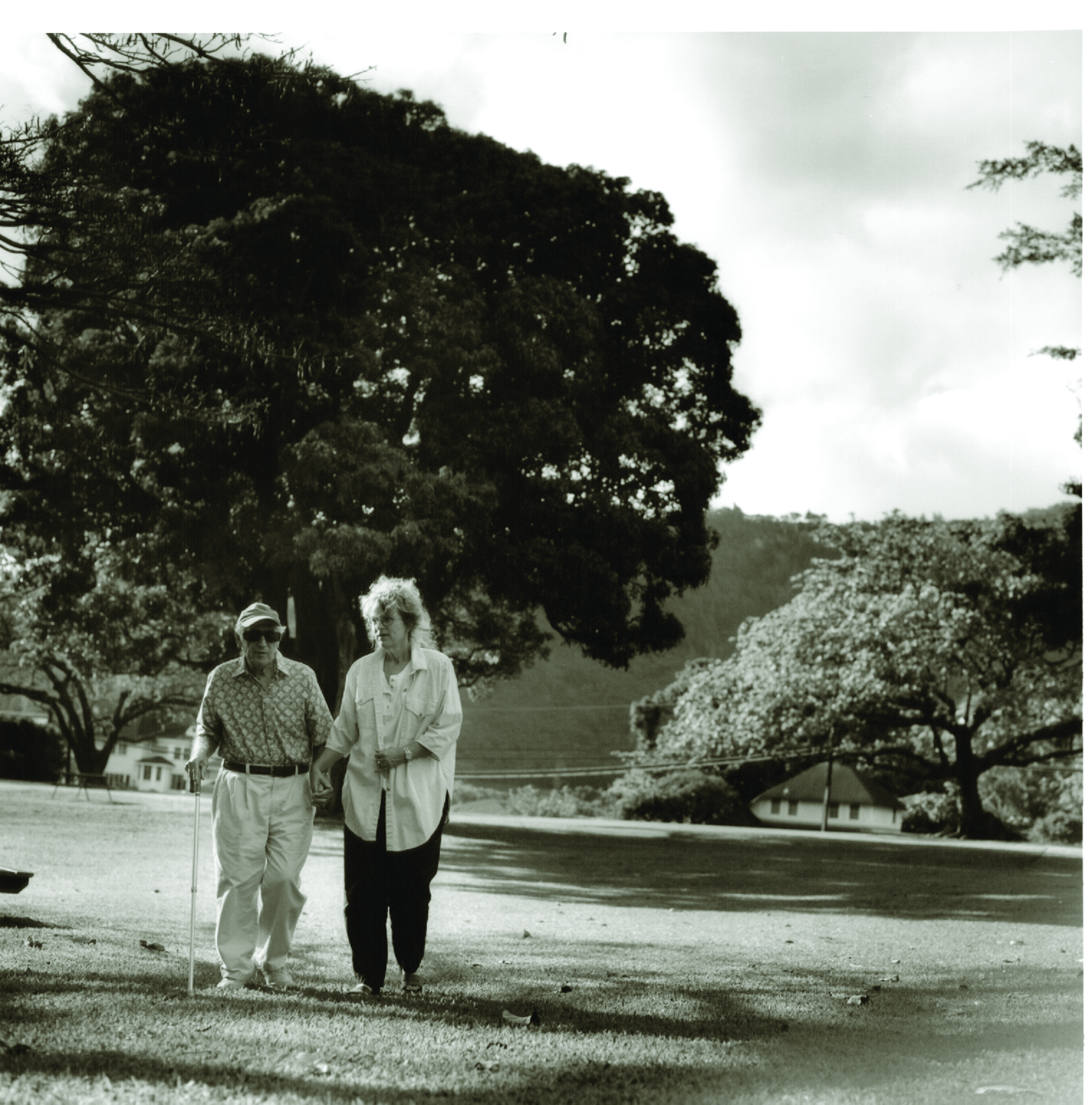
Jody’s father, a Navy aviator in WWII, loved being out in the fresh air, so she incorporated walks in Manoa’s beautiful neighborhood parks into his care routine early on.
Can you share some details of your caregiving?
Early on, Dad was diagnosed with a mix of Alzheimer’s disease and Lewy body dementia, which explained the stiffness he experienced as it progressed. We made the best of the gradual loss of physical and mental ability, developed a good sense of humor, learning to “not sweat the small stuff.” We validated him, made him feel loved and treasured, giving him “moments of joy”— important pillars of dementia care.
In those early stages, Dad enjoyed going places in the car and taking walks in Mānoa where we lived. For the last three years, he was unable to move on his own, in need of total physical care. We were able to afford professional caregivers in the daytime, but I was alone with him at night, setting my alarm to get up to turn him in bed and change him if needed. Sometimes I had day shifts too.
Do you have any tips for new caregivers?
I noted things that worked or did not work on my dementia caregiver’s journey.
Seek resources, help, support, anywhere you can get it. It takes patience and time to identify people and services that actually make a difference.
Be proactive: read books, search online. Join a support group and seek dementia caregiver training.
Practice self-care in your own personal way —
meditation, visualization or exercise. Find anything that brings you joy, even if it’s just 15 minutes with a friend or walking.
If your loved one has memory loss, see a geriatrician or neurologist for an assessment. About 9 percent of conditions causing memory loss can be reversed. An early, accurate diagnosis is essential.
If they are able, take your loved one for walks or shopping to help them remain a part of the community as long as possible.
Photograph by John DeMello
How did you deal with caregiver burnout?
Praying for strength and guidance became a regular habit. I also bonded with other dementia caregivers at an Alzheimer’s Assoc. support group for poetry and journaling led by Frances Kakugawa.
Regularly talking about my feelings with a counselor made a huge difference! I also found compassion, support and understanding from co-workers at Kōkua Mau. The beautiful love that Dad and I shared gave me strength. It made me happy to see him content and smiling, safe and comfortable.
Any regrets or mistakes?
There were times I lost my temper, which is normal for dementia caregivers. I found myself cussing in traffic, getting irritated when he was not treated well in hospital or rehab. It surprised me that I could get so outspoken and not care what others think. But I was fighting for him and his rights, so it made me ornery. My lack of sleep did not help.
Were there any residual effects?
This is a critical question! It takes years to recover from the caregiving burnout, to grieve and process the experience. You have to train yourself not to be vigilant anymore, to sleep through the night, to put yourself first and find joy again. It’s like PTSD in many ways. There should be support groups or counseling for recovering caregivers.
Before becoming a caregiver, I was an audiovisual writer/producer. After his passing, I wrote/produced “The Genius of Aging” public awareness campaign for KGMB TV. I was a coordinator for the first State Plan on Alzheimer’s Disease and Related Dementia for the Executive Office on Aging. Now, I am a consultant for UH Center on Aging’s Hawai‘i Alzheimer’s Disease Initiative.
So caregiving for Dad set me on a new career path working on dementia projects with fantastic healthcare visionaries, service providers, aging advocates and educators. Dementia caregivers are now my tribe — people who really care.
Poetry and journaling are one of the most essential and effective healing activities I discovered on my journey. Visit Frances Kakugawa’s blog.
You have to train yourself not to be vigilant anymore, to sleep through the night, to put yourself first and find joy again. It’s like PTSD in many ways.”
Carleen MacKay – – Future Care Recipient
Carleen MacKay
I was a VP for human resources for high-tech Silicon Valley employees who were making over $100k annually and losing their jobs. In the industry, it is called “out-placement,” a process by which companies assist laid-off employees find new employment. My book, Alternative Ways to Work, helps people manage career change, re-imagine their skills, and stay relevant. Another of my 35 books that seniors love is The Hundred Year Life: juxtapose imagination and facts. I write about what I do best — embrace the future with joy and gusto. To be honest, I have never considered slowing down by choice or by need. But Percy Ihara tells me that 70 percent of people will require some long-term care at the end of life. Yikes! I need to start planning!
You’re so active at 80; do you visualize yourself in long-term care?
So far, I can take care of myself — always have. Long-term care doesn’t sound like too much fun. But I am going to look into local care facilities and options to see what I might be able to afford.
Do you have children?
Yes. I was a single parent, and all three of my children have college educations — two own their own businesses. I live in an ‘ohana unit in one son’s home, and when I told him about this interview, he said, “Oh don’t worry. We’ll take care of you.” But my kids have done less planning ahead than I have. I do not expect them to bear the whole burden of my end-of-life care — either financially, emotionally or physically. I read that injuries due to falls often end independent living and break your bones and spirit. I need to call my local Aging and Disability Resource Center and get a free fall prevention assessment of my apartment right away.
Can you see yourself in the cycle of caregiving?
Sure do. I cared for my mother in her home when she came to the end of her life. I was a businessperson, so I hired a maid for cleaning and later found a care facility where my mother could be treated, cared for and offered socialization with other seniors. However, I never provided hands-on care, and I don’t expect my kids to do that either. I like to work, be involved socially and do fun kinds of exercise to keep healthy. However, time — as it does for one and all — is beginning
to overtake me.
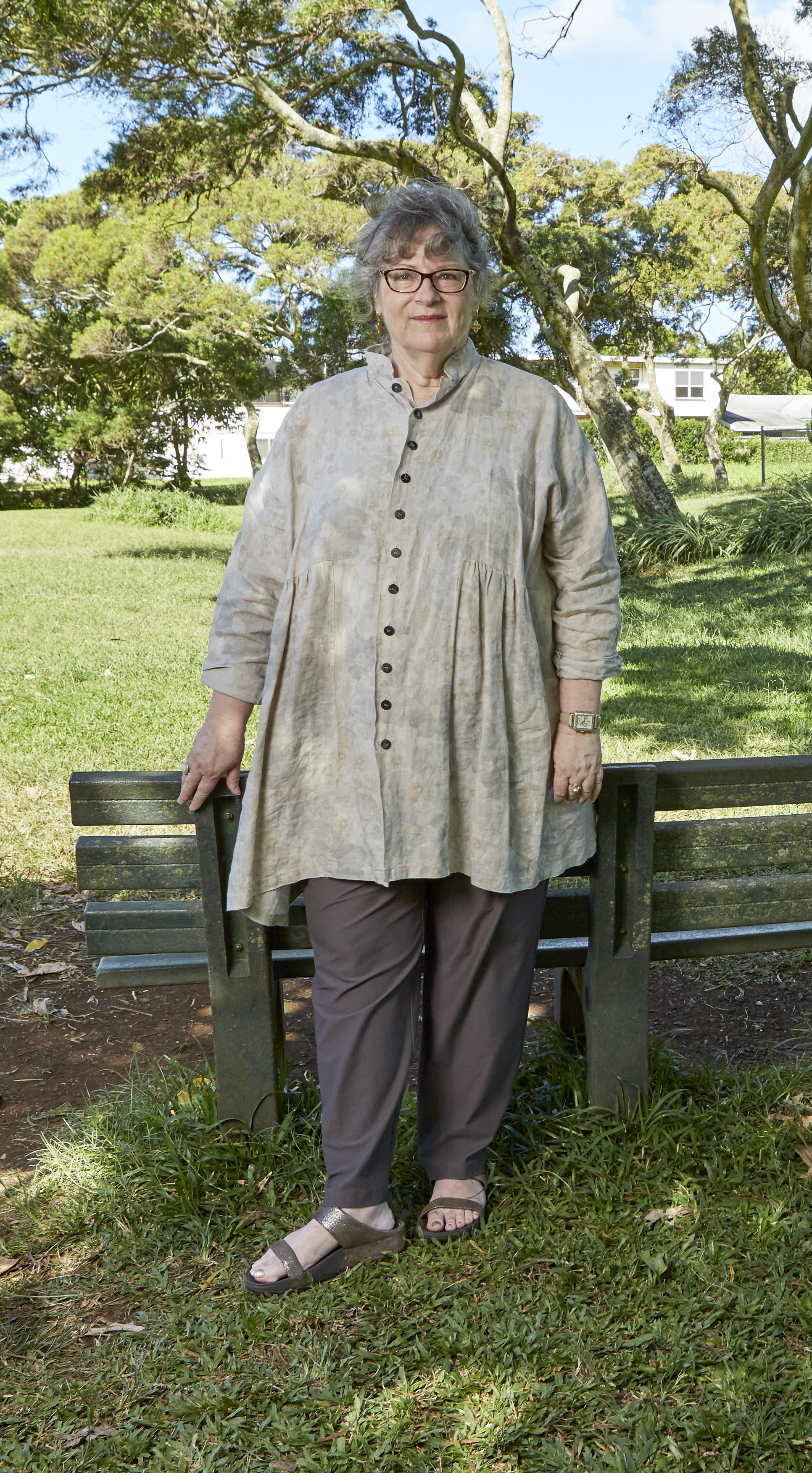
Carleen MacKay at home
Time is a big issue. Healthy seniors fear they will outlive savings and retirement income.
Yes; I am proud that I lived prudently in my early years and that I still bring in a little income. But I’ll be honest; my vision is to “die in the saddle,” writing books and giving lectures on the road. I want to keep active late in life, but I just learned that people over 70 could expect to outlive their body’s ability to perform the tasks of daily living, and the odds against dying in the saddle are very high. In case I die long, I don’t know if my savings will be adequate. I need a Plan B that addresses other options to pay for the kind of care I want. My children need to know what my wishes are, too.
Some of our readers haven’t done much planning either. What’s your next step?
Well, I am just getting into Generations Magazine resources, which are chock full of useful information for aging in place and end-of-life planning. I’m going to get educated and educate my family as soon as possible. I just found out that I am too old to buy long-term care insurance, so I already missed out on one financial option. I also learned that Medicare does not have long-term care benefits, so paying for care is my primary concern.
I think your readers should share this article with all their neighbors, family and friends who plan to work till they drop. Tell them not to wait until 80 to draw up a Plan B. We seniors who work are experts at what we do — and we also have to be experts in planning for long-term care the end of our lives. Better late than never!
I want to keep active late in life, but I just learned that people over 70 could expect to outlive their body’s ability to perform the tasks of daily living.”
Jody, Pat, Lori and Carleen are at different points on the cycle of caregiving. Where are you? What did you learn from their experiences and tips?
Rosalynn Carter and the original members of Last Acts started a significant movement, and they would be surprised to see professionals in geriatrics, long-term care, homecare, financial planning, reverse mortgages, hospice and adult day care and strategies for aging in place struggling to keep up with demand for their services. The number of people over 80, cost of care and waiting lists are all growing. The fact is, family caregivers still provide most eldercare.
The common threads in our four caregiving stories are that long-term care is a team effort that requires careful planning. Generations Magazine resources offer many professional options for care. Talking with your family and other families on the cycle of caregiving will help you find the best plan for you.
Former first lady Rosalynn was a caregiver herself and she believed that family caregiving is a cycle of life that touches everyone. Here, four people, each at a different point on the cycle, share their care stories from the heart, offering words of wisdom and points of caution. As you read, consider your journey on…
When Tutu or Madame Pele creates, we are blessed with the growth of our ‘aīna. However, the gases she emits can be detrimental to many when our beautiful Hawaiian skies are filled with vog (volcanic smog).
I visited Kīlauea several years ago with my hula sisters for the Merrie Monarch Festival. Walking toward the crater to bear ho‘okupu (offering) for Tutu Pele, my lungs suddenly tightened up and I was literally gasping for air. I struggled back to our bus, where I used my rescue inhaler and did some deep breathing exercises. Just the tiny bit of sulfur emitted almost sent me to the hospital.
What does vog mean for folks with respiratory problems? Above all, keep all your meds in an area that you can easily access, including within arm’s reach at your bedside. Keep extra rescue inhalers in your car, at work, and in your purse.
Take extra precautions to ensure you stay healthy, take your medications and drink lots of water. If you are a nebulizer user, be sure to have enough inhaler solution. Keep tubing and attachments clean and ready.
Be open with your family and loved ones about how important it is to be prepared. Tell them what you need if you are ever in respiratory distress. If traveling, research emergency rooms ahead of time.
I visited Kīlauea several years ago with my hula sisters for the Merrie Monarch Festival. Walking toward the crater to bear ho‘okupu (offering) for Tutu Pele, my lungs suddenly tightened up and I was literally gasping for air.
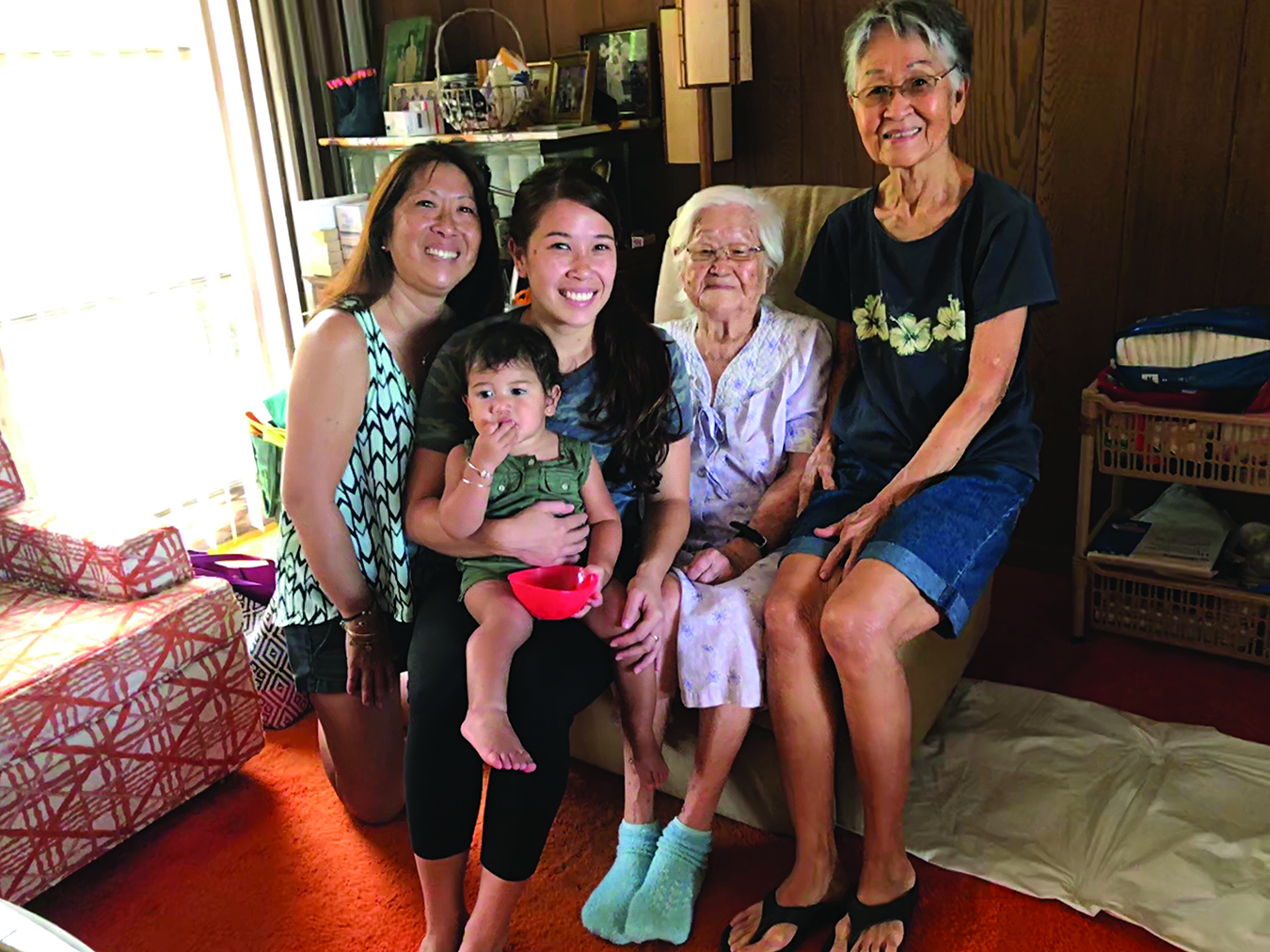
I don’t know if anyone is really prepared for family caregiving — it all happens so suddenly,” says Terri Jorgensen of Maui. She became a family caregiver in 2016, when Maui Memorial Hospital discharged her 101-year-old Grandma. Two years later, Terri heads a family of five generations, works full time and manages two households — one with five homecare aides providing care for Grandma and Terri’s 83-year-old mother.
“Learning what kind of care is required is easy, but finding ways to provide it is very difficult. Since I have no bedside skills, I knew right away that I needed help. I am an outgoing sales professional, so servicing my clients and keeping in touch with the outside world makes me happy and healthy. Finding a balance among Mom’s, Grandma’s and my own needs was critical,” she says.
Terri’s Grandma was living independently in Wailuku when she suddenly became ill. She returned from the hospital disabled and bedridden, so Terri began to care for her. A social worker helped her find in-home caregivers to help Grandma.
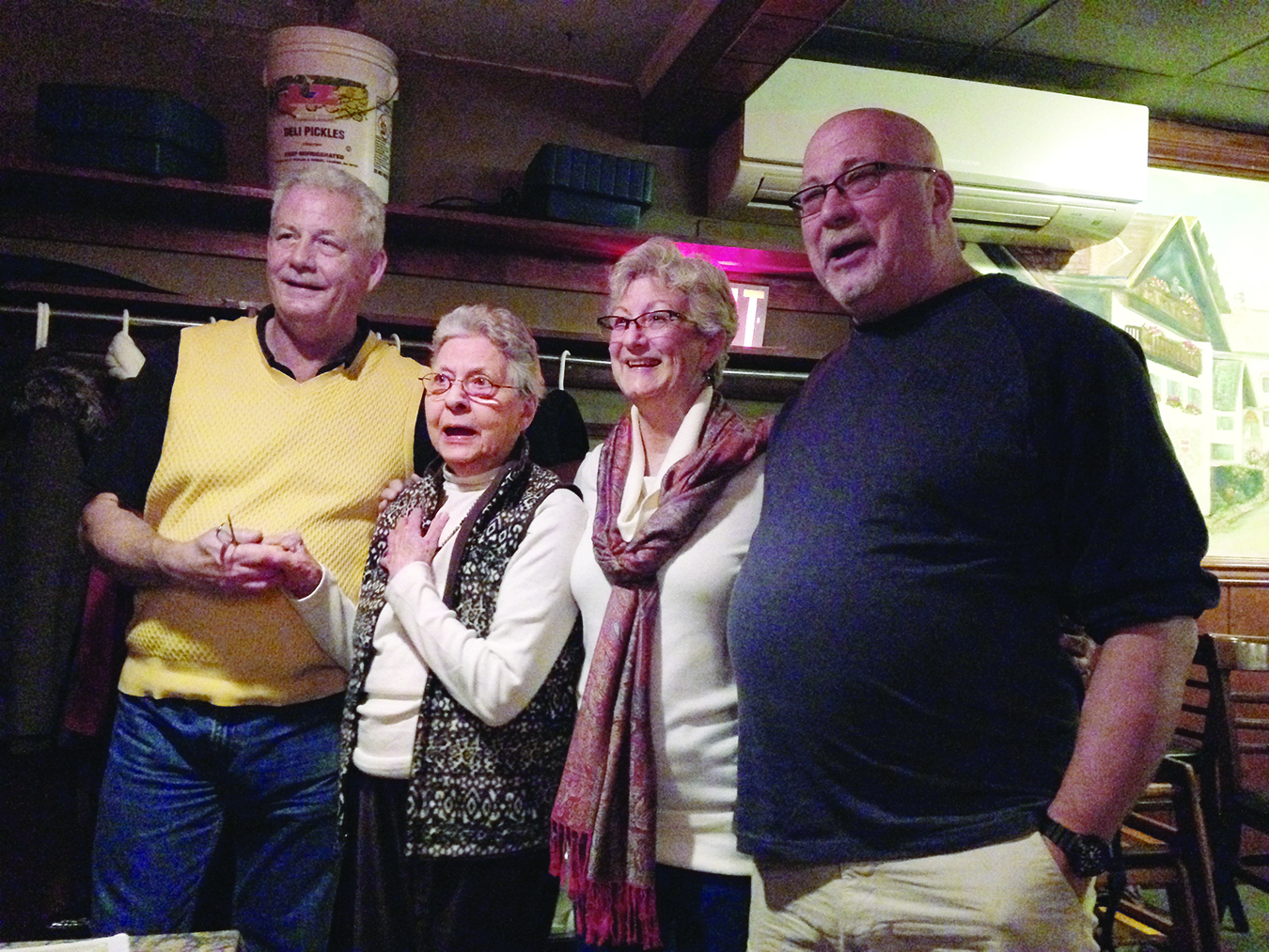
The generational caregiving team. L-R: Terri, Megan and Ale‘a (baby), Kazue and Gladys.
In 2017, Terri’s dad, who was suffering with Alzheimer’s disease, was diagnosed with terminal cancer and passed away on Moloka‘i. Her mom went into a deep depression. Terri brought her mother to Maui to recover at Grandma’s house, but soon it became clear that her condition was not going to improve.
Terri’s daughter also had come from O‘ahu to live with Terri after the birth of her baby. With so many loved ones to care for, Terri faced the financial and logistical issues of managing two households and a large team of homecare and service providers.
“Caregiving is a group activity; one family caregiver cannot do it alone. Maui County services for elderly and disabled persons are a very big help, but managing all the services, appointments and care duty for my family is a huge job. I do the management part, and one of our aides schedules all shifts. We now have five aides covering days and weekend nights. I cover weekday nights but take respite on the weekends.
“When Grandma got sick, a lot of people told me to take care of myself, but I didn’t get it. I wore myself out because I didn’t know what decisions to make, or where to get good information and assistance. There wasn’t enough time in the day to care for Grandma and Mom’s needs and maintain my strength. My auntie, who lives across the street, was good support and encouraged me to reach out for help. What I tell other caregivers now, is to reach out soon. Carefully assess your own physical and emotional needs — because if you get worn down or sick, your loved ones will suffer. My version of balance is to be a good businesswoman, and manage caregiving like a very important business project. This is my talent, and comfort zone. Family caregivers can find a personal balance that preserves who they are, and uses their talents.
“Some days are very hard, but caregiving can be its own joyful reward. It makes me happy to know that I can provide care and do what is good for everyone. I am creatively carrying out my kuleana of caregiving, and my family is safe.”
I don’t know if anyone is really prepared for family caregiving — it all happens so suddenly,” says Terri Jorgensen of Maui. She became a family caregiver in 2016, when Maui Memorial Hospital discharged her 101-year-old Grandma.

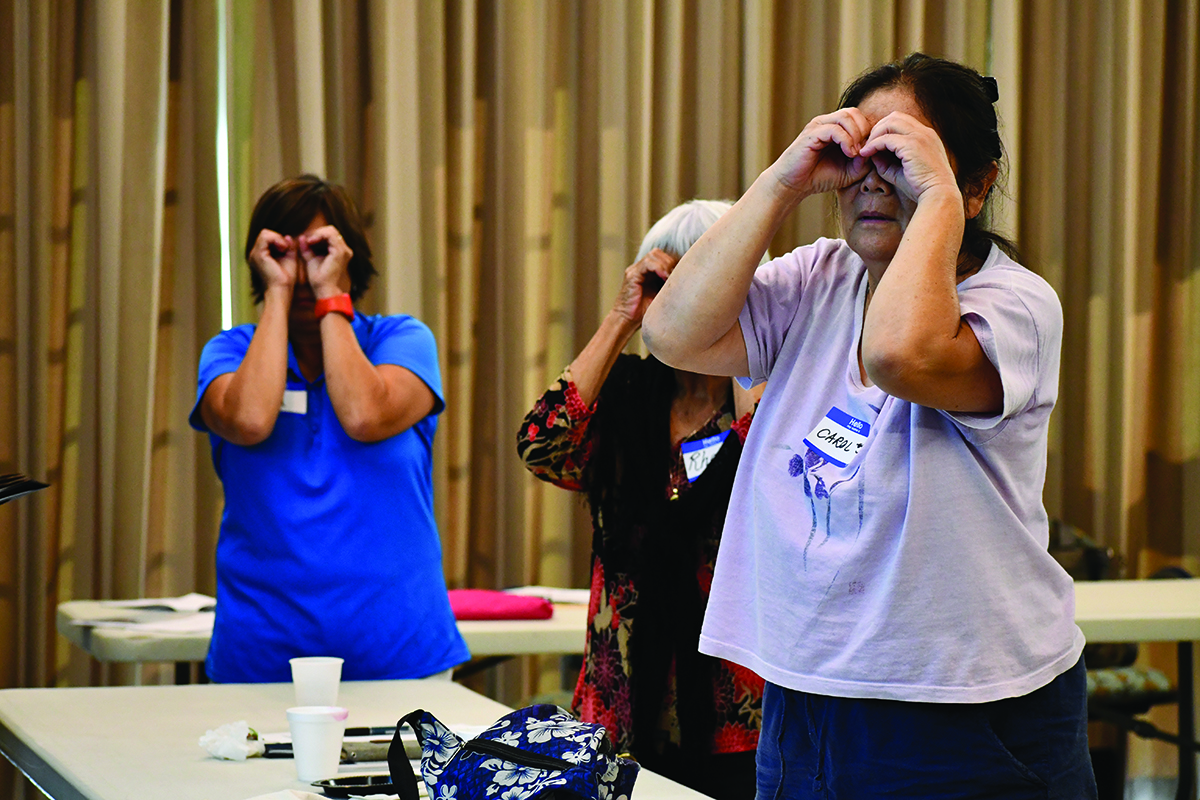 Teepa Snow, a dementia expert, occupational therapist and Positive Approach™ to Care founder, suggests we can experience how limited a view this is by forming makeshift binoculars. Move both your hands up to your eyes, then loosely circle your fingers around your eyes to make two binocular-like tunnels. Take a look around you — notice that you need to move your entire head in order to look to up, down and to your sides. How might this hinder a person’s abilities?
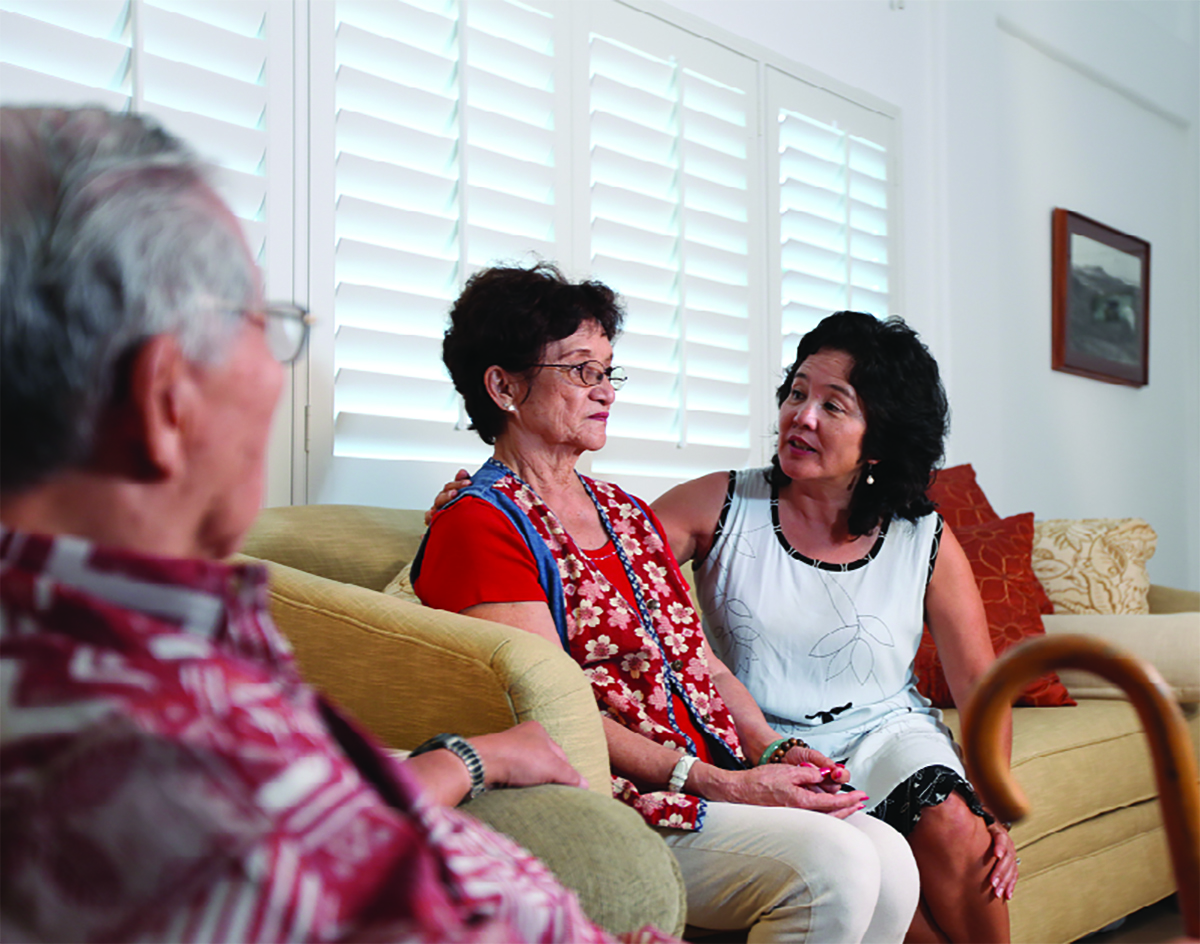


 Placing your loved one in a residential care home takes a lot of research. On your visit to the care facility, observe these few things: