Category: Column

  • How to Best Support Grieving Keiki

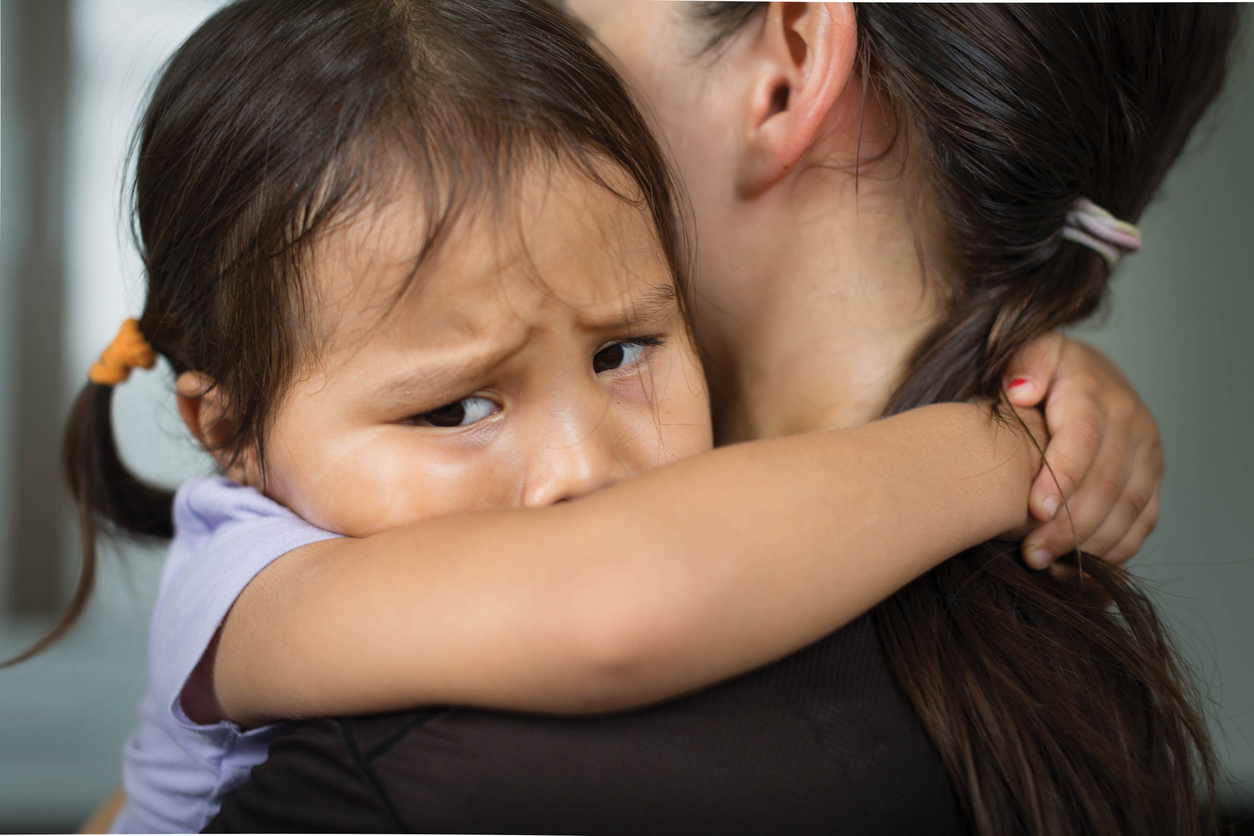
    Children process and experience grief according to their developmental stage. If we try to determine their grief status by an adult measure, then something may be missed.

    Grieving kids can experience a wide range of emotions, expressing sorrow through tears one moment and wanting to play the next. From an adult lens, this can be perceived as the child being “fine,” but in actuality, playing is one way they process their emotions. Another indicator of grief in children may be a regression in behaviors. The child may have a consistent developmental skill, then suddenly, they are no longer exhibiting their typical abilities. For example, a child may have independent toileting skills, then they begin to have bathroom accidents. This can be frustrating for a parent or the child’s caregiver, especially if they are unaware of the root cause. Healthy support includes talking story with them using simple words about their feelings, allowing them to cry, assuring them that what they are going through is normal and modeling healthy coping skills.

    Good conversation starters may include encouraging the child to draw their emotions, reading through a children’s grief book or discussing a movie. Disney movies have many threads of grief sewn through their storylines.

    Addressing grief can be uncomfortable, but it does not have to be overwhelming.


    BEREAVEMENT NETWORK OF HAWAI‘I
    Facilitated by KŌKUA MAU (nonprofit)
    808-585-9977 | kokuamau.org

    Children process and experience grief according to their developmental stage. If we try to determine their grief status by an adult measure, then something may be missed. Grieving kids can experience a wide range of emotions, expressing sorrow through tears one moment and wanting to play the next. From an adult lens, this can be…

  • Where Do Implants Go After Cremation?

    If you or a loved one have surgical implants, be aware that metal implants will not be in your loved one’s urn following cremation. Handling of incombustible semi-precious metal implants following cremation is not something we think about when we are grieving. However, there are a few reasons why this will be a consumer protection concern increasingly affecting a growing segment of Hawai‘i:

    1. Hawai‘i, like much of the US, is experiencing a rapid growth in its retiree population.
    2. Significant medical advances and the increased use of surgical implants are becoming common-place for repairing or replacing bones and joints due to deterioration or fractures.
    3. Hawai‘i has the fourth-highest cremation rate in the US, therefore, a continued accumulation of surgical implants after cremation is likely.

    These incombustible remains will need to be discarded, recycled or resold by the mortuary industry in Hawai‘i. These metals may include, but are not limited to, silver, gold, titanium, platinum and palladium, in the form of dental fillings, plates, rods and screws for your teeth, neck, spine, hip and other joints. What happens to them? Are they donated, recycled, sold or discarded in a landfill? Are families providing their informed consent regarding their approved method of disposition?

    Is there evidence of unreported revenue generation? The fact is, we do not know what Hawai‘i’s mortuaries are doing. Meanwhile, companies in the continental US are harvesting these metals from mortuaries. Some company websites indicate that they can donate the proceeds to a nonprofit upon a mortuary’s request. The proceeds can also provide the mortuary with an additional revenue stream.

    But what is happening in Hawai‘i is unclear. The mortuary industry is silent. If a financial transaction is made, should mortuaries reimburse families for the value of these metals? That might be an insurmountable administrative task and a challenge to enforce. If there is revenue, a donation to a nonprofit would impress the community. Through community dialogue, it is possible to create a collaborative framework that ensures transparency, ethics and community benefits.


      CULLEN T. HAYASHIDA is an affiliate faculty member with the Center on Aging, and the School of Nursing and Dental Hygiene at the University of Hawai‘i at Mānoa. Over the past 50 years, he has been involved with developing over 50 elder care service projects in hospital, nursing home, home care, college and community settings, and has provided technical assistance to other organizations locally, nationally and in East Asia. He has taught at the University of Washington, Willamette University, Case Western Reserve University, Kapi‘olani Community College, University of Hawai‘i and JF Oberlin University.

      If you have a story to share, email the editor: debra@generations808.com.

      If you or a loved one have surgical implants, be aware that metal implants will not be in your loved one’s urn following cremation. Handling of incombustible semi-precious metal implants following cremation is not something we think about when we are grieving. However, there are a few reasons why this will be a consumer protection…

    1. Her Handi-Van Heroes

      Not all heroes wear capes. In fact, many go unnoticed, with their efforts sometimes taken for granted. These “unsung heroes” are a model of compassion who contribute valuable, often challenging work without receiving recognition or praise for their efforts. But once in a while, a recipient of their kindness steps up to sing their praises. O‘ahu resident Diane Wright contacted us to help her make that happen.

      “TheHandi-Van drivers do more on the van for passengers than most people know,” says Diane. “They work hard and do it with compassion and care.”

      “They are well trained,” says Diane. “The nice, friendly drivers greet you when you get onboard, then, if the van is full, the driver helps to space the people apart in the van so we can all fit. They move around a lot to help the passengers, buckling wheelchairs to the floor and strapping in rollators and walkers. They even help seatbelt you in, if you need.”

      When the passengers disembark, the driver unbuckles each rider and helps them to the exit lift, lowering the lift so they can get out easily. “The drivers always say a friendly ‘have a nice day’ when we leave,” adds Diane.

      “TheHandi-Van drivers have a lot of compassion and patience, so I thought I’d tell others about them,” says Diane. “I admire them. Thank you to all hard-working Handi-Van drivers who show compassion every day!


      To share your story of gratitude for possible publication, email the editor at debra@generations808.com.

      Not all heroes wear capes. In fact, many go unnoticed, with their efforts sometimes taken for granted. These “unsung heroes” are a model of compassion who contribute valuable, often challenging work without receiving recognition or praise for their efforts. But once in a while, a recipient of their kindness steps up to sing their praises.…

    2. Getting Old is Getting Old!

      Getting old has its blessings and its challenges. The blessings are many, especially here in Hawai‘i where kūpuna are usually treated with a bounty of respect and kindness. However, I have found that to be less true while traveling on the continent.

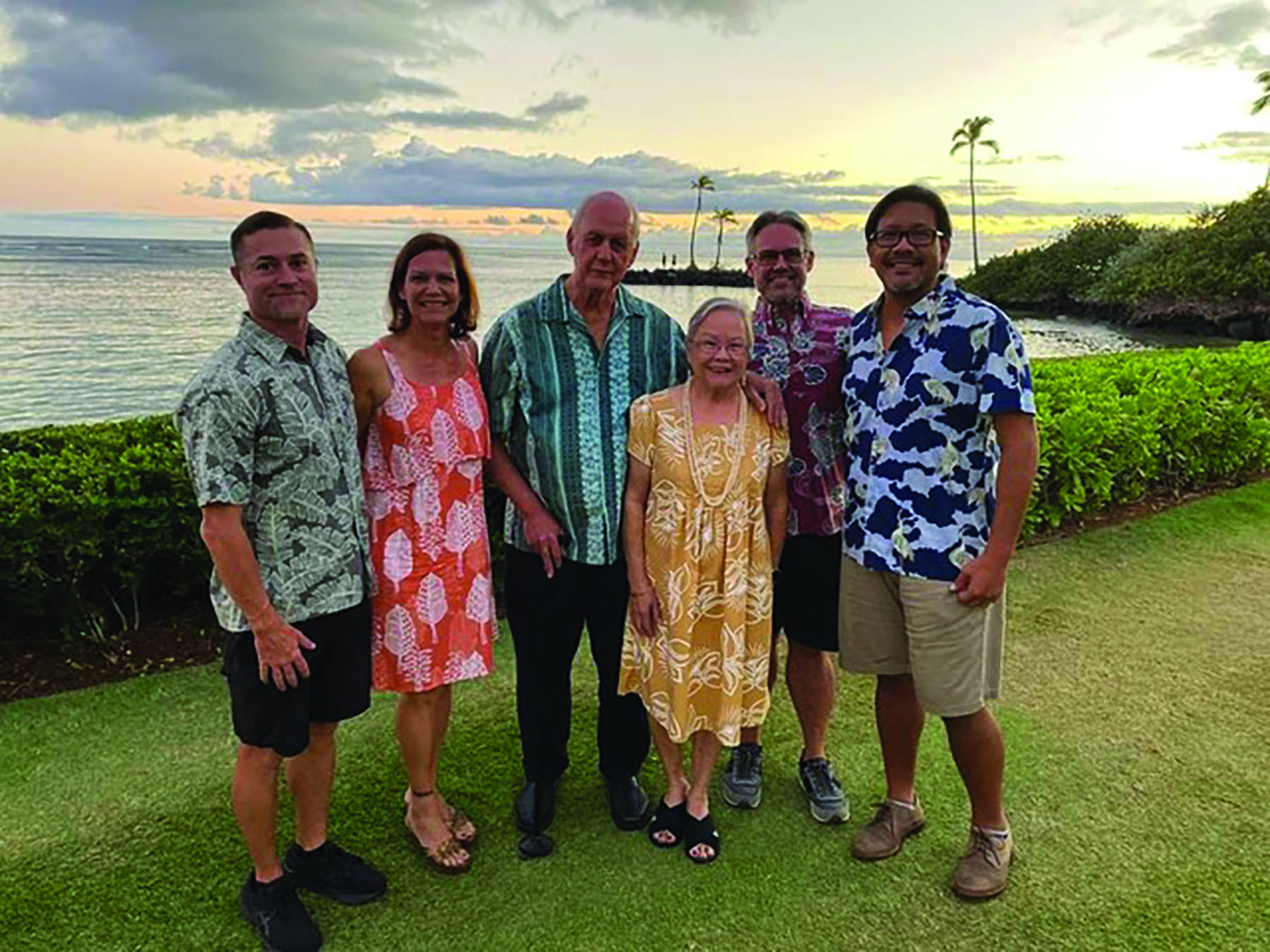
      Among my many blessings, I count my three kids. My eldest daughter, Kalei, age 54, who lives upstairs from me with her husband, Paul, are there to help when asked. Kala‘i, age 51, and his partner, Lawrence, are also both willing and able to help in any way that they can. Puna, my youngest daughter, age 47, lives in Florida, but comes when needed, as she demonstrated when her father was diagnosed with brain cancer. She appeared two days later and stayed for two months.

      (L–R) My son-in-law Paul, daughter Kalei, husband Bill,
      me, son Kala‘i and his partner, Lawrence.

      But challenges are also many. Pesky little obstacles include being unable to recall the names of actors and classmates from long ago, and forgetting appointments, even though they are in my cell phone calendar and written on a paper calendar. Trials include being unable to do the simple, everyday tasks that were once so easy to do, like bending to tie shoelaces, reaching for dishes from a high kitchen shelf, opening a jelly jar and even popping open a can of cola. All the little things…

      The big things are getting short of breath during a slow, 18-minute walk halfway around the loop, or during a 45-minute sitting-fitness class at the YMCA, enduring the pain from my knees and feet from arthritis while walking and exercising or even just trying to fall asleep at night.

      But the biggest challenge in my life is grieving for a lifetime companion who died and left me to survive without him, dealing with the pain of turning over in bed and seeing an empty pillow, preparing meals for one person instead of two, filling out forms required by the government after the death of spouse for VA, Social Security, military retirement, medical insurance…

      Yes, getting old has its blessings and its challenges. Getting old is getting old!


      ANITA ‘ILIMA STERN is a retired elementary school teacher and writer who taught hula for 33 years. Her students liked learning hula and chant from her and appreciated the positive feedback they received. She lives in Kailua, O‘ahu.

      If you have thoughts or a story to share, email the editor: debra@generations808.com. It may be published in Generations Magazine, Facebook or our website.

      Getting old has its blessings and its challenges. The blessings are many, especially here in Hawai‘i where kūpuna are usually treated with a bounty of respect and kindness. However, I have found that to be less true while traveling on the continent. Among my many blessings, I count my three kids. My eldest daughter, Kalei,…

    3. A Class Reunion Trip Down Memory Lane

      When I got the save-the-date card for my 50th high school reunion, I was shocked! Hey, 50th reunions are for old people! Then I realized I must be one!

      So I volunteered to be our Class of 1975 reunion secretary and sent out emails asking for life updates and attendance plans. As I sifted through the replies, I began getting information about classmates who had passed away. A girl I had dated died of cancer. Another I had a crush on had died the year before. I received a heart-breaking email from the widow of a wrestling team buddy saying he had passed. All told, I found out a dozen classmates had passed on.

      Those sad responses convinced me that I must go to the reunion to reconnect with people with whom I had spent four important years.

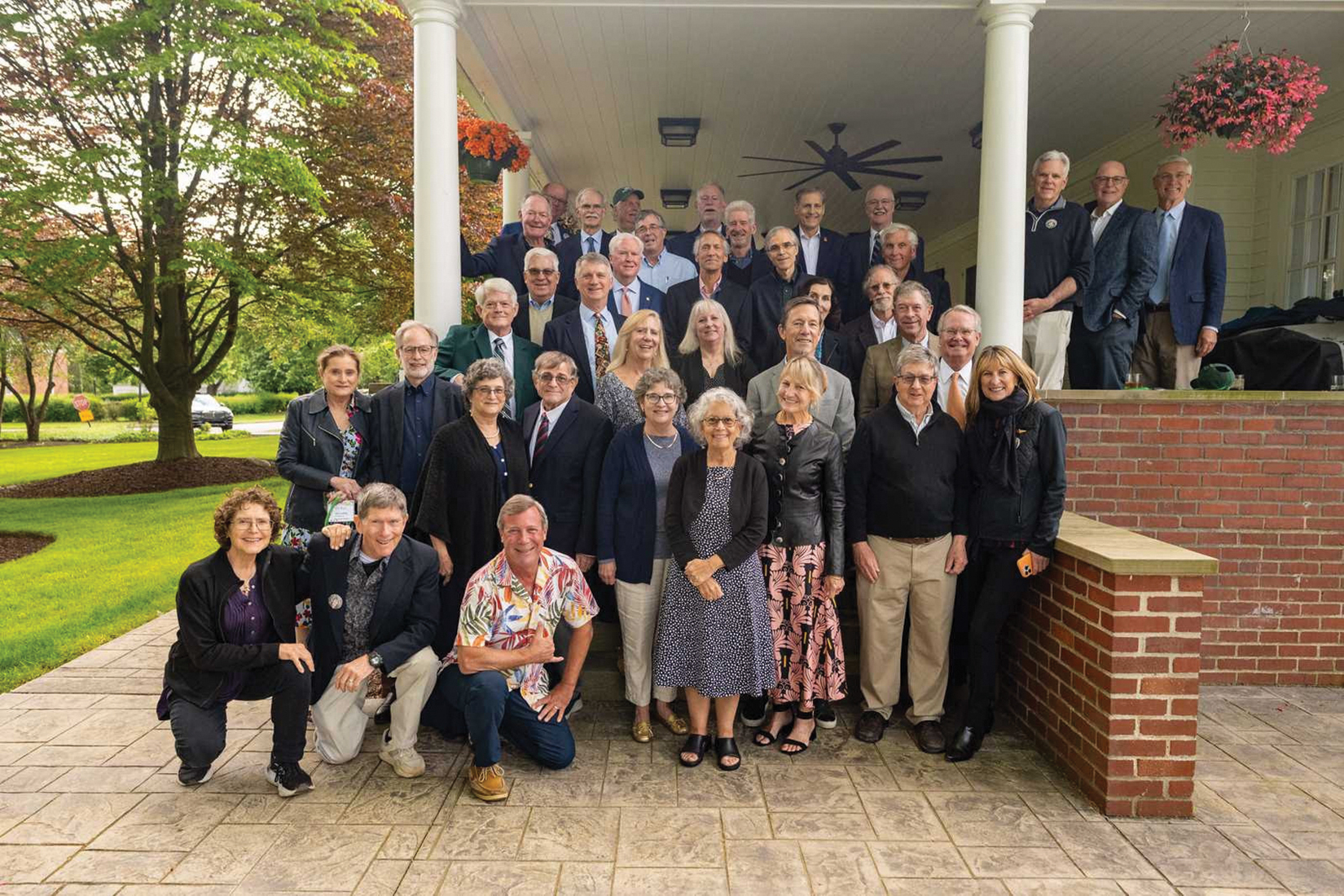
      The 50th reunion of Western Reserve Academy’s Class of 1975 was well-attended. Following “the road less traveled,” Rob paved his own path to a permanent home on Maui, where he enjoys life with wife Kelly

      When my wife and I arrived in my hometown for the reunion, we went for a long walk around the school grounds. Memories came flooding back. The next evening, we dined with our 50th reunion group. I was pleased that 36 classmates of the 100 (about) in our graduating class attended. Everyone looked great! Granted, now in our late 60s, our definition of “looking great” is far more forgiving than it used to be!

      During dinner, we didn’t compare accomplishments, cars or careers—we honored the past as we reminisced about our classmates who are no longer with us. We remembered a classmate I had known since we went to preschool together. After I shared precious memories of her, others who were close to her shared theirs. We remembered another friend—a funny, well-liked, brilliant and athletic student who became a leading brain surgeon at Johns Hopkins. His widow joined us; we all cried with her. And so it went through the list, with shared recollections triggering tears and eliciting laughs. I was pleasantly surprised that as we all told our stories, old friends recalled things that I had forgotten and I was able to jog their memories, as well.

      As we talked, my classmates transformed in my mind’s eye to how they looked in our school days. Grey hair turned brown again and bald heads regrew shoulder-length locks. Guys shuffling painfully to their tables were once again fleet-footed soccer jocks and track stars. Grandmothers with etched laugh lines and crow’s feet transformed into gorgeous young girls again.

      Saying goodbye at the end of the reunion was bittersweet. I hugged it out with everyone.

      I had viewed reunion group photos of the older classes above us, hanging in the hallways. Seeing fewer people in each five-year grouping, I realize that at our next reunion, I may not be seeing some of these dear friends again.

      So I’m glad I went back for the Big Five-O and I’m going to attend all of my class reunions for as long as I am able, God willing.


      ROB MELDRUM was born and raised in Hudson, Ohio, and graduated from Middlebury College in Vt. summa cum laude, with high honors for his senior thesis. After a 20-year career with AT&T, he started a telecomm software company and is a patent-holder. He and his wife, Kelly, moved from Seattle to Maui in 2019. In retirement Rob enjoys playing guitar, writing songs, playing pickleball and baking sourdough bread.

      If you have a story to share, email the editor: debra@generations808.com.

      When I got the save-the-date card for my 50th high school reunion, I was shocked! Hey, 50th reunions are for old people! Then I realized I must be one! So I volunteered to be our Class of 1975 reunion secretary and sent out emails asking for life updates and attendance plans. As I sifted through…

    4. Enjoy the Ride!

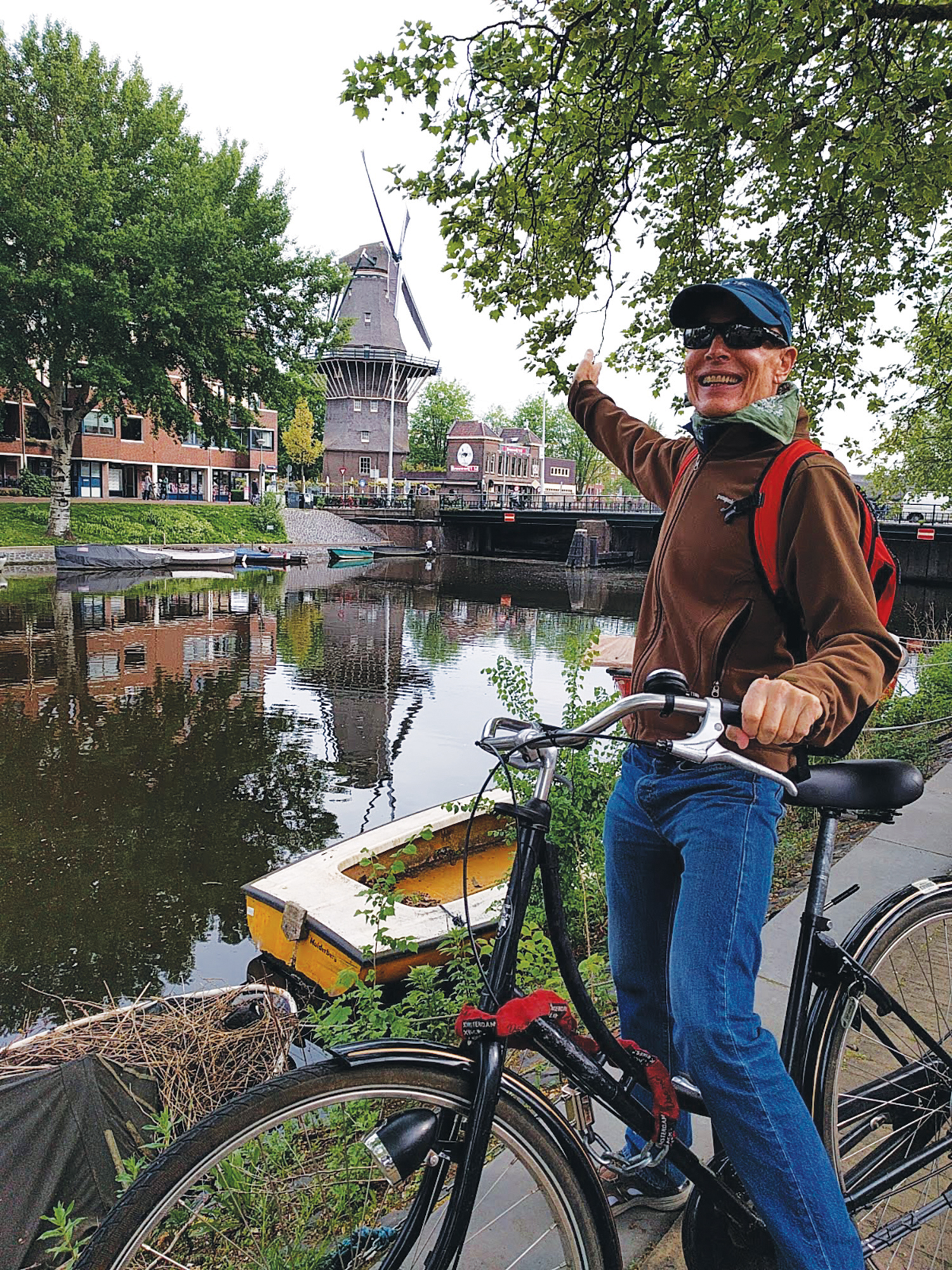
      r. Steve L. Chaplin, a 64-year-old Honolulu psychiatrist, has seen the world from a unique perspective. He has ridden his bicycle through South America, Asia and Europe, cycled through 39 countries, including Morocco, Myanmar, India, Chile and Vietnam, and most recently, biked through Iceland and Greenland.

      What inspired him to see the world this way? Dr. Chaplin’s father taught him to ride at age 6, but initial lessons didn’t include how to stop by using his brakes, which caused him some scrapes. His interest in bicycling blossomed while biking with a friend in San Francisco. The bicycling bug really took hold of him as he navigated the city’s highly textured topography. By then, of course, he had learned how to brake.

      Today, adhering to the hypothesis “safety in numbers,” his excursions always include a friend or a group. He says he has never experienced a bad bike trip. To the contrary, friendly foreigners often approach him, asking about the details of and reasons for his international bicycle trek. He says that riding a bicycle has proven to be an easy way to make friends in a foreign country, as natives are always eager to give him advice and share information about their country.

      Dr. Chaplin says that the most interesting country he visited was Vietnam in 1995. The Vietnamese were very welcoming, saying, “America number one.” And, of course, Dr. Chaplin fit naturally into the culture, as most Vietnamese rode bicycles as their primary transportation.

      Riding his bicycle in a foreign country also gave Dr. Chaplin an opportunity to appreciate the culture and natural beauty at a pace that could not be accomplished in motorized travel mode, yielding time and space for contemplation and reflection, in addition to social interaction.

      Dr. Chaplin says, “Somehow, foreign residents and I succeed in communicating. English seems to be an international language and there is always someone who can speak it to some extent. In the remote parts of a country, where English is barely spoken, we use hand motions and somehow we manage. We smile, we laugh and catch on to what each is saying.

      “For example, when a foreign resident points at my bicycle, I know from experience that they are asking me why I am traveling in their country on a bicycle, especially in a far-off region. Traveling to a foreign country is always an experience. It depends on your attitude of why you are there. So I tell them that riding a bicycle abroad is a priceless experience if your aim is to learn, have fun and meet the people. The bottom line is to be pleasant and patient.”

      Dr. Chaplin believes in exercise and encourages his patients to do so, because studies have shown that such activity promotes mental alertness, stamina and positive interactions. Such being the case, bicycling in a foreign country with his interest focused on a new environment stimulates his mind and memories of people and places.

      Studies have shown that a human on a bicycle is more efficient than a swimming salmon or flying seagull and jet plane. Dr. Chaplin concurs that it reduces global warming and conserves natural resources as well as introduces the bicyclist to different cultures, cuisine, history and people—up close and personal. “There is no doubt that bicycling is good for the health, for the preservation of our Earth and if you travel to a foreign country, I like to believe that in some ways it leads to international understanding, friendship and world peace.”

      His philosophy of life is simple—“enjoy the moment. Enjoy the ride.”

      r. Steve L. Chaplin, a 64-year-old Honolulu psychiatrist, has seen the world from a unique perspective. He has ridden his bicycle through South America, Asia and Europe, cycled through 39 countries, including Morocco, Myanmar, India, Chile and Vietnam, and most recently, biked through Iceland and Greenland. What inspired him to see the world this way?…

    5. Bridging the Generation Divide

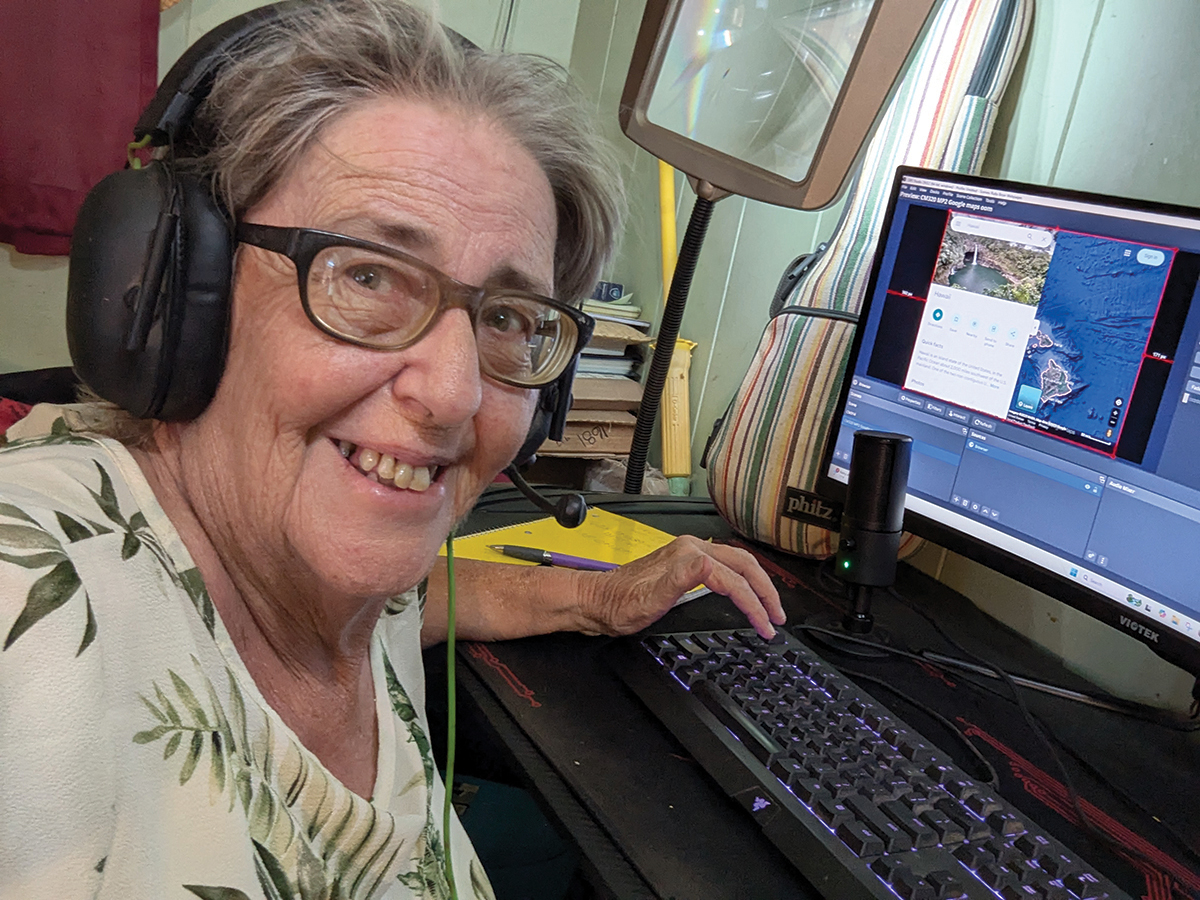
      Last year, I was a “senior” senior at the University of Hawai‘i (UH) West O‘ahu. My learning adventure began in the fall of 2019 when I enrolled in a basic Hawaiian language course at the Moloka‘i Education Center at age 67. It is a satellite campus of UH Maui College and our classes were conducted via a Skybridge video link to the classroom on Maui. I also enrolled in a Hawaiian music class that was taught in-person. I continue exploring those interests through the ‘Ukulele Kanikapila and ‘Olelo Hawai‘i Papa offered here on Moloka‘i by Kaunoa Senior Services, a division of the County of Maui’s Department of Human Concerns.

      Eligible for financial aid, I was able to become a full-time student at UH Maui College and UH West O‘ahu. It was a blessing in so many ways to be immersed in campus life—even at a distance. Being surrounded by young minds eager to forge a pathway to their future career was energizing and inspiring. No less inspiring were the students who were returning to college while working and caring for family, but still found time to attend class, complete assignments and participate in collaborative projects.

      I soon discovered that collaboration was the skill I most needed to learn. Students and faculty all put me at ease and I learned by their example how enriching—and fun—collaboration can be! It was time to set aside my “wise elder” hat and listen with respect and compassion, keeping my mind open to views that hadn’t even existed when I was their age. It was a two-way street because some of the things I’d experienced and brought to the table were ancient history for today’s students. I strove to enrich my fellow students’ learning treks and greatly appreciated that I was never made to feel like a dinosaur!

      Other skills I learned were how to give presentations and how to use the many apps available today to create written and audiovisual material. Encouraged by the supportive learning environment, I developed the confidence to share these skills in my local community. I volunteered to proofread the computer-created transcripts of documents scanned into Moloka‘i’s Digital Repository, Moe‘a, and created an Instagram post as my contribution to a Hawai‘i Tourism Authority community session on Moloka‘i.

      If you live on O‘ahu, you can attend classes for free with the instructor’s permission. The UH System, comprised of three universities, seven community colleges and community-based learning centers across Hawai‘i, is committed to promoting lifelong learning, active aging and intergenerational community-building through its Nā Kūpuna program at UH Mānoa and the Senior Visitor programs at UH West O‘ahu and the Leeward, Windward and Kapi‘olani community colleges. You won’t get a grade, but you can fully participate in course activities. (For enrollment information, see below.)

      It is well-known that being engaged socially and intellectually enhances the well-being of seniors: My experience as a student attests to that. Being constantly challenged and encouraged to keep going forward despite early stumbles and uncertainty was a great confidence-booster. I highly recommend pursuing higher education in your golden years!


      SENIOR CITIZEN VISITOR PROGRAM
      NĀ KŪPUNA PROGRAM–UH MĀNOA

      808-956-4642 | nakupuna@hawaii.edu
      tinyurl.com/NaKupunaProgram

      Last year, I was a “senior” senior at the University of Hawai‘i (UH) West O‘ahu. My learning adventure began in the fall of 2019 when I enrolled in a basic Hawaiian language course at the Moloka‘i Education Center at age 67. It is a satellite campus of UH Maui College and our classes were conducted…

    6. Legal Warrior for Social Upheaval

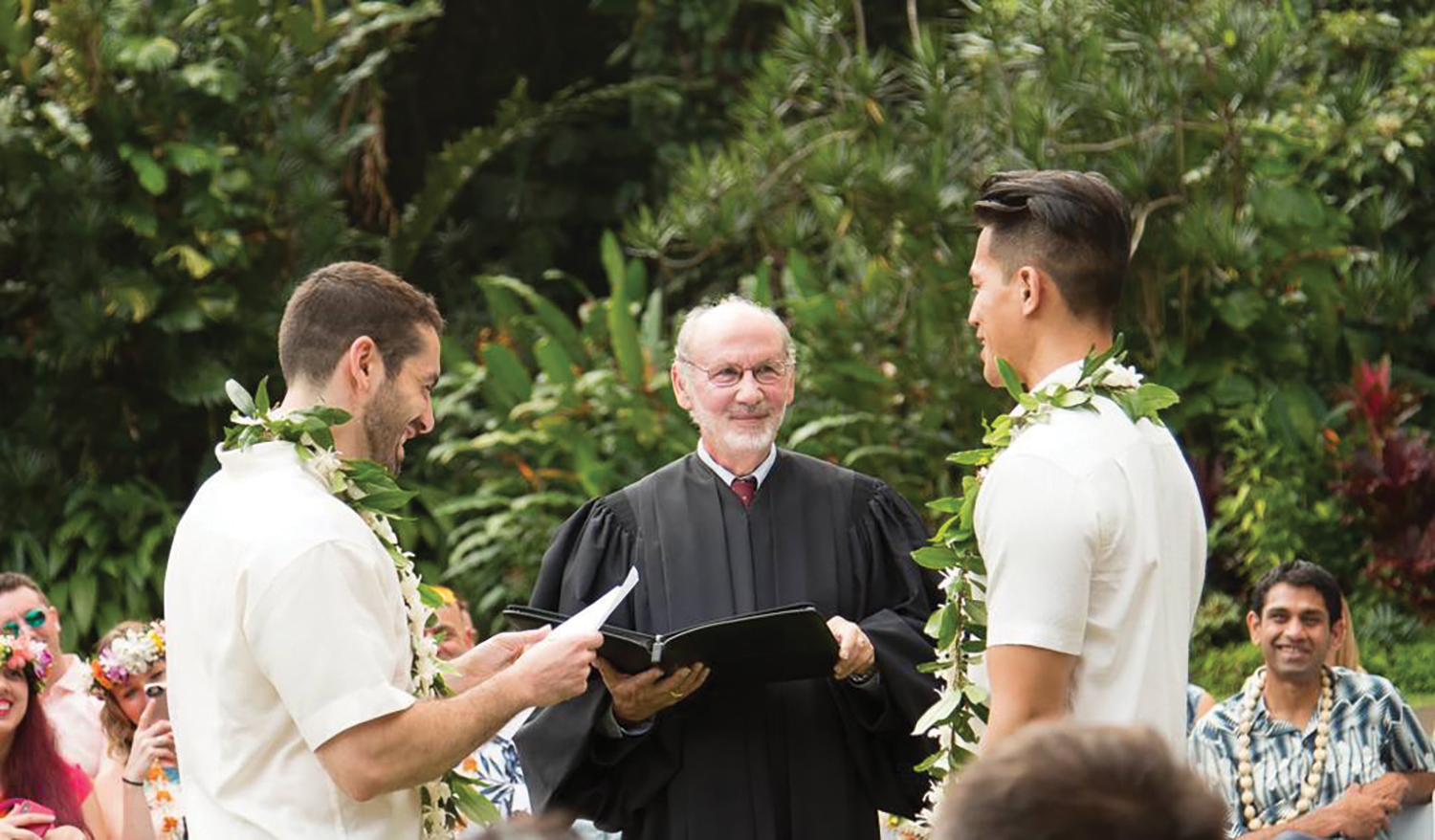
      Judge Daniel R. Foley, formerly an Associate Justice of the Hawai’i Court of Appeals, by his representation of three same-sex couples in the Hawai‘i court case of Baehr v. Lewin, moved to overturn the then hard-fast belief that marriage should be reserved to opposite-sex couples. Judge Foley’s legal strategy and courageous action changed the world, leading to the legalization of same-sex marriage in other parts the world.

      What prompted Judge Foley to take on such Herculean task, in great part, alone? As a boy, Judge Foley explains, “I was always the new kid in school. I went to six different schools before high school. I was identified with the outsiders. I always detested bullies. When a bully would taunt defenseless classmates, I would stand up for the classmates, which often resulted in a fight. I regarded the government’s treatment of members of the LGBTQ community as a form of bullying.”

      Judge Foley has had an interesting career that included diverse experiences in remote places. After college, he joined the Peace Corps and was assigned as an agricultural extension officer in Lesotho, southern Africa. After law school, he served as a legal adviser to emerging governments in Micronesia, writing constitutions and other laws as these governments achieved independence from the US. He has served as an Associate Justice of the Supreme Court of Palau. He drafted the Rules and Regulations of the Hawai‘i Civil Rights Commission, chaired the Hawai‘i’s Access to Justice Commission and has taught civil rights litigation at the University of Hawai‘i Richardson School of Law.

      In the Hawai‘i legal community, Judge Foley was known as a lawyer who represented unpopular and controversial clients and causes. For instance, he successfully represented a Miss Gay Moloka‘i Pageant after an official refused to grant a permit to allow a hula to be performed at a carnival.

      On Dec. 17, 1990, three gay couples applied for marriage licenses at the Hawai‘i Department of Health, but they were told that their applications would be held until the State Attorney General could rule on their applications. Within five years, the US Supreme Court permitted the right for gay and lesbian couples across the nation to be legally married. In the 2015 Supreme Court ruling, Associate Justice Anthony Kennedy cited Hawai‘i’s pivotal same-sex marriage decision.

      Judge Foley says, “Same-sex marriage is a right protected by the Equal Protection Clause in both the US and Hawai‘i Constitutions. I believed there should be no discrimination against persons of the same sex who apply for a marriage license. I was raised as a Catholic and attended a Jesuit university in San Francisco. I was aware of the traditional biblical view of marriage, but what controlled it was the Equal Protection Clause.”

      Judge Foley is married to a Japanese-Chinese-Hawaiian woman. After marriage, he converted to Buddhism. Earlier in San Francisco, he had studied Zen Buddhism and Tibetan Buddhism. He has studied renowned Zen Master Daisetz Suzuki. He meditates early in the morning and later in the day.

      His spirituality is deep and profound. He says, “The spirituality of life is very important to me. I try to be good person and treat others with respect and compassion. I believe that our acts have an immediate impact on ourselves and those around us in this life and in the hereafter. I believe that our karma determines our afterlife. We should be true to our values. Our values shape our character and guide us in our decision-making.”


      Judge Daniel R. Foley, formerly an Associate Justice of the Hawai’i Court of Appeals, by his representation of three same-sex couples in the Hawai‘i court case of Baehr v. Lewin, moved to overturn the then hard-fast belief that marriage should be reserved to opposite-sex couples. Judge Foley’s legal strategy and courageous action changed the world,…

    7. Tips for Smarter & Safer Buying This Year

      If you are planning on making high-trust purchases in 2026, such as home improvements or a new vehicle, consider these three ways to make smarter buying decisions:

      1. Build confidence before you buy.
        Before purchasing, spend five minutes on research (bbb.org/search?find_country=USA). Confirm the business is legally registered, properly licensed for its trade and has a history of delivering on promises.
      2. Use tools that make research convenient.
        Keep your research habits focused and simple by using a trusted research tool (BBB.org) that allows you to investigate and get trusted, free quotes (bbb.org/get-a-quote). BBB business profiles show a business’s rating, BBB accreditation, reviews and complaint history.
      3. Have a plan if things go wrong.
        If your purchase/project doesn’t go as promised, communicate directly with the company. If that fails, involve a neutral third party like BBB (bbb.org/file-a-complaint). You can also seek guidance from industry associations or authorities. As a last resort, legal action may be necessary—but most issues are resolved faster and at little to no cost through BBB’s mediation and arbitration services.

      BETTER BUSINESS BUREAU GREAT WEST+PACIFIC (nonprofit)
      800-460-0910 | info@thebbb.org | thebbb.org
      Ad or company clarification: bbb.org
      Report a scam: bbb.org/scamtracker
      File a complaint: bbb.org/file-a-complaint

      If you are planning on making high-trust purchases in 2026, such as home improvements or a new vehicle, consider these three ways to make smarter buying decisions: BETTER BUSINESS BUREAU GREAT WEST+PACIFIC (nonprofit)800-460-0910 | info@thebbb.org | thebbb.orgAd or company clarification: bbb.orgReport a scam: bbb.org/scamtrackerFile a complaint: bbb.org/file-a-complaint

    8. Food Stamps Are a SNAP for Seniors!

      One of the things about growing older is that it happens gradually. When I retired from Hawai‘i Meals on Wheels last year at age 72, I didn’t realize I was already a dozen years into what is legally defined as “senior”—60 years old or older—by many government program standards. I had already started receiving early Social Security at 62 and had seamlessly transitioned my medical coverage at my workplace to Medicare at 64.

      Retirement for many means living on less income and I remembered reading somewhere that the governor had done something to make Supplemental Nutrition Assistance Program/Electronic Benefits Transfer (SNAP/EBT) more available for Hawai‘i seniors. I wondered what the qualifications were. It took some digging to find out.

      I applied online at Hawai‘i’s Department of Human Services (DHS) website (humanservices.hawaii.gov), qualified and received my EBT Kokua Card (Hawai‘i’s name for the EBT card) in about a month. If you don’t know if you qualify or not, go ahead and try. Nothing bad will happen if you don’t qualify and all the information is confidential.

      In case you are wondering, “SNAP,” “EBT” and “Food Stamps” refer to the same thing. I use the term “EBT,” which is the tool we use to use our SNAP benefits. Your monthly SNAP benefits are loaded onto the EBT Kokua Card. “Food Stamps” is an old-school term for the same thing.

      SNAP is a federal program funded by the US Department of Agriculture, administered here by the State of Hawai‘i. It helps American farmers. If we spend EBT dollars in Hawai‘i, it helps local businesses and local farmers if we buy local. And it certainly helps us seniors.

      You can use EBT to buy food at the market, but you can’t buy medicine, vitamins, tobacco, alcoholic beverages or hot, prepared food (although you might qualify for a meals-on-wheels type service from other nonprofit organizations in Hawai‘i).

      If you qualify, your benefit amount will vary according to your income.

      Some surprising benefits come with your EBT card. Before I even received my Kokua Card, I received a DaBux card. What is DaBux? It’s a Hawai‘i program that gives EBT users a 50% discount off local produce at most local supermarkets and online at Farm Link Hawai‘i (farmlinkhawaii.com). And that includes “name-brand” organic produce. You double your EBT bucks with DaBux.

      With your EBT card, you can even get seeds for vegetables and herbs at a discount from participating retailers so you can grow your own. You can’t get fresher than that.

      Need Help?

      Not all seniors are computer savvy, so I made a short instructional video about the new rules and how to apply online. You can find my 14-minute YouTube video that further explains the process on at tinyurl.com/HowToApplyEBT.

      For those seniors who are not online at all, a local nonprofit organization can help you apply for SNAP/EBT and let you know about your eligibility for other senior programs.

      Call Catholic Charities Benefits Enrollment Center on O‘ahu at 808-527-4777. Other islands can call 808-521-4357.

      For SNAP application, interview and recertification updates, visit humanservices.hawaii.gov/bessd/updates.


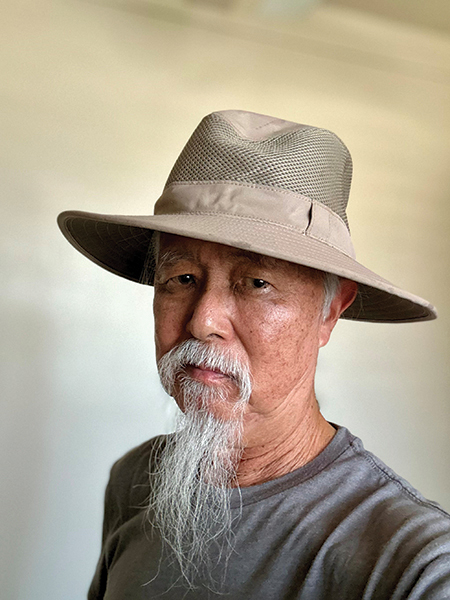
      H. Doug Matsuoka was born in Hilo, Hawai‘i, and lives in Honolulu. Now retired, his career spanned social service nonprofits, including Volunteer Legal Services Hawaii. He recently retired from his 10 years with Hawaii Meals on Wheels, where he started as a part-time driver and became the IT director. He is a social activist, author and co-founder of Hawaii Guerrilla Video Hui.

      If you have a story to share, email the editor: debra@generations808.com.

      One of the things about growing older is that it happens gradually. When I retired from Hawai‘i Meals on Wheels last year at age 72, I didn’t realize I was already a dozen years into what is legally defined as “senior”—60 years old or older—by many government program standards. I had already started receiving early…

    9. Cryptocurrency ATM Scams

      The latest scam tool that international criminal gangs use to take money from kūpuna is likely in your neighborhood supermarket or convenience store.

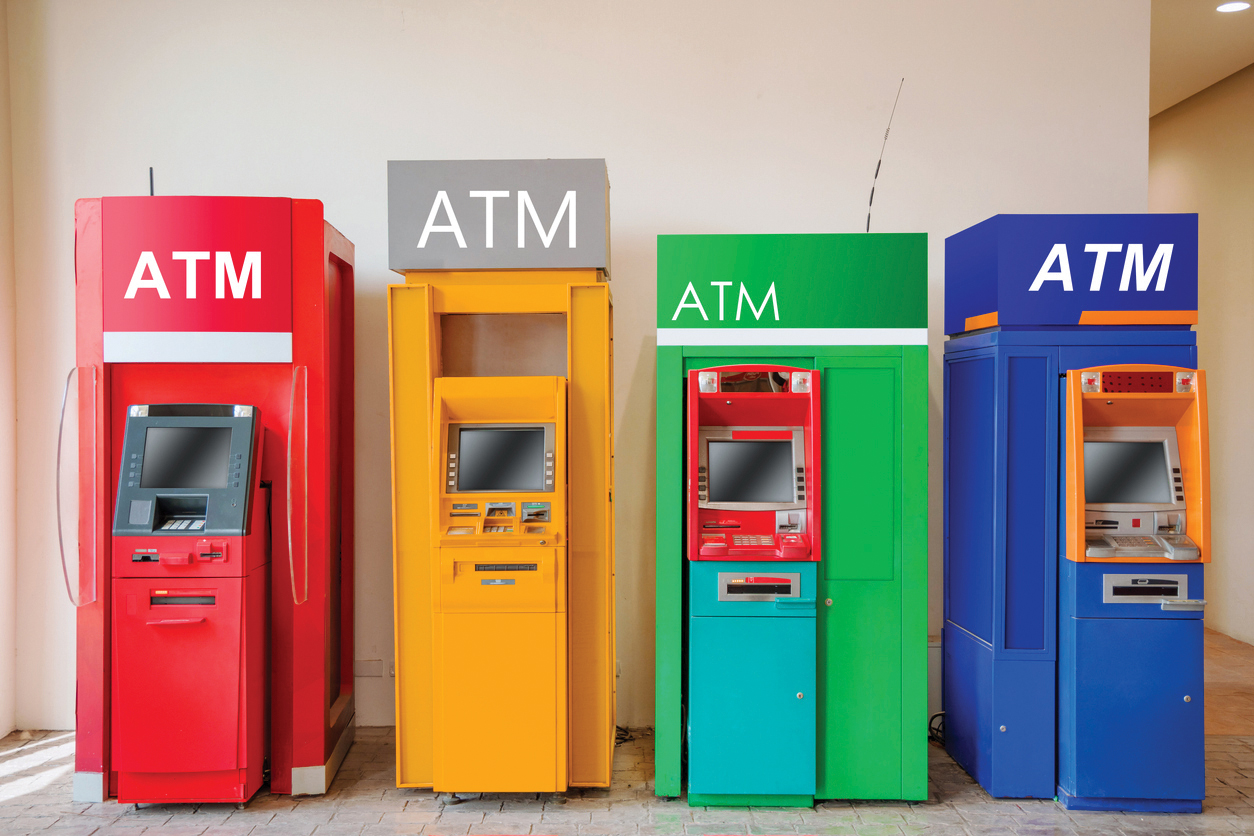
      Bitcoin ATMs, which look similar to bank ATMs, have become commonplace sitting next to regular ATMs, alongside the DMV registration machine and video rental box. There are nearly 100 of them in Hawai‘i and more keep getting added.

      The FBI said that reported crimes involving cryptocurrency ATMs almost doubled last year with nearly 11,000 complaints and losses of about $247 million in 2024.

      The scammers target kūpuna who may not be familiar with bitcoin and cryptocurrency. The Federal Trade Commission says people 60 and older are three times more likely to report being a victim of cryptocurrency ATM fraud.

      The scams often involve a phone call from a fake government or bank official who convinces the consumer that their money is in danger and they need to transfer it to a safe place. Sometimes they call cryptocurrency ATMs a “federal safety locker.” Sometimes it’s a variation of the grandparents or romance scams; the consumer is told to pay into a cryptocurrency ATM to get their grandchild out of jail or to invest in cryptocurrency by someone they have been persuaded to trust.

      What can be done?

      AARP Hawai‘i is pushing for commonsense legislation to limit cryptocurrency ATM transactions to $2,000 per visit, which could limit fraud losses. We’re also lobbying for better fraud warnings and in some cases refunds to consumers.

      Be aware that only scammers demand payment with cryptocurrency. The government never accepts cryptocurrency. Also, if you see someone, especially kūpuna, feeding money into a crytocurrency ATM who looks distressed and may be on the phone with someone directing them, let store authorities or even the police know.

      If you have been a victim of cryptocurrency ATM fraud or know someone who has lost money, let AARP Hawai‘i know by emailing us at the address below. We need to educate lawmakers about this fraud trend and hearing from constituents will help us pass legislation that could save kūpuna from losing their life savings.


      AARP HAWAI‘I (nonprofit)
      1001 Bishop St., Ste. 625, Honolulu, HI 96813
      866-295-7282 | hiaarp@aarp.org
      aarp.org/hi | facebook.com/aarphawaii

      The latest scam tool that international criminal gangs use to take money from kūpuna is likely in your neighborhood supermarket or convenience store. Bitcoin ATMs, which look similar to bank ATMs, have become commonplace sitting next to regular ATMs, alongside the DMV registration machine and video rental box. There are nearly 100 of them in…

    10. First Scammed, Then Murdered

      Thousands of seniors every year receive the scam message, “Congratulations! You’ve won the lottery!” For one man, however, that call didn’t just drain his savings, it cost him his life.

      Abe was a trusting 67-year-old retiree who had been receiving calls for months from a scammer claiming he had won a multimillion-dollar lottery. Like many victims, he believed the caller when they said he only needed to pay “taxes” and “processing fees” to release his prize. He paid hundreds, then thousands, then tens of thousands of dollars to secure his life-changing grand prize… a grand prize that never existed.

      More unfortunate, Abe was not the only one who believed this fantasy. Dee Dee, is live-in girl- friend, also fell for these lies. She saw the outgoing wire transfers, the frantic calls and the promises of a jackpot “about to arrive.” She “knew” a huge fortune was coming—a fortune she believed she deserved, as well. When the money did not appear, Dee Dee thought Abe was hiding the payout from her. When she confronted him, he told her he didn’t have any more money to send for the taxes and processing fees and that he hadn’t received anything at all. Upon hearing this, she thought he was lying and attacked Abe, fatally injuring him. The “lottery winnings” that never existed had destroyed two lives: his and hers.

      This case highlights how deeply and dangerously criminals manipulate their victims. Scam artists know exactly what they’re doing—they build trust, create emotional dependence and manufacture hope. Victims often hide the scam from family out of embarrassment. Loved ones watching from the outside may misunderstand the situation, misinterpret the victim’s behavior or become entangled in the false belief that money is on its way.

      Scams don’t just empty bank accounts. They destabilize homes, relationships and mental health. This case shows that the consequences can become deadly when fear, delusion and financial strain collide.

      But there are ways to protect yourself and those you care about.

      * In Hawai‘i, it is impossible and illegal to win a foreign lottery. Also, no legitimate lottery contacts winners by phone, text or social media. If you didn’t physically enter a contest, you didn’t win. Period.
      * Be aware that you never need to pay money to receive prize winnings. Taxes, fees, customs charges—all fake. Requesting payment is the No. 1 giveaway of a scam.
      * Keep communication open with trusted family. Scammers isolate victims by urging secrecy. If a loved one suddenly becomes secretive about finances, check in compassionately.
      * Watch for sudden financial stress in a household. Unexplained withdrawals, new credit card debt or abrupt behavioral changes may signal a scam.
      * Do not confront scammers or escalate disputes at home. If someone in your household is being scammed, contact police or Adult Protective Services.

      Lottery scams are designed to destroy lives — emotionally, financially and, in rare cases, physically. The best defense is knowledge, honest conversations and early intervention. No jackpot or prize is ever worth a life.


      HAWAI‘I STATE BAR ASSOCIATION
      Senior Counsel Division
      Alakea Corporate Tower, 1100 Alakea St., Ste. 1000
      Honolulu, HI 96813
      808-537-1868 | SCD@HSBA.org | HSBA.org

      Thousands of seniors every year receive the scam message, “Congratulations! You’ve won the lottery!” For one man, however, that call didn’t just drain his savings, it cost him his life. Abe was a trusting 67-year-old retiree who had been receiving calls for months from a scammer claiming he had won a multimillion-dollar lottery. Like many…