Tag: Exercise

  • The Power of One-Minute Exercises

    Is more exercise on your list this  year? Was it on last year and the previous years’ as well? Don’t feel bad — exercise holds the No. 1 spot in U.S. surveys as a resolution to be made and broken.

    So how can you make this year’s intention a success? All you need is one minute each hour to move your body or practice deep breathing. Studies have shown that by being mindful of your movement and breathing for one minute every hour, your focus and concentration will also improve. Smiling helps, too.

    Set your alarm on your phone to ring throughout the day, and when it does, set a timer and then move. You don’t need special equipment. Just spend that time observing your body. You can do slow neck rolls or shake your hands, or march. It doesn’t have to be difficult exercise — any movement, when done mindfully and with intention can be very beneficial to your body and your brain. Even tapping your body all over for one minute can get the blood flowing and boost your endorphins to make you feel good. Ten “1-minutes” a day is recommended to improve circulation and help you sleep better.


    BODY & BRAIN YOGA/TAI CHI
    Honolulu 808-596-9642 | Aiea 808-486-9642
    Kaimuki 808-738-5522
    Manoa Energy Healing Center 808-691-9642
    www.bnbenergyhealing.com
    www.bodynbrain.com | www.bodynbrain.com/manoa
    Is more exercise on your list this  year? Was it on last year and the previous years’ as well? Don’t feel bad — exercise holds the No. 1 spot in U.S. surveys as a resolution to be made and broken. So how can you make this year’s intention a success?

  • Are You Golf-Ready?

    Golf is a popular sports activity. Unlike most sports, it can be played throughout the golden years, if you can stay in shape and avoid injury. The American Physical Therapy Association says that older golfers often forget that while their passion for the game remains high, their bodies have aged. As we age, we lose flexibility, muscle mass and strength. Because the golf swing’s extreme bending and twisting movements are not natural for the body, senior golfers are at a greater risk of injury. Correct body mechanics on or off the course (lifting golf bags, etc.) play a larger role in preventing injuries. Warm-up exercises before starting a game are essential to prevent injury and continuing with these exercises during the game will help muscles recover faster and maintain muscular balance. Keeping yourself in shape with year-round conditioning, balance, strength, endurance and flexibility training ensures an injury-free game. Try these stretches:

    Anterior Shoulder Stretch:
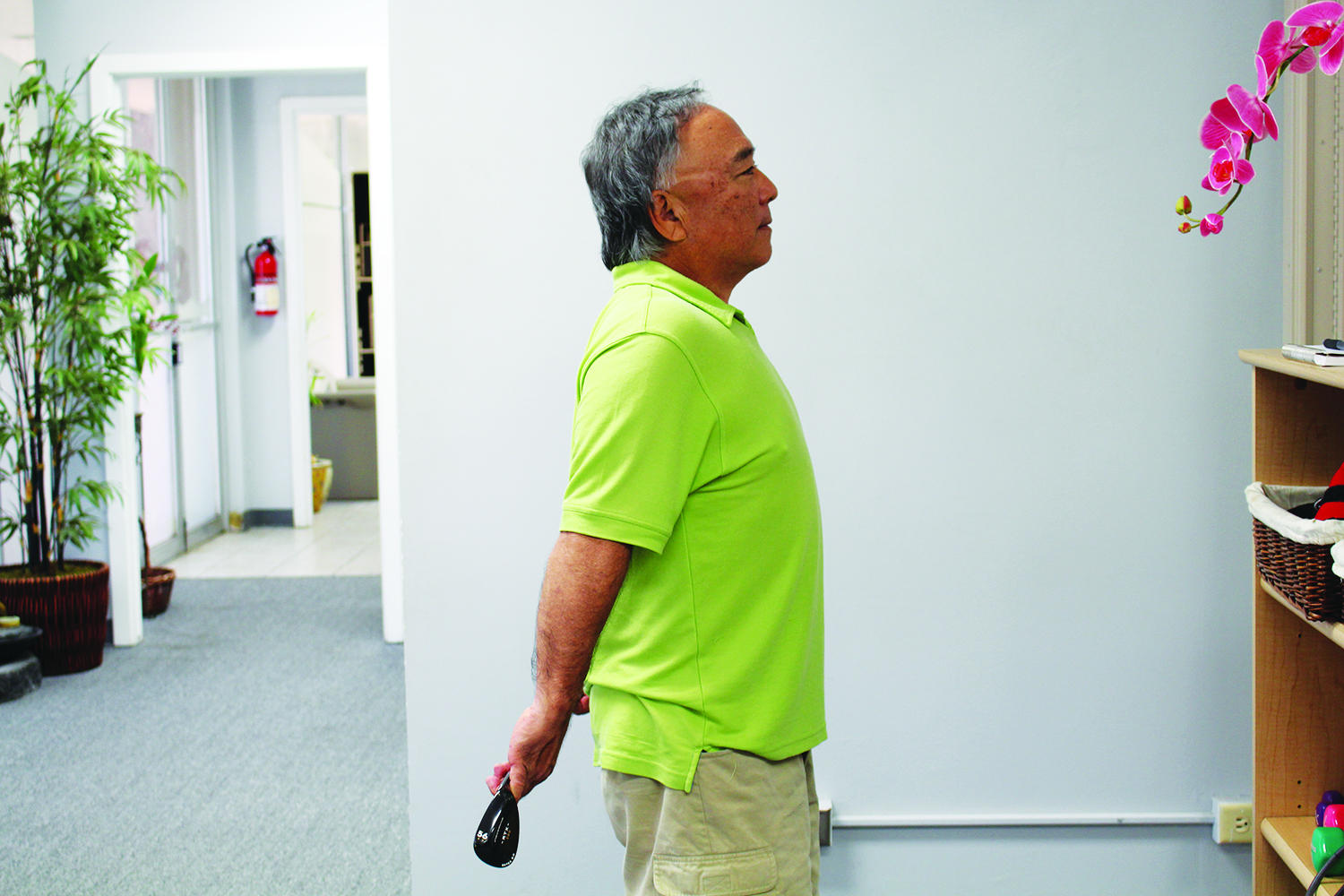
    Increases range of motion (ROM). Standing, hold your golf club behind your back with palms outward. Raise the club upwards until a stretch is felt in the front of your shoulders and chest. Hold 20 to 30 seconds. Do 2 to 3 sets.


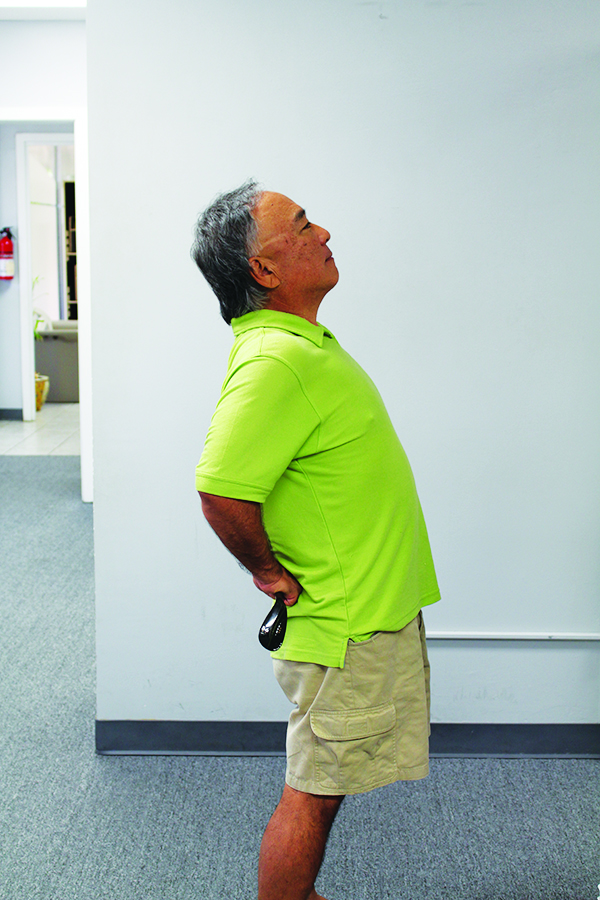
    Trunk Extension:
    Increases trunk ROM and prepares muscles for your golf swing (reduces back injury.) Stand holding your golf club with both hands (palms outward), resting the club on the small of your back. Bend backwards slowly. Hold for 2 seconds and return. Repeat 5 to 10 times.


    Trunk Rotation:
    Stand in the golf posture with your club behind your neck on your shoulders and grasp each end. Slowly and with control, rotate your upper body back, simulating a golf swing. Stretch the trunk region. Repeat 10 times.


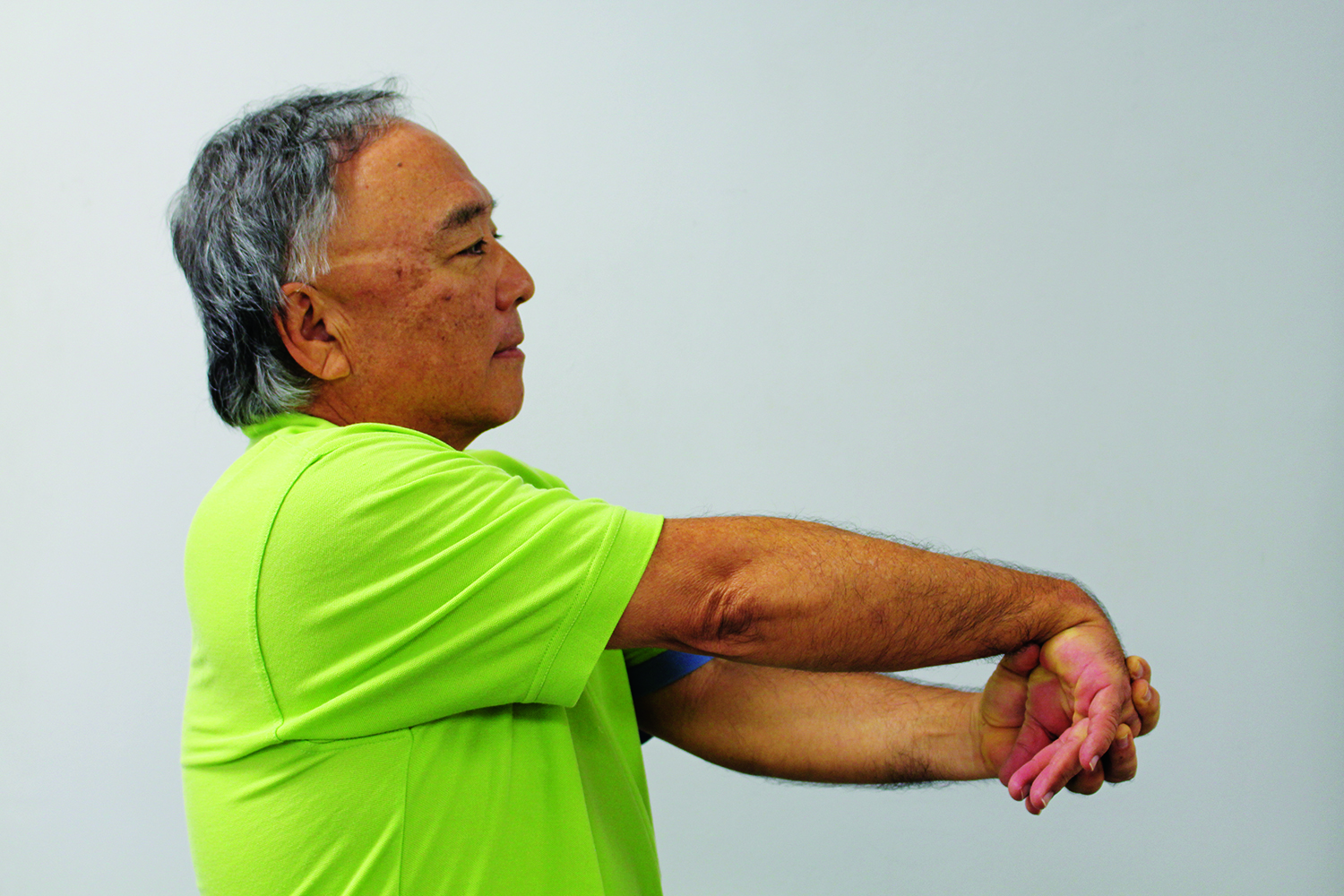
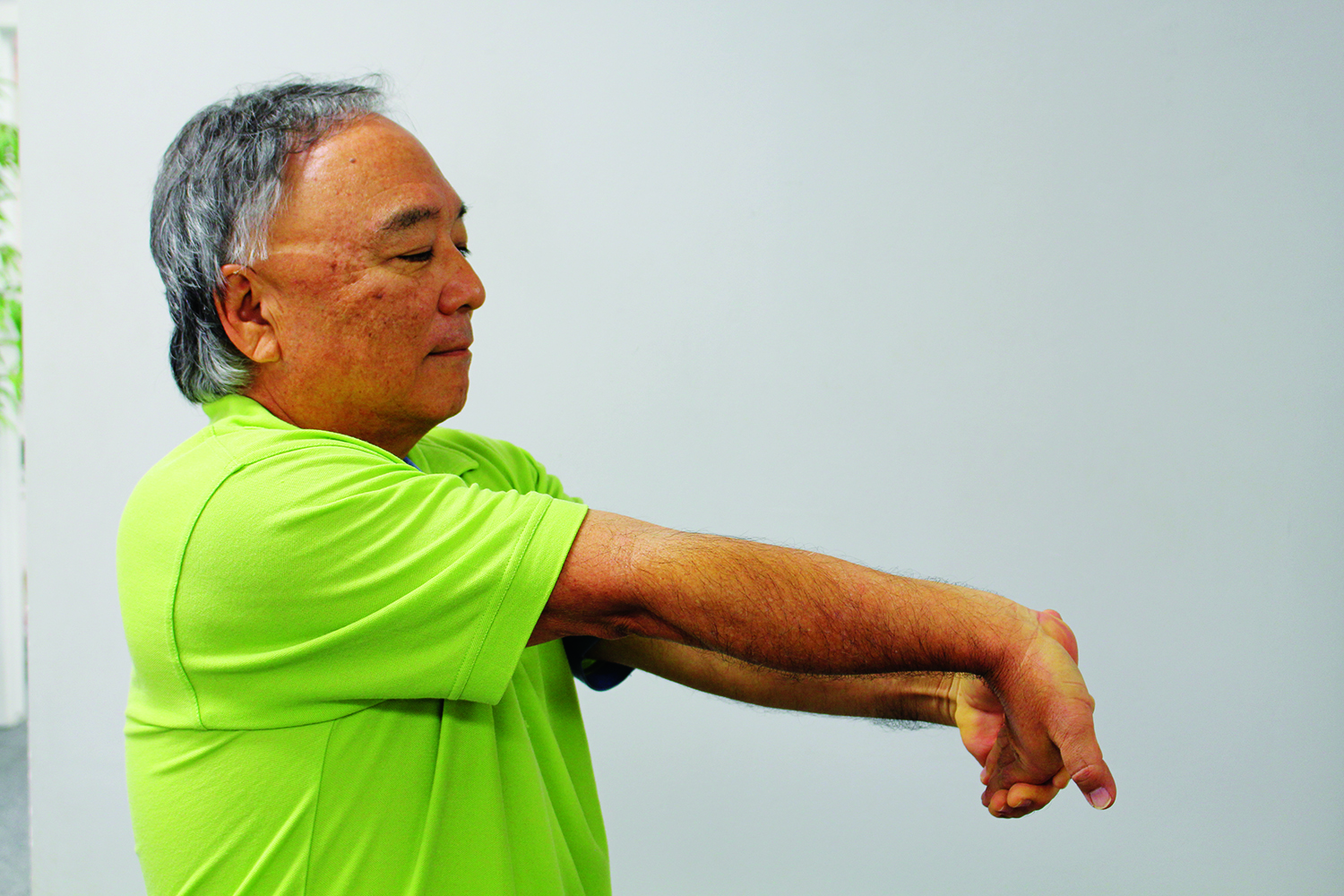
    Wrist Stretches:
    Increase flexibility. Start with one arm held outward horizontally, elbows straight, palm down. Use your other hand to bend your wrist downward. Hold it for 20 to 30 seconds. Then turn your palm upward and repeat. Do 2 to 3 sets per wrist.


    Moon Physical Therapy LLC
    Aquatic, Land-based and Manual Therapy and Cardiopulmonary Rehab Programs
    320 Ward Avenue, Ste. 107, Honolulu
    808-597-1005 | www.moonpt.com

    Golf is a popular sports activity. Unlike most sports, it can be played throughout the golden years, if you can stay in shape and avoid injury. The American Physical Therapy Association says that older golfers often forget that while their passion for the game remains high, their bodies have aged. As we age, we lose…

  • Are You Aging Too Quickly?

    Walk into any gym and you will see it full of baby boomers — those born between 1946 and 1964. The oldest of the baby boomer generation is now 73 and the youngest is 55. But age alone does not define the actual physical condition of a person. You may see the 73-year-old doing burpees and the 55-year-old doing Silver Sneakers in a chair.

    There are two ways to age as defined by the Functional Aging Institute:1) Primary Aging and 2) Secondary Aging.

    PRIMARY AGING

    Primary Aging happens in our cells, determining our susceptibility to disease, injury and age of death. These factors are “hard-wired” into our genetic code and cannot be altered. Whatever your genetic predisposition, you can decide to take action in order to slow the aging process.

    SECONDARY AGING

    Secondary Aging determines deterioration due to lifestyle behaviors, disease processes, environment, injury and illness. These factors are variable but can be significantly controlled by quitting smoking, eating healthier, drinking less alcohol and most importantly — being more active.

    Physical activity will help you do the things you enjoy with more ease, such as carrying your own groceries or keeping up with your grandkids. Start working with a personal trainer who can design a program for you that you can do in a gym or at home in order to help you increase your happiness and confidence.


    FRAN PATOSKIE
    Certified Personal Trainer & Functional Aging Specialist
    808-349-5598 | ilovetosweat@gmail.com

    Walk into any gym and you will see it full of baby boomers — those born between 1946 and 1964. The oldest of the baby boomer generation is now 73 and the youngest is 55. But age alone does not define the actual physical condition of a person. There are two ways to age as…

  • Relieving Shoulder Pain

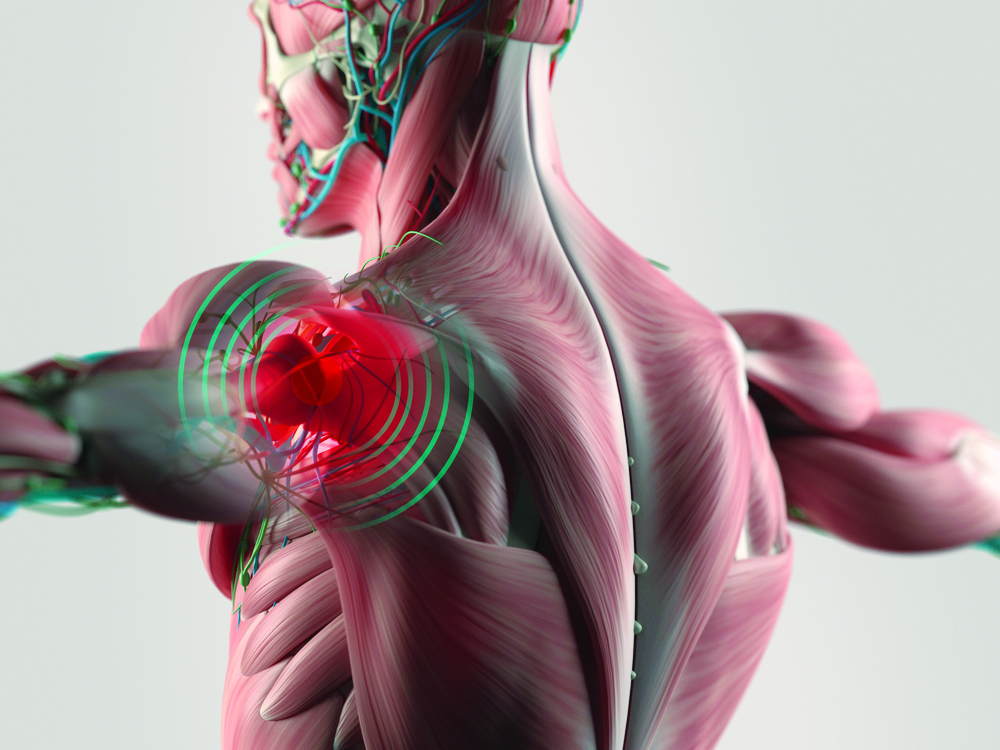
    Weekend warriors often develop shoulder discomfort when performing overhead movements while playing tennis, baseball or tackling DIY projects around the house. The longer you suffer, the more damage can occur. Here are simple tips to relieve some symptoms:

    1. STOP PAINFUL ACTIVITIES!

    Trying to “work through the pain” is a mistake. It is your body warning you of a problem. Avoid that activity and allow inflammation to resolve.

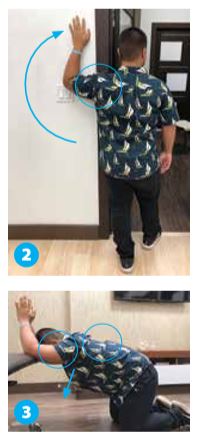
    2. REVERSE ROUNDED SHOULDERS

    Stretching the pectoralis minor will increase flexibility of the anterior shoulder and chest. Stand with one foot forward against the corner of a wall using it to hold the shoulder back, pinch shoulder blades together, slowly raise the arm up until you feel a deep stretch. Hold for 30 seconds; repeat three to five times.

    3. IMPROVE THORACIC (MIDDLE BACK) SPINE MOBILITY:

    To be able to reach overhead fully, you need thoracic flexibility. From a kneeling position, lean forward and place your elbows on a chair and drive your chest downwards, stretching the spine and under the arms. Hold for 30 seconds; repeat three to five times.


    MOON PHYSICAL THERAPY, LLC
    320 Ward Ave., Ste. 107, Honolulu HI 96814
    95-1057 Ainamakua Dr., F-11, Mililani HI 96789
    808-597-1005 | www.moonpt.com

    Weekend warriors often develop shoulder discomfort when performing overhead movements while playing tennis, baseball or tackling DIY projects around the house. The longer you suffer, the more damage can occur. Here are simple tips to relieve some symptoms:

  • Don’t Just Sit There! Get Up & Move!

    Many of us sit for hours at a desk at work and on the couch at home. Our jobs and activities have been trending toward a more sedentary lifestyle. And regular exercise might not be enough to reverse the damage.

    Studies now indicate the longer you sit, the greater your risk of developing cardiovascular disease or diabetes. Prolonged sitting lowers your metabolism, increases blood fat and sugar levels, drops your good cholesterol and increases mortality rates. It’s being referred to as a new risk factor, like smoking or high blood pressure.

    We know the benefits of exercise, yet getting the recommended 75 minutes of vigorous or 150 minutes of moderate exercise per week is hard.

    If you sit for longer than 30 minutes, get up and walk around. In addition, build your core strength and burn calories by being mindful of your posture.

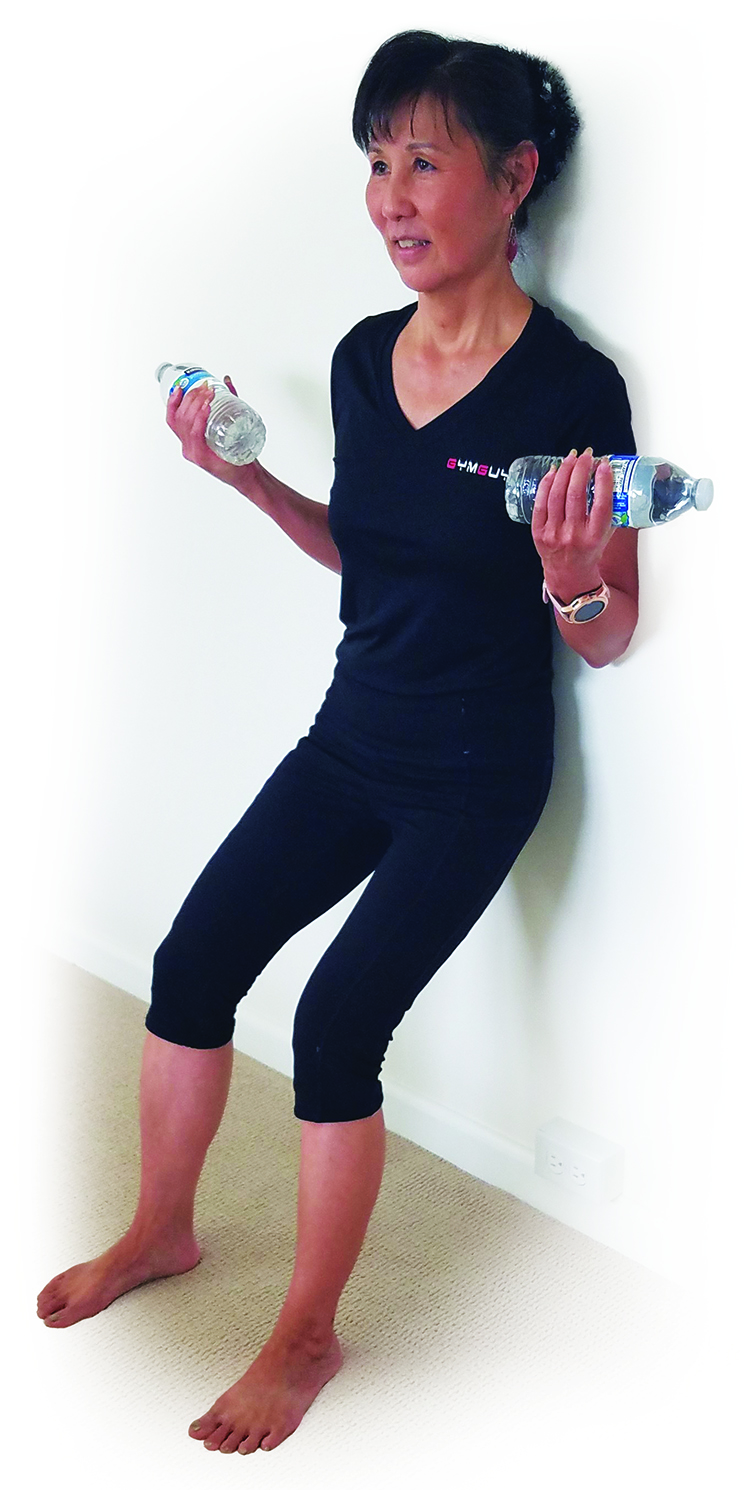
    In addition, do some wall sits with some bicep curls. With your back against a wall, walk your feet forward until you’re in a partial sitting position. Then push your head and shoulders against the wall while curling bottles water or cans of food.

    To remind you, set a timer for 30 minutes and MOVE! Substitu- ting even the simplest physical activities for some of your sit- ting time is an easy way to improve health and increase happiness.


    GYMGUYZ Urban Honolulu
    808-638-2525 | www.gymguyz.com

    Many of us sit for hours at a desk at work and on the couch at home. Our jobs and activities have been trending toward a more sedentary lifestyle. And regular exercise might not be enough to reverse the damage. Studies now indicate the longer you sit, the greater your risk of developing cardiovascular disease…

  • What is Active Aging?

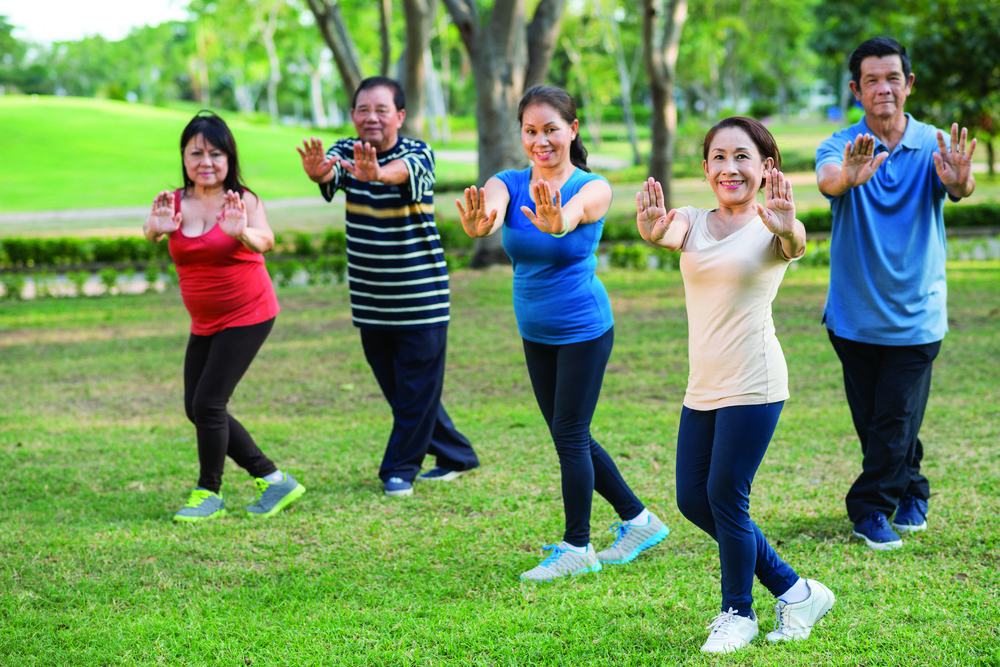
    You see the term “active aging” quite frequently, but what does it mean? Active aging is a term describing people and populations who live life as fully as possible. Particularly, they live within the seven dimensions of wellness — emotional, vocational, physical, spiritual, intellectual, social and environmental. These dimensions of wellness overlap. Active aging encourages everyone in a community to engage in active living, regardless of their age, health or socioeconomic status. The concept of active aging can be summed up in the phrase “staying engaged in life”— essentially, tapping into our human potential throughout our lifespan. Wellness is the foundation of active aging. It involves shifting the mindset that aging involves managing disease to one of disease prevention and proactive strategies.

    Wellness becomes a valuable framework to serve the needs of a person engaged in life and provides rich environments for living. You’ll find many active aging programs in Hawai‘i. Activities such as tai chi are a good example of overlapping wellness dimensions, including physical, social, spiritual and intellectual aspects. A ‘ukulele class is another good example. Seek out activities that keep you engaged and to continue living your rich, full life!


    KUPUNA EDUCATION CENTER
    Kapi‘olani Community College
    808-734-9108 | www.kupunaeducation.com

    You see the term “active aging” quite frequently, but what does it mean? Active aging is a term describing people and populations who live life as fully as possible. Particularly, they live within the seven dimensions of wellness — emotional, vocational, physical, spiritual, intellectual, social and environmental.

  • Prevent Pain While Sitting at Your Desk

    The reality is most of us sit too much. A study published by Microsoft revealed that U.S. workers spend an average of seven hours per day on a computer — more hours than they sleep at night! Sitting at a desk for hours on end can result in increased muscle tension at the neck, back and shoulders. And if it’s not addressed, over time it can lead to spinal pain, headaches and even more serious symptoms —pain, tingling or numbness down the arms.

    Here are some tips to help you stay healthy behind your desk:

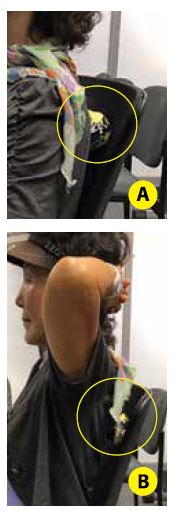
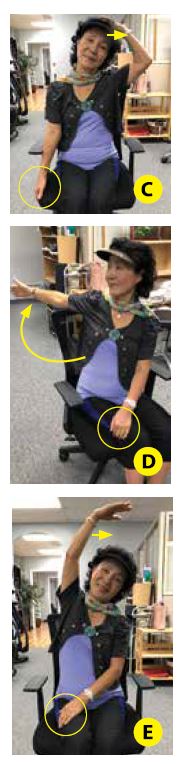
    Tips for exercising while at work by Julie MoonA) If you are like most people, you’re likely to have difficulty maintaining good posture while sitting. So, the first thing is to break the habit of poor posture. Use two tennis balls taped together placed between the shoulder blades as a reminder to sit upright. It will provide instant feedback the moment you begin to slouch.

    B) Increase mobility of the spine by leaning back on the tennis balls, extending your upper back and looking up with hands clasped together. Hold a few seconds and repeat five to 10 times per day.

    Tips for exercising while at work by Julie MoonC) Stretch the neck 30 seconds by gently pulling your head to the side as the opposite hand grabs the chair to hold the shoulder down, switch sides and repeat.

    D) Grab your opposite thigh and pull with your hand so your torso rotates as you reach back and extend the arm, elbow and wrist. Turn your head and breathe, hold 20 to 30 seconds, switch sides and repeat.

    E) Continue to grab the opposite thigh and with the other hand over your head lean your body to feel a stretch along your side, breathe and hold for 20 to 30 seconds. Switch sides and repeat.

    It is recommended that you get up and move every 30 minutes for 1 to 2 minutes. But if you find it difficult to do so, try these tips to increase blood flow and bring oxygen to your brain, which will increase your energy and level of concentration.


    MOON PHYSICAL THERAPY, LLC
    320 Ward Ave., Ste. 107, Honolulu HI 96814
    95-1057 Ainamakua Dr., F-11, Mililani HI 96789
    808-597-1005 | www.moonpt.com

    The reality is most of us sit too much. A study published by Microsoft revealed that U.S. workers spend an average of seven hours per day on a computer — more hours than they sleep at night! Sitting at a desk for hours on end can result in increased muscle tension at the neck, back…

  • Exercise – a Panacea. Part 1: Arthritis

    A healthy joint is like two smooth pieces of paper sliding against each other. Arthritis, joint damage, is like adding crinkles to the papers, with the friction causing pain and problems. However, in severe cases, and even with bone-on-bone degeneration, having no pain with “activities of daily living” is easily obtainable with a lot of hard work and the right treatments. If exercising on your own, consistency and diligence are the most important factors, so do something fun, like group classes/events, dancing, or play dates with grandchildren.

    The key is dynamic muscle protection

    Muscles are about 80 percent of the body’s support and protection; bones, ligaments, and padding are only about 20 percent.

    It is very common to have strong and healthy muscles that lack the coordination to protect joints.

    Certain exercises astronomically increase muscle protection.

    Any exercise helps build some protection, but most have minuscule levels of protection, necessitating high volume to feel any benefit. An optimized exercise should allow for significant and immediate improvements.

    Consider working with a physical therapist to create an optimized exercise plan that brings about those improvements.


    PRIME PHYSICAL THERAPY
    600 Queen St., C-2, Honolulu HI 96813
    808-286-0194 | www.primepthawaii.com

    A healthy joint is like two smooth pieces of paper sliding against each other. Arthritis, joint damage, is like adding crinkles to the papers, with the friction causing pain and problems. However, in severe cases, and even with bone-on-bone degeneration, having no pain with “activities of daily living” is easily obtainable with a lot of…

  • Benefits of Exercise for Our Kūpuna

    Regular exercise and physical activity can help to prevent disease, improve mental health, increase energy, reduce the risk of falling and much more. Here’s how!

    Disease prevention

    Exercise improves overall immune function. Even light exercise for 30 minutes a day is beneficial.

    Photo courtesy of Pohai Nani
    Photo courtesy of Pohai Nani

    Improved mental health and cognitive function

    Exercise relieves stress by producing endorphins —  those “feel good” hormones — and has also been shown to lower the risk of developing dementia.

    Improved sleeping patterns

    Exercise helps establish good sleeping patterns, which is especially important for older adults.

    Decreased risk of falls

    Exercise improves strength, agility and flexibility, which in turn will improve balance and coordination, reducing the risk of falls.

    Social engagement

    Strong social ties are important at any age. Turn exercise into a fun social activity by joining a group exercise class, walking group or even a gardening club.

    ———————-

    POHAI NANI
    Sonja Guy  |  808-236-7807 www.pohainani.org

    Regular exercise and physical activity can help to prevent disease, improve mental health, increase energy, reduce the risk of falling and much more. Here’s how!

  • A Pain-Free New Year

    With a new year comes new goals to better ourselves. Whether you have been exercising for years or are just starting out, be especially careful to avoid injury. Loss of flexibility and of bone and muscle mass increases the risk of injury and slows down recovery.

             Consult with a professional — Do not start a program without first checking with your doctor or your physical therapist. Your PT will provide expert assessment and personalized recommendations for your health and fitness. They will ensure your workout program accommodates your physical capabilities and any pre-existing conditions you might have.

             Warm up / cool down — Cold muscles are prone to injury so add a few minutes of light exercise and stretches to improve blood flow and reduce stiffness. Slowly increasing / decreasing your heart rate also minimizes stress on your heart.

             Know your limitations — Never work out to the point of pain. Exercising through pain can actually prolong healing. Listen to your body, slow it down, or consult with a PT on how to proceed carefully and safely.

             Vary your workout — Alternating programs, such as swimming or dancing, work different muscle groups, prevent boredom, and give your body a chance to recover between sessions.

    ———————-

    MOON PHYSICAL THERAPY, LLC
    320 Ward Ave., Ste. 107, Honolulu HI 96814 95-1057 Ainamakua Dr. F-11, Mililani HI 96789
    808-597-1005 | www.moonpt.com

    With a new year comes new goals to better ourselves. Whether you have been exercising for years or are just starting out, be especially careful to avoid injury. Loss of flexibility and of bone and muscle mass increases the risk of injury and slows down recovery.

  • 4th Annual Walk on the Wild Side

    March is National Kidney Month! In celebration, the National Kidney Foundation of Hawai‘i will be hosting its 4th Annual Walk on the Wild Side event on Saturday, March 23, 2019 from 11am to 4pm at Fort Street Mall and Chinatown.

    Bring your friends and family down for a day of live entertainment, arts and crafts, delicious food, dragon dancing,  Taiko drumming, keiki activities, fashion shows by Miss Hawai‘i contestants, educational health information, vision screenings, educational information, and much more. 23, 2019 from 11 am– 4 pm at Fort St. Mall & Chinatown.

    Saturday, March 23, 2019 11am-4pm Fort St. Mall & Chinatown
    Saturday, March 23, 2019
    11am-4pm
    Fort St. Mall & Chinatown

    Our Historical Mystery Walk is a leisurely walk around the Downtown and Chinatown areas of the event. On the day of the event, walkers will receive a scavenger map which will lead them on a self-guided tour to find the area’s hidden historical gems in addition to learning more about the rich culture that surrounds us. We encourage participants of all ages to join us in this exciting adventure!

    The Historical Mystery Walk is a proud project of Historic Hawai‘i Foundation, Honolulu Exposed, and the National Kidney Foundation of Hawai‘i.

    In addition to all of those amazing activities, we will also be offering our largest complimentary kidney screening of the year. Did you know that over 198,000 people in Hawai‘i are living with kidney disease? Over 4,400 people are on dialysis and more than 300 people are waiting for transplants at this very moment. Hawai‘i is also 30 percent higher than the national average for kidney disease risk and kidney failure.

    The National Kidney Foundation, a major voluntary nonprofit health organization, is dedicated to prevention of kidney and urinary  tract diseases, improving the health and well-being of individuals and families affected by kidney disease and increasing the availability of all organs for transplantation.

    —————

    NATIONAL KIDNEY FOUNDATION OF HAWAI‘I
    1314 S. King St. #1555, Honolulu HI 96814
    karwin@kidneyhi.org | www.kidneyhi.org/WOWS

    March is National Kidney Month! In celebration, the National Kidney Foundation of Hawai‘i will be hosting its 4th Annual Walk on the Wild Side event on Saturday, March 23, 2019 from 11am to 4pm at Fort Street Mall and Chinatown.

  • Variety is the Spice of Life

    The annual Senior Classic Games is sponsored by Generations Magazine.
    The annual Senior Classic Games is sponsored by Generations Magazine.

    The motto of the City and County of Honolulu, Department of Parks and Recreation is “We Add Quality to Life” and the public programs it provides, along with the events it hosts and participates in, are a reflection of that aim. Concerts, fairs, cultural exhibitions and the longest-running non-competitive hula event in the state are all on the agenda for the coming year.

    As well as the many opportunities it makes available for individual exercise — swimming, gym workouts, walking at a beach or park — the department schedules exercise classes for kūpuna.

    Senior Golf Program

    • March 8, Friday; Ewa Villages Golf Course
    • May 10, Friday; West Loch Golf Course
    • July 12, Friday; Ala Wai Golf Course
    • March 8, Friday; Ewa Villages Golf Course
    • May 10, Friday; West Loch Golf Course
    • July 12, Friday; Ala Wai Golf Course

    Call for details & time: 808-768-3030 Senior Classic Games

    • March 21, Thursday, 8 am – 12 pm Halawa District Park

    Senior Fun Walk

    • April 5, Friday, Check-in 8:30 am; 9 am start Patsy T. Mink Central Oahu Regional Park

    92nd Annual Lei Day Celebration

    • May 1, Wednesday, 9 am – 5:30 pm Kapi‘olani Park

    Nā Hula Festival

    • August 4, Sunday, 9 am – 2 pm Kapi‘olani Park Bandstand

    Talk Story Festival

    • October 11, Friday, 5:30 pm – 8:30 pm Mission Memorial Auditorium

    45th Annual Mayor’s Craft & Country Fair

    • November 23, Saturday, 9 am – 1 pm Neal Blaisdell Exhibition Hall

    ——————————–

    DEPARTMENT OF PARKS & RECREATION

    City and County of Honolulu
    1000 Uluohia St., Suite 309, Kapolei HI 96707
    808-768-3003  |  parks@honolulu.gov
    www.honolulu.gov/parks

    Kaua‘i County

    4444 Rice St., Mo‘ikeha Bldg., Suite 105, Lihue HI 96766
    808-241-4460  |  www.kauai.gov/Parks

    Maui County

    700 Halia Nakoa St. Unit 2, Wailuku HI 96793
    808-270-7230  |  parks.dept@mauicounty.gov
    www.mauicounty.gov/119/Parks-Recreation

    Hawai‘i County

    East: Aupuni Ctr., 101 Pauahi St., Suite 6, Hilo HI 96720
    808-961-8311

    West: West Hawai‘i Civic Ctr., Bldg. B, 74-5044 Ane Keohokalole Hwy, Kailua-Kona, HI 96740
    808-323-4322

    parks_recreation@hawaiicounty.gov
    hawaiicounty.gov/parks-and-recreation/

    The motto of the City and County of Honolulu, Department of Parks and Recreation is “We Add Quality to Life” and the public programs it provides, along with the events it hosts and participates in, are a reflection of that aim. Concerts, fairs, cultural exhibitions and the longest-running non-competitive hula event in the state are…