Tag: Estate planning

  • A Hui Hou

    All good things must come to an end, or so they say. This is the last article by this author that will appear in this publication. I wish the Generations team and readers all the best in every way.
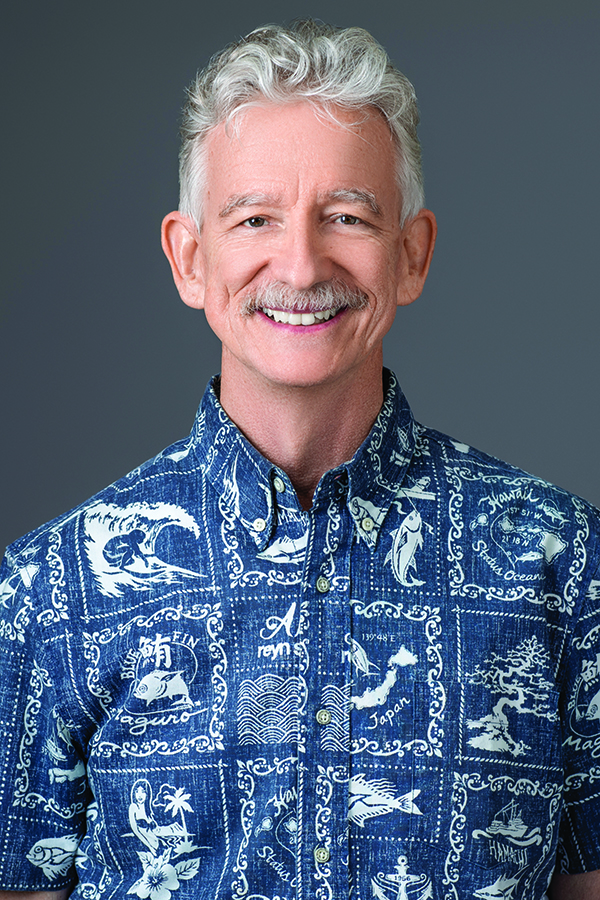
    I hope that over the past 15 years, you have gleaned from this column how important it is to have a clear, comprehensive estate plan—or, as I prefer to write it, “est8plan”. There are so many things that are beyond our control, and our est8plans can help us and our loved ones when inevitable bad things, such as death and disability, happen down the line.

    Please know and live the reality that through estate planning, you can create better, if not objectively good, outcomes for yourself and your loved ones as you transition through the stages of life. Your imagination and your collaboration with competent and creative advisors will give rise to an est8plan that will help you sleep at night. You will rest easy in the knowledge that you have done everything you can to put yourself and your loved ones in the best possible position to face the future. “May the road rise to meet you” as you embark on your own estate planning adventure, and remember: an intellectual solves problems… but a genius avoids them. Your est8plan can help you and your ‘ohana avoid the problems that must be solved when people fail to plan.

    Aloha pumehana, Scott Makuakane


    EST8PLANNING COUNSEL LLLC
    Scott Makuakane, Counselor at Law
    808-587-8227 | maku@est8planning.com
    Est8planning.com

    All good things must come to an end, or so they say. This is the last article by this author that will appear in this publication. I wish the Generations team and readers all the best in every way. I hope that over the past 15 years, you have gleaned from this column how important…

  • Will a Will Do What You Think It Will?

    Most people think of a last will and testament as the cornerstone of an estate plan. For most of us, however, it’s a lousy cornerstone. Your will is often simply a safety net that helps make sure your overall estate plan is going to work as it was designed.

    Your will is like the spare tire in the trunk of your car. Hopefully, you will never need to use it because your assets are either in your revocable living trust or you have used other means to direct your assets to your beneficiaries so that the assets will avoid probate. But if you experience a flat along your journey, your family will be awfully glad you had the spare. Having a will provides added assurance that your wishes are going to be carried out.

    A more formal name for a will is “last will and testament.” The “last” part refers to the fact that you can sign as many wills as you like during your lifetime, but only the last one you signed before your death counts. A document called a “codicil” can amend one or more provisions of your will without completely replacing it. In the age of computers, codicils are still valid, but more often, we just do a whole new will. Why use two or more documents with conflicting provisions when you can simplify and use only one?

    EST8PLANNING COUNSEL LLLC
    Scott Makuakane, Counselor at Law
    808-587-8227 | maku@est8planning.com
    Est8planning.com

    Most people think of a last will and testament as the cornerstone of an estate plan. For most of us, however, it’s a lousy cornerstone. Your will is often simply a safety net that helps make sure your overall estate plan is going to work as it was designed. Your will is like the spare…

  • DIY Estate Planning

    The problem with do-it-yourself estate plans is they often don’t work in the real world. An effective plan involves far more than a set of documents—even very well-drawn documents that would stand up in any court in the land, as they say in the commercials. But why would you want your estate plan to have to stand up in court? Wouldn’t it be better to have a plan that will keep you and your family out of court?

    You should start by learning what you need to know in order to get your plan right, create and implement your plan and then make sure that it stays right. What I mean by “stays right” is that it continues to work according to your wishes in light of changes in your health, your stuff, the law and the list of people you like and trust. If you think a self-help computer program will accomplish that, then you may be one of those people P.T. Barnum said was born every minute.

    Bottom line: There is a lot of really good information on the internet. There is also a lot of misinformation. Do you have the training and background to tell one from the other when it comes to putting your estate plan in order? If so, then knock yourself out, professor. If not, there is something to be said for working with live professionals instead of an impersonal website that cares more about your credit card authorization than about what happens to you, your family and your stuff when you become incapacitated or die.

    EST8PLANNING COUNSEL LLLC
    Scott Makuakane, Counselor at Law
    808-587-8227 | maku@est8planning.com
    Est8planning.com
    The problem with do-it-yourself estate plans is they often don’t work in the real world. An effective plan involves far more than a set of documents—even very well-drawn documents that would stand up in any court in the land, as they say in the commercials. But why would you want your estate plan to have…

  • Naughty or Nice?

    Your estate plan is the set of documents that you use to say who gets your stuff when you go. It is also where you can say who doesn’t get any of your stuff — with some important exceptions.

    In most states, you can disinherit everybody but your spouse. You can even disinherit the IRS. Louisiana requires you to leave something to each of your children. In every other state, you can cut out the kids, but not your spouse. Spouses traditionally had ongoing support rights expressed in a variety of ways.

    The bottom line is that if you want to leave nothing to your spouse, you will need to have him or her agree to that in a prenuptial agreement before the wedding. Of course, following up a marriage proposal with a request that your beloved sign a “prenup” is not the most romantic move. It has even been known to derail wedding plans. Some states also allow married couples to use postnuptial (after marriage) agreements to accomplish the same results as a prenup. Suggesting to your spouse that you enter into a postnup may not lead to good results, either, but at least you know that the option may be out there.

    So to exclude someone (other than your spouse), just say that so-and–so is being omitted deliberately. But use the person’s name — don’t call the person a “so-and-so” unless you want to invite a libel lawsuit against your estate.

    EST8PLANNING COUNSEL LLLC
    Scott Makuakane, Counselor at Law
    808-587-8227 | maku@est8planning.com
    Est8planning.com
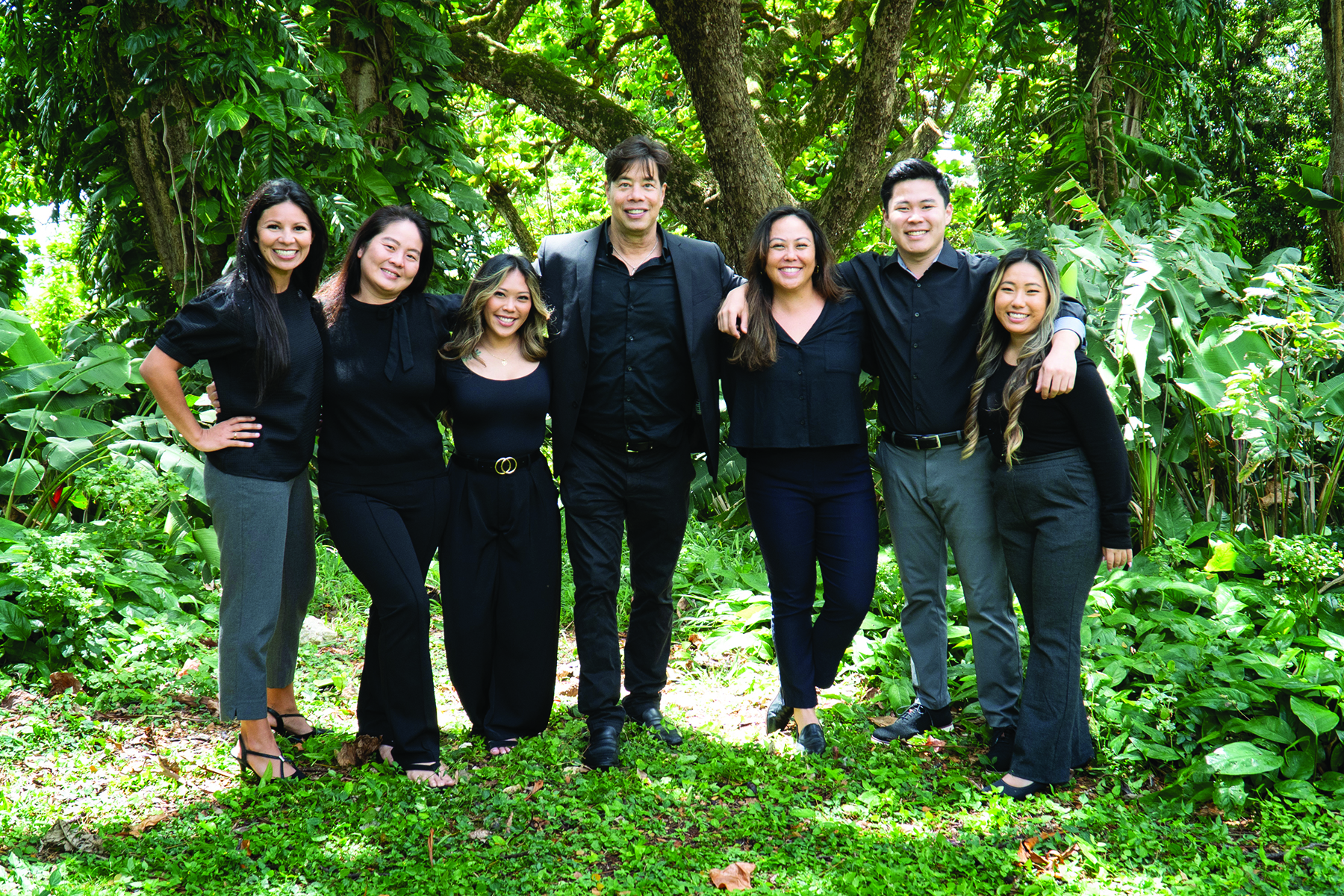
    Your estate plan is the set of documents that you use to say who gets your stuff when you go. It is also where you can say who doesn’t get any of your stuff — with some important exceptions. In most states, you can disinherit everybody but your spouse. You can even disinherit the IRS.…

  • Thank You

    I cannot believe that the holidays are already upon us, so let me step back and take a moment to reflect and thank each of my clients for allowing me to be part of their life. Please know that each of you have had and continue to have a tremendous impact on my life.

    As an estate planning attorney, I have the unique privilege of being invited into each of my clients’ lives. Some clients I have known for decades, while others I have only known for a short period of time. Wherever they are in their lives, I do my best to meet them there.

    The stories and experiences clients share are varied and colorful. Some clients have experienced immense and unspeakable tragedy, while others have reaped success and accomplishments. I learn so much about myself from each of you. I especially value the life lessons and wisdom you impart. Thank you for reminding me how resilient and compassionate people are, and how important it is to give people grace.

    To all my clients and future clients, thank you for trusting me and allowing me the privilege to walk alongside you. It is because of you that I go to sleep thankful and wake up grateful. I wish you all the happiest of holidays.

    Stephen Yim and Monica Yempuku are attorneys at law specializing in estate planning, drafting wills and trusts, providing supplemental needs-planning for the disabled, navigating estate and gift taxes, and administering estates.

    I cannot believe that the holidays are already upon us, so let me step back and take a moment to reflect and thank each of my clients for allowing me to be part of their life. Please know that each of you have had and continue to have a tremendous impact on my life. As…

  • SECURE Act 2.0

    According to a Federal Reserve System report on the Economic Well-Being of U.S. Households in 2022–May 2023 in 2023, “3/4 of non-retired adults had at least some retirement savings, about 28% did not have any. This share who did not report any retirement savings was up from 25% in 2021. While most non-retired adults had some type of retirement savings, only 31% of non-retirees thought their retirement savings were on track, down from 40% in 2021.”

    In 2019, the SECURE (Setting Every Community Up for Retirement Enhancement) Act was signed into law, and in 2022, SECURE Act 2.0 passed and amended its predecessor. The purpose of the SECURE Act was to assist Americans in saving for retirement by increasing access and encouraging contributions.

    How does the new law affect estate plans? Prior to 2019, most retirement plan beneficiaries had the option to stretch taxable distributions and allow the assets to grow tax-free over the beneficiary’s life. The SECURE Act 2.0 changed the stretch rules to apply to only a limited group — Eligible Designated Beneficiaries. So most beneficiaries will have to take distributions within 10 years.

    Contact your estate planning attorney and financial advisor to review your financial and estate planning goals, and to ensure your retirement accounts name the proper beneficiaries.

    STEPHEN B. YIM, ATTORNEY AT LAW
    2054 S. Beretania St., Honolulu, HI 96826
    808-524-0251 | stephenyimestateplanning.com

    According to a Federal Reserve System report on the Economic Well-Being of U.S. Households in 2022–May 2023 in 2023, “3/4 of non-retired adults had at least some retirement savings, about 28% did not have any. This share who did not report any retirement savings was up from 25% in 2021. While most non-retired adults had…

  • Communication & Grief

    Grief is a natural response to the loss of someone special. The process of grieving allows the griever to adapt to a new world of existence without the loved one.

    The success rate of an estate plan reflects and reveals the need for the estate planning attorney to expand his or her skill set in benefit of each client. Rather than simply focusing on lineal legal and tax matters, the estate planning attorney can incorporate counseling skills and engage the client through a virtuous circle of communication, so that the client and his or her survivors can proceed through the natural grieving process, which begins with anticipatory grief.

    If allowed to proceed through the grieving process with minimal guilt, anxiety, stress, unresolved issues with the decedent and conflict, we can help each griever experience fully their grief and allow the griever to validate and honor the life of the deceased, and affirm and strengthen relationships with survivors.

    The sooner the planning begins, the more options exist to minimize the risk of conflict among family members. Maintaining open communication maintains trust, and thereby reduces resentment and conflict.


    STEPHEN B. YIM, ATTORNEY AT LAW
    2054 S. Beretania St., Honolulu, HI 96826
    808-524-0251 | stephenyimestateplanning.com

    Grief is a natural response to the loss of someone special. The process of grieving allows the griever to adapt to a new world of existence without the loved one.

  • Minimize Asset Distribution Drama

    Minimize Asset Distribution Drama


    Grandfather And Granddaughters Relaxing On Sofa At HomeMinimizing estate asset distribution conflicts among survivors proves to be a challenging consequence of death. Hard-to-divide assets such as a family heirloom or the family home can cause the fracturing of relationships.

    Consider the family home left to several children. The home may have been in the family for generations. Parents live in the family home without arguing about whether to sell or rent it because they share the common goal of living in the home. Consider leaving the home equally to four children and the common goal disappears. One child needs to sell the home to pay for tuition. Another child could use income by renting the house. One child wants to live in the home. Another child wants to keep the home as a place for the family to gather.

    Finally, consider a parent’s strong desire to provide shelter for surviving children, and that due to the housing prices and high cost of living, the surviving children cannot afford to purchase a home on their own.

    While addressing these concerns extends beyond the scope of this article, keep in mind that estate planning attorneys can help clients understand the challenges facing them and can also aid them in beginning to create an intentional plan to leave a legacy that will help make family members’ lives better while preserving familial relationships.


    STEPHEN B. YIM, ATTORNEY AT LAW
    2054 S. Beretania St., Honolulu, HI 96826
    808-524-0251 | stephenyimestateplanning.com

    Minimizing estate asset distribution conflicts among survivors proves to be a challenging consequence of death. Hard-to-divide assets such as a family heirloom or the family home can cause the fracturing of relationships.

  • What’s in YOUR Toolbox?

    Photo of senior man standing with his arms crossedTrusts are tools. Like screwdrivers, they come in a variety of sizes and shapes, each designed to accomplish a defined result. You need a screwdriver with a tip that looks like a straight line for a screw with a head that has a straight slot in it. You need a screwdriver with a tip shaped like a plus symbol for a screw that has a head with a plus-shaped recess.

    There are other kinds of screwdrivers and screws, but you get the point. You need the right set of tools in order to complete your project efficiently and well. However, not every home improvement project calls for a screwdriver and not every estate plan calls for a trust.

    Common Types of Trusts

    Just as there are many kinds of screwdrivers in a well-stocked toolbox, there are lots of different kinds of trusts.

    You can create a trust that works during your lifetime or one that will not take effect until after you are gone. Your trust can be revocable or irrevocable, charitable or private.

    The agreement that governs your trust can control not only the disposition of your assets, but impose your values and your wishes upon your beneficiaries. But don’t get too excited about that last point. A trust can encourage your kids to go to college and stay away from drugs and booze, but it can’t guarantee your kids will actually go to class, or be clean and sober.

    Probably the most common trusts are revocable living trusts, which can provide comprehensive solutions for probate avoidance and for sidestepping conservatorship if you become incapacitated. Probate is a proceeding that typically occurs when an individual dies. The probate process can be long and costly. But a revocable trust can avoid probate in its entirety.

    Trusts can also protect beneficiaries from creditors, ex-spouses, and their own bad habits or inability to hold on to money.

    Talk with your estate planning advisors about how trusts can help you and your family avoid a variety of problems and pitfalls that await unwary travelers along life’s highway.


    EST8PLANNING COUNSEL LLLC
    Scott Makuakane, Counselor at Law
    808-587-8227 | maku@est8planning.com
    Est8planning.com

    Trusts are tools. Like screwdrivers, they come in a variety of sizes and shapes, each designed to accomplish a defined result. You need a screwdriver with a tip that looks like a straight line for a screw with a head that has a straight slot in it. You need a screwdriver with a tip shaped…

  • Grief & Bereavement — Part VIII

    In Sherry Turkle’s book, Reclaiming Conversation: The Power of Talk In A Digital Age, she writes about the process of the virtuous circle of communication by discussing the poet, Henry David Thoreau’s moving to Waldon Pond to live more deliberately. Thoreau furnished his cabin with three chairs. One chair to represent solitude, where he could self-reflect on matters most important for him. Two chairs to engage in conversation where he could express his thoughts to another. During these  conversations, he could process information and gain new insights that better prepared him for self-reflection. All three chairs were set for a conversation with the larger community to allow for a broader awareness heading back to self-reflection. Thus, the virtuous circle that allows us to define and redefine our thoughts.

    Estate planners can provide guides for each client to sit in self-reflection and consider for themselves what is most important with respect to healthcare and quality-of-life choices, as well as how to plan their financial estate. Once the plan is established, the attorney can facilitate a family meeting where the client expresses feelings and introduces the plan to family members, who can express their thoughts. The client then can self-reflect in solitude with this additional information preparing them for a better, more meaningful family meeting. Eventually, the attorney will engage the client and family with professional advisors, including the accountant and financial advisor, so that everyone understands the client’s intentions. It is vital to include and involve the client’s trusted advisors in the conversation with family. My observation is that, while families disagree, they usually can come to mutual understanding and decision. If trusted advisors come to different conclusions without consulting with one another, clients do not know how to proceed, causing the client to doubt the entire plan. It is essential that the client’s professional trusted advisors communicate with one another and come to a settled unanimous path for the client to pursue.

    This virtuous circle of communication continues until the client can no longer communicate their intentions. By that time, the client’s family members and trusted advisors know, understand and will honor the client’s wishes. This process is not only important for the client in gaining perspective over personal choices, it is equally as important for participating family members and trusted advisors because they get to know the client on a much deeper level. By using this approach, family members and professionals will be on the same page in honoring the client’s intentions.


    STEPHEN B. YIM, ATTORNEY AT LAW
    2054 S. Beretania St., Honolulu, HI 96826
    808-524-0251 | stephenyimestateplanning.com


    In Sherry Turkle’s book, Reclaiming Conversation: The Power of Talk In A Digital Age, she writes about the process of the virtuous circle of communication by discussing the poet, Henry David Thoreau’s moving to Waldon Pond to live more deliberately. Thoreau furnished his cabin with three chairs. One chair to represent solitude, where he could…

  • Estate Planning 101

    The first step in the estate planning process is learning. What do you need to learn? I suggest this as your starting point: You need to discover how to stay in control of your stuff while you are able to be in control, as well as how to be sure that that your wishes will be carried out when incapacity or the grim reaper catch up with you. Sorry to rub it in, but at least one of those things is going to happen to you. Odds are that both of them will.

    Certainly, you have views about the kind of healthcare you want to receive throughout your lifetime, and you have views about who should enjoy your stuff when you are done with it. The only way to make effective choices about those things is to know what your choices are. Learning about your choices is a lifelong process because your choices will change as your circumstances change. Your health is going to change. Your assets are going to change. Your comfort with your list of designated  decision-makers is going to change. The laws that affect your estate plan are going to change. As those things change, you will need to stay on top of the choices you can make in order to be confident that your wishes will be followed at every phase of your life — and perhaps beyond your lifetime.

    Let’s say you are thinking about going on an adventure. Where do you want to go? How do you want to get there? Are there any better destinations you might want to consider? Is there a better means of getting you there than the one you originally chose? The only way to know the answers to these questions is to do some research, talk with people who have taken similar trips and, better yet, talk with folks who have helped lots of people take all kinds of journeys. It’s kind of like asking for directions. While I have never regretted asking for them, I have regretted waiting too long to do so. Don’t make that mistake.

    Your life is a journey. If you do not make your own choices about the path of your journey, someone else will make those choices for you, and you might not like where you end up. So, learning about estate planning is your key to ending your journey well. The sooner you learn about your estate planning options, the sooner you can implement ways to mitigate or head off problems that are headed your way, even though you don’t know exactly what they are or when they will arrive. Read what you can, talk with your trusted advisors, and put what you learn to work in building the estate plan that will take you to your chosen destination.


    SCOTT MAKUAKANE, COUNSELOR AT LAW
    Author of Est8Planning for Geniuses
    808-587-8227 | maku@est8planning.com
    est8planning.com

    The first step in the estate planning process is learning. What do you need to learn? I suggest this as your starting point: You need to discover how to stay in control of your stuff while you are able to be in control, as well as how to be sure that that your wishes will…

  • Grief & Bereavement — Part VII

    Portrait of depressed senior man crying during therapy session with female psychiatrist trying to console himEstate planning attorneys help their  clients make sound, intentional decisions relating to their estate plans when they manage to help clients minimize guilt, conflict and anxiety. At the same time, survivors should be allowed experience the natural process of grief.

    An estate planning attorney can achieve this balance by:

    • Creating a safe, comfortable physical environment
    • Utilizing good counseling skills
    • Encouraging and facilitating open, transparent and respectful communication among family members and others involved in the estate.

    Physical Environment

    Facing one’s mortality, visiting with an attorney, worrying about costs and dealing with new terminology can cause clients to experience stress. No one can make sound decisions while under stress. In Janice Mucalov’s article entitled “Lawyers: Gatekeepers for Psychological Issues,” she outlines the precarious nature of this issue.

    “Emotionally distressed clients pose greater risks than non-distressed clients,” she writes. “Because emotions cloud their thinking, you may fail to appreciate the nature of the client’s problems, or they may fail to understand your advice.”

    Truly, the estate planner’s first effort should be in creating a safe, calm environment for the client. This will reduce stress.

    Counseling

    Attorneys will want to learn and apply good counseling skills in order to help clients make the best decisions regarding their estate plans. Carl Rogers introduces a  particularly useful method of counseling for estate planning in his work On Becoming a Person. He proposes developing and applying three qualities of counseling:

    • Meet and interact with each client in counseling with genuineness and congruence.
    • Enter each relationship and treat each clientwith unconditional positive regard.
    • Enter and engage each counseling session with empathic understanding.

    Communication

    Estate planning attorneys must emphasize that because life is fluid, a periodic review of the client’s estate plan is essential in order to ensure that the plan remains current. How often the client meets with the attorney depends on the client’s particular situation and need. The process, however, remains constant. Estate planners can provide guides for each client to sit in self-reflection and consider for themselves what is most important with respect to healthcare and quality of life choices, as well as how to plan their financial estate.


    STEPHEN B. YIM, ATTORNEY AT LAW
    2054 S. Beretania St., Honolulu, HI 96826
    808-524-0251 | stephenyimestateplanning.com

    Estate planning attorneys help their  clients make sound, intentional decisions relating to their estate plans when they manage to help clients minimize guilt, conflict and anxiety. At the same time, survivors should be allowed experience the natural process of grief.