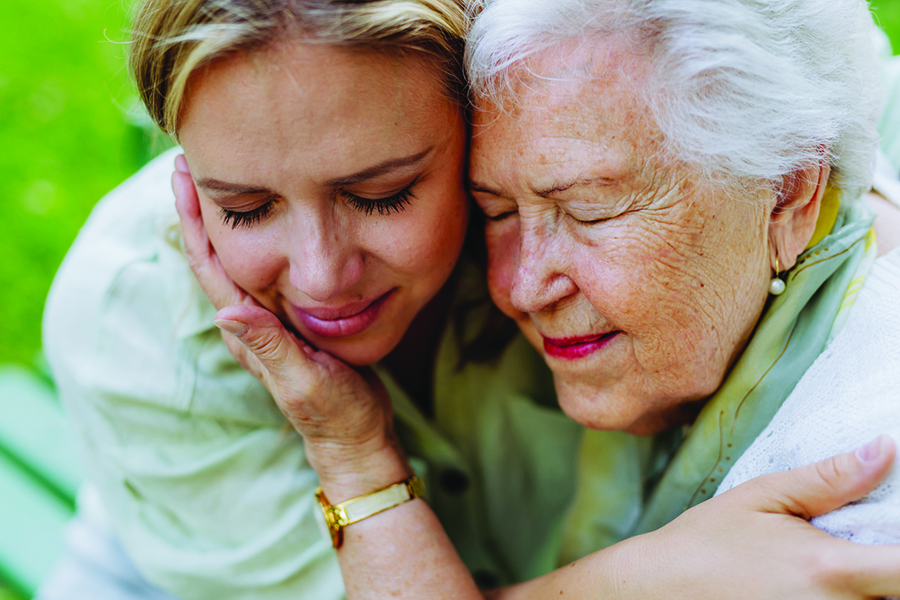
Lenore from Kāne‘ohe fears that one day she must choose between caring for her mother and her job and financial security. “There will come a time when Mom needs more care and supervision and it is costly to hire help,” she told us.
Unfortunately, this is a corner that many Hawai‘i residents are backed into. That’s why AARP Hawai‘i is fighting to improve paid family leave policies in our state.
Older voters overwhelmingly support paid family leave. An AARP Hawai‘i poll found 88% of voters 50 and older support paid family leave and more than half would vote for a candidate who supported paid family leave.
The poll also found strong support for other programs to help family caregivers: 56% do not believe government is doing enough to help family caregivers; 84% support increased funding for home-and-community-based services to help families keep loved ones at home as they age; and 89% support a limited state income tax credit to offset the expenses of family caregivers.
Family caregivers are the front line of defense in keeping their older loved ones living at home — where most seniors want to be — and not in costly nursing homes.
Across Hawai‘i, unpaid family caregivers provide critical assistance to help their older parents, spouses and other loved ones live independently in their homes. Most of these caregivers also juggle full- or part-time jobs.
Paid family leave not only benefits those who take care of kūpuna, but also benefits parents caring for keiki and a growing segment of the population who care for both children and parents. Those “sandwich generation” caregivers are under enough stress without the fear of losing their job or their wages.
An estimated 154,000 family caregivers in Hawai‘i contribute more than 144 million hours of unpaid care each year, valued at approximately $2.6 billion. They help older loved ones with medications and medical care, bathing and dressing, meals, chores and much more, saving the state and taxpayers in Medicaid expenditures if loved ones were in expensive nursing homes.
Paid family leave would also benefit employers because it increases employee loyalty and retention, and saves money by avoiding the cost of separation, recruiting, hiring and training. AARP Hawai‘i and other pro-family organizations are pushing for paid family leave and other bills to help caregivers.
If you want to lend your voice to help, contact AARP Hawai‘i Advocacy Director Audrey Suga-Nakagawa at asuganakagawa@aarp.org.
AARP HAWAI‘I (nonprofit) 1001 Bishop St., #625, Honolulu, HI 96813 808-545-6000 | hiaarp@aarp.org | aarp.org/hi AARP is a non-partisan organization dedicated to empowering Americans 50 and older to choose how they live as they age.
Lenore from Kāne‘ohe fears that one day she must choose between caring for her mother and her job and financial security. “There will come a time when Mom needs more care and supervision and it is costly to hire help,” she told us. Unfortunately, this is a corner that many Hawai‘i residents are backed into.…
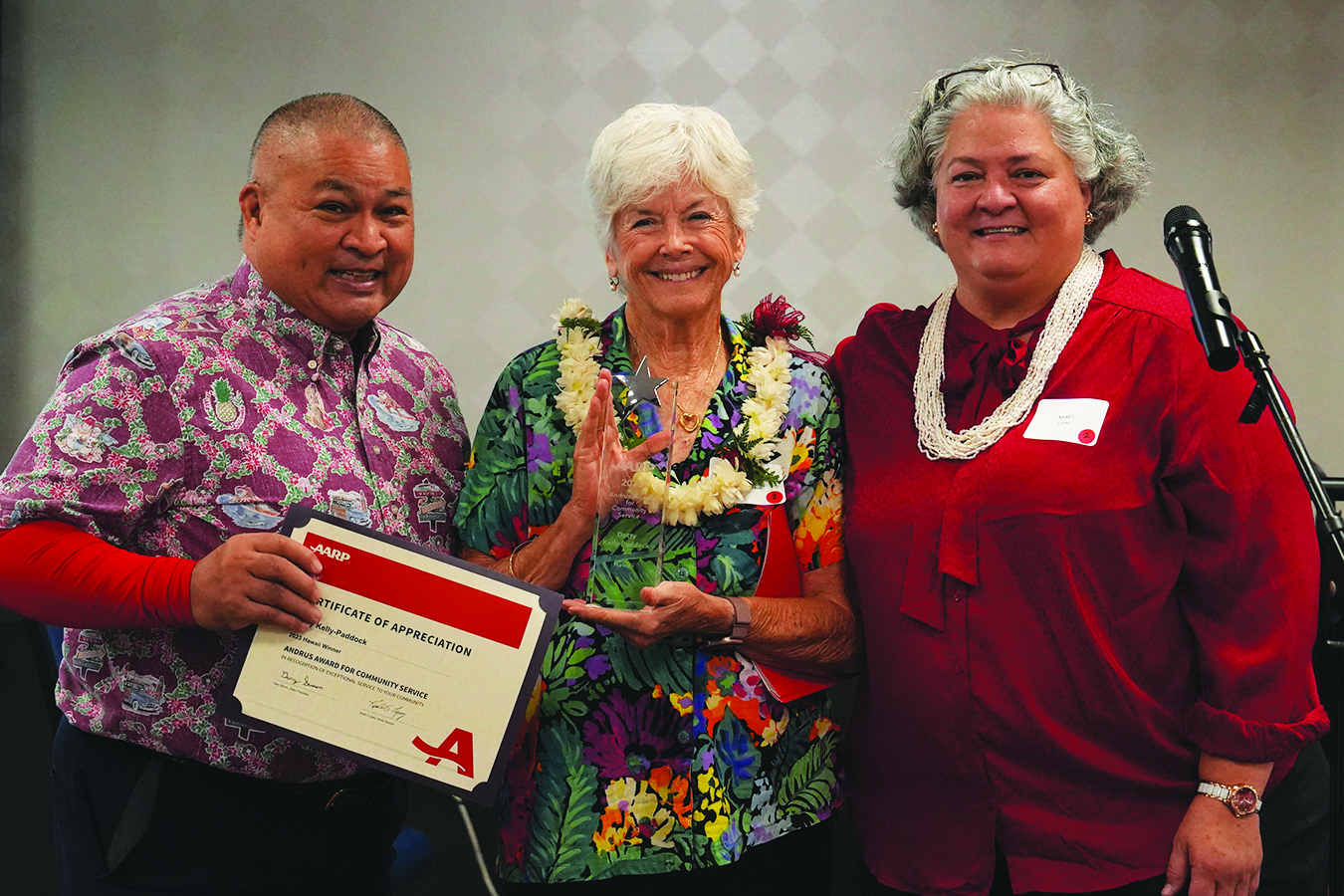
(L–R) AARP Hawai‘i State President Gary Simon, Hui ‘O Hau‘ula President Dotty Kelly-Paddock and AARP Hawai‘i State Director Keali‘i Lopez. PC: Paul Nakatani/AARP Hawai`i
AARP Founder Ethel Percy Andrus lived her life to serve others. In her work life, she served students and her community as a principal at Lincoln High School in California. She retired to take care of her mother and after her mother recovered, Ethel founded the National Retired Teachers Association at age 63 to advocate for the welfare of retired teachers. Her service soon evolved into advocating for all older Americans by starting AARP, the nonprofit organization for people 50 and older. “It is only in the giving of oneself to others that we truly live,” said Ethel.
In the spirit of Ethel, AARP state offices recognize outstanding older volunteers across the country each year with its most prestigious state honor — the Andrus Award for Community Service.
The Hawai‘i recipient is Dotty Kelly-Paddock, the volunteer executive director of Hui ‘O Hau‘ula and the president of Hau‘ula Community Association. Dotty began volunteering at age 62 and that desire to serve her community also led to her election to the Ko‘olauloa Neighborhood Board.
Instead of letting the vacant Hau‘ula Satellite City Hall building remain empty, Dotty petitioned the city to reopen it and created the Hui O Hau‘ula 501c3 nonprofit to run it. It’s now the Hau‘ula Community Center that serves residents of Ko‘olauloa District with classes for seniors and food distribution programs for the needy. The center also serves as a partnership hub for over 20 additional nonprofit programs that serve the Ko‘olauloa District community.
When she learned there was no plan for Hau‘ula to survive a tsunami or major storm, Dotty organized her neighbors to create a plan to make Hau‘ula disaster resilient. She is leading the effort to find funding to build a shelter — a resilience hub on high ground in the back of the valley. It will be the only disaster shelter for 25 miles around the Windward North Shore — a crucial need since it is likely that Kamehameha Highway may be rendered impassable.
“People who have a lifetime of experience should say what they know,” Dotty said. “Age is helpful. People will listen to a person who has a lot of experience because they know what they’re talking about.”
Her work continues to reflect AARP’s vision and mission, and inspire other volunteers.
AARP Founder Ethel Percy Andrus lived her life to serve others. In her work life, she served students and her community as a principal at Lincoln High School in California. She retired to take care of her mother and after her mother recovered, Ethel founded the National Retired Teachers Association at age 63 to advocate…
Tax season is officially under way, and Hawai‘i residents can count on AARP Tax-Aide volunteers to help reduce tax stress. Beginning Feb. 1, AARP-trained and IRS-certified volunteers will be available at 45 locations throughout the state to help taxpayers prepare basic federal and state forms.
AARP Tax-Aide is the nation’s largest, free, volunteer-run tax preparation and assistance service for low- and moderate-income taxpayers, with special attention to people age 60 and older. The program helps the most vulnerable people build and protect their assets through free income tax preparation. Since 1980 the program has operated under a cooperative agreement with the U.S. Internal Revenue Service. Last year in Hawai‘i more than 200 AARP Tax-Aide volunteers helped more than 10,000 taxpayers across the state. They join more than 35,000 volunteers across the country, helping millions of taxpayers each year.
AARP Tax-Aide volunteers can also provide counseling services to people who are unable to leave their homes. In Hawai‘i last year, volunteers visited home-bound residents, including individuals in nursing homes. One-on-one, on-site tax counseling is available now through April 15. Foreign language assistance is also available at select locations.
AARP Tax-Aide is a service of the AARP Foundation, AARP’s affiliated charity. Foundation programs provide security, protection and empowerment for older persons in need. ■
For locations and times, please call 843-1906 or visit the Information Center on O‘ahu at 1199 Dillingham Blvd, #A106, Honolulu, HI. To find the site closest to your home, call toll-free 1-888-AARPNOW (1-888- 227-7669) or visit www.aarp.org/taxaide.
Tax season is officially under way, and Hawai‘i residents can count on AARP Tax-Aide volunteers to help reduce tax stress. Beginning Feb. 1, AARP-trained and IRS-certified volunteers will be available at 45 locations throughout the state to help taxpayers prepare basic federal and state forms.
Across the state, Hawai‘i’s AARP chapters offer rewarding opportunities for friendship, education, advocacy and volunteer service. On O‘ahu there are three AARP chapters in Honolulu, Pearlridge and Wai‘anae.
The Honolulu Chapter (Chapter 60) meets for lunch on the first Wednesday of every month at the Hale Koa Hotel, where guest speakers talk on such diverse topics as legislation and entertainment. Some members enjoy attending special events and engaging in community service activities. Others donate their time teaching AARP Driver Safety classes or preparing tax returns through the AARP Tax-Aide program.
“Everyone has a different reason for joining a chapter,” says T. J. Davies, treasurer of the Honolulu Chapter, which has more than 100 active members. “I’m not the kind of person to sit around. I’m able to give my time to something that I believe in. I believe in helping people in my community to the best of my ability.”
Create The Good is another community service initiative offering opportunities for chapter members to get involved. AARP launched Create The Good nationally last year to encourage boomers and older Americans to make a difference in their communities and help solve pressing local problems. Create The Good expands on traditional ways to volunteer. It connects people with simple but meaningful activities, time-flexible opportunities, and a wide variety of areas of interest. Find out more at www.createthegood.org. Or call Jackie Boland at AARP Hawai‘i at 545-6003.
Whatever you’re interested in, connecting with AARP through one of its O‘ahu chapters is a fun and rewarding way to connect with others in our community.
Honolulu Chapter Contact: T. J. Davies at 593-1026 Meetings: First Wednesday of the month at the Hale Koa Hotel
Pearlridge Chapter Contact: Larry Carrasco, Vice President, at 455-5658 Meetings: Second Thursday of the month at Flamingo Restaurant in Pearl City.
Waianae Chapter Contact Zoe Jarvis at 696-3369 Meetings: First Friday of every month (location to be announced).
Across the state, Hawai‘i’s AARP chapters offer rewarding opportunities for friendship, education, advocacy and volunteer service. On O‘ahu there are three AARP chapters in Honolulu, Pearlridge and Wai‘anae.
An AARP survey of Hawai‘i residents age 50 years old and over shows a gap between the importance they place on health and financial security and their confidence in meeting those needs. More than 9 out of 10 older residents in Hawai‘i say staying healthy, mentally sharp and having adequate health insurance coverage are extremely or very important to them. Yet only 3 out of 10 say they have everything they need relative to these concerns.
“It’s not surprising that almost every Hawai‘i resident age 50-plus says staying healthy and spending time with loved ones is important,” says AARP Hawai‘i State Director Barbara Kim Stanton. “But it is alarming that most of us don’t think we have what we need to meet those goals. We all have a role to play in bridging that gap.”
Key findings from the survey, which also examined issues like aging at home, financial security and state budget concerns, include:
96 percent say staying healthy is important, but only 31 percent of these residents think they have what they need to do so.
87 percent say that spending time with family and friends is important, but only 35 percent think they have what they need to stay connected to their loved ones.
83 percent say that protecting themselves against fraud is important, but only 19 percent think they have what they need to stay safe as consumers.
The survey is the latest in AARP’s ongoing efforts to match the changing needs of its members and all older residents with resources that help them manage new opportunities and challenges. AARP offers a variety of easy-to-use online tools and information to help you and your family with your own unique needs. For example:
Strengthen your financial security and protect yourself against fraud Find out if your plans are still on track to retire when and how you want: www.aarp.org/retirementcalculator.
Stay healthier Get the facts on the prevention screenings and vaccinations you may need: www.aarp.org/healthscreenings.
To see the complete survey,Voices of 50+ Hawai‘i: Dreams and Challenges, go to http://aarp.us/gWe2Mw. Residents age 50+ represent roughly 35 percent of the state’s population. There are nearly 150,000 AARP members in Hawai‘i.
An AARP survey of Hawai‘i residents age 50 years old and over shows a gap between the importance they place on health and financial security and their confidence in meeting those needs. More than 9 out of 10 older residents in Hawai‘i say staying healthy, mentally sharp and having adequate health insurance coverage are extremely…
Older adults typically want to live in their own homes for as long as possible. A 2012 report from AARP showed that only 65 percent of persons aged 60-70 and only 43 percent of those aged 70 and older find it very easy to live independently. Besides making physical environments age-friendly, what needs to happen to enable older adults to safely age in place?
Optimize existing communities
Some communities with high concentrations of older adults were designed from scratch to address their needs. However, most age-dense neighborhoods or apartments/condominiums were not; residents have simply grown older and aged in place. The density of older residents in some could allow economies of scale and also ease the provision of in-home services for providers.
Natural helping networks
The strength of grassroots Aging in Place models or strategies relies on the potential for “natural helping networks” to develop and provide informal support to complement more formal health and social services. Informal support from peers typically entails help with “small services,” such as checking up on a neighbor, initiating a “buddy system,” keeping each other updated on local events, providing companionship, or even developing a volunteer corps of peers to address locally defined needs. Engaging in natural helping networks can transform an older adult from a “passive service recipient” to an active contributor to the wellbeing of neighbors and the community.
Natural support systems
For Aging in Place strategies to flourish, we need to develop ways to foster natural support systems in age-dense neighborhoods and apartments or condominiums, and to develop partnerships among the stakeholders of those settings. Such partnerships would include older residents, their peers, volunteers, family, friends, service providers, and building owners and managers. A number of residential managers of local public housing and condominiums in Hawai‘i are taking important first steps by attending brief workshops on various aspects of aging, thus learning to provide more supportive environments for their residents who are aging in place.
A little extra help is often all that is needed for an older resident to age in place. Aging in Place models advocate the use of local peer networks to provide that extra help, to be supplemented by more extensive formal in-home services as needed. Such a community-based approach could result in an affordable and client-based system to keep older persons in their homes and avoid costly and undesired relocations.
Grassroots social support models
Grassroots social models of support such as the Village Model, Cohousing, and Age-Friendly Cities and Communities represent some of the latest efforts to strengthen social environments to allow older adults to live in their homes for as long as desired.
Older adults typically want to live in their own homes for as long as possible. A 2012 report from AARP showed that only 65 percent of persons aged 60-70 and only 43 percent of those aged 70 and older find it very easy to live independently. Besides making physical environments age-friendly, what needs to happen…
Since March of this year, ‘Ōlelo Community Media has featured one hour of daily programming each Monday through Friday from 8 am – 9 am especially for, and by, senior citizens in our community.
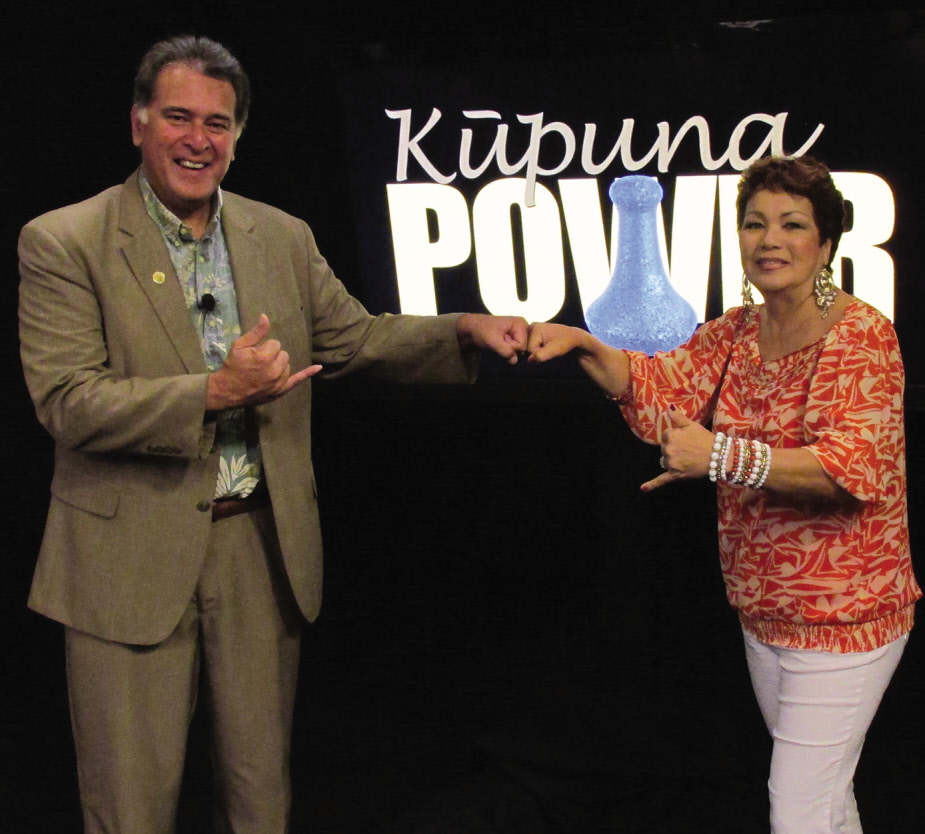
These “Senior Sunrise” mornings on Channel 53 are centered around “Kupuna Power,” a weekly magazine-format half-hour program created in partnership with Senator Brickwood Galuteria, the Executive Office on Aging and AARP Hawai‘i. The “Kupuna Power” show, produced and hosted by Galuteria, airs each Monday at 8 a.m. and will repeat at that same time on Thursdays.
‘Ōlelo believes senior-focused programming is acutely needed because of Hawai‘i’s aging community: In 2012, those 60 years and over accounted for 21.6 percent of the total population, according to the Executive Office on Aging. By 2020, the Hawai‘i Department of Business, Economic Development and Tourism estimates senior population growth will be 26.1 percent.
‘Ōlelo is developing other original senior programming and working with several strong community producers to create more shows for kupuna; these include a variety of short segments of interest including the “I Remember When” flashback, “Everyday Tai Chi” and “Kau Kau Moment,” a light-hearted cooking show featuring Janice Terukina Morimoto, a local actress and comedian now based in Korea who stars in a series of island-style cooking shorts.
The senior-focused programming each weekday morning is available on ‘Ōlelo Channel 53 on both Oceanic Time Warner and Hawaiian Telecom cable on O‘ahu. It can also be viewed via live stream at www.olelo.org. Happy viewing!
Since March of this year, ‘Ōlelo Community Media has featured one hour of daily programming each Monday through Friday from 8 am – 9 am especially for, and by, senior citizens in our community. These “Senior Sunrise” mornings on Channel 53 are centered around “Kupuna Power,” a weekly magazine-format half-hour program created in partnership with…
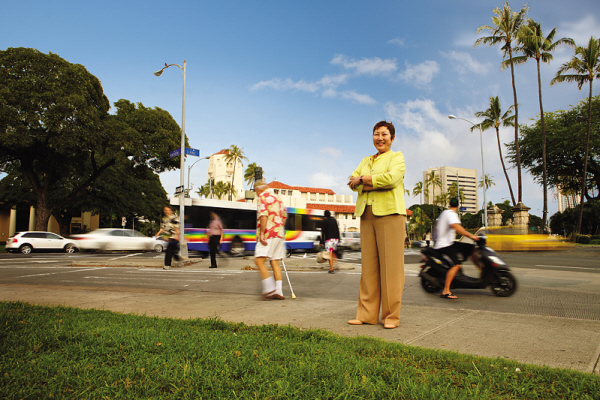
“We are developing more livable communities where people of all ages and physical abilities can get safely where they want to go.” — Stanton
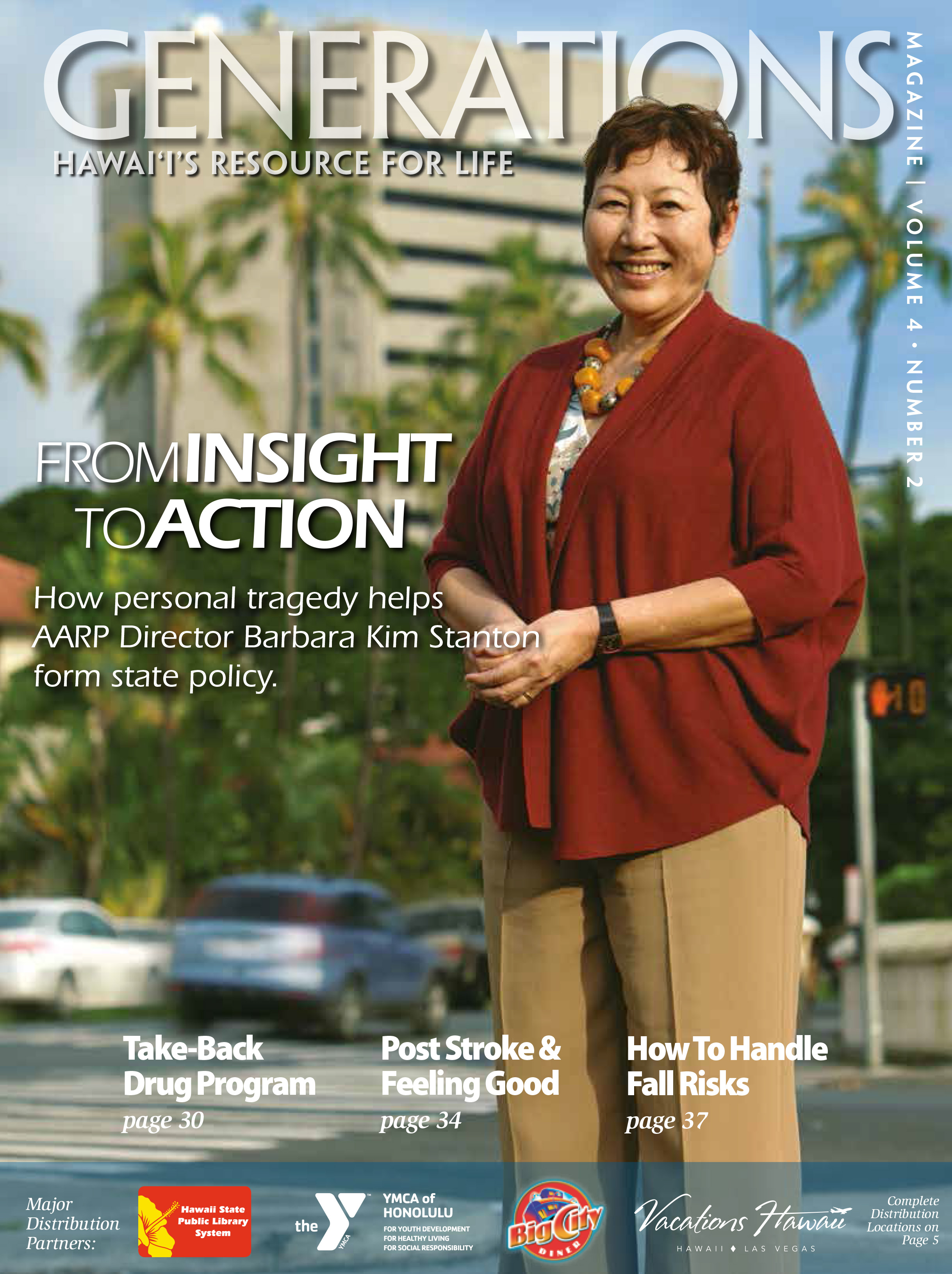
In a split second your life can change dramatically,” says Barbara Kim Stanton, AARP Hawai‘i state director, of a lifethreatening pedestrian crash in 2003. The accident left her with multiple fractures, requiring extensive rehabilitation and a six-month recovery at home. The debilitating incident provided her with unique insight into what it must be like for seniors who have limited mobility and/or depend on home care — as she did for nearly half a year. Ultimately, the experience shaped her view of some of the significant challenges facing our aging community and continued to affect her in 2005 as she assumed leadership of AARP, the influential member organization for people 50-plus.
In this issue, Stanton sits down to talk with Generations about the social changes seniors are facing today — from redefining retirement to the national and local movement toward creating walkable and safe age-friendly communities.
GM: In what ways did the pedestrian crash influence your view of aging?
BKS: The injuries I had were so severe it was like being fast-forwarded into old age. I couldn’t do anything for myself. I couldn’t dress or feed myself. I couldn’t even brush my own teeth. When something like this happens you learn very quickly what life is like for frail, elderly residents who are dependent on friends and family for their basic needs. You start looking at your surroundings and reassessing your ability to age in the home you’re in. It wasn’t long before I realized that the ‘Aiea home, which my husband and I built in 1982, was inadequate for growing old in. It’s a single-level home on a level lot with extra-wide doors that make it easy to navigate from the yard into the house. Still, many of the things I had taken for granted — door handles, window latches, access to the bathroom — took on a new significance because I didn’t have the strength to perform even simple tasks.
Memories of this experience shaped my belief that everyone needs to plan for how to best meet their needs when they can no longer live without the help of others.
GM: What is it like to not be able to take care of basic daily tasks — dressing, eating, personal grooming — that most of us take for granted?
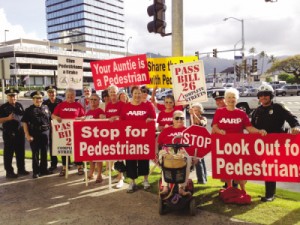
AARP supported the Honolulu City Council’s 2012 Complete Streets ordinance, making it safer for all residents.
BKS: I was discharged from the hospital after about three weeks and needed around-the-clock assistance for half a year, and several months of rehabilitation services before I was able to return to work. I needed total care. My husband helped me in the morning before he went to work. During the day, I had a physical therapist, an occupational therapist and a nurse. In the afternoon when the last medical person left, my neighbors came in. They took shifts. Fortunately, I had a network of family and friends to cook meals and help in any way they could. Even Mainland friends from college used their vacation to fly over and lend a hand. I’m indebted to a lot of people for helping me recover at home.
Through this experience I learned how unpaid caregivers are the backbone of Hawai‘i’s longterm care system. They are the ones who make it possible for the elders they love to age at home, which is where most Hawai‘i residents say they want to be rather than an expensive care facility.
Of course, the main difference between my situation and the seniors who I met at the rehabilitation hospital was that I eventually started to recover. I was getting better, while the frail, elderly folks I got to know said it was a “good day” if their condition stayed the same.
GM: How important are family caregivers to helping elders with activities of daily life?
BKS: In Hawai‘i today most of the day-to-day care for the elderly is provided by family members, often women, who juggle this responsibility with their jobs. This isn’t talked about much and is rarely viewed as a public issue. That’s beginning to change, especially as the percentage of elderly residents needing home care grows. Hawai‘I residents are beginning to realize that caregiving affects just about everyone. At some point in your life, you will either be a caregiver or you’ll need a caregiver — maybe both.
Stanton’s husband and kids were a large part of her daily caregiving network.
I’ve experienced both sides of the caregiver experience, and it’s given me valuable perspective. I, along with other family members, cared for both of my parents at their home in Honolulu. I used to stay with them while my husband watched over the kids at our place. After Mom passed, Dad moved in with us for about a year until he went into hospice. Many adult couples with children are juggling similar situations.
AARP research indicates that there are 247,000 family caregivers in Hawai‘i throughout the year, and the value of the unpaid care they provide to loved ones is estimated at $2 billion a year. However, trends show that the number of potential caregivers (aged 45 to 64 for every person aged 80 and older in Hawai‘i) is declining rapidly. In 2010 there were about six potential caregivers available for every older person. By 2030 there will be fewer than three caregivers available. That’s a red flag. Family support is one of the keys to being able to stay in your home and community as you age.
GM: In what ways do family caregivers contribute to keeping health care costs in check?
BKS: The range of services family caregivers provide is very broad. Many take care of all of the basic daily needs such as personal care, bathing, dressing and cooking. Increasingly, they’re also being called on to perform medical tasks that would make a first-year nursing student tremble — such as wound care and tube feedings — often without adequate training.
Caregivers also play a critical role as unofficial “care coordinators” when family members transition from a health facility back to the home. In that respect they’re on the front lines of keeping their loved ones out of costly institutions and preventing readmissions to the hospital. At the State Legislature this year, AARP Hawaii is supporting legislation that will help caregivers in their role as care coordinators. The CARE Act (SB2264) requires hospitals to provide caregivers with instruction on how to provide the care that’s needed when their loved ones return home.
GM: What steps can people take to increase their chances of staying in their homes as they age?
BKS: The most important thing family members can do is talk with each other about the kind of care they want in the future. For adult children watching their parents grow older, it’s normal to feel anxious. But “The Conversation,” as we call it, has to occur — and better sooner than later. The worst thing to do is to wait until a catastrophic health incident occurs in the family. Then you’re scrambling for answers under stress.
We recommend that people become familiar with public and private health care services available in our communities. A good place to start is the office of aging in each of the counties. They have case workers who can sit down and discuss your family’s needs.
Families may also qualify to receive in-home services through Kupuna Care, a state-funded program that offers a safety net for residents who don’t qualify for Medicaid and can’t afford to pay for services.
The state also provides information about caregiving and long-term care options on its Aging and Disability Resources Center website. It’s a one-stop shop for information about what services are available and how much they cost.
GM: Are Hawai‘i residents prepared to cope with the rising cost of long-term care?
BKS: The cost of long-term care in Hawai‘i is among the highest in the country, and few of us are prepared. The median cost of private nursing home care in Hawai‘i is about $145,000 for just one year, and the average stay is about three years. Unless you have private long-term care insurance or make other financing arrangements, that’s an out-of-pocket expense that not many people can afford. Only about 12 percent of residents age 40 and older are covered by private long-term care insurance.
People are generally uninformed about their options when it comes to planning and paying for care, and a tremendous amount of misinformation exists about what programs such as Medicare pay for. We surveyed our members a few years ago and found that 29 percent believe that Medicare covers the cost of long-term care. Actually, it’s Medicaid that pays for the bulk of long-term care in the U.S., but only for the very poor.
GM: What is AARP doing to help raise awareness of the public’s need to plan for their long-term care?
BKS: AARP helped establish the Hawai‘i Long-Term Care Commission, which studied the state’s long-term care system and recommended reforms (click to see Generations, March 2011). One of the Commission’s top proposals to the Legislature was for the state to launch an education and awareness campaign to help Hawai‘i residents understand long-term care and available options to pay for it.
The idea is to help people live independently at home for as long as possible rather than moving to more costly nursing homes. AARP is working with legislators this session to get $500,000 appropriated for this purpose.
Another recommendation was for the state to consider a public, long-term care insurance program for our working population. We are waiting for the results of a financial and actuarial study, due this summer. Depending on what the report finds, legislation establishing the financing program could be introduced as early as 2015.
GM: As you look at the physical layout of our communities, do you think we’re prepared for the aging boom that’s already begun?
BKS: Our communities have been designed with the automobile in mind, which doesn’t support the ability of older residents to age in place. When large numbers of people and cars come together in urbanized areas built primarily for automobiles, the results can be tragic. There have been unacceptably high numbers of pedestrian crashes in Honolulu over the past decade, and the threat to public safety will rise as the percentage of residents age 65 and older increases to 20 percent over the next two decades.
AARP is working to develop more livable communities where people of all ages and physical abilities have multiple transit options to get safely where they want to go — whether driving, walking, cycling or taking public transportation. What’s really exciting is the new Age-Friendly Cities initiative just announced with the City and County of Honolulu that will transform Honolulu into a place that is livable for everyone — kupuna to keiki.
GM: Can you share some details of the Age-Friendly Cities initiative?
BKS: Mayor Kirk Caldwell announced his commitment to prepare Honolulu to be more age friendly and has partnered with the AARP Network of Livable Cities and the World Health Organization’s Global Network of Age-Friendly Cities and Communities. The WHO Network is part of an international effort to get cities and towns around the world prepared for rapid population aging and increased urbanization.
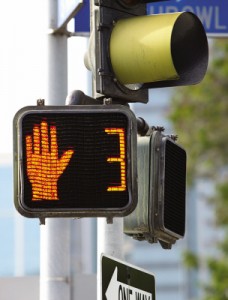
AARP lobbied for countdown signals with adequate time to cross for the disabled and the elderly. It also joined residents in a planning session for Complete Streets in Kakaako.
Over the next five years Honolulu city officials will work with AARP and residents of all ages to improve physical and social environments on O‘ahu that will help older residents remain healthy, active and engaged. This will be a local, community-driven initiative to transform our island into a livable community that’s safe and secure, including affordable housing and adequate transportation. Once in place, these resources will enhance personal independence, allow residents to age in place and foster engagement in civic, economic and social life.
In April a citizens advisory committee will be convened. This group is responsible for developing an action plan that will promote public safety and provide seamless access to shopping, recreational sites, housing and transportation services.
GM: What are your members saying they want to do with their retirement years?
BKS: The Baby Boomers are rewriting traditional definitions of what it means to retire. The first of the Boomers reached age 65 in 2011 and more of them are taking advantage of the extra longevity years their parents and grandparents didn’t have. Regardless of income and whether or not they continue working, they’re reflecting on the meaning and purpose of their lives, overcoming fears, achieving aspirations and building a greater sense of community. Boomers are creating this new life phase and rejecting the notion that their possibilities are shrinking as they get older. They’re using their years of experience not to wind down but to reach even higher.
GM: Are you optimistic about the next 20 years as the boomers move into their 80s and beyond?
BKS: Older adults today are living in a new age of possibilities. For those who prepare for the future, it will be good. Hawai‘i is a great community, we respect our kupuna, and our people know how to pull together. But the challenges with health care are formidable. That’s why I’m concerned about people who may not have enough resources.
My goal with AARP is to help seniors stay connected to their communities and enhance the quality of their lives as they get older.
About AARP Hawaii AARP is a membership organization for people age 50 and older, with nearly 150,000 members in Hawai‘i. We champion access to affordable, quality health care and deliver a strong message to our elected officials: No cuts to Medicare or Social Security benefits. We also provide the tools needed to save for retirement, and serve as a reliable information source on critical issues that help older Americans navigate the “what’s next” in their lives. Drive to End Hunger. Life Reimagined. Financial Freedom Campaign. Fraud Watch Network. Driver Safety. Tax-Aide. Life@50+ Expo. Consumer Advocacy. Volunteering. Toll-Free: 1-866-295-7282 Website: www.aarp.org/hi| Facebook: /AARPHawaii | Twitter: @AARPHawaii Published with the assistance of Bruce Bottorff, director of communications of AARP Hawaii.
In a split second your life can change dramatically,” says Barbara Kim Stanton, AARP Hawai‘i state director, of a lifethreatening pedestrian crash in 2003. The accident left her with multiple fractures, requiring extensive rehabilitation and a six-month recovery at home. The debilitating incident provided her with unique insight into what it must be like for…
My passion for kupuna has grown tremendously over the past months since I first enrolled in ‘Iolani School’s “One Mile Project” class. This semester elective course is a new offering in the state-of-the-art Sullivan Center for Innovation and Leadership. The course was geared toward giving students a greater appreciation for older adults in our community (within a one-mile radius of our Moili‘ili/Kapahulu campus).
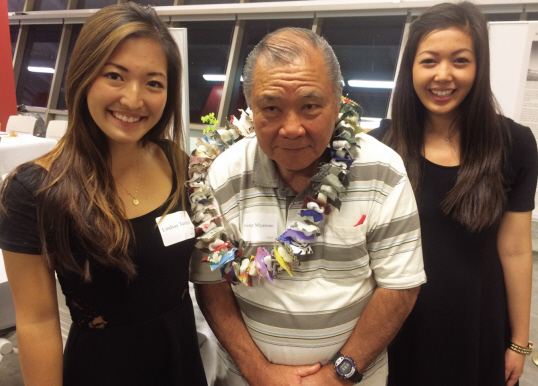
‘Iolani students, Lindsay Teruya (lt.) and Taylor Hamai (rt.) with a senior participant, George Miyamoto.
Although I would love to say that I have always been this excited to help older adults, my feelings weren’t always this strong. During our first One Mile gathering, we were given an exercise to express our thoughts on kupuna. There were many negative words thrown out such as “old, slow and grumpy.” These downbeat impressions, however, slowly changed to thoughtful and respectful ideas as my class worked with nearby organizations, such as the University of Hawai‘i Center on Aging, Moili‘ili Community Center, Palolo Chinese Home, Nu‘uanu Hale, AARP and the Project Dana. With these partners, we completed walkability audits, proposed solutions to the problems in our streets, conducted interviews, learned vocabulary terms, took excursions to a Good Life Expo and nursing homes, interviewed a caretaker, conducted an empathy challenge, and reached out to a hospice patient. Thanks to these activities, we gained a better understanding of the elderly and made connections to our own lives. With a newfound love of older adults, my class has spent the past couple months putting together a project proposal that we recently presented to 60 school and community leaders in a special January 10 event.
Our proposed “One Mile, One Planet Community Center” hopes to:
provide services to the elderly & our community
educate for the future
provide a new experience for all generations
As our vision statement reads, “This Center will bring independent older adults and ‘Iolani students together through intergenerational programs that promote active aging, sharing of knowledge and service to the community.”
We hope to improve the daily life and satisfaction of the elderly in our community. We want to work together as a school to create a thriving, age-friendly city. As thousands of Baby Boomers approach retirement each day, we hope to instill the importance of caring for our kupuna. We want to stress healthy living, so that future elderly generations may live independently and freely. It is our mission to reach out and better prepare our parents and grandparents for the upcoming stages of their lives while offering students the unique opportunity to learn from, work with, and serve our kupuna.
Although the One Mile, One Planet Community Center is hypothetical at this point, we are confident that our project proposal can serve as a starting point for ‘Iolani and its students to be a part of helping older adults maintain active, independent, healthy lives.
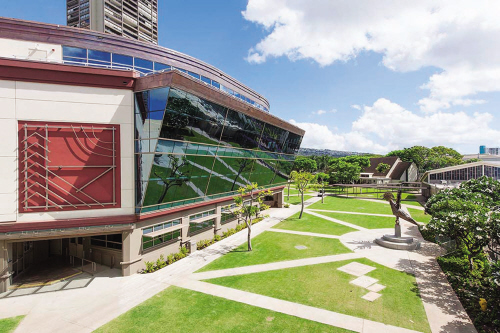
The Sullivan Center for Innovation and Leadership at ‘Iolani School. David Franzen, photographer for Iolani. Courtesy of WSP.
My passion for kupuna has grown tremendously over the past months since I first enrolled in ‘Iolani School’s “One Mile Project” class. This semester elective course is a new offering in the state-of-the-art Sullivan Center for Innovation and Leadership. The course was geared toward giving students a greater appreciation for older adults in our community…
Dr. Anthony (Tony) Lenzer was recently selected as the Hawai‘i recipient of the 2013 Andrus Award for Community Service—AARP’s most prestigious volunteer recognition. He accepted the award from AARP national president Rob Romasco at a volunteer recognition luncheon in November. The Andrus Award is an annual award for exemplary volunteer leadership named after AARP’s founder Ethel Percy Andrus (1884-1967) who exemplified AARP’s motto: “To serve, not to be served.”
Lenzer’s distinguished career in gerontology began in Ann Arbor, Michigan, as executive secretary of a legislative council on aging. He held that job for four years, while doing doctoral work, then taught seven years at the University of Michigan’s School of Public Health where he helped set up a Chronic Disease and Aging Program.
He came to Hawai‘i in 1969 with his wife and five children to help the University of Hawai‘i develop its gerontology program, teaching the first course on aging in 1970.
In ensuing years he helped to establish key aging-related organizations. Among them: Hospice Hawai‘i, the Hawai‘i Pacific Gerontological Socie- ty and the Hawai‘i Family Caregiver Coalition, of which he is president. He also chairs the legislative committee for the Policy Advisory Board for Elder Affairs in the Executive Office on Aging.
Lenzer has been volunteering with AARP and other organizations since retiring from the UH Center in 1994. He’s a volunteer board member for five organizations that advocate for aging, caregiving and disability policies at the Legislature. He helped create the annual “Aging and Disability Issues” report and is working with AARP now to help people understand the complex Affordable Care Act.
In the words of AARP Hawai‘i state director Barbara Kim Stanton: “No one has done more to advance our understanding of what it means to grow older in Hawai‘i and prepare a generation of state policymakers to begin addressing the challenges and opportunities of our aging population.”
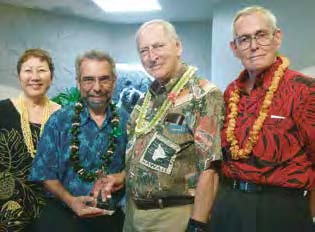
Left to right: AARP state director Barbara Kim Stanton, AARP volunteer national president Rob Romasco, 2013 Andrus Volunteer Award Winner Tony Lenzer and volunteer Hawai‘i state president Gerry Silva.
Dr. Anthony (Tony) Lenzer was recently selected as the Hawai‘i recipient of the 2013 Andrus Award for Community Service—AARP’s most prestigious volunteer recognition. He accepted the award from AARP national president Rob Romasco at a volunteer recognition luncheon in November. The Andrus Award is an annual award for exemplary volunteer leadership named after AARP’s founder…
The pool of family and friends to care for Hawai‘i baby boomers as they age into their 80s will be less than half as deep as it is today, according to a new report from AARP. The report predicts the ratio of potential family caregivers to elders needing care will plummet from today’s six caregivers for each person over the age of 80 to fewer than three caregivers per elderly person in 2030.
The Aging of the Baby Boom and the Growing Care Gap from the AARP Public Policy Institute also anticipates that the dearth of family caregivers projected for 2030 to 2050 will intensify the emotional, physical and financial costs borne by future caregiving family members and friends.
“About half of older Hawai‘i residents believe they will be able to rely on their families to meet their needs when they need long-term care,” says AARP Hawaii State President Gerry Silva. “But this confidence is likely to erode when it collides with the dramatically shrinking availability of family caregivers in the future.”
As the number of Hawai‘I residents over the age of 80 increases in the next 20 years, the number of people in the primary caregiving years will remain flat, the report states. Meanwhile, in 2050, there will be nearly three times as many people age 80 and older in Hawai‘i as there are today. As a result, by 2050, the caregiver support ratio which was 6.1 in 2010 when boomers were in their peak caregiving years, is projected to drop to 2.1 percent when the boomers will have reached their 80s. According to the report, in just 13 years, as the baby boomers age into their 80s, the decline in caregiver support will shift from a slow decline to a free fall.
The new caregiver report calculates the availability of caregivers by dividing the number of people in the most common caregiving age range (those ages 45-64) by the number of older people most at risk of needing long-term services and\ supports (those ages 80+). The former group reflects the demographics of today’s average caregivers, the latter is the population likely to have some kind of disability and need help with daily activities.
The complete report, The Aging of the Baby Boom and the Growing Care Gap: A Look at Future Declines in the Availability of Family Caregivers, can be found at www.tinyurl.com/aarp-caregiving.
AARP is a membership organization for people age 50 and older with 148,000 members in Hawai‘i. We champion access to affordable, quality health care for all generations, provide the tools needed to save for retirement, and serve as a reliable information source on issues critical to older Americans.
The pool of family and friends to care for Hawai‘i baby boomers as they age into their 80s will be less than half as deep as it is today, according to a new report from AARP. The report predicts the ratio of potential family caregivers to elders needing care will plummet from today’s six caregivers…
After the kids were grown, Rhee, a career pharmacist turned fulltime mother, weighed second-career options. She thought of teaching or returning to a pharmacy, but memories of her church’s baking class brought back fond childhood memories of afternoon tea and pastries.
Today, a little more than two years after launching her small business venture — Mama Nita Scones — she has grown from selling scones at farmers’ markets to being a sought-after pastry company that fulfills online catering and gift-box orders.
“As a pharmacist I had to be very exact about filling prescriptions, so that attention to detail probably carried over to my baking,” Rhee says.
At age 50, Rhee did what thousands of Hawaii baby boomers have done or are considering doing — pursuing new passions in adulthood. Many people redirect their lives after major turning points, such as parenthood, retirement or care for elderly parents.
AARP has launched an initiative called Life Reimagined to help older adults unlock their dreams and navigate new life stages. Life Reimagined offers flexible online and offline programs, experiences, resources and services. www.lifereimagined.aarp.org.
AARP has also created Life Reimagined for Work to help experienced workers achieve their employment goals. It’s a social network- based jobs program, connecting workers (with 20-plus years of career experience) with employers who seek qualified workers for more satisfying work and entrepreneurial opportunities. www.workreimagined.aarp.org.
As for Rhee, she’s looking at new ventures such as creating wedding favors and setting up a scone factory. While expanding is one option, she says firmly that, “making money is not the sole purpose of my business … I have a mission.” She dreams of training people in underdeveloped countries about her business model so they can sustain themselves. Recently, a church member approached her about training women in Thailand to bake scones for coffee shops.
Anita’s eyes twinkle at the prospect of doing good work and using local fruits to develop new flavors. Up every morning from 4 a.m., she’s baking her way toward her dreams one scone at a time. For a closer look at what she’s doing in the kitchen, visit www.mamanitascones.com.
After the kids were grown, Rhee, a career pharmacist turned fulltime mother, weighed second-career options. She thought of teaching or returning to a pharmacy, but memories of her church’s baking class brought back fond childhood memories of afternoon tea and pastries. Today, a little more than two years after launching her small business venture —…

 AARP is working to develop more livable communities where people of all ages and physical abilities have multiple transit options to get safely where they want to go — whether driving, walking, cycling or taking public transportation. What’s really exciting is the new Age-Friendly Cities initiative just announced with the City and County of Honolulu that will transform Honolulu into a place that is livable for everyone — kupuna to keiki.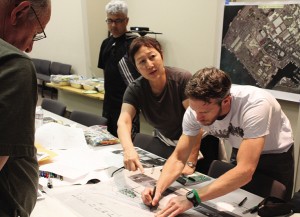
 The pool of family and friends to care for Hawai‘i baby boomers as they age into their 80s will be less than half as deep as it is today, according to a new report from AARP. The report predicts the ratio of potential family caregivers to elders needing care will plummet from today’s six caregivers for each person over the age of 80 to fewer than three caregivers per elderly person in 2030.
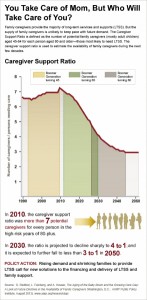 The new caregiver report calculates the availability of caregivers by dividing the number of people in the most common caregiving age range (those ages 45-64) by the number of older people most at risk of needing long-term services and\ supports (those ages 80+). The former group reflects the demographics of today’s average caregivers, the latter is the population likely to have some kind of disability and need help with daily activities.