Category: Date

  • If Your Kids Plan a Later-in-Life Family…

    Many couples are choosing to start families later in life compared to their parents and grandparents. According to the National Center for Health Statistics, the mean age of first-time mothers rose from 25 in 2009 to 26.3 just five years later.* And, increasingly, mothers are waiting to have their first child at age 35 or older. This trend has financial implications. On one hand, parents may be more financially secure and have clear priorities for the future. On the other hand, these parents are closer to retirement, so balancing kids’ expenses with saving can be a juggle.

    If your kids choose to have their first child later in life, here are four key dos and don’ts to help them manage their finances with confidence:

    DO establish a solid financial foundation. Their household expenses will likely increase once they’re paying for childcare, additional checkups at the doctor or dentist and other items for their child. With this in mind, they should consider using the discretionary income they have today to shore up their financial position—prioritize paying off student loans, build an emergency fund (three to six months worth of expenses is a good benchmark) and consider paying more toward their mortgage if they own a home.

    DO boost savings. Creating a habit early of saving for major goals can help maintain savings momentum while they are focused on adapting to their new addition. They should harness the power of compound interest by contributing to their retirement accounts with each paycheck and setting aside funds for major goals, such as an annual vacation or home remodel.

    DON’T prioritize the child’s college education over retirement. Will they be making tuition payments in their final years of work or in retirement? If this is a possibility, it’s imperative that they create a plan to balance saving for both goals right away. The reality is many couples need to push back their retirement date, figure out how to earn additional income with a different job or cut back their travel plans to pay for their child’s education. While it’s understandable that they will want to provide for their child, keep in mind that health, layoffs or other circumstances outside of their control could change their retirement date. Their child has other options to pay for college — including scholarships, loans and work-study programs — that are not available to them if their retirement savings come up short.

    DON’T forget to update the estate plan. Ensuring they have adequate insurance coverage becomes a bigger priority when they have a child in the picture. If your son or daughter (or spouse) were to sustain an injury or pass away prematurely, they would need to ensure that their disability and life insurance coverage will cover their financial commitments and goals. They should also consider purchasing long-term care insurance to cover potential healthcare expenses in retirement.

    It’s exciting to dream and plan for an expanded family. But if your kids want a second opinion on how to juggle their financial priorities, they should meet with a financial advisor.


    MICHAEL W. K. YEE, CFP
    1585 Kapiolani Blvd., Ste. 1100, Honolulu HI 96814
    808-952-1222, ext. 1240 | michael.w.yee@ampf.com
    Michael W. K. Yee, CFP®, CFS®, CLTC, CRPC ®, is a Private Wealth Advisor, Certified Financial Planner ™ practitioner with Ameriprise Financial Services, Inc. in Honolulu, HI. He specializes in fee-based financial planning and asset management strategies and has been in practice for 32 years. Investment advisory products and services are made available through Ameriprise Financial Services, Inc., a registered investment adviser. Ameriprise Financial Services, Inc. Member FINRA and SIPC. ©2019 Ameriprise Financial, Inc. All rights reserved.

    *Mathews, T.J. and Hamilton, Brady E., “Mean Age of Mothers is on the Rise: United States, 2000-2014,” National Center for Health Statistics Data Brief No. 232, January 2016. https://www.cdc.gov/nchs/data/databriefs/db232.pdf.


    Many couples are choosing to start families later in life compared to their parents and grandparents. And, increasingly, mothers are waiting to have their first child at age 35 or older. This trend has financial implications. On one hand, parents may be more financially secure and have clear priorities for the future. On the other…

  • Choosing the Right Home Care Provider

    With so many options available, its hard to know if you chose the right home care provider for your loved one. Here are four essential questions to ask when you’re evaluating your home care partner.

    1. Is the care plan being followed?

    A care plan is specific to your loved one and any deviations could mean they’re not getting the care they require. Changes should be discussed and approved ahead of time.

    2. How reliable are they?

    Are caregivers on time? Do they consistently provide a high level of care? Reliability and trust are the foundation for a strong partnership; instability can cause unwarranted stress.

    3. How well do they communicate?

    A good home care provider communicates with everyone involved in the process. Family members, care managers, caregivers and your loved one should all have an active voice.

    4. Do they check up on employees?

    It’s important for your care provider to be hands-on in managing their employees.

    By ensuring that you’ve partnered with the right care provider, you’ll give yourself and your loved one the peace of mind needed to make home care successful for your family.


    HOME CARE BY ALTRES MEDICAL
    808-591-4930 | homecare@altres.com
    www.altreshomecare.com

    With so many options available, its hard to know if you chose the right home care provider for your loved one. Here are four essential questions to ask when you’re evaluating your home care partner…

  • Positive Physical Approach to Dementia Care

    People living with dementia (PLWD) need guidance, human connection and a sense of independence. In my professional practice, we use the Positive Physical Approach (PPA). This innovative modality developed by Teepa Snow teaches family caregivers more effective ways to understand and communicate with their loved ones and all people with dementia.

    Approach from the front. All humans are visually oriented. Approaching a PLWD from the front at approximately six feet away will give them the time they need to adjust to your presence.

    Go slow. Starting at six feet or farther away, begin taking steps toward your PLWD one second apart. As we age, our reflexes and mental processing gradually slow down. Taking this into account, a PLWD needs a few more seconds to process what they see, hear, think and feel.

    Call out their name. Sometimes a PLWD can be lucid but other times he or she can forget who you are. The best way to make your entrance is to introduce yourself and ask them for their name. Try saying “Hi, I’m Jane and you are?” They may respond with their first name or simply “I’m your mother.” Either way, you are allowing them to tell you who they are in that moment of time.

    “Offer” your hand. Notice that I did not say “take their hand.” The goal is to look like a friend instead of a threat. Instead of approaching with a
    quick handshake, maintain the connection. We can accomplish this by switching into a hand under-hand position.

    Get to the side. It’s important to remember nonverbal cues and body positioning. Avoid a dominant, confrontational stance by repositioning yourself into a supportive stance. This will relieve agitation and provide a sense of comfort for the PLWD.

    Get low. Position yourself at or below the PLWD’s eye level. A more submissive position will allow the PLWD to open up and feel at ease in your presence.

    These positive approach techniques taught in caregiving workshops help maintain the dignity of the PLWD by enabling loved ones to perform activities with them rather than being perceived as doing things to them.


    HAWAII MEMORY FRIENDS LLC
    Caregiver Education & Consultation
    Mapuana Taamu, Certified PAC Trainer
    808-469-5330 | mfriends808@gmail.com
    Caregiver’s workshop: IT’S ALL IN YOUR APPROACH, scheduled at Pohai Nani (August, September, October), Kapiolani CC (September, October, November). Contact Hawaii Memory Friends for time and details.

    People living with dementia need guidance, human connection and a sense of independence. In my professional practice, we use the Positive Physical Approach. This innovative modality developed by Teepa Snow teaches family caregivers more effective ways to understand and communicate with their loved ones and all people with dementia.

  • Caregivers: Remember to Breathe

    Almost one-third of the adult U.S. population is currently caregivers for an ill or disabled relative. The majority are female and 60 percent are employed part- or full-time. A 2015 survey conducted by the National Alliance for Caregiving and AARP, Caregiving in the U.S., found approximately 34.2 million Americans provided unpaid care to ages 50 or older in the last 12 months, while 43.5 million provided unpaid care to an adult or child within a 12-month period.

    Caregivers need to take time to care of themselves so they stay well enough to care for others. Realize that your own health and well-being could suffer if you don’t take care to be well before tending to others needs.

    Types of Respite Care

    It may be hard to imagine leaving your loved one in someone else’s care, but taking a break can be one of the best things you do for yourself — as well as the person you’re caring for. Most communities have some type of respite care available, such as:

    In-home respite. Healthcare aides come to your home to provide companionship, nursing services or both.

    Adult care centers and programs. Some centers provide care for both older adults and young children, and the two groups may spend time together for the benefit of both age groups.

    Short-term nursing homes. Some assisted living homes, memory care homes and nursing homes accept people needing care during short stays while caregivers are away. Set reasonable goals and plan accordingly.

    Family Leave Act Nearly 60 percent of our nation’s caregivers work outside of the home. If you work outside the home and are a caregiver, you may begin to feel overwhelmed. If you do, you might want to consider taking a leave from your job — especially during times of heightened need or hospice.

    Employees covered under the federal Family and Medical Leave Act may be able to take up to 12 weeks of unpaid leave a year to care for relatives. Ask your human resources office about unpaid leave options.

    In Hawai‘i, there is financial assistance for family caregivers who work 30 hours a week through the Kupuna Caregivers Program. Contact the Hawaii Aging and Disability Resource Center.

    If you are like many caregivers, you might a hard time asking for help. Instead, take advantage of Hawai‘i’s resources for caregivers.


    RIGHT AT HOME
    In Home Care & Assistance
    808-797-2111 | rick@eldercareoahu.com
    www.eldercareoahu.com

    Almost one-third of the adult U.S. population is currently caregivers for an ill or disabled relative. The majority are female and 60 percent are employed part- or full-time. Caregivers need to take time to care of themselves so they stay well enough to care for others. Realize that your own health and well-being could suffer…

  • Begin a Journey of Compassion & Hope

    Do you know anyone who has cancer? Do you know what to say or do? We know — and we are bringing that skill set to the workplace.

    Typically, we all work hard, provide for our families, plan for the future of our children and look forward to retirement someday. However, with one phone call from your doctor, all of that is put on hold, an unplanned journey begins, priorities and perspectives change — and it can all be overwhelming.

    Compassion for Cancer Caregivers trains volunteers to step up and step in to provide hope through compassion for coworkers and their families who are battling cancer. Trained volunteers create a network of support among the friends, families, coworkers and church family of the patient and the caregiver. This support network periodically provides small acts of kindness. It could be as simple as delivering a meal, walking the dog, trimming the hedge, driving them to an appointment or just listening to what they are experiencing. This can make a world of difference to the caregiver and the patient.

    We know. We, too, have walked the road as both a cancer patient and a caregiver.

    Participants learn about the “wall of silence” and how to work through it, about the “elephant in the room” and the worst thing to do about it, about what is helpful to say and do, about the unspoken fears and concerns (both theirs and ours), about the impact of cancer on families with focus on the cancer caregiver and about setting boundaries. Participants will leave each class with something they can do immediately in support of the patient or caregiver.

    In addition to training, Compassion for Cancer Caregivers provides compassion kits through the American Cancer Society’s Hope Lodge and the cancer centers at Pali Momi, Kapi‘olani and Queen’s Medical Centers. The kit includes a green zippered tote, a plush fleece blanket, an adult coloring book, coloring pencils and a sharpener, earbuds, a few colorful notebook journals, a note of hope and gratitude, and a brochure. You may visit our website to learn more.

    Many forms of kindness and compassion make a tremendous difference in turning a difficult journey into a voyage of faith and hope.


    COMPASSION FOR CANCER CAREGIVERS (501(c) 3 nonprofit)
    808-754-8088 | cfcchawaii@gmail.com
    www.compassionforcancercaregivers.org

    Do you know anyone who has cancer? Do you know what to say or do? We know — and we are bringing that skill set to the workplace. Typically, we all work hard, provide for our families, plan for the future of our children and look forward to retirement someday. However, with one phone call…

  • A Medicare Miracle

    I have spent a decade conducting educational workshops and meeting with individuals transitioning to Medicare or already there. I encourage everyone to explore resources at www.socialsecurity.gov and www.medicare.gov to become knowledgeable before services are needed. I also stress the importance of keeping Medicare cards, medication lists, the names of your physicians and any ongoing health conditions on hand. Designating a family member or trusted friend with the information is essential.

    Rosa Elliot celebrating her 91st birthday
    Rosa Elliot celebrating her 91st birthday

    Recently, I dealt with my mother’s sudden and unexpected illness. When she was rushed to the hospital by ambulance, she was not in good shape; she would not have been able to provide insurance cards or any information. I was not far behind and was able to provide the triage nurse with current insurance cards, a list of her medications, when they were last taken and the name of her primary care physician. Within a few hours, a hospitalist told me
    my mom had only four minutes to four hours to live. The physician started a course of antibiotics and fluids and everyone prayed. The intervention changed the course of her condition.

    Within 48 hours, my mom was breathing on her own. I then completely devoted myself to the restoration of my mother’s health. I work side by side daily with therapists, social workers and physicians to assist with her care. I am grateful the Medicare program exists and for the opportunity to see how well it works in an emergency situation.


    MEDICARE MOMENT WITH MARTHA
    A radio program with Martha Khlopin
    KHNR-690AM: Sundays 9:30am–10am
    808-230-3379 | getmartha@aol.com

    I have spent a decade conducting educational workshops and meeting with individuals transitioning to Medicare or already there. I encourage everyone to explore resources at www.socialsecurity.gov and www.medicare.gov to become knowledgeable before services are needed. I also stress the importance of keeping Medicare cards, medication lists, the names of your physicians and any ongoing health…

  • Advocating for Someone With Cancer

    At some point in our lives, most of us will be given the opportunity to care for someone with cancer. Even though our experience with cancer may be limited, we may have learned enough to ask initial questions of the patient after the diagnosis is made, such as:

    • What kind of cancer and where is it?
    • What stage is it?
    • Do you need surgery?
    • Do you need chemotherapy or radiation?
    • How will this affect your future plans?
    • What kind of support groups are available in the community for this kind of cancer?

    Answers to these questions may not be available until more information is obtained from a specialist. Referrals to “other doctors” are usually the first step. Specialists could be surgeons, oncologists or treatment physicians focused on the type of cancer. Being an advocate and researching the disease, treatments, causes, support groups and physician can help answer these questions, but this takes time and can be challenging for the family. Resources are available online and there are always friends who have “been through this before.” Sometimes, the patient and family are in such a state of emotional anxiety they don’t know what to do next. That’s when reaching out to another person during this time may help the family cope with this responsibility. Someone who is detached from the shock of the diagnosis can often offer support and bring some serenity to the situation. This could be a family member or friend, or if you are fortunate, someone who is in the medical field. The main message here is to not go through the process on your own but to ask for assistance. An advocate or advocates can help by doing the following:

    ◆ Know the family history and information about the patient’s background health. This way, the patient will not have to try to remember all of the questions the doctor will ask her/him at the appointment.

    ◆ Understand what the patient’s objectives are. Life goals and dreams for the future are important for the doctor to consider. Patients may have a hard time explaining these things on their own.

    ◆ Take notes and organize the information in a folder so the details can be accessed afterward by the patient and family. This may include information about the chemotherapy names, side effects and time frames. Developing a “partnership” attitude allows physicians and patients to work alongside each other to choose the best course of treatment. As an advocate, you can focus on what is being discussed, ask questions on behalf of the patient and allow all involved to have a clear understanding of the plan. Discussions should consider the risks and benefits of all options. There will be critical decisions that need to be made quickly.

    The most important part of helping someone through cancer is to be there, hold their hand and give support, no matter the outcome.


    ATTENTION PLUS CARE HOME HEALTHCARE
    Accredited by The Joint Commission
    1580 Makaloa St., Ste. 1060, Honolulu HI 96814
    808-739-2811 | www.attentionplus.com
    AGING IN HAWAII EDUCATIONAL OUTREACH PROGRAM by Attention Plus Care — a program providing resources for seniors and their families, covering different aging topics each month. For class information and upcoming topics, call 808-440-9356.

    At some point in our lives, most of us will be given the opportunity to care for someone with cancer. Even though our experience with cancer may be limited, we may have learned enough to ask initial questions of the patient after the diagnosis is made.

  • Exercise: A Panacea, Pt. 2: Movement/Safety

    Although the medical system is driven by pain, preventative approaches are becoming more prevalent. For seniors, it is essential that falls are prevented. Any fall can cause severe damage and breaking a bone (usually the hip or hand/wrist) is quite common. The scary statistic is that one out of every five people will die within one year of breaking their hip. Thus, prevention is necessary.

    The pains and problems from a fall can be significant, and it takes hard work to regain balance and strength in the back and legs.

    To a much lesser extent, limitations from stiffness or difficulty performing activities of daily living are warning signs of an existing problem.
    When a person has moderate difficulty with a necessary task, treatment is a medical necessity before the problem progresses.

    • It is not normal to wake up stiff or to have a hard time lifting/carrying.
    • It is not normal to feel wobbly or to have a fear of falling.
    • Fixing the physical problems before they grow is a panacea for a healthy future.

    PRIME PHYSICAL THERAPY
    600 Queen St., C-2, Honolulu HI 96813
    808-286-0194 | www.primepthawaii.com

    Although the medical system is driven by pain, preventative approaches are becoming more prevalent. For seniors, it is essential that falls are prevented. Any fall can cause severe damage and breaking a bone (usually the hip or hand/wrist) is quite common. The scary statistic is that one out of every five people will die within…

  • Are You Aging Too Quickly?

    Walk into any gym and you will see it full of baby boomers — those born between 1946 and 1964. The oldest of the baby boomer generation is now 73 and the youngest is 55. But age alone does not define the actual physical condition of a person. You may see the 73-year-old doing burpees and the 55-year-old doing Silver Sneakers in a chair.

    There are two ways to age as defined by the Functional Aging Institute:1) Primary Aging and 2) Secondary Aging.

    PRIMARY AGING

    Primary Aging happens in our cells, determining our susceptibility to disease, injury and age of death. These factors are “hard-wired” into our genetic code and cannot be altered. Whatever your genetic predisposition, you can decide to take action in order to slow the aging process.

    SECONDARY AGING

    Secondary Aging determines deterioration due to lifestyle behaviors, disease processes, environment, injury and illness. These factors are variable but can be significantly controlled by quitting smoking, eating healthier, drinking less alcohol and most importantly — being more active.

    Physical activity will help you do the things you enjoy with more ease, such as carrying your own groceries or keeping up with your grandkids. Start working with a personal trainer who can design a program for you that you can do in a gym or at home in order to help you increase your happiness and confidence.


    FRAN PATOSKIE
    Certified Personal Trainer & Functional Aging Specialist
    808-349-5598 | ilovetosweat@gmail.com

    Walk into any gym and you will see it full of baby boomers — those born between 1946 and 1964. The oldest of the baby boomer generation is now 73 and the youngest is 55. But age alone does not define the actual physical condition of a person. There are two ways to age as…

  • Relieving Shoulder Pain

    Weekend warriors often develop shoulder discomfort when performing overhead movements while playing tennis, baseball or tackling DIY projects around the house. The longer you suffer, the more damage can occur. Here are simple tips to relieve some symptoms:

    1. STOP PAINFUL ACTIVITIES!

    Trying to “work through the pain” is a mistake. It is your body warning you of a problem. Avoid that activity and allow inflammation to resolve.

    2. REVERSE ROUNDED SHOULDERS

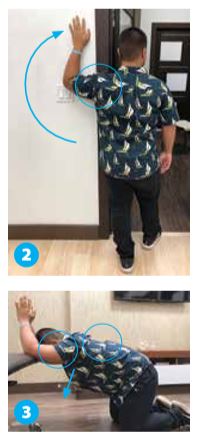
    Stretching the pectoralis minor will increase flexibility of the anterior shoulder and chest. Stand with one foot forward against the corner of a wall using it to hold the shoulder back, pinch shoulder blades together, slowly raise the arm up until you feel a deep stretch. Hold for 30 seconds; repeat three to five times.

    3. IMPROVE THORACIC (MIDDLE BACK) SPINE MOBILITY:

    To be able to reach overhead fully, you need thoracic flexibility. From a kneeling position, lean forward and place your elbows on a chair and drive your chest downwards, stretching the spine and under the arms. Hold for 30 seconds; repeat three to five times.


    MOON PHYSICAL THERAPY, LLC
    320 Ward Ave., Ste. 107, Honolulu HI 96814
    95-1057 Ainamakua Dr., F-11, Mililani HI 96789
    808-597-1005 | www.moonpt.com

    Weekend warriors often develop shoulder discomfort when performing overhead movements while playing tennis, baseball or tackling DIY projects around the house. The longer you suffer, the more damage can occur. Here are simple tips to relieve some symptoms:

  • Don’t Just Sit There! Get Up & Move!

    Many of us sit for hours at a desk at work and on the couch at home. Our jobs and activities have been trending toward a more sedentary lifestyle. And regular exercise might not be enough to reverse the damage.

    Studies now indicate the longer you sit, the greater your risk of developing cardiovascular disease or diabetes. Prolonged sitting lowers your metabolism, increases blood fat and sugar levels, drops your good cholesterol and increases mortality rates. It’s being referred to as a new risk factor, like smoking or high blood pressure.

    We know the benefits of exercise, yet getting the recommended 75 minutes of vigorous or 150 minutes of moderate exercise per week is hard.

    If you sit for longer than 30 minutes, get up and walk around. In addition, build your core strength and burn calories by being mindful of your posture.

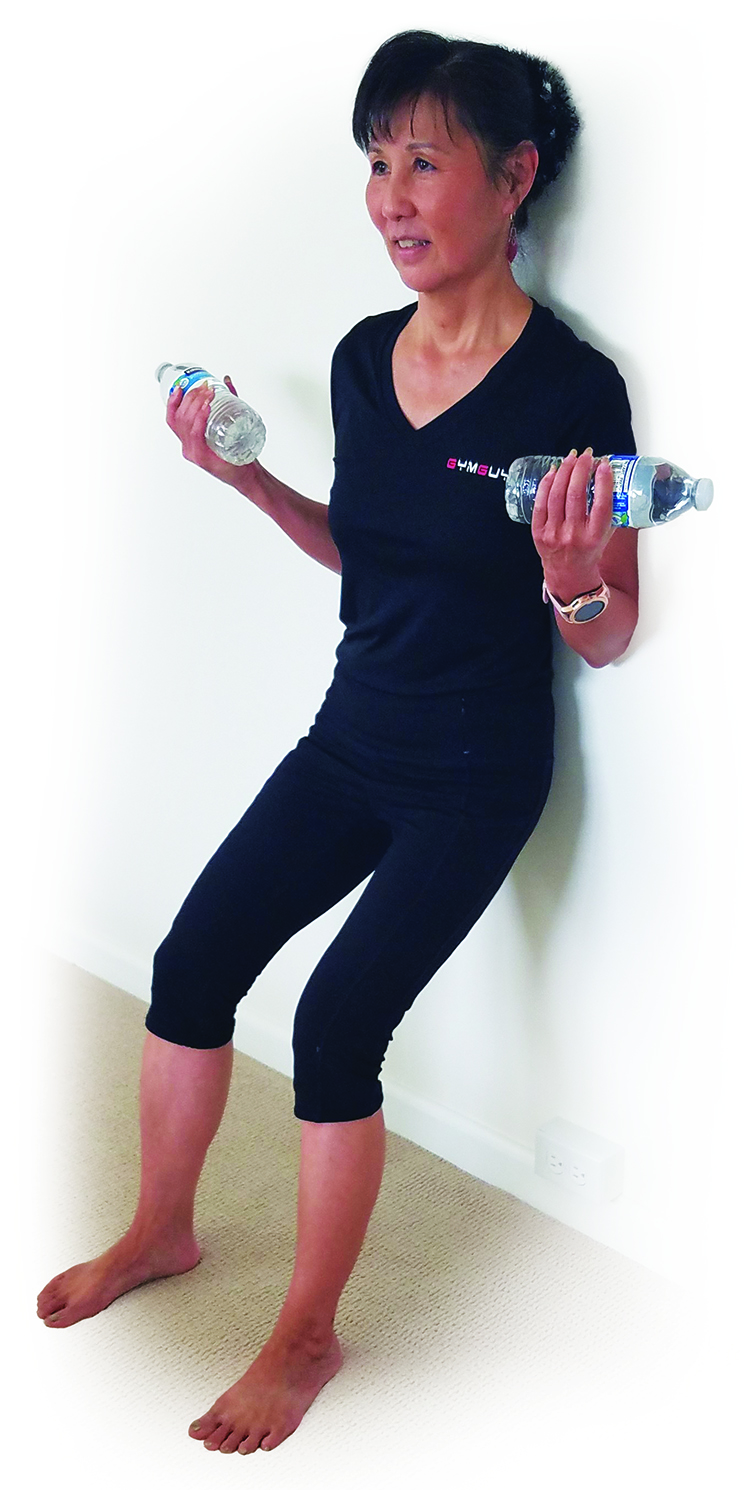
    In addition, do some wall sits with some bicep curls. With your back against a wall, walk your feet forward until you’re in a partial sitting position. Then push your head and shoulders against the wall while curling bottles water or cans of food.

    To remind you, set a timer for 30 minutes and MOVE! Substitu- ting even the simplest physical activities for some of your sit- ting time is an easy way to improve health and increase happiness.


    GYMGUYZ Urban Honolulu
    808-638-2525 | www.gymguyz.com

    Many of us sit for hours at a desk at work and on the couch at home. Our jobs and activities have been trending toward a more sedentary lifestyle. And regular exercise might not be enough to reverse the damage. Studies now indicate the longer you sit, the greater your risk of developing cardiovascular disease…

  • Maui Pink Paddlers Give Us Hope

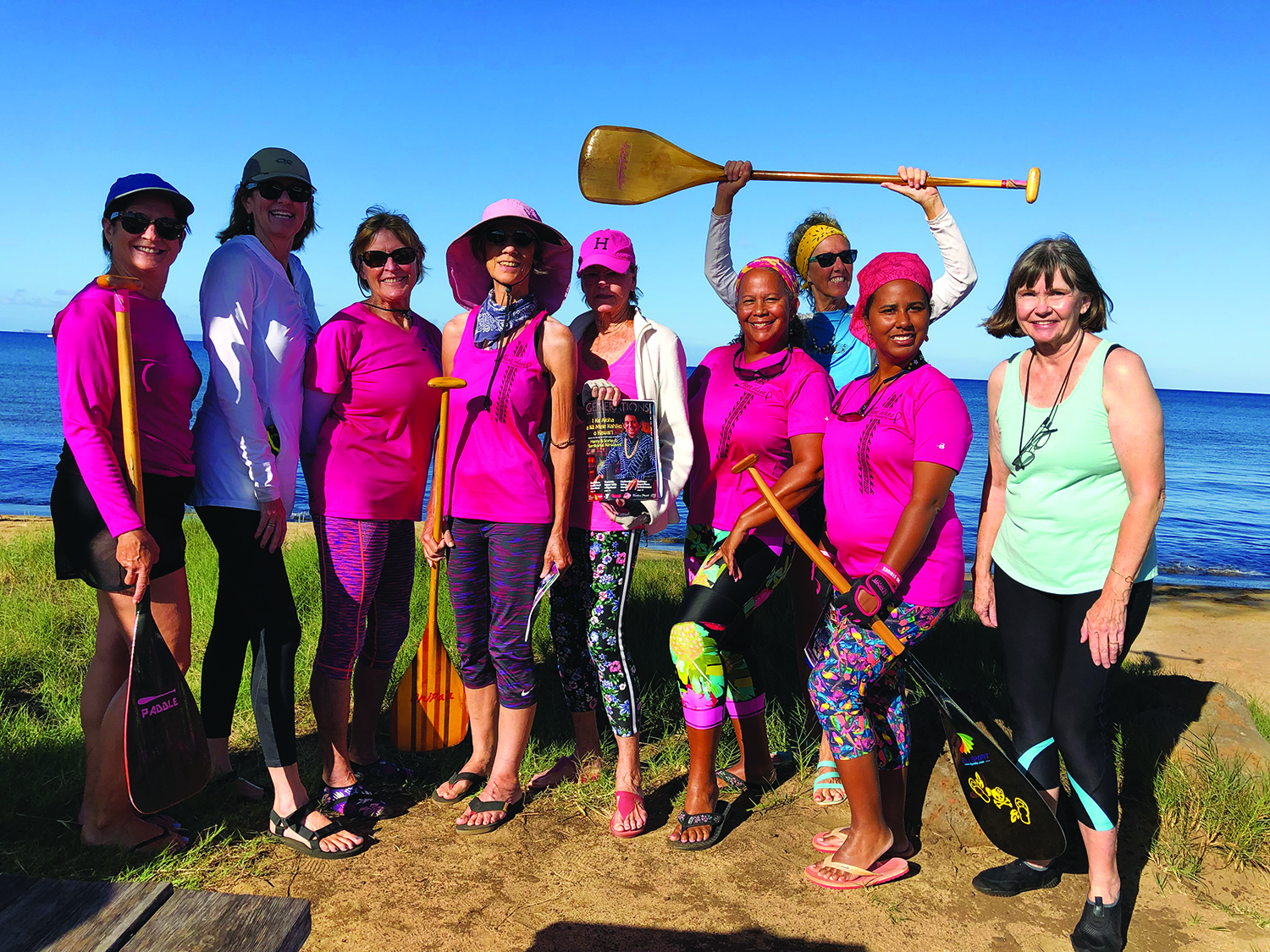
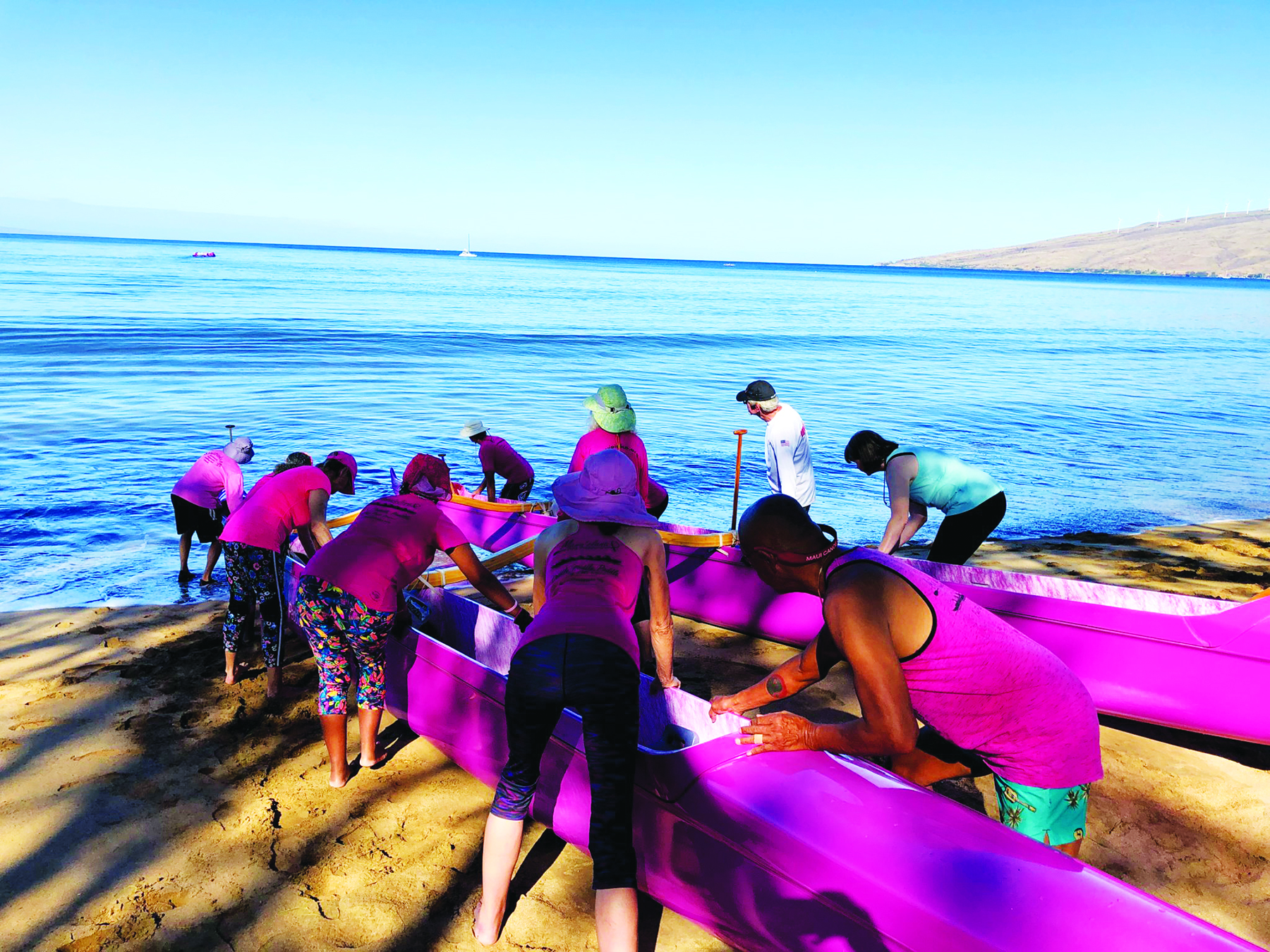
    Hope and togetherness for persons affected by cancer is Mana‘olana Pink Paddlers’ (MPP) specialty. Tuesday and Thursday mornings, cancer patients, survivors and supporters pull together, paddling their pink double-hull canoes across the ocean off Kīhei on Maui. Oct. 12 and 13 will be their 10th voyage and overnight on Lāna‘i with The Pacific Cancer Foundation’s Paddle for Life — not a race, but a fun outing (www.paddleforlifemaui.org).

    “Mākaukau!” (Ready!) “Imua!” (Forward!) When all 12 paddlers are in sync, the canoe flies. In the last seat, the steersman selects the course; the first seat sets the pace. We paddle with her. After 15 strokes, seat three shouts “Hut!” (Prepare
    to paddle on the other side!) and “Hoe!” (Switch!). This works both sides of the body.

    This is the first exercise that I tried since my hysterectomy. Mary Dungans, president of MPP, invited me to experience what the nonprofit does for cancer patients and survivors — Wow! — training, an ocean paddle, then a healthy snack and talk story. Half the paddlers are cancer supporters like Mary. Since retiring in 2012, she devotes her skills to MPP.

    Says Mary, “We all love life. Alone, we feel weak, but in our big, stable double-hull canoes, 12 easily bear the load. Kīhei morning seas are calm so we can take off safely most days. Paddling is a fun, physical activity that builds both strength and hope. Cancer isolates, but paddling connects.”

    She’s right. The peace and freedom of the open ocean heal the spirit. MPP gets you there with aloha and ruthless encouragement — like pink gold. Drive on down to Sugar Beach in Kīhei any Tuesday or Thursday at 7:30 am. Look for the pink paddle. The Mana‘olana Pink Paddlers’ fleet of bright pink double-hulls take off from the north end of the beach and everyone is welcome.

    To the Pink Paddlers, life is about moving forward and staying grounded. So, as they say in the canoe, “Imua!”


    Enthusiasm and camaraderie! Love these Pink Paddlers who taught me how to paddle and opened up my world. We cut across a flat Ma‘alaea Harbor to see the wreckage of a WWII Hellcat fighter plane. Wow!


    MANA‘OLANA PINK PADDLERS
    Info@manaopinkpaddlersmaui.org
    www.mauipinks.org | www.manaolanapinkpaddlersmaui.org
    Facebook: Manaolana Maui and Maui Pink Paddlers
    To sign up for the Lāna‘i Paddle for Life voyage with MPP or to engage MPP to schedule an Ashes to Sea ceremony, you may get the details online.

    Hope and togetherness for persons affected by cancer is Mana‘olana Pink Paddlers’ specialty. On Tuesday and Thursday mornings, cancer patients, survivors and supporters pull together, paddling their pink double-hull canoes across the ocean off Kīhei on Maui. Oct. 12 and 13 will be their 10th voyage and overnight on Lāna‘i with The Pacific Cancer Foundation’s…