Category: Date

  • Educating Students Supports Our Kūpuna

    The Hawaii Pacific Gerontological Society, organized in 1979, is a nonprofit dedicated to improving the quality of life of Hawai‘i’s kūpuna. One of the missions of HPGS is to raise funds and award scholarships to college students interested in careers involving aging and older people. The society just awarded three scholarships for the 2020 fall classes.

    One such awardee is University of Hawai‘i West O‘ahu student Dani Waring, who wrote to HPGS. “This scholarship allows me to pay for one fall course and subsequent study books so I don’t have to rely on my income, and it will help me realize my goal of being a nursing administrator.”

    The society is also excited about the next set of awardees for 2021. In this upcoming event, HPGS is doing it differently and going virtual

    The fourth annual HPGS Scholarship Fundraiser will be held virtually on Nov. 6 with Gerontologist Cullen Hayashida as the honoree. He has helped develop over 50 elder care service projects in hospital, nursing home, home care, college and community settings. Entertainer-comedian Frank Delima will serve as the emcee. All proceeds will go to the scholarship fund. Sign up, register and donate to this worthy event online.


    HAWAII PACIFIC GERONTOLOGICAL SOCIETY
    P. O. Box 3714, Honolulu, HI 96812
    www.hpgs.org | 808-722-8487 | sgoyallc@aol.com
    HPGS’s enrollment is open throughout the year for those interested in being part of an association that educates, communicates and continues to bring together its membership for the common goal of servicing Hawai‘i’s elders.

    The Hawaii Pacific Gerontological Society, organized in 1979, is a nonprofit dedicated to improving the quality of life of Hawai‘i’s kūpuna. One of the missions of HPGS is to raise funds and award scholarships to college students interested in careers involving aging and older people. The society just awarded three scholarships for the 2020 fall…

  • Help Is On The Way During COVID-19

    With the reopening of the state after shutdowns mandated by local government in recent months, kūpuna and other vulnerable people have become more fearful of venturing out into the community to shop and run errands as the coronavirus continues to spread with more people out in public. The demand for food, supplies and assistance has grown in response to unemployment. An increasing number of kūpuna say they do not have sufficient resources to feed themselves.

    Help Is On The Way

    To address these issues, Gregory R. Kim cofounded Help Is On The Way in March 2020, a nonprofit grassroots  organization that offers free pickup and delivery service on O‘ahu to help meet the needs of kūpuna who are restricted to their homes, those who are quarantined and individuals with medical conditions in the midst of the COVID-19 pandemic.

    Services are Simple to Use

    Pickup and delivery items include groceries and household goods, prepared and frozen meals, farmers’ market produce, toiletries, prescriptions, appliances and other deliverables. Typically, Help Is On The Way clients order and pay for groceries, and volunteers pick them up and deliver them. (Volunteers do not shop or handle money.) The organization also guides clients to other agencies and resources that might assist them.

    The organization has also stepped up to help with Hawai‘i’s food security needs with its own food drives in partnership with Central Union Church that collect nonperishable food and toiletries. Angel Food Network volunteer drivers across O‘ahu have a ready supply of bags of food for quick delivery upon request to kūpuna and others.

    How to arrange a pickup and delivery

    STEP 1: Place an order by calling a store, pay, get a confirmation number.
    STEP 2: Contact Help Is On The Way to request delivery of your order. (Delivery may take one to two days.)
    STEP 3: Volunteers will deliver your items to your location.

    Help Is On The Way is a member of the Kupuna Food Security Coalition managed by the City and County of Honolulu, Elder Care Division; and the Aloha United Way 211 network. Contact Help Is On The Way for a delivery, to make a donation or to sign up as a volunteer, through the information provided below.


    HELP IS ON THE WAY
    1926 Kakela Drive, Honolulu, HI 96822
    406-426-1013 | hihelpisontheway@gmail.com
    www.hihelpisontheway.org
    Help Is On The Way also connects those who cannot afford food with programs and organizations that can help.

    With the reopening of the state after shutdowns mandated by local government in recent months, kūpuna and other vulnerable people have become more fearful of venturing out into the community to shop and run errands as the coronavirus continues to spread with more people out in public. The demand for food, supplies and assistance has…

  • Keeping Kūpuna On the Move is Essential

    An interview with Denise Soderholm of Soderholm Mobility Inc.

    How has the transport business for seniors been affected by COVID-19?

    Initially, I think the overall private transport business literally fell off a cliff in early March as tourism abruptly stopped and the State of Hawai‘i went into lockdown. The businesses in Hawai‘i quickly came together to provide solutions to safely transport our kūpuna. Fortunately, transport vehicles for retirement facilities and adult day programs have still operated. I was glad that was happening because transportation is vital for our seniors, even though they’ve cut back on traveling because of the lockdown mandates. But the necessary travels to the doctor are essential, as well as to the grocery store and pharmacy. Right now, a lot has fallen onto family for transportation — and that has caused an extra burden for them. However, there have been alternative solutions that businesses have adopted and included in their services, such as special senior and disabled shopping hours as well as store-to-door delivery so that the most vulnerable can still obtain their necessary medications or food.

    During the state’s pandemic mandates, how have client services changed?

    Well, the most obvious for businesses was to incorporate extra safety measures to keep staff, technicians and customers secure. Safety concerns for the more vulnerable and aged populations were paramount for everyone. COVID-19 just couldn’t take hold in those businesses. Many acquired new disinfectant products that are known to be effective for up to 30 days.

    How are seniors faring with changing businesses and client services?

    We’re in such a different time now. Everything around us just seems to be moving by so quickly. So I can only imagine how our seniors are viewing the world around them. I don’t expect them to keep up, but it just seems you almost have to, because technology is now playing a major part in our lives. Seniors must learn the devices we are using in our shifting business landscape.

    Our business as well as many others are focusing on maintaining client communication via tablets, smartphones or what have you. FaceTime and Zoom are being widely used for one-on-one interaction and demonstrations with customers. Something that was once done in person is now an alternative norm — such as virtually examining new mobility equipment. Of course, the old phone call interaction is still always available. But definitely going virtual for businesses has dialed up the client services format.

    YouTube videos are also another method businesses used as they began to think out of the box. Video demonstrations have been popular and businesses have incorporated those videos into their websites. And that’s where and how businesses are adjusting. Not only are clients able to get information about certain products, but transactions are done completely from their own home.

    While online shopping may be popular, we need to recognize the importance of buying local. Warranty, service and repair for products purchased is best done on a local basis by a trusted provider. We want to recognize that as we all try to rebuild our local Hawai‘i economy.

    For businesses in the senior industry, what has been the biggest challenge overall?

    The biggest challenge in this COVID-19 environment was the initial shock and stress of how to do business with restrictions and constantly changing situations. Thinking out of the box was required. With that, new opportunities became available. In a way, there’s always a silver lining to every situation because it forces you to adapt and be flexible, and to change along with uncertain footing. You certainly remain light on your feet just so you’re always prepared.

    In conjunction with the first question, I think the biggest challenge overall for seniors, still, is travel. Travel is such an integral part of our daily lives. We never thought twice about it before this pandemic. We’ve taken that and a lot of other things for granted; socialization stands out enormously. Seniors aren’t able to attend their daily social events, such as going to the park, a friend’s house, a senior club, etc. Travel is essential as they need to get from point A to point B.

    Businesses in this industry must know the importance they play in this modality. They have stepped up and found creative ways to continue their business while keeping seniors mobile in a safe environment.

    I have no doubt that the businesses that serve the disabled and aged communities in Hawai‘i will continue to evolve.

    How do you think Generations Magazine has impacted our kūpuna community?

    I would say Generations Magazine has made a great impact by providing a plethora of valuable information for our kūpuna and their related community. As an individual with mobility challenges, I started reading the magazine in the doctor’s office years before I dreamed of being close to the kūpuna target age group.

    Generations Magazine contains so many resources and I learn something new with each issue. The Generations community of contributors is also one of compassion and understanding. To have a single, reliable source of ku¯ puna-related information is vital to our community.

    We’re proud and honored to be a Generations Magazine partner!

    Initially, I think the overall private transport business literally fell off a cliff in early March as tourism abruptly stopped and the State of Hawai‘i went into lockdown. The businesses in Hawai‘i quickly came together to provide solutions to safely transport our kūpuna.

  • August – September 2020

    August – September 2020

    WANT THIS ISSUE?

    Download your own personal copy of this issue in PDF format. Click the button below:

    DOWNLOAD IT NOW

    The April-May 2020 issue of Generations Magazine, Hawai‘i’s Resource for Life, features an in-depth look at Leslie Wilcox, President and CEO of PBS Hawaii, we look at lifework and planning amid Covid-19, the expansion of telehealth services and a look at solutions for loneliness and housng.

  • Beware of Coronavirus Scams!

    Cybercriminals and online fraudsters are sending out phishing emails, text messages and setting up robocalls offering “discounted” coronavirus test kits, masks and even hand sanitizers — all bogus offerings — in an attempt to scam the public.

    Claiming to be medical experts, they are also advertising bogus treatments and vaccines.

    They are also creating fake websites purporting to be the Centers for Disease Control and Prevention (CDC), the World Health Organization (WHO) or even the Internal Revenue Service (IRS), and tricking unsuspecting visitors into clicking on links that will infect their devices with malware that steals financial and personal information.

    Phishing emails have also offered to expedite government relief checks.

    Here are some preventive tips on how not to be duped by these cybercriminals:

    Beware of online requests for personal information, such as your Social Security number.
    Check the email address or link. You can inspect a link by hovering your mouse button over the URL to see where it leads.
    Do not click on links in emails or texts.
    Watch for spelling and punctuation mistakes, and bad grammar.
    Beware of contact tracing scams. Do not provide personal information or click on any links from an unverified source.
    Avoid emails that insist you act now. Phishing emails often try to create a sense of urgency or demand immediate action.
    Do not download, view or open any email attachments sent to you.
    Do not reply to the email, text message or robocall.
    Ignore online offers for vaccinations. They do not exist yet.
    Be wary of ads for test kits. Most test kits being advertised have not been approved by the FDA and are not accurate.

    If you feel you have been victimized by a scam, contact your financial institution or credit card company, and report it to your local law enforcement agency.


    THE DEPARTMENT OF THE PROSECUTING ATTORNEY
    1060 Richards St., Honolulu, HI 96813
    808-768-7400 | Office hrs: Mon – Fri, 7:45 am – 4:30 pm
    www.honoluluprosecutor.org/contact-us/

    It may be hard to believe, but even during the coronavirus pandemic, criminals are targeting and preying upon the public via phony websites, bogus emails and text messaging, and by phone.

  • Timeshares Pt. 3: Scam or Investment?

    {Play}As I indicated in the last issue, under Hawaii Revised Statute §514E-9, timeshare companies are required to give clients all information regarding the unit for purchase, including all the fees attributed to that unit that are due immediately and the “hidden” fees that require seemingly endless future payments — the monthly mortgage, property tax, maintenance fees and interest.

    Don’t Succumb to Pressure

    Because timeshare agents usually don’t verbally deliver the “caveats” of the transaction to the clients, it is with utmost importance that prospective timeshare buyers read through those contracts  thoroughly. If the salesman tries to subtly pressure you into just signing the paperwork and indicates you can change your mind later, stand up and walk away.

    There have been local stories of people feeling trapped in the sales pitches, having their intelligence questioned, having their emotions played upon and being made to feel guilty for “wasting” the salesman’s time.

    How to Exit From Ownership

    If you have actually bought into a timeshare and you can no longer afford it, options include renting or selling, going into foreclosure, or hoping that the hotel/resort can take back the deed of the unit if the mortgage agreement will allow it.

    These options in exiting a timeshare, however, are fraught with pitfalls. It’s important to verify the legitimacy of the companies that approach for the purpose of resale. There are also signs to be wary of, including huge initial fees, overseas bank account addresses for wire transfers and asking for personal or financial information. Reputable companies will use written contracts specifically outlining the services to be provided. These contracts should include the services the resellers will perform, outlined fees with deadlines, the length or term of the contract to sell the timeshare, and it should note the person responsible or documenting and closing the sale.

    A timeshare is not a bad thing in itself. It is the lack of understanding of the industry and contracts that lead people to become victims of the system. So, read and understand the details of everything you sign — or prepare for unforeseen and unpleasant consequences.


    If you suspect elder abuse, call these numbers:
    – Police: 911
    – Adult Protective Services: 808-832-5115
    – Elder Abuse Unit: 808-768-7536
    If you have questions about elder abuse, call or email:
    808-768-7536 | ElderAbuse@honolulu.gov

    As I indicated in the last issue, under Hawaii Revised Statute §514E-9, timeshare companies are required to give clients all information regarding the unit for purchase, including all the fees attributed to that unit that are due immediately and the “hidden” fees that require seemingly endless future payments — the monthly mortgage, property tax, maintenance…

  • Estate Planning Mirrors Life

    As a member of ACTEC, I am privileged to learn from and exchange ideas with some of the most skilled and dedicated trust and estate lawyers in Hawai‘i. I often wonder why most of our discussions focus on probate and litigation issues rather than on how we can help plan to mitigate family conflict and avoid probate.

    As professionals, we must continue to fight against the inclination to treat estate planning as “the preparation of documents.” Rather, we ought to consider ourselves more as  counselors of law” who guide their clients through a process that considers all factors — understanding  clients’ intentions and hopes, first and foremost — as well as convenience, probate avoidance, minimization of tax, family relationships, liability and fashioning a plan well-suited to their unique needs. This includes proper counseling and assistance in the funding of a trust, and engaging in meetings with family members and professionals to communicate intentions and the plan so that everyone — family, client and professional — are working together seamlessly with common goals.

    Estate planning is not a commodity of different pieces of documents put into a three-ring binder. Estate planning mirrors life, where change is constant and communication is key.


    STEPHEN B. YIM, ATTORNEY AT LAW
    2054 S. Beretania St., Honolulu, HI 96826
    808-524-0251 | www.stephenyimestateplanning.com

    As a member of ACTEC, I am privileged to learn from and exchange ideas with some of the most skilled and dedicated trust and estate lawyers in Hawai‘i. I often wonder why most of our discussions focus on probate and litigation issues rather than on how we can help plan to mitigate family conflict and…

  • The Time to Plan is NOW

    When I was in elementary school in the 1960s, my family’s set of encyclopedias claimed that I could expect to live to the ripe old age of 70. That seemed incredibly old to me. Fast-forward to 2020, and the current consensus is that I will live into my 80s, barring a catastrophic illness or an accident. Advances in medical science are probably the primary reason for this difference, but now, when 80 seems pretty young to me, I have to ask, is a longer life necessarily a good thing? It is not that difficult to think of compelling reasons in order to answer that question in the negative.

    Although science has stretched our lifespans, it has not yet perfected a way to keep us mentally and physically competent until the ends of our lives. The net result is that we live longer, but our quality of life in the extra years that science has granted us may not be what we would desire. In our grandparents’ day, senility was not unknown, but back then, most people died before they had a chance to plumb the depths of Alzheimer’s. Each person reading these words must recognize that he or she has about a 70 percent chance of being incapacitated to the point of needing long-term care for some period of time before the final bell.

    Planning for the likelihood of eventual incapacity can make our final years much more bearable for ourselves and our loved ones than will otherwise be the case. So each of us needs to include in our estate planning arsenals against the inevitable — not only clear instructions about passing on our things, but also clear chains of authority and clear instructions about how decisions will be made on our behalf if we lose the ability to make those decisions.

    Most of us would prefer not to think about these things and most of our children (the good ones, anyway) want to think about them even less. But that is a poor excuse for leaving our loved ones in a haze of difficult decisions that could have been considered, analyzed and planned for in advance. Seeing how our minds and bodies are unlikely to improve over time, a plan delayed may very well end up being a wishful thought and the source of deep regret.

    Gather your loved ones and your trusted advisors and document the path that you will follow if time and health take you where you do not want to go. This process requires honesty, courage and wise counsel. Ultimately, it will be a source of tremendous peace.


    SCOTT MAKUAKANE, Counselor at Law
    Focusing exclusively on estate planning and trust law.
    www.est8planning.com
    808-587-8227 | maku@est8planning.com

    When I was in elementary school in the 1960s, my family’s set of encyclopedias claimed that I could expect to live to the ripe old age of 70. That seemed incredibly old to me. Fast-forward to 2020, and the current consensus is that I will live into my 80s, barring a catastrophic illness or an…

  • Now’s the Time: Charities Need Our Help

    In these challenging economic times, many worthwhile charitable organizations find themselves in a precarious financial position. Meanwhile, they are experiencing unprecedented demand, especially those charities that provide basic needs like food and shelter.

    Thankfully, new, unique provisions in the tax code have been implemented in response to the COVID-19 crisis, creating more incentives for giving. You may be able to better leverage your donations with tax-smart strategies. So, if you’re able to extend your generosity during this time of increased need, it may be an opportune year to make charitable contributions.

    Everyone Can Claim a Deduction

    In 2020, the standard deduction is $12,400 for a single tax filer or $24,800 for a married couple filing a joint return (even more for those age 65 or over). Your itemized deductions would need to exceed those levels to benefit from itemizing. Those who don’t typically itemize are not able to deduct charitable contributions from their taxes. However, on your 2020 tax return, you will be allowed to deduct up to $300 in cash contributions to qualified charities even if you choose the standard deduction.

    A Higher Ceiling on Tax-Advantaged Giving

    If you itemize deductions and plan on large gifts, the tax rules prevented you from claiming a deduction that exceeded 60 percent of your adjusted gross income (AGI) in a single year. In a unique provision for 2020, you can now claim a deduction valued at up to 100 percent of your AGI for charitable  contributions. If your financial circumstances put you in a position to make substantial gifts, this will be the most favorable year, from a tax perspective, to do it.

    A Tax-Efficient Distribution Strategy From Your IRA

    A special provision for 2020 allows individuals subject to Required Minimum Distributions from IRAs and workplace retirement plans to forego those distributions. If you don’t need to draw from your IRA to meet your income needs for this year, you still have an opportunity to put the funds that would have been RMD dollars to use as a charitable contribution. The most tax-efficient way to do so is with a Qualified Charitable Distribution (QCD). Up to $100,000 per year can be contributed to charitable organizations in this way. With a QCD, if you are 70.5 or older, funds are distributed directly to the charity from your IRA so you don’t have to claim the income before making the contribution. That is a tax-saving strategy you can use whether you itemize deductions or claim the standard deduction.

    Put a Giving Strategy in Place

    Your circumstances today and your financial future may require careful reassessment given the current economic challenges. Incorporate your charitable giving strategy into your comprehensive financial plan review. Check with your financial advisor and tax professional as you consider your options for giving in 2020 and beyond.


    MICHAEL W. K. YEE, CFP,® CFS,® CLTC, CRPC®
    1585 Kapiolani Blvd., Ste. 1100, Honolulu, HI 96814
    808-952-1222, ext. 1240 | michael.w.yee@ampf.com
    Michael W. K. Yee, CFP,® CFS,® CLTC, CRPC,® is a Private Wealth Advisor, Certified Financial Planner™ practitioner with Ameriprise Financial Services Inc. in Honolulu, Hawai‘i. He specializes in fee-based financial planning and asset management strategies, and has been in practice for 36 years. Investment advisory products and services are made available through Ameriprise Financial Services LLC., a registered investment adviser. Ameriprise Financial Inc. and its affiliates do not offer tax or legal advice. Consumers should consult with their tax advisor or attorney regarding their specific situation. Ameriprise Financial Services LLC. Member FINRA and SIPC. ©2020 Ameriprise Financial Inc. All rights reserved.

    In these challenging economic times, many worthwhile charitable organizations find themselves in a precarious financial position. Meanwhile, they are experiencing unprecedented demand, especially those charities that provide basic needs like food and shelter. Thankfully, new, unique provisions in the tax code have been implemented in response to the COVID-19 crisis, creating more incentives for giving.

  • What Hawai‘i Law Requires Regarding Condos, Foreclosure & Mediation

    By virtue of buying a condominium, each unit owner becomes a member of an association and agrees to share the costs of operating that association. For example, owners share the cost of community lighting, water and grounds-keeping, usually via a set monthly maintenance fee. Special assessments are extra charges unit owners pay to cover larger or unforeseen expenses. They are becoming more common because many condominium associations in Hawai‘i are comprised of aging buildings and infrastructure. Corroded iron pipes and old elevators are a common cause of special assessments.

    Association boards have a fiduciary duty to collect funds from owners in order to pay the bills to maintain and make timely repairs to the property and its structures. Boards and associations may incur liability for failing to do so. In addition, the value of the condominium may decrease, and it may become uninsurable.

    Sometimes owners are not able to pay these shared expenses and dispute the charges. Failure to remit in a timely fashion can result in penalties, fines, late fees, lien filing fees, attorneys’ fees and costs, liens, and possibly, foreclosure.

    The Hawai‘i State legislature decided that it was important to have clear and effective rules relating to condominium foreclosures and wanted to encourage the use of mediation for penalties and other charges, so it changed both foreclosure and condominium law.

    Condo Foreclosure

    Under the nonjudicial foreclosure law (chapter 667, Hawai‘i Revised Statutes (HRS)), if the parties have agreed on a payment plan to stop a foreclosure from continuing, unpaid fines assessed by the association are not a default under the plan. (See section 667-94(c), HRS.) As long as the owner is not in default in any other manner under the plan, the association must notify the unit owner in writing of the right to  mediation and cannot deduct any fines or attorney fees from the owner’s plan payments. The parties then can attempt to resolve any dispute over fines and attorneys’ fees through mediation within 30 days of the association’s written notice. If, however, the owner refuses to mediate or the parties cannot reach an agreement or the owner defaults under the plan, then the association can start foreclosure proceedings. Different rules allowing for payment plans in judicial foreclosures are set forth under section 667-19, HRS.

    Foreclosure Mediation

    Under the condominium law (chapter 514B, HRS), any notice of default and intention to foreclose nonjudicially (under section 667-92(a), HRS) must be specifically worded and additionally state that the owner may request mediation by delivering a written request for mediation to the association by certified mail, return receipt requested or hand delivery within 30 days after service of the notice. (See section 514B-146.5, HRS.) If the association does not receive a timely request, it may go ahead with nonjudicial or power of sale foreclosure. If the  association receives a timely request, it must agree to mediate and cannot proceed with nonjudicial or power of sale foreclosure until it has participated in mediation or the time for completion has elapsed. The completion of the mediation is time-sensitive (usually 60 days). If the association is using the power of sale provision provided in the condominium law, the power cannot be used in certain  situations, for example deployed military outside of the State of Hawai‘i or certain liens based solely on fines, penalties, or legal or late fees. (See section 514B-146.5, HRS.)

    Owners should always promptly check with their attorney regarding foreclosure matters and issues.

    Condominium Law

    Outside of foreclosure law, under the condominium law, there is also a “pay first, dispute later” provision to protect the integrity of the condominium and in fairness to other owners that everyone pays their share. This provision, however, applies only to common expense assessments which are expenses assessed to all owners in proportion to their interests. It does not apply to other expenses of the association. (See section 514B-146(f), HRS.)

    Any payment by an owner must first be applied to outstanding common expenses. Then the payment can be applied to other association charges in a list of priorities (assessed charges such as utility sub-metering and cable then unpaid late and legal fees, fines and interest — by board policy.) If, however, an owner designates that any payment is meant for a specific charge that is not a common expense, the payment may be applied as directed by the owner — even if the common expense remains unpaid. (See section 514B-105(c), HRS.)

    Condominium law allows an owner who disputes the amount of assessment to request a written statement about the assessment from the association. (See section 514B-146, HRS.) If the owner disputes the information in the association’s written statement, the owner may request another written statement which states that the owner has no right to withhold common expense assessments, the owner has a right to demand mediation or arbitration regarding the validity of the common expense assessment (provided it is paid in full and current), payment of the common expense assessment shall not prevent the owner from contesting common expense assessment, and if the owner contests any penalty, fine, late or lien filing fee, or other non-common expense assessment, the owner may demand mediation prior to paying those charges. The owner has 30 days from the date of the written statement to file a demand for mediation on the other charges. If the owner does not do so, the association may proceed with collection of the charges. If the owner requests mediation within 30 days, the association cannot collect any of the disputed other charges until it has participated in mediation which must be completed within 60 days of the owner’s request. Only if the mediation is not completed within 60 days or the parties cannot resolve the dispute by mediation may the association proceed with collection of any amounts due for attorneys’ fees and costs, penalties or fines, late or lien filing fees, or any other charge that are not a common expense of all unit owners.


    STATE DEPT. OF COMMERCE & CONSUMER AFFAIRS — REAL ESTATE BRANCH
    808-586-2644 | www.hawaii.gov/hirec
    This information is for educational and informational purposes only. Owners and associations should consult their attorneys for legal advice and assistance.


     

    By virtue of buying a condominium, each unit owner becomes a member of an association and agrees to share the costs of operating that association. For example, owners share the cost of community lighting, water and grounds-keeping, usually via a set monthly maintenance fee.

  • BEWARE of Calls With False Claims

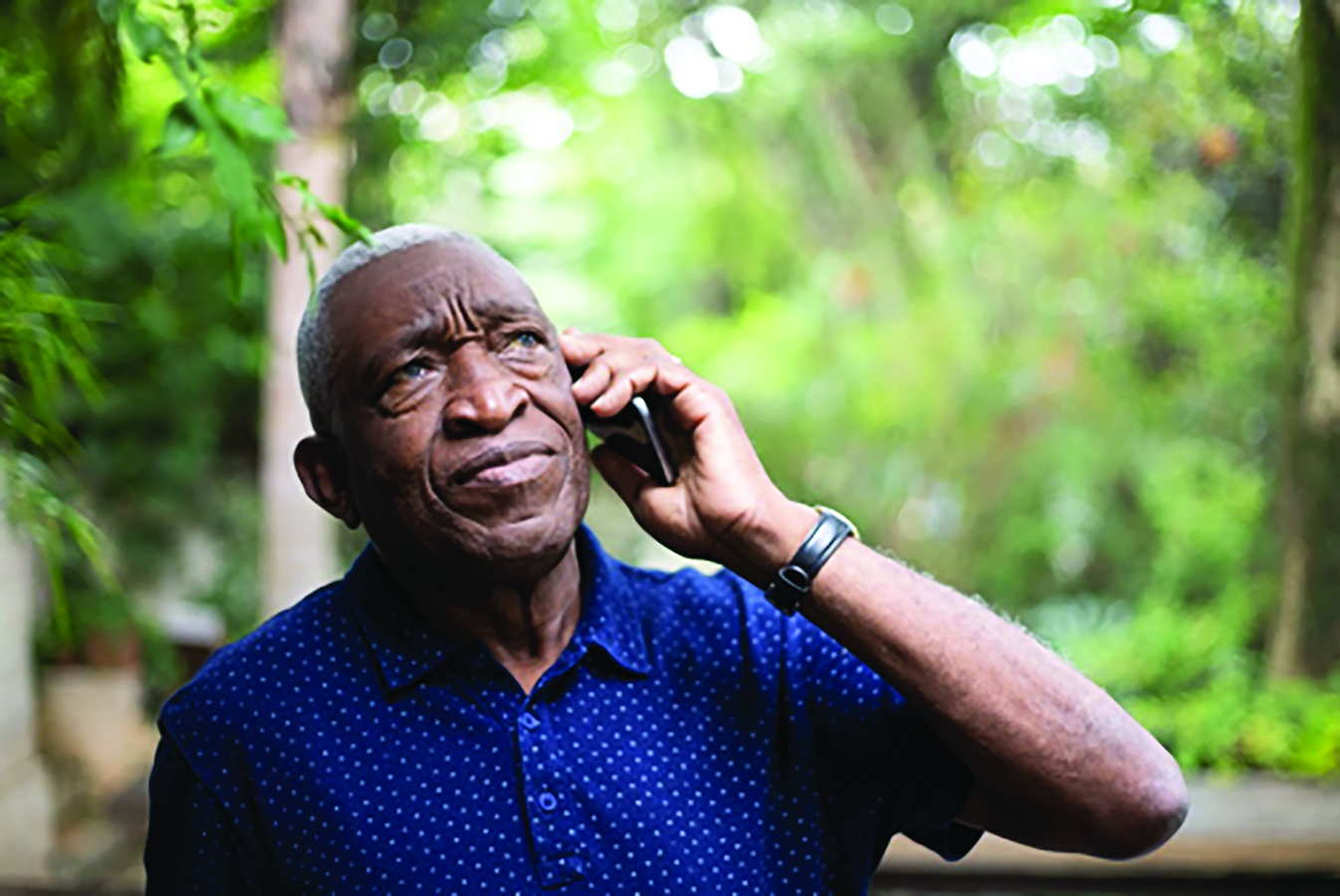
    Social Security and its Office of the Inspector General continue to receive reports about fraudulent phone calls from people claiming to be Social Security employees. These scammers try to trick people into providing personal information or money, and often threaten their victims with arrest. Don’t be fooled.

    Our employees will never threaten you for information or promise a benefit in exchange for personal information or money. Real Social Security employees also WILL NOT:

    • Tell you that your Social Security number has been suspended
    • Contact you to demand an immediate payment
    • Ask you for credit/debit card numbers
    • Require a specific means of debt repayment, like a prepaid debit card, a retail gift card or cash
    • Demand that you pay a Social Security debt without the ability to appeal the amount you owe
    • Promise a Social Security benefit approval or increase in exchange for information or money

    If you receive a suspicious call or are unsure of the identity of someone who claims to be from Social Security:

    Hang up. Do not give money or personal information.

    Report the scam to our Office of the Inspector General at oig.ssa.gov/report.


    Call your local SSA office at 800-772-1213 (toll free) Mon–Fri, 8:30am–3:30pm. Use the SSA Office Locator to find your local office at www.socialsecurity.gov

    Social Security and its Office of the Inspector General continue to receive reports about fraudulent phone calls from people claiming to be Social Security employees. These scammers try to trick people into providing personal information or money, and often threaten their victims with arrest. Don’t be fooled.

  • Take the Confusion Out of Medicare

    Although new rules and social distancing regulations have been put in place due to the COVID-19 pandemic, there are still resources available to you just a phone call away. Social Security services can be provided at no cost from the safety of your home.

    If you are turning 65 or being furloughed from your employer’s group medical plan, you should consider transitioning into a Medicare plan as soon as you are notified. Three months prior to turning 65, you can apply for Medicare Part A , which covers inpatient hospital care with no monthly premium. Your Medicare Part B outpatient coverage will have a monthly premium based on your adjusted gross tax return two years prior to the year you are applying.

    You can obtain the Part B enrollment form CMS 40B online.

    If you’re being furloughed, provide your human resources manager with the Request for Employment form CMS L564 (find both forms at www.ssa.gov/benefits/medicare). This form will verify that you’ve had continuous company group medical coverage from your employer. Once Social Security receives both completed forms, they will process your Part B effective date.


    COPELAND INSURANCE GROUP
    1360 S. Beretania St. Ste. 209, Honolulu, HI 96814
    Margaret Wong, Sales & Marketing Director
    808-591-4877 | Margaret@Copelandgroupusa.com
    www.copelandgroupusa.com

    Although new rules and social distancing regulations have been put in place due to the COVID-19 pandemic, there are still resources available to you just a phone call away. Social Security services can be provided at no cost from the safety of your home.