If you’ve noticed your teeth are getting longer and your gums are getting shorter, perhaps it’s time to see a dentist.
Gum recession can affect anyone, even those who brush twice a day and floss daily. Although it can’t be reversed, there are some things you can do to stop them from receding.
Gum recession can be a form of gum disease in which the gum tissue pulls away from the teeth, revealing the tooth’s root. Also called “periodontal disease,” bacterial gum infections can destroy gum tissue and supporting bone that hold your teeth in place. Gum disease is the main cause of gum recession and can result from poor oral health, pre-existing medical conditions, dry mouth, aggressive brushing, smoking or the effects of age and even genetics.
Gum disease makes you more prone to cavities and a higher risk of tooth loss. In addition to the visible signs of receding gums, other symptoms of gum disease are as follows:
• bleeding after brushing or flossing • red and swollen gums • bad breath • pain at the gum line • loose teeth
You can slow or even stop your gums from receding by first visiting your dentist for an exam and cleaning. Your dentist can identify problem areas and recommend certain treatments to stop gum disease from progressing.
Ask your dentist which treatments are best for you. There are surgical and non-surgical treatments that may help. Healthy habits are essential to stopping gums from receding, like maintaining a balanced diet, eliminating tobacco use and improving your oral health routine at home.
Remember, losing your teeth is not a foregone conclusion as you age — if your gums are healthy, it is still important to maintain good oral health through brushing twice a day, flossing daily and seeing your dentist at least twice a year so you can live well and smile more!
If you’ve noticed your teeth are getting longer and your gums are getting shorter, perhaps it’s time to see a dentist. Gum recession can affect anyone, even those who brush twice a day and floss daily. Although it can’t be reversed, there are some things you can do to stop them from receding.
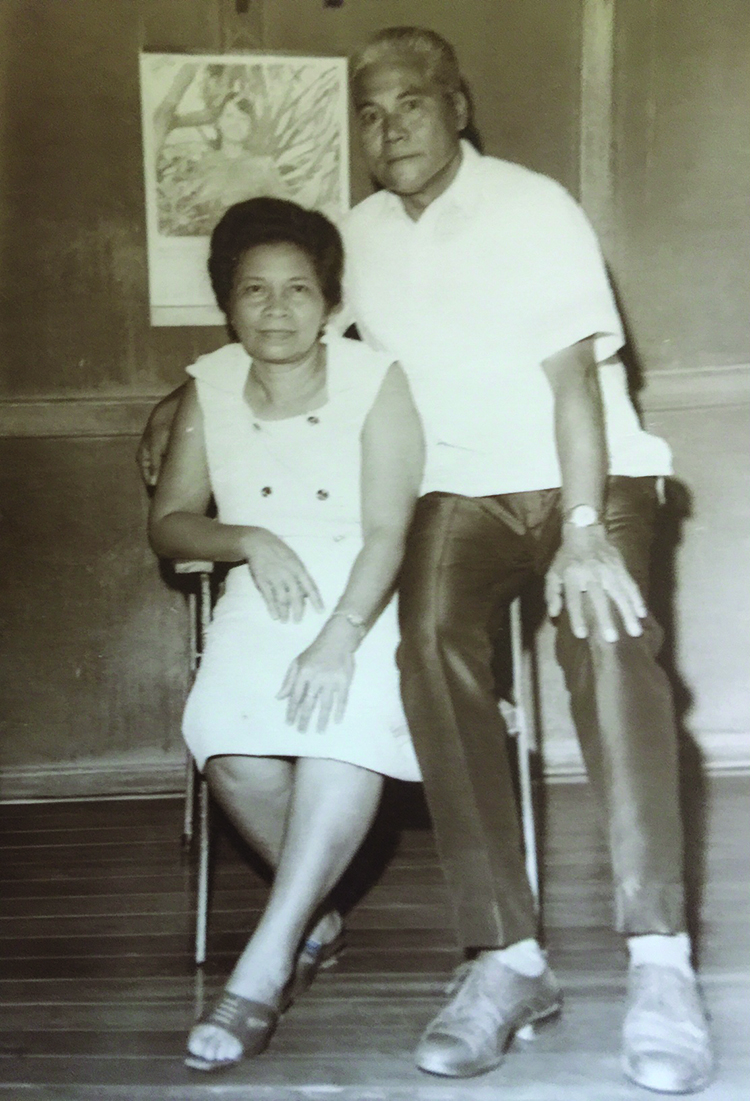
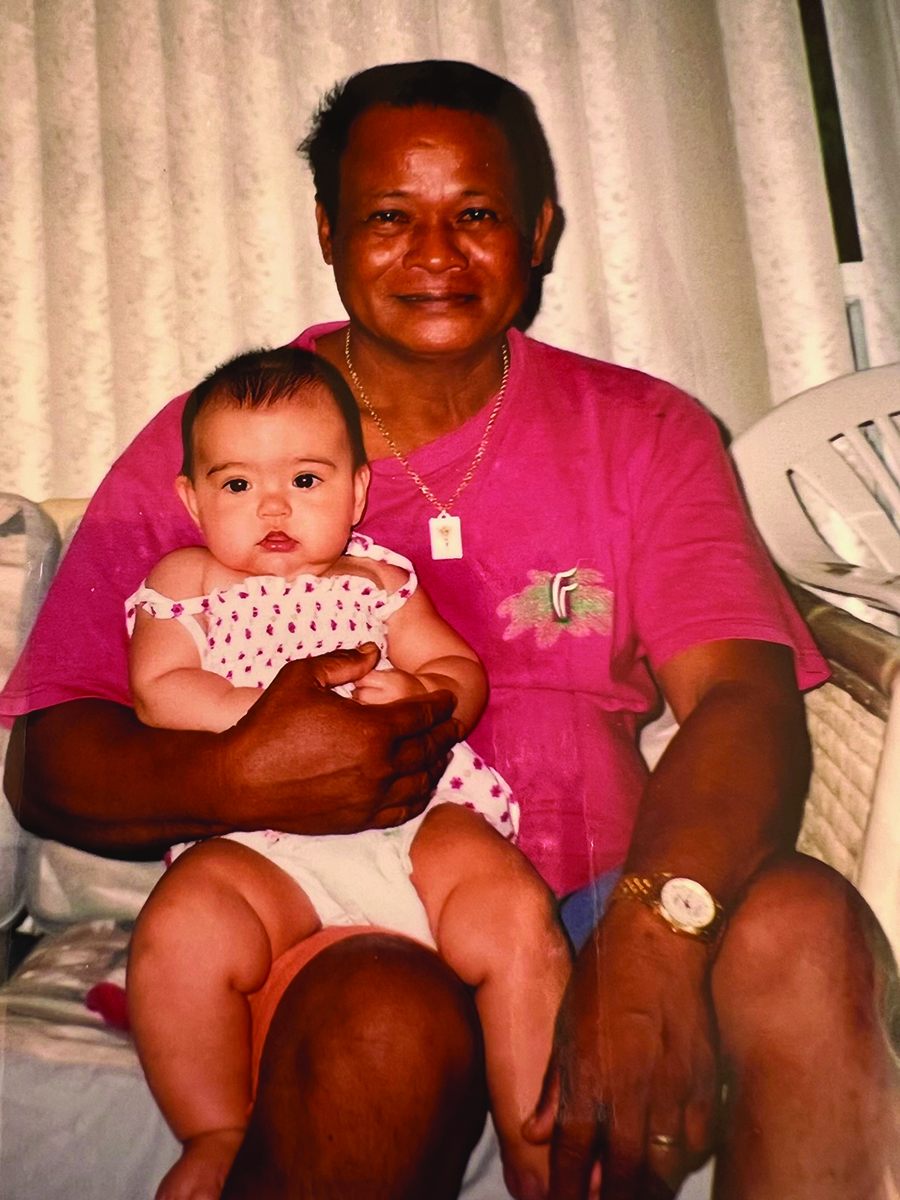
I hold dear the life lessons my Lolo (grandpa) and Lola (grandma) taught me.
There are many reasons why working with seniors became my passion. One was to prepare myself to care for my loved ones as they age. We will all eventually encounter the challenges of caregiving. What better way to prepare than by choosing gerontology as a career?
To keep continuously employed, I embraced working with members of an aging society. My parents’ generation — the baby boomers — will account for an estimated 61 million by 2030, so there will always be those who need care.
However, the main reason I chose gerontology as my college degree was because of the love I have for my grandparents. Although I learned a lot about them through their letters, pictures and phone calls from the Philippines, I’ll never forget meeting Leonardo and Eriberta in person for the first time when they finally moved to America.
Every day, I hold dear the life lessons they taught me. The unconditional love they showed me sparked my desire to choose a career to care for other members of this older and wiser generation. I honor my grandparents today by continuing to learn, and by putting what they taught me about love and kindness into practice by providing superior care to seniors, enabling them to maintain a comfortable lifestyle with dignity.
There are many reasons why working with seniors became my passion. One was to prepare myself to care for my loved ones as they age. We will all eventually encounter the challenges of caregiving. What better way to prepare than by choosing gerontology as a career?
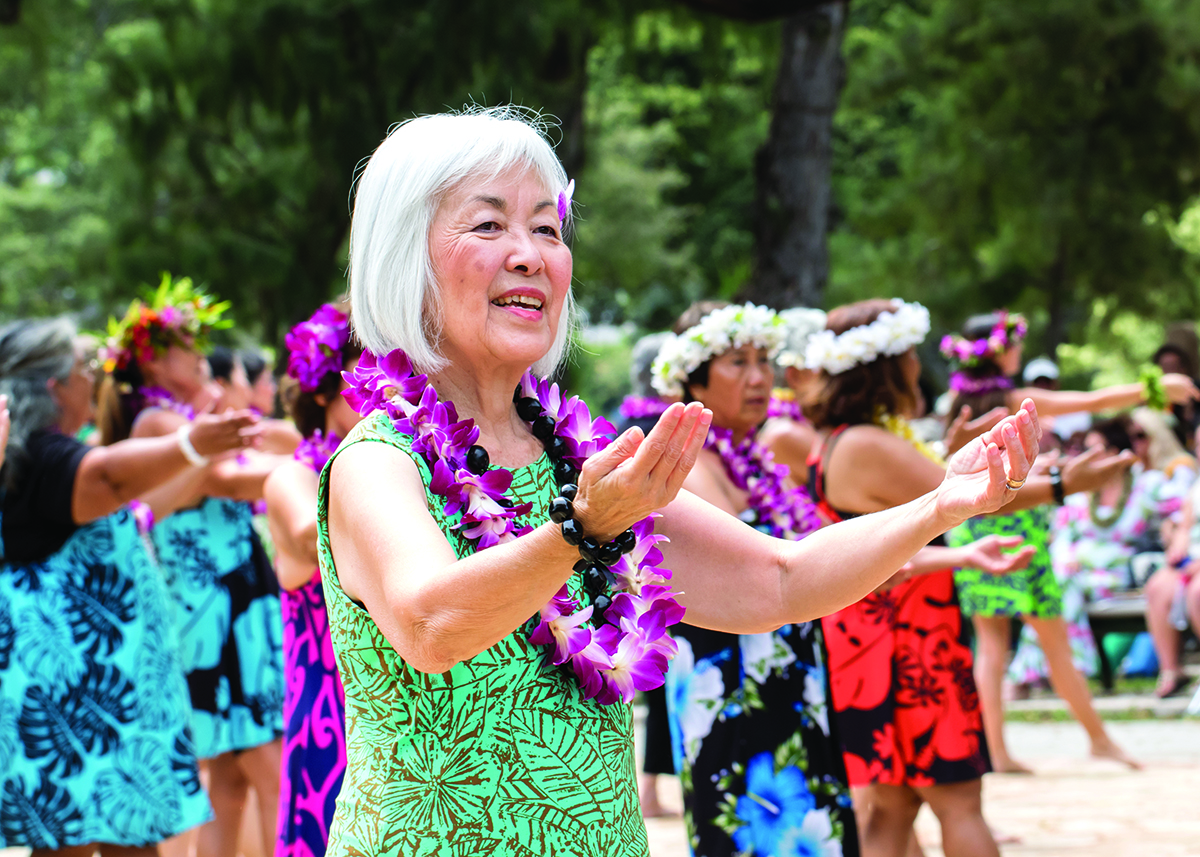
As we age, our loss of independence can lead to reluctance to both accept or ask for help. Often, finding a caregiver who is compatible with you or your loved one and their particular personality traits can help them transition to receiving care.
You want to be sure that whoever you work with asks the right questions about you or your loved one in order to determine a good personality match.
Will we be working with someone who is quiet and shy, or talkative and extroverted? Are they more routine oriented or laid back? Would they prefer going out for walks or sitting indoors and playing a board game?
Matching seniors to caregivers with whom they best connect will improve the quality of their life and ensure they receive the care they need to keep them thriving.
Everyone is different and likes to be treated differently. So when researching home care services, inquire about customized care plans to ensure that you or your loved one will receive the specialized and tailored care that will meet their individual needs now, and into the future.
As we age, our loss of independence can lead to reluctance to both accept or ask for help. Often, finding a caregiver who is compatible with you or your loved one and their particular personality traits can help them transition to receiving care.
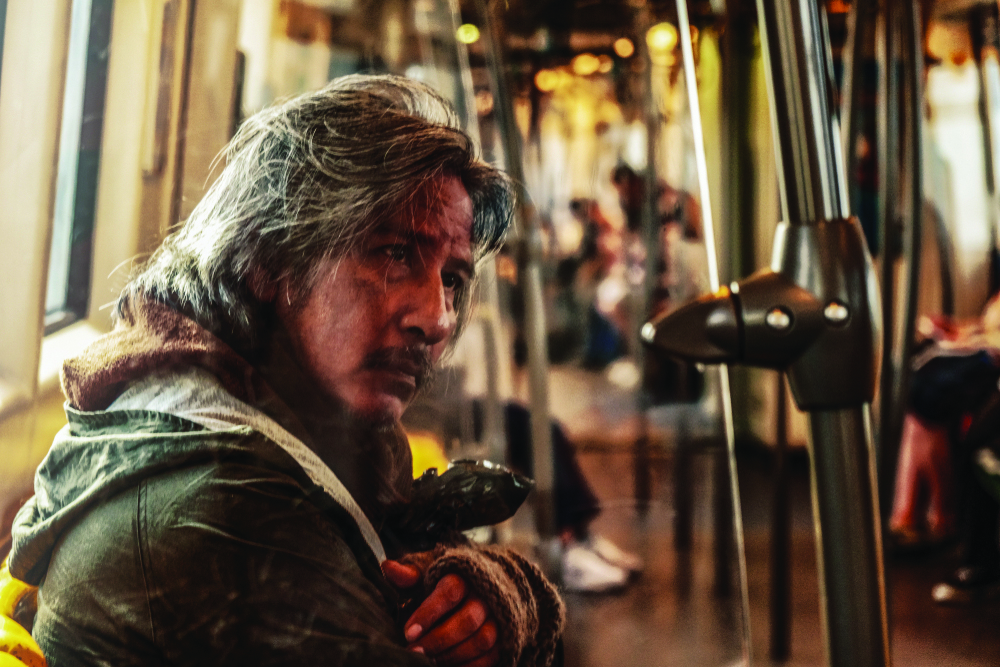
When you see a gray-haired person clinging to the few possessions they have and wandering the streets, it is because they are trying to find shelter, a safe place to sleep and something to eat.
Among Hawai‘i’s houseless population, there are aging persons unable to live in safe and healthy environments. Regardless of the particular circumstances that got them in this situation, aging and houselessness are not compatible — it is simply not an acceptable state of being for any senior. So when you see an older person who is in need, consider the status of their welfare with compassion and without judgement:
• Is this person lost due to dementia? • Do they have an untreated medical condition? • Are they approachable? • If so, what can I do to help?
Supporting organizations that provide resources to houseless persons is a great way to help. Specialists at Aloha United Way 211, Hawai‘i’s only statewide helpline, connect those in need to resources and emergency assistance. Depending on location and need, they are trained to find resources that people in need can utilize right away.
Call 2-1-1 or 877-275-6569 and ask how you can make a difference.
When you see a gray-haired person clinging to the few possessions they have and wandering the streets, it is because they are trying to find shelter, a safe place to sleep and something to eat. Among Hawai‘i’s houseless population, there are aging persons unable to live in safe and healthy environments.
Technology is ever-advancing these days, with information on new devices everywhere. For early adopters, this is seen as helpful and even normal. However, for some seniors, adapting to new devices can be challenging due to physical limitations. Vision loss is one of the more common problems experienced, as is age-related macular degeneration (AMD) that typically affects older adults.
Millions of Americans every year are affected by AMD, which destroys central vision, leaving only the peripheral vision. Those affected may no longer be able to see the faces of their family members, drive a car or read a newspaper. Using a mobile device can have the same results. Nearly one in every three adults over the age of 75 is currently affected by AMD. According to Dr. Chris Knobbe, clinical associate professor emeritus at the University of Texas Southwestern Medical Center, “AMD is an epidemic — worldwide. Globally, one in every 11 persons over the age of 50 has some degree of AMD.”
The good news is technology is improving for those with vision loss like AMD. Currently, there are many tools which can help individuals to read their devices, from simple magnifiers and brighter reading lights, to more sophisticated screen readers and applications. The accommodation of selecting larger fonts and web page sizes has also been available across media to make information more legible. These visual aids have helped those with vision impairments to maximize their usable vision, and make better use of devices and technology. The use of voice command devices has also become more mainstream and should be considered for those with vision impairments. Amazon has ECHO, a home voice command device, and Samsung has a smart TV that also listens to voice commands.
Bridging these gaps between seniors and technology can also be a challenge for caregivers sometimes, given the limitations that vision loss can have on using devices. But once these hurdles are cleared, research shows that adults older than 65 using smart phones or other electronic devices are more likely to become daily internet users.
Caregivers can help by doing a few simple things:
• Avoid complex devices with distracting features.
• Use technology that accommodates physical limitations.
• Choose devices relevant to user needs and values.
• Encourage technology that is socially rewarding.
• Be their technical support.
Once on the internet, seniors using devices with social media apps such as Facebook, Instagram and Twitter are more in touch and engaged with others. Forrester Research also showed in its “Digital Seniors” report that 60% of all US seniors are online, and of those, roughly half are also using Facebook. “Many people have the misunderstanding that seniors are averse to technology. I don’t find that true at all,” said RN Kari Foster. “It’s the simpler things — like arthritis or forgetting their glasses on their head — that gets in the way.”
ATTENTION PLUS CARE HOME HEALTHCARE
Accredited by The Joint Commission
1580 Makaloa St., Ste. 1060, Honolulu HI 96814 808-739-2811 | attentionplus.com AGING IN HAWAII EDUCATIONAL OUTREACH PROGRAM
by Attention Plus Care — a program providing resources for seniors and their families, covering different aging topics each month. For class information and upcoming topics, call 808-440-9356.
Technology is ever-advancing these days, with information on new devices everywhere. For early adopters, this is seen as helpful and even normal. However, for some seniors, adapting to new devices can be challenging due to physical limitations. Vision loss is one of the more common problems experienced, as is age-related macular degeneration (AMD) that typically…
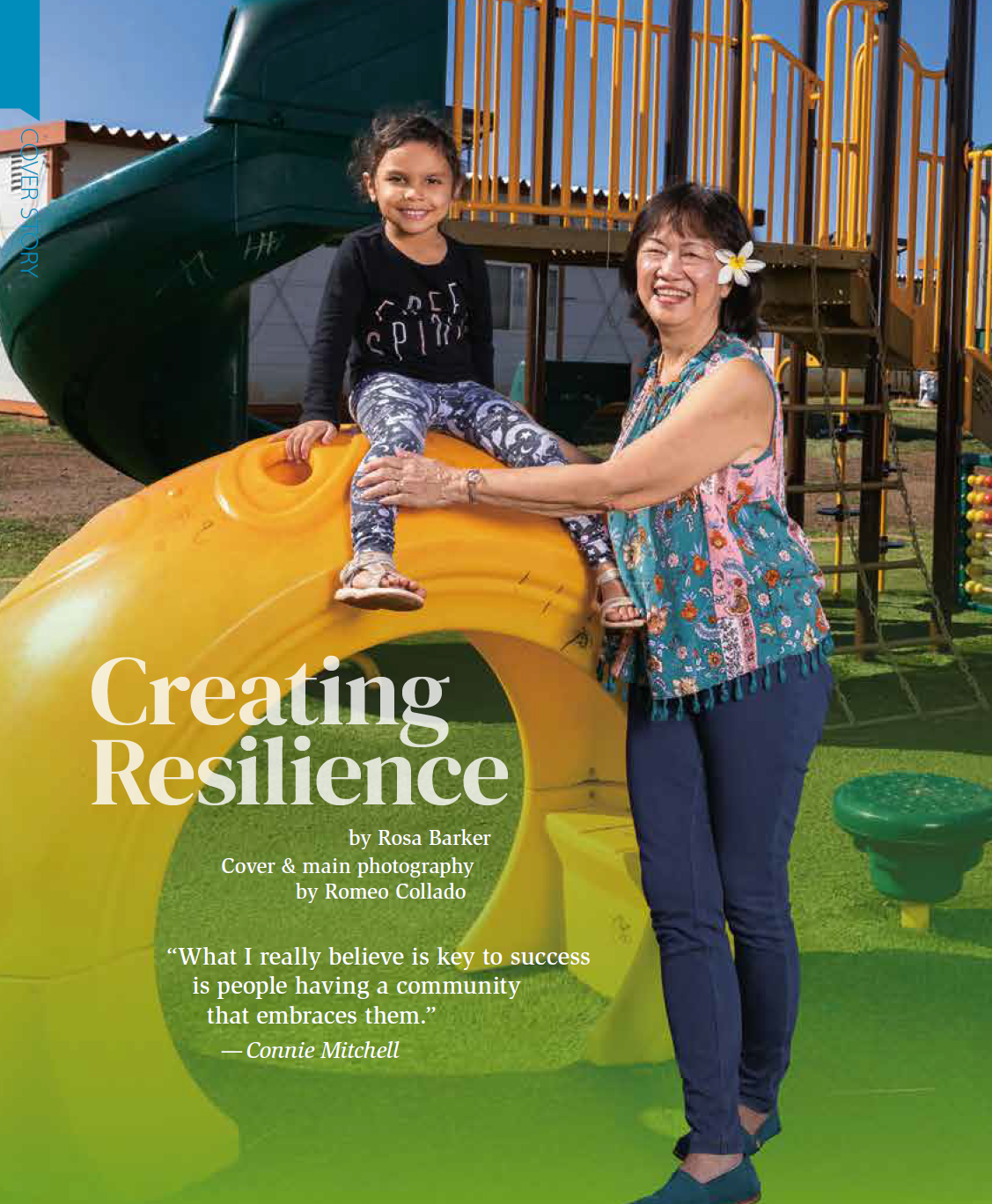
The Institute for Human Services (IHS) has come a long way from its humble beginnings as a ministry distributing peanut butter sandwiches to those sleeping on the streets of Chinatown in the late 1970s. The team Connie Mitchell put together after joining IHS in 2006 can be justly proud of how the nonprofit tackles the many challenges faced by the unhoused.
“We need to remember that there’s a story behind each person,” Connie reminds us. “At the very least, each person is someone’s son or daughter. At IHS, so many of our staff have lived that experience and are here to give back. Together, we’re a living testament to the power of community to heal and inspire.”
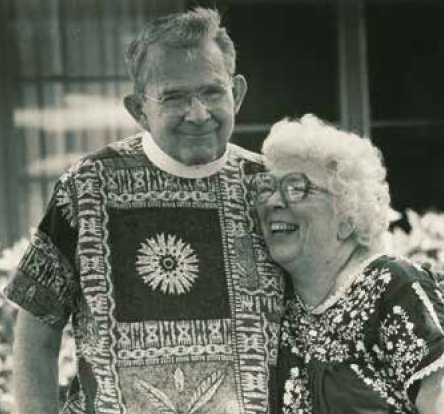
When Father Claude DuTeil and his wife Roberta (lovingly known as “Tutu Bert”) began handing out peanut butter sandwiches to people sleeping on the streets of Chinatown back in 1978, residents of Honolulu had mixed reactions. Shopkeepers and local residents thought that free food and the newly established Smith Street drop-in center would draw yet more unwanted “street people” to the area. Others praised the Peanut Butter Ministry and their belief in second chances. After all, the core value of what would become the Institute for Human Services in 1982 was that it should be a charity that helped anyone in crisis to stabilize and receive assistance.
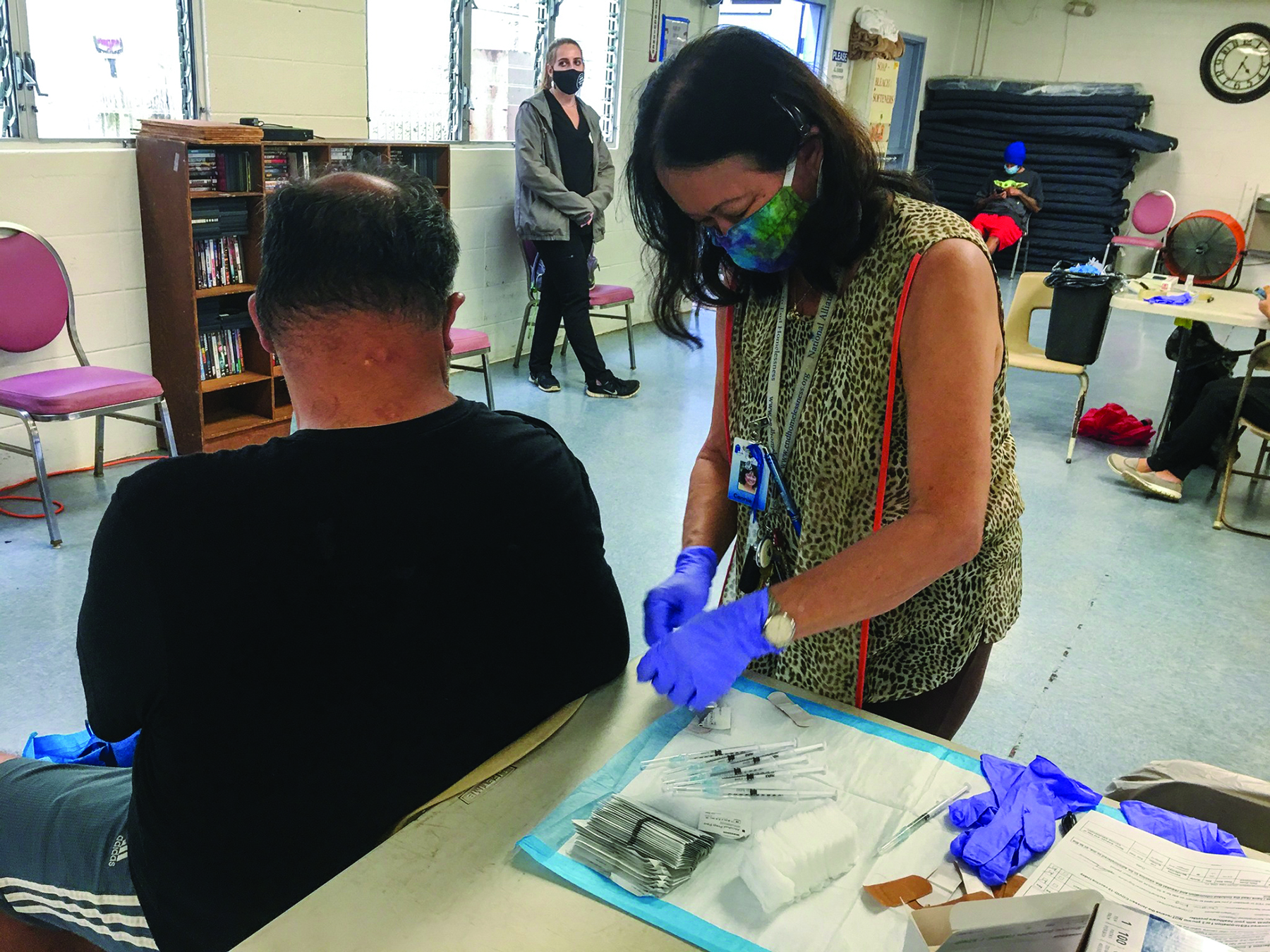
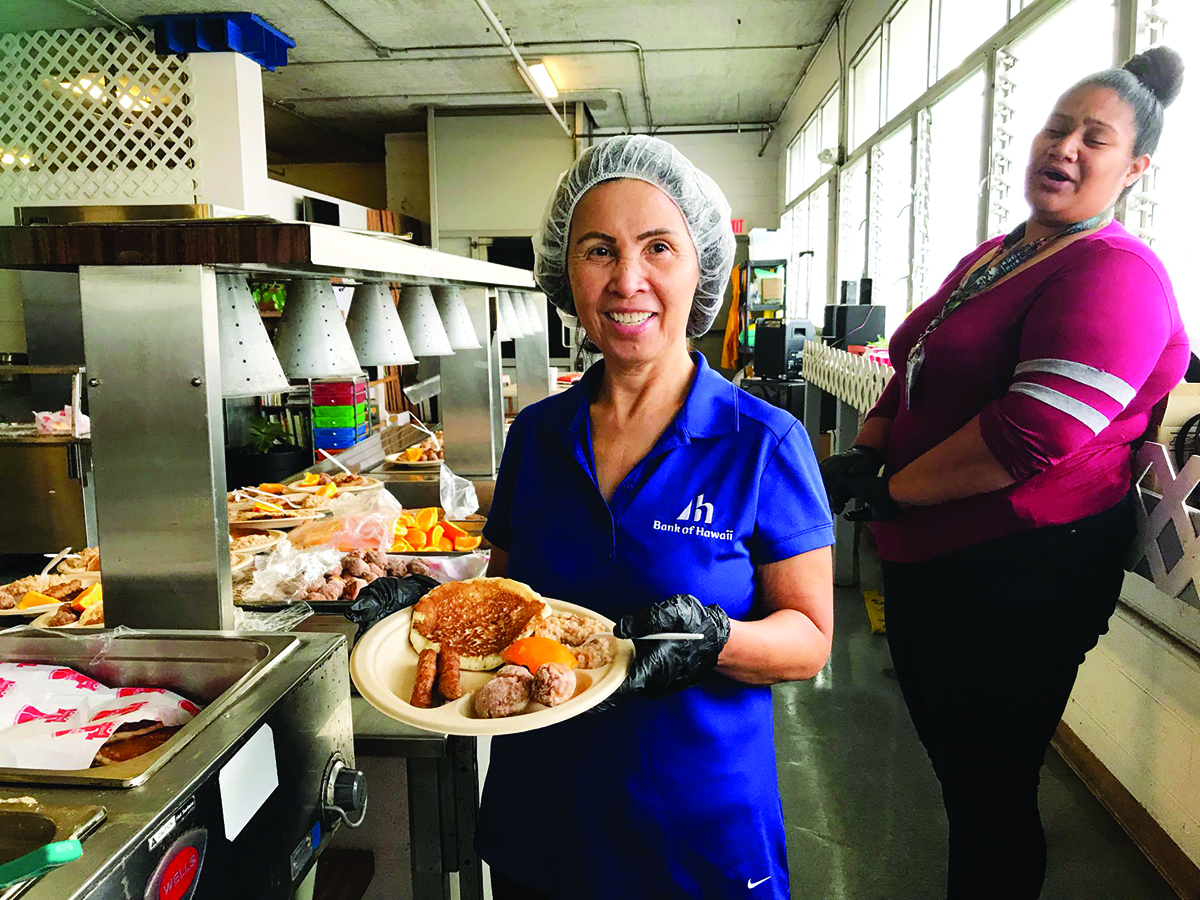
Today’s IHS still adheres to that core value. Its stated mission is “to create and offer tailored solutions for those in crisis…,” and its vision is to participate in creating “a community where homeless people are empowered with hope, dignity and confidence to quickly access and sustain a safe, decent and affordable home.” Its long track record of achieving positive outcomes and its status as a four-star charity is in no small part due to the leadership of Connie Mitchell and the management team she put together after joining IHS as director nearly 17 years ago. From just one drop-in center, IHS has grown, and now includes three emergency shelters, several specialty shelters, street outreach, case management, health teams, family support, permanent housing support and employment services. With the help of community volunteers, IHS also serves delicious meals.
A Love of Pastoral Care
Connie Mitchell, now 66, the second-born of four children of immigrant Chinese parents, grew up close to Chinatown not far from where her IHS office is now. She graduated from McKinley High School, but also attended Mun Lun Chinese language school because her parents wanted her to maintain her culture. Her father initially worked in Chinatown, then partnered with friends to open a small Chinese restaurant in Kapālama, which became a family business that put all the kids through school. Connie did her part by waiting on tables. Because she is the last of her siblings living in Hawai‘i, Connie now looks after her widowed mother who is in her early 90s. “She’s my inspiration,” says Connie, “because she’s just a super-giving person. She still takes care of her yard and cooks for herself. She’s a very strong, independent woman and I’ve learned a lot from her over the years.”
The career path of Connie’s life is a tapestry. She’s a proud alumnus of the University of Hawai‘i at Mānoa, where she earned both her bachelor’s and master’s degrees in nursing. The Spiritual Direction classes she took at San Francisco Theological Seminary inspired her work as a pastoral associate, as she aspired to blend her work as a nurse therapist with church ministry.
“Long before I came to IHS, I began my career as a hospital nurse and then managed a doctor’s office for about five years,” Connie explains. “What I saw in my healthcare experiences was that a lot of people’s overall health was impacted by what they were experiencing emotionally, psychologically and relationally. That insight about the mind-body connection led me into psychiatric nursing.”
After completing her graduate degree in mental health nursing, Connie found herself very active in the church and felt called to blend the two into “a healing ministry for body, mind and spirit.” For almost eight years, she worked as a pastoral associate for Kailua Christian Church.
“It was a great blend!” Connie says. “At the same time, I also worked at the Hawai‘i State Hospital [HSH] as a clinical nurse specialist and eventually became the director of nursing. I would see a lot of people who were referred there on court orders. A lot of what we did was restore people’s fitness to stand trial, because a lot of them suffered from serious mental illness.” It was there that more life threads came together. “I was so impressed by the healing that could come from good psychiatric treatment. From the beginning of my time at HSH, the hospital was being overseen by the US Department of Justice for not providing adequate treatment. Over the years, we began creating programs that prepared people to be integrated back out into the community. We released a lot of people; but it was with a system of care that was built up over time, in the community.” By the time she left, HSH was finally released from oversight.
Rising to the Challenge
After leaving the HSH, Connie was looking for a new challenge and thought IHS’s mission sounded like something she could contribute to. At the interview with the IHS board, she was asked how long she would stay and replied, “I don’t know. All I know is that when I make a commitment, I really want to do the best that I can.” Connie laughs, “Here I am, 16-and-a-half years later!” And challenged she was. Two years after Connie joined IHS came the Great Recession of 2008. The extreme economic downturn decimated the community mental health system and “we really have taken a long time to recover. Sadly, I see people that I’ve known from the hospital out in the community and not getting the care that they need. They’re now living homeless on the street.”
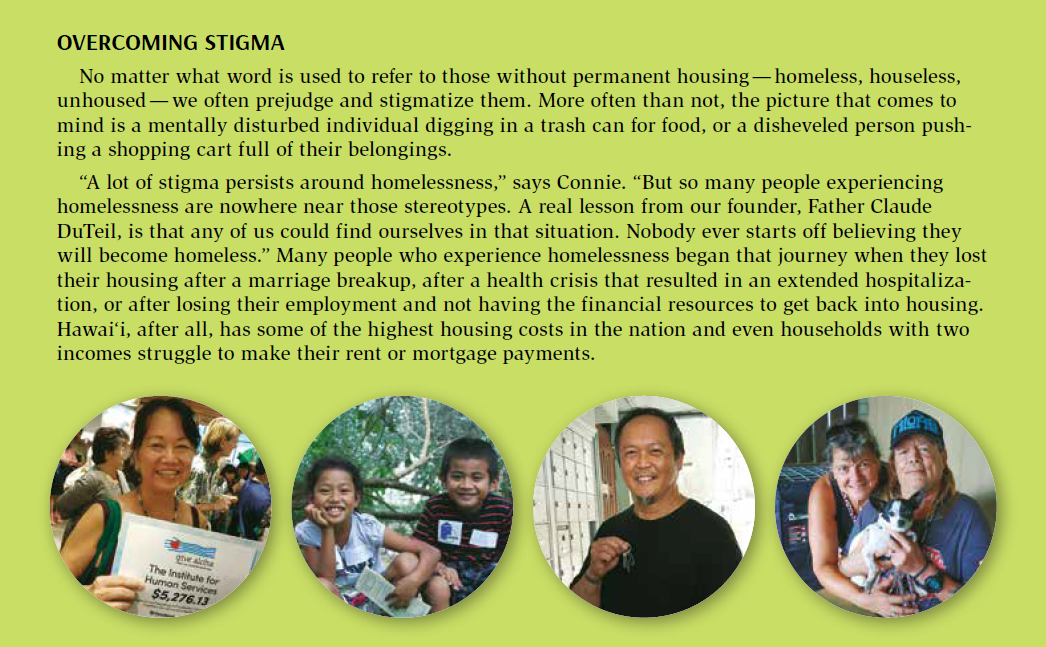
“When I first started [at IHS], I don’t think I had any idea how complex this work was going to be,” Connie adds. “People would say, ‘All you gotta do is have housing for people.’ I’m thinking, ‘It’s not that simple!’ There are so many different subpopulations that have different reasons for being homeless — veterans, families with children, people touched by substance abuse or mental illness, and people who get hospitalized and lose their housing. And when you have people who have multiple problems layered onto each other, it makes it even more difficult. What I really believe is key to success — if there is one answer — is people having a community that embraces them.” If we don’t have a sense of connectedness with other people, Connie believes we just don’t thrive. “We end up losing a lot of the social support — social capital that really helps us maintain our lives.”
When the Peanut Butter Ministry first started, only 20% of the people it assisted were locals — most had come from the mainland in search of paradise, but soon found that to be a myth and ended up living on the streets. During the ’80s and ’90s, the proportion of local people seeking IHS assistance quickly grew to over 70% as a cycle of federal welfare cuts, economic disasters like Black Monday in 1987 and a focus on tourism-related rather than residential building took hold. On March 9, 2022, volunteers and member agencies of Partners in Care, O‘ahu’s Continuum of Care, conducted the federally mandated Point-in-Time (PIT) count of the numbers of homeless people either sleeping on the street or in a shelter. The total one-day count for Honolulu was 3,951. Of these, 60% were unsheltered and 40% sheltered, and an aggregate 61% self-reported either loss of a job, inability to pay rent or loss of money as the primary reason for their change in circumstances.
The survey questionnaire does not ask about place of origin, but the report does show that 276 (8%) of the adults counted were 60 years of age or older. The comprehensive report is available at bit.ly/2022PITCountReport.
Kūpuna Adrift
“What I’m seeing now,” Connie says, “are a lot of people who are in the later part of their lives who are becoming homeless for the first time in their lives — which is tragic — having worked all your life and then being slowly priced out of your apartment if you never bought a place. It’s really difficult for me to watch that. It’s a very harsh reality for them to be mixed in with people who might have been on the street for a long time.”
Over the years, Connie has overseen the creation of different kinds of shelters so that the experience is not as traumatic. “When people become homeless, they’ve lost a lot. It’s usually pretty gradual. Usually, you have friends who will take you in and you have a nest egg you can draw from so that you don’t become homeless at the beginning. But when that erodes, if you’re older and can’t make income, that makes it even more difficult. Social Security doesn’t go very far these days. So, it’s really about piecing together an affordable plan for the people we assist when they come to us.”
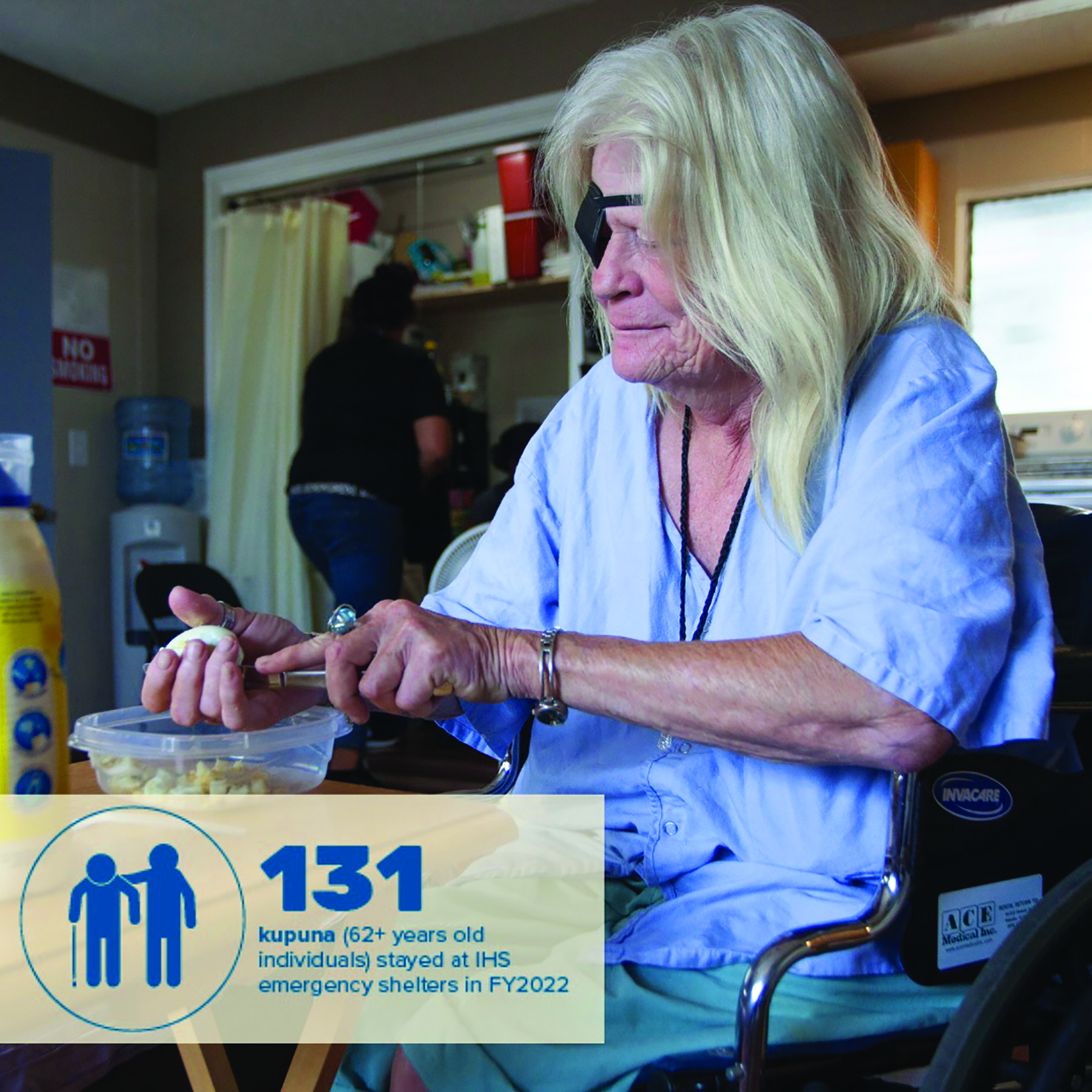
The number of kūpuna coming through IHS’s doors has doubled over the past 10 years.
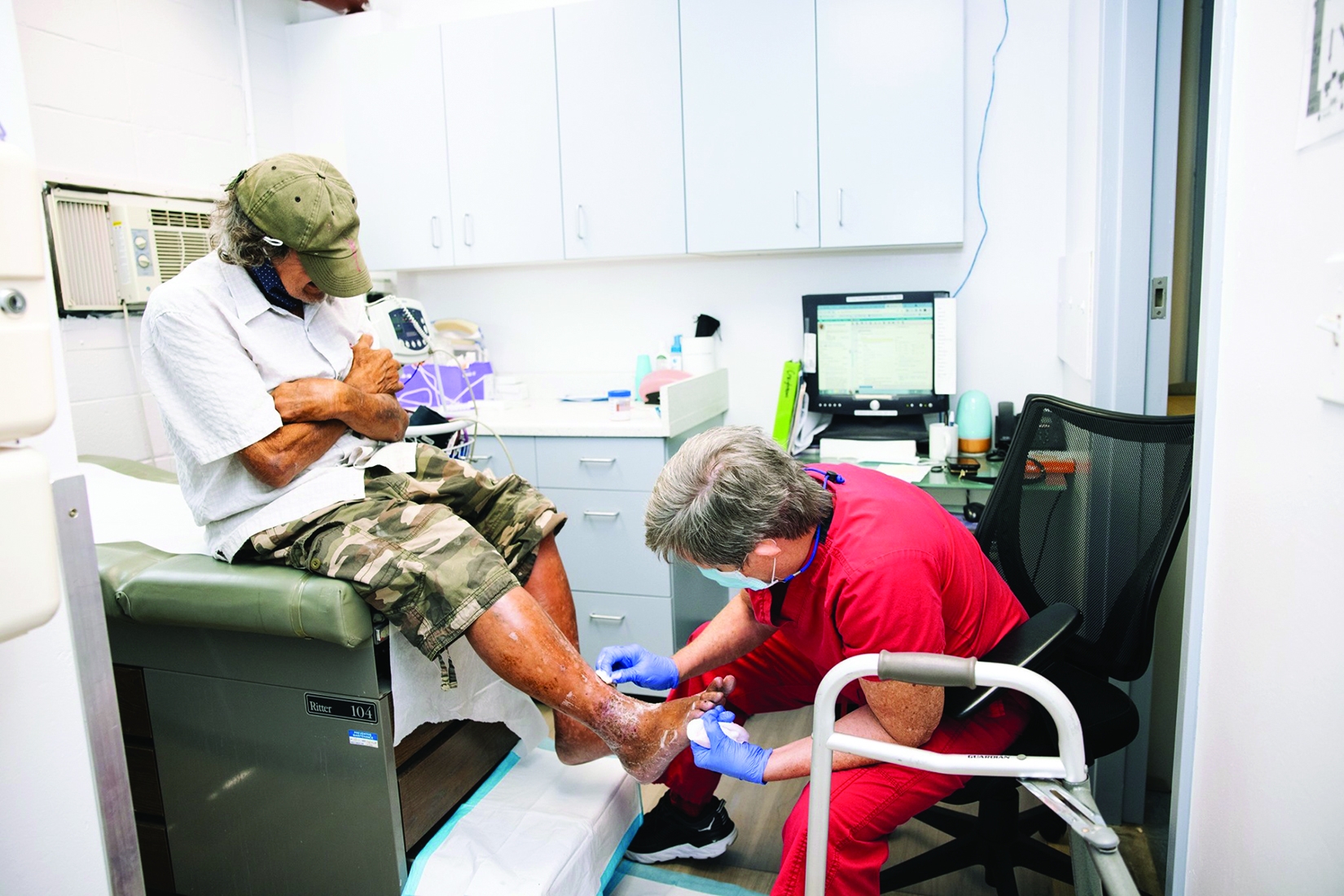
“Even if you own your own home, it’s hard to manage the home after others in the household leave,” says Connie, pointing out that “if your children have moved to the continent, that makes it really difficult.” “Nearly 20% of our shelter guests last year were kūpuna. We likely get more than our share of seniors because we get a lot of referrals from hospitals. They have medical complexities and chronic health conditions.” Vision problems can make taking medication difficult, and just one fall can result in mobility issues, making it difficult to get around or to do daily tasks of living, like cooking meals, affecting nutrition.
Tutu Bert’s Medical Respite Homes are one solution IHS has developed for those discharged from hospitals with no home to go to, but it is only a temporary solution and IHS works with the guest to find suitable permanent accommodations.
Another group of homeless whose numbers are growing is people suffering from cognitive impairment, such as dementia or traumatic brain injury. “So, we’ve had to equip our staff to recognize these things better,” Connie says. “When people are victims of trauma, we really need to be able to recognize the effects of the trauma and work on building the person’s resilience to reduce the impact of past trauma.”
One of IHS’ key strengths is the initial triage that happens at intake — learning more about the person’s background and the key reasons the person has ended up in crisis in order to guide them toward the most appropriate system or program they need to get connected up with.
As Connie explains, “If we can make a match, we’re probably going to help that person make progress a lot faster. We really want to focus on their strengths and potential as they make those moves toward permanent housing again.”
Being able to place people in an IHS shelter that caters to their particular demographic allows a more focused approach. For example, the Veterans Engaged in Transition (V.E.T.) House in Kalihi Valley provides a safe home environment with nutritious meals and case management in partnership with the US Department of Veterans Affairs.
The stable environment and individualized guidance it offers helps rekindle the guests’ independence and boost their confidence to pursue the life goals that matter most to them.
Collaboration is Key
“We cast a wide net to make sure that we engage all the resources needed to help an individual get back to where they need to be,” says Connie. “We tap any housing program that might be available through the state and city, as well as other programs run by other organizations. Over the years, IHS has had really good relationships with both the city and the state,” Connie explains. Different administrations have had different levels of interest in partnering to develop new programs, “but IHS has a track record of being willing to innovate solutions to end homelessness. That’s something I’m pretty proud of: IHS’s ability to scan the environment, see who’s coming in the door to our shelters, identify gaps in our service systems and deliver new programs in response.”
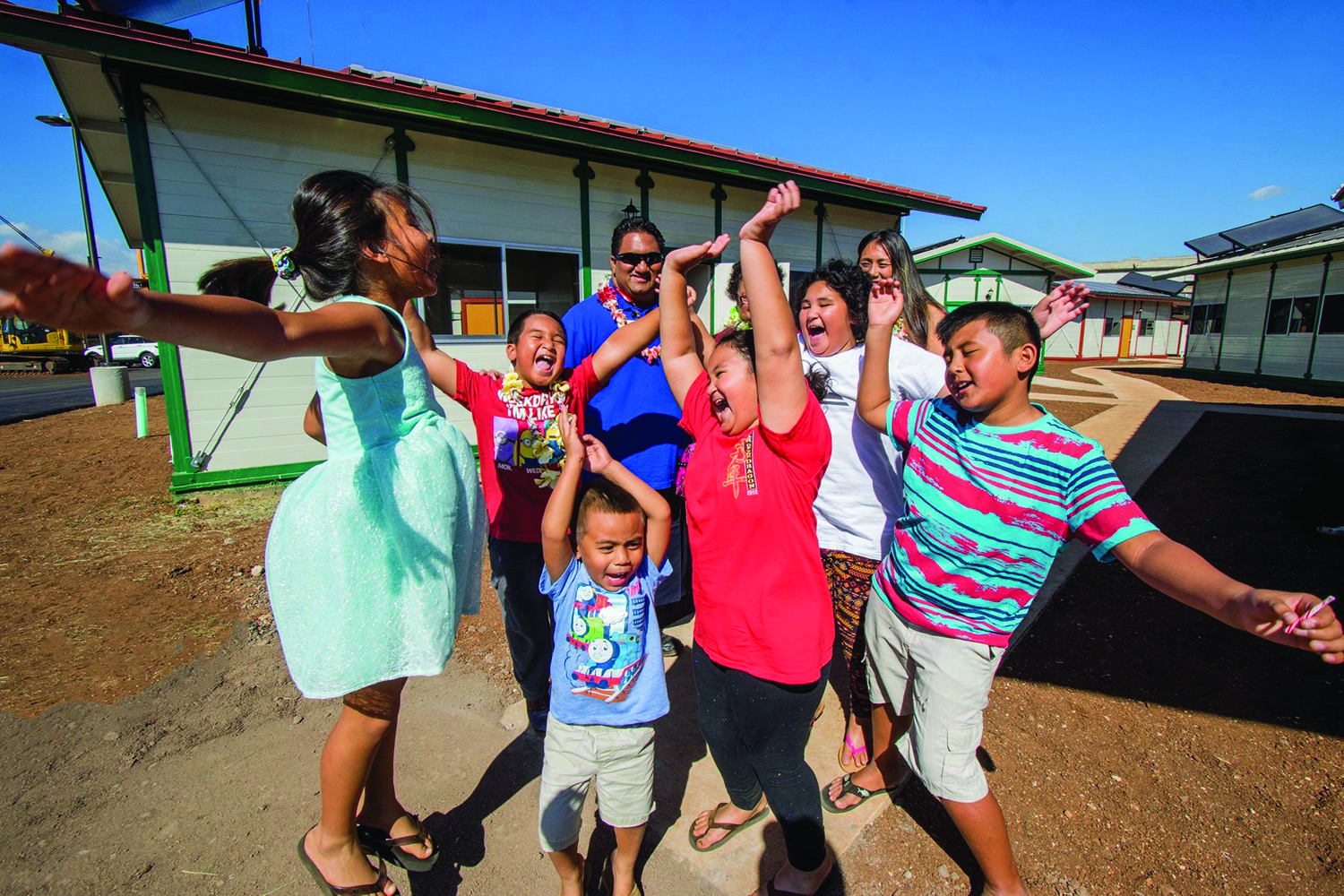
IHS is proud of its participation in developing Kahauiki Village (KV). Built with the support of Gov. David Ige’s 2016 emergency proclamation regarding homelessness in Hawai‘i, this plantation-style village of tiny homes on state land near Sand Island offers permanent rental housing to families who have faced homelessness. KV developed from the vision of businessman Duane Kurisu, who turned to IHS for help in planning social services there. The first families moved in five years ago in January 2018. In April 2022, IHS took over the management of KV. “We have been working with families, trying to establish an experience of community there and helping them with financial management so they’re able to raise a generation of children that will break the cycle of homelessness,” Connie explains. “One of our key indicators is whether the keiki grow up, graduate from high school and get into the workforce in different ways or go to college. They would be portraits of success.”
When IHS launched their first medical respite house, it turned to another nonprofit for assistance. HomeAid Hawaii helped IHS create the first medical respite house by renovating one of the houses IHS had leased. As Connie says, “So many people take it for granted that they will get home care when they get out of the hospital, but if you don’t have a home, there’s nowhere to receive home care.”
Today, there are four Tutu Bert Medical Respite Homes where staff are available around the clock. Medical home care during the day, meals and supplies to aid recovery are provided. One of the houses has a second level that IHS operates as bridge housing.
Kūpuna Volunteers
Connie is really energized and encouraging when she speaks about the difference kūpuna can make as volunteers. “We have retired schoolteachers that have been helping our keiki with the reading program over at Kahauiki Village. Retired teachers can also help tutor in our program here at the Women’s and Family Shelter.” Retired tradespeople with skills in carpentry and plumbing who can help with simple projects are also welcomed. “If you’re in the healthcare field and retired — like a nurse or a doctor — and you’re interested in helping, we could use your help as volunteers. A lot of people think about going overseas to volunteer, but we have needs right here in our community.”
Connie adds that people who are active in their faith communities can “rally around to help the folks we are placing into permanent housing that need ongoing support. Sometimes, for people who’ve been homeless for a long time, settling into an apartment can be lonely and daunting. Some of them might need to relearn how to do things like meal planning, grocery shopping and cooking. Being a volunteer coach or visitor can bolster the person’s chances of making a successful transition.”
Some may also be depressed and having difficulty getting going in the morning. “If they know somebody’s coming over, somebody’s going to help them or just simply keep them company, that makes getting up much easier. When people have other people in their lives, life’s just more stimulating and interesting. Socialization helps keep us sharper, it helps us feel good about ourselves, knowing that somebody in our life cares,” Connie explains. “It doesn’t have to be a lot. Maybe you go visit or call someone once a week. Ultimately, it’s supportive connections that keep us from falling into that pit of depression. It’s about people being there for us when we need someone in a crisis or when we just need some help finding resources. Brief encounters can be very significant.” (Volunteer opportunities below.)
Our Shared Humanity
Making a sustainable difference in another person’s life by encouraging resilience is the true value of the work IHS does. But numbers are impressive, too. In the middle of the COVID pandemic in 2021, 1,628 clients were housed, 1,258 people were sheltered and 301,684 meals were served. The individuals who were served through the Outreach Program (894), Case Management Program (1345), Employment Services (796) and the 700 keiki served through the Family Program is testament to how IHS fulfills its mission to empower people with hope, dignity and confidence. The IHS website features several success stories that broaden our understanding of homelessness.
When you show up as a volunteer, you’re bringing not just your skills and your time, but also your energy and your ability to bring hope to people who are in a tough situation. It really shows our guests that there are more people in the community who are rooting for them and who care about their success. It gives them hope to know they haven’t been forgotten.” — Jill Wright, Director of Philanthropy & Community Relations at the Institute for Human Services.
Volunteering
You don’t need to have any particular skills to volunteer your time to support IHS’ mission. Help with simple office and administrative tasks, like filing at the business office, is often needed. Clothing donations need sorting and volunteers to staff the front desk and answer the phone are welcome at the shelters, too. Providing fellowship to guests who are in shelters, or who are recently housed, can make a world of difference to their day.
If you are part of a faith community, a service club, professional association or have a small business and would like to engage your employees in community support, there is a place for you to serve, as well. You are welcome to sign your group up to serve meals at any of the shelters! You could also host a goods drive to gather and donate essential supplies to IHS.
IHS is always in need of hygiene supplies, linens, men’s shoes, socks and clothing. It’s helpful to contact IHS beforehand to see what’s needed at that particular time, but even a glance at its wish list will reveal a wide variety of needs. Monetary donations go into a general fund for areas with the most need, but you can also specify that your donation goes to a particular program or service.
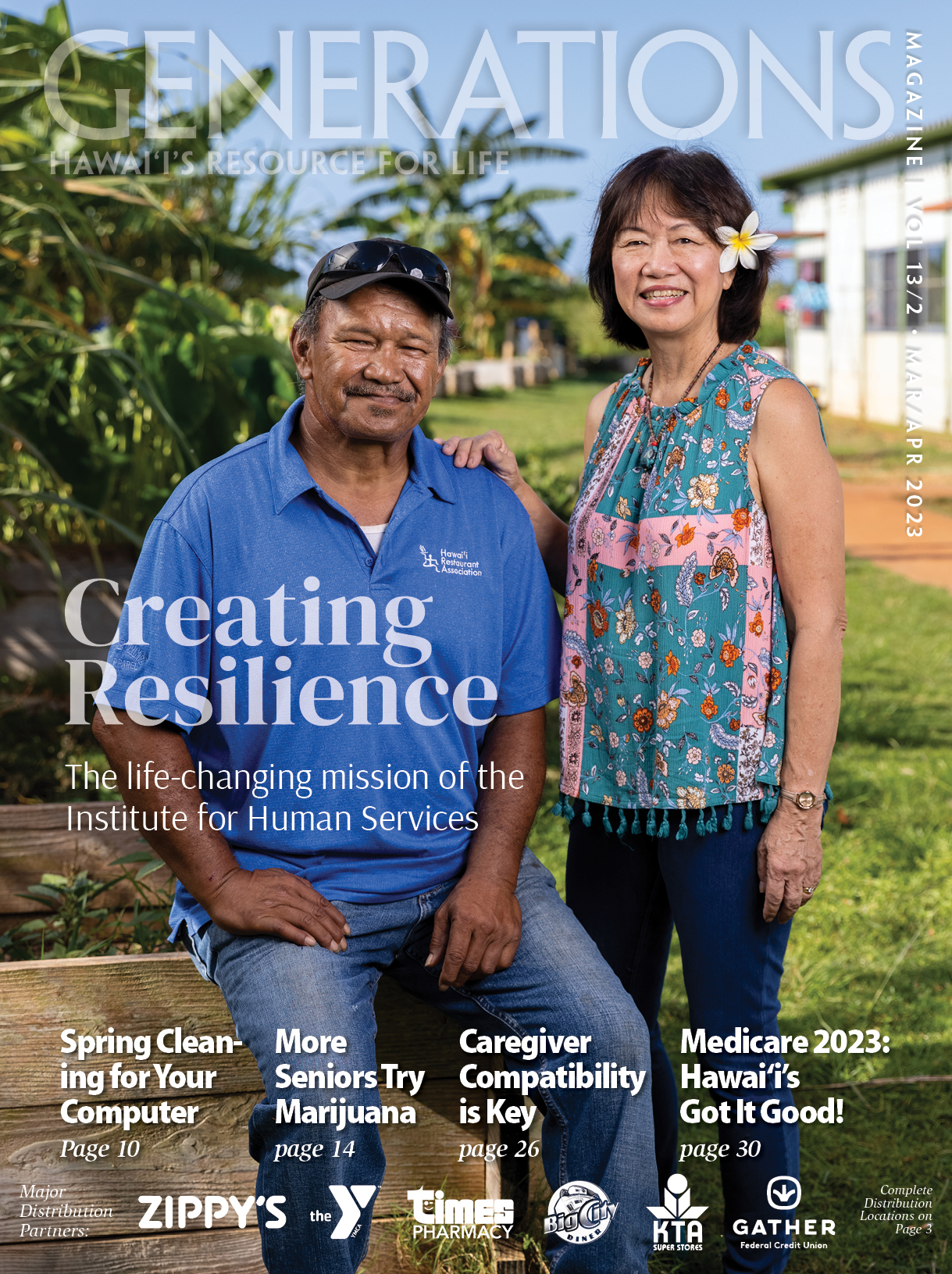
If you’re looking for an opportunity to help advance an IHS client’s skillset and job-readiness, New Leaf is a program that provides landscaping and other yard services, janitorial and handyman services. They also offer monthly cleaning and Kūpuna Specials. The fee you pay for these services allows IHS to pay the participants a stipend while they are learning valuable skills to help them get back to work and back into the community — like Uncle John, pictured with Connie Mitchell on the cover, who graduated from that program and is now employed as lead landscaper at Kahauiki Village.
The Institute for Human Services (IHS) has come a long way from its humble beginnings as a ministry distributing peanut butter sandwiches to those sleeping on the streets of Chinatown in the late 1970s. The team Connie Mitchell put together after joining IHS in 2006 can be justly proud of how the nonprofit tackles the…
Lisa Darcy has been an advocate for the houseless and disabled for decades.
Growing up modestly in a suburb of Chicago, I remember the first time we went camping. I was so excited, because this was a family vacation. My brothers and sisters helped pack the hot dogs and buns, collected our sleeping bags and pillows, and gathered wood for the fire. We were thrilled to eat canned beans! It was an exciting adventure… until the doorbell rang.
This, of course was not camping, even though that’s what we called it. We had a bathroom, electricity, a phone, safety and privacy.
Let’s shift the paradigm. Welcome to a tiny sliver of insight that informs our community fabric. I invite you to walk with me into a poorly studied, and wholly misunderstood and often stigmatized crisis.
Is the term homeless or houseless? The term you chose is an important focal point for lighting a path forward. Determining the nature of these conditions is significant in reimagining community safety for all community members. Understanding the difference in terms allows us to reconsider our approaches and partnerships.
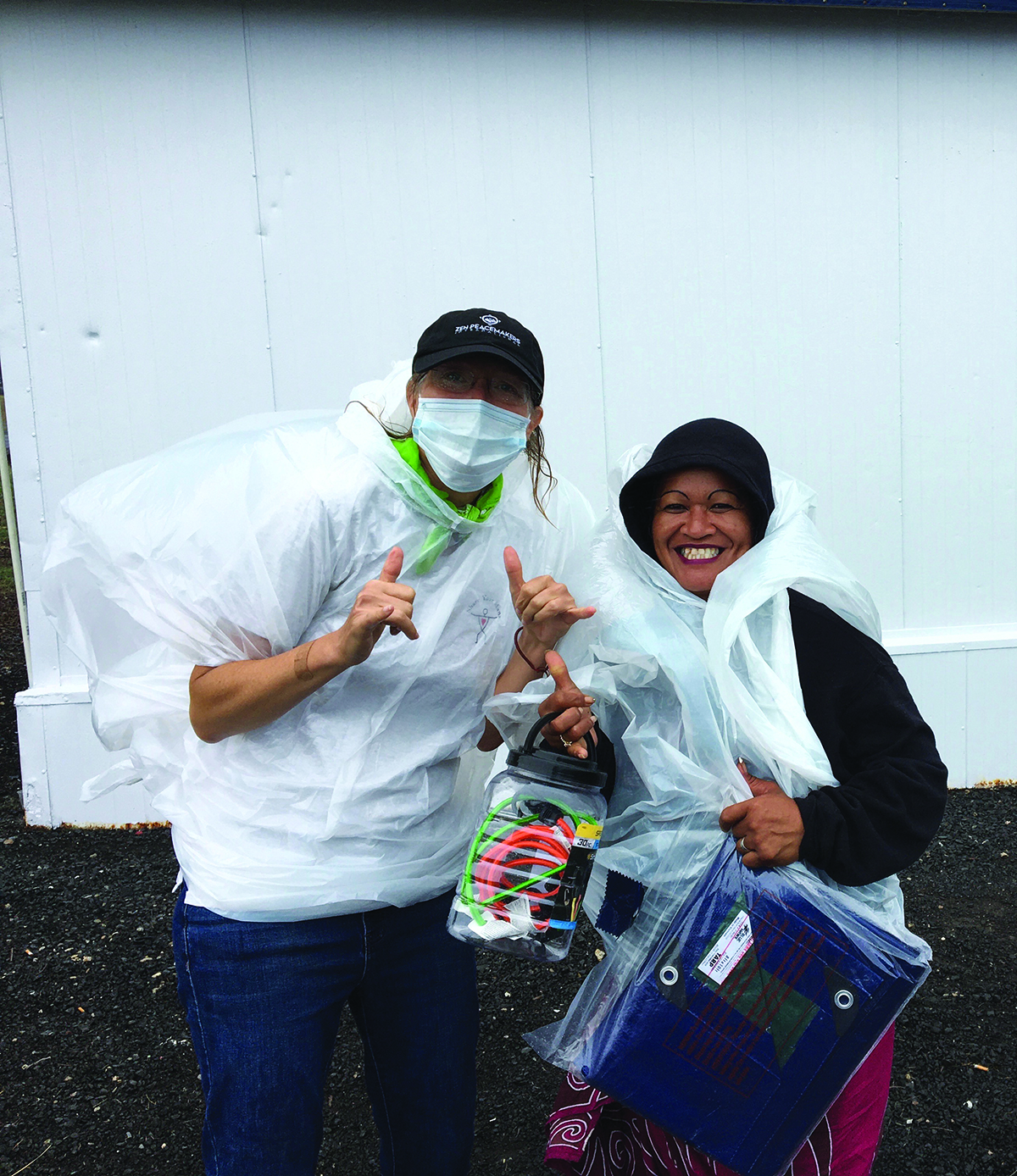
Share Your Mana Advisory Committee Member Jess and Founder Lisa Darcy deliver supplies in February 2021.
The term “homeless” is a mainland idea, not a Maui idea. It is an overarching category which can result in harm, no matter how unintentional. The difference has been shared with me over and over from almost all the community members I’ve met. “I am home. Maui is my home. I just don’t have a house,” says Ku‘uipo from her tent. Of Hawaiian descent, she articulates displacement beautifully and with authority.
To get at core needs, the use of language and current context are critical, because the conditions in which many in Maui County and around the world are living need to be accurately portrayed with honesty, integrity and dignity. There are many terms that have emerged to help explain the levels of needs — unhoused, unsheltered, houseless, homeless and housing-insecure. Regardless of the category or term, I’ve seen how emotionally overwhelming — often paralyzing — these conditions are.
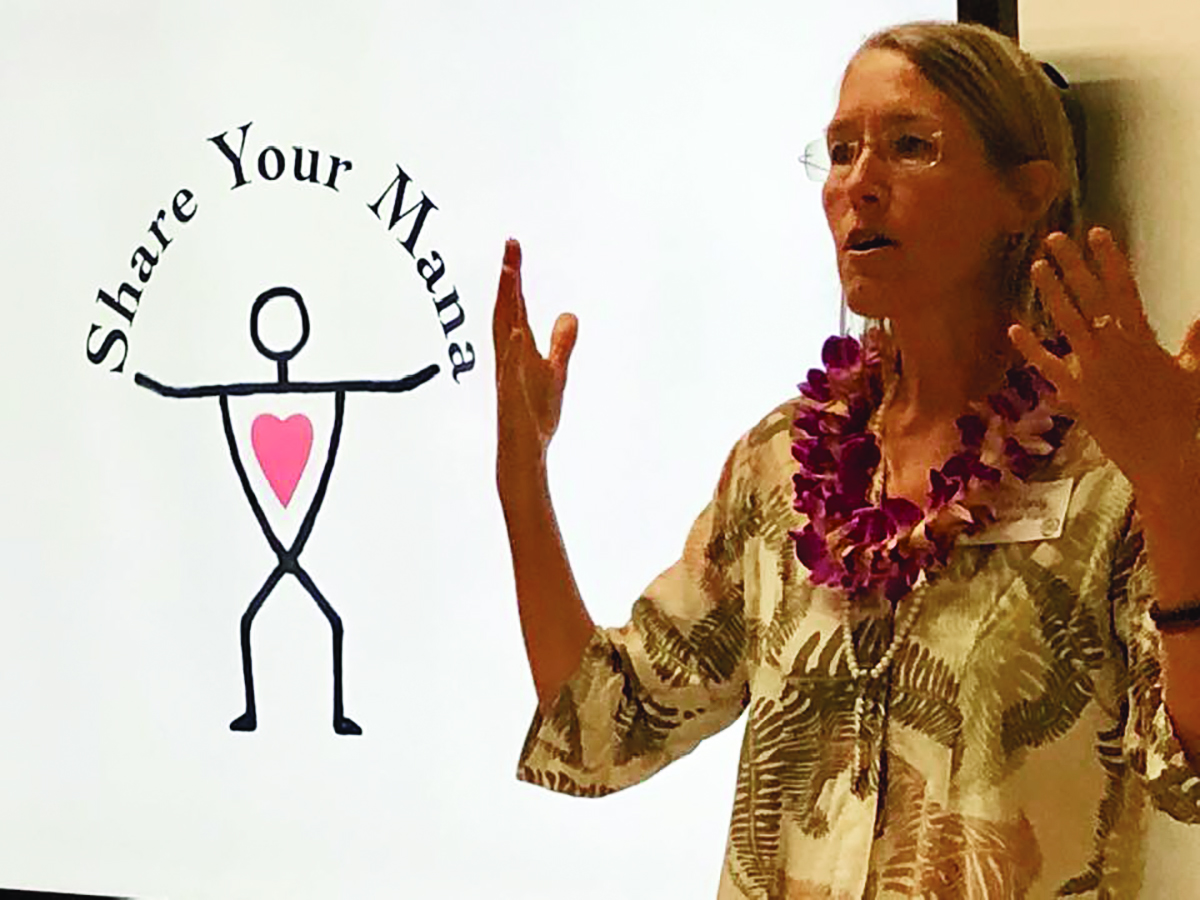
started Maui-based nonprofit Share Your Mana (SYM) to meet the needs of moments like these. As an extremely inquisitive and distinctive care provider, I approach every interaction the only way I know how — through the unique lens of those in crisis. It is often quite uncomfortable, messy and painful, and still these raw, genuine interactions always culminate in inspiration.
SYM is driven by reviewing experiences which serve and by possessing the resolve to evolve through reflections on the failures that hinder success. And to improve how we approach restoring a healthy community balance, we need to create the space to move through whatever emotions follow. I call it, “decompressing emotions.”
Most of us understand that by the time someone is living unhoused or unsheltered, there must be multiple categories of need that are overstressed. Without an actual, affordable, safe sleeping inventory, when a slow boil of problems spills over, it is easy to slide into crisis.
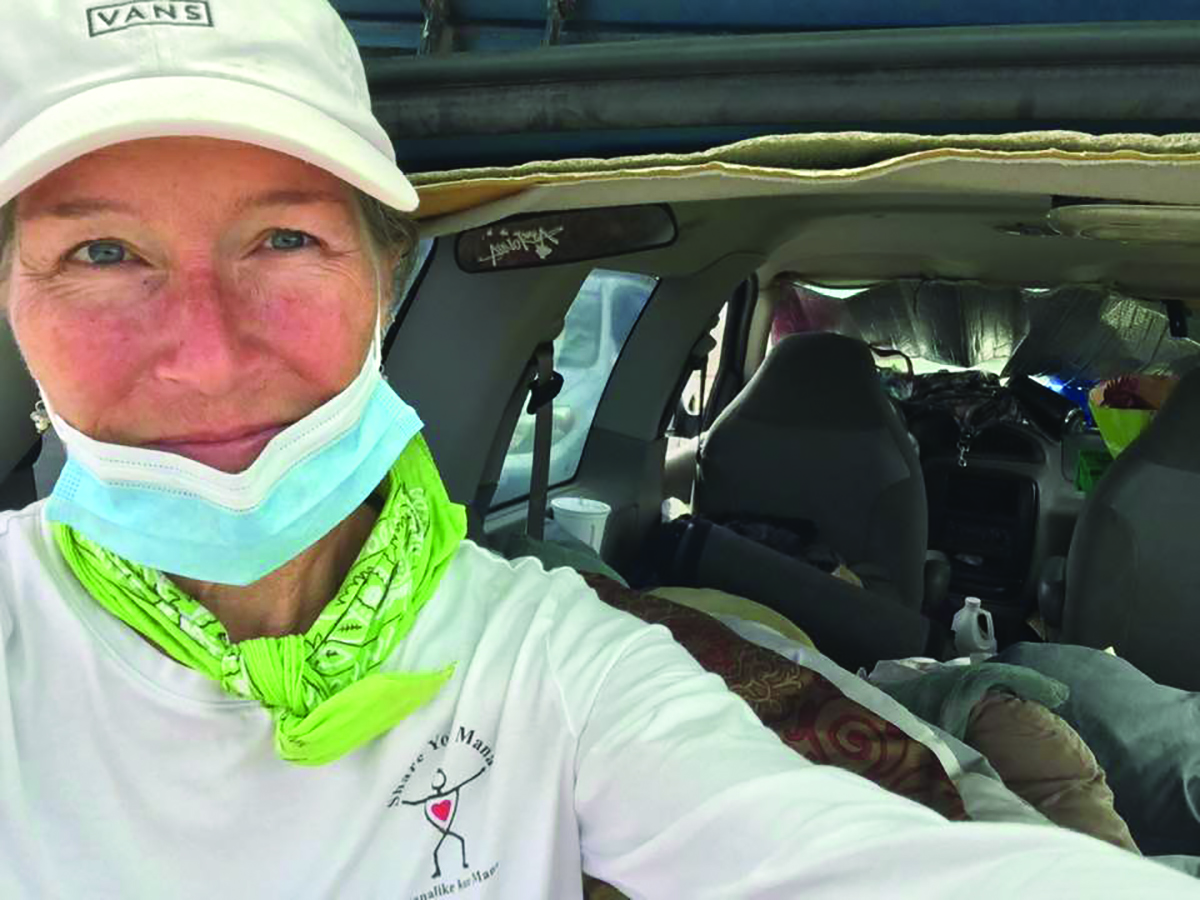
Imagine leaving to do errands after the doors were removed from your home. That is the situation many living in camps and vehicles find themselves in, so Lisa sometimes helps out by serving as a “watch person” so belongings stay safe.
There is a common association that those who are living in “subhuman conditions” are dangerous and to be feared. I spent the entire pandemic with hundreds living unhoused, every single day and most nights bringing life-sustaining supplies. I found many grappling with these conditions who also have an amazing ability to manage the negative stereotypes. I have witnessed love and respect alongside deep pain — often, generational pain.
Healing requires dignity, consistency and the concept that no matter why you are where you are, this community believes every person deserves the components of Maslow’s pyramid — physiological needs, safety, love and belonging, esteem and self-actualization.
As a child, there was no way I could understand that camping in our living room was much different than the daily experience of the unhoused, unsheltered, houseless, homeless and housing-insecure. There was a toilet nearby, a refrigerator stocked with food and electricity to light my way. And yet, I still recall my fantasy
— how wonderful it was to “get away.”
Many live in conditions with no toilet or ability to sleep soundly in clean sheets or even a sleeping bag. These conditions exacerbate the situation, often creating a person who is fearful, guarded and even defiant. When you are unable to keep clean, your self-esteem is ripped away. Then decompensating happens — the person’s mental health deteriorates. For the unsheltered, it is an especially traumatic process because it happens in public, for everyone to see.
As we go deeper into 2023, housing resources will no doubt continue to tighten. Only one small financial mishap can sometimes lead to housing insecurity and becoming unhoused. This is a frightening thought for most of us… the stuff of nightmares.
One day, I hope this will not evoke fear, because we have invested in safe sleeping for all residents. My hope for 2023 is that we invest in reframing solutions with safe sleeping in mind, a concept that will uplift talents, abilities and our humanity.
Then we can all sleep better as we see improved policy and actions that help to raise our community dignity.
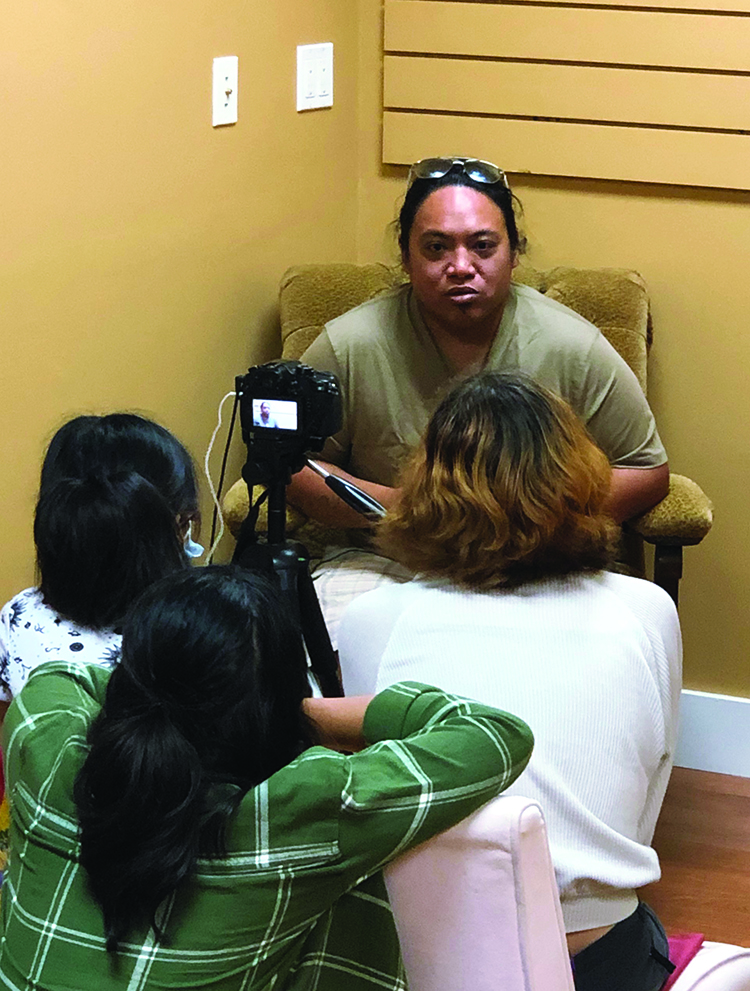
“Share Your Mana has helped me in so many ways,” says Darren, who lived in his non-drivable car during the pandemic. “They never let me down no matter what I needed and I needed a lot. Share Your Mana help me mentally, physically and emotionally and has made me a brand new person. Share Your Mana has made me stronger than I ever was. I have seen Lisa do so much for others, so then I joined her advisory committee, becoming one of the leaders to make a better future for the unhoused community. While on the committee, I’ve seen unhoused people become housed and many housed people become unhoused. The cycle will never stop unless we can put a stop to it, change the cycle and initiate action that helps the unhoused community become stronger with the help of state and county officials who want to make a change for the good of the people.”
Growing up modestly in a suburb of Chicago, I remember the first time we went camping. I was so excited, because this was a family vacation. My brothers and sisters helped pack the hot dogs and buns, collected our sleeping bags and pillows, and gathered wood for the fire. We were thrilled to eat canned…
Whether the distance spans countries or oceans, living separated from your loved ones is always difficult — especially when the loved ones are our elders — namely, our grandparents. My Lolo and Lola (the Filipino words for grandfather and grandmother) often took care of me and my sisters from the time we were born. But they moved back to the Philippines when I was 12 years old, and I only visited them once in the decade they’ve been gone.
It’s a normal part of living on a small island to not have your entire family living nearby. Many of us can relate to having grandparents from the Philippines or other countries who either moved back there or never left, while we reside Hawai‘i. Everyone has their own way of dealing with such absence, but I think one sentiment remains true for us all: Love knows no distance and it never can be diminished.
Just last summer, my Lolo passed away. Coping with his passing has been challenging, not only because of the grief, but because of the way the distance between us altered the loss somehow. His absence existed unwavering both before and after his passing. Thus, I’ve often found myself meditating on this question: How does love triumph over distance or death?
Loss is inevitable. It is said that grief is love with no place to go. As a consolation, we sometimes turn to those around us, the internet and other distractions to find ways of coping with the anguish that ensues. It can become easy to lose ourselves in feelings of loss, to a point where love becomes overshadowed by grief and sorrow. Remembrances of the past and hope for the future exist on opposite sides of time, and yet, they are our greatest strengths in these moments. Bittersweet memories lend support to the hope for an eventual reunion and the desire to never lose the bond that transcends worldly distance. Therefore, love endures because it, like memories shared, can never be taken from us. As long as we are able to remember warm embraces and handwritten birthday cards, the love woven into the tapestry of our memories serves as an unbreakable tether.
I still feel my Lolo’s love very near to me. He planted a pomelo tree in our yard when he lived with us. Today, the tree stands stately and tall, unbending and strong — a symbol of his love, which will always be with me, though he is not.
I write this story as a means of honoring and remembering my Lolo, because my words are the only way I know how to show my love for him now. His love remains — equally abstract and tangible; the bitterness and sweetness of fresh pomelo bear the same significance as me knowing that he is always with me. No matter the distance, love brings us close.
Whether the distance spans countries or oceans, living separated from your loved ones is always difficult — especially when the loved ones are our elders — namely, our grandparents.
When my Hawai‘i Medicare Advantage members move to the mainland, they often don’t want to look for a new agent. So I find myself getting licensed in other states so I can help them find a new healthcare plan. What I keep learning is that compared with the mainland, Hawai‘i has really great plans. Offerings got even better for 2023.
For the first time, we have Medicare Advantage plans that include massage coverage. While many plans offer some built-in or add-on dental, a couple of plans actually have a dental allowance that will cover implants. A few Medicare Advantage plans removed the Part D drug deductible entirely, which can save members hundreds of dollars.
Other new benefits may not be as exciting, but could be lifesaving. We have some plans now offering members bathroom safety equipment with no copay, such as raised toilet seats and tub seats. Another possibility that could give members and their loved ones much peace of mind is a medical alert device at no charge. That Medicare Advantage plan will also cover the cost of the monthly monitoring fees.
Every year, no matter the time of year, all Medicare beneficiaries should contact an experienced broker to make sure they are getting the maximum benefits they are entitled to.
When my Hawai‘i Medicare Advantage members move to the mainland, they often don’t want to look for a new agent. So I find myself getting licensed in other states so I can help them find a new healthcare plan. What I keep learning is that compared with the mainland, Hawai‘i has really great plans.
As cannabis becomes more accepted in the medical community, a rising number of seniors are trying it, especially for pain.
Ileane Kent, 80, has spent years vaping nightly. A breast cancer survivor, she got a medical marijuana card in June 2020 so she wouldn’t have to risk going to her supplier’s house. Barbara Blaser, 75, dealt with the pain and anxiety produced by a complicated surgery with edible marijuana, which came in the guise of a chocolate-covered blueberry every morning and evening. Harry B. Lebowitz, 69, enjoys smoking a joint in his backyard every night while his partner drinks her vodka and soda.
Cannabis Use Among Seniors Rising
A recent analysis culled from the National Survey of Drug Use and Health concluded that the use of marijuana among those over 65 rose 75% from 2015 to 2018 — from 2.4% to 4.2%. It jumped again in 2019 to include 5% of seniors. The lead author expects the trend, which is particularly strong among women and the affluent, to continue to increase sharply.
“It’s rare to see that much change in a three-year period,” said William Jesdale, an epidemiologist at the University of Massachusetts.
Legality of Marijuana Use
Although most marijuana use remains illegal at the federal level, researchers theorize that the increasing number of states legalizing pot combined with the trend away from prescribing opioids for pain has boosted the number of seniors willing to give cannabis a try.
The $17.5 billion legal cannabis industry has taken note, with some dispensaries offering senior discounts and free delivery. Retailers have sent cannabis advocates to talk to residents in assisted living facilities or picked up seniors at a retirement development to bring them to the dispensary, complete with a catered lunch, product information and a special discount.
Does Pot Work?
The efficacy of products containing marijuana is still debatable. The effect of pot was “modest” to alleviate nausea and vomiting due to chemotherapy, muscle spasms caused by multiple sclerosis, some sleep disorders and chronic pain, according to a National Academy of Science report.
Older adults adding pot to other medications and/or alcohol may be at increased risk of negative drug interactions and falls. Cannabis is known to increase heart rate and possibly blood pressure, but a Journal of the American College of Cardiology review failed to find direct evidence linking cannabis to coronary events.
Of more concern is seniors combining cannabis with anti-seizure medications and/or blood thinners, since there is little room for error. Talk to your doctor if you use cannabis and are planning to have surgery. Anesthesia drugs and post-operative pain management may require adjustment.
Like many healthcare professionals, researcher Dr. Benjamin H. Han advocates a “start low, go slow” regimen and he warns older patients who smoked pot in their youth about higher THC concentrations in modern products. Typically, seniors seek marijuana to treat four conditions: pain, insomnia, neuropathy and anxiety. There is also research supporting the use of cannabis to improve cognitive function.
Many Ways to Take Cannabis
There are four main routes to take cannabis: inhalation, oral, sublingual and topical. All are a little different and you may have to try more than one to find what works for you.
• Inhalation delivers active compounds to your lungs and compounds are delivered to your brain in about 15 minutes. There are two ways to inhale: smoking and vaping. Smoking involves burning cannabis flower. Vaping uses a device to heat the cannabis flower or concentrate to just below the point of combustion, releasing the active compounds into a vapor.
• Oral ingestion takes place through edibles or tinctures. Edibles include cannabis-infused drinks, baked goods and gummies. It may take anywhere from 20 minutes to three hours to feel the effect.
• Sublingual administration. Tinctures are created by steeping cannabis in alcohol. The liquid is placed under the tongue using an eye dropper, where it is absorbed by the many blood vessels located there and the rest travels to the stomach. The benefit is an immediate effect from the cannabis absorbed into the blood and a delayed effect from the cannabis that travels to your digestive tract.
• Topical products deliver cannabinoids through the skin via pads or cream to deliver localized relief, usually for muscle soreness or joint pain. No matter what product you use, you won’t get any psychoactive effects from topical application. It may take an hour or two for effects to kick in.
How Much THC?
Ask your doctor or other healthcare professional how much to use, and make sure they know what other drugs you’re taking. Start with a very low dose and remember some methods of ingestion are slow to take effect.
“Older adults generally need less, because their metabolism has slowed,” says Eloise Theisen, president of the American Cannabis Nurses Association and a geriatric nurse-practitioner. “They can have a delayed onset, so it’s easier to overconsume, especially with products that taste good.”
Another concern is the accidental consumption of edibles by children. It is very important that you treat your edibles like poison and keep them somewhere safe. A large dose can cause changes in a child’s blood pressure, heart rate, severe tiredness, trouble breathing and even coma.
Consult With Your Doctor First
Cannabis may become an important part of your healthcare regimen. Marijuana may help you sleep better or free you from constant pain. It could reduce anxiety and worry. It’s more available than ever, and there are endless resources to help you decide how you’d like to try it. Just remember to consult with your doctor first, start with a very low dose and make sure to keep your cannabis products away from children.
SCSA (Society of Certified SeniorAdvisors)
The SCSA educates and supports specialists in aging dedicated to improving lives of older adults. 800-653-1875 | csa.us
As cannabis becomes more accepted in the medical community, a rising number of seniors are trying it, especially for pain.
Many of us include the ritual of spring cleaning around this time of year. Spring cleaning is all about tackling the areas you may have neglected during the rest of the year. And nothing is more satisfying than a sparkling clean home, right? But don’t forget about your computer and devices. Backing up data, cleaning up storage, maintenance and changing passwords are things that most of us miss throughout the year. Therefore, you might want to consider adding the following tasks to your official spring cleaning checklist:
Back Up Your Data: Back up all your important data, such as photos, records, documents and your calendar, contact list and emails, etc. Back up anything you feel is important and irreplaceable. My advice is to back up your data to an external hard drive that has its own power source (AC adapter) or burn your data to CDs/DVDs. USB flash drives are not meant for long-term storage. The other option is storing your data remotely, such as to iCloud or Google Drive.
Clean Up Your Storage: After backing up your data, start deleting apps, programs and files that you rarely use or are outdated. This alone can speed up your computer. Again, do this after backing up you computer.
Maintenance: If you are tech savvy, you can purchase utility programs that perform low-level diagnostics on your computer that will check your computer’s hardware and the operating system, and will make recommendations on how to remedy any problems. Depending on the program, it may even resolve those issues for you. My advice is to see a professional service to do the examination and any subsequent fixes if any problems are found. Usually, this can be done by the service department where you purchased your computer. There are also local service providers that can do similar work, but choose reputable vendors.
Change Passwords: Lastly, change your passwords, not only for logging into your computer and other devices, but also internet services that require a password. You don’t have to change them all at one time, but start with your computer and cellphone passwords. Write them down in a notebook along with the date you made the changes. Secure the notebook in a safe place.
Warning: Keeping passwords on your computer, cellphone or other devices is not recommended. Neither is keeping them in your wallet or purse.
Contact me with questions about online security. Christopher Duque | aikea808@gmail.com
Many of us include the ritual of spring cleaning around this time of year. Spring cleaning is all about tackling the areas you may have neglected during the rest of the year. And nothing is more satisfying than a sparkling clean home, right? But don’t forget about your computer and devices.
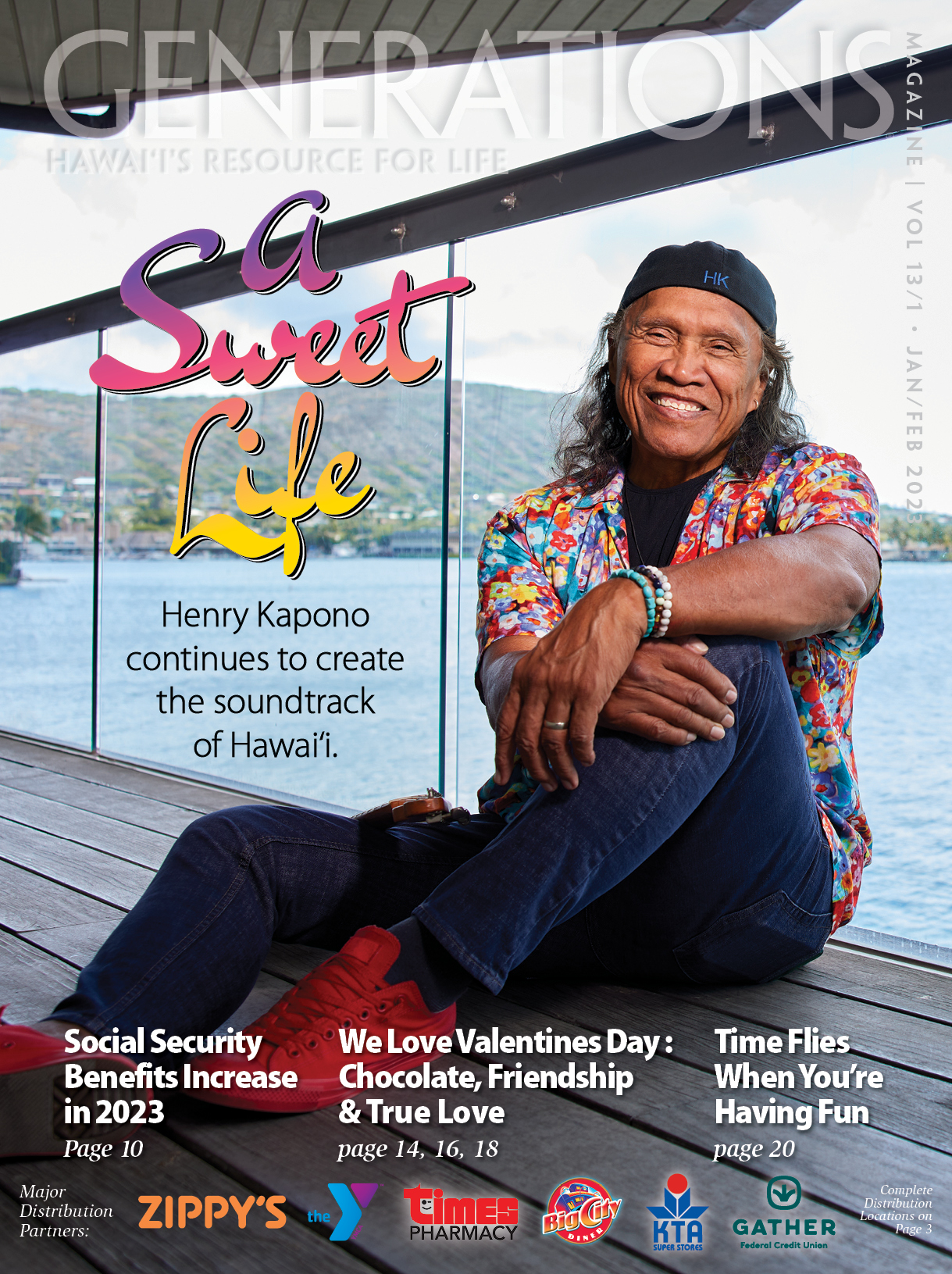
Many claim they are leaving a legacy, yet Henry Kapono Ka‘aihue lives his every day, instilling pure aloha into everything he does. In his alleged “Golden Years,” when most are retired or slowing down, this remarkable music man has no intention of doing any of that any time soon.
“I get to pick up my guitar and play every day — play for people and I stay happy,” says the Grammy-nominated Hawai‘i singer/songwriter. “I think retirement sometimes takes the ‘oomph’ out of life. What now, unless, you have a solid Plan B? I love staying in Plan A. It’s working.”
“Retirement” is not in his vocabulary and he doesn’t believe any artist should stop creating. “Every day is exciting to figure out who you are and what you are doing, and how you can be even better.”
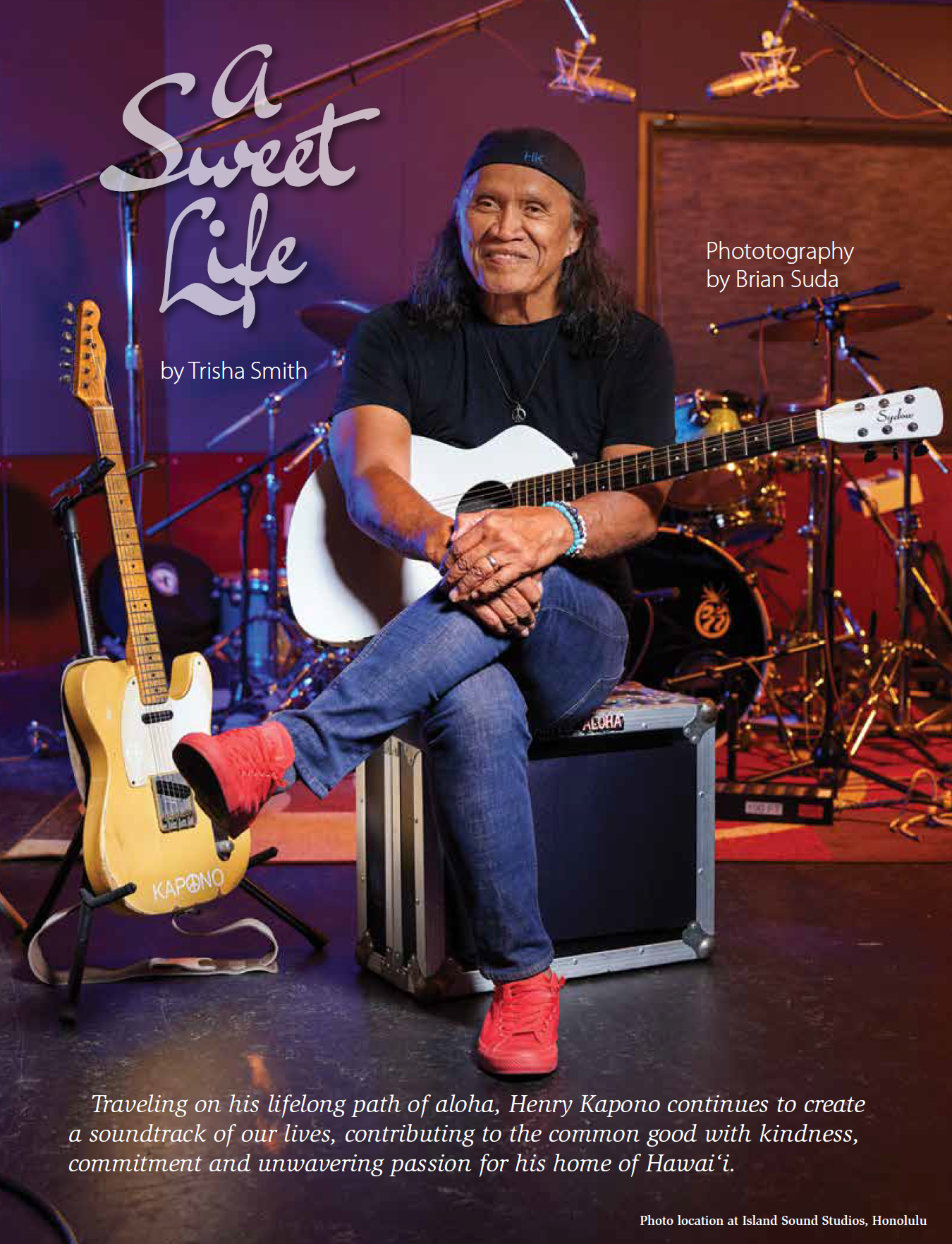
The 74-year-old is happy, healthy and grateful for his “Sweet Life,” as his new song by the same name professes. He has no desire to pump the brakes on performing, and Henry will always be about sharing the stage with good friends, making music and giving back to the community, culture and the arts through kindness, commitment and unwavering passion.
“That was Plan A. And it’s been working, so we’re sticking to it,” Henry shares, with his famous smile. “I am grateful for the love and support I have had through the years and even more grateful I can give back to Hawai‘i and future generations. I’m truly blessed!”
The Essential Henry Kapono
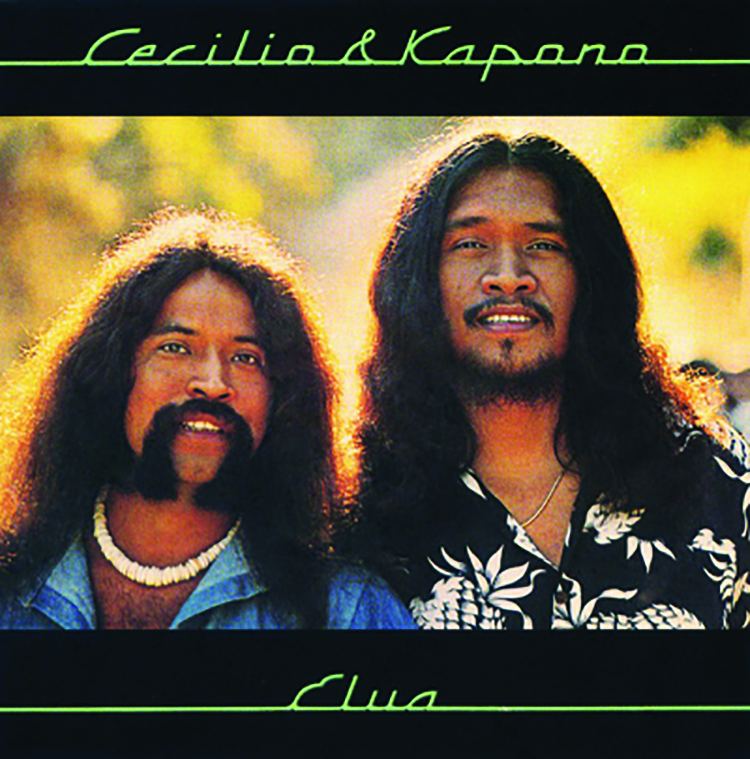
Henry Kapono is an ambassador of aloha. He is a household name across the isles. He is a respected vocalist, guitarist, songwriter, composer, performer, actor, author and family man, and a friend to many around the world. Fans have followed Henry from Pakalolo to The Rough Riders (a collaboration of Brother Noland, John Cruz and Henry) to his best-selling solo days. Most recognize him as half of Cecilio & Kapono (C&K), the trailblazing band that will be forever connected to the history of Hawaiian music.
“If the music could just get beyond the reef, I knew it would cause something,” says Henry of the C&K heydays to his groundbreaking “Wild Hawaiian” solo album.
Henry is a Grammy-nominated singer/songwriter with 21 Nā Hōkū Hanohano Awards, a Grammy Museum honoree — the State of Hawai‘i even gave him his own day — June 3.
He’s earned accolades for his music, children’s book, performing and philanthropy. Henry is always energized and recently quite busy keeping up with his bustling gig schedule.
At the end of the day, though, he’s focused on his family, community, music and those sharing his journey, with a commitment to the future of music in Hawai‘i. He still thinks of himself as the dedicated athlete and free-spirited local boy born and raised in small town Kapahulu, just outside of Waikīkī, who must have a guitar in his hands and positive vibes surrounding him every day.
Reflections arise often, lately, he admits. He’s found a deeper appreciation for early inspiration and exploring moments that shaped his life. On the other hand, he’s writing songs with zeal, creating contemporary music and forever motivated. “Kapono,” his middle name and part of his stage name, means “righteous or good” in Hawaiian. He strives to embody that throughout his life in everything he does, especially music.
“Our kuleana is helping others navigate their musical paths and provide guidance,” he says.
The Road Not Taken
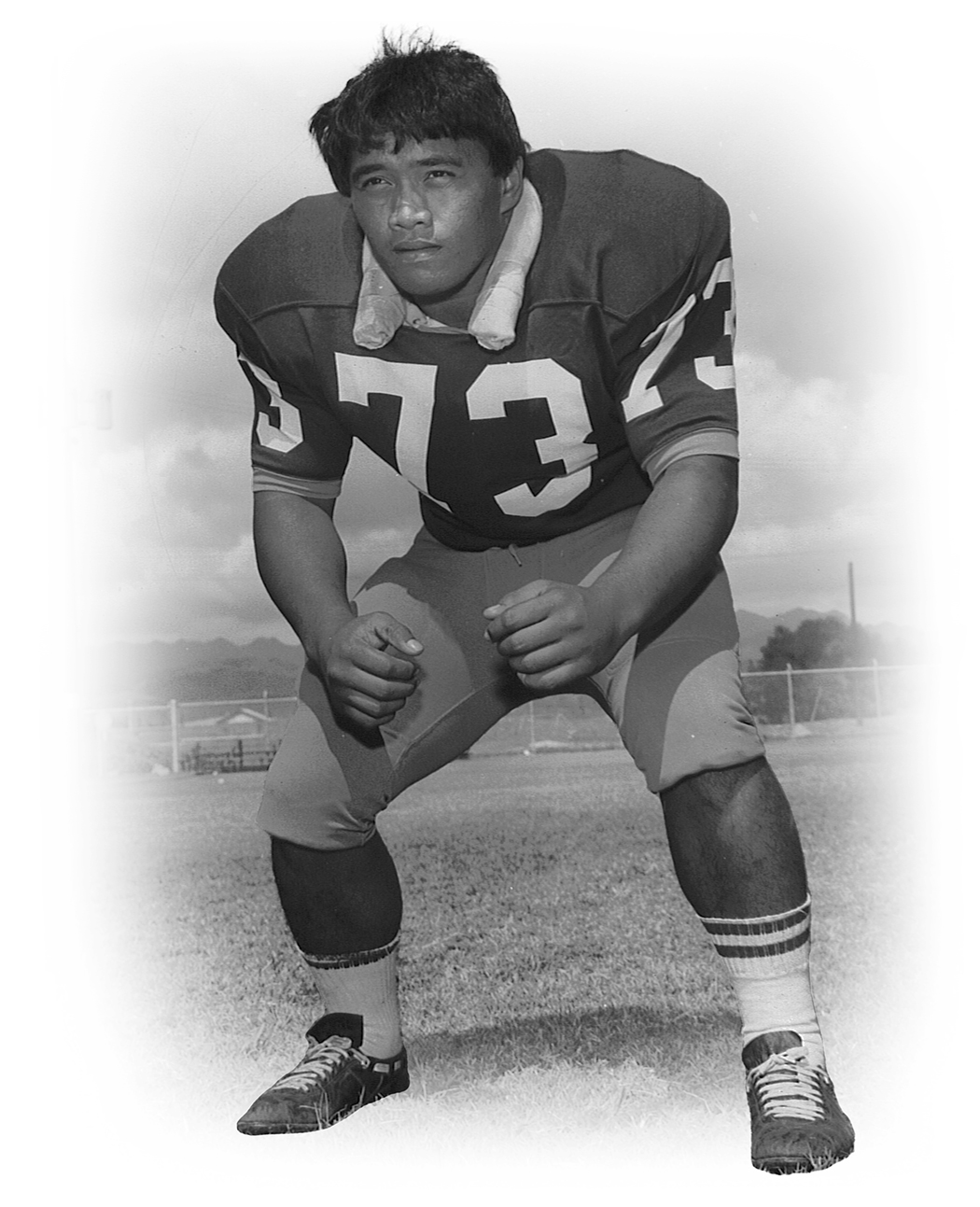
Henry was a “pure jock” who excelled in wrestling, track and most specifically, baseball and football. He received a baseball scholarship to Punahou Academy (the Honolulu college prep school is former President Barack Obama’s alma mater) and a football scholarship to the University of Hawai‘i (UH).
“Baseball was a very special time for me, mainly the Little League days when I made some really good friends who taught me a lot about teamwork,” says Henry. “I still carry those lessons with me to this day.”
“Today, my son has picked up a passion for football, and I am excited to support him and see where he takes it.”
Henry grew up surfing Waikīkī Beach, minutes from his family’s house. “That was my playground, but I’m not catching waves there anymore. It was a little less crowded in my day.”
“I have a good life, had a good life and still have a good life,” says Henry, with his ever-present, luminous grin.
Henry’s name could have been inscribed in sports halls of fame rather than musical history books. “My goal was to play in the NFL,” says Henry, a gifted defensive end. “I put 100 percent into every play and that got me far.”
Henry experienced a knee injury that eventually healed. Yet a sonic path chose him after a fateful musical tour in Vietnam.
He recalls when one of his coaches and lifelong mentor, Charlie Ane, pulled him aside and shared words of wisdom quite contrary to popular advice: “Sometimes you gotta do what your mind tells you and not what your heart tells you.”
He also has fond memories of his former UH football coach, Larry Price. “He taught me so much… so many life lessons,” Henry says. “My coaches taught me a lot — not just about sports, but about life.”
“There was a sign in the Punahou locker room that read, ‘A winner never quits and a quitter never wins.’ This is what I live my life by,” Henry says.
“I always wanted to write a song for my dad and ‘Sailing’ is it.” (Kala Kaaihue, above)
Family & Friends
It’s no surprise Henry comes from a large, loving Hawaiian family. He’s blessed to say they were his biggest mentors in music growing up. “I was very fortunate to have my family support and inspire me in everything I did.”
Henry is one of eight siblings, with five sisters who kept him kind, in line and on his toes. “I was always amazed by my one sister, Nona, who could pick up anything and play it.”
Henry found choir at an early age, then learned guitar and ‘ukulele by listening. “My dad would come home from work every day and play his ‘ukulele and fall asleep in his chair, but every once in a while, he would teach me a song or two.”
Now, the world is teaching each other Henry Kapono songs as his music continues to transcend generations.
He’s also been reminiscing about early friendships and experiences. His father always said he would be lucky to count his good friends on one hand. “I’ve been thinking about it lately and realizing how many great friends I made, and how much they taught me about friendship. You always remember them. Those are good days,” says Henry.
“I make friends every day, but it made sense after a while… Think about the friends that really back you up and are there. I realized what he meant.”
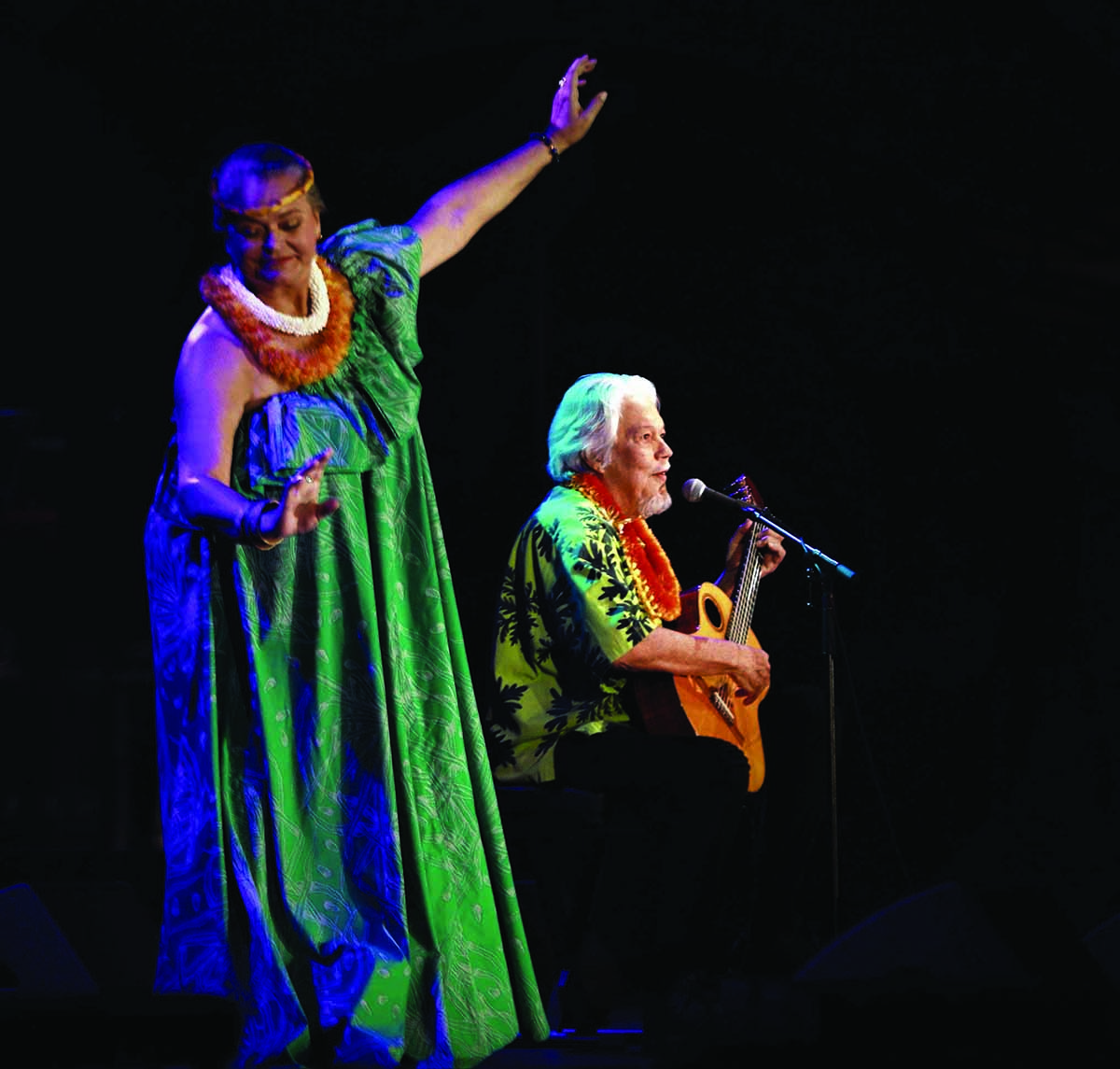
“Henry Kapono is the absolute best,” says Keola Beamer, a Ki Ho‘alu Master celebrated for fusing Hawaiian roots with contemporary music, as one of the Beamer Brothers and the composer of “Honolulu City Lights.”
Keola and Henry are both dearly loved by Hawai‘i’s music community. They tour together as the show Legends and remain dear friends over the years. Henry admits it’s quite a thrill to realize they’re both still out there making music and spreading the goodness of aloha.
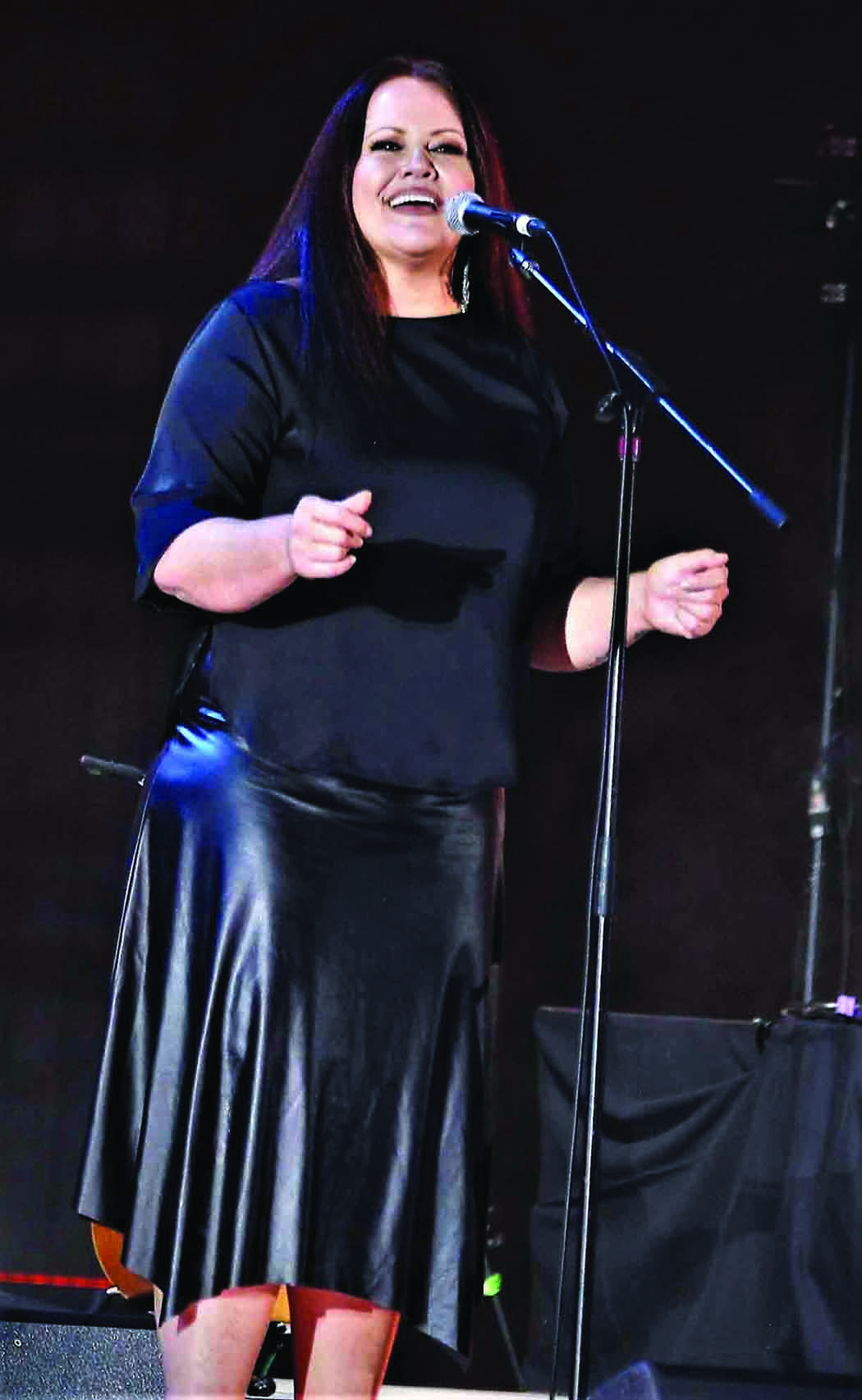
Amy Hānaiali‘i, Maui’s award-winning wahine with a famous falsetto, remains a close friend with Henry and his family; their keiki have been friends since birth. She often shares the stage with Henry and continues to be in awe of his inspiration. She knows he’ll be a part of the soundtrack of Hawai‘i — always.
“Henry is an icon with an amazing career still to this day,” says Amy, a six-time Grammy Award winner. “He’s kind, loving and loves his home and family.”
Moanalani & Keola Beamer at the Home In the Islands concert. (PC: Alden Fukushima)
Initial Influences & Collaboration
Back in the late ’60s, Henry experienced one of his guitar heroes — Jimi Hendrix — live on O‘ahu during one of his few trips to the Aloha State.
Henry giddily recalls, “He came and played one night, and played about three songs, then stopped and said, ‘Keep your ticket stubs and come back Sunday.’ I guess the sound wasn’t happening or he was too stoned, but he came back and he played intensely for three hours Sunday… it totally blew me away!”
The 17-year-old Henry wouldn’t have believed it if he had not seen Hendrix “actually making those sounds” from his guitar. He definitely absorbed some raw Hendrix energy.
“In the ’70s, every artist had their own sound, their own vibe and thing they were putting out there — Jimi, Carlos Santana, Chicago, Janis Joplin, Linda Ronstadt, The Eagles… My favorites include The Young Rascals and Grand Funk,” Henry reminisces. “Those artists back then had magic, they gave it their all onstage and they inspired us all.”
Amy Hānaiali’i at the Home In the Islands concert. (PC: Alden Fukushima)
Guitarist Cecilio Rodriguez was in the band Unicorn when Henry noticed his playing and energy. They had dinner together in 1972 and C&K was born that very night. “It was meant to be,” says Henry. “The first song we played — it was like we rehearsed. A light switched on. We looked at each other and went ‘whoa.’ By the third song, we agreed we needed to start something and that was it.”
In a matter of one day, they learned 30 songs together.
Their first performance was in Haleiwa on North Shore O‘ahu opening for a rock group. The following year, that same rock group was their opener at the Waikīkī Shell.
C&K hit fast fame opening for Boz Scaggs, Santana, America and Peter Frampton, to name a few. They were often compared to the legendary duo, Simon & Garfunkel. Henry grins the most, though, while sharing a story about the night C&K opened for Frank Zappa in 1973 at the Old Civic Auditorium. “I think it was our biggest stepping stone.”
“We did our 15 minutes and got off stage… people were roaring,” recalls Henry.
They left the stage quickly and were starting to pack up to go work when they were stopped by Zappa himself. “Where are you guys going?”
Frank said. “Well, they’re still cheering for you, so get back up there.” “Artists of that caliber never do that,” says Henry.
C&K soared during their hana hou, then headed to their club, Rainbow Villa, which had a line around the block. “The club was empty the first three months we were open… that night changed everything.”
This experience stayed with him throughout his career and he vowed to always share the stage with up-and-coming artists.
“Zappa’s exterior can be rough, but he is very intelligent and kind,” says Henry. “His music is way out there, but that’s who he is. I love that about music. Be you.”
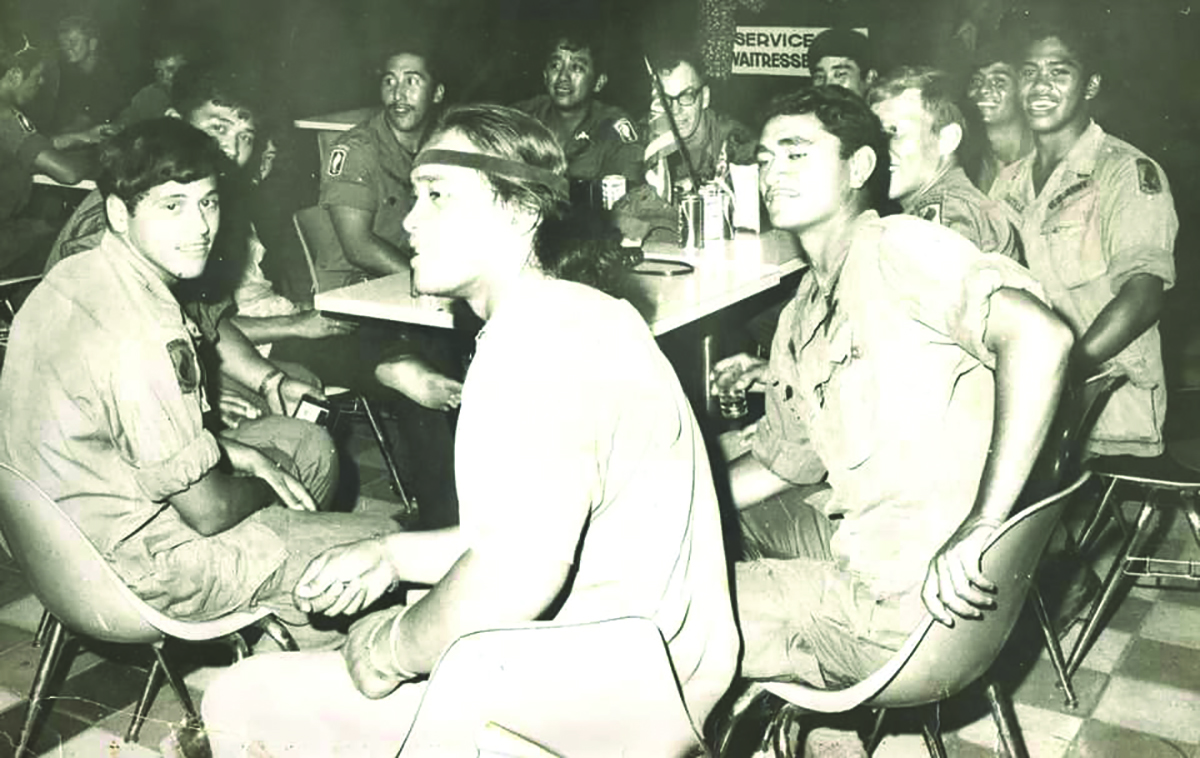
Playing in Vietnam and Thailand at age 19 for two years, Henry (front) learned a lot about life.
History, Influence & Inspiration
C&K were leaders in forging a fresh sound of the ’70s in Hawai‘i, melding rock, pop and blues like never before. Yet, as the ‘ukulele, lap steel guitar and classic Don Ho covers were resonating throughout Waikīkī, C&K was sharing new guitar sounds with an island twist that shook the music industry from Hawai‘i to Hollywood.
He didn’t realize at the time what Cecilio and he were cultivating — a sound so powerful and a part of so many lives. “It just happened,” he admits. “I knew of Cecilio
before I left for Vietnam, but when I came back, our mutual dear friend, Johnny Isara, suggested we should get together. That dinner changed both of our lives.”
That dinner of destiny almost didn’t happen. Prior to it, Henry had embarked on six-week tour in Asia in the late ’60s that turned into a two-year ordeal he luckily survived.
The 19-year-old Henry traveled with his power trio, Pakalolo, to Thailand with Chicago duo Twin Sisters for a month. “Then, just as we got to Vietnam, our management company closed up… it’s a long story, but ultimately, we were stuck.”
“It was spooky — war going on with cannons going off, blasts… the military is running around,” Henry recalls with an exhale. “We lived on rations, got paid $20 a month… but then we learned how to spend. We learned about life.”
“I played my guitar eight hours a day — slept with it, ate with it… it helped me survive,” Henry says. There were a lot of close calls. “I felt a close relationship with God then… it was scary and made me realize how vulnerable we are.”
He played for the troops for a year in Vietnam and ended up back in Thailand for another year before earning enough to return to Hawai‘i. He came back with a whole new vision, drive and purpose. He committed to music his way and the universe delivered him a creative partner in Cecilio.
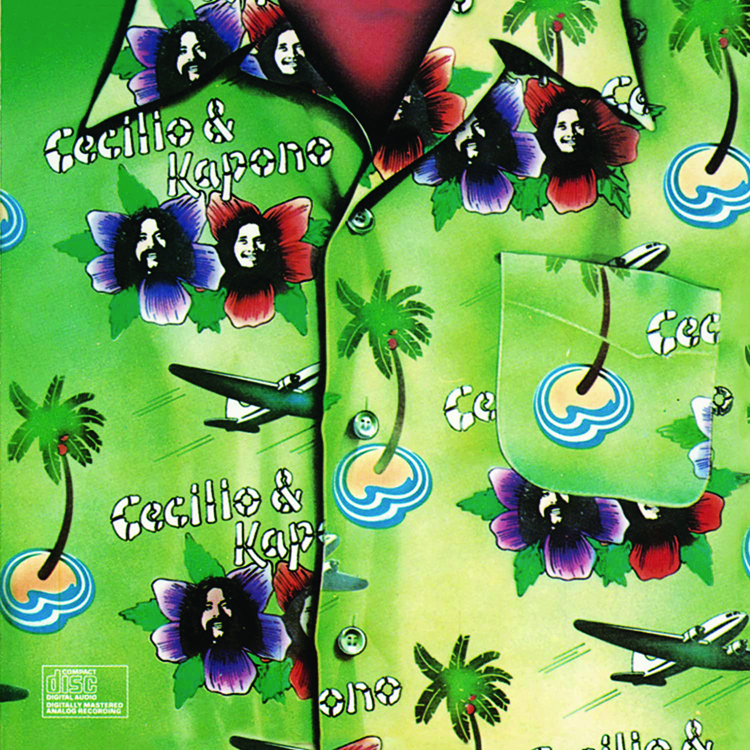
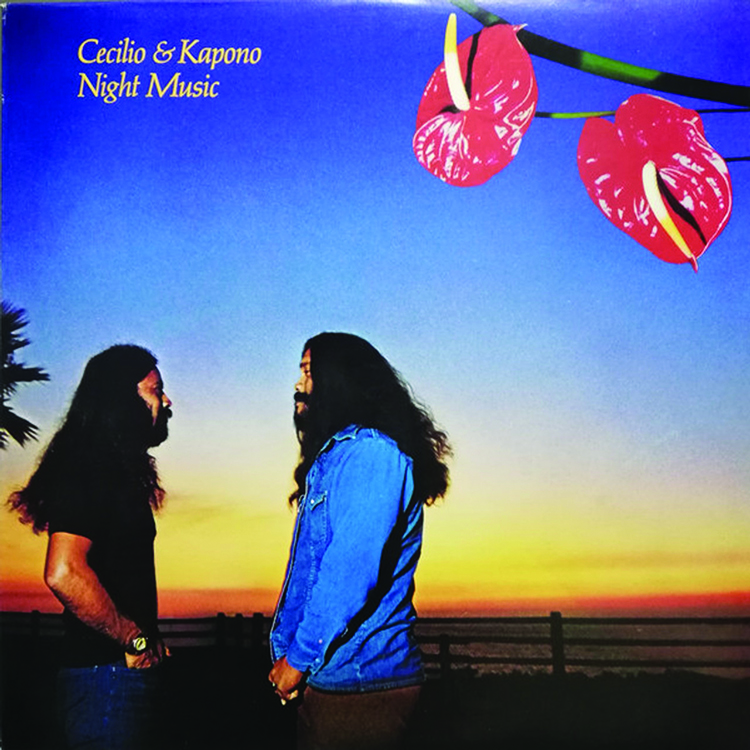
Henry and Cecilio billed themselves as Cecilio & Kapono, aka C&K. Within their first year together, Columbia Records signed the new duo to a three-album deal, a historic business deal for a Hawaiian group.
Before the duo parted ways, the collaboration would produce a total of eight albums, making an indelible mark in the history of Hawaiian music.
Henry keeps the spirit alive by performing The Songs of C&K shows, which O‘ahu and Maui fans enjoyed in December. “It’s fun to pay tribute to the songs people grew up with and loved and passed onto their children. Generations are still listening to it,” says Henry. “They’re still playing on the radio. Amazing.”
“I often tell Henry when I’m on stage with him that when it comes to the songs of C&K, one knows what perfume they were wearing and who their first love was,” shared Amy.
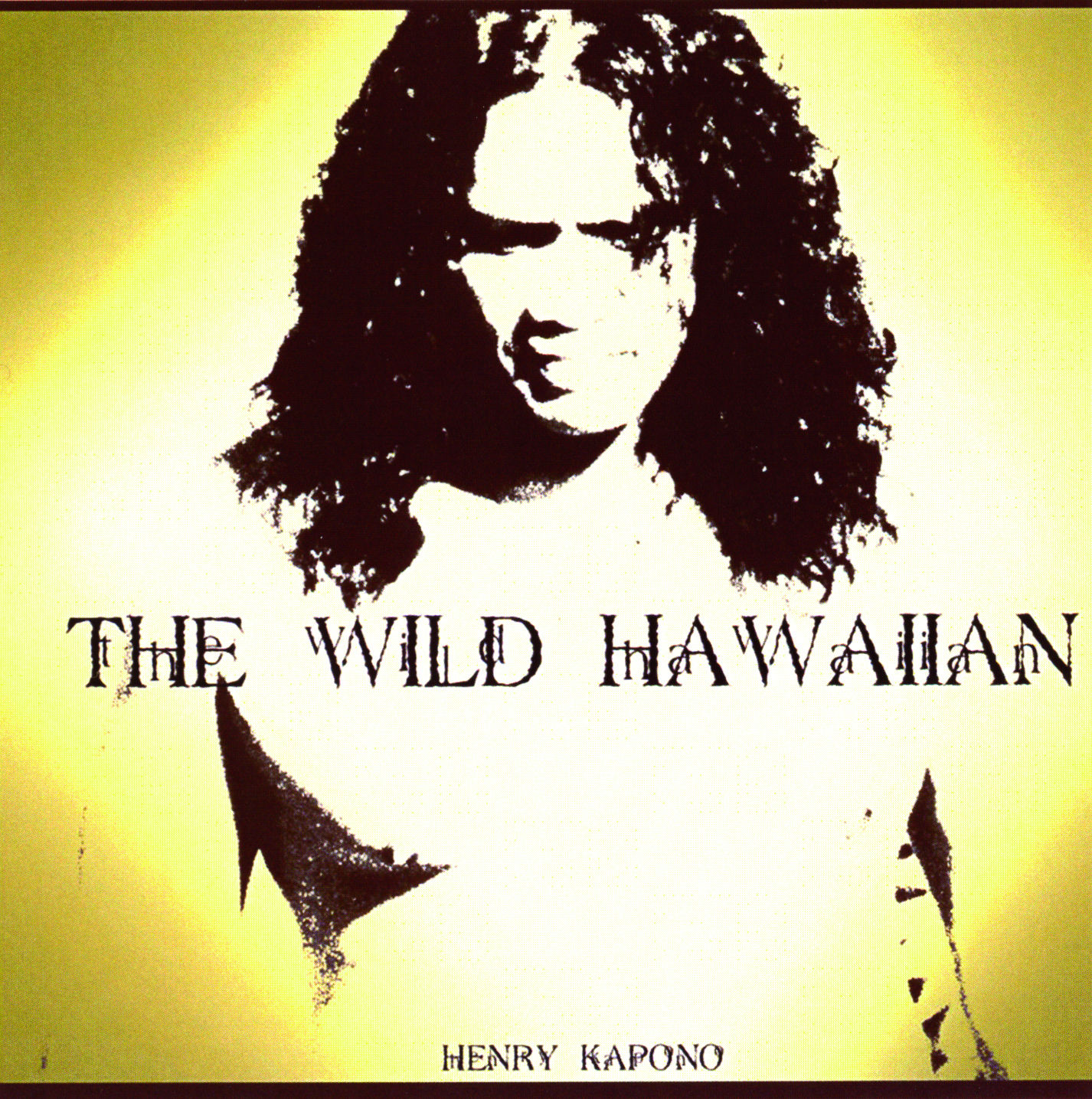
After C&K, Henry enjoyed solo fame with “Kapono: Stand in the Light” in 1981 and produced more than a dozen albums, including favorites such as “Duke’s On Sunday” and “Wild Hawaiian.”
The latter is the most critically acclaimed and was nominated for a Grammy in 2006, which sent Henry on another wave of stardom. He reminisces about his Hendrix experience and admits it was channeled into this album.
As a pure Hawaiian, Henry has been frequently asked why he doesn’t do a Hawaiian album. “I wasn’t raised in the Hawaiian language as many Hawaiian artists have been since,” shares Henry. “There are so many great Hawaiian musicians who live and breathe the Hawaiian language, and do such an amazing job with the music and culture. So when I decided to do a Hawaiian album, I decided I was going to do it my way. The ‘Wild Hawaiian’ name came about during a rehearsal, as we were jamming hard. My drummer exclaimed, ‘That’s wild!’ The rest is history.”
Henry’s extraordinary prowess and versatility has guided generations of the impactful and courageous artists of Hawai‘i, including the late, great Willie K (Kahaiali‘i) of Maui and Tavana, the renowned one-man band from O‘ahu.
“Henry Kapono has had a tremendous impact on me as a musician,” Tavana says. “His kindness and acceptance of me and many other musicians has inspired me to be a better player and human.”
Henry is a hero, but also a comrade to many fantastic singer-songwriters.
“Henry has influenced every contemporary Hawaiian musician/singer, either directly or indirectly,” says John Cruz, beloved Grammy Award-winning artist and former bandmate of Henry’s. “For my generation, his songs were part of the soundtrack of our lives. What makes him particularly special for me is he continues to create beautiful songs that resonate today!”
“I appreciate them and love all of them,” says Henry. “I’m glad to be an inspiration and they are inspiring to me. They have a lot to give to music and they do with passion.”
Paving a Road for Future Generations
For a super star, his fans really appreciate Henry’s team attitude. The camaraderie and support of fellow creatives is something Henry is really proud of here in Hawai‘i. “There is no other place like this in the world.”
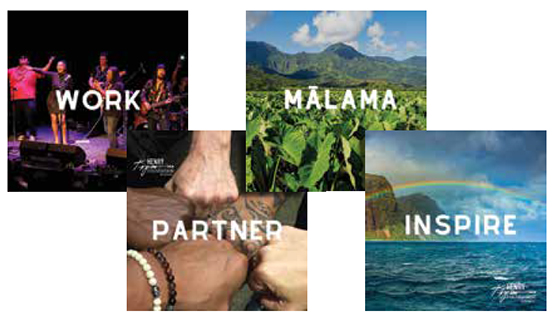
Henry continues to create paths which ensure future artists have support along the way. In 2018, the Henry Kapono Foundation (HKF) was founded by Henry and his wife, Lezlee, as an opportunity to give back and perpetuate his lifelong passions across his “Home in the Islands.” Henry is dedicated to keeping Hawai‘i’s music and culture thriving by providing education and assistance to the music community. HKF understands the challenges of the working artist, and strives to foster and guide Hawai‘i musicians with business education, digital resources, grants, scholarships and financial aid opportunities.
“The plan is to keep the music industry thriving here in Hawai’i by creating programs and resources to empower everybody,” says Henry.
“There is not an artist in Hawaiian music who doesn’t have immense respect for Henry Kapono,” says Kimié Miner, a celebrated singer-songwriter and loving wahine in the next generation of leaders.
As a native Hawaiian singer/songwriter/artist, she observes that “he demonstrates a high, yet humble standard for how to uphold our powerful, collective mele, while simultaneously upholding support and service to the community” through such programs as HKF.
“Together with his wife, Lezlee Ka‘aihue, they champion the importance of staying connected to the origins of our culture, language and lineage through music” she continues. “Henry is synonymous with kindness; he is a one of a kind… and a true friend.”
HKF shifted focus to musicians during the peak of the pandemic. HKF was able to gift $200,000 worth of Foodland cards to nearly 400 families of artists affected through HKF’s We Are Friends… COVID-19 Relief Program, in partnership with the Kawakami Family.
Lezlee and he crafted this benevolent idea, feeling empathy for the community. “She does all of the bookings and had to wipe those calendars clear,” Henry says. “We got the $500 gifts cards out immediately, as everyone was in shock in the music industry. We wanted to help them eat, support their families; make positive moves forward.”
HKF (www.henrykaponofoundation.org) continues to support the music community after the stages started reopening with We Are Friends 2.0 and other programs, grants and scholarships. It’s exciting to ponder the possibilities this foundation will have on future generations.
During the COVID shutdown, Henry served up regular doses of personal aloha with over 200 YouTube episodes of “Henry’s Positive World.” He would share virtue cards with positive messages and sing a song related to each. “It reached so many globally, helping a lot through a tough time. People are still coming up to my wife and I expressing gratitude. It feels amazing to be there for others.”
“I wouldn’t be able to do what I do without her,” says Henry. “I have a really good team that keeps me in touch and connected. Teamwork definitely makes the dreams work.”
There’s No Place Like Home
His grueling schedule kept him traveling for years, with six months of touring and two weeks home — repeat. While back in Hawai‘i on a break in 1977, he took a drive and soaked in an oceanside moment. He was overcome with the beauty of his home and felt calm for the first time in a while. He had an overwhelming sense to be here more. He thought, “What am I doing out there?! I’m coming home.”
He let his management know that he was going to base himself in Hawai‘i and would hit the road as needed from here. Henry sought to craft an extraordinary life, helping the world truly understand the meaning of aloha and supporting the music of Hawai‘i for many generations. That was over four decades and it’s all going to plan.
Coming back home and being in the spotlight here has always “been enough,” but Henry understands the plight of a local artist and those luminous dreams of stardom. “LA wasn’t for me.”
“We all grew up with those dreams and an idea of what we want in this life,” says Henry. “My advice is to be grateful for what you have right now. Talent only takes you so far. Work hard and understand good things will come if you really put in 100 percent of your heart and soul. There’s no less than that. Anything less, you’re not ready.”
While signed to Colombia Records, a manager shared this with him: “The music business is 80 percent business and 20 percent talent.” That was hard for him to swallow then. He soon realized business is the vehicle that helps you move forward so you can continue to stoke the fire.
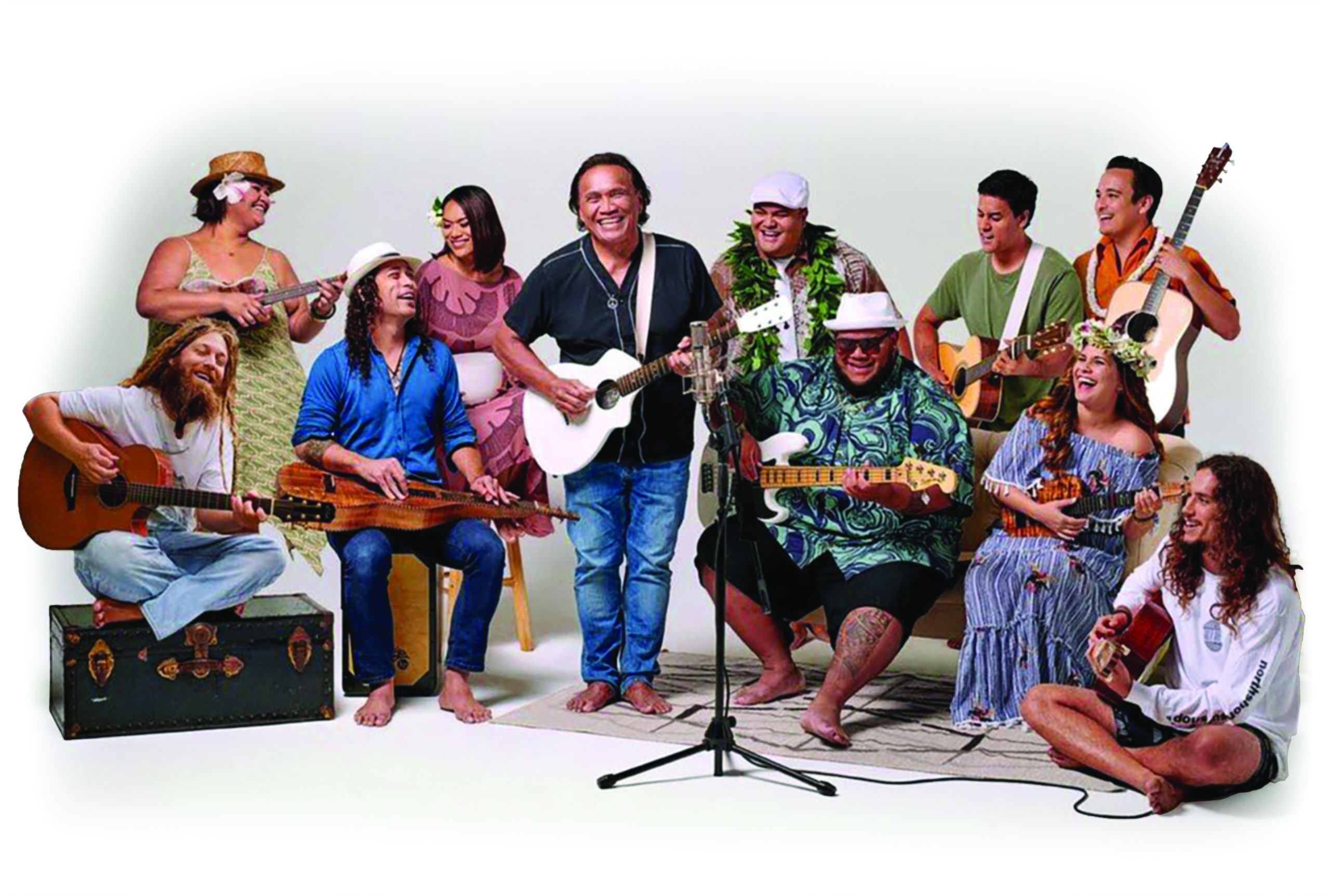
The award-winning compilation album “The Songs of C&K”(2018) features some of Hawai’i’s most talented and successful young artists.
When he met his second wife, Lezlee, those realizations resurfaced. He was thrilled she offered to be his management.
“Behind every good man, there’s a great woman” and Henry realizes how blessed he was to meet his “White Rose,” as the anniversary song he wrote for her professes.
“How hard could it be?” she said about taking on managing a musician. “About a month later, she realized she didn’t like the business,” Henry shares with giggle. “Luckily, she stayed with it and understood it, and now we are a great team. We are connected and we make things happen. We know what we want out of what we do, and it’s a great partnership. A great life!”
He continues, “Our goal is to reach all levels… we are doing the best we can for not only us, but for everyone. We truly care about the music industry and the people in it. Our vision and goals all focus to keep the music thriving.”
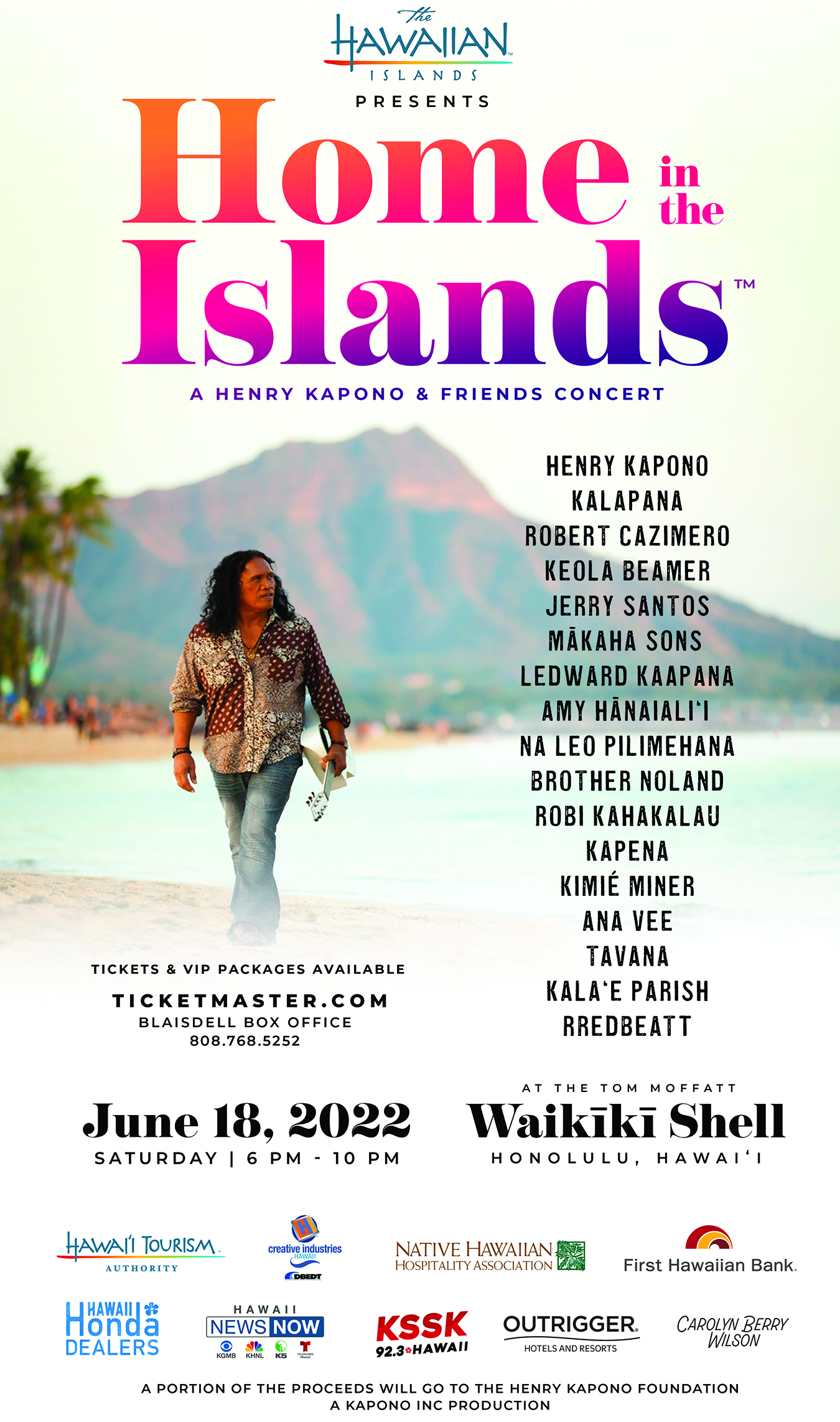
The Home in the Islands: A Henry Kapono & Friends Concert of iconic and emerging artists last summer was a huge boost, especially after stages had been dark throughout the pandemic.
“I think everyone was ready for something and we were ready to give it to them,” says Henry. “We highlighted musicians from the ’70s who mean a lot to Hawai‘i. Their music has transcended generations.”
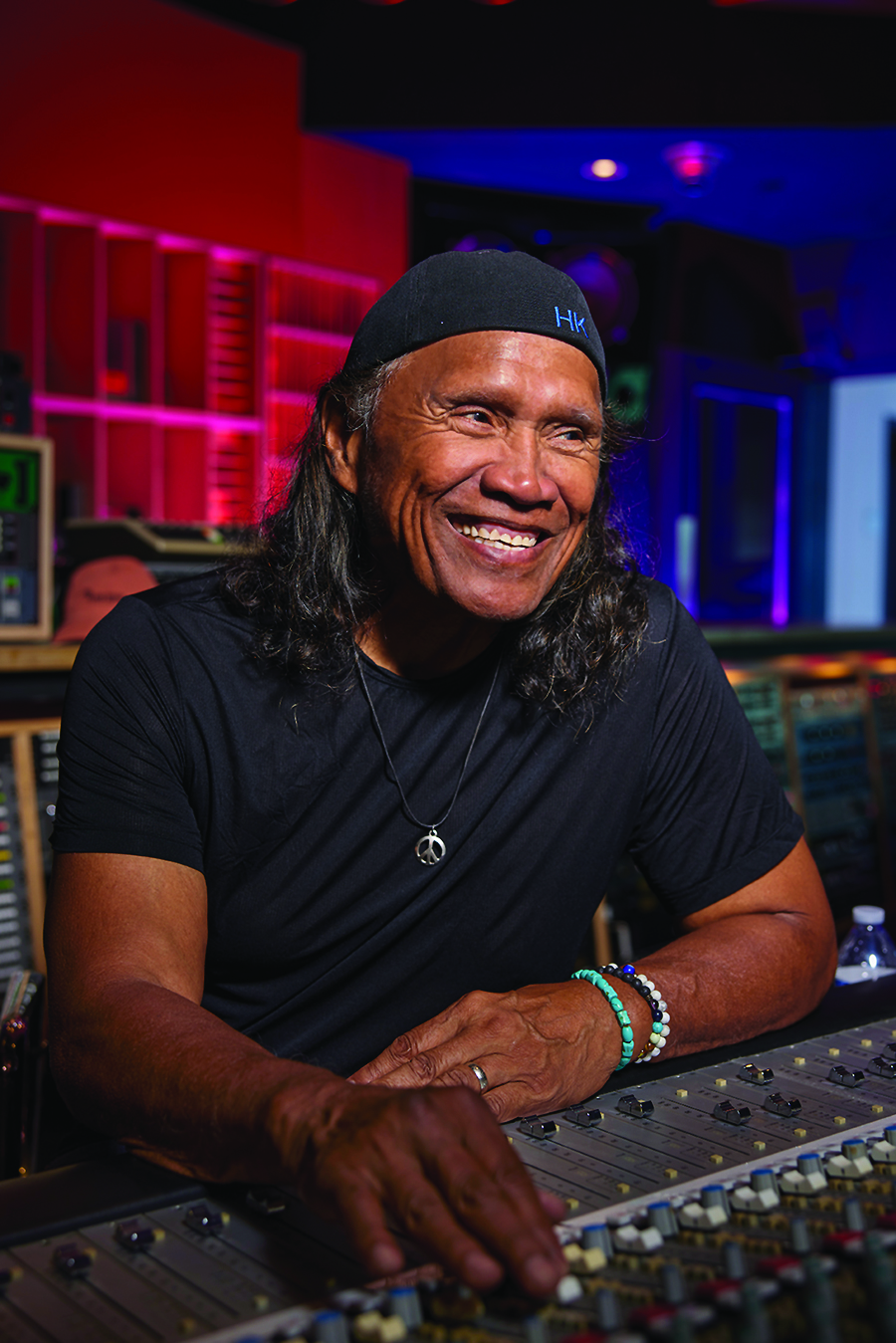
Henry enjoys making music with special friends at Island Sound Studios in Honolulu.
Kalapana, Robert Cazimero, Ledward Kaapana, Mākaha Sons and Jerry Santos were among the iconic stars featured. “It was a big treat for us that we put it together and for the artists,” says Henry. “It was so nice have them be recognized for who they are and what they have accomplished for the love of their islands.”
His favorite part of the night was when “everyone was backstage having a good time and there was a whole concert before we had a chance to even get onstage… kanikapila style.”
“No egos… It’s a beautiful thing. You don’t see much of this at big concerts. They were all happy to be together, sharing such positive energy.”
Camaraderie is a main theme for Henry. “We all started as nobody and just trying to learn our talent or figure out if we had talents. We knew each other and hung out, but we didn’t realize at the time how far we’d come and that we’d still be sharing the stage today some 50 years later.”
The gig he feels most at home is Duke’s on Sunday, a landmark gathering of Henry Kapono and friends, coming up on 30 years. “Thanks to founder Rob Thibaut (TS Restaurants) who took me to lunch to share his vision… to be a part of the Duke’s family,” Henry says. “He had a vision of me playing in Waikīkī with Diamond Head in the background and folks traveling from across the world to experience it.”
Henry left for a tour after that lunch and seriously pondered what his vision was offering — a permanent place at home where he could be with fans regularly.
“When I returned from that particular tour, I realized this is where I should be,” says Henry. “I gave it a chance and 29 years later, I’m still there every Sunday, enjoying every minute of it.”
“Music really is the key to everything and the best way to communicate to the world powerfully.”
Gratitude
Henry, with two daughters from a previous marriage, is now back to raising teenagers with Lezlee. They have twins; a boy and a girl. “I’m so proud of all of my children. Raising kids is amazing… They’re fascinating. You learn a lot and grow up yourself again in some ways.”
“My twins love me as a father. They don’t see a ‘big performer.’ The good part is I don’t push music onto them or push anything onto them,” says Henry. “We allow them to pursue and do what they want to do.”
With guitars strewn about their Honolulu home, it was only a matter of time before one of them got bitten by the music bug.
“Lately, they have been playing guitar in their room, I could hear them and was waiting for them to come out and express themselves,” says Henry with a chuckle. “No one has asked for a lesson yet.”
He’s thrilled they’re ripping chords from his days, paying homage to music which will never go out of style, like Led Zeppelin and The Beatles, plus an array of new songs. “I’m really enjoying it and they just blow my mind.”
Henry admits he is very competitive, but only with himself and doesn’t plan on getting out of the game.
“I have a lot to be grateful for, including still being a part of the music industry” says Henry. “I always challenge myself. I’m my biggest competitor. I’m all about always trying to keep in touch with everything, with the industry and the musicians, and getting an understanding of how everything moves forward and understanding how I move forward and keep positive.”
“Seeing how people react and respond to your music is really important,” says Henry. “You make that connection and people hold onto to you and you just give them the good stuff.”
“I wrote ‘Sweet Life’ for my wife; it’s about being found by love after losing everything. But it really applies to life in general. Through all the bumps, twists and turns of living life, I realized that it was a test toward being a stronger person or giving up.” “Sweet Life:” a newly released single.
The Hoku awards (aka “Hawai‘i’s Grammys”) from recent years are quite meaningful. In 2021, he was named “Favorite Entertainer of the Year” and won Contemporary Album of the Year” at the ceremony. His anthology album was honored in 2022. “It feels good to still be so loved, and fun to be honored for being contemporary and for an anthology. I still got something.”
The Rearview Mirror & Road Ahead
Spending time with Henry, you would never guess he’s approaching 75. He’s sharp, funny and cool in conversation. His signature wavy mane is still sprinkled with sea salt, and good conversations, music and humor grace his days. He regularly exercises physically, mentally and spiritually to stay in the game of life. “I think it’s so important to exercise in all these ways.”
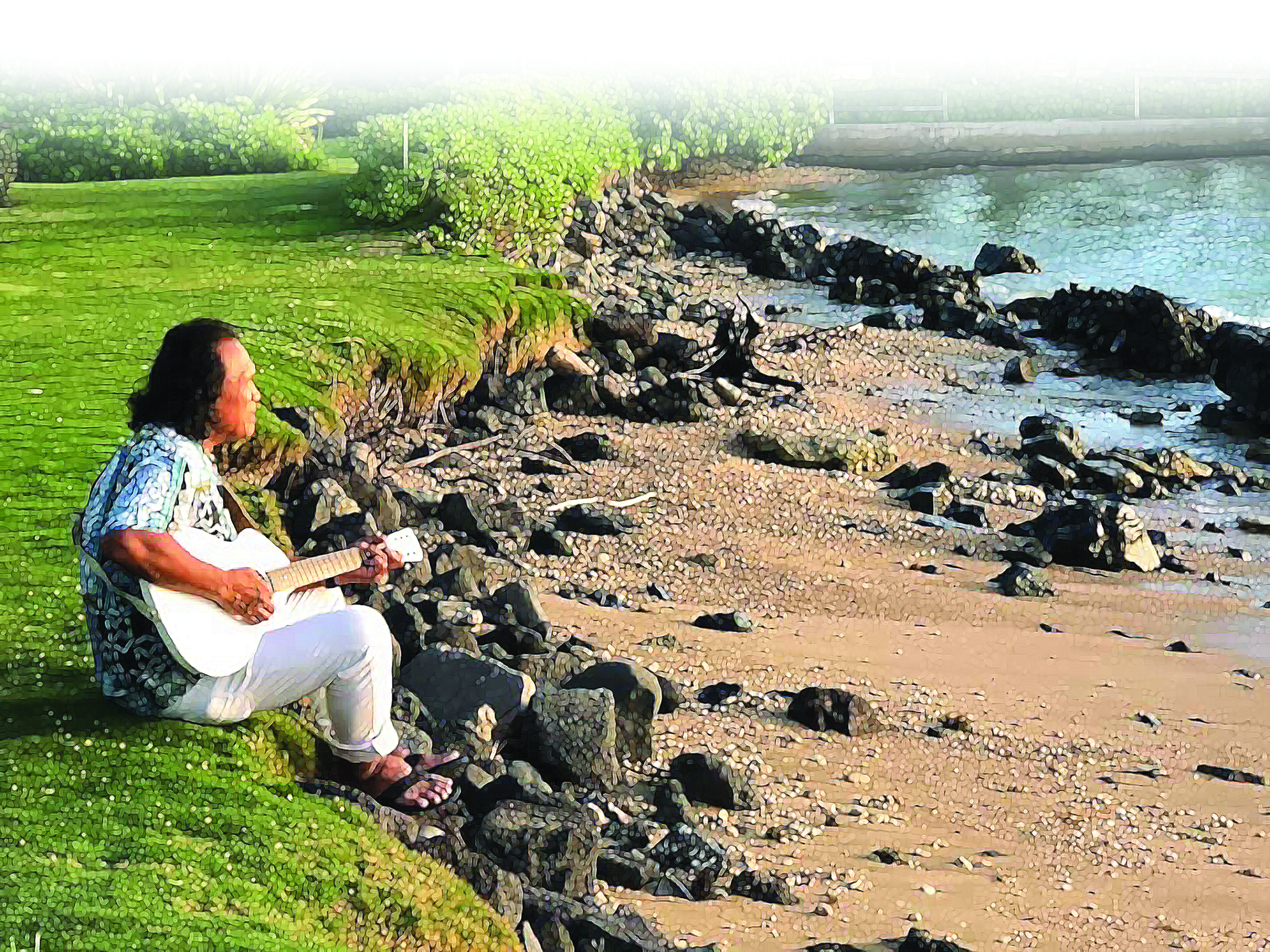
In his home outside of Honolulu, he’s created an office space outdoors where he can hear the birds sing and finds this is the only way to work from home.
“I just don’t believe in thinking of being old… It’s just a number.”
He plans to be around to see the twins graduate college, hold his grandkids and be there for them in all ways. “I want to wake up every morning and feel good.”
Henry’s words of wisdom to aspiring artists is the hope they believe and trust in themselves, but heed feedback. “Listening to criticism, taking it as a lesson, whether it’s good or bad, and not discouraging yourself with all the noise that surrounds you,” he says. “Believe in yourself and trust that you know what you do. Really be passionate about it and be grateful you have that opportunity to live in a musical world.”
His father always told him to “be careful, but enjoy it,” when it came to any task or journey in life. As a young man, Henry didn’t fully understand. He does today.
Henry has added to this wisdom with advice he shares with artists, including dropping the ego and “focusing energy on making a difference for others, your family and generations to come. That’s where joy comes from.”
“My mom taught me to give selflessly, and by giving without expecting anything back, eventually something comes back… maybe not in what you gave, but in other forms,” he fondly recalls. “I believe in that. Something we should all do. Give from your heart and let it be.”
“I wrote the song ‘Sweet Life’ for my wife; it’s about being found by love after losing everything,” says Henry. “But it really applies to life in general. Through all the bumps, twists and turns of living life, I realized that it’s a test of either being a stronger person or giving up. A strong family, good friends and the opportunity to continue my musical passion while making people happy, is what I’m all about. I am grateful for it all. It’s a “Sweet Life.”
Many claim they are leaving a legacy, yet Henry Kapono Ka‘aihue lives his every day, instilling pure aloha into everything he does. In his alleged “Golden Years,” when most are retired or slowing down, this remarkable music man has no intention of doing any of that any time soon.