You can devise your estate plan without lawyers or accountants. All you need is a credit card, a computer, a printer and access to the internet. Armed with those four things, you can create one or more documents that may — or may not — accomplish what you expect.
But you will probably never know. The ultimate success or failure of an estate plan is rarely revealed during the lifetime of the one who created the plan.
You have seen or heard ads touting websites that claim to save you oodles of money by sidestepping your lawyer and designing your estate plan for you. But ask yourself this: why would you trust a website to come up with your estate plan? Your last name may not be Musk or Bezos, and you may not have as much stuff as Elon or Jeff, but everything you own is everything you own. You probably care a great deal about where it goes after you are gone. It most likely also makes a difference to you who will make decisions for you if there is ever a time when you cannot make them for yourself.
You may respond, “You’re a lawyer who makes a living putting together estate plans for clients. Of course, you do not like those legal websites. They cut into your bottom line.” Well, not really. It would be more profitable for the legal profession if you go ahead and do your estate plan online. There is far more money to be made in dealing with screwy estate plans after they go wrong compared to administering them when they’ve been set up correctly.
However, most estate planning lawyers would rather earn a living by helping people create estate plans that work. This is more gratifying than assisting families in crisis trying to make the best of estate plans that missed the mark.
In the real world, computer-driven estate plans rarely work as intended. An effective estate plan involves more than a set of documents — even very well-drawn documents that would stand up in any court in the land, as they say. But why would you want your estate plan to have to stand up in court? Wouldn’t it be better to have an estate plan that will help your family stay out of court?
Bottom line: There is a lot of great information on the internet. There is also a lot of misinformation. Do you have the discernment necessary to sort through it and put your estate plan in order? If not, there is something to be said for working with live professionals instead of an impersonal website that cares more about your credit card authorization than what happens to you, your family and your stuff when you become incapacitated or die.
You can devise your estate plan without lawyers or accountants. All you need is a credit card, a computer, a printer and access to the internet. Armed with those four things, you can create one or more documents that may — or may not — accomplish what you expect.
Having a child with special needs presents unique challenges. When their condition limits their ability to earn a living and pay for living expenses upon reaching adulthood, financial worries can abound. Fortunately, there are steps you can take to ensure your child has sufficient financial resources and a dedicated support system. As you work towards protecting your child’s future, consider these six strategies:
■ Fund an ABLE account. Thanks to The Achieving a Better Life Experience Act of 2014, or ABLE, families can participate in a tax-advantaged savings program for a family member with a qualifying disability that occurred before age 26. As the owner and designated beneficiary of the account, your child can withdraw funds tax-free to pay for eligible disability-related expenses. They also may be eligible for a tax credit for contributions you make to the plan.
Anyone can contribute to the ABLE account — including grandparents and non-relatives — up to the annual gift tax exclusion. Contributions are made with after-tax dollars and are not tax deductible at the federal level. Some states allow contributors to take state income tax deductions. Not all ABLE plans are equal; shop around to find the most advantageous plan for your child’s needs.
■ Establish a special needs trust. A special needs trust, known as an SNT, provides financial security by creating an income stream for a loved one with special needs. Having funds in this type of trust would not disqualify your child, as the beneficiary, from receiving government assistance. Note that he or she would not have direct control over funds in an SNT, which may not be ideal if he or she is capable of managing their own finances.
There are several different types of SNTs (first-party, second-party and pooled), each of which is governed by various requirements. Because of their complexity, SNTs are usually prepared by a licensed attorney and may cost several thousand dollars to set up.
■ Buy life insurance. Consider purchasing a whole or term life insurance policy that names your loved one as the beneficiary when you die. To ensure the payout does not disqualify the recipient for federal and state resources, set up the policy to pay proceeds into a special needs trust.
■ Ask the courts to appoint a guardian. When an adult family member with special needs has significant assets or property and is unable to manage their own financial affairs, a guardianship may be appropriate. When a guardian of the estate is appointed, all financial matters are managed for the person with disabilities. This person will pay bills and is required by law to maintain detailed records to account for all spending. A family member is often appointed to this role; however, in some cases the court will appoint an unrelated individual.
■ Watch out for scammers. Individuals with disabilities may be more vulnerable to identify theft and other scams. Monitor credit reports to keep an eye out for unauthorized accounts. Consider enrolling your child in an identity theft protection program. Be aware that phone and internet scammers routinely target recipients of government checks by impersonating government agents.
■ Consult experts. Talk to a qualified attorney and a tax specialist for guidance as you work to safeguard the financial well-being of your special needs child.
Having a child with special needs presents unique challenges. When their condition limits their ability to earn a living and pay for living expenses upon reaching adulthood, financial worries can abound. Fortunately, there are steps you can take to ensure your child has sufficient financial resources and a dedicated support system. As you work towards…
We strive to provide the public with accurate and helpful information. In addition to the resources available on our website at ssa.gov, we also regularly post useful information on our blog and on social media. We invite you to read our posts and share items of interest with your family and friends.
◆ You can subscribe to our blog. We post articles about programs, policies, current topics, and new online services. Read more and subscribe at blog.ssa.gov.
◆ You can follow us on Facebook at facebook.com/socialsecurity. You can also share Facebook posts with family and friends.
◆ We have many informative videos on YouTube.
Our videos cover online services, applying for retirement and disability benefits, Social Security-related scams and much more. You can view our videos at youtube.com/SocialSecurity.
◆ You can join our many Twitter followers at twitter.com/socialsecurity. We use Twitter to announce new My Social Security features and other service or program changes.
◆ We share stories and resources that can help you and your loved ones. Check out our Instagram page at instagram.com/SocialSecurity. Check out all our social media channels at ssa.gov/socialmedia.
We strive to provide the public with accurate and helpful information. In addition to the resources available on our website at ssa.gov, we also regularly post useful information on our blog and on social media. We invite you to read our posts and share items of interest with your family and friends.
The Hawai‘i Family Caregiver Coalition was formed to develop new partnerships at local and state levels to advance a coordinated approach to address the needs of Hawai‘i’s family caregivers. As caregiving touches everyone, the mission of the Hawai‘i Family Caregiver Coalition (HFCC) is to improve the quality of life of those who give and receive care by increasing community awareness of caregiver issues through continuing advocacy, education and training.
A Team Effort
HFCC has released Aging & Disability Issues 2023 (https://hfccoalition.org/wp-content/uploads/2023/03/Booklet-Aging-Issues-23-web.pdf), its 18th annual publication that offers an overview of legislative issues dealing with aging, disability, caregiving and long-term supports and services. The purpose of the report is to call attention to the priority issues which deserve the serious attention of our lawmakers, advocates and the public. The publication is a joint project of HFCC, the Policy Advisory Board for Elder Affairs, the Executive Office on Aging, the Hawai‘i Pacific Gerontological Society and the Maui County Office on Aging.
The report has seven sections. It highlights priorities for the current legislative sessions; many local advocacy groups that focus on issues of concern for elderly and disabled people — as well as for their caregivers — have collaborated and are in agreement about themes they wish to see state lawmakers address.
Specific bills are addressed also, by bill number. Resources for additional information are also listed.
People are most likely to be motivated to support public policies when they perceive that a problem may affect them personally. In addition to a summary of bills, Aging & Disability Issues 2023 includes personal stories which describe the difficulties any of us could experience if faced with aging or disability. These stories provide a human face to legislative issues by illustrating how these issues are embodied in the very human experiences of individuals and families.
Our current governor and legislators have demonstrated their commitment to care for our vulnerable disabled and elderly, and to find the resources which make this possible in a fiscally responsible manner. Just as importantly, everyone has a shared responsibility to care for our kūpuna and for those who face difficult challenges due to disabilities. Aging & Disability Issues 2023 is a guide for Hawai‘i’s elected officials, organizations and citizens to fulfilling these responsibilities to our kūpuna and persons with disabilities.
The Hawai‘i Family Caregiver Coalition was formed to develop new partnerships at local and state levels to advance a coordinated approach to address the needs of Hawai‘i’s family caregivers. As caregiving touches everyone, the mission of the Hawai‘i Family Caregiver Coalition (HFCC) is to improve the quality of life of those who give and receive…
With our state’s senior population growing at a rapid rate, protecting kūpuna against the threat of Medicare fraud and abuse is essential.
More than 10,000 Americans turn 65 each day, becoming eligible for Medicare as they blow out their birthday candles. As of 2020, one in four Hawai‘i residents is 65 or older, with this population growing at an annual rate of 17%.
Hawai’i also has the highest life expectancy in the country, with an average of 83.1 years of age. Together, these facts mean that by 2030, a third of Hawai’i’s total population will be Medicare eligible.
By 2037, more than 500,000 residents will be eligible for Medicare in Hawai‘i. Current figures show 295,405 enrolled in the program.
This population shift has huge economic impacts. Hospital and drug costs are expected to exceed $1 trillion nationwide by the end of 2022. Medicare loses $70 billion annually to fraudulent claims — a serious potential solvency issue.
Online scams have already caused a loss of over $17 million in Hawai‘i. To combat Medicare fraud and abuse, the federal government continues to lean on the Hawai‘i Senior Medicare Patrol, or SMP Hawai’i.
This 25-year-old program is administered by the Hawai’i State Department of Health, Executive Office on Aging. Relying heavily on volunteers, its programs empower and assist Medicare beneficiaries, their families and caregivers to take steps to prevent, detect and report healthcare fraud, errors and abuse.
SMP Hawaii services include outreach, counseling and education.
Inquiries or concerns about non-healthcare fraud and abuse are referred to appropriate agencies. These might include scams related to investment, romance, caregivers, gift cards, imposters, Social Security benefits, wire transfers, ransomware, phishing, spoofing, agent misconduct, genetic testing, COVID test kits and more.
Kūpuna worked hard to accrue assets meant to sustain them into old age. Losing these to scams can be devastating. Arming kūpuna and their families with information is therefore critical, as knowledge is the best deterrent against fraudsters.
SENIOR MEDICARE PATROL (SMP) HAWAII
Department of Health — Executive Office on Aging
250 S. Hotel St., Ste. 406, Honolulu, HI 96813 808-586-7281 | Toll Free: 1-800-296-9422 info@smphawaii.org | smphawaii.org
Facebook: smphawaii808 This project was supported in part by grant number 90MPPG0053 from the US Administration for Community Living (ACL), Department of Health and Human Services, Washington, DC, 20201. Grantees undertaking projects under government sponsorship are encouraged to express freely their findings and conclusions. Points of view or opinions do not, therefore, necessarily represent official ACL policy. The Hawai‘i Department of Health – Executive Office on Aging has administered SMP Hawaii since 1997.
With our state’s senior population growing at a rapid rate, protecting kūpuna against the threat of Medicare fraud and abuse is essential. More than 10,000 Americans turn 65 each day, becoming eligible for Medicare as they blow out their birthday candles. As of 2020, one in four Hawai‘i residents is 65 or older, with this…
We’re traditionally taught that to get someone off the floor, have them lean on a chair, get one leg up and push to straighten the knee until the other leg can plant the foot to have 2 legs to stand on. This requires a significant amount of compression force through the knee and very strong quad (front leg) muscles.
I remember going through this method and always struggling when someone had knee pain or very weak legs. And then my mom taught me a different way.
Mom’s technique to get up
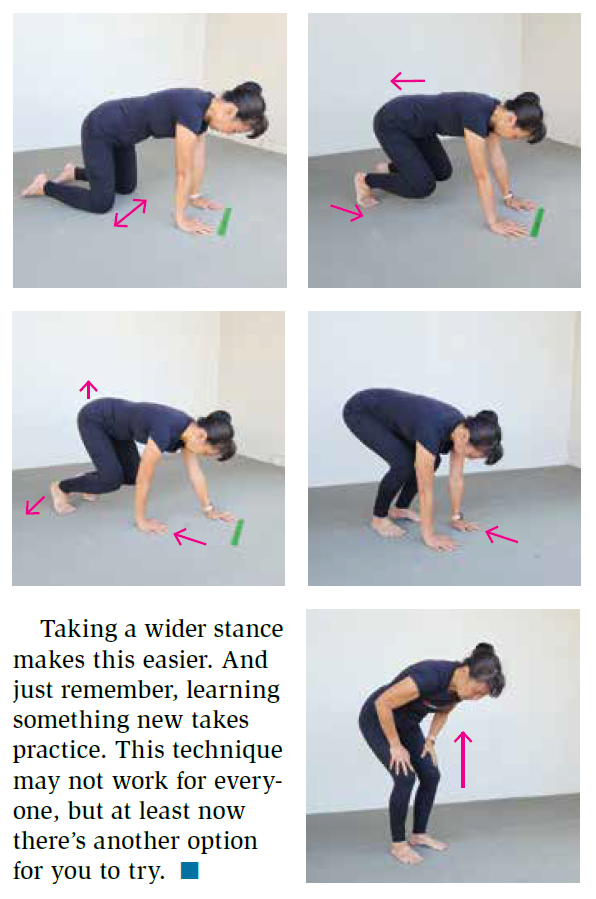
1. Get on your hands and knees and separate your feet as much as you can.
2. Tuck your toes to get onto your feet, then push yourself back until you’re on your tippy toes.
3. Walk your hands towards your feet until your feet are flat on the ground.
4. Lower yourself into a partial squat position, where you can place your hands on your knees.
5. Get yourself centered and steady, then start walking your hands up your thighs until you are standing upright.
Getting down to the ground
1. Place your hands on your knees and push your butt backwards as if you’re going to sit in a chair.
2. Steady yourself and slowly reach down to touch the ground.
3. Walk your hands forward and slowly lower yourself down until your knees are low enough to get on all fours.
We’re traditionally taught that to get someone off the floor, have them lean on a chair, get one leg up and push to straighten the knee until the other leg can plant the foot to have 2 legs to stand on. This requires a significant amount of compression force through the knee and very strong…
Summer means tons of local produce is in season and readily available. A variety of nutrients and antioxidants can likewise be found in Hawai‘i’s abundance of crops and seafood, which help to improve eye health and decrease the risk of certain ocular diseases.
Local eye doctors urge everyone residing in the state to take advantage of summer’s supply of fresh foods, looking out for these local ingredients to support strong eye health:
• Pineapple and lychee are great sources of vitamin C and packed with antioxidants • Avocados provide loads of vitamin E • Taro is packed with nutrients such as zinc, iron, potassium and vitamins A, C, E plus B6 • Mangoes, sweet potatoes and papaya are great sources for consuming beta-carotene • Local species of mushrooms and seaweed provide beta-glucans • Leafy, green vegetables such as watercress, taro greens and bok choy are rich in lutein and zeaxanthin • Omega-3 fatty acids are found in many varieties of local fish: tuna, opah, sablefish (also known as butterfish) and swordfish.
Summer means tons of local produce is in season and readily available. A variety of nutrients and antioxidants can likewise be found in Hawai‘i’s abundance of crops and seafood, which help to improve eye health and decrease the risk of certain ocular diseases. Local eye doctors urge everyone residing in the state to take advantage…
Blood pressure measures how hard the blood pushes against the walls of your arteries as it moves through your body. Measurements are taken when your heart beats and gain when it rests. Also known as hypertension, high blood pressure (HBP) can increase. Often described as a “silent killer,” HBP has no apparent symptoms. If left untreated, HBP increases your risk for heart disease — including heart failure or heart attack — as well as stroke, kidney problems and other threats.
Coupled with family history, certain physical traits and lifestyle choices can put you at greater risk for HBP.
While having high blood pressure is serious, there are many ways to manage it.
Knowing your numbers and monitoring and controlling your blood pressure are essential. See your doctor at least yearly to check your blood pressure and determine if you need to take medicine, change your diet or monitor your blood pressure at home.
It’s important to take medications exactly as prescribed and supply your doctor with a comprehensive list of all medicines, vitamins, herbal remedies and supplements you take.
KAISER FOUNDATION HEALTH PLAN, INC.
711 Kapiolani Blvd., Honolulu, HI 96813 808-432-5915 (TTY 711) | kp.org
To learn more about this and other topics, visit kp.org/health and kp.org/seniorhealth. This article contains health and wellness or prevention information.
Blood pressure measures how hard the blood pushes against the walls of your arteries as it moves through your body. Measurements are taken when your heart beats and gain when it rests. Also known as hypertension, high blood pressure (HBP) can increase. Often described as a “silent killer,” HBP has no apparent symptoms.
Hydration is essential to staying fit and healthy, especially during warm summer months. As you venture outdoors to cool off, keep your flask filled with water. It’s the best beverage for your teeth and body. Water has many benefits; there’s no sugar or acids that can affect your oral and overall health.
Did you know water can help improve your smile?
• Water keeps your mouth cleaner and healthier than other drinks. Sip water between bites or after a meal to wash away sugars, acids and other bacteria that cause tooth decay or gingivitis.
• Water helps you maintain a whiter smile. Sipping water after eating pigment-rich foods can prevent the formation of stains.
• As you get older, some medical conditions and medications can cause dry mouth. Drinking water helps produce saliva to help defend your body against gum disease and tooth decay by washing away food particles and acid.
Drinking water aids your digestive system, preventing constipation and abdominal discomfort. It helps you stay alert and focused, aiding in cognitive function. The H2O molecule also supports joint health as well as the appearance of the skin. To prioritize water as your main drink of choice, carry a water bottle with you.
Hydration is essential to staying fit and healthy, especially during warm summer months. As you venture outdoors to cool off, keep your flask filled with water. It’s the best beverage for your teeth and body. Water has many benefits; there’s no sugar or acids that can affect your oral and overall health.
Adding some sparkle to your social life can be a challenge at any age, especially in life’s later decades. For many, adult day care is a low-stress foray into an activity-filled social life.
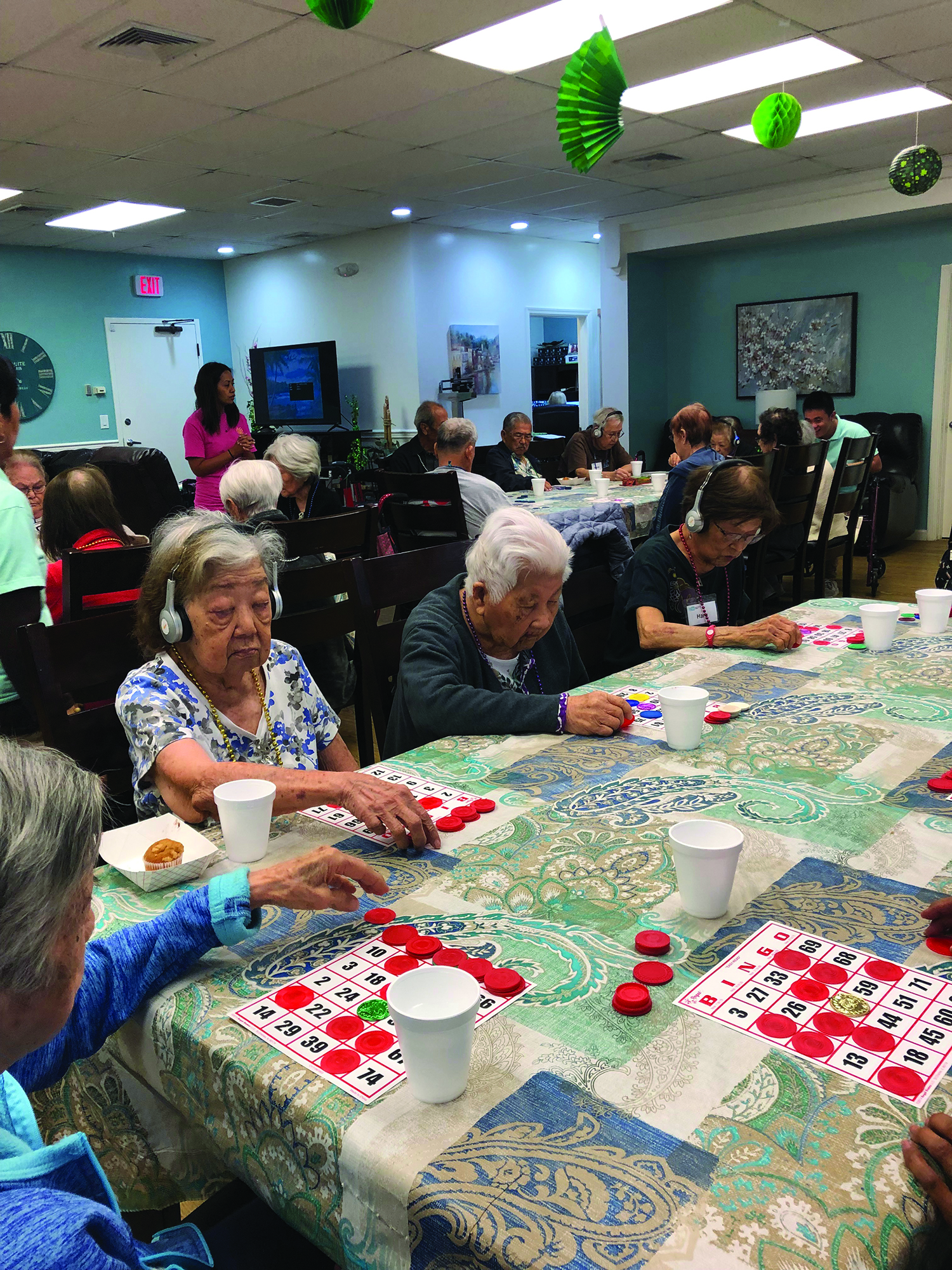
Adult day care centers are key providers of long-term care services. They provide activities, health monitoring, socialization and assistance with daily activities. These programs allow individuals to continue to live in their homes and to receive needed care in a supportive, professionally staffed, community-based setting. Adult day care also benefits family caregivers, enabling them to remain in the workforce or take needed respite. Educational programs and support groups are also tailored to caregivers.
These programs provide cost-effective care while supporting individual autonomy, allowing individuals to age in place. This enhances quality of life for seniors and family caregivers. Adult day care centers are not often recognized for the important role they play in addressing the needs of the senior population in the state.
Operating during daytime hours, centers like Hale Hau’oli Hawai‘i offer a safe and supportive environment. Older adults are afforded an opportunity to get out of the house and be mentally and socially engaged. Seniors who can no longer structure their own daily activities, those who are isolated and desire companionship, those who can’t be safely left at home alone — perhaps someone who lives with a caregiver who also works outside the home — may particularly benefit.
Centers typically offer various packages to meet the unique needs of each individual. Costs can vary depending on factors including the hours a person wants to attend, whether it’s a weekday or weekend and types of assistance required.
The services provided by the center can also affect prices, such as medical monitoring, personal care assistance or transportation services. Some centers may offer different pricing tiers based on these or other considerations, so it is essential to query different facilities to learn the options.
Adding some sparkle to your social life can be a challenge at any age, especially in life’s later decades. For many, adult day care is a low-stress foray into an activity-filled social life. Adult day care centers are key providers of long-term care services. They provide activities, health monitoring, socialization and assistance with daily activities.
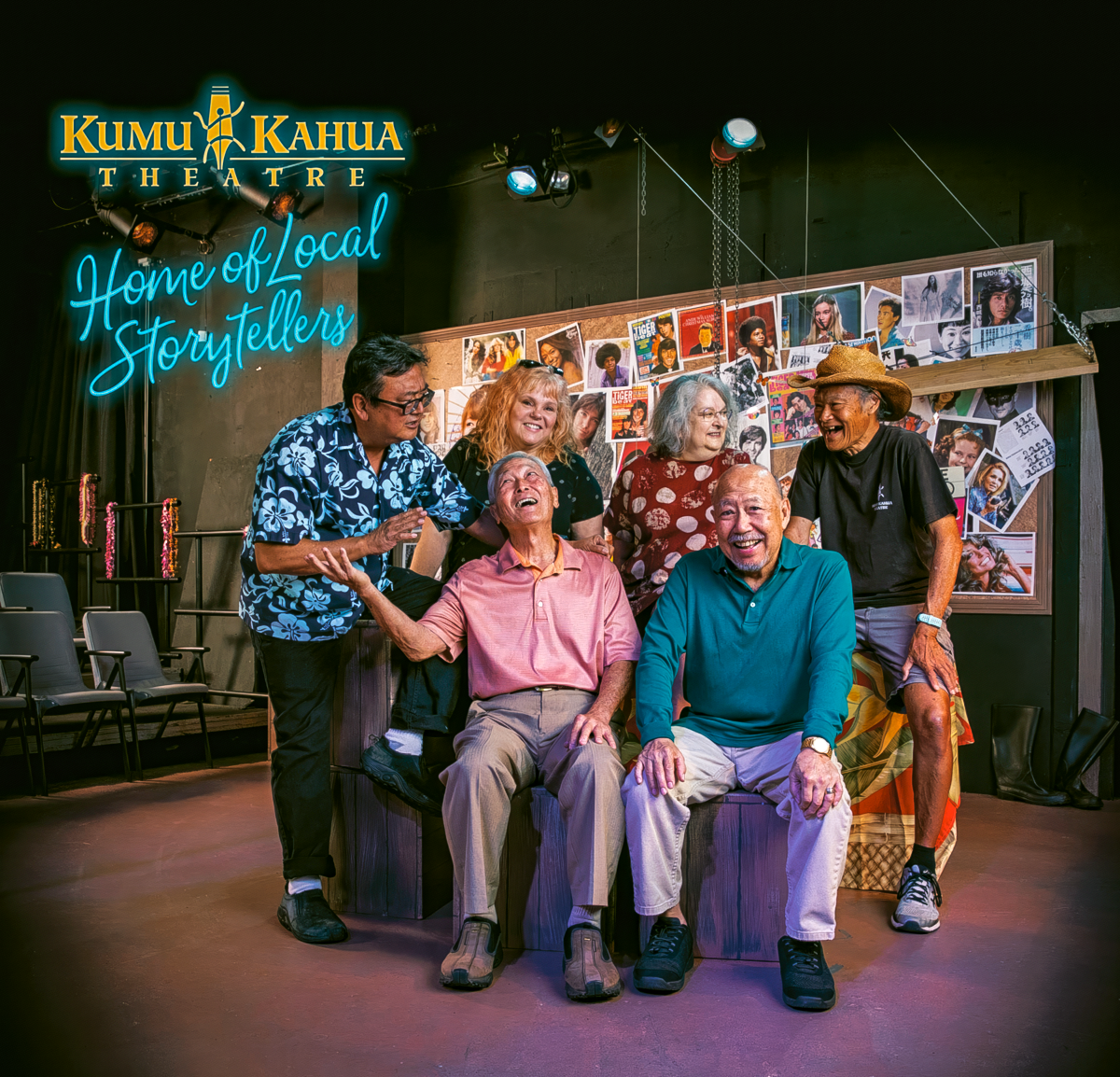
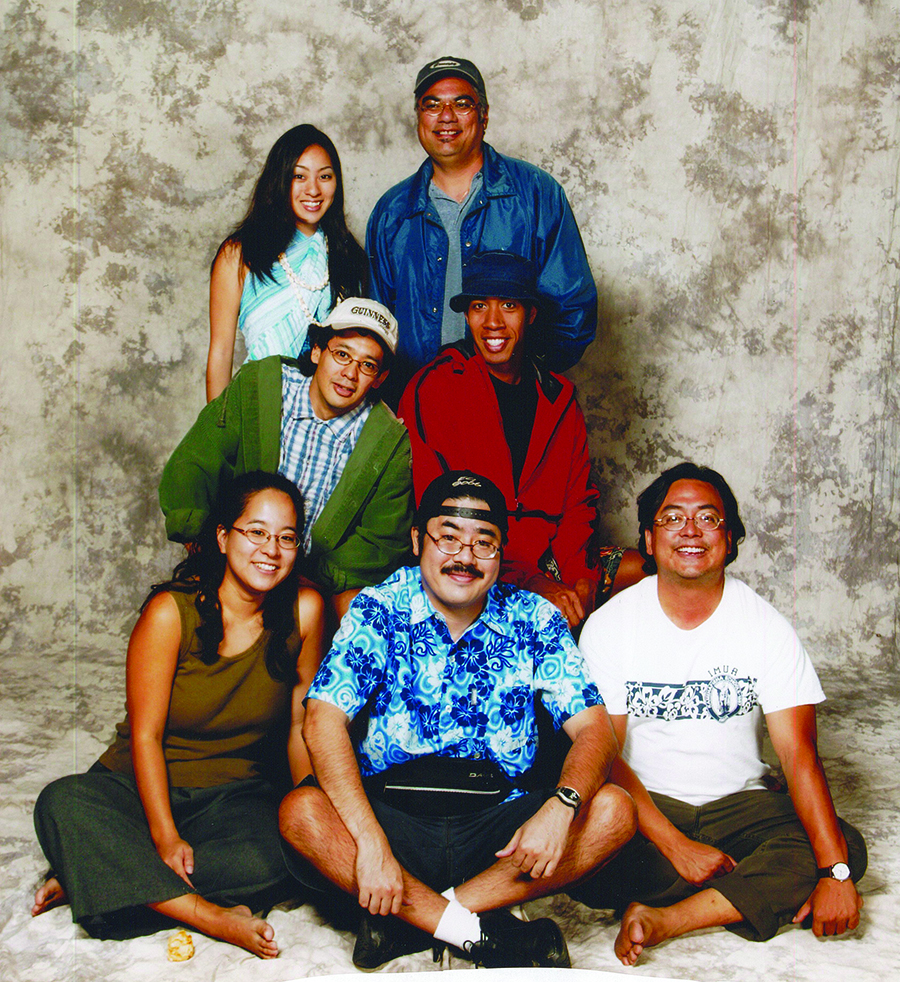
(L–R, front) Allan Okubo, actor; Dann Seki, actor, board member, crew; (back) Harry Wong III, artistic director; Donna Blanchard, managing director; Elizabeth Wichmann-Walczak, director, original member; John Wat, playwright, actor, board member.
Permanently housed in a black box venue in the historic Kamehameha V Post Office Building at the corner of Bethel and Merchant streets in Honolulu, the theatre known to locals as “Kumu” has a special place in the hearts of many theatre lovers in the state.
That’s because it’s the only theatre on the island focused exclusively on stories that involve the experience of locals in Hawai‘i.
Other theatres, like Diamond Head Theatre or Manoa Valley Theatre, more often stage shows written off island, bringing works including Broadway musicals, well-known Shakespearian plays and contemporary favorites to O‘ahu. These are key niches, albeit different from the locally-oriented mission of Kumu Kahua Theatre.
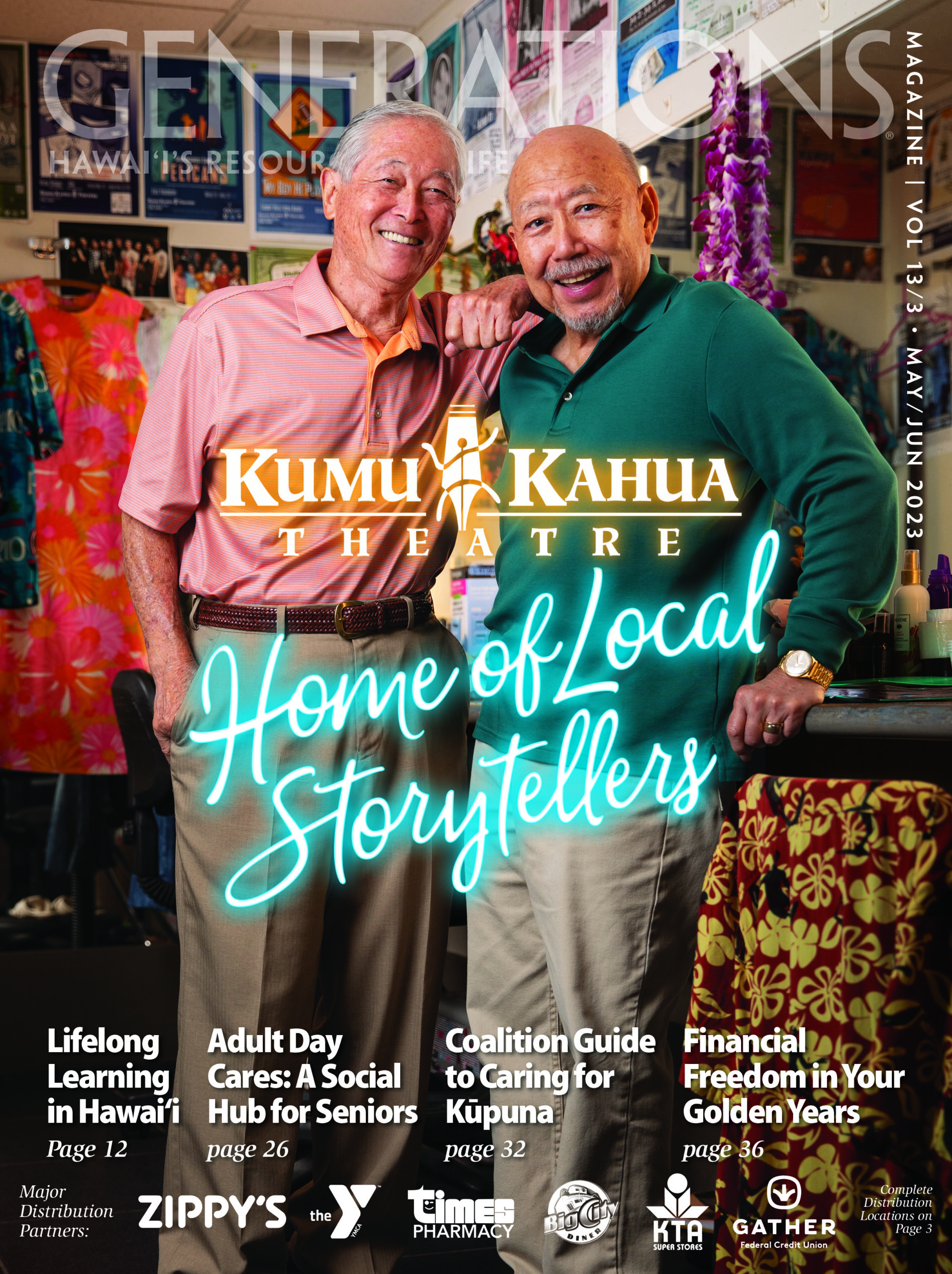
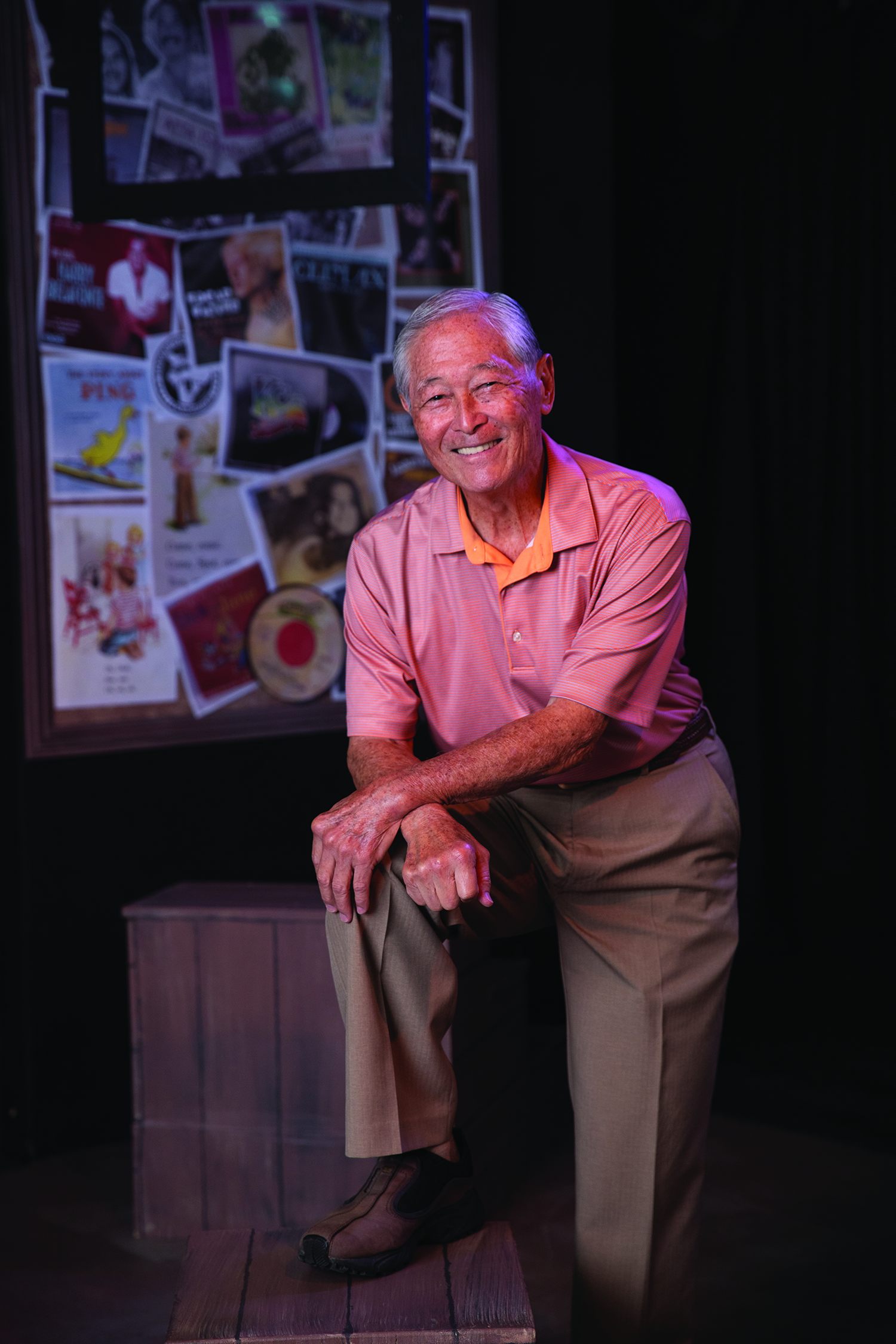
Allan Okubo and Dann Seki have performed on stages across O’ahu. But they’ve been a part of Kumu Kahua since before it found this permanent home, back then it was more of a fledgling troupe performing anywhere its players could find a stage — and an audience.
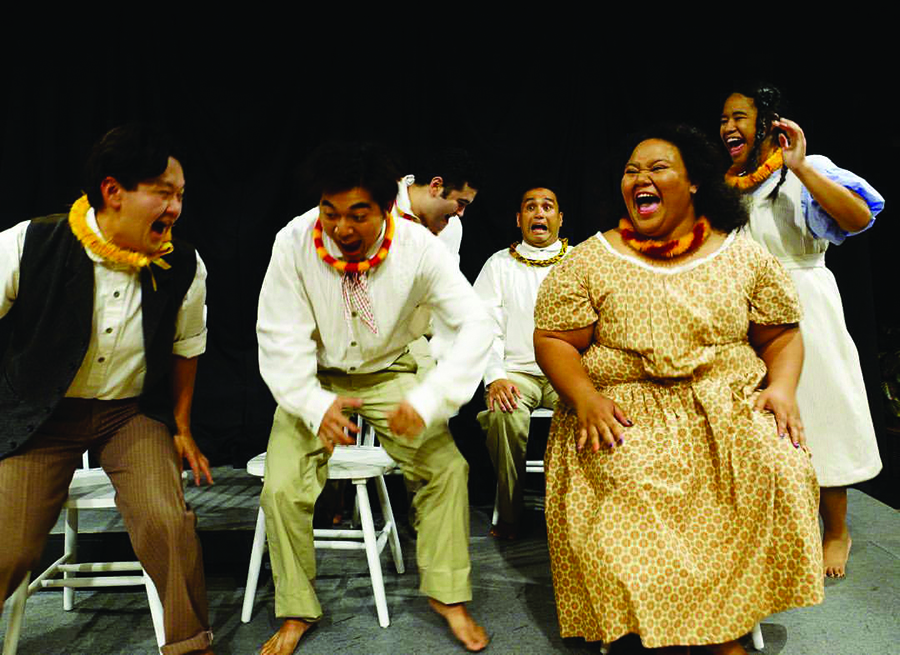
At times, these two local actors seem to embody the longtime mission of Kumu Kahua: To create local theatre to tell truthful local stories, written and performed on stage by local people for an audience of Hawai‘i residents. The stories are selected each season by artistic director Harry Wong III to celebrate or challenge the community — sometimes both, he says.
But the characters are always rooted in Hawai’i, in the experiences of those who have deep ties to the Pacific.
“It’s fun to do because you’re often really doing what you did anyway,” Dann says, smiling. “The character is somebody that you know. Either you were that person or you know somebody who is like that person.”
There’s a reason why it’s easy for actors and audiences alike to relate to the stories performed at 46 Merchant Street.
Nearly every play at Kumu Kahua is written by a playwright who has strong ties to Hawai‘i — like Ed Sakamoto, a prolific writer who grew up in Hawai‘i and was in 1997 the recipient of the Hawai‘i Award for Literature, the state’s highest award for a writer. While Sakamoto lived in Los Angeles for decades after graduating from UH Mānoa, his work is grounded in his island upbringing.
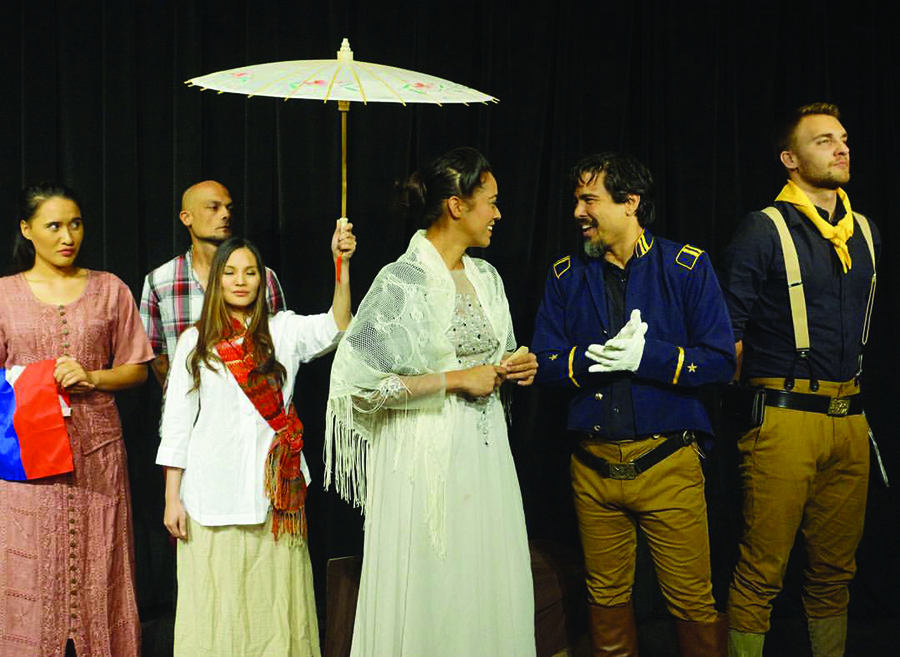
Other popular writers whose work is often performed at Kumu Kahua include former newspaper columnist Lee Cataluna, whose humorous yet insightful shows include Da Mayah and Folks You Meet In Longs, the latter of which will run from May 25 – June 25 to close this season at Kumu Kahua. This is the 52nd season of shows performed by the theatre.
Victoria Nalani Kneubuhl
Victoria Nalani Kneubuhl, who grew up in Mānoa Valley and is both Hawaiian and Samoan, saw the first play she penned performed on stage at Kumu Kahua
in 1986. Although her uncle was also a playwright, her foray into theatre happened a bit by accident when she was a mother of two recently returning to university life. Looking one semester for a creative writing course, she happened upon an open spot in a playwriting course. After seeing her work on stage — and performing in a few shows herself — she took additional writing courses, joined the board of Kumu Kahua Theatre, and went on to win the 1994 Hawai’i Award for Literature.
“When I started writing I really felt like I wanted to write about who I was and where I came from,” the 73-year-old writer said. “I wasn’t interested in going to New York or anything like that, not at all. I was interested in local Hawaiian history and culture.”
Victoria is known for plays that feature mystical imagery, mesmerizing dialogue, and inspired weaving of contemporary and historical themes. She often mixes storytelling methods and thus can leave audiences deeply impacted by the complexity and artistry of her works.
One of her recently written plays, Aitu Fafine, will be included in Kumu Kahua’s 53rd season. The title means Ghost Woman in Samoan, and is one of several plays in her forthcoming book, Navigating Islands: Plays from the Pacific. It will be published by UH Press.
Seeing her plays performed on stage, coupled with realizing that she is part of a cadre of storytellers crafting stories set in the Pacific has inspired Victoria to keep writing. Over the years, she’s seen developments she never thought possible, from entire college courses focused on Pacific Literature to whole plays performed in ‘ōlelo Hawai‘i. “It’s wonderfully astounding.”
“When I started writing in the ’80s, if you had told me that was going to happen, I never would have believed you,” she said.
Staging plays written for and about life in the Pacific is also made easier by easy access to actors who can speak not only ‘ōlelo Hawai‘i but also pidgin English — like Dann Seki and Allan Okubo.
“Eh, dos buggahs look familya”
You know you’ve seen them before, but you’re not sure where. There’s an air of familiarity, but you just can’t place them. It’s almost familial. If these two guys aren’t your uncle, they’ve probably played him on TV.
Coulda been in a movie, too. Or maybe somewhere on stage, at that show you saw last year.
Yes, that’s where you know them from. But with his warm smile and sparkling eyes, you might first recognize Dann Seki as a sushi chef — he played one in a local TV ad in the 1990s, furiously chopping fish and dishing out sushi on a conveyor belt moving hilariously fast. You may also know him as a local doctor from Five-O. Or was it Magnum P.I. where you saw him? It also could’ve been on Doogie Kamealoha. Or, hang on, wasn’t he the Old Man in Baywatch Hawai’i?
Yes, he’s played all those guys. A youthful 77 years old, he’s also appeared on stage around Honolulu in more than 40 plays.
“A lot of times after a show, audience members will come up and say something to me like, ‘Hey! You remind me of my Uncle Teddy, he was just like that guy you played,” Dann chuckles. “I always think, ‘That’s so nice,’ and say thanks. Then I think to myself, ‘I sure hope Uncle Teddy is gonna be OK with that!’”
One of Dann’s longtime pals, Allan Okubo, can relate. Now 75, the retired local attorney has been appearing on Hawai‘i-based television shows since the Vietnam era. With a winning grin and an amazingly expressive face, he got his start in acting working as an extra on the set of the original Hawai‘i 5-0 to make pocket money while studying political science at UH Mānoa. Much of the time, he was simply told to bring his white ambulance driver and come to the set.
“Back then you just call up the studio and say, ‘Can I be an extra?’ And they just sign you up, take your picture,” he said. “That was my part-time job my last year-and-a-half of college because I was working every other week pretty much.”
You might also recognize Allan as the friendly grandfather from television commercials advertising anything from Foodland to Aulani-Disney Hotel & Resort and Hawaiian Telcom.
Both graduates of Hawai’i public high schools, Dann and Allan met each other as undergraduates at UH Mānoa during ROTC training. Back then, they were acquaintances; they didn’t know they’d later appear frequently on stage together, most frequently at Kumu Kahua Theatre.
Neither was involved in theatre during high school nor did they focus their collegiate studies on acting. Rather, both were focused on staying enrolled as students — and staying out of the draft.
After graduation, the two men each embarked on their own career; Dann was an audiologist who started his family while stationed at Fort Knox during military service and Allan settled down with a wife and children while busy with his law practice in Hawai’i.
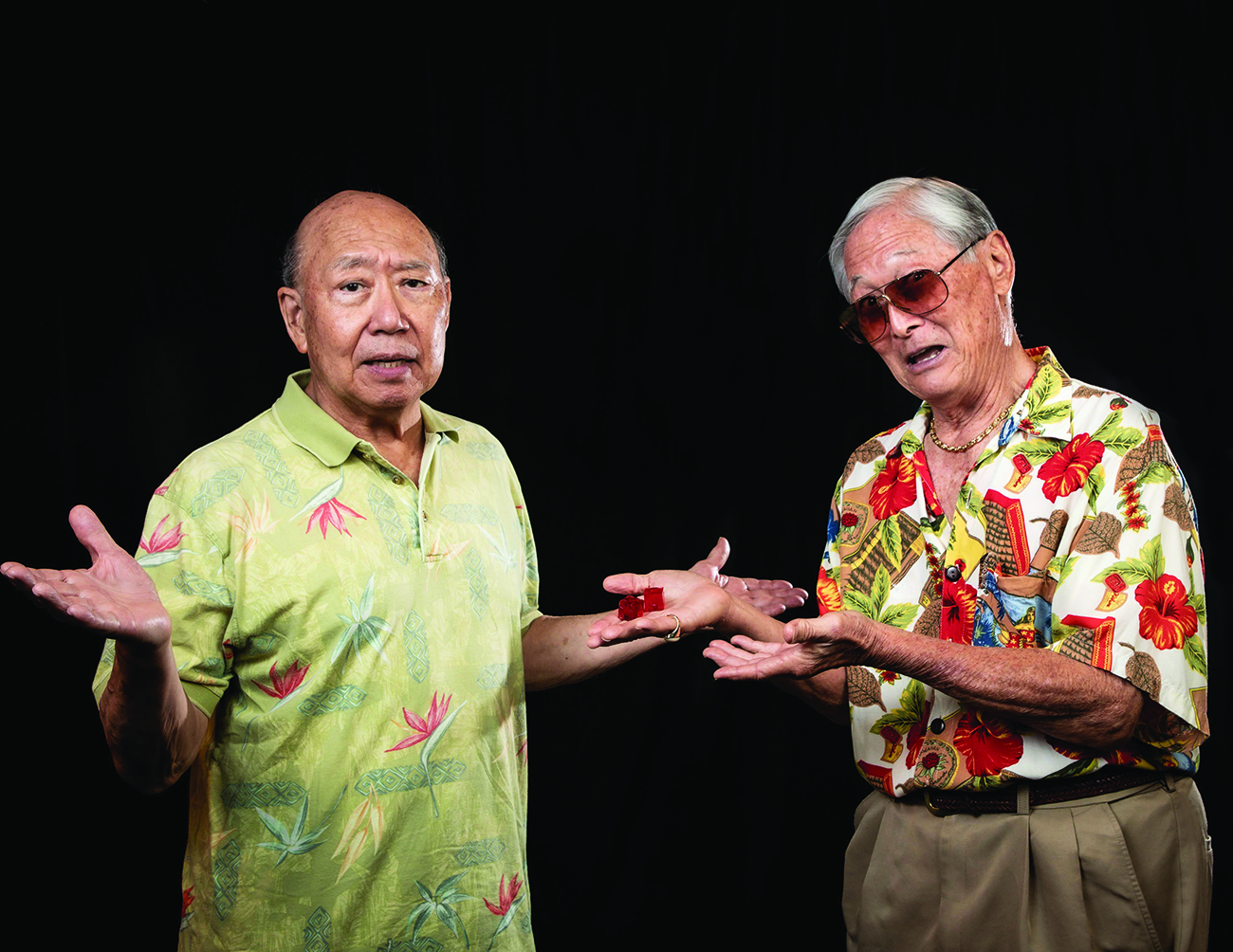
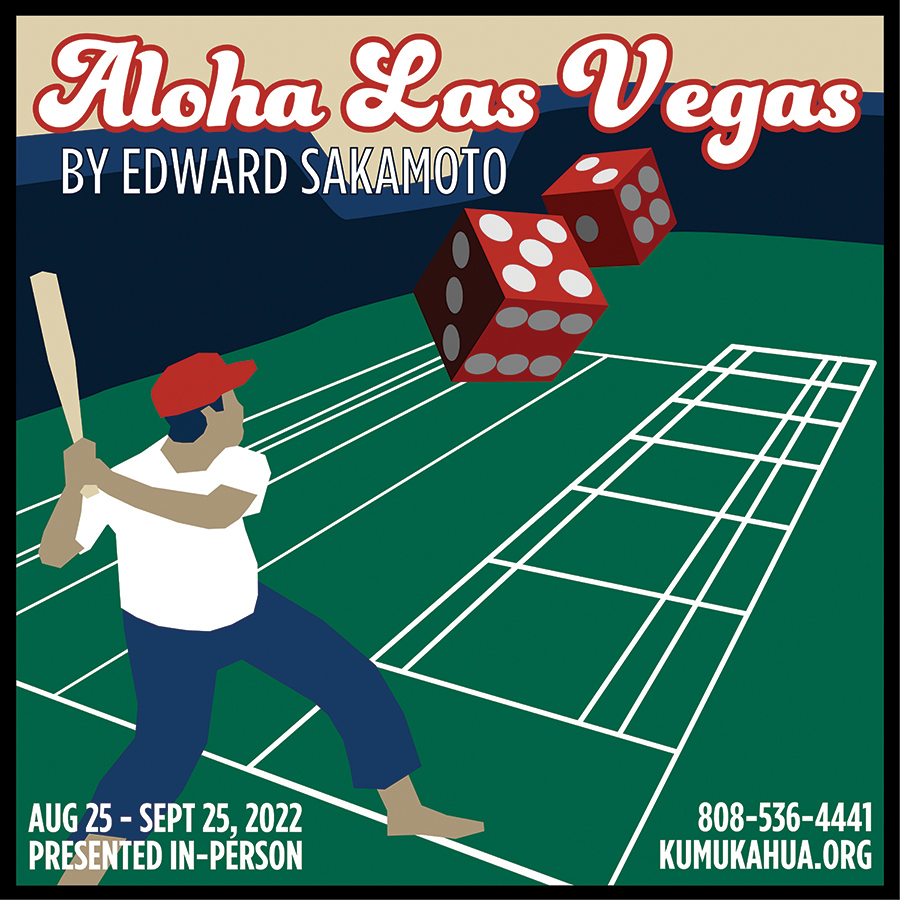
Now septuagenarians, Dann and Allan have also acted in more than 75 plays on O’ahu. They’ve starred opposite each other in several popular local plays — like Aloha Las Vegas, one of the most popular plays in Kumu Kahua history — numerous times over the years. By now, they say, playing off each other is a breeze.
“Dann and I, we’ve been working together for so long it’s like riding a bicycle,” Allan says. “It’s just really comfortable. I can play off of him and he can play off of me. It’s just like we can do it without acting, just being us.”
Theatre work doesn’t pay them — all theatres in Honolulu operate with volunteer actors — but both these Japanese American locals say they love the opportunity theatre affords them to pretend to be someone else for a little while. To consider other points of view, other life experiences.
“For two or three hours you get to be somebody else. It allows you to do some stuff you might not otherwise do,” Dann said. “That’s fun.”
Then there’s the instantaneous feedback of live theatre. Those pearls of live laughter. Collective gasps. Focused contemplative silences filling the theatre.
Both men acted in their first live play with Kumu Kahua Theatre, though not at the same time — and not at the same place. Prior to 1994, the troupe was known as an itinerant theatre; it performed wherever there was space to set up a play and a few audience seats.
Dann and Allan have been performing Aloha Las Vegas together since 2002.
Going Live
More than two decades later, both men can clearly recall the magic of performing in a live theatre, facing a local audience after weeks of practicing intensely after work. Neither of the two men performed in front of a live audience until they were married fathers with careers.
“It was a total learning experience,” Dann Seki remembers of his first show, Mānoa Valley, in 1989. He played Tosh Kamiya, one of the lead characters in this middle episode of Ed Sakimoto’s Hawai‘i No Ka Oi trilogy. He auditioned for the role after seeing a call for auditions in the newspaper.
“The experience was everything I wanted it to be. I’d always wanted to try theatre, since high school, but I never got the chance. It was kind of scary, because the role of Tosh is actually one of the lead roles in the play. It was scary to step into your first play in a fairly large role; I would’ve been happy just to be a butler bringing coffee out on stage.
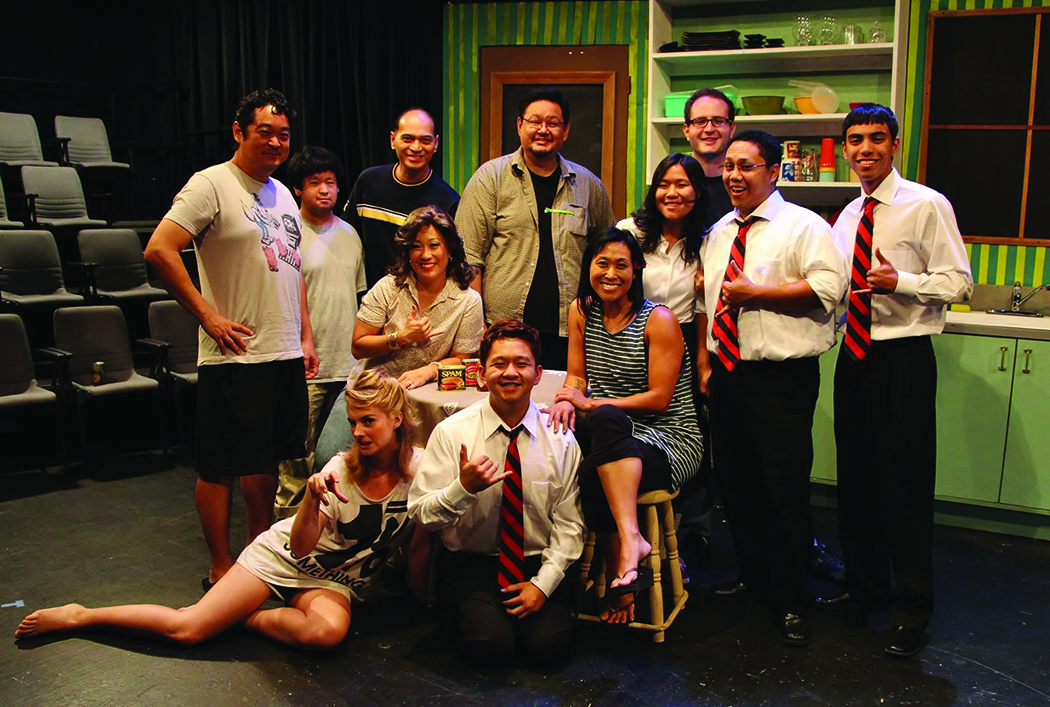
2004 Gone Feeshing
“So it was scary but I would say it was liberating. I think all the shows I’ve done since then are the same.”
Dann’s first show was performed at a school cafeteria, where members of the cast were also charged with moving cafeteria tables and setting up the play’s set each evening before the performance. After the play finished and the audience left, the actors would convert the room back to a cafeteria.
“In retrospect, that was a hellofa lot of work. But that was my first experience in theatre. I thought, ‘This was how it is.’”
Allan Okubo’s first play, another show written by Sakamoto, also saw him in a major role — and with a unique window into the world of playwriting and directing.
The play, called Pilgrimage, featured a few scenes involving complex karate movements. This was perfect for Allan, a karate instructor himself. He played the role of a junior student, opposite an actor cast as a senior instructor. But this older actor lacked karate skills, creating a challenge for the production team.
2013 All That Remains
Director Jim Nakamoto spoke to Allan; the two came up with a solution. They phoned Sakamoto, the writer, and asked him to rework the scenes so that the senior instructor would advise Allan’s character as he performed the kata. This allowed the senior actor to focus on his role without the burden of performing complex karate movements. That task fell, happily, to Allan.
The result was a successful production that showcased Allan’s talents — and highlighted the importance of local actors with deep ties to the myriad cultures present in Hawai‘i.
“Jim comes to me and says, ‘Can you teach him that?’” Allan remembers. “I said it would take me two months to get him to look like he can even know what he’s supposed to do and then a year before he looks like he’s an instructor.”
2016 Buffalo’d
For more than 20 years, both Allan and Dann have remained deeply committed to performing shows with Kumu Kahua — even as they’ve continued with television, radio and movie work. Each also performs at other theatres around O‘ahu.
Kumu Kahua occupies a unique space not only in the local artistic milieu but also nationwide. It is one of only a few — if perhaps the only — theatre dedicated entirely to place-based theater.
Keeping Kumu Kahua Going
The actors who perform at Kumu Kahua, all unpaid, are also locals. Some playwrights and performers have years of experience; others are new to the theatre. All are welcome.
2014 Shoyu On Rice
“Everyone has a story within them and the stories within the people of Hawai‘i are very important. That is why we exist,” says Donna Blanchard, longtime managing director at Kumu Kahua.
“Year after year we have full seasons of shows devoted to the people who are of the place where our theatre is located,” she noted. Blanchard has worked with artistic director Harry Wong III since she began working at Kumu Kahua in 2012.
“This is what I always wanted to do, work in a theatre solely devoted to the people within its geographic footprint.”
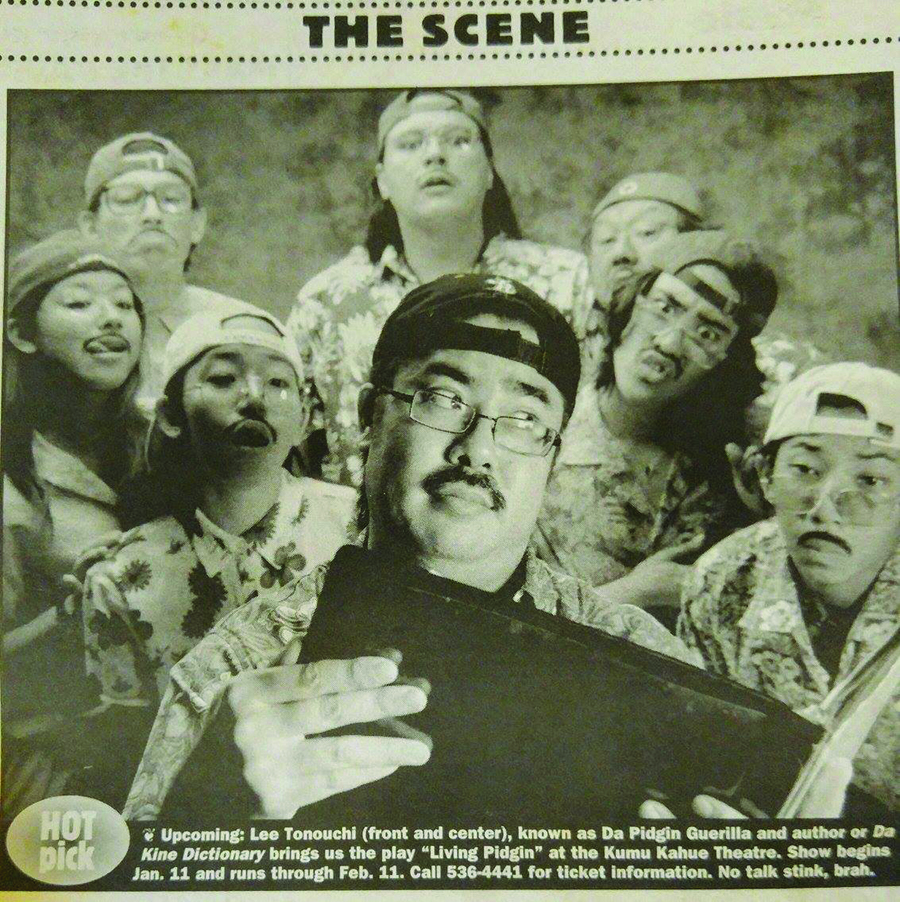
2017 Living Pidgin
Donna, originally from Northwest Indiana, moved to Hawai‘i in late 2011 to help develop the theatre’s board of directors. The board was originally comprised of mainly creative professionals and academics — including the theatre’s founder, Dennis Carroll — who were always bursting with artistic energy. Slowly, the board has progressed to one with greater business acumen, experienced in the day-to-day financial management of a professional theatre.
“As any arts organization matures, ideally that board will evolve into more of a business board with people who are able to help support the organization and also people who are able to help support the creative directors of the organization,” she said.
Donna, who managed a theatre in Valparaiso, Indiana, is herself an award-winning actor who was searching for an opportunity to work at a theatre telling local stories.
“I wanted to work with a brick-and-mortar theatre that practices ‘theatre of place,’” she said. “No other theatre in the United States was doing whole seasons of this kind of work, at least not at that time.”
2017 Wild Birds
Even before Blanchard’s arrival, Kumu Kahua was holding both playwriting and acting classes, charging nominal fees. The theatre also worked with Bamboo Ridge Press to hold monthly writing contests, challenging anyone with a Hawai’i story to submit snippets of work written for the stage.
Victoria herself has taught some of the writing classes, as has Cataluna. The most recent course was taught by Lee Tonouchi, a local writer whose show Gone Feeshing was performed this season.
“I’m so amazed at some of the younger people in my class,” Kneubuhl said. “Oftentimes the things that concern them are things that are super thoughtful. To see what younger people are thinking about and doing is so valuable and touching.”
While Kumu Kahua has long held these regular classes and workshops, Donna said, these classes have recently become free to join. That’s thanks to COVID-19 — sort of.
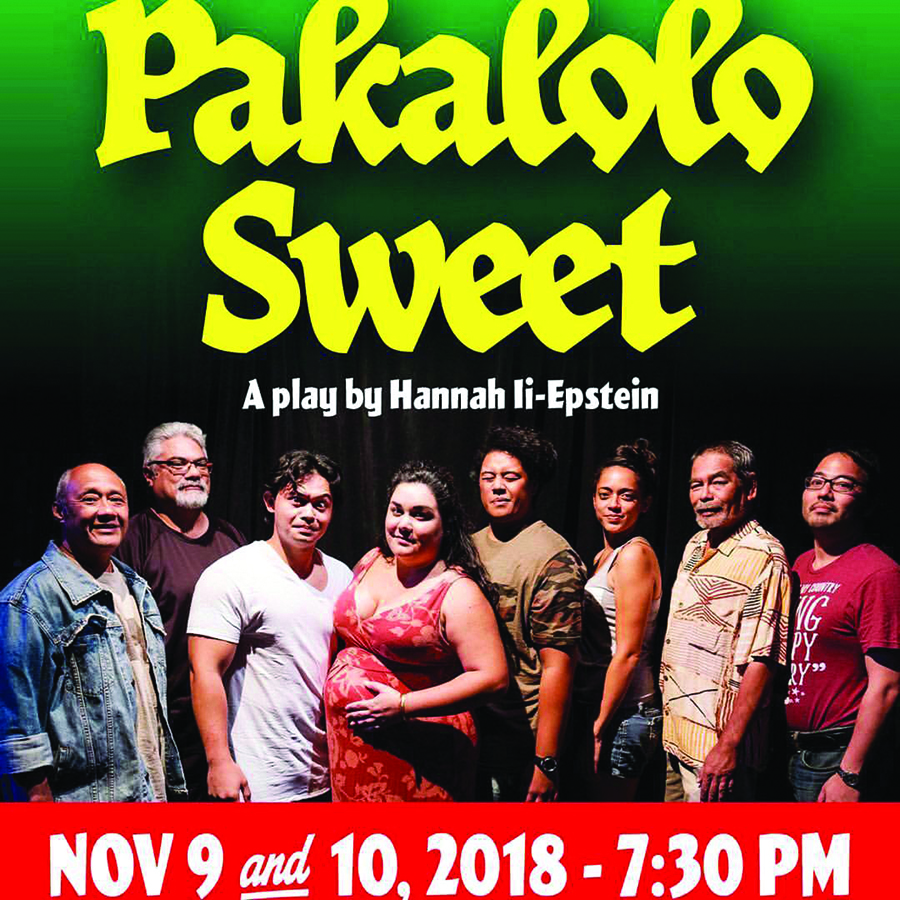
2018 Pakalolo Sweet
The theatre was able to secure a COVID-19 Economic Injury Disaster Loan, or EIDL, that became the basis for shoring up Kumu Kahua’s educational mission.
“We’ve determined that by educating our artists, that’s how we can help grow our programs and our future,” Donna said.
For information about upcoming classes, visit the theatre’s website.
Intro To Kumu Kahua
Kumu Kahua has always been about growth — both of individual artists and the Hawai‘i theatre scene.
It started in the spring of 1971, the brainchild of the UH Mānoa professor Dennis Carroll and a cadre of committed graduate students. Hailing from Australia, Dennis recognized the influences of colonialism and other unique threads of Hawai‘i’s societal fabric and launched the theatre along with eight graduate students.
2019 Fa’alavalava
“He had an incredible amount of energy,” Victoria remembers. “He was incredibly smart. I took my second playwriting class from him. He had so much passion and love for the theatre it was infectious. “He was so dynamic.”
Dennis was known to be edgy in the classroom and out of it. The theatre troupe he formed always focused not only on place-based theatre but also the avant-garde. Dennis, who went on to eventually head the theatre department at UH Mānoa, was always interested in stories rife with social awareness and themes that could prompt social change. He remained involved with Kumu Kahua until his death in November 2021.
“Kumu wouldn’t exist without Dennis Carroll,” said Elizabeth Wichmann-Walczak, herself a retired UH theatre professor and director.
“Maybe something like it would, but I don’t know. In the history of Kumu there’s a large swath where we didn’t have funding or that black box theatre. We couldn’t rely on either of those things. But Dennis just held it together and kept creating. He drew people in to work on it.”
2020 Way of a God
Work was a big part of keeping Kumu Kahua Theatre afloat in its early days. Early board members and other volunteers, including Elizabeth, remember doing everything from taking ticket orders off an answering machine kept in the garage of another board member’s home. There were props to find, costumes to source, sets to be designed, actors to be recruited. The work never really ended.
Plays were performed wherever there was space, including temporary World War II structures on the campus of UH Mānoa. The show would always go on, somehow.
Stories Within Them
The writers and actors who have long been a part of Kumu Kahua Theatre have taken different paths to get there.
Allan Okubo took his first acting class during his last year as a political science major at UH Mānoa — because the course description stated clearly: No exams, no papers.
2023 Wild Meat & the Bully Burgers
“I called them up and I said, ‘Is this true? No exams and no papers? He says yes. So I said, ‘OK, sign me up.”
Everything was going according to plan until the professor, Glen Cannon, assigned all the students to return to the second class prepared to sing a song. Allan thought, ‘Oh, my gosh. Can I quit now? What do I do?’
He spent a week leafing through records until he found a song called Little Curly Hair in a High Chair, originally recorded by Fats Waller. He came to class and sang it in a humorous rendition of a warbled toddler’s voice. When he finished, he looked over and saw the professor laughing.
“I said, “OK, maybe I survived.”
Allan, who today mentors younger actors, says he loves acting because it gives him a chance to take on another persona. On his own, he says, he’s always been very shy and quiet. Once upon a time, during mandatory ROTC training back in his days at McKinley High School, he recalls, he got so nervous he forgot his own name when he was meant to stand at attention and salute.
“I stood there saluting, and I was supposed to say my name. I thought, ‘Oh no, I had a name when I came in here. What is my name,’” he chuckles.
Allan’s trick to get rid of the anxieties that can come along with public speaking is to simply stay in character. That way, he notes, it’s never him who is making a fool of himself — it’s his character.
Considering the experiences of different kinds of people — different characters — had kept Allan young and open-minded. The same is true of his pal Dann Seki.
Dann’s aptitude in science originally kept him away from acting until he was a busy working parent — despite a longtime curiosity about theatre. He even spoke to his college guidance counselor about theatre after his sophomore year at UH Mānoa. The two sat down to see about helping Dann come up with a major.
“We talked for a while and he said what are you into? I said I’m interested in speech and drama. He looked at me like, ‘What the hell are you gonna do with that? Teach drama in high school?’”
The counselor looked over Dann’s aptitude test, which indicated he’d do well in the sciences. Dann told him that the biology courses he’d taken at UH hadn’t really sparked his interest. So the counselor leafed through the catalog. After a while, he said he noticed a department called Speech Pathology.
“He told me, ‘I don’t know much about it, maybe you go talk to that department and see what they can give you.”
Two years later, Dann found himself with a degree in audiology and a job as an audiologist with the army.
“I went back to see my advisor and said, “Just so you know, Speech Pathology is mostly science, right? It’s like, physiology. Vocal systems of the mouth. Nothing to do with drama.’ He just looked at me and said ‘Oh ok, good to know good to know.’”
An Evolving Story
As longtime actors in Hawai‘i, Dann Seki and Allan Okubo have experienced the joy and camaraderie of the local theater community firsthand. They are also keenly aware of the challenges facing older actors — like fewer roles — so they and others have taken it upon themselves to advocate for more roles for people their age.
With humor and persistence, they have been urging local playwrights to consider adding an extra grandfather or older man into their new stories.
Theatre provides the duo opportunities to learn new things off-stage, too. Dann, for example, is a board member at Kumu Kahua, and also recently became involved in sourcing props. The theatre is always looking for behind-the-scenes volunteers.
“Theatre is the place for us to exercise our shared humanity,” Donna Blanchard said. “We want to bring everyone in the community closer to the work we are doing, to help everyone recognize the importance of their voice. We’re a place to exercise that voice.”
Get Involved
If auditioning for a play seems daunting, don’t forget that enjoying theatre can be as simple as attending a play itself.
“Leave your home, shut off your phone, sit next to strangers and experience something together,” Henry Wong III said. “This is a place people can come and see themselves represented, their struggles and their stories — maybe represented in new ways.”
Permanently housed in a black box venue in the historic Kamehameha V Post Office Building at the corner of Bethel and Merchant streets in Honolulu, the theatre known to locals as “Kumu” has a special place in the hearts of many theatre lovers in the state.
While they can be difficult conversations to navigate, early discussions about end-of-life care can help you and your ‘ohana navigate the stress that arises alongside health challenges.
It might seem like there is never a good time to bring up the topic, especially in the absence of major medical events. But it’s better to discuss your wishes well before times of crisis. Consider starting conversations at upcoming family gatherings; weaving discussions into the everyday lives of family and friends may reduce the stress of beginning to discuss your goals or wishes with your loved ones.
Here are three tips for conversations about end-of-life wishes:
• The conversationshould be around your wishes.
• Research the differences between hospice, palliative care, in-home care, nursing home facilities and other care options to determine your goals for different stages of your end-of-life journey.
• Write it down. Create a living document replete with details. Make these discussion points easily accessible to designated family members.
A power of attorney, advance care directive and an informed healthcare team can work together in concert to help achieve your goals.
While they can be difficult conversations to navigate, early discussions about end-of-life care can help you and your ‘ohana navigate the stress that arises alongside health challenges.

 You can devise your estate plan without lawyers or accountants. All you need is a credit card, a computer, a printer and access to the internet. Armed with those four things, you can create one or more documents that may — or may not — accomplish what you expect.